~~~
History
Allersdorf has a long history and a legend lies at the heart of the Marian shrine. The story dates back to the early 11th century. A count lived in Abensberg Castle and, sadly, was childless for many years. His wife, the countess, promised to build a church in honour of Our Lady if she had a child. She then shot an arrow from the castle, and where the arrow hit the ground, a church was to be built. The church was constructed, and afterwards, the countess had a total of seven children.
The first church on the hill was built around 1100. Countess Bertha von Ratzenhofen of Biburg (†1151), wife of Count Heinrich I von Sittling/Biburg (†1132), is the founder and benefactress of the Biburg Benedictine convent. She is the mother of the canonised Eberhard von Sittling und Biburg (c. 1085-1164). The church also owes its origin to her. The countess donated the building land and was herself present during the construction work. Heinrich I von Wolfratshausen (c. 1083-1155), Bishop of Regensburg (1132-1155), gave the newly erected abbey to the Benedictines. Innocent II, Pope from 1130-1143, born Gregorio Papareschi di Guidoni (1088-1143) and Alexander III, Pope from 1159-1181 and born Orlando Bandinelli (c. 1105-1181), confirmed the transfer of the real estate in 1139 and 1177 respectively.
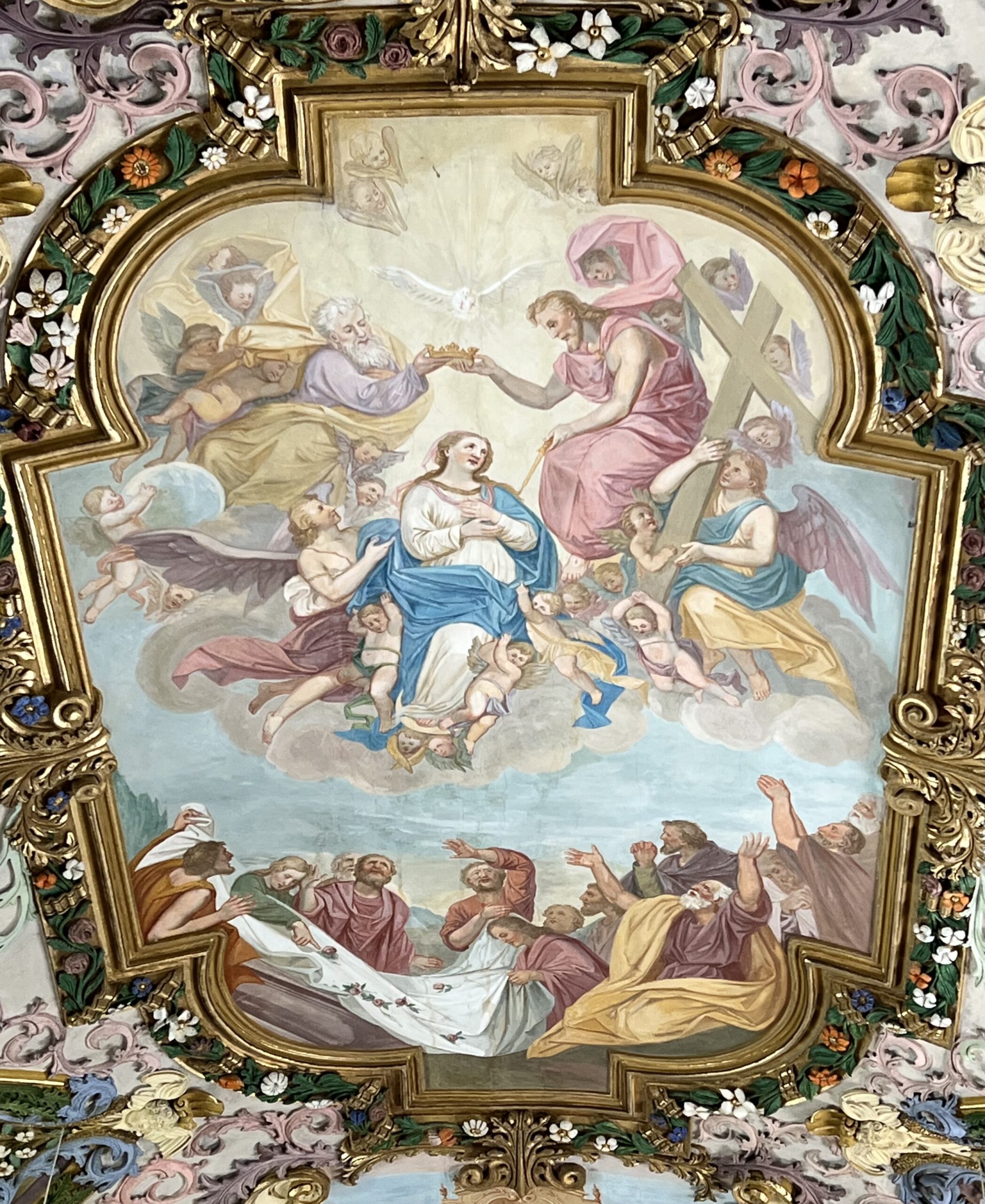
The pilgrimage church at the Jesuit college in Ingolstadt was established in 1589 and continued until 1773 when the Jesuits were suppressed. This church was demolished around 1600, down to the tower, which dates from the 13th century. Subsequently, the current pilgrimage church was built on this site between 1598 and 1600. The design is by architect, altar builder and sculptor Hans Krumpper (1570-1634). Many frescoes were added to the place of worship, including a large depiction of the Assumption of Mary. The building is one of the first Baroque churches in Germany. Present at the ceremony were also Wilhelm V (1548-1626), the Pious, Duke of Bavaria (1579-1597) and his wife Duchess Renata of Lorraine (1544-1602).
In 1629, a ring road was built around the hill as thanks for liberation from the plague. Ex-votos were also donated as thank offerings to Maria. In 1633, the church was plundered by Swedish troops.
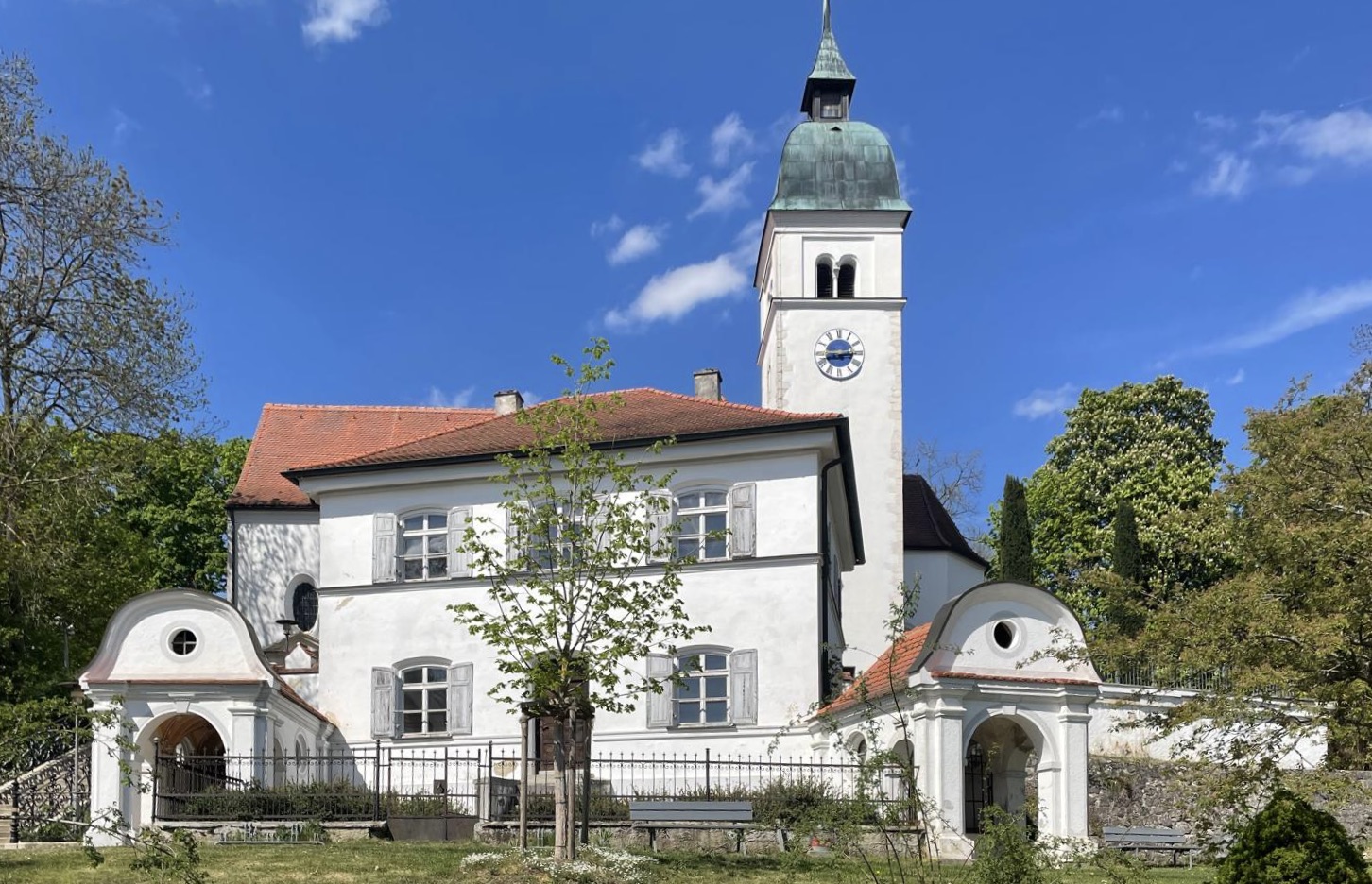
The present Marian shrine features the late Romanesque tower from the first half of the 13th century and the image of Our Lady from around 1510. The nave, chancel and upper part of the tower were built in 1712. In that same year, chapels were also constructed around the church.
In the 18th century, the pilgrimage to Allersdorf was very popular, and miracle books from 1717 and 1764 attest to this with miraculous healings.
The Rococo high altar with throne for Mary dates from 1757.
From 1781, the Order of Malta took over the monastery and pilgrimage church. In 1803, the Maltese commander Count Heinrich Theodor Johann von Morawitzky (1735-1810) prevented the demolition of the pilgrimage church. At the end of the 19th century, artists painted the church in historical perspective.
In 1968, the presbytery was renovated, and between 1990 and 1995, the church was renovated. In 2012, chapels around the church were renovated.
Pilgrimage site
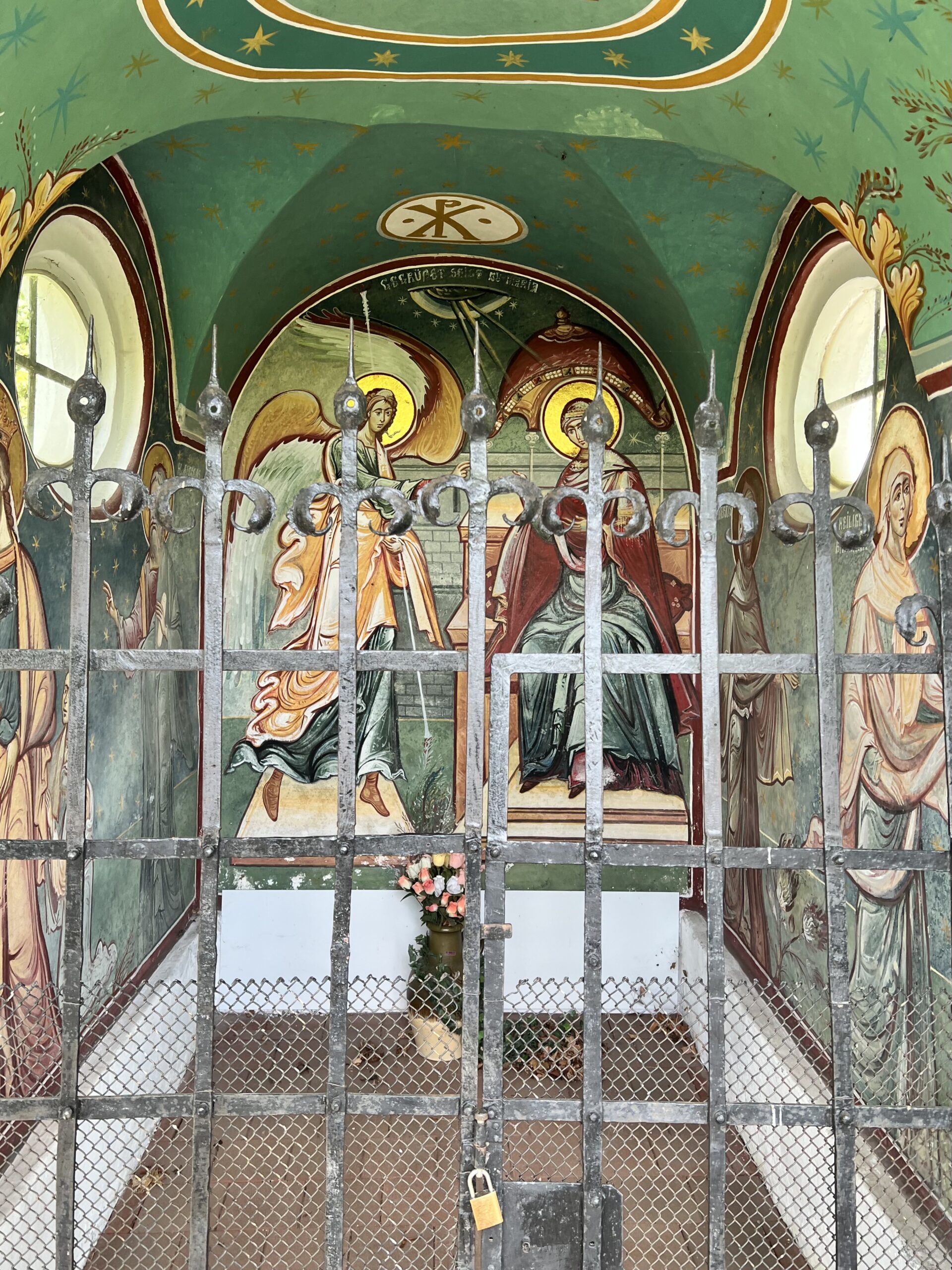
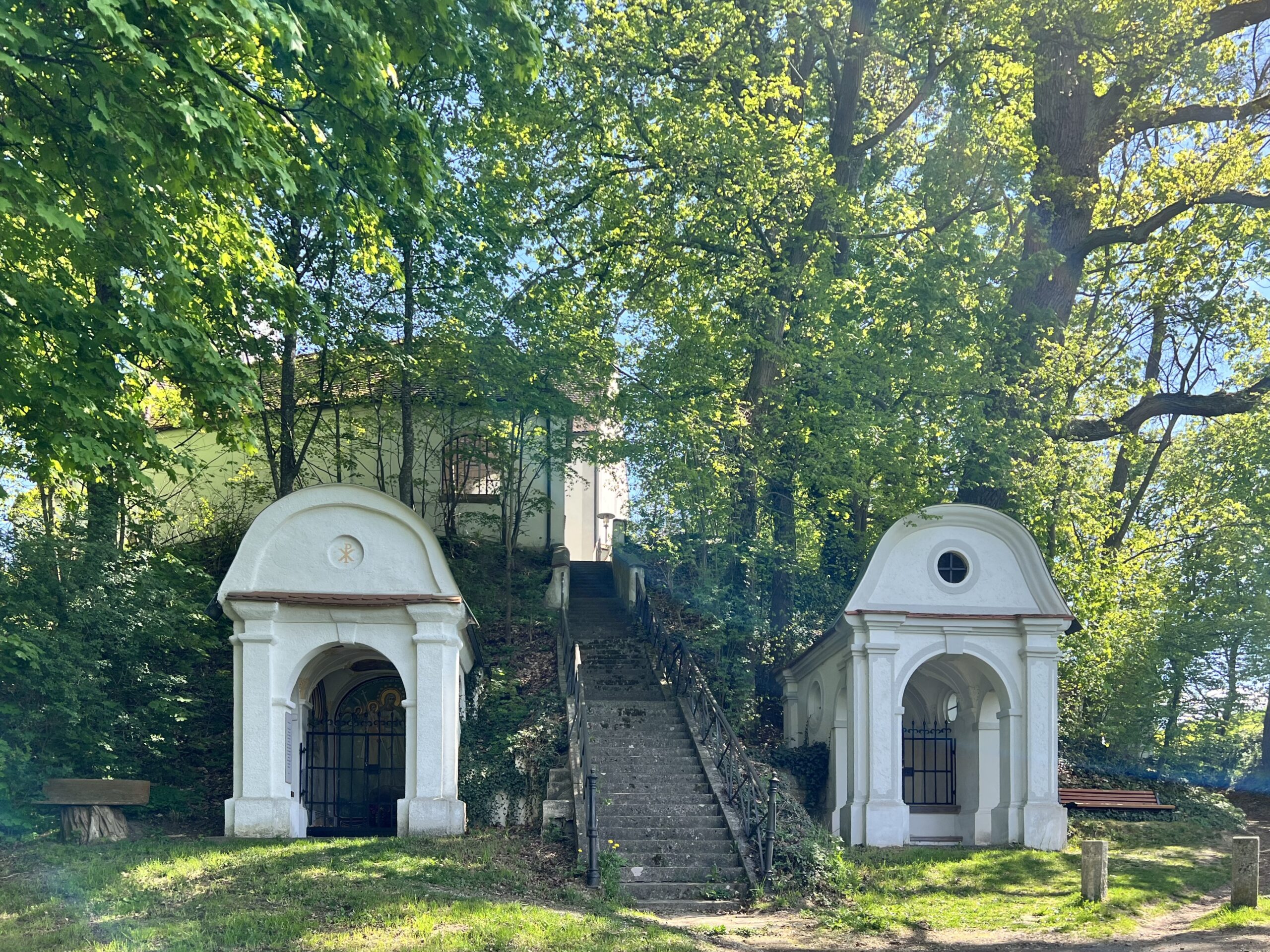
The pilgrimage church is one of the first Baroque churches in Bavaria. The house of worship stands on “Frauenberg” and is dedicated to the Assumption of Mary. A few metres lower on the high plateau are chapels. These are 10 Baroque Marian chapels. Statues once stood there, but they were removed at the end of the 20th century due to the risk of theft. Subsequently, paintings were added. Next to the chapels lies a graveyard with walls from the 17th century.
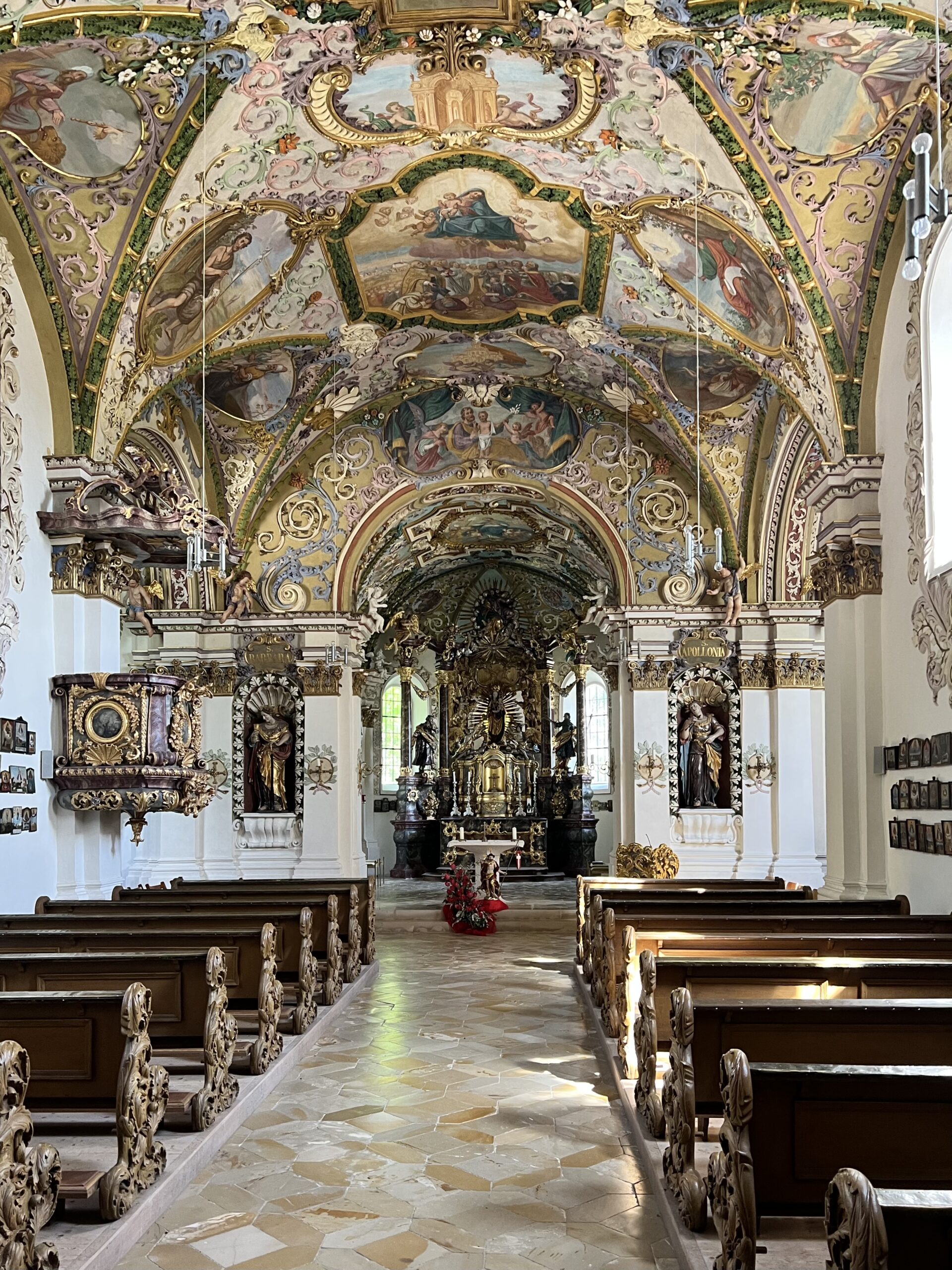
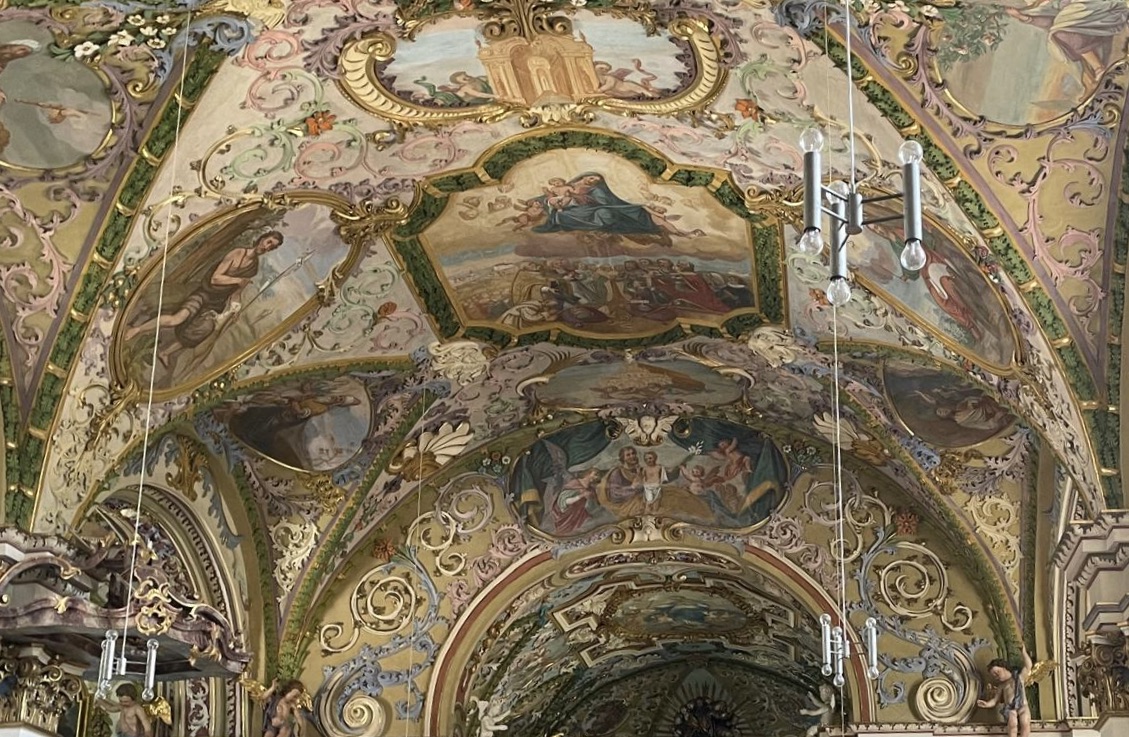
The ceiling of the pilgrimage church displays frescoes of Mary, including the Immaculate Conception and the Assumption of Mary.
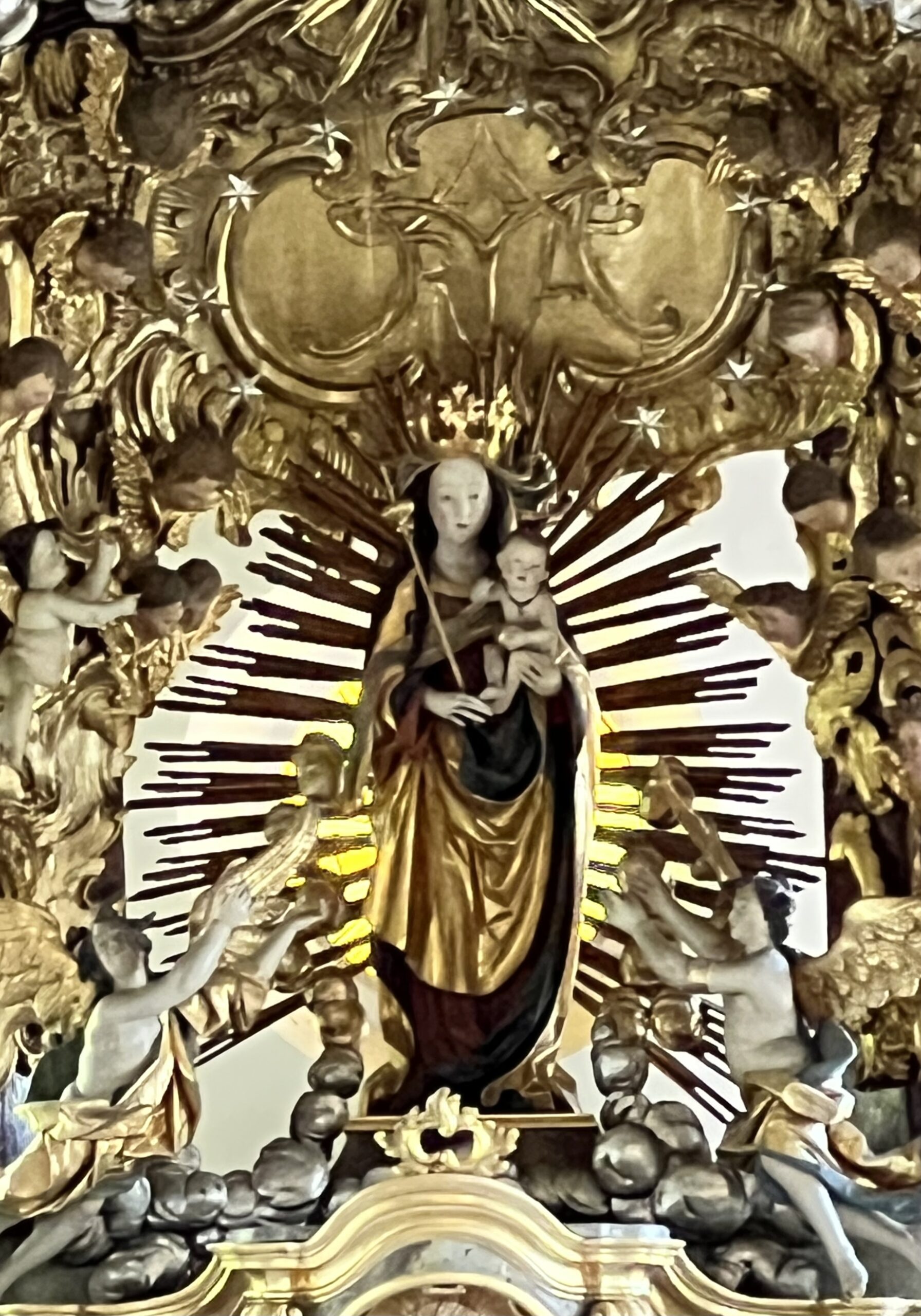
The Late Gothic grace image from around 1510 is the centrepiece of the high altar from 1757. The effigy is about a metre high and depicts Mary and Child. Mary is standing, illuminated by the sun, golden rays surround her and 12 stars complete the image. A dove is placed above the grace image.
Particularly noteworthy in the pilgrimage church are the frescoes depicting, among others, the Immaculate Conception, the Assumption of Mary, Mary Help of Christians, the Coronation of Mary in Heaven, Rosa Mystica, the Gate of Heaven, and the Jesse Tree, as well as Joachim and Anna.
ACCESSIBILITY
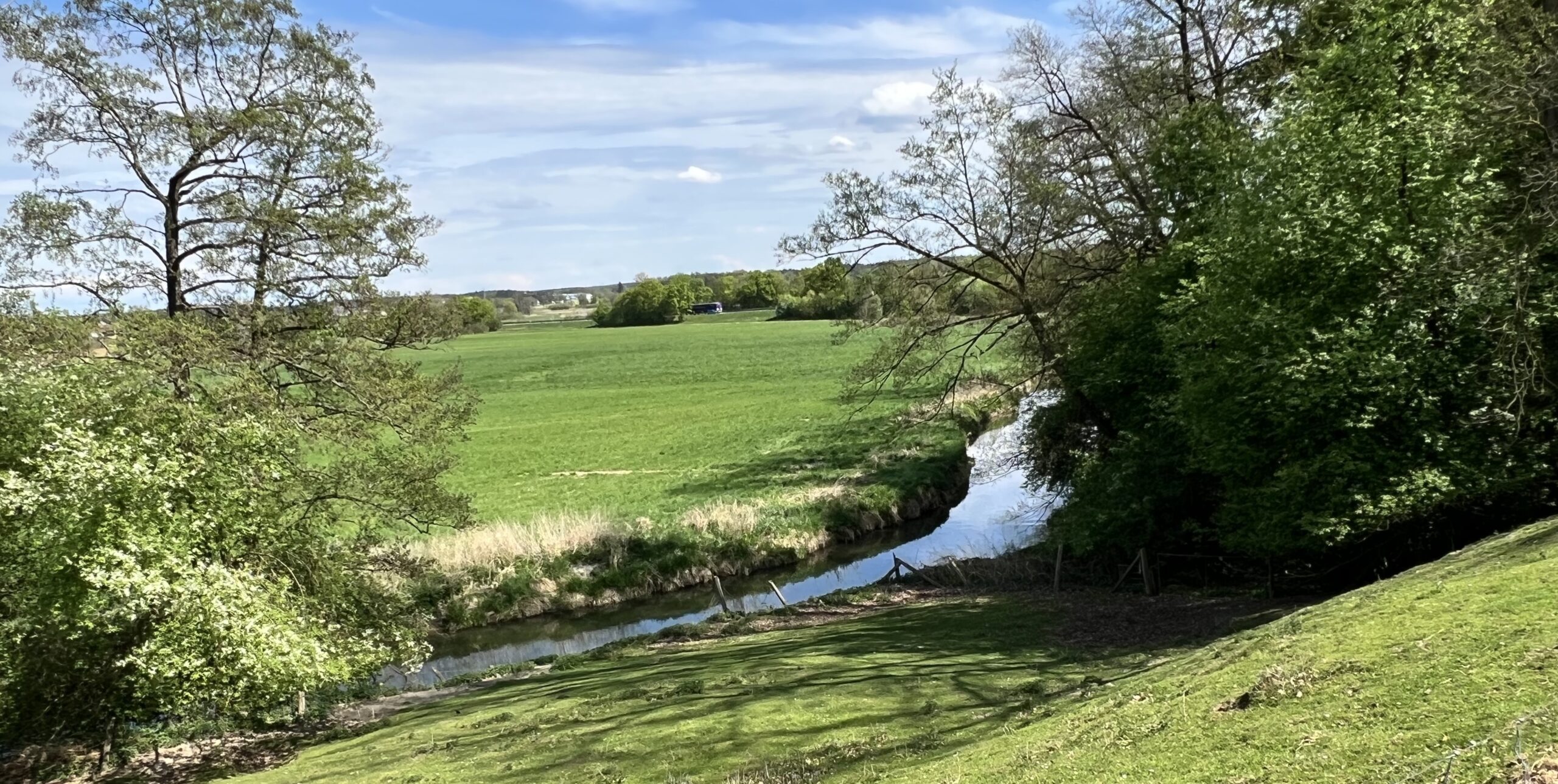
Allersdorf is a hamlet that belongs to the town of Abensberg and lies about a kilometre outside this place. To go from Abensberg to Allersdorf, one must follow the Allersdorferweg. The river “Abens” flows past the hamlet. Allersdorf is located close to the B 16 road (Bundesstrasse 16).
Info can also be found at www.pfarrei-deutschland.de.
Experience
On the way to Allersdorf, a small village on the outskirts of Abensberg and situated near the river Abens on the Frauenberg.
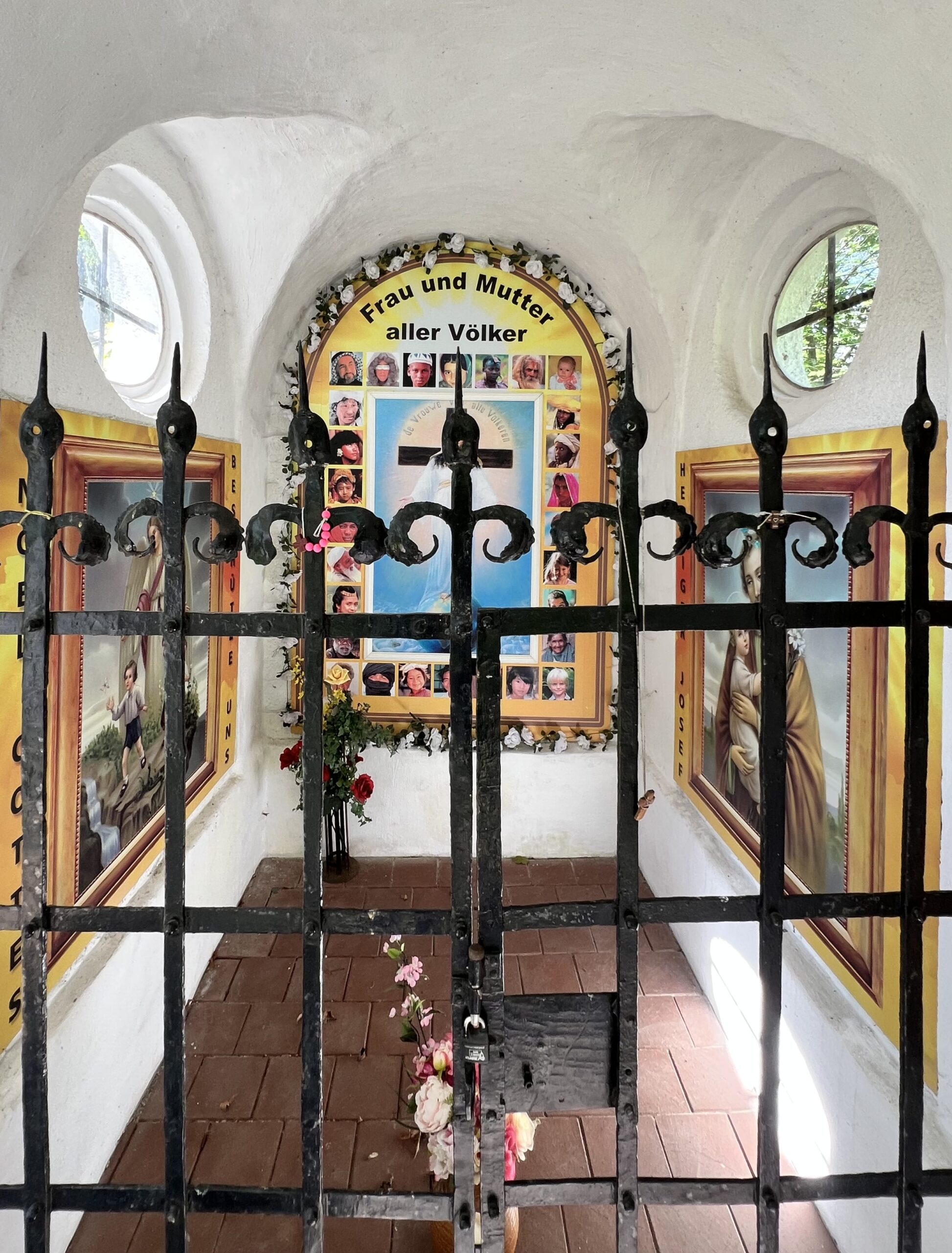
After some searching, I come to a dead end, which turns into a path that takes me to a higher plateau. Little chapels in white welcome visitors. In these small buildings, I see all sorts of scenes, such as the Immaculate Conception, the Annunciation, and the Mother of all Nations. This last one reminds me of special events with Ida Peerdeman in Amsterdam.
Next, I'll go a little further up and reach the pilgrimage church. I go inside and can admire the interior behind a closed, heavy gate. What beautiful frescoes! What a splendour of colours! Coming closer to the miraculous image is not granted to me today, because the heavy gate will not move. I look at the image of Our Lady, surrounded by rays and stars. Then it's time for a prayer.
Environment
In the vicinity of Allersdorf, there are opportunities for cycling and walking.
From Ingolstadt, it is 45 km in an easterly direction to get to Allersdorf.
Leaving Regensburg to arrive in Allersdorf means travelling 42 km to the southwest.
To go from the place of pilgrimage in Sammarei to that of Allersdorf involves travelling 158 km to the northwest.
Leaving the pilgrimage site of Maria Brünnlein in Wemding to go to the Marian shrine in Allersdorf requires a journey of 120 km in an easterly direction.
~~~
