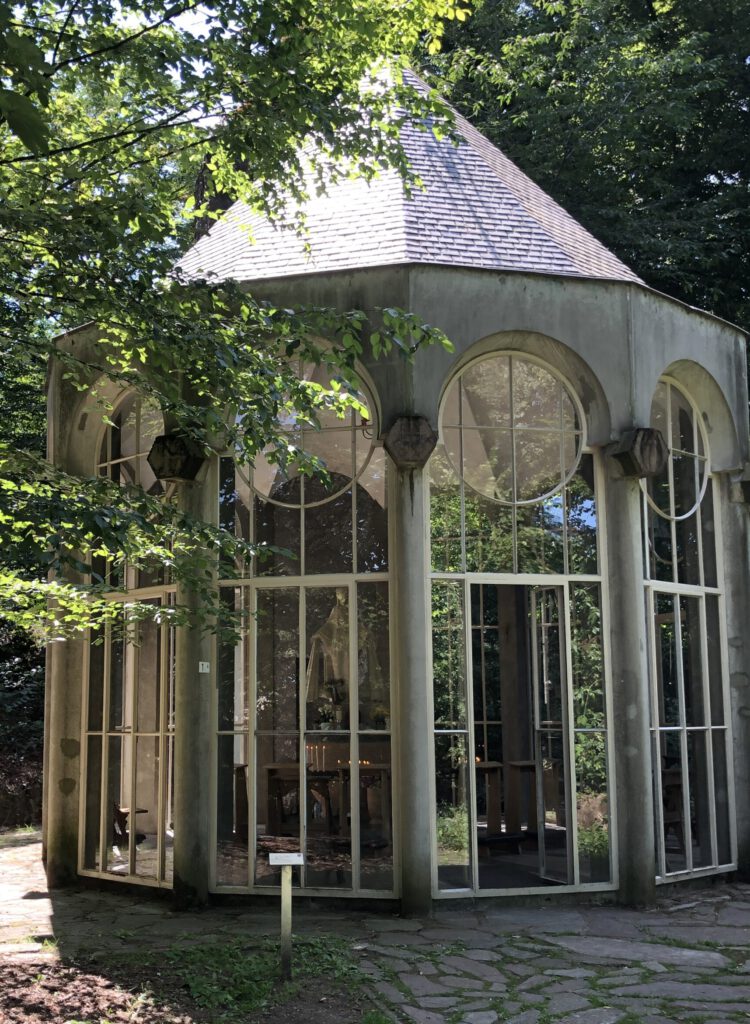
On the outskirts of Beek in South Limburg, at Counelaan 1a near the start of the Kelmonderbos, stands the Chapel of Our Lady of the Miraculous Medal. The chapel is located on the Molenberg and is therefore also known as the Chapel on the Molenberg. From the Counelaan, it's just a few steps to reach the small plateau where this particularly beautiful chapel has been built. The history of the chapel dates back to 1954…
Pope Pius XII (1876-1958) declares 1954 a Marian Year. He does this to celebrate the 100th anniversary of the dogma of the Immaculate Conception of Mary from 1854. The Pope requests all bishops to undertake additional initiatives in honour of Mary. The bishop of Roermond, Guillaume Lemmens (1884-1960), receives the Pope's call and implements it in his diocese. The bishop asks all parishes to give extra attention to Mary during the Marian Year of 1954. In Beek, South Limburg, curate J. Willems responds. This clergyman has a special devotion to Our Lady of the Miraculous Medal. He wants to have a special chapel built and dedicate it to Our Lady of the Miraculous Medal.
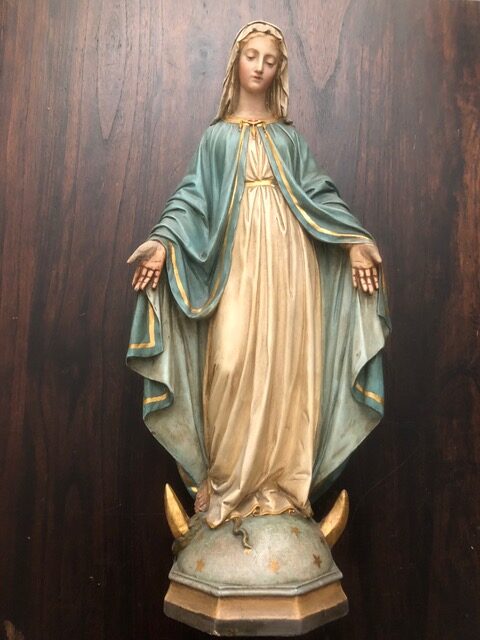
The Miraculous Medal originated in Paris, as there were Marian apparitions there in 1830. In the Parisian convent on Rue du Bac, Mary appeared to Sister Catherine Labouré. Mary instructed her to have a medal made and to distribute it. The medal has been distributed worldwide to many millions of believers (see also the section “pilgrimage sites”, France, Paris).
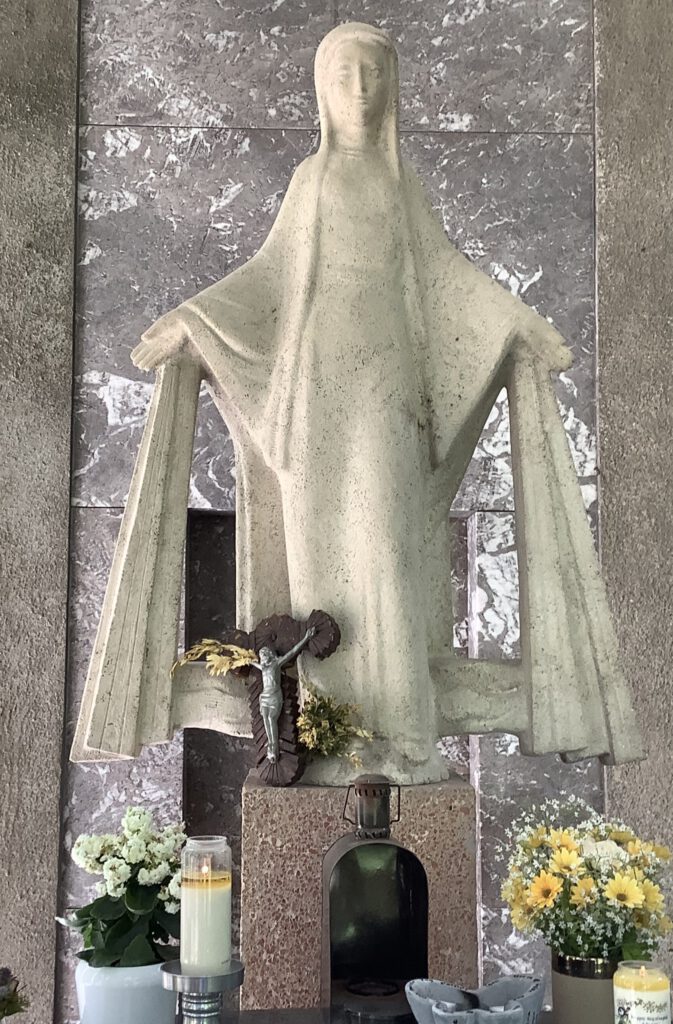
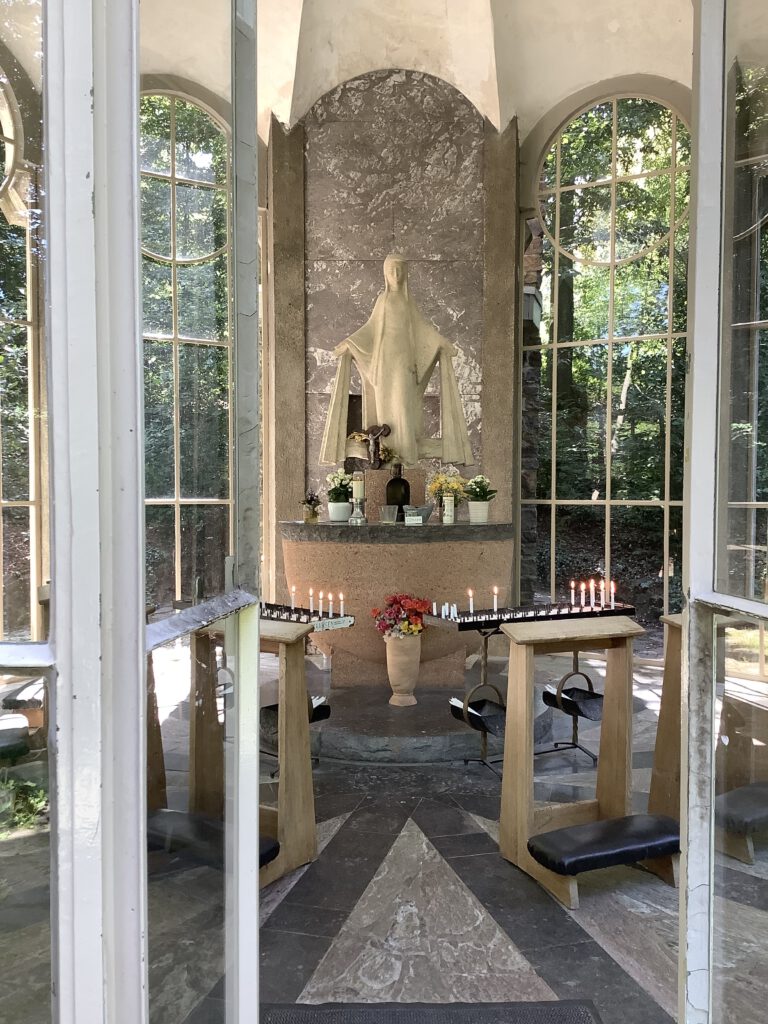
Maastricht architect Jean Huismans (1913-1974) created a design for a dodecagonal chapel. This idea was approved and many people from Beek volunteered during the construction of the place of worship. Beek artist Louis Bröls (1932-2017) created 12 capitals for the pillars. Maastricht sculptor Piet Killaars (1922-2015) crafted the unique sculpture of Our Lady of the Miraculous Medal. He made the sculpture from Euville, a white French limestone. The wooden pews in the chapel are the work of Guillaume Muris from Beek. Thanks to the diligent work of many involved, the chapel was consecrated as early as 1955. A stone is incorporated into the rear of the chapel with the inscription “Mariajaar 1954”.
The chapel is situated on a small plateau, between tall trees, and resembles a welcoming gazebo.
