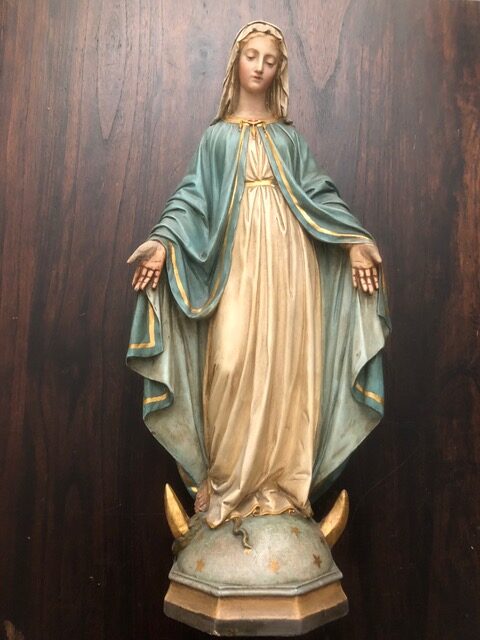
The evangelist Luke mentions the journey of Mary and Joseph from Nazareth to Bethlehem.
Augustus (“venerable”), Roman emperor from 27 BC to AD 14, born Gaius Octavius (63 BC – AD 14), issues a decree. In it, he stipulates that all people of the empire must register in the place where they were born. For Joseph, this means he must go to Bethlehem, as he saw the light of day in that place. As the head of the young family, he takes Mary with him. The two betrothed travel on foot from Nazareth in Galilee, where they live, to Bethlehem in Judea. This is a journey of several days, covering more than 100 kilometres. The first few days are downhill, then the terrain becomes a bit flatter, followed by rolling and rocky ground. Given that Mary is heavily pregnant and could give birth at any moment, the journey is a risky undertaking. This is all the more true because the road is far from safe due to all sorts of villains. Joseph walks and Mary rides on a donkey, as is often depicted. In Bethlehem, Mary gives birth and brings Jesus into the world.

 Nederlands
  English (UK)
  Deutsch
  Français