~~~
History
A legend lies at the heart of the pilgrimage site of Ver-Assebroek. The story begins in 1680. A Dutch ship is sailing from the East Indies to the Netherlands. The crew are all Protestants, with the exception of Balthasar Lanoy, a Catholic. He always carries a small statue of the Virgin Mary with him and prays to it every day. The Protestant sailors take a dim view of their Catholic fellow traveller and throw the statue into the sea. The small statue does not sink but floats behind the ship. This arouses great suspicion among the sailors, who speak of devilish practices. They want to throw the Catholic man into the sea as well, but the captain stops them and has the statue fished out. The small statue is saved by the ship’s boy Abraham Zut. During the voyage, he keeps it hidden and takes it home with him. When Abraham returns home to Dokkum in Friesland, he gives it to his friend, the Catholic Jacobus De Mets, who spreads the story of the statue. This gives rise to devotion to the statue. The Protestant town council of Dokkum is annoyed by the interest in the statue of Mary and wants to confiscate it. Jacobus manages to prevent this by sending the statue in 1682 to his sister Cornelia, who is staying in the Beguinage in Diksmuide. Cornelia De Mets and the other Beguines looked after the Marian statue for 38 years. Pieter Verhaeghe was the chaplain to the Beguines and, when Cornelia died in 1720, he received the Marian statue. Shortly afterwards, Pieter Verhaeghe became parish priest in Ver-Assebroek and he donated the statue to the parish church. On 7 December 1720, the miraculous statue was placed in the church. This attracted more visitors to the church. Miracles occurred at the statue, such as in 1730, when the 14-year-old girl Pieternelle de Smedt, who was lame and mute, visited the statue, prayed and was healed. In 1732, a second miracle occurred. A young boy was ill and had boils and sores all over his body. Doctors were unable to help, so his mother decided to go on a pilgrimage to Ver-Assebroek. After she had made a vow to make the pilgrimage, her child was completely healed eight days later. A little later, mother and child went on a pilgrimage to Ver-Assebroek.
In 1746, the church is enlarged and subsequently dedicated to the Immaculate Conception of Mary. In 1797, during the French occupation from 1794 to 1815, the church is closed and its inventory is put up for sale. The banking family Dujardin/Du Jardin purchases much of the church inventory. In 1803, the church is reopened and redecorated with the help of the Dujardin/Du Jardin family. In 1845, Felix Dujardin/Du Jardin (1789-1849), of the Bank du Jardin in Bruges, donates a piece of land behind the church to create a cloister walk.
In 1887-1888 the church was enlarged again. The presbytery, which stands next to the church, was built in 1902.
The chapels behind the pilgrimage church were built between 1902 and 1905. They were designed by architect Louis Ernest Charels/Charles (1875-1912). The statues were made by sculptor and cabinet maker Joseph Lelan (1868-1953).
Pilgrimage site
The name “Ver-Assebroek” originated from the church’s location, being about an hour's walk from the city centre of Bruges.
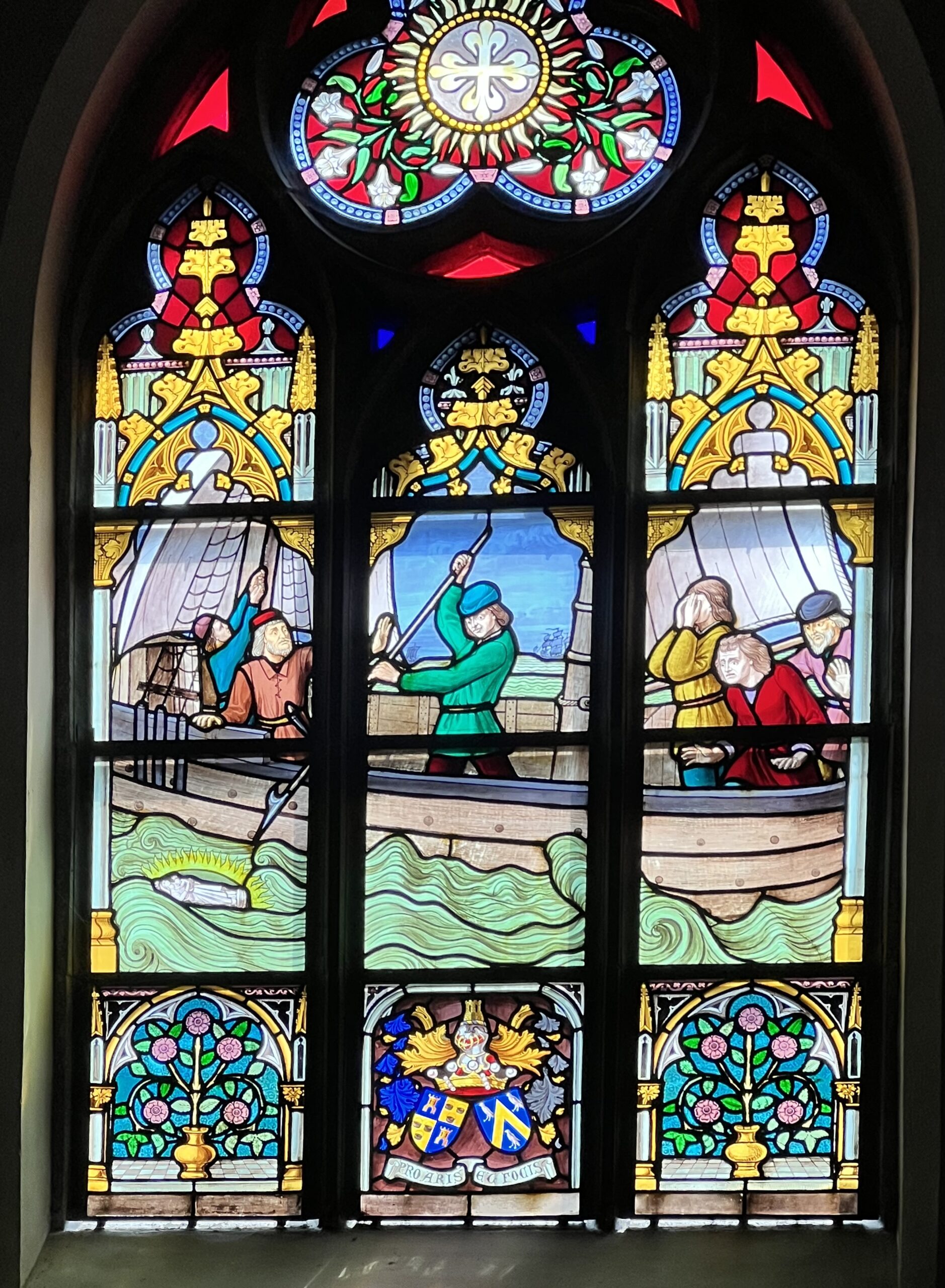
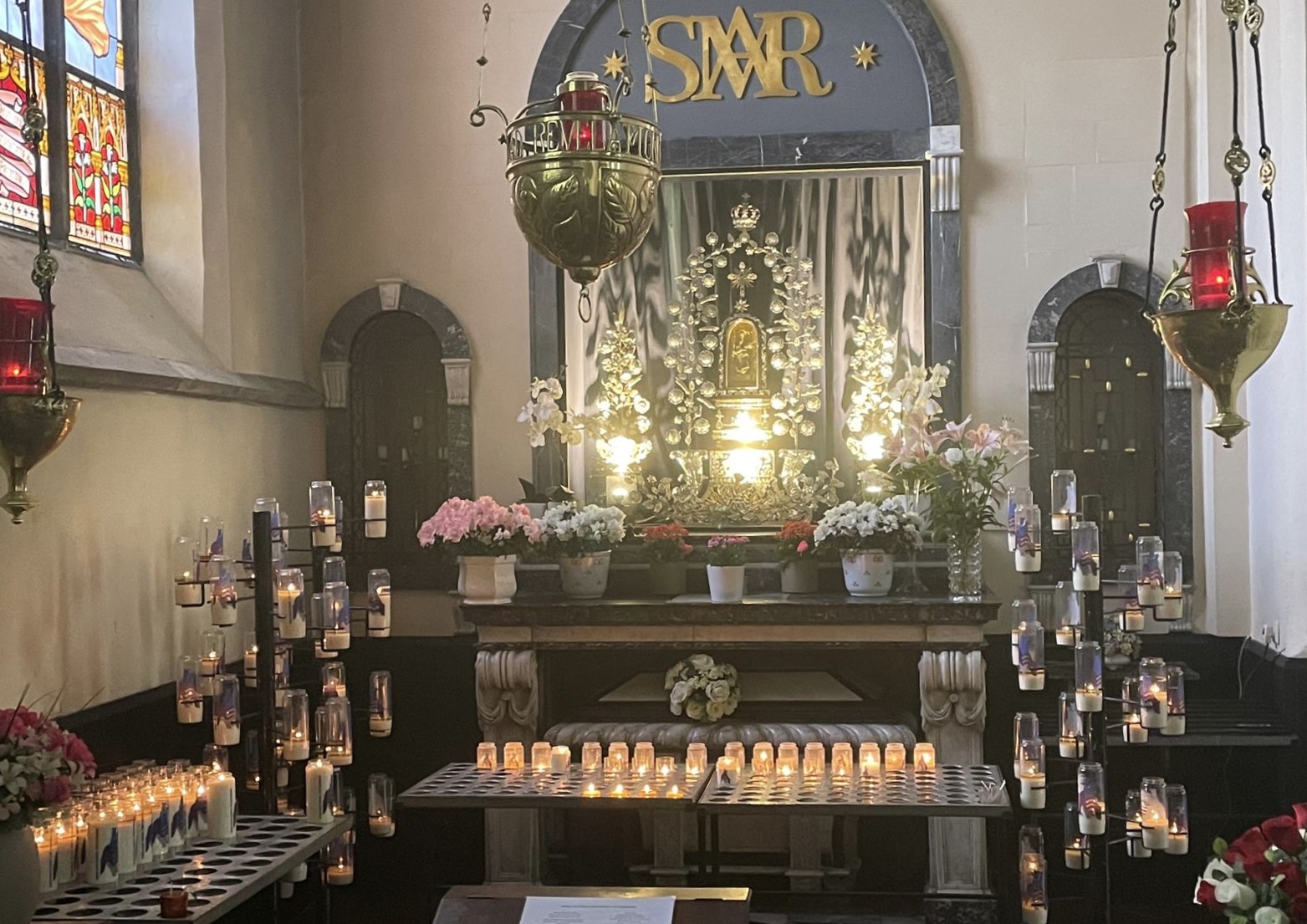
In the Church of Our Lady of Ver-Assebroek, you'll find the miraculous statue of Mary, which is 15 cm tall. In the side chapel, candles are always burning by the statue.
The church features colourful stained-glass windows depicting the history of the statue of Our Lady.
In the churchyard behind the church stands a large effigy of Mary and her deceased Son. This pieta is located amidst the deceased.
The pilgrimage site has two pilgrimage walks, namely a short one and a slightly longer route. The short walk is the procession with 7 chapels behind the church, around the old graveyard. The depictions are about the sorrowful events of Mary. The long route of approximately 2 km goes along Kerklaan, the corner of Kerklaan-Astridlaan, Astridlaan, Sparrenstraat, Gemeneweideweg-Zuid, Lorreinenstuk, back to Astridlaan, Meersenstraat and again Kerklaan.
ACCESSIBILITY
On the outskirts of Bruges lies the sub-municipality of Ver-Assebroek in the province of West Flanders.
The address of the Church of Our Lady of the Immaculate Conception is Pastoor Verhaegheplein 13, 8310 Bruges/Ver-Assebroek.
Current information can be found at www.sinttrudo.net.
Experience
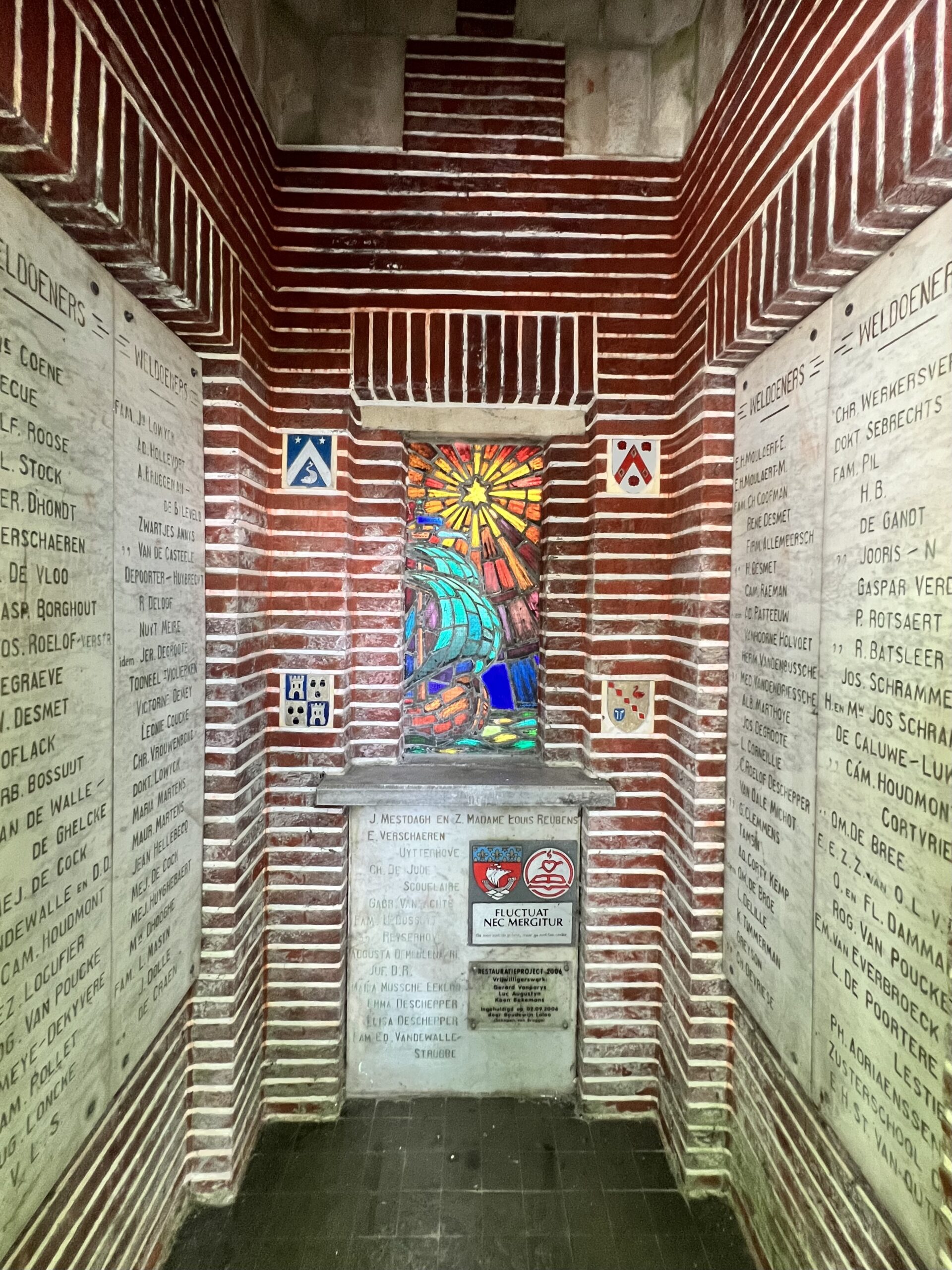
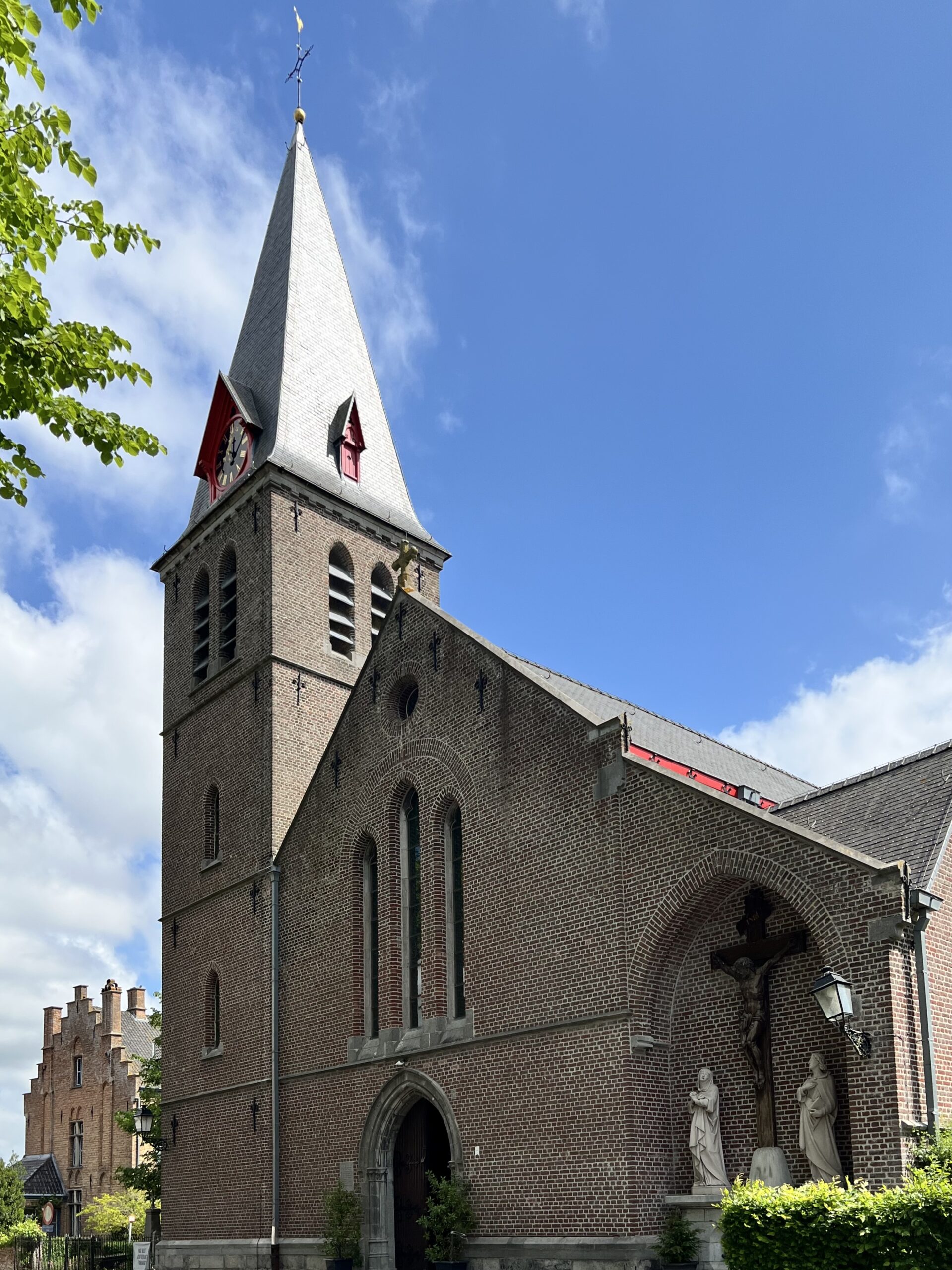
As I approach the outskirts of Bruges, I see the pilgrimage church, which towers above all other buildings. The church is a tall structure with a pointed spire.
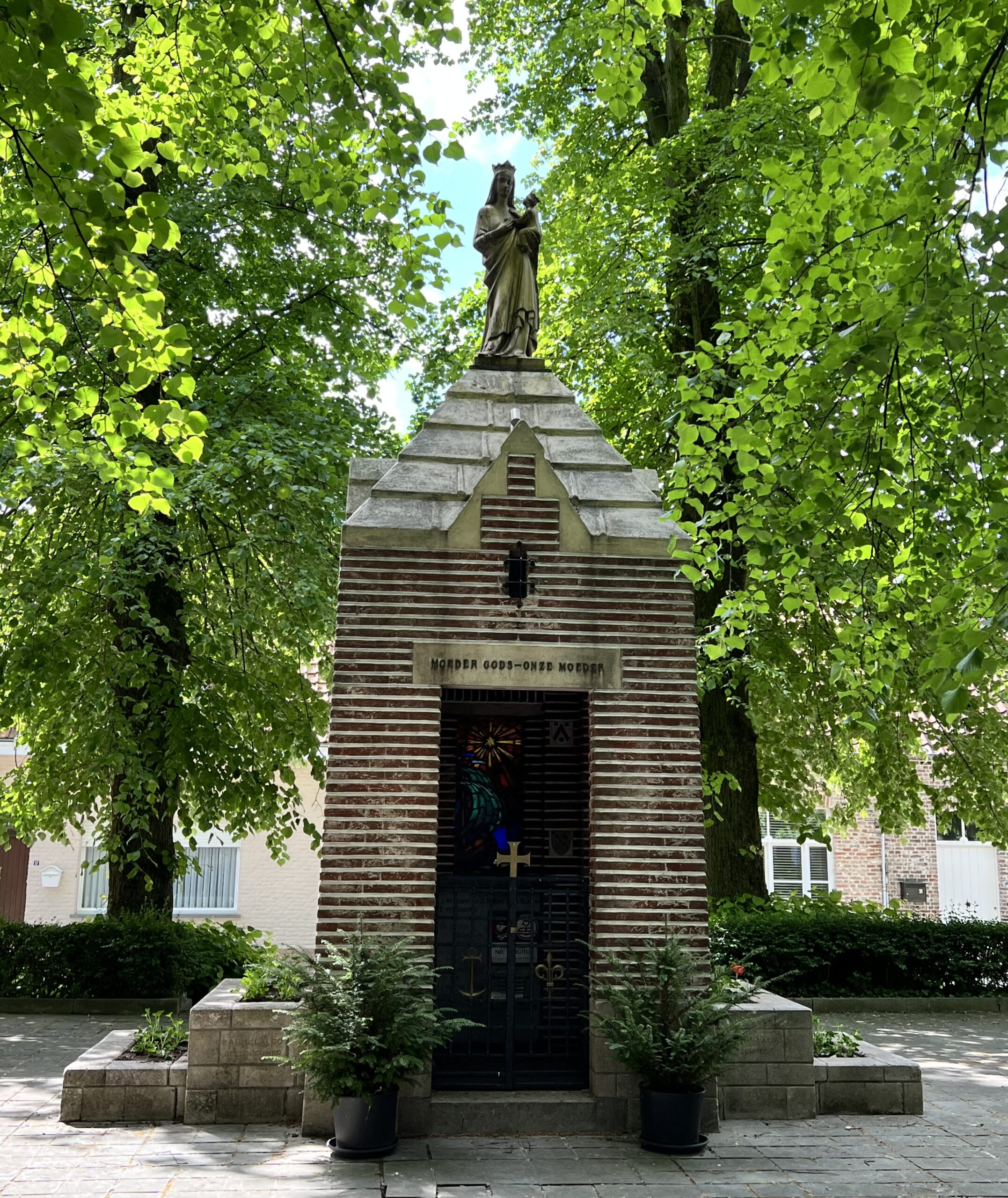
A garden has been laid out for the church, with a small chapel in the centre. A statue of Mary has been placed on top of the building. In the small space, I see a stained-glass window depicting the boat, which marks the beginning of the history of this Marian shrine. The sign reads that the chapel was restored in 2006. Beneath the stained-glass window are the very apt Latin words “fluctat nec mergitur,” which translates to “it floats but does not sink” in Dutch. Thus, the statue of Mary gives a miraculous sign! On either side of the interior walls are large plaques bearing many names of benefactors who made this building possible. This private initiative deserves great praise.
Next, I'll go to the pilgrimage church, and there's a stone set in at the entrance. It states that the first stone of the extended church was laid on 15 April 1888. Then I'll go inside the church. It's quiet; a few people are praying, and I take a walk around. There's an explanation in images and words about the miraculous statue of Mary of Ver-Assebroek.
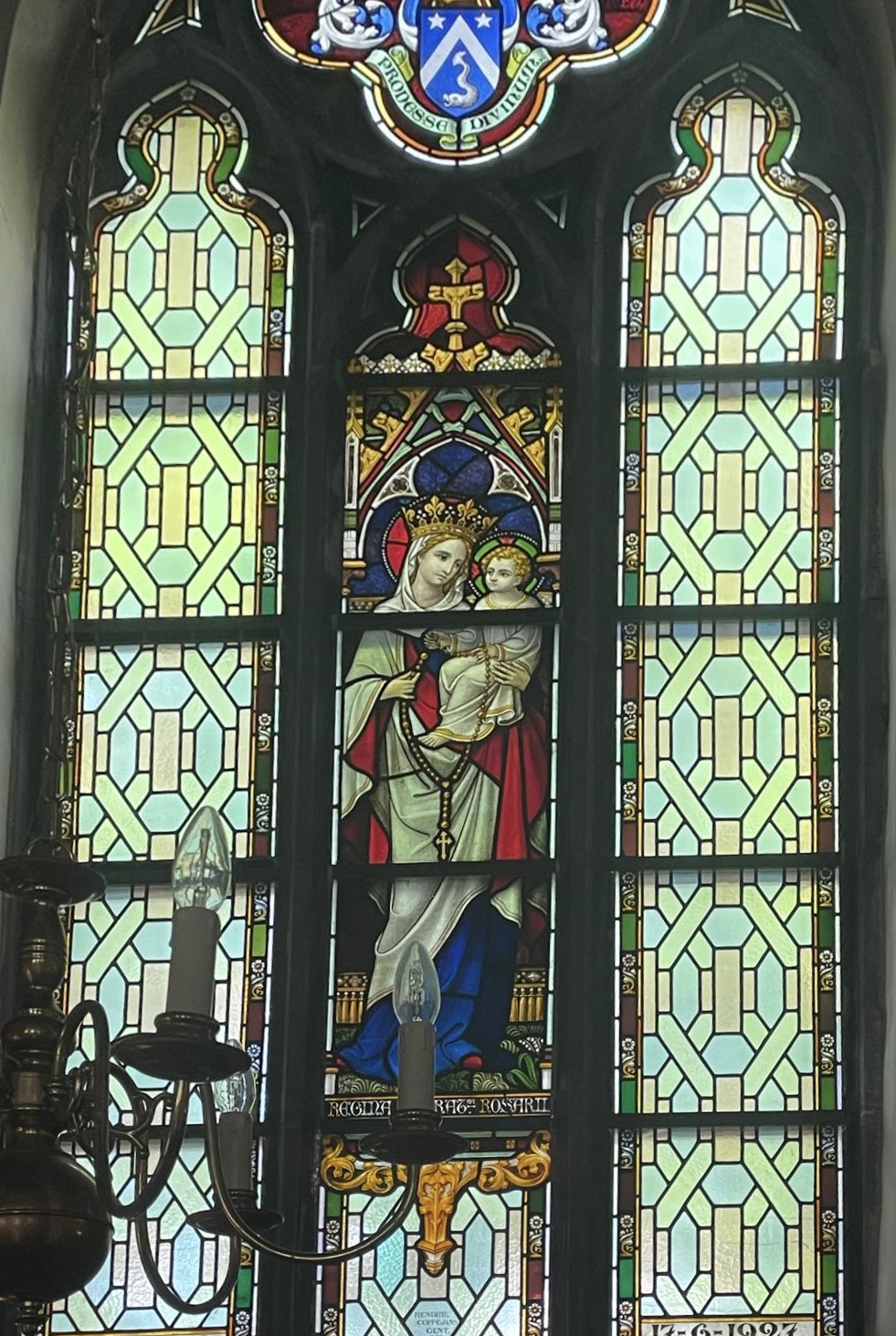
As I go further into the church, I notice magnificent stained-glass windows, including one of the “Holy Queen of the Rosary”.
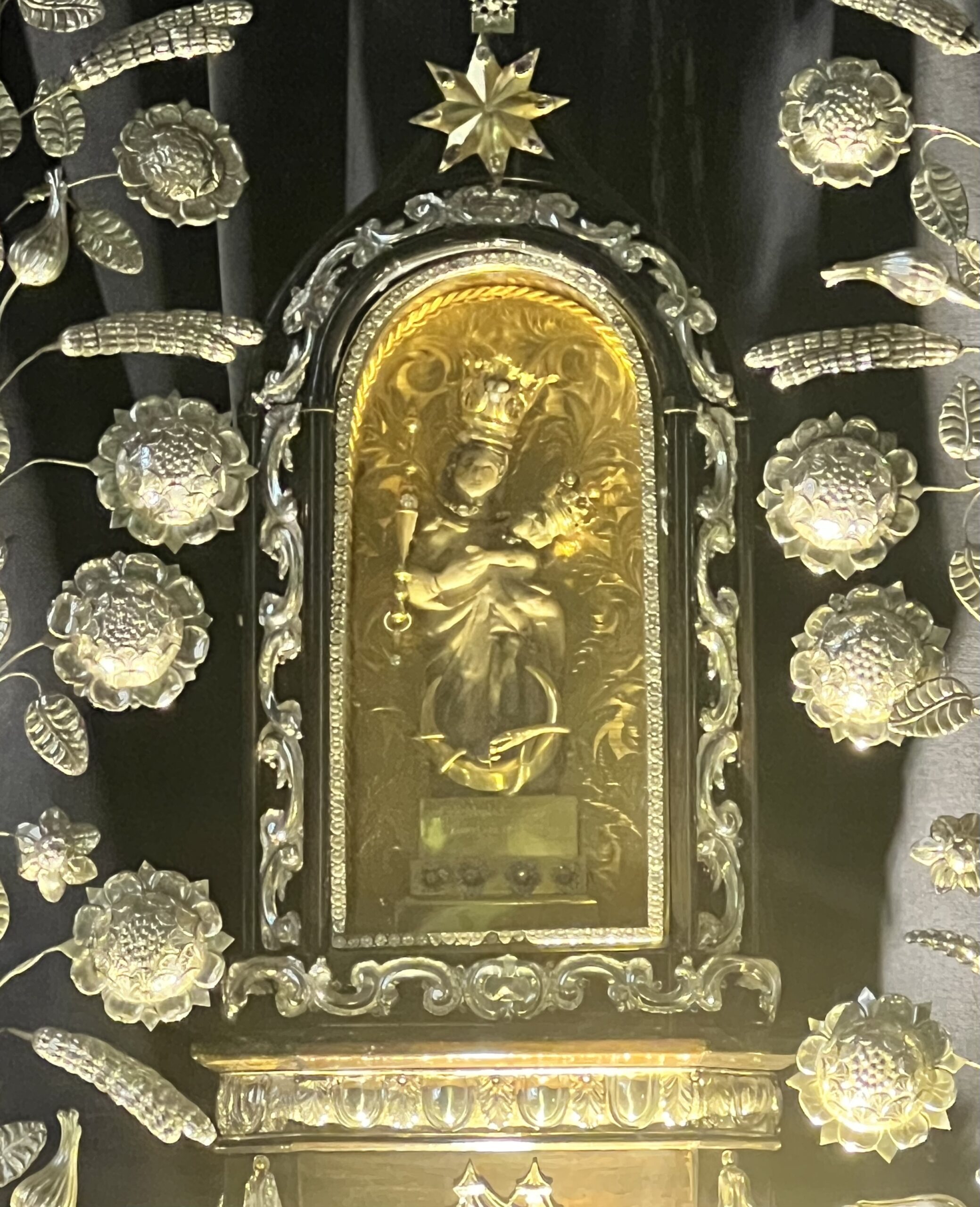
In the left side altar, behind glass, stands the miraculous statuette of Mary. That image has so many events to tell. The miraculous statuette and the decoration of the altar appear to be made of gold. Beautiful flowers stand by this altar. Mary is also praised here among the flowers. Many candles burn by the image of grace, and some more are being added now. After lighting the candles, I pray, and with that, some intentions concerning friends are conveyed to Our Lady.
The chancel displays stained-glass windows, which depict phases of history, including a ship, sailors, a figurine of salvation, and acts of worship. How beautifully history is portrayed!
A large painting of the Holy Family draws the eye. What a captivating depiction! This is the place to take time to pray.
At the back of the pilgrimage church, there is a small Pietà with Mary and her dead Son. Then I stand for a long time gazing at the stained-glass window depicting the Assumption of Mary.
On a large sheet, I read the text of the “Prayer to Our Lady of Assenbroek”. The last part reads:
“And as once your wonder image
stayed afloat on the waves,
Make sure we do not perish
in the storm of evil and adversity,
but through our connection
with you and with Christ,
safely reach the harbour of eternal life.
Our Lady of Assebroek, pray for us.”
After visiting the beautiful church, I take a walk around the adjoining churchyard and come to some chapels. Each chapel depicts a sad, poignant moment from the life of Mary. I read that the processional chapels were made in the years 1902-1904 and were restored in 2005. The chapels are beautiful and well-maintained. I find the chapel of ”Our Lady of the Immaculate Conception" particularly beautiful. Each chapel was realised by benefactors.
When I look back at our stay in Ver-Assebroek, it brings back fond memories of this beautifully situated pilgrimage site.
Environment
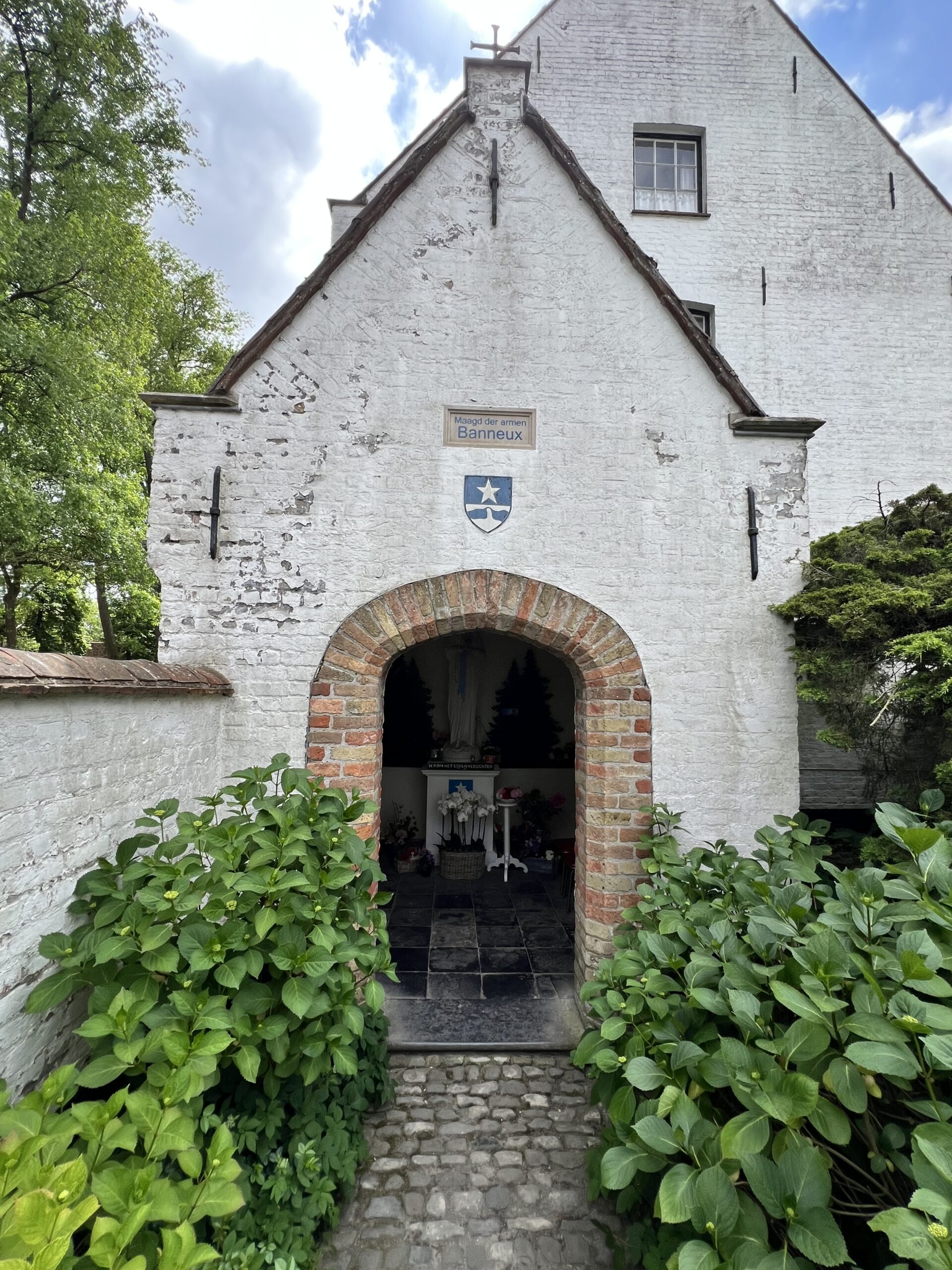
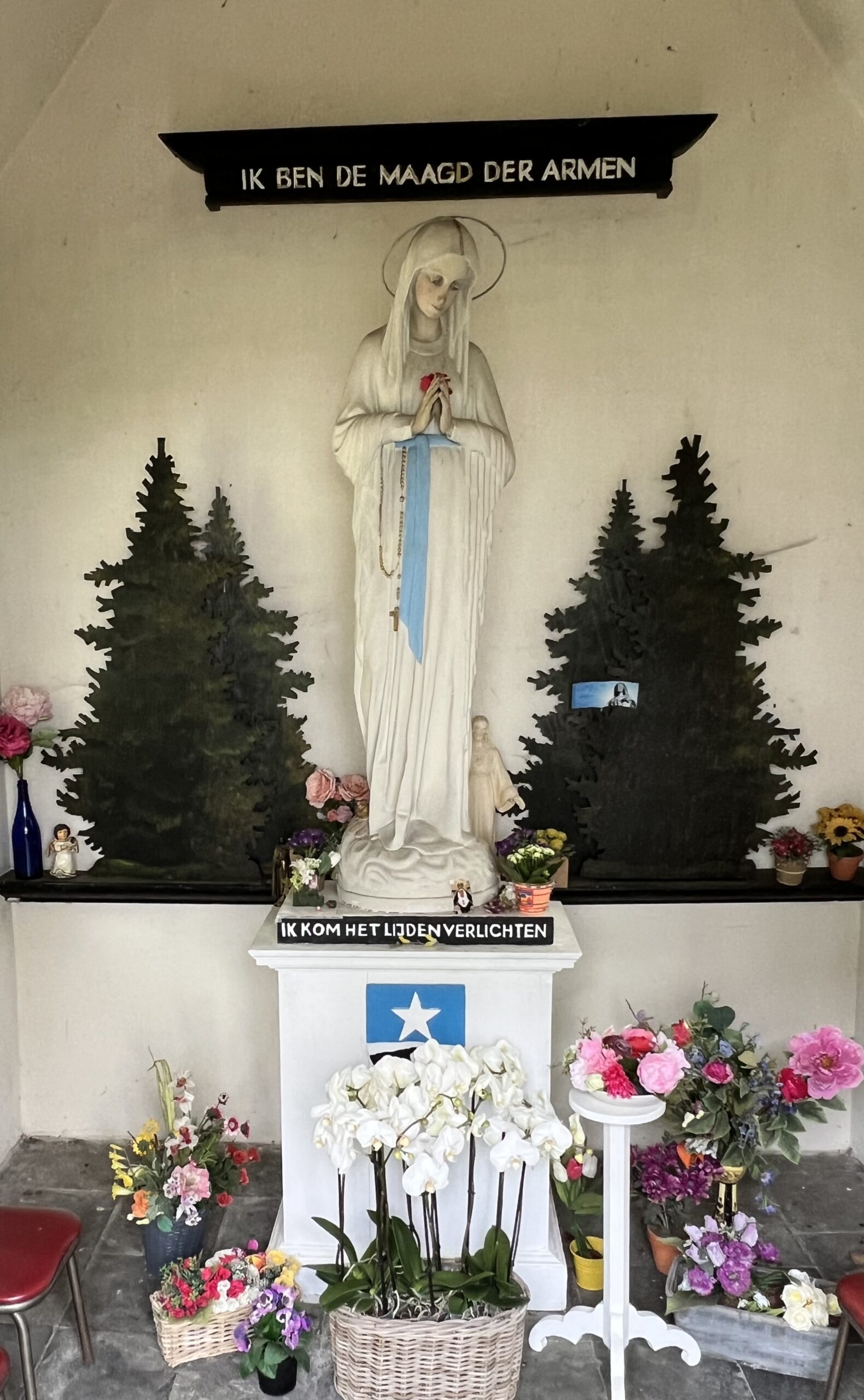
The pilgrimage site of Ver-Assenbroek is not far from the historic centre of Bruges. There are many churches and other buildings to admire, and numerous images of Mary adorn the facades. Many images of Mary can also be seen in and around the béguinage. Some of the statues of Mary bear the inscription “Ave Maria”. On the grounds of the béguinage, there is a small chapel dedicated to “Our Lady of Banneux”. Beneath the statue, it reads “I come to relieve suffering”.
In the church of the Beguinage, several images of the Mother of God can also be seen. Many candles are burning at the large statue of Mary.
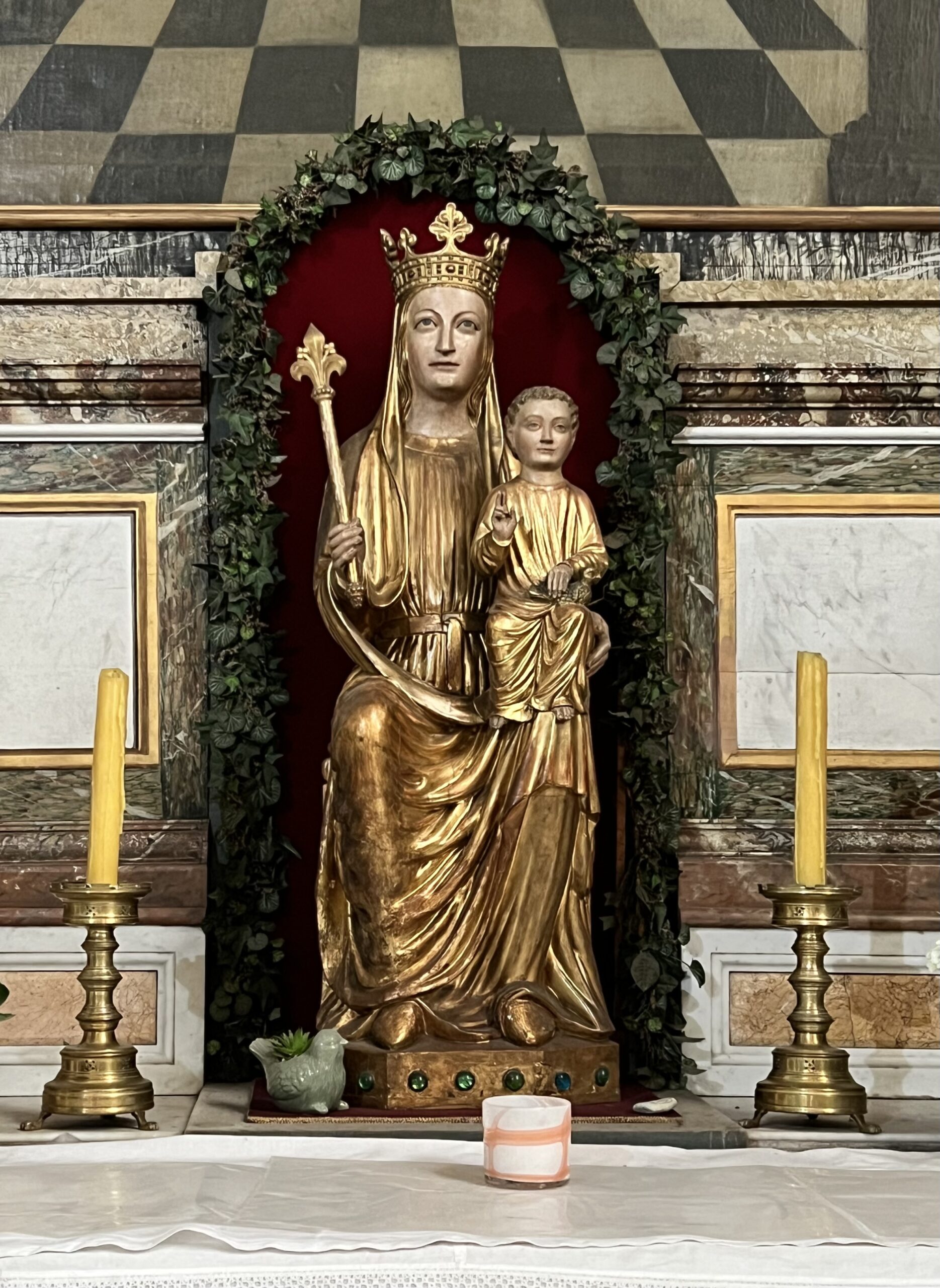
To go from the pilgrimage site of Ertvelde to that of Ver-Assebroek means travelling 40 km to the west.
Leaving Ostend to arrive in Ver-Assebroek is travelling 31 km to the east.
Going from Blankenberge to Ver-Assebroek involves covering 19 km towards the southeast.
~~~
