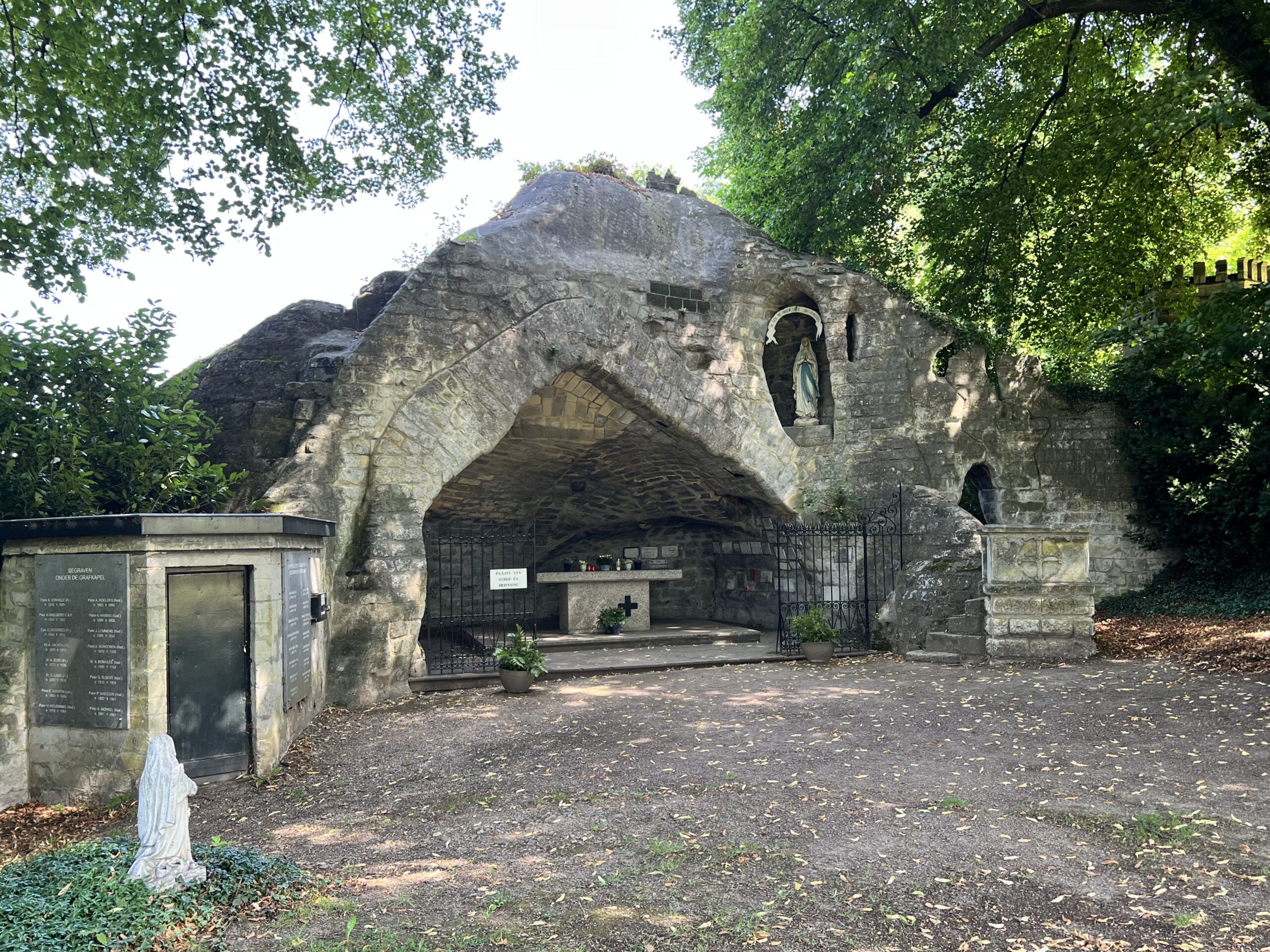
The second Lourdes grotto in Cadier en Keer stands on the Keerderberg, in the middle of the South Limburg hills. This grotto was built in 1882, making it one of the oldest Lourdes grottos in the Netherlands.
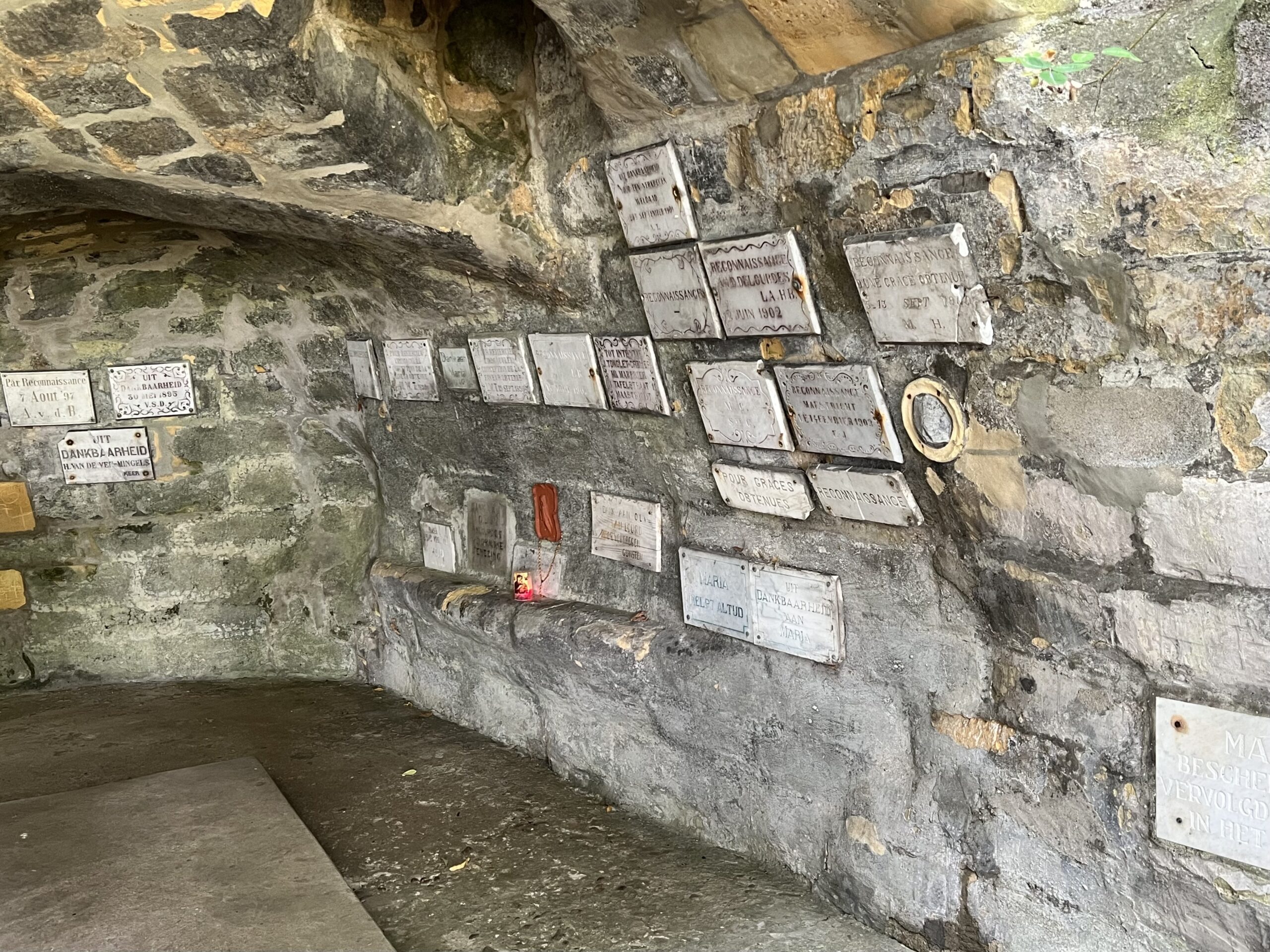
The Lourdes grotto stands on a plateau with a wide view of the surrounding area, which includes many forests, the city of Maastricht, and a golf course. The grotto is located next to the seventh station of the cross, at the top of the Stations of the Cross park, and is constructed from marlstone. The grotto has several niches, and beneath the statue of Mary, there is an altar table. Ex-votos are affixed inside the grotto, some of which express thanks to Mary in French. A wrought-iron fence has been made for the Lourdes grotto, which can be used to close it off.
The Lourdes grotto is located in the grounds of the former mission house of the Fathers of the African Missions. The mission house was founded in 1891 by the French Father Gaston Desribes (1848-1929). The mission house was named “Collège Apostolique de Notre-Dame de Lourdes”. Gaston Desribes came from the area of Lourdes in France and knew the family of the seer Bernadette Soubirous.
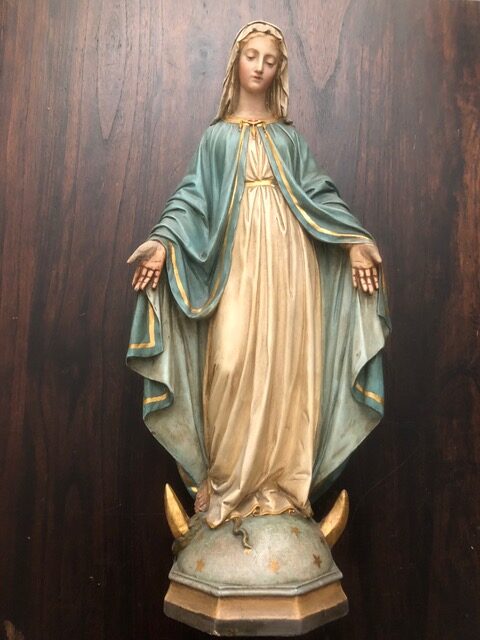
The Lourdes statue was donated by Andreas Jacobus Hubertus Waelbers (1835-1902), parish priest of Cadier en Keer (1889-1902) to Gaston Desribes. His condition was that visitors must always have free access to the Lourdes grotto. The gift is a polychrome bronze statue of Mary, which was made in the Parisian studio Maison Raffl, just like the statue that stands in the grotto of Massabielle in Lourdes.
The statue of Mary is not the first effigy to stand in the grotto, as the statue was stolen twice. It was first stolen in 2012, found damaged, and then stolen again.
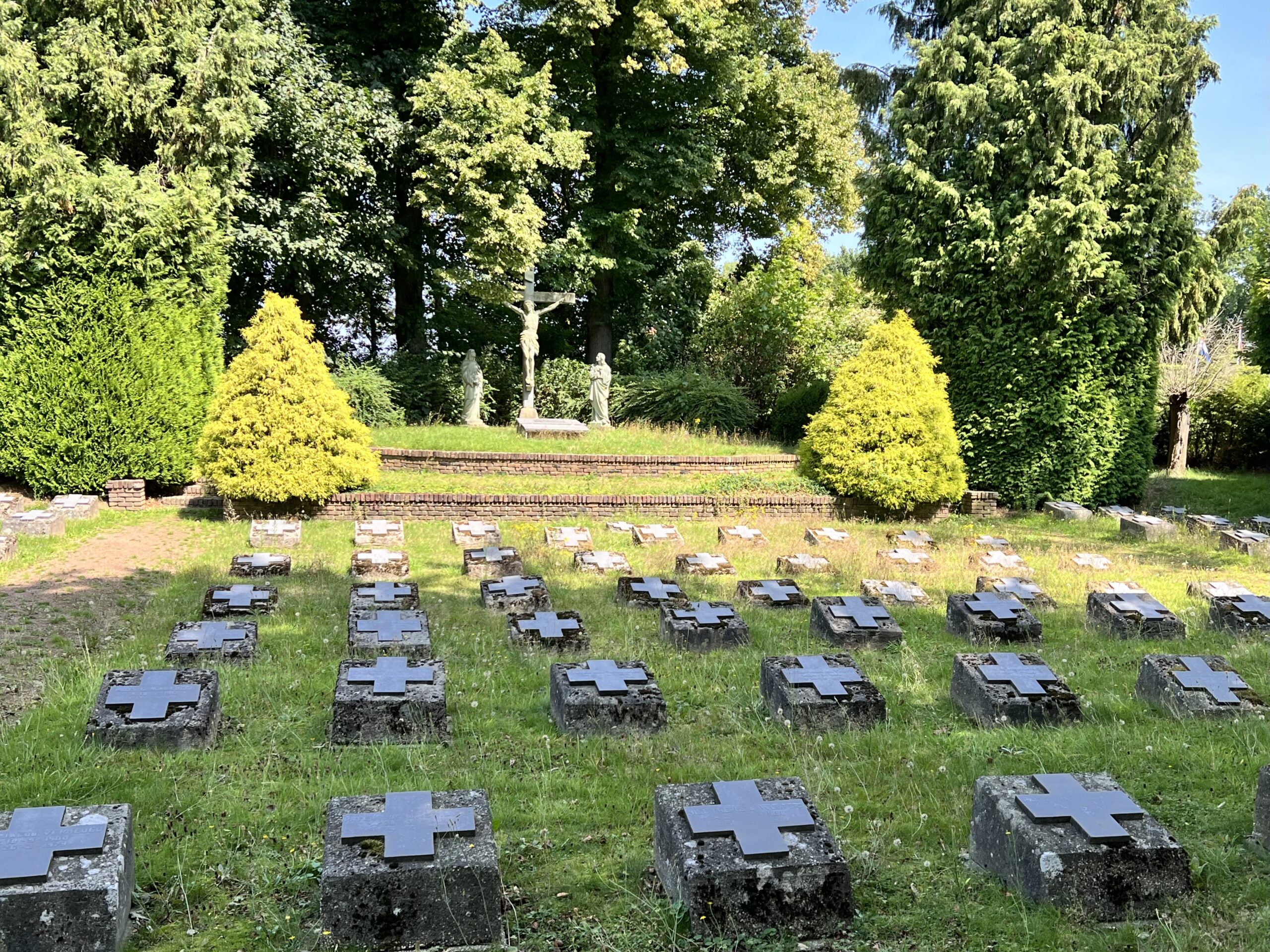
Besides the Lourdes Grotto, plaques have been affixed with the names of clergy and students who are buried under the vacant burial chapel, which stands diagonally behind the grotto, and behind the grotto.
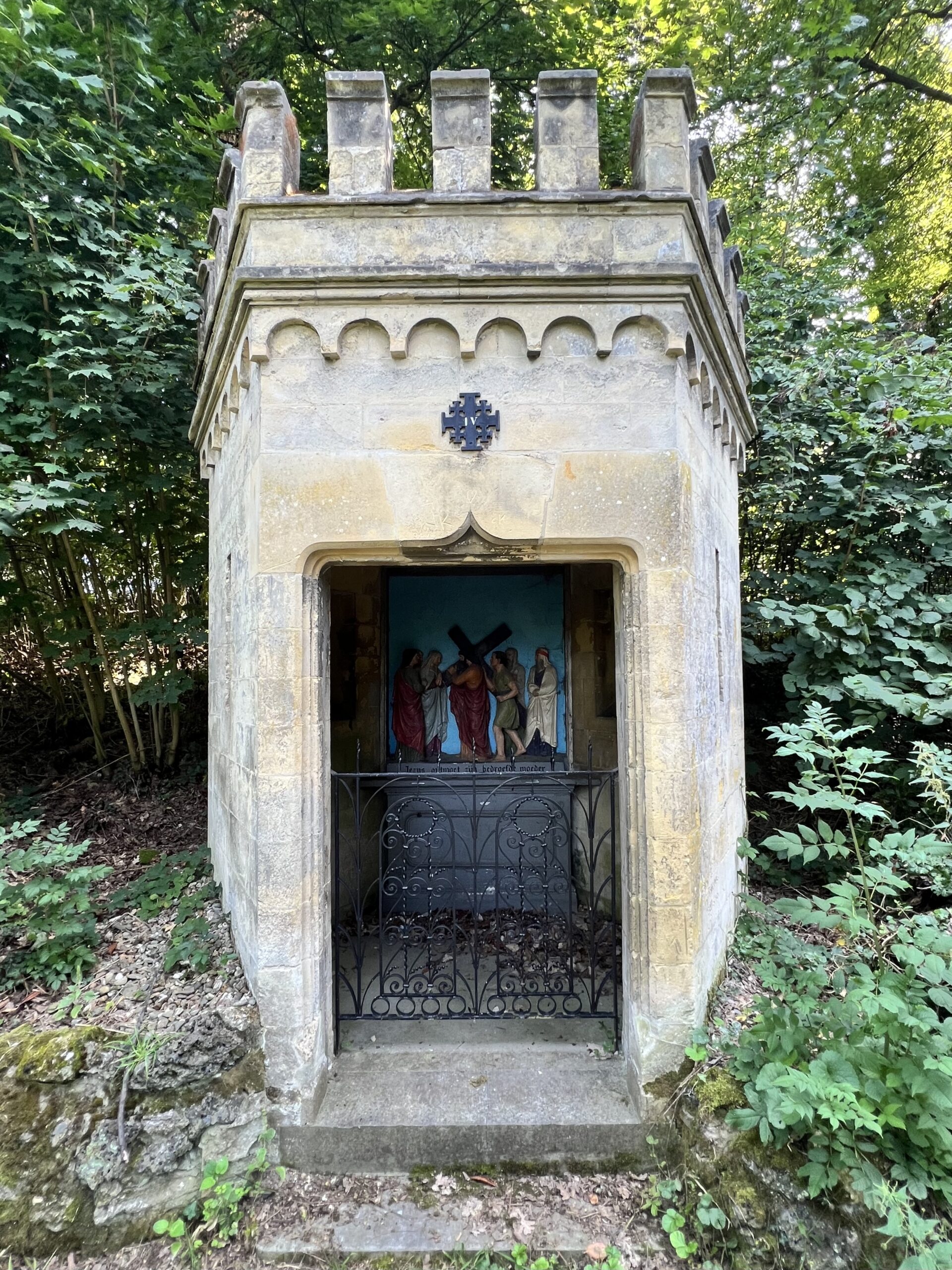
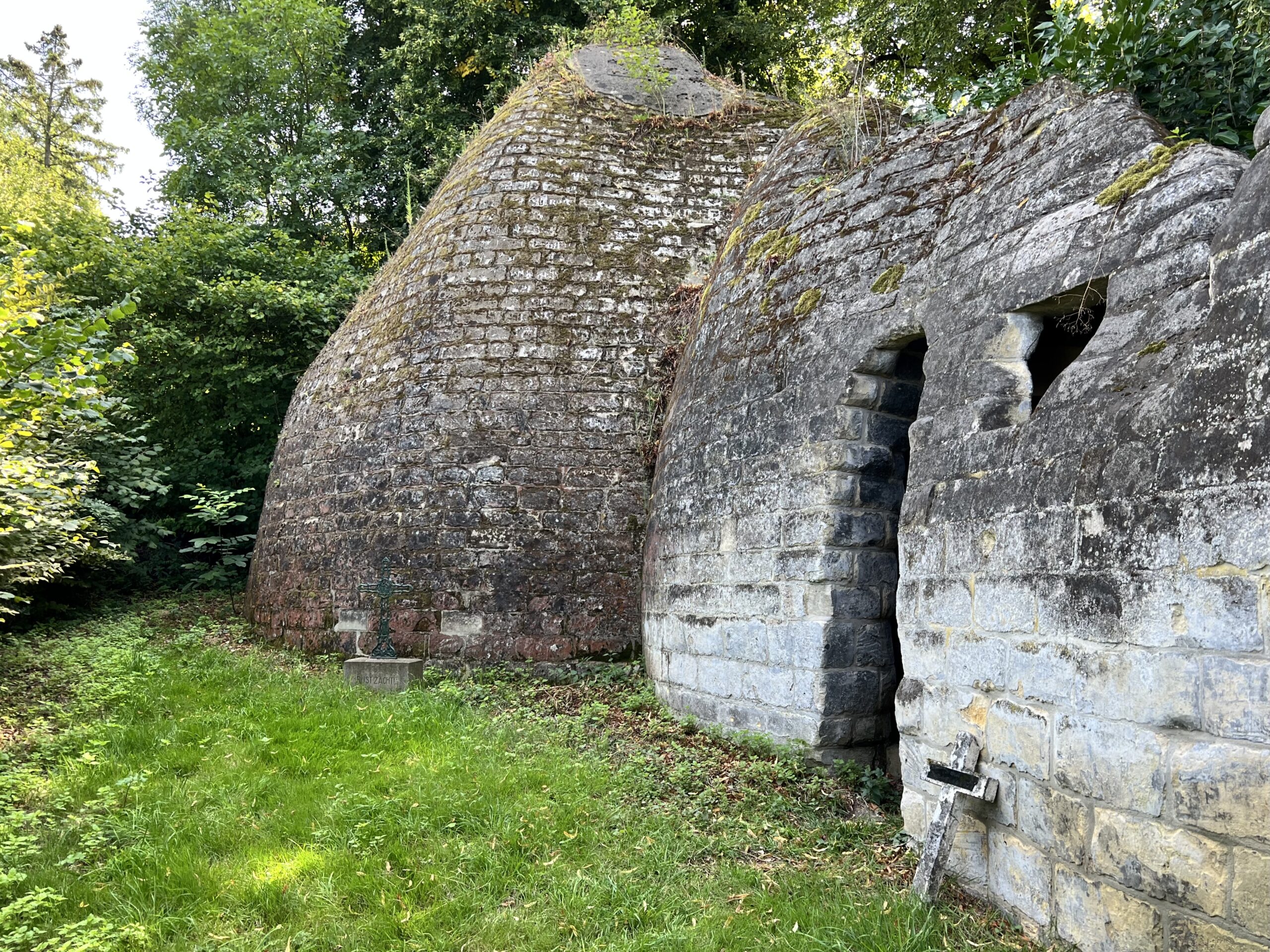
The estate features not only a Lourdes Grotto but also a Stations of the Cross, a cemetery, a former mission house, and a residential care home. The Stations of the Cross comprise 14 freestanding stations dating from around 1892. These are hexagonal chapels made of marlstone with railings. In 1998, the stations were restored. The Stations of the Cross lead to the cemetery of deceased clergy, including founder Gaston Desribes. Near the cemetery, there is also a memorial stone for deceased sisters, specifically for the “Dutch Sisters of Our Lady of Apostles”. This stone reads, “Dutch OLA Sisters, who served in the Irish Province. Requiescant in pace.” They therefore served in the Irish province and rest here in peace.
The estate of the Kruiswegpark is a protected National Monument.
The mission house was built in 1891 and largely burned down in 1954. Subsequently, a new monastic wing was constructed, designed by architect Anton Swinkels (1900-1971). The mission house serves an educational purpose and was founded by the missionary society “Société des Missions Africaines,” abbreviated as SMA, which was established in Lyon, France. The first residents of the Society of African Missions were French clergy who had fled due to the anti-clerical stance of the French government. A vacant part of the mission house will be converted in 2025 for the expansion of the De Keerderberg care centre.
To reach the Lourdes grotto, turn off the Rijksweg at number 15. On the Rijksweg, at number 11, there is a sign stating “Landgoed Keerderberg” and “Sanctuaire Notre-Dame de Lourdes”. On foot, follow the path indicated by the sign Résidence le Monastaire, and take the uphill path before the Stations of the Cross at Rijksweg 11.
Address: Rijksweg 15, 6267AC Cadier en Keer (municipality of Eijsden-Margraten).
~~~
