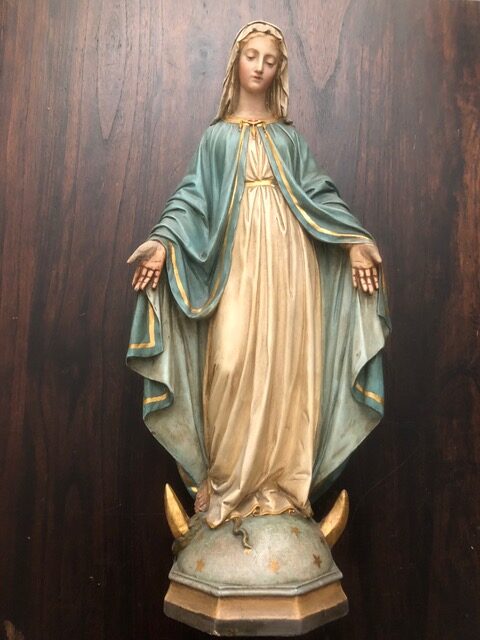
On 2 February, the Feast of Candlemas is celebrated. This commemoration is among the oldest Christian, celebratory events. This day is the official end of the Christmas season. It is then 40 days after Mary's delivery and her bringing Jesus to Earth.
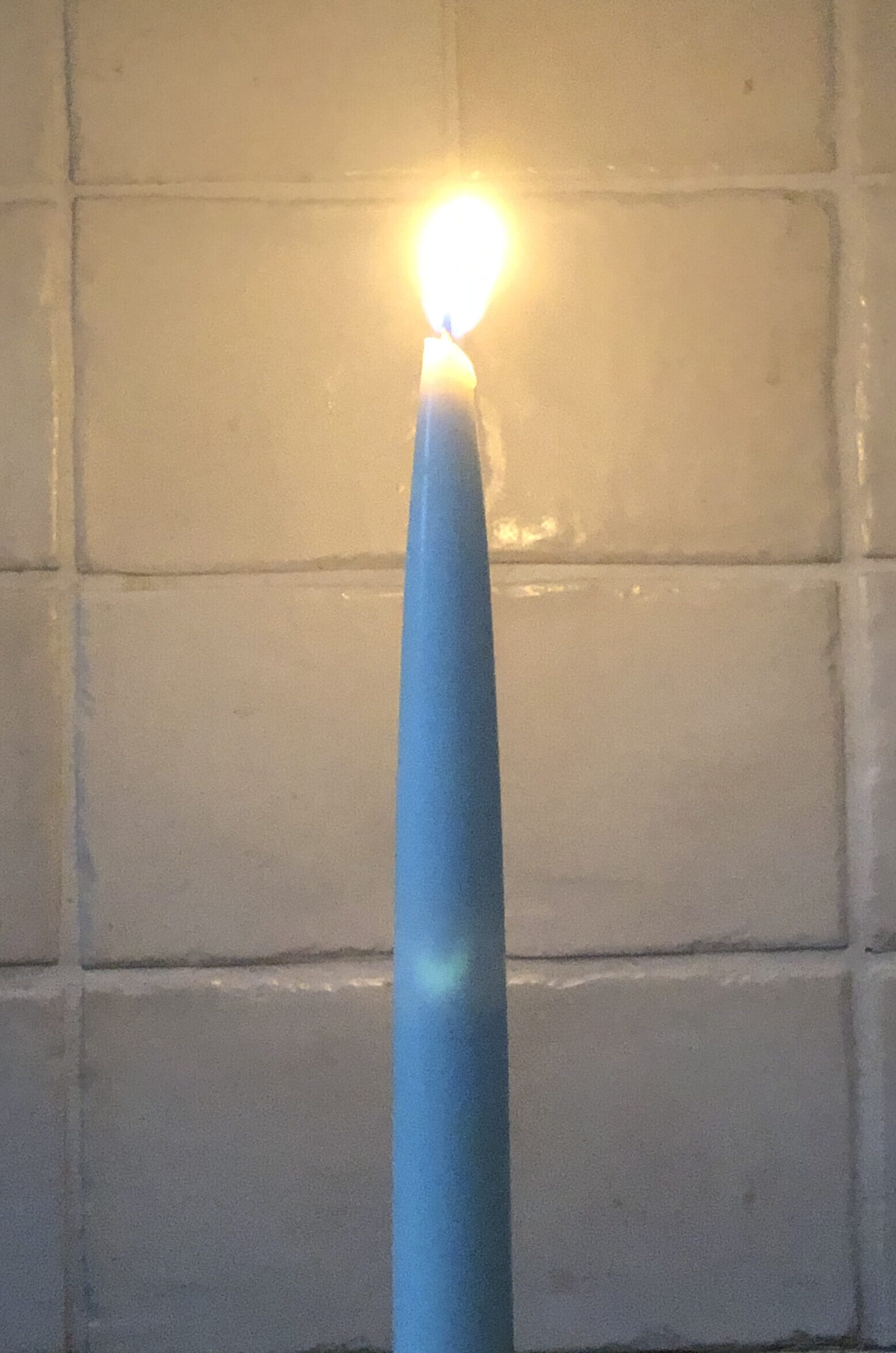
On Candlemas Day, light is central and there is light everywhere in the hearts of believers. This day is therefore a highlight of the Christmas season. The light on Candlemas symbolises a source of boundless hope and love, which believers keep burning in their hearts. This light continues to nourish hearts to get through dark days. Through the light on Candlemas, believers' feelings remain with Mary. Candlemas ensures that light triumphs and not darkness. The light of hope and love overcomes. It is a gift from Our Lady that falls to believers. Thanks to Mary for this.
In the Middle Ages, the lighting of candles was a fertility ritual. On Candlemas, many more than one candle, “candela” in Latin, were consecrated, and candle processions were held before Mass. The tradition of consecrating candles on Candlemas arose around the year 1000. Because candles have always been blessed on this day, it is also a festival of candles. The Mass is therefore a celebration with much candlelight, marking the end of the Christmas period. This is where the name “Lichtmis” (Candlemas) comes from. The word “mis” is a shortening of the Latin word “missa” and is the old word for the Eucharist. “ITE, MISSA EST” therefore means “go forth, the Mass is ended.” This day is experienced by people as a tribute of light to Mary: she gave birth to the Light (Jesus). This is why "Maria" (Mary) was added to the name. The consecration of candles and processing with them still takes place. Candles are also taken home or placed in the church by a statue of Mary. Believers are convinced that blessed candles during Candlemas protect them from dangers and setbacks. This devotion to Mary overrides for the people a stipulation from the Second Vatican Council (1962-1965), which stated that this day is primarily a feast of Christ and only then a feast of Mary. But believers set their priorities thus...
Another use is eating pancakes on Candlemas, which is particularly common in Flanders. The reason for this folk custom is that many years ago, February 2nd was one of the two days (the other being November 11th, St. Martin's Day) when farm labourers could change employment. In the evening, this was celebrated with “haardkoeken” (hearth cakes), which later became pancakes. Pancakes were thought to bring good luck and are relatively inexpensive to make. An old saying goes: “No woman so poor that she doesn't warm her pan on Candlemas”. The idea behind this is: eat pancakes on February 2nd, and the whole year will be happy and prosperous. The round shape and lighter colour of a pancake refer to the sun and its light. Like the sun, a pancake is warm, round, and light in colour. Later, a religious significance was sought for eating pancakes on February 2nd, and a link was made to Candlemas. Linking a folk custom to a Christian feast day often happened to make a pagan tradition acceptable. From February 2nd, the dark days are over, and people look forward to brighter days. This day is therefore also associated with the sun's return. This is about becoming aware that the days are getting lighter and that spring is approaching. Mary is the Mother of Jesus and therefore the bearer of divine light. Sun, grain, and bread have been seen as symbols of life since prehistoric times. The pancake has existed for centuries and predates bread in history.
Regarding the origins of the celebration of Candlemas, there are several sources. The first, known reference to Candlemas comes from the pilgrim Egeria (Aetheria, Etheria), who travelled through the Holy Land between 381 and 384 AD. She hailed from Gallaecia (Hispania Gallaecia), a Roman province which later became known as Galicia in Spain/northern Portugal. Egeria witnessed a procession in Jerusalem to the Constantinian Basilica of the Resurrection. The woman documented her experiences in a letter to her Christian sisters. The letter is titled “Itinerarium Egeriae,” which in Latin means “Egeria’s Itinerary.” The Greek Church adopted the festival slightly later.
The Purification offering of Mary is also held on this day. According to Jewish law, this must take place 40 days after the birth of her Child on Christmas Eve. The Latin name for the Purification of Mary is “Purificatio Beatae Mariae Virgini”, which stands for “Purification of the Blessed Virgin Mary”. This name comes from the 7th-century sacramentary of Gelasianum (Sacramentarium Gelasianum). It is a book about Christian liturgy from around 700 and has some roots from the time of Gelasius I, an African who was Pope from 492 to 496. In the Roman Catholic Church, the feast of Candlemas was instituted in 494.
The Purification of Mary means that women are granted 40 days of rest after childbirth, also according to Jewish law. It marks the end of the pregnancy and childbirth period. Some 2000 years ago, the Jews already had very progressive legislation!
According to Jewish tradition, a firstborn son is dedicated to God. This is called “Pidyon Haben,” meaning the redemption of the firstborn. In the Temple, an offering in kind or money is made to priests, thereby redeeming the child. This day is also the commemoration of the Presentation of Jesus in the Temple. On this day, Mary and Joseph take their child Jesus to the Temple. The Gospel of Luke states that at the entrance to the Temple stands the old man Simeon, who recognises the baby as the Messiah and calls the boy “a light to reveal God to the nations.” This is spoken of as “the Light of the New World.” This is why 2nd February is known as Candlemas. Through Jesus' entry into the Temple, light radiates to all peoples. Later, Simeon's proclamation is brought into the liturgy by first consecrating candles and then processing around the church in a procession of light.
In the Western Catholic Church, the day of Candlemas is also called the Feast of the Presentation of the Lord or the Purification of Mary. It is the fourth Joyful Mystery of the Rosary. Instead of “Candlemas,” one also speaks of “Our Lady of Candlemas.” In the past, 2 February has also been called Lady Day.
In Eastern Orthodox churches, Candlemas is celebrated 13 days later, on 15 February. This is due to their adherence to the Julian calendar, a Roman calendar named after Julius Caesar (100 BC – 44 BC), the Roman politician and general. The feast there is called the “Great Feast of the Presentation of our Lord, God and Saviour in the Temple”. This is one of the 12 Great Feasts in the Eastern Orthodox churches and is known there as “Hypapantè”. This Greek word means “meeting”. The meeting represents Jesus being brought to the Temple by Mary and Joseph. It is the first time He enters the Temple and meets His Father there.
In the Anglican Church, Candlemas Day marks the end of the Epiphany season. It is Anglican tradition to conclude the Christmas season on this day, which is 40 days after Christmas. The word “Epiphany” is derived from the Greek word "Phainein," meaning appearance, referring to the arrival of the Magi to the newborn Jesus. Following the Epiphany season, preparations for Lent begin.
~~~

 Nederlands
  English (UK)
  Deutsch
  Français