Kalterherberg is a village that belongs to the municipality of Monschau and is located near the border with Belgium, towards the city of Eupen in German-speaking Belgium.
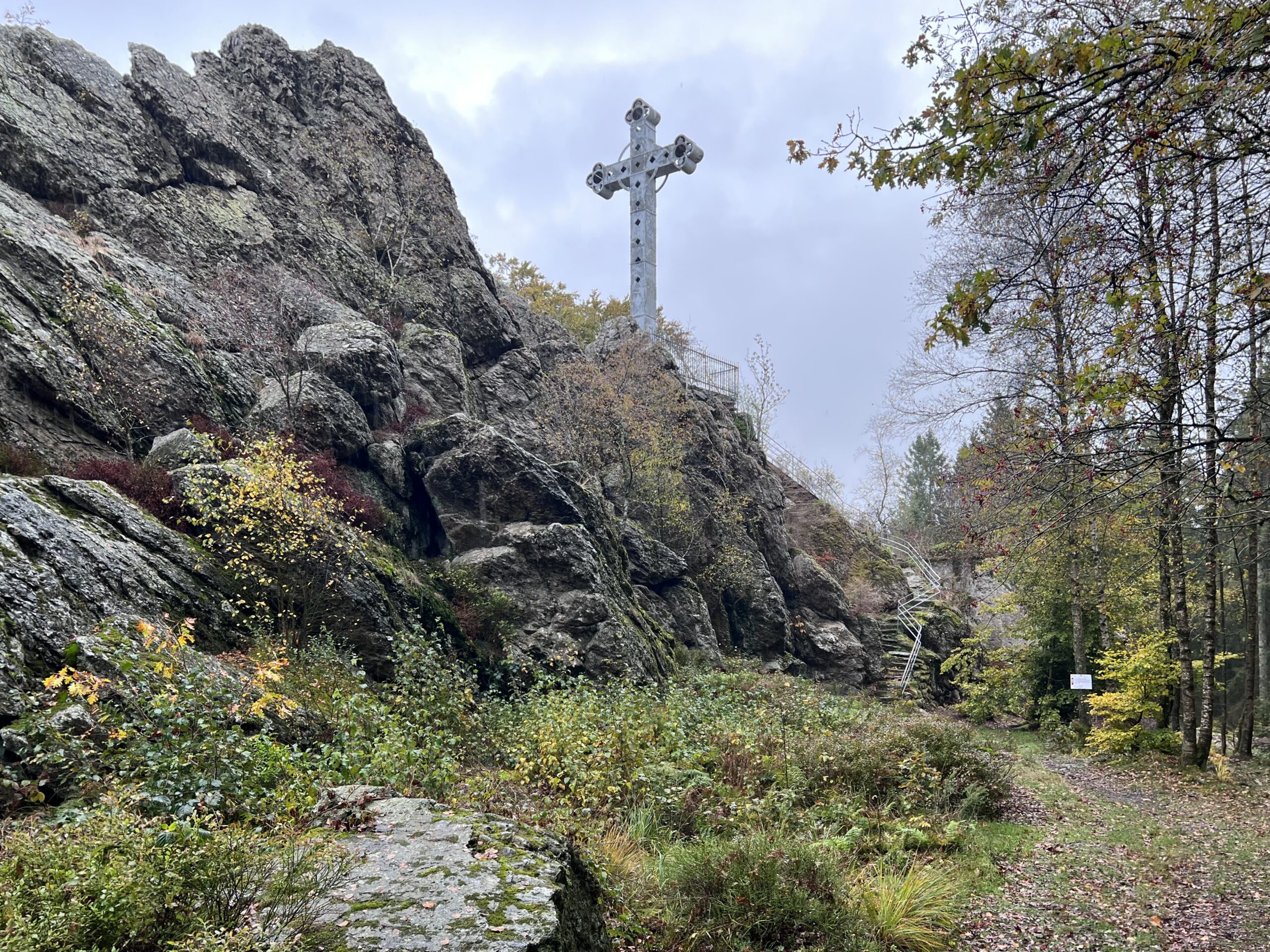
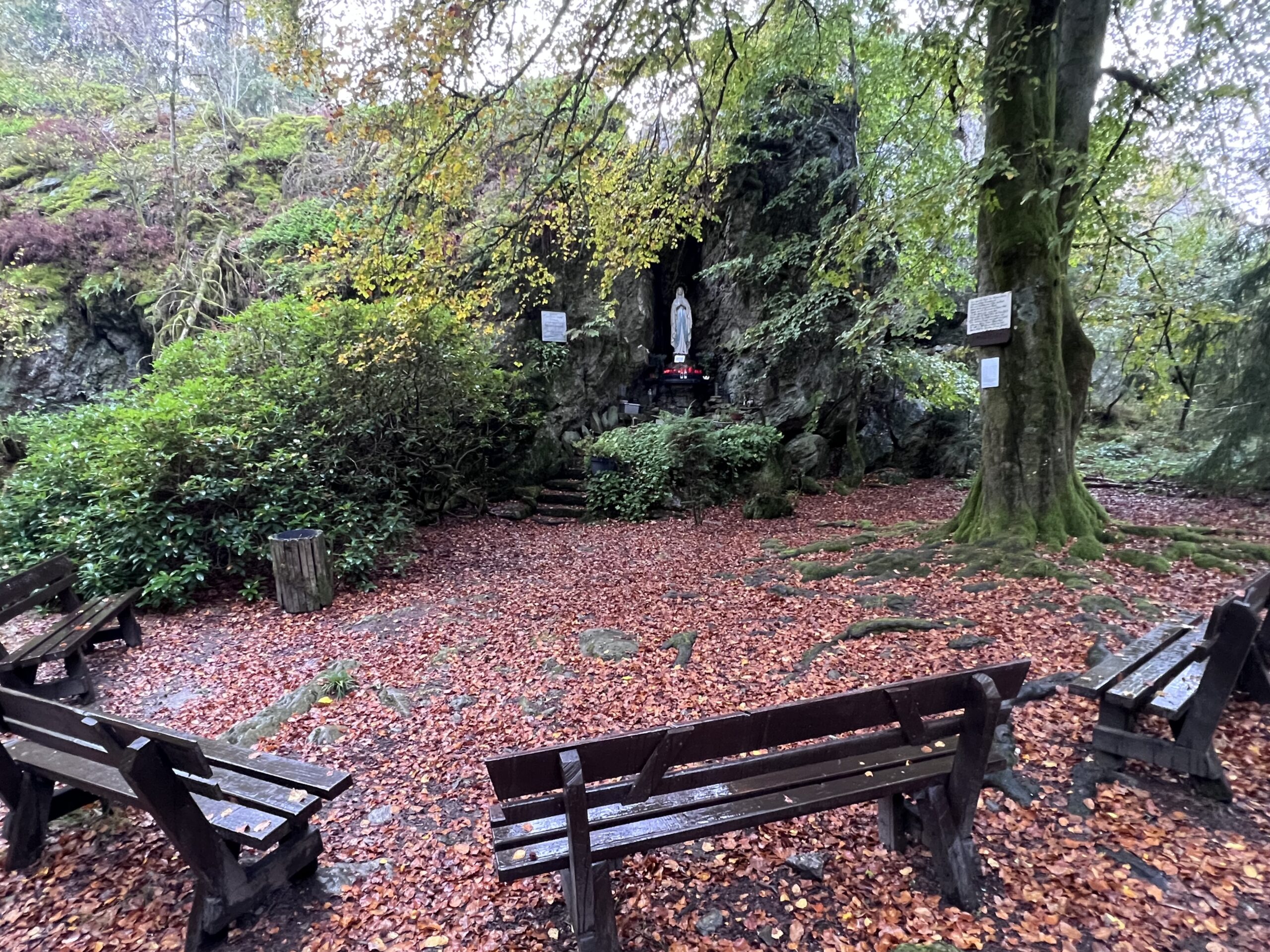
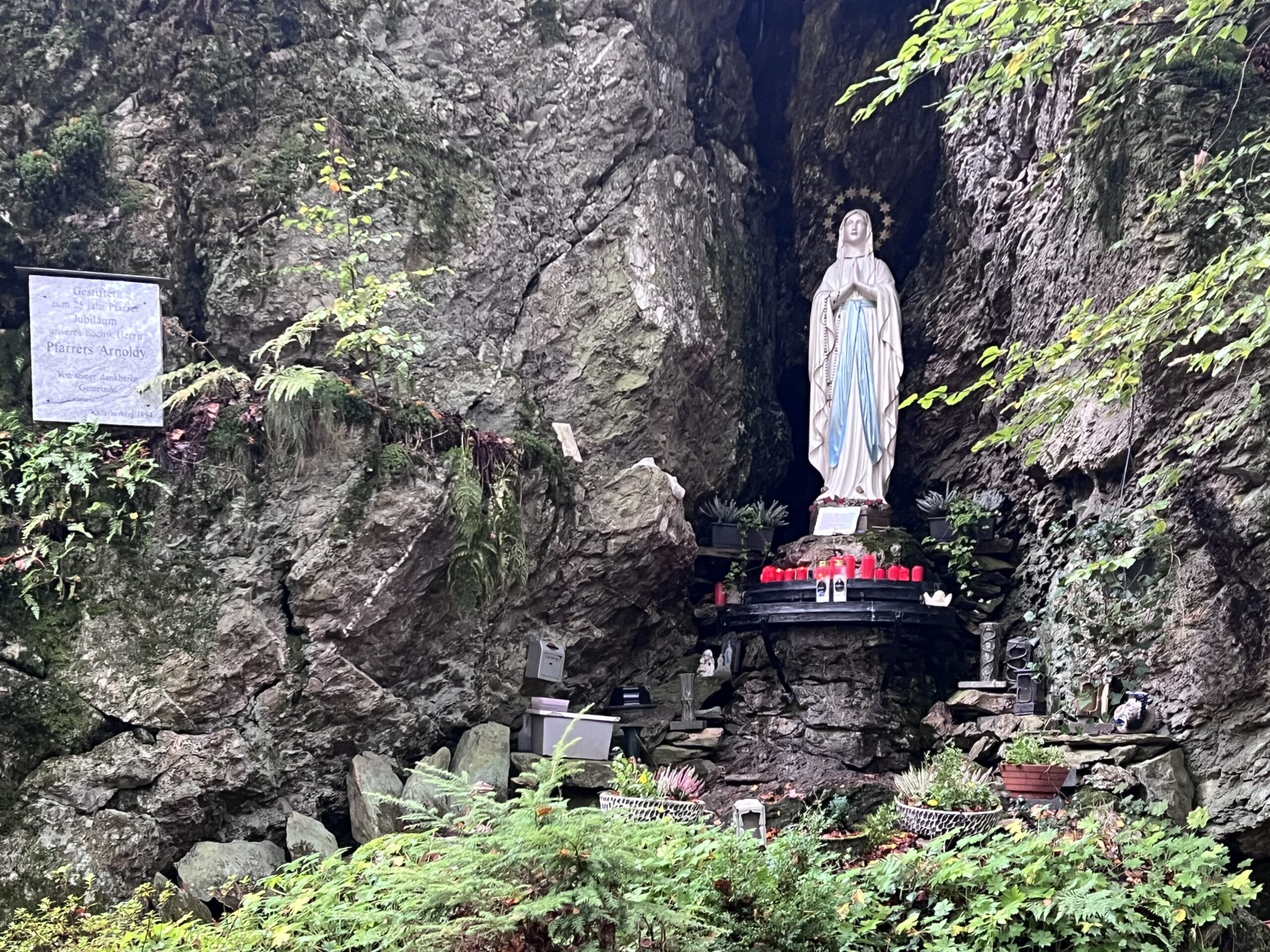
The Lourdes Grotto is located under the large cross on a rock in the forest in the Hoge Venen. This cross is called “Kreuz im Venn” (Venenkruis). The Lourdes Grotto was built in 1894 and is located on the rock formation named Richelsley. Access to the cross and the cave is via Germany; the rock formation also belongs to Belgium. The cave and the cross are located at approximately 555 meters above sea level.
The Lourdes Grotto was a gift from the Kalterherberg parish to Gerhard Josef Arnoldy (1834-1914), a priest in Kalterherberg (1869-1914). He was the initiator of the idea to build the cross.
Since 1894, a Lourdes statue has stood in a natural mountain niche under the cross. The first Lourdes statue to be placed was destroyed in the 1941 war. This therefore happened during the Second World War (1939-1945). In the German pilgrimage site Kevelaer, a new statue was purchased that is still in the large niche of the imposing cave. The Mariagrot is a beloved place for prayer; candles are lit there and flowers are always placed. A Marian prayer text is attached to a tree near the cave.
The consecration of the large cross took place in 1890. It commemorates Stephan Horrichem (1607-1686), abbot of the former monastery of Reichenstein (1639-1686), and he is known as the “Apostle of the Venets”. Stephan Horrichem became abbot of the monastery in 1639, during the Thirty Years’ War (1618-1648). This was a conflict with escalating tensions between Catholic and Protestant states. The abbot worked for many years to help the seriously needy population of the region. He supported peasant families during violent conflicts that resulted in many casualties. The initiative to erect the cross was taken by pastor Gerhard Joseph Arnoldy. He paid for the cross out of his own funds.
The place where the cross and the cave are has belonged to Germany before the First World War (1914-1918). This area around Richelsley became Belgian territory afterwards.
The cross is over 6 meters high, is almost 5 meters wide and stands on a high rock of about 12 meters high. This rock formation has the name Richelsley, is 80 meters long and 12 meters high. The weight of the cross is about 1400 kilograms. When approaching the cross, more than 30 steps are required. What is particularly remarkable is that the striking cross came through the Second World War undamaged. In 1959 and 2005 the cross was restored and subsequently consecrated in 2005 by Karl Schnitzler (1939-2025), pastor of Kalterherberg (1992-2009).
It is possible to walk around the rock with the cross and the Lourdes grotto. There are many hiking opportunities in the area around the Lourdes grotto.
Near the Lourdes Grotto is the Kloster Reichenstein, located at Reichensteiner Strasse 340, 52156 Kalterherberg (Monschau).
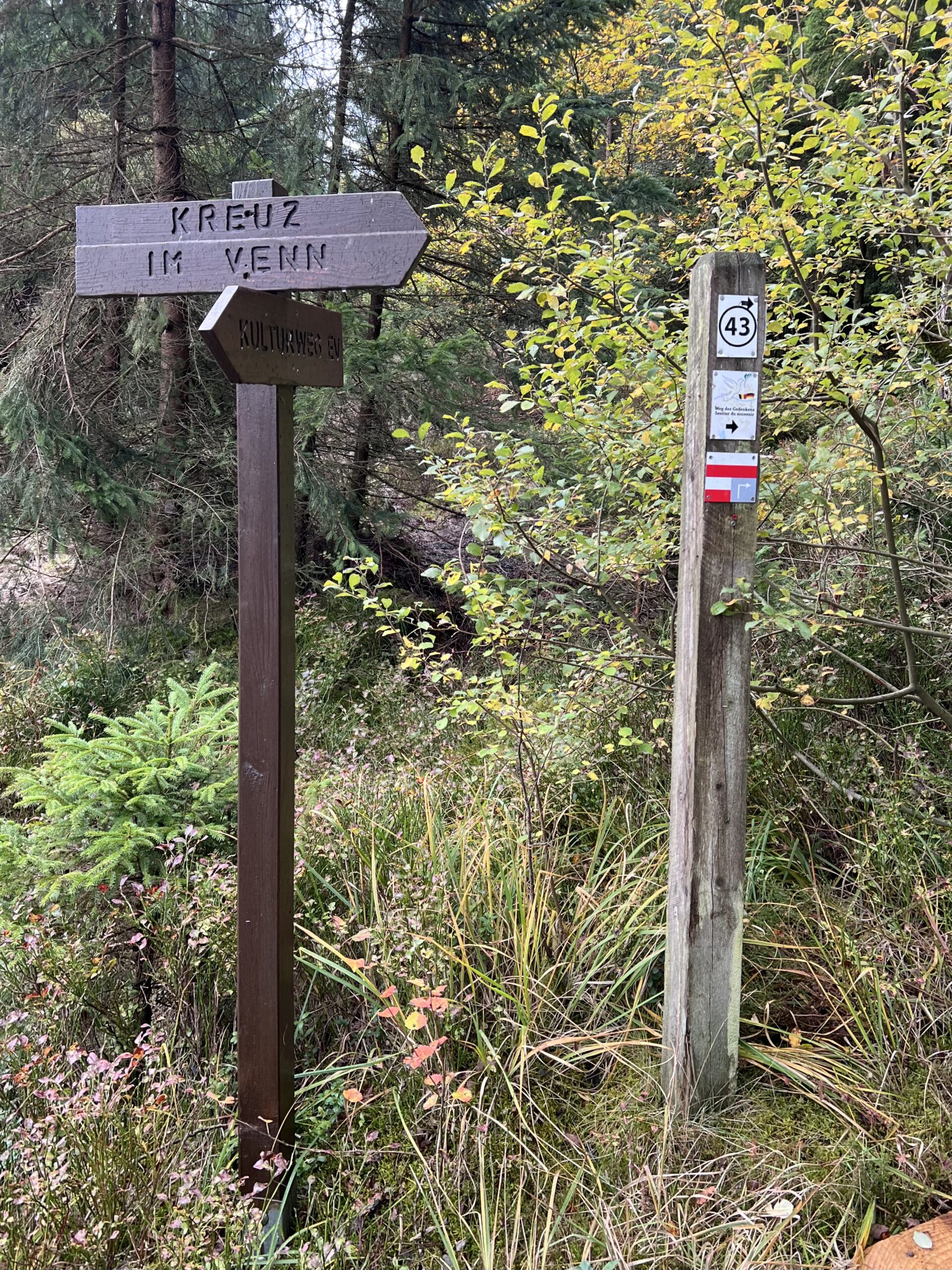
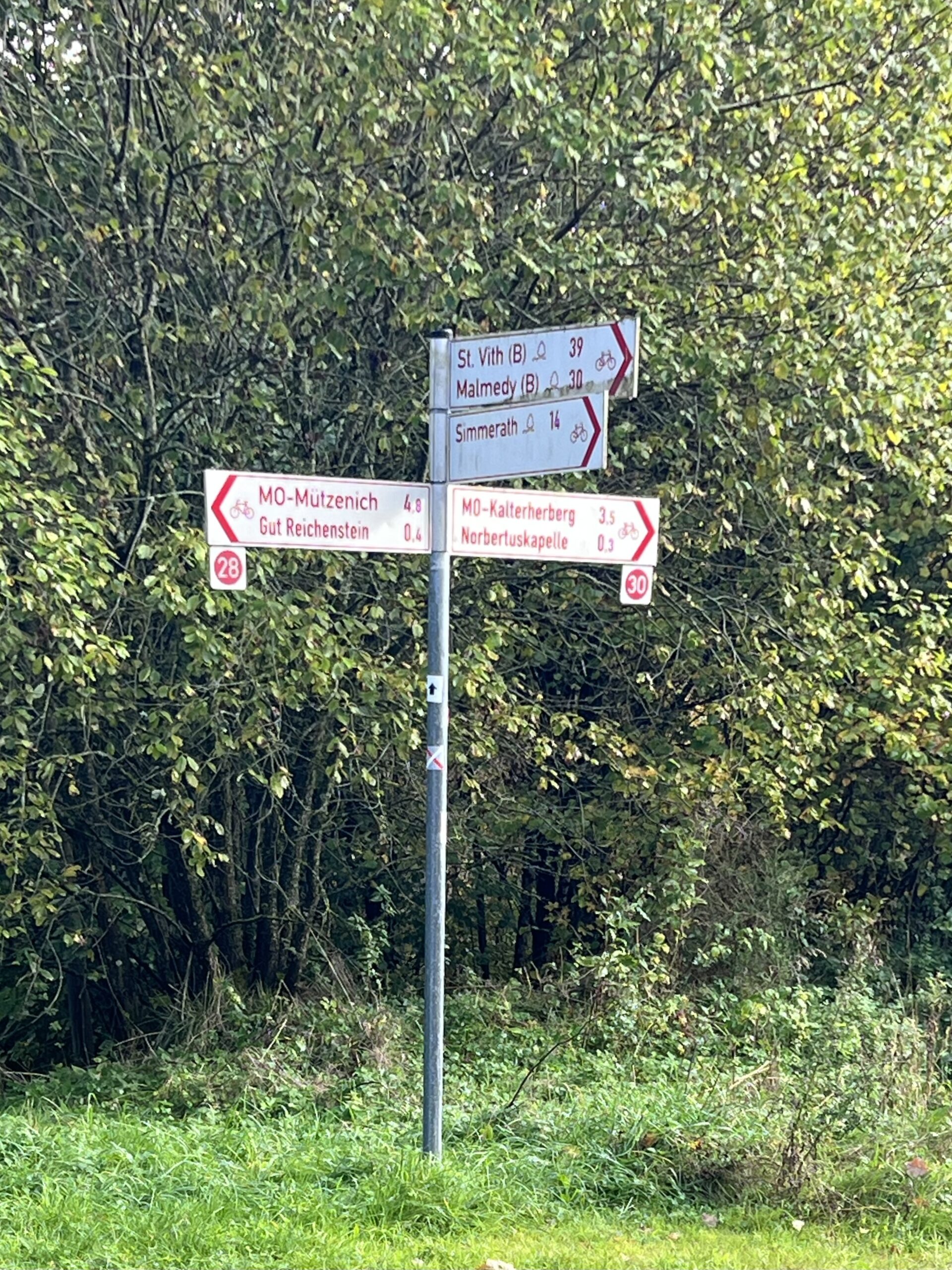
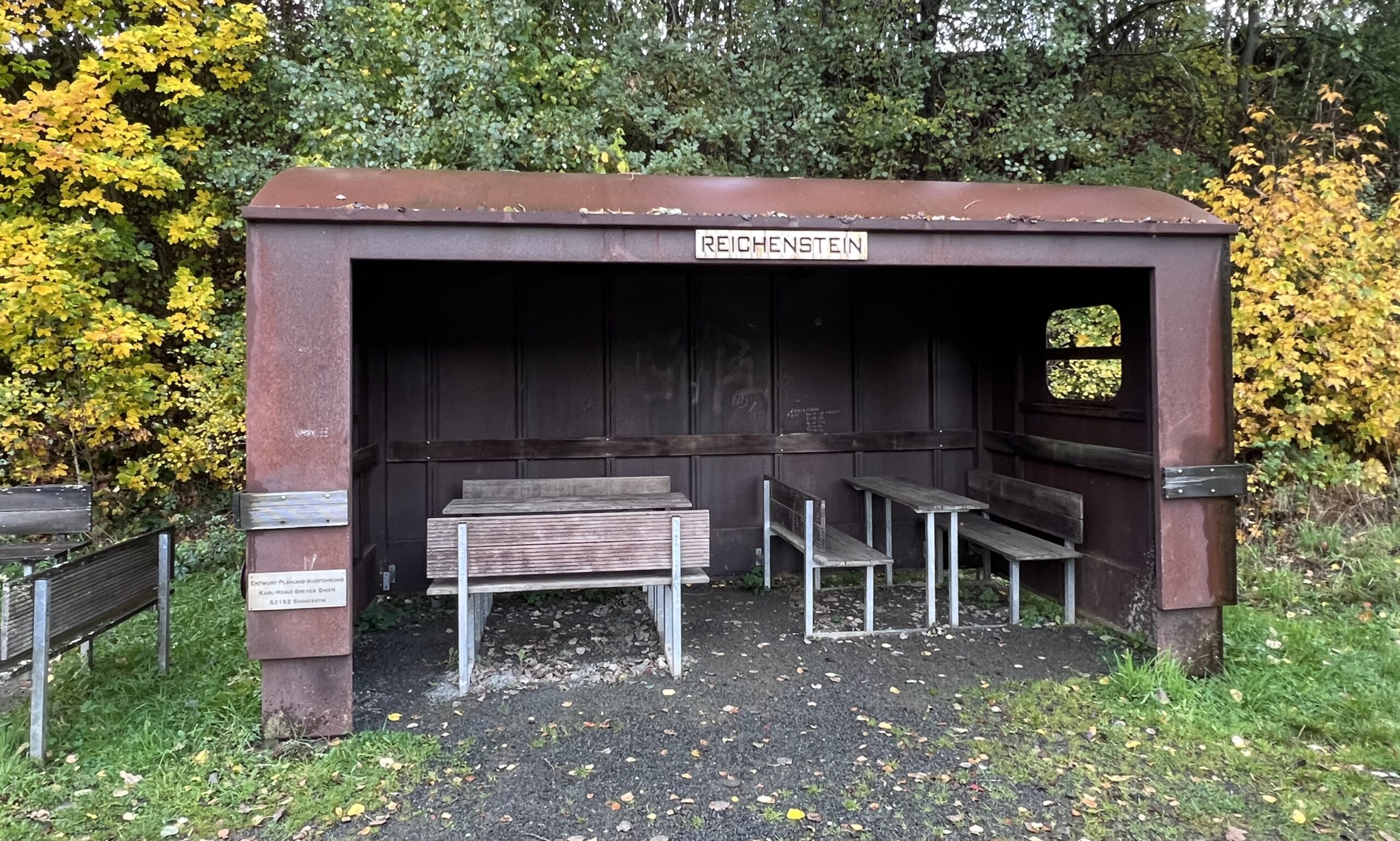
The Lourdes grotto and the cross can be reached from the parking lot at the “Ruitzhof”, near the Reichensteiner Brücke, between Kalterherberg and Mützenich, not far from the former monastery of Reichenstein, just opposite the Norbertine Chapel and by the river Rur. From here it is a good 15 minutes walk over steep paths with rocks. Visitors who are in good shape have little difficulty in reaching the rock formation. Signs indicate “Kreuz im Venn”. It is a path named “Weg des Gedenkens”. Another way to reach the grotto and the cross is to go a little further, namely near the former monastery, at a building with the inscription Reichenstein on the Vennbahnweg.
~~~

 Nederlands
 English (UK)
 Deutsch
 Français
 Español