History
In the town and region of El Palmar de Troya, which means “the palm forest of Troy”, remains from the Roman era can be found. The area therefore has a long history.
For centuries, the region was dominated by Moors of the Muslim religion.
The current site is thanks to families of Republican prisoners who built the Torre del Aguila reservoir (Eagle Tower reservoir) after the Spanish Civil War (1936-1939).
The road to a pilgrimage site...
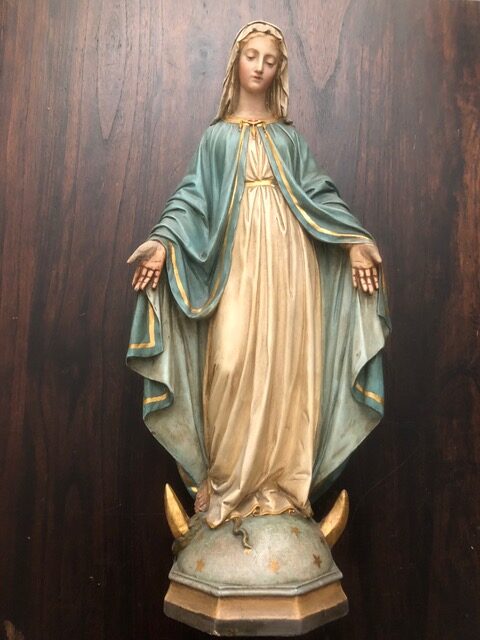
On 30 March 1968, four Spanish girls saw the Blessed Virgin Mary of Mount Carmel by a tree, and Our Lady gave them messages. The four girls' first names are Ana, Ana María, Josefa, and Rafaela, and they come from the village of El Palmar de Troya. The tree disappears because people take pieces of it until nothing remains. A cross is erected at the tree's location, where prayers are offered, and apparitions take place for the four girls and others. Later, the see of the Palmariaanse Church, with its basilica, is established here. The messages are full of concern for the Catholic Church. Prayers alleviate difficult situations, such as changes in the Roman Church. Not all believers are enthusiastic about these changes, and a sense of aversion arises against the changes imposed by the Vatican in Rome.
Our Lady and Jesus Christ appear multiple times. One of the seers is Clemente Domínguez y Gómez, who later becomes the first Pope and continues the holy traditions of the Church.
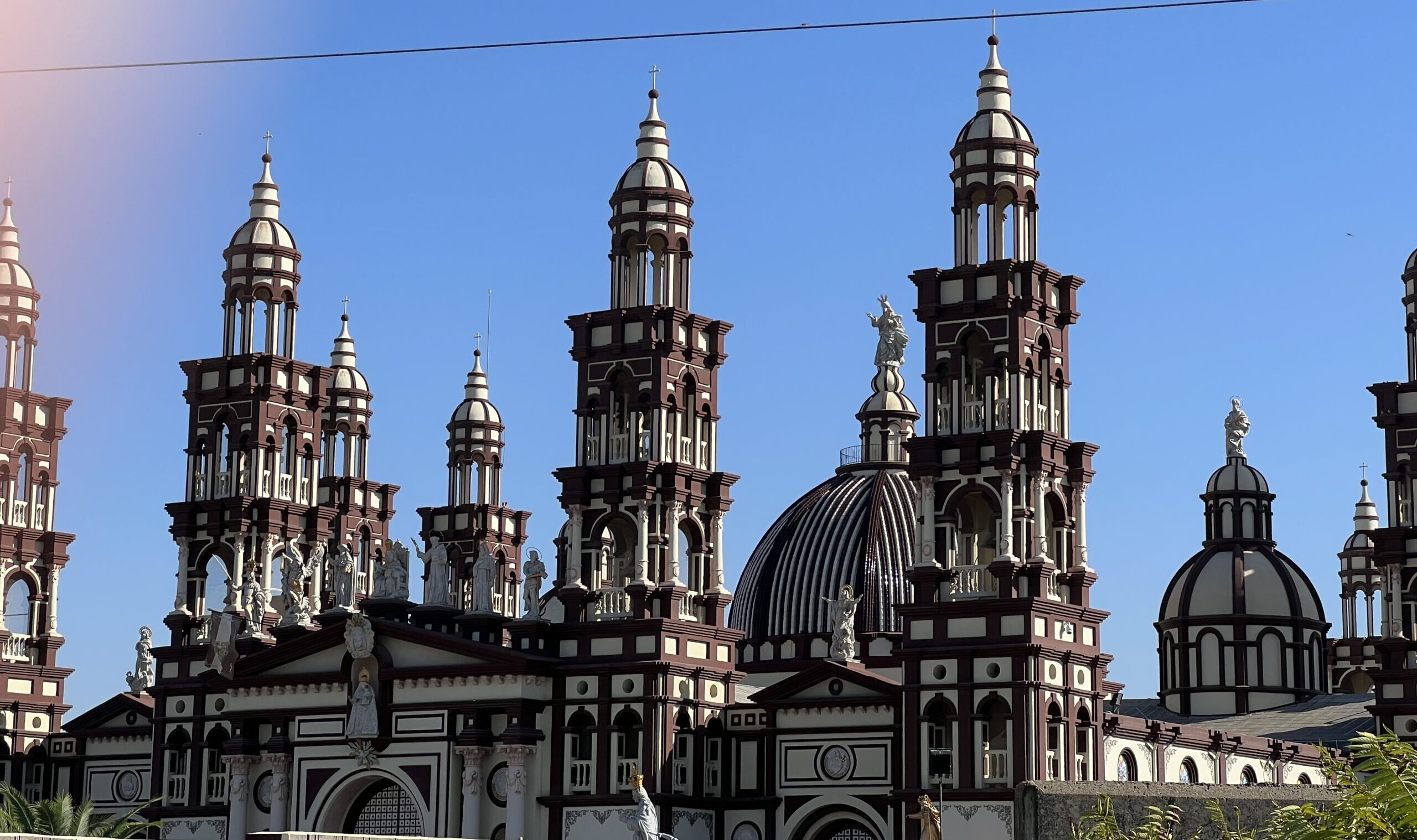
On 6 August 1978, following the death of Roman Pope Paul VI, Pope from 1963 to 1978 (born Giovanni Battista Enrico Antonio Maria Montini, 1897-1978), the new church was founded, distancing itself from the changes in the Roman Catholic Church. The new Pope is Saint Gregory XVII the Great, who was elected and crowned on that day. From this event onwards, the Palmarian Church is the true church. On 9 August 1978, the seat of the true church was moved from Rome to El Palmar de Troya.
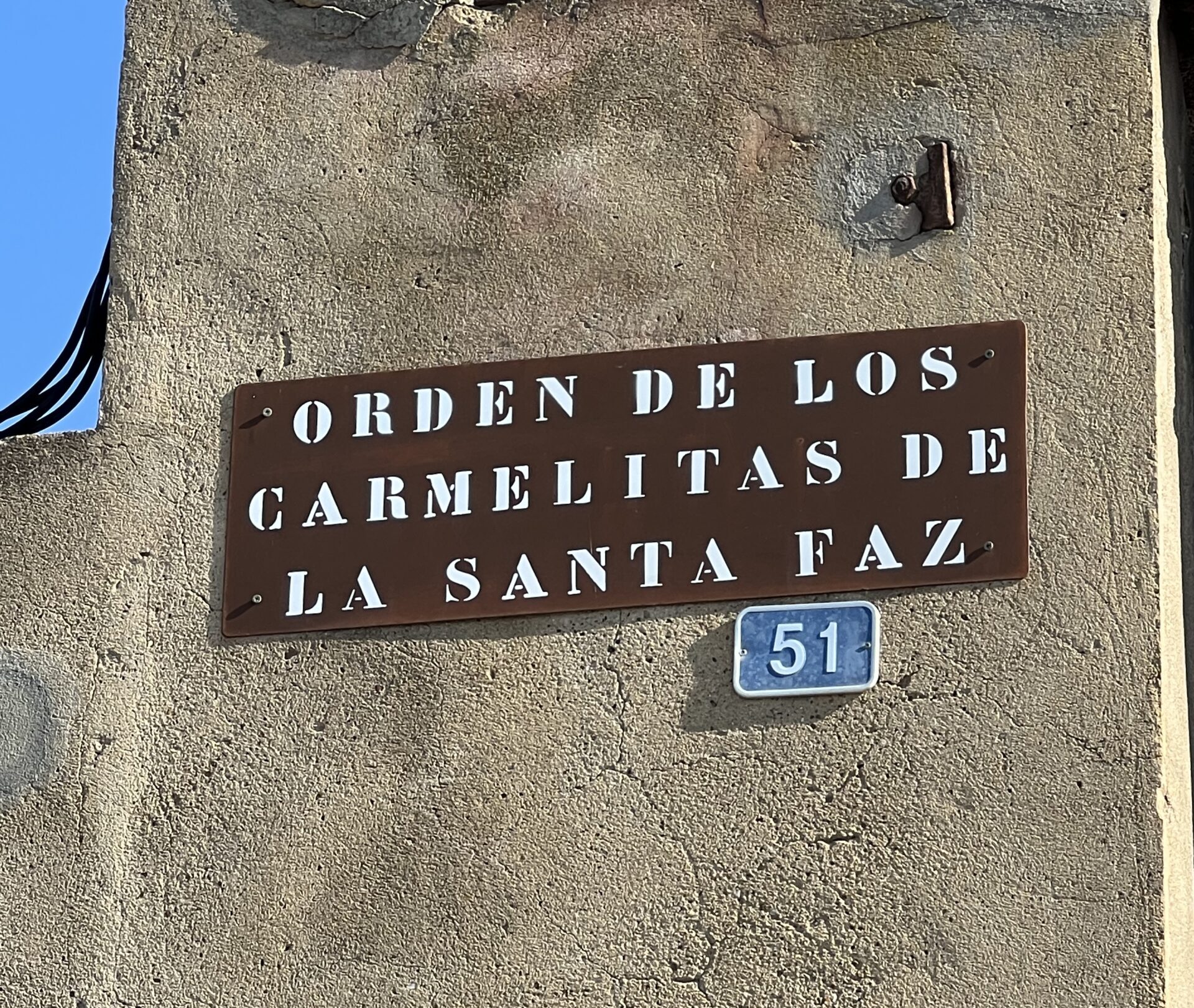
In 1978, the church seceded from Rome was founded. The name is “Iglesia Cristiana Palmariana de los Carmelitas de la Santa Faz” (Christian Palmarian Church of the Carmelites of the Holy Face). The Church is also known as the “Iglesia Católica Palmariana” (Palmarian Catholic Church), with its headquarters in El Palmar de Troya.
From 1978, there have been antipopes in El Palmar de Troya. Clemente Dominguez y Gómez (1946-2005) is a bishop and is the first pope by the name of Gregory XVII (1978-2005). He works as the true pope for the Holy Palmar Church. His successor is Manuel Alonso Corral (1934-2011), he is Pope Peter II (2005-2011). The third pope is Ginés Jesús Hernández (1959) with the name Gregory XVIII (2011-2016). After that, Joseph Odermatt (1966) is pope, with the religious name Eliseo María, who chooses the name Peter III (2016).
The members of the Palmarían Church are religious, nuns, and tertiaries (laypeople who follow a monastic rule without living in a monastic community).
Pilgrimage site
The village of El Palmar de Troya is home to over two thousand people. The Palmarían Catholic Church is a schismatic group founded by Clemente Domínguez y Gómez (1946-2005), who has been blind since a car accident in 1976. In 1978, he proclaimed himself Antipope Gregory XVII (1978-2005). In El Palmar de Troya, Mary appeared to him. He also received a vision of Jesus. This Pope created a different Creed and introduced new dogmas. The Pope also introduced his own liturgy.
In the cathedral, the effigy of “Our Crowned Mother of Palmar” is present and worshipped. The cathedral is not accessible to everyone, as the pilgrimage site is open to members and invited guests.
ACCESSIBILITY
El Palmar de Troya is located in the southwest of Spain in Andalusia and belongs to the province of Seville.
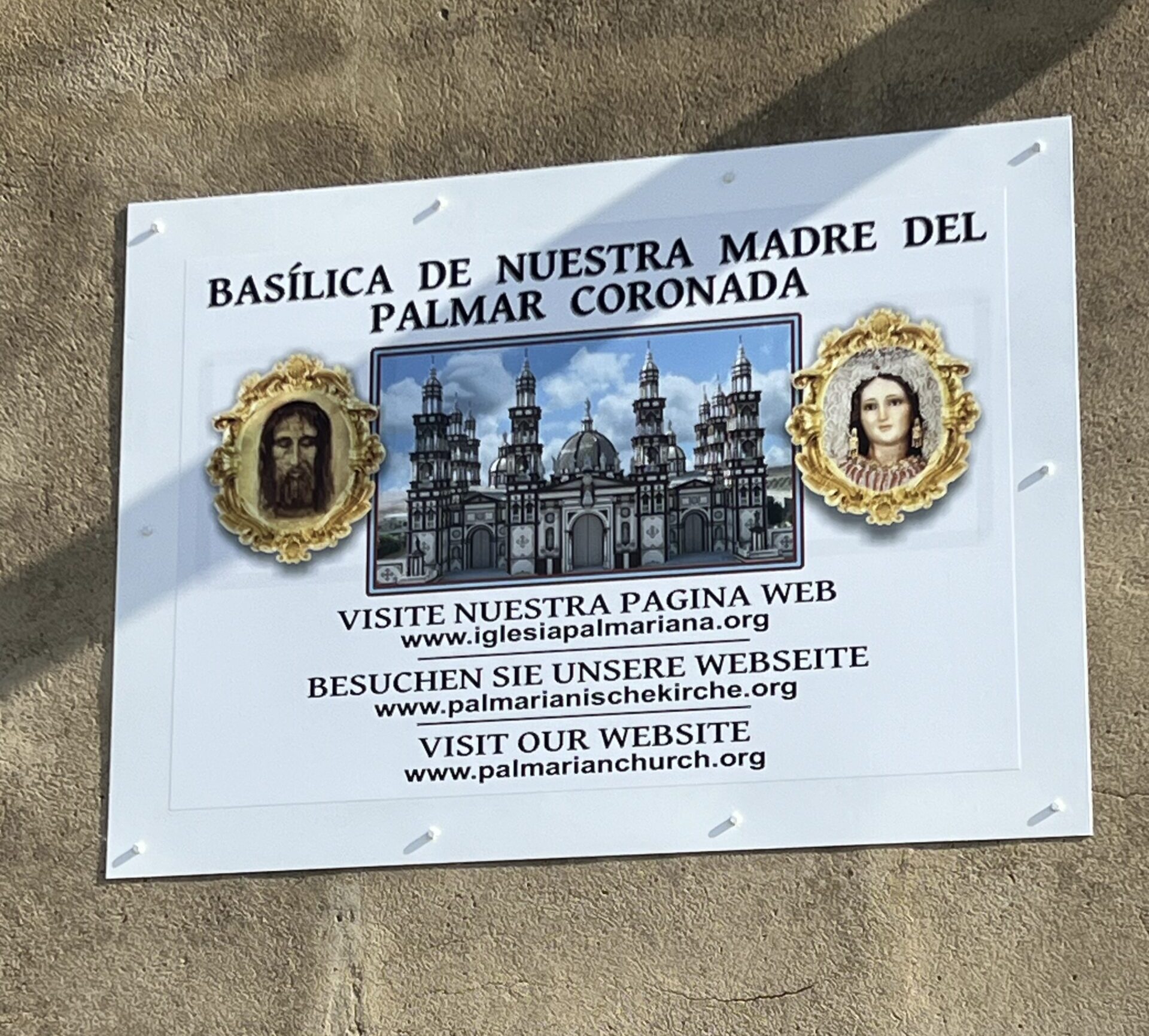
The address of the Palmariaanse Church is Avenida de Jerez 51, 41719 El Palmar de Troya.
Up-to-date information can be found at www.palmariaansekerk.org. This is the official website of the Order of Carmelite Fathers of the Holy Face in company of Jesus and Mary.
Experience
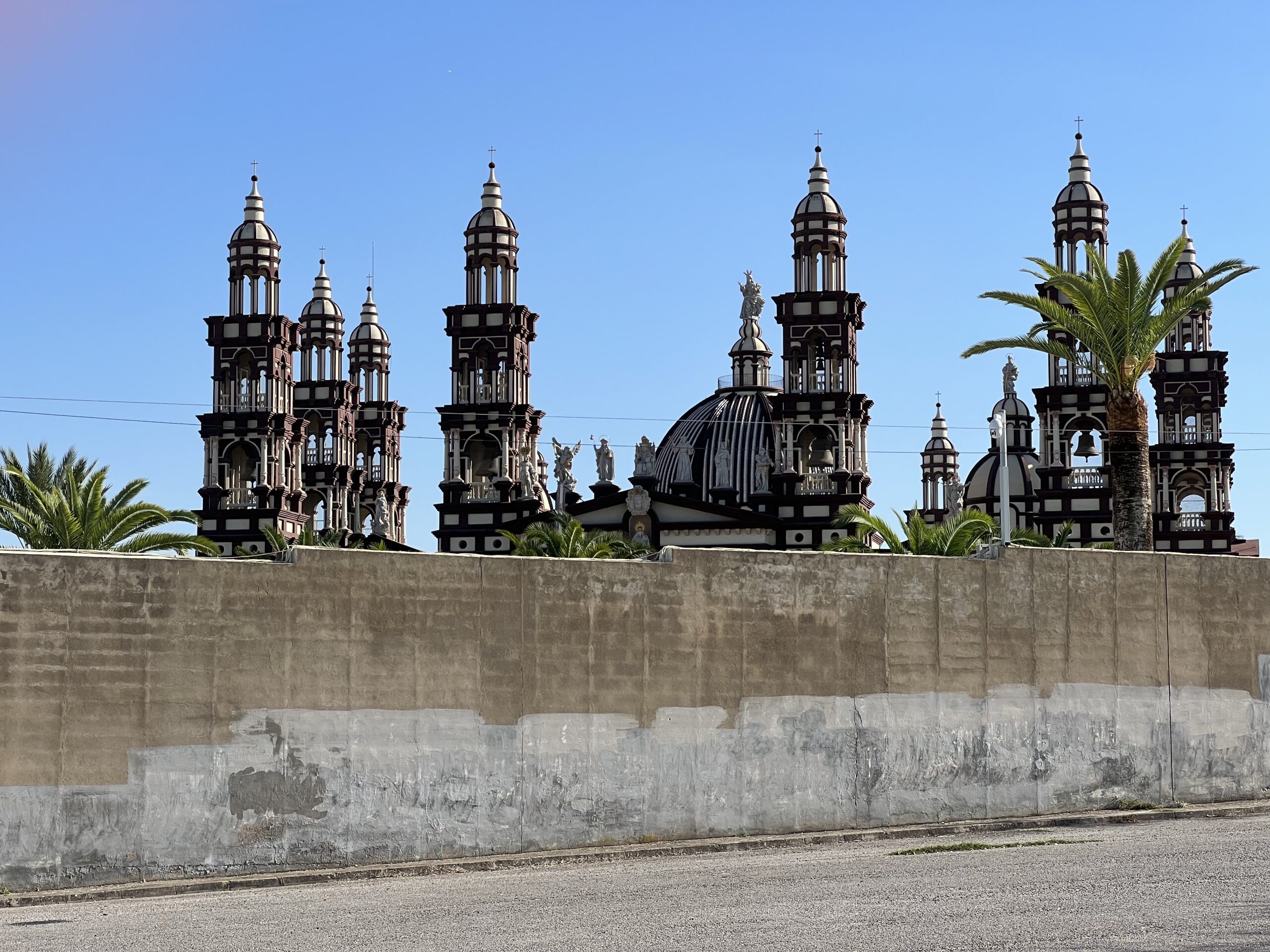
From afar, I see the towers of the basilica of the Palmarían Church. When I reach the sanctuary, I stand before a long, high wall. Then I go to the gate, but it is closed. A little later, four sisters arrive, they pray, knock on the gate and go inside. I want to speak with the gatekeeper, tell him about my visits to pilgrimage sites, but he does not let me in. To visit the basilica, I need the Pope's permission, and I lack that. Then I give the man a ticket for the “Maria Chamber” and go back to the car.
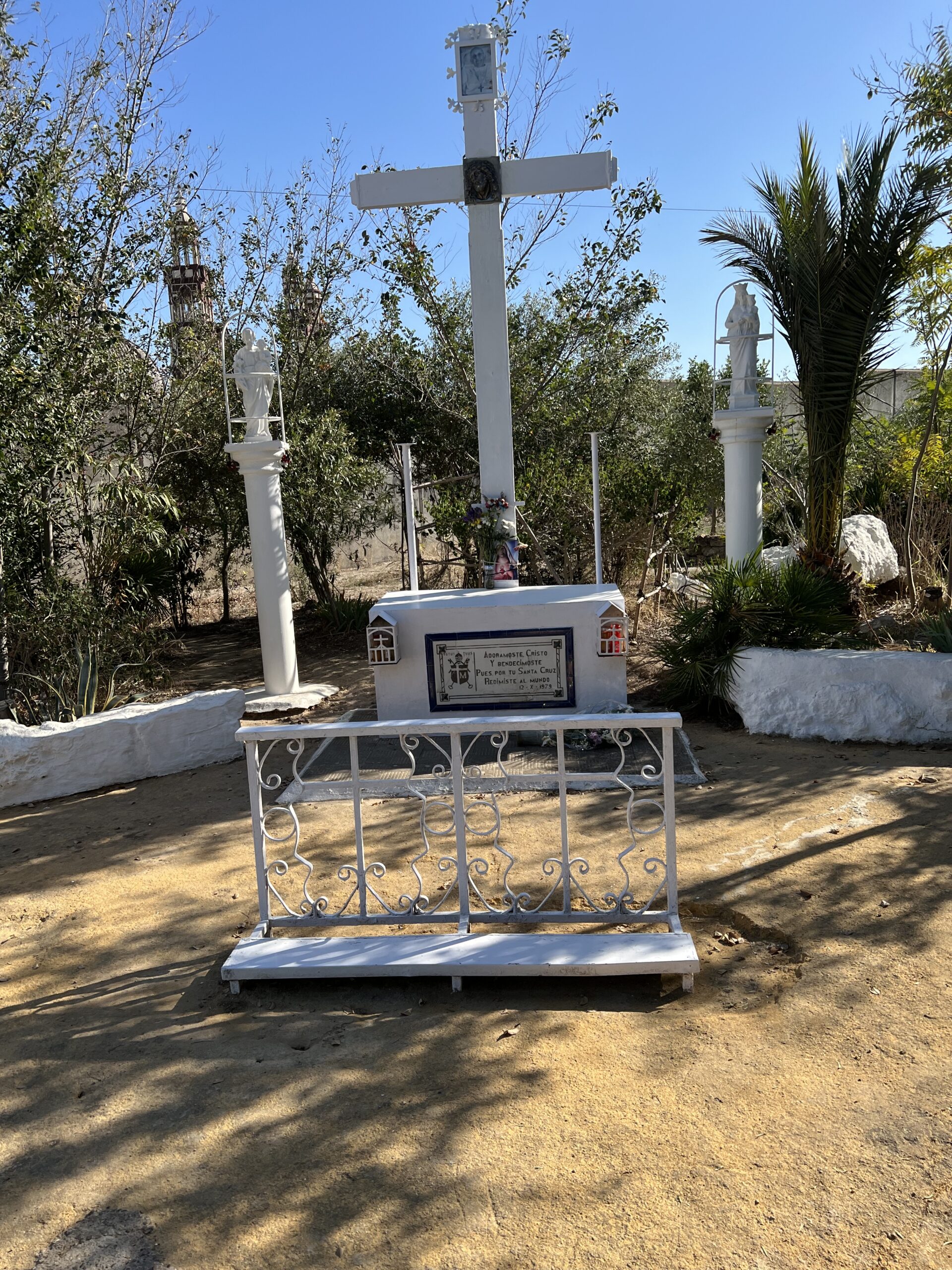
Near the wall of the sanctuary stands a cross, an excellent opportunity for a prayer. I take advantage of it, and good people pass through my mind, a few of whom could certainly use more than a little help from Mary.
As I sit in the car for a moment, I decide to take some photos. I get out and get to work. The thought of visiting the Pope again crosses my mind.
Environment
El Palmar de Troya lies 47 km south of Seville. The pilgrimage site in Utrera is only 15 km away, and the distance to the well-known Marian shrine of El Rocío is 131 km.
Posted: 25 November 2023
~~~

 Nederlands
  English (UK)
  Deutsch
  Français