History
The pilgrimage of El Rocío has its roots in the 13th century. Alfonso X of Castile (1221-1284), King of Castile and León (1252-1284), nicknamed "the Wise", conquered Cádiz and Cartagena from the Islamic Moors in 1260. As a thank you, he was the first to build a chapel containing a likeness of Mary. Mary was then known as La Rocina (the Little Rose).
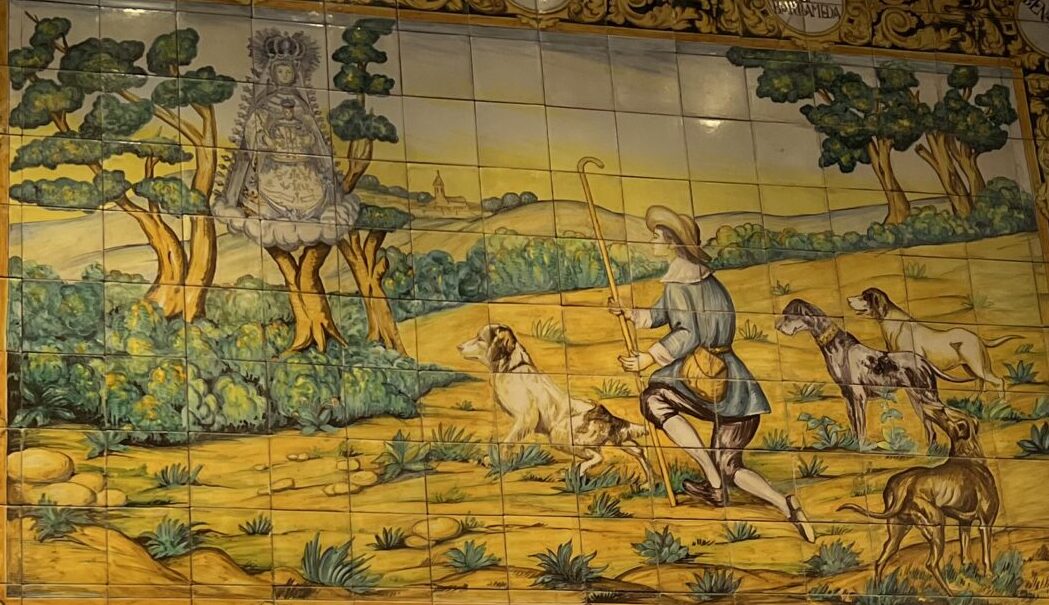
A 13th-century legend reinforces devotion to Mary in the region of El Rocío. The story goes: Gregorio Medina, a shepherd and hunter from the neighbouring village of Villamanrique de la Condesa, finds a small statue of Mary in a tree and takes it to the town of Almonte, which is near El Rocío. On the way, the man rests, falls asleep, and when he wakes up, the statue has disappeared. The shepherd returns to the place where he found the image. When Gregorio gets back to the tree, he sees the statue of Mary there. Based on this peculiar event, a chapel is built. The chapel is realised around 1280.
In the first half of the 14th century, there was already devotion to Mary in El Rocío.
In 1653, a prolonged period of drought afflicted the region, and a miracle was requested of the Virgin Mary. Shortly thereafter, it began to rain. Since 1653, Mary has been known as Nuestra Señora del Rocío (Our Lady of El Rocío). In the 18th century, a connection was made between Mary and a white dove, as the great annual pilgrimage is held on Pentecost.
In 1755, the church in El Rocío is destroyed by an earthquake. The remnants of the building remain for years, but devotion to Mary and the pilgrimage continue. It is not until the 20th century that a new church is built.
At the beginning of the 19th century, Spain was very unsettled, and French troops occupied the country. In 1813, the French occupation came to an end, and this is commemorated annually. In El Rocío, there are references to this.
The image of the Virgin of El Rocío was crowned on 8 June 1919 by Enrique Almaraz y Santos (1847–1922), Cardinal and Archbishop of Valencia from 1907 to 1920.
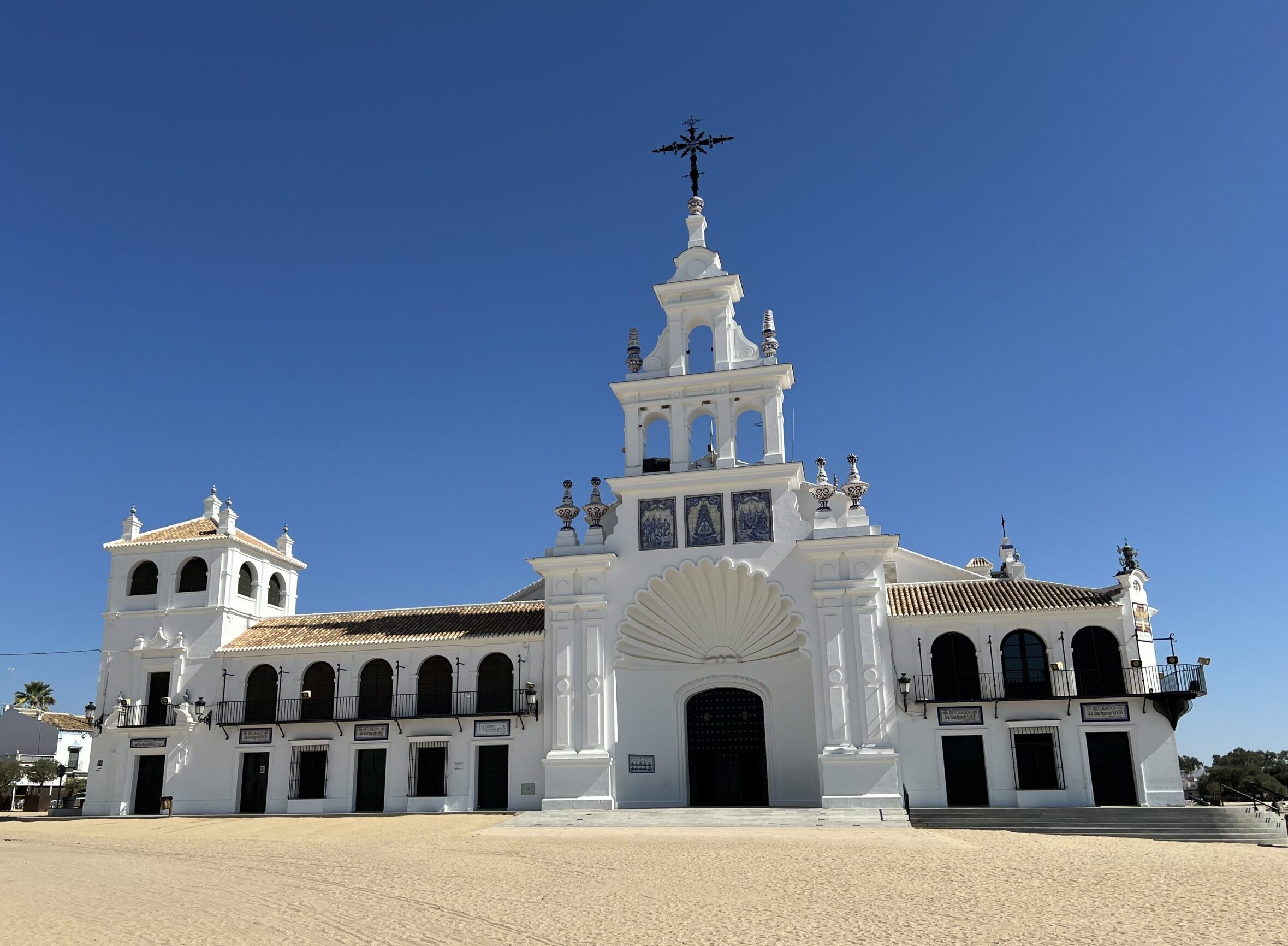
Many pilgrims travel to El Rocío on foot, by horse, in covered wagons, by bicycle, bus or car for the Romería del Rocío (pilgrimage of the dew). This name comes from the departure of the statue of the Virgin Mary with thousands of pilgrims from the church on the Monday morning of Pentecost, heading to nearby Almonte. It is Spain's largest pilgrimage, attracting over a million people, including many members of confraternities (hermandades). Several confraternities have a chapel in El Rocío, dedicated to Our Lady. The Hermandad del Rocío (the Confraternity of El Rocío) organises the annual pilgrimage at Pentecost.
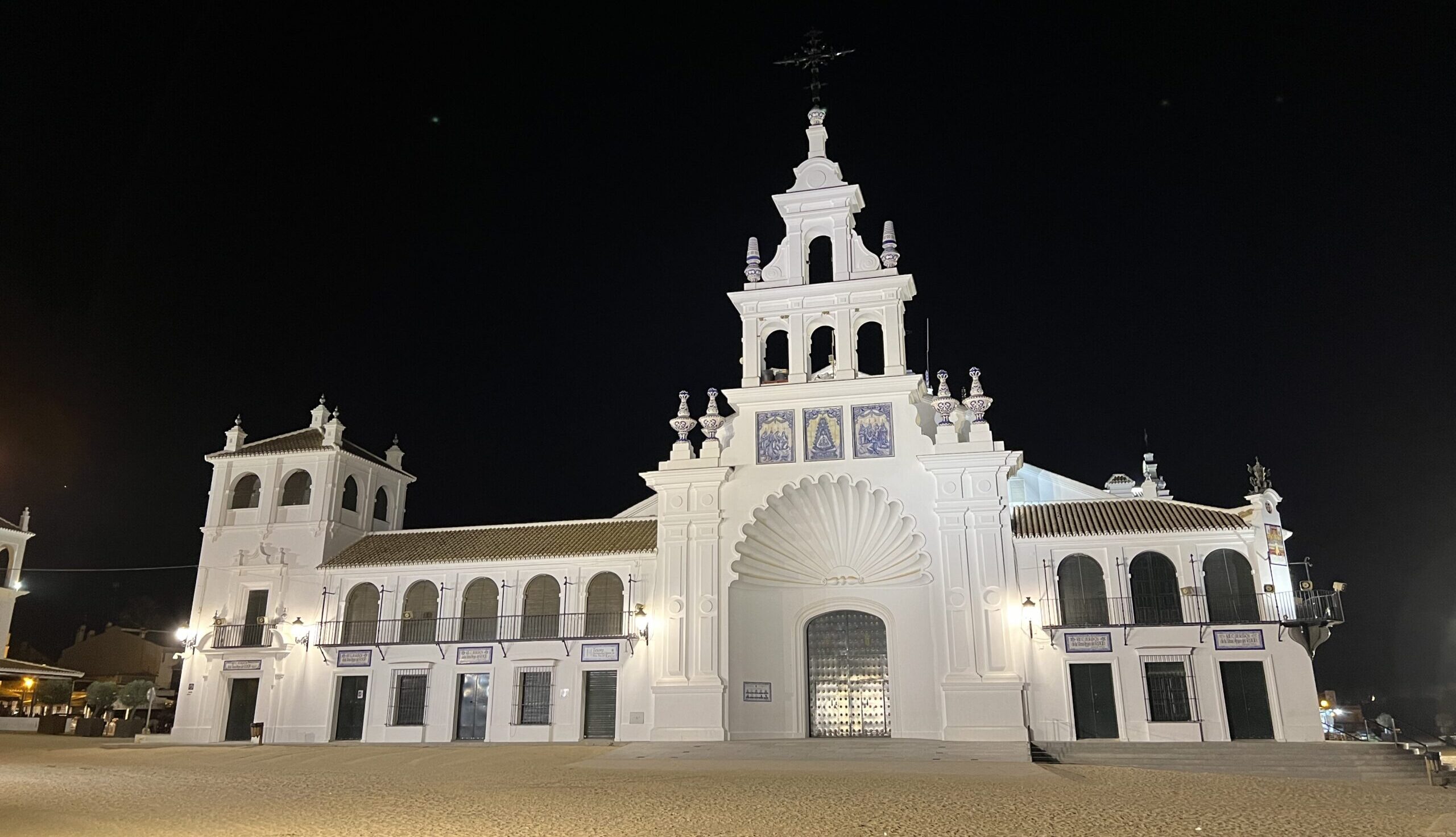
LThe church “Ermita de la Virgen del Rocío” (Hermitage of the Virgin of Rocío) was built between 1964 and 1969.
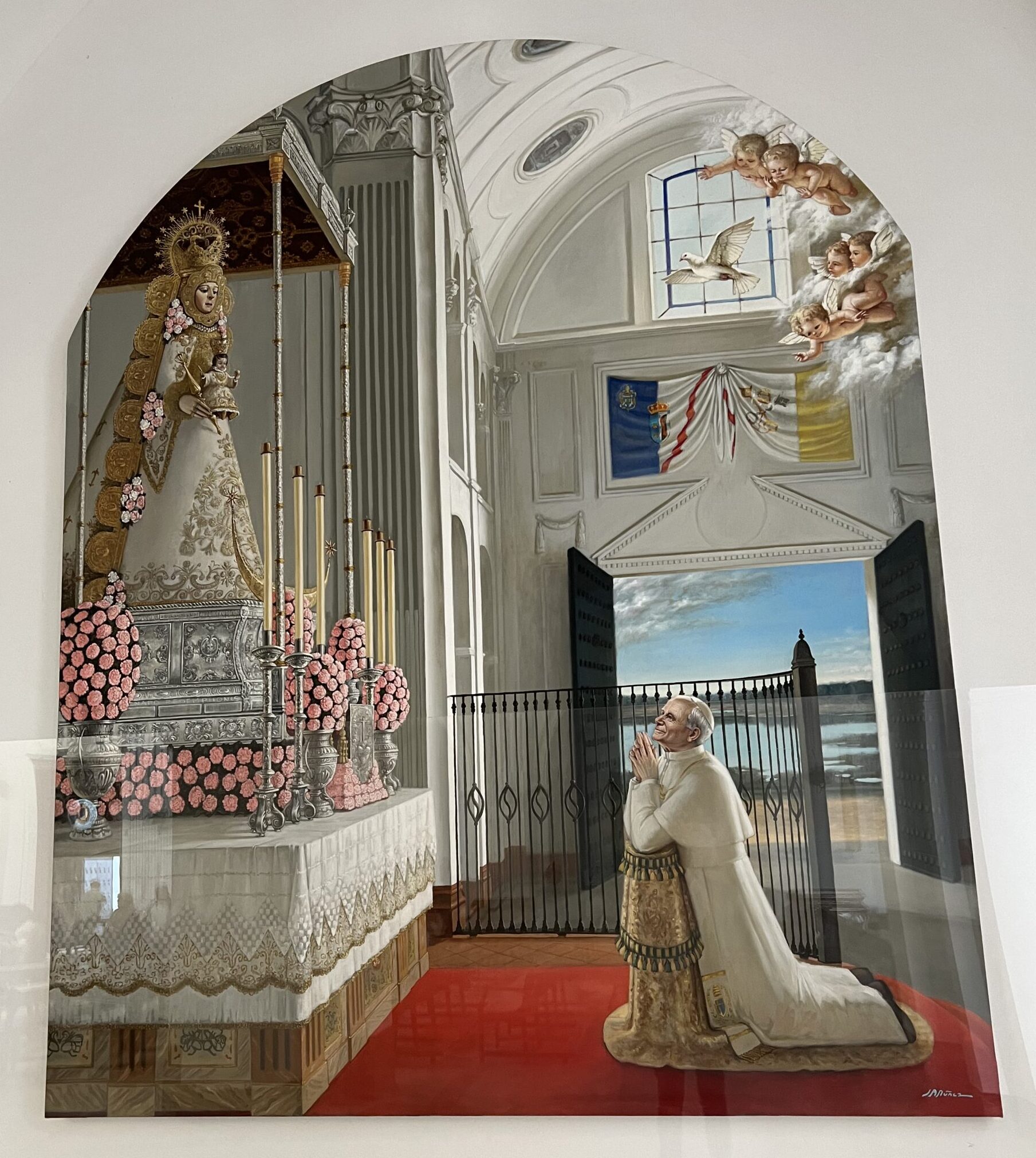
On 14 June 1993, John Paul II, Pope from 1978 to 2005, made a visit to El Rocío.
The town of El Rocío has a population of around 2,000.
Pilgrimage site
The pilgrimage site is located next to Doñana National Park. The town features white facades of houses and the church, sandy streets and squares.
The effigy of the Virgen del Rocío is carved from wood and stands in the church named “Iglesia de Nuestra Señora de Rocío”. Mary with Child are very frequently visited here. The pilgrims are called Romero. During a procession, the statue of Mary is carried by members of the Brotherhood of Almonte. Mary is referred to here as the Virgin of El Rocío. Her nickname is the White Dove (La Paloma Blanca) and this refers to the arrival of the Holy Spirit to the Virgin Mary and the apostles at Pentecost. The great, annual pilgrimage is held at Pentecost.
The pilgrimage site is particularly busy at Pentecost, when around a million people visit the town to take part in the pilgrimage. On other days of the year, it is much quieter. Approximately 1.3 million visitors come to El Rocío annually.
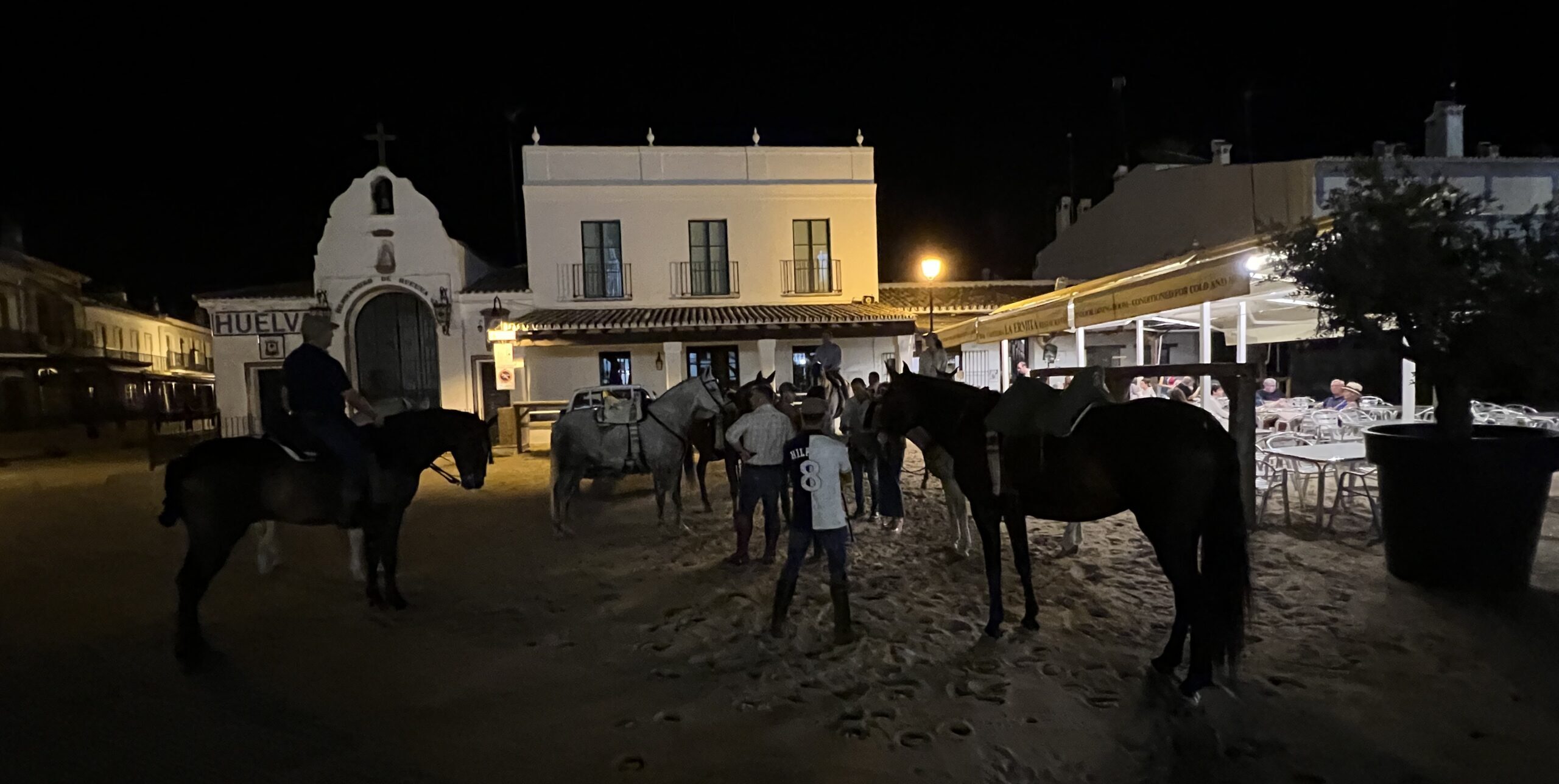
Every year, there is a blessing of horses in El Rocío. This is called “la Saca de las Yeguas” (the release of the mares). The four-legged animals come not only from the town itself, but also from the surrounding areas to El Rocío. The streets and squares are paved with sand, as there are always many horses in the town. El Rocío is therefore closely intertwined with horses.
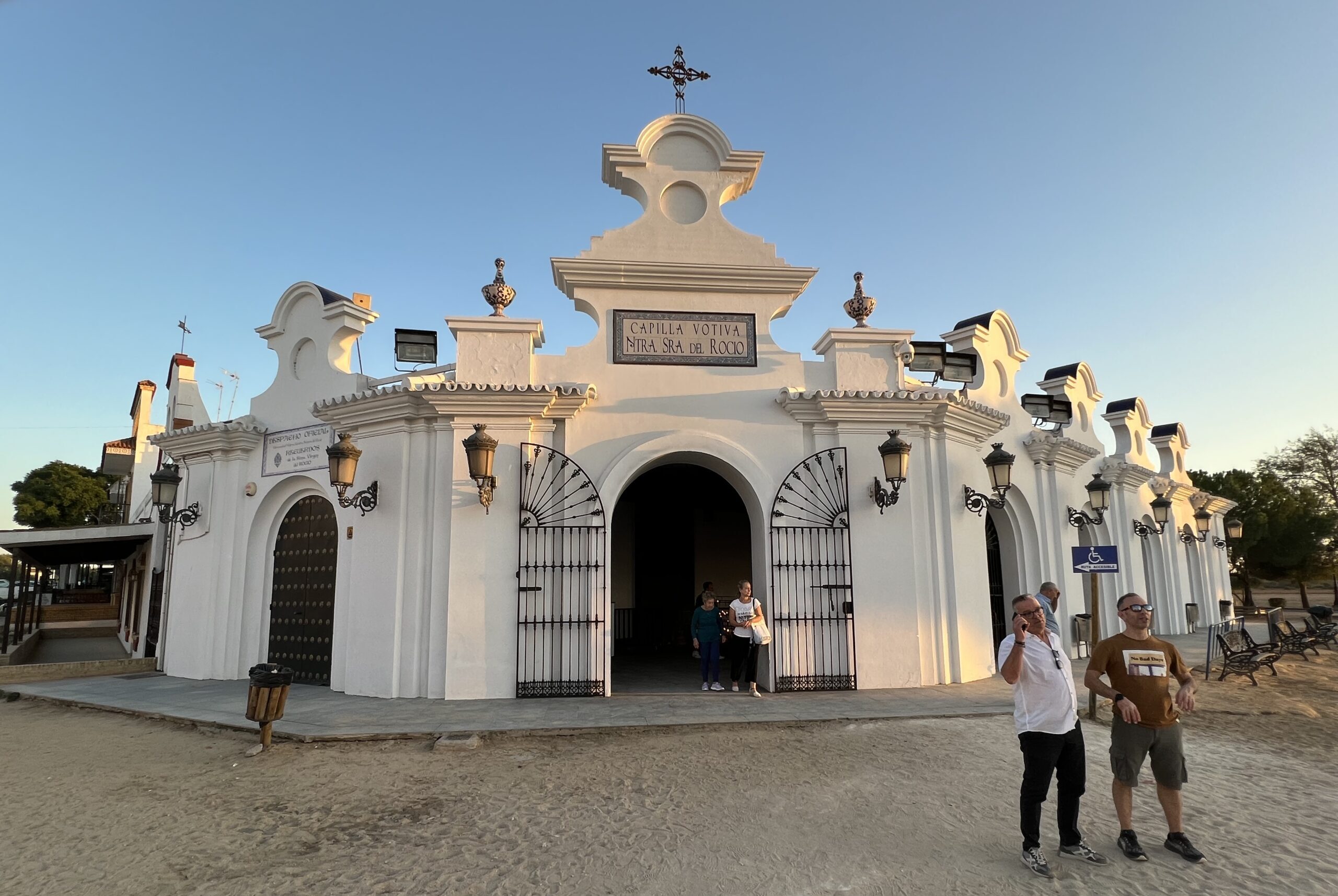
The church and the candle chapel are open daily.
ACCESSIBILITY
El Rocío lies in western Andalusia, in the province of Huelva and southwest of Seville.
The address of the pilgrimage site is: C. Ermita 1, 21750 El Rocío.
Up-to-date information can be obtained by consulting www.hermandadmatrizrocio.org. You can also visit the tourism service at: Centro de Visitantes La Rocina, Carretera, located on the A-483, 21750 El Rocío. Information is also available at www.juntadeandalucia.es.
Experience
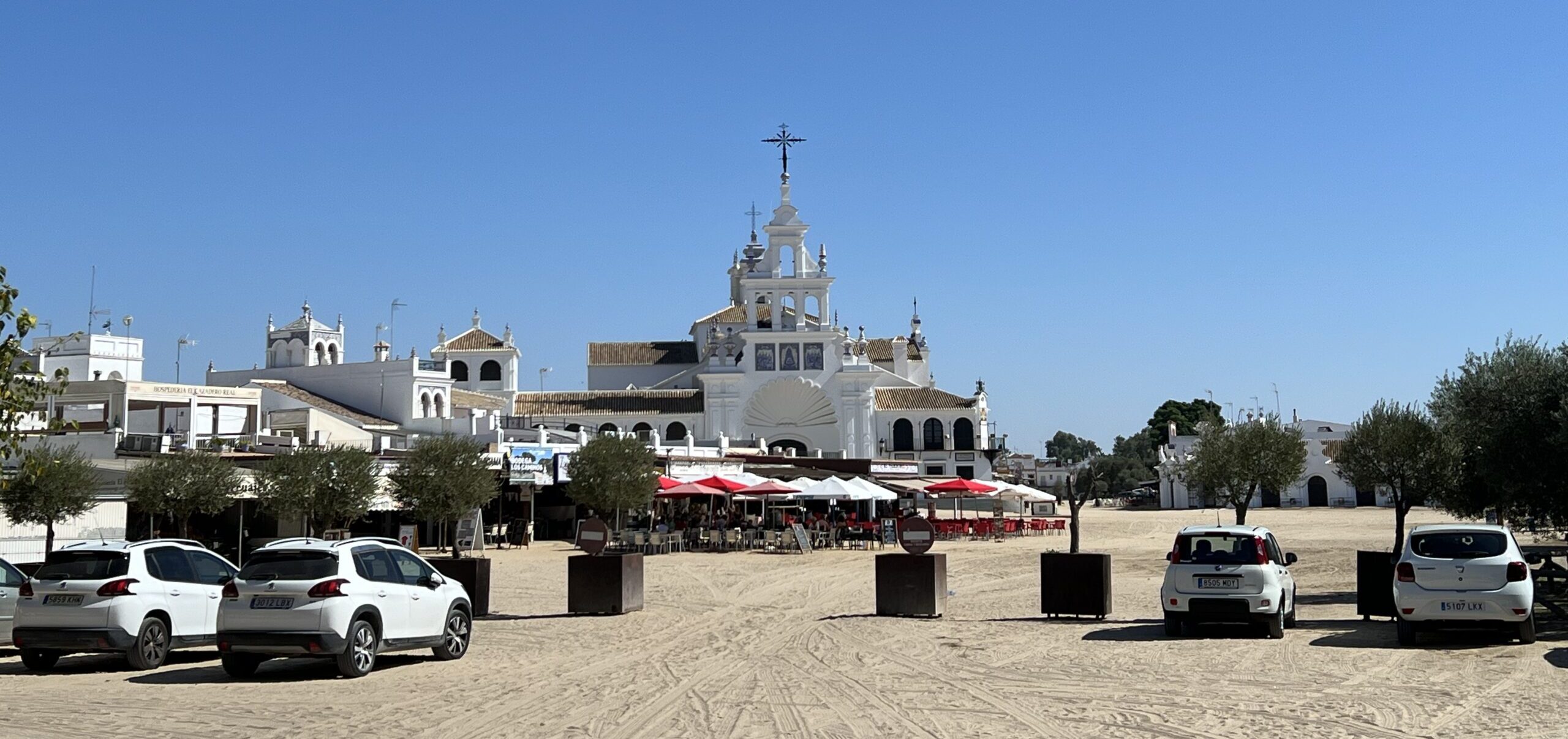
On arrival in El Rocío, unpaved streets invite me to drive into the town. No stones, cobbles, or asphalt; there is sand. Just sand on the ground, as has been the case in many villages and towns for decades. The houses, businesses, church, and chapels have white walls. It is a special sensation to behold yellow sand and white walls as a faithful couple, capable of an impressive duet.
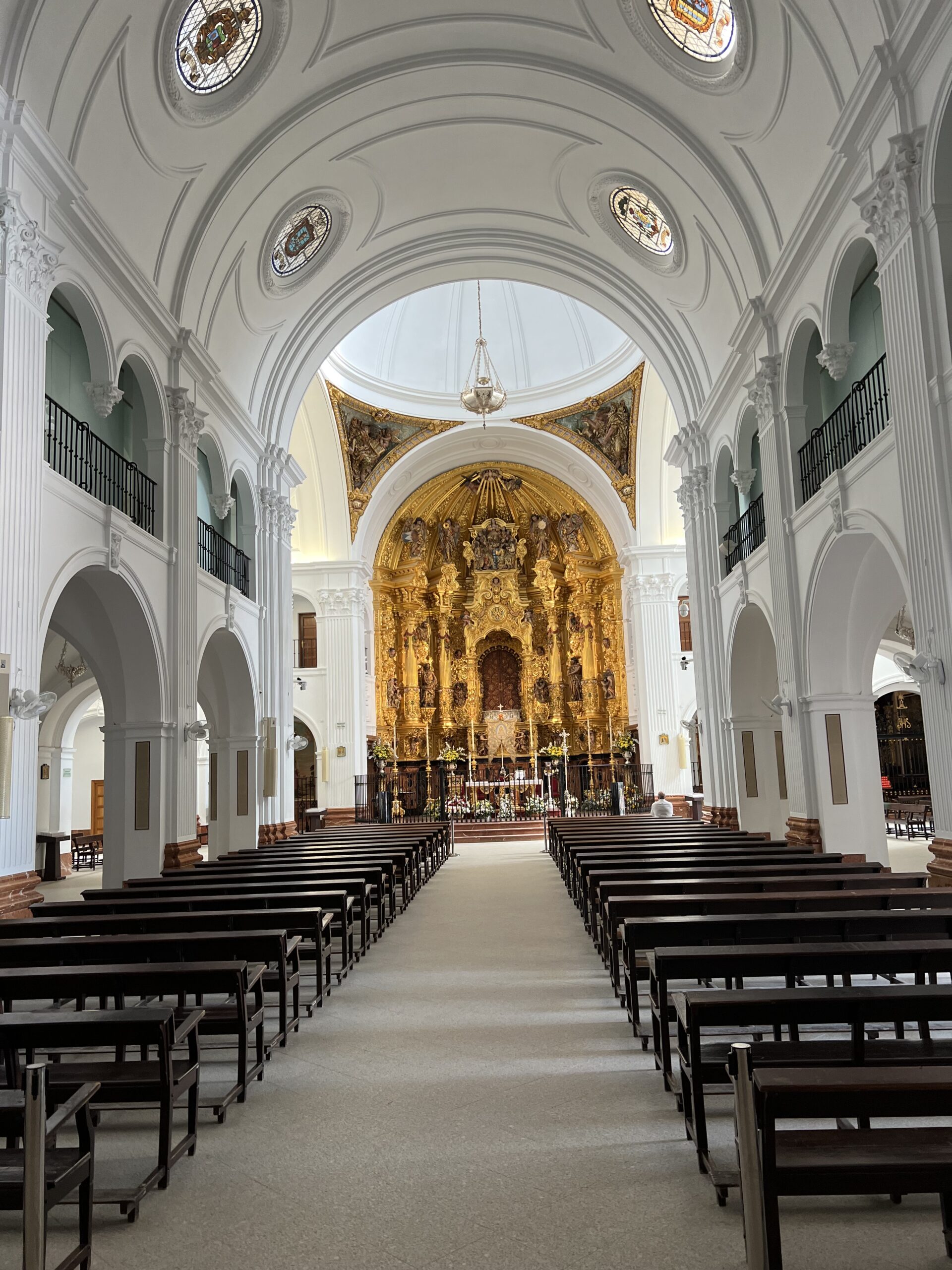
After parking the car, I go to the church. Upon entering, I proceed to the front. I arrive at the choir and the impressive altar with a retable full of golden decorations moves me. I see much beauty, but Our Lady is missing from the central part of it all. She is not there. Is Mary on tour or undertaking other important work? I don't know, and her absence has not been reported via the media. A replica is certainly not available.
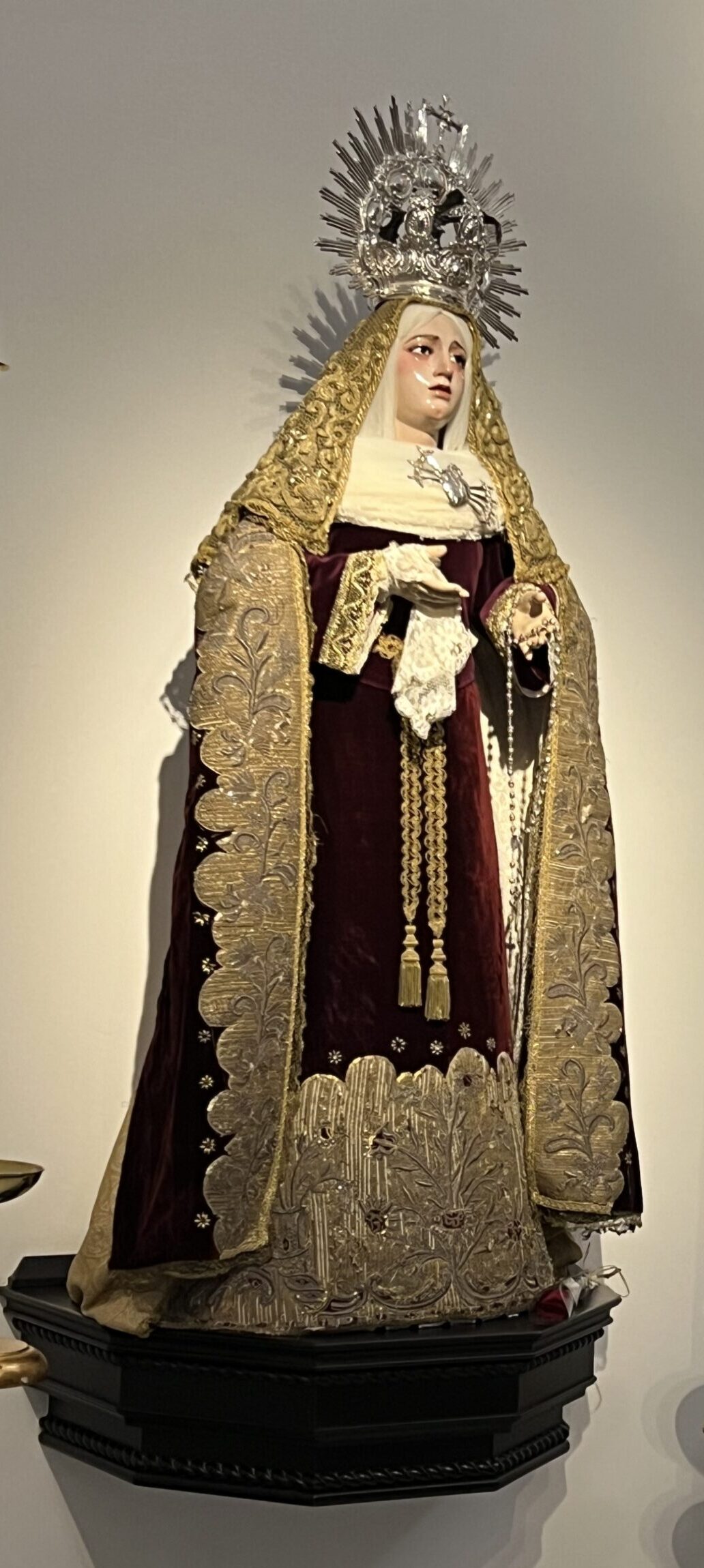
Next, I take a walk around the church, come to a statue of Mary, and pray there. It's a good opportunity to light a candle, but candles aren't burned here. To buy candles, you have to go to a shop selling religious articles. In this shop, I ask about the statue of Mary in the church. I'm told it's undergoing restoration. After buying a few tall candles, I cross the wide sandy path and arrive at the candle chapel. There is also a statue of Our Lady, which has been frequently venerated. This statue is black, but its hands are not, as they have received so many touches. I also make hand contact. This feels rather special. I hear that there are always little lights burning by the statue of Our Lady. A few more lights are added to those now.
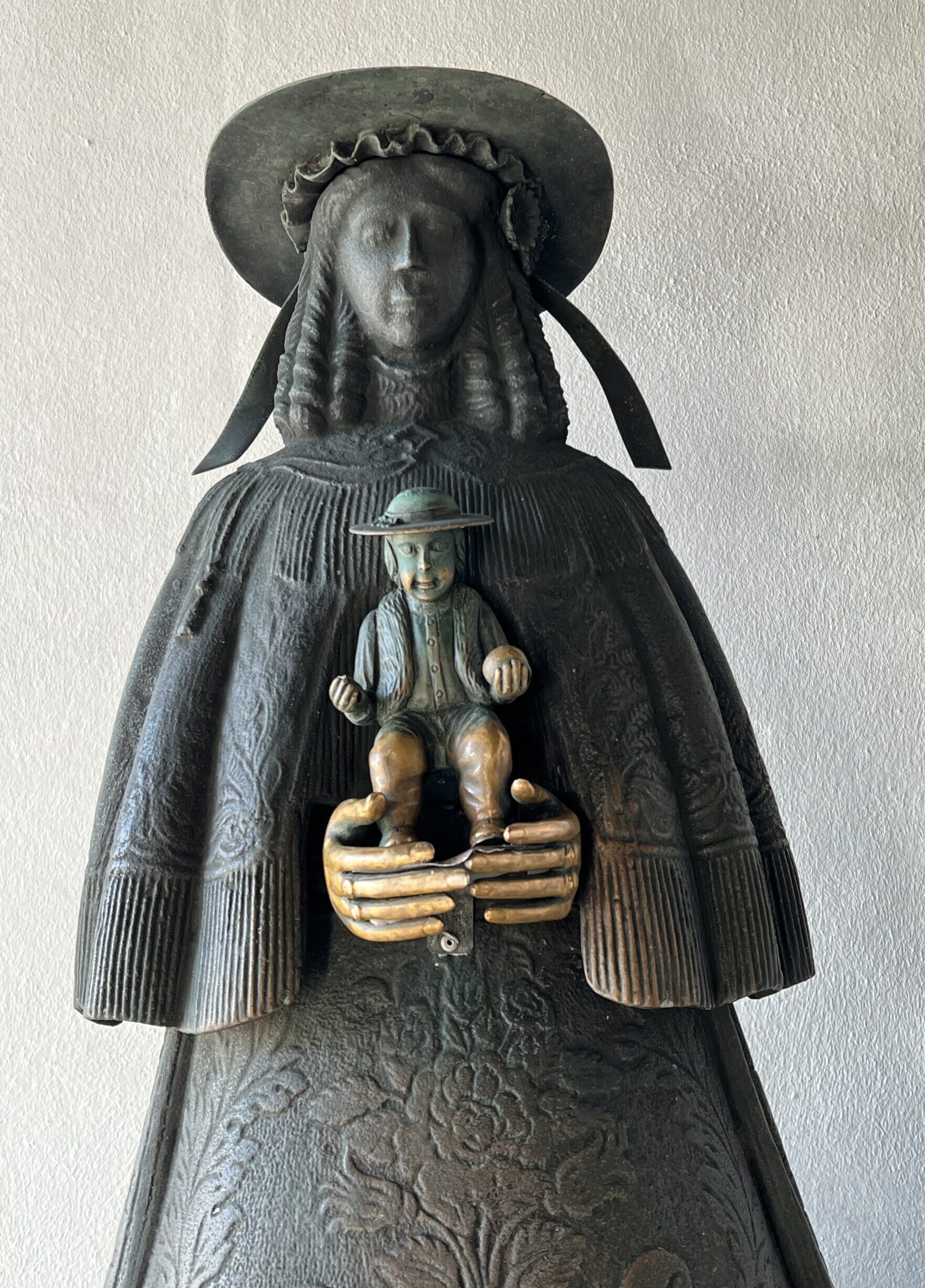
After the Chapel of Candles, I take a stroll through sandy streets and squares. It strikes me that there are so many images of Our Lady against the facades here. I stop counting at 40 depictions.
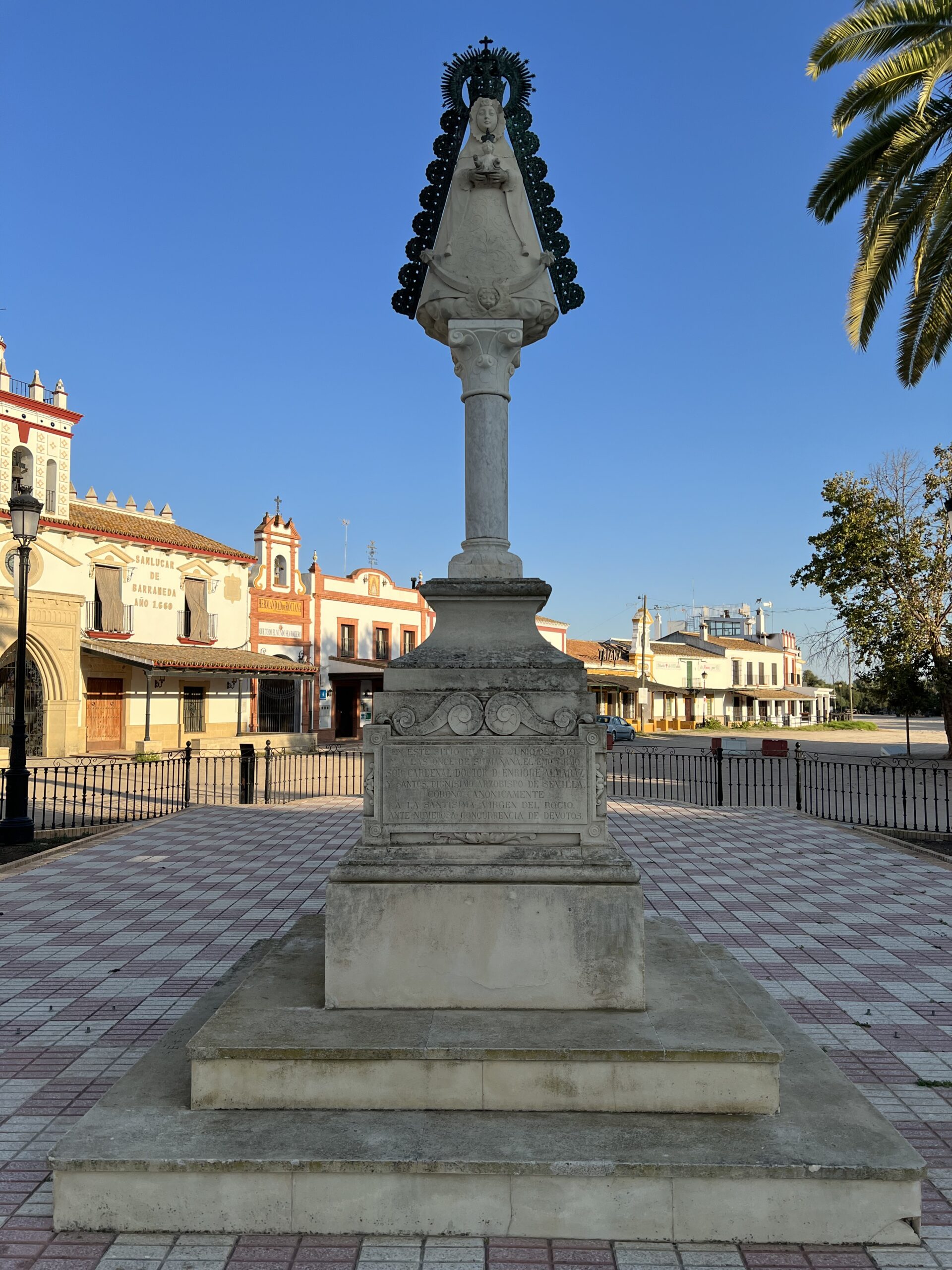
In an open space stands a statue commemorating the coronation of the Virgin of El Rocío. It was made by the Sevillian sculptor José Ordóñez Rodríguez (1867-1945). The statue was inaugurated on 19 August 1920 and restored in 1979.
After walking for another quarter of an hour, a terrace catches my eye and that is my next stop. Next to the terrace are many horses, which can be ridden. A carriage with visitors is also ready to depart. The white facades, sandy streets, sandy squares and many horses make El Rocío very special. Now I understand why this is such a beloved pilgrimage site.
Environment
In the surroundings of El Rocío, there are many walks to be made.
From El Rocío it is 16 km to Almonte, 80 km to Seville and 113 km to Utrera. The port city of Cádiz is 198 km from El Rocío.
El Rocío borders the Doñana National Park; “Parque Nacional Doñana”.
Posted: 21 October 2023
~~~

 Nederlands
  English (UK)
  Deutsch
  Français