History
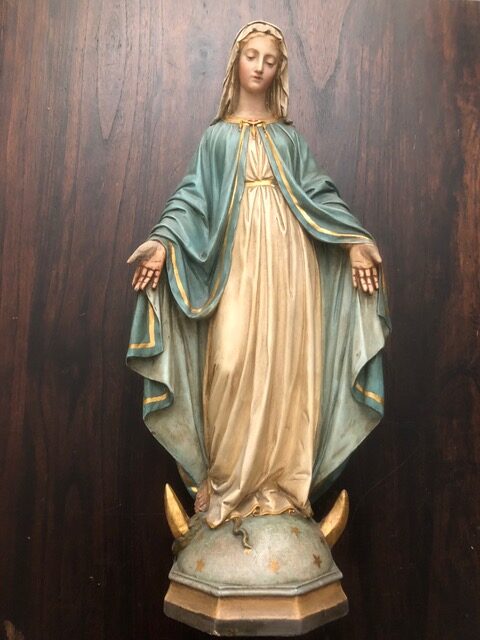
The pilgrimage site “Our Lady of Stoepe” has a turbulent history. Centuries ago…
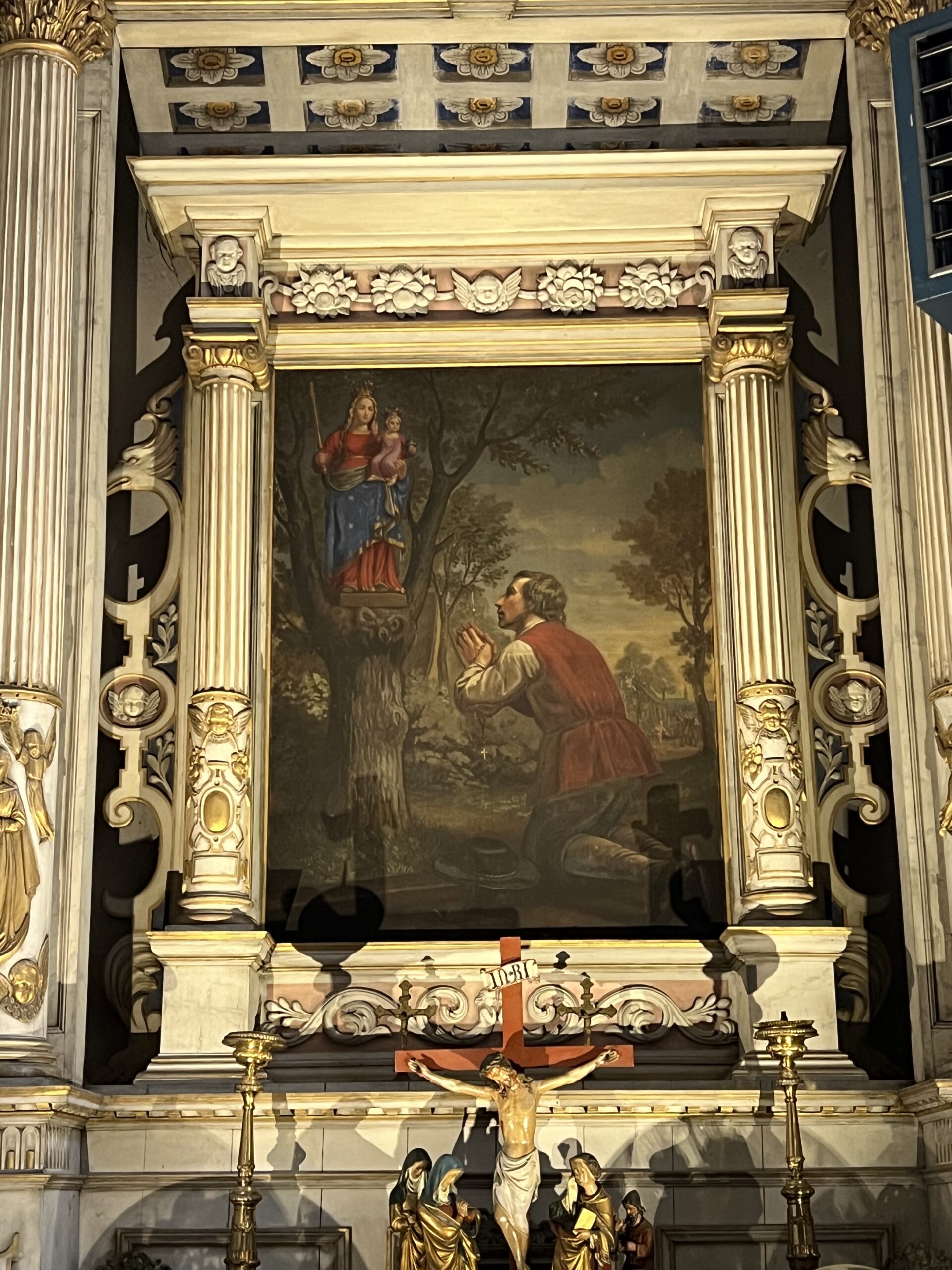
The chapel of Our Lady has its origins in a miracle. One day, a small wooden statue of Our Lady is found at the foot of an old tree. The foot of this tree is colloquially called “stoep”, and thus the name Our Lady of Stoepe originated. A man, who is a postman and born deaf, delivers letters and comes across the old tree. On his daily rounds, he stops at an old oak tree from which a statue of Our Lady hangs. He prays there for a cure to his deafness, with which he was born. One day, the man is at the statue of Our Lady again, prays, and is suddenly freed from his deafness. He then states that he owes his recovery to Mary. This miraculous event leads to many people visiting the statue. The local priest judges that it would be better for the statue to be placed in the church. He has it brought to the church, hoping this will increase church attendance. Then something very peculiar happens. During the night, while the statue is in the church, it disappears. The next day, it is found again at the old oak tree. The bringing of the small effigy to the church and its reappearance at the large tree happens three times. From this, it is concluded that the statue belongs at the old tree, not in the church. Some time later, a small chapel is built by the old oak tree, in which the statue is given a prominent place.
Besides curing the man’s deafness, more miraculous events occurred, and the statuette was attributed special powers. Research indicates that the miraculous events date back to 1422. This implies that Our Lady of Stoepe is one of the oldest pilgrimage sites in Belgium. At the end of the 15th century, the chapel was enlarged due to the increasing number of visitors.
In 1577, the chapel was destroyed during the iconoclastic riots, and it was rebuilt in 1613. In 1644, the chapel was severely damaged by Dutch States Army troops, and in 1649, restoration work restored the chapel to its former glory.
In 1650, the first novena of the “Stoep Days” was held, led by Antoon Triest (1576-1657), Bishop of Ghent (1620-1657). The novena of the “Stoep Days” became a tradition that continues to this day.
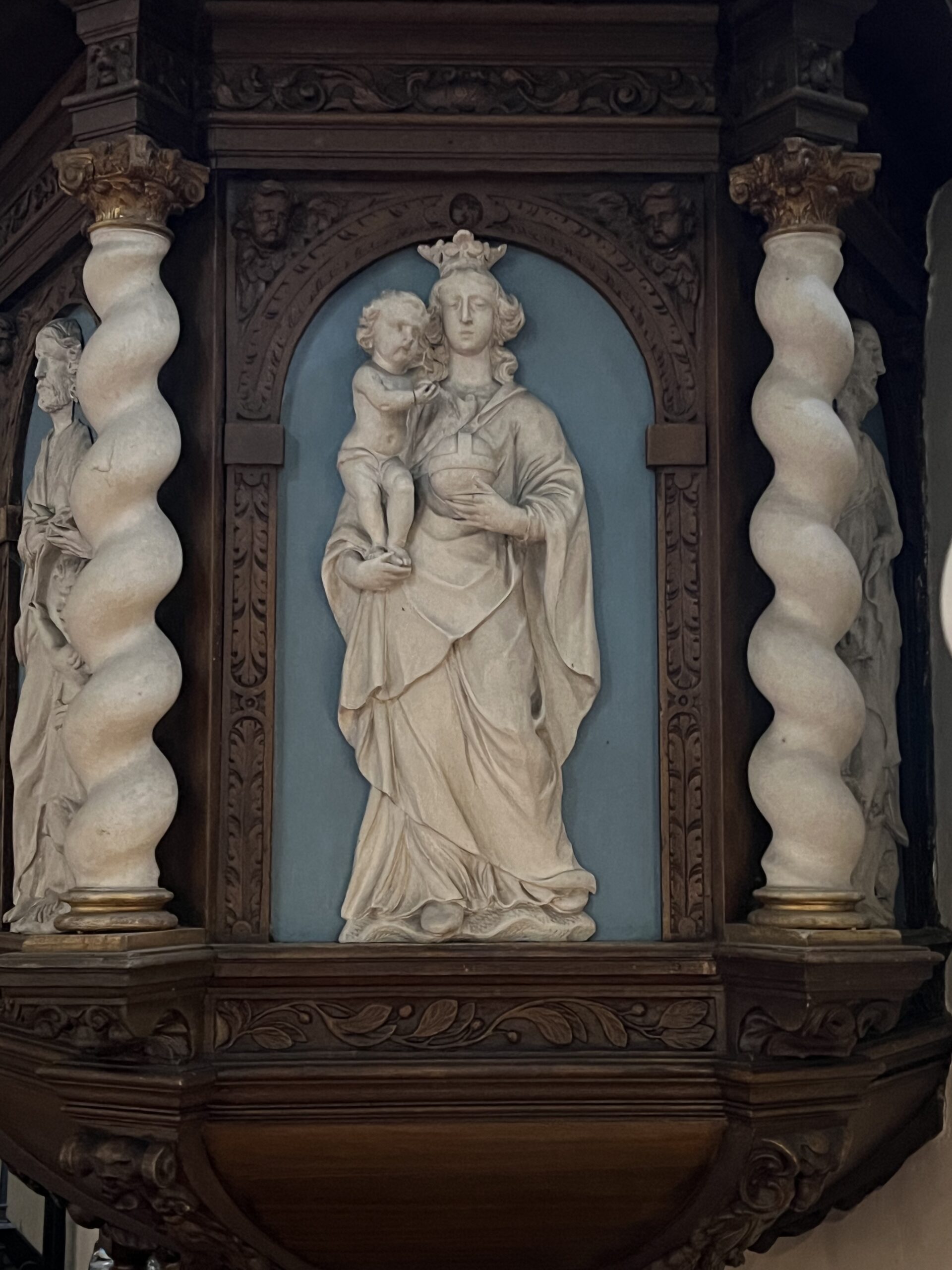
The current chapel was built between 1673 and 1677, and the oldest part of the building dates from 1457. This was made possible by a donation from a wealthy farmer, given in thanks for his recovery from an eye ailment. Extensions to the chapel took place in 1774, 1840, and between 1850 and 1900. The pulpit is of considerable age, dating from 1672. Around the chapel, 15 brick chapels were built in 1731, depicting the mysteries of Mary. The Stations of the Cross were a gift from a man who had regained his sight thanks to Mary. Ertvelde was then a much-visited place of pilgrimage.
The 1762 indulgence book states that Our Lady of Stoepe bears the title “Mary of Mercy”. She is invoked by those who wish to die a good death.
In 1797, the chapel and the 15 chapels suffered greatly from the unrest of the French Revolution (1789-1799).
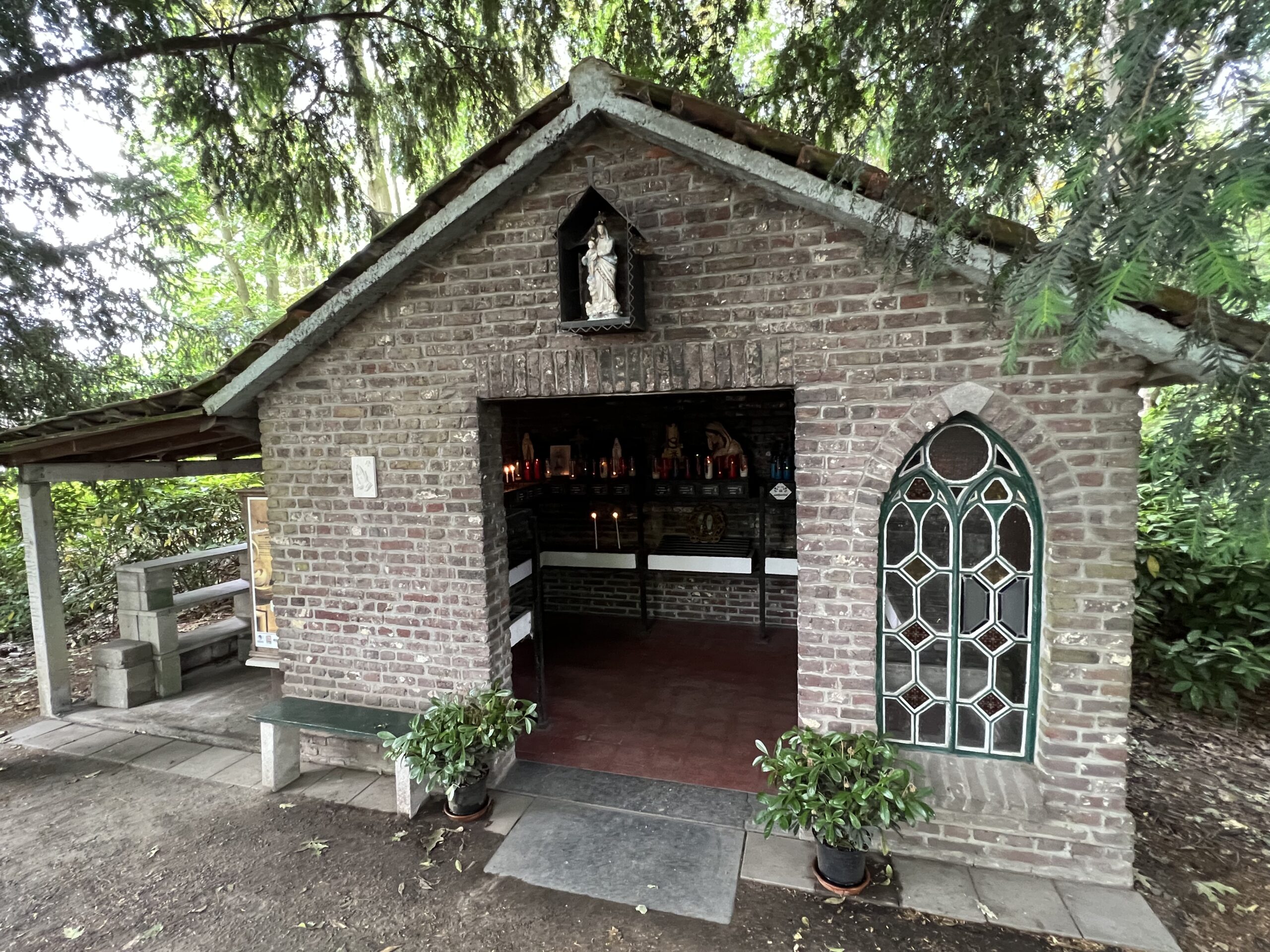
The 15 chapels were restored in 1952 and consecrated a little later. In 1960, a candle chapel was built, which is located opposite the chapel. This means that no more candles are burned in the chapel itself, but in a separate building, which improves safety.
The chapel and its surrounding churchyard are protected as a village view and the chapel was listed as a monument in 1994.
Pilgrimage site
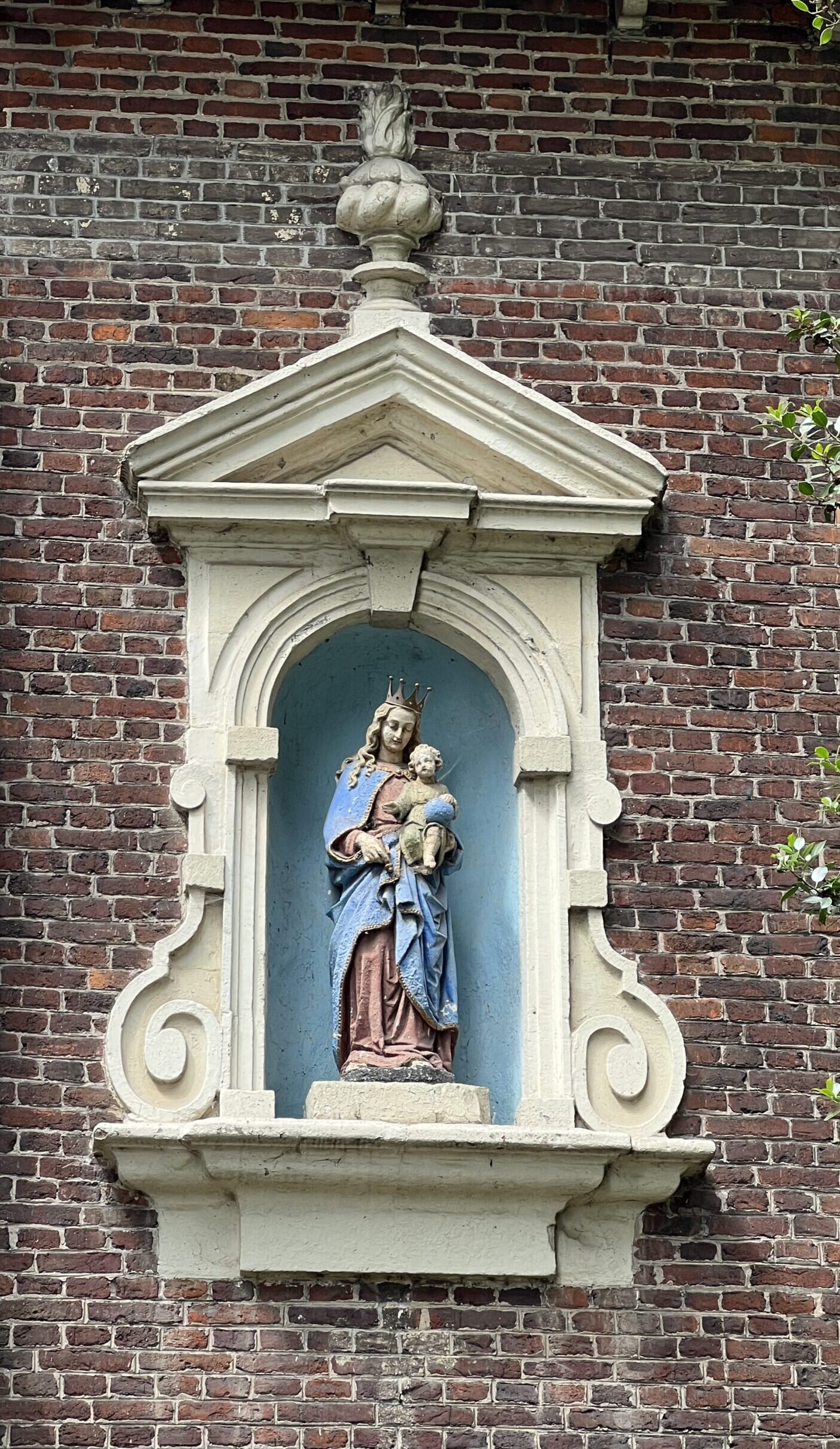
In Ertvelde, Our Lady is venerated as Mother of Mercy and Mother for the Good Death. The local population refers to her as Our Lady of Stoepe. The chapel's exterior walls are adorned with a few depictions of Our Lady.
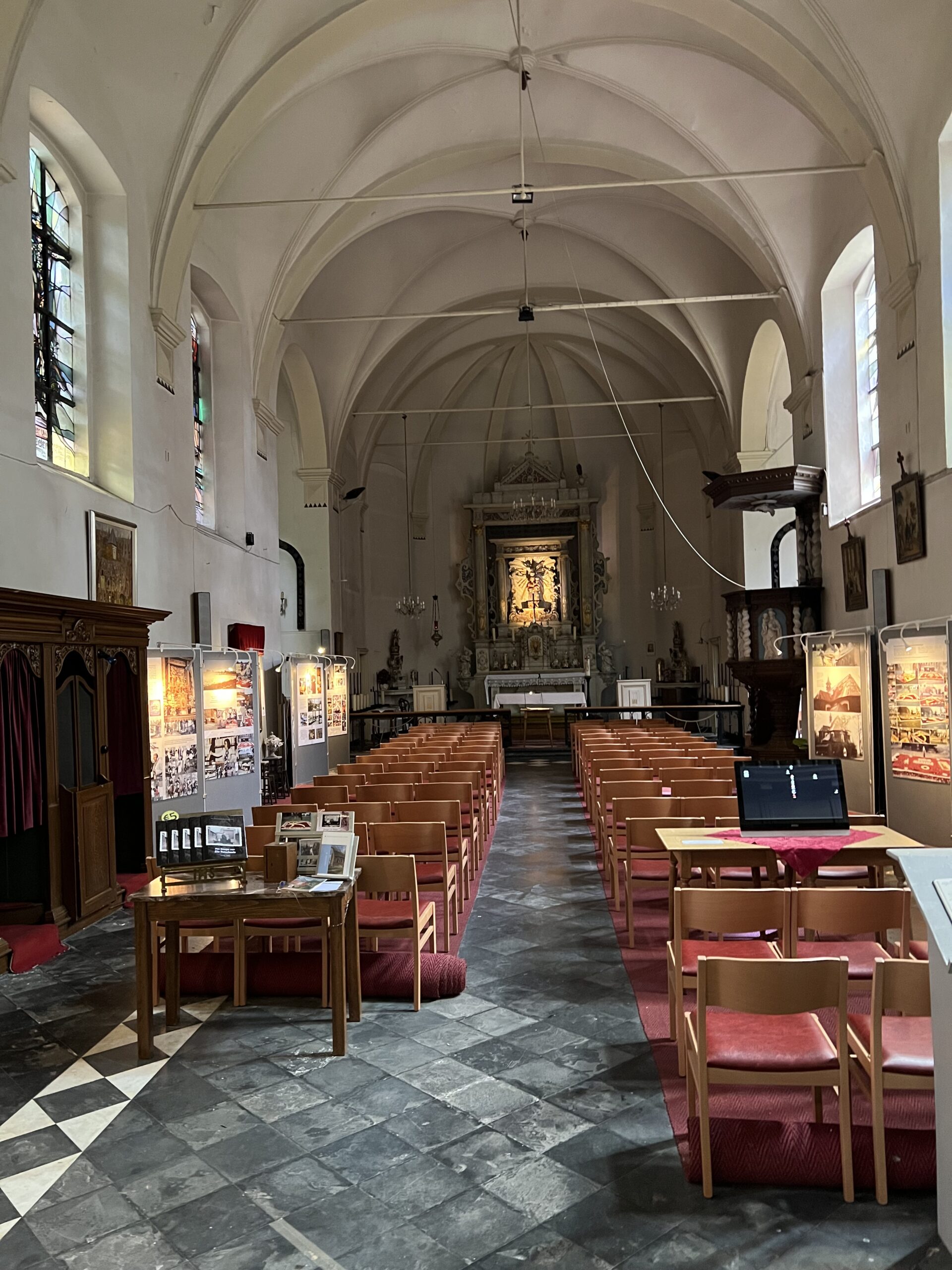
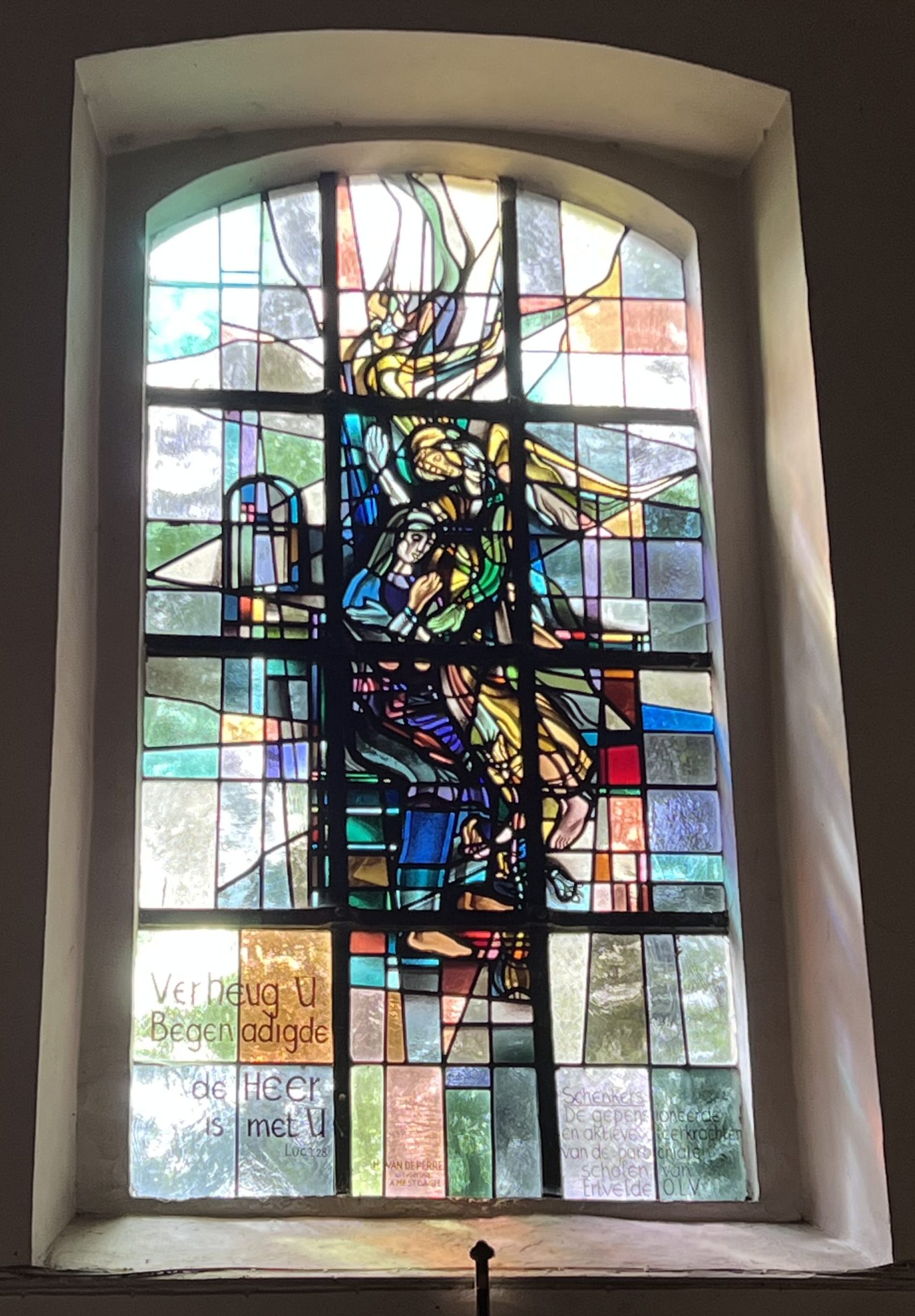
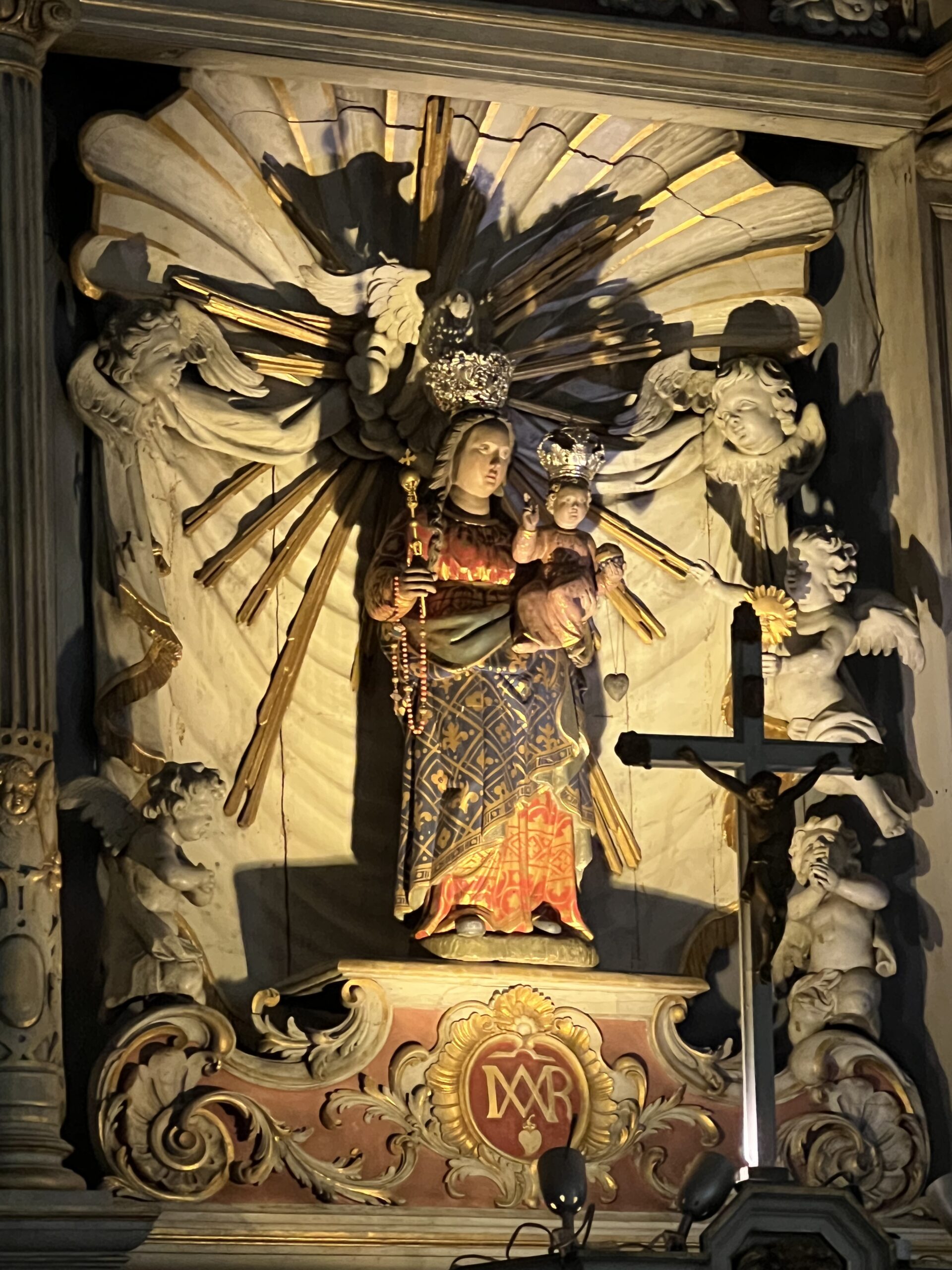
In the side walls of the chapel, 10 stained-glass windows were installed between 1967 and 1973. In each, Our Lady of Stoepe is depicted. The designs are by stained-glass artist Harold Van de Perre (1937) and the execution was carried out by the family business Mestdagh from Ghent, which was founded by Albert Mestdagh (1916-1972). There is also a painting from 1860, which refers to the miracle in 1422 where the postman was healed by praying to the statue of Mary. In the chapel, thank you letters, paintings, and other ex-votos refer to the help given by Mary. Mary has healed many children here. In the high altar stands the crowned statue of Our Lady, holding her Son in her arms.
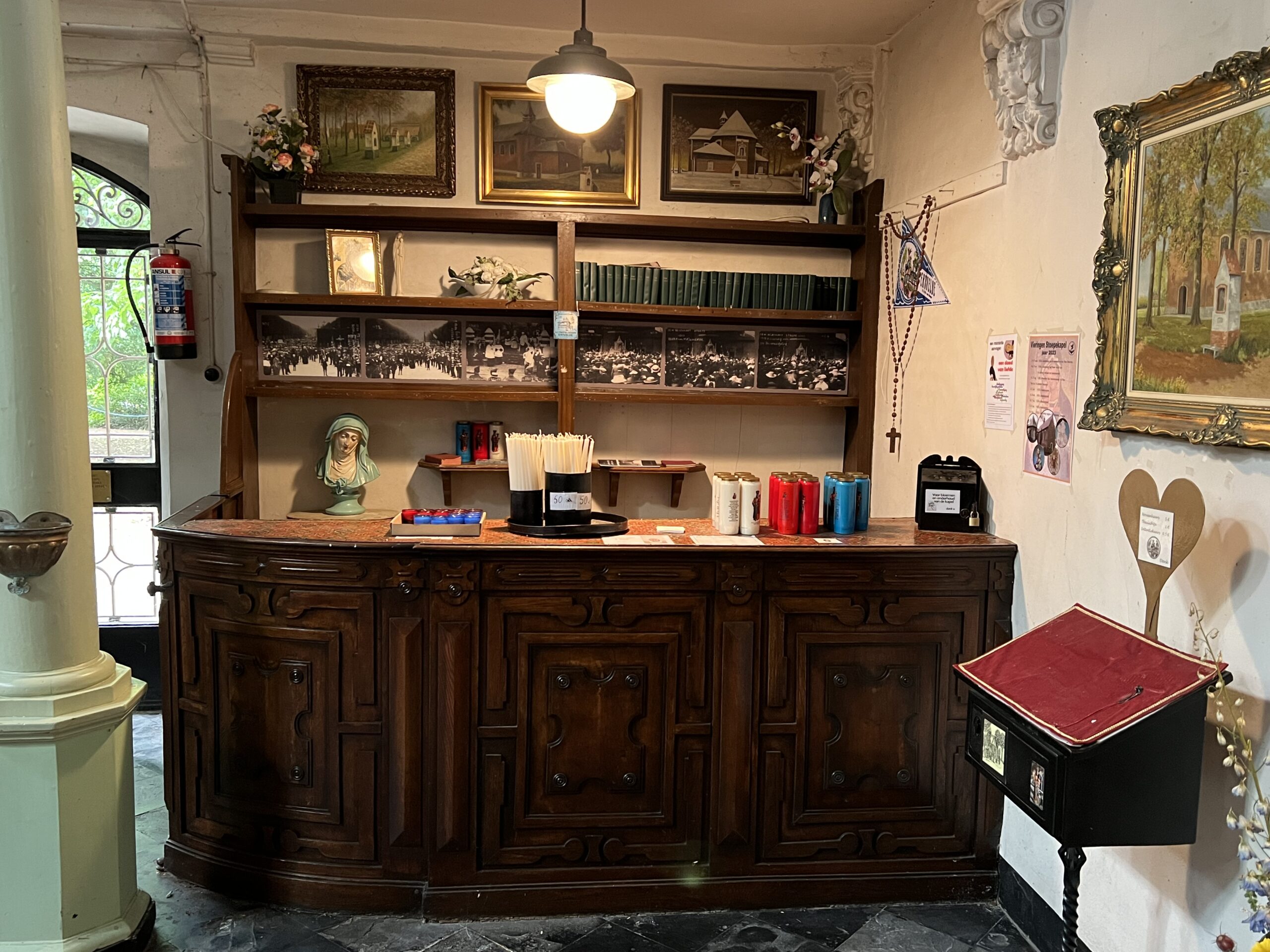
At the back of the chapel is a space where devotional items are sold.
For groups, it is possible to be guided by a guide.
Annually, the Stoepedagen take place from 8th to 16th September. There are many activities in and around the chapel then. The Stoepekomitee looks after the interests of the Mariaoord.
The pilgrimage site is characterised by its peaceful surroundings with many trees and the beauty of the chapel.
It is possible to light candles every day, as the pilgrimage site is accessible on all days.
ACCESSIBILITY
The chapel with the chapel courtyard of Our Lady of Stoepe is located in the hamlet of Stoepe, which belongs to the village of Ertvelde and the municipality of Evergem. The chapel is situated near the border of Ertvelde and Assenede, not far from the motorway.
Address: Kapelhof, 9940 Ertvelde (municipality of Evergem).
Up-to-date information can be found on www.kerknet.be/st-christoffel/contact.
Experience
Upon arriving at the pilgrimage site, I notice the beauty of its location. The sanctuary is situated on a square plot of land overgrown with tall trees. The many trees surrounding the chapel create a subdued, silent atmosphere. The name “kapelhof” certainly applies here. The name "stoepe" is not clear to me, and upon inquiry, it turns out to refer to a bench or small step that once stood in front of the small statue of Mary. In this way, the hamlet near Ertvelde was given the name Stoepe.
The chapel is a jewel and the 18th-century Baroque high altar invites me to come closer. Then I see the miraculous statue of Mary; Our Lady of Stoepe. This 15th-century oak statuette did not want to be in the church but by the tree, and so the chapel came to be here. The chapel was later replaced by this building. The effigy holds a central place on the high altar. In her right hand, Mary holds a sceptre, as a symbol of power, and on her left arm sits her Child. It is now the perfect moment to pray to Our Lady.
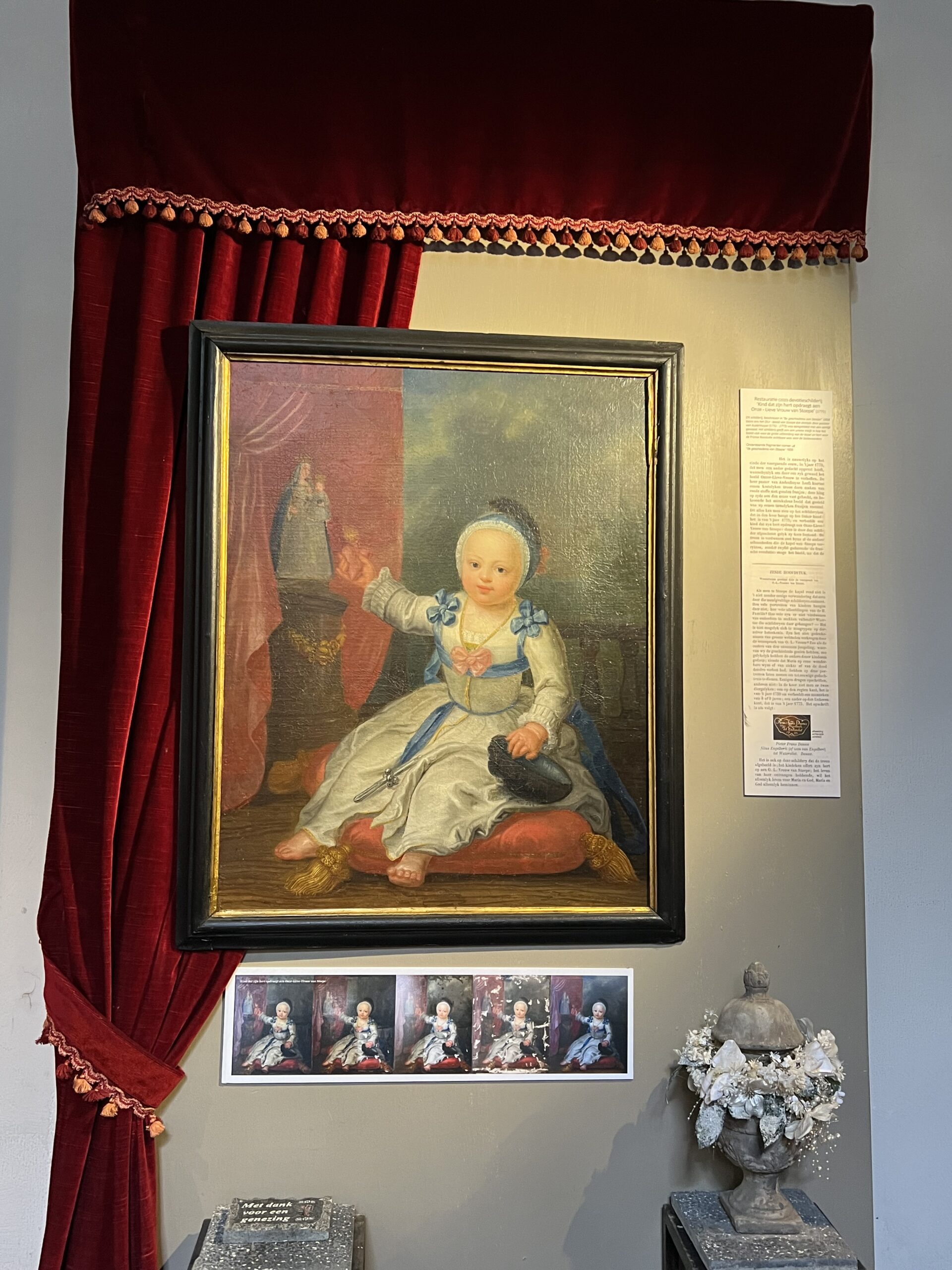
After praying to Mary for a few minutes, I take a walk around the chapel and enjoy its beauty. I see so much more, including ex-votos, statues, and by the right side altar, a painting depicting the legend of the postman. Being shown the imagined history from the year 1422 here is a gift! I also notice a devotional painting from 1775 with a rich adornment.
After visiting the chapel, I will go to the candle house to light some new candles. I have intentions for good friends and my parents, who are so dear to me. In this way, I will conclude my visit to this place of pilgrimage, and with many beautiful memories, I will head home.
Environment
In the vicinity of Ertvelde, you can enjoy cycling tours and walks. A visit to Bruges can be made quickly, as the historically rich city is only 41 km to the west. The city of Ghent can be reached after travelling 24 km to the south. The coastal city of Blankenberge is 57 km away from Ertvelde, and Lokeren is 29 km from here.
~~~

 Nederlands
  English (UK)
  Deutsch
  Français