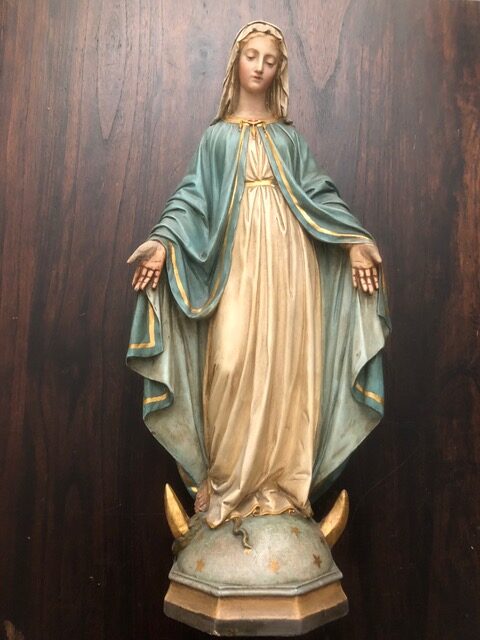
Gratitude is frequently expressed to Mary, God, or another saint when praying or beseeching for a favour received. This can be accompanied by offering a tangible memento.
Often, a gift is given to Mary as thanks by a healed believer and, if this object symbolises the healing, it is referred to as an ex-voto. The object given as a gift reflects the gratitude for personal suffering, misfortune, or aid. Examples of this include recovery from illness or accident, rescue from drowning, passing an exam, and finding love. Consequently, each ex-voto has its own story and makes the thanks unique.
An “ex voto suscepto” means “for a vow made”. Well-known ex votos include wax or silver depictions of body parts or animals, which have been healed with the help of Our Lady. These include, among others, an arm, a soldier's beret, a leg, a hand, a heart, a head, a cat, a crutch or a foot. Many an ex voto is specially made or bought in a shop selling devotional items and is, for example, made of wood, marble, metal or cloth.
Miniature boats also appear as ex-votos, given in thanksgiving for the rescue of sailors. Other ex-votos consist of painted depictions, for example, of a child who has been healed, or a mother with her baby after a successful birth. In the past, nobles commissioned portraits of their healed child and offered them at an effigy of Mary in a chapel, church, or place of pilgrimage.
On many occasions, a heart has been given as an ex-voto to Our Lady. This is an expression of gratitude to Mary and love for Her.
Key elements of ex-votos in the form of a painting include the heavenly atmosphere, the hovering image of grace, the kneeling believer beneath it, the solemn promise, and an explanatory inscription.
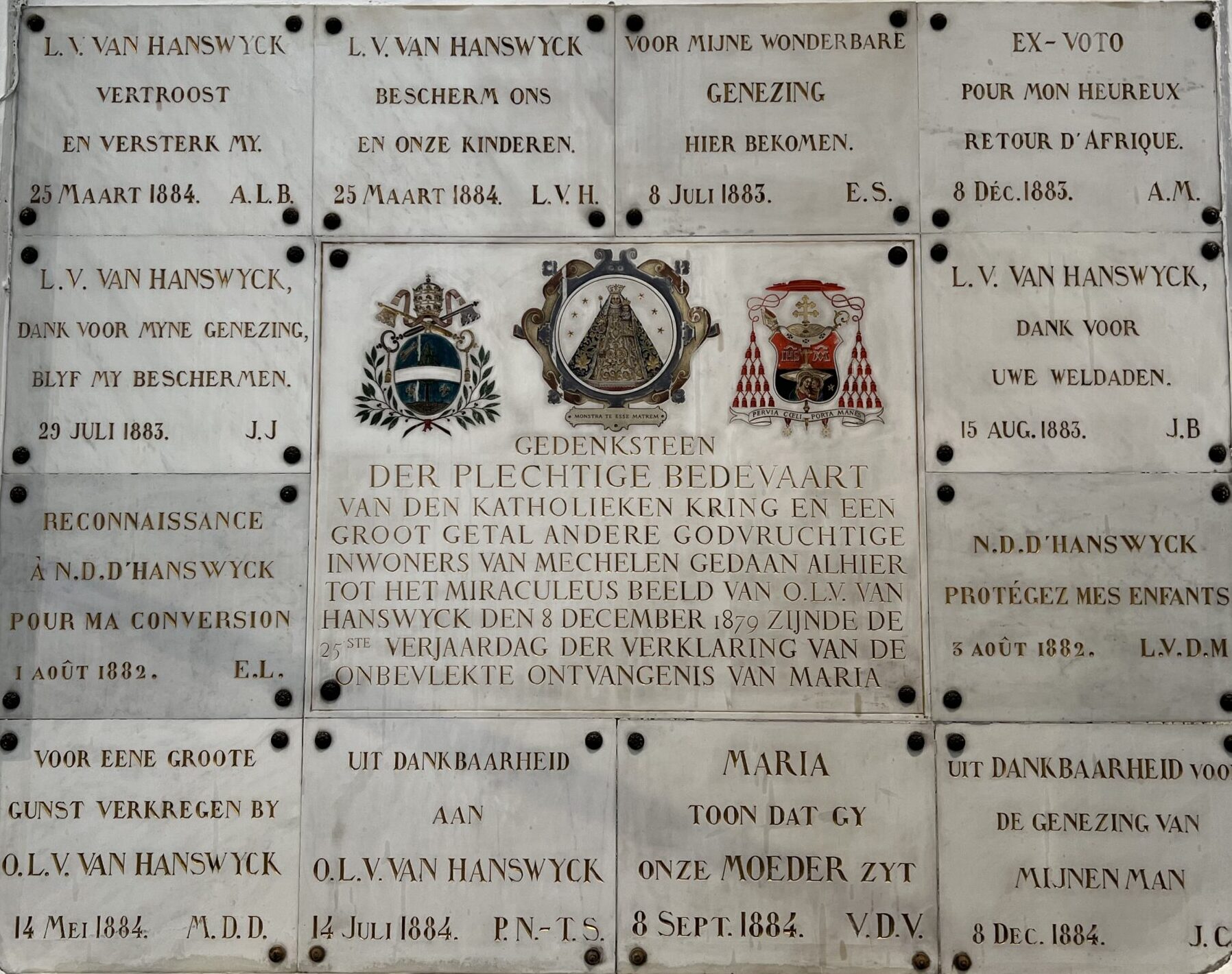
In churches and chapels, ex-votos also appear in the form of stones, which can be made of marble, bearing the text of thanks for protection, healing, help, support, or comfort. The stone often bears a date, indicating when the thanks were symbolised.
In a Marian shrine, at a miraculous image or relic of a saint, ex-votos are offered. These expressions of gratitude are usually kept in glass display cases or placed against a wall in a shrine, making them visible to visitors.

 Nederlands
  English (UK)
  Deutsch
  Français