History
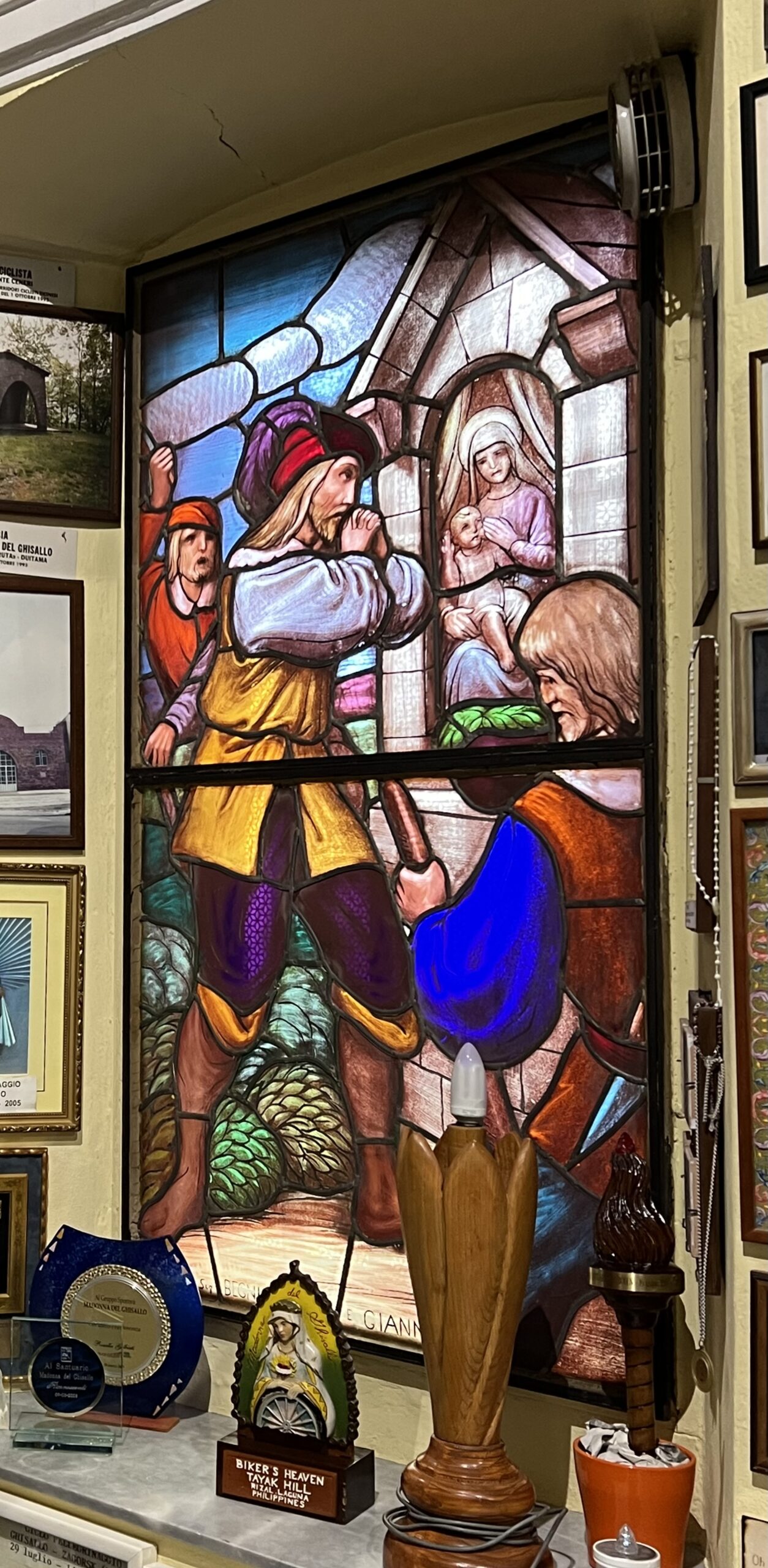
A legend lies at the heart of this place of pilgrimage. The story dates back to the Middle Ages. One day, Count Ghisallo was out hunting and was attacked by brigands. The count was threatened with death by the robbers. He began to pray and shortly thereafter saw an apparition of Mary on an altar. The count ran to Her. Our Lady then saved him from the bandits. Because of this legend, Mary is the patron saint of walkers and travellers. In the 14th century, a small chapel was built, containing the image of the Madonna.
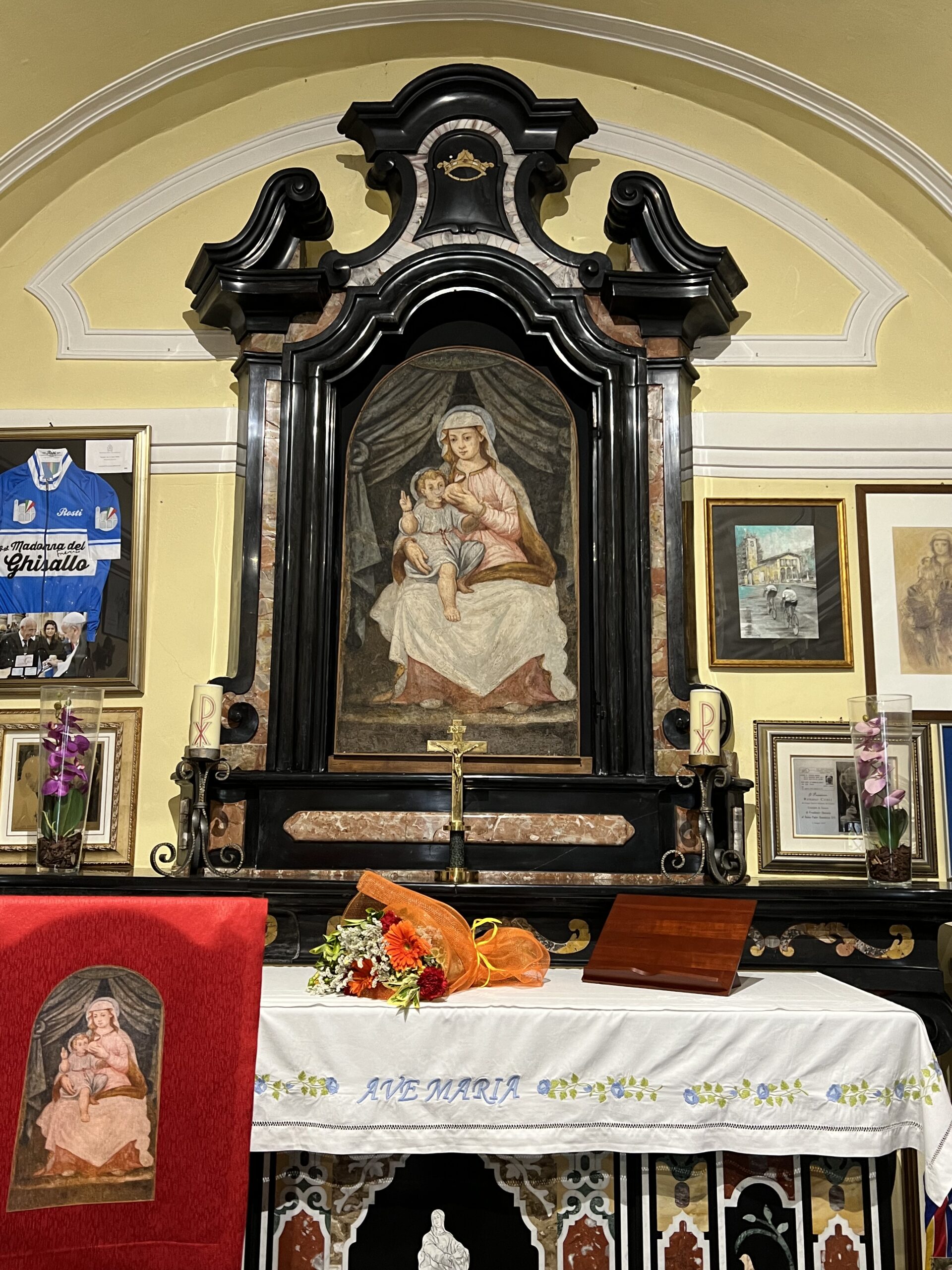
The current church dates from 1623. In July of that year, residents of Magreglio requested that the statue be blessed and masses be held in the small building. In 1681, arches were added to the entrance. The effigy of Mary is a nursing mother from the 16th century. The statue currently in the church is a copy of the original statue. The space is filled with cycling history, particularly from the Giro d'Italia. Cycling legends have visited the pilgrimage site, leaving behind a bicycle, trophy, or jersey.
Pius XII, Pope from 1939-1958, born Eugenio Maria Giuseppe Giovanni Pacelli (1876-1958), blessed the eternal light in Castel Gandolfo on 13 October 1948 and sent it to Ghisallo, with cyclists carrying the torch further.
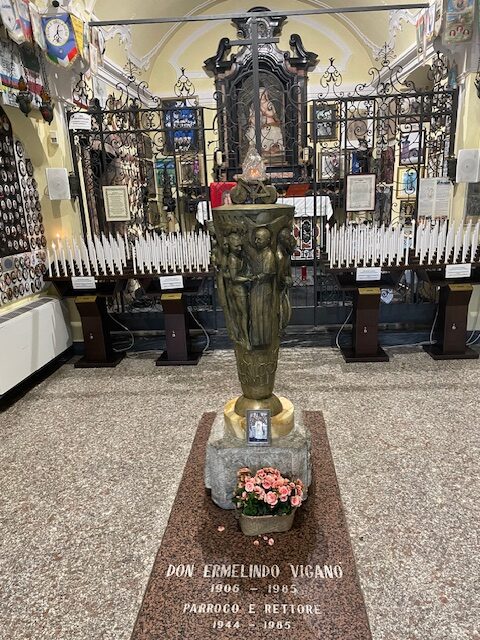
This happens at the request of Father Ermelindo Viganò (1906–1985), who was the priest of Magreglio and rector of the sanctuary from 1944 to 1985. He was responsible for Ghisallo's great fame. During the passage through Ghisallo of the first edition of the Giro di Lombardia in 1945, after the Second World War (1939–1945), he had an idea. He wanted to do something positive for the cyclists undertaking the difficult climb up Ghisallo hill. He informed the Pope and convinced him to proclaim the Madonna del Ghisallo the patron saint of cyclists.
Upon the flame's arrival on 17 October 1948, many current and former cyclists were present, including Fausto Coppi (1919-1960), Gino Bartali (1914-2000), Maria Ghella (1929-2020), Alfredo Leoni (1917-1970), Guido Messina (1931-2020), and Vito Ortelli (1921-2017). The torch with the flame was carried to the pilgrimage site by cyclists taking turns. The eternal flame is housed in the sanctuary, in the middle of the small church. It is a gift from the Italian professional cyclists to their patron saint. The creation of the torch with the flame is a 140-centimetre-high work by visual artist Carmelo Cappello (1912-1996). The artwork is a symbol of devotion to Our Lady and a remembrance of deceased cyclists. On 13 October 1949, the Pope declared Ghisallo the patron saint of Italian cyclists. This also happened after the rector's efforts. Later, the Madonna of Ghisallo became the patroness of all cyclists.
The first people to believe in the protection of Our Lady of Ghisallo are cycling champions during the most dramatic moments of their careers. Their numerous ex-votos, left on the walls of the pilgrimage church, prove this. As a result, young people come to this place, inspired by the champions. Older people come here because they want to cycle for as long as possible. The first to donate their racing bikes to the Madonna were Bartali, Coppi, and Magni. There is also a bicycle belonging to Alfonsina Strada, born Alfonsina Morini (1891-1959), who was the first woman to ride the Giro (1924) among the men. In the small church, there is a silver memento with a photograph of Serse Coppi (1923-1951), Fausto Coppi's brother. He died in 1951 after a fall in a cycling race. This memento was placed there a few weeks after the fatal accident, on 8 July 1951, in the presence of Fausto Coppi.
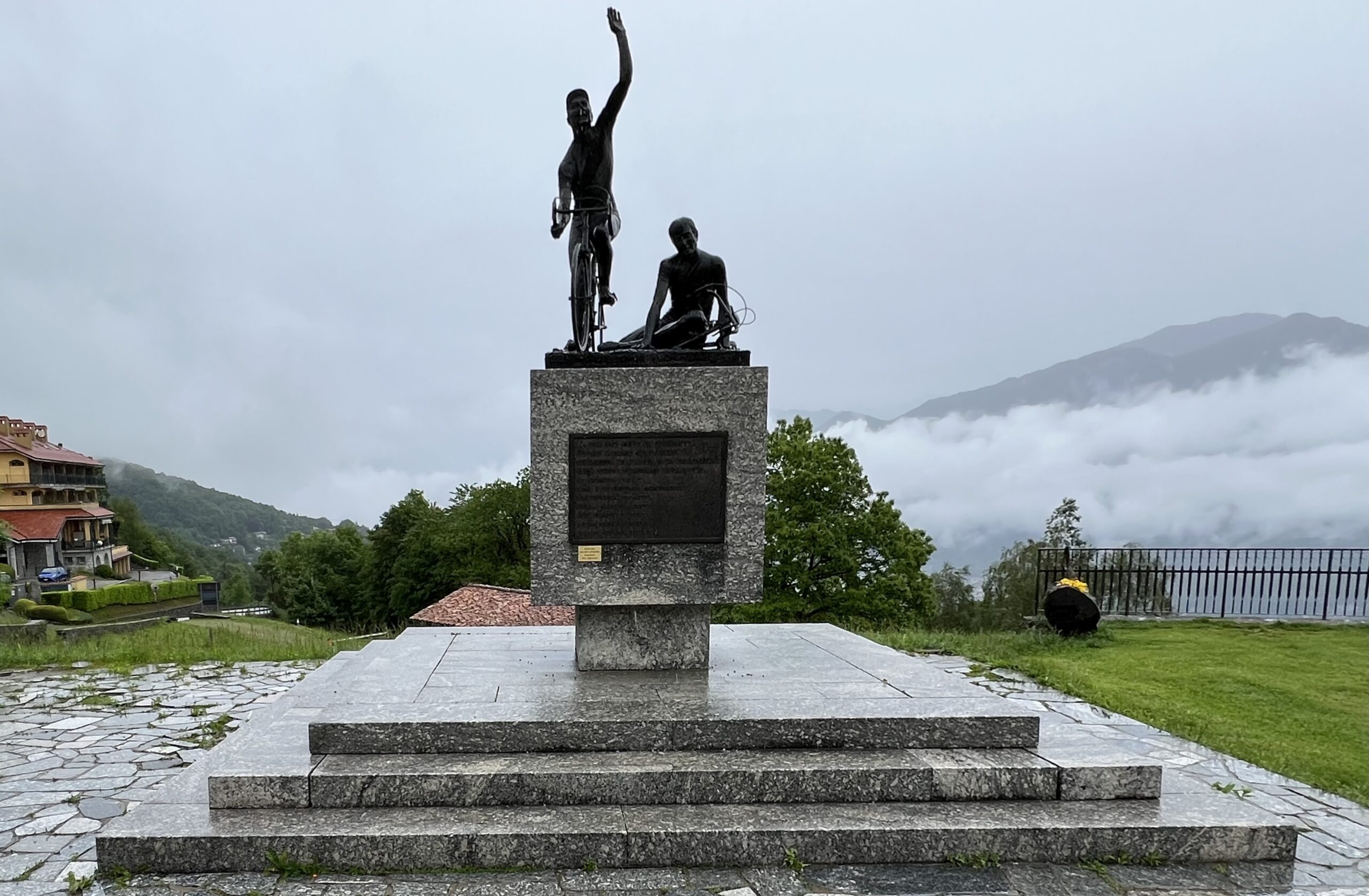
On the grounds of the little church and the museum stands a large monument. It is a granite block with two bronze statues upon it. One is a winning racing cyclist and the other depicts a fallen cyclist, overcome by fatigue. It was placed on 15 July 1973.
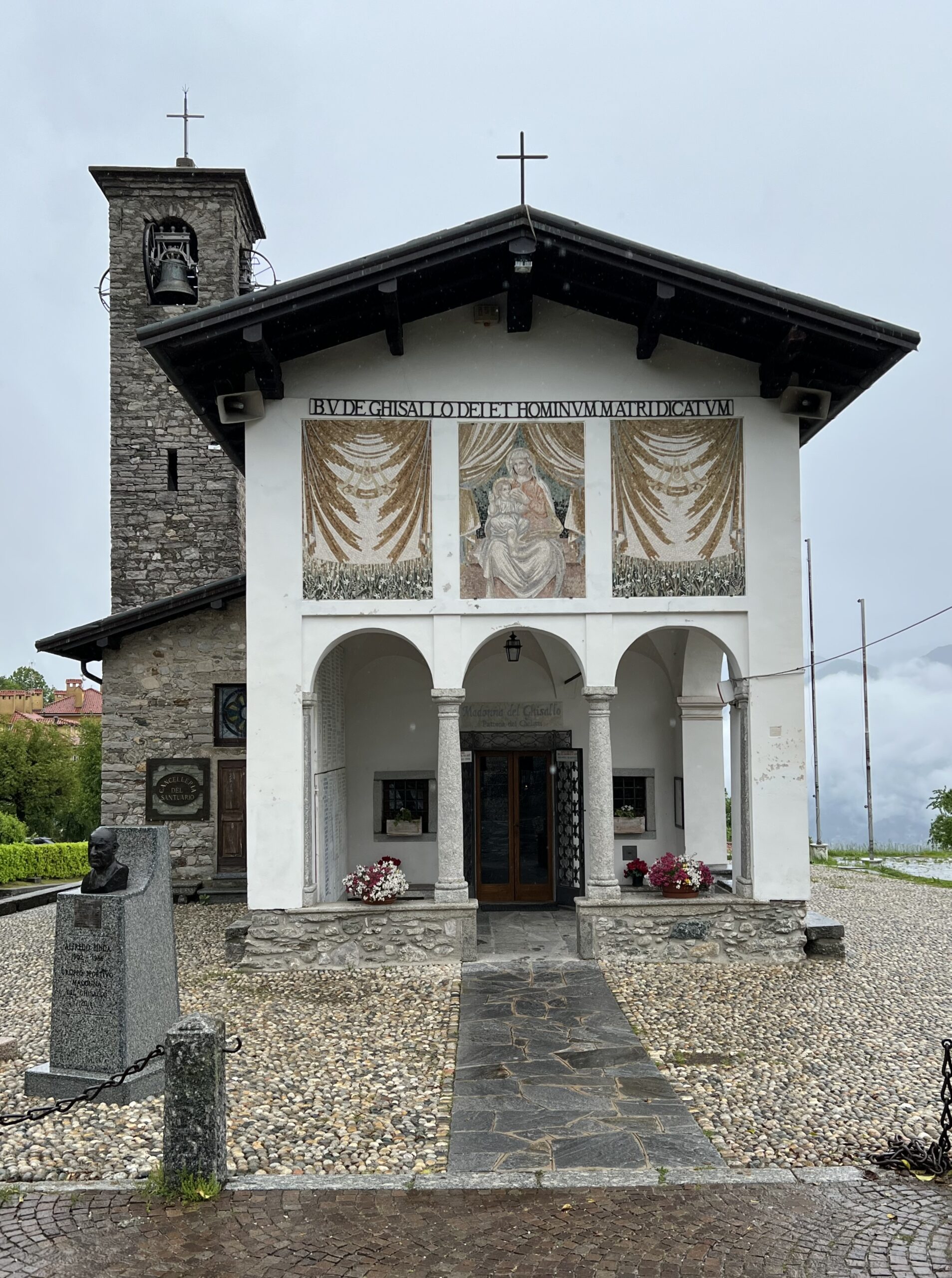
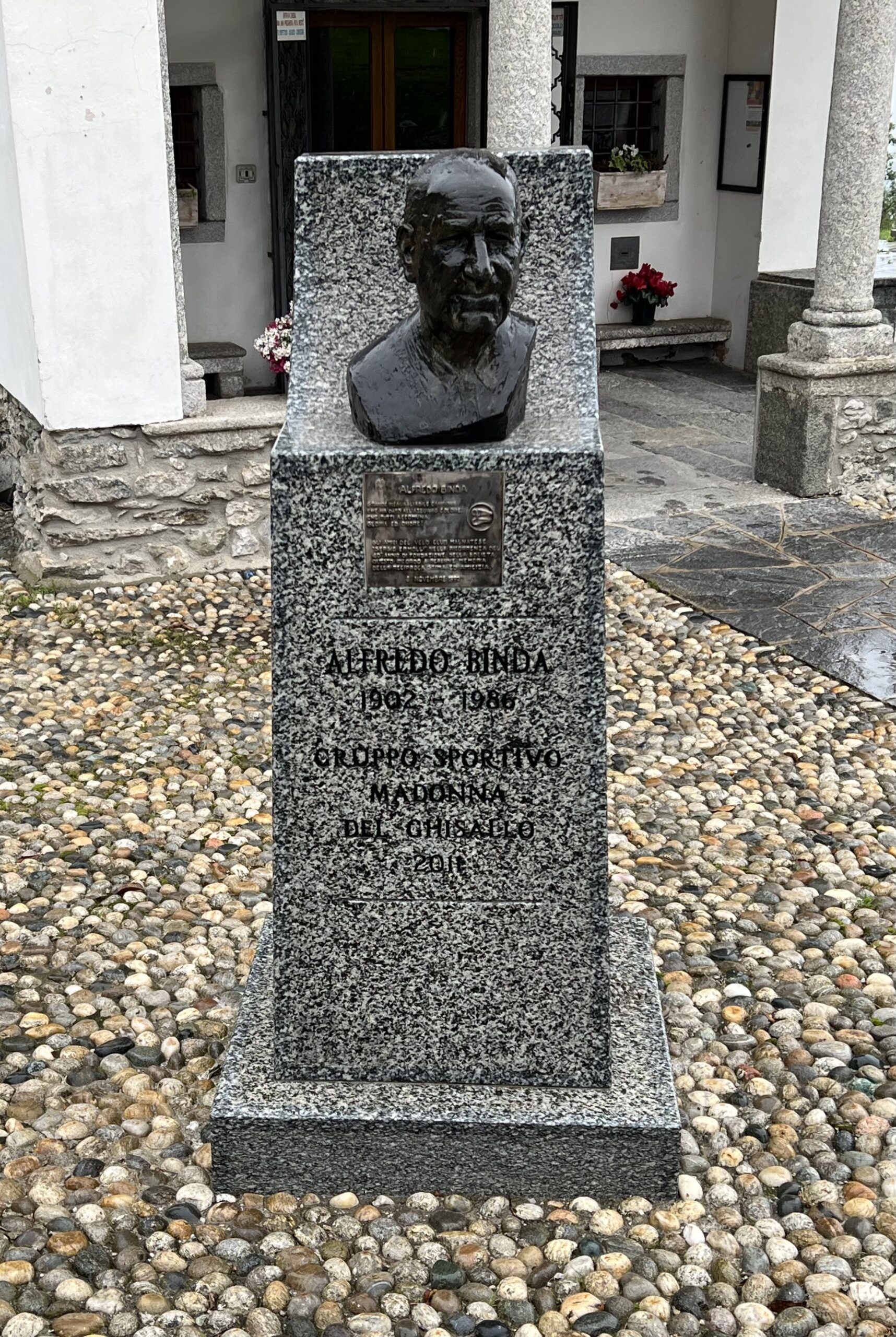
At the entrance to the little church stand the bronze busts of the great Italian cycling champions Coppi, Bartali and Binda. In 1960, the statue of Fausto Coppi was unveiled, which stands in front of the church. The face was created by footballer and sculptor Paolo Todeschini (1920-1993). Later, this was done for Gino Bartali (2000) and Alfredo Binda (2011). The memorial stone for Ermelindo Viganò appeared in 1985, and in 1996, the one for Vincenzo Torriani (1918-1996). Torriani organised cycling races for many years, including the Giro d’Italia between 1949 and 1992. In 2015, a memorial stone was placed for Luigi Farina (1941-2014), who was rector of the Ghisallo pilgrimage site for 20 years and confessor to cycling champions.
The cycling museum has been realised after many efforts. An agreement in principle was signed in 1994. In 1994, the municipality of Magreglio set the conditions, and in 1997, the municipality made land available. The foundation stone was laid on 24 October 1999. On 31 May 2006, the final stone for the cycling museum was blessed by Benedict XVI, Pope from 2005 to 2013 and born Joseph Aloysius Ratzinger (1927-2022). This stone bears the message “Omnia Vincit Amor,” which is Latin for “love conquers all.”.
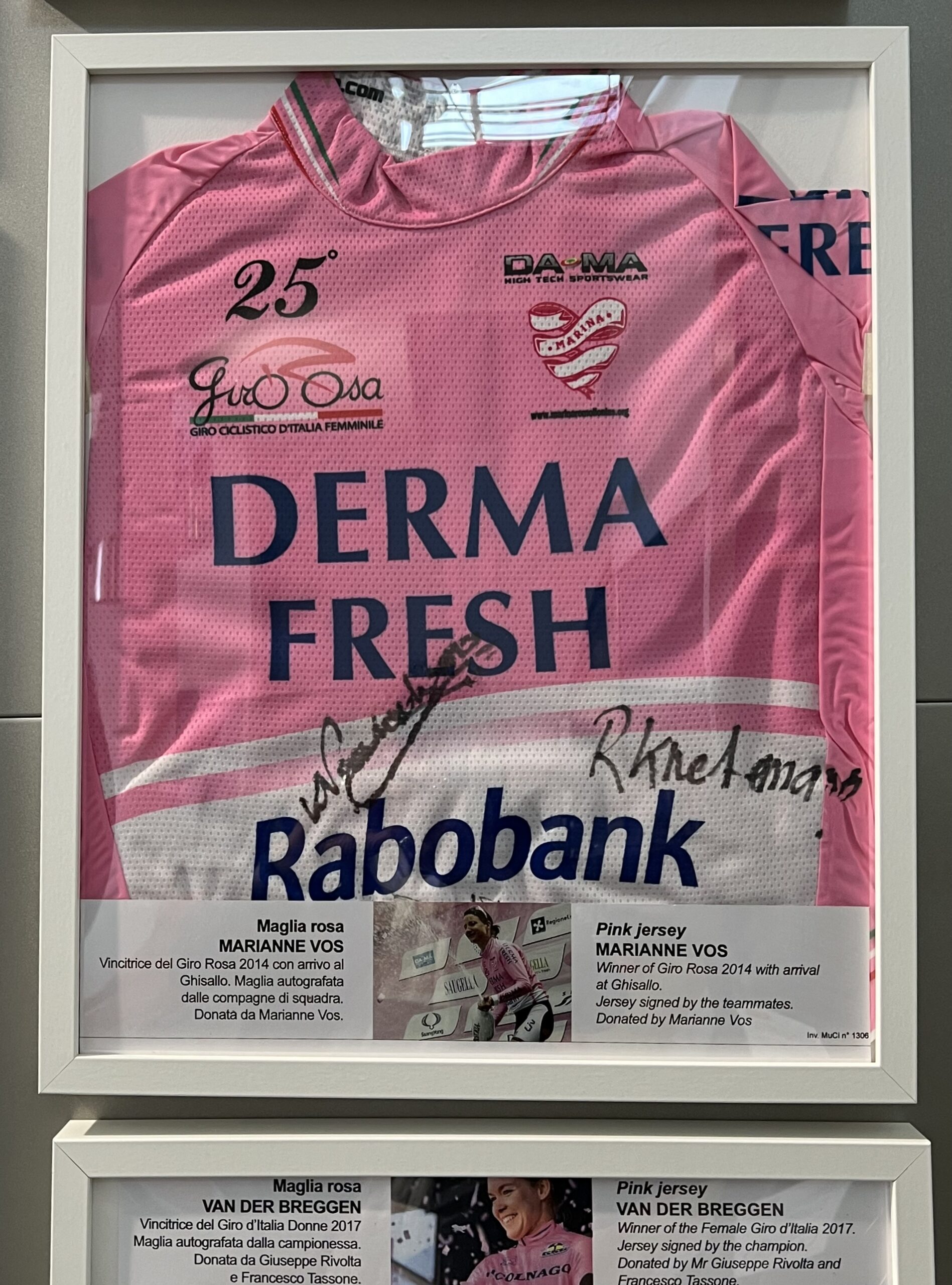
In 2014, cycling champion Marianne Vos, who has won the Giro d’Italia three times, donated one of her jerseys.
Pilgrimage site
On the Ghisallo hill, not far from Lake Como, lies the pilgrimage site for cyclists and cycling enthusiasts. The summit is at an altitude of 754 metres. From Bellagio, it's 567 metres of elevation gain over just over 9 kilometres to the pilgrimage site, which is an average gradient of 6%.
In front of the little church stand statues of Italian cycling champions Fausto Coppi, Gino Bartali, and Alfredo Binda (1902-1986).
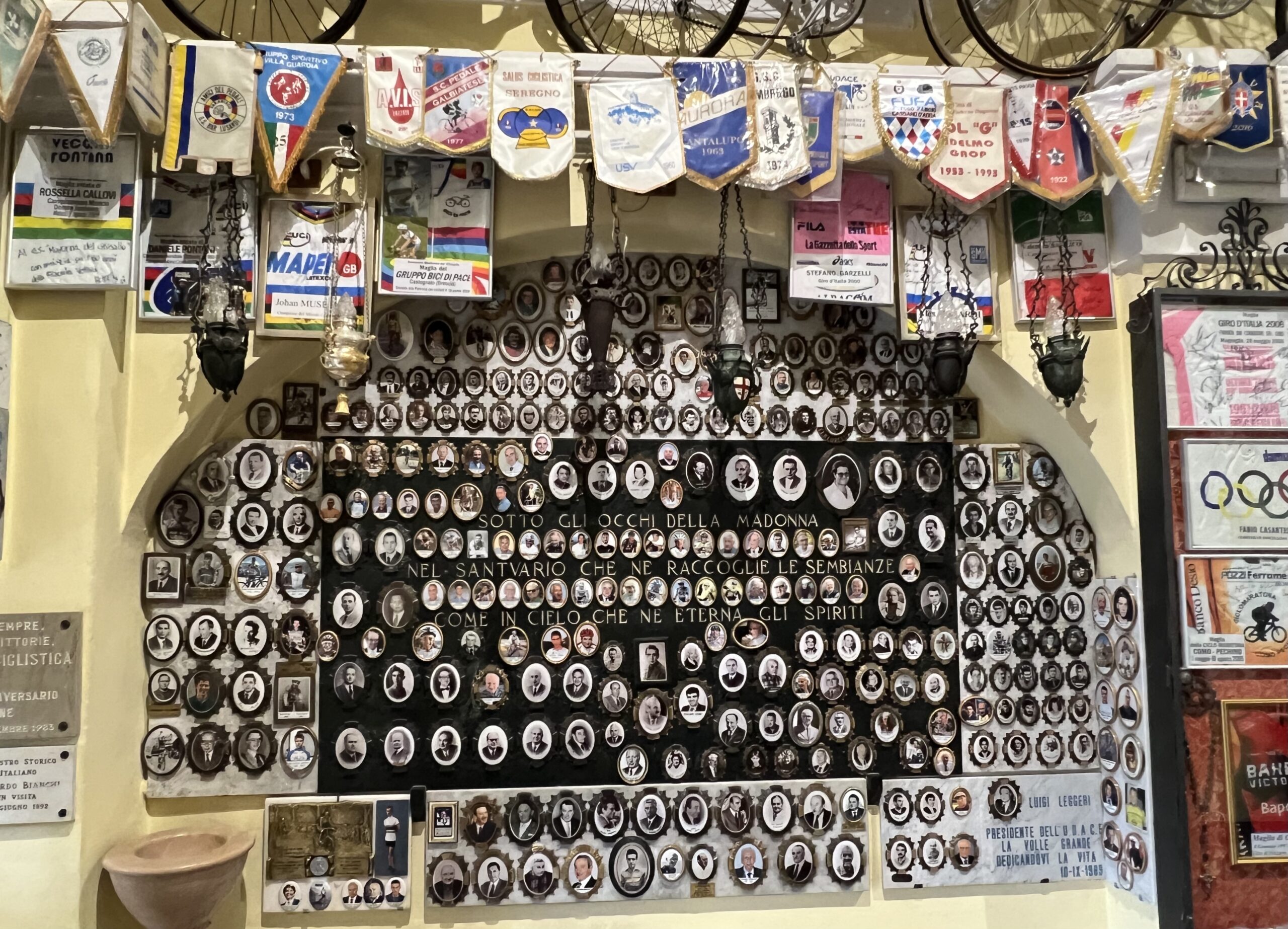
In the little church, an eternal flame burns for deceased cyclists. Many jerseys and bikes of champions are also on display. On the left wall, two memorial plaques are affixed with portraits of cyclists who died during races, having succumbed to their injuries.
In the square next to the church and the museum stands a granite monument featuring a victorious and a fallen cyclist in bronze.
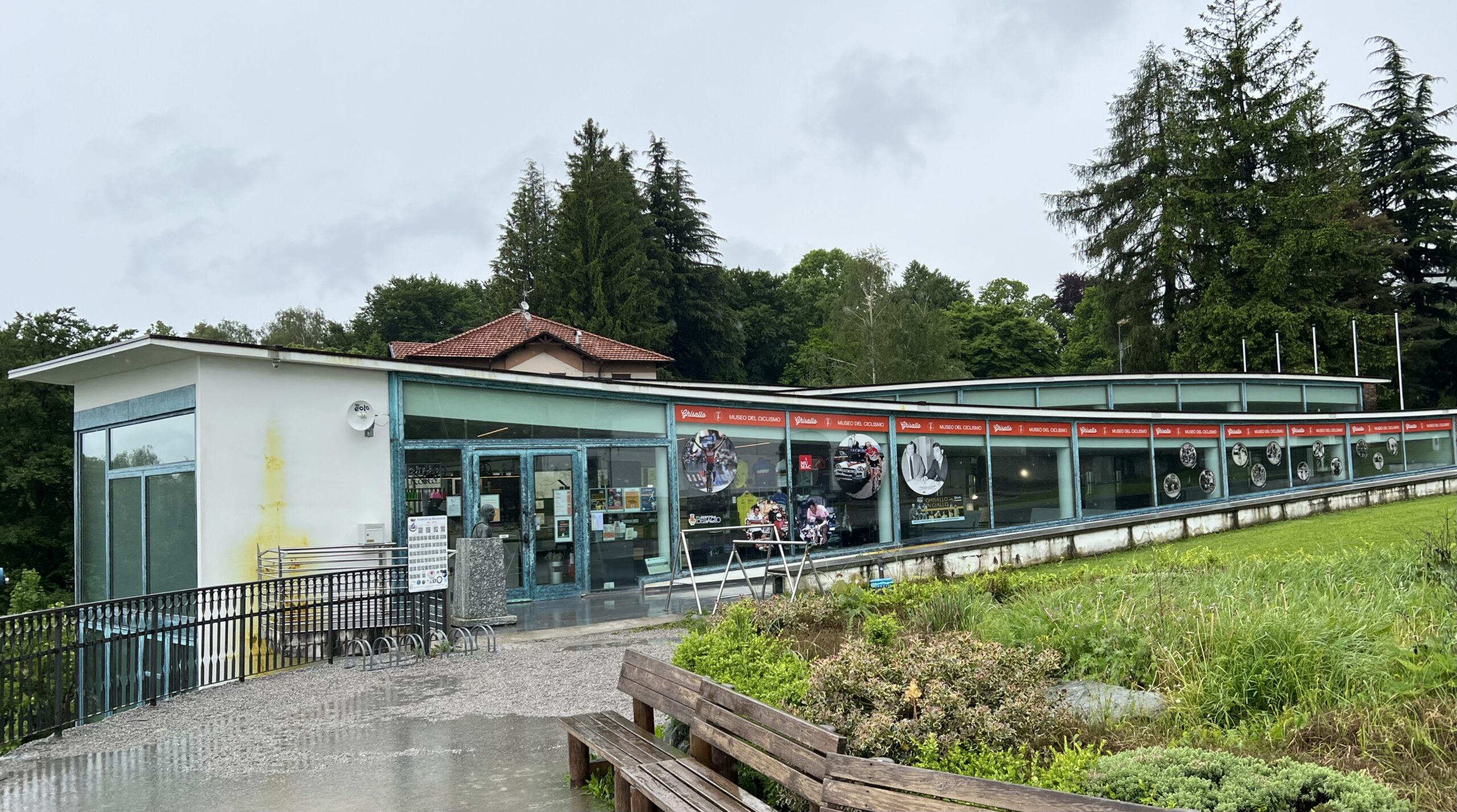
At the summit of the mountain, there is not only a pilgrimage church but also a cycling museum. The museum is located next to the church. In the large rooms of the museum, racing bicycles, photographs, and champions' jerseys are displayed both standing and hanging. Cycling enthusiasts, in particular, visit it.
The “Cycling Museum” offers enthusiasts the ultimate in images, information, and atmosphere. During the cycling season, from March to early November, this cycling mecca is open daily.
The pilgrimage chapel is open to visit every day.
The cycling classic Tour of Lombardy is held in the autumn and passes the pilgrimage site Madonna del Ghisallo.
ACCESSIBILITY
The pilgrimage site Ghisallo (Santuario Madonna del Ghisallo), with its cycling museum, is located in northern Italy, north of Milan, near Como in Magreglio, between the towns of Canzo and Bellagio. Ghisallo is situated on the northern shore of Lake Como.
Address: Via Gino Bartali 4, 22030 Magreglio.
Actual information can be found at www.museodelghisallo.it. To contact the cycling museum shop, consult www.museodelghisallostore.it.
Experience
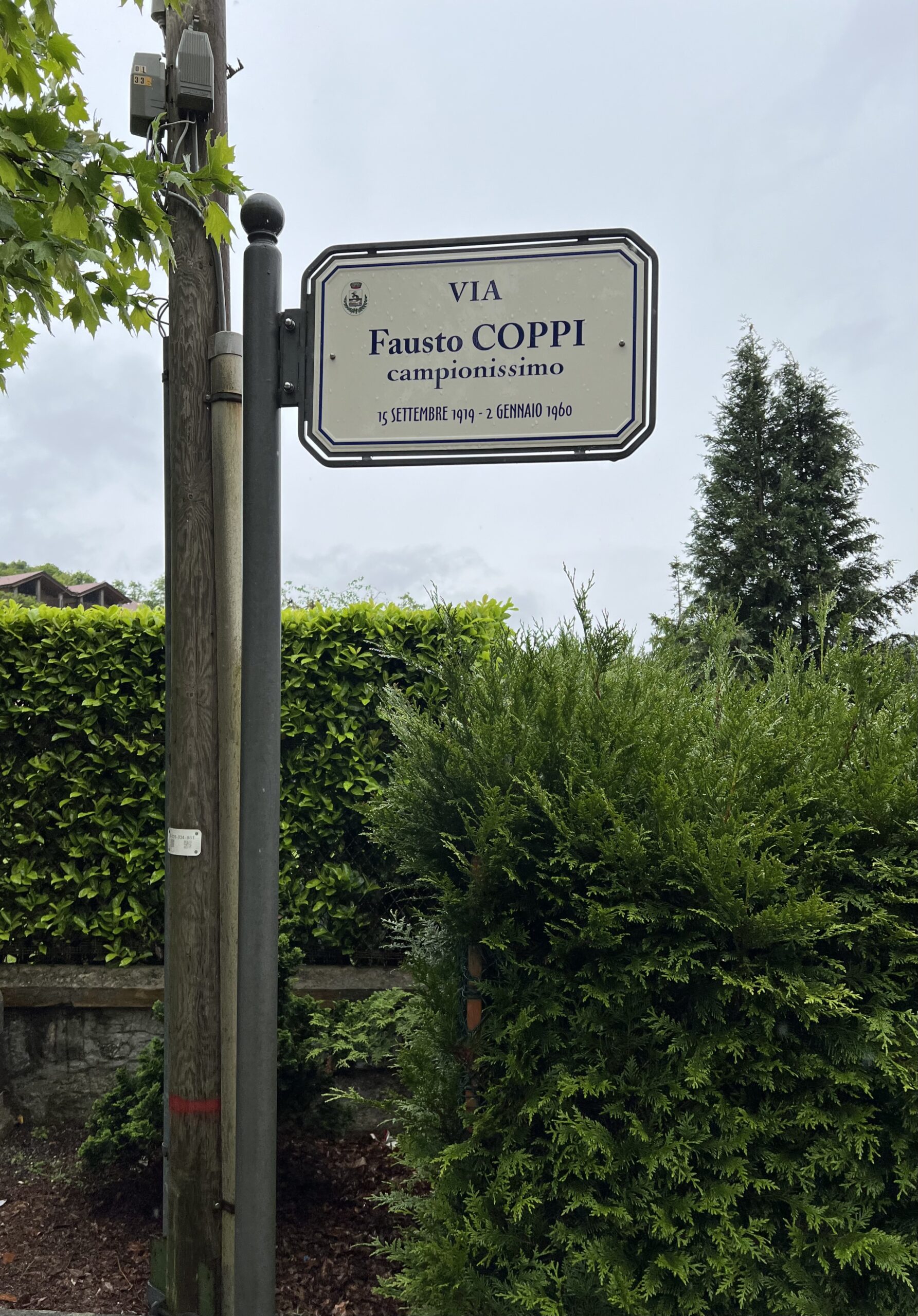
After seeing the street sign of the Italian cycling champion Fausto Coppi, the next step is entering the pilgrimage site of Ghisallo. In front of the church, I see monuments to the great cycling champions Coppi, Bartali, and Binda. There is also a statue of the tireless animator of this sanctuary; Father Ermelino Vigano.
In the small church, behind a railing, stands the devotional image. This time, Mary is breastfeeding her Child. The artwork is set in a black frame. Mary is the patron saint of cycling here, and around Her, it is all expressions of the sport. Ex votos from cyclists who have donated bicycles, jerseys, pennants, and more to Her. I also see that there is attention for deceased athletes. Many visit this space daily, and most of them have a great love for cycling.
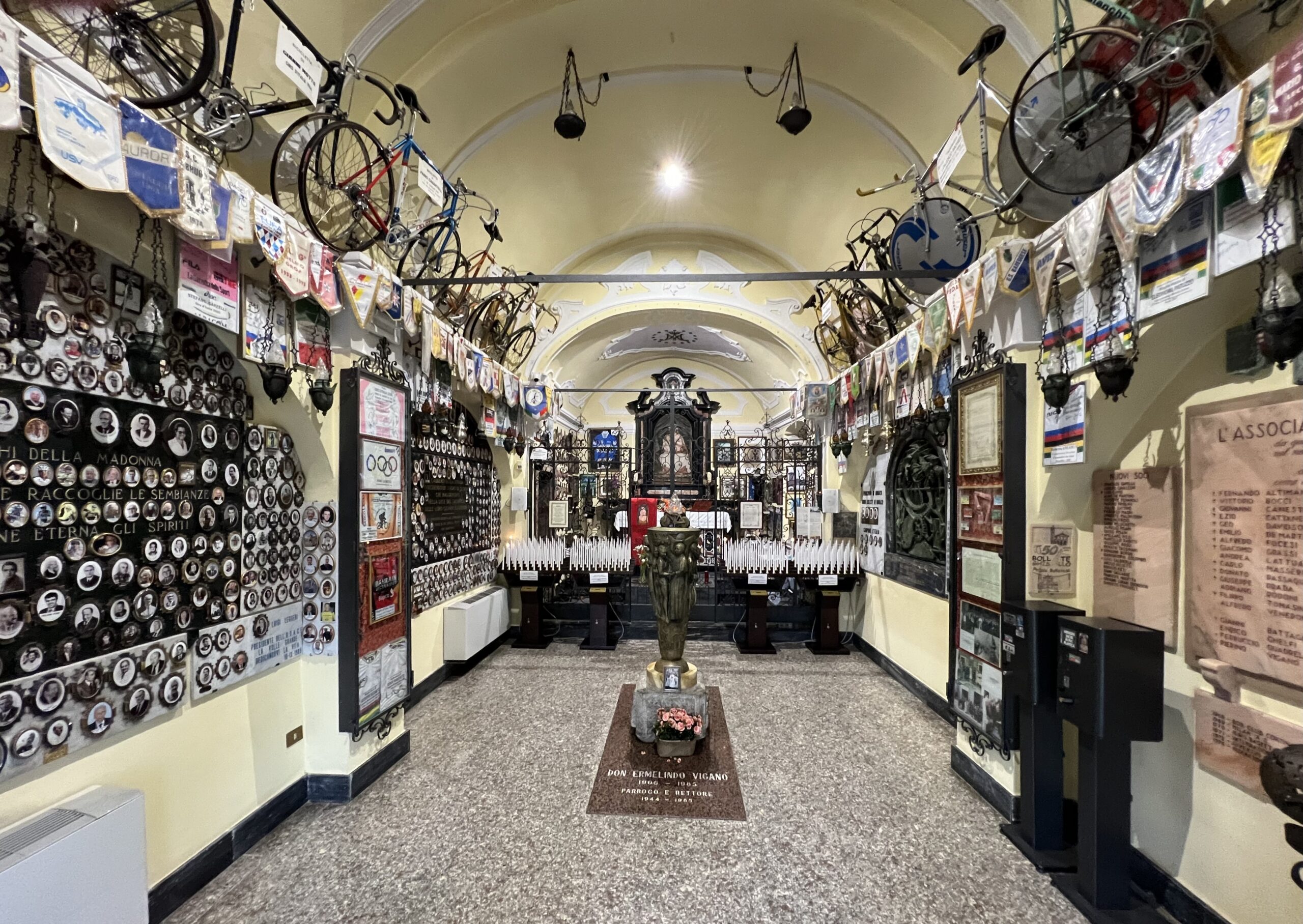
All sorts of images of cyclists come to mind. I see again the great triumphs of champions, but also serious crashes, sometimes with fatal consequences. Then it is time to pray for the eternal rest of deceased cyclists, for whom a torch with a flame has been placed here.
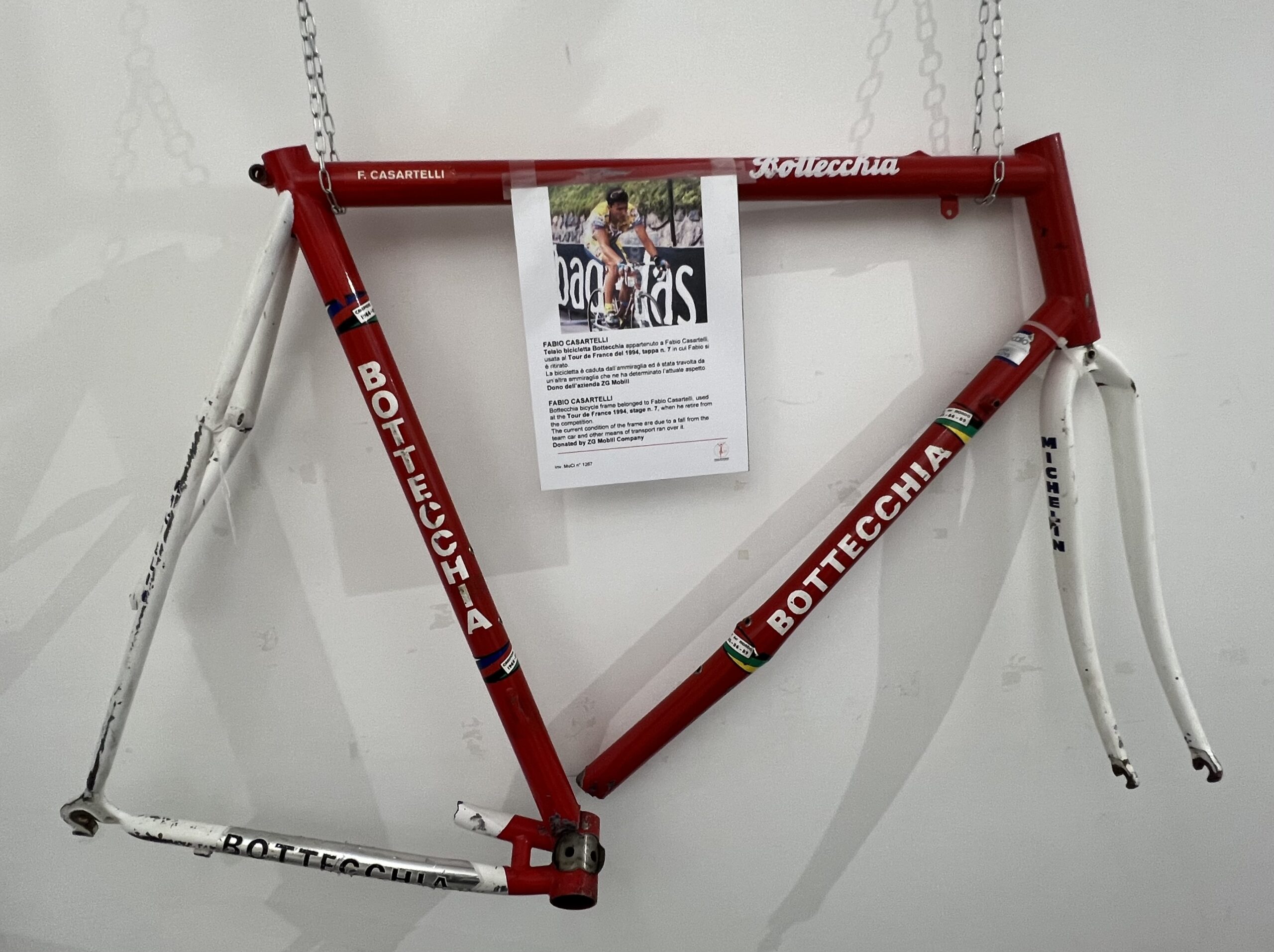
After the little church, the time has come to enjoy the view and then head to the museum. The museum was realised, partly thanks to the efforts of former cyclist Fiorenzo Magni (1920-2012). A few floors are filled with items including bicycles, jerseys, photographs, and statues. In addition, a great deal of information can be gathered about cycling gods such as Fiorenzo Magni, Rik Van Looy (1933), Eddy Merckx (1945), and Joop Zoetemelk (1946). I also see the bicycle on which the young Italian Fabio Casartelli (1970-1995) met his fatal accident during the Tour de France. Now I fall silent…
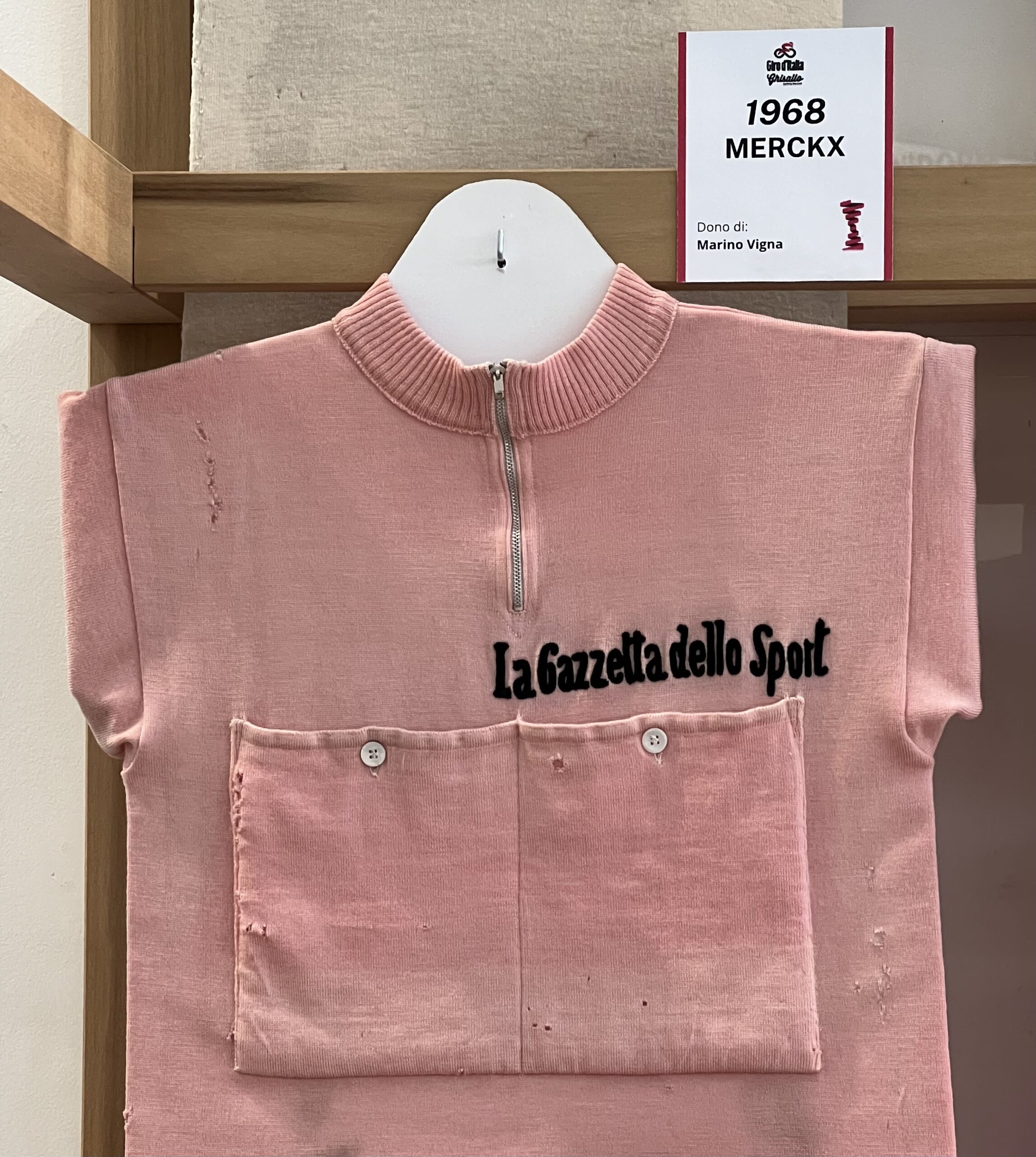
Films are shown in this museum. Much attention is paid to riders in the Giro d’Italia with jerseys from Eddy Merckx and Tom Dumoulin (1990), among others. Cycling jerseys from women are also displayed here, such as from Marianne Vos (1987), Anna van der Breggen (1990), and Annemiek van Vleuten (1982). It is striking that the women receive considerably less attention in these large spaces than their male colleagues.
After several hours of looking, reading, admiring and being amazed in the museum, I leave the centre of cycling. What a gift it is to be able to come here!
Environment
In the immediate vicinity, numerous walks can be taken over rugged terrain. The high mountains Grignone (2409 metres) and Grignetta (2177 metres) are visible from the pilgrimage site. Ghisallo is located 80 km north-east of the town of Varese, 64 km north of the large city of Milan, and 30 km north-east of the tourist town of Como. To travel from the old city of Bergamo to Ghisallo, one must journey approximately 55 km north-west.
~~~

 Nederlands
  English (UK)
  Deutsch
  Français