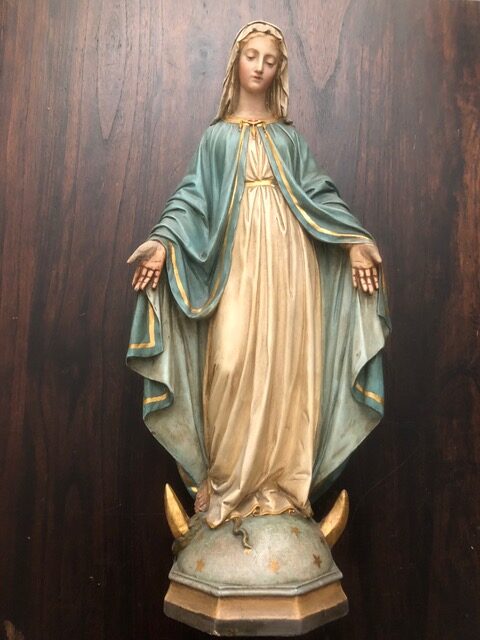
The hamlet of Holset lies in the far southeast of Limburg, between Vaals and Vijlen. Holset belongs to the municipality of Vaals. On the highest point of Holset stands a Romanesque church, dedicated to Saint Lambert. At the foot of the church plateau, a Lourdes grotto and Lambertus grotto with a spring have been created in a “saint's wall”.
The “saint's wall” is based on a legend told by Jos. Slenter (1835-1900), parish priest of Holset (1880-1900). The story begins in the fourth century… On the hill where the church stands, there was a temple in late Roman times where the pagan God Bel was worshipped. Bel means Lord and he is the Chief God of the Babylonian empire. In Hebrew, it is the name Baäl, which also means Lord. This god was worshipped as king of heaven and earth. He protected the Babylonians and watched over the order of the world. Around 360, Servatius (c. 320-384), bishop of Maastricht and the first bishop of the Netherlands, made a fruitless attempt to convert the temple into a church. In 515, Falco, bishop of Maastricht (c. 512-527), succeeded in converting the temple into a church, which was dedicated to Genevieve of Paris, who had died a few years earlier. Despite the changing destination of the temple, pagan customs continued to be practiced by the people. This changed in 692 when Lambert (c. 638-c. 705), bishop of Maastricht (c. 670-c. 705), came to the church and blessed a poisonous spring at the foot of the church elevation, driving away an evil dragon. This created the Lambert spring, which is located next to the Lourdes grotto.
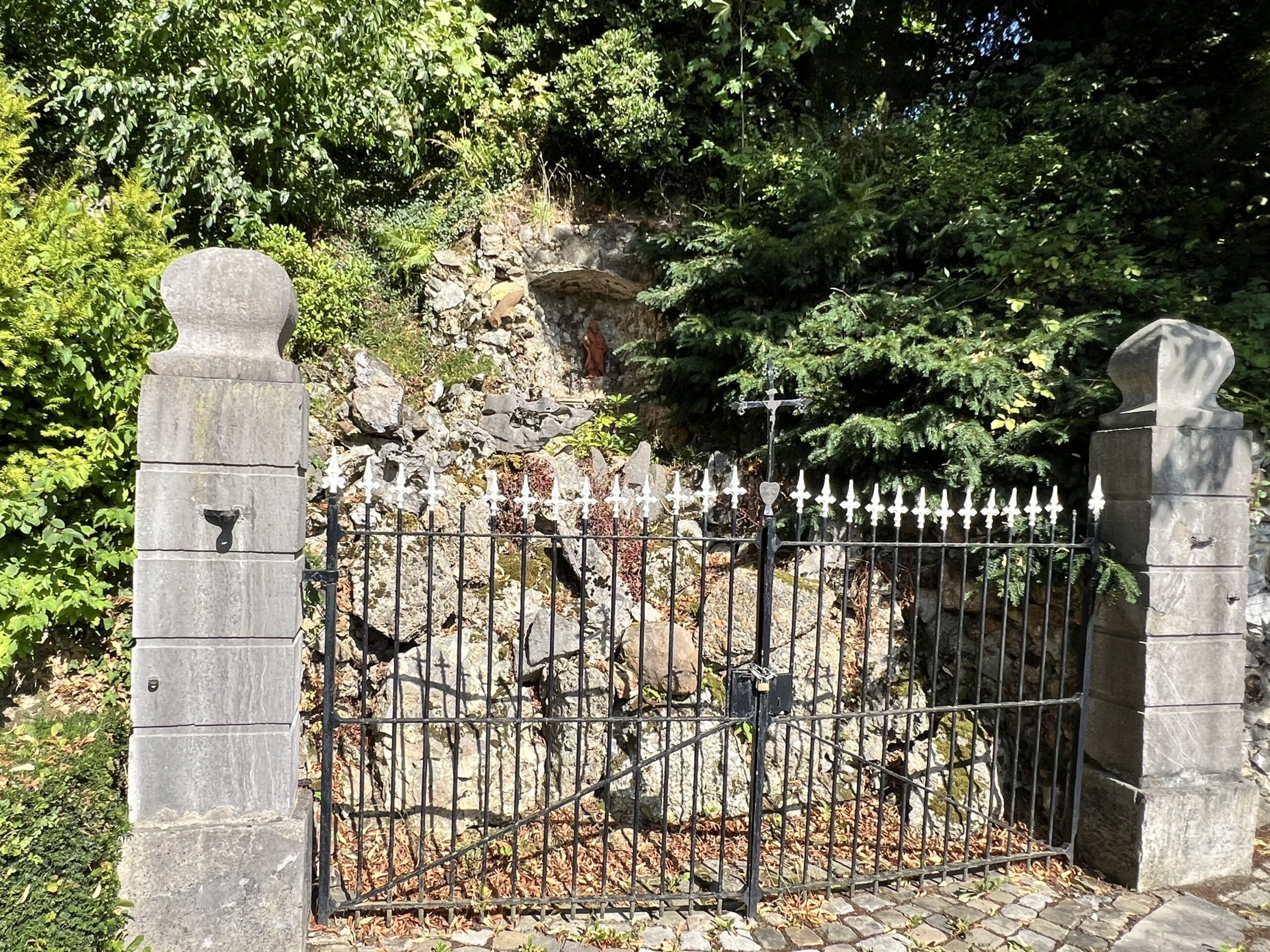
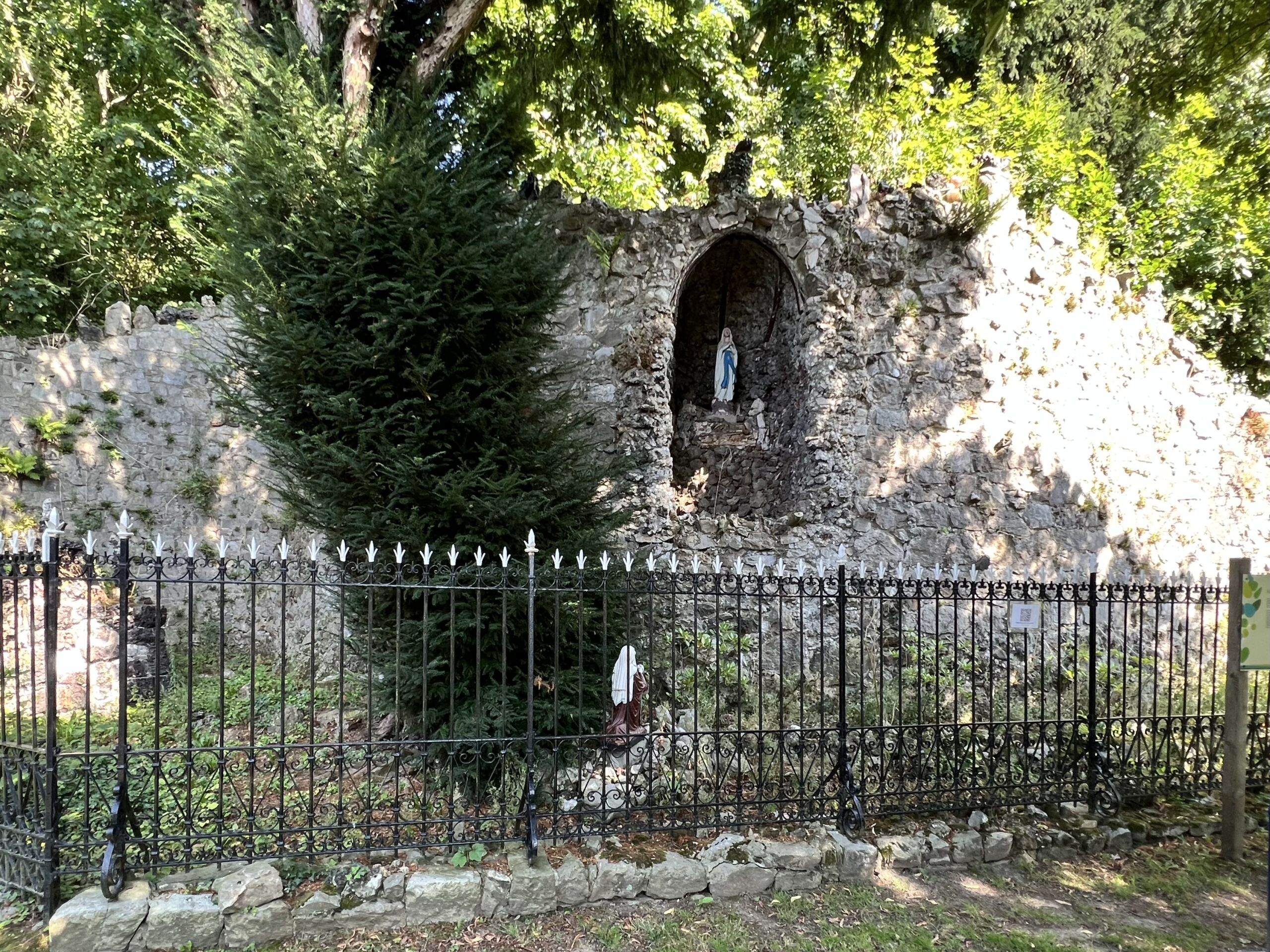
The Lourdes grotto is somewhat hidden in a high, long wall, this is the “saints” wall" and a long, wrought-iron gate closes off the grotto. The Lourdes grotto was realised in 1884 and on 7 September, one day before the Nativity of Mary feast day, the statue of Mary was placed in the niche at a height of about four metres. In front of the grotto stands a depiction of the praying and kneeling seer Bernadette Soubirous. The wall of the grotto is decorated with many stones. These are fossils, such as carboniferous limestone and petrified wood. At the end of the 20th century, the grotto was refurbished.
There has been mention of a church in Holset since the 12th century. The church has been extended and raised over the centuries. The church tower was rebuilt in 1736 and restored in 1841-1842. Between 1884 and 1887, the Lambertus Kerk was restored and extended with a chapel dedicated to Saint Genevieve (c. 422 – c. 502). Since then, Genevieve of Paris has been venerated there even more. The architect of this work was Johannes Hermandus Julius (Johan) Kayser (1842-1917). The church belongs to the provincial heritage of Limburg.
Genoveva is the patron saint of Paris and is the intercessor for shepherds, hat makers, women, and wine growers. She is often depicted with a burning candle, as her candle was extinguished by the devil while she was praying in a church during the night hours.
Address: Holset 64, 6295ND Holset.
~~~
