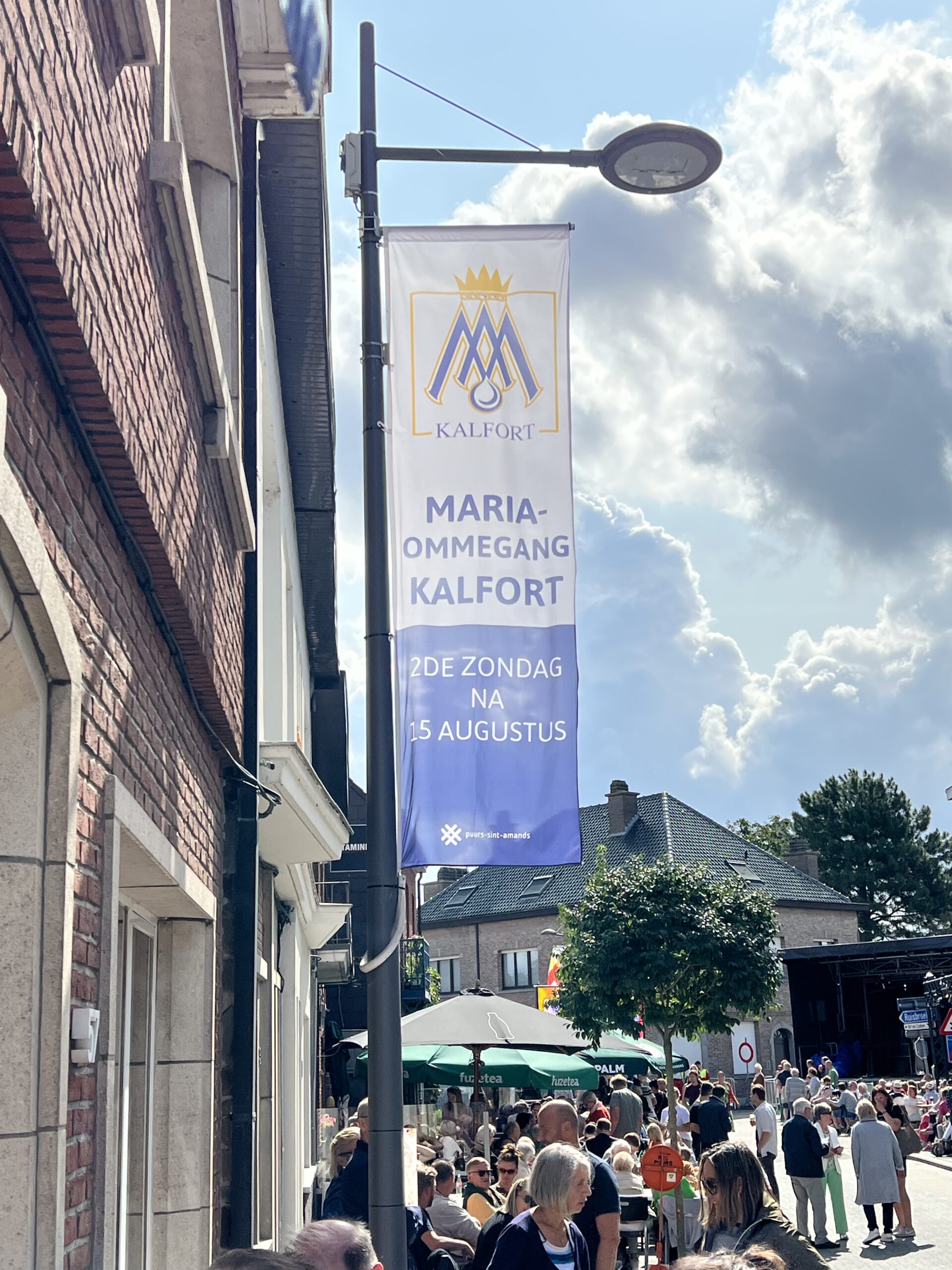
In the Flemish Kalfort, located near Puurs, between Antwerp and Mechelen, the Maria Ommegang (Mary's Procession) takes place annually. The procession is held on the second Sunday after 15 August.
A deed from 1155 mentions Siger van Calfort, Lord of Coolhem, who brought back a relic by participating in a crusade. This is also depicted in the current procession. Many pilgrims have come to the relic. They go to a chapel to be healed of an eye disease.

The history of the pilgrimage to Kalfort dates back to the Middle Ages. As early as around 1300, a relic of Christ's tears was venerated in the chapel in Kalfort, and there was great popular devotion. The relic may have come from the Abbey of Cornelimunster. Another source refers to the Crusades, suggesting a monk or pilgrim brought the relic back. At this time, nuns settled in Kalfort to receive the many pilgrims.
In 1552, hospice nuns, who were Augustinians, came to Kalfort and settled in the Vrededaal convent. The veneration of the relics came to an abrupt end in 1566 due to iconoclastic destruction. The sisters' chapel and convent were set on fire by the Geuzen, causing the relic of Christ's tears to be lost.
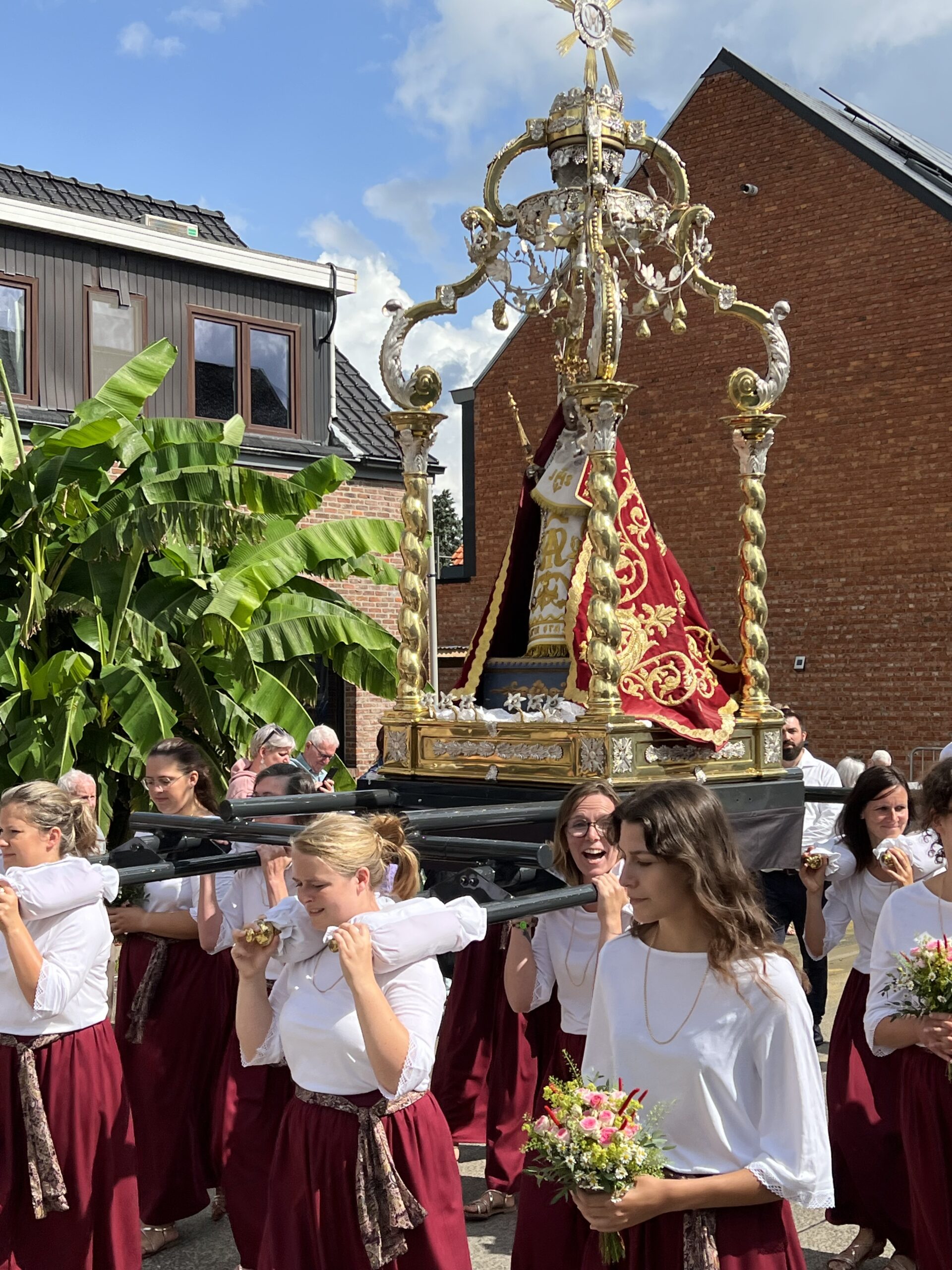
A few years later, the veneration of a statue of Mary began in Kalfort. This 16th-century statue was found in the Molenbeek and is still venerated in Kalfort. It is possible that this statue originates from the destroyed convent of the Beguines. The statue is named “Our Lady of the Tear”. The addition “of the Tear” is attributed to the lost relic with the tears of Christ. The statue of Mary is standing and the Mother of God carries the infant Jesus on her left arm. In her right hand, she holds a sceptre. Mary is bareheaded and has long hair, which falls in large locks down her back. She has a smiling face, and her right knee shows through the robe, which folds in the middle. Jesus holds a small globe in his left hand and blesses with his other hand.
In the 17th century, the statue of Mary is adorned with a Spanish mantle and many pilgrims visit this effigy. Between 1678 and 1885, 17 cases of blindness were cured. Around 1800, French troops occupied Flanders and the open profession of faith had no opportunity.
In 1857, Kalfort gained its own parish and the pilgrimage received renewed impetus. In the church's portal stands a 17th-century stone statue of Our Lady with Jesus. Since 1952, there has been the Kalfort Rosary Way. This consists of 15 life-sized groups, created by sculptor Herman De Cuyper (1904-1992).
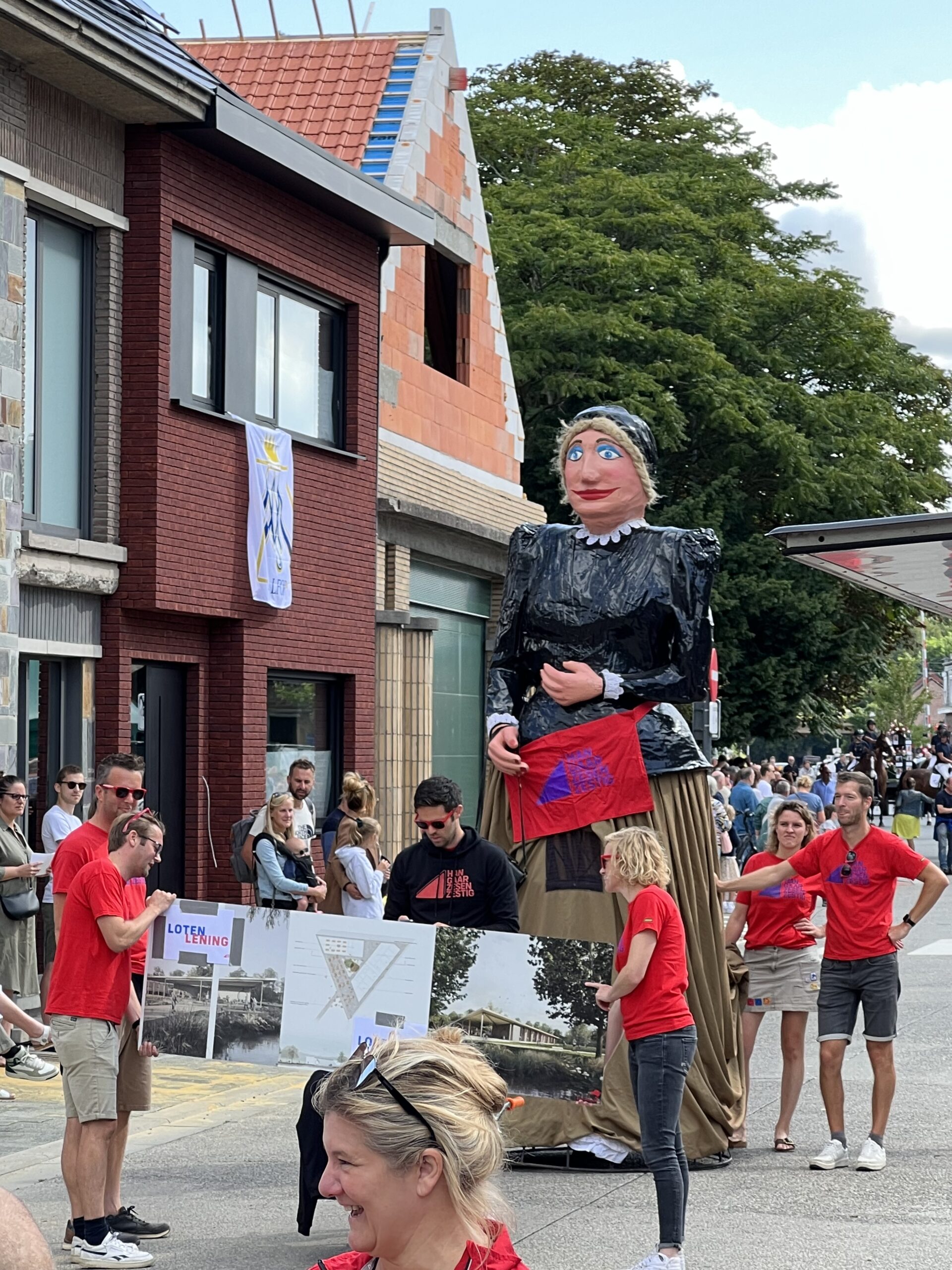
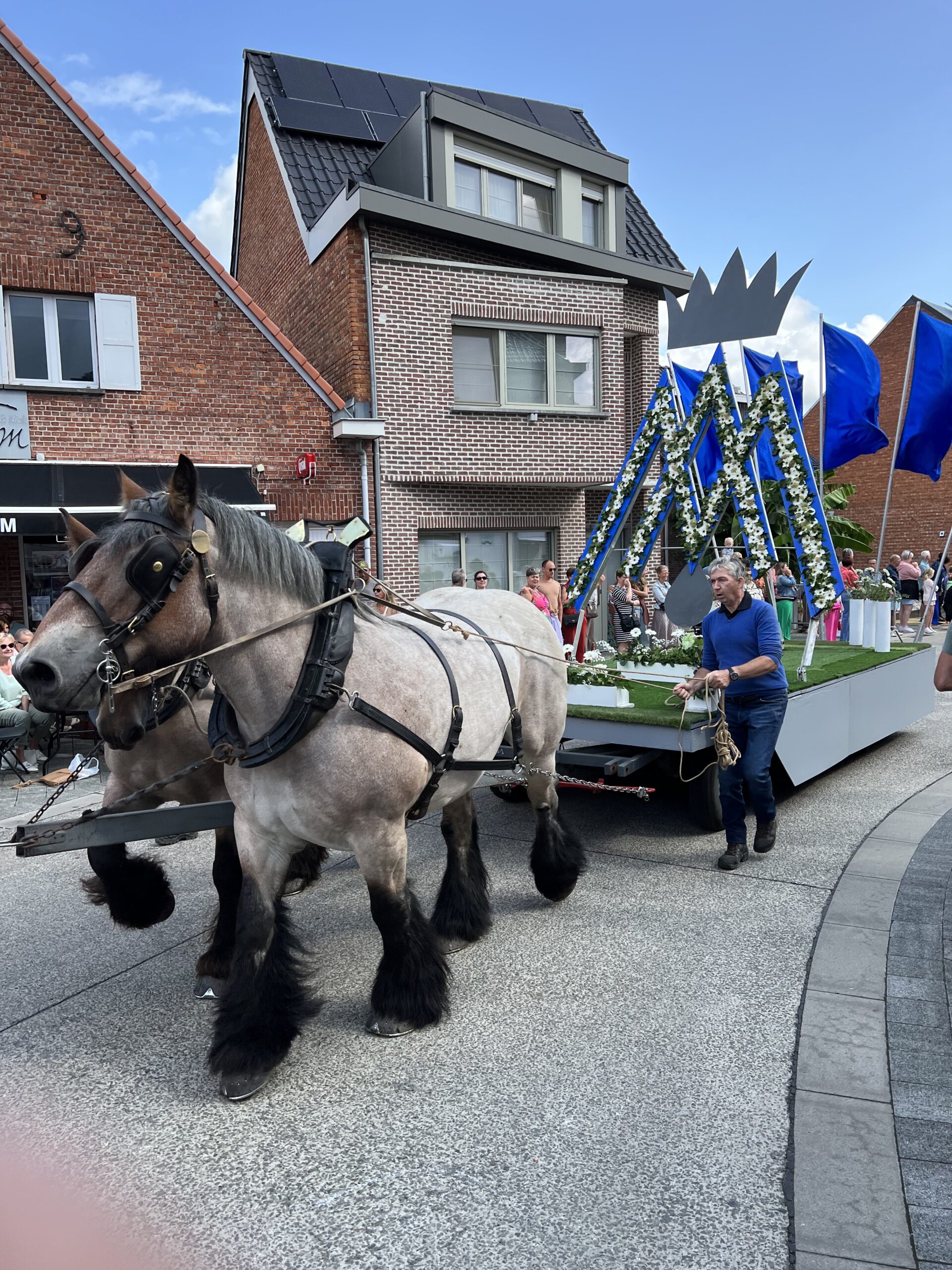
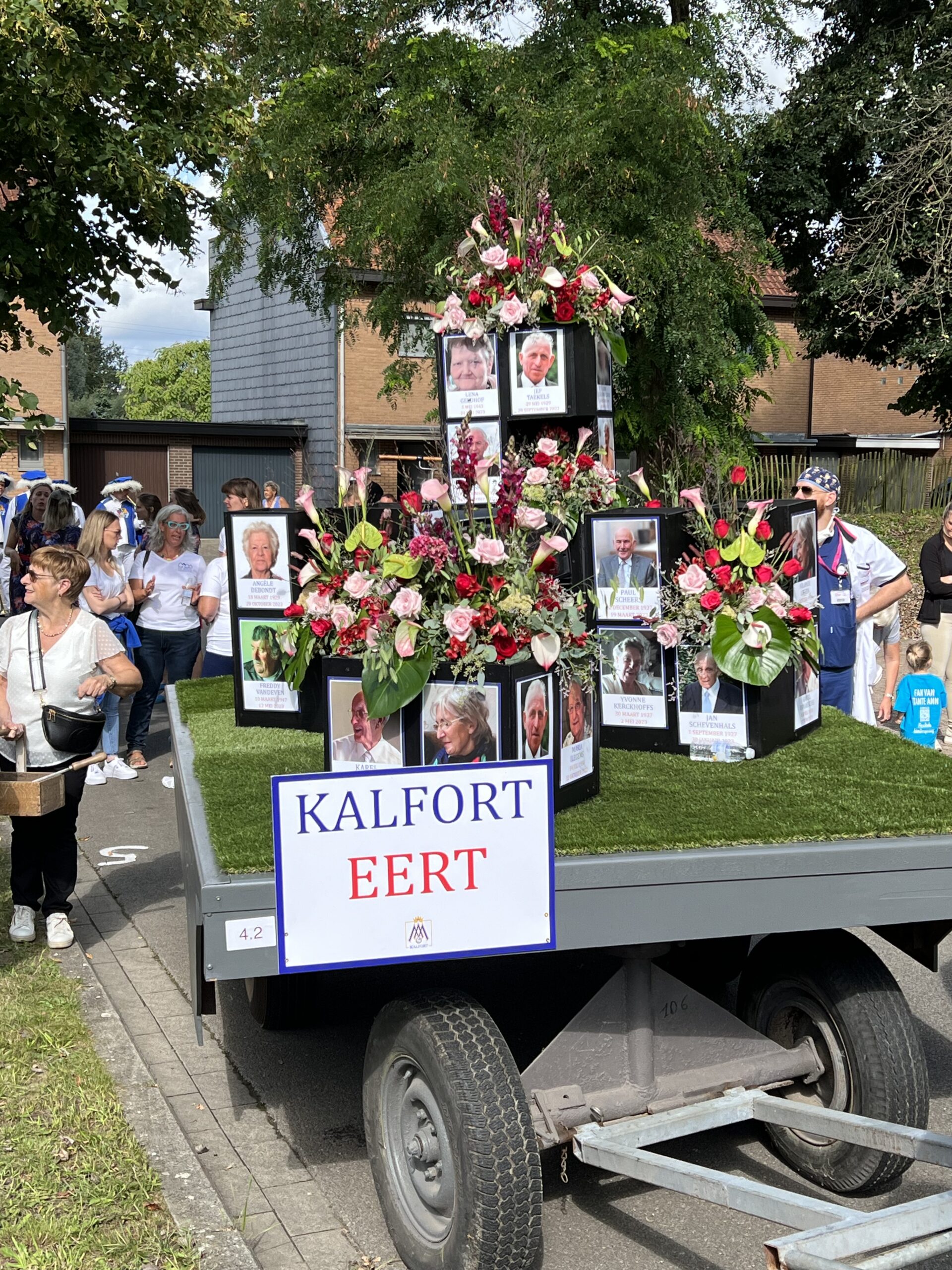
The annual Maria Ommegang (Marian procession) in Kalfort involves around 1000 people. Since 1998, there has been the renewed Maria Ommegang, which takes place on the second Sunday after 15 August, following the solemn Eucharistic celebration. This procession depicts the history of Kalfort and pays homage to Mary. The procession includes, among other participants, flag bearers, banner wavers, horn blowers, falconers, priests, crusaders, hospice sisters, nobles, music groups, French occupiers, farming families, members of historical societies and… the statue of Our Lady of Sorrows (Onze-Lieve-Vrouw ten Traan).
For more information, the website www.kalfort.be/ommegang to visit.

 Nederlands
  English (UK)
  Deutsch
  Français