~~~
History
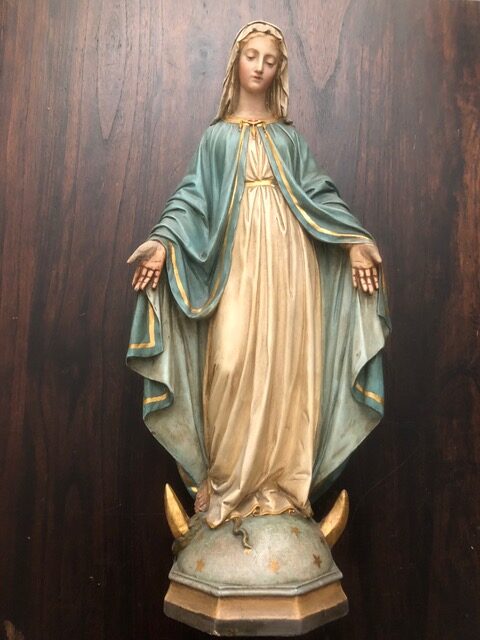
In 1753, a blacksmith named Peping/Pépin discovered a wooden statue of Mary, approximately 30 cm in size, in a hollow tree trunk. No one knows how the statue came to be there. The man made a niche and placed the statue in it. Subsequently, his son built an iron gate in front of it. This is how the pilgrimage site named “Léiffrachen,” meaning “Dear Lady,” originated. In 1876, a small chapel was consecrated.
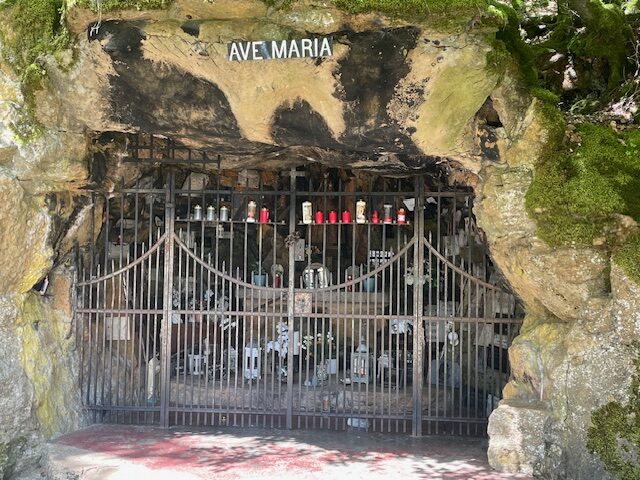
In 1901, a fire destroyed the chapel and the statue of Mary. The chapel was then rebuilt and a terracotta statue was installed. In 1915, this effigy was replaced by a stone statue of Mary. The annual procession began in 1925. The grotto next to the chapel was created in 1936. The stone statue disappeared in 1937 and was replaced by an oak effigy of Mary. In the same year, a pulpit with a stone staircase was built. In 1937, the new statue of Mary, grotto, and chapel were consecrated. The statue of Mary was given the name “Comforter of the Afflicted”.
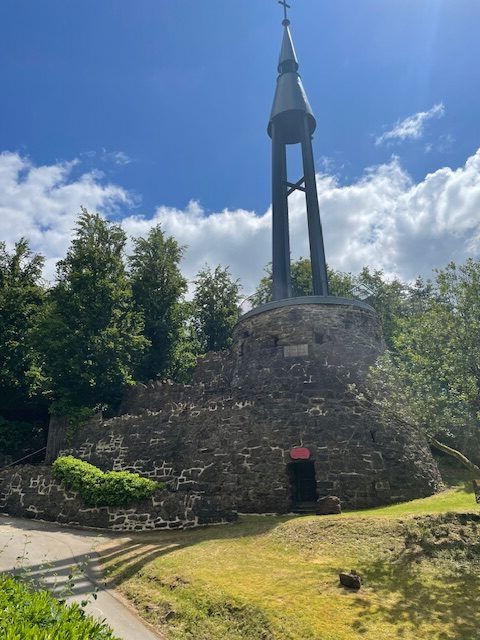
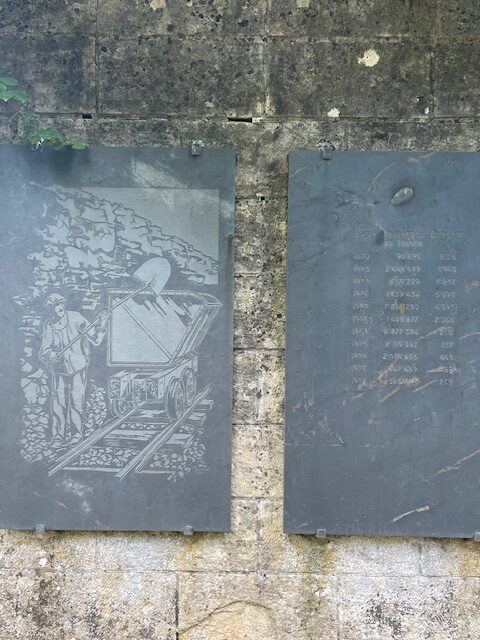
In 1938, the municipality made land available to erect a monument commemorating the many miners who had died. The idea came from Joseph Dupong (born 1889), parish priest of Kayl (1932-1957). In 1939/1940, the initiators of the monument organised a lottery to finance the memorial. Large plaques were created with almost 1500 names, remembering the fallen miners. In 1953, the first stone was laid by Léon Lommel (1893-1978), auxiliary bishop of the Diocese of Luxembourg (1949-1956) and later Bishop of Luxembourg (1956-1971). This created a connection between the pilgrimage site and the miners' monument. The monument comprises the memorial plaques and the 42-metre-high steel memorial tower, complete with a cross and bell, in memory of the fallen miners.
In 1947, there are reports of apparitions of Mary to schoolchildren. No further clarity is forthcoming.
The square in front of the chapel is laid out in 1948.
In 1953, the statue of Mary in the grotto was crowned and given the name “Our Lady of the Miners”. Permission for the crowning came from Pius XII, pope from 1939-1958 and born Eugenio Maria Giuseppe Giovanni Pacelli (1876-1958). This happened during the 200th anniversary of “Léiffrächen”.
A new altar arrives in the chapel in 1958.
Pilgrimage site
The pilgrimage site in Kayl is located approximately 380 metres above sea level in a hilly area.
Along the way to the chapel in the cave and the monument of the miners, there are benches and small chapels to be seen.
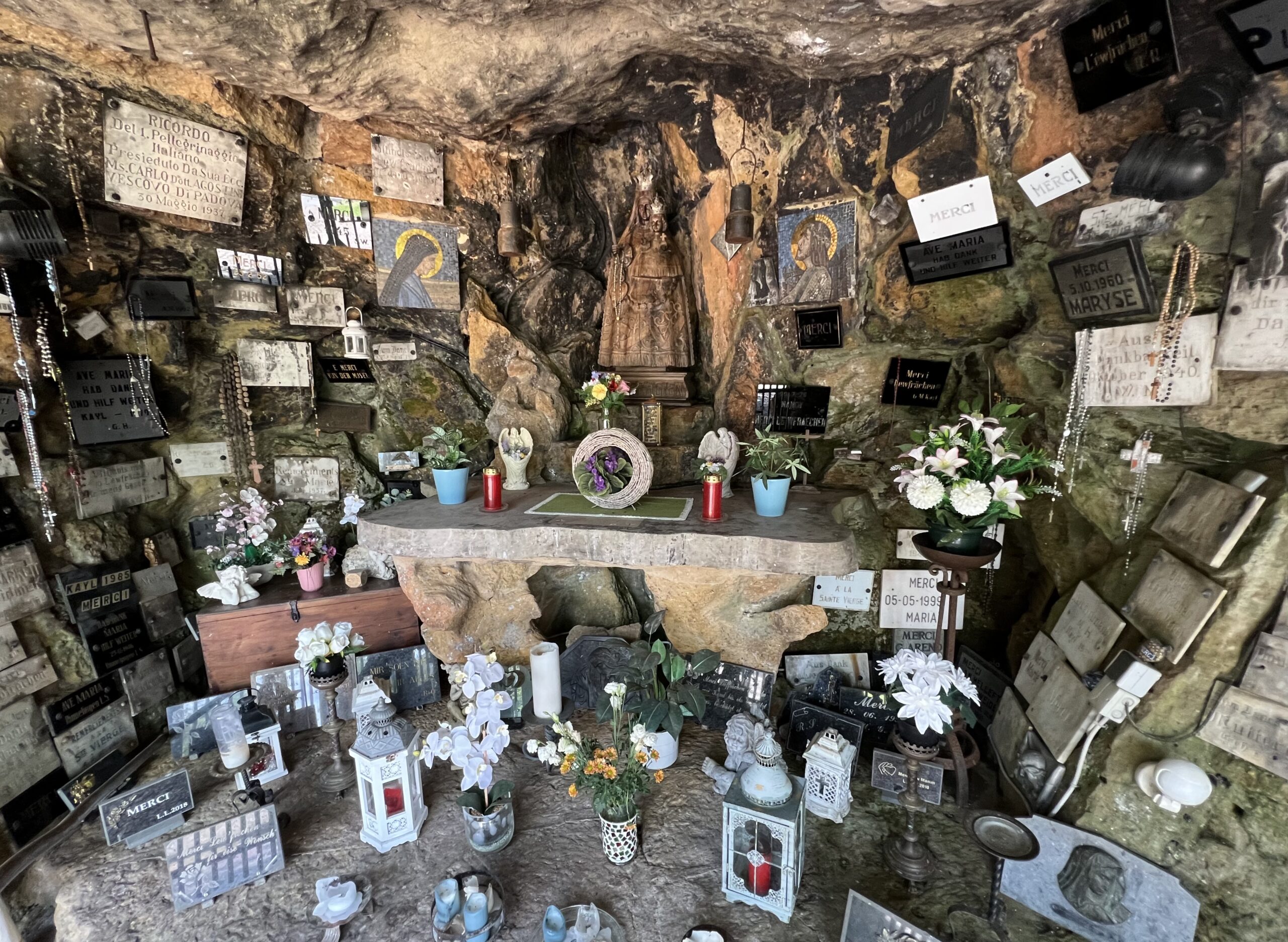
A small chapel has been built in a cave. Leiffrächen is the patron saint of miners. The chapel, cave, and monument, across the street, have become a pilgrimage site in recent years, attracting many pilgrims annually.
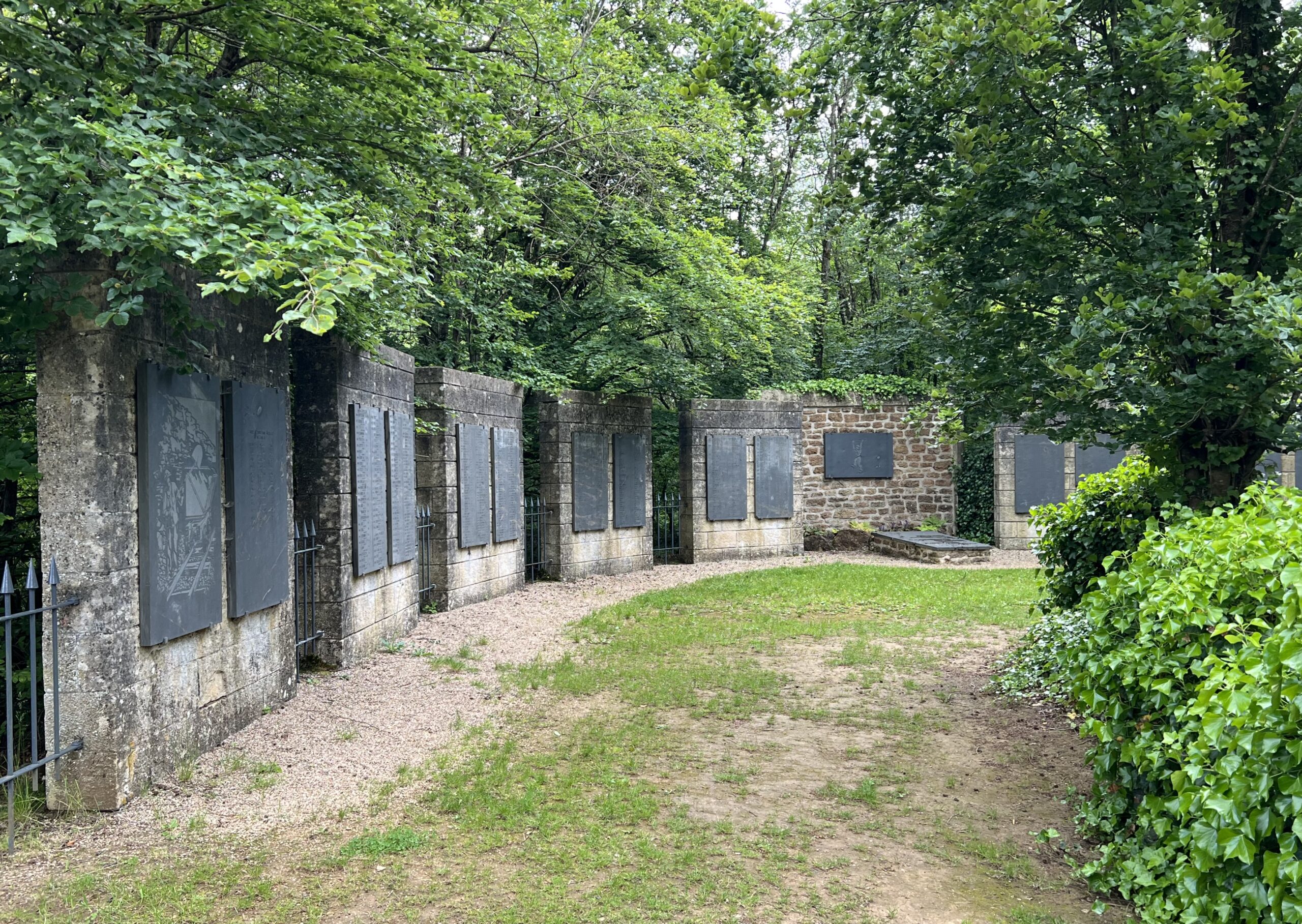
Opposite the chapel stands a memorial that commemorates fallen miners. Hundreds of names are listed on more than 20 memorial plaques, arranged in a semicircle. The large plaques are reminders of men who lost their lives working underground. The idea for this monument dates back to 1938.
The chapel with grotto and monument are freely accessible daily.
ACCESSIBILITY
In the south of the Grand Duchy lies Kayl. The town is near Esch-sur-Alzette and Dudelange in the canton of Esch.
Leiffrächen is located at Rue Notre-Dame, L-3620 Kayl.
In Rue Notre-Dame, the car can be parked and then you can continue on foot. It is also possible to continue by car, motorcycle or bicycle to reach the car park near the chapel.
Experience
At the edge of the built-up area, the car pulls over to the side of the road named “Rue Notre-Dame” and I continue on foot. The tall monument commemorating fallen miners can be seen between the trees. It's still about 300 metres uphill. On the right side of the ascending road, there are several small chapels. For hikers who want a rest, there are plenty of benches to choose from.
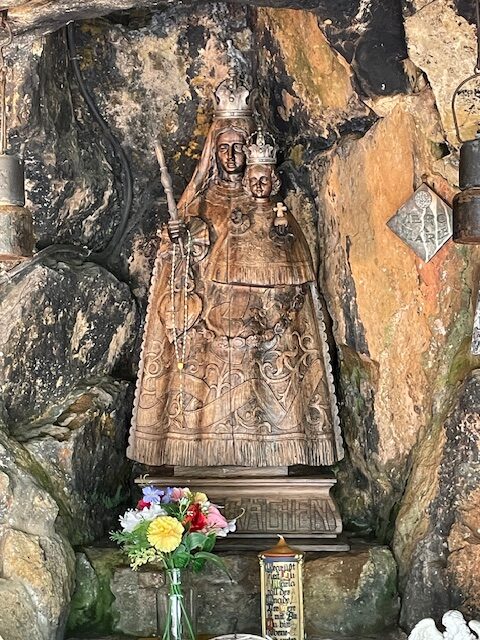
When I reach the hill, I'm treated to a sweeping view. Next, it's time to visit the grotto, which stands to the left of the road. “Ave Maria” is written above the distinctive structure. Here, it's appropriate to greet the “Leiffränchen” (little Mother Mary), as Our Lady is the patron saint of miners. Next to the grotto and chapel, there's an information board and some inviting benches.
At the chapel in the grotto, I see ex-votos which are expressions of gratitude. This is a particularly beautiful place to dwell in thought with Mary.
After visiting the cave, I cross the road and go to the monument for the workers who lost their lives underground. It involves going up steps, and there I am impressed by the many plaques bearing around 1500 names. So many people lost their lives to extract coal from the deep earth. This is a place of respect, and the unique monument deserves attention and makes me reflect on the dangerous work underground. So many lives were destroyed, and relationships ruined by the power of the earth.
Environment
In the immediate vicinity, there are many walking and cycling opportunities.
From Van Esch-sur-Alzette to Kayl is 5 km eastwards.
Travelling from Rumelange to Kayl is travelling 6 km to the north.
Travelling from Luxembourg City to Kayl means travelling 20 km to the south.
Leaving Mondorf-les-Bains to go to Kayl is moving 22 km to the west.
Posted: 16 November 2024
~~~

 Nederlands
  English (UK)
  Deutsch
  Français