~~~
History
The basilica stands on the site of a Romanesque church from 1221 in the Market Square, the old foundations of which lie underground. The church was built on the initiative of Iwo Odrowaz (c. 1160-1229), Bishop of Krakow (1218-1229). A second church was built due to an increase in pilgrims and was consecrated around 1300. Due to the growing German-speaking population of the city, German was the language of worship in the church until 1537.
Construction of the current church began in 1355 and continued until 1365. The initial construction work involved the creation of the chancel and nave in the Gothic style. In the last decade of the 14th century, funds were raised from the local population for the church's expansion. The expansion works were completed in 1397, at which point the church reached its current size. The towers were later heightened.
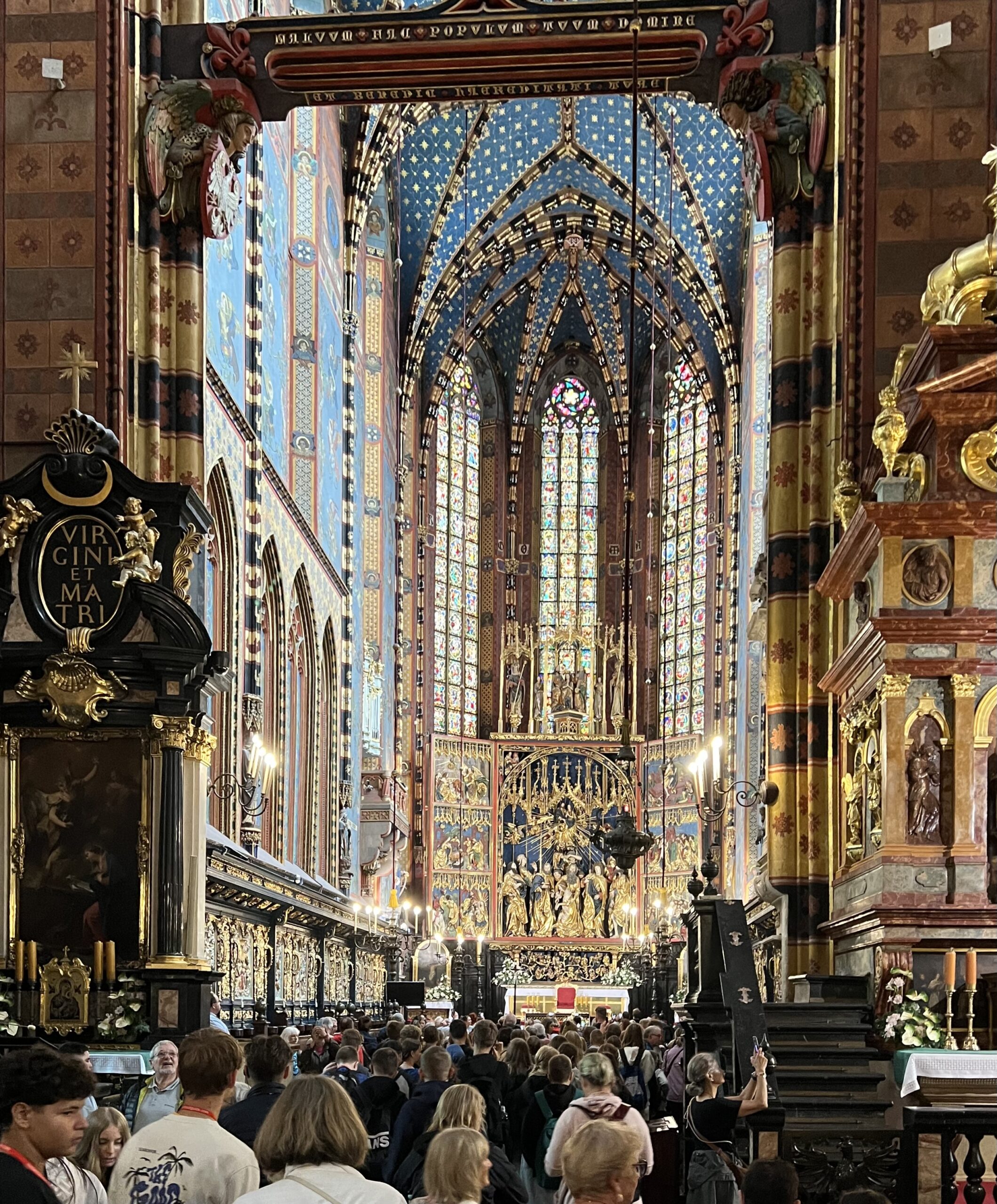
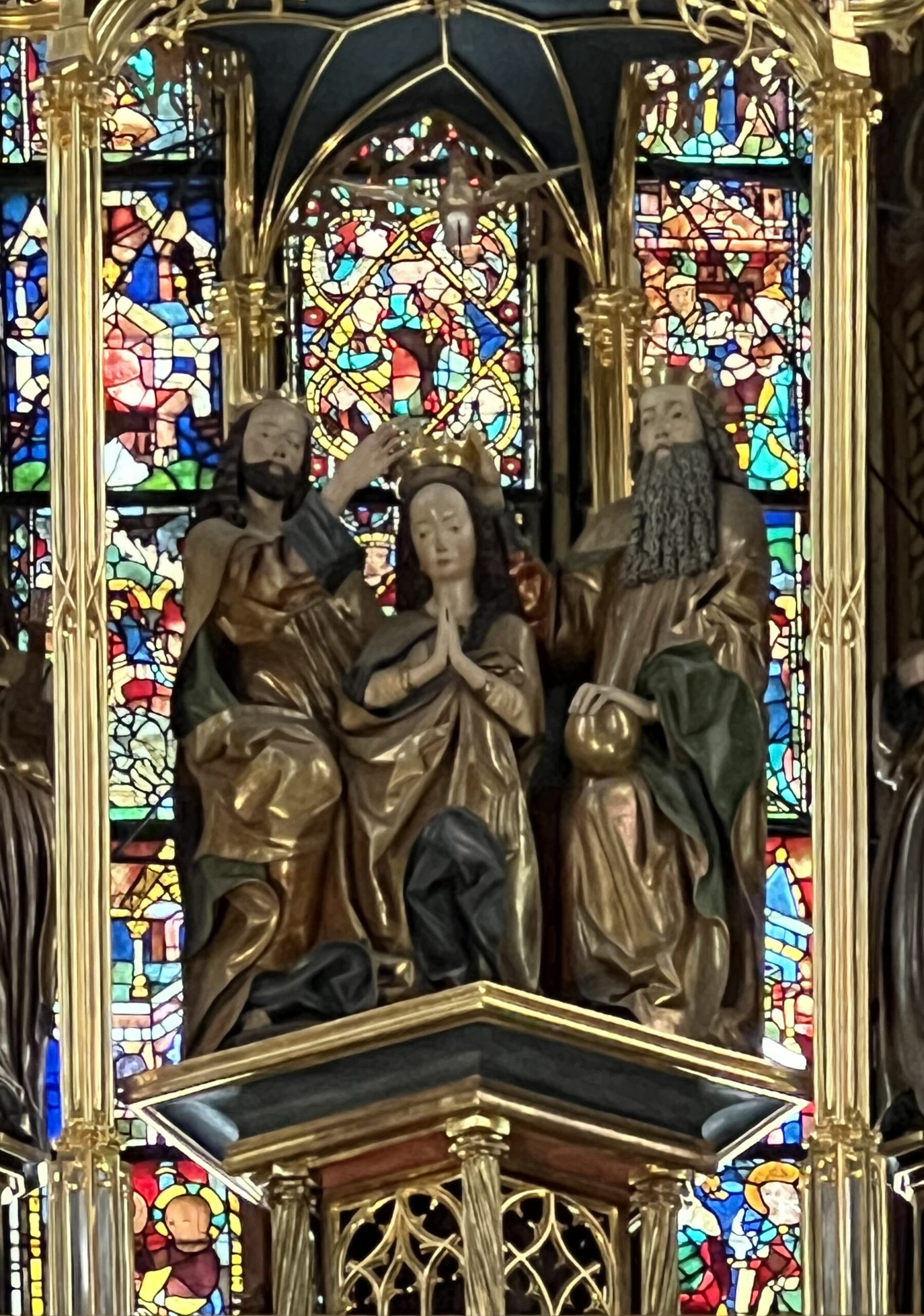
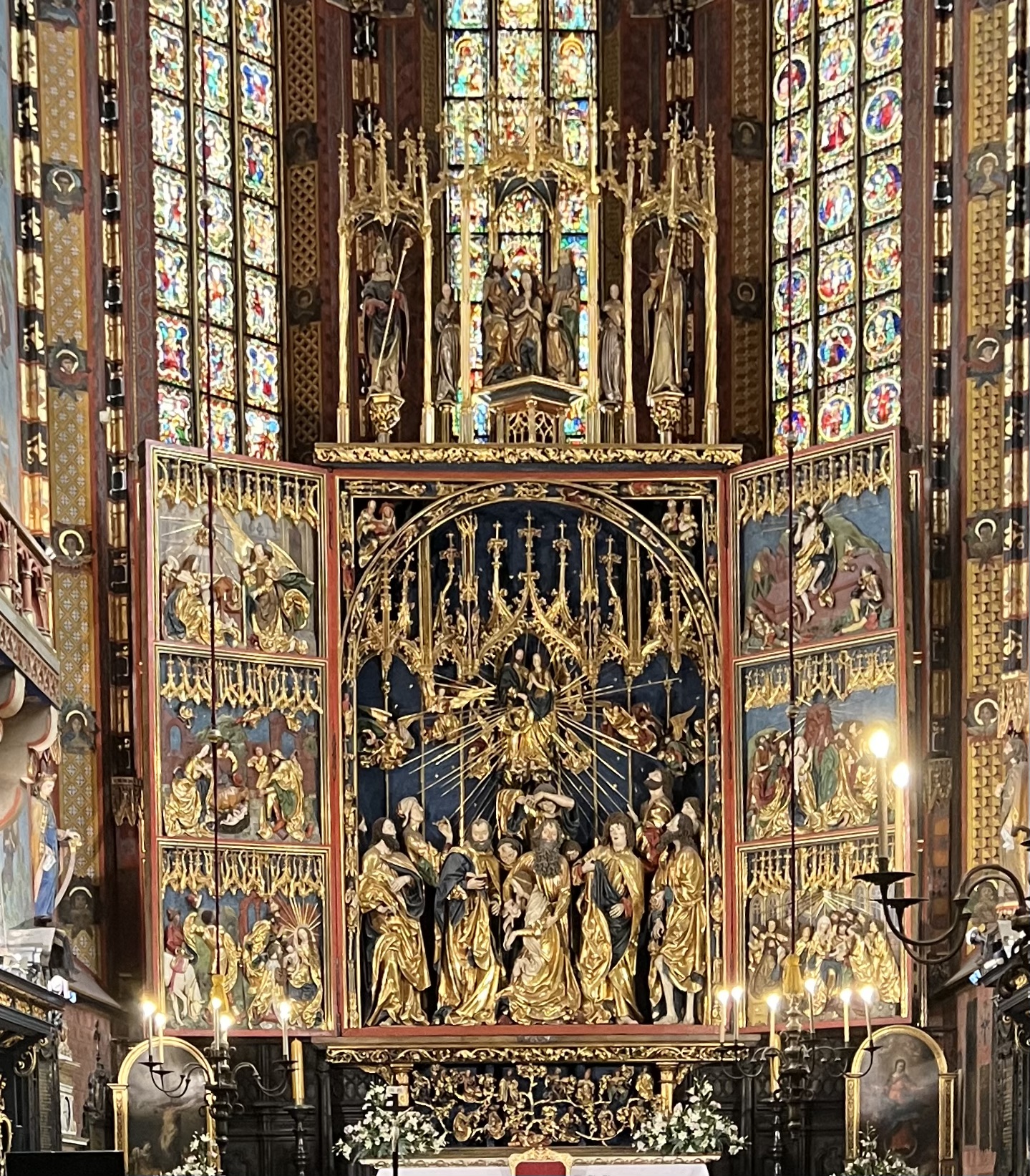
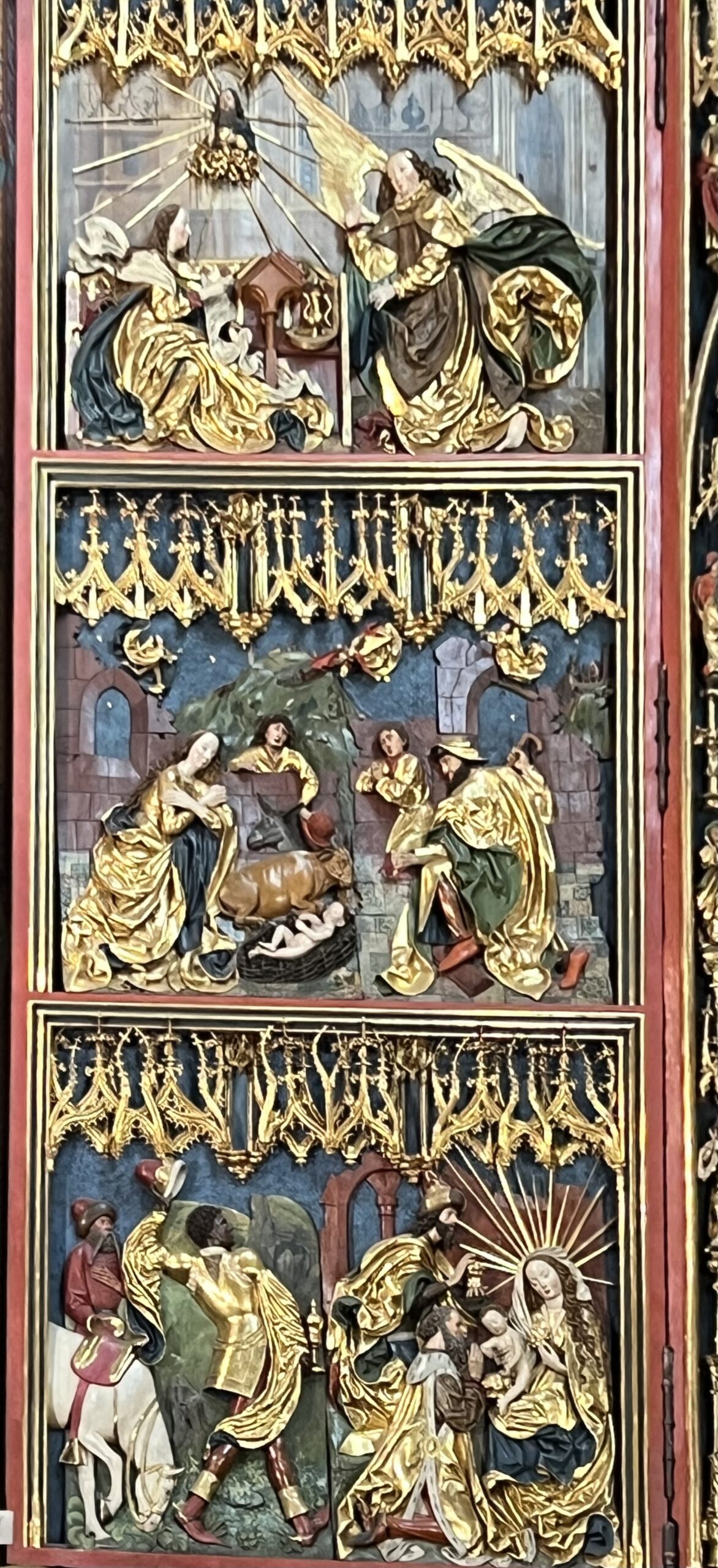
Between 1477 and 1489, the high altar was created by Veit Stoss (1447–1533), a German sculptor, engraver, woodcarver, and painter. These are large depictions that span the entire width of the chancel, measuring 13 metres wide and 11 metres high. The altarpiece is a triptych that can be opened and closed. The Coronation of the Virgin is also depicted here. The predella shows the “Tree of Jesse”, which depicts the lineage of Mary and Jesus. Scenes include the Nativity of Mary, the Presentation of Mary in the Temple, the Annunciation to the Virgin, the Dormition of Mary, the Assumption of Our Lady, and the Coronation of Mary. It is the largest oak altarpiece in Europe. The figures are made of lime wood, and the scenes are approximately 2.5 metres high. The realisation of this impressive artwork was made possible by contributions from the citizens of Krakow. In 1932–1933, the altarpiece was restored.
In the 15th century, side chapels were built in the church.
The church's interior is given a Baroque style on the initiative of Jacek Augustyn Lopacki (1690-1761), who was ultimately responsible for the church for almost 40 years.
Between 1740 and 1750, altars were painted by Giovanni Battista (Giambattista) Pittoni (1687-1767), a Venetian painter who was among the top Italian artists of the 18th century. Among his works are the Annunciation and the Adoration of the Magi. In the years 1750-1753, the porch with two towers was realised. It was designed by Franciszek Placidi (c.1710-1782), an architect and Baroque sculptor. The church vaults were painted by Andrzej Radwański (1711-1762) between 1753 and 1754.
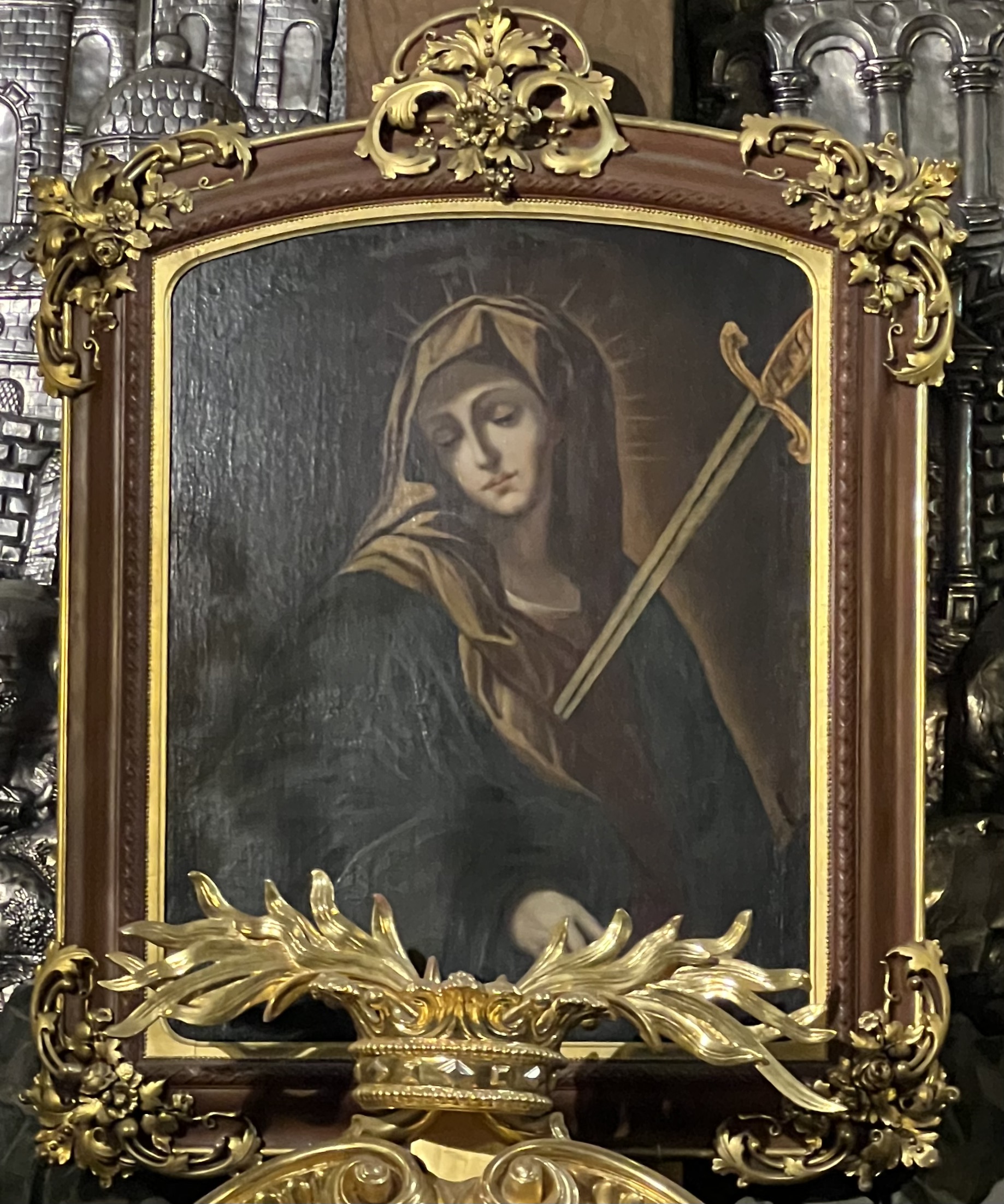
Between 1887 and 1891, the Neo-Gothic interior was made more colourful. For example, around 1890, a painting of the Mother of Sorrows was installed, created by Izydor Jabloński (1835-1905), who was a painter from Krakow. This painting was placed beneath the crucifix with the dying Jesus.
In 1929, wooden doors were added to the basilica's narthex, featuring depictions of apostles, prophets and saints by Karol Hukan (1888-1958). The Gothic south portal's door has reliefs created by him depicting scenes from the life of Mary.
In 1939, parts of the church's interior were removed to safeguard them from the Nazis during the Second World War (1939-1945). This included the dismantling and hiding of the precious high altar. As a result, the statues of the polyptych were secured. The altar was looted by the Nazis and reappeared in Nuremberg in 1949. Due to the communist authorities, it wasn't until 1957 that the altar was returned to St. Mary's Church in Krakow.
In 1962, St. Mary's Church was elevated to the status of a basilica.
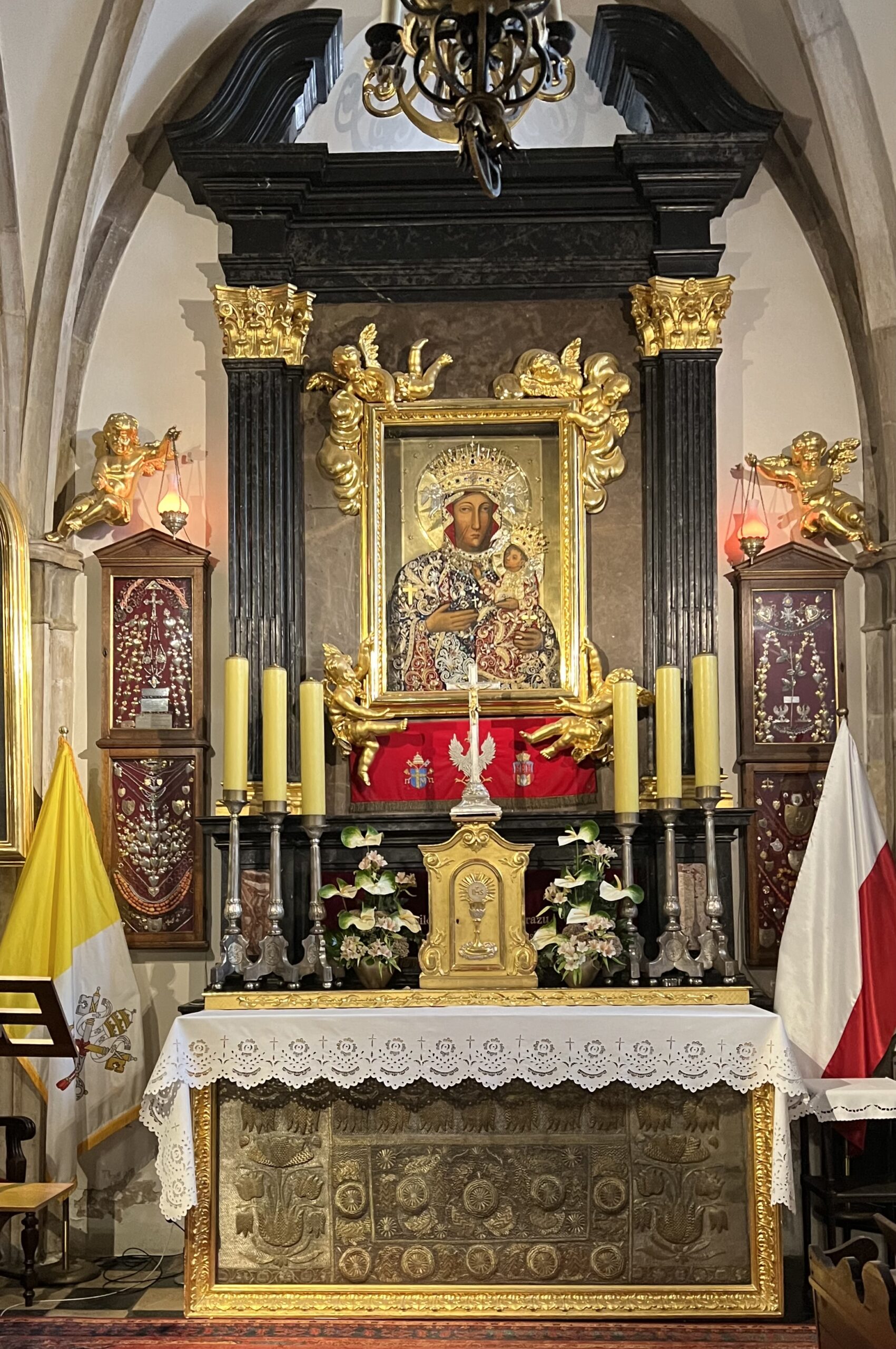
On 15 December 1968, the effigy of Mary of Czestochowa was crowned. This is a copy of the renowned image that stands in the great place of pilgrimage in Czestochowa. The coronation is performed by Stefan Wyszyński (1901-1981), Archbishop of Warsaw-Gniezno (1948-1981) and Cardinal (1953-1981). Also present is Karol Józef Wojtyła (1920-2005), Archbishop of Krakow (1964-1978), Cardinal (1967-1978) and was appointed Pope in 1978.
Extensive restoration of the basilica took place in the last decade of the 20th century and in the years 2015-2021.
Three times, John Paul II, pope from 1978 to 2005, born Karol Józef Wojtyla (1920-2005), visited St. Mary's Basilica in Krakow, namely on 9 June 1979, and then again in 1991 and 1999.
Pilgrimage site
The St. Mary's Church (Kościół Mariacki), located on the north side of the market square, is a basilica with two towers: an 81-metre-high watchtower topped with a gilded crown, and a 69-metre-high bell tower. A legend is associated with the construction of the towers, explaining the difference between the two spires. The story goes that two brothers were building the towers. They worked diligently and vied with each other. The elder brother finished his construction first. Fearing that his younger brother's tower was taller and more beautiful, he decided to kill his brother with a knife. His conscience tormented him, and he climbed the tower, openly confessed to the murder of his brother, and then killed himself with the same knife.
The Gothic basilica has a length of 80 metres and reaches up to 28 metres in height.
Large, Baroque altars have been placed in the church, particularly in the side chapels.
The high altar is a grand masterpiece, with the central scene being the Dormition of Mary and above it, the Assumption of Our Lady. When open, the immense triptych displays scenes from the joyful mysteries of Mary, and when closed, it shows sad scenes from her life. Among other things, it depicts the Annunciation by the angel to Mary that she will become pregnant, the birth of the Son of Mary, the Adoration of the Magi, and the Coronation of Our Lady. In the centre, two important events of Mary are depicted: the Dormition of the Virgin Mary and the Assumption of the Mother of God. The main scene of the altar is the Dormition of Mary, with the apostles present.
In a side aisle of the basilica is a Baroque altar, and a crucifix dating from before 1496 hangs there. The artist may be Veit Stoss. To the left of the crucifix, a ciborium can be seen, which is shaped like a church. It is a design from 1522 by the Italian architect and sculptor Giovanni Maria Padovano/Giovanni (Jan) Mosca (c. 1495-c. 1574).
A late-Baroque, black marble altar, dedicated to Saint Anne, the mother of Mary, dating from the 17th century. Mary and Saint Nicholas are also depicted there.
At the altar of the Holy Cross, beneath this cross, a painting of Mary is visible, with a sword piercing her heart.
Every hour a trumpet fanfare sounds and a short melody is played by a fireman from the high tower of the basilica.
ACCESSIBILITY
Address: Plac Mariacki 5, 31-042 Kraków.
More information can be found at www.mariacki.com.
Experience
Visiting the Basilica of Krakow is a wish come true. Seeing the beautiful basilica up close and admiring the many artworks has become a reality.
My greatest attention is given to the impressive high altar by Veit Stoss. When I approach it, a feeling of great admiration overcomes me. What a truly beautiful work of art this is. One by one, I examine the scenes, with Mary frequently and clearly visible. To the right of this impressive work of art stands the altar of the Mother of God with many graces.
When I stand in the chancel, many colourful stained-glass windows can be seen. Among them, I repeatedly discover an image of Mary.
In the basilica, my interest also extends to other high-quality works of art, such as the Chapel of Our Lady of Czestochowa. Here, a copy of the revered image from the largest Polish pilgrimage site has been placed, where many people pray.
I stand for a long time by the chapel of Saint Valentine, where a beautiful image of Our Lady is on display.
Then I will visit the Loreto Chapel. Loreto always captures my attention and I also like to visit the “Santa Casa” in Italian Loreto. The chapel dates from the late 16th century. The effigy of Mary is depicted in a silver gown.
In the chapel of Archangel Michael, I admire the image of the Mother of God with the rosary. Here too, Mary and Jesus are depicted with a silver veil.
The next stop is the altar of the mother of Mary, Saint Anne. After this, I will go to the altar with the image of the Annunciation by the Angel Gabriel to the young Mary.
When I leave the basilica, I take many thoughts with me. Mary is depicted here very often, and many visitors pray here. What an unforgettable experience I've had.
Environment
Near the basilica on Kraków's Main Market Square stands St. Adalbert's Church (“Kosciol Swietego Wojciecha”), a Romanesque church dating from the 11th century.
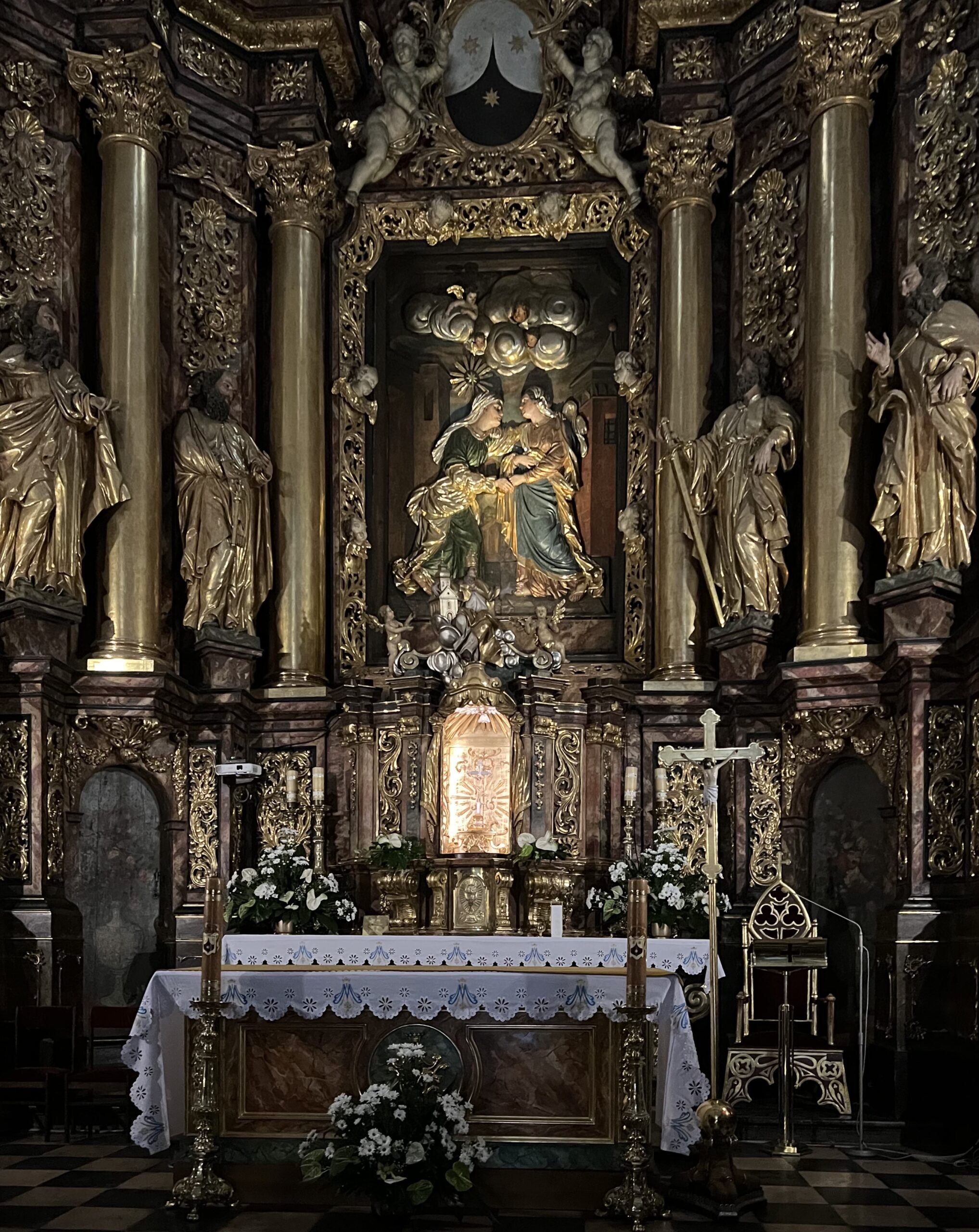
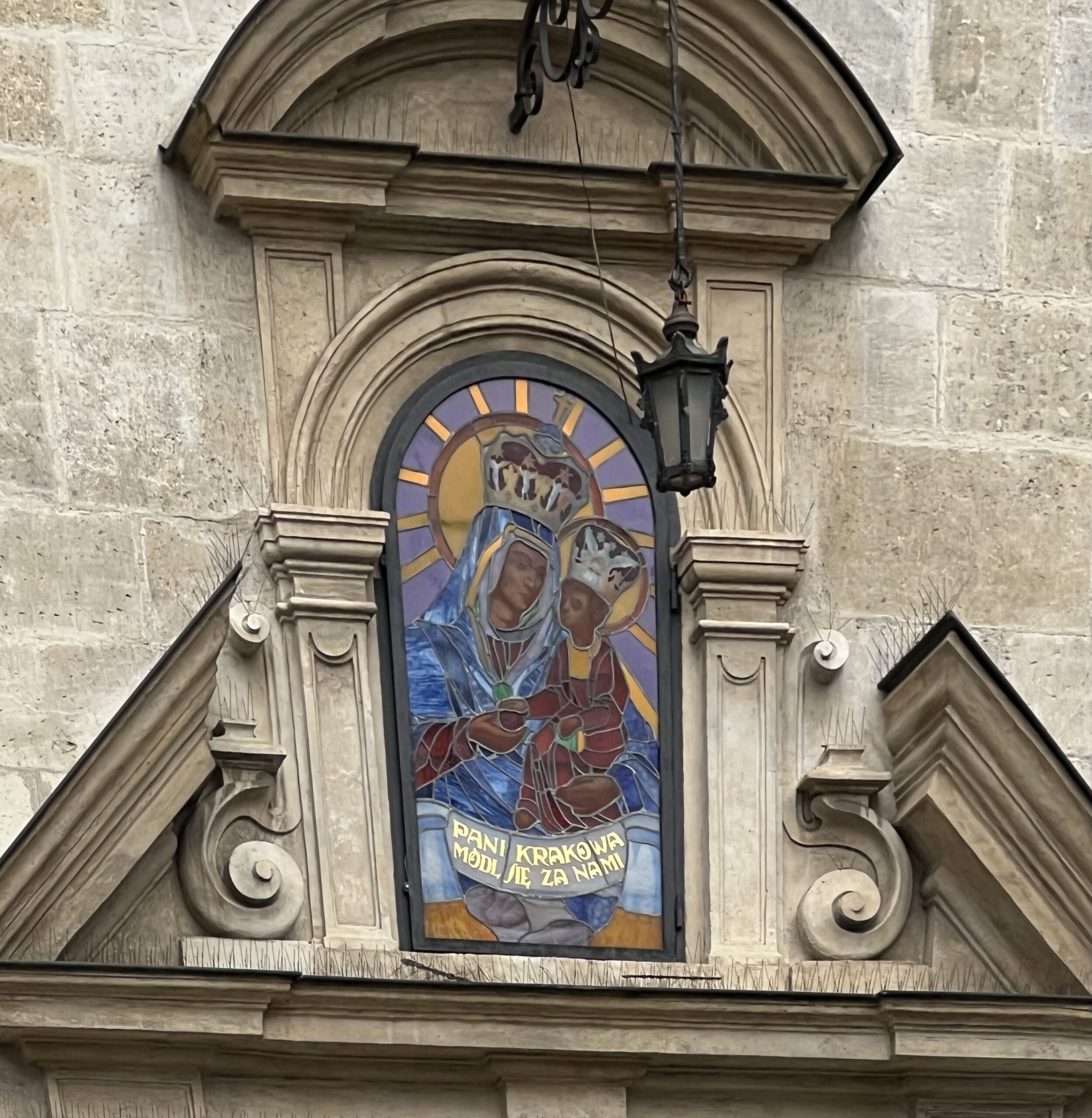
In Krakow, the Chapel of Our Lady of the Sand (Kaplica Matki Bozej Piaskowej) with a Carmelite monastery can also be visited. The place of worship is also called “Mary's Visitation” and “Carmelite Church on the Sand”. Above the entrance is an image of Mary with her Child and below it the text “Pani Krakowa Modlsie Za Nami”, which translates from Polish to English as “Our Lady of Krakow, pray for us”. Address: Karmelicka 19, 31-131 Krakow.
Going from the birthplace of the later Pope John Paul II in Katowice to Krakow means travelling 79 km westwards.
Departing from the major pilgrimage destination of Częstochowa to arrive in Krakow involves travelling 159 km to the southeast.
Leaving the capital, Warsaw, to get to Krakow, is a 297 km drive south.
Posted: 21 February 2025
~~~

 Nederlands
  English (UK)
  Deutsch
  Français