History
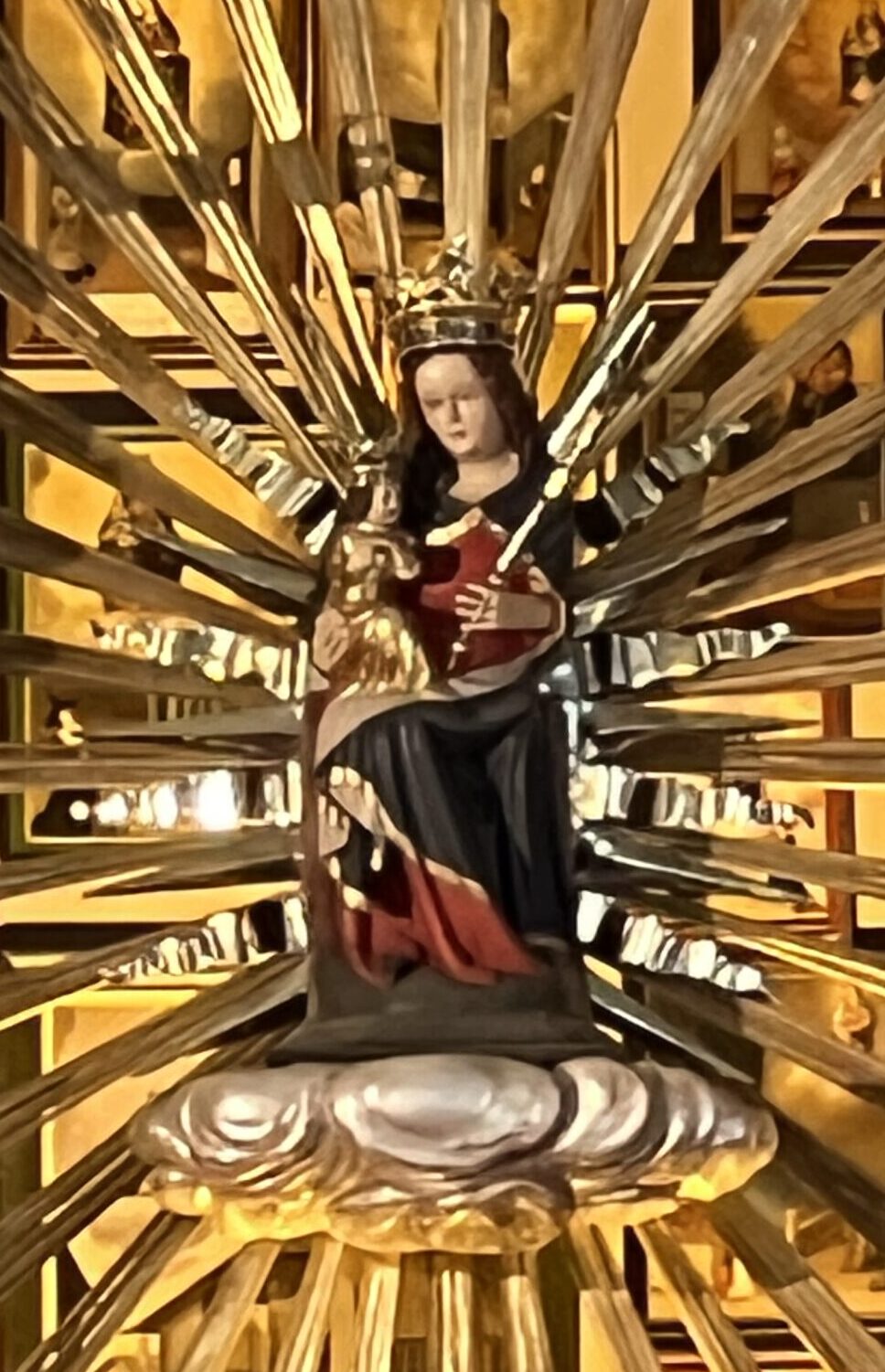
The late Gothic statue of grace of Maria Kirchental was created around 1400 by an unknown artist. In 1670, a farmer built a small wooden chapel. In 1689, the image was placed in a walled forest chapel, and the pilgrimage to the statue of grace began. Until this year, the statue stood in the parish church of St. Martin bei Lofer.
The decision to build the pilgrimage church was made by Johann Ernst von Thun und Hohenstein (1643-1709), Bishop of Sechau (1679-1687), Prince-Archbishop of Salzburg (1687-1709). The site for the church's construction was chosen based on a miraculous event. In the middle of a snow-covered meadow, three ears of corn were growing, and this was seen as a sign to build the church there. One of these ears of corn is still preserved in a monstrance.
On 13 October 1691, Mary and her Child each received a golden crown impressed by Bishop Johann Ernst von Thun und Hohenstein. The bishop visited this place of pilgrimage several times.
The church was designed by Johann Bernhard Fischer von Erlach (1656-1723), the emperor's court architect. It is one of his most remarkable works. Construction began in 1694 with two white towers, and by 1708 the work was complete and the church was consecrated.
Maximilian Graaf von Thun-Hohenstein (1638-1701) donated the right side altar. On it is the ±1800 canvas painting by an unknown artist, which depicts the visit of Mary and Joseph to Elizabeth and Zechariah.
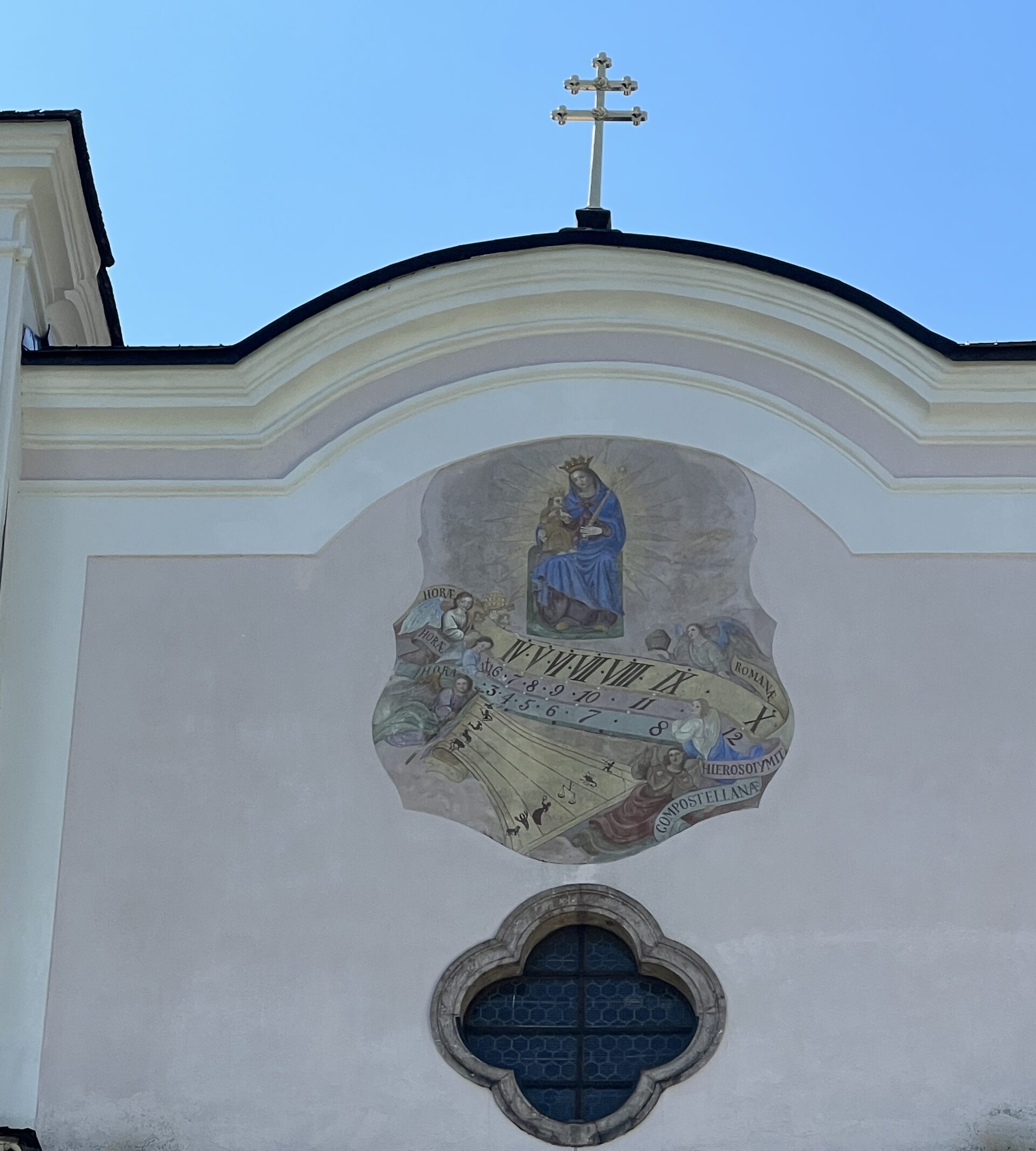
High on the church's facade, painter Joseph Rattensperger (1807-1866) created an image featuring Mary.
In 1858 the church was renovated and a year later the miraculous image received a gilded halo, and in 1860 the crowns and sceptre were renewed.
Since 1939, the Missionaries of the Sacred Heart of Jesus have been responsible for the care of pilgrimages in Maria Kirchental.
In 1958-1960, renovations were carried out in the church. Restaurateur and artist Alfred Tschulnigg (1919-1999) provided a new version and halo for the statue of grace, which is surrounded by angels.
The House of Reflection was founded in 1982 on the site of the former vicarage. It is a place for peace, retreat, and contemplation on life.
In the period 1999-2002, the last major interior restoration took place.
Pilgrimage site
Maria Kirchental lies at an altitude of almost 900 metres in the Loferer Steinberge mountain range. The church forms a fitting picture with the mountain landscape of the “Saalach Valley”. It is a popular pilgrimage site.
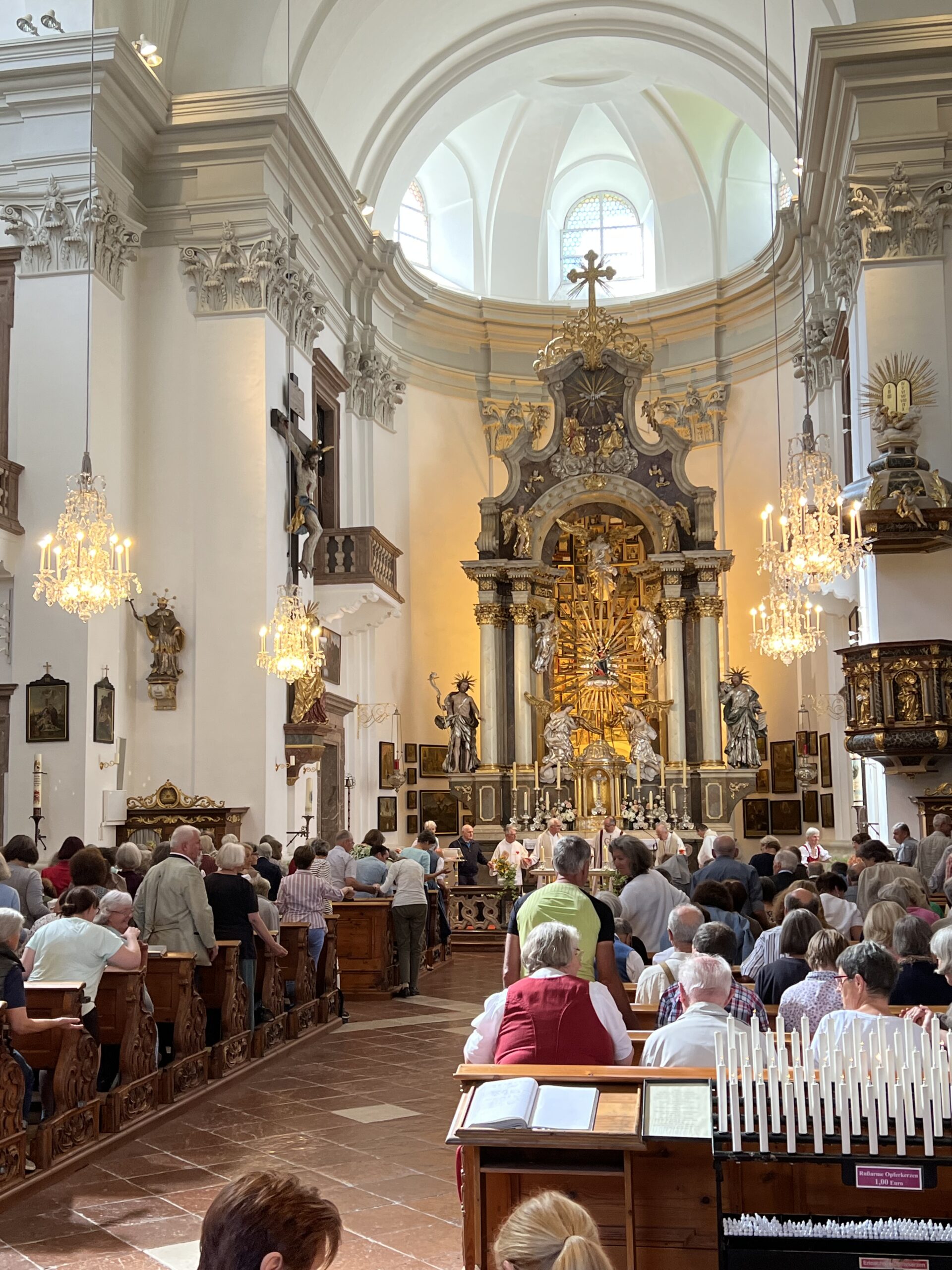
In the church stands the neo-Baroque altar, which centrally displays Mary seated. Mother Mary holds her right arm behind her Child and in her left hand, she holds a sceptre. Jesus has a little bird in his left hand. This image is called “The Goldfinch Madonna”. This bird refers to the crucifixion of Jesus; a little bird comes to him and pulls a thistle (thorn) from the crown of thorns. A drop of Jesus' blood colours part of the creature's head. The creator of the artwork is unknown. The images of Mary and her Child are crowned. In front of the high altar stands a people's altar, which is a design by Peter Schuh (1941), the episcopal architect of Salzburg.
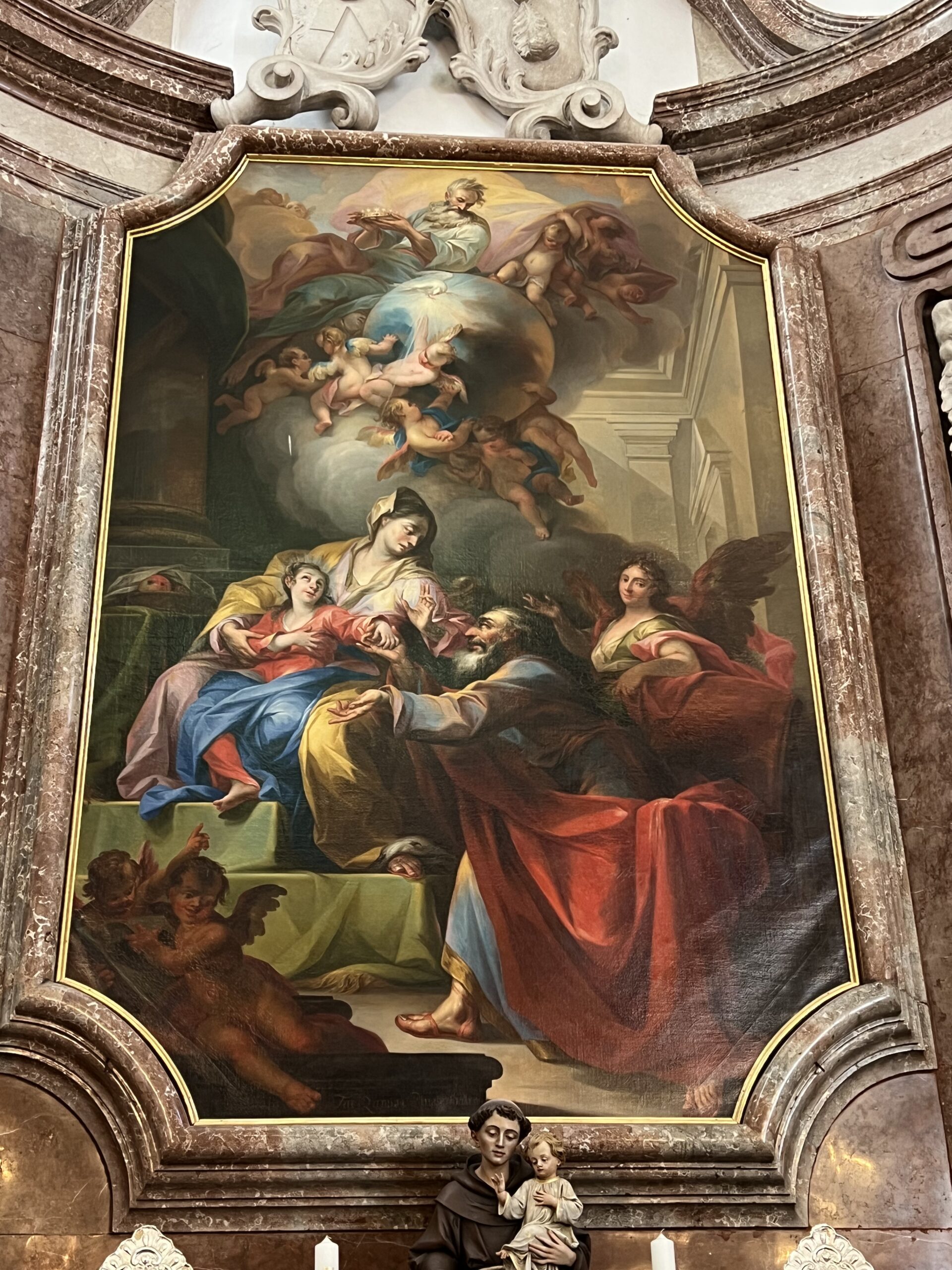
The altar on the left depicts Anna and Joachim, Mary’s parents, with their daughter. The mother is holding her daughter on her lap. The artwork was created in 1719 by Jakob Zanusi (1679–1742), also known as Giacomo Zanussi, a prolific Austrian Baroque painter.
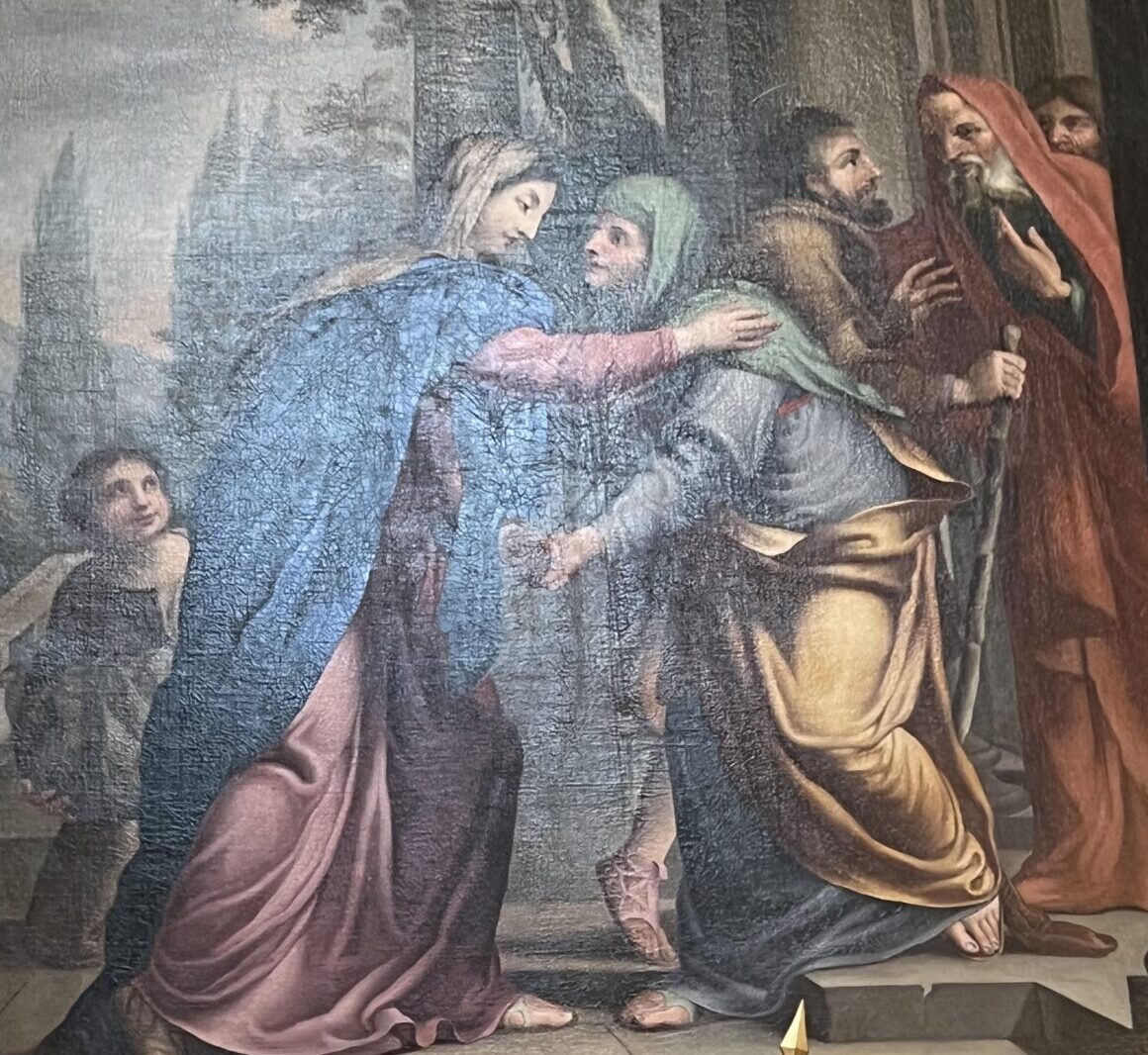
To the right of the high altar is the altarpiece depicting the Visitation, showing Mary and her cousin Elizabeth. This side altar is made of red marble, as is the altar on the other side of the high altar. There is also a Pietà in the church; it is by an unknown artist and dates from around 1720.
The church features a striking number of votive offerings to Mary. The first ex-votos were added in 1691.
Next to the church is a “House of Reflection”. In the sanctuary, there is also a pilgrimage museum with many ex-votos in gratitude to Mary.
Together with Maria Plain, Maria Kirchental is one of the most visited pilgrimage sites in the Salzburg region. Maria Kirchental church is open daily.
ACCESSIBILITY
Maria Kirchental is located south-west of Salzburg. The address is: Kirchental 1, 5092 St. Martin bei Lofer.
You can find the latest information at www.maria-kirchental.at.
Experience
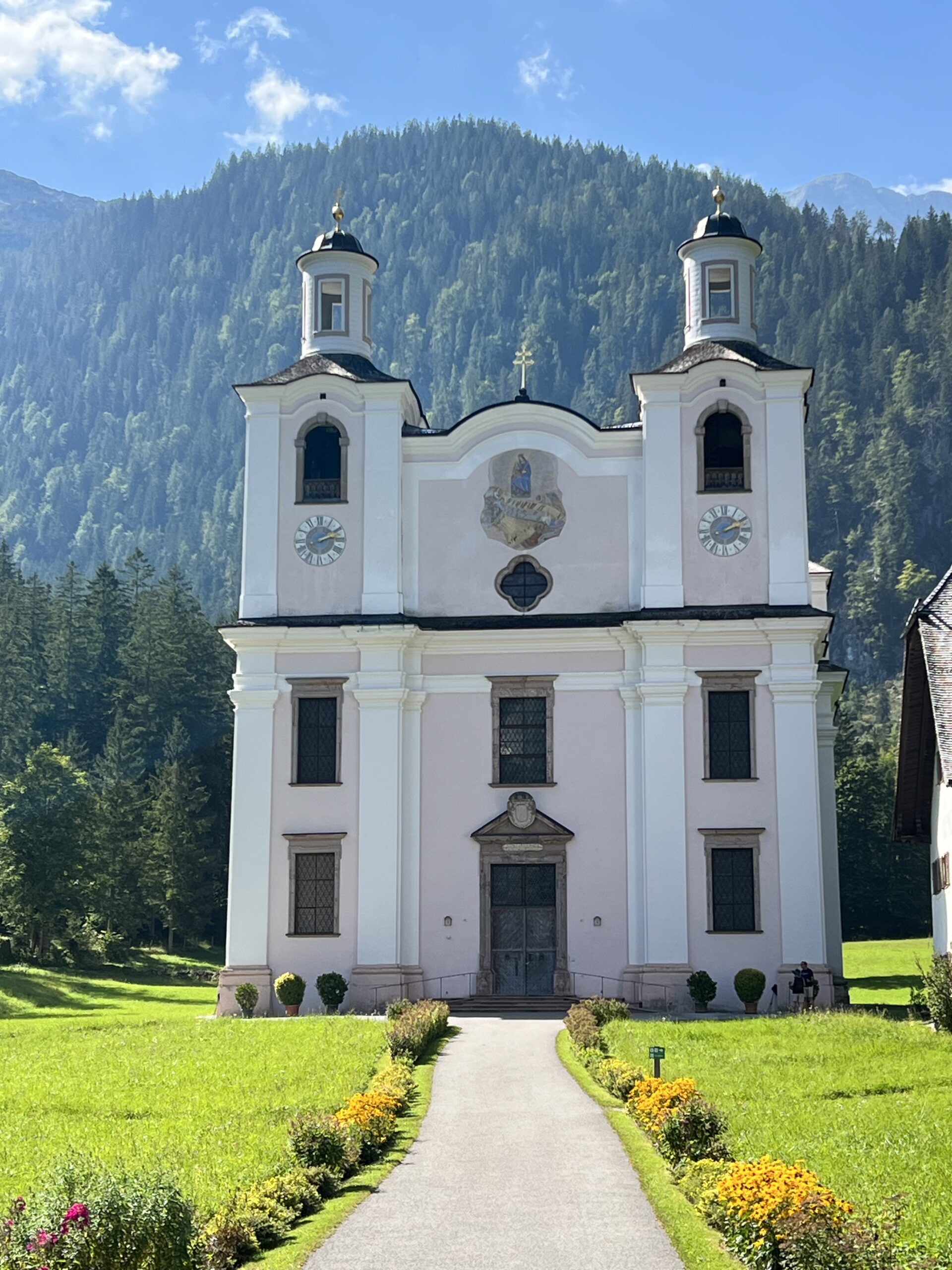
To get to the pilgrimage site of Maria Kirchental, you have to follow a long, winding, uphill road. Many cars are parked in several car parks. What a hustle and bustle here in the mountains!
After the car finds a parking space, I go up an inclined path that leads me to the church. Upon arriving, I hear that a service is in progress. I then enter the church and witness the honouring of a staff member. The woman has dedicated decades to organising pilgrimages. By arranging these pilgrimage trips, she has brought a lot of joy to many pilgrims.
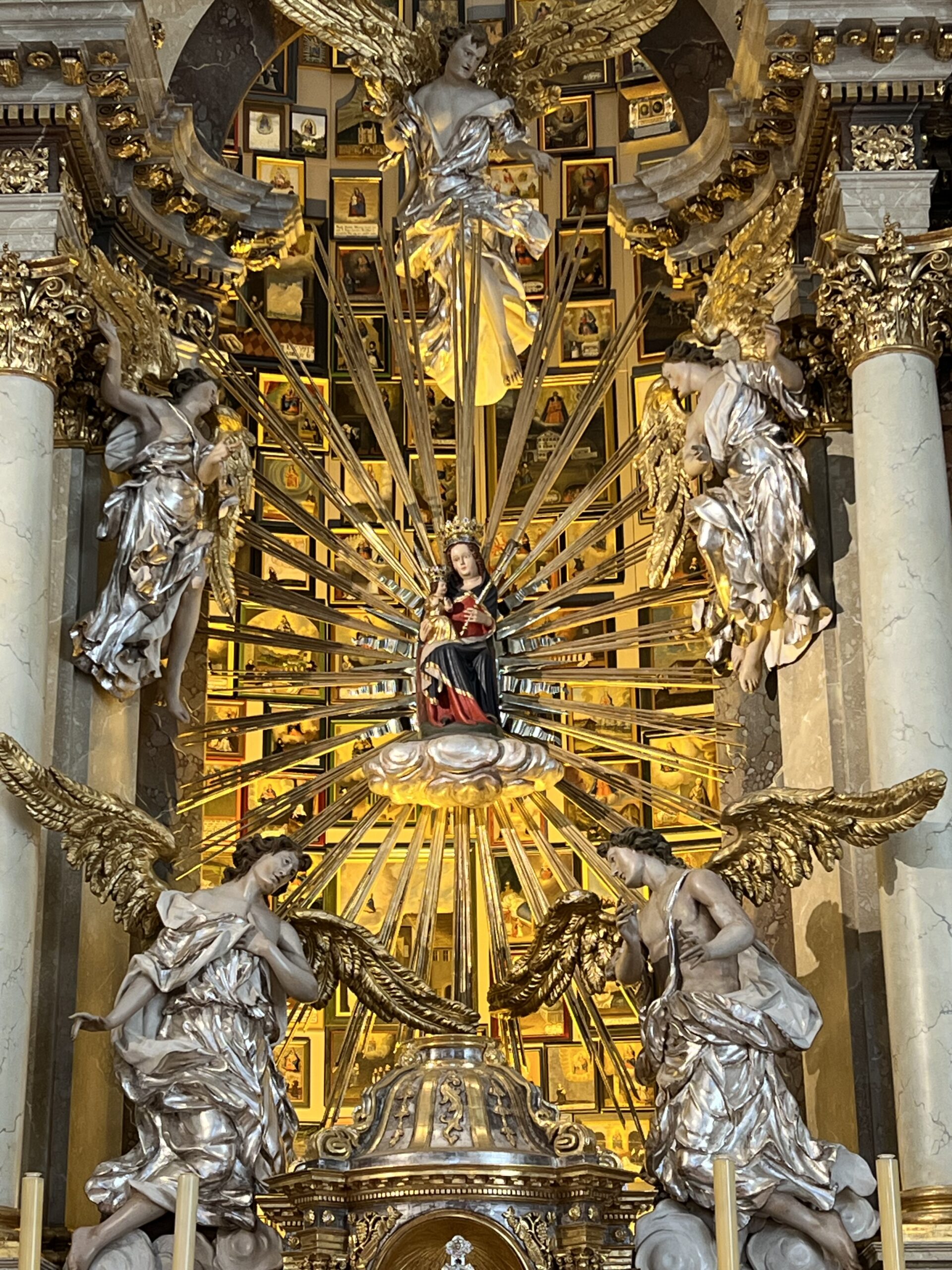
After the tributes, many leave the church, allowing me to tour the building. I see beautiful, impressive effigies of Our Lady. Mary is strongly represented here. On the Neo-Baroque high altar, there is an image from around 1400 of the seated Virgin Mary, protecting her Child with her right arm. Seeing this is the highlight of my visit. This is the moment to pray for a friend and a good acquaintance.
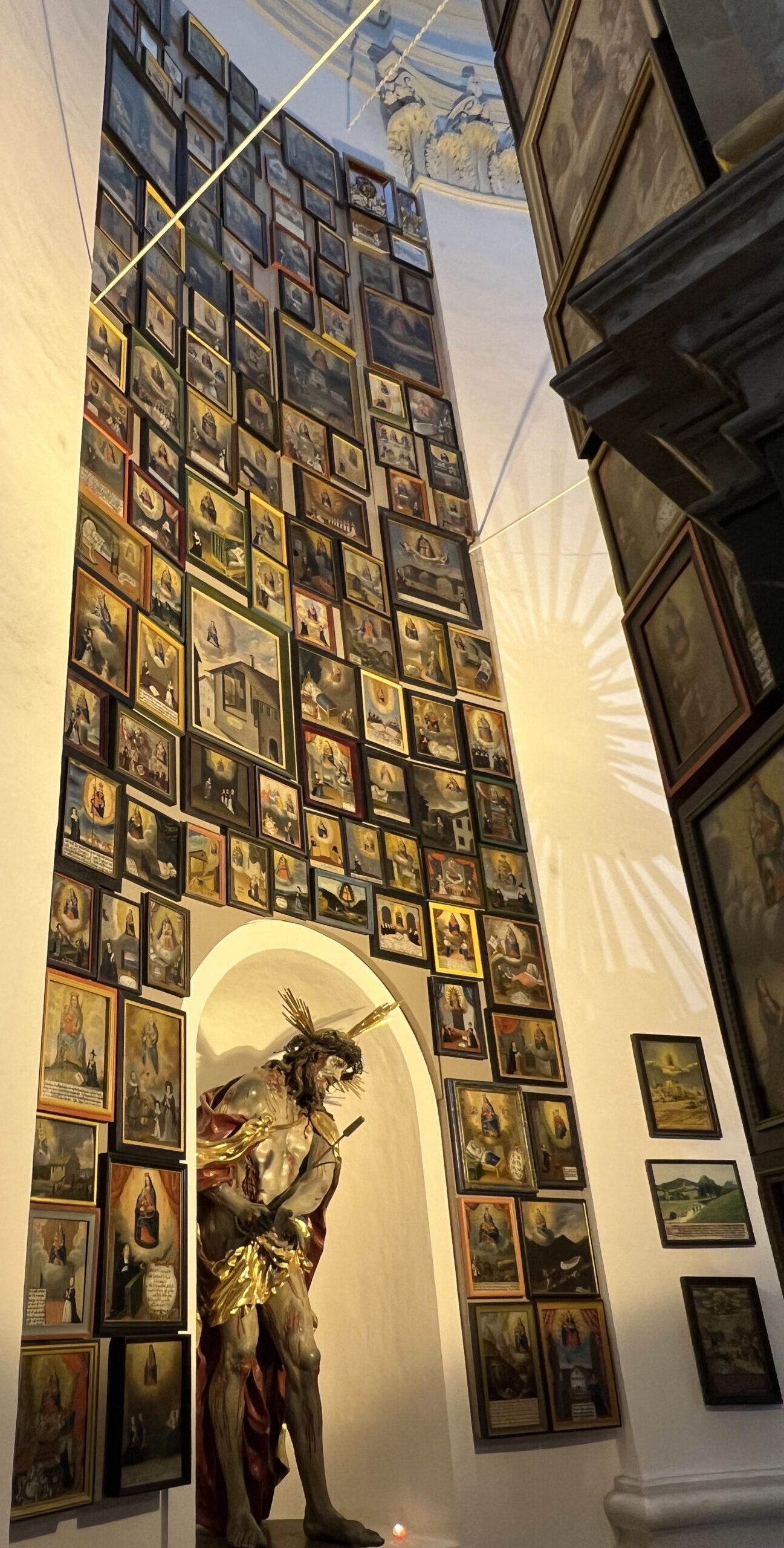
In the church, I notice an enormous number of ex-votos. How many are hanging here on the walls? There are certainly hundreds! In the chancel it's completely full of thank-yous to Mary. The Holy Virgin has helped many people.
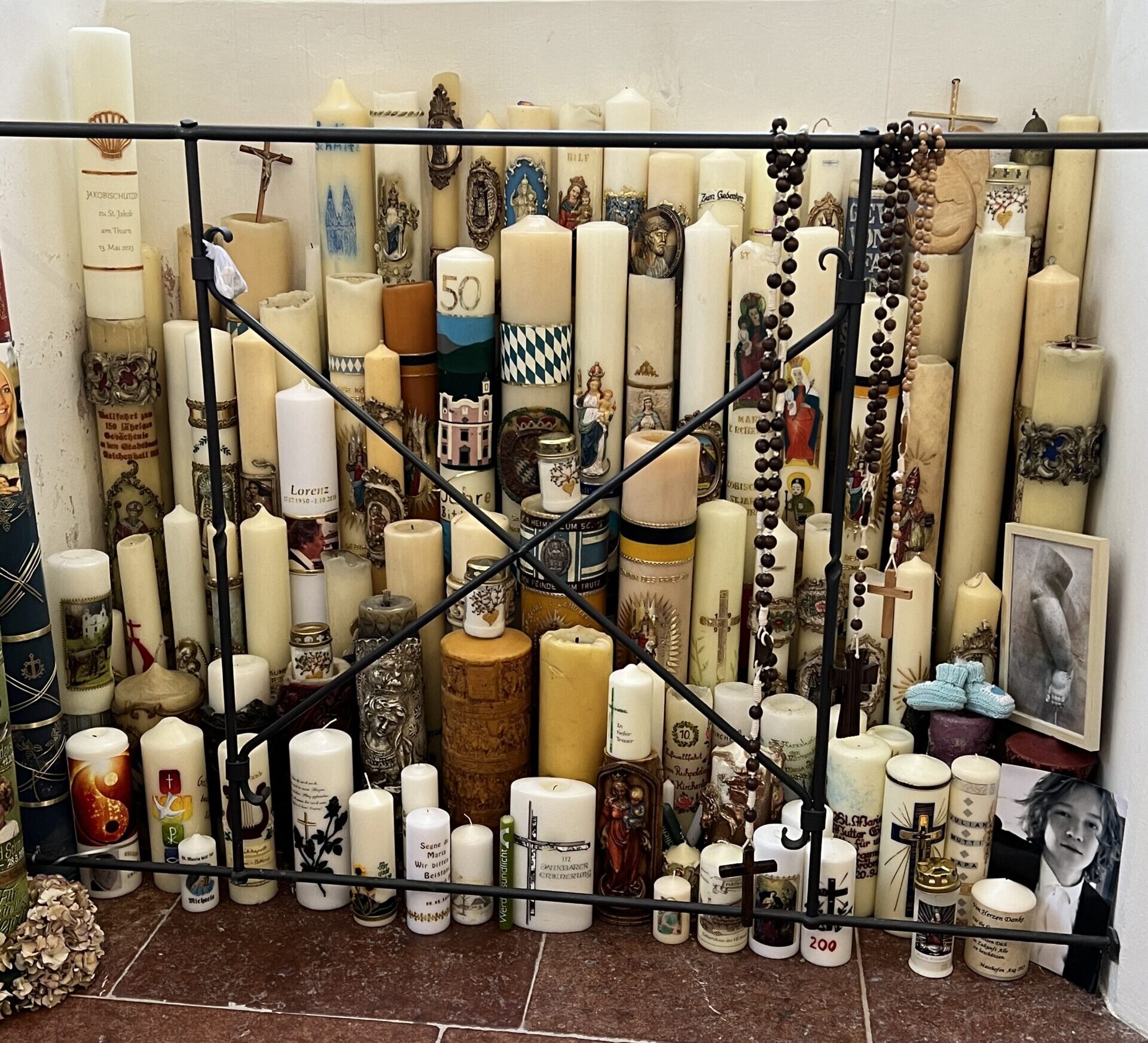
Candles are plentiful here in all sorts of sizes and colours. I light a few candles, as that is my ritual when I arrive in places where Mary greets me, and so it is here too. By the light of the candles, my thoughts turn to a good friend.
Environment
The city of Salzburg is 54 km away from Maria Kirchental. The pilgrimage site in Maria Alm is 30 km away and the distance to the Marian shrine of Maria Plain is 53 km. The large, German city of Munich is located 148 km from Maria Kirchental.
Posted: 5 December 2023
~~~

 Nederlands
  English (UK)
  Deutsch
  Français