History
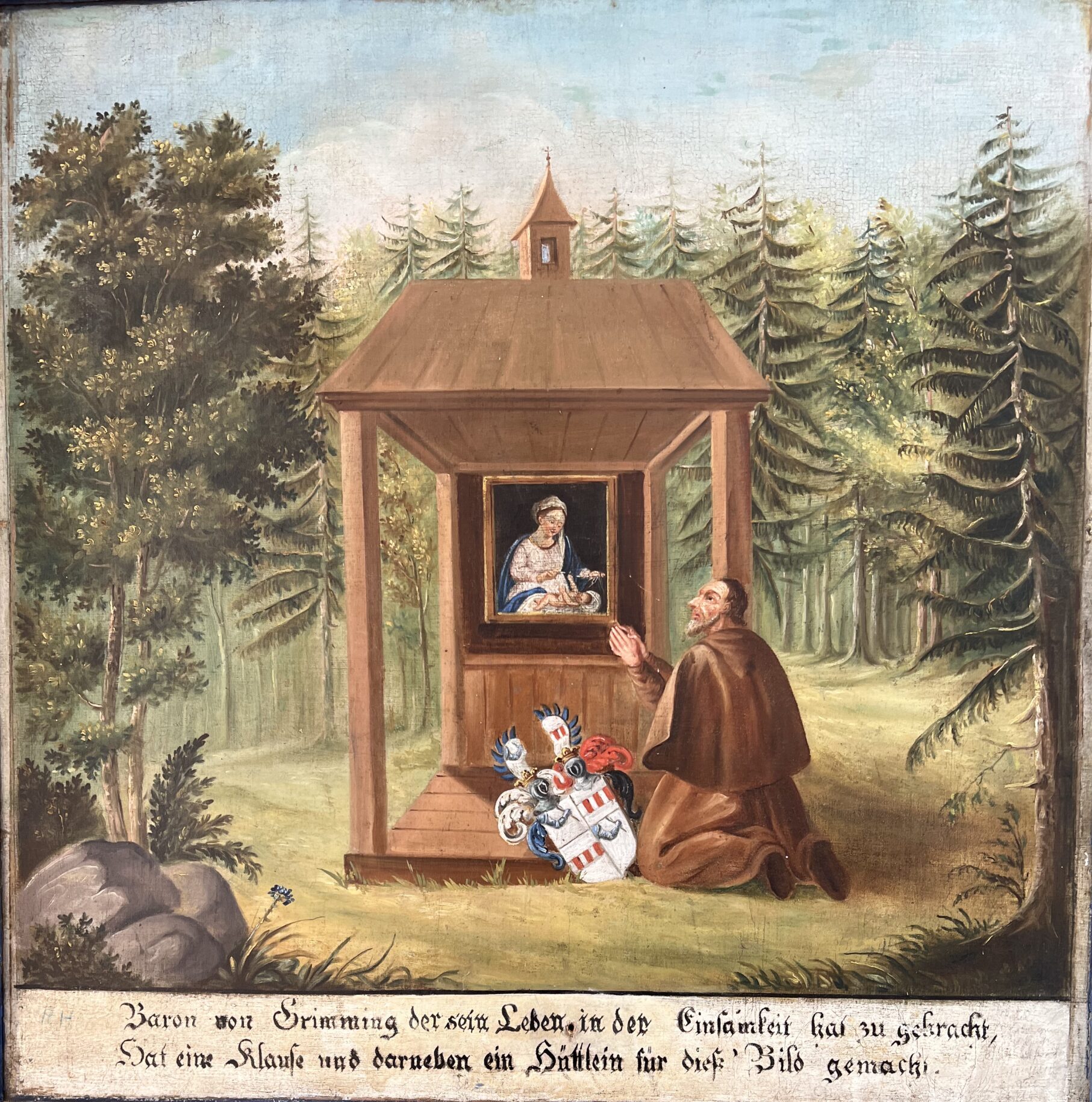
During the Thirty Years“ War (1618-1648), there was conflict between Catholic and Protestant states. Swedish soldiers set fire to the market square in Regen, in the Bavarian Forest. A bakery also went up in flames, but the image of Mary present there miraculously remained virtually undamaged. In 1652, Rudolf von Grimming (d. 1692) brought the painting to a small wooden chapel on the Plainberg, where the church was later built. The name ”Maria Plain“ means ”Mary Plain". In 1653, Rudolf von Grimming left the Plainberg and took the painting with him, after first having a copy made by the Baroque painter Johann Franz Pereth (1622-1678), also called Peretti and Beretti. This second work was placed in the chapel. Only in 1732 did the original painting return to the church.
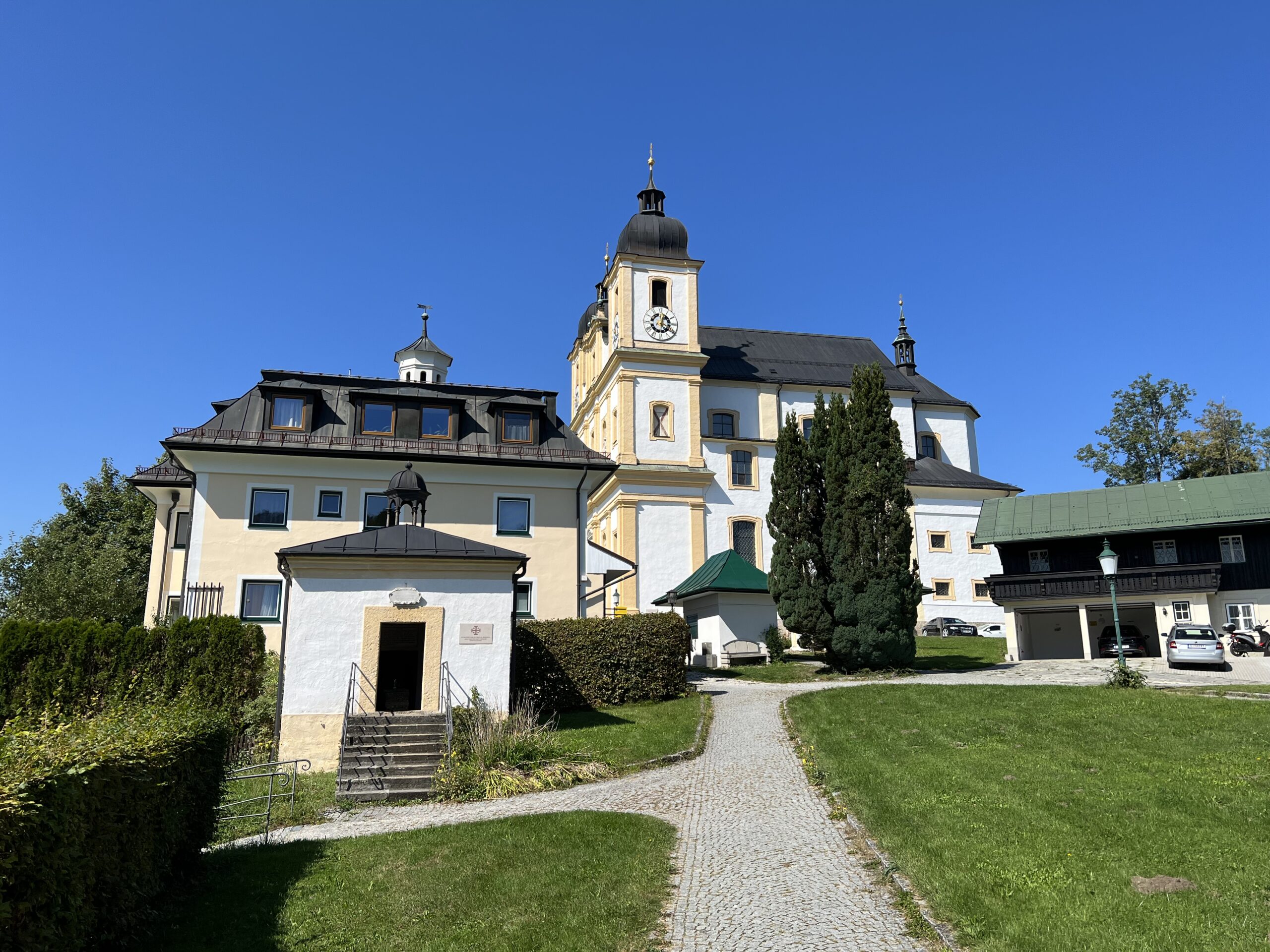
The white and yellow pilgrimage church is situated on Plainberg hill and was constructed between 1671 and 1674. The architect, Giovanni Antonio Dario, who was born in Italy (1630-1702), worked extensively in Austria and designed the church in 1671. The church is dedicated to the Mother of God, the Mother of Consolation. On 12 August 1674, the church was consecrated by Max Gandolf von Kuenburg (1622-1687), Prince-Bishop of Salzburg (1668-1687). The monastery was completed in 1681. The architectural style is Baroque.
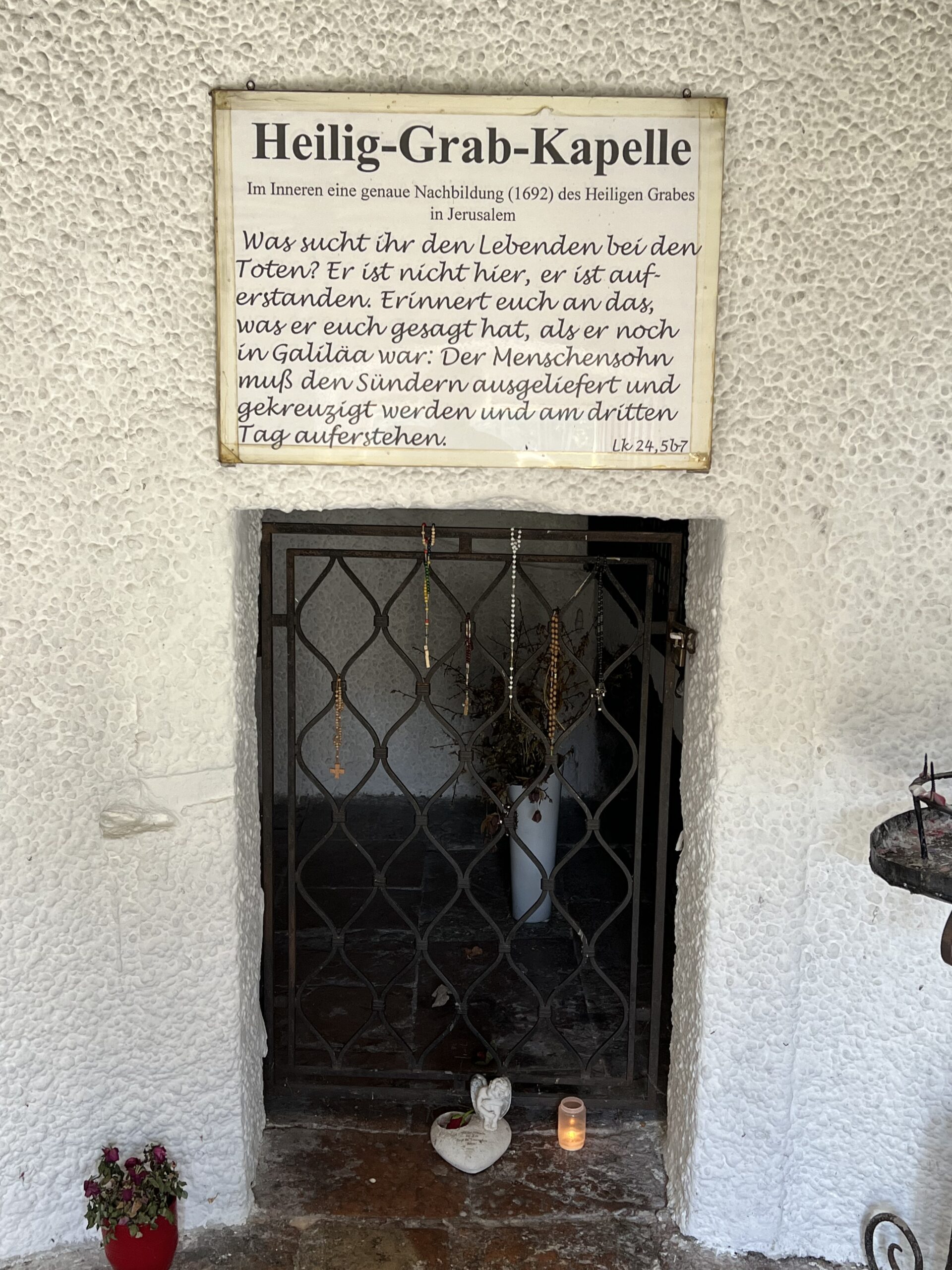
In the period 1686-1692, chapels were built on Calvary Hill. Sebastian Stumpfegger (1671-1749) replaced the wooden chapels with stone buildings in 1710. He also built the Chapel of Sorrows. The Crucifixion group is by Matthias Wilhelm Weissenkirchner (1670-1727) and Johann Franz Schwanthaler (1683-1762) made the Pietà. In 1692, the Chapel of the Holy Sepulchre was received as a donation.
In 1732, the original painting arrived in the church and Mary was given a halo of rays. The miraculous image is a 17th-century painting, and the artist is unknown. The painting has braved dangers, including a fire in Regen in 1633. Miracles have been attributed to the painting of Mary, as healings have occurred after praying before this artwork. Copies of the painting have also been made.
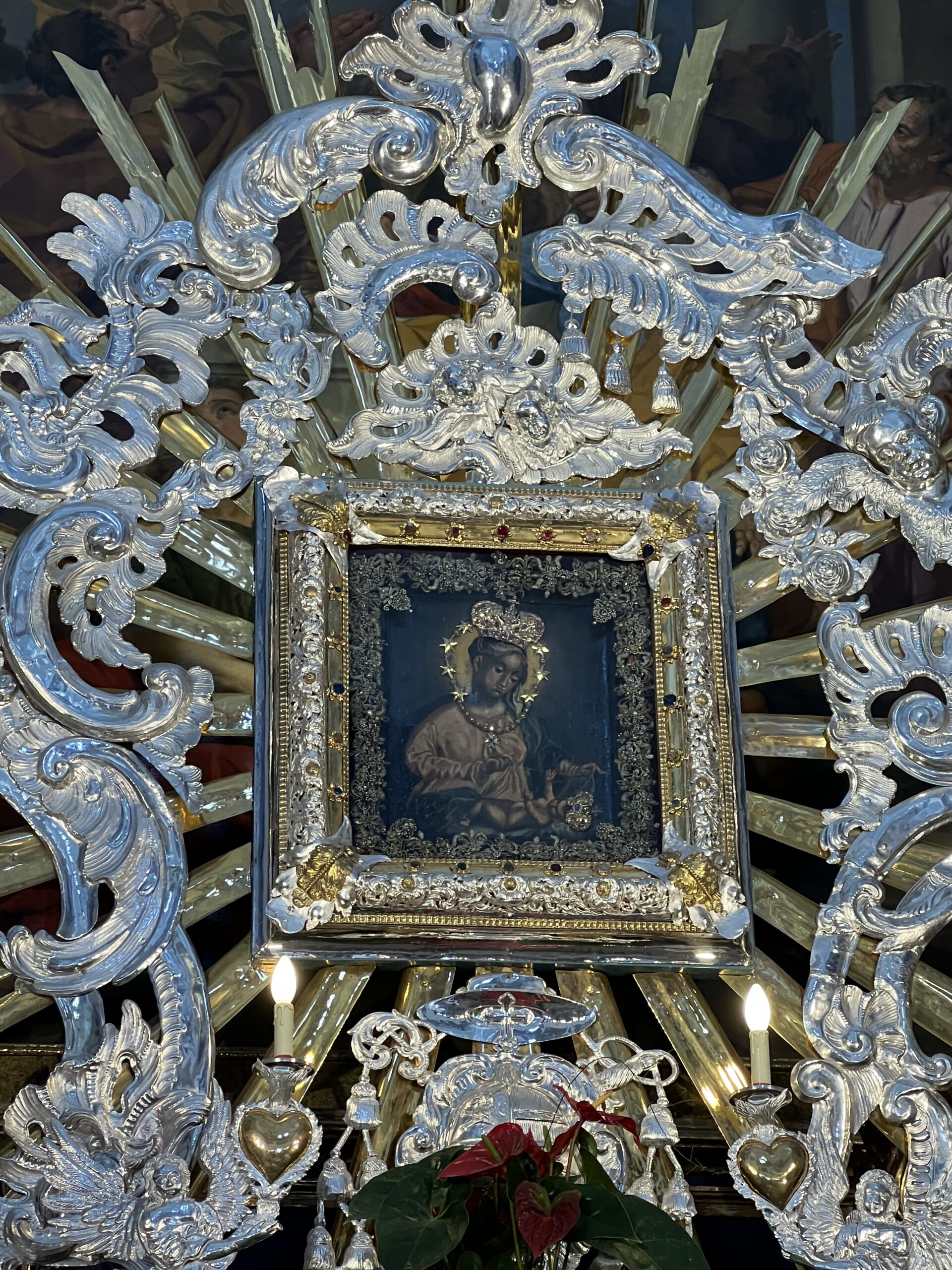
In 1751, the devotional image of Mary was crowned by Andreas Jakob Graf von Dietrichstein (1689-1753), Prince-Bishop of Salzburg (1747-1753).
The composer, conductor, pianist and violinist Wolfgang Amadeus Mozart (1756-1791) once played in the church.
In 1824, Maria Plain came under the responsibility of St. Peter's Abbey in Salzburg.
A special event takes place in 1845 with the introduction of the 40-hour prayer.
In 1952, the church received the honorary title of basilica after approval from Pius XII, pope from 1939-1958, born Eugenio Maria Giuseppe Giovanni Pacelli (1876-1958).
The exterior was renovated in 2003/2004 and the interior in 2013/2014.
Pilgrimage site
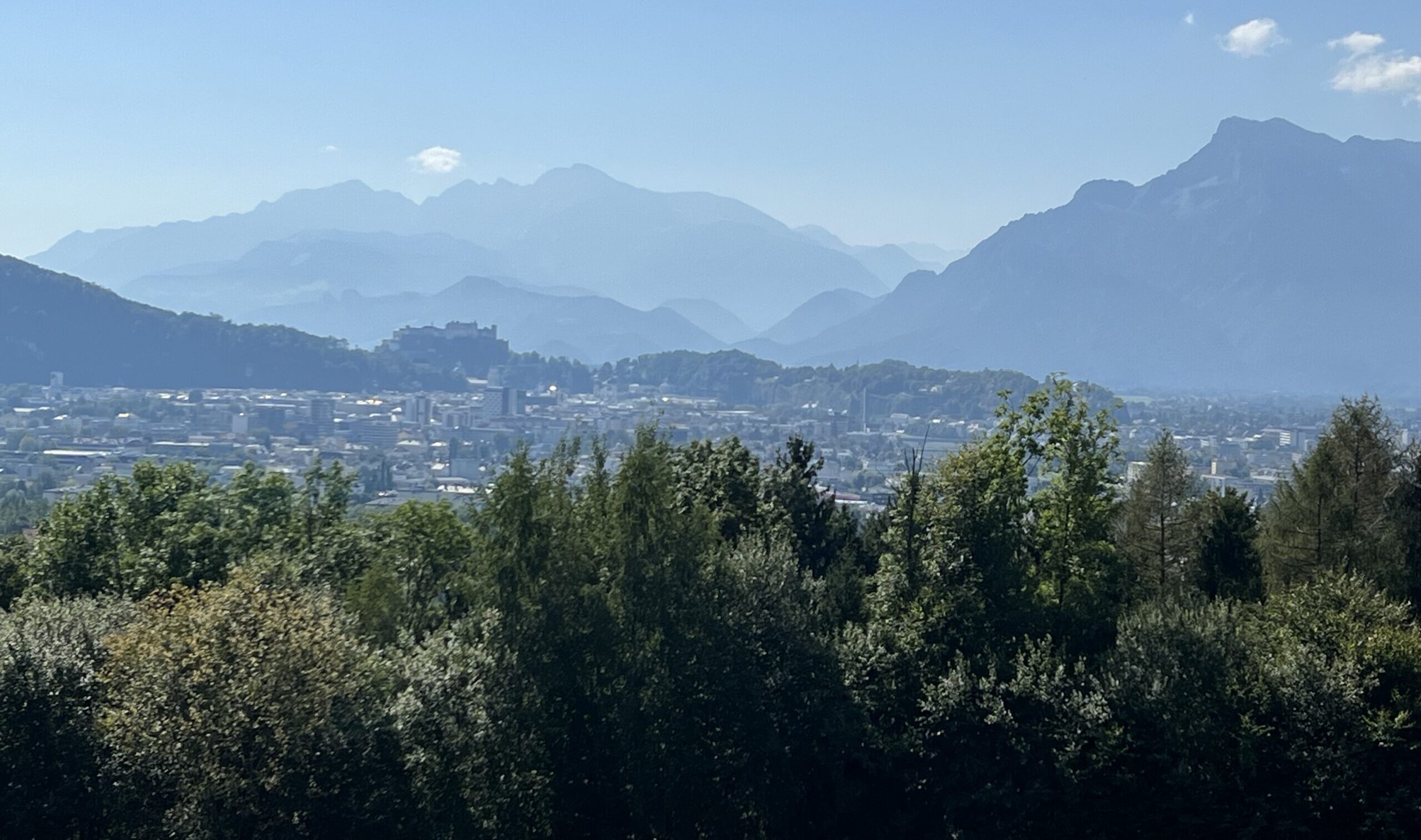
On the hill by the church, there is a wide view of the surrounding area with the city of Salzburg. The church is part of St. Peter's Abbey in Salzburg. Numerous pilgrims come to the church with their worries and thoughts to entrust them to Mary. Pilgrims also come here to thank Our Lady. On the way to the pilgrimage site, visitors encounter stone pillars depicting the mysteries of the Rosary.
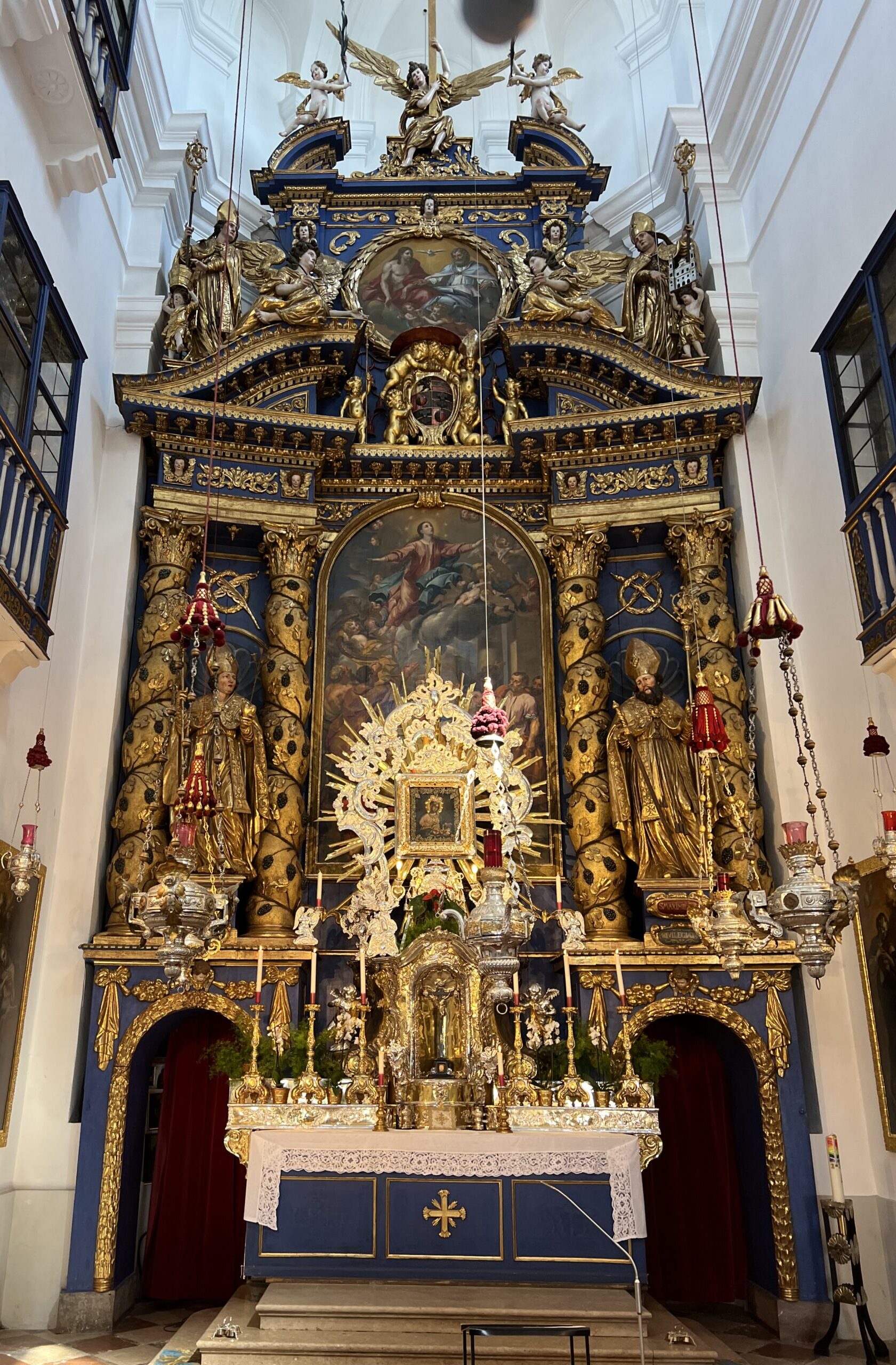
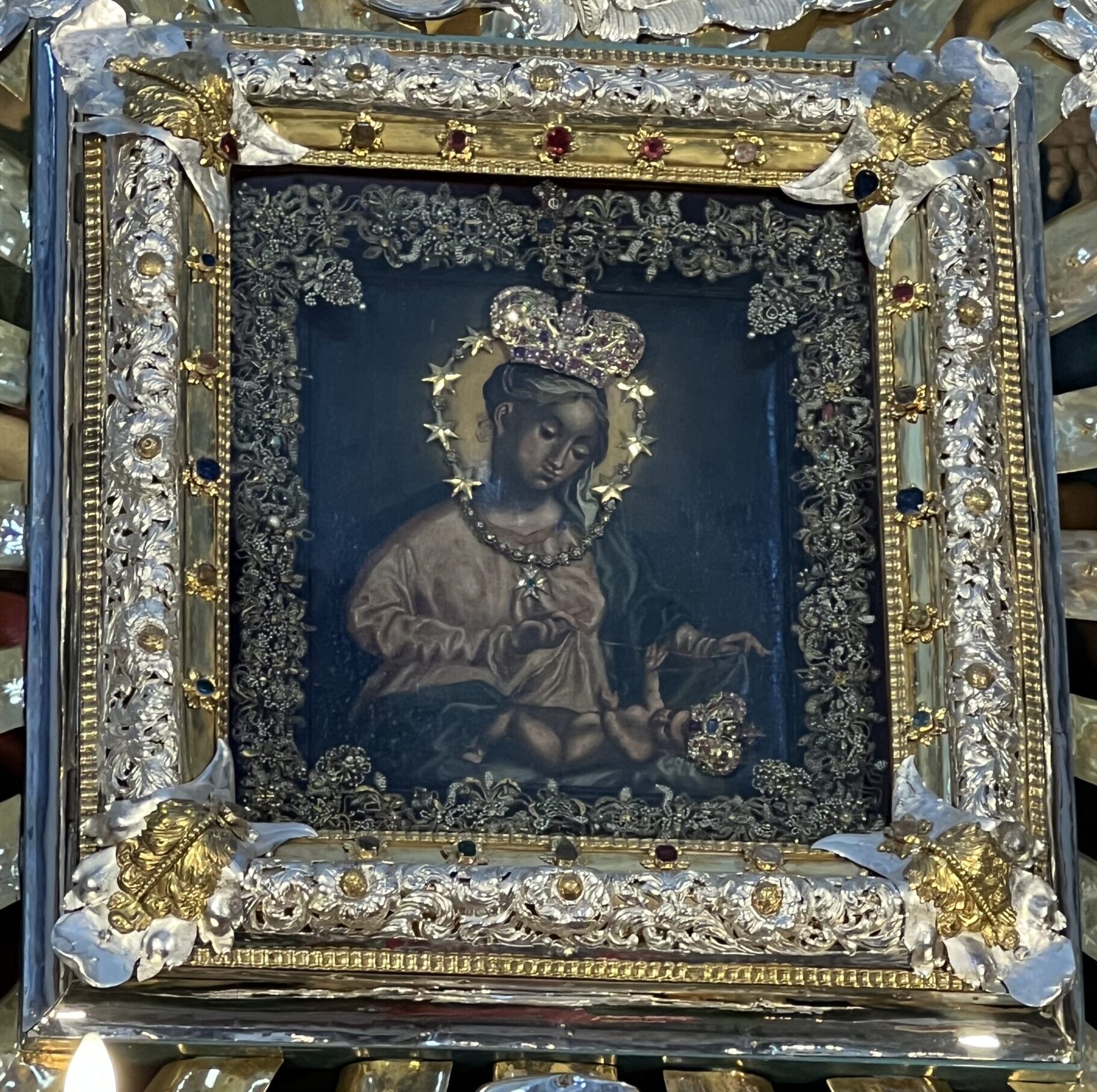
The sacred image of Maria Plain depicts Mary and the baby Jesus, both are crowned, and a silver frame makes the artwork even more impressive. Mary is looking at her Child. This work was originally a Nativity scene. It is located in the high altar and is named Maria Troost van de Plainberg (Mary, Comfort of the Plain Mountain).
Among the artworks in the basilica, mention can also be made of “The Betrothal of Mary to Joseph” and “The Flight into Egypt” by the Antwerp painter Frans de Neve (1606-c.1688).
In the nave hangs a large, silver, crowned effigy of Mary with Child. It represents the Queen of the Rosary and is a gift of gratitude from 1675.
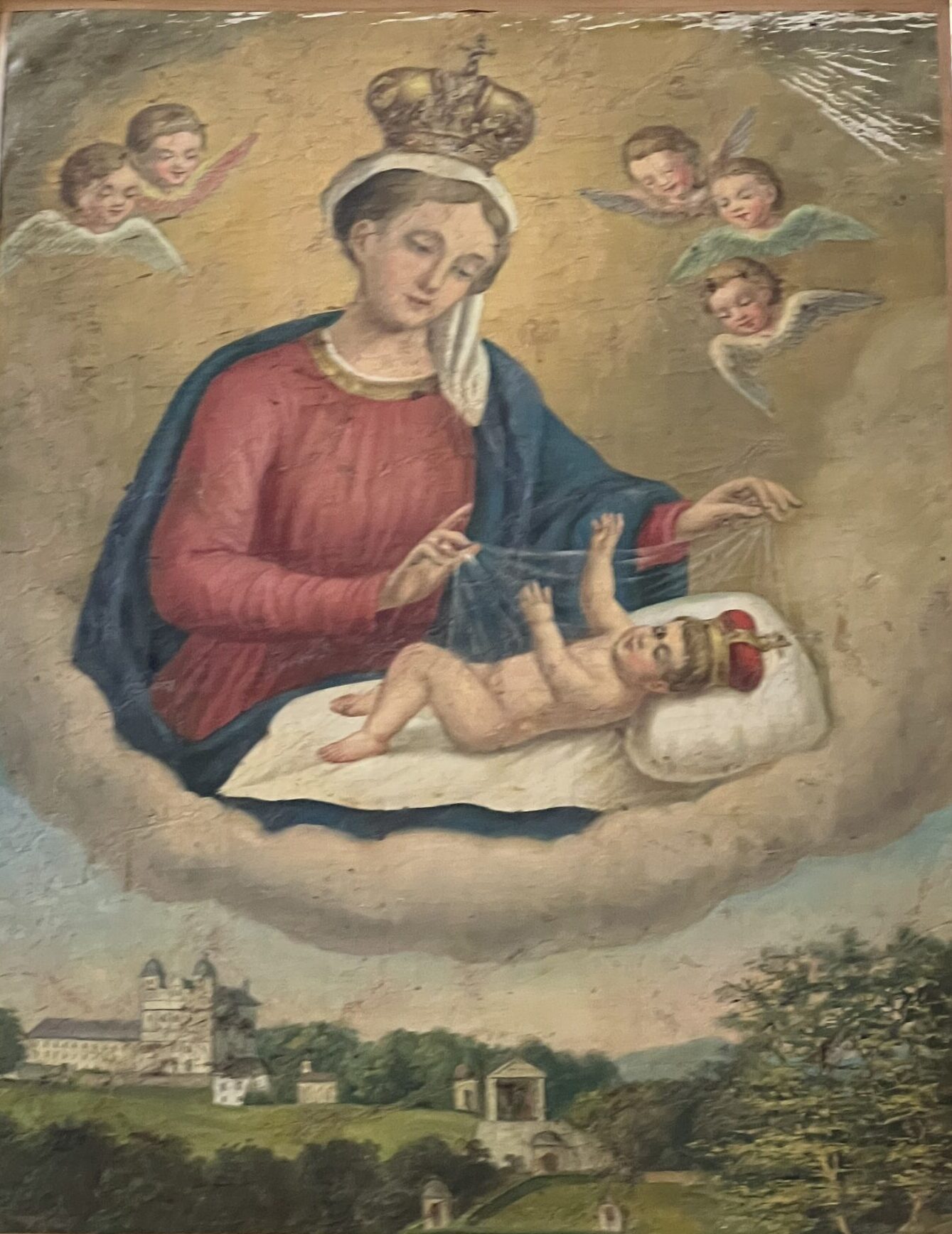
In the basilica, many votive offerings can be seen as ex-votos, as evidenced by the numerous paintings and images within the church.
Near the church, there is a little shop where devotional items are sold.
Near the basilica, there is a Calvary and chapels have also been made there.
The basilica is open daily.
ACCESSIBILITY
The pilgrimage site of Maria Plain is located at Plainbergweg 38, 5101 Bergheim. The Marian shrine is situated just above Salzburg.
Current information can be found at www.mariaplain.at.
Experience
On a Saturday in September, a visit to the pilgrimage site Maria Plain is on the agenda. Visiting this Marian place has been on the wishlist for a while.
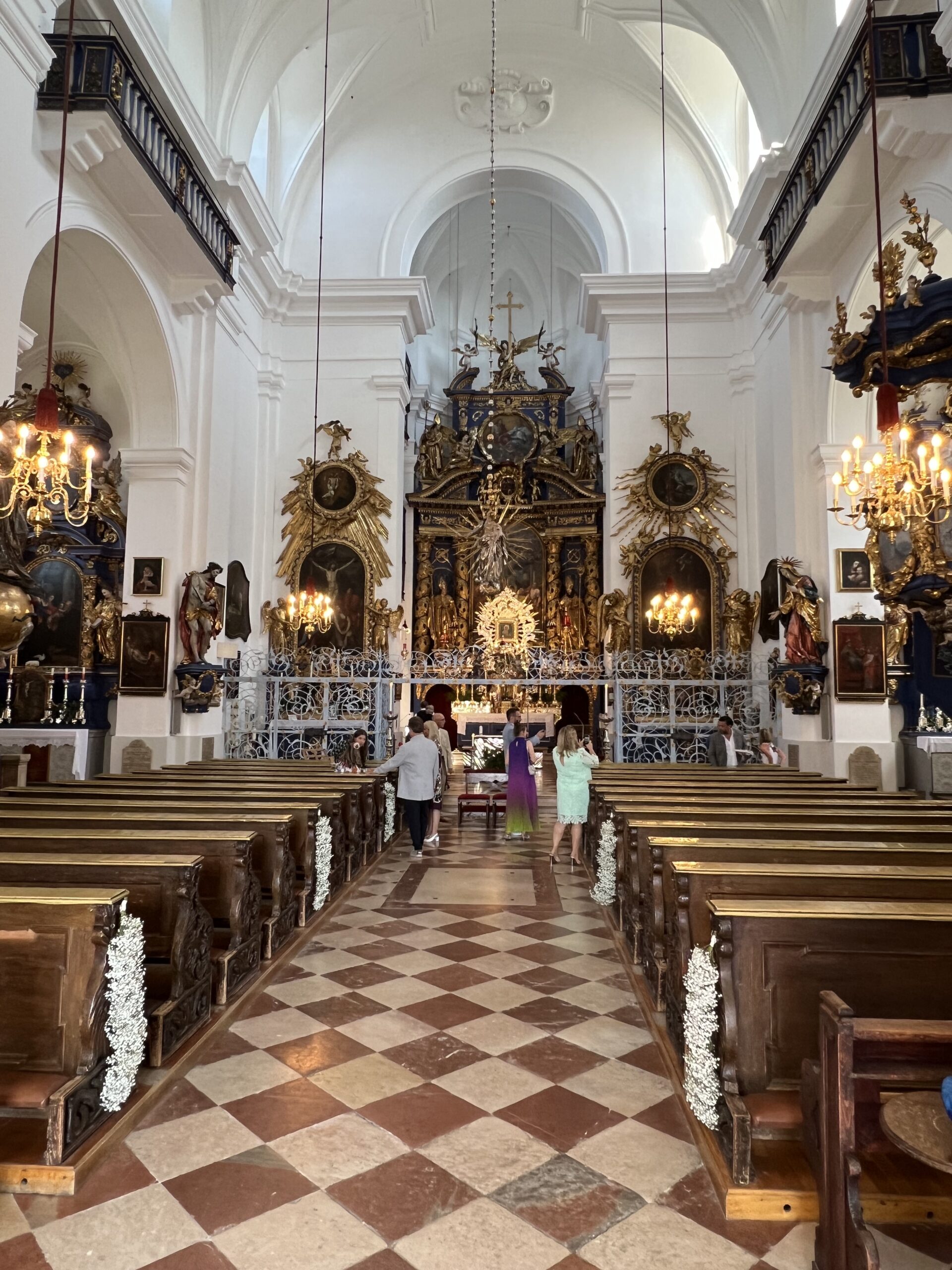
Around 11:00 AM, I arrive at the basilica, and as I enter, a wedding ceremony is in progress. I stand at the back of the church and see that the service is almost over. I notice that everyone is dressed in the regional costume. The many members of the local brass band are also resplendent in their full regalia. What a festive gathering! A Marian hymn is sung, and those present are thanked for their interest. The families of the bride and groom pose for photographs several more times, and then the newlyweds and their guests leave the basilica. Suddenly, loud shots ring out from the guild's marksmen. They are volleys in honour of the newlyweds. What an experience to witness this in this pilgrimage site.
Now that the basilica has very few visitors, the time has come to admire the interior properly. I won't have much time for this, as a next couple who are eager to marry are ready to be joined in matrimony. The high altar with the icon of grace is a wonder to behold. Both Mother and Child are crowned.
As I leave the beautiful basilica, I inquire in a religious goods shop about the number of wedding blessings. I learn that there are four wedding ceremonies taking place in the basilica consecutively today. It is quite remarkable that many people still get married in the church here.
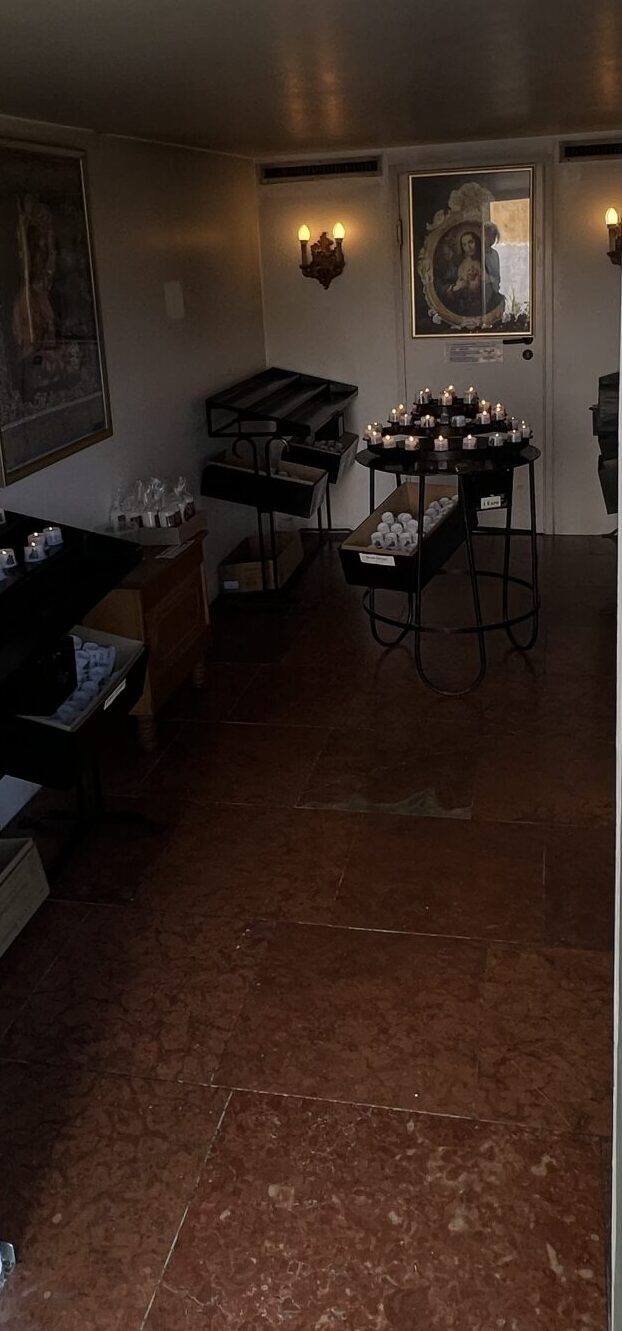
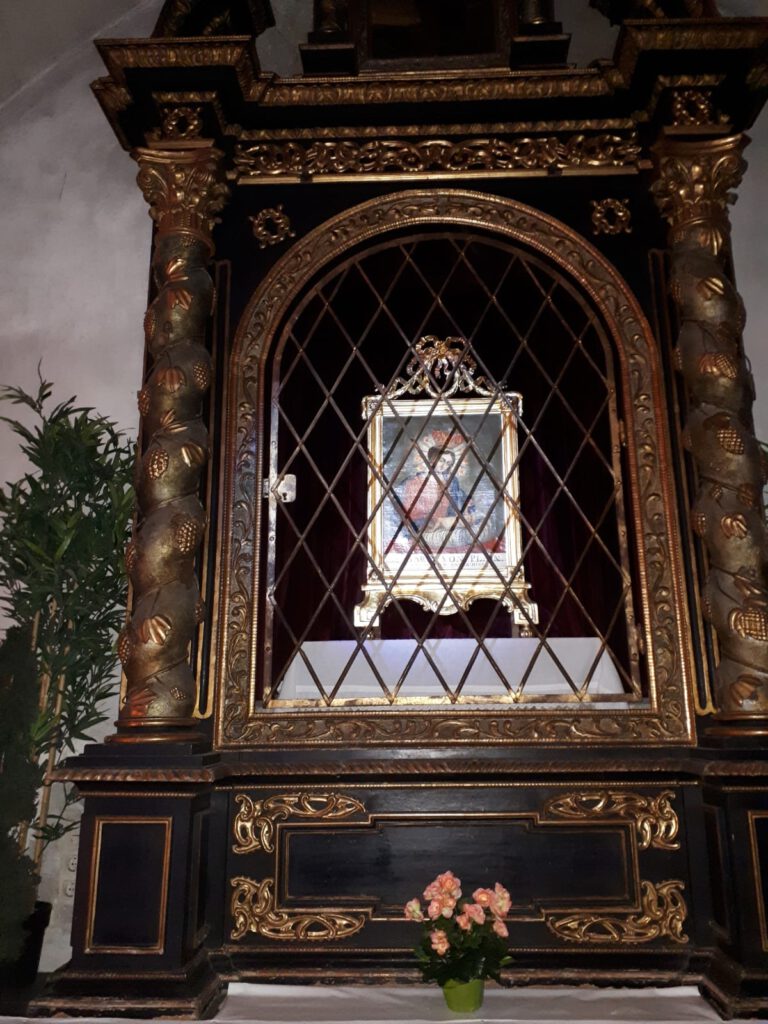
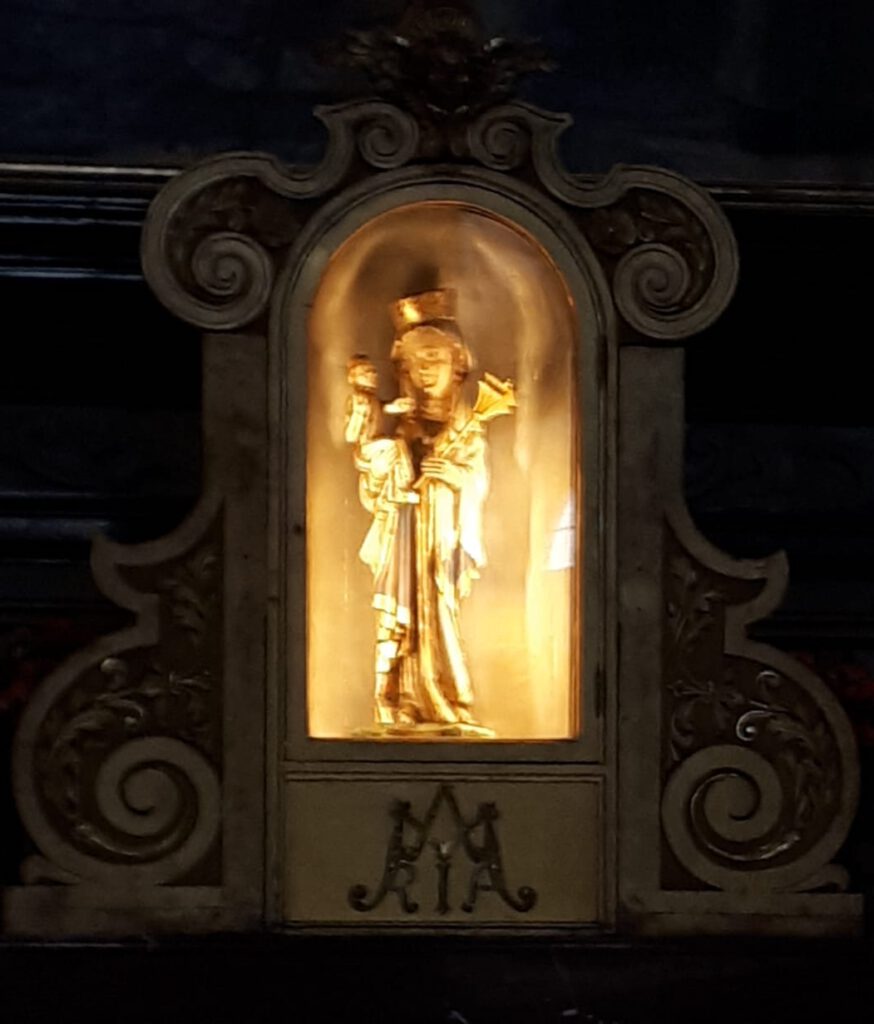
An hour later, I can continue with the postponed tour of the basilica. The old effigy of Mary, high on the altar structure, reminds me of the history of the statue. What a history this artwork possesses, depicting Our Lady! I continue inside the church, and after praying, I go outside. What beautiful impressions I have gained! Subsequently, I go outside and visit the candle chapel and the burial chapel.
From the high plateau in front of the basilica, there is a beautiful view of the city of Salzburg and the surrounding area. This is also a joy!
Environment
The historically rich city of Salzburg, where you can visit Mozart's house among other things, is only 5 km away. The pilgrimage site of Maria Kirchental is 52 km away, and that of Maria Alm is 76 km from Maria Plain.
SALZBURG – CATHEDRAL
In the historic city centre of Salzburg, I admire beautiful churches, monumental townhouses and old commercial buildings with picturesque facades. In this place, where the top musician Wolfgang Amadeus Mozart lived and worked, many paintings and statues of Mary can also be seen.
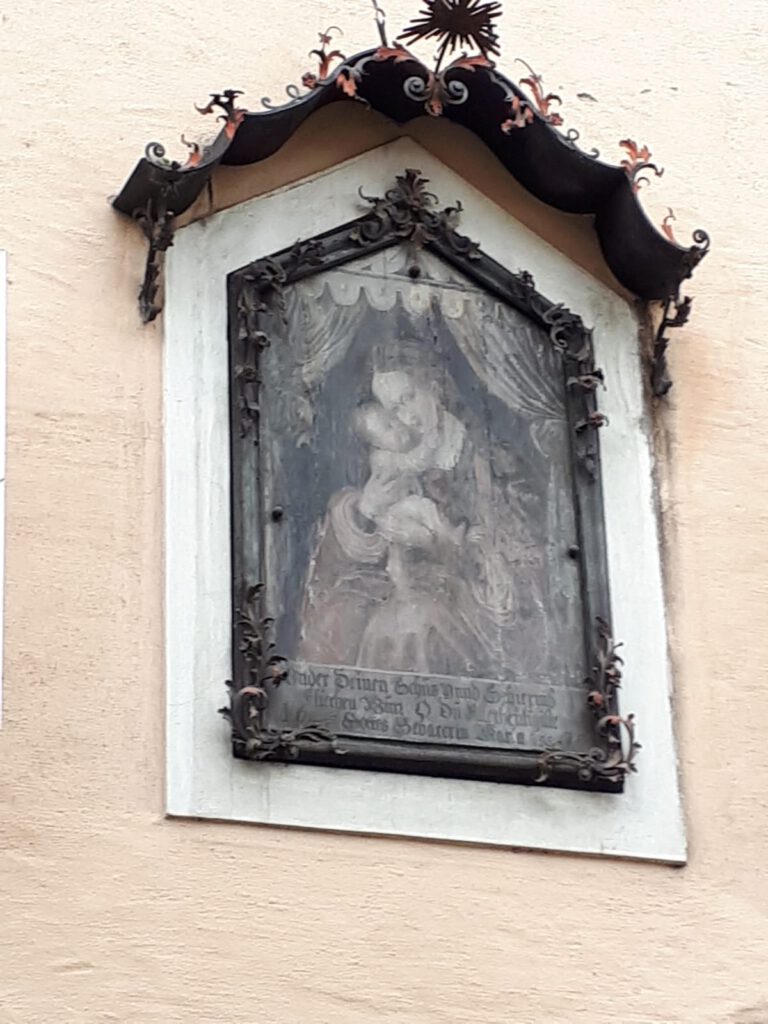
In alleys with shops and restaurants, the image of Our Lady is also present, such as above entrances and on the facades of many buildings.
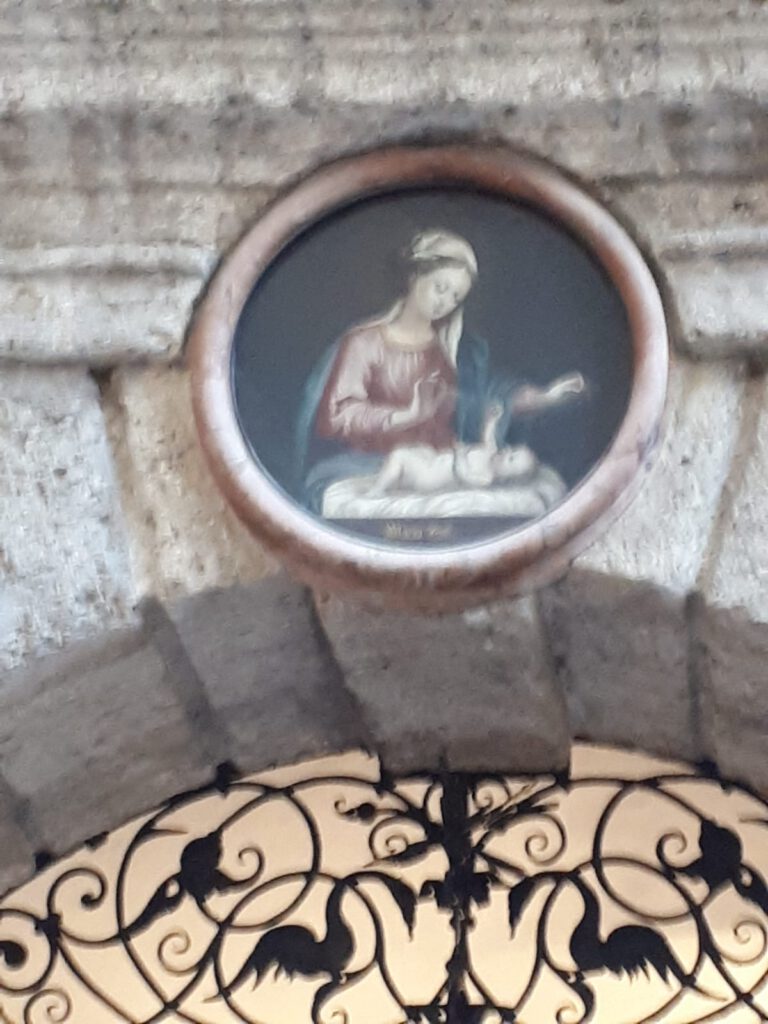
The Dom is a gem to behold. This cathedral, which was consecrated to Saints Rupert and Virgilius in 1628, boasts a large area with a spacious interior measuring 86 by 62 metres. This allows the Dom to accommodate 10,000 visitors. The cathedral is a masterpiece of ecclesiastical architecture. It is the largest Italian monumental structure north of the Alps. Images of Mary can also be seen in this grand place of worship. Mary also appears in St. Michael's Church on Residenzplatz.
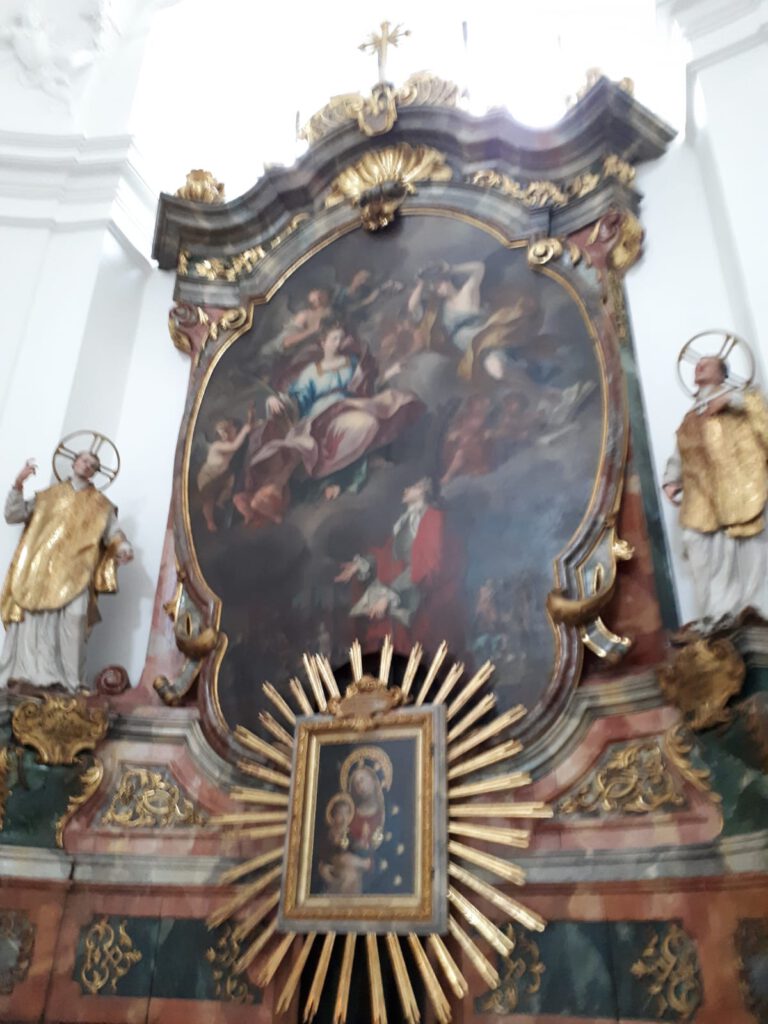
The Franciscan Church is also more than worth visiting. The building is characterised by three styles, namely Baroque, Gothic, and Romanesque. The Baroque style is clearly evident in the interior of the pilgrimage basilica Maria Plain, which is located on the north side of Salzburg.
A visit to the Weihnachtsmuseum (Christmas Museum), in the city centre, is a true cultural journey through the past.
Posted: 2 December 2023
Last modified: 21 February 2024
~~~

 Nederlands
  English (UK)
  Deutsch
  Français