History
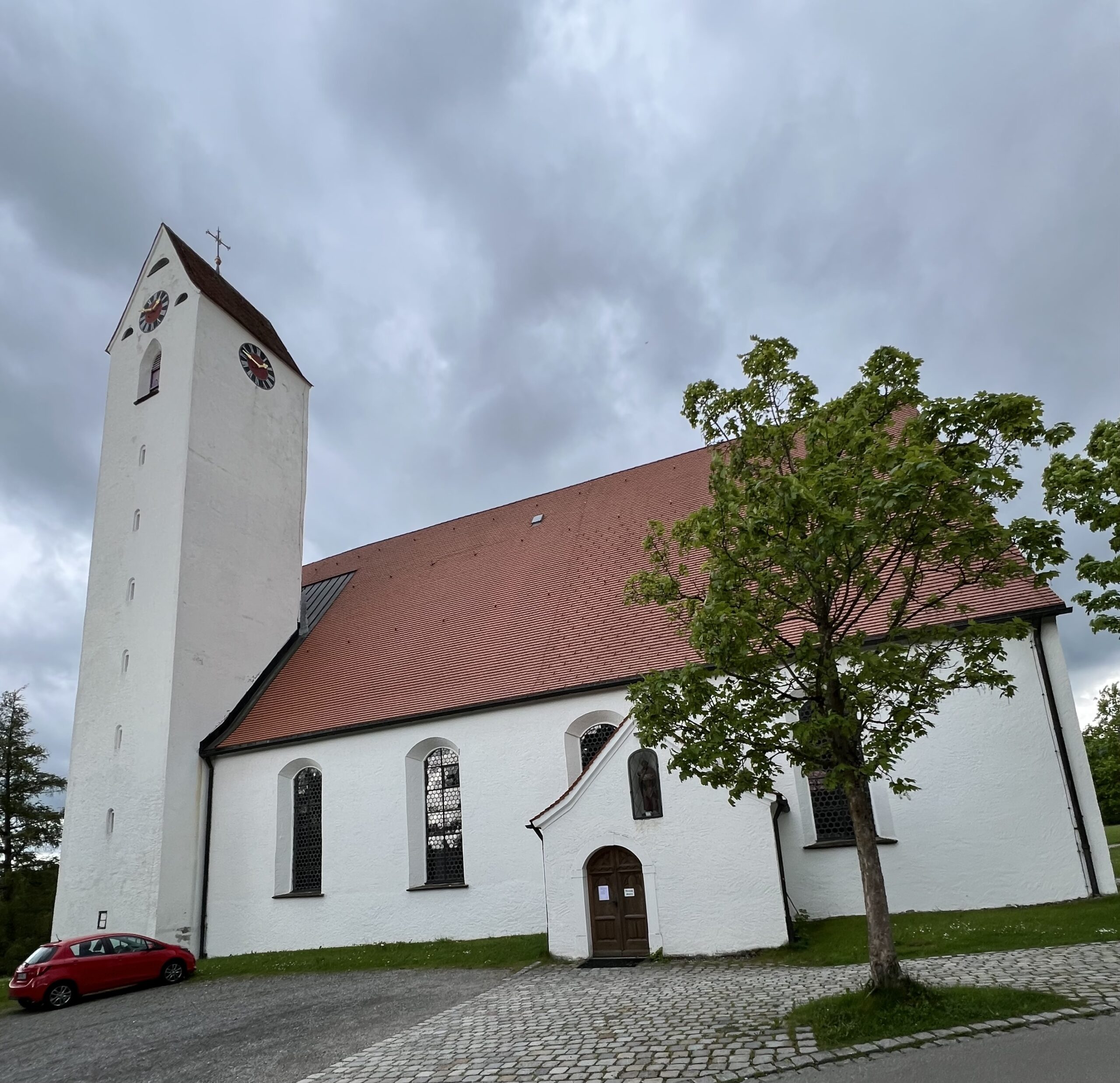
The church “Maria Rain” is named after its location on the high banks of the river Wertach. This is a left-hand tributary of the Lech and is about 150 kilometres long.
A legend tells that an image of Mary was attached to a tree, not far from a spring. This has led to interest in this image at Maria Rain.
Since the 11th century, there has been mention of a church. Excavations were carried out in 1976, revealing that a small church was present around 1414. In 1439, a curacy was established by Peter von Schaumberg (1388-1469), Bishop of Augsburg (1424-1469).
Friedrich II, Count of Zollern (1450–1505), Prince-Bishop of Augsburg (1486–1505), gave permission for a church to be built in 1496. Construction of the church, the current pilgrimage church, began in 1497. Benefactors who financed the construction included nobles, particularly Georg Gossembrot (1445–1502), financial advisor to Archduke Maximilian I (1459–1519), King of the Romans (1486–1519) and Holy Roman Emperor (1508–1519).
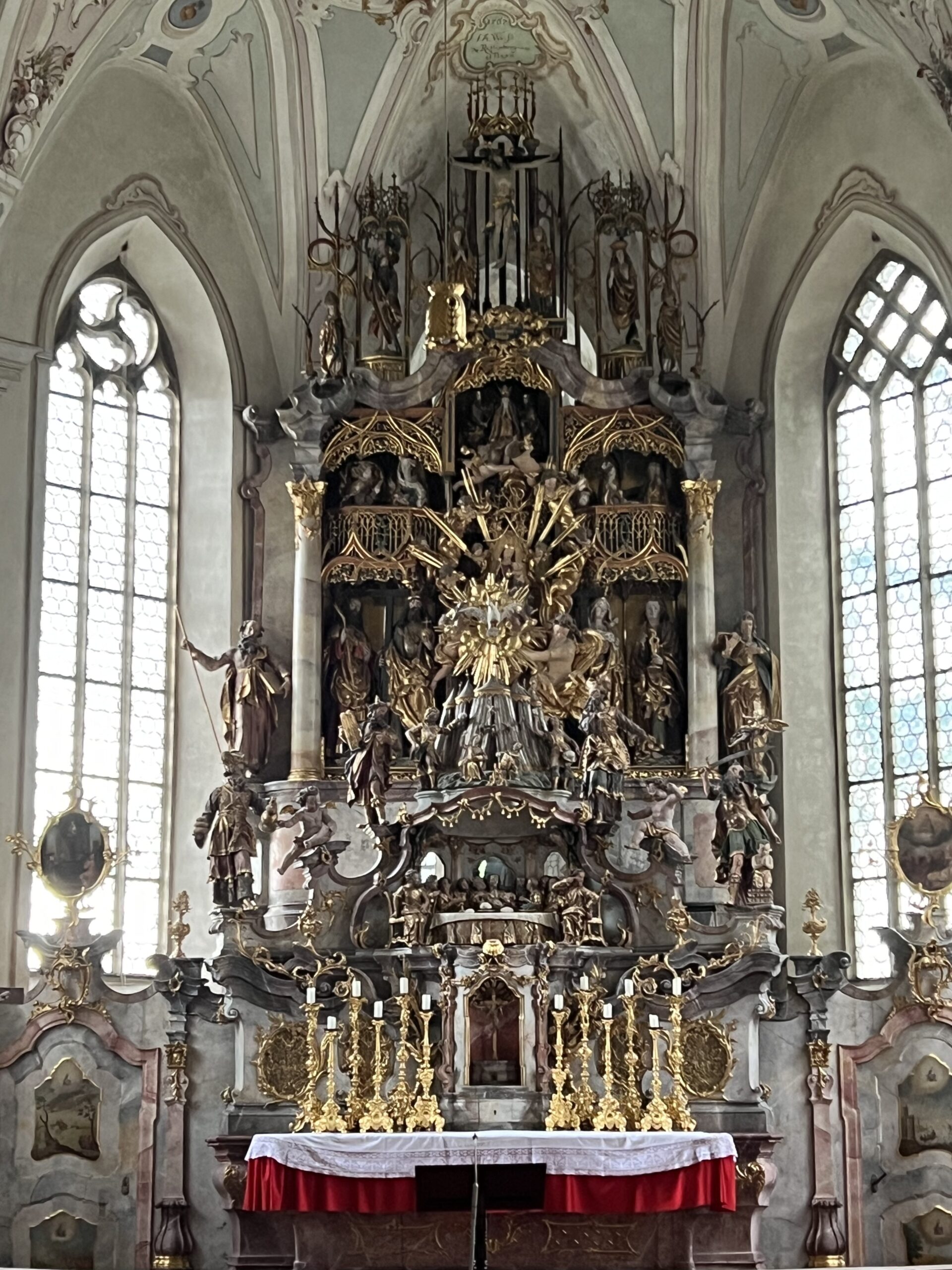
The current miraculous image dates from 1490 and its creator is unknown. The Gothic high altar from 1519 is by sculptor Hans Kels the Elder (1480-1559).
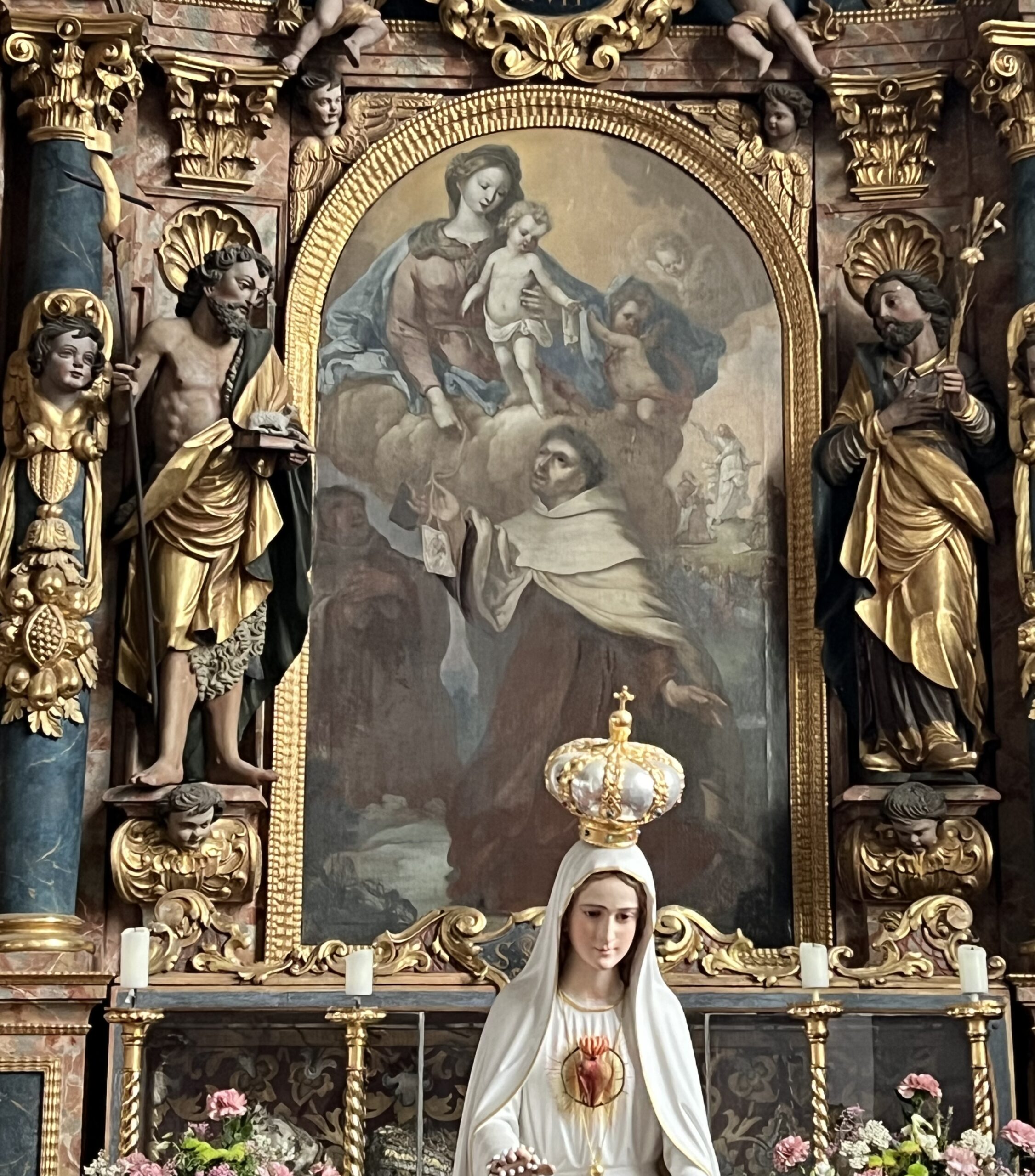
Over the years, the building undergoes changes. In 1686, the German Baroque sculptor Hans Ludwig Ertinger (1641-1722) creates the Pietà, which is located in the left side altar, and the artwork of the Mount of Olives is also by him. Around 1707, Nikolaus Babel (1643-1728) crafts the scapular altar, which depicts Mary handing a scapular to the English priest Simon Stock (c. 1165-1265).
The 1620 cherub supporting the pulpit is attributed to Bartholomeus Steinle (1580-1628). The pulpit itself dates from 1760 and is considered a masterpiece of the church.
In 1648, ceiling paintings by Gabriel Neckher (1611-1687) were added. The large fresco above the chancel is by Franz Anton Weiß (1729-1784). He also painted scenes from the life of Mary, such as her birth, annunciation, and assumption into heaven.
Due to the increase in pilgrimages, the church is being enlarged and side altars are being added. Artist Peter Heel (1696-1767) does a lot of work here in 1762/1765. Johann Richard Eberhard (c.1734-1813) crafts the windows, near the high altar, in Rococo style and decorates columns.
In 1852, Maria Rain became an independent parish.
In the 20th century, some renovations took place.
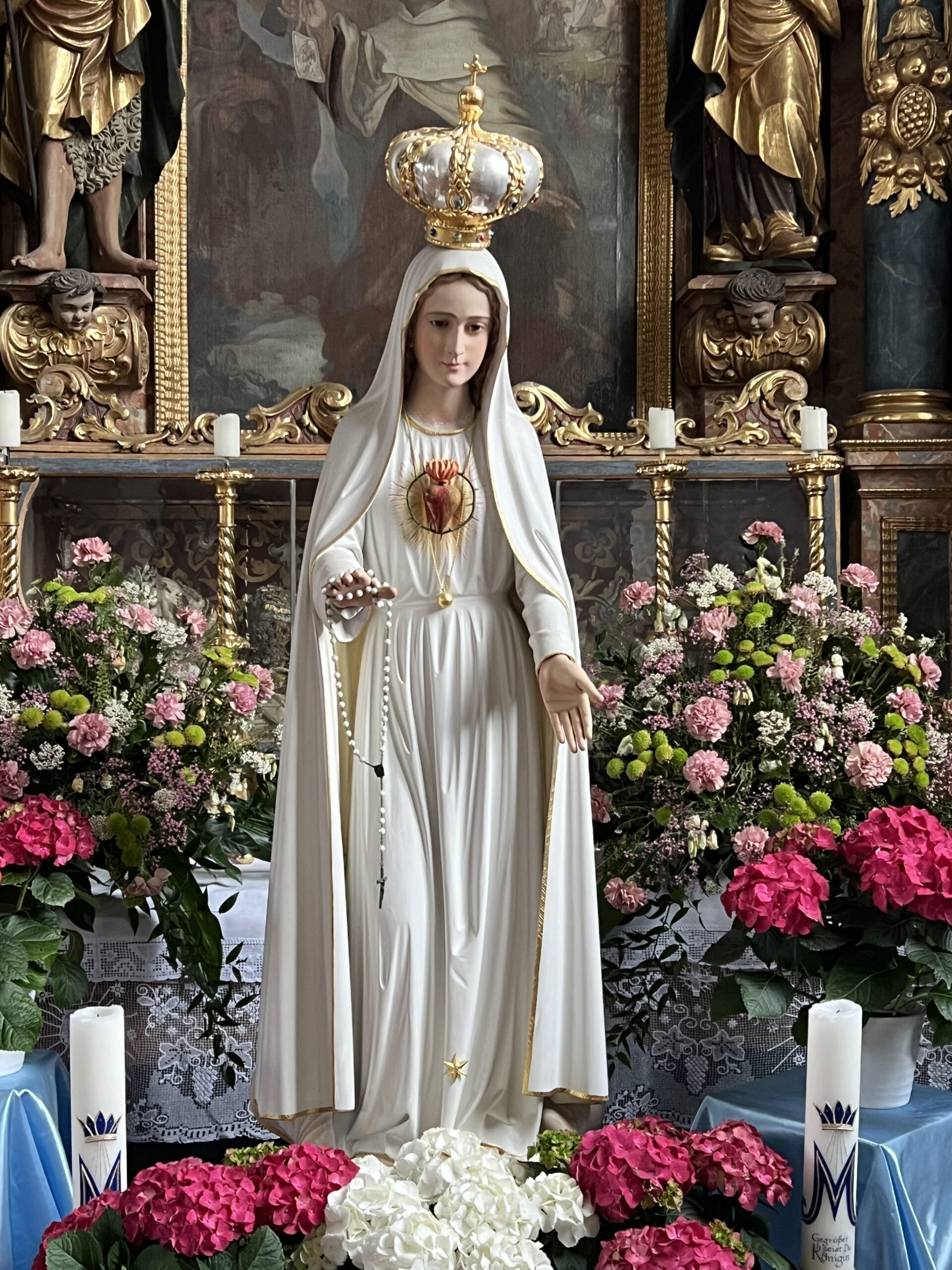
In 1936, priest Karl Kotter introduced pilgrimages on the 13th of May and October to commemorate the apparitions of Mary at Fatima in 1917. Consequently, a statue of Fatima stands in the church. These pilgrimages at Maria Rain still exist today.
In 2004, the exterior of the church was renovated.
Pilgrimage site
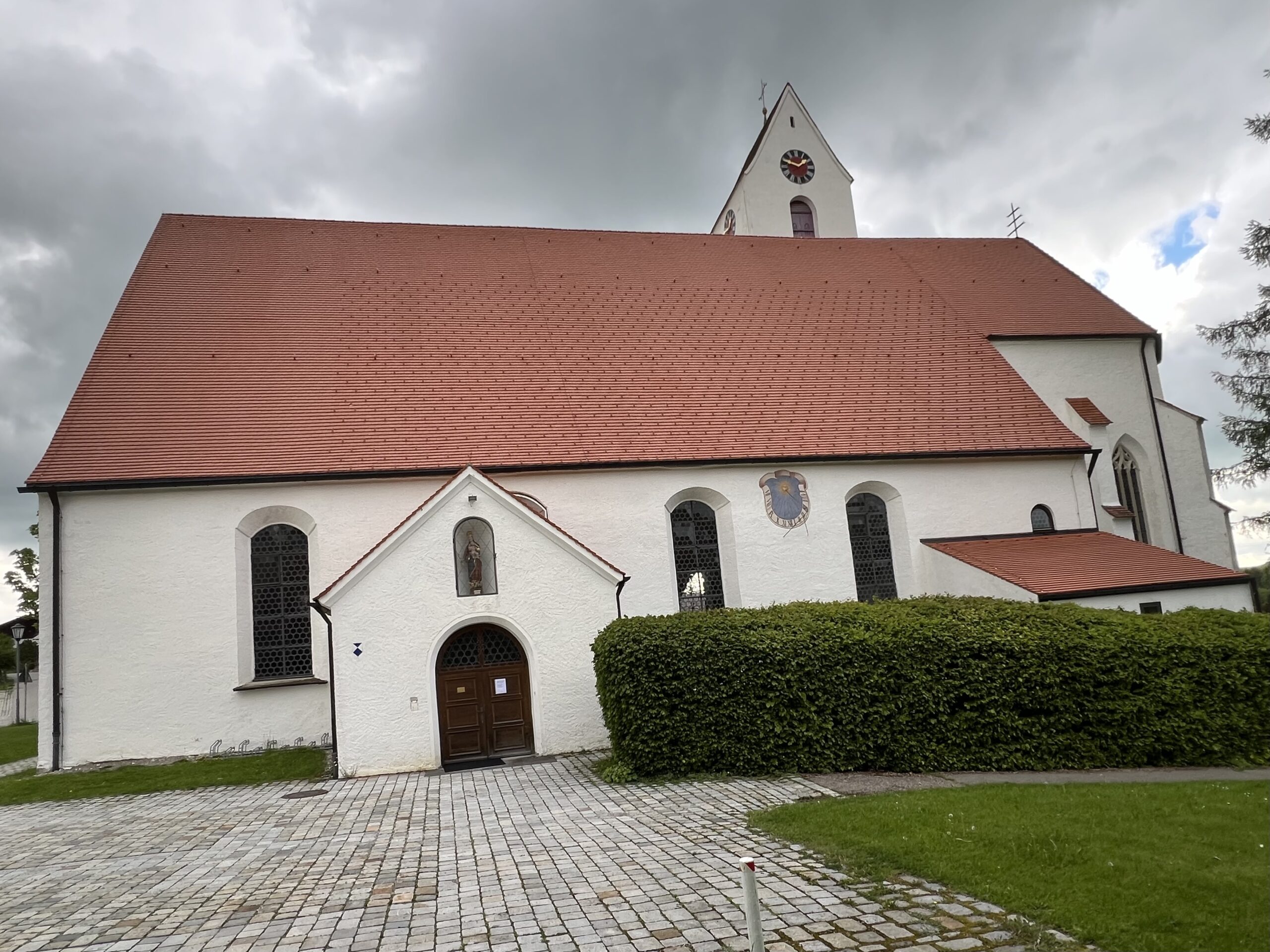
The Baroque pilgrimage church is situated at an altitude of 900 metres at the start of the Allgäu Alps and is dedicated to the “Holy Cross”. The dimensions of the building are: 40 metres long, 18 metres wide, and the chancel is 10 metres wide.
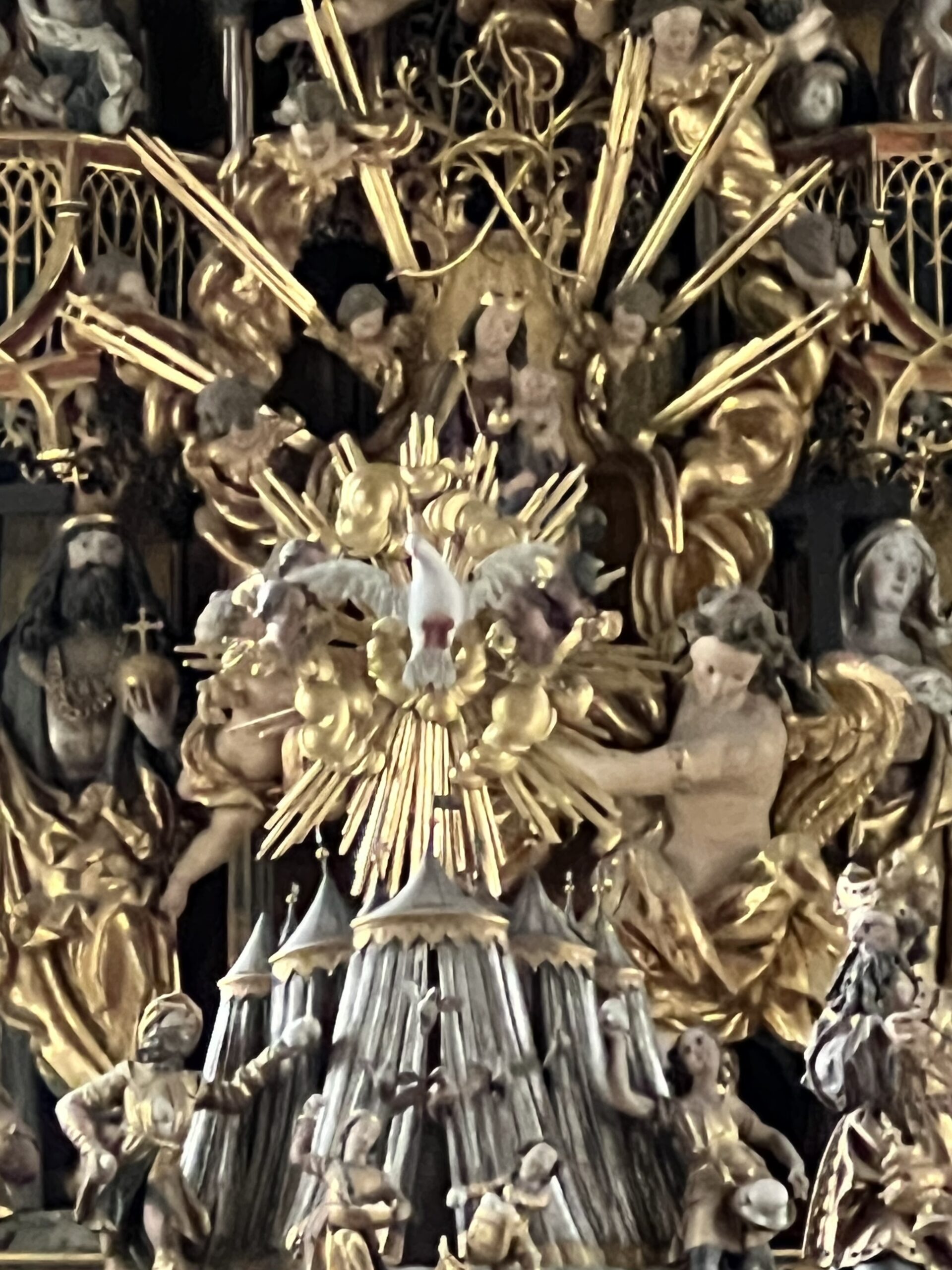
The statue of grace is surrounded by a rococo-style wreath of angels. The statue dates from around 1490, and the wreath with angels was added around 1760. This statue was first placed on a separate Marian altar and was moved to the high altar in 1762. Above the statue of grace is an image of the Assumption of Mary. The church also contains a depiction of Saint Nicholas.
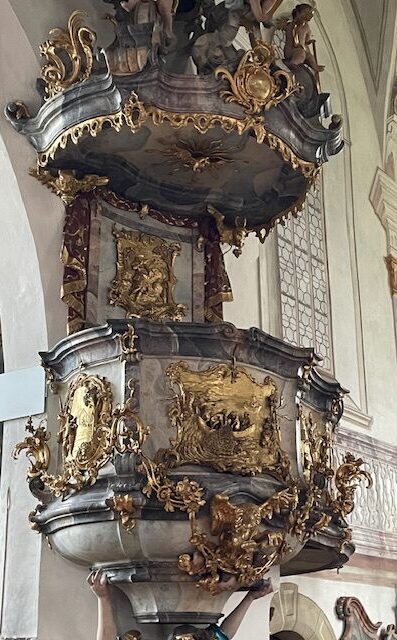
A striking feature in the church is the pulpit from 1720 with a supporting angel underneath from 1620.
A depiction of Mary and Joseph, the parents of Maria Anna and Joachim, and the infant Jesus, can also be seen in the house of worship.
The pilgrimage church is called the most beautiful village church in Allgäu.
ACCESSIBILITY
The little pilgrimage site Maria Rain is located in the municipality of Oy-Mittelberg and belongs to the German state of Bavaria. The church is situated 5 kilometres from the A7 motorway, which leads to the border with Austria and the Fernpass.
The rectory of the Holy Cross Maria Rain is located at Hauptstrasse 8, D-87466 Oy-Mittelberg.
Other sources to consult include:
-www.oy-mittelberg.de
-www2.bistum-augsburg.de
Experience
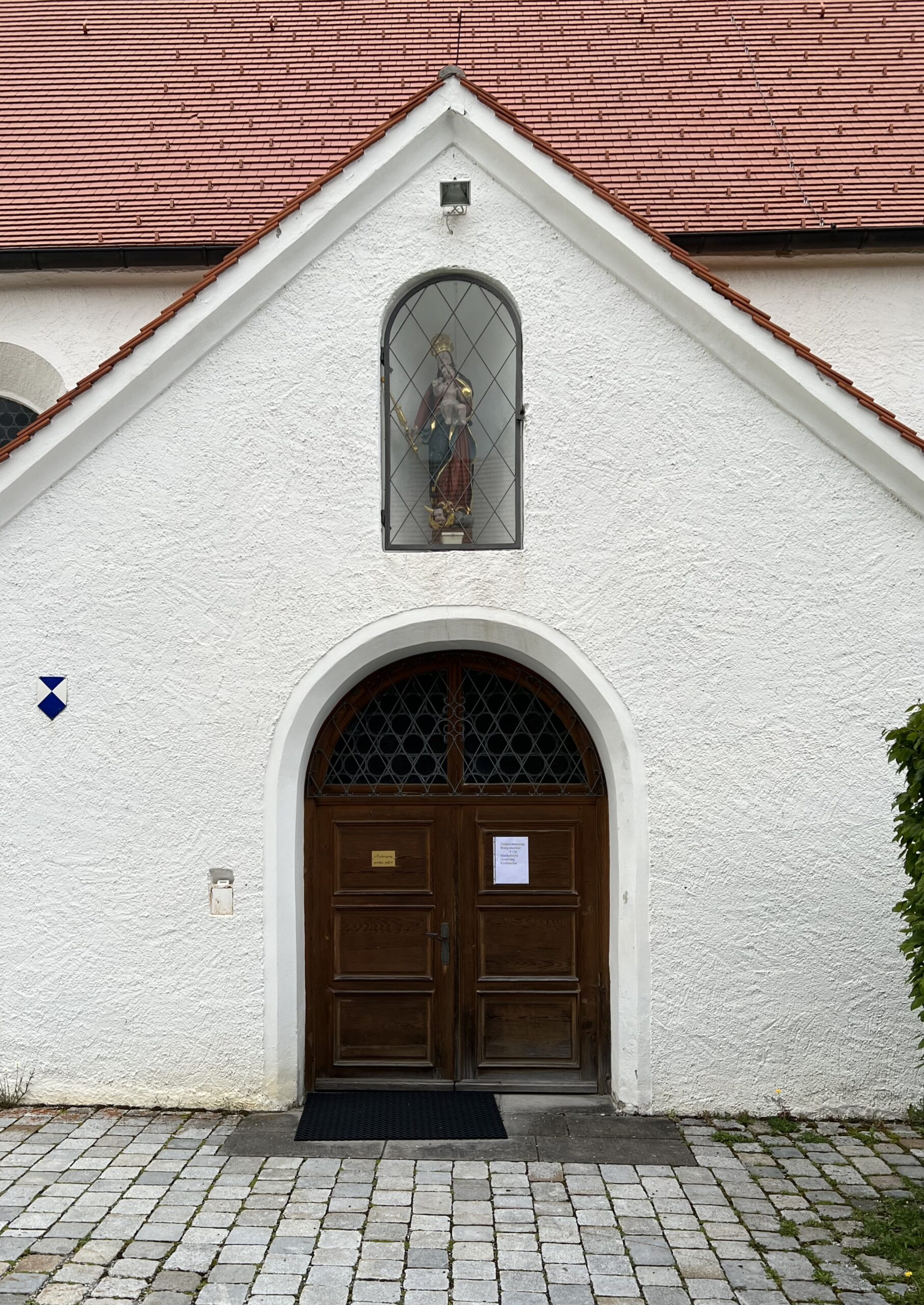
In the south of Germany, close to the Austrian border, stands the pilgrimage church of Maria Rain. I leave the motorway in the direction of Füssen/Fernpass and after 5 kilometres I arrive in Maria Rain. I see the white tower of the Baroque church standing majestically from afar. The distance shrinks and after a minute I am at the church.
A statue of Mary above the entrance door welcomes the pilgrims. I greet Our Lady, go inside, and enter a particularly beautiful space. White pillars, white arches, and a partly white ceiling create a serene appearance. The white of purity is dominant. This looks truly virginal.
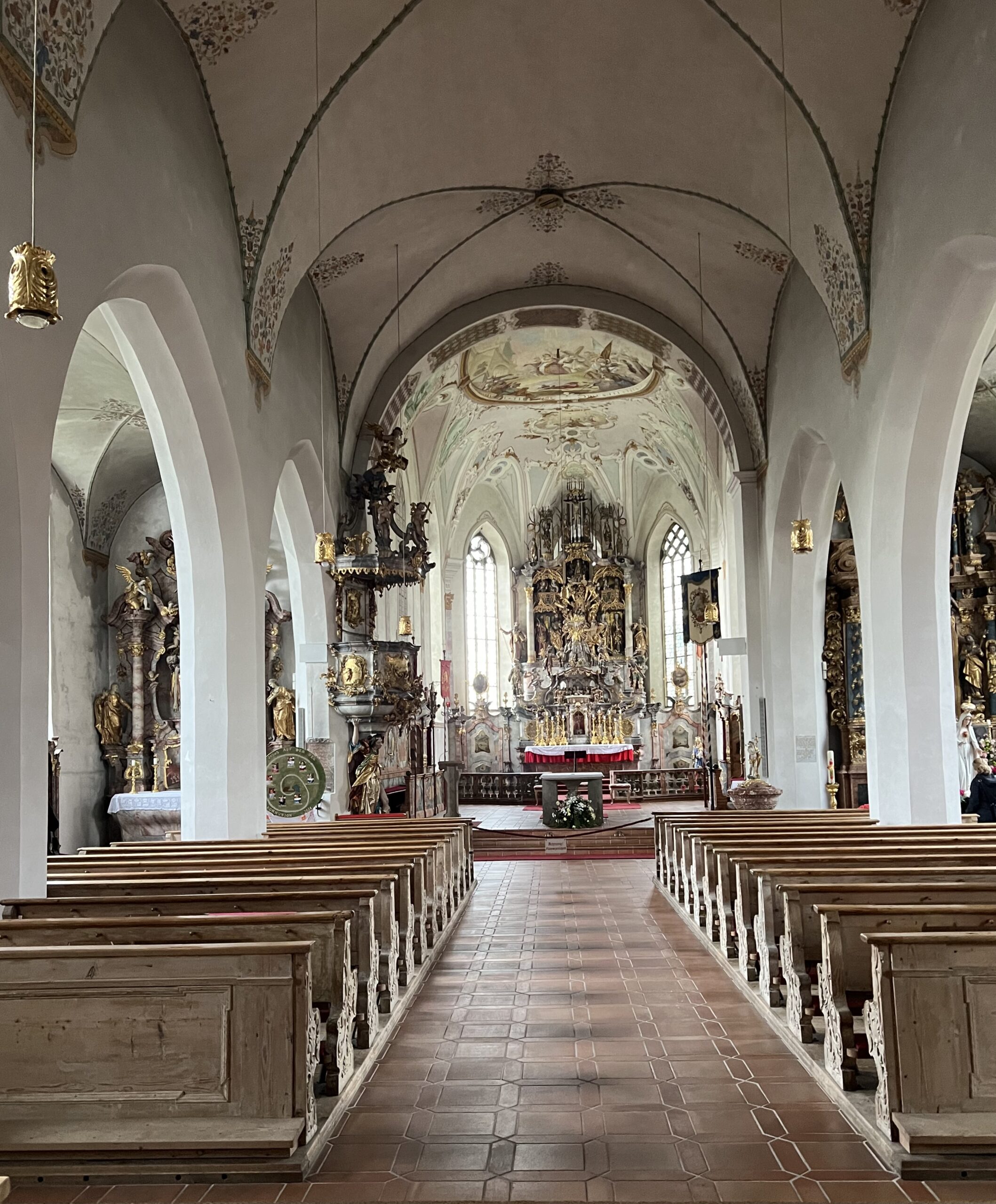
Next I step forwards and reach the colourful main altar, where the small effigy of Mary stands. Our Lady is crowned, and putti surround Her and the infant Jesus. Golden rays serve to accentuate Mother, Child and white dove. What a magnificent sight this is!
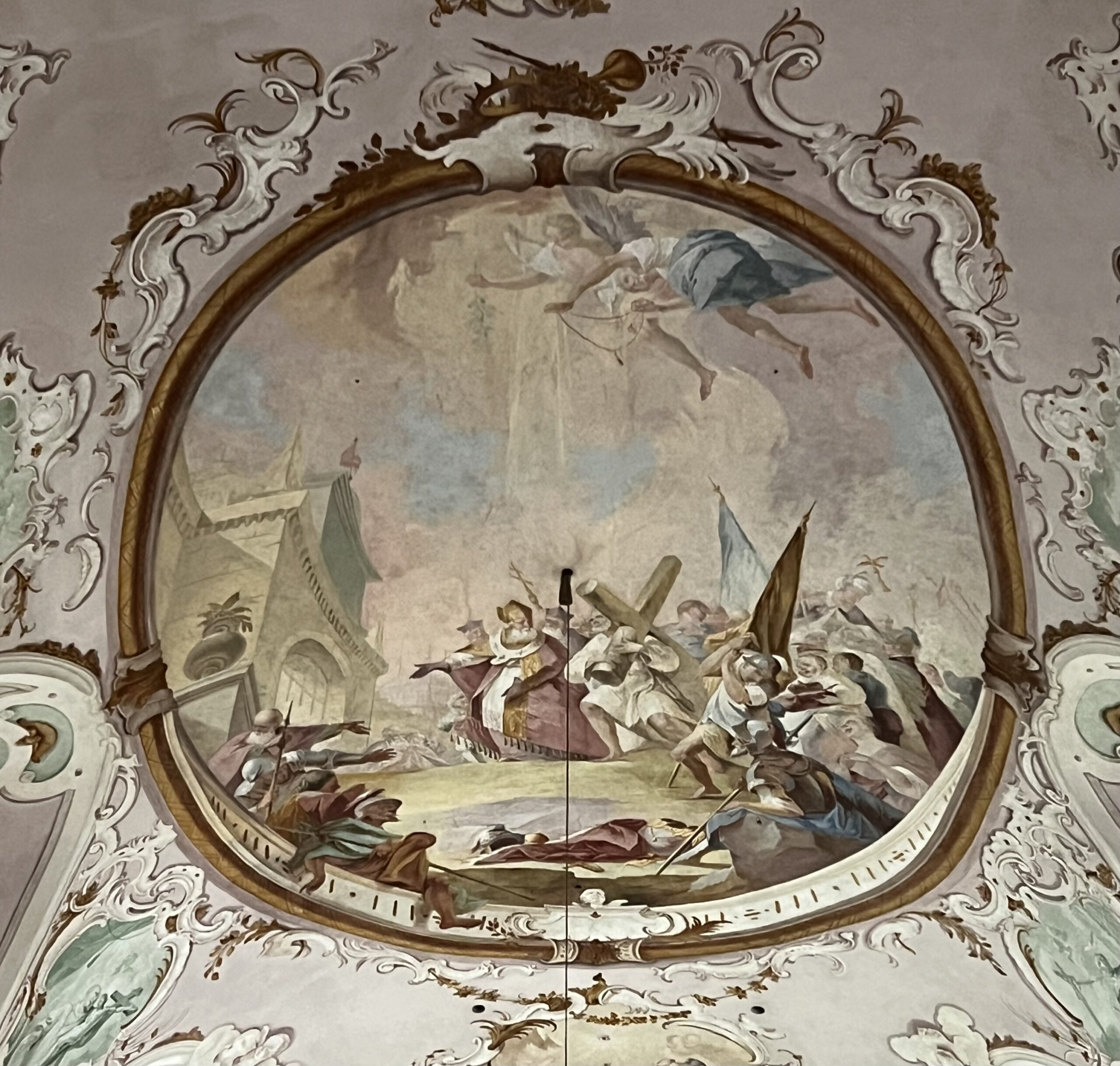
A fresco on the ceiling can be admired, and I gratefully take advantage of that. We continue with the tour of the church. I linger for a long time before a side altar. The painting depicts a seated Mary with a small Child on her lap. Another altar is the place for a Pietà, with the Mother looking upwards. At the bottom is the year 1686, and a putto holds a hammer and pliers. My eye is then drawn to a work of art where Mary is depicted in the air. What also strikes me are memorial stones that refer to priests who played an important role here.
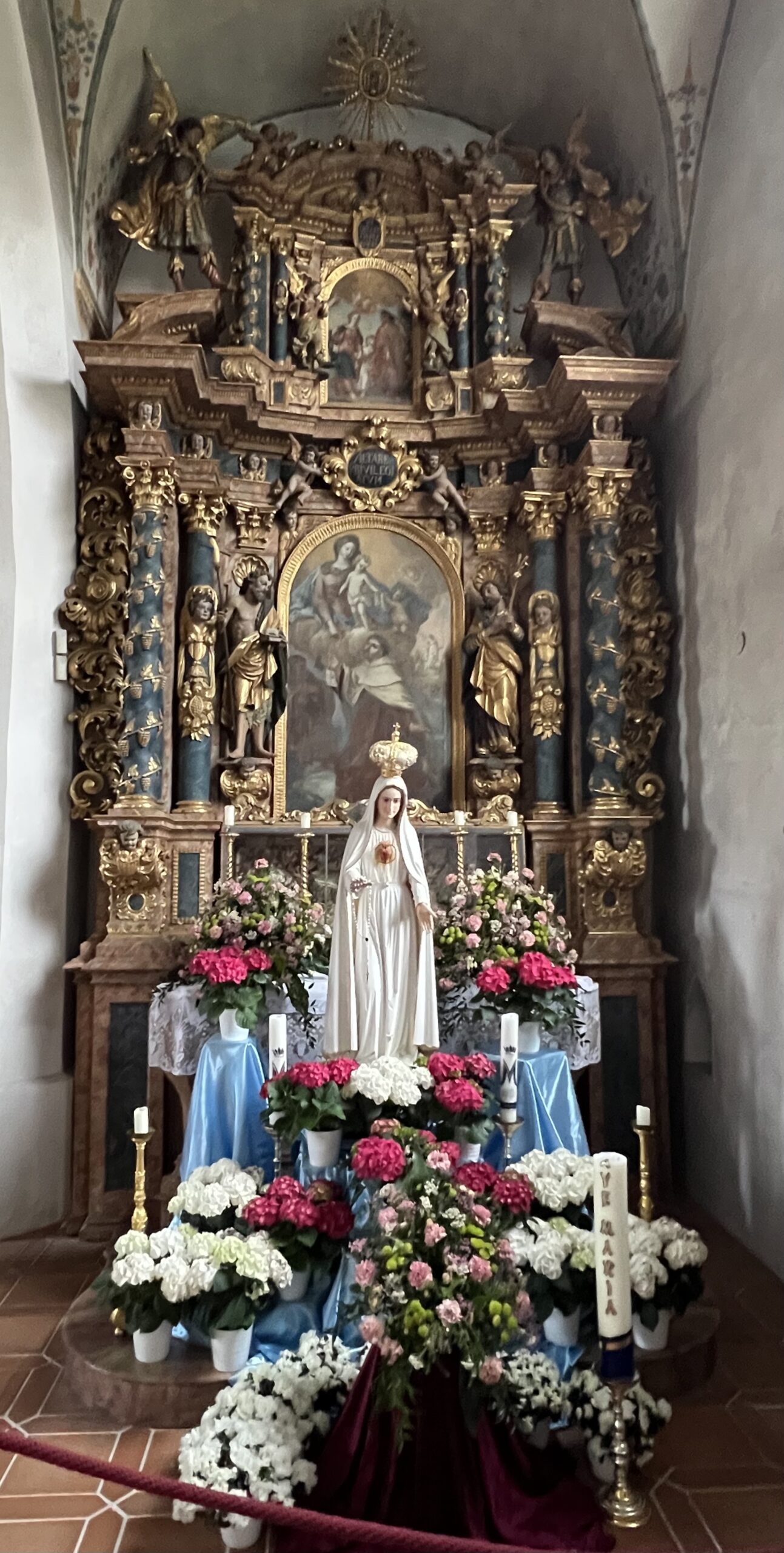
More artworks can be seen here. Mary is depicted on these with others. A large statue of Fatima also stands in this sacred space, with Our Lady surrounded by many flowers. Suddenly, Portugal feels very close. Behind the Fatima statue is an altar with a painting. Mary holds her Child with her left arm and with her other hand, she hands over a scapular.
In the church is a plaque with an image of the Pietà and on the reverse a prayer. The text reads:
“Holy Mary, Virgin of Virgins and Mother of Mercy! Do not forget Your children, whom You bore with sorrows on Mount Calvary for heaven. Accompany us on the dangerous paths through this earthly life. Especially at the last moment, take us into the bosom of Your mercy, so that we may not be lost, without becoming eternally blessed. Amen.”
After lighting a few candles, I take a seat on a pew at the back of the church. I let the beauty of this church sink in further. It's time for prayer and to thank Mary for being able to visit one of the most beautiful churches in this part of Germany.
Environment
From Ulm, it's a 105 km drive south to reach Maria Rain. From Innsbruck, Austria, the distance to Maria Rain is 132 km northwest. The distance from Kempten, Germany, to Maria Rain is 32 km southeast, and from Füssen, it's a 32 km drive northwest. The village of Nesselwang is only 4 km away from Maria Rain.
Posted: 31 May 2024
~~~

 Nederlands
  English (UK)
  Deutsch
  Français