History
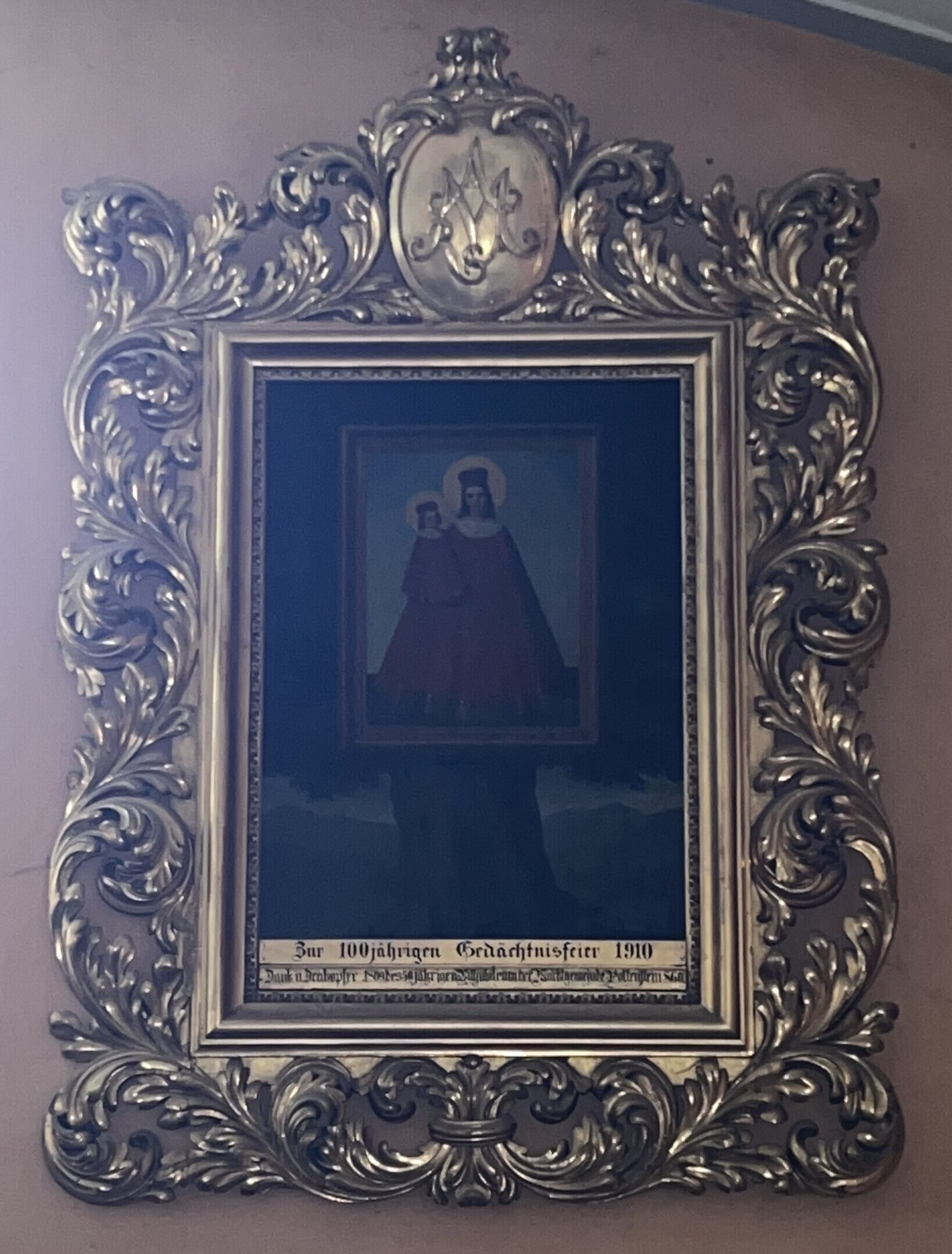
In 1661, Maria (Mary) comes to the aid of a seriously ill village blacksmith and heals the man. This blacksmith's name is Sebastian Schlager (died 1698), and he receives a total of 8 apparitions of Mary. These take place on the hill on the outskirts of the small town of Gutenstein. The man receives an image of Our Lady on a cloth from Mary. He is instructed by Mary to honour her by having a likeness made. Subsequently, the man goes on a pilgrimage to Mariazell and returns with an image painted on sheet iron. The likeness is a copy of the statue of Mary in Mariazell. He feels that it faithfully reproduces the apparition. The blacksmith places the image against a tree on the mountain, then known as “Buchschach”. Thus, the sanctuary of Mariahilfberg is created.
In 1664, there were repeated light phenomena and the appearance of a white dove, which was taken for the Holy Spirit. Four people from Gutenstein witnessed this on the mountain. During these apparitions, the “Madonna of Buchschach” was invoked. These events increased interest in the site. In 1665, a miracle occurred when a man from Gutenstein invoked Mary on the mountain and was cured of his paralysis of the arm. In that year, the first major pilgrimage to Mariahilfberg took place. This was followed by a wooden chapel containing a statue of Mary. Three years later, the pilgrimage church was built on this site. Paths were constructed to guide pilgrims to the pilgrimage site on the mountain.
The blacksmith's healing, the apparitions and the influx of pilgrims lead to an ecclesiastical investigation. This results in the veneration of Mary being permitted, and permission is granted to build a church.
Following a promise made after a hunting accident, Johann Balthasar II (1626–1681), ruler of Gutenstein and Count of Hoyos, commissioned the construction of a church on land that had been owned by the Hoyos family since the late 16th century. The pilgrimage church was ready to receive pilgrims in 1668. The survival of the hunting accident was considered a miracle. In 1668, this was confirmed by Pope Clement IX (1667–1669), formerly Giulio Rospigliosi (1600–1669). The miraculous image is considered to be wonder-working. Subsequently, many answered prayers occurred. The construction of the monastery adjoining the church took place during a difficult period, as there were floods in 1679 and the plague was raging. This highly contagious epidemic claimed many lives. In 1683, there was further adversity as the Tatars posed a threat to the surrounding area.
Following a recommendation from Emperor Leopold I (1640-1705), Servites are appointed as guardians of the pilgrimage site. On 25 May 1688, the church is consecrated by Leopold Karl von Kollonitisch (1631-1707), Cardinal from 1686 to 1707. He dedicates the church to Our Lady of Perpetual Help (“Mariahilf”). In 1708, a fire destroys the church, but the adjacent monastery remains untouched by the destructive flames.
A new church was built in 1710, thanks to an initiative by Imperial Count Philipp Josef Georg Innocenz Hoyos-Sprinzenstein (1695-1762) and his wife, Countess Maria Magdalena Elisabeth Christina von Hohenfeld (1695-1760). They were the generous donors who made the construction possible, and the couple had themselves immortalised in their patron saints, Philip Neri and Mary Magdalene. The new building was partly constructed on the undamaged outer walls of the old church and was larger than the destroyed place of worship. Construction was completed in 1724, and the consecration took place on 18 May 1727, officiated by Count Franz Alois von Lamberg (1692-1732), Auxiliary Bishop of Passau (1725-1732).
The pilgrimage site makes Gutenstein famous beyond national borders. In 1670, there was a high-profile visit from Leopold I (Leopold Ignatius Joseph Balthasar Felician, 1640-1705), Holy Roman King and Emperor (1658-1705), King of Hungary (1657-1705) and King of Bohemia (1657-1705). He came to Mariahilfberg with his wife Margaret Theresa of Spain (1651-1673).
Other distinguished guests include, in 1801, Francis Joseph Charles of Habsburg-Lorraine (1768-1835), who was Emperor Francis II of Austria (1804-1835), of the Holy Roman Empire (1792-1806), King of Hungary and Bohemia (1792-1835), and his consort Maria Theresa Carolina Josepha of Bourbon-Two Sicilies (1772-1807). In that same year, Crown Prince Ferdinand (1793-1875), the later Emperor of Austria (1835-1848), and Maria Louise Leopoldina Francesca Theresa Josepha Lucia (1791-1847), the later Empress of France (1810-1815), also arrived.
In 1820, the composer Franz Peter Schubert (1797-1828) came to Mariahilfberg as a pilgrim.
Ferdinand Raimund (1790-1836), an Austrian writer of fairy tales and folk plays, stayed in Mariahilfberg on several occasions and lived in a villa nearby.
In 1852, there was the visit of Franz Joseph Karl (1830-1916), Emperor of Austria (1848-1916).
In 1868, 14 small stone chapels were built on the Mariahilfberg grounds, depicting the Way of the Cross. These buildings were renovated in 1998.
In the middle of the 20th century, a motorway was built near Mariahilfberg. This road cuts through the grounds of the pilgrimage site.
Pilgrimage site
Not too far from Vienna lies the town of Gutenstein, and nearby is the Mariahilfberg. The monastery and church of Mariahilfberg stand in the woods on a hill. The church is 38 metres long, 20 metres wide, and the nave reaches a height of 10 metres.
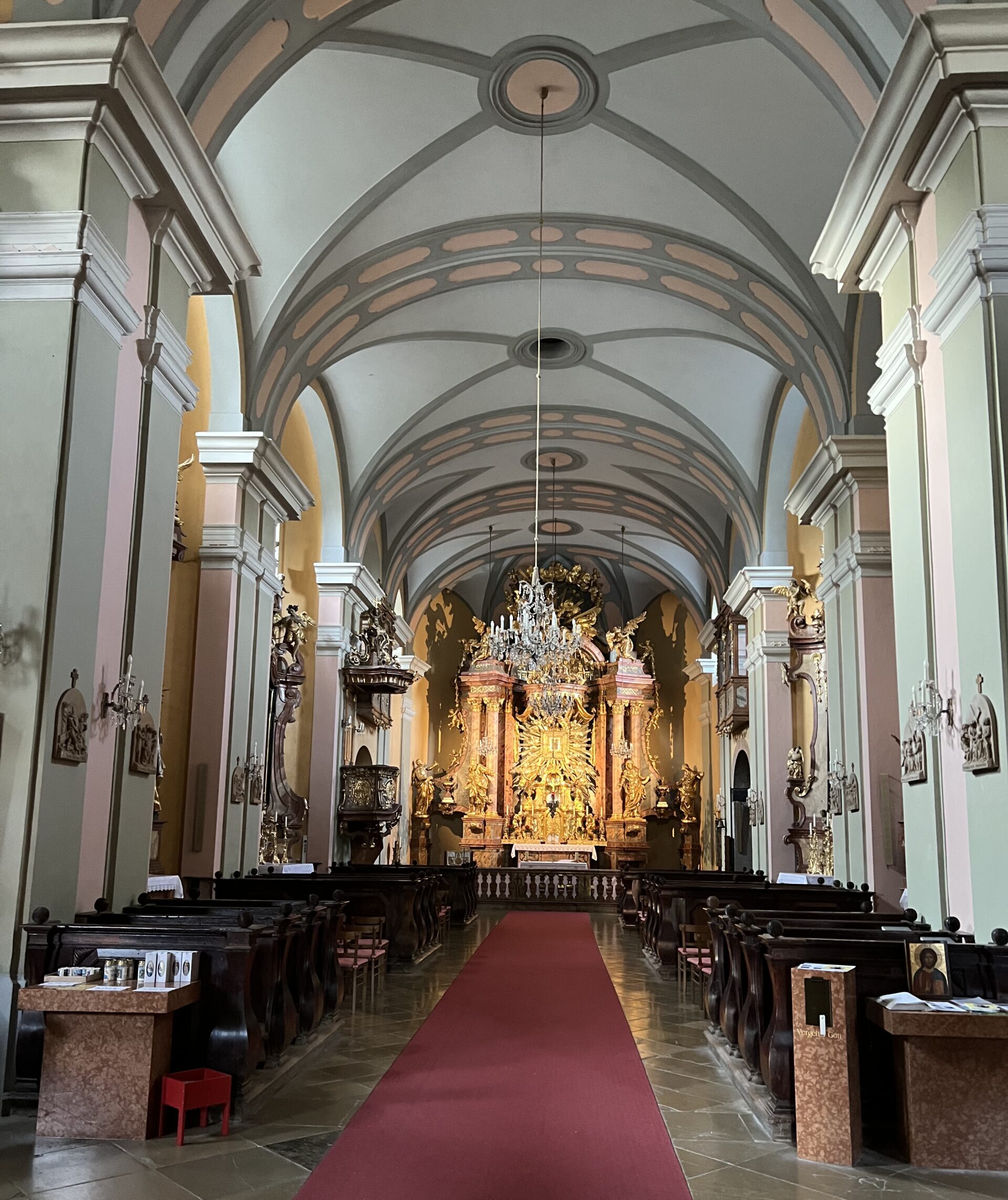
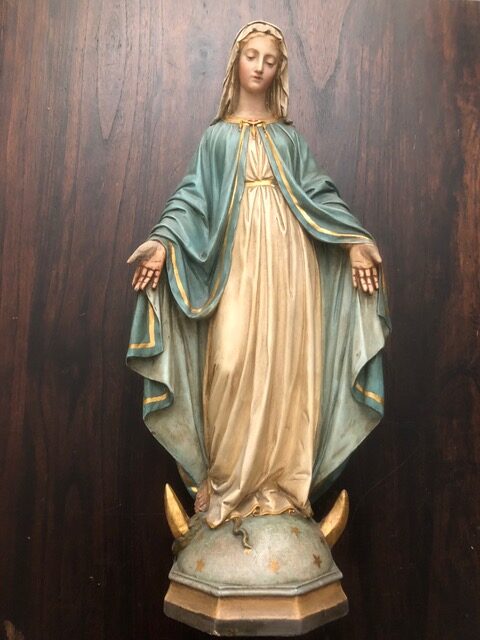
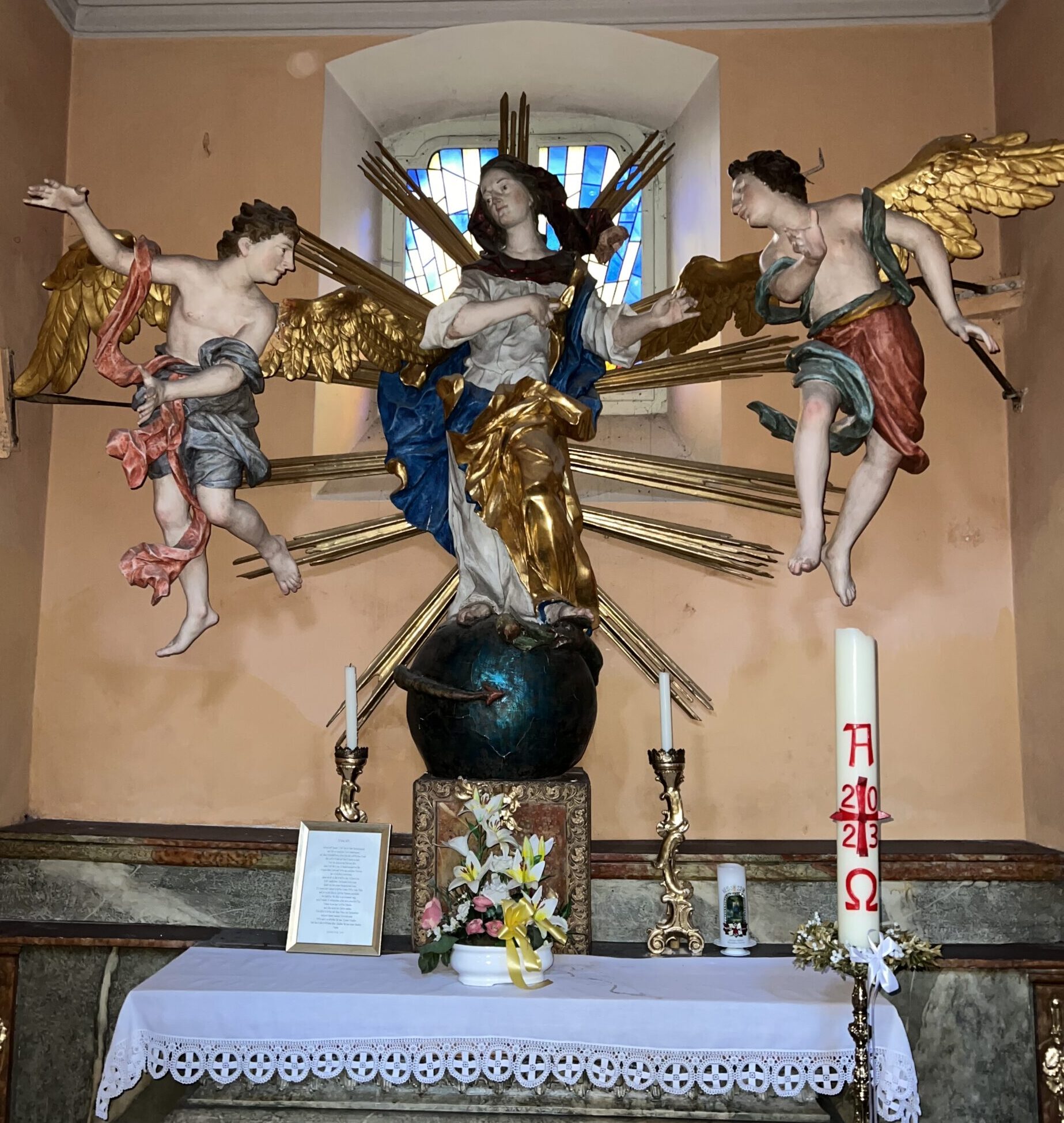
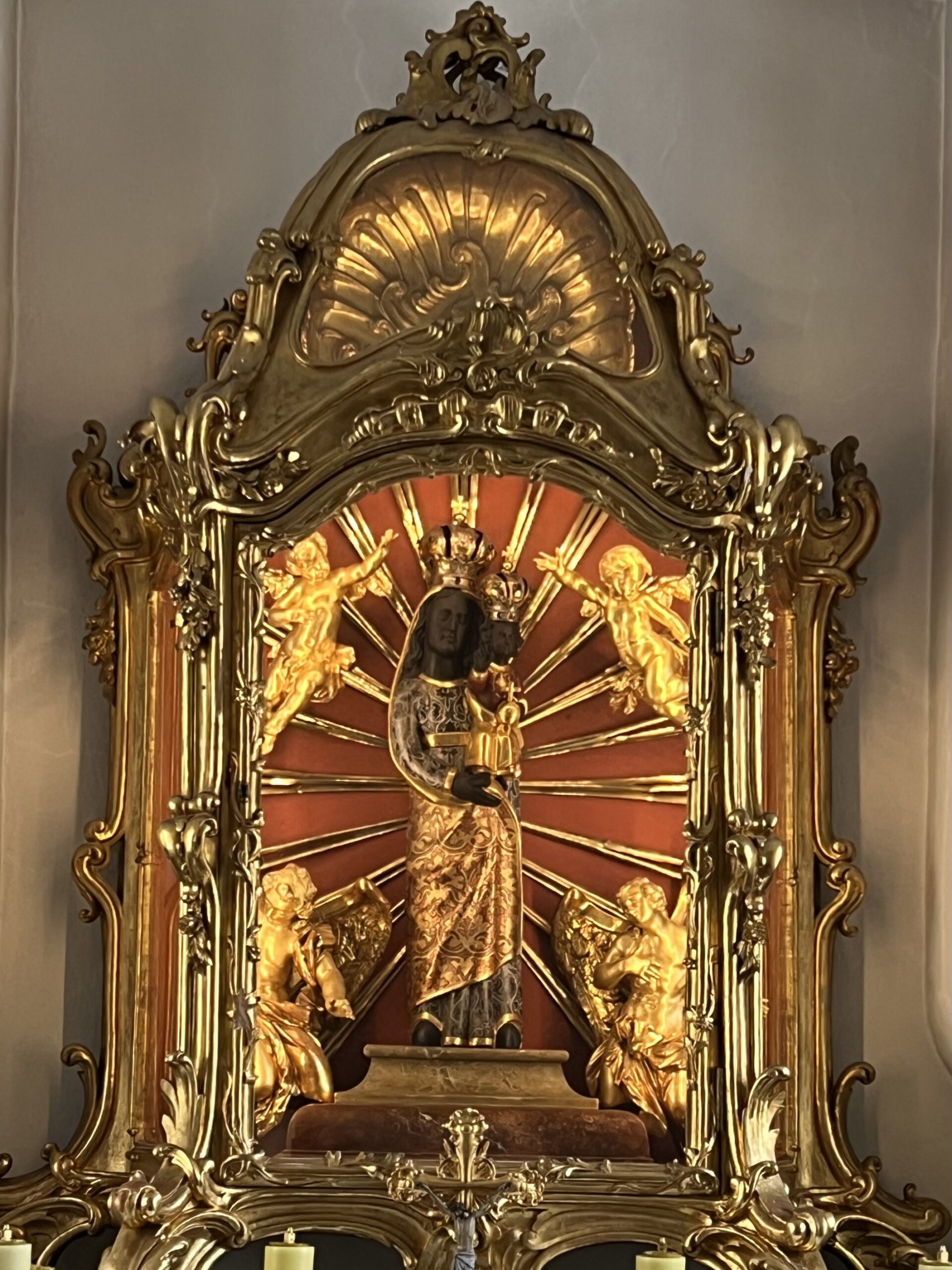
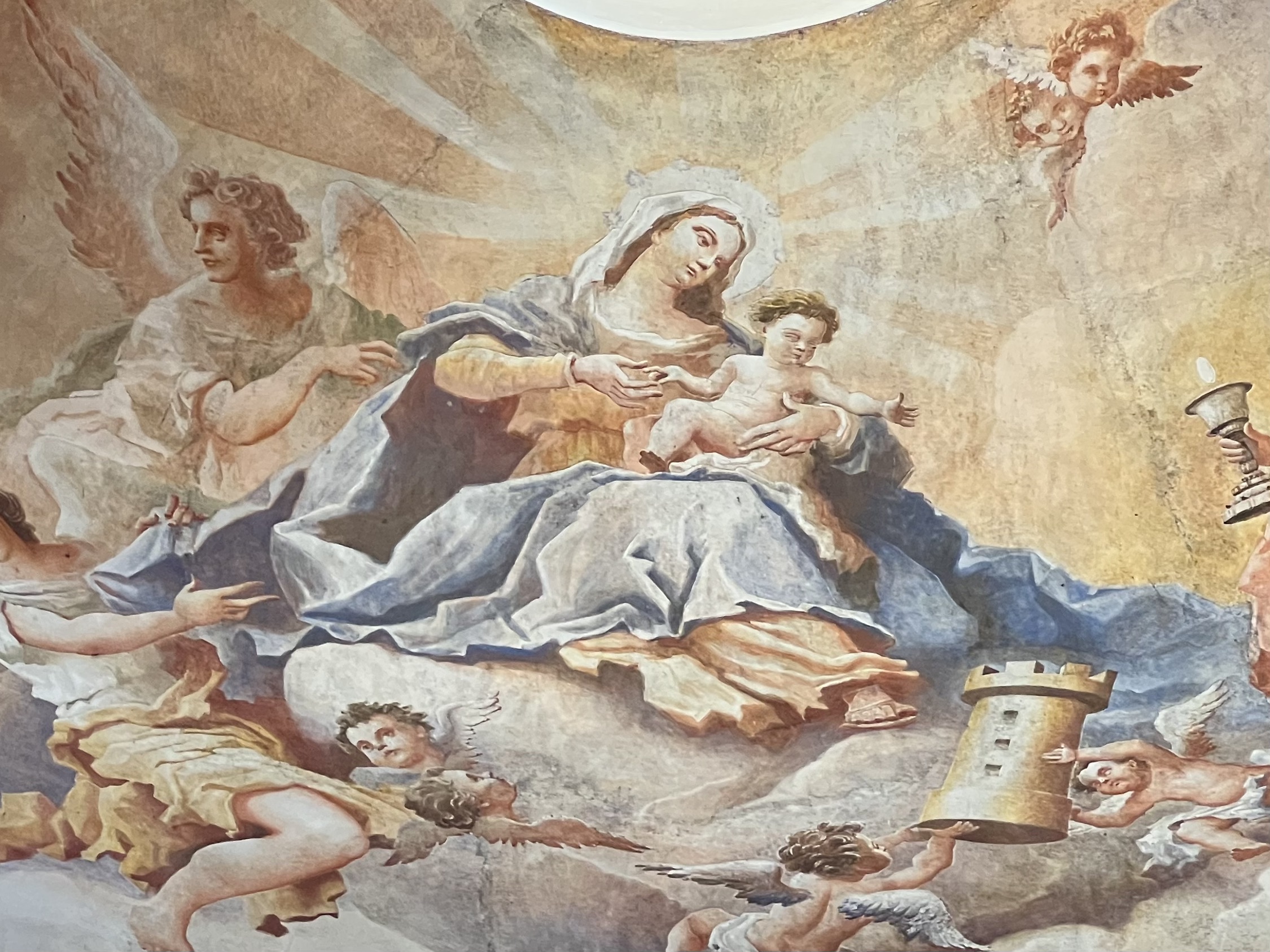
The main altar, with its Baroque structure from 1766, displays a work of art depicting the Heavenly Queen Mary. The effigies of Mary's parents point towards the shrine. Within this altar, a fragment of the tree from which the shrine previously hung is preserved. In a small side chapel, there is an effigy of the Immaculate Conception with two angels, dating from 1720.
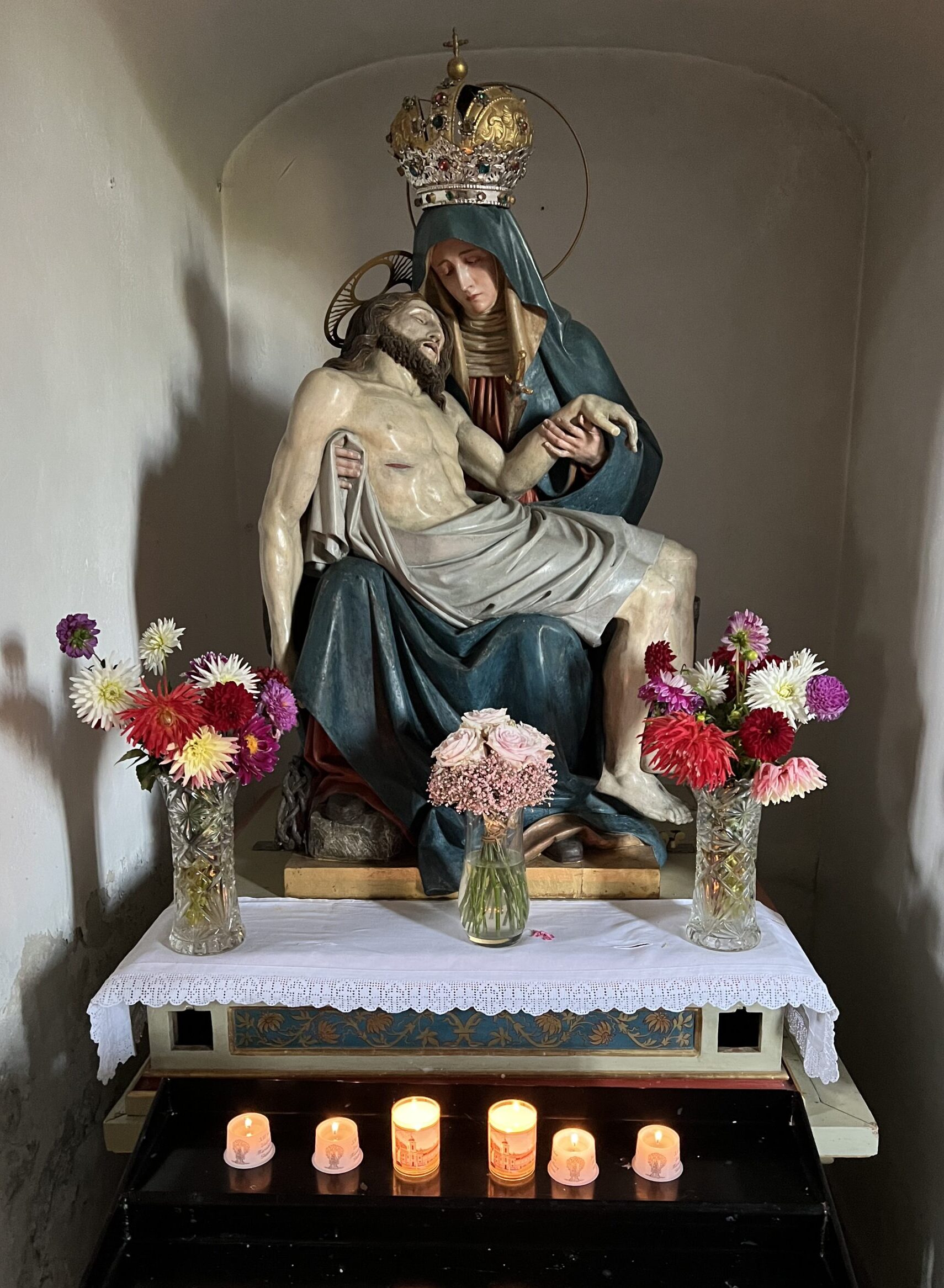
On the altar of Our Lady of Sorrows, there is a painting depicting the Seven Sorrows of Mary, with an angel accompanying Her on either side. A Pietà is also a special work of art.
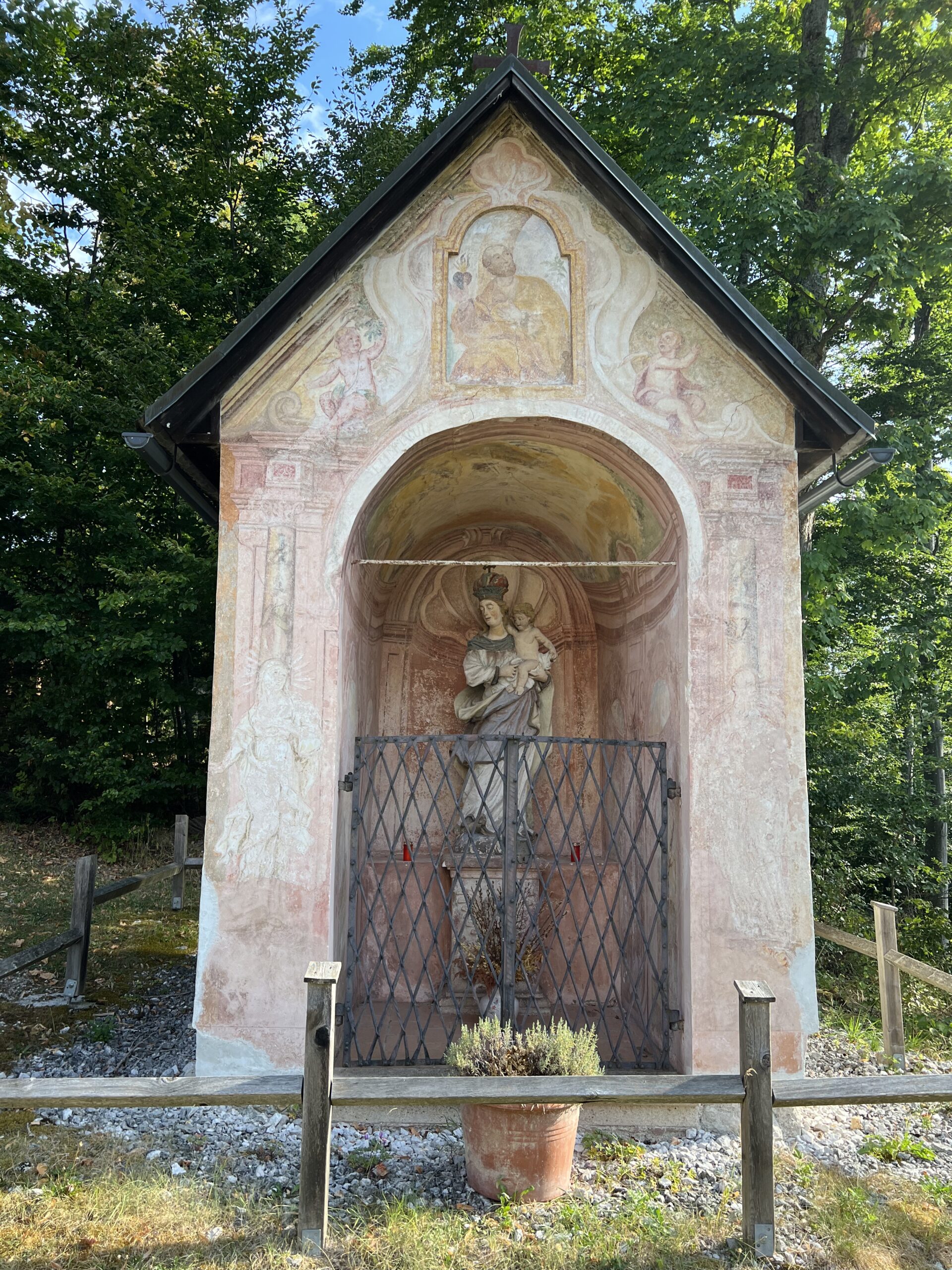
The small, wooden chalets, where devotional items were formerly sold, look dilapidated. This is not the case for a chapel of Mary with Child.
A Stations of the Cross was constructed in the adjacent forest in 1763. Mariahilfberg once belonged to Austria's greatest pilgrimage sites.
ACCESSIBILITY
The address of the Mariahilfberg pilgrimage site is
Servitenkloster, Mariahilfberg 13, 2770 Gutenstein.
Actual information can be found at www.mariahilfberg.at.
Experience
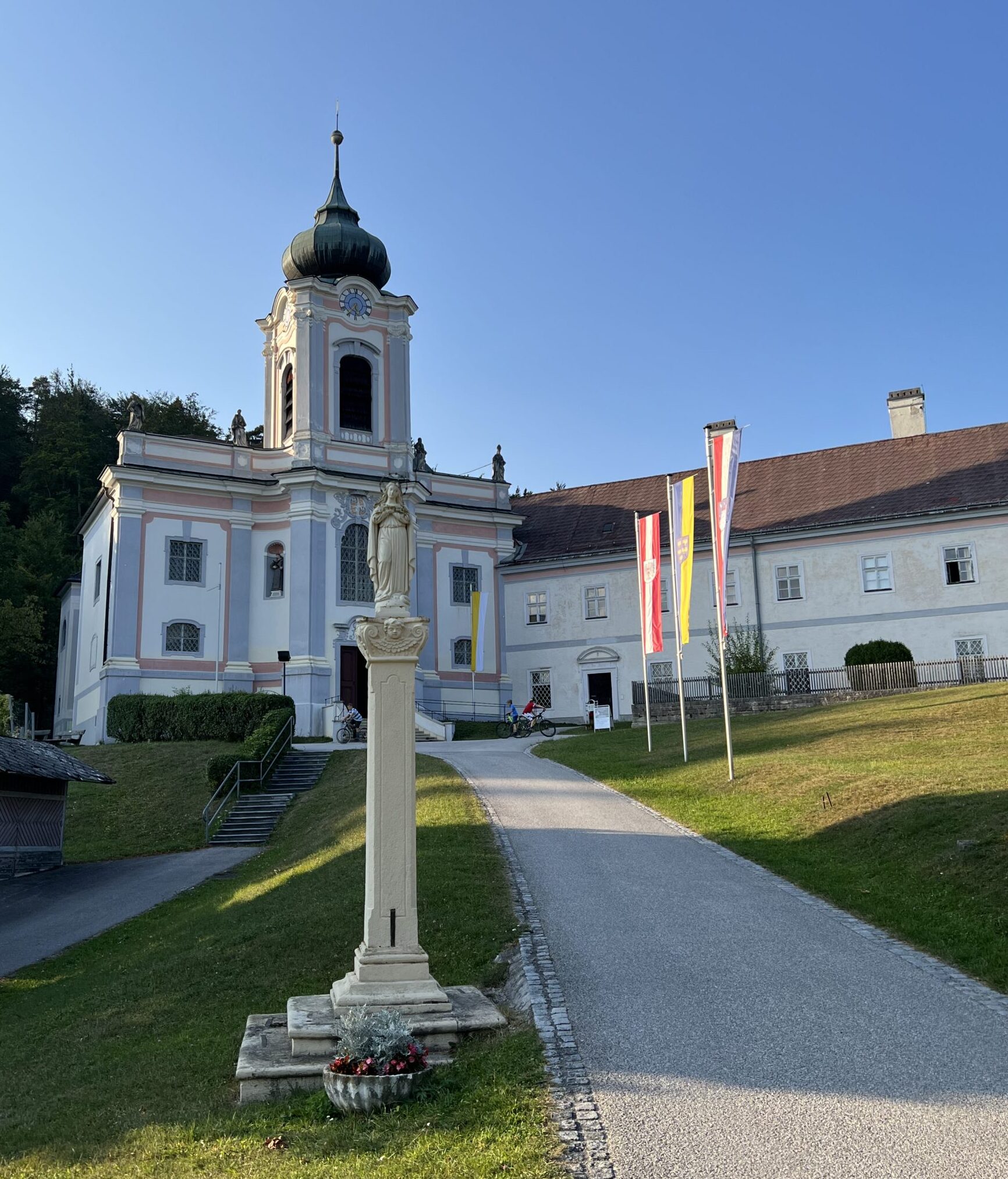
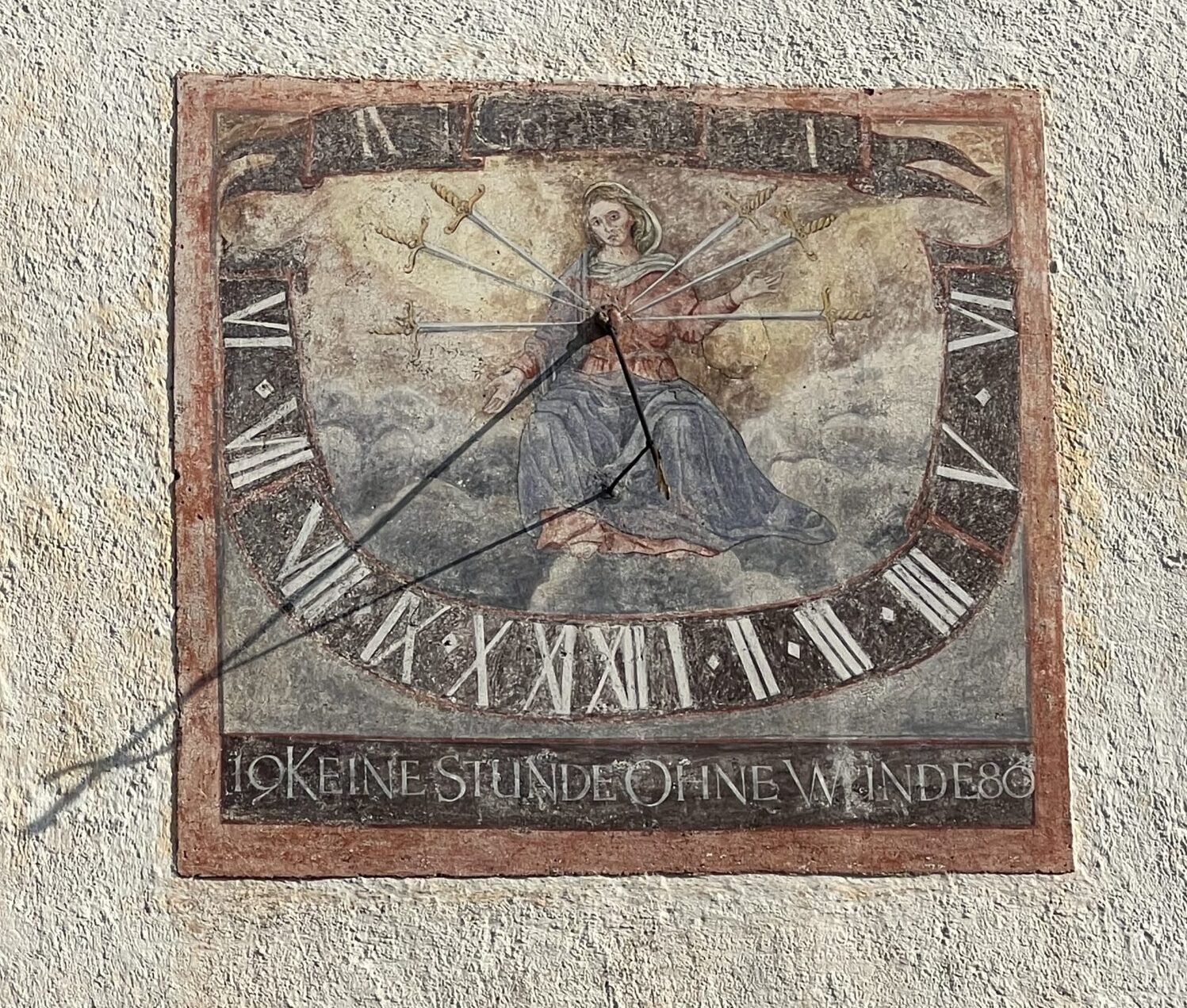
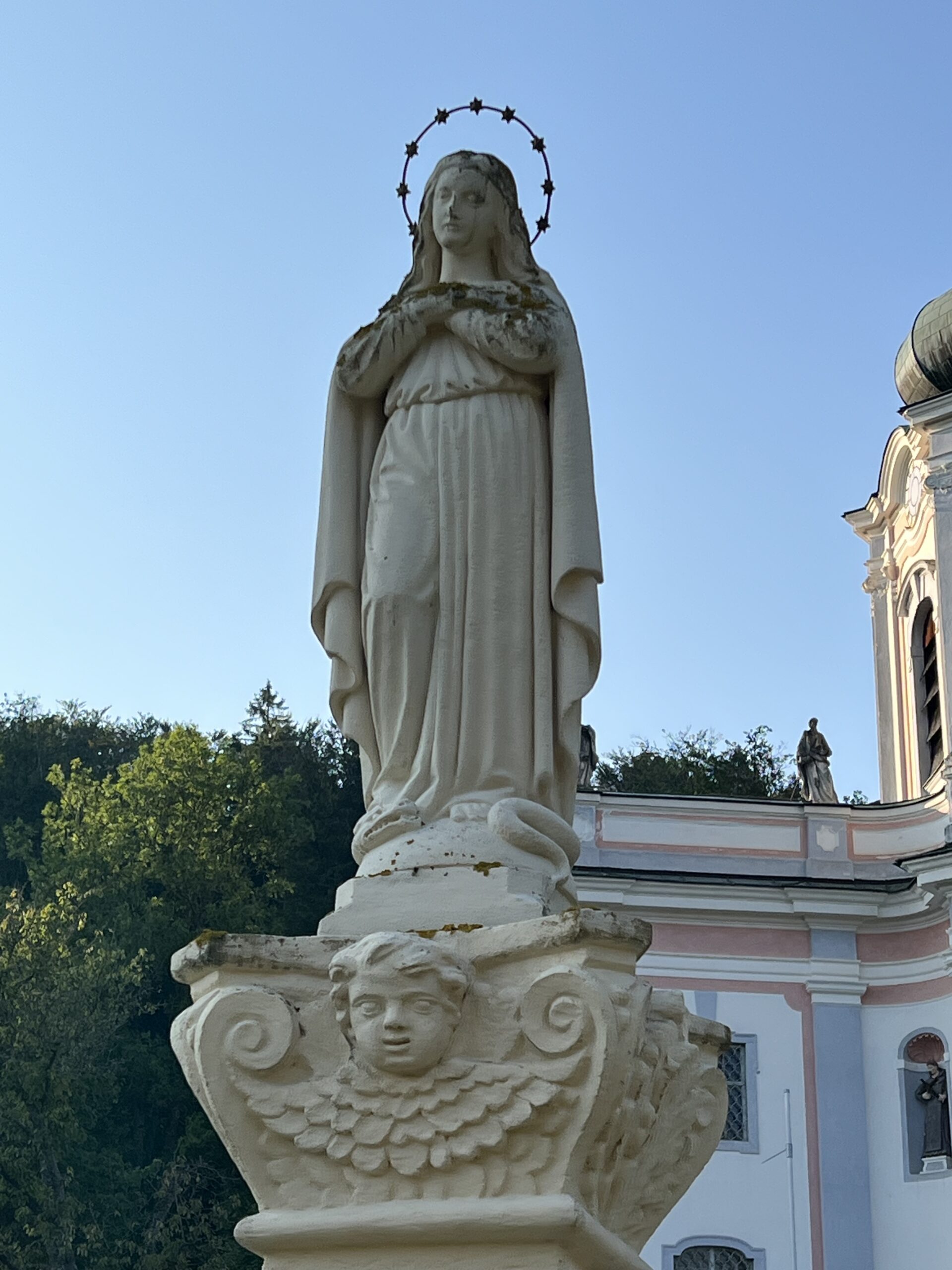
Immediately after arriving, I go to the pilgrimage church and in front of the building, Mary stands on a high pedestal to welcome visitors. After this welcome, I go into the church and see that a sundial is installed in the facade with the image of Our Lady of Sorrows.
Upon entering the pilgrimage church, the high altar catches my eye. I step forward and see the statue of Mary by the tree. This is a clear reference to the origins of this pilgrimage site.
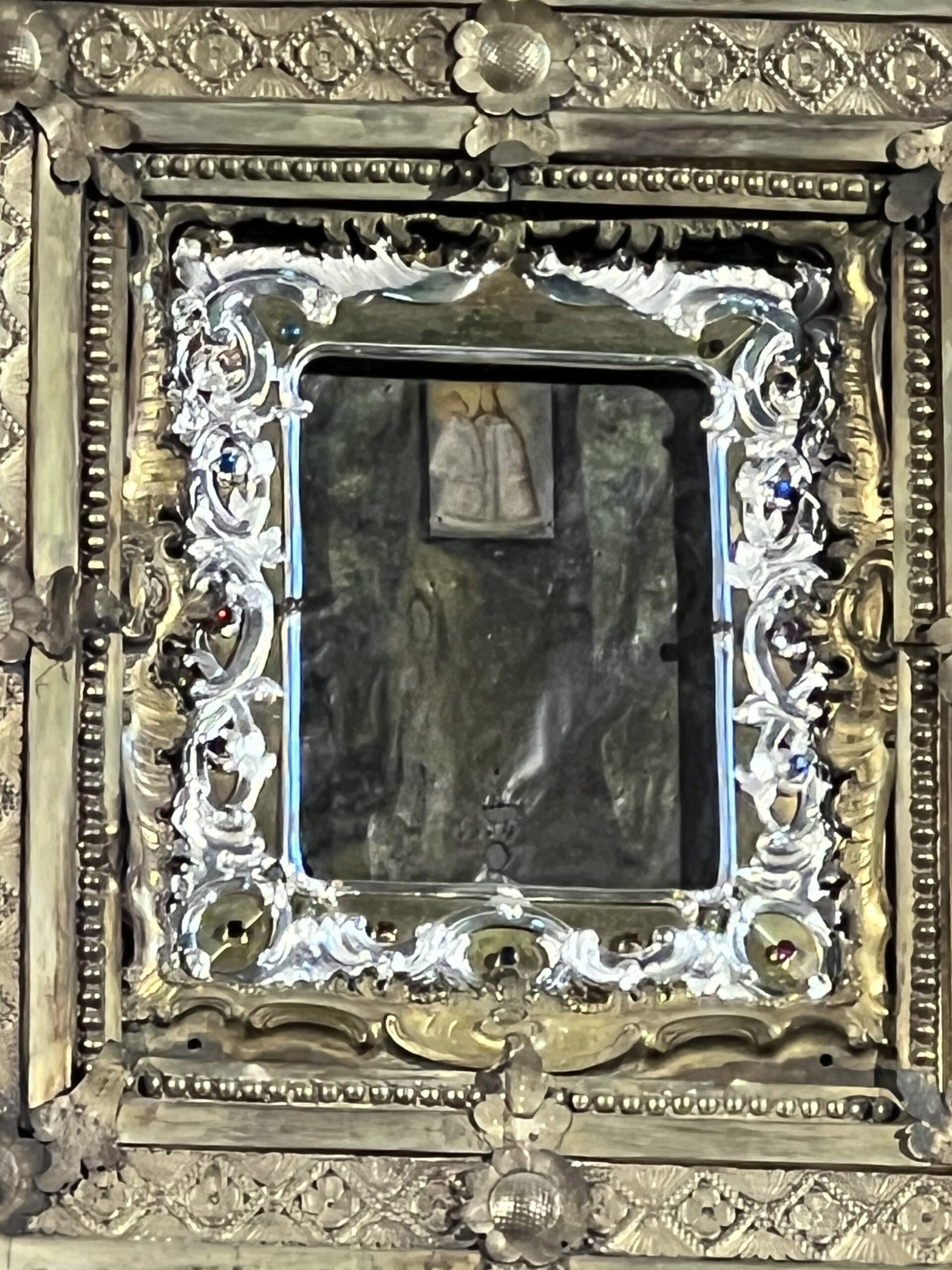
In the church, many ex-votos can be seen, as well as a chapel of Our Lady of Sorrows.
After visiting the church, I go for a walk and follow a route through the adjacent, dark forest. On information signs, I read about how it used to be with chapels and a grotto. Now there are a few dilapidated buildings here. I get the feeling that I am staying in the distant past here…
Near the church is a restaurant and I get into conversation with the proprietor about the pilgrimage site. Interest has considerably decreased in recent years compared to before. Nowadays, visitors mainly come on Saturdays and Sundays, but it's quite quiet on weekdays. Most visitors come from the region of Vienna. The stalls with devotional items are closed, as times have changed and turnover has dropped. It's no longer profitable to keep a shop open here. Three elderly friars still live in the monastery. The restaurant owner doesn't know what will happen when the three clergymen are no longer there.
Environment
The capital city of Vienna is located 70 km east of Mariahilfberg, and the town of Sankt Pölten is situated 70 km further north. The pilgrimage site of Mariazell can be visited 65 km west of Mariahilfberg, and the pilgrimage resort Pöllauberg lies 126 km south of Gutenstein.
Sankt Pölten boasts many old buildings, such as the Cathedral (Domkerk) on Domplatz and the Franciscan Church (Franziskanerkirche) near Rathausplatz. The Cathedral Parish (Dompfarre) has a long history, starting in the 7th century with a Benedictine monastery; the oldest monastery in Lower Austria. In 1065, the collegiate church of the Assumption of Mary was first consecrated. In 1150, the basilica was consecrated. In the late 13th century, a major renovation took place to incorporate the Romanesque style and create the Rosary Chapel, which was restored in 2005. In the 17th century, the early Baroque high altar was built, featuring a painting of the Assumption of Mary by the prolific Tobias Rock/Poch/Pockh (1609-1683). In the 18th century, the Sacrament Altar of the Blessed Virgin Mary was added to the Cathedral. Also worth visiting is the Museum am Dom, established in 1888; the oldest episcopal museum in Austria.
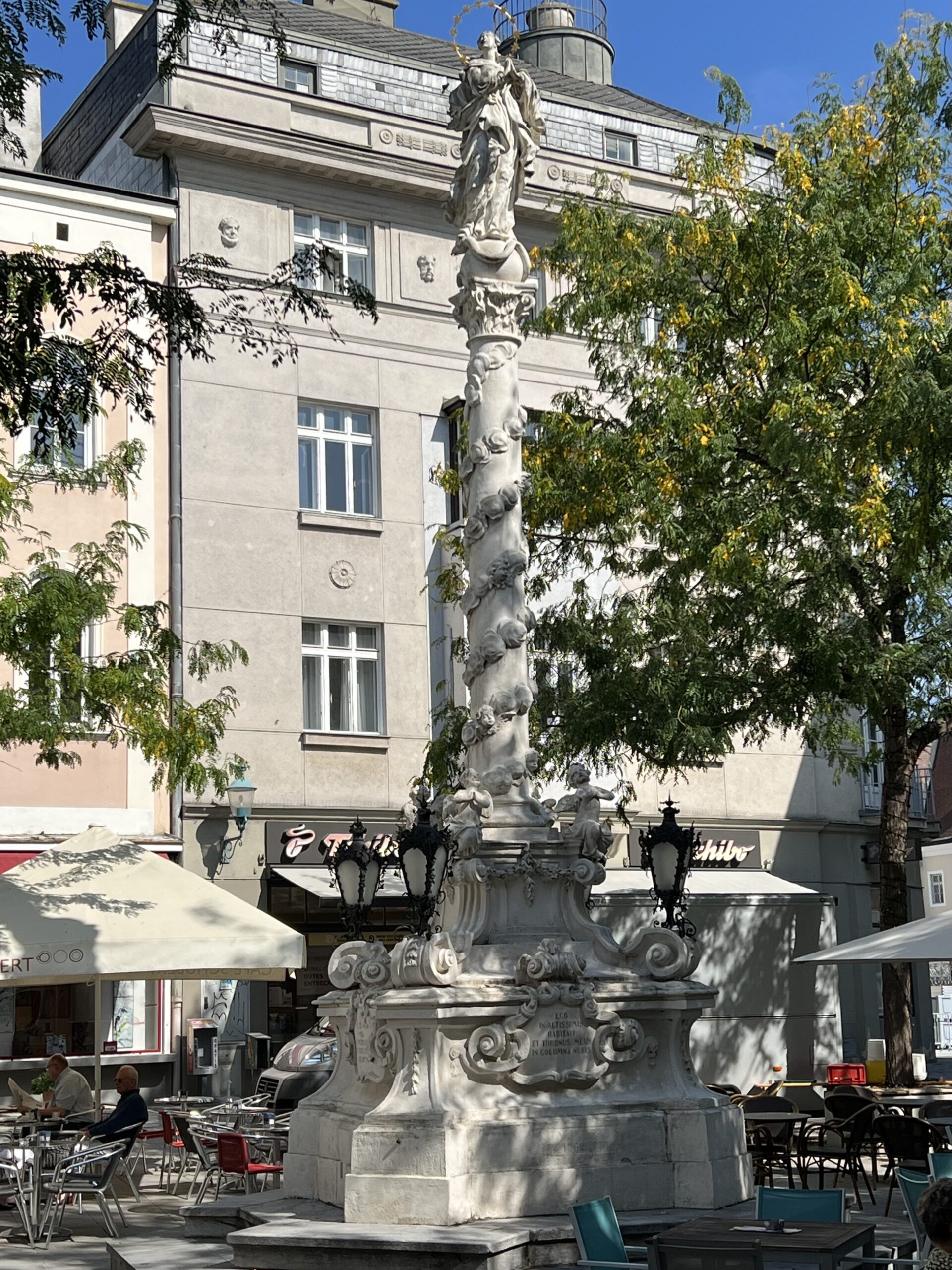
A strikingly tall, Baroque Marian column stands in the Herrenplatz in the centre of St. Pölten.
~~~

 Nederlands
  English (UK)
  Deutsch
  Français