~~~
History
A former chapel once served as a place of worship for the miners. As early as 1448, there was a mine in the immediate vicinity of the current chapel.
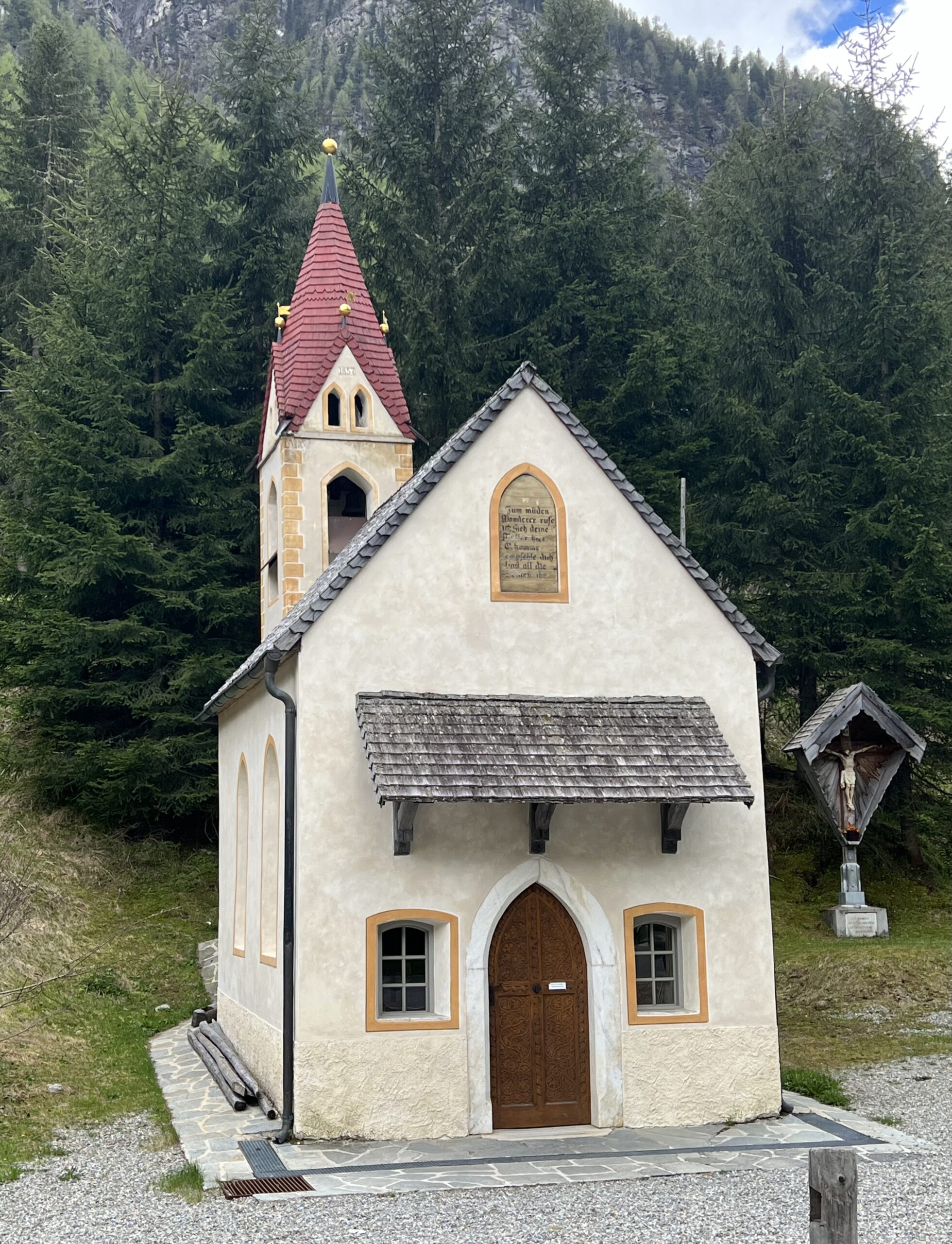
In 1711, there was a donation from the Counts of Hendl from Kastelbell to build a chapel. This became the current chapel.
In the famine year of 1816, the chapel was sold. In 1857, the small prayer room was extended with a turret.
Two large boulders break away from a mountain in 1867. The large, tumbling rocks come to a halt next to the chapel.
In 1894, the chapel was renovated in the Neo-Gothic style.
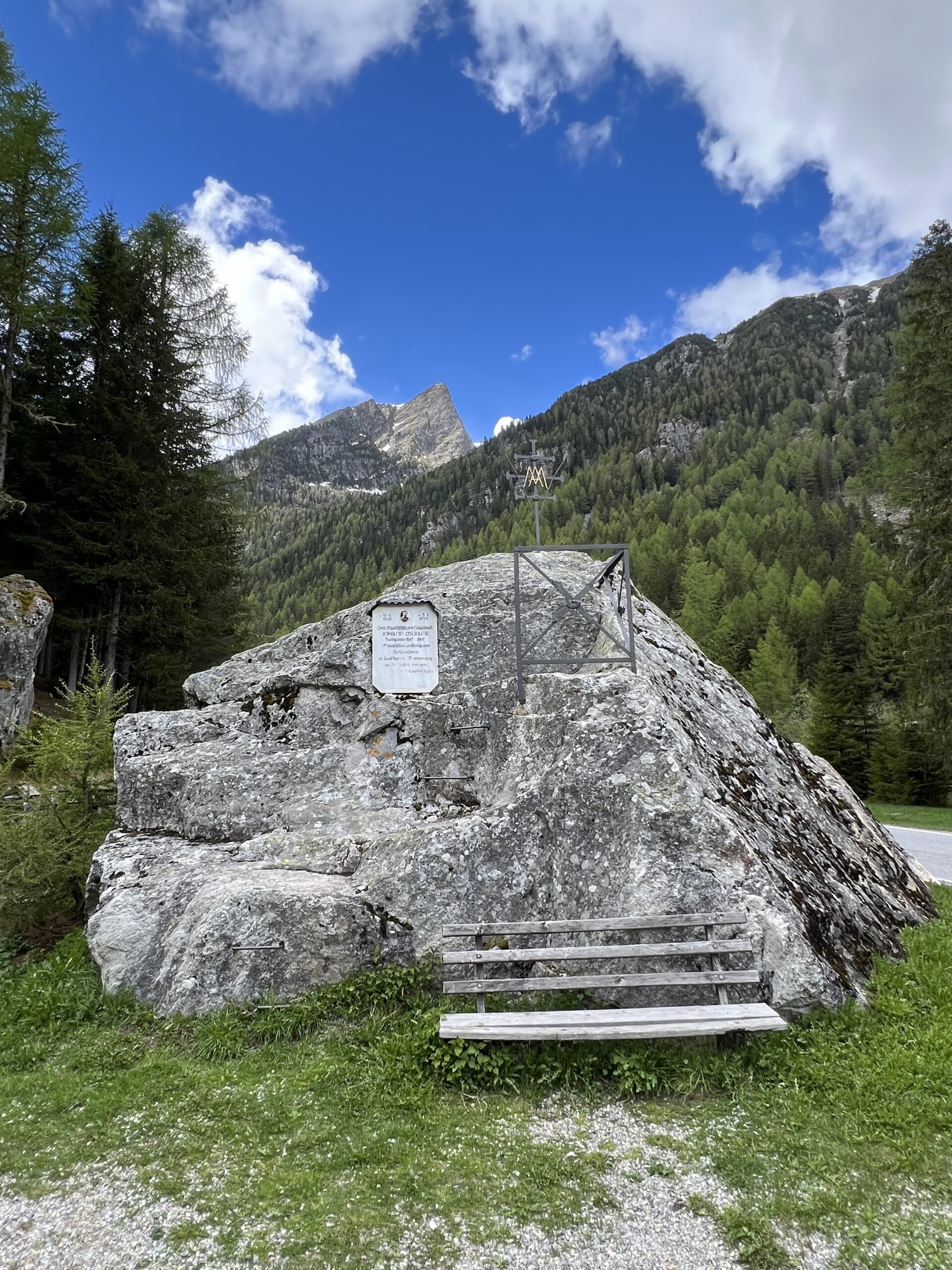
Next to the chapel is a large boulder, on which a memorial plaque was affixed in 1967. It expresses the gratitude of the rifle company to commandant Johann Müller (1868-1918).
Along the path from Gand to the pilgrimage chapel are Stations of the Cross created in 1994. The representations are by local artist Walter Kuenz (1957).
In 2003 the chapel was restored, both inside and out.
Pilgrimage site
The pilgrimage site is named “Sancta Maria in der Schmelz” (Saint Mary in the Smelt) and the chapel stands in the middle of the wooded Martell Valley. High mountains make viewing the surroundings a grand experience. The chapel is located at an altitude of about 1560 metres above sea level.
Two large rock boulders are located by the chapel and broke off a mountain in 1867.
The pilgrimage chapel is popular with the local people and is frequently visited by those from the region. Many hikers also visit the chapel.
Above the chapel is an inscription that, through Mary, calls tired walkers to enter.
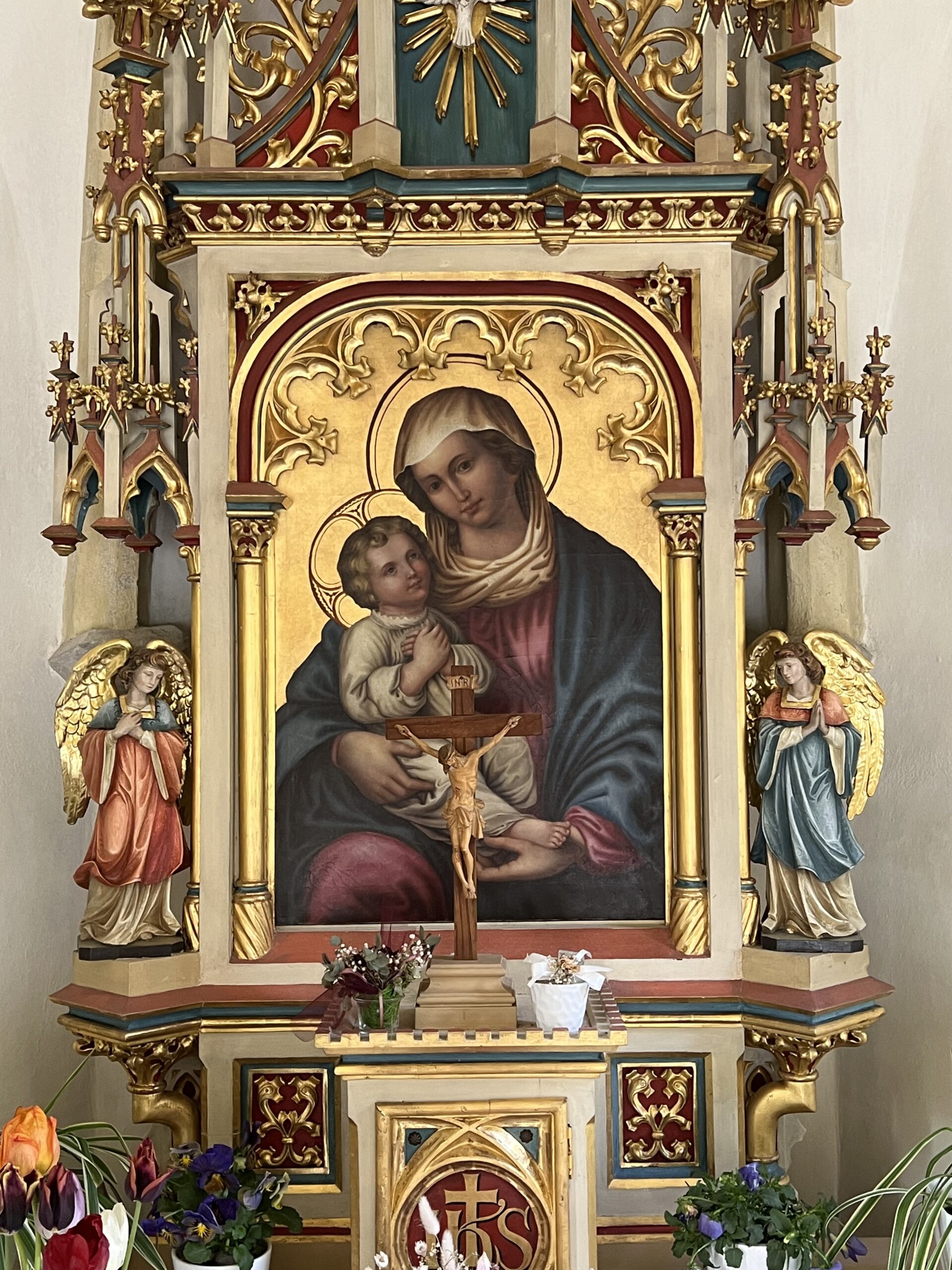
In the centre of the altar stands the miraculous icon with Mary and her little Son. Two angels stand on either side of the image.
In the chapel, a certificate hangs on the wall. It is a letter of thanks from the rifle company in 1965 to the Mother of God, who is referred to here as Maria of the Smelt.
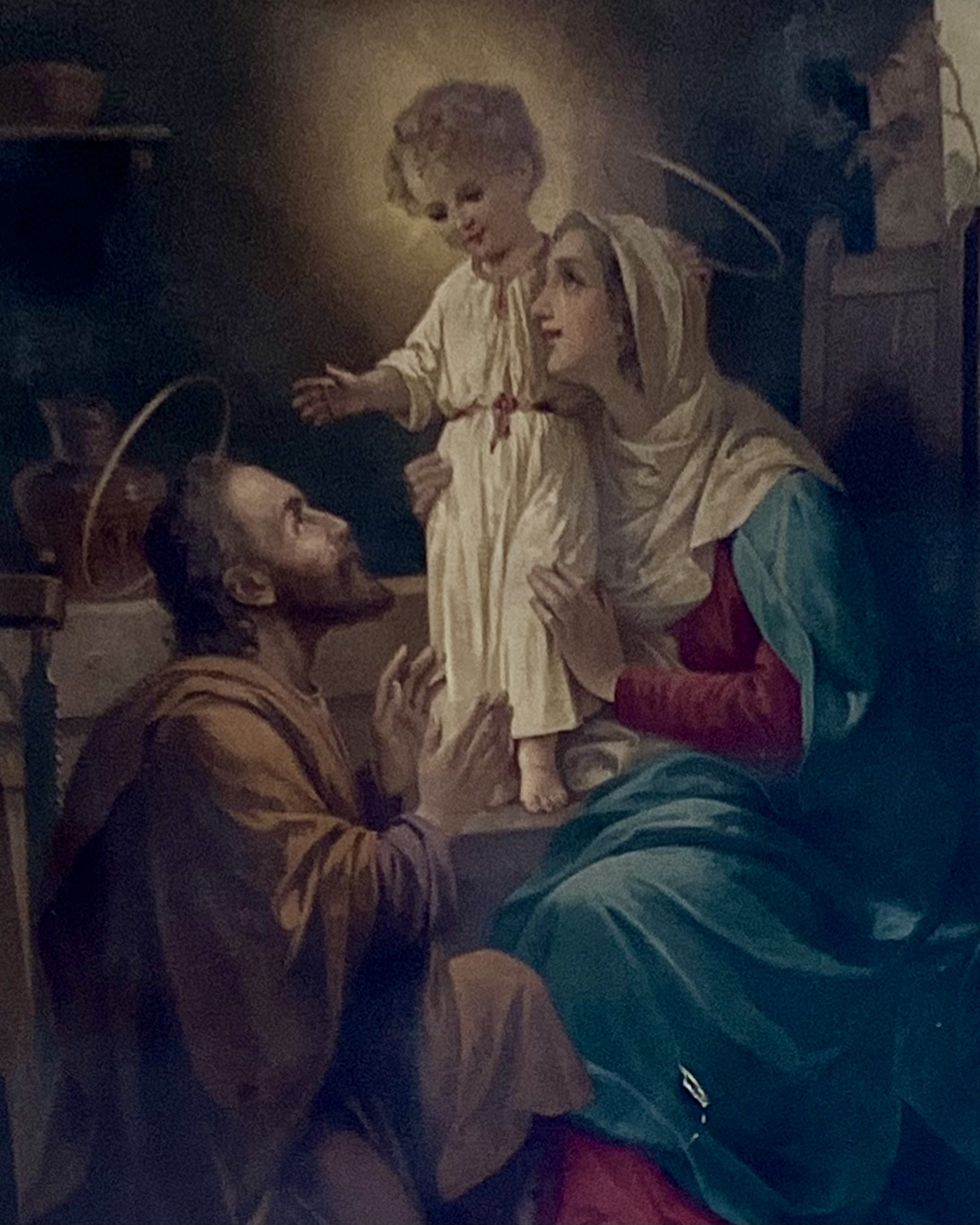
On the wall hangs a large painting with images of Mary, Joseph, and a baby Jesus.
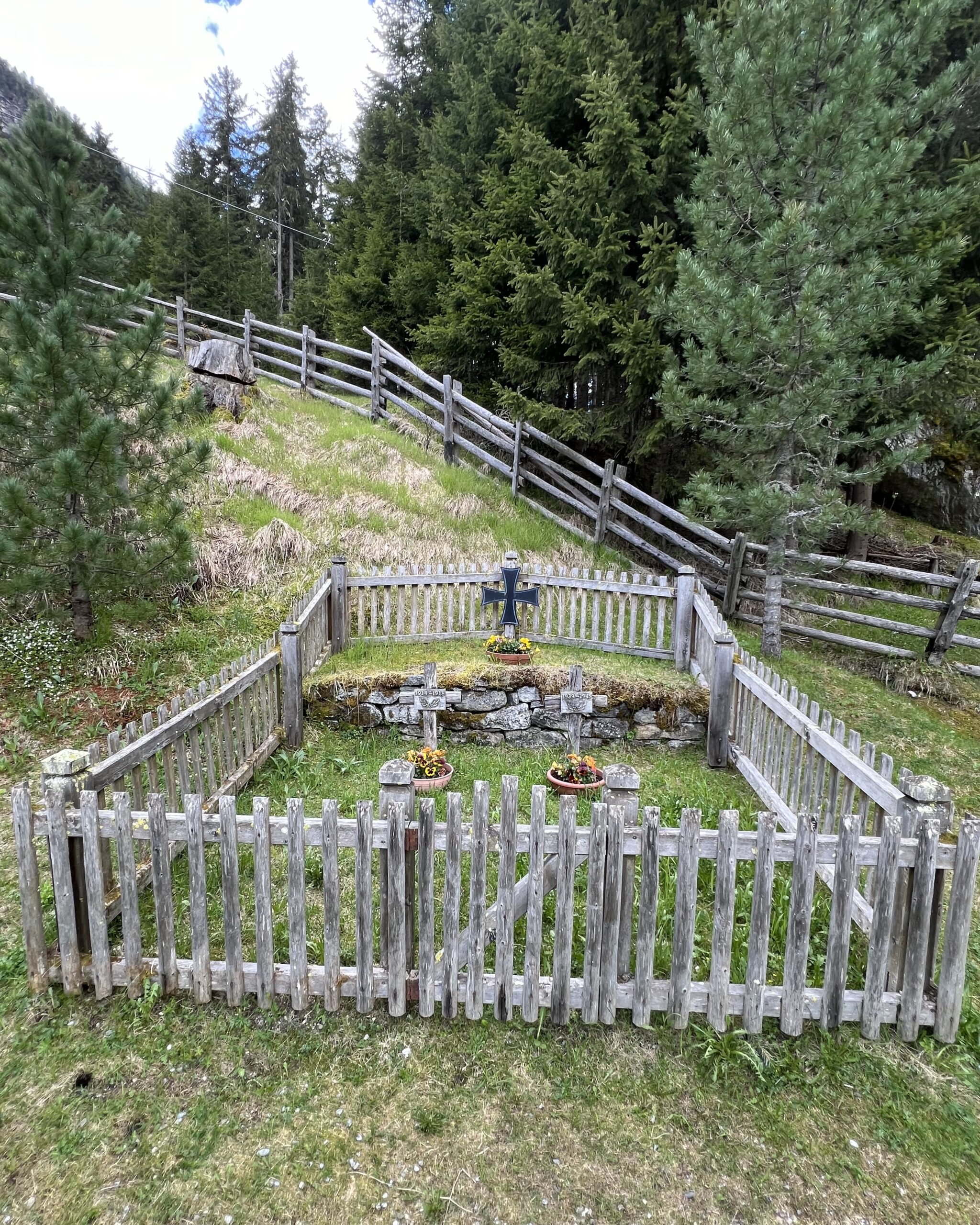
Next to the chapel is a screened-off area with crosses for commemorating victims of the First and Second World Wars.
A path has been laid out from Ghent that leads to the pilgrimage chapel. Stations of the Cross have been created along the route.
The patronal feast of “Maria in der Schmelz” falls on the first Sunday of July.
The chapel is open every day.
ACCESSIBILITY
Martell is located in the north of Italy, in the middle of the Martelltal/Val Martello. From Latsch, head in the direction of Martelltal/Val Martello. After the village of Gand/Ganda, continue along the road for about 4 kilometres. The chapel is situated near the Rio Plima river.
The small place of pilgrimage lies to the east of the lake “Zufritt-Stausee”/”Lago di Gioveretto” in the “Stilfser Joch” National Park/”Parco Nazionale dello Stelvio”. The chapel is located on a narrow road just past Hotel-Restaurant Waldheim.
Address: Marteller Talweg on road LS/SP2.
More info: Latsch-Martell Tourist Association, Hauptplatz 14, 39020 Latsch.
Also available at: info@latsch.it.
Experience
Visiting the chapel “St. Maria in der Schmelz” means entering a peaceful, mountainous environment. Little traffic, more hikers, quite a few mountains, many birds and countless trees characterise the setting of the beautiful, high-altitude chapel. I let the surroundings sink in. What beauty! I feel like I'm in heavenly spheres!
Standing before the chapel and looking at the spire, the year 1857 catches my eye. Next to the chapel are reminders of the two world wars, and large rocks can be seen that were once broken off a mountain and came to a halt here. These are silent witnesses to a turbulent history.
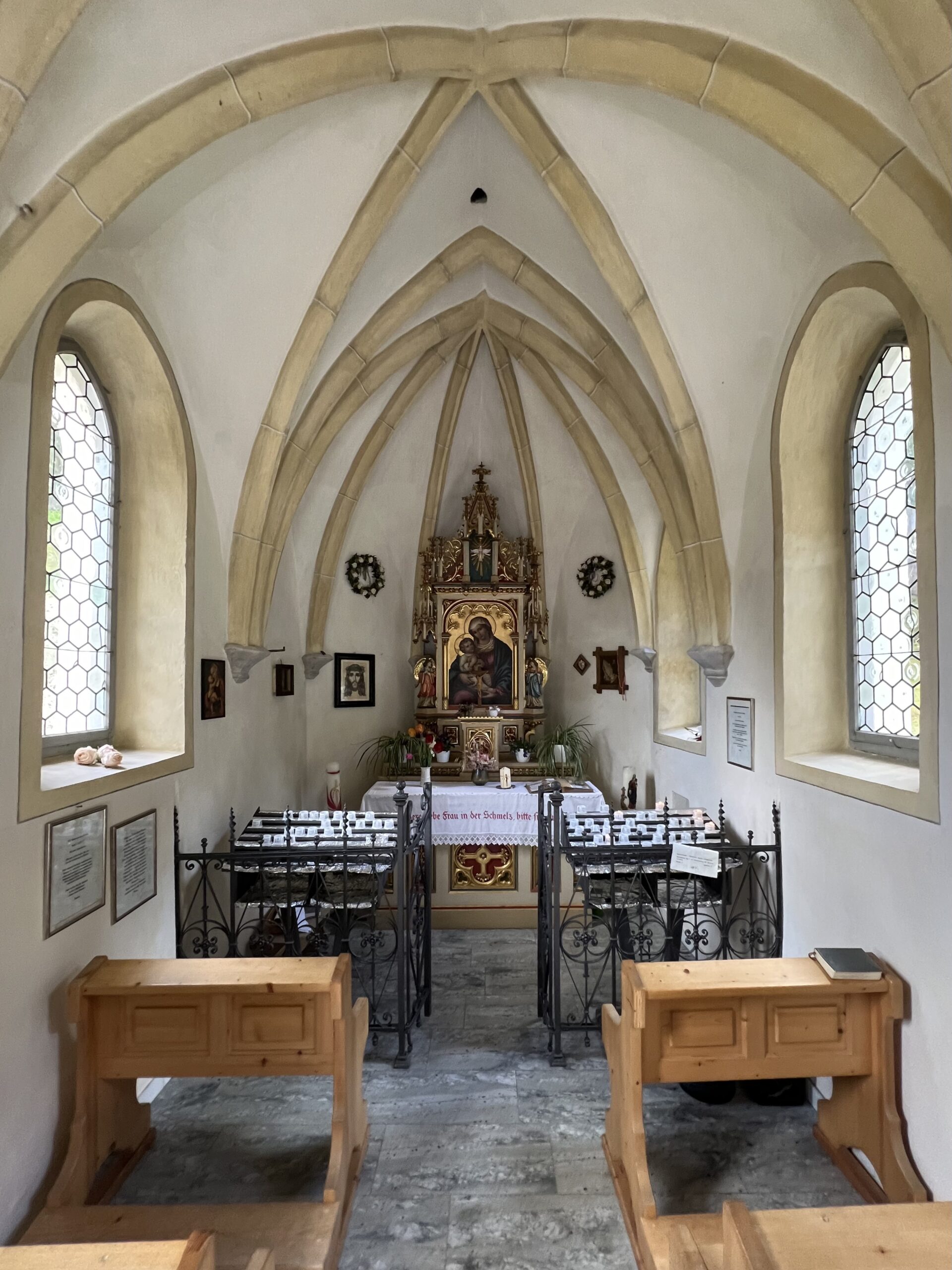
Next, I will enter the chapel. This was once a chapel for miners. The mines have closed and the workers have gone, but the chapel stands here like a proud lady. The effigy of Our Lady looks out at the visitors. Would Mary now think: why don't you light a candle? I bring light by lighting a few candles, and this way Mary is brought more into the light. It is then time to pray to Mary.
Next to the altar stands a large candle, upon which Mary and her Child are depicted. What a beautiful place to meet Mary!
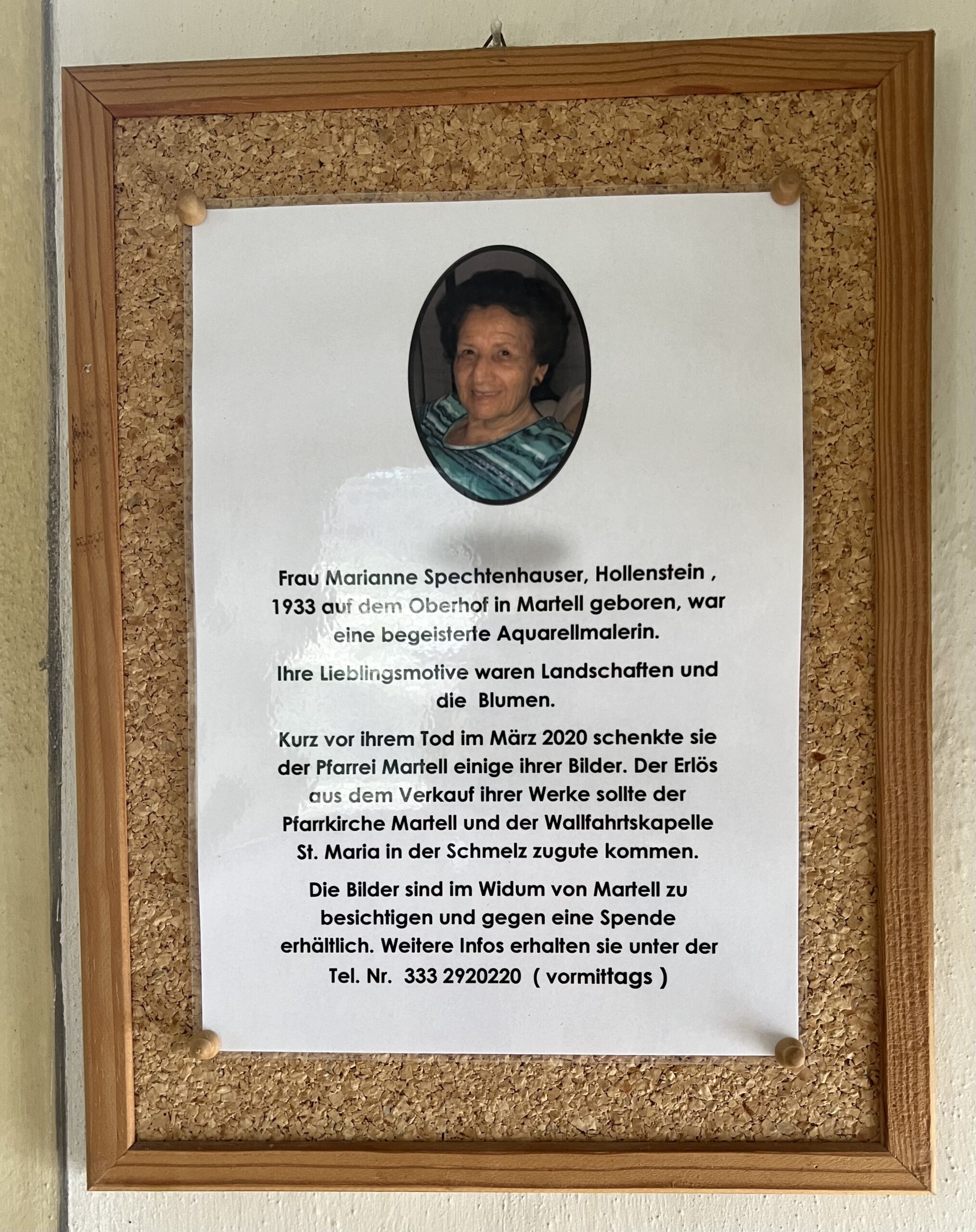
At the back of the chapel hangs a framed document from a local watercolour artist. The artist's name is Marianne (Hollenstein) Spechtenhauser. She specialised in painting landscapes and flowers. Shortly before her death in 2020, she donated some paintings to the parish of Martell. The proceeds from the sale of the works benefited this chapel.
Visiting the pilgrimage chapel and its surroundings makes an unforgettable impression on me. How a small pilgrimage site can be grand.
In the region around Martell, there are many hiking opportunities. The vast “Stilfser Joch” National Park offers much beauty for nature lovers. This also applies to the region of the nearby “Zufritt Stausee” lake.
Environment
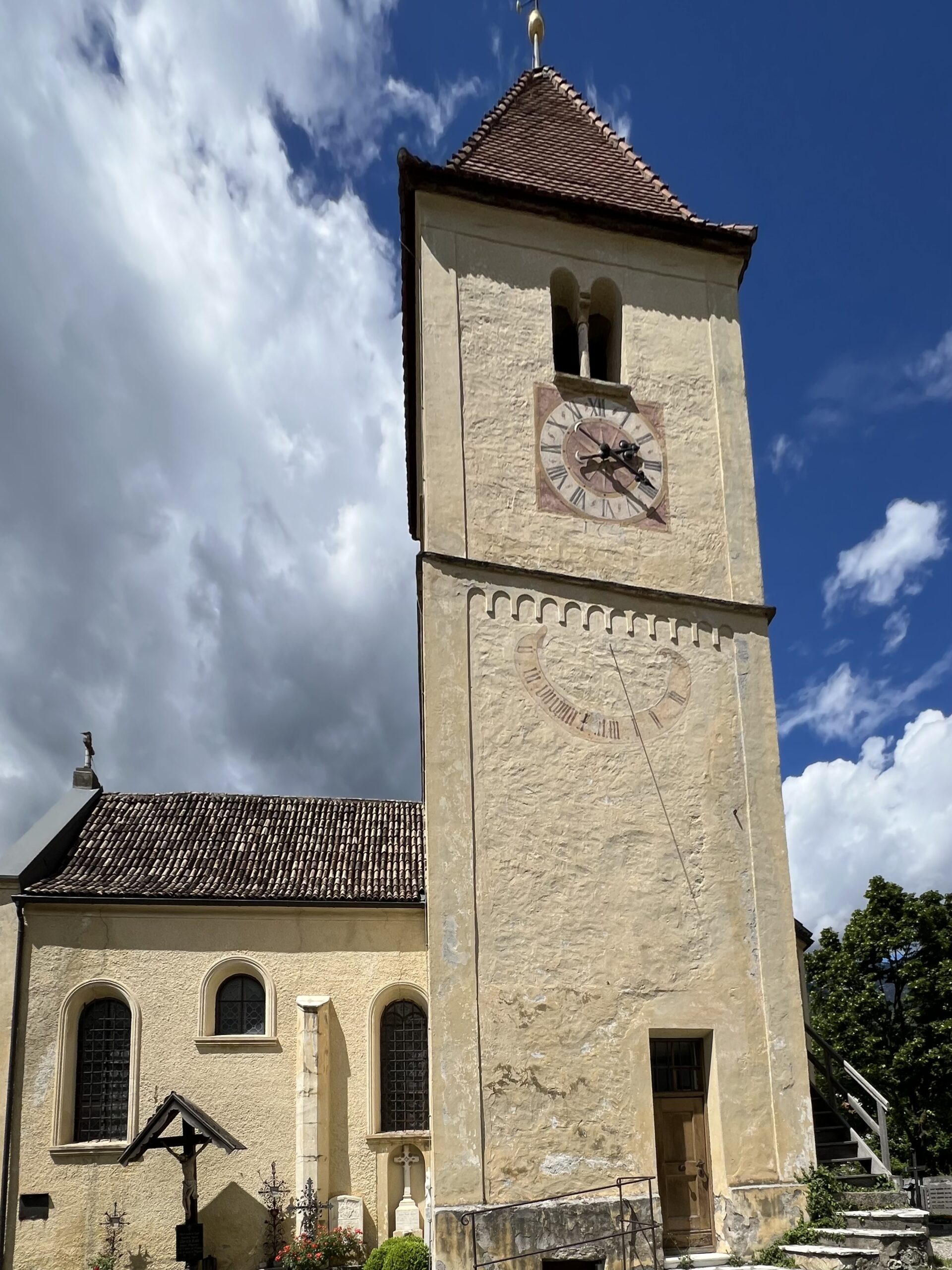
From the pilgrimage site “Eppan”, travel 67 km to the northwest.
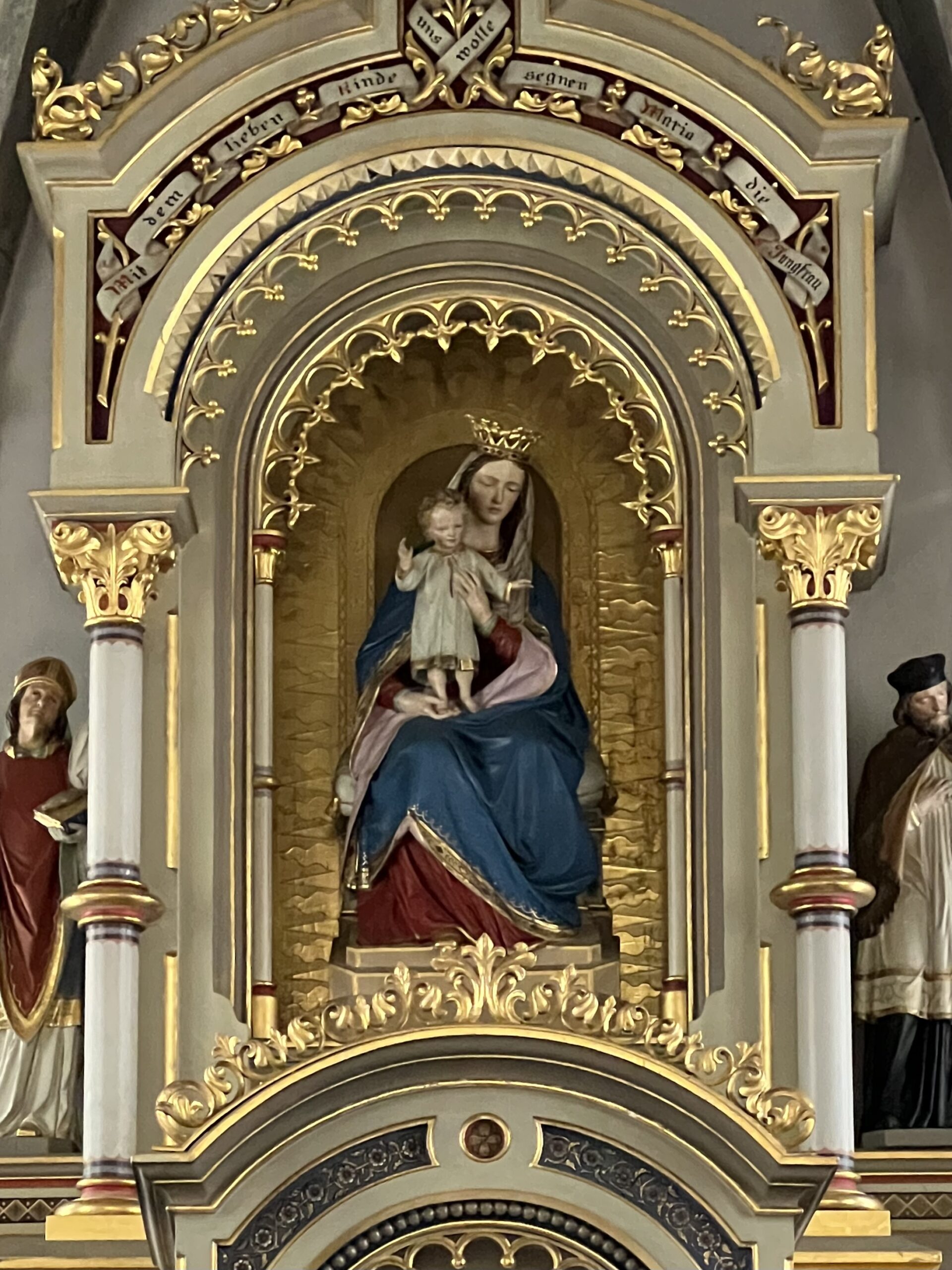
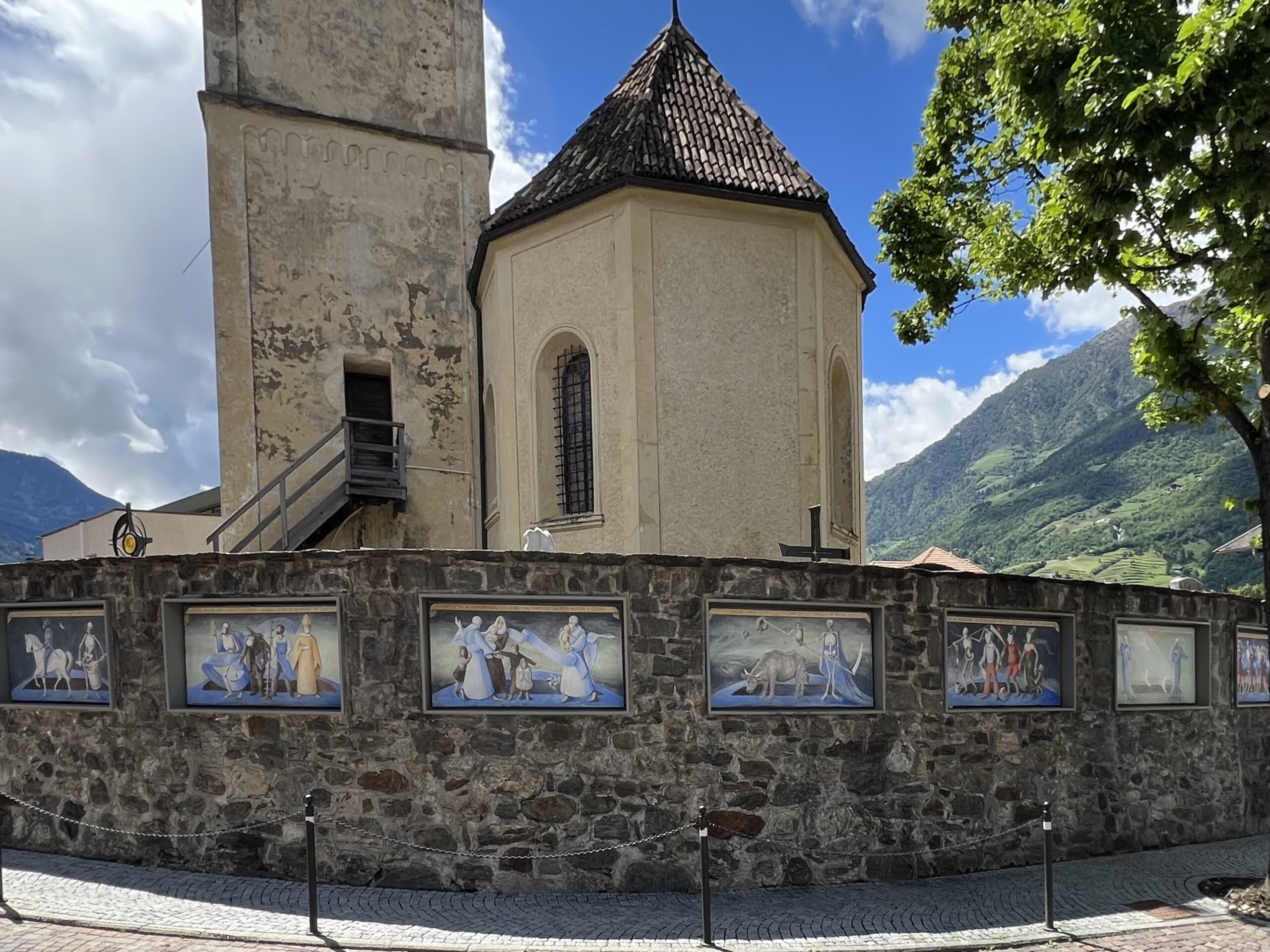
The village of Plaus is located near the pilgrimage site of Martell. Travelling from Plaus to Martell is a 30 km journey to the southwest. In Plaus there are two churches, namely St. Monica's Church and St. Ulrich's Church. Particularly noteworthy are the depictions of the “Totentanz” (Dance of Death) on the graveyard wall.
From the tourist village of Latsch/Laces to Martell is a 15 km drive south.
Going from the town of Meran/Merano to Martell means travelling 40 km westwards.
~~~

 Nederlands
  English (UK)
  Deutsch
  Français