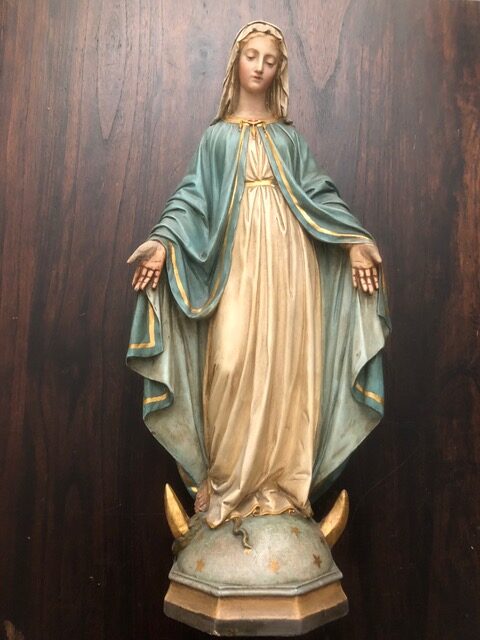
Many believers wear a medallion with an image of Mary or the name of a pilgrimage site. The jewellery is usually heart-shaped, a cross, oval, rectangular, round or square. A medallion is attached to a chain or cord and is often worn around the neck or on a watch strap. Wearing a medallion is an expression of carrying Our Lady on one's heart and professing faith in Her. Medallions are usually made of silver, gold or stainless steel.
Wearing a medallion with the image of Mary holds multiple meanings, such as carrying Her close to one's heart as a sign of love. The medallion also offers a sense of protection, guarding the wearer from harm or receiving grace from the Virgin Mary.
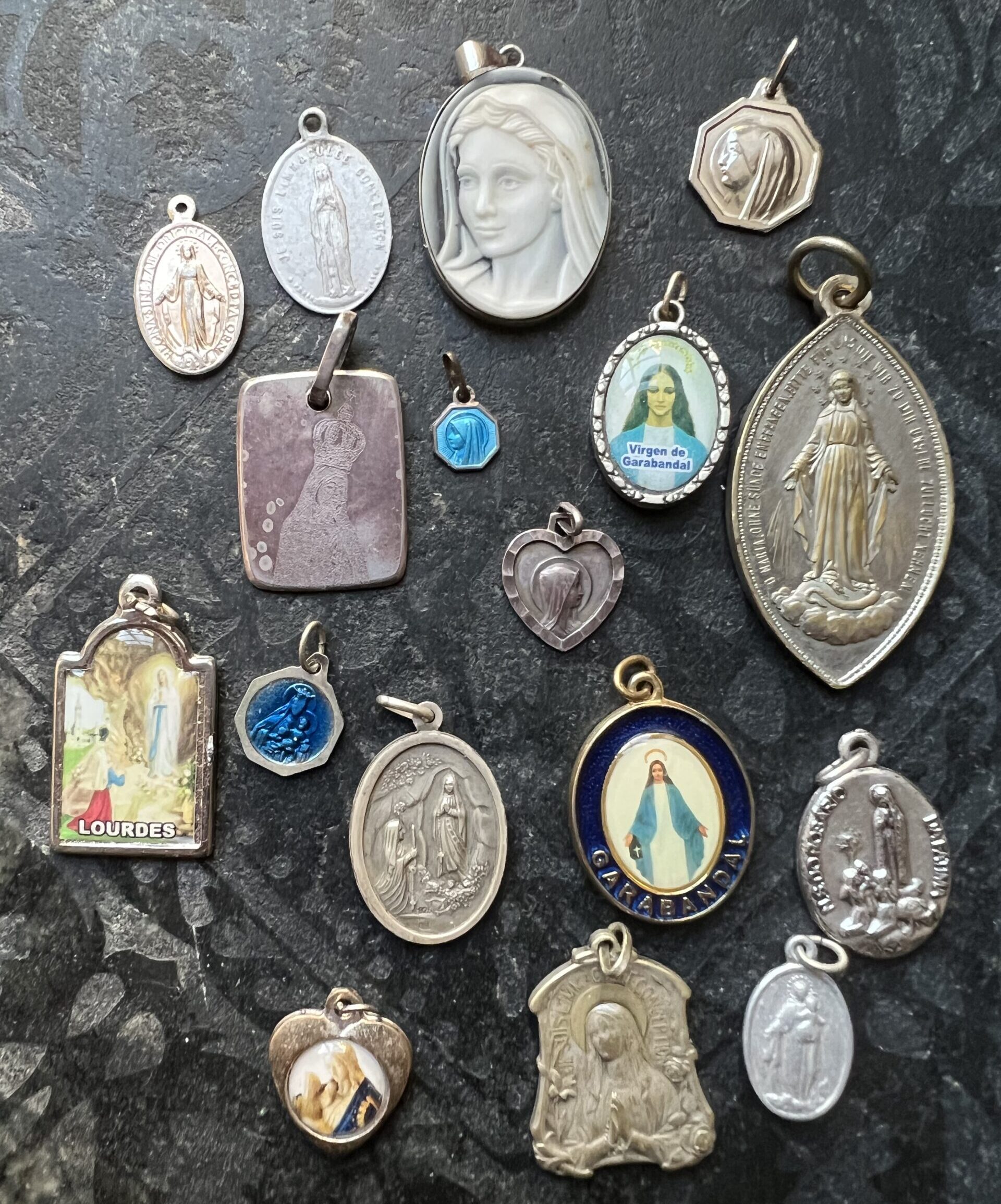
The origin of wearing lockets depicting Mary lies in Paris. The most commonly worn locket is therefore the Miraculous Medal. This was designed following the apparition of Mary to Catherine Labouré (1806-1876) on 19 July 1830 in Paris. This nun received the message from Our Lady that the world was facing great disasters. Protection against these was possible by wearing a locket with her image. Mary told Catherine Labouré, among other things: “All who wear it will receive great graces.”.
When visiting a Marian shrine, pilgrims often purchase a medallion. This is not only as a memento of the pilgrimage site but also to feel Our Lady close. By wearing a medallion from a Marian shrine around their neck, the wearer is reminded multiple times a day of the Mother of God.
A medallion can also be engraved to give it a personal meaning. For example, an oval piece of jewellery from the Sanctuary of Fátima in Portugal with the image of Mary, the name of the believer and the date of their stay at the apparition site. Such a medallion then has a special, emotional value.
