History
After the Saint Elizabeth's Flood in 1421, a skipper founded a Mary chapel, according to legend. The passed-down story says that it is a chapel of thanks for the skipper's safe return home. The chapel is already mentioned in 1459 as “Capella S. Mariae noviter fundata”.
Later a new chapel was built, dedicated to the Annunciation of Mary. This is described in 1615. Many pilgrimages took place annually. Due to the Reformation, the chapel was closed for decades and the then-current statue of Mary disappeared.
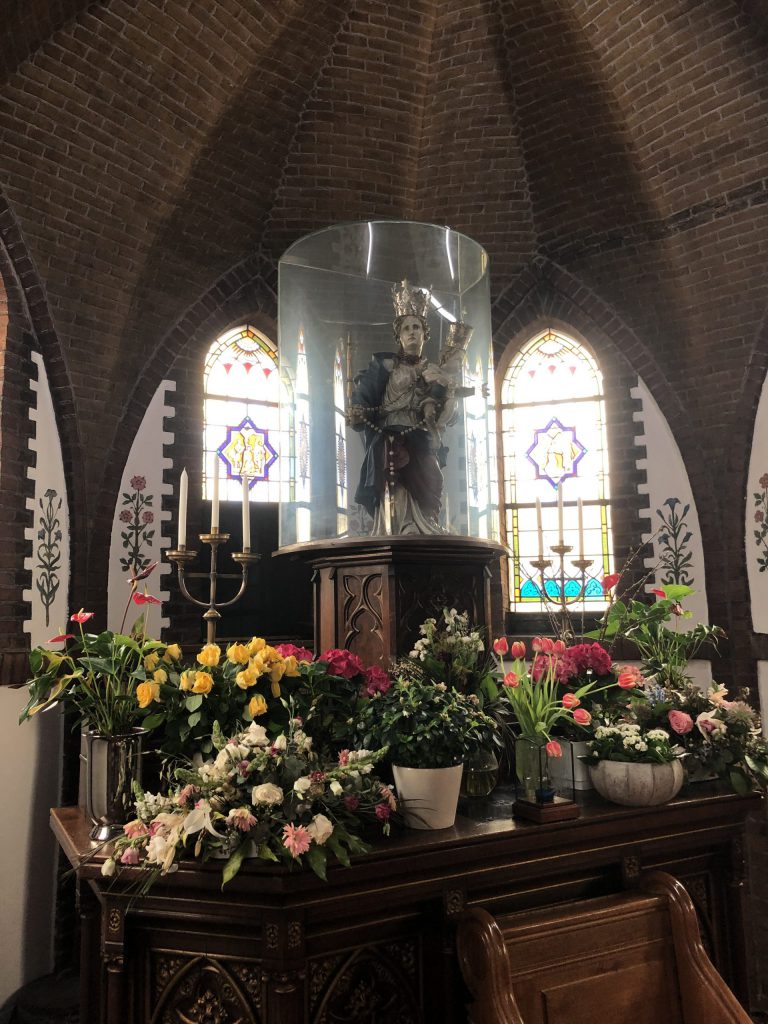
In 1810, the chapel was once again available for Catholics and pilgrimages resumed. In 1922, the chapel was replaced by the current building. The design was by J. van Groenendael from Breda and H. Nelissen from Hoeven was responsible for the construction.
Pilgrimage site
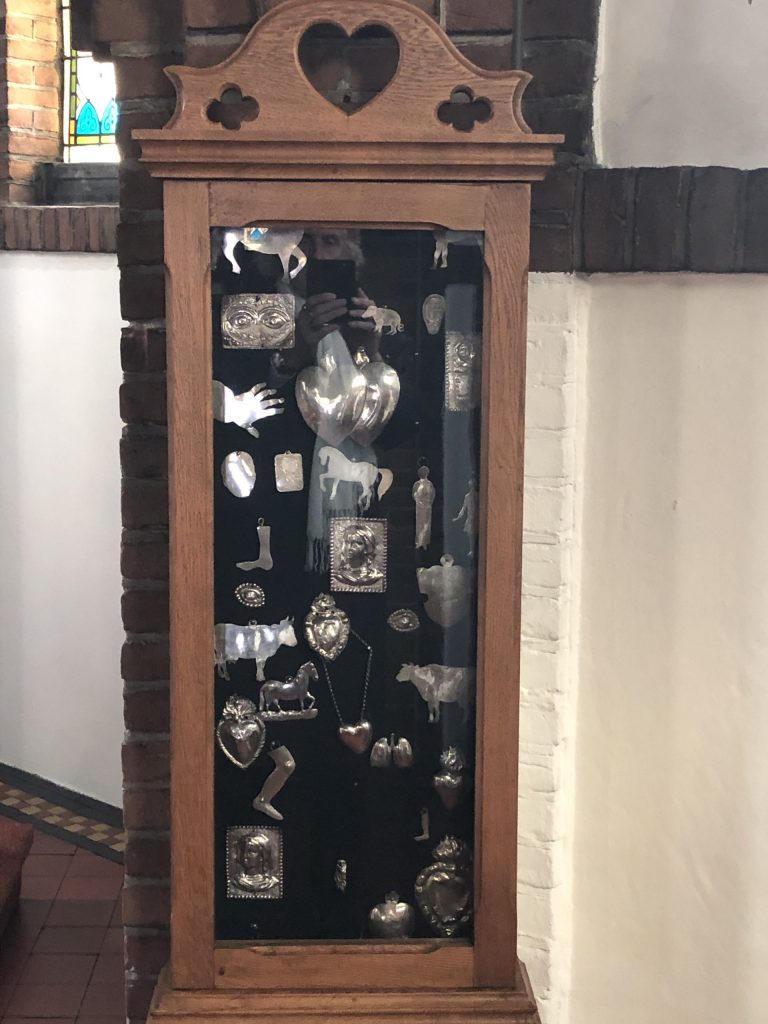
The chapel features more than ten stained-glass windows depicting the “Mysteries of the Rosary”. There is also a window showing Mary and Jesus. In two oak display cabinets hang a great many ex-votos. These are testimonies of gratitude for healings of people and animals.
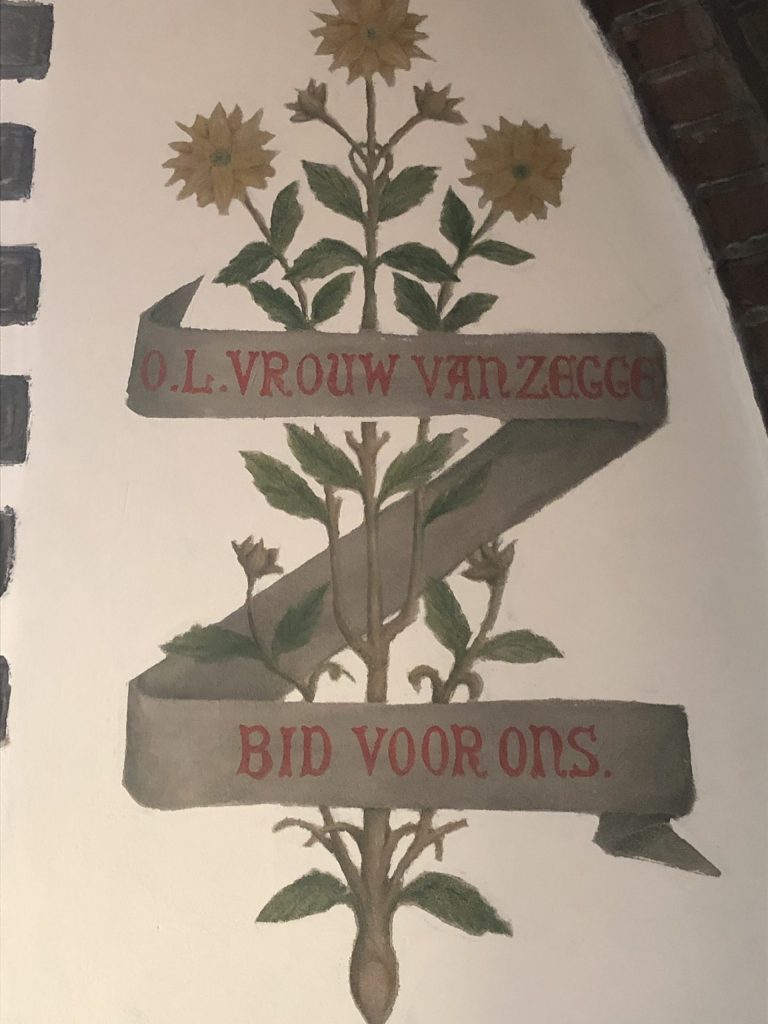
The walls are painted with scenes inspired by the “Litany of Loreto”.
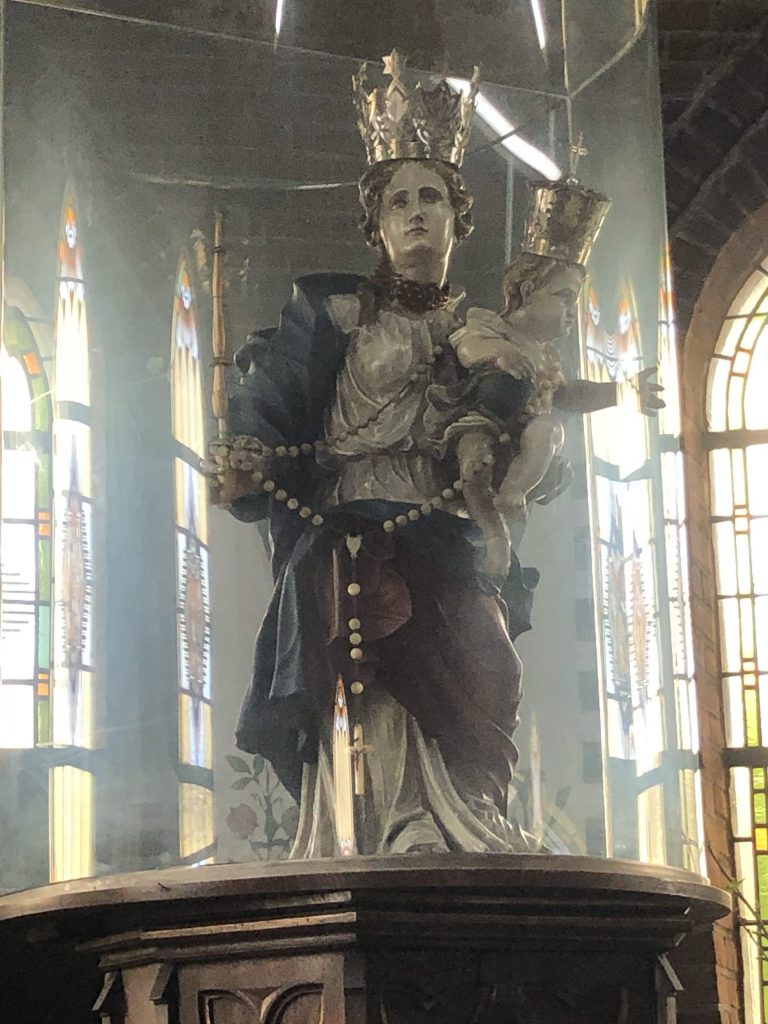
Particularly noteworthy is the miraculous, polychrome wooden statue of Mary, which dates from the 17th century. The carving is typical of the Renaissance period.
The chapel is open all year round and attracts many visitors, even outside the busy month of May. Within the diocese of Breda, the chapel in Zegge is the only officially recognized pilgrimage site.
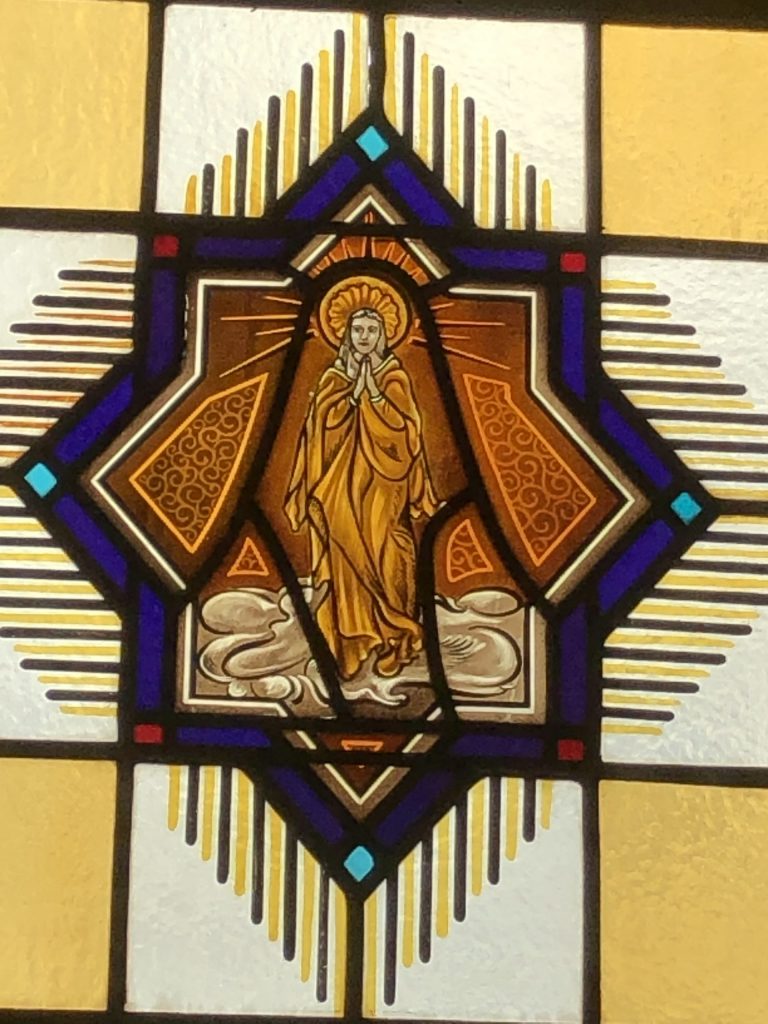
The chapel and, opposite, the Church of the Annunciation are well worth a visit.
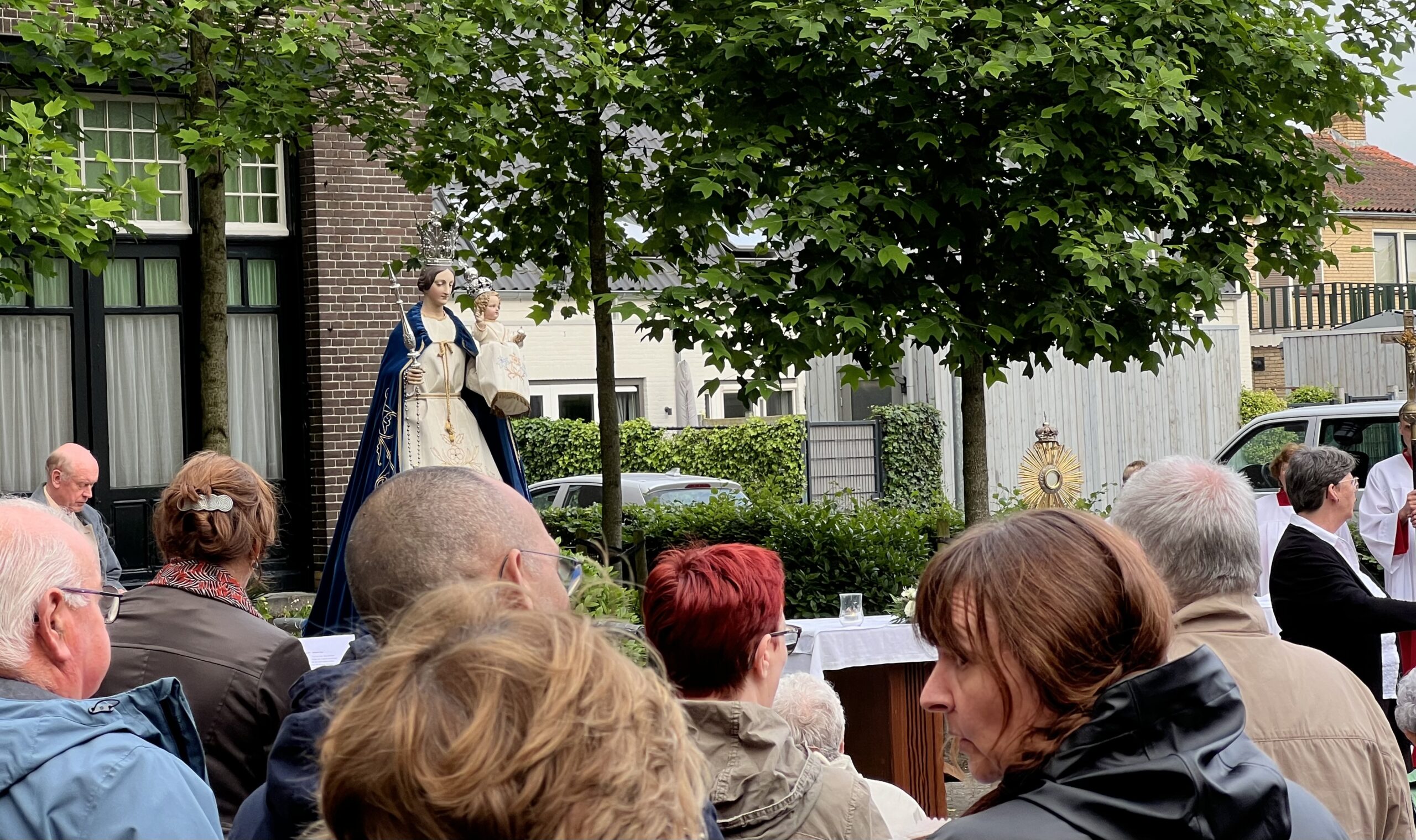
On 31 May, the Mariamonth will conclude in the church, followed by a procession (see the “Processions” section) with a solemn ending behind the church.
ACCESSIBILITY
Zegge is a village in Brabant, part of the municipality of Rucphen, and is situated close to the A58 motorway, between Breda and Roosendaal.
The chapel “Our Lady of the Seal” is located on Onze Lieve Vrouwestraat, in the middle of the village, opposite the parish church of Saint Mary of the Annunciation.
Experience
In the chapel, my attention is immediately drawn to the statue of Mary. What a special depiction of Mary with the infant Jesus. Mary is remarkably vividly portrayed, in a forward-moving pose. I've never seen her depicted like this before. The statue of Mary stands under a large glass dome. I've been told that the statue was made in the latter half of the 17th century and has braved many dangers from vandals and thieves. How valuable it is to be able to behold this statue.
The particularly striking scenes on the stained-glass windows also hold my attention for a long time. Here too, the source of inspiration from the “Litany of Loreto” makes itself felt.
Ex-votos hang here in abundance. The silver tokens of gratitude to Mary are not just from healed people, but also from various recovered animals. What an expression of thanks.
Next, I light some candles for a sick friend and a good friend. I take my place in the chapel. A few prayers follow and I thank Mary for this particularly lovely meeting.
Posted 16 March 2020
Last modified: 1 June 2024
~~~
