~~~
History
Construction of the Romanesque St. John's Church began around 1220. The base of the tower remains from this construction. The Brotherhood of Our Lady was founded in 1318. Initially, its members were “clerici et scolares,” meaning priests and trainee priests. Later, laypeople were also permitted to join. Income from indulgences enabled this organisation to fund the construction of a chapel in the St. John's Church, which was yet to be built.
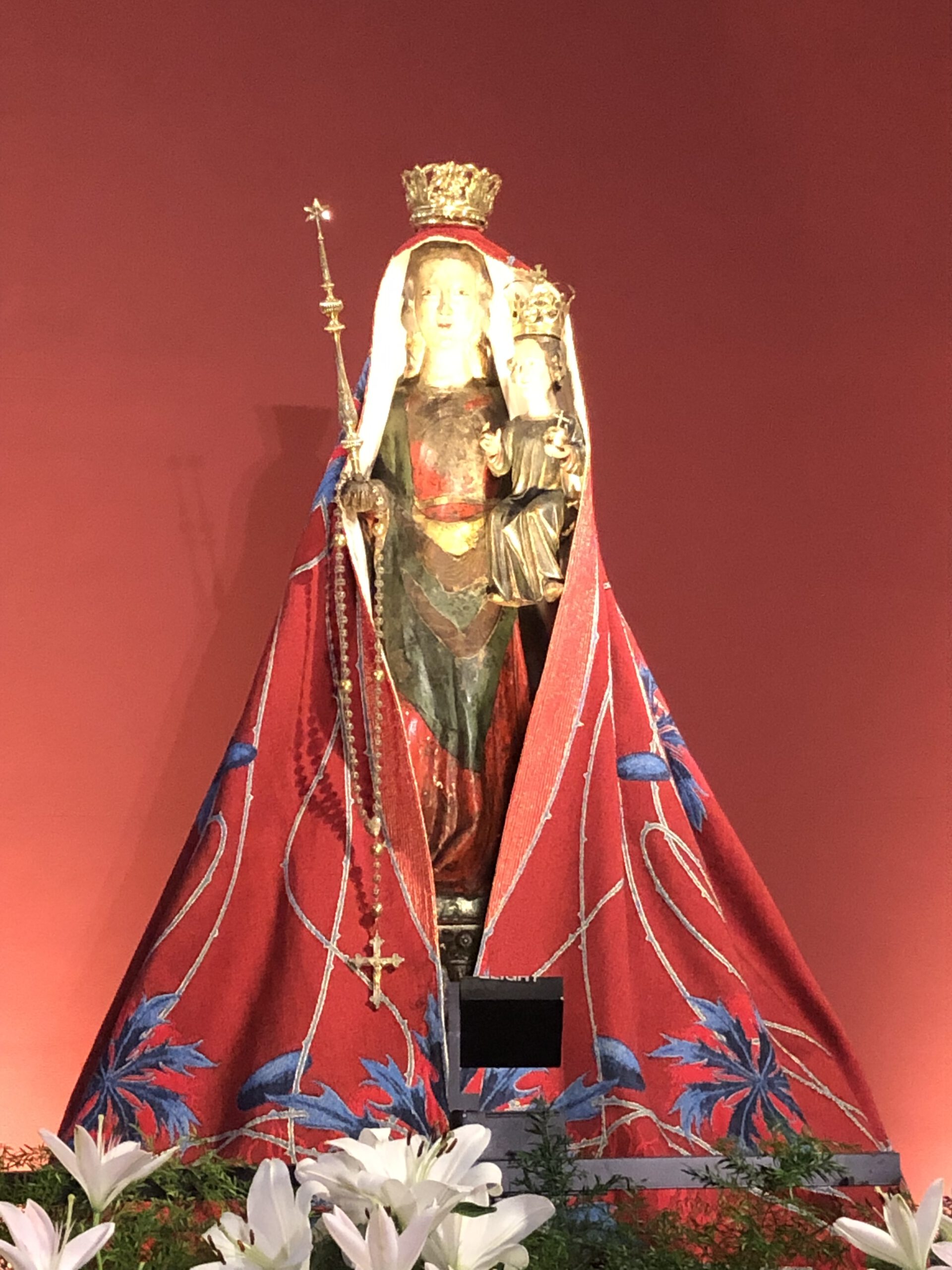
Construction work on the current church began in 1350 on the site of its predecessor. The pilgrimage site of ‘s-Hertogenbosch originated with the statue of Our Sweet Lady. This likeness dates from the 13th century and has been central to St. John's since 1380. History tells us that...
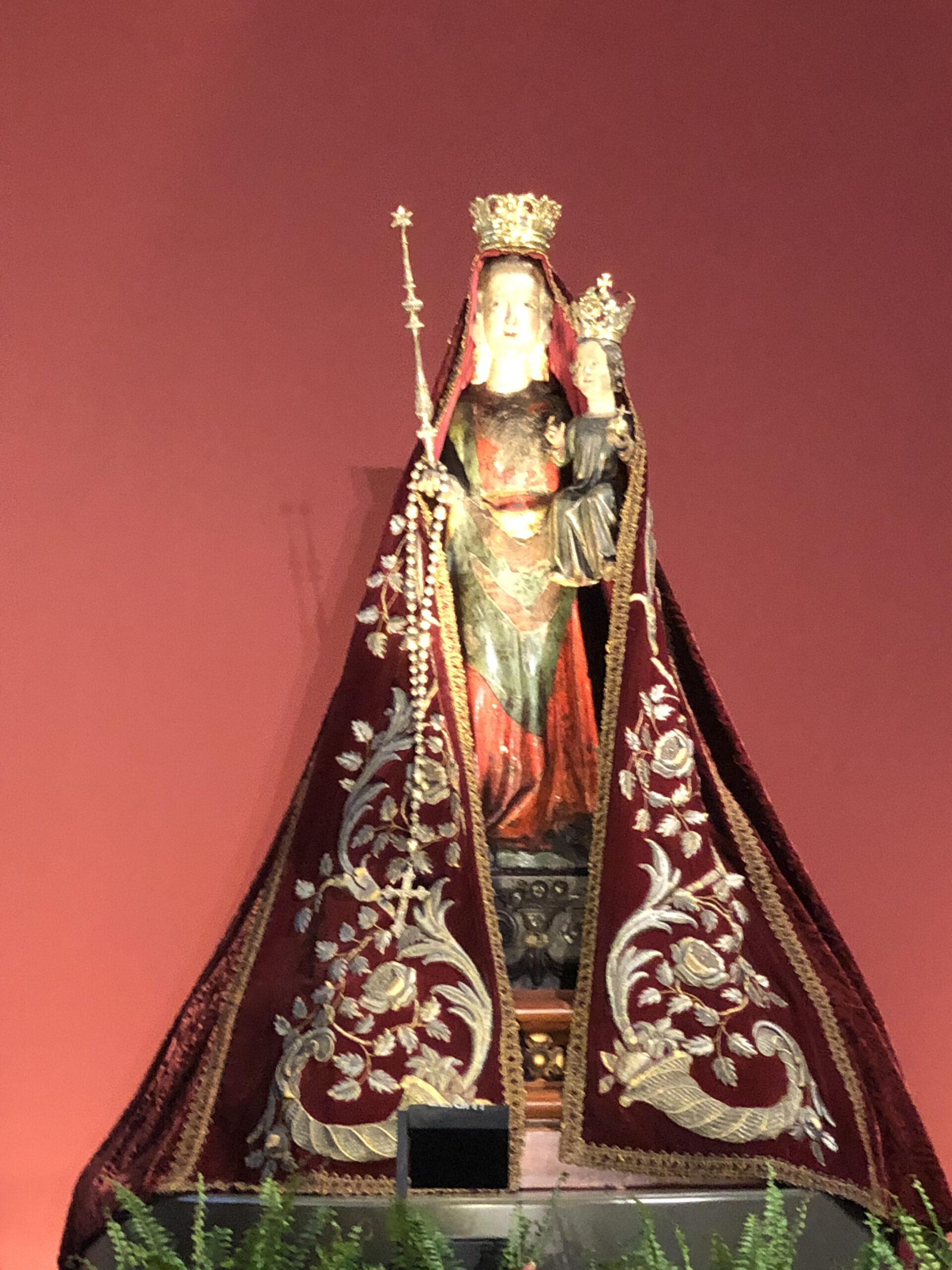
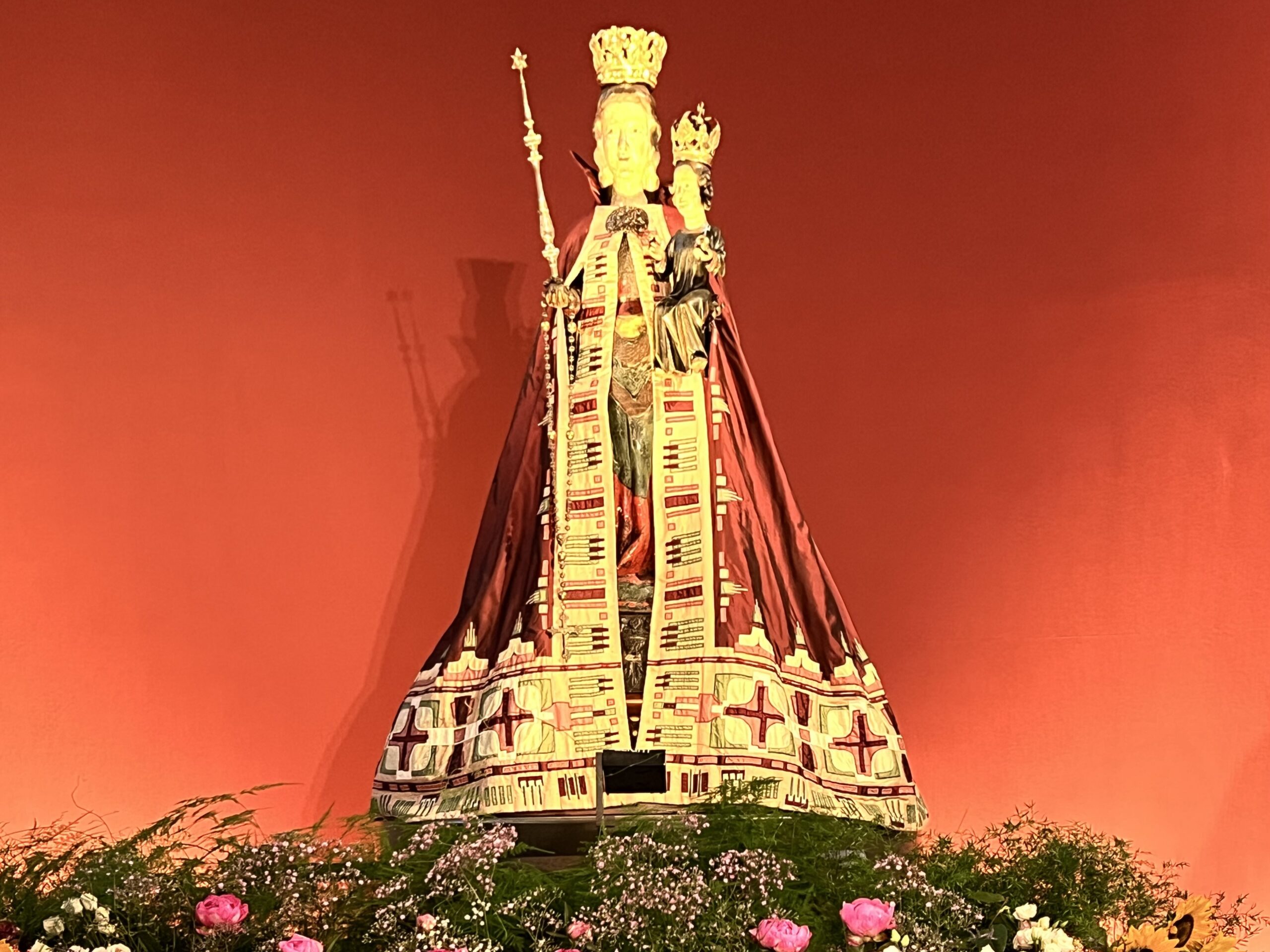
In 1380, an old statue of Mary is found that is somewhat damaged and considered less beautiful by many. People have an uneasy feeling about the unattractive statue. However, Mary appears in people's dreams, who say that the statue is ugly. Because of this, people repent of their statements. The statue of Mary is made of oak and dates from the period 1270-1310. A legend tells that a woman mocks the statue, then falls, and is then unable to move. After this incident, people are even more hesitant to say anything negative about the statue. Subsequently, the effigy of Mary is restored and given a prominent place in St. John's.
The first miracle happens in 1381; a woman has been paralysed for six weeks and can no longer walk. She has a dream, and in it, Mary instructs her to place a wax leg by her effigy in St. John's Church. The woman wakes up and does as Mary told her. When she has placed the wax leg by the statue in the church, she can walk again.
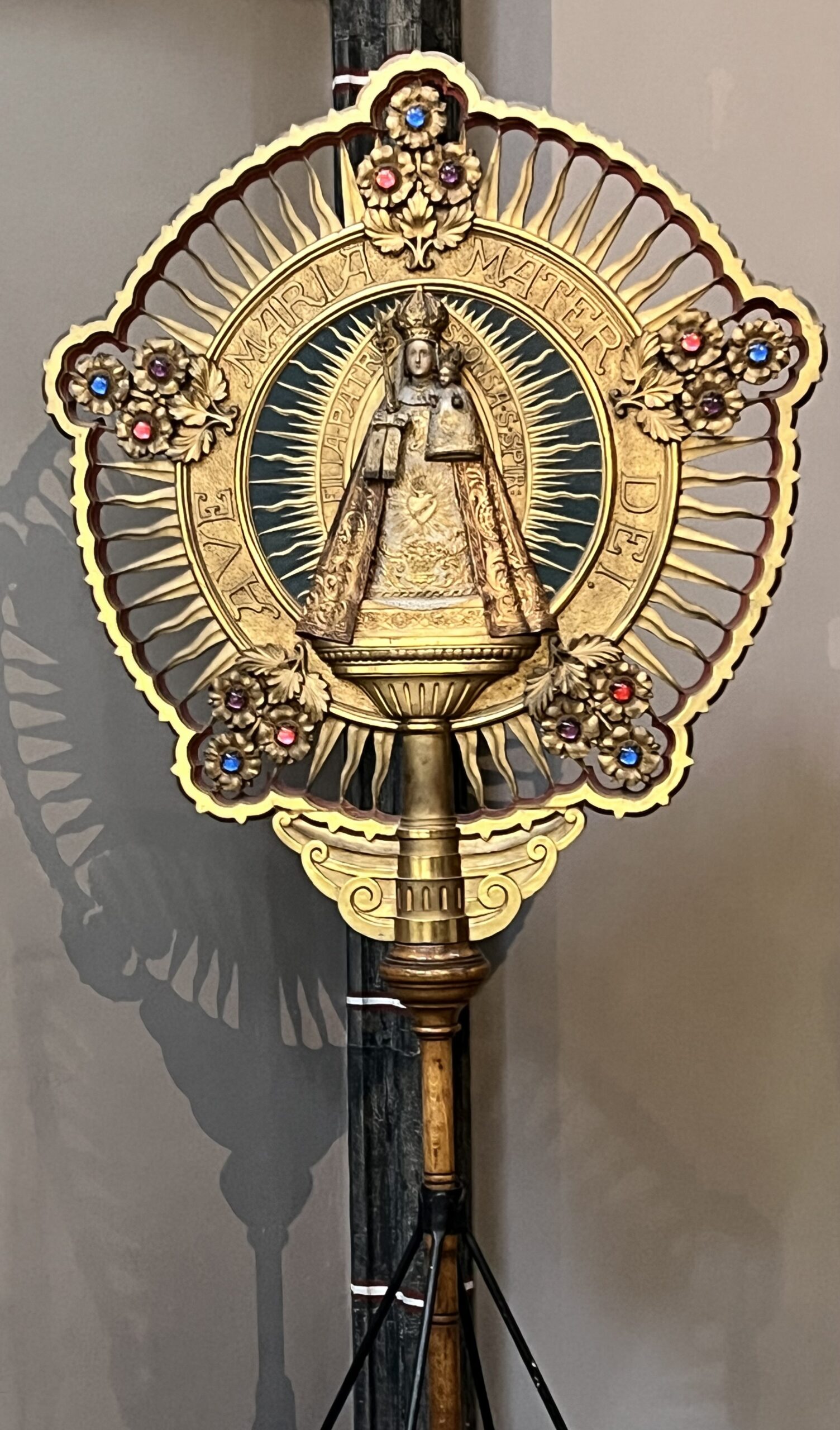
In 1383, more miracles occur. A man has had very poor eyesight for eighteen months. In 1382, he vows to go on a pilgrimage to Mary in ‘s-Hertogenbosch. In 1383, he arrives at the image of Our Lady, prays to Her, and requests that his eyes be healed. Shortly afterwards, he regains his former sight. Due to the miracles, the likeness of Mary increasingly becomes a miraculous image. This image of Mary receives the name Sweet Lady and is also called Sweet Mother.
The Book of Miracles of Our Lady highlights the many miracles from the period 1381-1603. Nearly 500 miracles have been recorded in this book.
Another legend tells of the disappearance of the plague... In the 14th century, the deadly plague has already claimed many victims, and people are afraid of contracting the pandemic. Many are ill from contagion, and death is near. One night, Our Lady walks through the streets of the city. The weather is not inviting for a walk, as the wind is raging fiercely. The next morning, a great miracle has occurred, as everyone living on the streets that Mary walked down is found to be healed. Out of gratitude to Our Lady, an annual procession was established, which still parades through the city centre.
The Brotherhood of Our Lady of Den Bosch is founded around the time of the miraculous image's origin. The aim of this organisation is to promote the veneration of Mary. In the 14th century, a “procession”, or pilgrimage, originated in the city centre, with the image of Sweet Lady Mary being a central part of the procession. Since 1484, the gatherings have taken place in the brotherhood's house; the Zwanenbroedershuis in ‘s-Hertogenbosch. However, the brotherhood's survival is threatened in 1629, as Protestant dominance increases and Catholics are no longer permitted to practice their religion openly. In that year, ‘s-Hertogenbosch was captured by the Protestant States Army. There was no longer permission for Mary veneration. The brotherhood had to cease its Catholic activities. As a result, the brotherhood is no longer Catholic, but ecumenical. In 1642, the statutes were amended, and there were 36 members, half Catholic and half Protestant. The organisation then focused on spirituality and ecumenism. The brotherhood is also known as “Zwanenbroeders” (Swan Brethren), as swan was on the menu during gatherings. This brotherhood supports charitable causes. In 1836, the brotherhood was able to resume its Catholic activities. The thanksgiving procession to Mary for the expulsion of the plague still exists. The thanksgiving procession departs from and ends at the Sint-Jan.
Following the siege and fall of ‘s-Hertogenbosch in 1629 by Protestant soldiers led by Stadtholder, Prince of Orange, and Admiral-General Frederik Hendrik of Orange (1584-1647), the miraculous image is saved. The effigy disappears from St. John's Cathedral and is taken to Brussels for safekeeping. However, the image remains in Brussels for no less than 2 centuries. In 1836, the Brotherhood is re-established. The first major challenge is to bring the effigy of the Sweet Lady back to ‘s-Hertogenbosch. It is only in 1853 that the image of Our Lady of Den Bosch is returned to ‘s-Hertogenbosch. The Brotherhood worked diligently and intensively towards this goal for a long time. Subsequently, the Brotherhood's focus shifts entirely to promoting Marian devotion in the grand church of ‘s-Hertogenbosch.
The history of St. John's is also eventful. In 1561, St. John's became a bishop's church, and a major fire devastated the church in 1584. In 1629, Catholics were expelled from St. John's by Protestants, and for 180 years, St. John's served as a Reformed church. Through the intervention of French Emperor Napoleon, the church returned to Catholic hands in 1810. The church received the honorary title of basilica in 1929, and Pope John Paul II, the head of the church from 1978 to 2005, visited St. John's in 1985. For many years, St. John's was under restoration; this was due to repairs following fires and the wear and tear of the old building. St. John's is the Brabant pearl of Gothic architecture, and with the statue of Our Sweet Lady and the effigies of hundreds of saints, the church has become a place of pilgrimage. It is a monument of national significance.
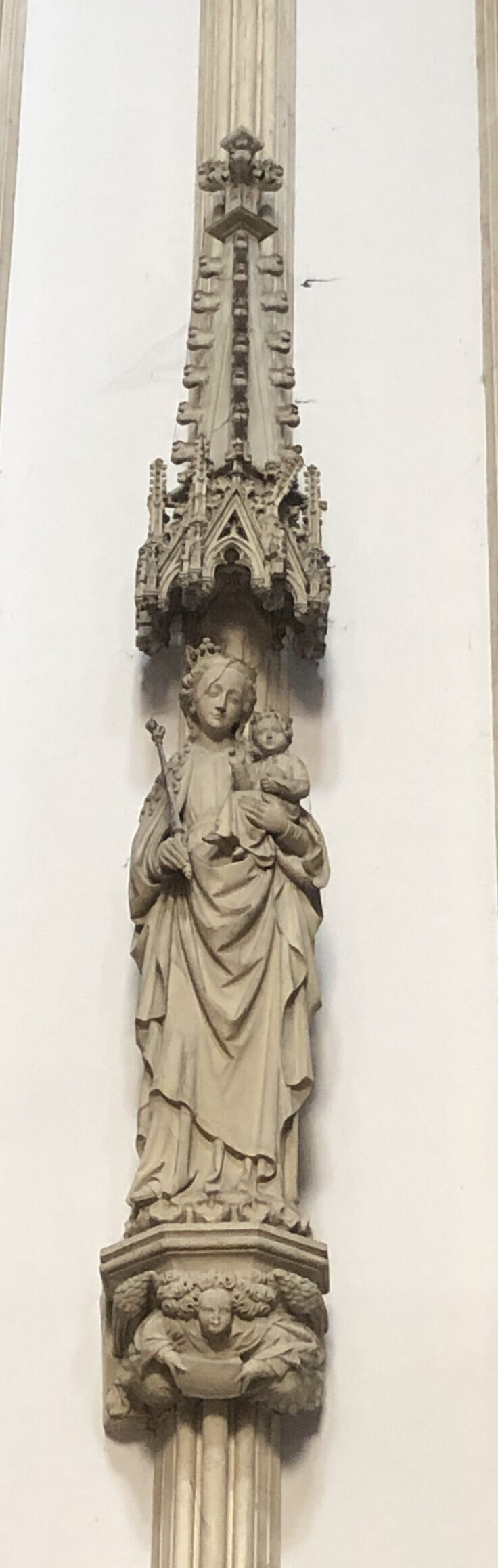
The statue of Mary in St John's has survived fires, wars and disputes. It still stands in the Chapel of Our Lady, where many light a candle daily and turn in prayer to the Sweet Mother of God.
Pilgrimage site
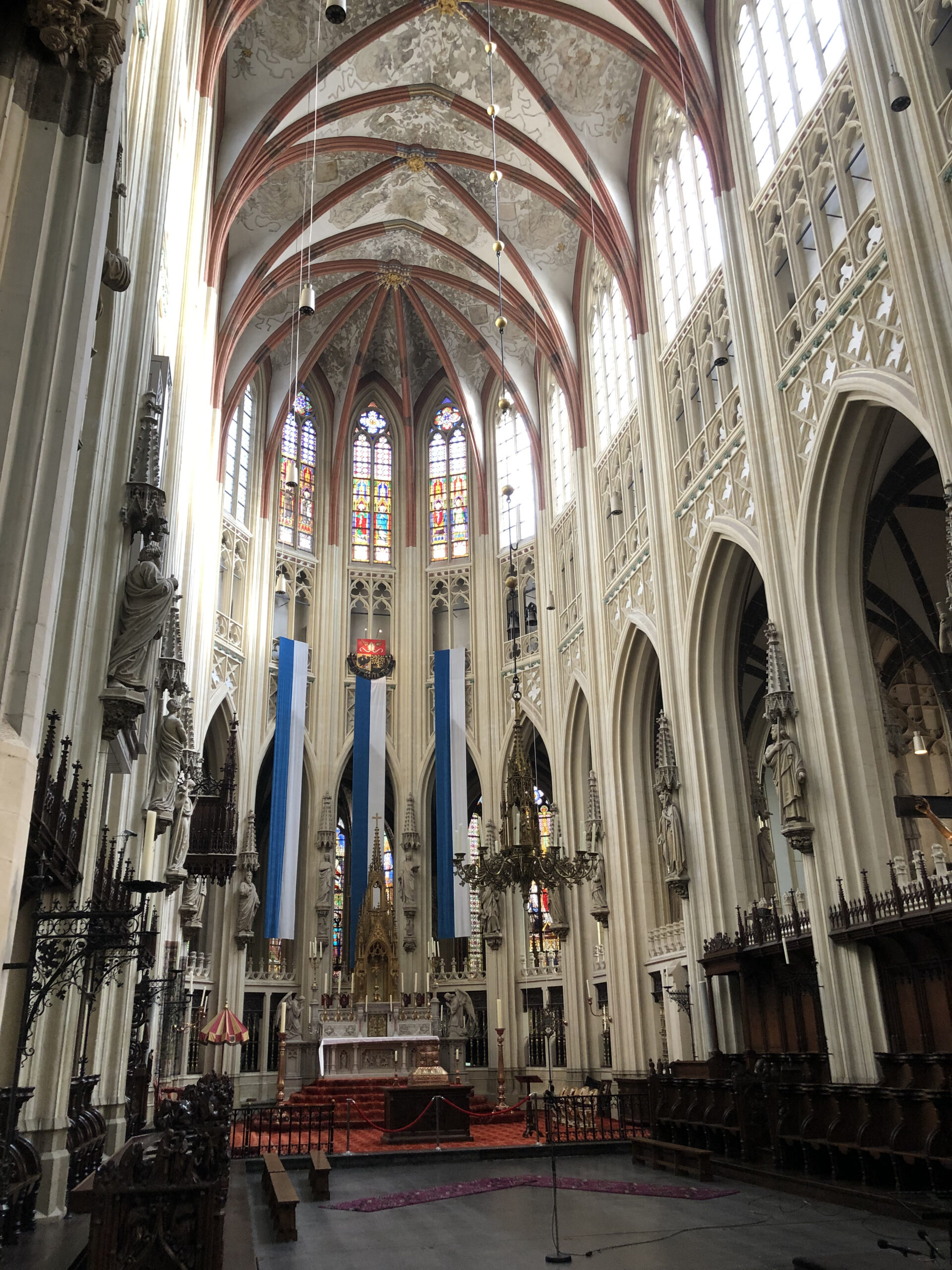
The St. John's Cathedral is a gigantic structure and can be seen from a great distance. The building is 115 metres long and 62 metres wide. The spire reaches up to 73 metres. Hundreds of statues can be seen in and around the cathedral. There are over 500 gravestones inside the church.
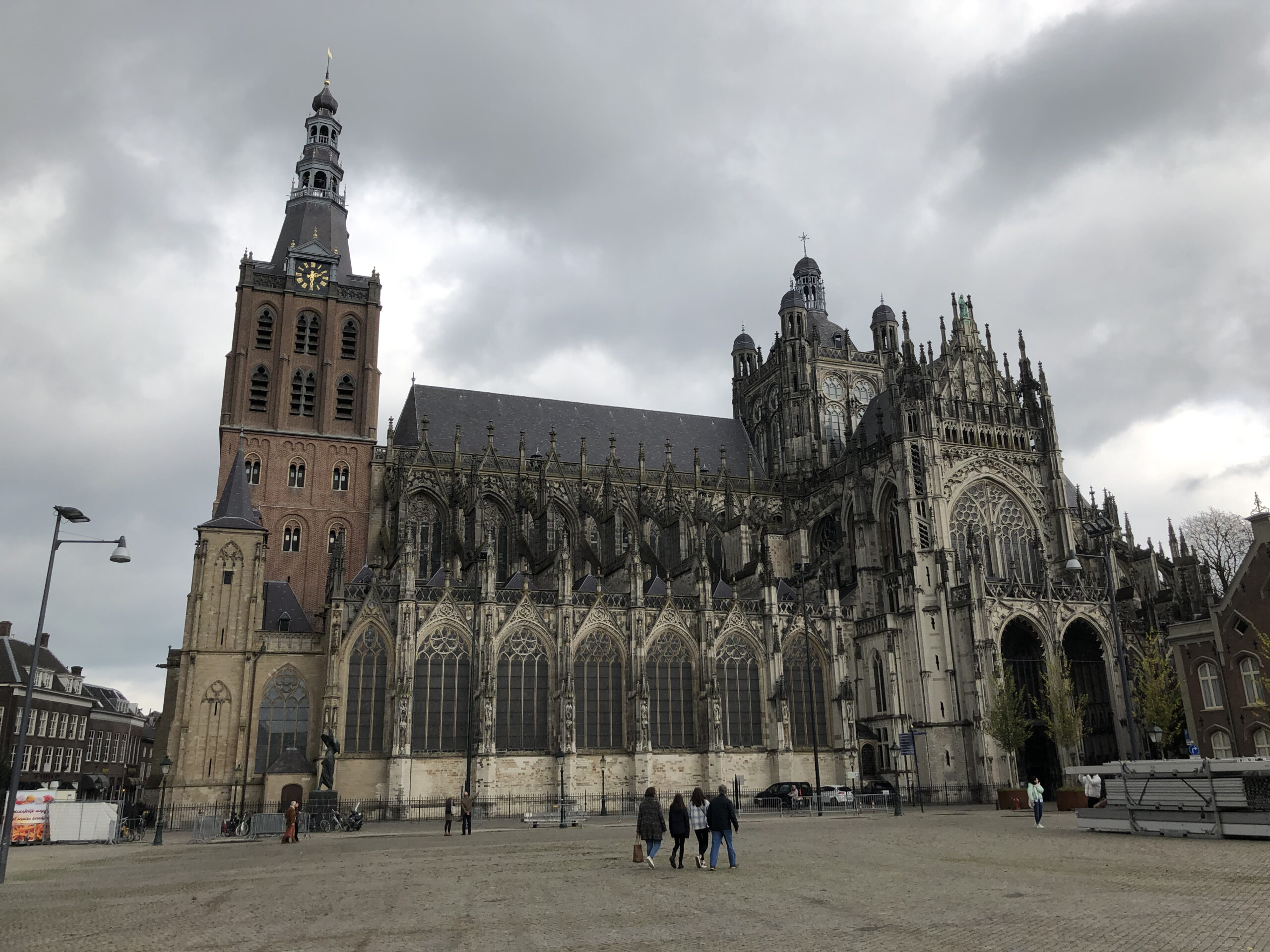
Every day, many visitors come to the cathedral to visit Mary. Many prayers are offered and many lights are lit at the Sweet Mother. People come to pray, to give thanks, to ask for strength, to express their feelings and to be comforted by the Sweet Lady. In doing so, many candles are lit and thus the image of Mary is always in the light.
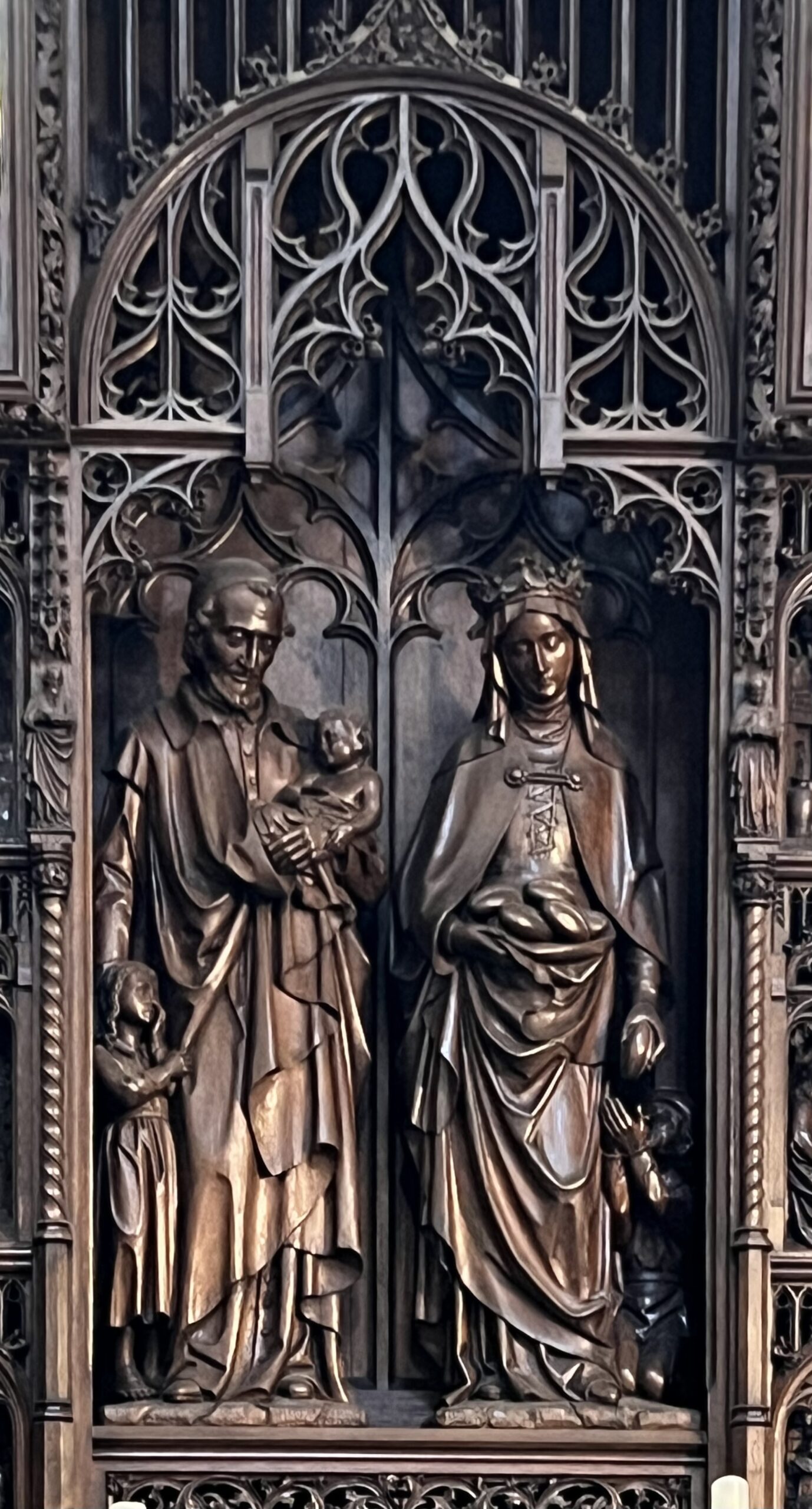
The chapel, where the image of Mary stands, is always in a festive atmosphere. This chapel is maintained and especially decorated with flowers by members of the Brotherhood of Our Lady of Den Bosch.

The organisation of the cathedral is in the hands of the provost. This is the pastor who governs the church in the name of the bishop.
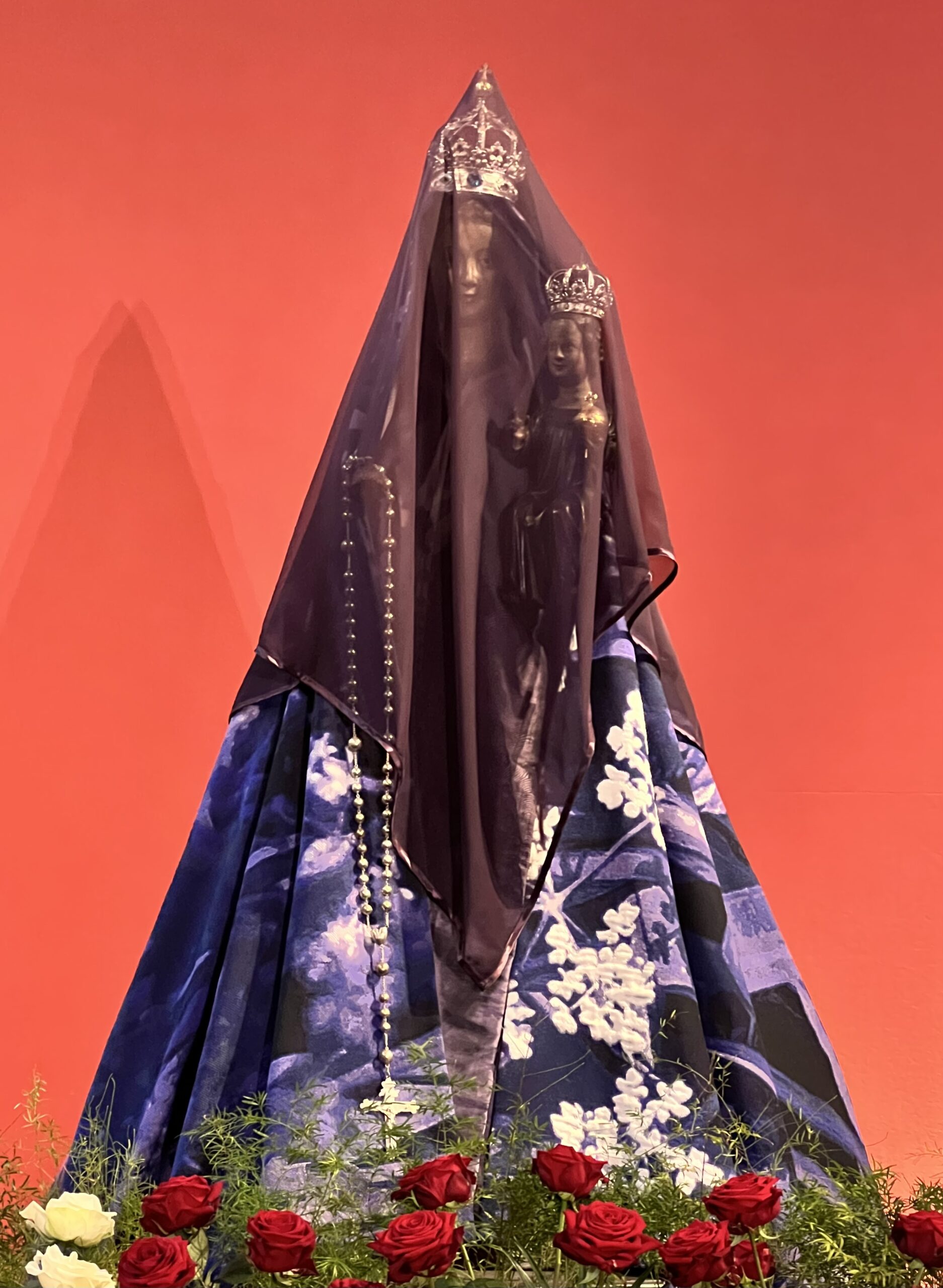
During Holy Week, the week before Easter, the statue of Mary is veiled and white and red roses are placed in front of it.
In May, the statue of Mary stands in the centre of the cathedral. Many flowers and candles surround Our Lady. It is particularly in May that many prayers are offered at the miraculous image.

During the Christmas period, an extensive nativity scene, including a crib, can be visited in the cathedral. Its preparation takes weeks, involving the placement of numerous stuffed animals, statues, some buildings, and a great many Christmas trees. Around 80,000 visitors come annually to admire the special Christmas scenes.

The cathedral is freely accessible to visitors all days of the year. There are services in the church daily. This place of pilgrimage is the most visited Marian shrine in the Netherlands, with thousands greeting the image of Our Lady of the Sweet Love in the Marian chapel every year.
ACCESSIBILITY
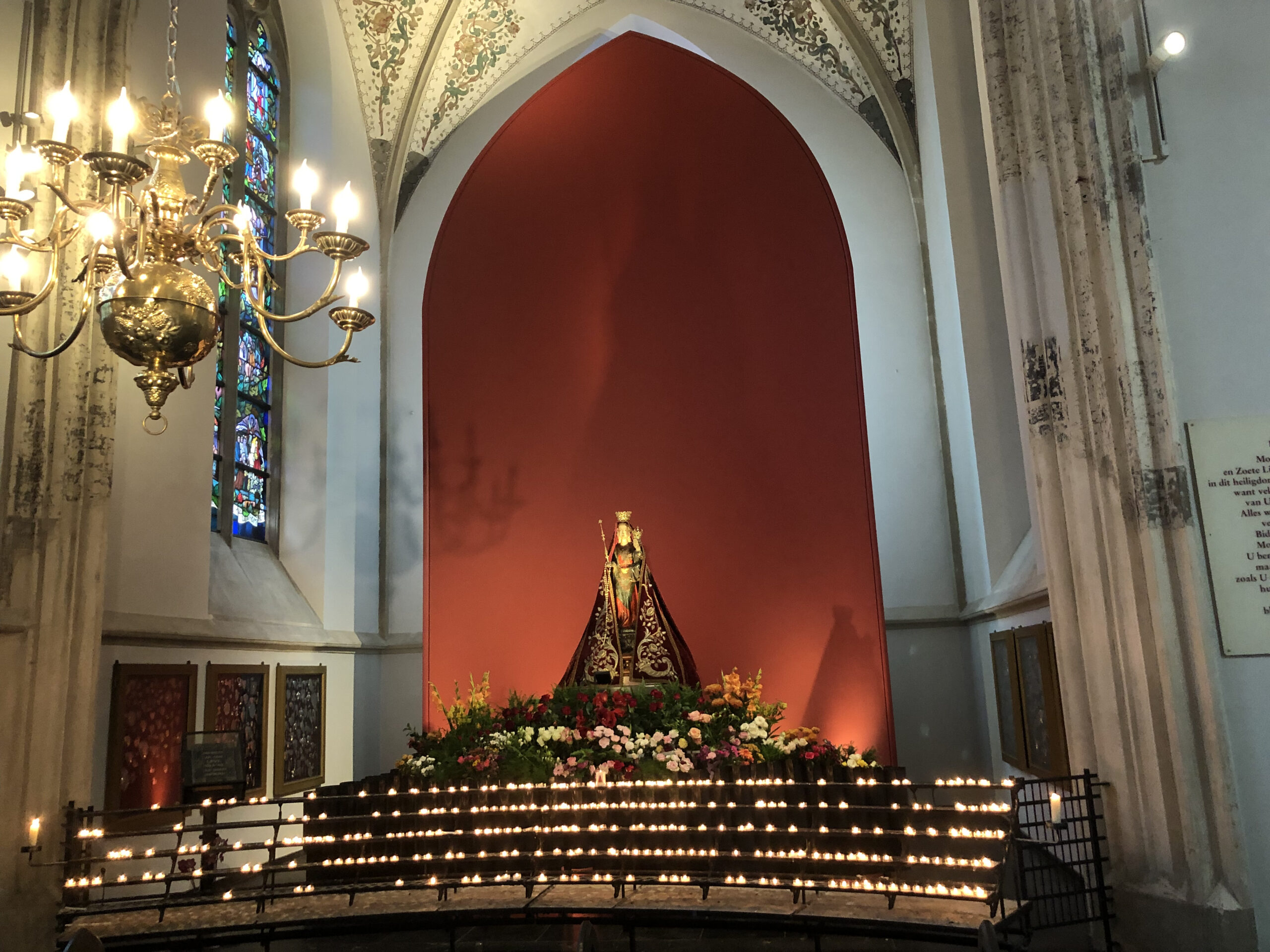
St John's Cathedral is located in the centre of Den Bosch.
The address of the Brotherhood of Our Lady of Den Bosch's membership administration is Choorstraat 1, 5211KZ ‘s-Hertogenbosch.
Up-to-date information can be found on www.sintjan.nl.
Experience
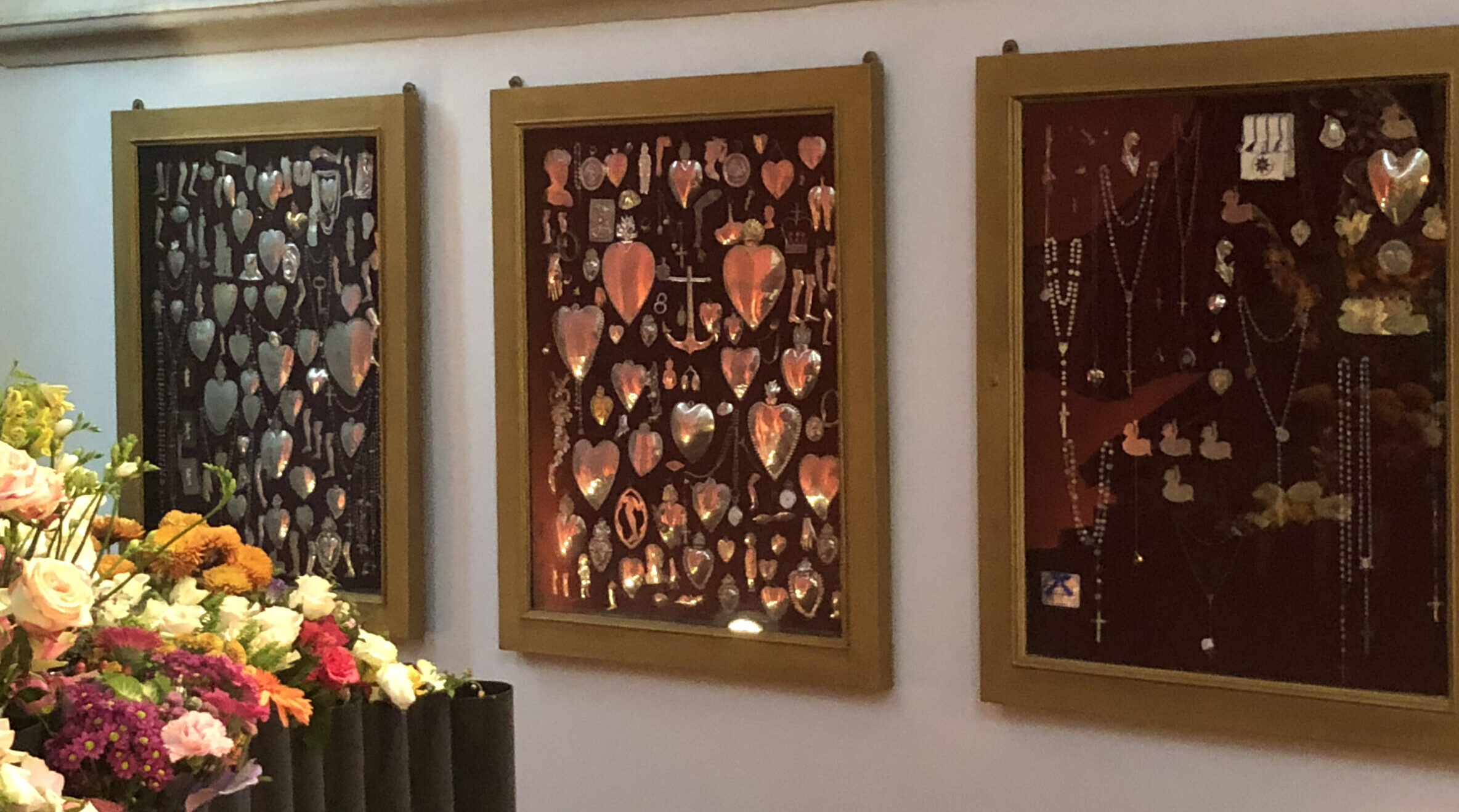
In the Chapel of Our Lady of Den Bosch, I stand before the statue of Mary, which has been making history since the 14th century. Many people visit here daily. They come to pray, light a candle, enjoy the beauty of the chapel, and be impressed by the particularly captivating miraculous statue, which is surrounded by flowers. Near the statue of Mary lies the thick Book of Miracles.
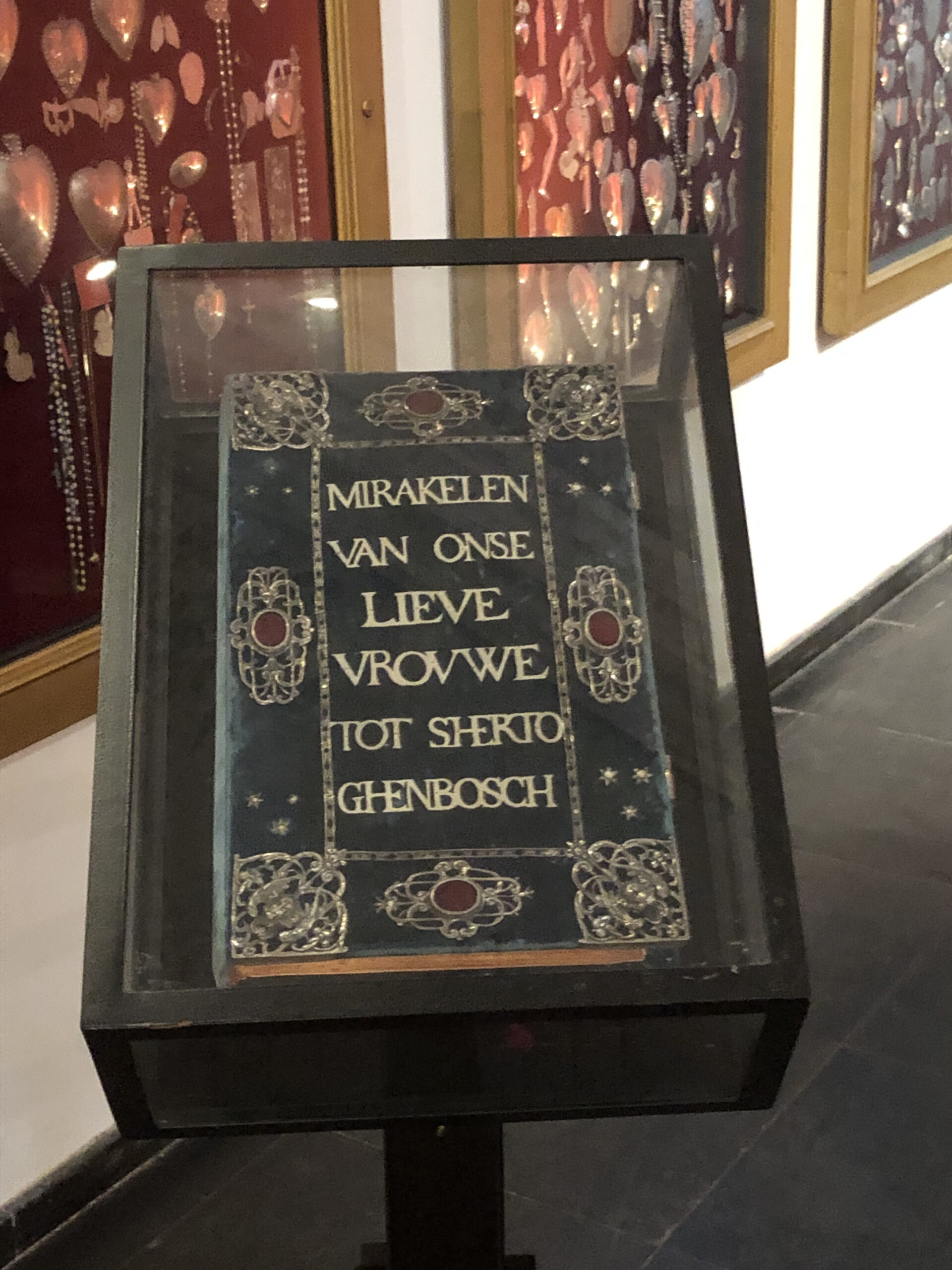
In the chapel, I learn that patrons are most welcome at the Brotherhood of Our Lady of Den Bosch. The members of this organisation look after the chapel and undertake various activities.
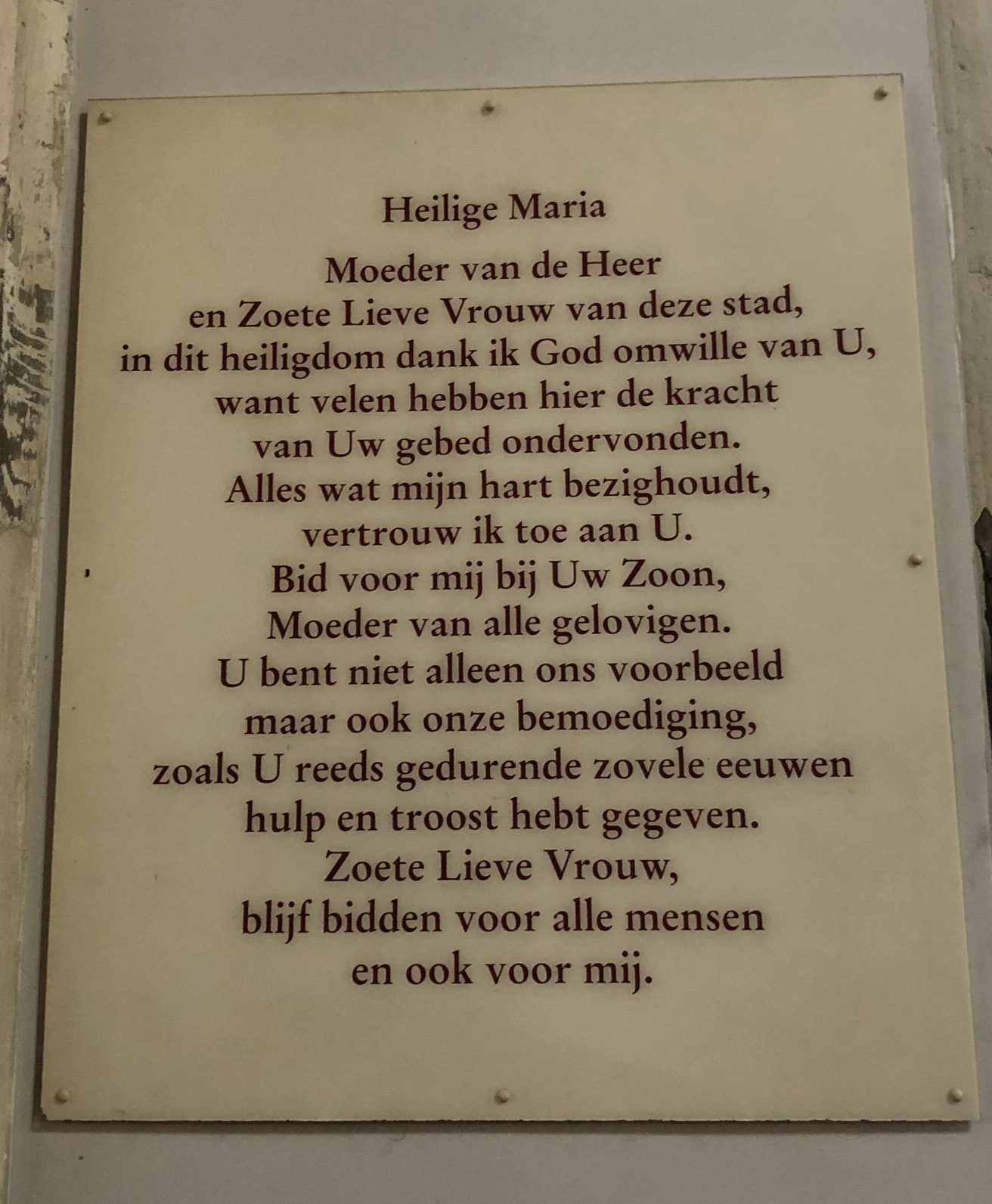
The text of the prayer of the Chapel of Our Lady of Den Bosch moves me. It begins with …
“Holy Mary, Mother of the Lord and Sweet Lady of this city, in this sanctuary I thank God for you, because many here have experienced the power of your prayer.”
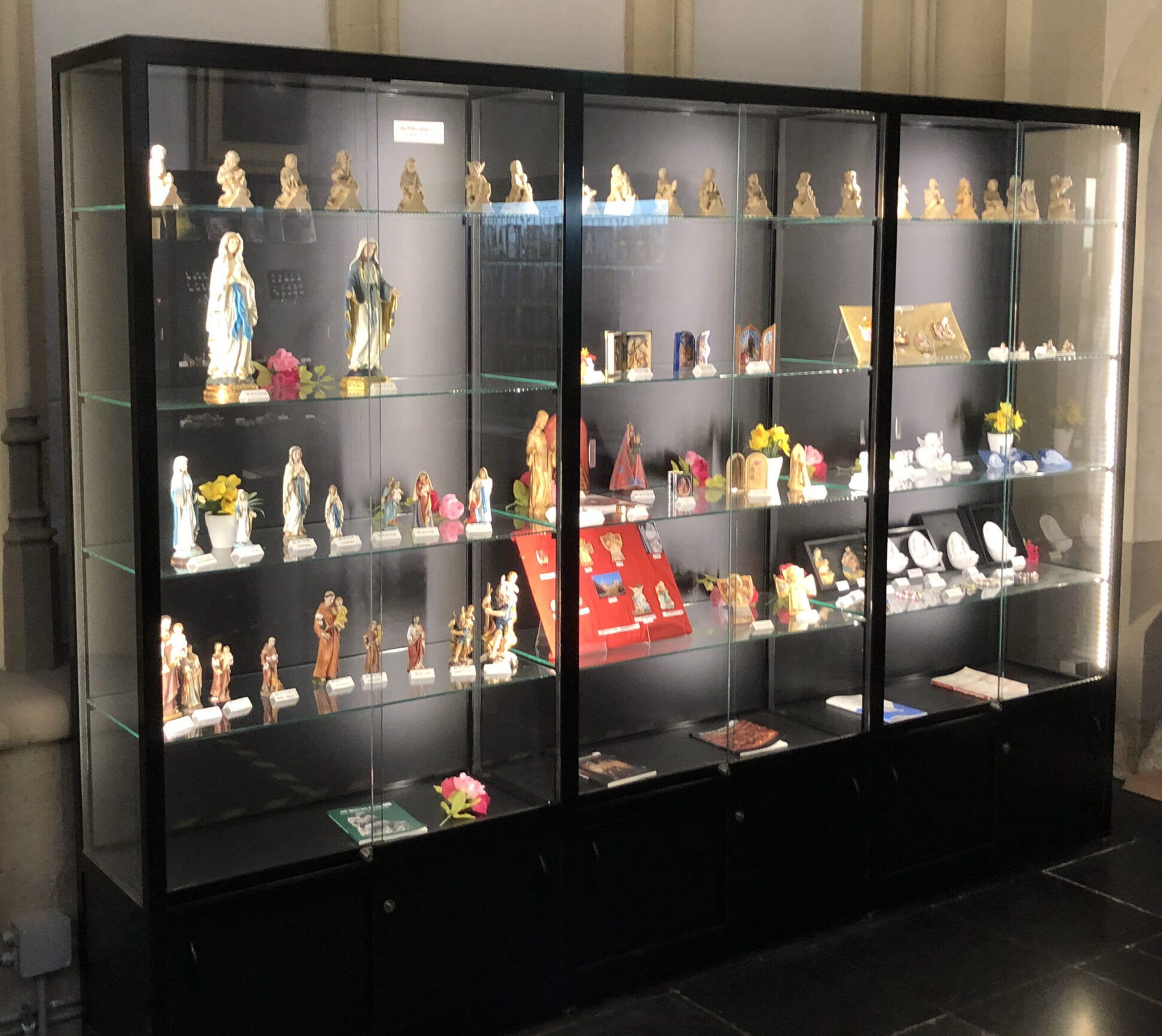
Finally, I'm going to visit the devotional shop. What a lot of choice there is...
Every year, the basilica features an extensive nativity scene with many tableaux, including the angel's annunciation to Mary, the newborn Jesus with Mary and Joseph, and visits to the young child. More than 100 figures have been created to make the nativity scene unique in the Netherlands.
~~~
Impressions of the nativity scene in St. John's Basilica in ‘s-Hertogenbosch
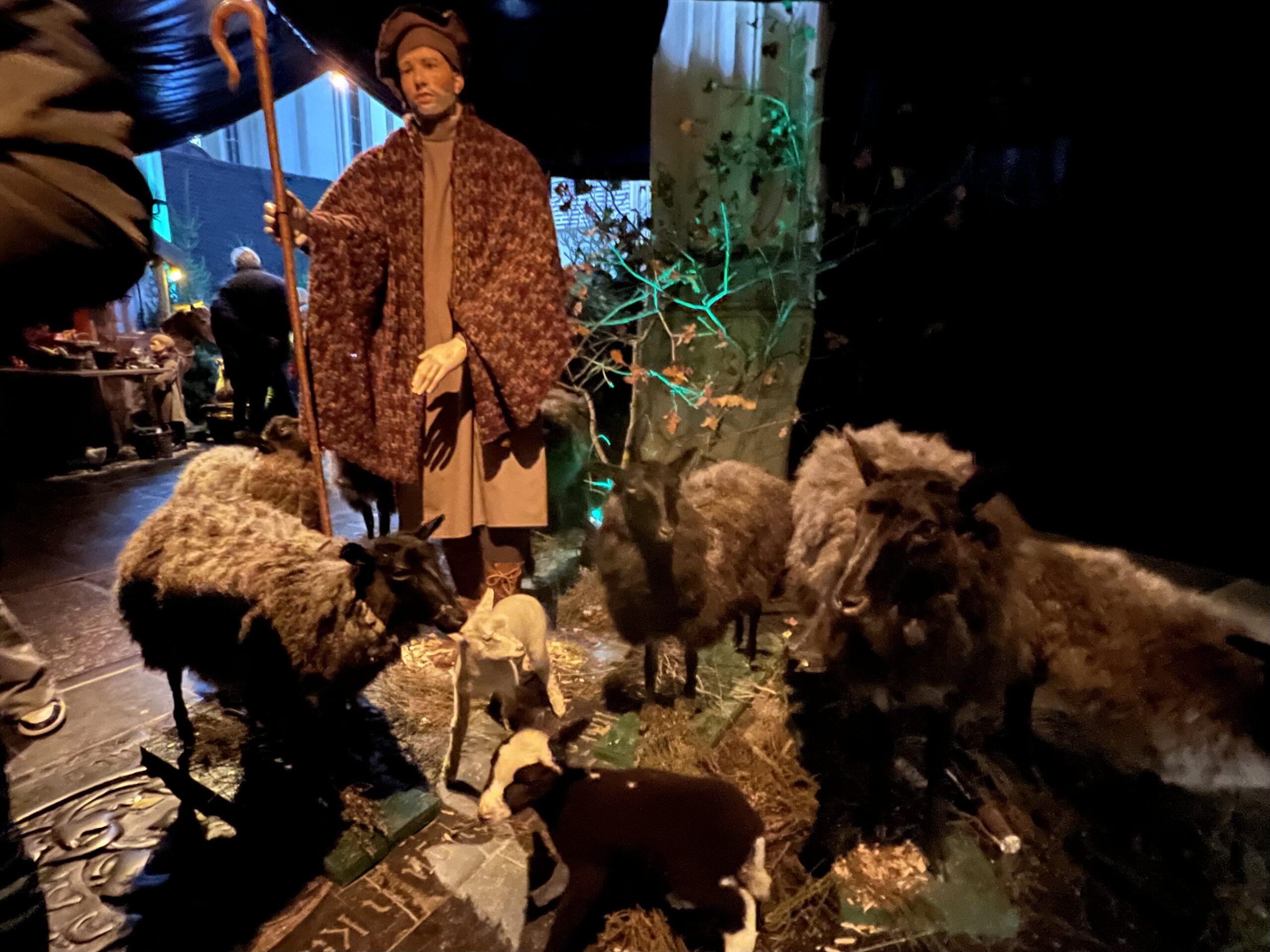
Each year, Christmas scenes are depicted around the chancel of St. John's. Dozens of figures of people and animals are placed in the large “nativity scene”. Thousands visit the nativity scene annually.
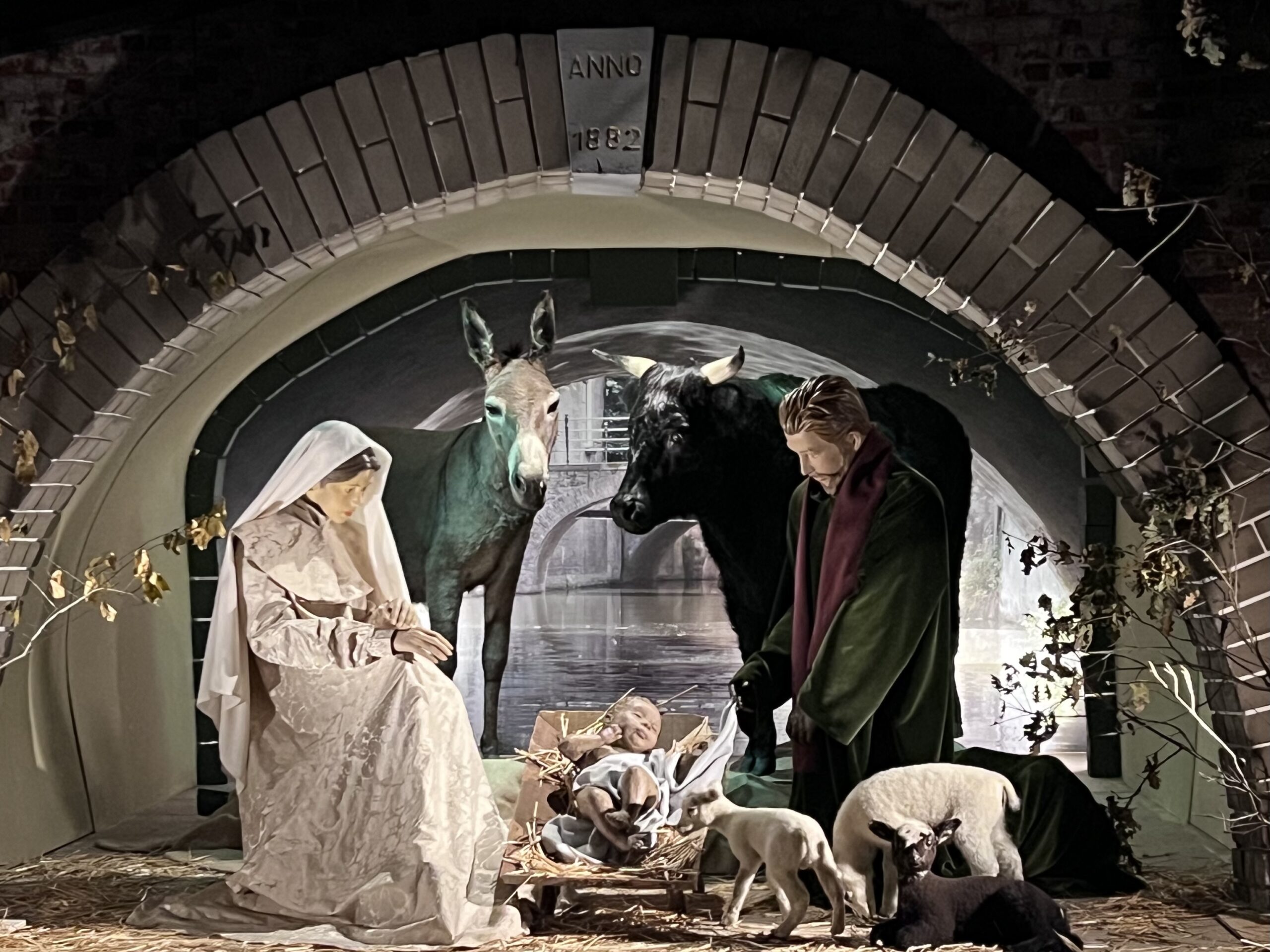
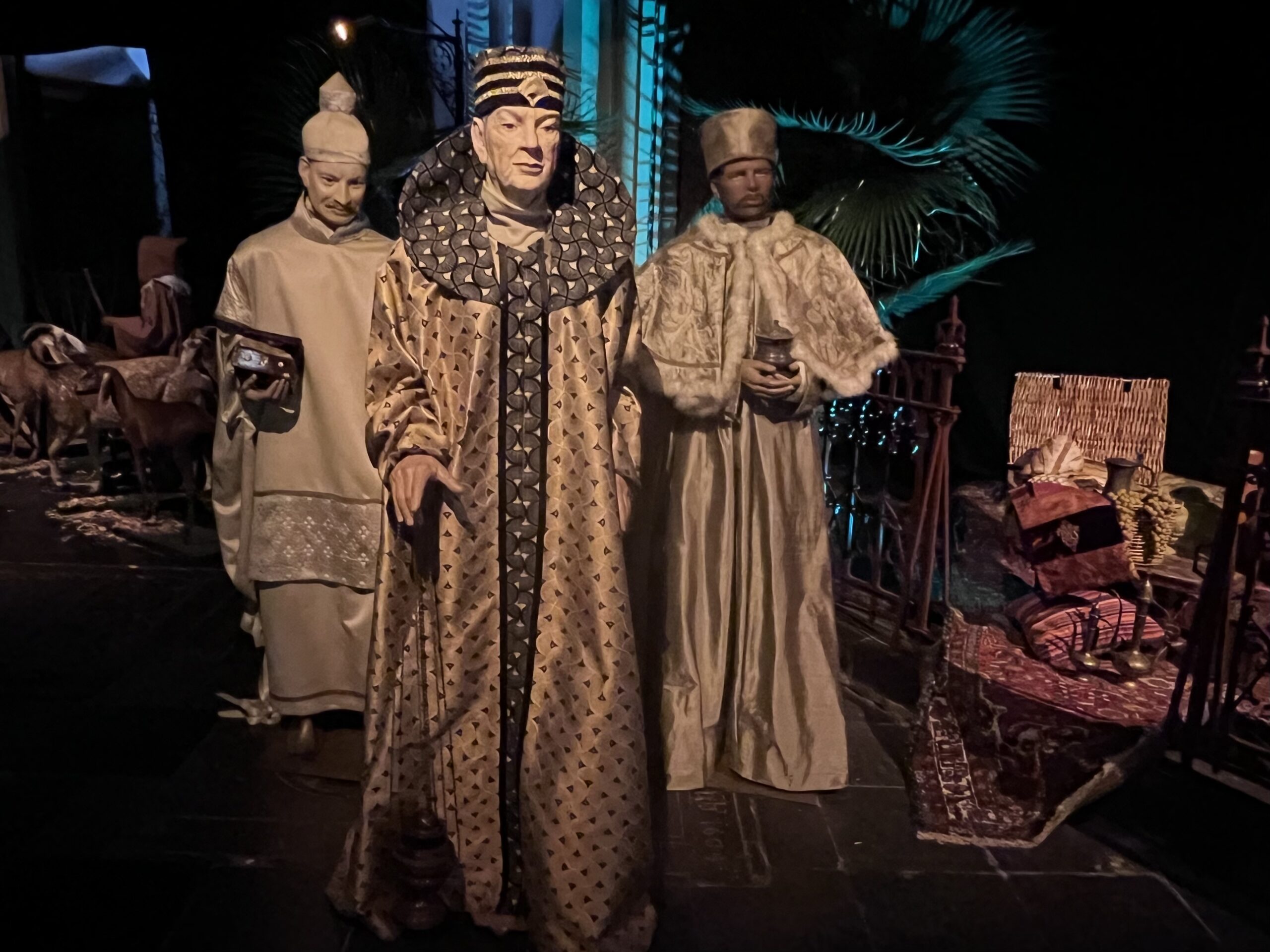
In 2025, the nativity scene will be constructed from six scenes, namely, the tower of the basilica, shepherds and sheep, the birth of Jesus, the wise men from the East, the baptism of Jesus in the Jordan and the wedding at Cana.
~~~
Each year, a procession takes place through the city, starting and ending at St. John's. The procession is usually held on the second Sunday of May. See also the section “processions”.
Visiting St. John's brings me peace, a chance to soak up the atmosphere and admire the many artistic expressions.
Environment
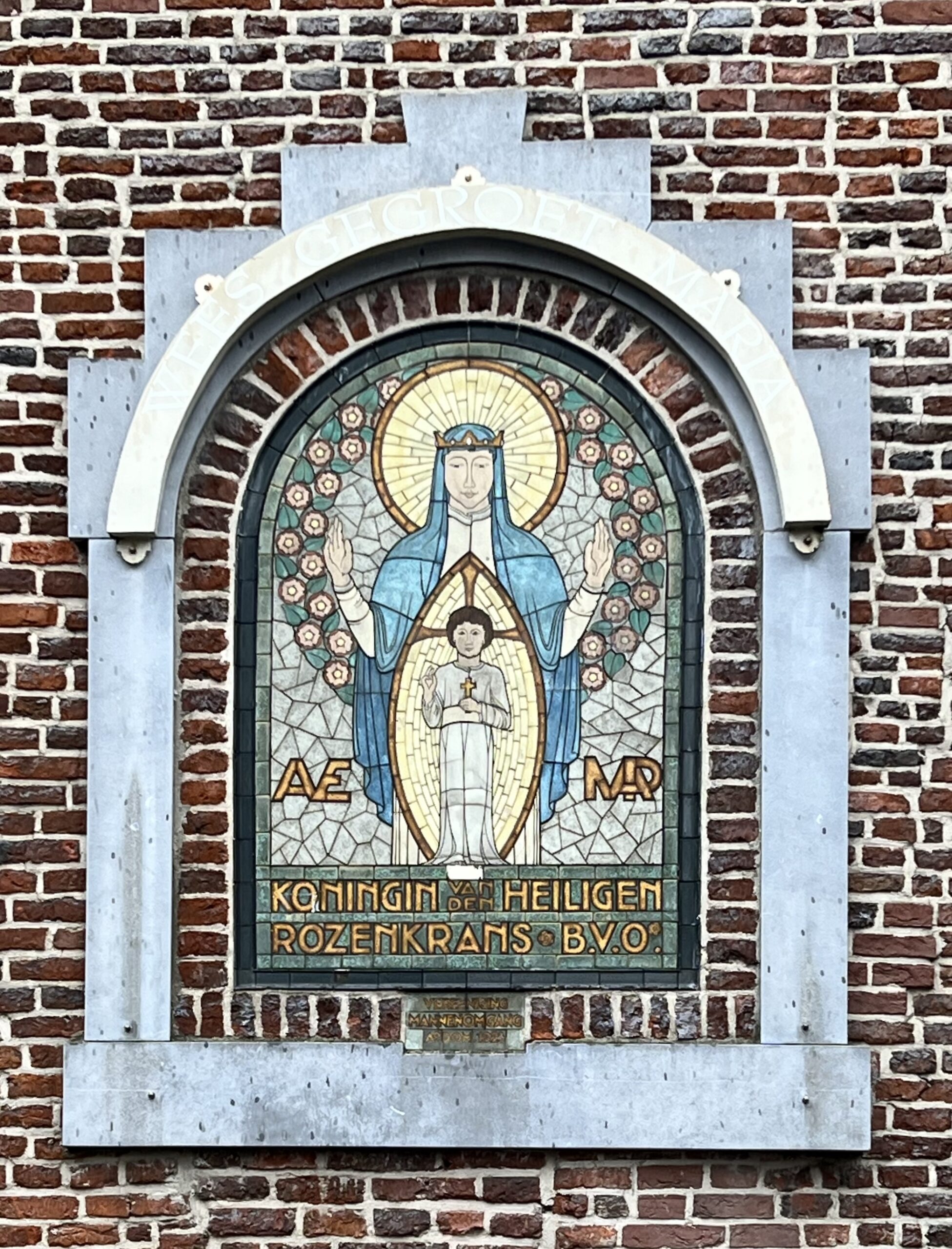
A large mosaic of Mary has been placed against the left gable of the property Sint Jorisstraat 23 in ‘s-Hertogenbosch. This is in the place where a monastery stood around 1600. At the top of the tableau, in a semicircle, it reads “WEES GEGROET MARIA” (Hail Mary). Below the image, it reads “AVE MARIA” and “Koningin van de Heiligen Rozenkrans B.V.O.” (Queen of the Holy Rosary, Pray for us). At the bottom of the artwork, it states “vereniging mannenomgang” (men's procession society) with the year 1923. This society was founded in 1866 by furniture maker Johannes Theodorus Dirks (1828-1912), when the city was ravaged by a cholera epidemic.
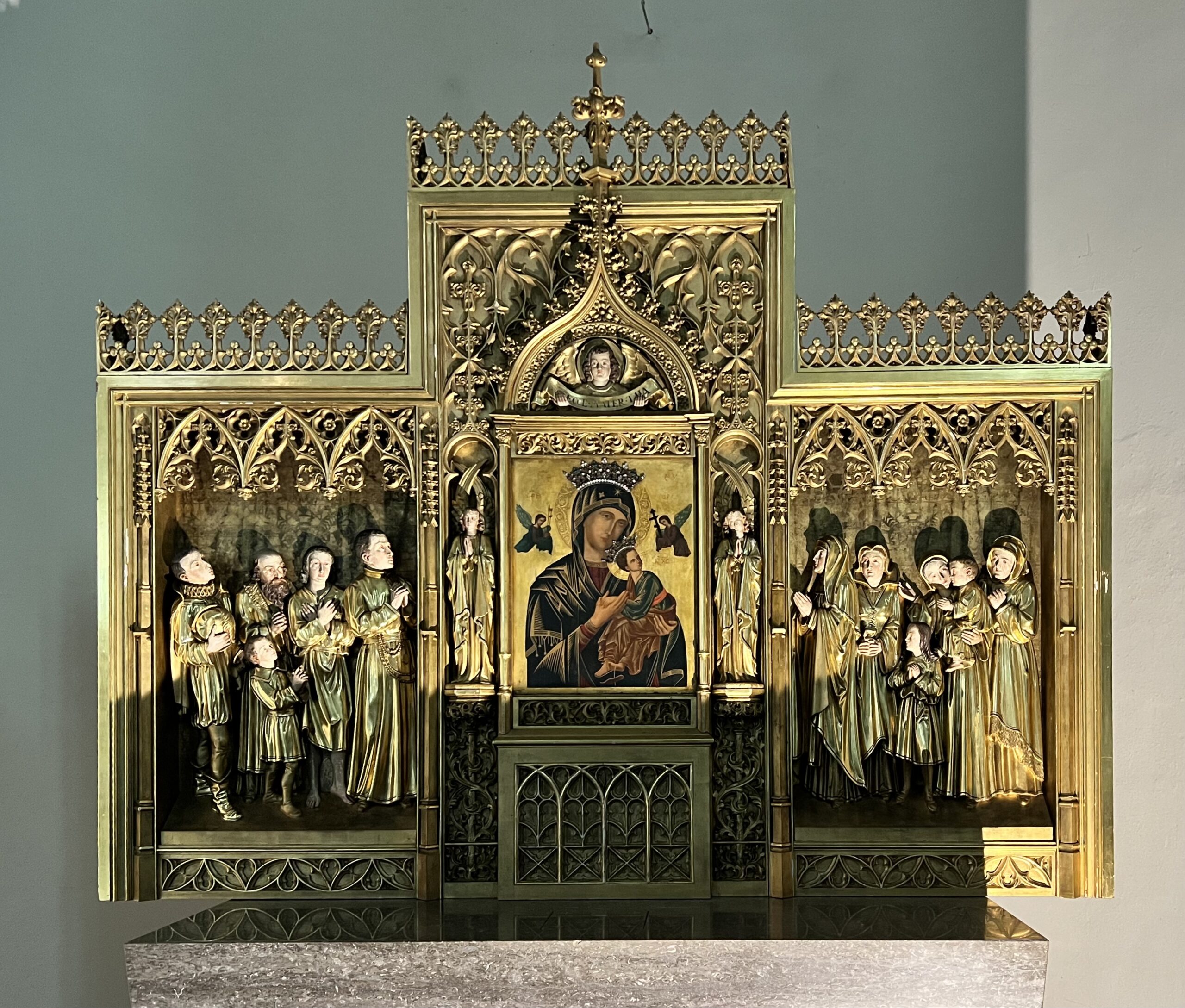
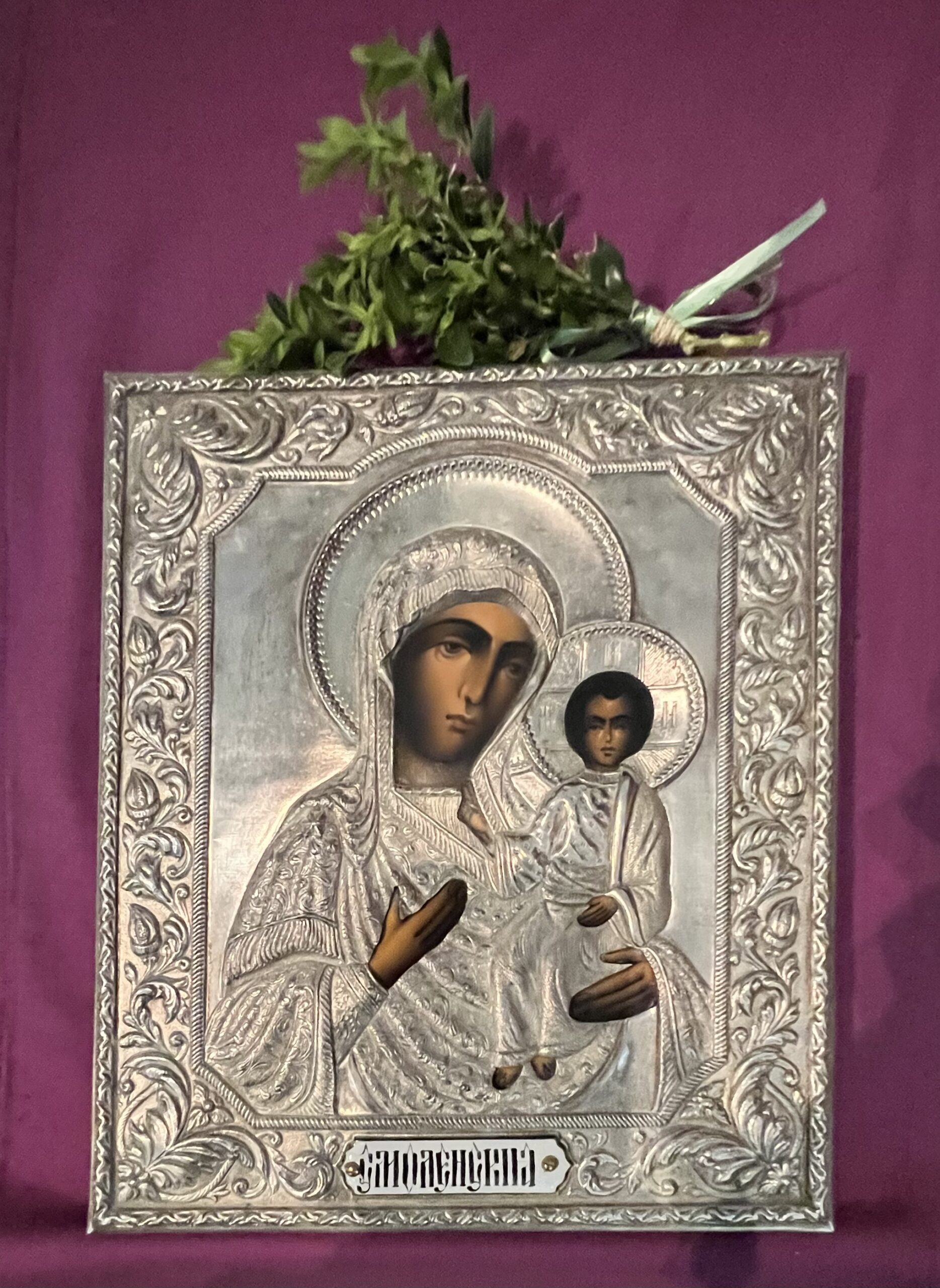
Visiting St. Catherine's Church offers an opportunity to gain impressions of various religious communities. The church has previously been known as the Kruiskerk and Kruisherenkerk and is located at Kruisbroedershof 4 in ‘s-Hertogenbosch. Services are held in the church by, among others, the Johannes Damascus community, the Polish community, and the Serbian Orthodox community. A special image of Mary is that of Our Lady of Perpetual Help. An icon of Mary and Child is present in the church. This church has limited opening hours.
The town of Empel and the hamlet of Oud-Empel lie on the outskirts of the city of ‘s-Hertogenbosch. In the Landelinuskerk, located at Proosdijstraat 14 in Empel, a chapel has been established dedicated to the history of “The Miracle of Empel” (“El Milagro de Empel”) in 1585. At the entrance to the church stands a large statue of Mary.
The first stone of the church was laid in 1949 by Antonius Cornelis Franciscus Claassen (1903-1988), parish priest of Empel (1945-1968). The church consecration took place in 1950 by Wilhelmus Petrus Adrianus Maria Mutsaerts (1889-1964), Bishop of ‘s-Hertogenbosch (1943-1960). The architect chosen for the church was Nicolaus Heinrich (Harrie) Pontzen (1913-1979), who was also a politician in Tilburg. The church has limited opening hours.
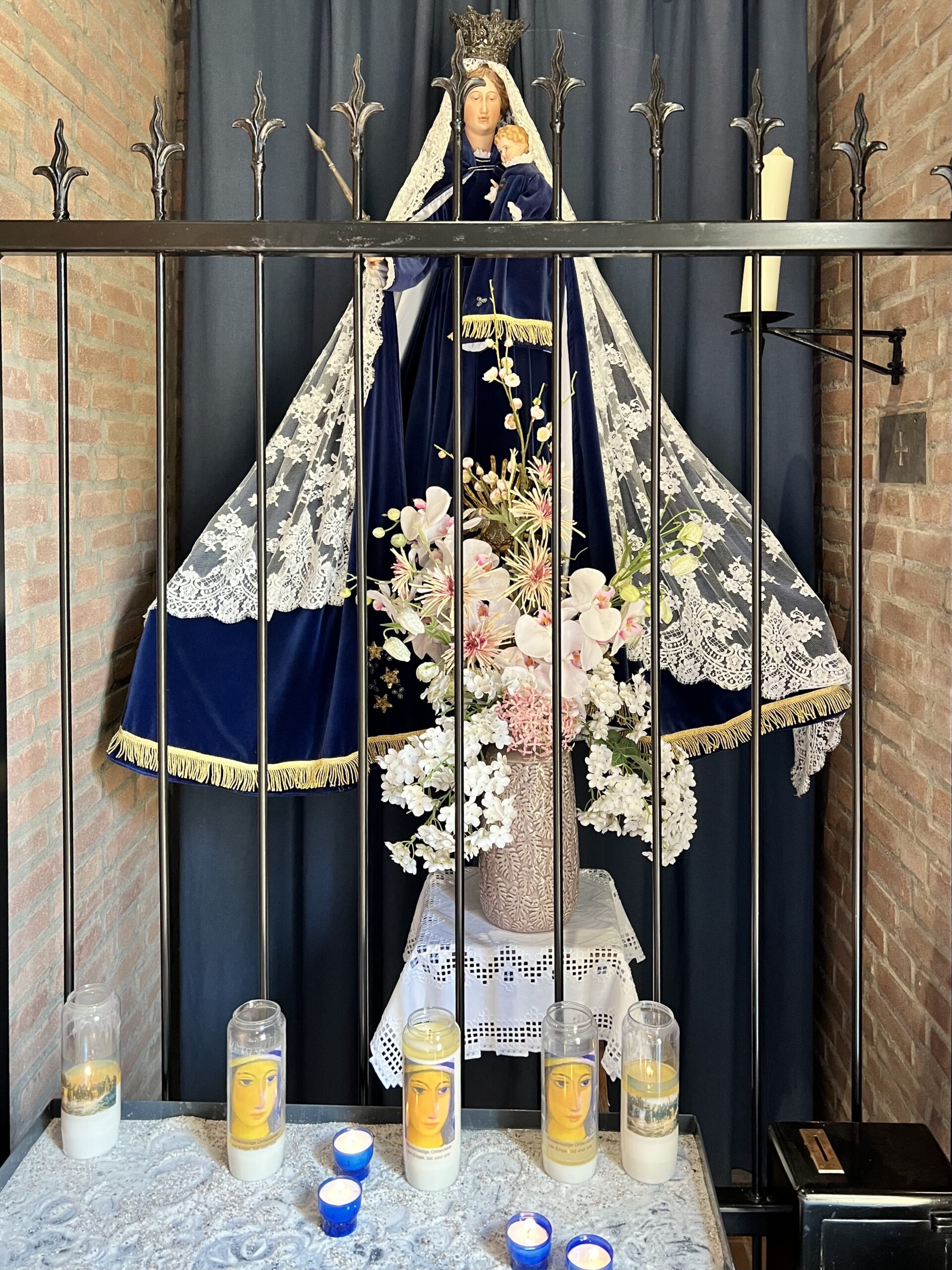
In Oud-Empel, the chapel stands on the spot where the Miracle of Empel took place in 1585, saving thousands of Spanish soldiers. The Miracle of Empel is discussed in this media outlet's section, called “Facts about Mary”.
~~~

 Nederlands
  English (UK)
  Deutsch
  Français