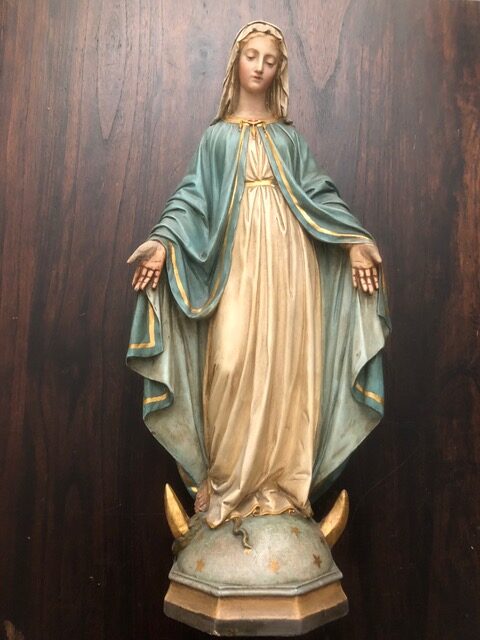
History
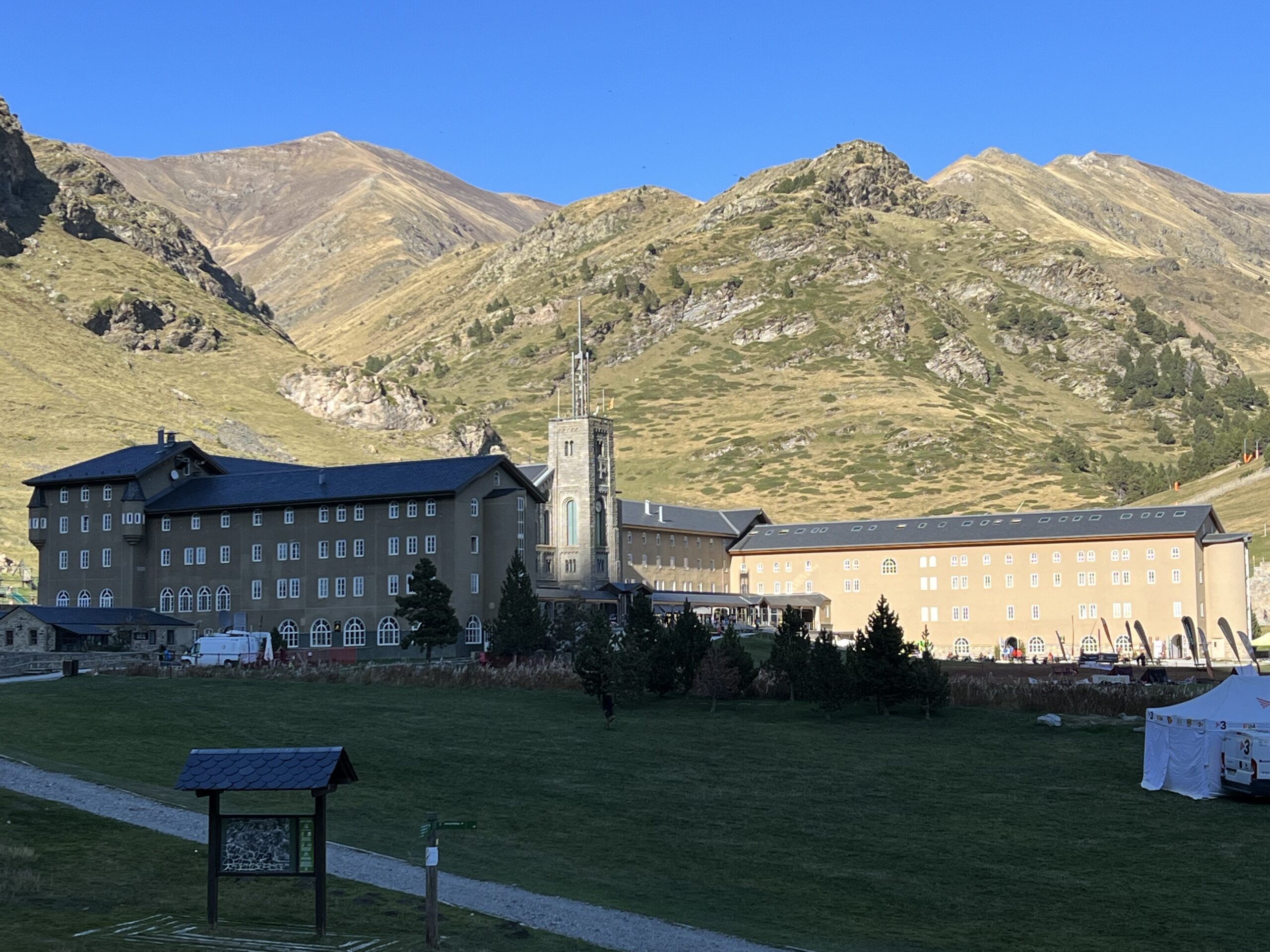
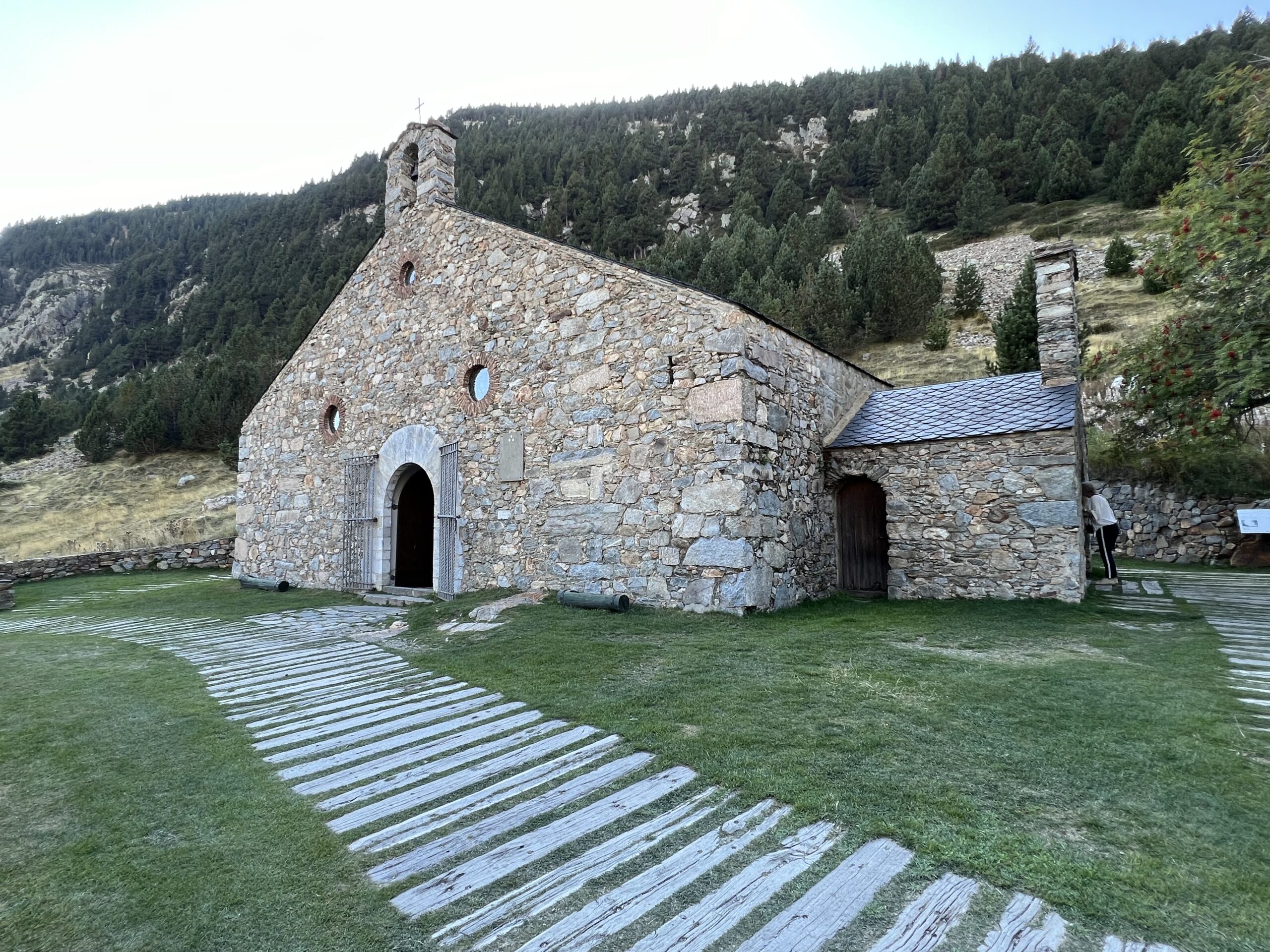
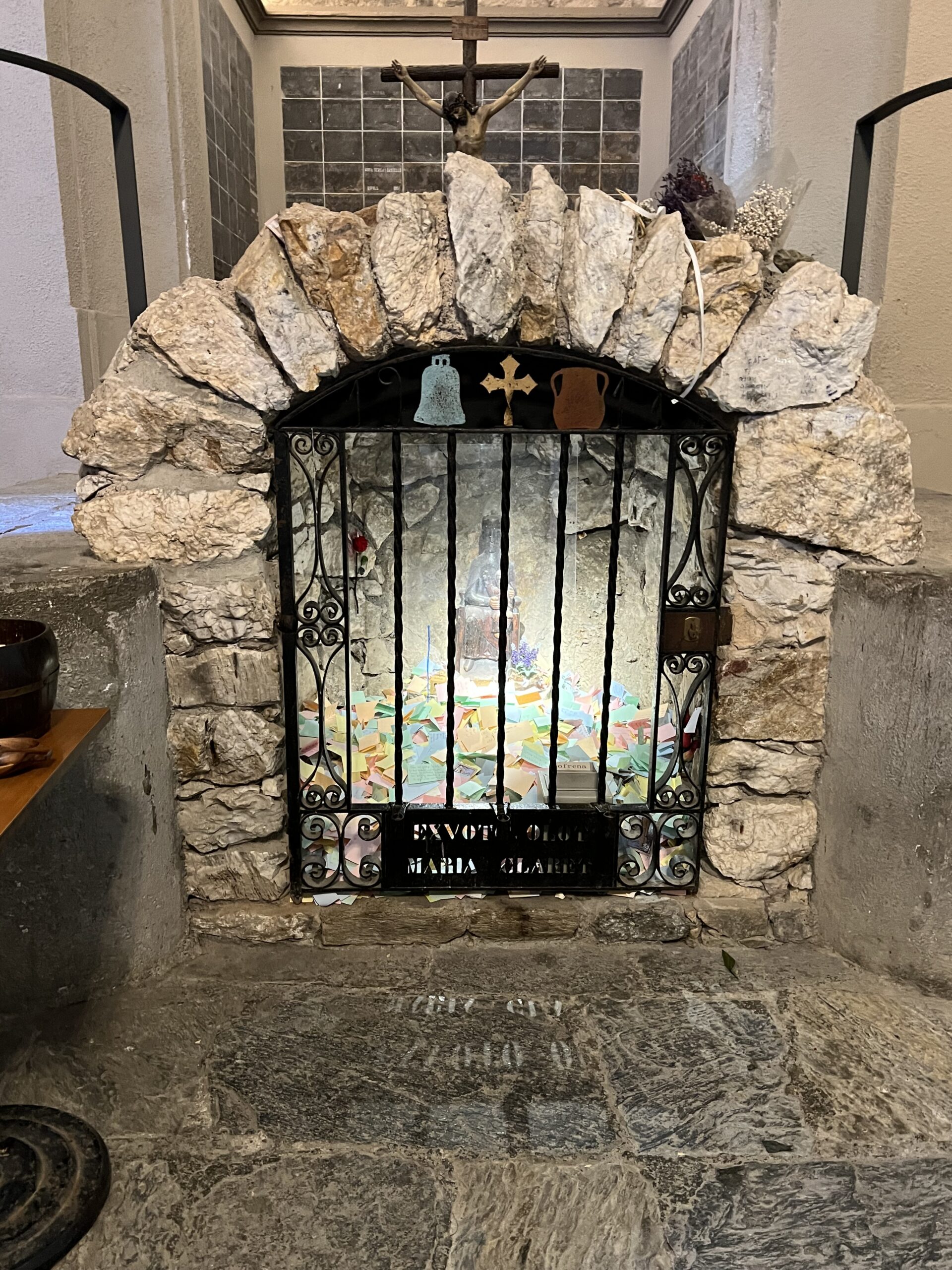
Saint Giles, Saint Gilles or Aegidius lived from around 640 to around 720. He is one of the 14 Holy Helpers. He is also known as Saint Giles the Hermit. He lives in Núria as a hermit. Giles hides the statuette of Mary, a bell and a pot. The hermitage, which is reminiscent of his stay here, was built near the pilgrimage site and dates from 1615.
A legend tells...
Saint Giles (Saint Gilles/Aegidius) hid a small statue of Mary in a cave, along with a cross, bell, and pot. In the 11th century, these special artefacts were found, guided by an ox. This discovery site then became a place of pilgrimage. A hospital was also built for travellers who braved many dangers on their journey over the Pyrenees mountains.
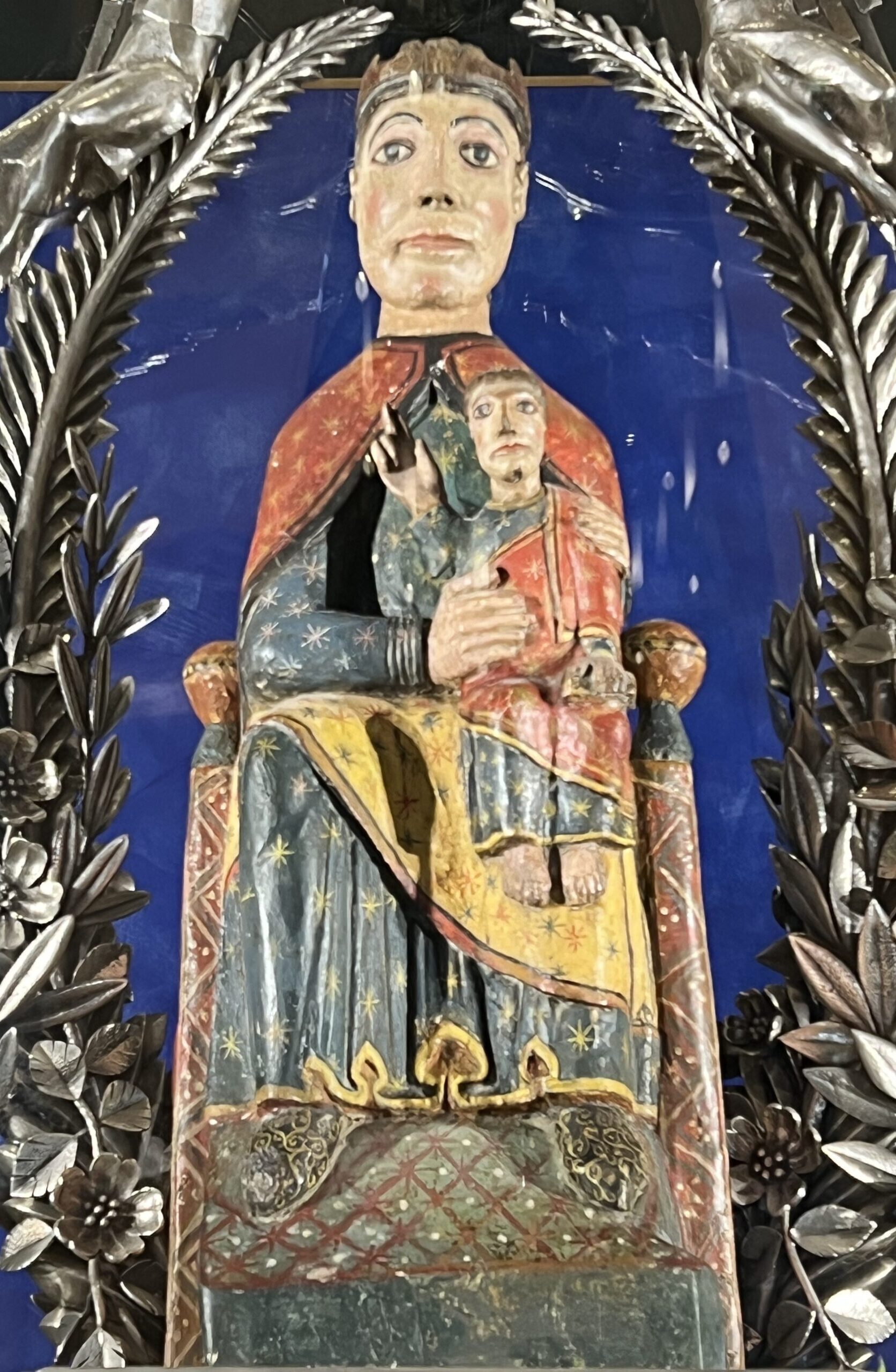
The statue of Mary in the church was made around the year 1200. It is polychrome wood carving.
In 1428, the pilgrimage site, located on the southern flank of the Catalan Pyrenees, was destroyed by an earthquake.
The current monastery dates from the 20th century.

In 1931, within the hotel of the pilgrimage site, there is intense deliberation among prominent Catalans. The “Estatut d’Autonomia de Catalunya” (the Statute of Autonomy of Catalonia) is drafted. This document regulates the autonomy of Catalonia within the Spanish Republic.
On 23 September 2014, Francis, born Jorge Mario Bergoglio (1936), Pope since 2013, grants the church the honorary title of basilica.
On 8 September, the feast day of the “Nativity of Mary”, there is a large pilgrimage in Nuria.
Pilgrimage site
A mountain railway (rack railway) takes visitors to the high-altitude pilgrimage site, passing close by sheer rock faces and deep ravines along the way. This railway has been taking people up since 1931, and before that, it was quite a journey to get there. The Marian shrine is dedicated to “La Mare de Déu de Núria,” which is Catalan for “the Mother of God of Núria.” She is the patron saint of the Diocese of Urgell, the Catalan Pyrenees, and shepherds.
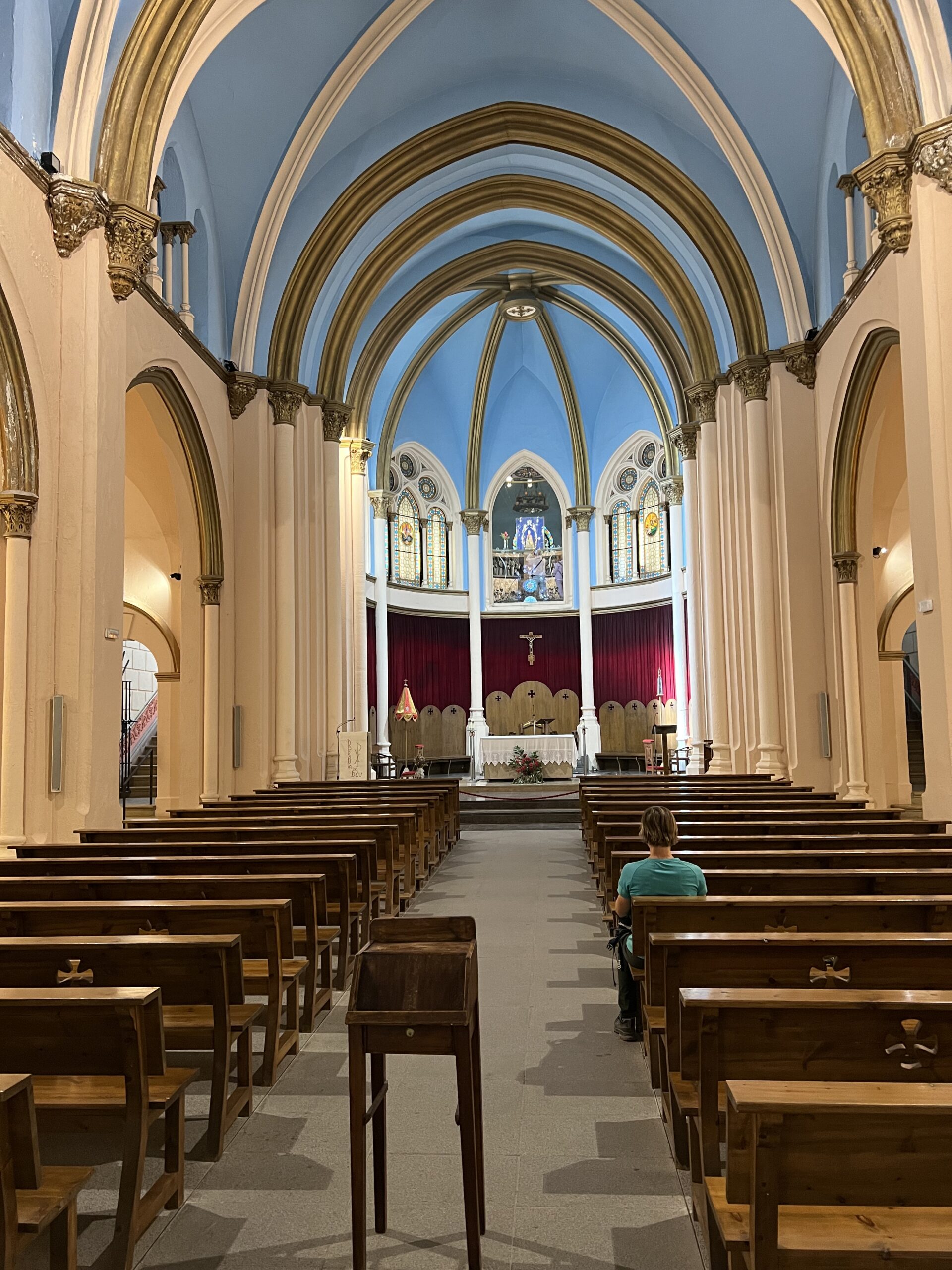
At the pilgrimage site, several streams converge, forming the little river Riu de Núria. The Marian shrine is called Santuari de Núria.
The statue of Mary, positioned high in the church, is venerated annually by thousands of visitors. The effigy is of a seated Mary with Child. Both figures have their hands and ears uncovered. Mary's left hand rests on her Child's left shoulder. With her right hand, Our Lady holds the young Jesus. The Child raises his right hand and appears ready to bless. The statue of Mary and Child was restored in 2000 by Ramon Millet.

In the church, visitors can partake in a tradition by visiting “L'Olla de Núria”. This Catalan phrase means “Núria's Pot”. This ritual can take place at the back of the church, near a prayer stool in a niche. It involves three symbols: a cross, a bell, and a pot, which have been venerated since the 15th century. Miracles are attributed to the ritual if someone places their head in the pot and the bell rings. This is said to relieve headaches and ward off bad weather. If a woman places her head in the pot and the bell rings, she is blessed with fertility.
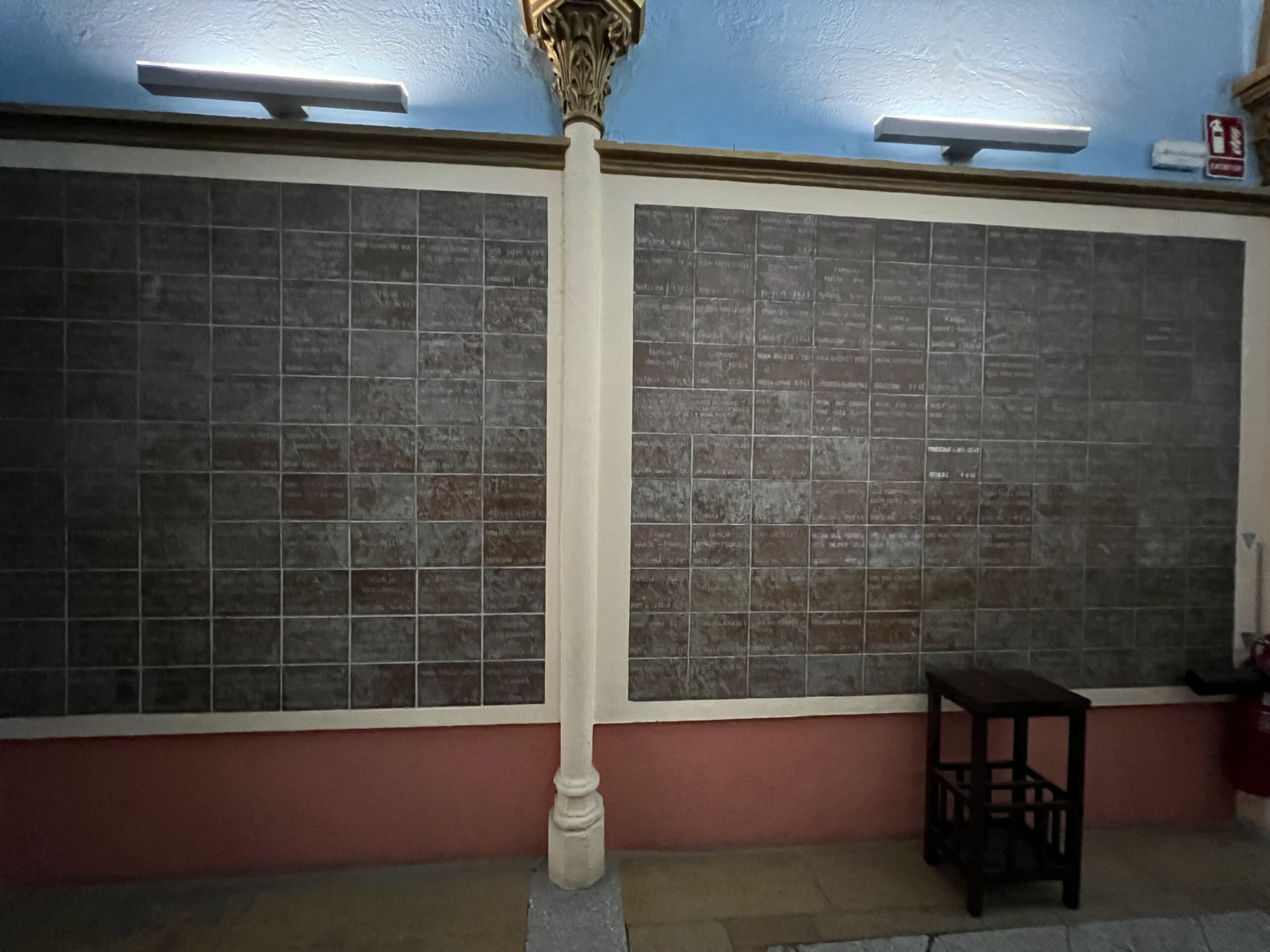
In the church, many ex-votos can be seen. Most of them bear words of thanks to Mary.
ACCESSIBILITY
Núria is near the Spanish/French border, belongs to the municipality of Queralbs and is situated in the province of Girona, which belongs to the region of Catalonia.
Address: Núria, 17534 Queralbs.
Current information can be found on www.valldenuria.cat.
Experience
The pilgrimage site of Núria has long held my interest and this is the third time I'm visiting Mary here.
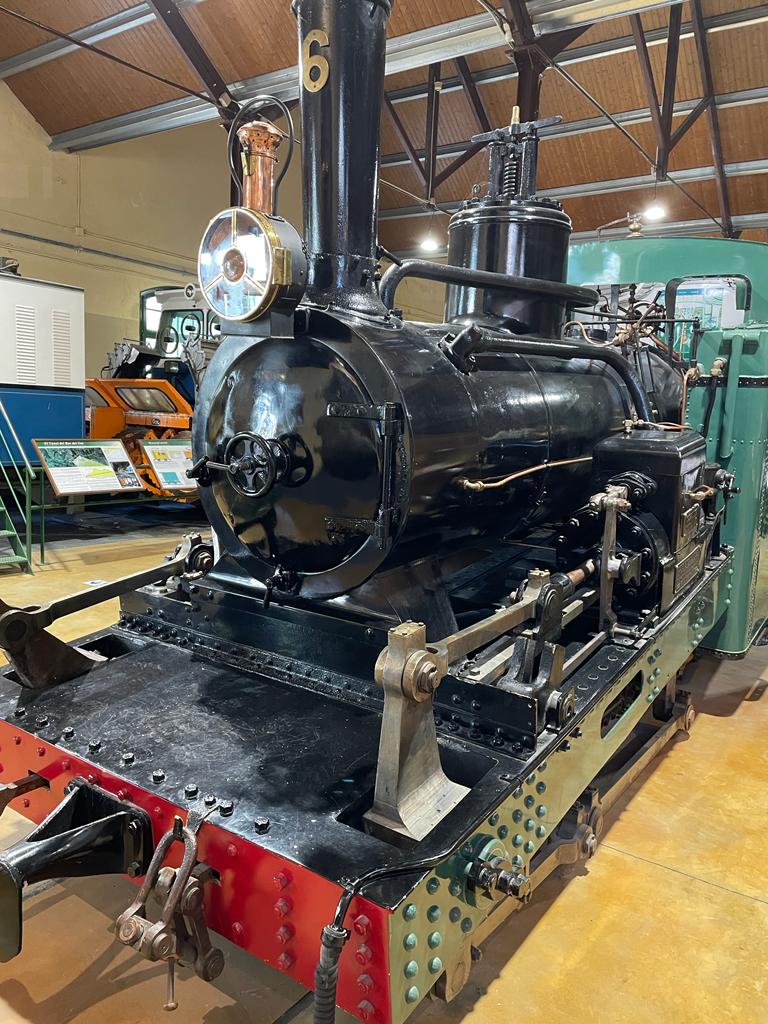
The stream Riu de Núria flows into the larger river Freser. In Ribes de Freser, where the wild stream divides the town in two, the rack railway train is ready. The train hasn't departed yet, which gives me the chance to visit the rack railway museum, located next to the platform.
Every day, many people are brought to the high-altitude pilgrimage site by mountain train. On the cogwheel railway, there's a train that takes me, too, to an altitude of 1964 metres in about half an hour. It's an impressive journey with views of high mountains, large rocks, and deep valleys.
Upon arrival in Vall de Núria, it's barely 200 metres from the train station to the church. When I stand at the entrance to the church and turn around, I am treated to a panoramic view of the high mountains and the area where many visitors walk, ride horses, pedal boats, eat and drink, pray, and look around.

In the church, the centuries-old statue of Mary immediately catches my eye. It stands high above the chancel. To get to it, you have to climb a staircase with wide steps. Straight up the stairs and after a few minutes I am standing before the miraculous, colourful statue. Mary looks at the visitor, and we are face to face at an altitude of about 2000 metres. That's quite a unique experience! If this image could speak...
In the upper chapel where the effigy of Mary stands, statues of saints Giles (Gil) and Amadeus (Amadeu) can be seen, who were here for many years in the distant past. After encountering Mary so high up, I descend the stairs and take a walk around the church. I find a particularly beautiful stained-glass window with Our Lady. My eyes also want to see a large effigy of Mary.
In a small chapel, candles are burning and a particularly captivating image of the Virgin Mary hangs against the wall. This is the perfect place to say more than one Hail Mary.
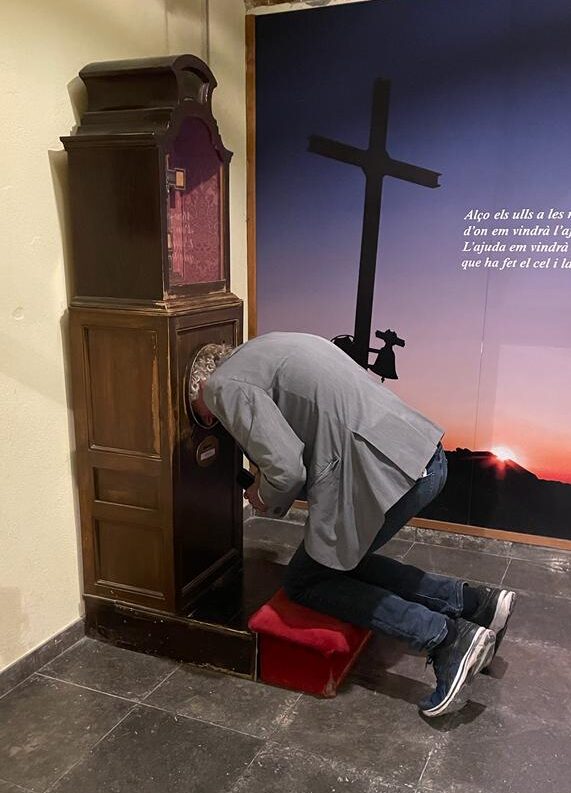
At the back of the church, in a large niche, there is a prayer stool, a bell hanging by a rope, and a large cauldron. Now is my chance to add a bit more lustre to a ritual. I kneel, put my head in the pot, pray, pull the rope, and the bell rings. Now I am safe from dangers. It is a tradition for visitors to perform this rite. For some it is to obtain fertility, for others to banish pain, and for me, to ward off dangers. It is a gesture of blessing with the sound of a bell.
After leaving the church, I visit the space where Gilles (Gil) lived. Here too, there is an effigy of Mary, and notes with thanks, requests, and/or hopes are placed by Her. I write something down. It's about a woman who is suffering greatly. Hopefully, she will have less trouble with her illness. Afterwards, I go outside, look around, and truly realise that this place, on the high southern side of the Pyrenees mountains with peaks up to almost 3000 metres, is very special. How grateful I am to Mary to be able to come here again.
Environment
In the immediate vicinity of Núria, there are many hiking and skiing opportunities on the southern side of the Pyrenees. Mountain biking, cycling, canoeing, and horse riding are also options.
Barcelona is 125 km away, while Girona is 120 km. The historic city of Vic is a 56 km drive. To visit the pilgrimage site of Montserrat, it is 115 km to travel.
Posted: 6 November 2023
~~~

 Nederlands
  English (UK)
  Deutsch
  Français