History
The Sanctuary of Maria Luggau originated in the 16th century. In 1513, Helena, a devout, poor peasant woman, had a vision in her sleep in which Mary instructed her to have a church built. This church is the place to honour Her. However, Helena saw no way to build a church. She told herself that she wanted to know if the vision was real. To that end, she lit a candle in the open field, and if the flame continued to burn for 3 days and nights, she would believe the vision came from heaven. The candle kept burning, even though a stormy wind raged. After the vision, this was the second miracle Helena experienced. Convinced of the vision's authenticity, she bought a Pietà of the Mother of Sorrows. Helena carried this statue through the village, door to door, to gain support from the residents. With the support received, she wanted to establish a church. To her great disappointment, she received only rejections, scorn, and mockery. The villagers saw Helena as a witch, and she ended up in prison. The judges ruled and explicitly declared Helena innocent. Subsequently, Helena was released.
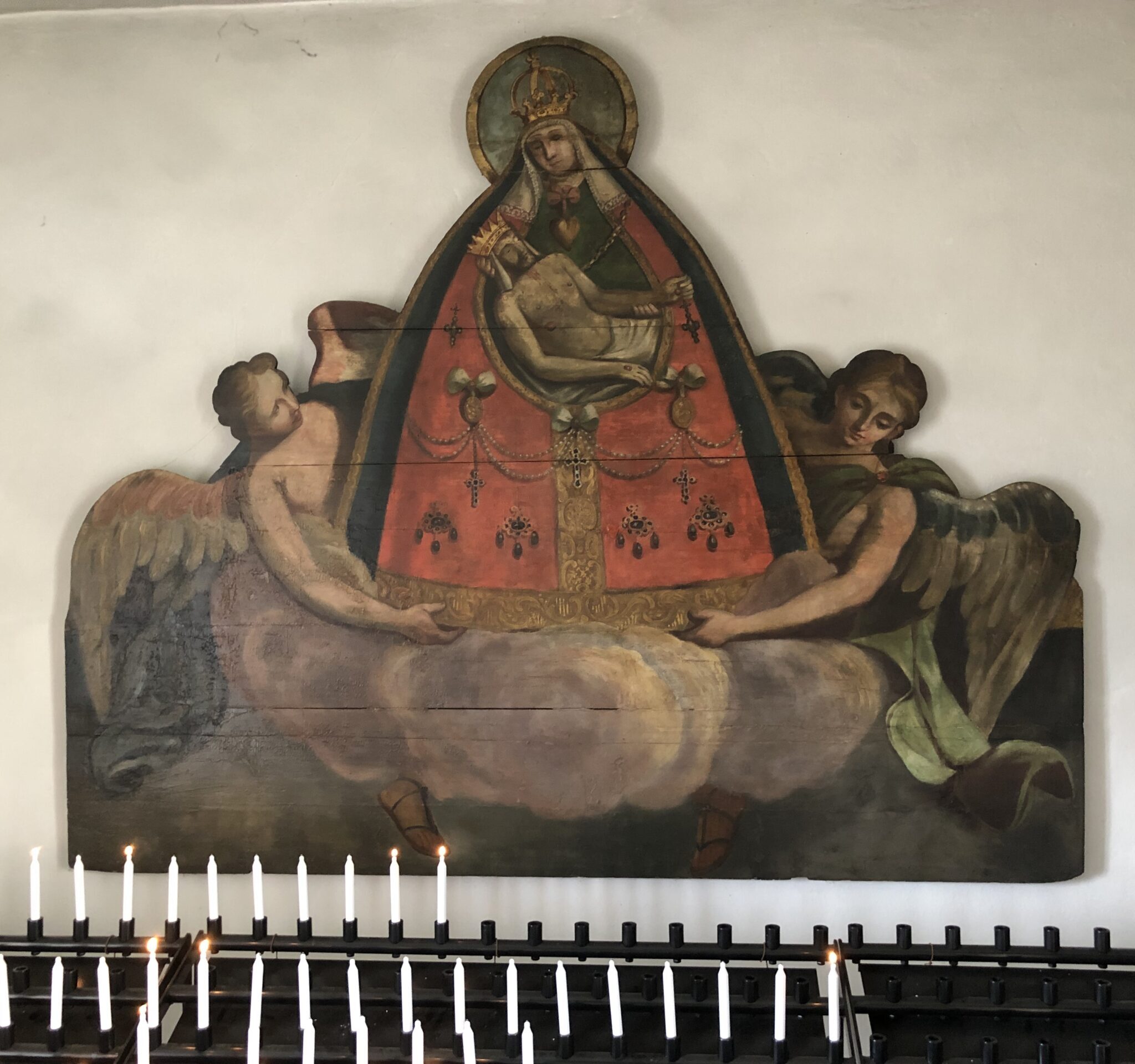
Helena gets to work and in 1514 establishes a simple chapel, namely a small shrine. The statuette of the Pietà she bought is given a place there. During construction, an insane villager comes to the chapel and steals the statuette. Fortunately, the strange man brings the statuette back. It is said that he regained his spiritual strength through the statuette. This event spreads through the village, and people find it quite miraculous.
Helena finds an advocate in the Count of Ortenburg. The Count travels to Maria Luggau to see if the church being built is already finished. However, he encounters great opposition from the local population, as the people have little regard for Helena. The Count departs. On his way, his horse is startled by a thunderstorm, the Count gets caught in the stirrup and is dragged along by the animal. Suddenly the horse stops, and the Count is thus saved. He sees this incident as a sign from heaven and returns to Luggau. There he ensures the speedy completion of the church and the first stone is laid in May 1515. However, due to the large influx of pilgrims, the church is soon too small.
A new, Gothic church was completed and consecrated in 1536 with the title “St. Mary of the Snows”.
In 1591, the Franciscans took over the organisation of the pilgrimages, and they did so until 1628. In 1593, the Count of Ortenburg had a monastery built next to the church. In 1594, Francesco Barbaro (1546-1616), Patriarch of Aquileia (1593-1616), established a parish in Maria Luggau. In 1635, the Servites took over the pilgrimage organisation from the Franciscans, who had left in 1628. In 1640, a large fire destroyed the monastery.
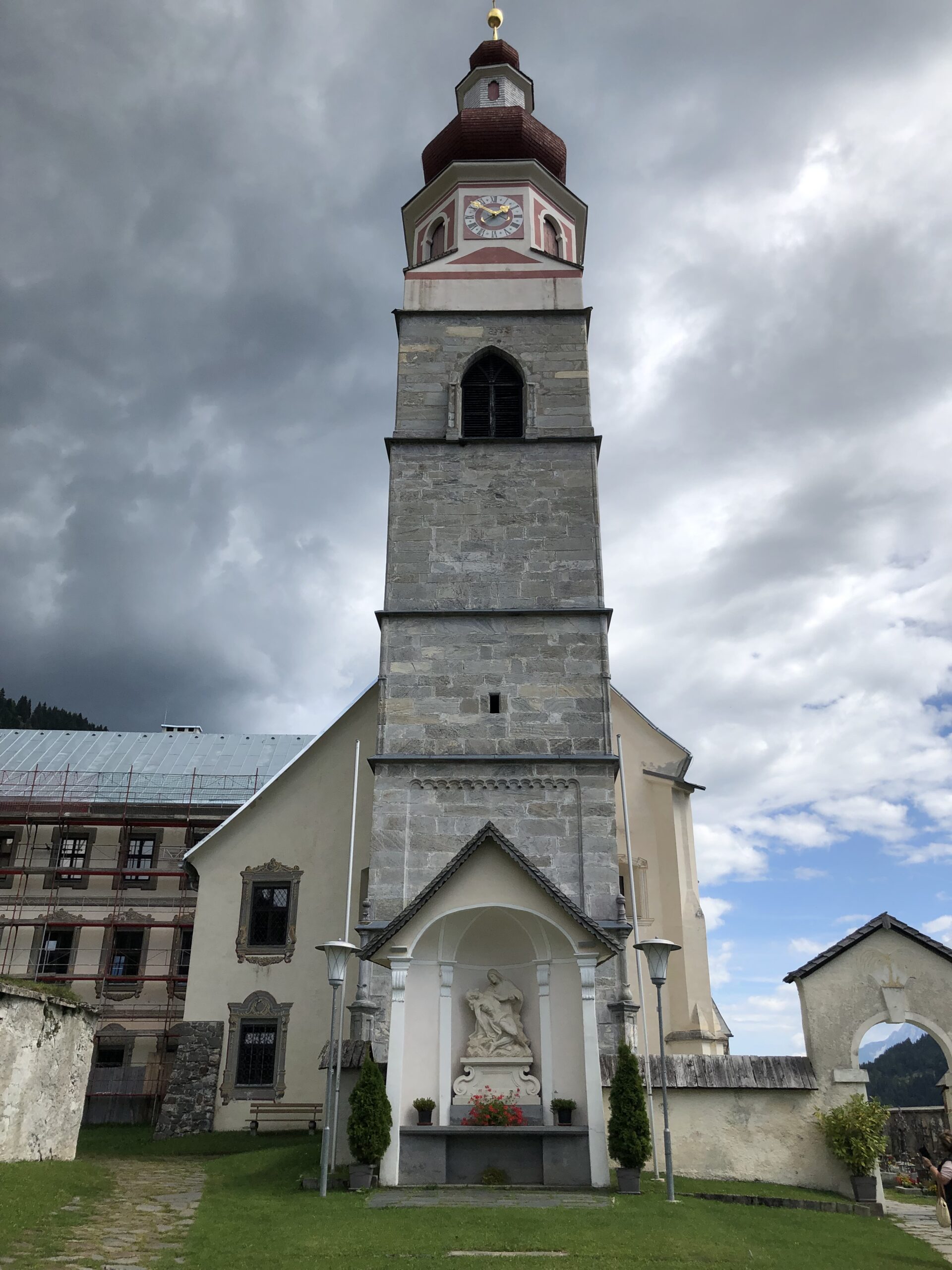
In 1730 the church was renovated and the Baroque style is clearly reflected in the interior. Construction of a new monastery began in 1733. This is the current structure.
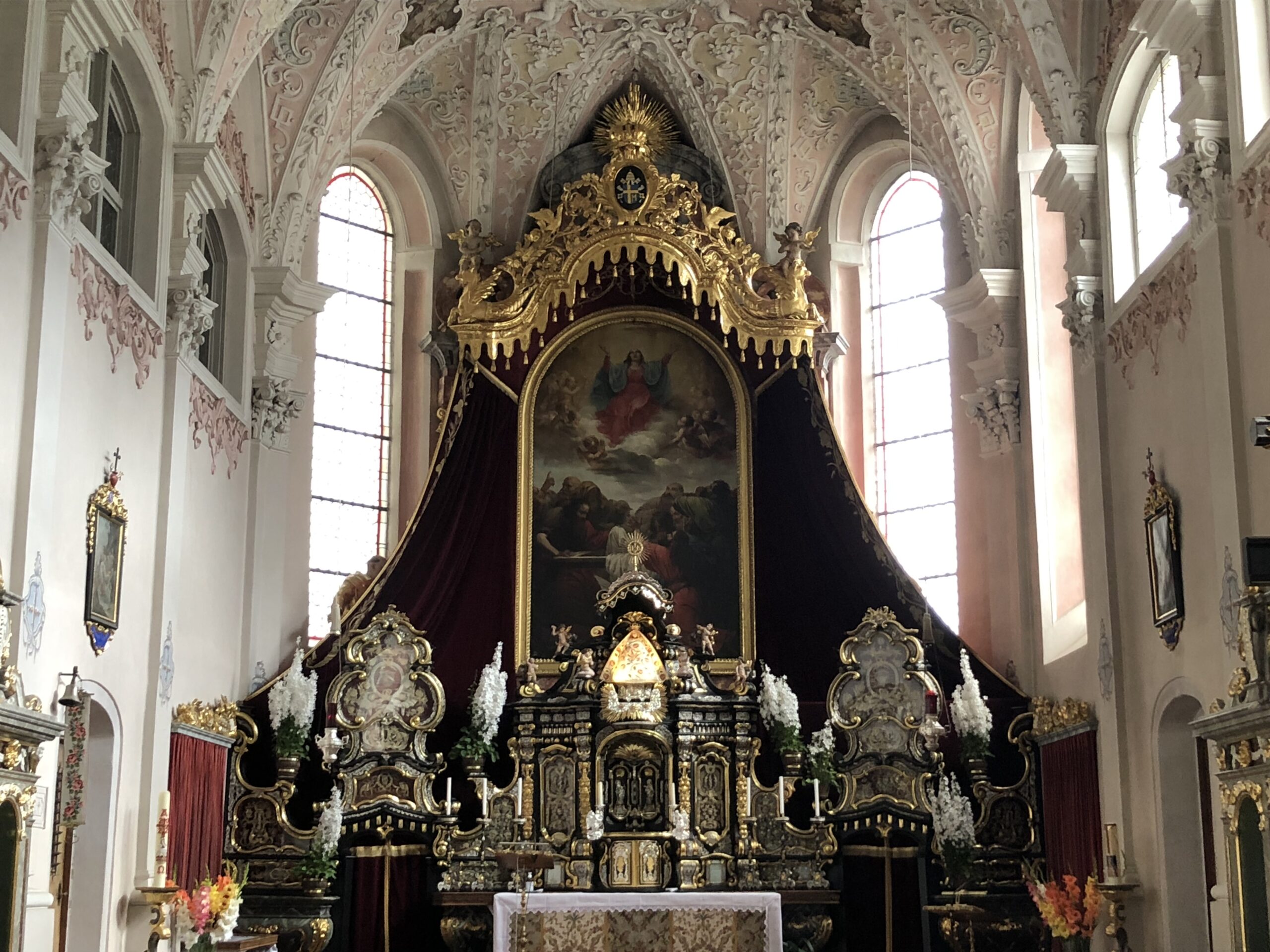
In 1736, a major fire destroyed the pilgrimage church. A new place of worship followed, this time in the Baroque style. In 1749, the current high altar was installed in this church.
The frescoes in the church were applied between 1740 and 1772.
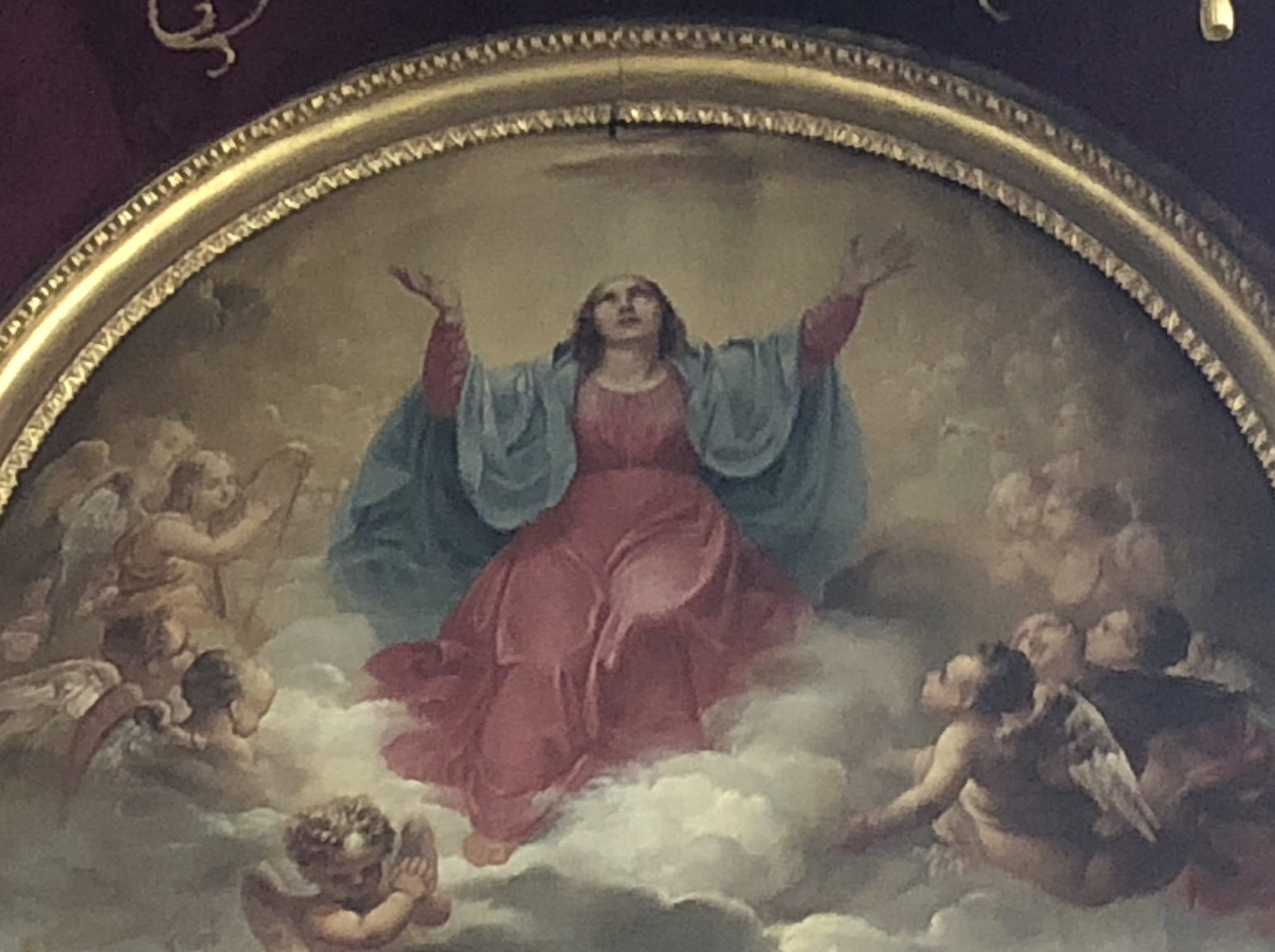
In 1834, the painting "The Assumption of Mary", by the Venetian painter Cosroe Dusi (1808-1859), is placed on the high altar of the pilgrimage church. The old Pietà statue will be placed below it.
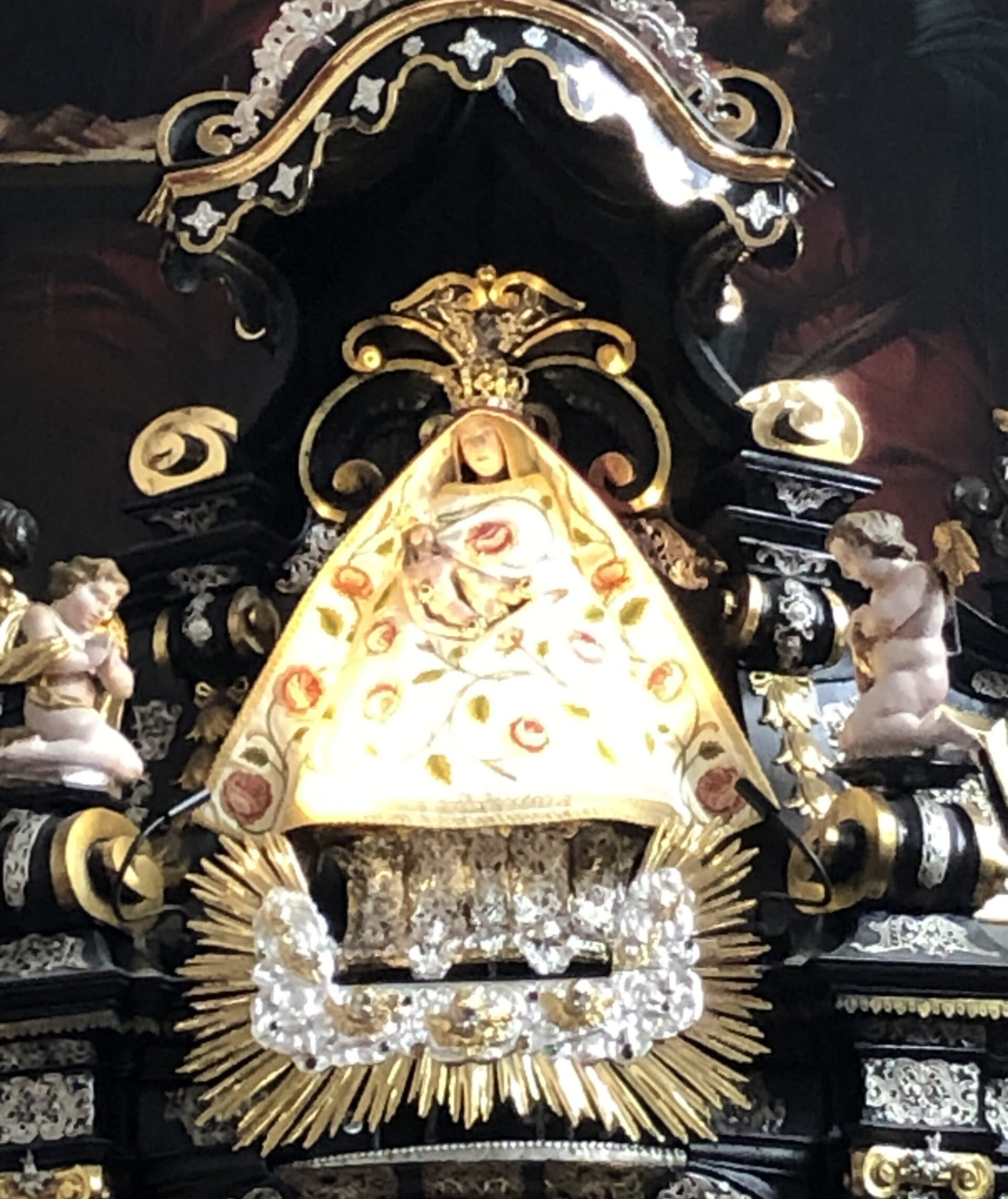
In 1913, after permission from the Vatican, the devotional image is crowned by Balthasar Kaltner (1844-1918), bishop of Gurk from 1910 to 1914.
In 1958, a large statue of the Pietà was erected in the square in front of the church.
In 1980, a major restoration of the church took place.
On 3 April 1986, the pilgrimage church was elevated to a basilica with the permission of Pope John Paul II (1978-2005).
Pilgrimage site
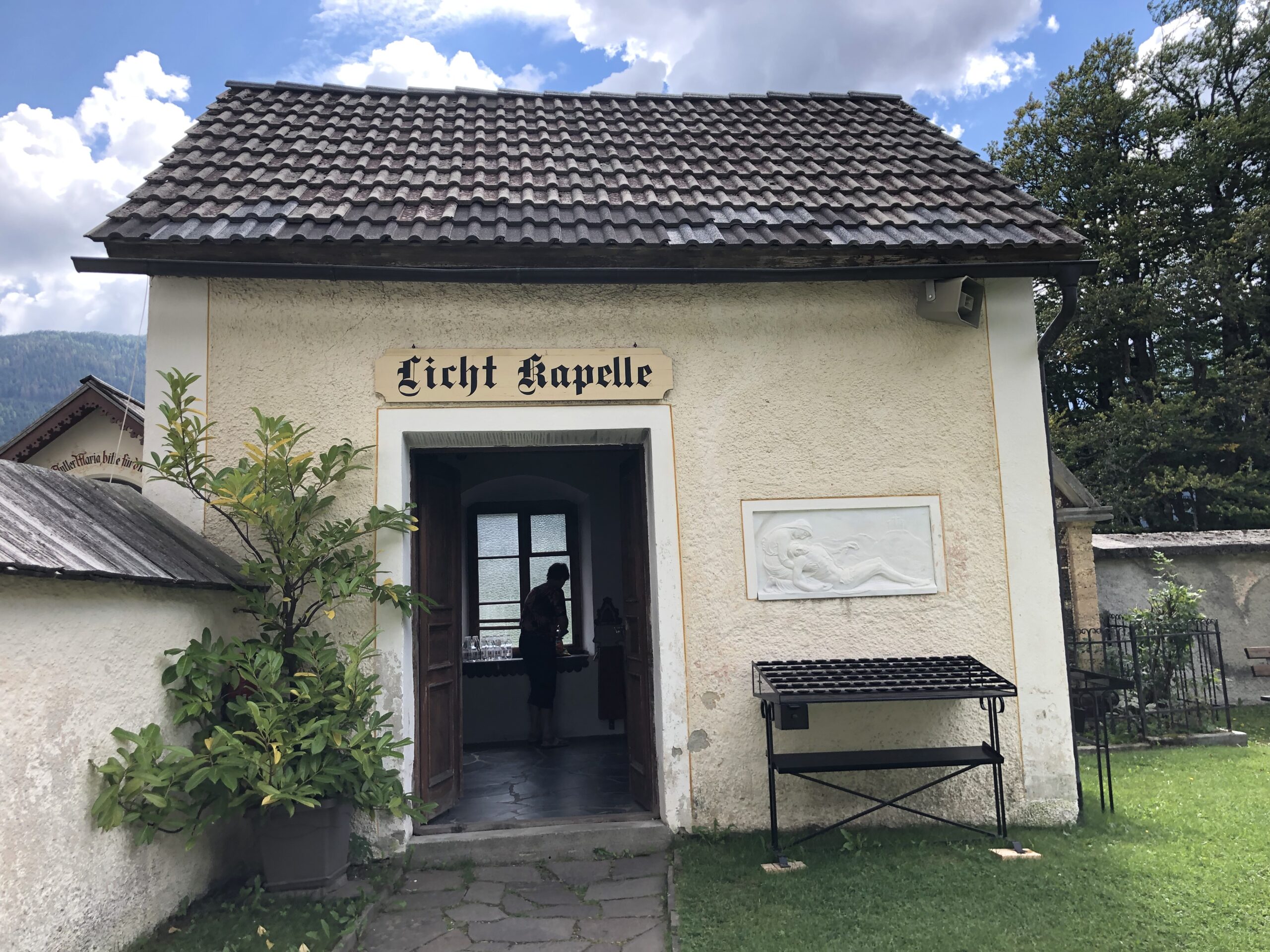
At approximately 1200 metres above sea level lies Maria Luggau in southern Carinthia. A beautiful basilica can be seen from afar. First, I'll go to the chapel to light some candles.
The painting on the high altar is called “The Assumption of Mary”. The old pieta statue is also located here.
In the side altar of the basilica, there are Saint Luke and the statue of Mary with Jesus from 1520.
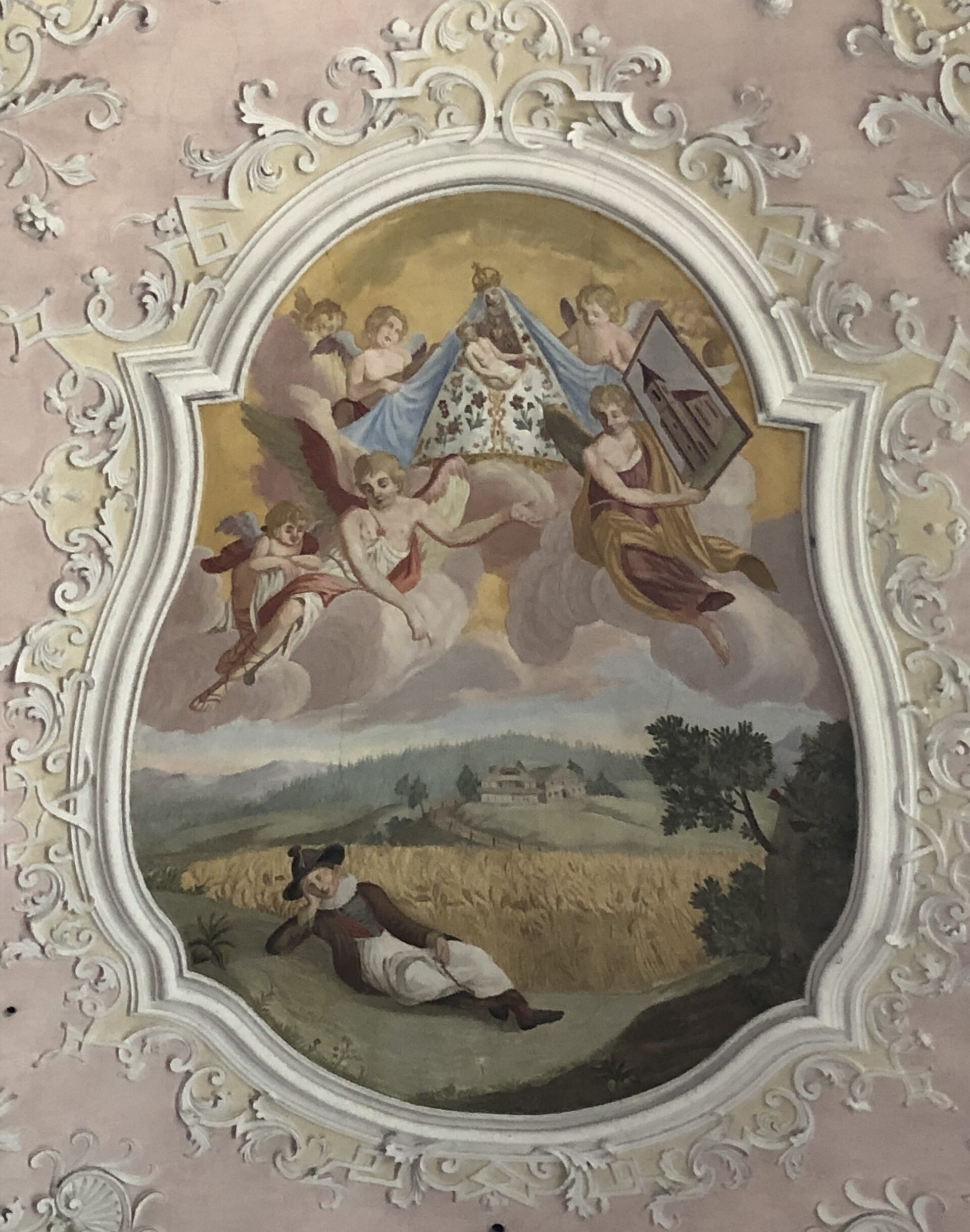
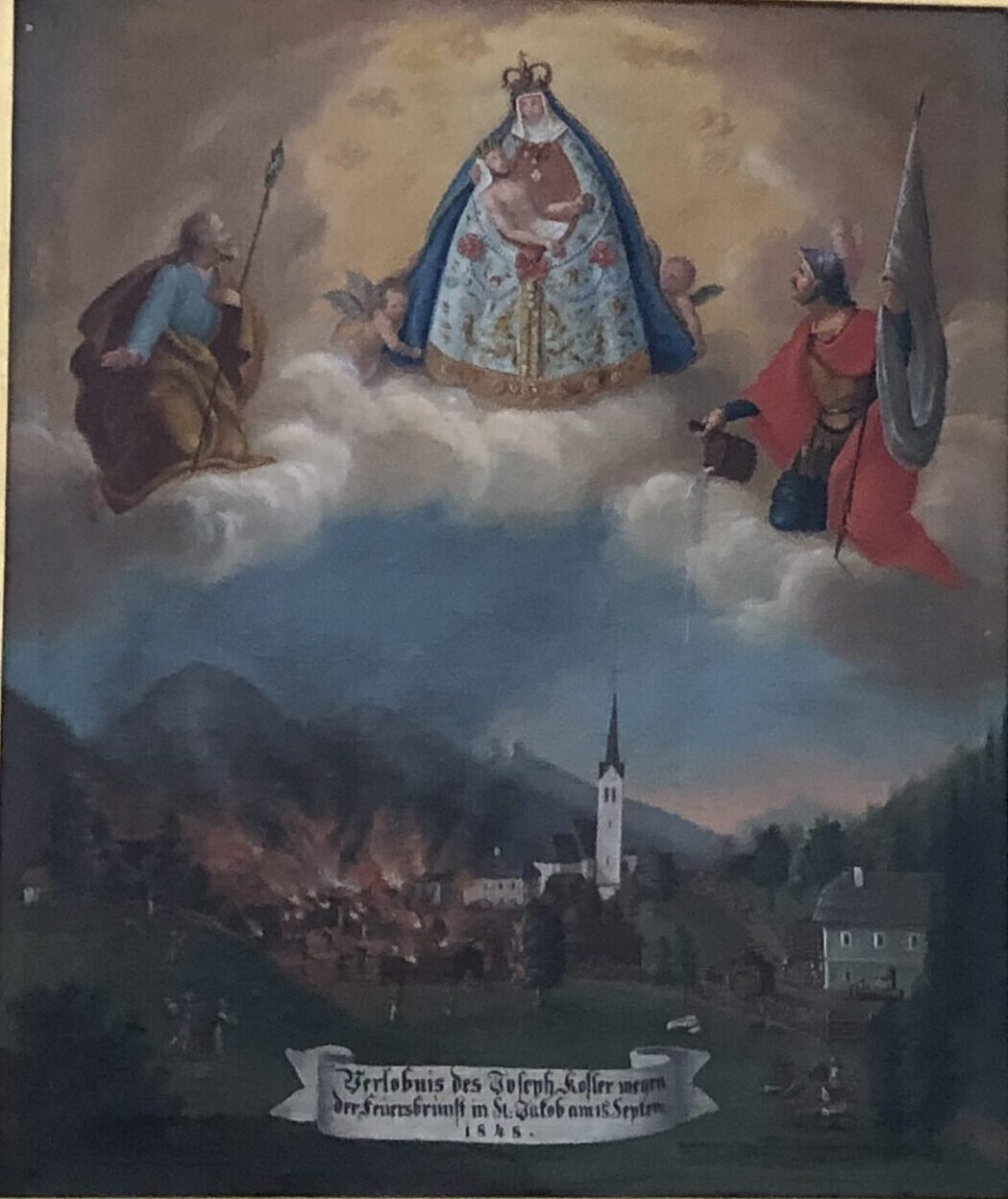
The frescoes on the ceiling depict the history of Maria Luggau. Next to the basilica is a cloister with ex-voto images as thanks to Our Lady.
Since 1958, a white Pietà by Konrad Campidell has stood in the square in front of the basilica.
In the annual pilgrimage season, which runs from May to October, over 50,000 pilgrims visit the shrine.
ACCESSIBILITY
The pilgrimage site is located in southern Austria, in Carinthia, and a few kilometres from the Italian border.
The address is: Maria Luggau 26, 9644 Maria Luggau.
Up-to-date information can be found at www.maria-luggau.at.
Experience

For the visit to the basilica, I will arrive in the cloister garden. There is a spring with water for good health and a chapel. This is the place for a prayer of thanks.
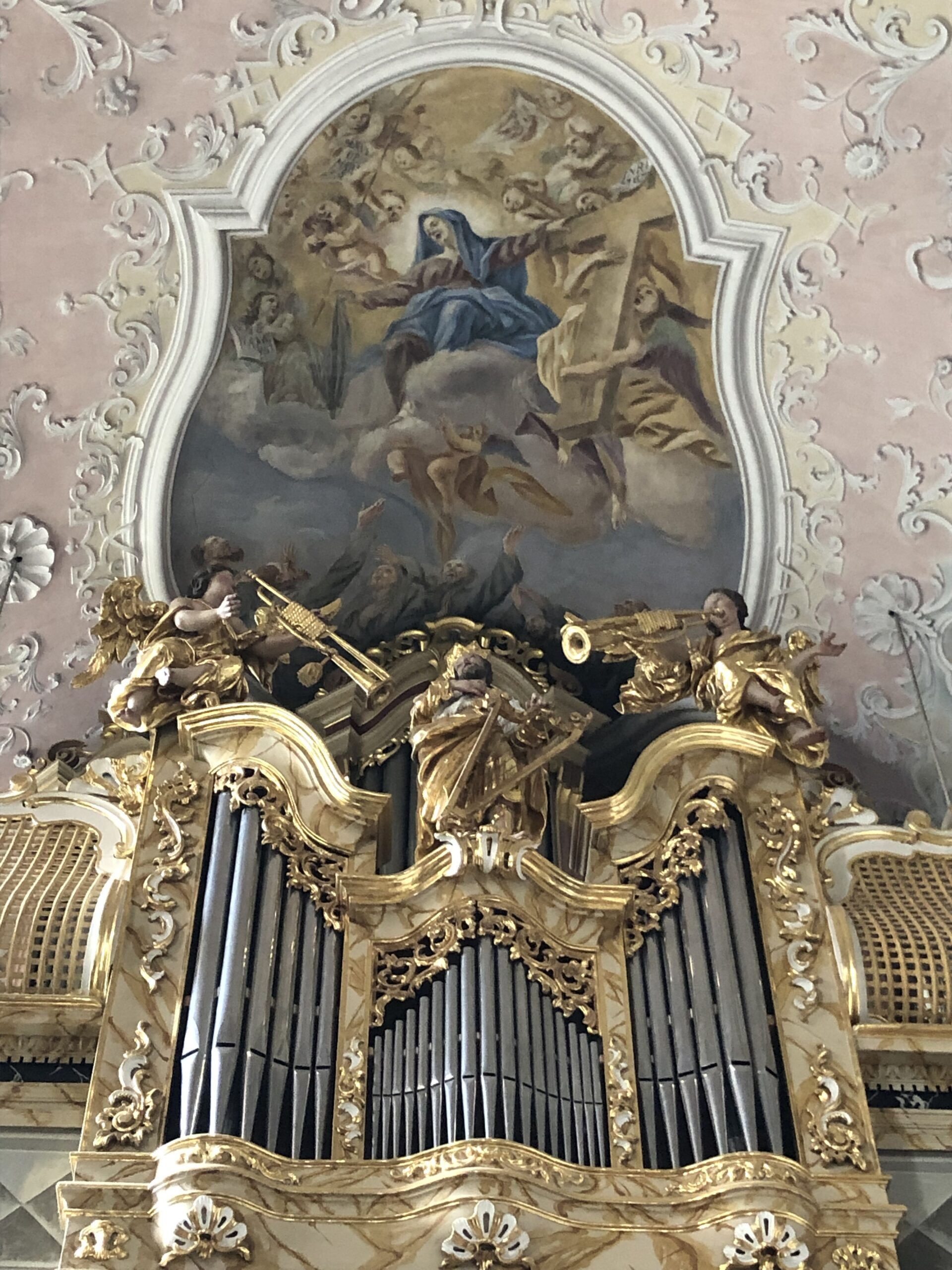
Next, I come to a triumphal arch that gives access to the square in front of the basilica. A large, white Pietà has been placed in this square. Before entering the basilica, I go into the chapel to light a candle. Above the candles, there is also a beautiful image of Mary.
I am staying in the basilica for a long time. There is much beauty to be seen here. Paintings, statues, frescoes, and all this provides a beautiful interior. I look for a long time at the painting above the high altar, which depicts the Assumption of Mary. What a beautiful work of art this is.
I take a seat on a bench and let the splendour of the basilica wash over me. It makes me think of the gift I get to experience here. The story of the poor peasant woman, Helena, comes to mind. So much has happened in this place since then…

Posted: 12 November 2022
~~~
