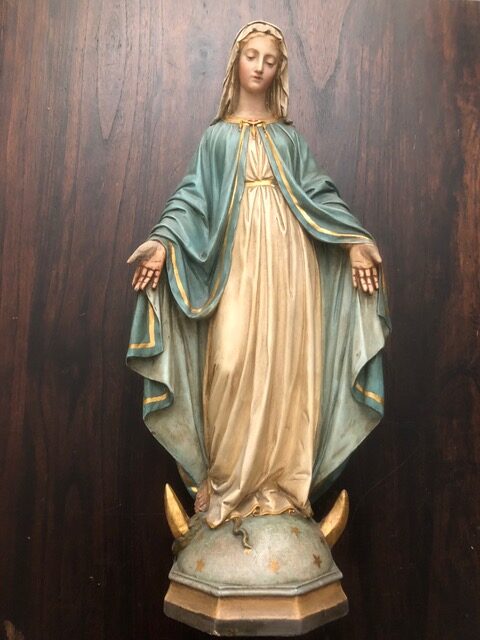
The image of Our Lady of La Vang, “Duc Me La Vang”, originated from an apparition of Mary in 1798 near the village of Quang Tri in central Vietnam. Mary is depicted standing with her Child in her arms, and an angel on each side. She appears to suffering Christians who have fled to the jungle of La Vang to escape persecution. Mary encourages the seers to have faith and strengthens them to endure suffering. The apparition tells people to continue praying. During the apparition, Mary teaches them to use local plants and to cook them as medicine. Mary concludes by saying she will be there for them. After this apparition, Mary visits the refugees in the jungle many more times. The people build a small chapel there for Our Lady.
The apparition of Our Lady in 1798 is so significant that people understand Mary. This leads to strong faith among Vietnamese Catholics, with devotion to Our Lady being powerfully expressed. The refugees endure and resist persecution for their faith. Mary reveals herself during the apparitions as “Mater Ecclesiae,” and this Latin stands for “Mother of the Church.”.
Through Mary's presence in La Vang, devotion to Her has become an essential part of the faith of Vietnamese Catholics in and outside of Vietnam.
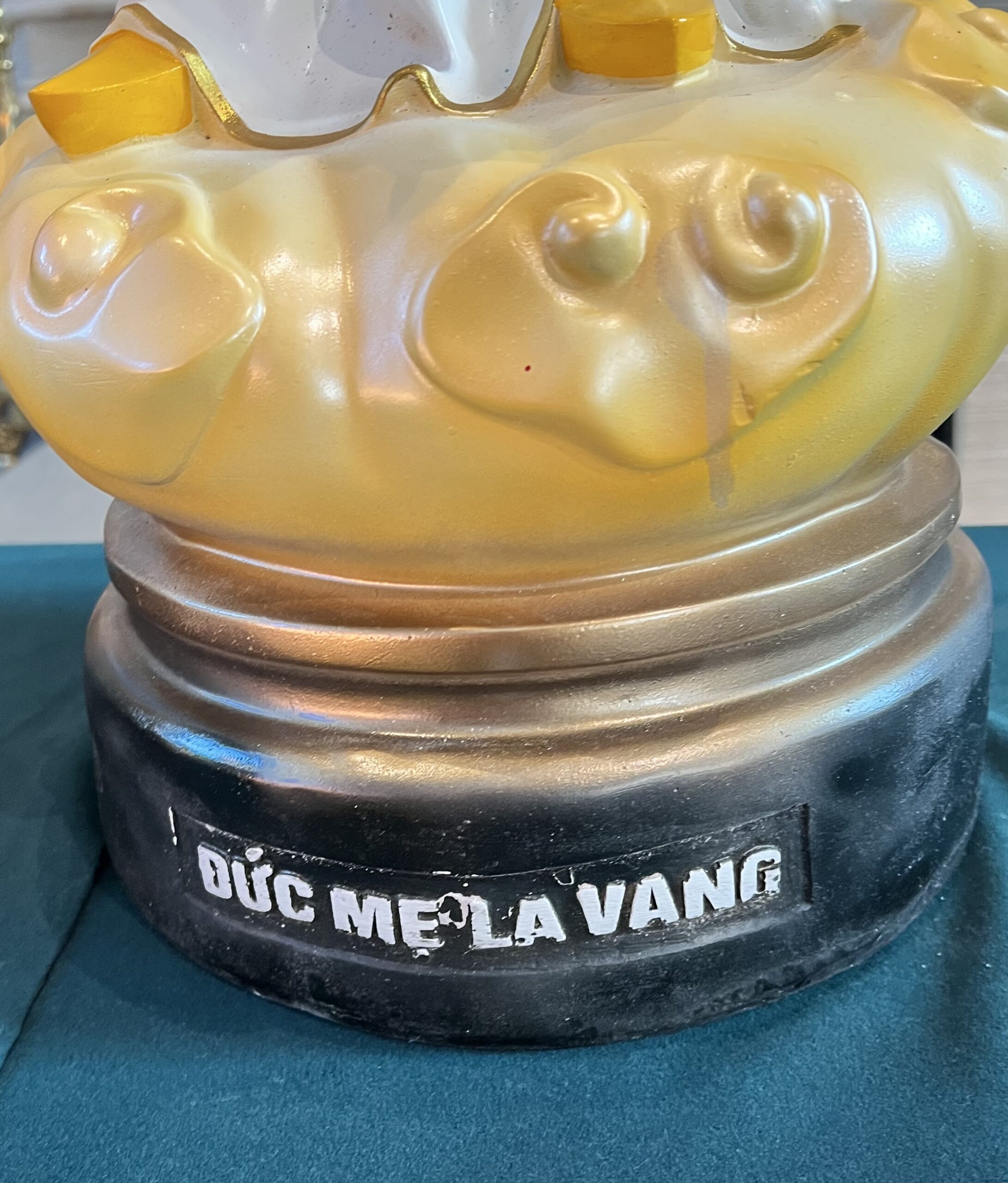
La Vang is derived from a word that means “to cry out” in Dutch. Another source states that the Vietnamese word “La” translates to “leaf” in Dutch, and “Vang” has the translation of “spice seeds”. The sources refer to crying out in pain and using healing plants in the jungle.
Despite the anti-Catholic Vietnamese government, around 250,000 pilgrims visit Our Lady of La Vang in central Vietnam every year. It’s not just Vietnamese people who come on pilgrimage, but also foreigners. The visitors are not only Catholics, but also believers of other religions such as Protestants and Buddhists.
The depiction of Mary with Child shows 12 stars in Her halo. These stars can represent martyrs or apostles. By the addition of these stars, it is a modified image, which artist Van Nhan designed. The image of Our Lady shows the Mother of God in traditional Vietnamese clothing, namely a long dress and a crescent-shaped head covering, which resembles a halo. Mary has dark hair, as well as eyes and a radiant complexion. The depiction shows Mary as a symbol of rest and peace. Thus, She is an icon of beauty for Vietnamese people. On 1 July 1998, John Paul II, Pope from 1978 to 2005, born Karol Józef Wojtyla (1920-2005) in Rome, blessed the image of “Duc Me La Vang”. The Pope then stated that the depiction symbolises Mary as the patroness of the Catholic Church in Vietnam.
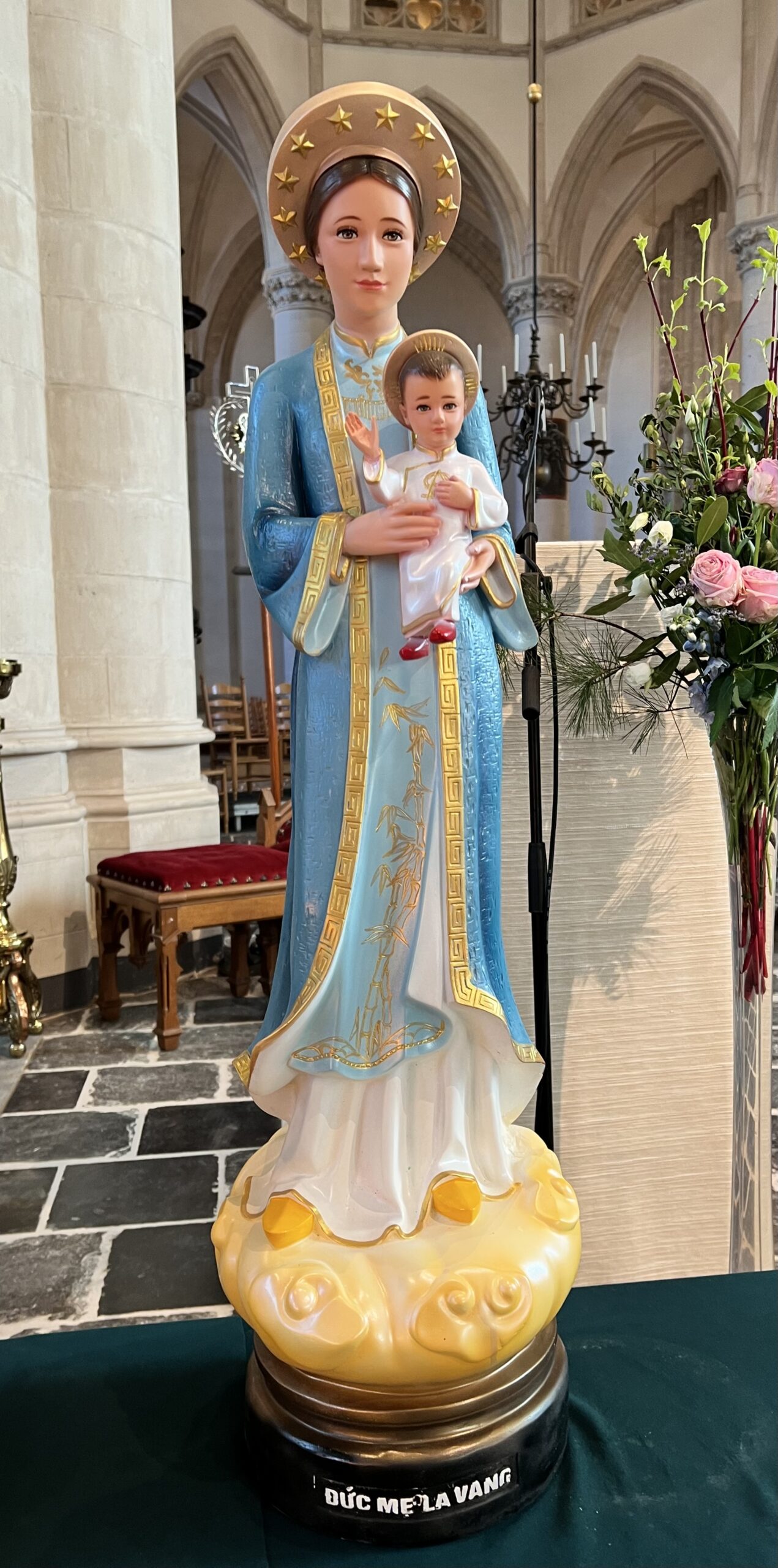
The image of Our Lady of La Vang can be seen both inside and outside Vietnam. Vietnamese people have emigrated due to the communist regime to many countries, such as Australia, Canada, France, Japan, the Netherlands, and especially the United States of America.
The apparitions at La Vang, like many places where Mary has appeared, are not recognised by the Vatican.
Our Lady of La Vang has become a spiritual symbol worldwide, particularly for Vietnamese people both inside and outside Vietnam.

 Nederlands
  English (UK)
  Deutsch
  Français