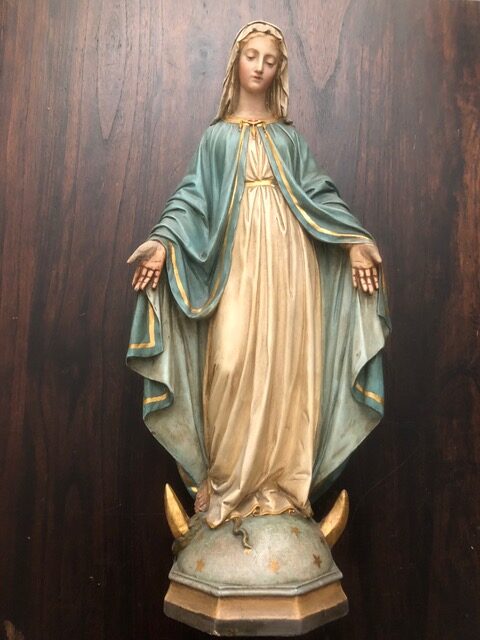
Mary is venerated in more places as Our Lady of Peace, including in St. Nicholas' Church in Brussels, Belgium.
In his work “Novale Sanctorum” (lives of the saints), written around 1480, Johannes Gielemans (1427-1487), a monk from the Red Cloister Abbey in Oudergem, near Brussels, writes about saints who lived after the 13th century. In it, he pays attention to the origin and flourishing of the veneration of Our Lady of Peace. Gielemans published more and he bore witness to Brabant patriotism.
The Battle of Ransbeek (1142) is significant for the devotion to the statue of Our Lady of Peace. It was a conflict between Brabantines from Brussels and the surrounding area and the Berthouts of Mechelen. The people of Brussels took the statue of Our Lady of Peace from St. Nicholas' Church to the front. The Brabantines won the battle, and in Brussels, the victory was attributed to the protection of Our Lady. In 1151, the population of Brussels was spared numerous deaths from the plague. In 1153, many people thanked the statue of Our Lady of Peace for sparing them from the plague. The statue was further adorned by a goldsmith in Brussels. The plague broke out there as well, but when the image was returned to St. Nicholas' Church, the plague disappeared. There are no reliable sources concerning the Battle of Ransbeek and the plague known to verify the stories from the 12th century.
The name Our Lady of Peace is first mentioned in St. Nicholas' Church in the 17th century. Jacobus Boonen (1573-1655), Bishop of Ghent (1617-1620) and Archbishop of Mechelen (1621-1655) was highly influential. This occurred during the time of the first coronation of the statue of Mary, which was previously donated to St. Nicholas' Church by Isabella Clara Eugenia/Isabella of Spain (1566-1633), Countess of Flanders of the Southern Netherlands. After the death of her husband Albert of Austria (1559-1621), Count consort of Flanders (1598-1621), Isabella became the Governor of the Southern Netherlands (1621-1633). The statue of Mary replaced the depiction of Her which was destroyed by Calvinists in the Brussels Grand Place in 1584. The new statue was made in 1585 and was first crowned in 1625. At the request of Archbishop Boonen, this took place in the Grand Place by the noble Isabella. She ensured that the veneration of Our Lady of Peace was revived. From that moment on, Mary was invoked to ward off adversities of hunger, war and plague.
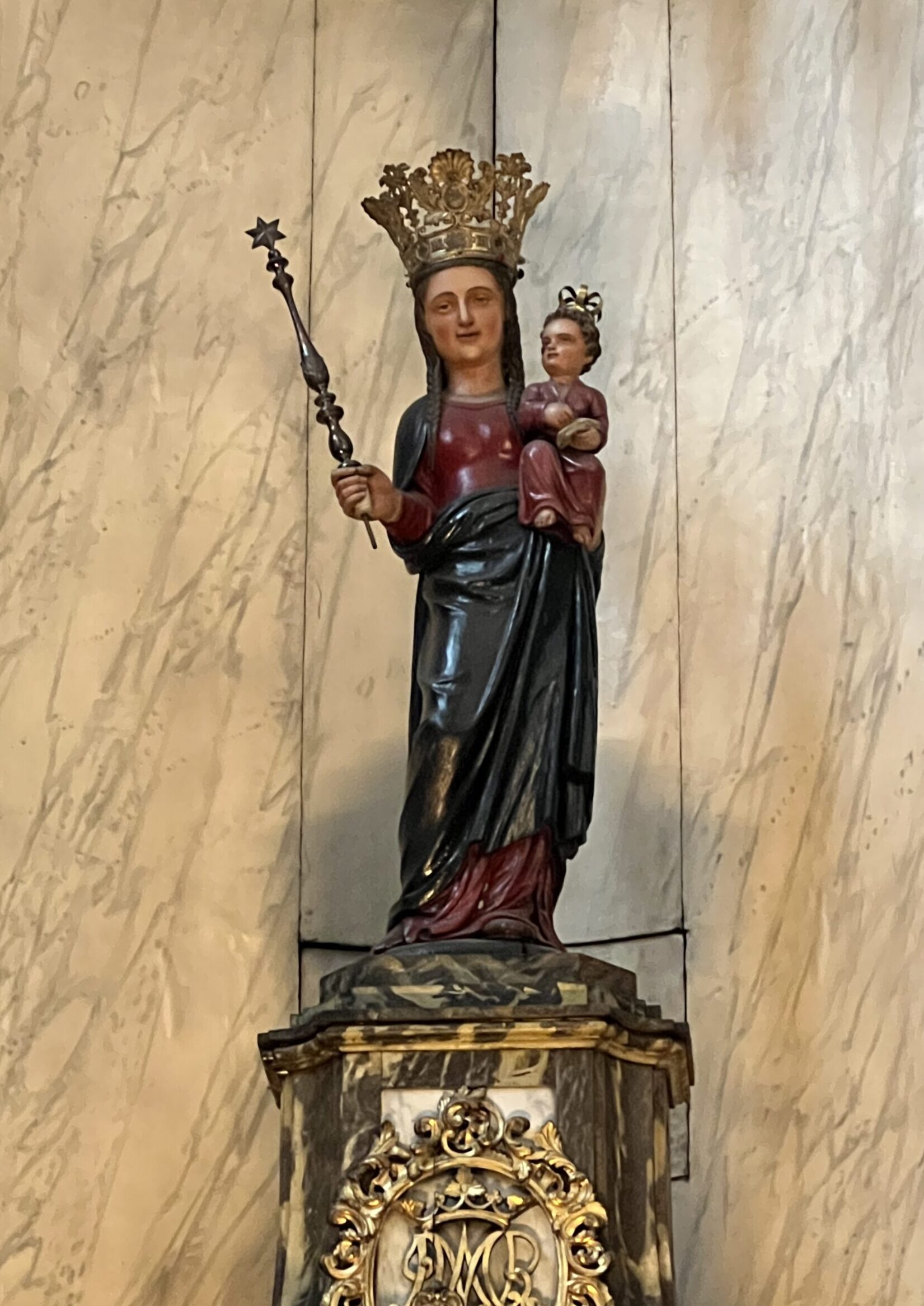
The image of Our Lady of Peace has been crowned for the second time. This took place during the Flemish Marian Congress of 8, 9, 10 and 11 September 1921 by Désiré Félicien François Joseph Mercier (1851-1926), Archbishop of Mechelen (1906-1926) and Metropolitan (Church Father) and Cardinal of Belgium (1907-1926). He did this after the approval in 1921 of Benedict XV, Pope from 1914 to 1922, born Marquis Giacomo Giambattista della Chiese (1854-1922). The location of the coronation was the steps of the Saint Michael and Saint Gudula Cathedral in Brussels.
The crowned statue is in Saint Nicholas“ Church in Brussels, at the top of the left tabernacle. The effigy is made of polychromed wood. On the attached banner is the Latin text: ”a peste, fame et bello, libera nos Maria Pacis“ and means: ”Mary of Peace, deliver us from plague, famine and war”. This text commemorates the centuries-long veneration of Our Lady of Peace.
~~~
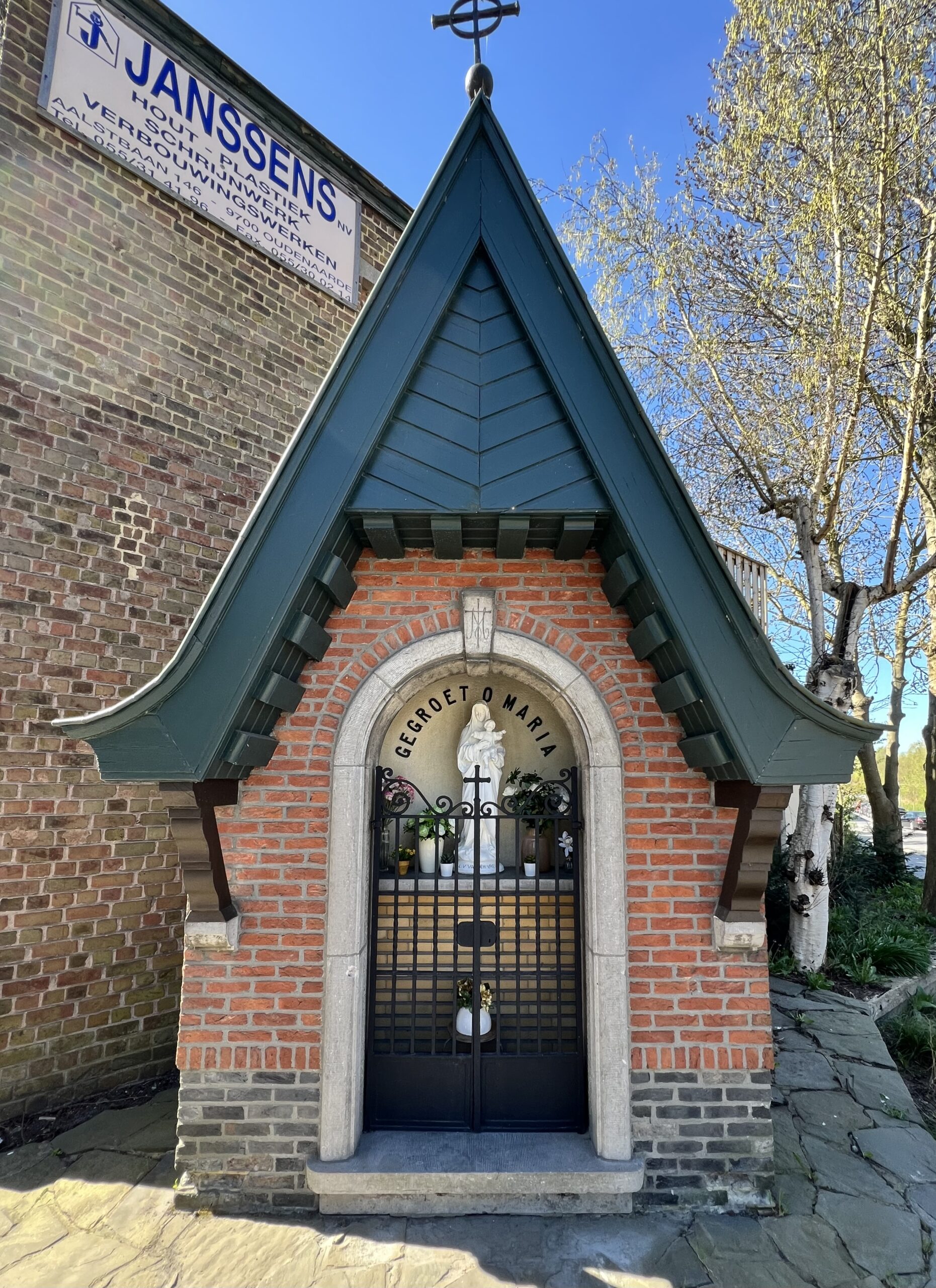
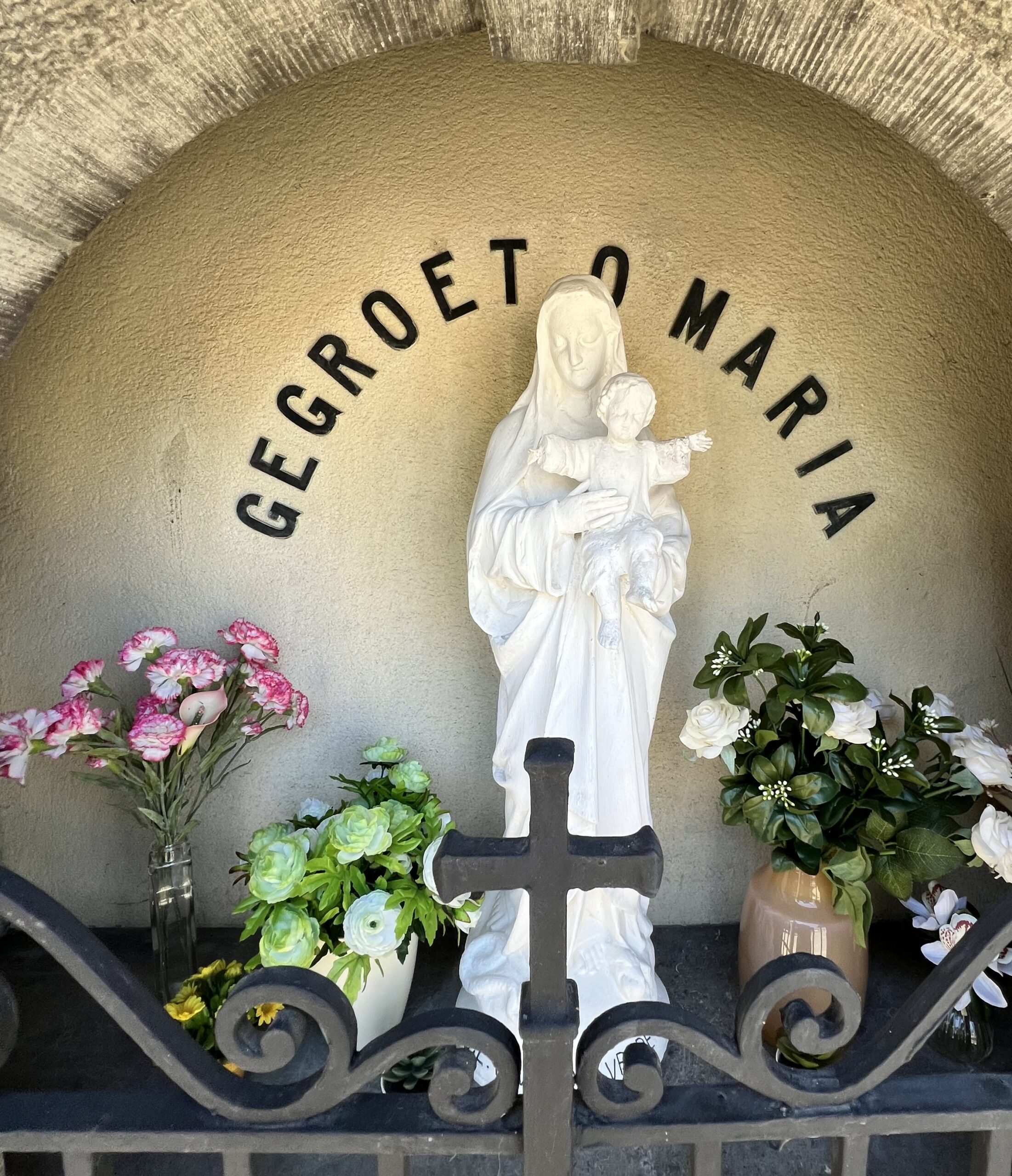
Another image of Our Lady of Peace is located in the Peace Chapel at the former Neerstraat, now Diependale 1 in Leupegem (9700 Oudenaarde), a sub-municipality of Flemish Oudenaarde. The Peace Chapel, in honour of “Our Lady of Peace”, was built after the Second World War (1939-1945). The chapel was constructed in memory of the 26 victims who died nearby, close to the bridge, on 19 May 1940.
~~~

 Nederlands
  English (UK)
  Deutsch
  Français