~~~
History
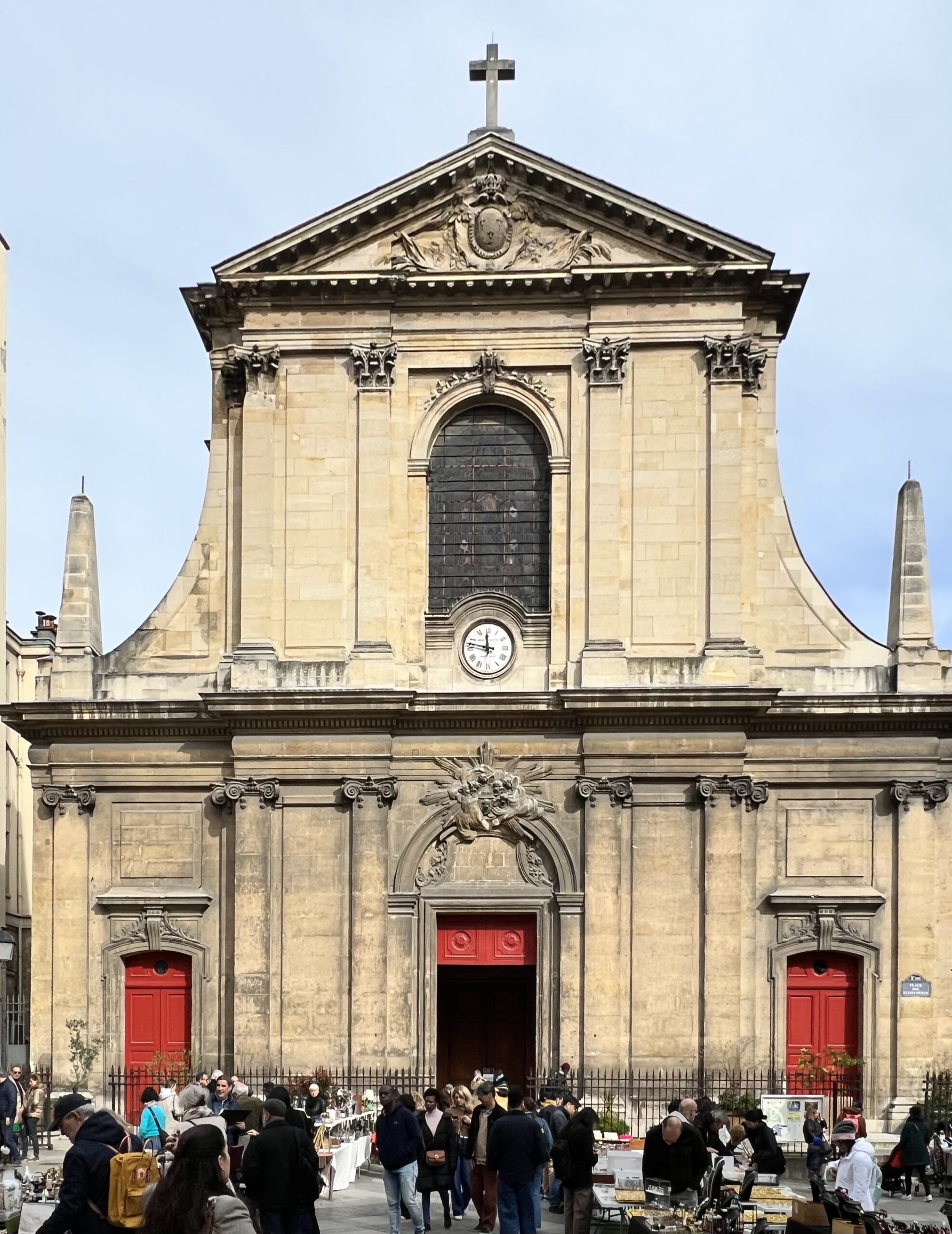
On 8 December 1629, the history of the pilgrimage site began. Louis XIII (1601-1643), King of France (1610-1643), King of Navarre (1610-1620), nicknamed "the Just" (le Juste), laid the first stone on 8 December 1629. On the same day, Jean-François de Gondi (1584-1654) placed a cross on the site where the church would be built. He was the first Archbishop of Paris (1622-1654) and was interred in Notre-Dame Cathedral in Paris shortly after his death.
In 1629, King Louis XIII responded to an appeal for funds for a new monastery for the Augustinians, known as “the little fathers/brothers” (les petits-Pères), a mendicant order. The king agreed, stating that the church would be dedicated to the Virgin Mary with the title “Our Lady of Victories”.
The explanation of the title “Our Lady of Victories” is a great expression of King Louis XIII's gratitude to Our Lady for all the victories he achieved through her protection against both rebellious insurgents and other enemies. The title is particularly in memory of the conquest of La Rochelle on 28 October 1628, Siege of La Rochelle (1627-1628), from the rebellious Huguenots (Protestants). This royal vow was signed by the king on 10 February 1638. On 15 August 1638, the church was consecrated with the dedication to Our Lady of Victories.
On 3 November 1637, Mary appeared to Frère Fiacre de Sainte-Marguerite, born Denis Antheaume (1609-1684) and known by the name Frère Fiacre. He belonged to the congregation of the Discalced Augustinians. Mary showed him the child that God wished to give to France. Mary appeared four times in the night between 1:00 am and 4:00 am. Frère Fiacre saw the Virgin Mary surrounded by a brilliant light, while She held the child in Her arms. Mary was wearing a blue robe adorned with stars. Her hair hung to her shoulders, She wore three crowns on her head, and was seated in a chair. The apparition said to him: “My child, do not be afraid, I am the Mother of God.” The Augustinian fell to the ground to adore the child. Mary said to him: “My child, this is not my Son; it is the child that God wishes to give to France.” This apparition lasted a quarter of an hour.
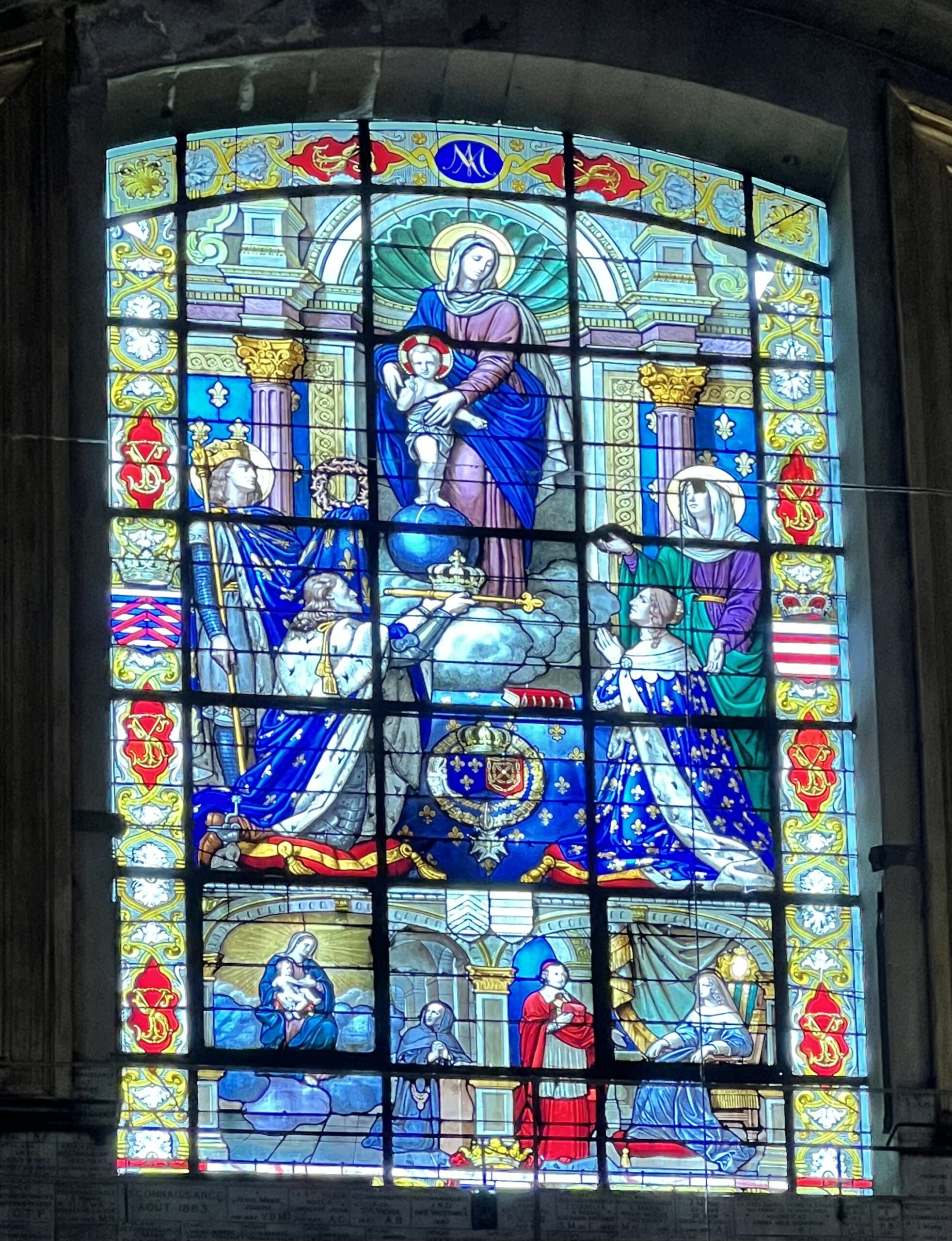
Following a vision of Mary and Child, Brother Fiacre went to Anne of Austria (1601-1666), Queen of France and Navarre (1615-1643), in 1637. They prayed three novenas with fervent prayers, asking Mary for the birth of a son. This period of (3 x 9 days) 27 days took place from 8 November to 4 December 1637. In February 1638, the Queen was found to be pregnant, and Brother Fiacre was instructed to hold a “missa nova” (novena). This was done at the sanctuary of Our Lady of Graces in Cotignac, in the hope that the pregnancy would proceed well. On 5 September 1638, Prince Louis XIV (1638-1715) was born. During a trip to Italy, Fiacre had the inspiration to name the church “Our Lady of Victories, Refuge of Sinners”.
The statue of Our Lady of Victories, dressed in a white mantle and with a golden crown on its head, disappears during the French Revolution (1789-1799). The clergy are expelled and the church is closed. Only on 9 November 1809 does the church regain its function as a house of worship and also the name of Our Lady of Victories. This occurs after 7 years of negotiations with the Stock Exchange, which has been housed in the church building since 1796.
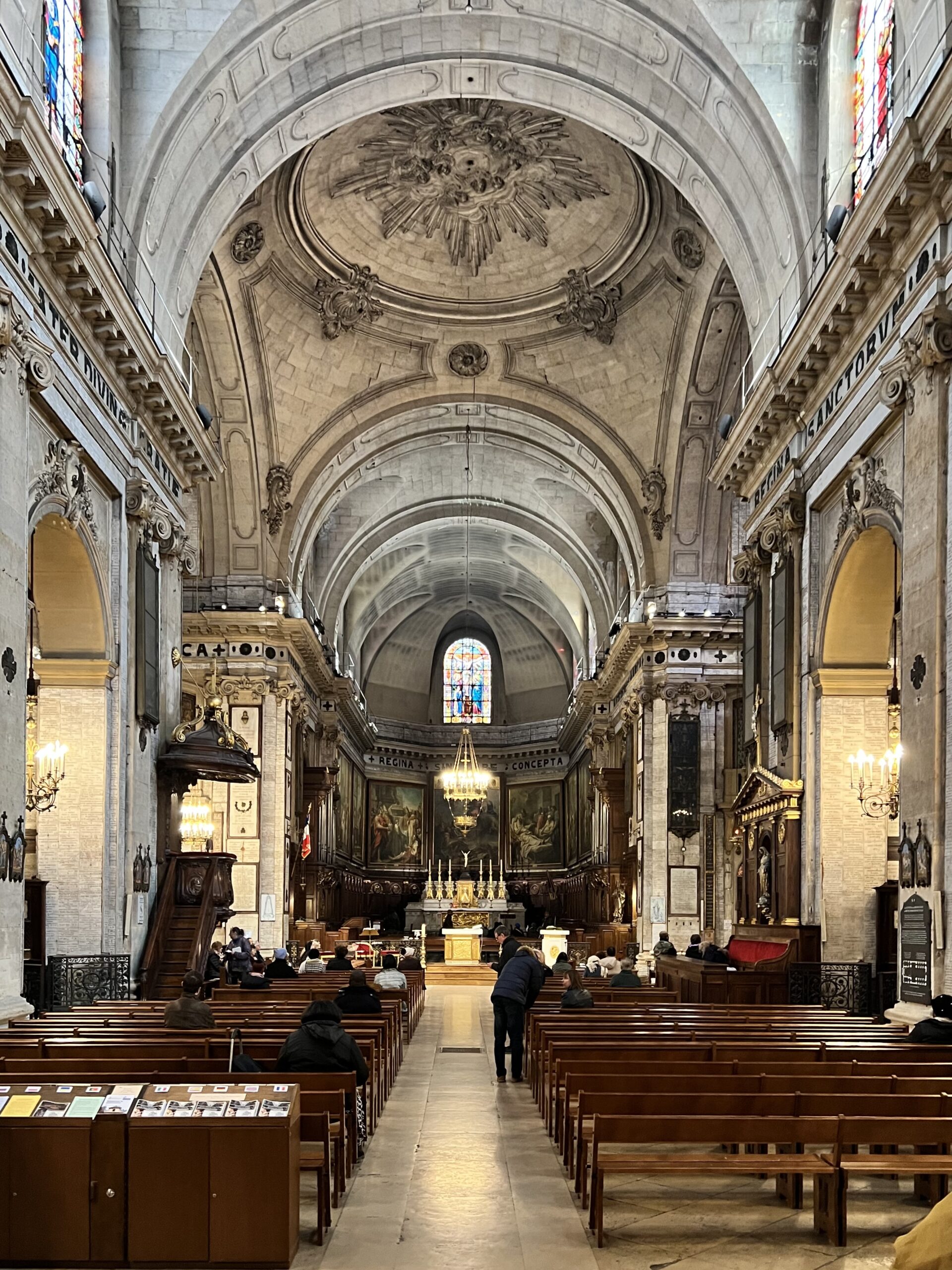
On 10 December 1836, Hyacinthe-Louis de Quélen (1778-1839), Archbishop of Paris (1821-1839), approved the devotional prayer in honour of the Immaculate Heart of the Blessed Virgin to bring about the conversion of sinners through the protection of Mary.
Charles-Éléonore Dufriche-Desgenettes (1778-1860) is the founder of the Archconfraternity of the Most Holy and Immaculate Heart of Mary. Working as a priest in the parish of the “Petits-Pères”, the most criminal district of Paris, he sees no progress after four years of service. In December 1836, during a Eucharist celebration, he hears a voice in his heart. He subsequently dedicates the parish to the Immaculate Heart of Mary. Following this, the district changes for the better. He wants to ensure it is the powerful intervention of Mary. He asks Her for another sign, namely a conversation with Etienne Louis Hector de Joly (1756-1837), who was minister of Justice in 1792 under Louis XVI (1754-1793), King of France and Navarre (1774-1792). Within a few days, the conversation takes place. Through this, Mary indicates what She wishes to become in Notre-Dame des Victoires (Our Lady of Victories), namely the refuge of sinners, as has been the case since the church’s foundation. On 24 April 1838, the Archconfraternity of the Most Holy and Immaculate Heart of Mary is elevated to the Universal Archconfraternity of the Immaculate Heart of Mary. This is done by Gregory XVI, Pope from 1831-1846 and born Bartolomeo Alberto Cappellari (1765-1846).
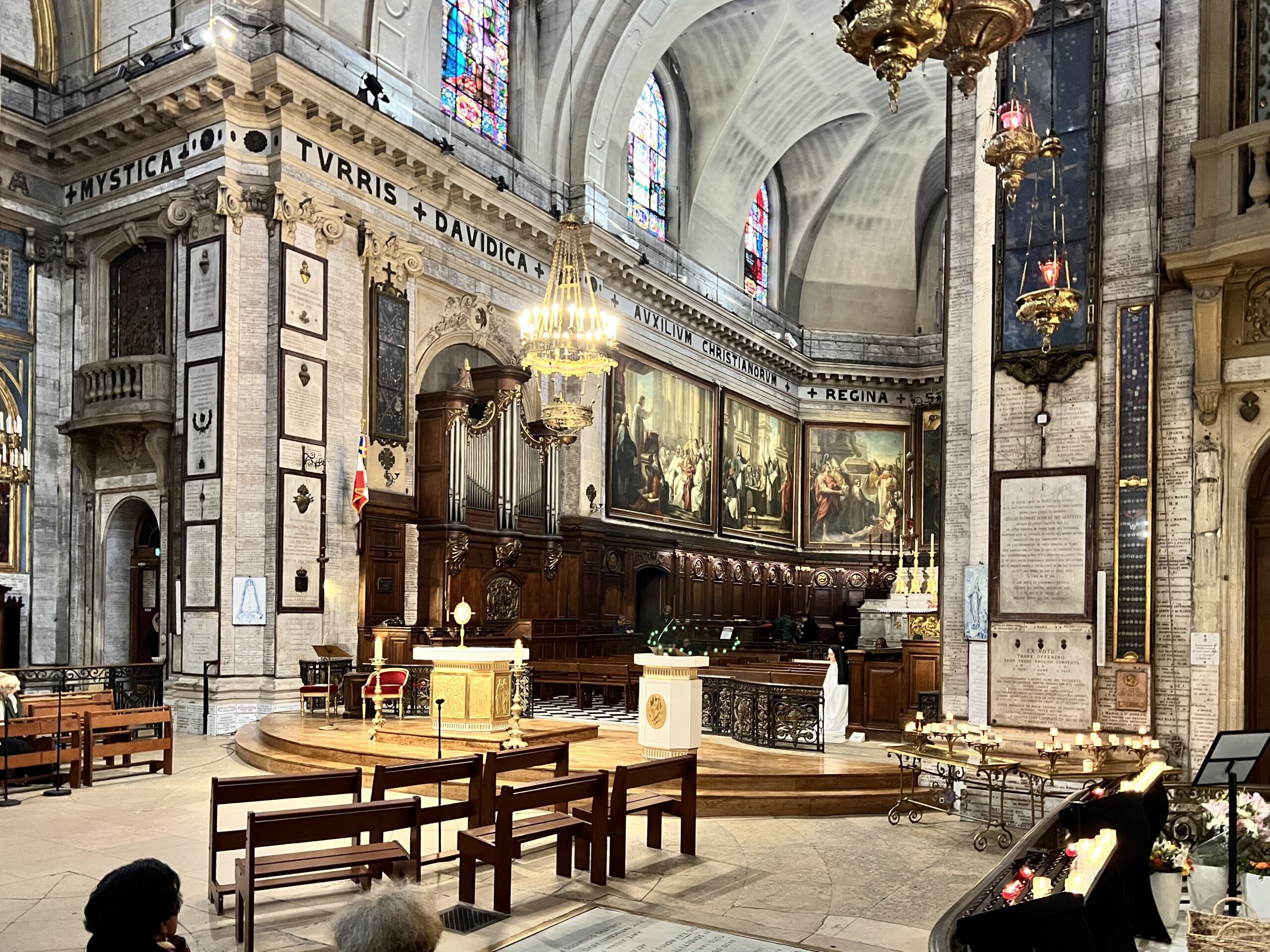
In 1843, relics of the martyr and saint Aurelia, who lived in the 3rd century in Strasbourg, were brought from under the altar in a bronze shrine. It was a gift from Pope Gregory XVI.
On 9 July 1853, Pius IX, Pope from 1846-1878 and born Giovanni Maria Mastai-Ferretti (1792-1878), offered a new crown to Our Lady of Victories. He did this in thanks for the liberation of Rome by French soldiers in 1849. The statue of Our Lady of Victories is the first statue of Mary to have been crowned on the initiative of a pope. It is this pope who, on 8 December 1854, introduced the dogma of the Immaculate Conception.
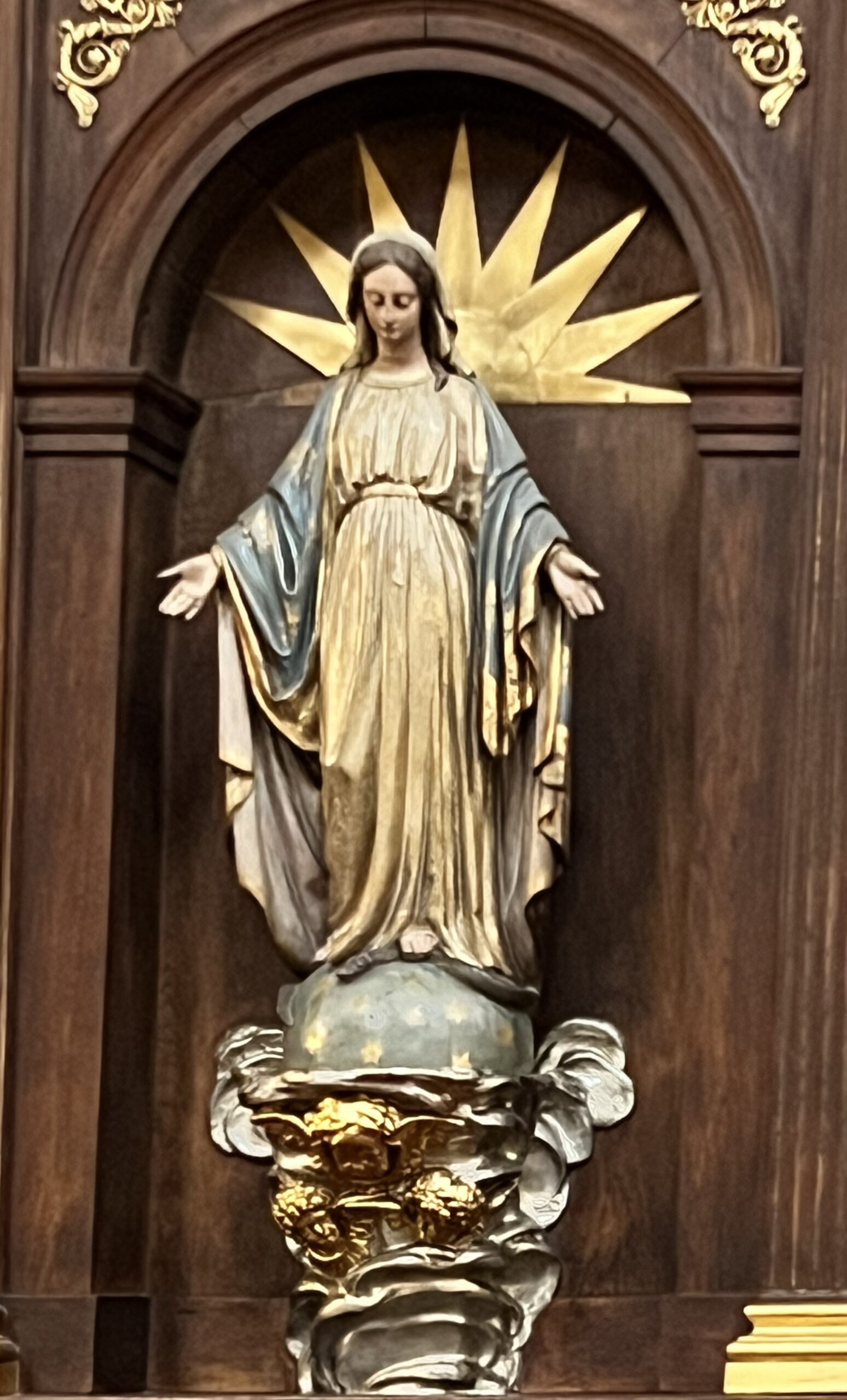
The lamps above the altar are gifts from believers. The largest lamp is a gift from Empress Eugénie de Montijo in 1866. She was born María Eugenia Ignacia Augustina Palafox de Guzmán Portocarrero y Kirkpatrick (1826-1920). By marrying Charles-Louis-Napoléon Bonaparte (1808-1873), Emperor of France (1852-1870), she became Empress of France (1853-1870).
On 23 February 1927, the church was elevated to a basilica. The decision came from Pius XI, Pope from 1922 to 1939, born Ambrogio Damiano Achille Ratti (1857-1939).
On 15 August 1938, Prince François Xavier Charles Marie Anna Joseph of Bourbon-Parma (1889-1977) of the House of Bourbon, renewed the gesture of his ancestor by dedicating France to Our Lady of Victories. The text is placed at the foot of the image of Our Lady.
Since 1992, the organisation of the pilgrimage site has been in the hands of the Benedictine Sisters of the Sacred Heart of Montmartre (Soeurs Bénédictines du Sacré-Coeur de Montmartre).
In 2012, the chapel of the parents of Thérèse of Lisieux was consecrated. Her father and mother were declared saints in 2015. During his student days in Paris, her father, Louis Martin, frequented this church. Zélie, his wife, knew Our Lady of Victories through a depiction in the church in Alençon, where they lived.
Over the centuries, the basilica has welcomed many visitors, including quite a few famous figures, such as the Parisian writer Colette (Sidonie-Gabrielle Colette, 1873-1954) and the composer, conductor, pianist, and violinist Wolfgang Amadeus Mozart (Joannes Chrysostomus Wolfgangus Theophilus Mozart, 1756-1791). Other well-known devotees include the painter George Devallières (Olivier Gabriel Victor Georges Lefèbvre-Desvaillières, 1861-1950) and the Italian cycling champion Gino Bartali (1914-2000).
In recent centuries, the basilica has grown into one of the most famous Marian shrines in the world.
Pilgrimage site
The basilica is beautifully situated in the northern part of Paris city centre.
In the much-visited house of God, many chapels can be seen, including those of Our Lady of Sorrows, Anne, Joseph, Augustine, and John.
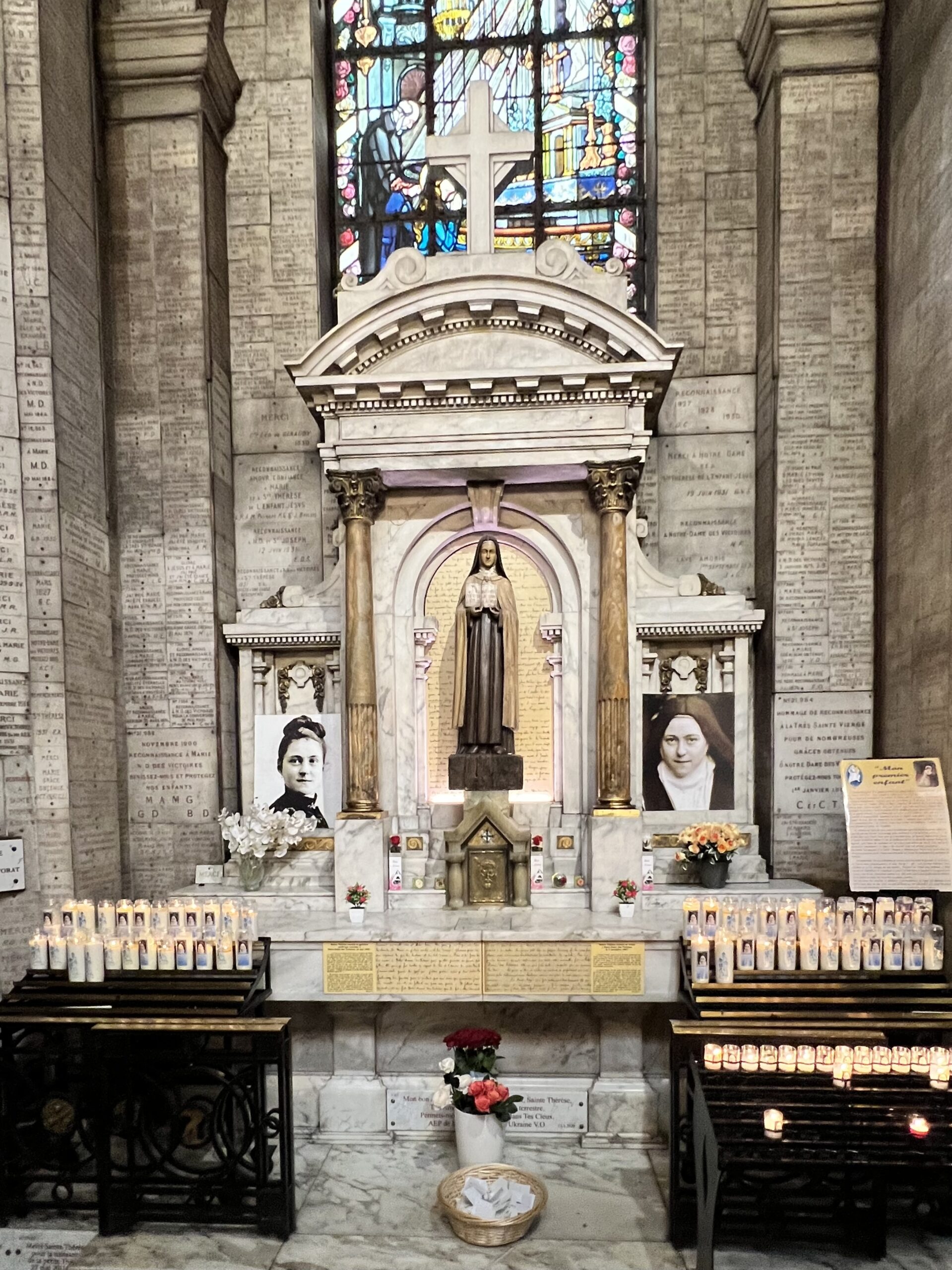
The basilica is a special place for the relationship between Mary and Saint Thérèse of Lisieux and her parents. Thérèse of Lisieux was born Marie-Françoise Thérèse Martin (1873-1897) and took the religious name Thérèse of the Child Jesus and the Holy Face. Thérèse's parents are Azélie (Zélie) Guérin (1831-1877) and Louis Martin (1823-1894). Thérèse was canonised in 1925 and both parents in 2015. The Martin family members mention in letters their great love for Our Lady of Victories; they thank Her for her intercession as a mediator. The basilica has two chapels dedicated to Thérèse and her parents. Since 2012, relics of Zélie and Louis have been kept in their chapel.
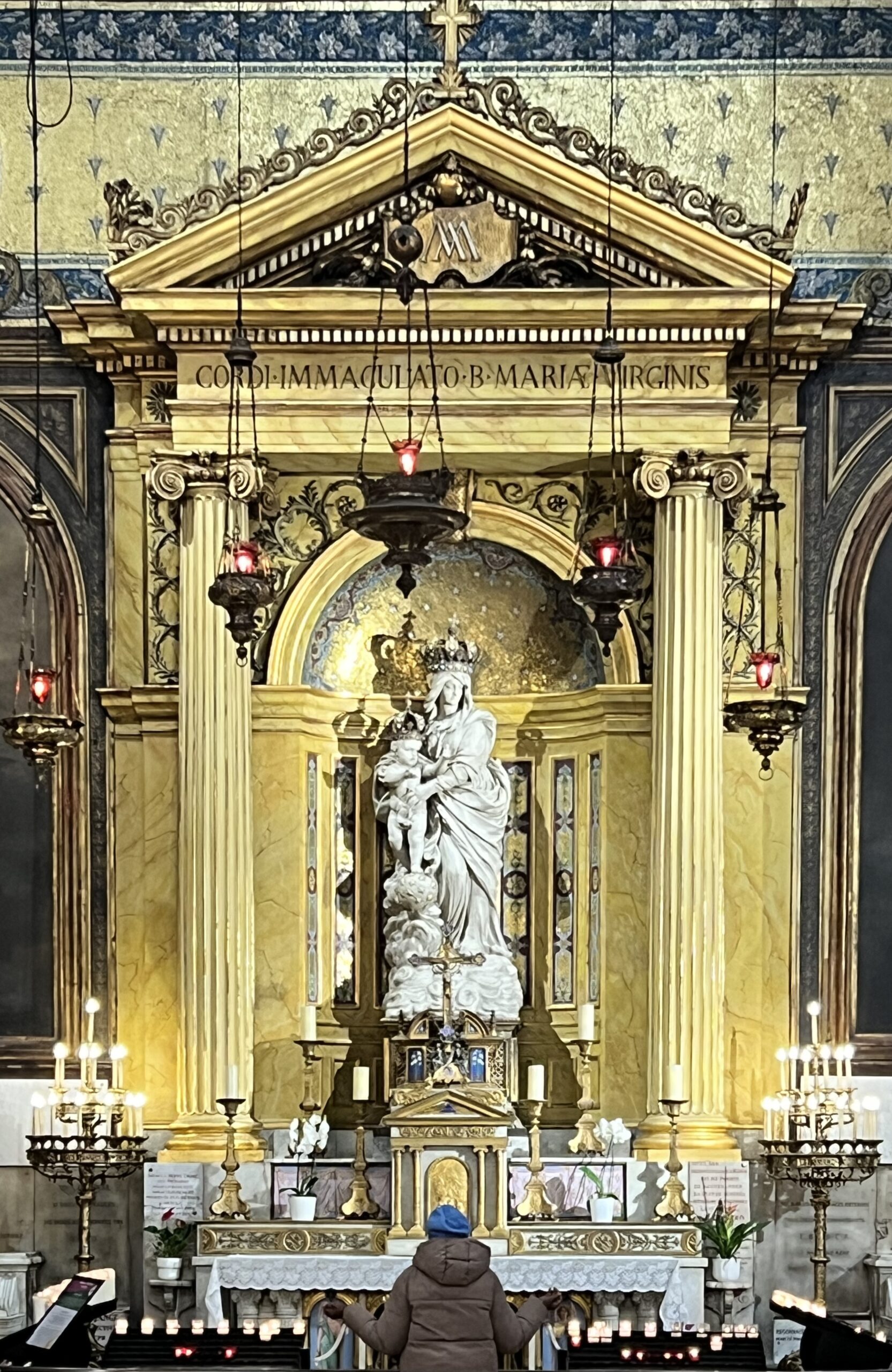
Candles are always burning before the depiction of Our Lady of Victories, and people are praying.
Impressive are the thousands of marble tiles that bear witness to thanks to Mary.
The basilica's annual feast day is on 16 January.
The basilica is open daily.
ACCESSIBILITY
The Basilica of “Notre-Dame des Victoires” (Our Lady of Victories) is located on the north side of Paris city centre. If travelling by metro, get off at “Bourse”.
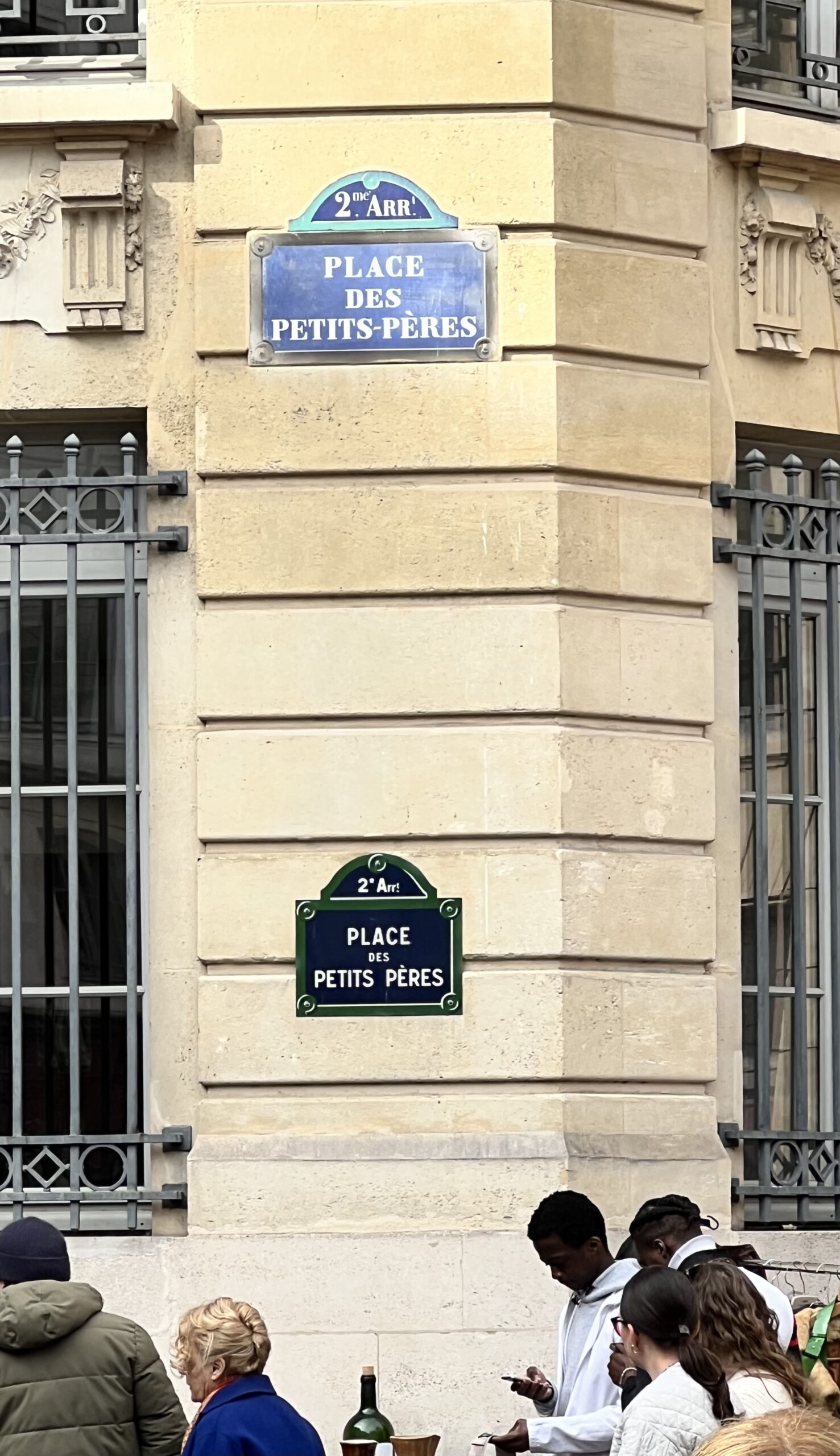
Address of the basilica: Place des Petits-Pères 7, 75002 Paris, adjacent to Rue Notre-Dame des Victoires.
Up-to-date information can be found at www.notredamedesvictoires.com.
Experience
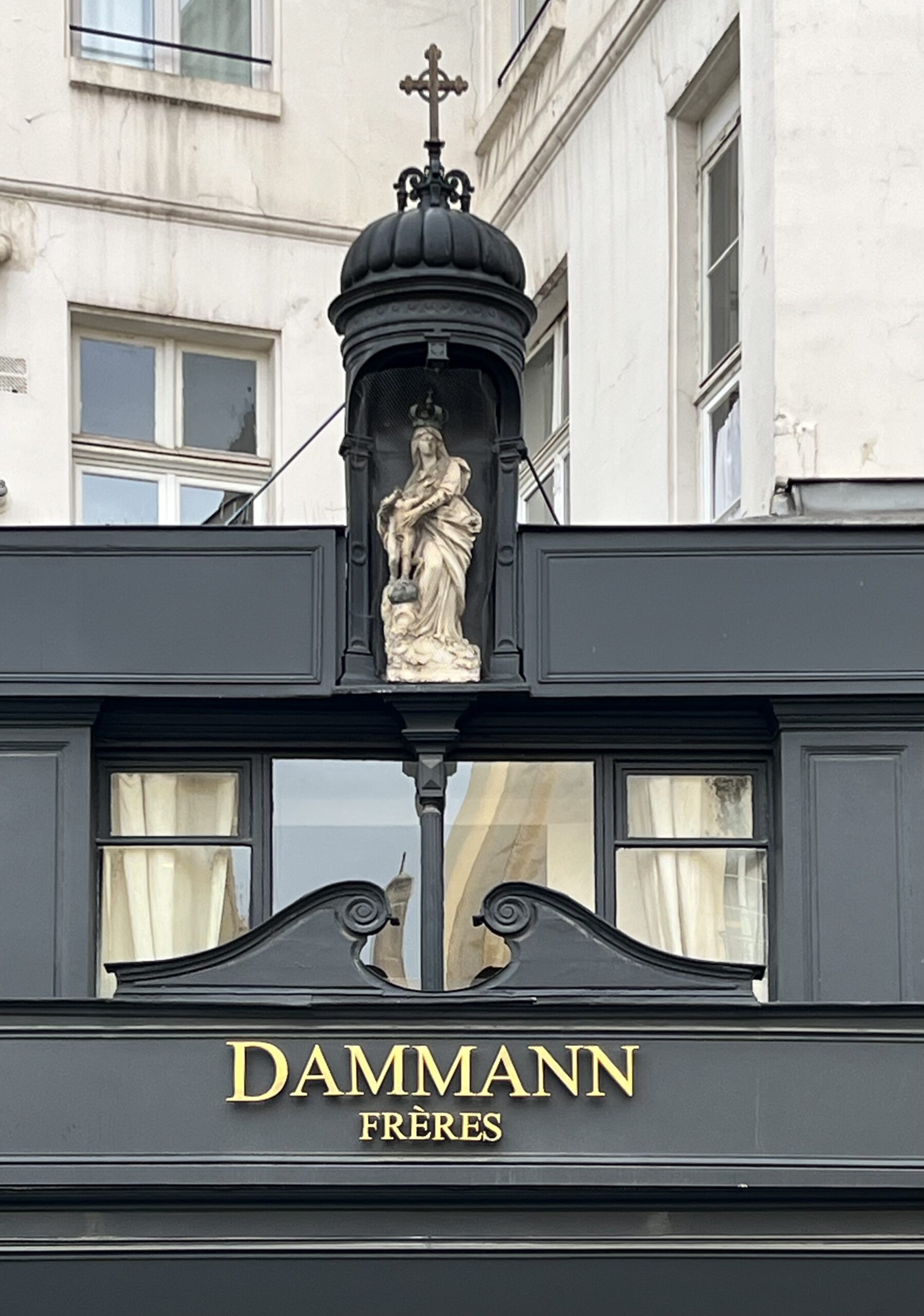
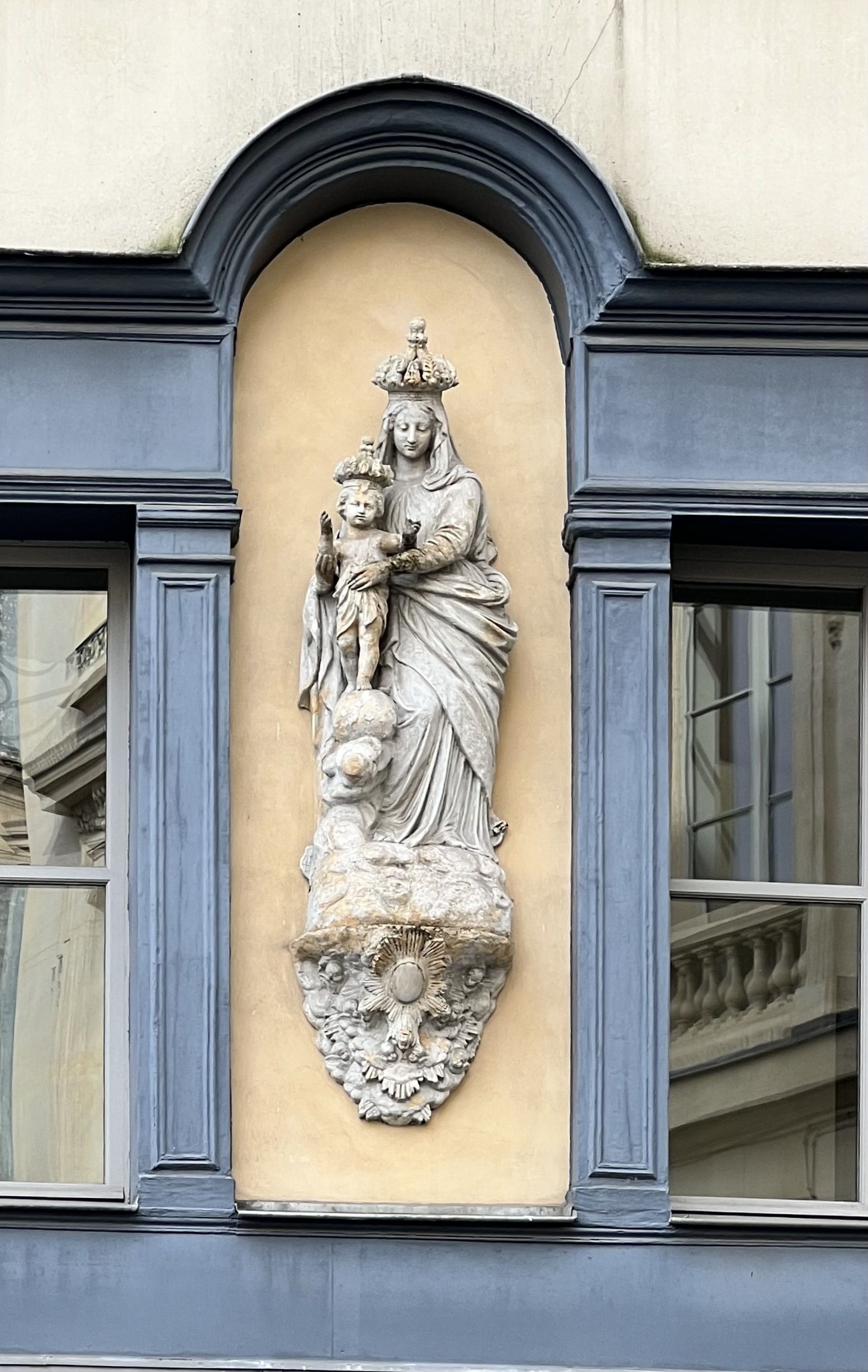
On the “Place des Petit-Pères” I stand in front of the basilica. It is very busy due to a market selling all sorts of trinkets. A pleasant atmosphere makes me part of the bustling crowd. I look around and on the facades of old buildings, two large statues of Mary can be seen.
The story goes that when the musician Mozart is in Paris, he comes to this church to pray, as does the Italian cycling champion Gino Bartali.
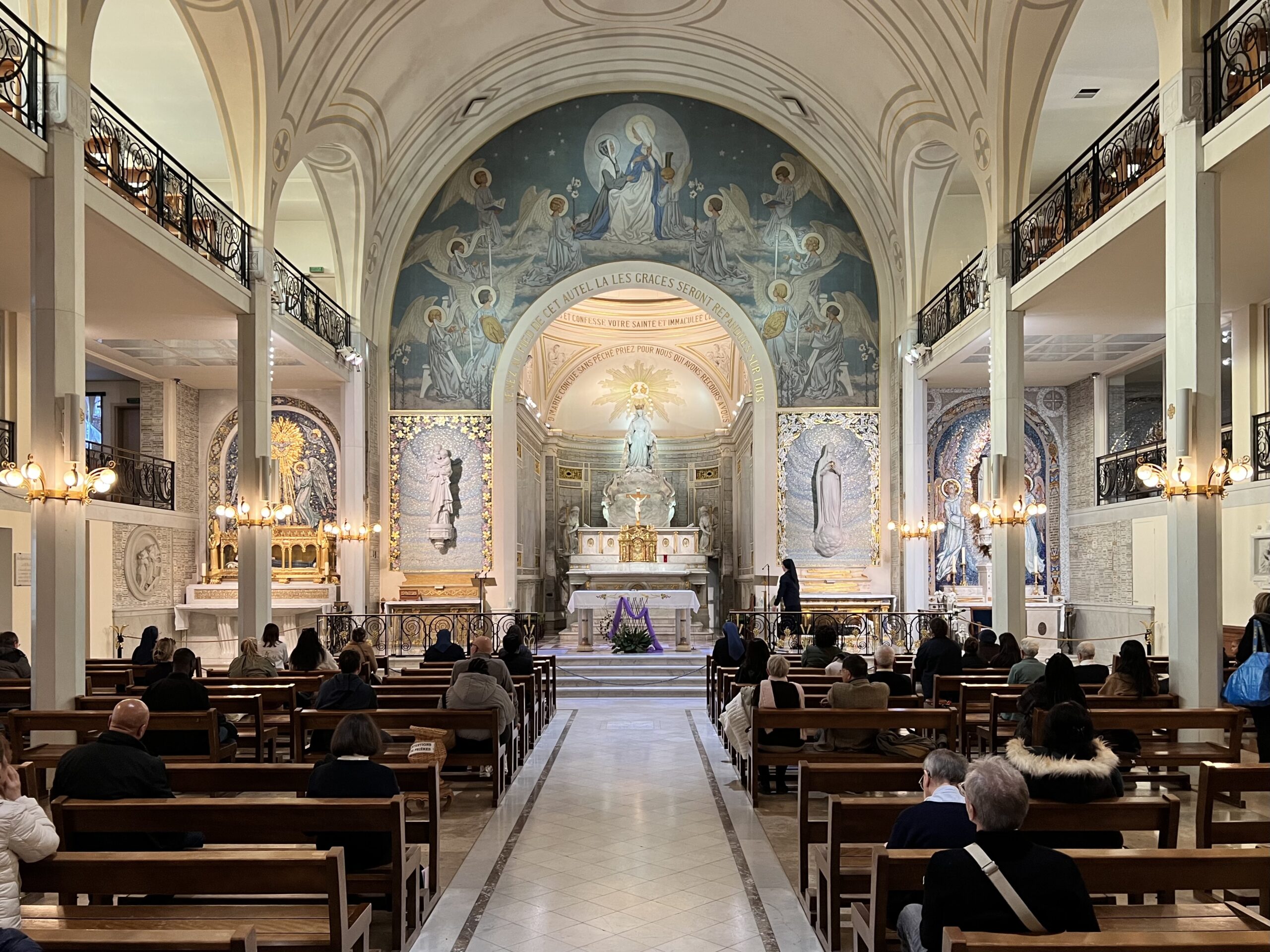
Next, it's time for a visit to the basilica, where a large gate has been placed at the entrance. Others are entering the basilica with me. In the large building of this pilgrimage site, there are statues, paintings hang, and ornaments are placed against the ceiling. In the brown, wooden pews, churchgoers sit in prayer. Very striking are the countless ex-votos; every wall is completely covered with tiles bearing messages of thanks and/or names, as in the chapel dedicated to Saint Theresa. There appear to be some 40,000 (!) marble tiles placed here. Many candles are burning in the basilica, indicating the large number of visitors to this beautiful pilgrimage church.
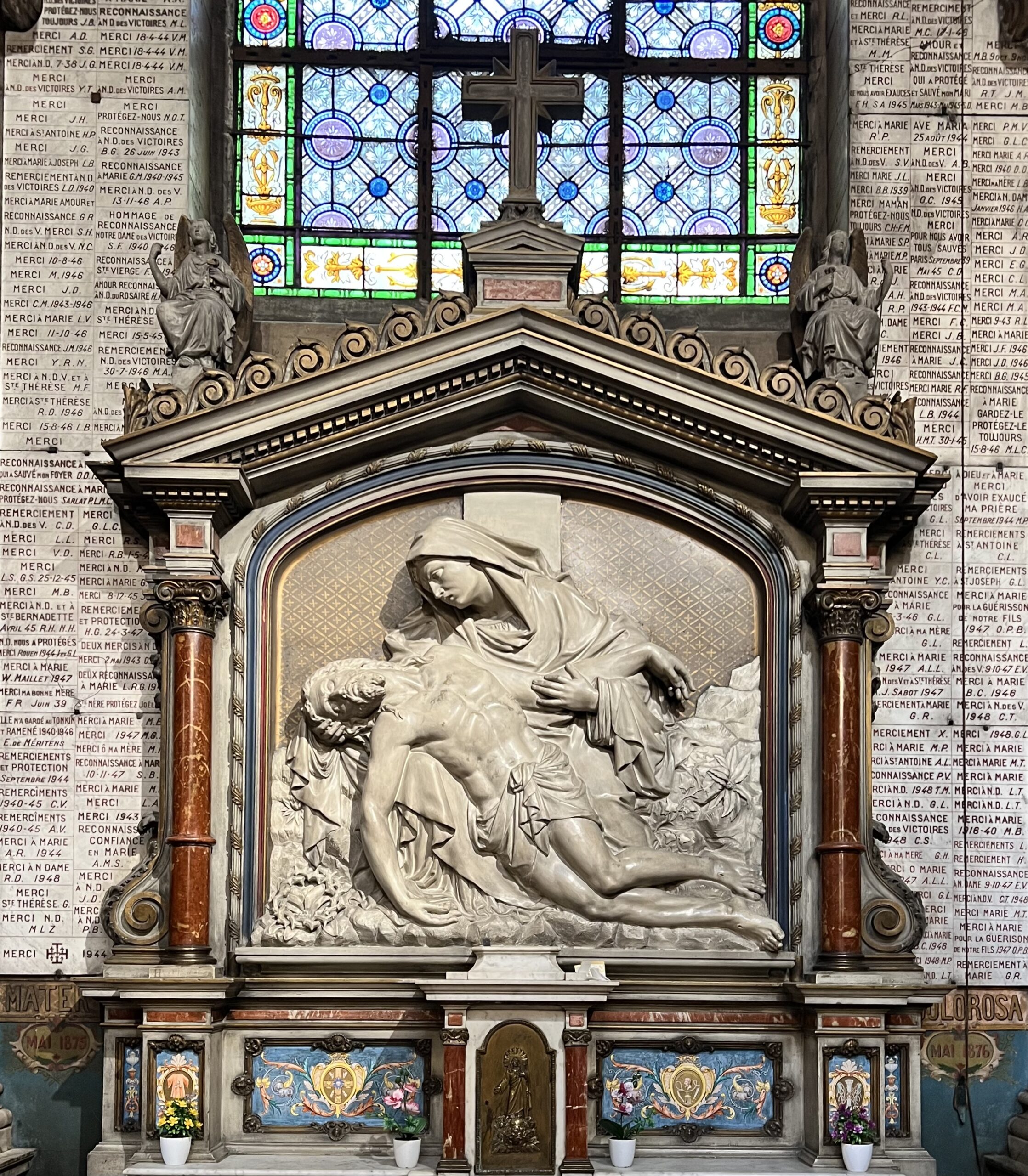
A chapel with Mary and her deceased Son impresses me. Here too, there is prayer.
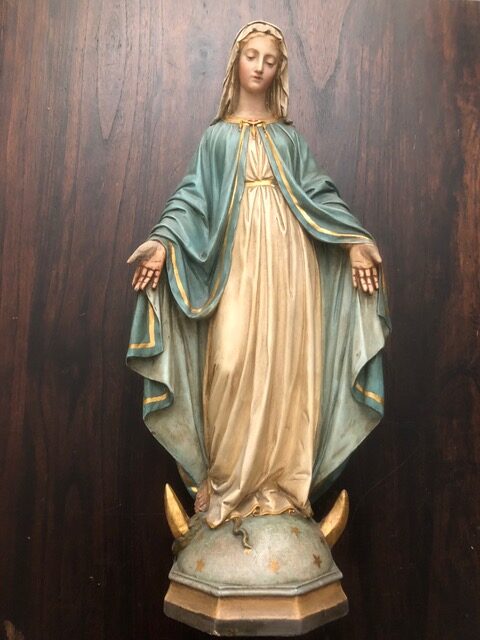
A large statue of Mary with Child is crowned. This is the effigy of Our Lady of Victories. So many candles are burning here. I stand here for a while looking at Mary and praying to the Mother of God.
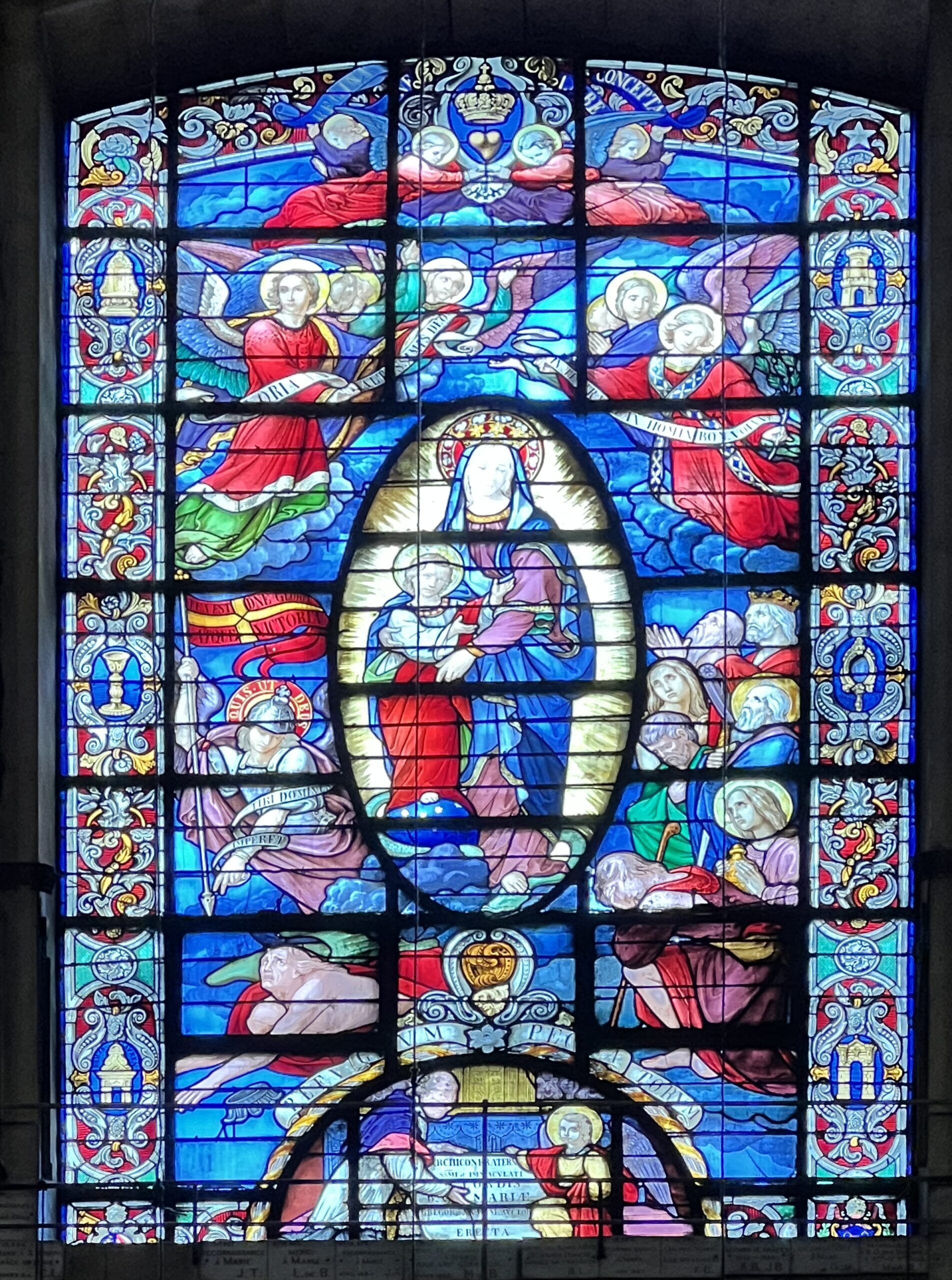
The stained-glass windows here are very impressive and beautiful, including one with Mary, her Little Son and many angels.
For a long time, I've been contemplating a Christmas Nativity scene with Mary, her baby, and Joseph. It's not Christmas, but I do feel like I'm in the Christmas Eve now.
Finally, it is admiring the effigy of Mary and her mother Anne. What an impressive pilgrimage church this is. I am happy to be able to visit here. I leave the basilica with precious memories.
Environment
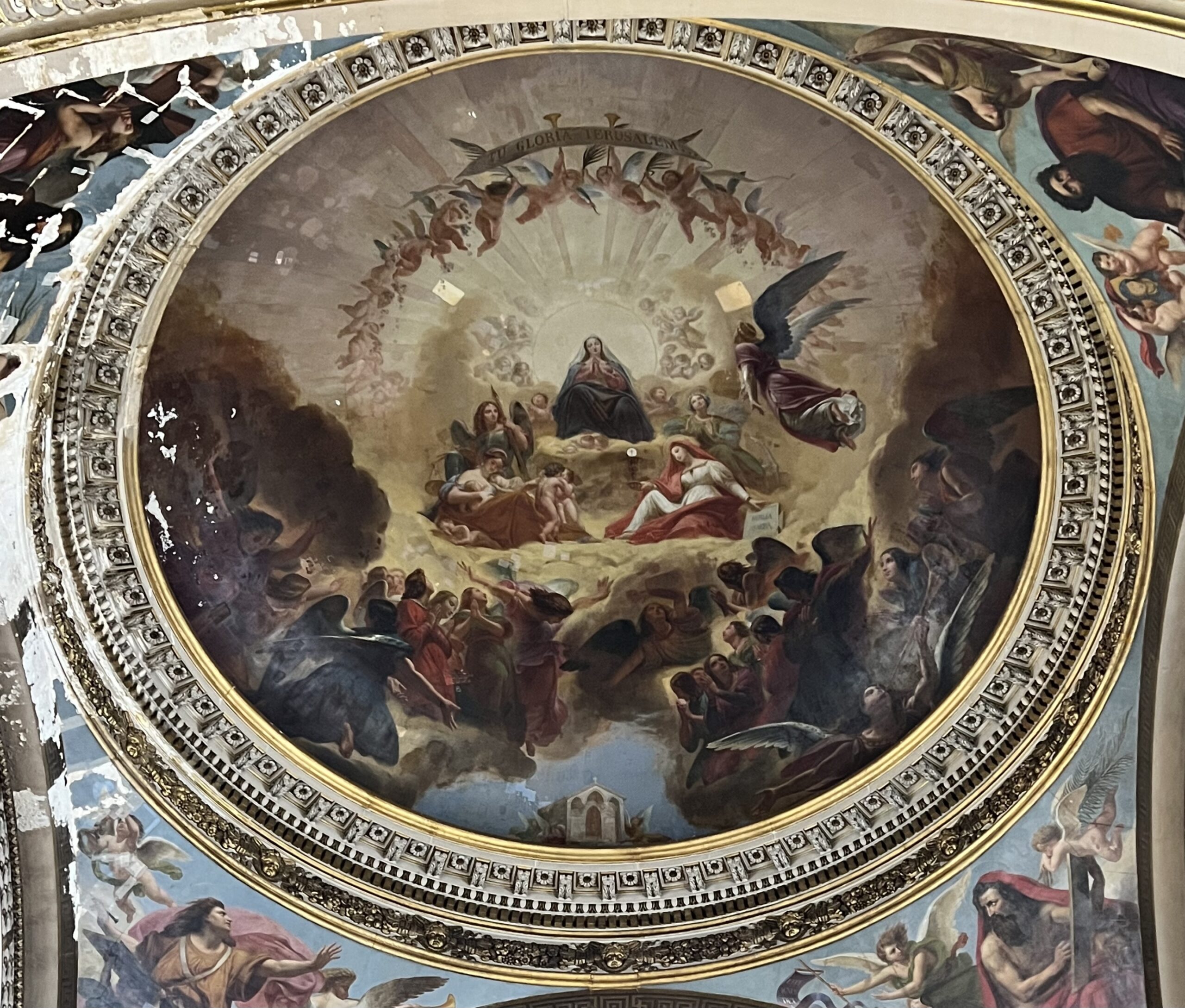
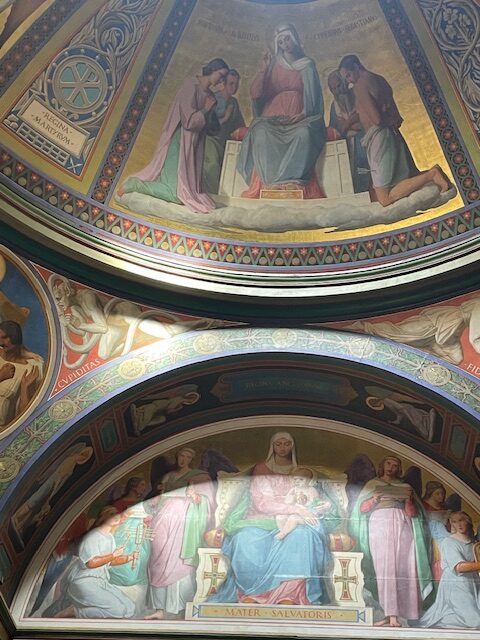
Near the Basilica of Our Lady of Victory stands the Church of Our Lady of Loreto (Église Notre-Dame-de-Lorette). The church's address is 18 bis rue de Châteaudun, 75009 Paris. The building's style is Neoclassicism. The church is one of the most colourful places of worship in Paris. The foundation stone was laid on 25 August 1823. The apse features the “Coronation of the Virgin” by painter François-Edouard Picot (1786-1868). A ceiling fresco depicts the transport of the Holy House of Nazareth to Loreto by angels. In 1984, the church was classified as a historic monument.
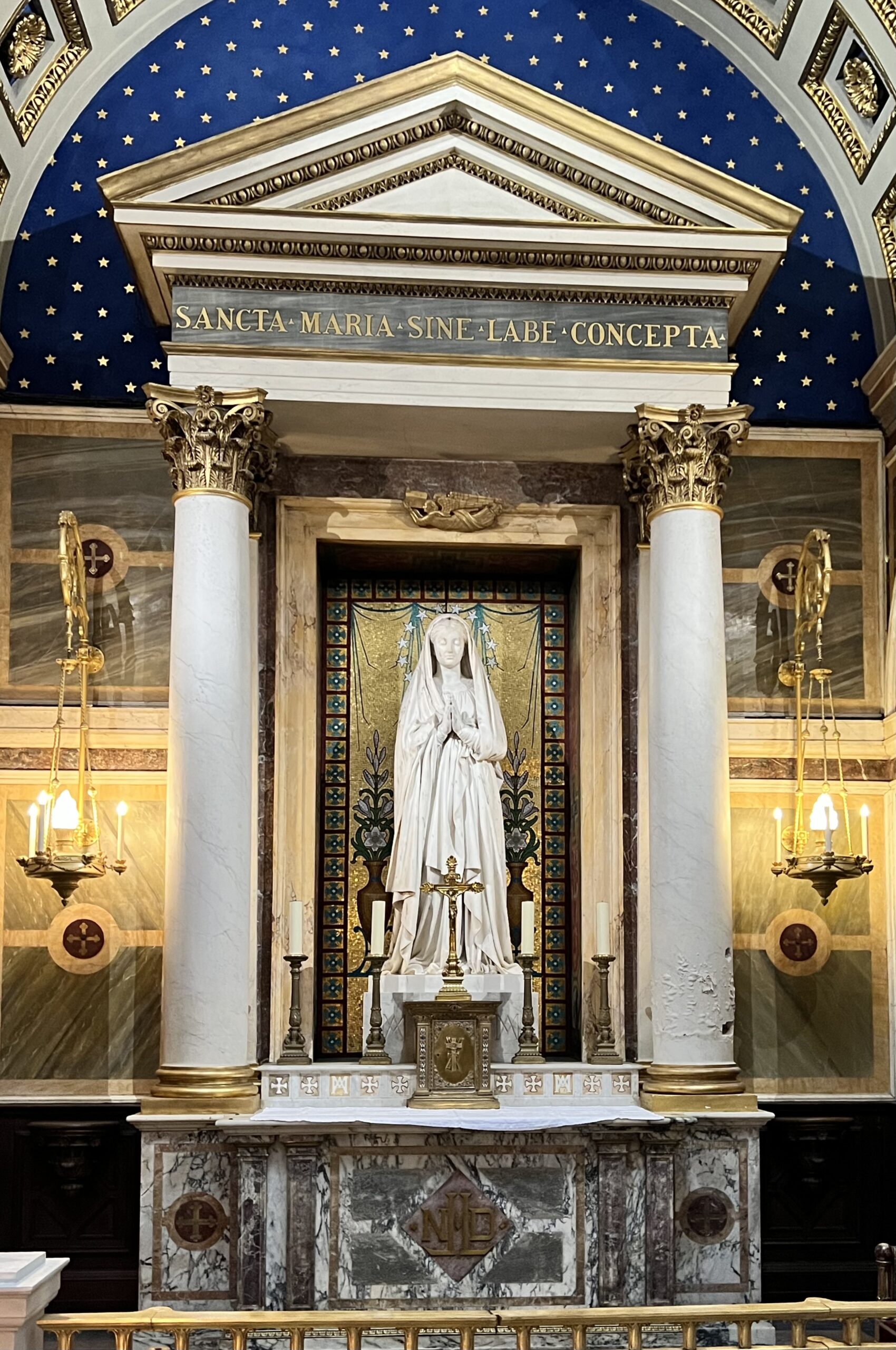
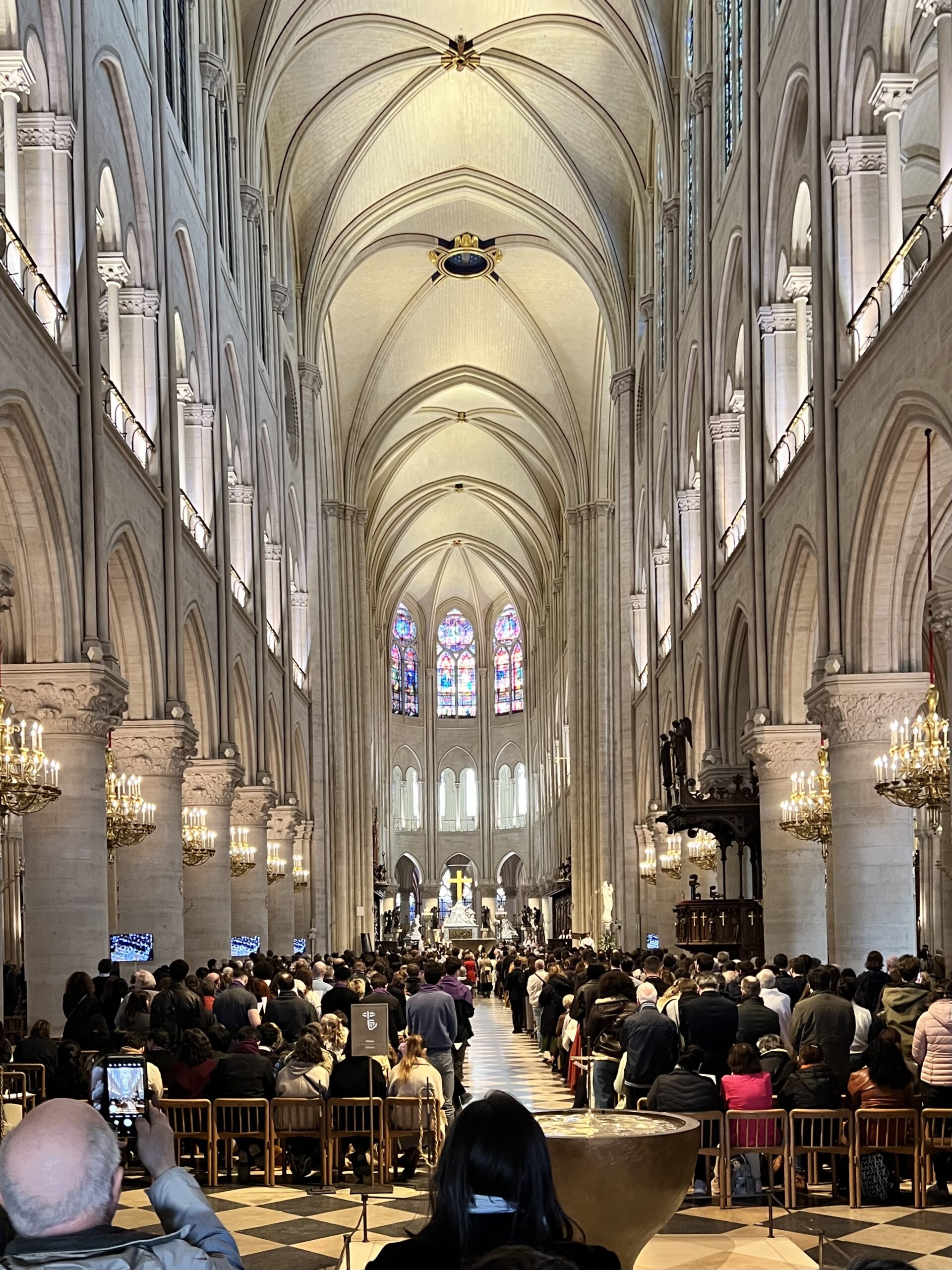
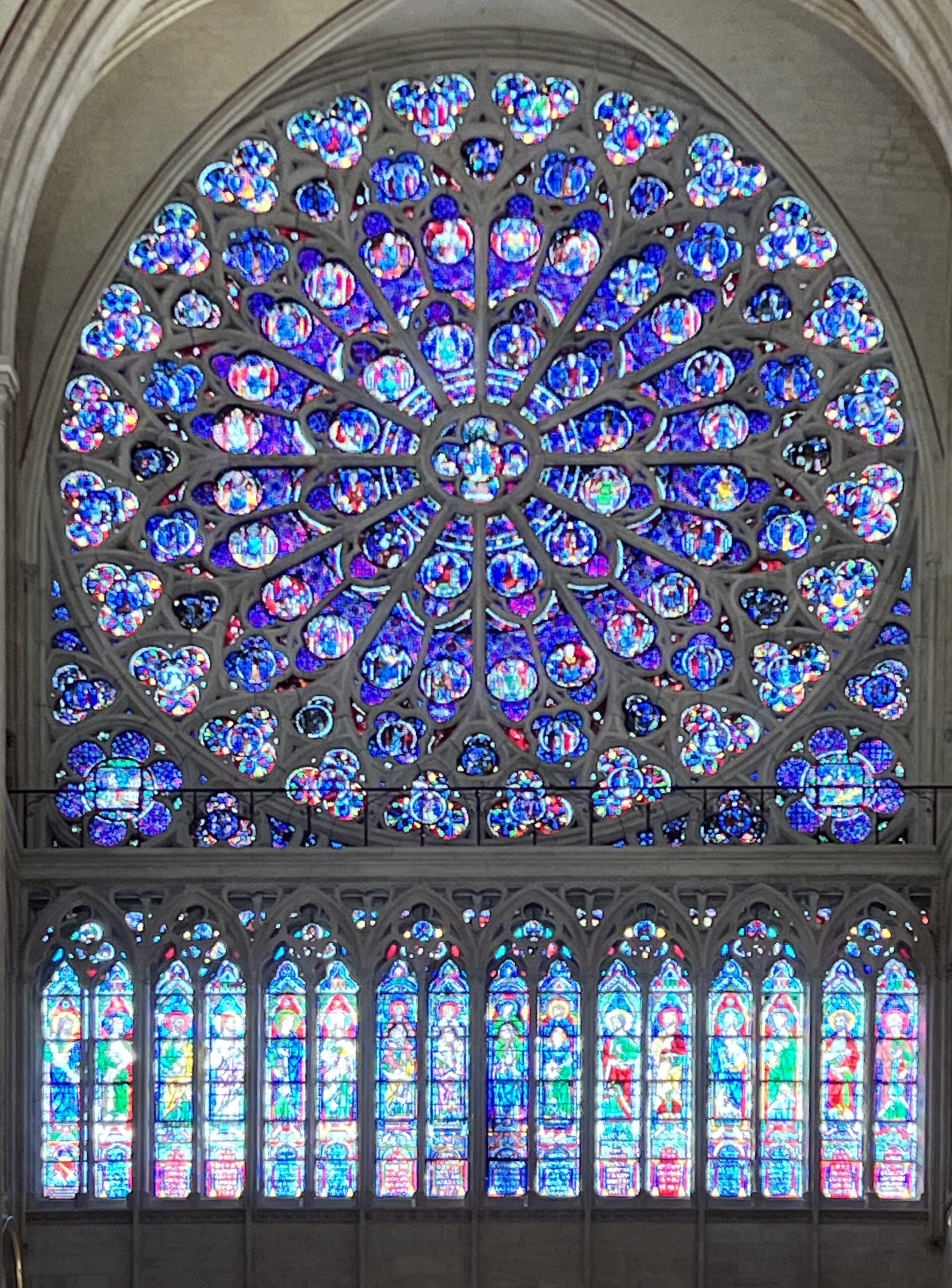
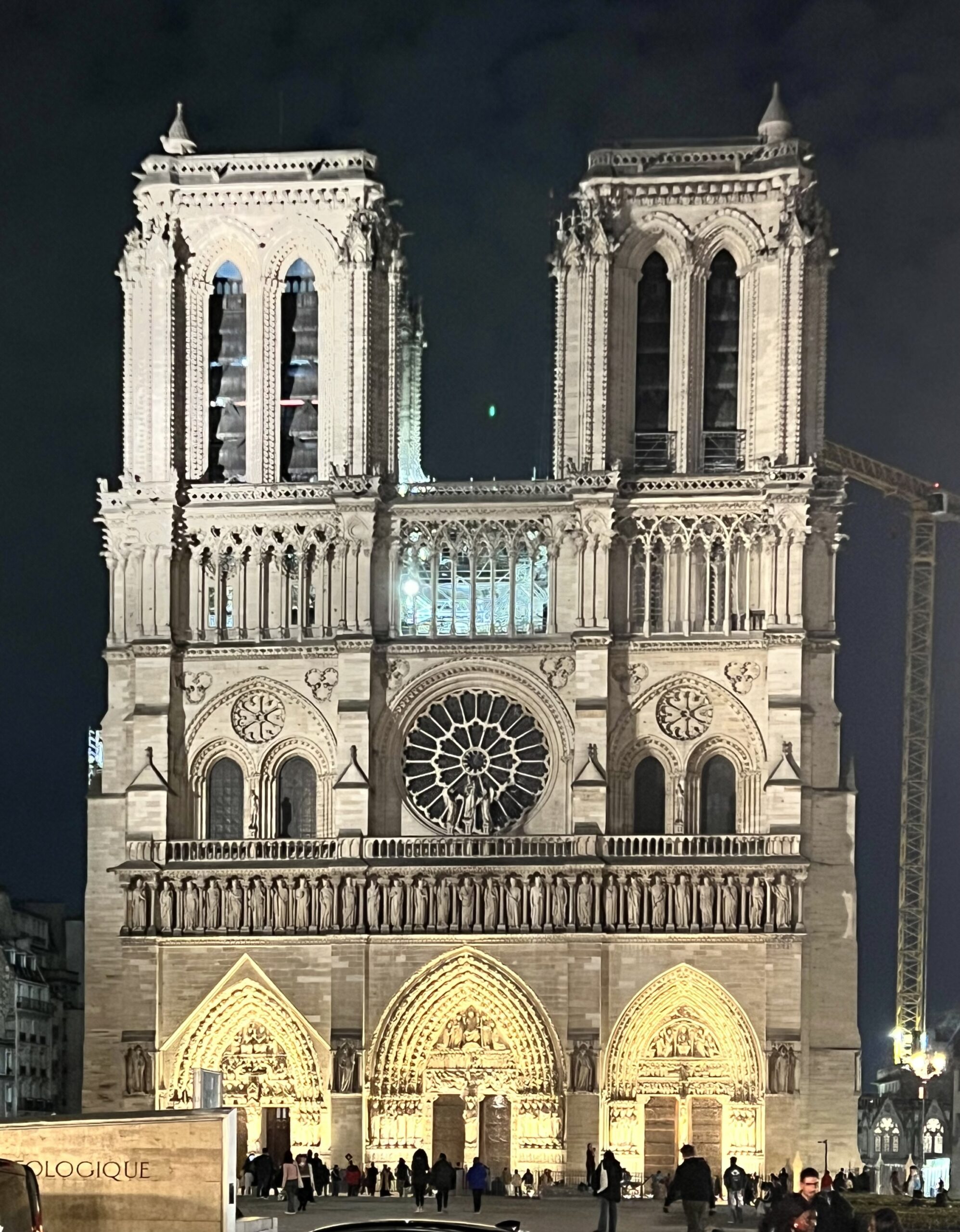
A few kilometres south of the church stands the Notre-Dame de Paris cathedral. This national pride of France displays a lot of art in a strikingly large and tall building.
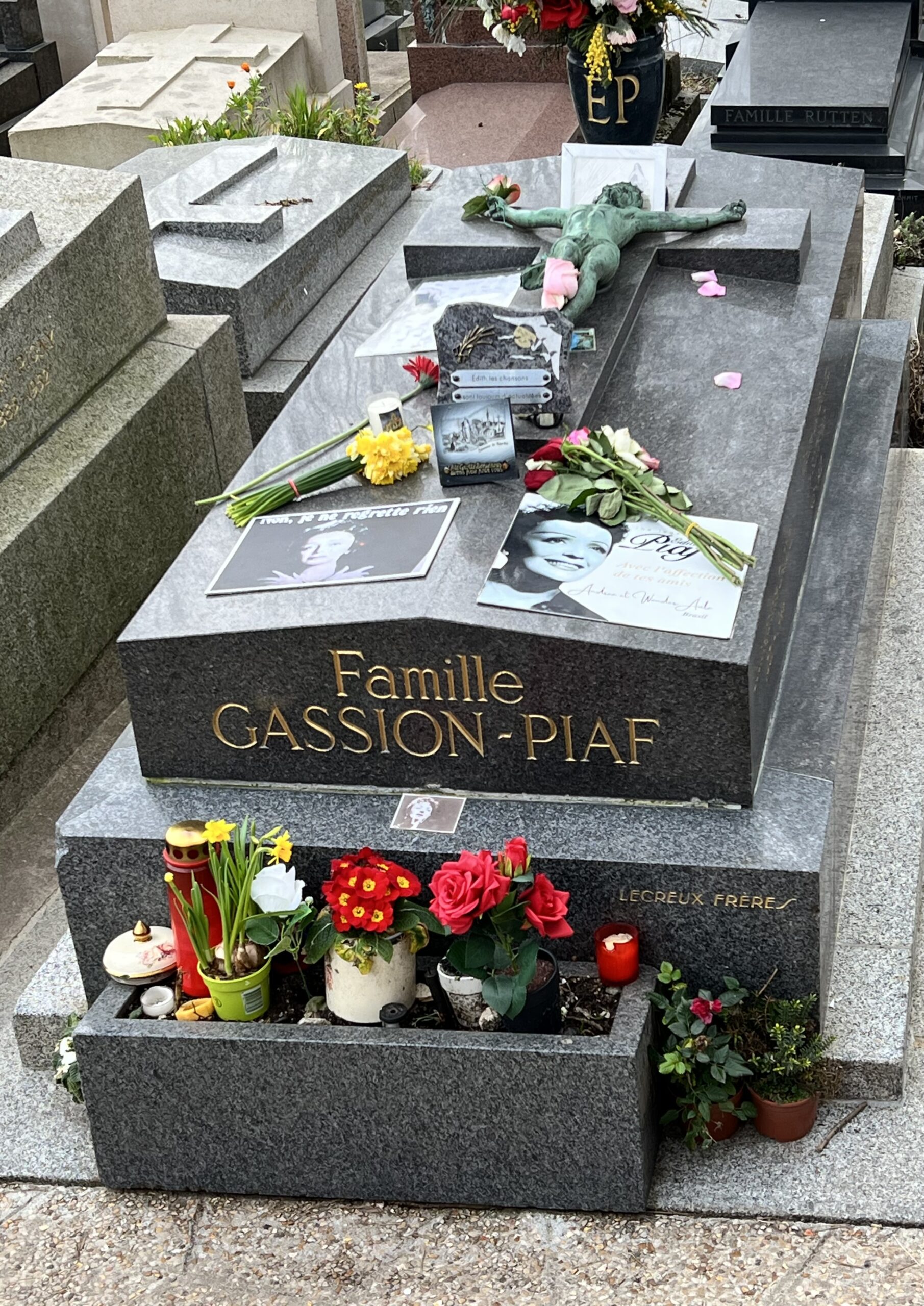
In the east of Paris lies the famous, large Père Lachaise cemetery. Here you'll find gravestones and chapels of, among others, writers, singers, politicians, and industrialists.
On the south bank of the Seine, the convent with the chapel of the Miraculous Medal can be visited. This famous place of pilgrimage is located on the Rue du Bac.
~~~
