History
In the 12th century, devotion to Mary began in Peniche. A legend forms the basis of the pilgrimage site. The story goes: In the 12th century, an image of Mary was found in a cave near where the chapel now stands. This is the space next to the current chapel. The statue was then venerated and received the name “Senhora dos Remédios” (Our Lady of Remedies/Healing).
Pilgrimages with candles to the statue of Mary also arise.
The chapel dates from the early 16th century. The founding date is unknown. This chapel was originally dedicated to the “True Cross”.
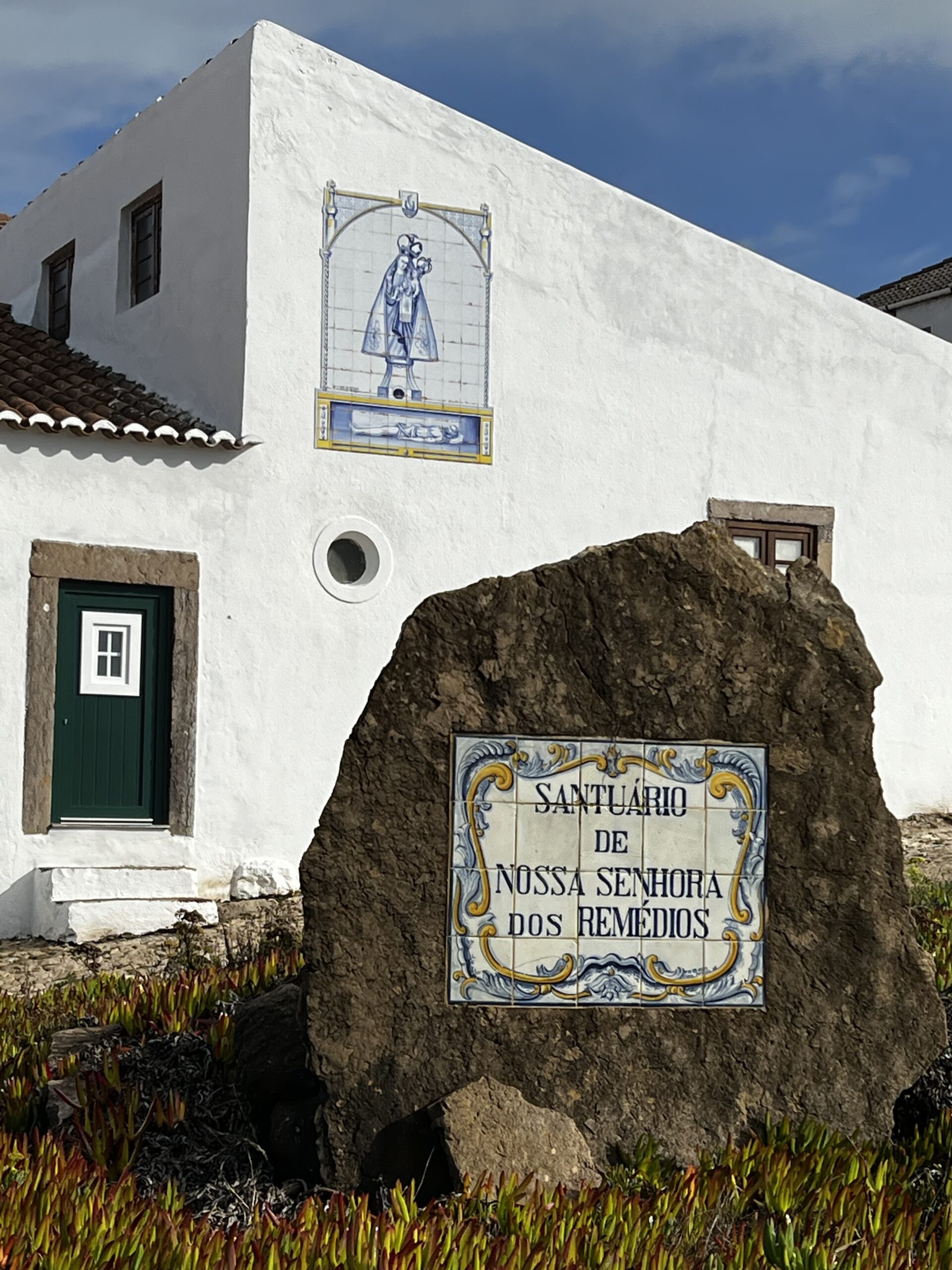
In the 17th century, many tile panels were installed in the chapel. These depict scenes from the life of Mary and the Passion of Christ. The paintings were created by António de Oliveira Bernardes (c. 1662-1732).
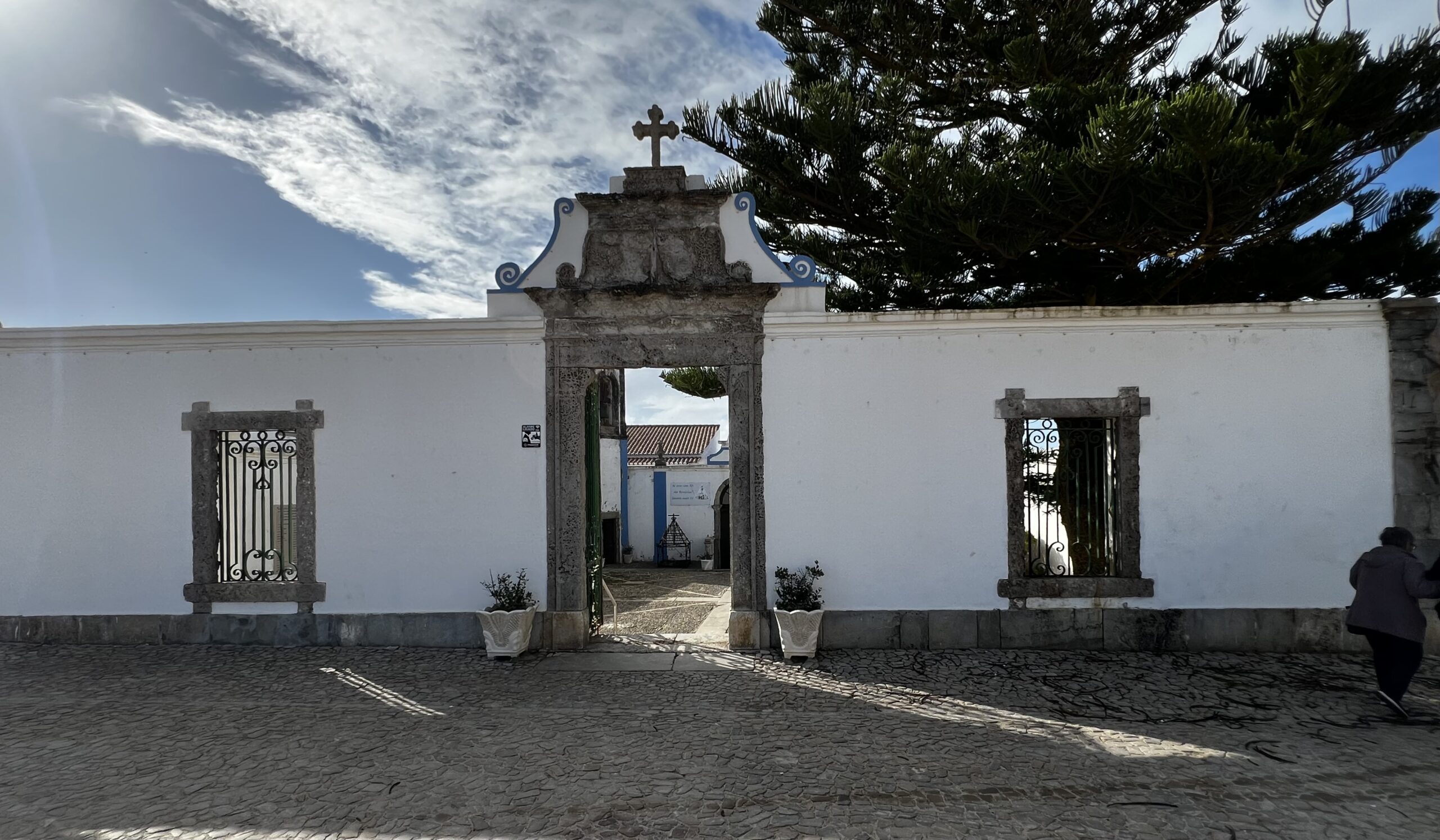
The sanctuary is walled and includes a chapel, a square, and adjoining houses. Clergy, assistants, and sacristans have resided in the dwellings. Pilgrims have also been welcomed here. In addition, stables have been built.
In 2018, the inventory was stolen from the church, and in 2019, there was a renovation of the Marian shrine.
Pilgrimage site
The Sanctuary of Our Lady of Healing/Recovery lies right by the ocean and is entirely walled. It is the most westerly pilgrimage site in Europe.
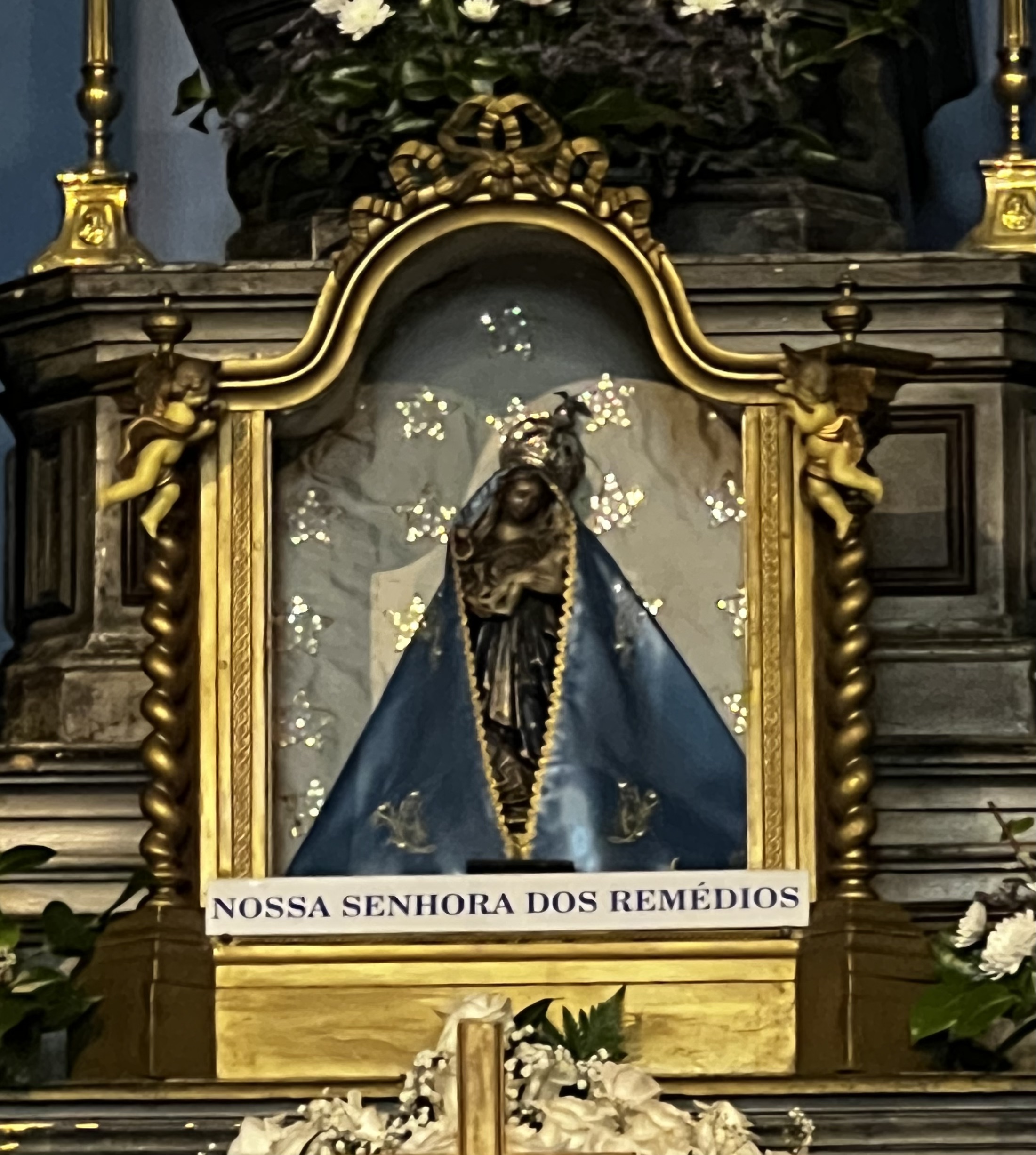
The main chapel is dedicated to Our Lady of Good Remedy. It is here that Mary is worshipped.
In the small chapel, to the left of the main chapel area, there is an image of the dead Jesus. This small chapel is named “Capelinha do Senhor Morto” (Little Chapel of the Dead Lord).
At the beginning of August, the festival of “Nossa Senhora da Boa Viagem” (Our Lady of Good Journey) is held in the evening. Fishermen sail with their patron saint in a boat procession along the coast.
On the third Sunday of October, there are pilgrimages from pilgrims from the far region.
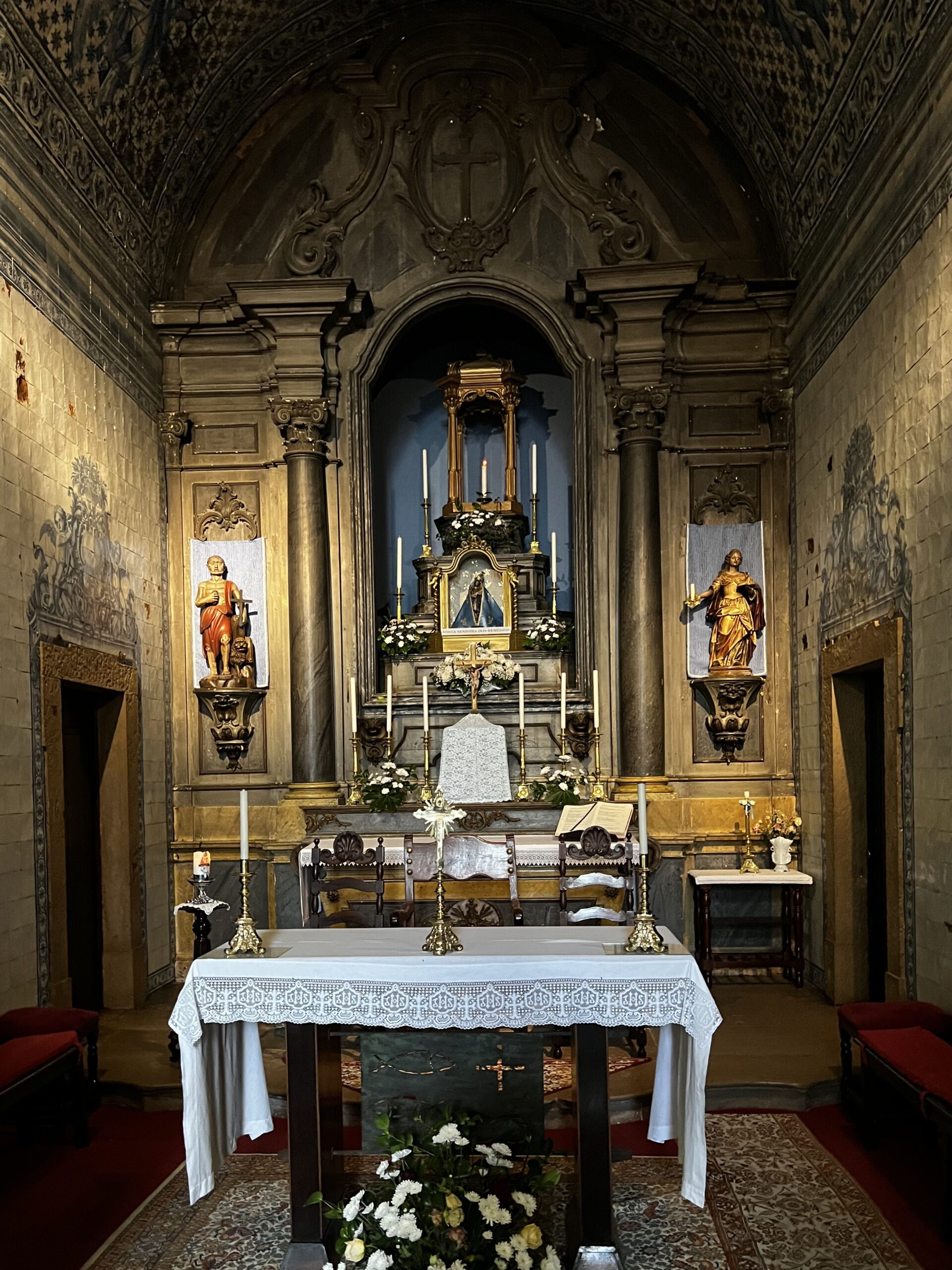
ACCESSIBILITY
Peniche is located in western Portugal, on the Atlantic Ocean, north of Lisbon.
The pilgrimage site is located on the ocean, about 5 kilometres from the centre of the Peniche peninsula, on road number N114 called Estrada Marginal Norte.
The address of the pilgrimage site is:
Sanctuary of Our Lady of Remedies
Estrada dos Remédios 120, 2520-500 Peniche.
Further information can be found at www.cm-peniche.pt.
Experience
My journey through Portugal has a special destination. Today I'm visiting Europe's westernmost pilgrimage site. This means a visit to the Marian shrine of Peniche.
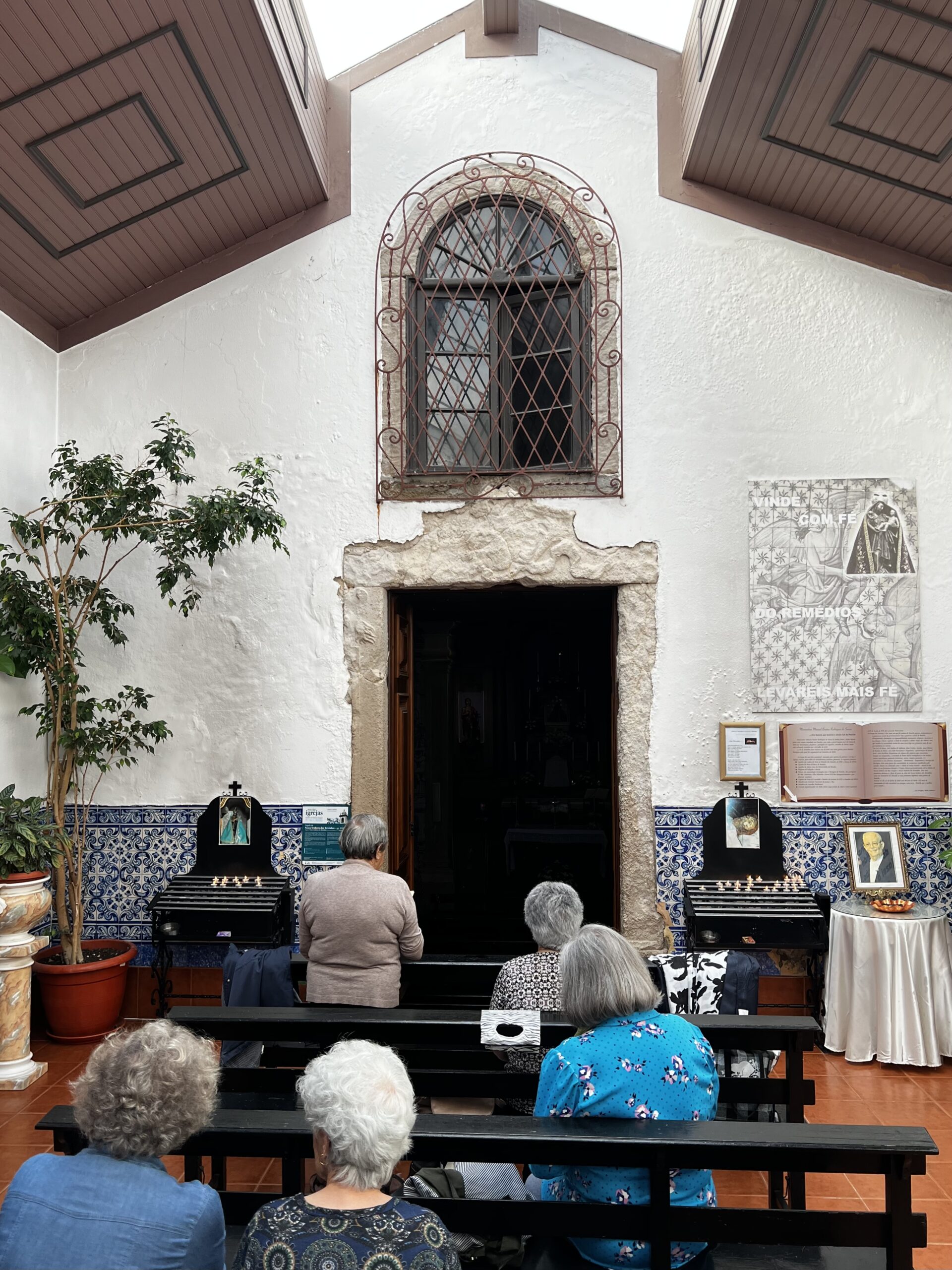
In the beautiful, old pilgrimage church, seven women hold rosaries in their hands. The ladies have taken their places in the upper church, with candles burning to the left and right. They pray together, aloud, and finish with the Litany of Loreto. Then they look at me and want to talk to me. I do not speak their language and they do not speak mine. So I try in French, German and English. I manage to make verbal contact with them because one of the ladies speaks a little English. They ask about my interest in this place, and I then tell them a little about the Marian Room and give them leaflets from the Marian Medium, which is also available in Portuguese. I speak kindly to the seven women and tell them that I have learnt about the history of this place of pilgrimage, am taking notes and will soon post them on Mariakamer along with some photos. They thank me for my visit.
Next, I walk further into the church and pause before images of Mary. I get the feeling that this encounter with Mary is very special. How good I feel to be here. I pray to Our Lady.
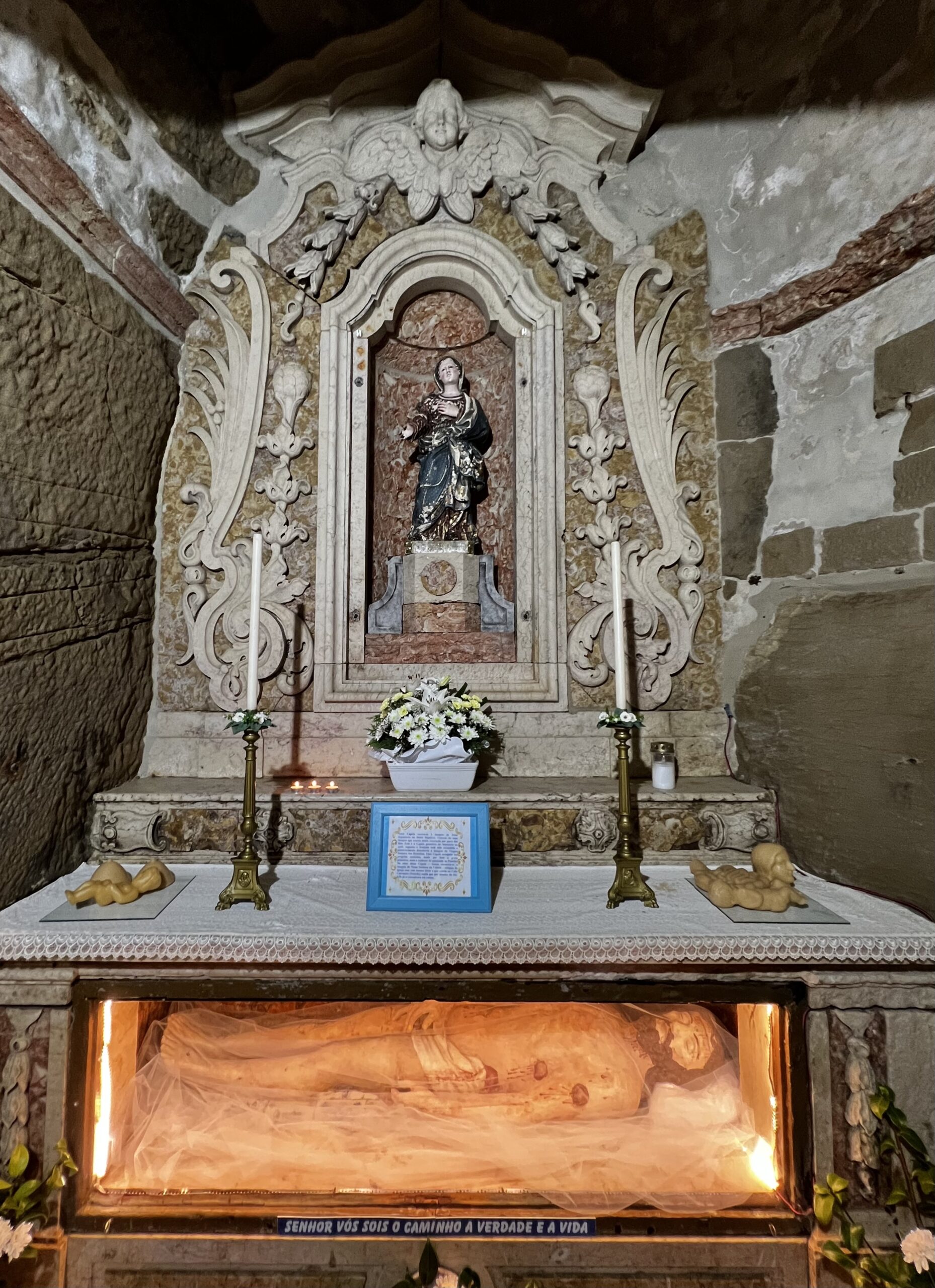
Next, I will descend a few steps and enter the lower part of the little church. Here stands the miraculous statue of Mary: “Nossa Senhora dos Remédios”. Our Lady is wearing a blue cloak and her Child is naked. In a small chapel there is an image of the Dead Lord and there is also a magnificent statue of Mary. She extends her right hand towards the visitor. In my mind, I take her hand, for I must not touch the statue. Beneath Mary is the image of her dead Son. A blue tiled painting depicts Mary and the apostles. They watch her ascend to heaven, and a dove flies above Our Lady.
On the ceiling, there is also a blue painting of Mary, with angels guiding Her to heaven. What splendour is shown to visitors! This is the high quality of Portuguese art from the past.
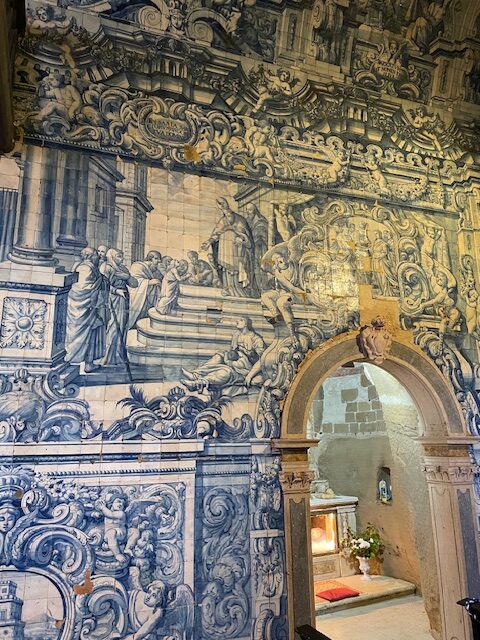
The walls of the pilgrimage church are adorned with works of art in the typical Portuguese style; they consist of numerous tiles painted in blue. Among other things, I see Mary being brought to the temple by her parents, and priests welcoming the girl. Another image shows Mary with her infant Child, surrounded by a crowd of people. I also see a blue-coloured artwork depicting Mary, Joseph and Jesus in the nativity scene, with shepherds visiting the newborn.
There’s plenty to do near the pilgrimage church, such as walking along the rocks and climbing them. Personally, I prefer to watch the towering waves.
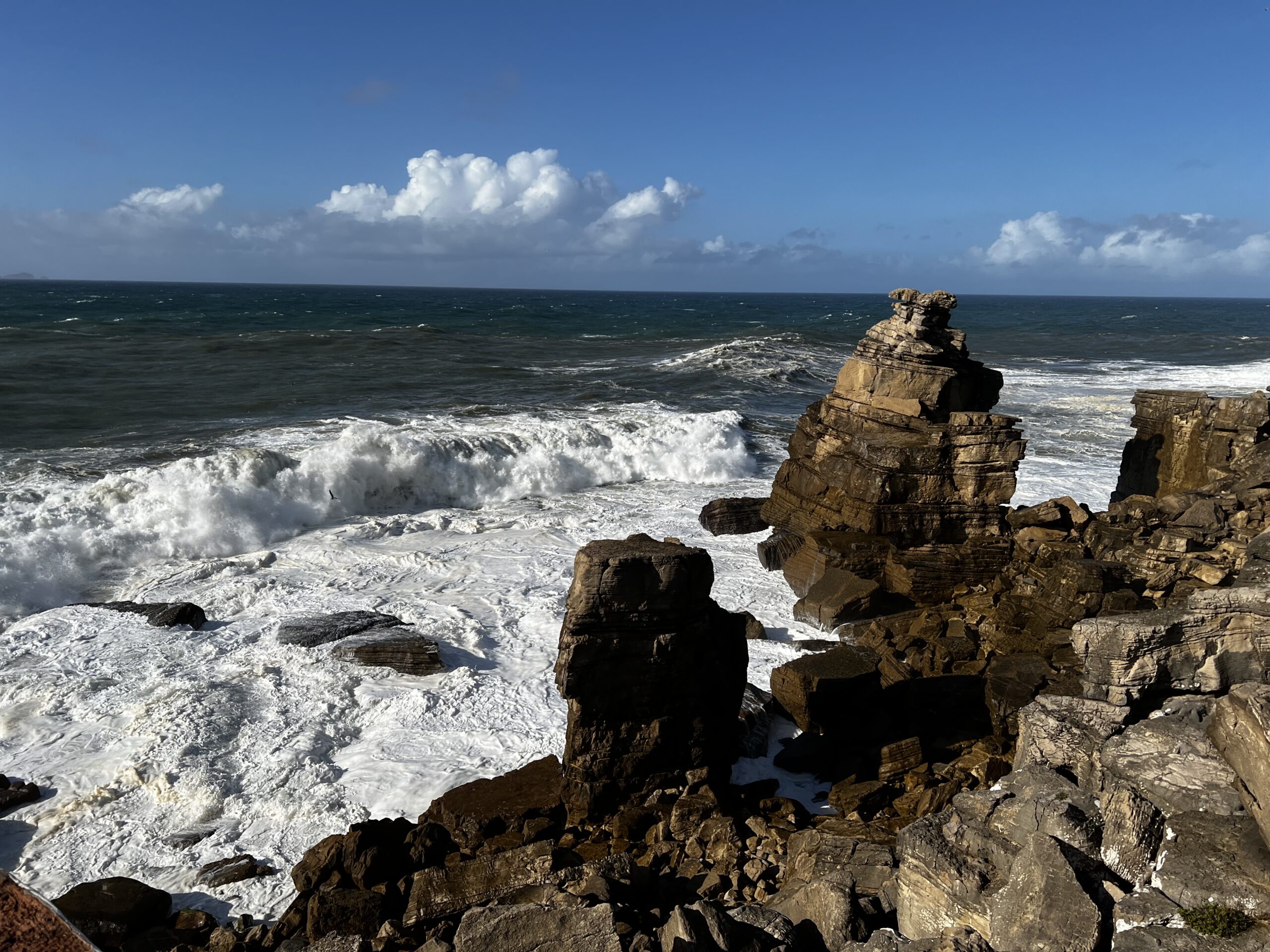
Later that day, as I walk along the road in the municipality of Peniche, I find myself in the district of Baleal. The façades of some of the houses feature images of the Virgin Mary, including one depicting her with the Child in a small boat. This is typical of the area, with the high waves of the ocean just a few metres away.
The pilgrimage site of Peniche touches my heart, and I am glad to have come here. I feel so happy, and for that I thank Our Lady. May Mary continue to welcome many visitors here.
Environment
There are walks to be made near the pilgrimage site, and practising water sports is also an option. Near the pilgrimage site, there is a beautiful view at a large cross; “Miradouro da Cruz dos Remédios”.
Travelling from the well-known pilgrimage site of Fatima to Peniche means covering 110 km to the southwest.
Travelling from the Portuguese capital Lisbon to Peniche is a journey of 102 km to the northwest.
From the holiday resort and pilgrimage site of Nazaré, it is 65 km south to arrive in Peniche.
Posted: 28 November 2024.
~~~

 Nederlands
  English (UK)
  Deutsch
  Français