~~~
History
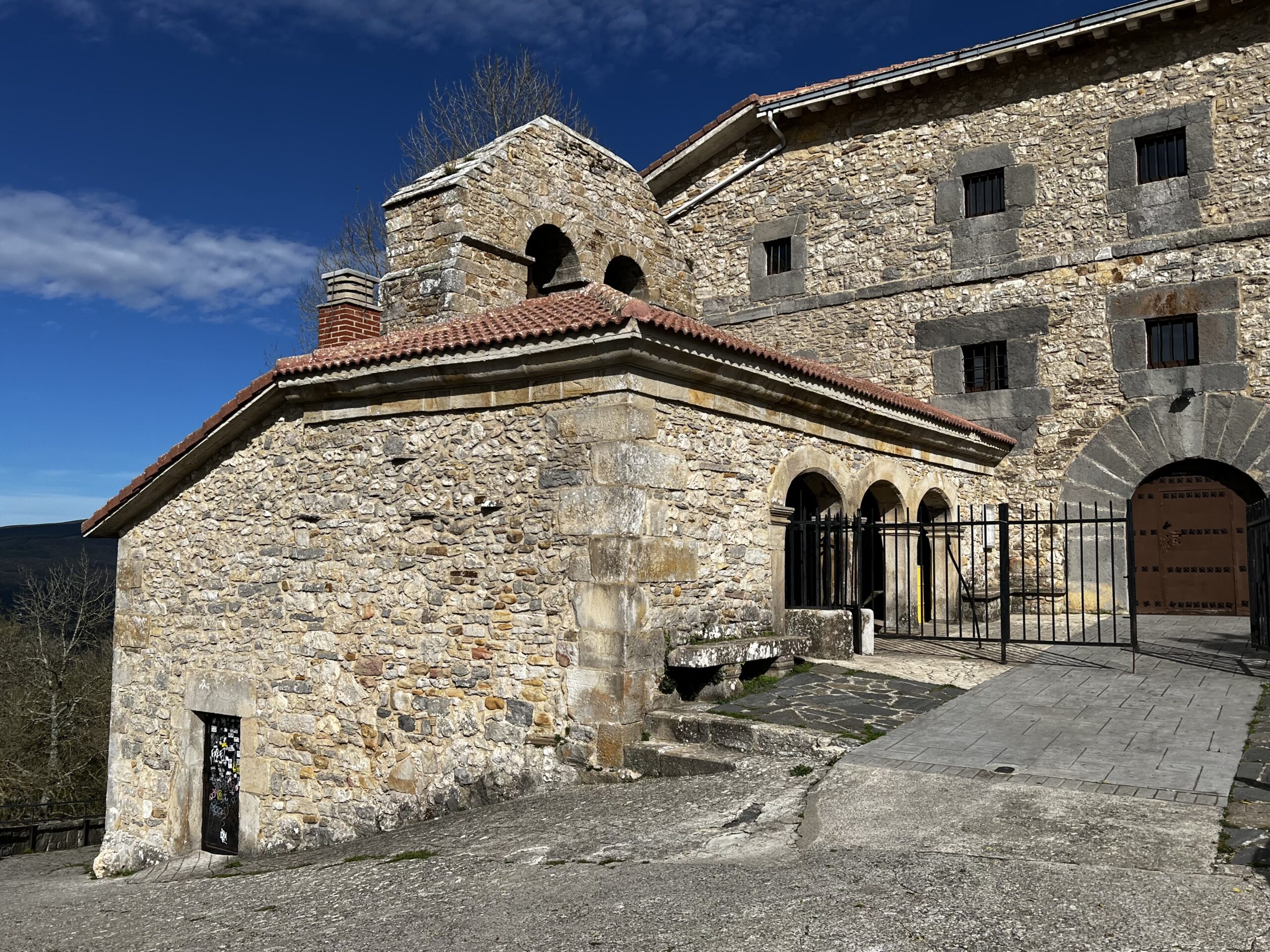
The first sanctuary was built around 1100. As early as 1138, there is mention of a pilgrimage site.
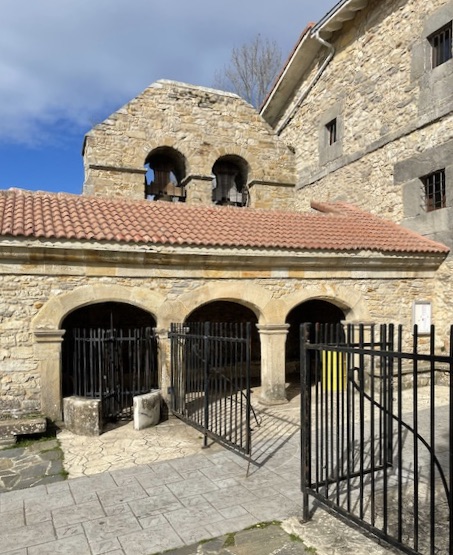
The current sanctuary was built in two phases. The first part was realised around 1500 and the continuation comes in the 1560s-1570s. It is not just a Romanesque monastery, but also a church.
There are two old chapels in the church, one from 1638 and the other made in 1761.
The Baroque altarpiece was made in 1691. A sculpture from the 13th century was incorporated into it in 1962.
In 1918, a prehistoric settlement was discovered at the site of the sanctuary. This followed research led by José Miguel Barandiaran Aierbe (1889-1991), a priest and anthropologist.
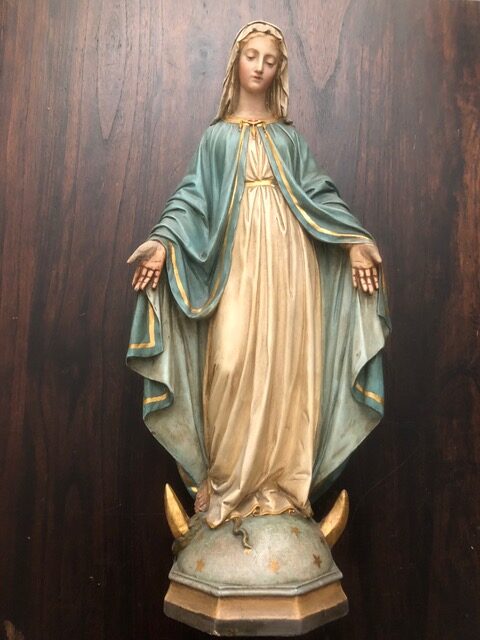
The effigy of Our Lady of Oro was restored in 1930.
Pilgrimage site
The ancient pilgrimage site is located in a valley between the Zuia mountains at an altitude of 841 metres above sea level.
The sanctuary is located in the province of Álava and is named “Santuario de Nuestra Señora de Oro” (Sanctuary of Our Lady of Gold).
The parish church of St. Mary has a Gothic style.
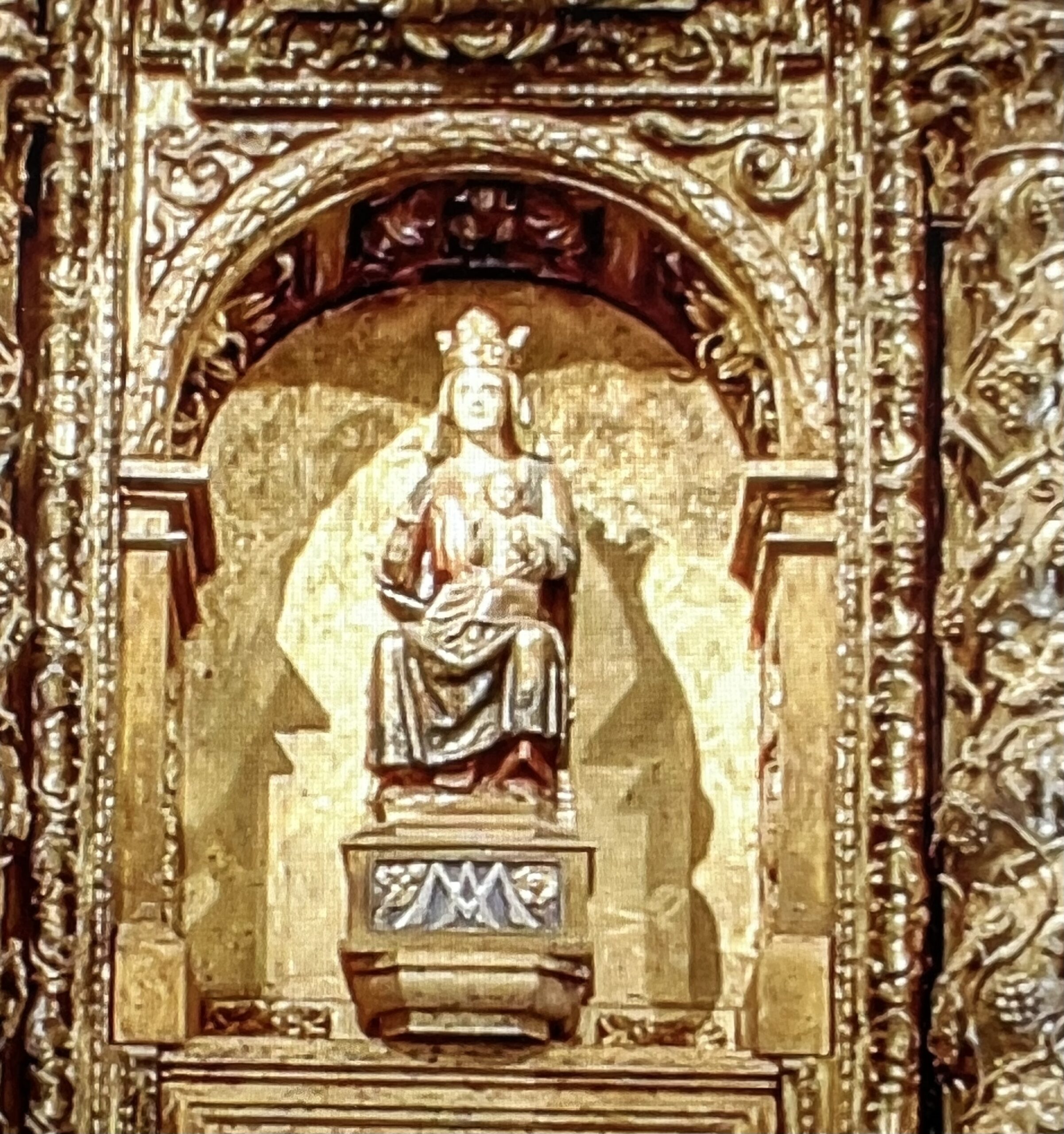
In the pilgrimage church, there is a 13th-century Byzantine statue of Our Lady of Gold. It stands at the top of the Baroque altarpiece.
In a niche stands a golden image of Our Lady with her Child on her lap.
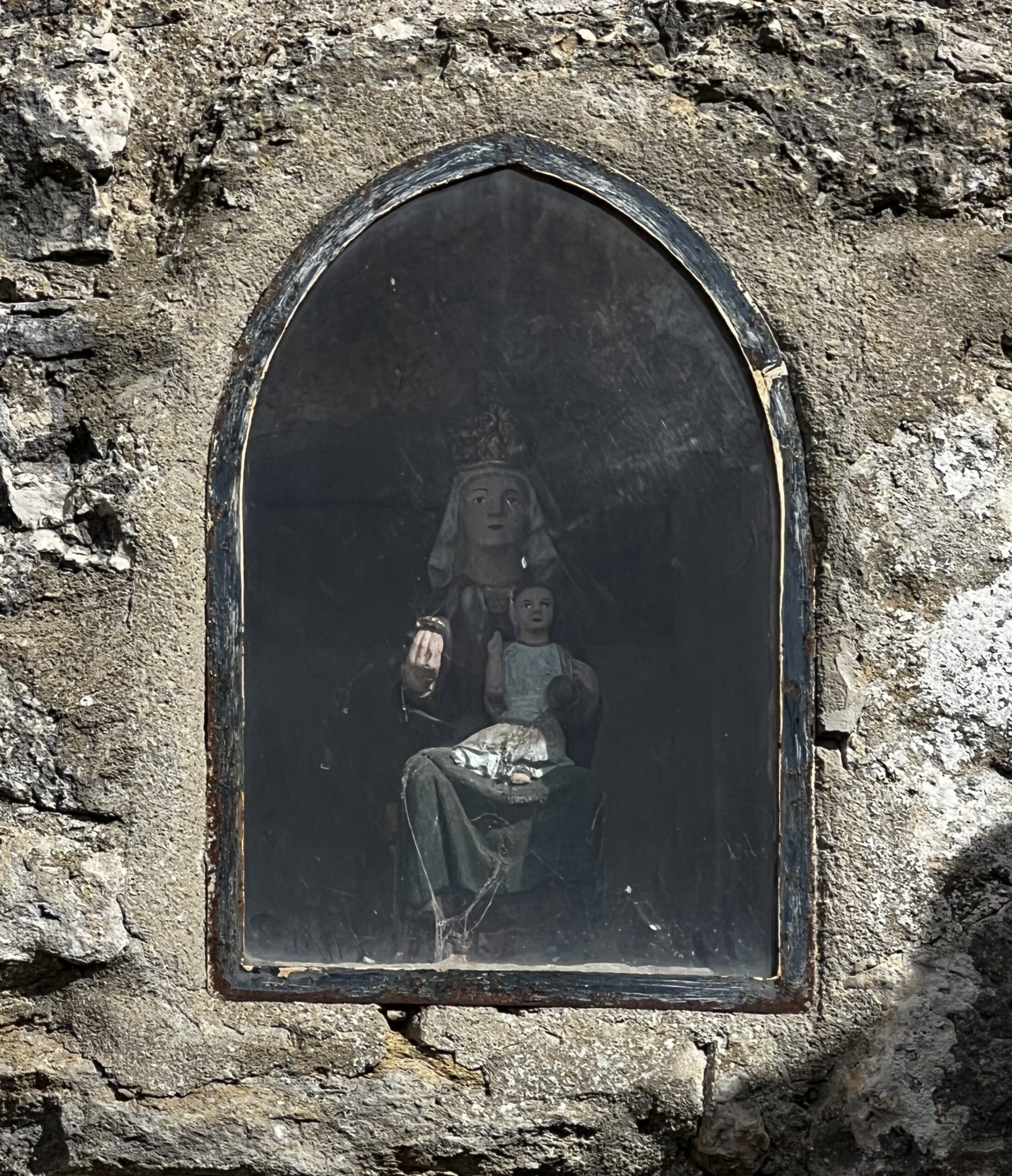
The pilgrimage church is open on Sunday mornings when a service is being held.
ACCESSIBILITY
From Murgia via the A4415 to Vitoriano/Bitoriano and there follow the A4416 on Orobide Kalea, which becomes De Bitoriano a Santuario de Oro, to reach the shrine. From Murgia to Vitoriano/Bitoriano is approximately 1 km. From Vitoriano/Bitoriano it is another 3 km to reach the sanctuary.
The sanctuary is located in the province of Álava.
The postcode is 01139.
Experience
Upon leaving Murgia, it's still a few kilometres drive.
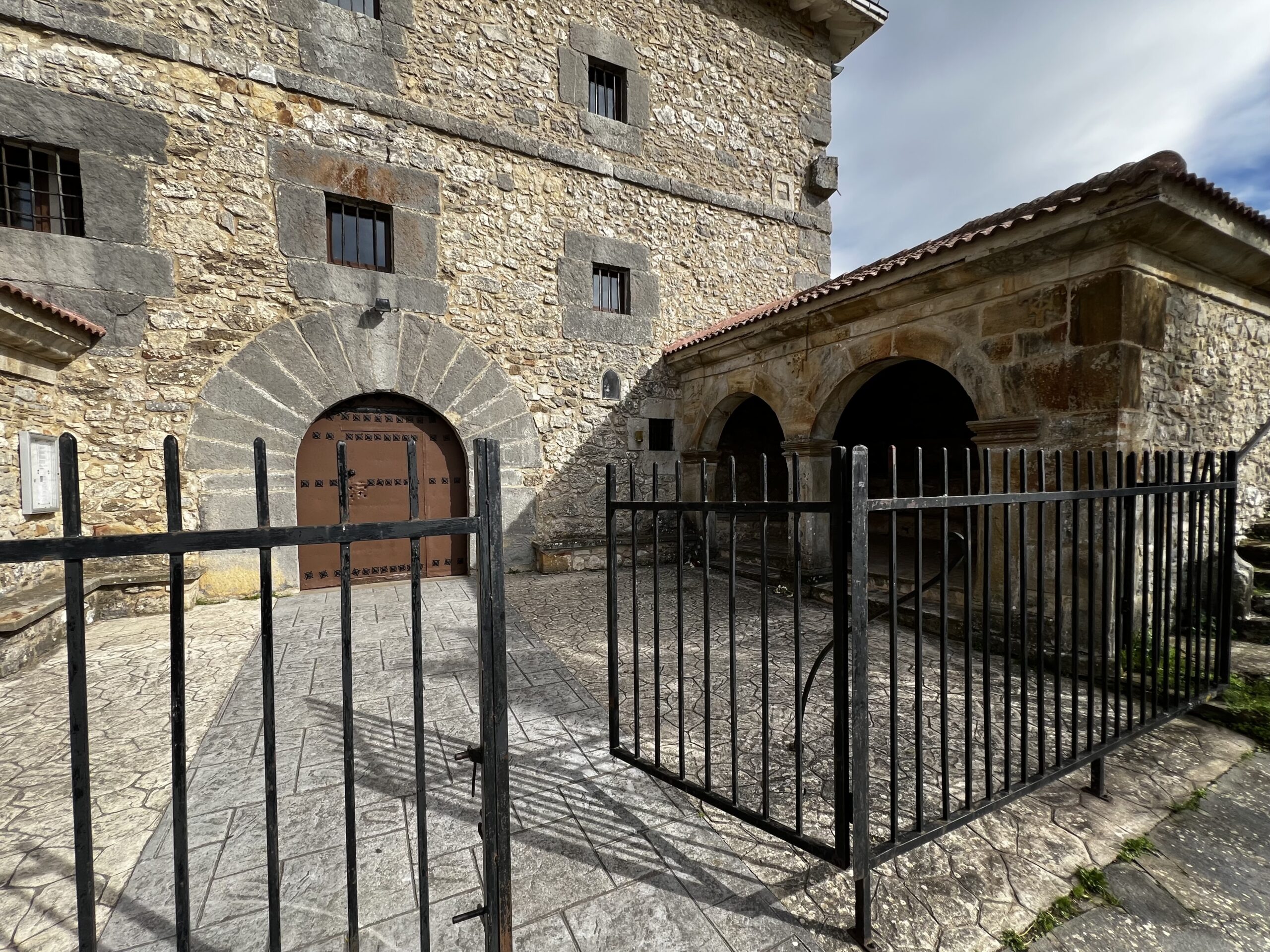
When I arrive at the pilgrimage site, I experience profound silence. No one in sight. Church closed. I stand before a locked door. I knock and hear voices. A moment later, the door is opened. Three men are preparing a dinner in the outbuilding. But I haven't come here to eat. Part of the complex is for parties. My request to visit the church cannot be granted. None of the three has the key. Come back on Sunday morning for the Eucharist, I am advised. That's still three days away, and waiting that long is not an option for me. I am allowed to look around and go upstairs, where there is also a dining room.
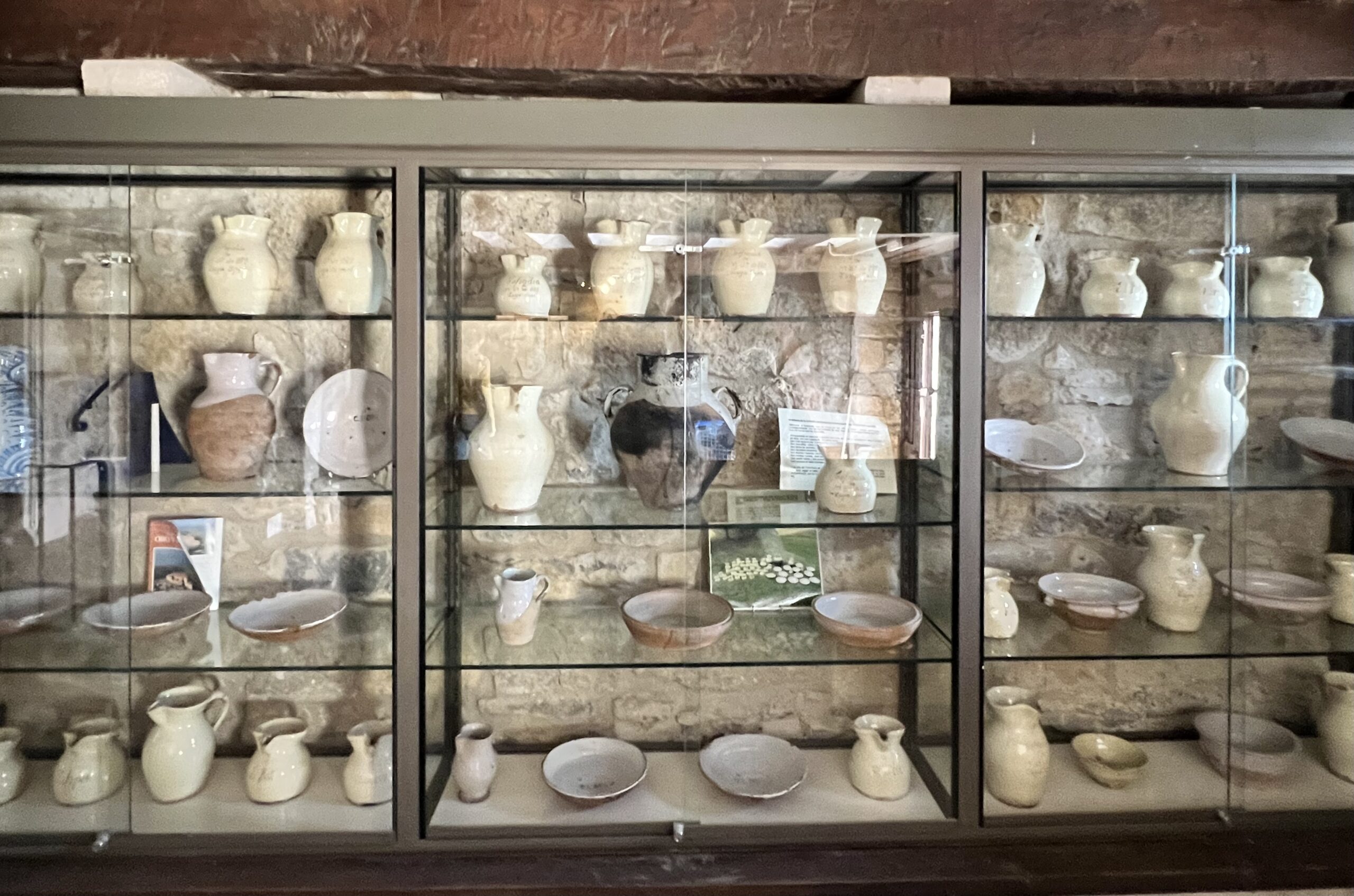
In the dining hall, the fraternity's inventory from the sanctuary in the year 1744 can be seen, including copper pots and metal cutlery.
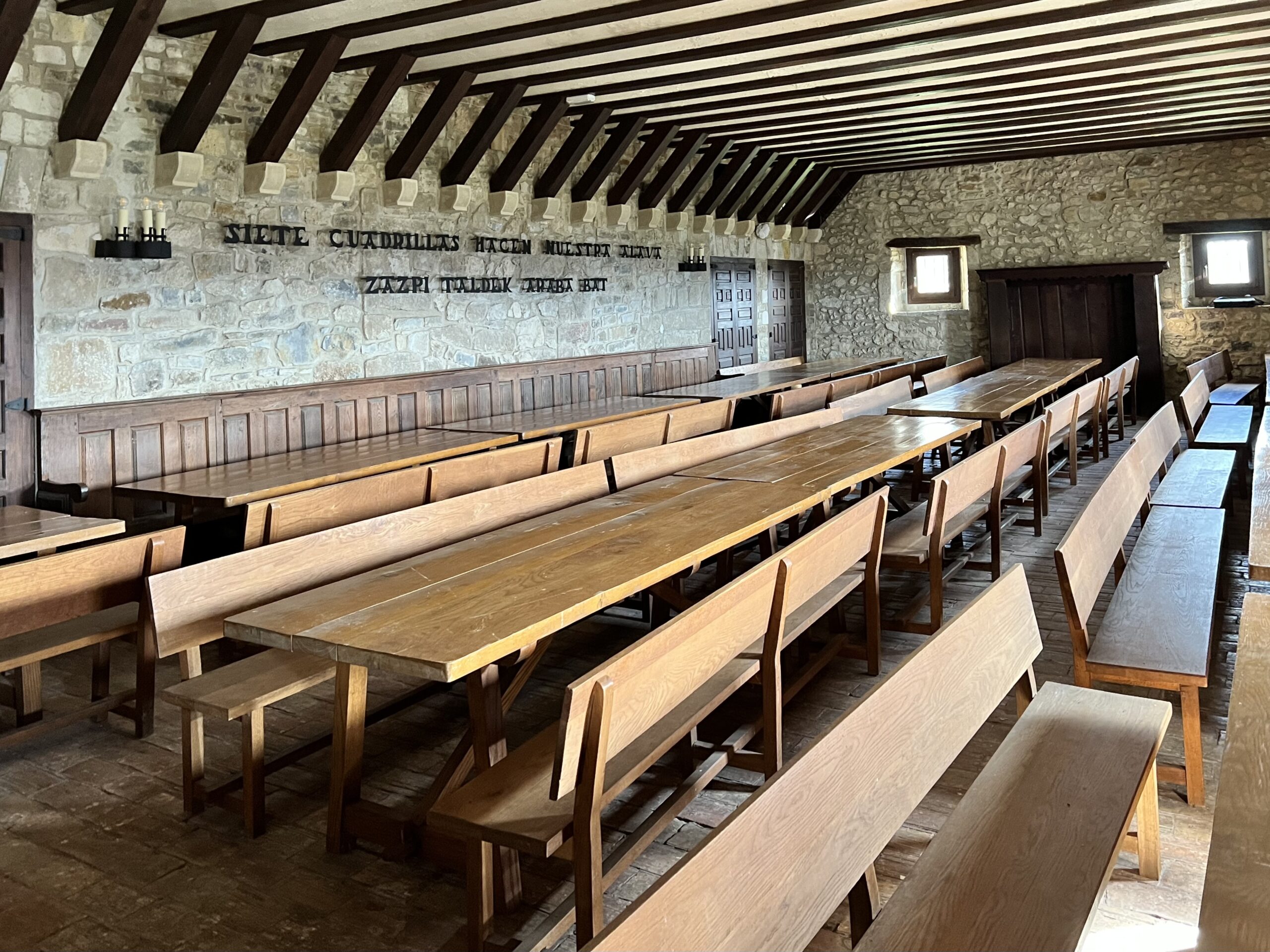
In this hall, there are many benches and tables, and against the wall, a text is affixed with the note that seven groups form one Alava.
In the pilgrimage site, I see a plaque with above it a depiction of Saint Prudentius (Aurelius Prudentius Clemens (348 – c. 410). He was born in Northern Spain and is one of the greatest Latin poets of Late Antiquity (c. 300 – c. 600 AD). Prudentius is the patron saint of Alava, the province in which this pilgrimage site is located. The statue was carried to the summit of Mount Everest (8,848 metres); the highest mountain on Earth. The statue was accompanied and protected by the participants of the first Alavese expedition in 1993. The statue was brought to this sanctuary by members of the aforementioned expedition in 1996.
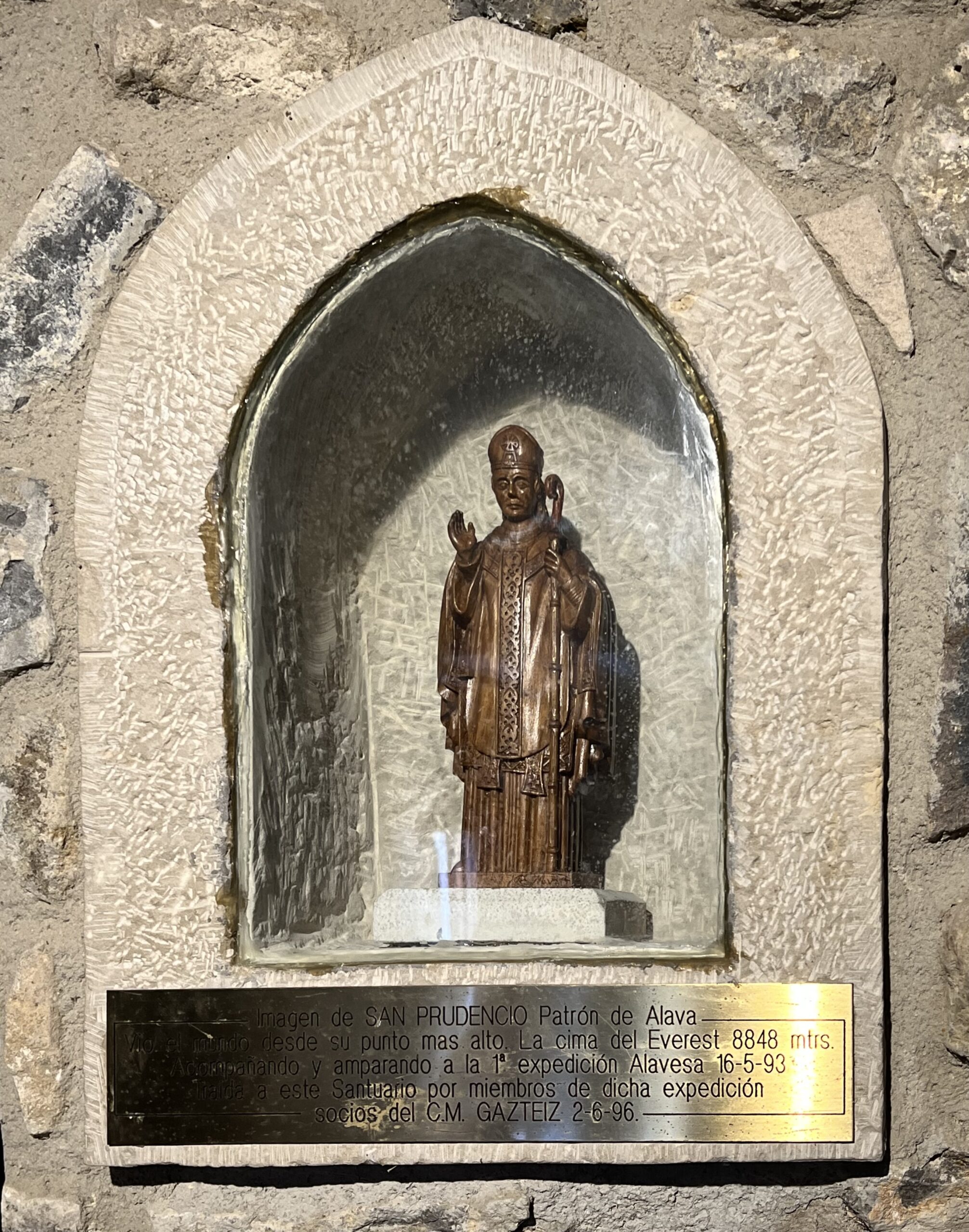
It's time to take some photos and perhaps Maria can be visited again at another time.
Environment
In the tranquil surroundings of the church, there are many opportunities for walks and bike rides. Mountain climbers can also showcase their skills on a large scale here.
Near the church is the Las Peña de Oro castle.
From Murgia to the sanctuary at Vitoriano/Bitortiano is 4 km.
Departing from Vitoria/Gasteiz and arriving at the sanctuary at Vitoriano/Bitoriano means travelling 20 km to the northwest.
From Bilbao, travelling to the sanctuary near Vitoriano/Bitoriano is a 47 km drive south.
Going from the sanctuary of Zaragoza to that of Vitoriano/Bitoriano means covering 267 km to the northwest.
Posted: 10 April 2025
~~~

 Nederlands
  English (UK)
  Deutsch
  Français