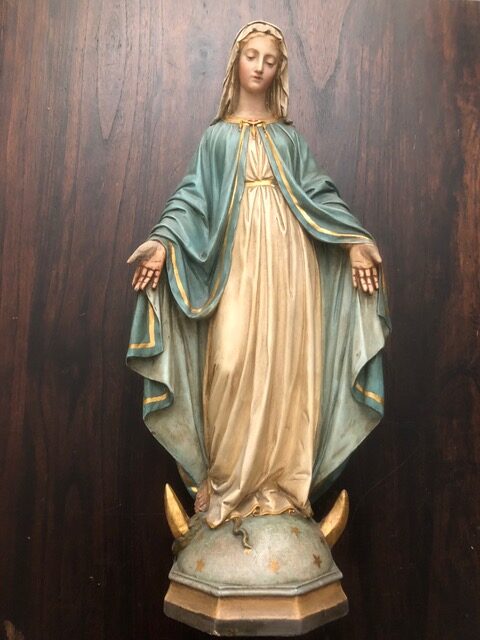
TONGRES-NOTRE-DAME
History
The pilgrimage site of Tongre-Notre-Dame has a long and distant past…
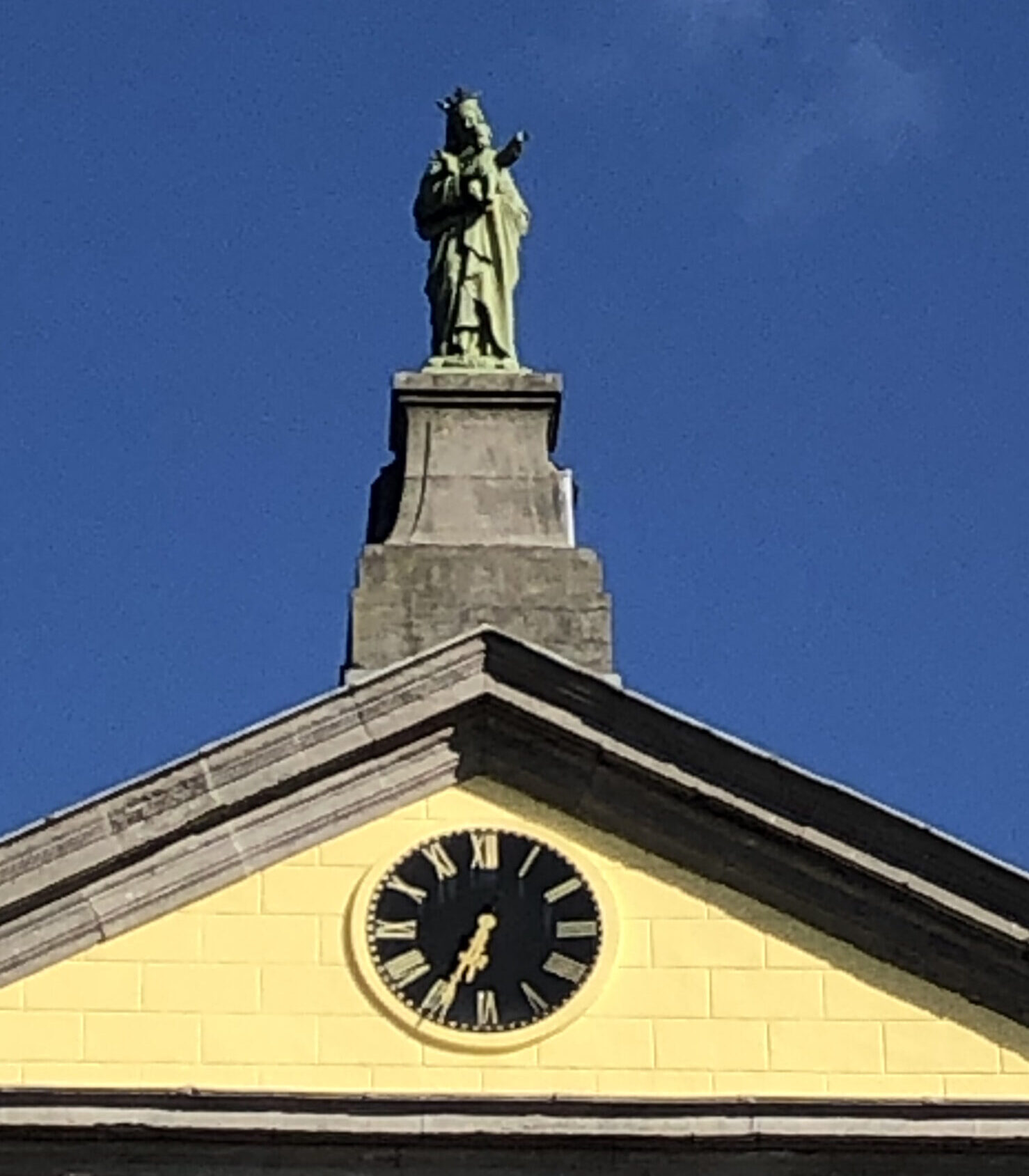
It is 11 o'clock in the evening on February 1st, 1081. Residents of the hamlet of Tongre witness a miracle. They hear music, see a light, and a white cloud, upon which angels bring a statue of Mary and Child to the castle garden of Lord Hector (1039). The villagers alert Lord Hector, to whom the garden belongs. The next day, the priest takes the statue of Mary from the castle garden, and it is carried in procession to the church of the neighbouring Tongre-Saint-Martin. However, on the morning of February 3rd, the statue is back in Lord Hector's garden. This happens three times in a row! It is then decided to leave the statue in the castle garden. Lord Hector tells the miraculous events to Gerard II, Bishop of Cambrai (1076-1092). The bishop has the mysterious facts investigated by four delegates from the diocese. The miraculous occurrences of the three displacements of the statue are deemed supernatural. Based on this, the bishop recognises the events on February 17th, 1081, and the statue may be venerated. The bishop establishes the Our Lady's Procession, which still exists and is held on February 1st. Subsequently, a chapel is built on the site of the apparition in Lord Hector's garden. On March 27th, 1081, the first, wooden chapel is built in Tongre-Notre-Dame. The statue is placed in the chapel and receives the name Our Lady of Tongre. The statue of the seated Mary with the Child on her lap was made by a workshop in the town of Sint-Niklaas in the Waasland region. Experts estimate that the statue was made around 1050.
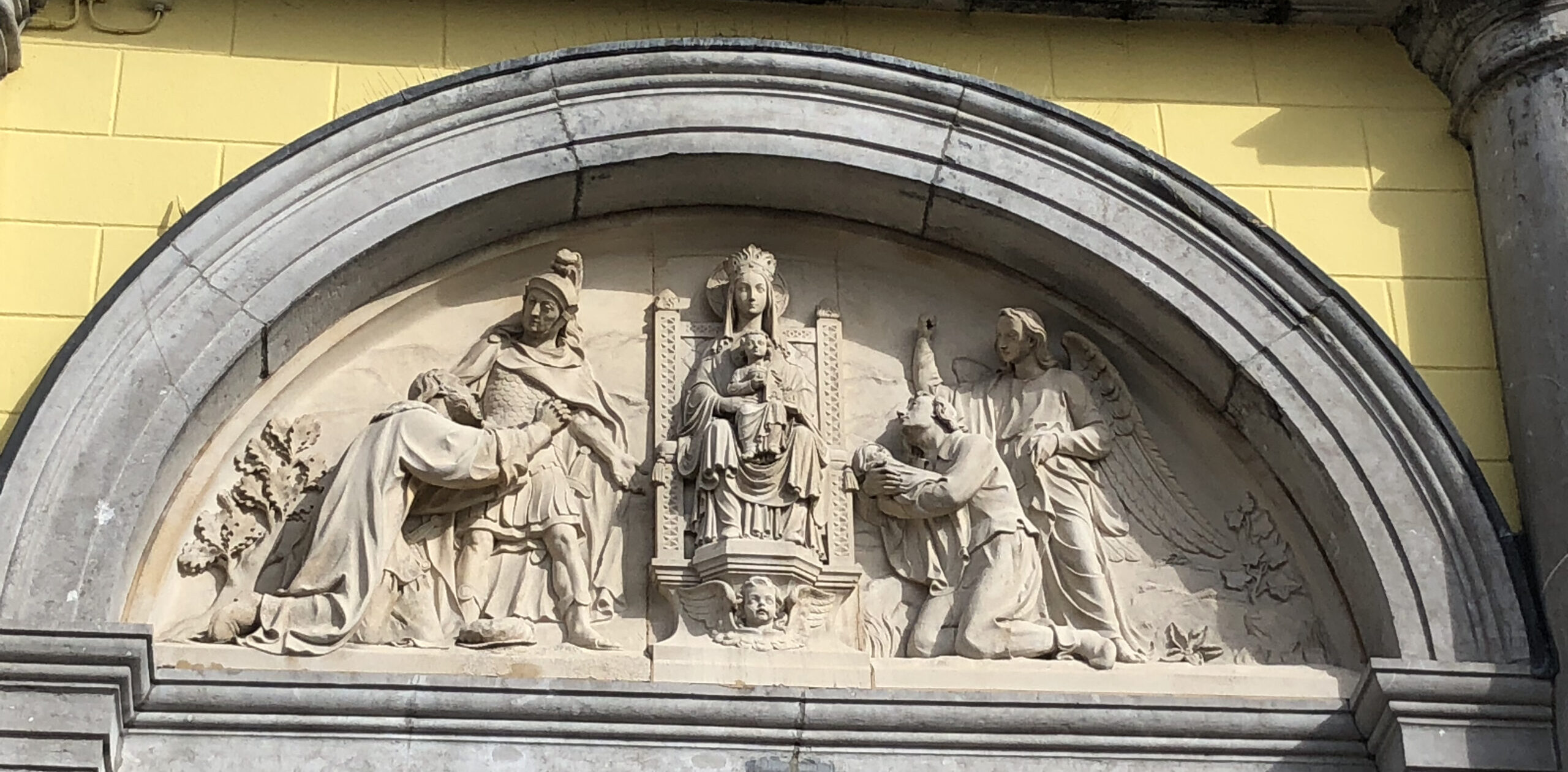
Lord Hector was born around 1039. In 1077, he became ill and lost his sight. When the image appeared in the castle gardens in 1081, he was blind and around 42 years old. One night, an angel appeared to warn him to prepare to take up arms for the King of France, Philip I, who was staying nearby with his troops, specifically between Lille and Tournai. Hector did not know exactly what to do with the command. He remained awake, as the order was to fight with Philip I against his own relatives in Flanders. On 24 June 1090, before the battle, Lord Hector prayed to Our Lady of Tongres and regained his sight.
In 1093, the Brotherhood (Confrérie) of Our Lady of Tongre was founded, following approval by Pope Urban II, Pope from 1088 to 1099. At the request of the then parish priest Damien Bourlart, an act was drawn up in 1524, signed by 15 cardinals. This declaration confirmed the Brotherhood and granted members privileges, such as indulgences; remission of temporal punishment.
Due to the increase in the number of pilgrims, the chapel becomes too small, and in 1224 it is replaced by a church.
In 1642, the miraculous events of 1081 and the wonders that followed were documented by pastor Georges Huart. In 1662, a book was published of all the facts, “The Astonishing History of Our Lady of Tongre with Six Principal Miracles”. This further increased the fame of the pilgrimage site. Many miracles have occurred in Tongre-Notre-Dame, including: a mute girl suddenly gains the ability to speak, a dead child is revived, a dead woman is revived after giving birth, a child gets lost in the woods and is fed by Mary, and the towns of Ath and Valenciennes are freed from the plague.
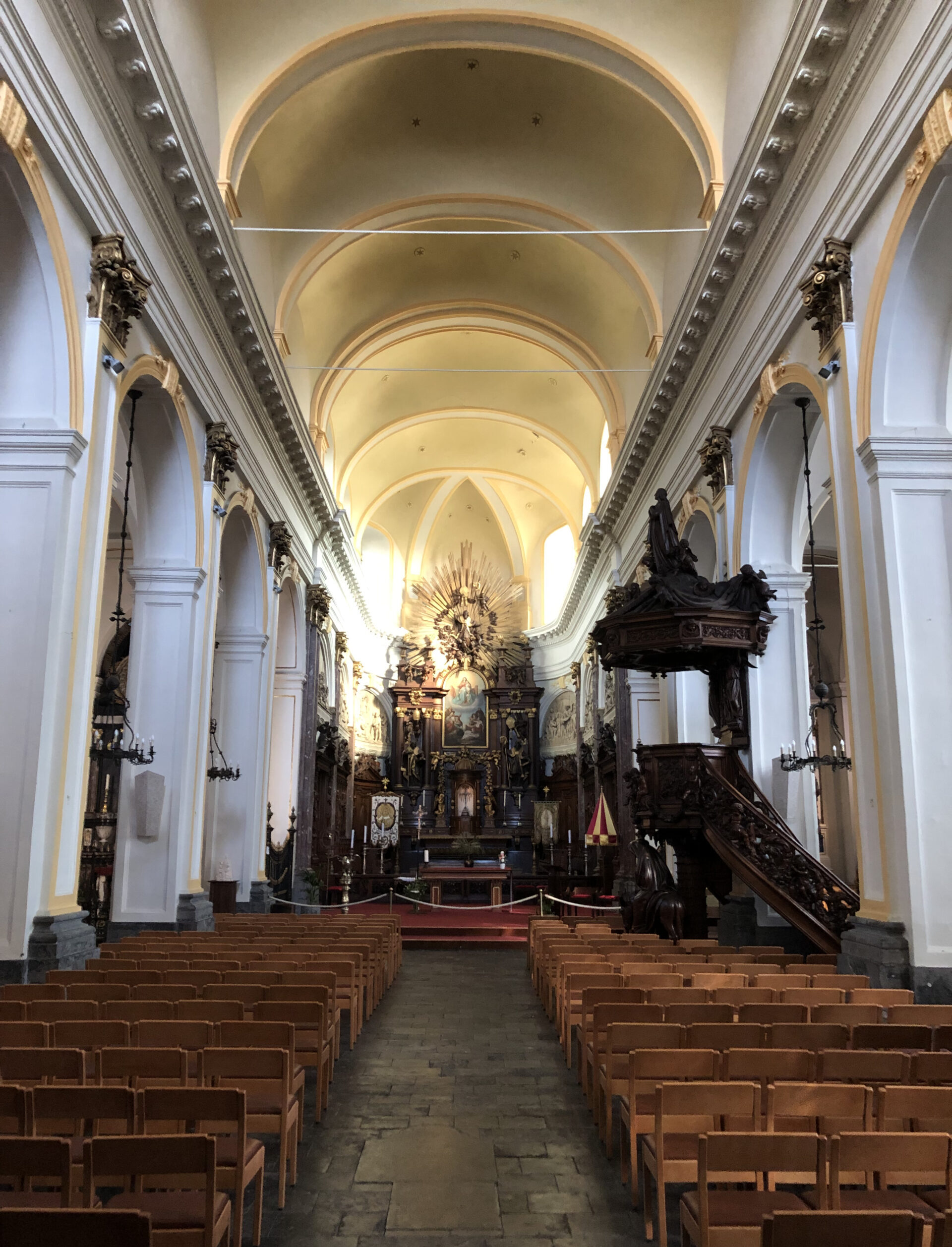
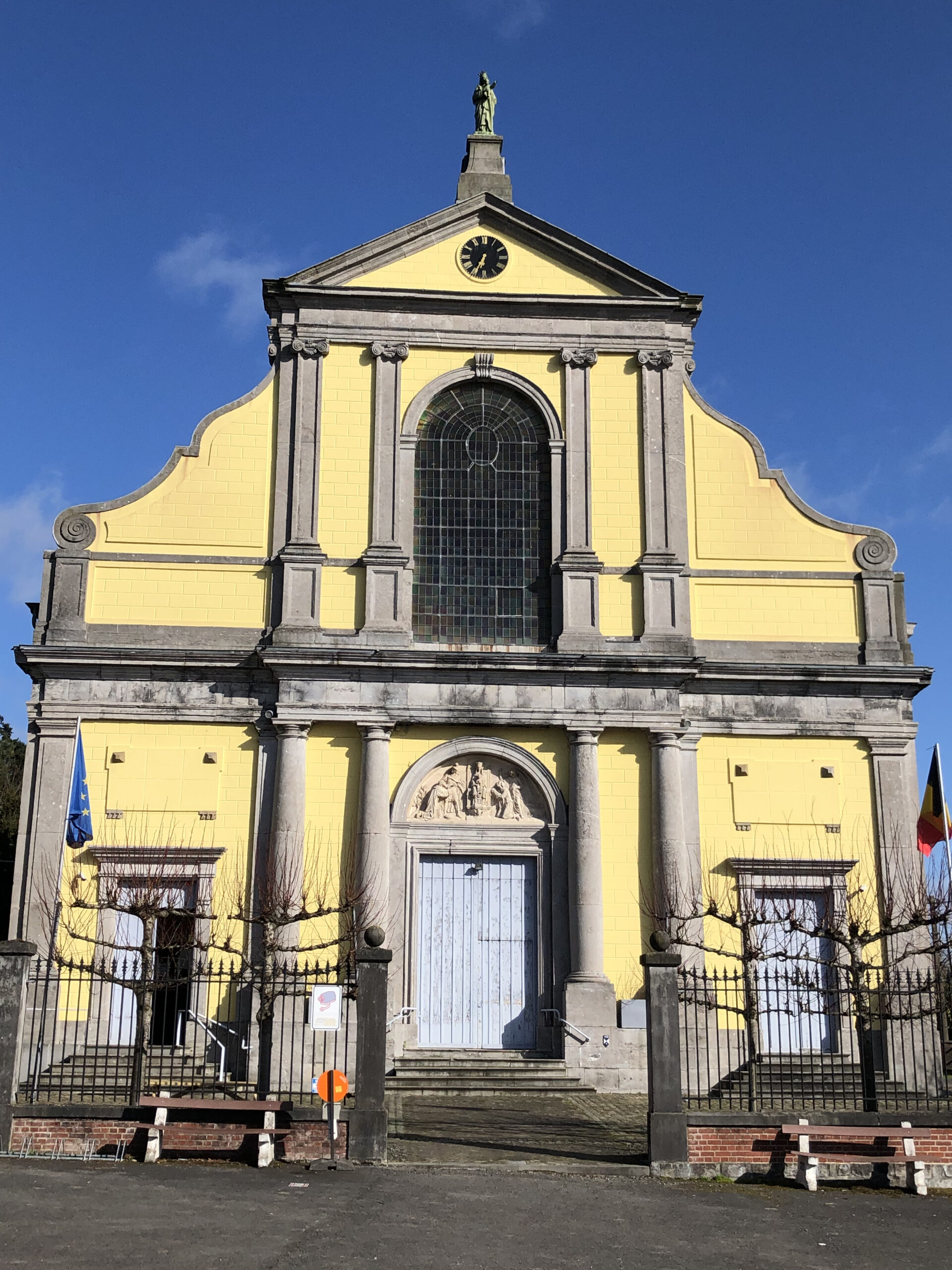
In 1777, the present, Baroque church was constructed according to the plans of J.F. Demarbaix. It was built on the foundations of the previous, demolished, Gothic church. The church is the third building on this site in Tongre-Notre-Dame. The high altar comes from Ath and dates from 1739.
The interior of the church was altered in the second half of the 19th century. Pierre Peeters (1841–1925) of Antwerp created the high ceilings, Stations of the Cross, oak sculptures, choir stalls and communion rail. Other notable items in the church’s inventory include the altar table, which dates from 1845, and the tabernacle, which dates from 1861.
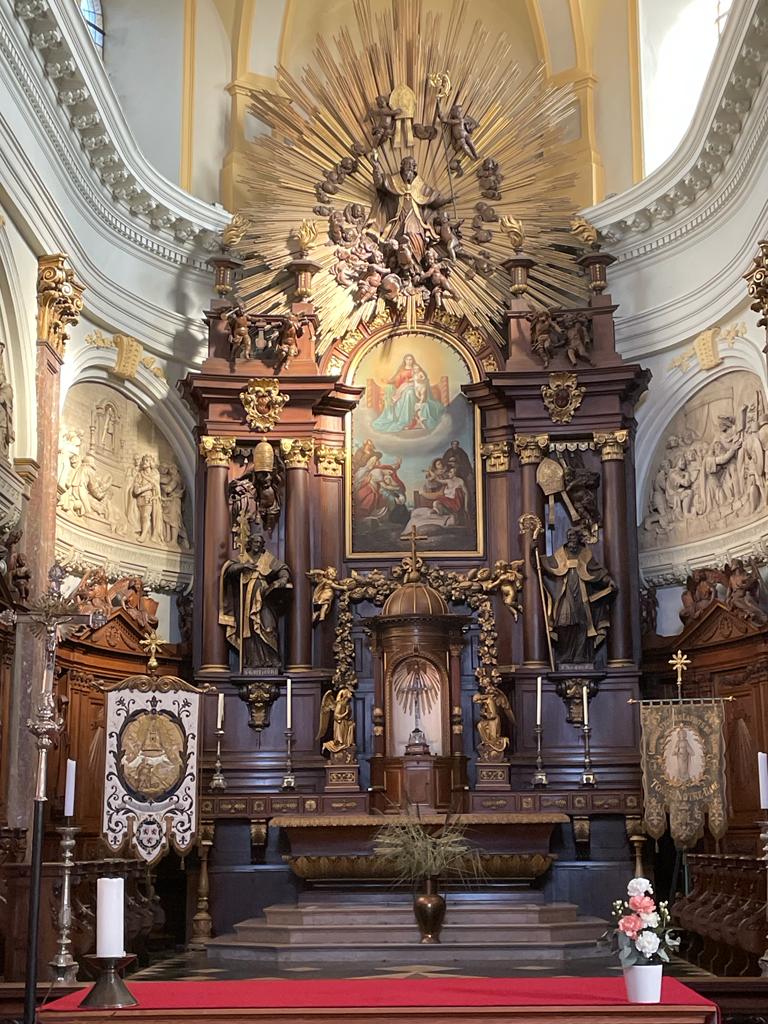
The image of Our Lady of Tongre was crowned on 8 September 1881 by Isidore-Joseph du Rousseaux, Bishop of Tournai (1880-1897), by an apostolic letter from Pope Leo XIII (1880-1903).
On 27 May 1951, the church was elevated to the status of basilica by Pope Pius XII, who reigned from 1939 to 1958. The Basilica of Our Lady in Tongre-Notre-Dame is the smallest in Belgium, measuring 60 metres in length and 20 metres in width.
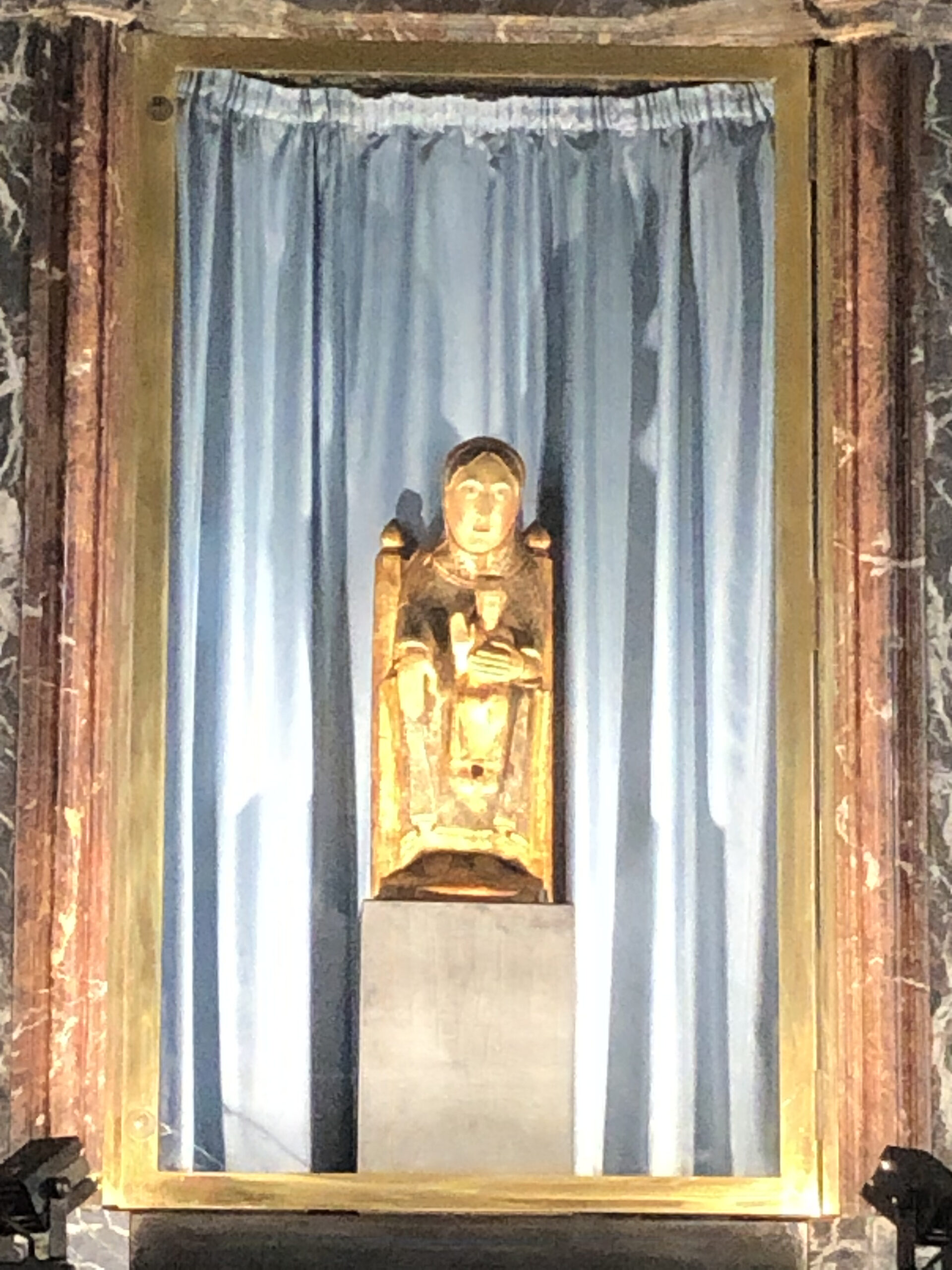
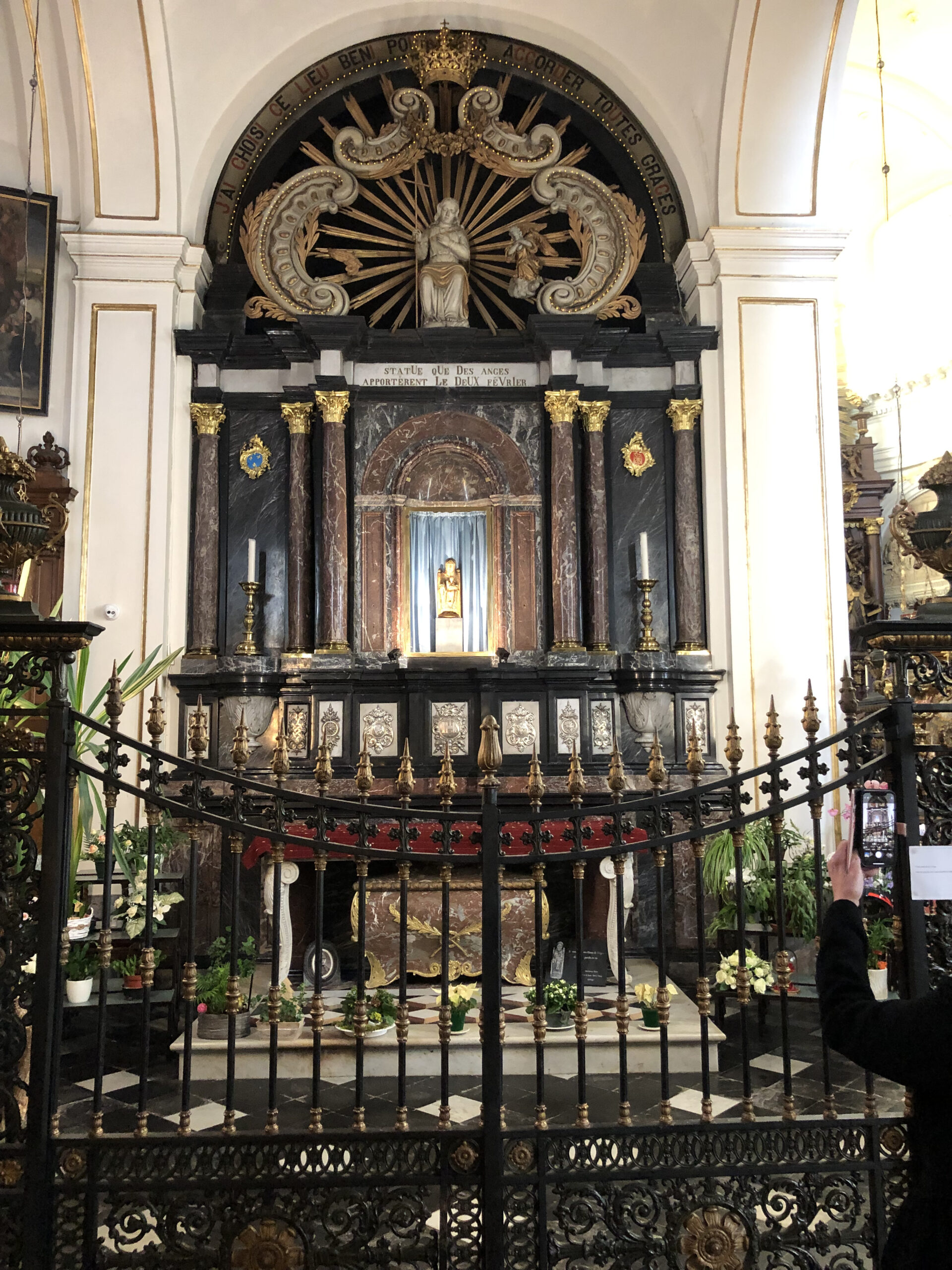
In 1968, the original statue of Mary, dating from around 1050, was restored and kept in a secret location. The restoration revealed that, beneath the many layers of paint, a Romanesque polyptych featuring numerous images had been created. A copy was then placed in the basilica at the site of the apparitions of 1081. In 1994, the authentic statue returned to the basilica, after precautions had been taken against vandalism and theft.
Since 2015, a relic of bone (ex ossibus) of the Marian devotee Karl Franz Josef von Habsburg-Lorraine (1887-1922) has been present in the basilica. He is Emperor Charles I of Austria (1916-1918), King Charles IV of Hungary (1916-1918), King Charles III of Bohemia (1916-1918), and King Charles IV of Croatia-Slavonia (1916-1918).
In 2020, the statue of Our Lady was classified as a “treasure of the Wallonia-Brussels Federation”.
Over the centuries, high-ranking individuals, such as kings and queens, have come to the church on pilgrimage, including Philip I of France (1052-1108) and Marie Henriette, Queen of the Belgians (1836-1902). These and other visitors have donated golden objects and clothing for the statue of Mary.
Our Lady of Tongre is the patron saint of poets, writers, students, and broken homes, who invoke the “Seat of Wisdom”.
Pilgrimage site
The annual festival of Our Lady of Tongre will be celebrated on the evening of 1 February and on 2 February. This is because, on 1 February 1081, Lord Hector received the statue of Mary and Child from angels in the castle garden. On the evening of 1 February, there will be vespers, adoration of the sacrament, commemoration of the apparition, blessing of candles, and a procession with a torchlight parade, during which the statue will be carried. The following day, the Feast of the Presentation of Jesus at the Temple (Candlemas), there will also be ceremonies, such as a Eucharistic celebration and a rosary prayer. On this day, the original image is brought out from its secret location, and visitors will be able to see the ancient statue.
A second highlight of the year in Tongre-Notre-Dame is on the last Sunday of September. On this day too, there is a procession and the original statue is displayed. The statue of Mary is therefore taken out of its hidden location twice a year to be shown to pilgrims.
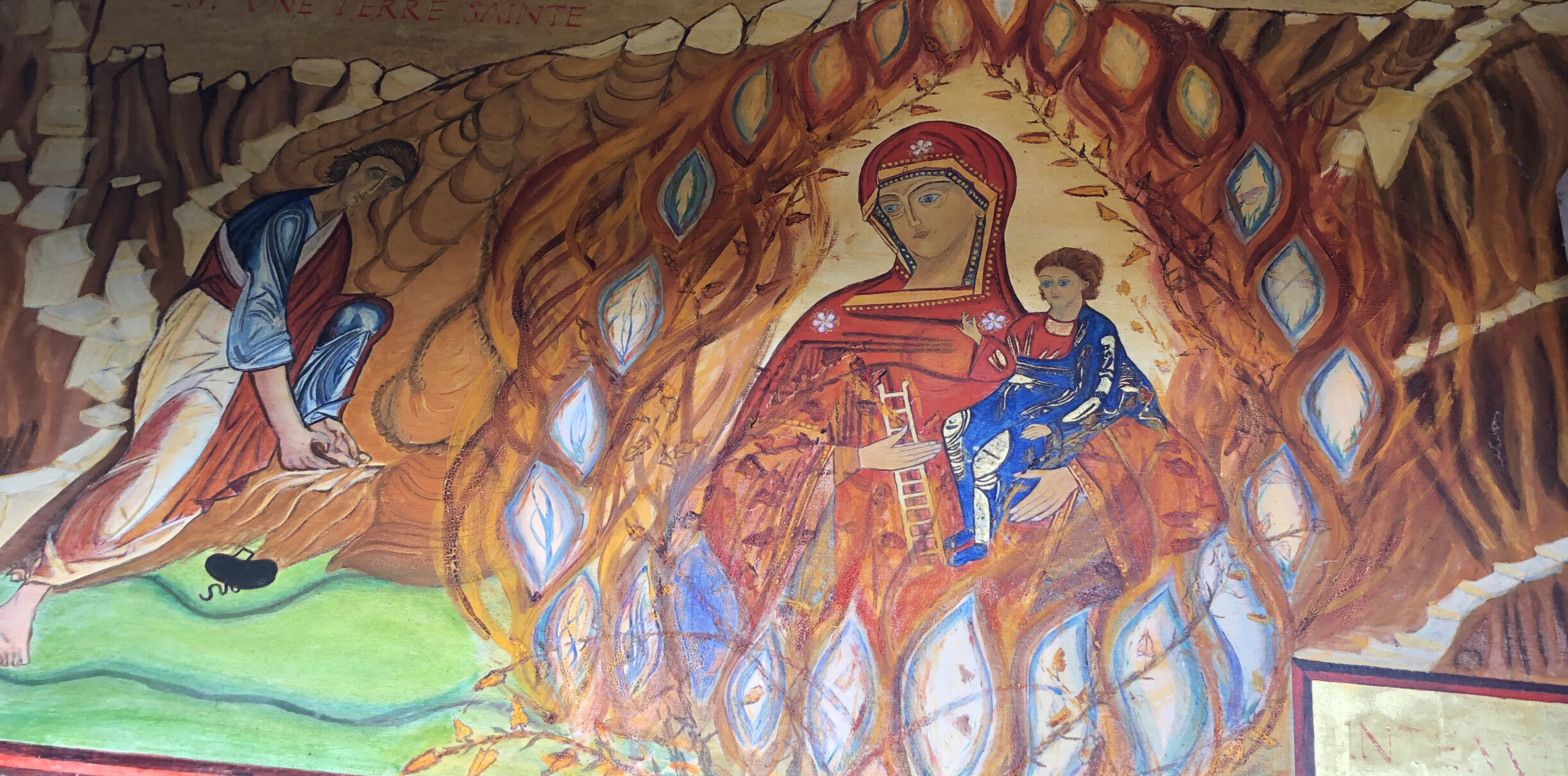
The statue of Mary depicts the seated Madonna with the infant Jesus. The original statue, dating from around 1050, is carved from pear wood. The statue is more representative of Byzantine than Romanesque art. A replica of the statue stands on the altar in the left aisle.
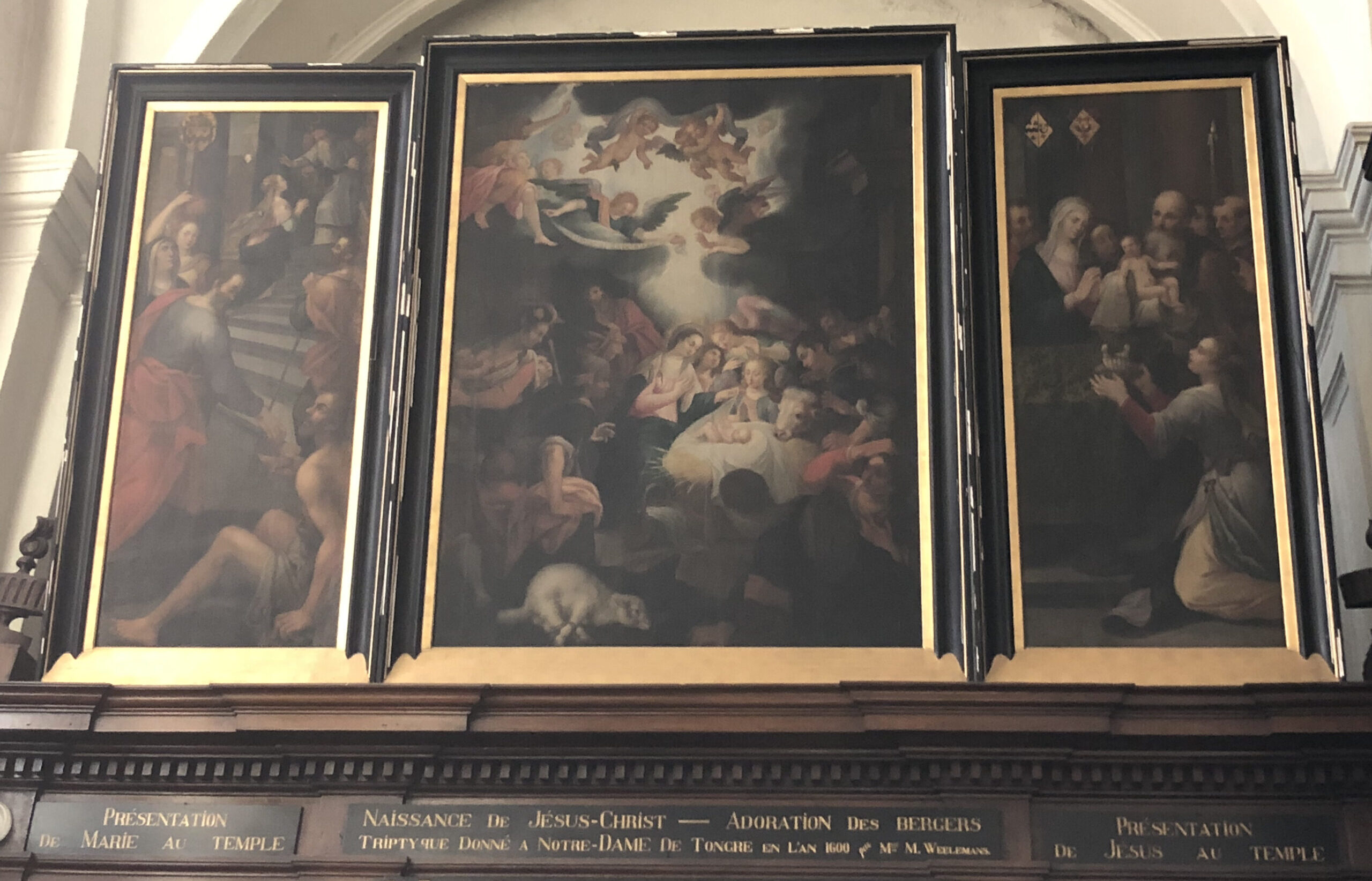
In the basilica hangs a triptych from 1600. It is a gift from an Antwerp béguine. The scenes are from the life of Our Lady, namely the Presentation of Mary in the Temple, the Birth of Jesus and the Presentation of Jesus in the Temple.
The panelling in the basilica depicts the highlights from the history of Tongre-Notre-Dame.
In the pilgrimage site, Our Lady is seen as the “loving Mother” and she is the patron saint of poets, writers, students, and broken families.
The basilica is open every day to welcome visiting pilgrims.
ACCESSIBILITY
Tongre-Notre-Dame is located in the Belgian province of Hainaut and is part of the municipality of Chièvres, which is situated near Ath.
The basilica is situated on the Kerkplein (Parvis) Notre-Dame de Tongre, B 7951 Tongre-Notre-Dame.
Op www.tongre-notre-dame.be up-to-date information can be found.
Experience
Experiencing the ability to visit the basilica is a beautiful gift. The statue of Mary has not only been admired for many centuries but is also a jewel of some 1,000 years of history.


The stained-glass windows depict scenes from the history of Tongre-Notre-Dame, including the image being carried by angels. There are also windows that portray miracles, such as a mother finding her child, the liberation of two condemned prisoners, inhabitants being protected from the plague, and a girl recovering from paralysis. There is also a window showing the coronation of the statue of Mary.
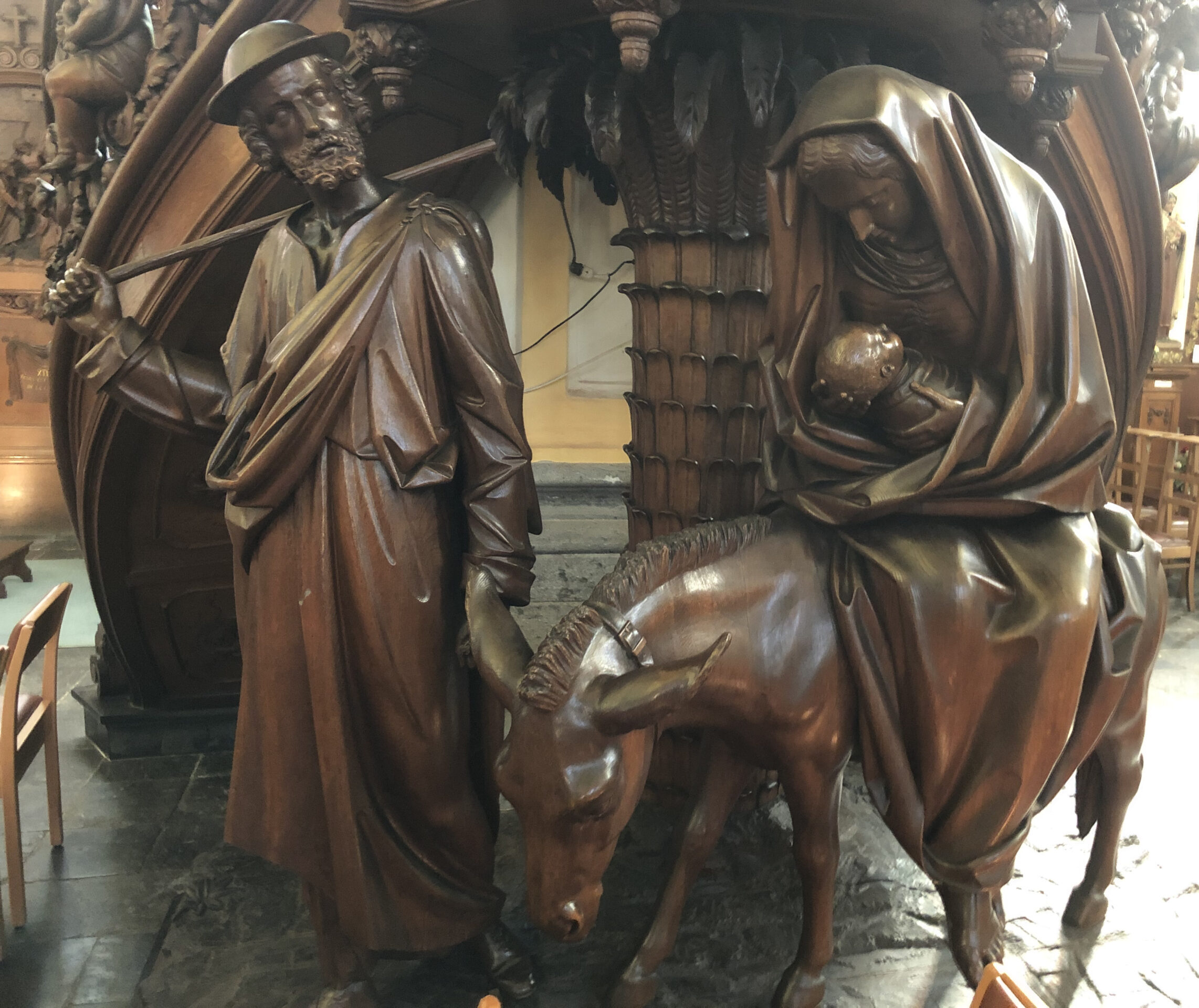
The woodwork in the basilica is wonderfully beautiful. What craftsmanship. The pulpit is also magnificent; it is supported by the Holy Family, who are fleeing into Egypt.
At the back of the basilica, there are posters of the festivities on 1 and 2 February and a leaflet about the history of the pilgrimage site. A leaflet with the text of the prayer to Our Lady of Tongre is also available for visitors. It was written by Jean Huard (1928-2002), Bishop of Tournai (1977-2002) on 17 August 1995. Part of the prayer reads:
“From the hour of crucifixion on Good Friday
Are you the mother of God and our mother?.
We praise and we thank you
to welcome us to Tongre
both on days of fear and of joy.
And we pray for the families
tested by divorce, unemployment and illness.”
Posted 1 March 2022
Last updated: 12 July 2023
~~~

 Nederlands
  English (UK)
  Deutsch
  Français