History
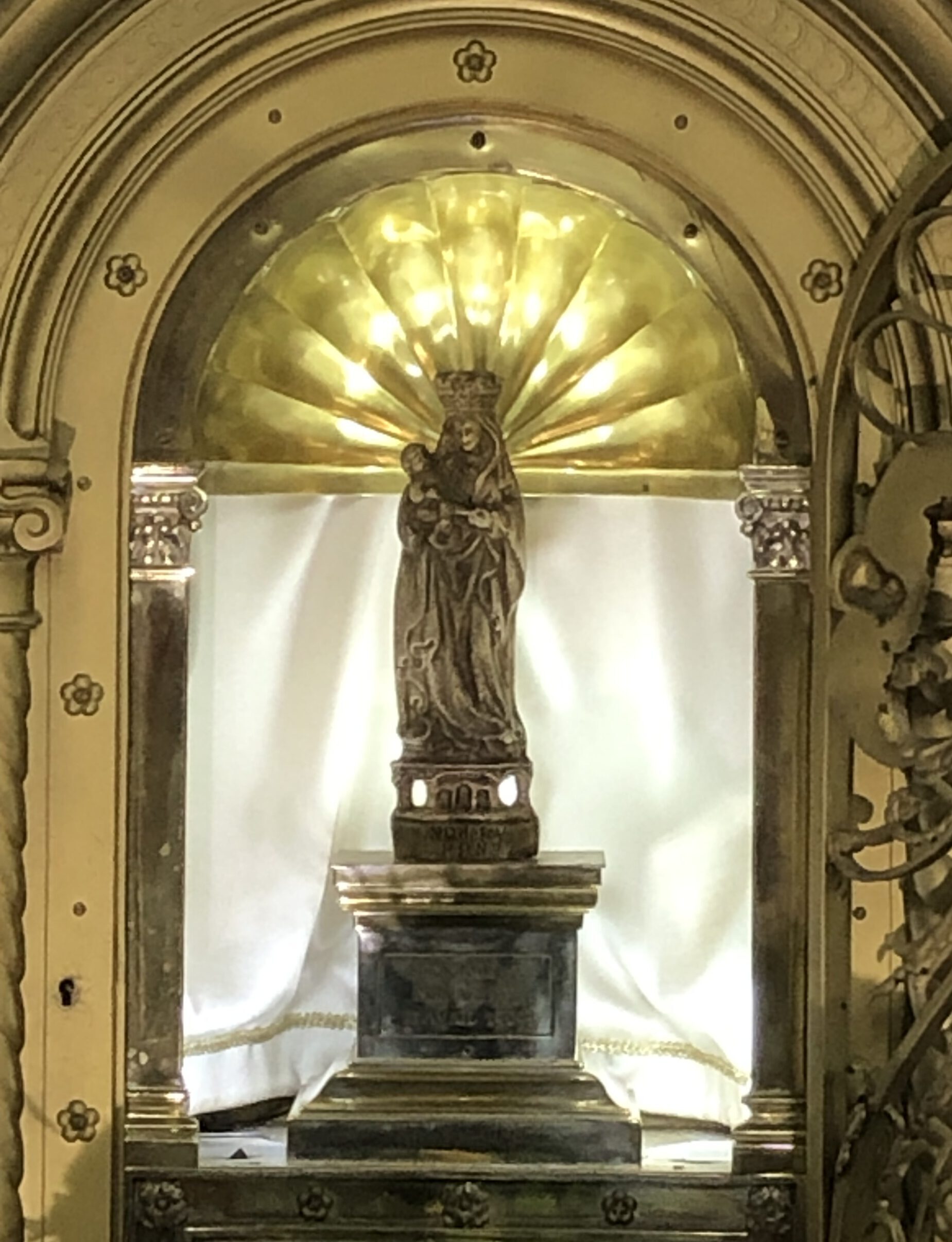
On 5 July 1609, a small statue of Mary is found in an oak tree whilst it is being felled. This happens in the forest of Foy, which belongs to the lord of Vêves Castle, the baron of Celles. Woodcutter Gilles de Wanlin from Sorinnes finds the statue in the trunk of the tree. He works with sailor Innocent de Limoir from Dinant to fell and transport trees. When the felled oak lies on the ground, the woodcutter notices that the trunk is partially rotten. This means that planks cannot be made from the tree, but blocks of wood can. In one of the blocks, the woodcutter finds a hollow space in which a stone statue of Mary is hidden.
However, due to the power of the chopping, the statuette split in two. A servant of the castle took the two pieces of the statuette and repaired it. Afterwards, the baron placed the statuette in the chapel of Vêves Castle. From 1616 onwards, miraculous healings were recorded and more and more believers came to pray at the statuette of Mary.
An investigation is being initiated following a miracle in 1616, where an elderly man was healed of a strangulated hernia after praying to a statue of Mary. Ferdinand of Bavaria (1577-1650) commissioned this. He was the Prince-Elector and Archbishop of Cologne from 1612 to 1650, and during the same years, among other roles, also Prince-Bishop of Liège and Prince-Abbot of the Abbey-Principality of Stavelot-Malmedy, which existed from 1158 to 1795. Ferdinand of Bavaria was also active in the aftermath of the Counter-Reformation (c. 1522-1563). The investigation into the miracle yielded a positive outcome, and subsequently, a small chapel was commissioned to be built.
On 20 July 1619, Archduke Albert VII of Austria (1559–1621) and Archduchess Isabella Clara Eugenia of Spain (1566–1633), who had great reverence for Mary, visited Foy. They visited the castle chapel. Albert and Isabella donated a painting depicting Mary, Elizabeth, Jesus, and John the Baptist.
In 1623, the lord of the castle decided to return the statuette to the place where it was found, and had a chapel built for the image of Mary. After that, more miracles were recorded.
In 1622, due to growing interest, a church was built, which was consecrated on 8 September 1624, the feast of the Nativity of Mary. These events were documented by a Jesuit from neighbouring Dinant. Subsequently, the story of Foy was spread worldwide by the Society of Jesus. Foy's fame therefore grew immensely, and the 22 cm terracotta statuette attracted much attention in the church “Église de la Nativité de Notre-Dame” (Church of the Nativity of Our Lady). Due to the special devotion to Mary, the name Foy was changed to Foy Notre-Dame.
In 1625, the black plague also struck the region of Foy, and the statue of Our Lady was very frequently and fervently adored. A year later, the epidemic hit Rochefort, and one of its victims was the beloved Countess Josine de la Marck (1584-1626). Her husband Johann Dietrich von Löwenstein (1585-1644), Count of Rochefort, went to Our Lady of Foy. He vowed to go on a pilgrimage annually, on Whitmonday. This pilgrimage still exists today!
In 1626, Ferdinand of Bavaria (1577-1650), Prince-Bishop of Liège (1612-1650), donated the high altar to the shrine.
Given its shape and material, the earthenware, Gothic figurine was made in Utrecht, Netherlands, around 1400. The small effigy strongly resembles the devotional figurines made in the Utrecht region in the 15th century. It was presumably brought to the Dinant region by a merchant. The figurine was then placed in the hollow of an oak tree with three bars in front of it to protect it from theft.
Foy's fame was primarily boosted by the Jesuit priest Pierre Bouille (1576-1641), who wrote on multiple occasions about the miracles in Foy. The publications came out in 1620, 1627, and 1660, the latter being well after his death. Through these publications, the cult was spread across many countries.
In the late 17th century, Protestants devastated the Sanctuary of Foy Notre-Dame. Later, restoration work took place.
The statue of Our Lady of Foy is crowned on 8 September 1909 by Thomas Louis Heylen (1856-1941), Bishop of Namur (1899-1941).
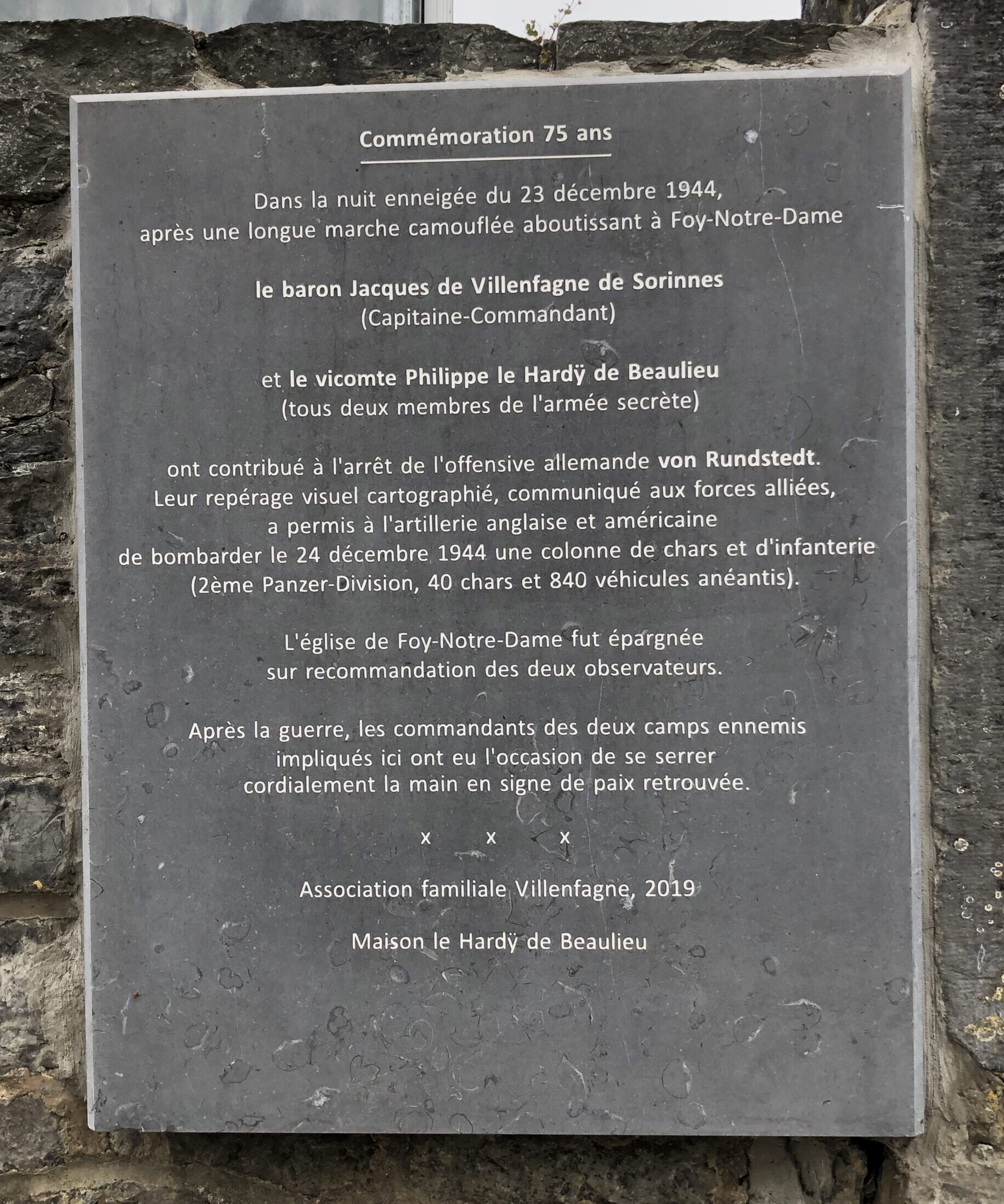
A remarkable fact is also that in December 1944, the advancing, final German division was halted at Foy Notre-Dame during the Ardennes Offensive of the Second World War (1940-1945). A plaque from 2019, 75 years after the offensive, states that thanks to information provided to the Allies about the occupier's positions, the church was saved from destructive wartime violence.
Pilgrimage site
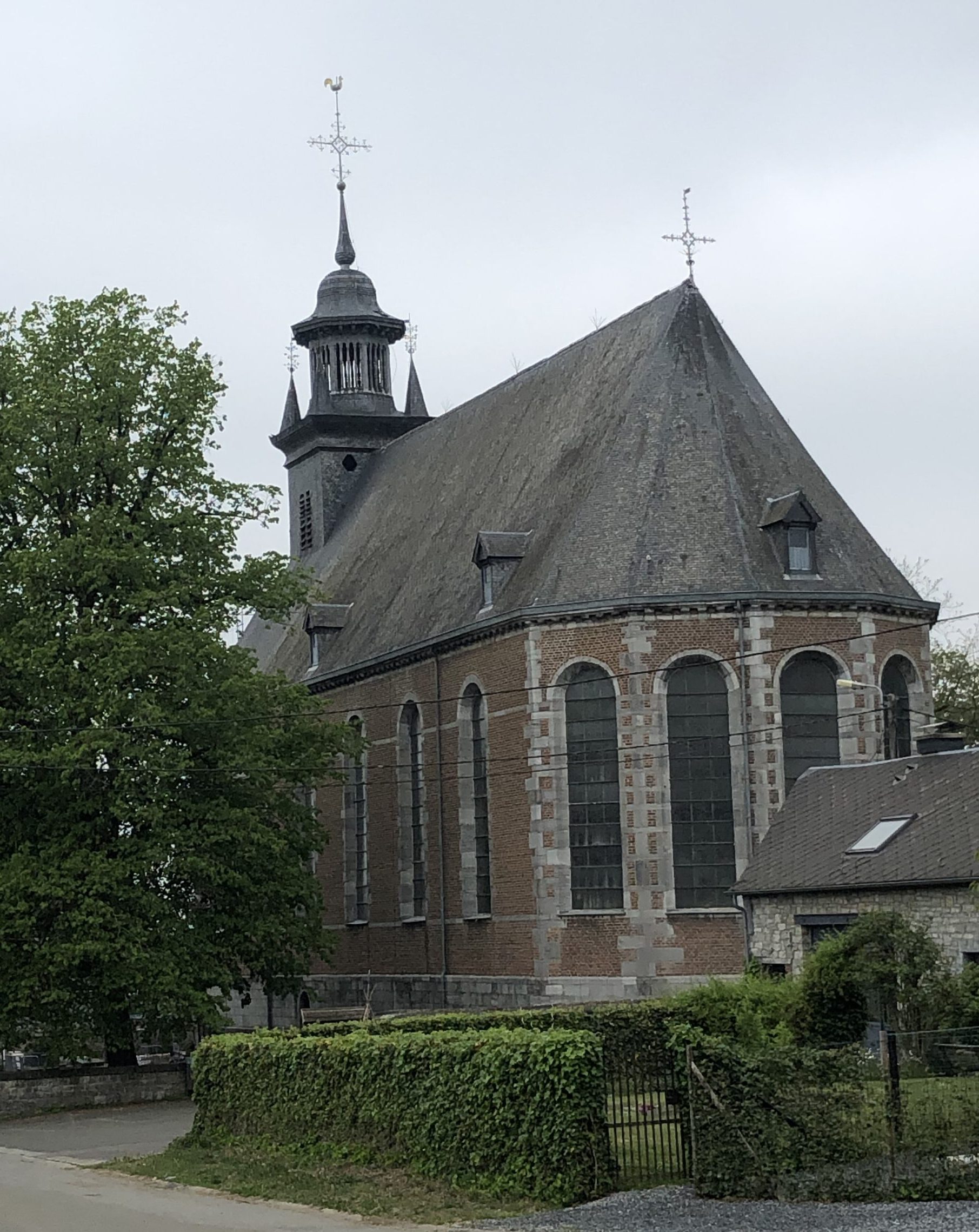
The baroque church of the Nativity of Mary (“Église de la Nativité de Notre-Dame) is located at the centre of the village of Foy Notre-Dame, which stands on a hill.
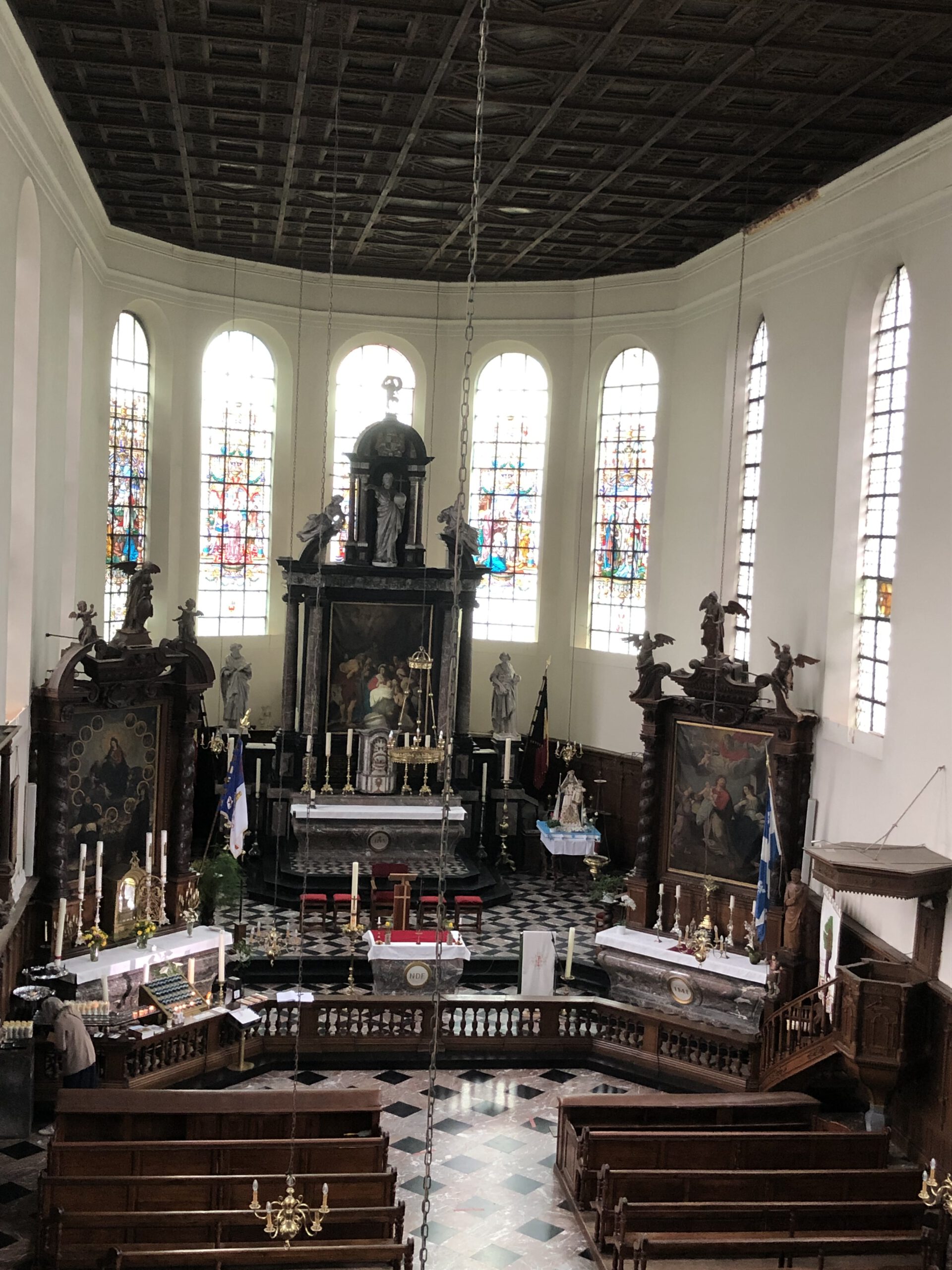
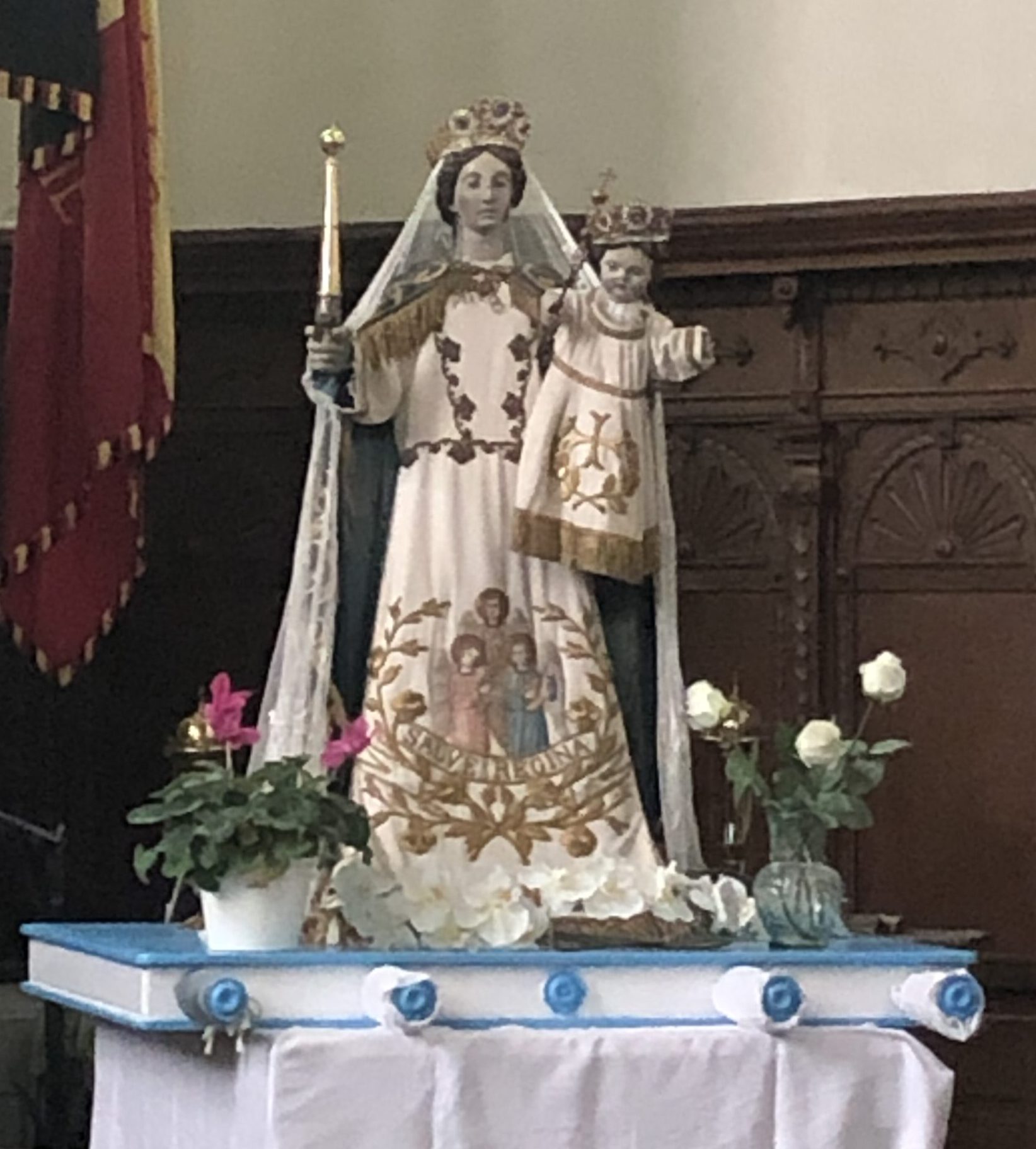
The miraculous statue of Our Lady is located at the front left of the church in a cabinet. Mary stands on an octagonal plinth of three arches at the front. The central theme of the Foy Notre-Dame church's decoration is the rosary. This is expressed through the ceiling panels, the left side altar, and the stained-glass windows of the chancel.
![[Image 5319]](https://mariakamer.nl/wp-content/uploads/2022/05/IMG_5319-scaled-e1652380349261.jpeg "Pilgrimage Sites in Belgium - Foy Notre-Dame")
On the left side altar, an image depicts the presentation of the rosary to the kneeling Dominicus. Mary is enthroned on a cushion and clouds. On the right side of the artwork, Catherine of Siena is depicted. She too is kneeling, with an attitude full of adoration and ecstasy. Fifteen medallions around Mary and Jesus illustrate mysteries.
The image of the Adoration of the Shepherds adorns the high altar. The painting was created by the Liège artist François Walschartz (1597-1678).
The right-hand side altar depicts the Holy Family, with an angel offering Jesus fruit. This painting, in particular, is typical of the Counter-Reformation period, with Joseph carrying Jesus, a watchful Mary, and an all-seeing God the Father.
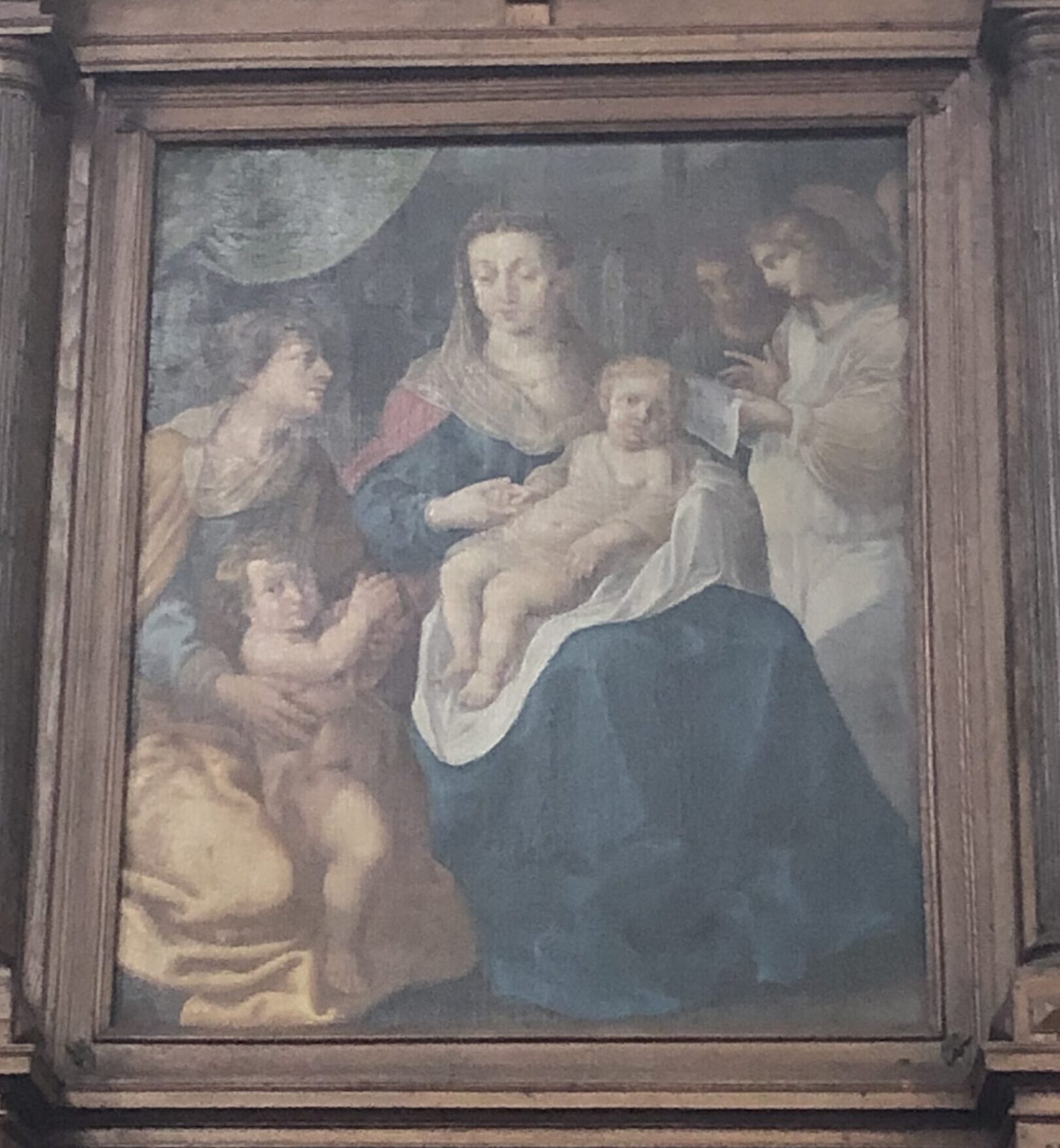
Hanging on the wall is a painting depicting Mary, Jesus, Elizabeth and John. It was a gift from Archdukes Albert VII and Isabella during their visit to Foy in 1619.
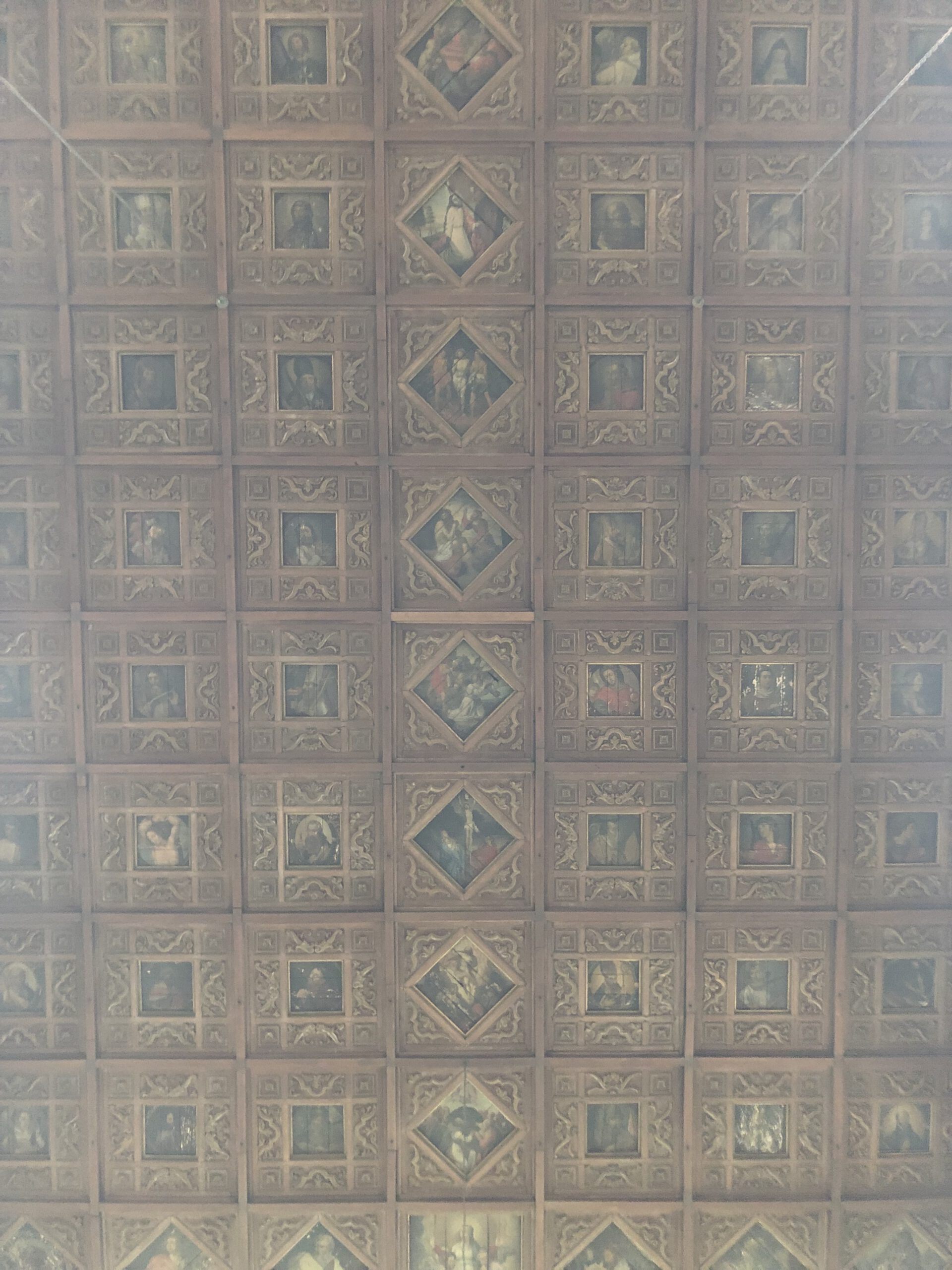
The ceiling of the church is particularly striking; it consists of 145 wooden panels painted with oil. These high-quality works of art depict the life of Mary and also show many images of saints. The panels are the work of the Silmant brothers, M. and J., from Dinant, and Guillaume Goblet.
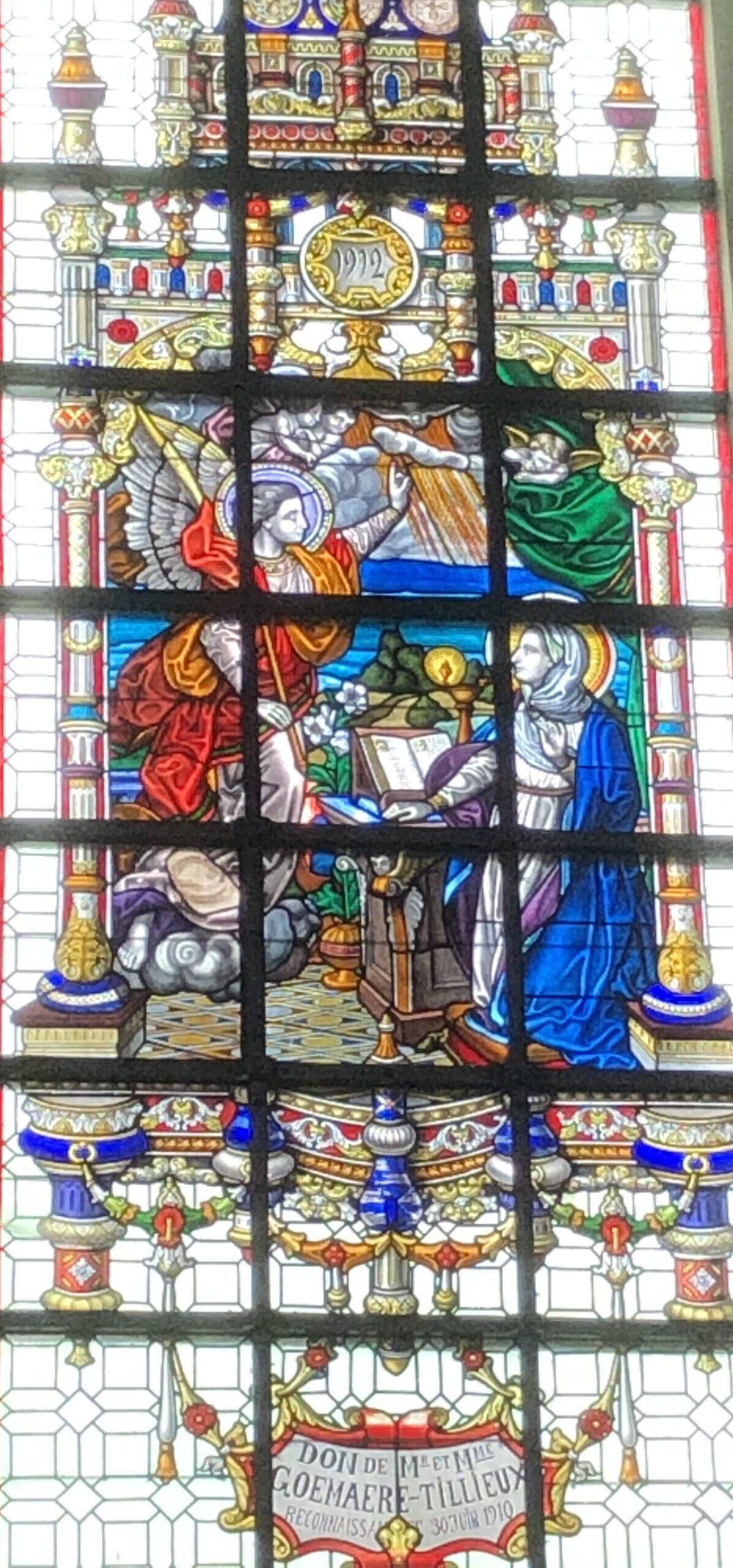
The choir windows depict the sorrowful mysteries of the Rosary.
The sanctuary is accessible daily and there is a Eucharist celebration on Sunday mornings.
ACCESSIBILITY
Foy-Notre-Dame is a hamlet in the province of Namur and belongs to the municipality of Dinant. The hamlet is located about 6 km from the centre of Dinant.
Address: Rue de Claviats 4, 5504 Foy-Notre-Dame.
Up-to-date information can be read at www.fnd2009@skynet.be.
Experience
The hamlet of Foy Notre-Dame is situated in a hilly area. I'm told that the name Foy means place of trees.
The three large paintings, which adorn the altar, are brilliant works of art, and this also applies to the stained-glass windows. The famous statuette also catches my eye. What history has the earthenware artwork caused?.
I have been looking up for a long time, taking in the famous ceiling. The church ceiling consists of 21 rows with over 100 painted panels, centrally featuring a cross formed horizontally with images of the evangelists and vertically with stages from the life of Mary, such as the Assumption and the mysteries of the Rosary. The images are painted on wood. The cross is formed by larger panels. Such a ceiling is only well-preserved in Foy Notre-Dame and is known both nationally and internationally. What particularly valuable religious and cultural heritage this is! In the silence of the church, I pray to Mary, light a few candles, and my thoughts turn to friends who mean a lot to me.
In the church I find a prayer card. Some sentences from the text are:
“Prayer to Our Lady of Foy
Our Lady of Foy,
For a short while, we have left behind the oppressive crowds of everything that binds and compels us, to come and greet you in the rural peace of these rolling hills. We thank you for this peace and for this silence which invite us, in this place of grace, to come and converse with you for a moment.”
I also find another prayer card in the church. The text reads:
“Prayer to Our Lady of Foy.
Our Lady of Foy,
Be the star in the ever-increasing unrest,
that dominates the storm.
Give us a faith as strong as the oak
the U hid in its hollow.
Grant us a deep love for all people,
a love that is net as strong as
the love that connects you with Jesus.
Our Lady of Foy, pray for us.
Amen.”
Environment
There are plenty of walking and cycling opportunities in the area around Foy-Notre-Dame.
From the pilgrimage site of Beauraing to that of Foy-Notre-Dame is 22 km to the north.
Departing from Bouillon Castle to arrive in Foy-Notre-Dame involves travelling 82 km north.
From the city of Namur to Foy-Notre-Dame is 35 km south.
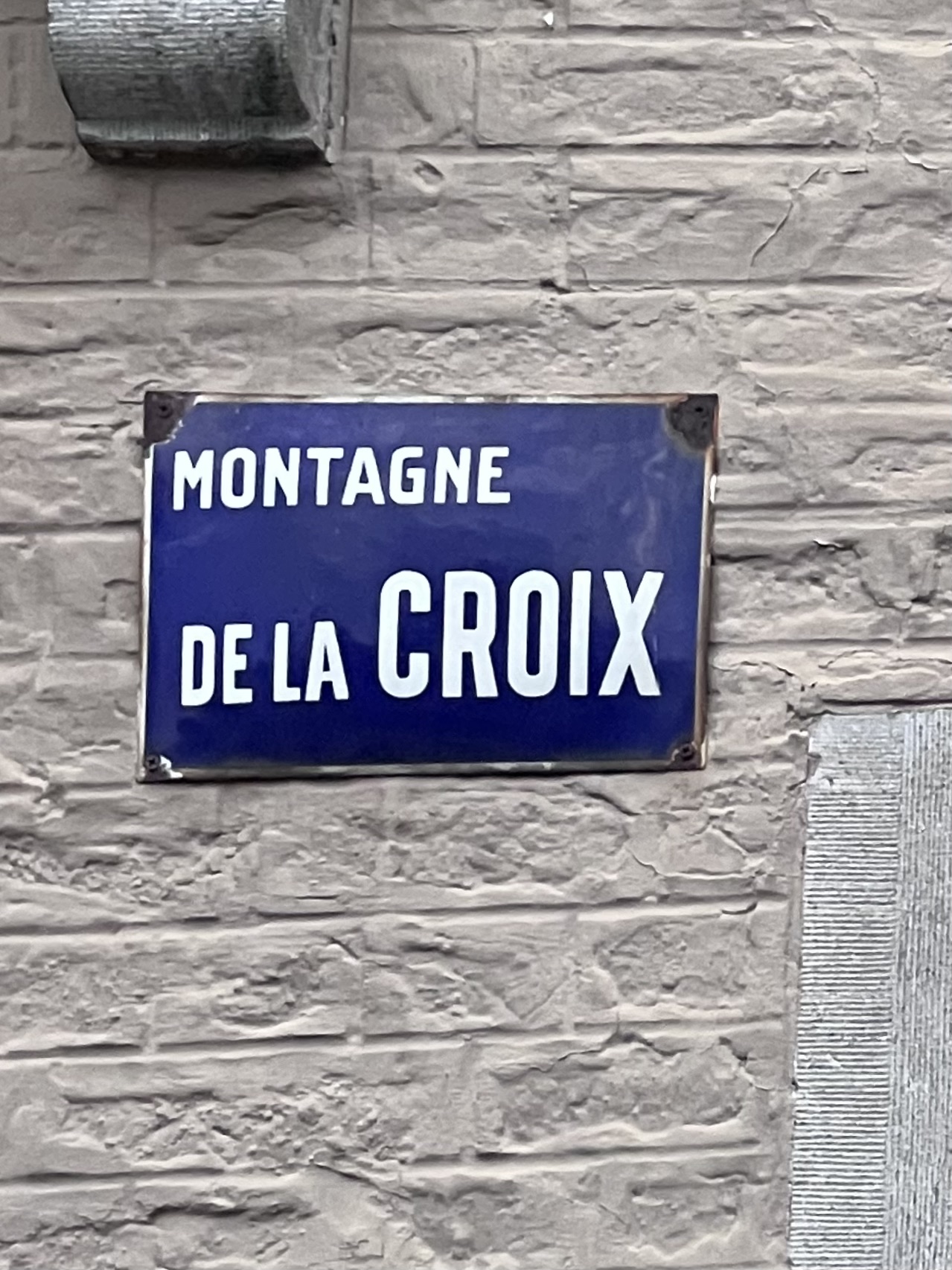
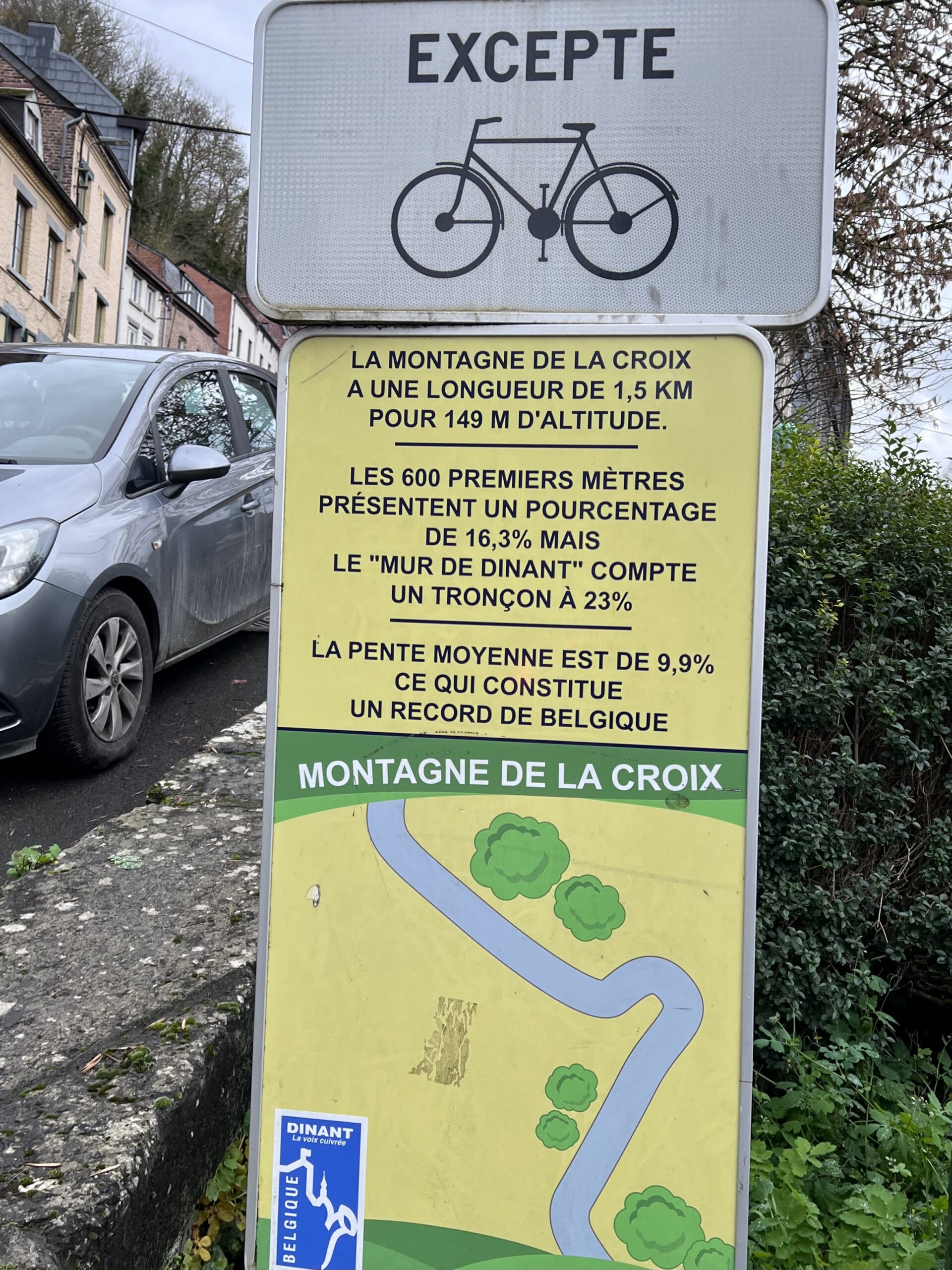
The busy town of Dinant is located near Foy Notre-Dame. It's only 8 km to the east. From Dinant, a pilgrimage route can be followed to Foy Notre-Dame. This route begins with the very steep “Montagne de la Croix” (Cross Mountain) over 1.5 km. The altitude difference to be overcome is 149 m, making this mountain, with an average gradient of 9.9 percent, the steepest in all of Belgium. The first 600 m have a gradient of 16.3 percent. The “Mur de Dinant” is an unprecedentedly steep section of road at 23 percent. There are several chapels along the pilgrimage route.
~~~

 Nederlands
  English (UK)
  Deutsch
  Français