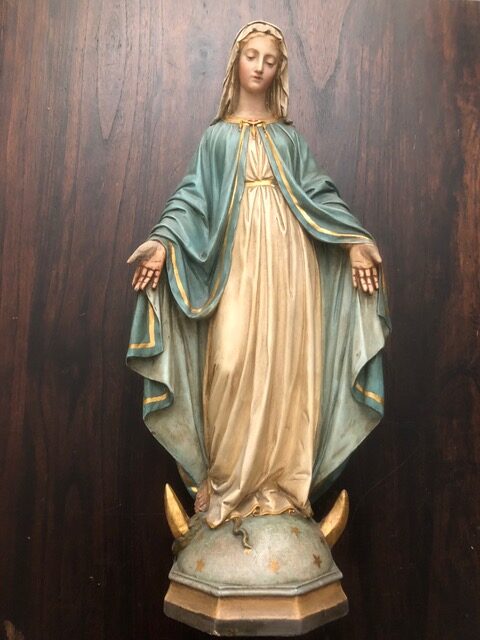
History
The cleric Maurillus (363–453) establishes himself as a hermit on the banks of the Loire in Chalonnes (Maine-et-Loire) near Angers. In 423, Christians from Angers ask him to become their bishop. He agrees to their request and served as bishop from 423 to 453.
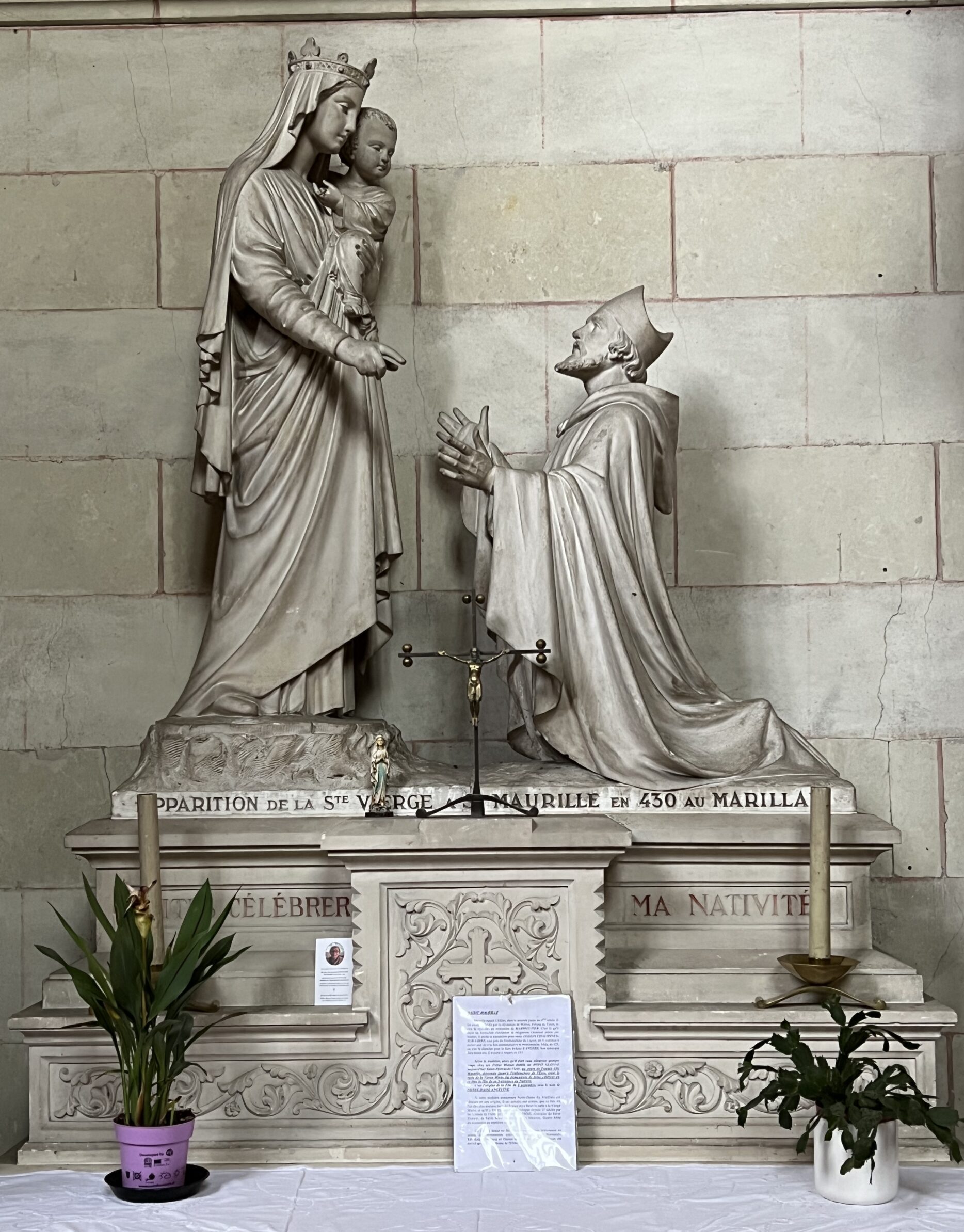
The origin of the Sanctuary of Notre-Dame du Marillais dates back to the year 430. Maurille is on his way to his monks at the Mont-Glonne monastery and pauses to pray at “La Croix du Pichon” (The Cross of Pichon), where the rivers Evre and Loire meet. Suddenly, he finds himself surrounded by a celestial light and perceives Our Lady, holding her Child in her arms, in a poplar tree. Mary asks him to institute a solemn feast on 8 September, the day of her birth.
After the apparition of Mary, a chapel is built on the site of the encounter between Our Lady and Bishop Maurille. This becomes the place Marillais.
Bishop Maurille was later canonised. He is the patron saint of gardeners and fishermen. Saint Maurille is depicted as a bishop holding a spade or a fish.
In 786, Charles the Great (747-814) attributes the success of his army at the foot of Mont Glonne to the help of Our Lady. He says: “Marie est là” (Mary is there) and from this the name Marillais may have originated.
The chapel was destroyed by the Normans between 850 and 860. The chapel was restored in the 10th century by the Benedictines of Saint-Florent.
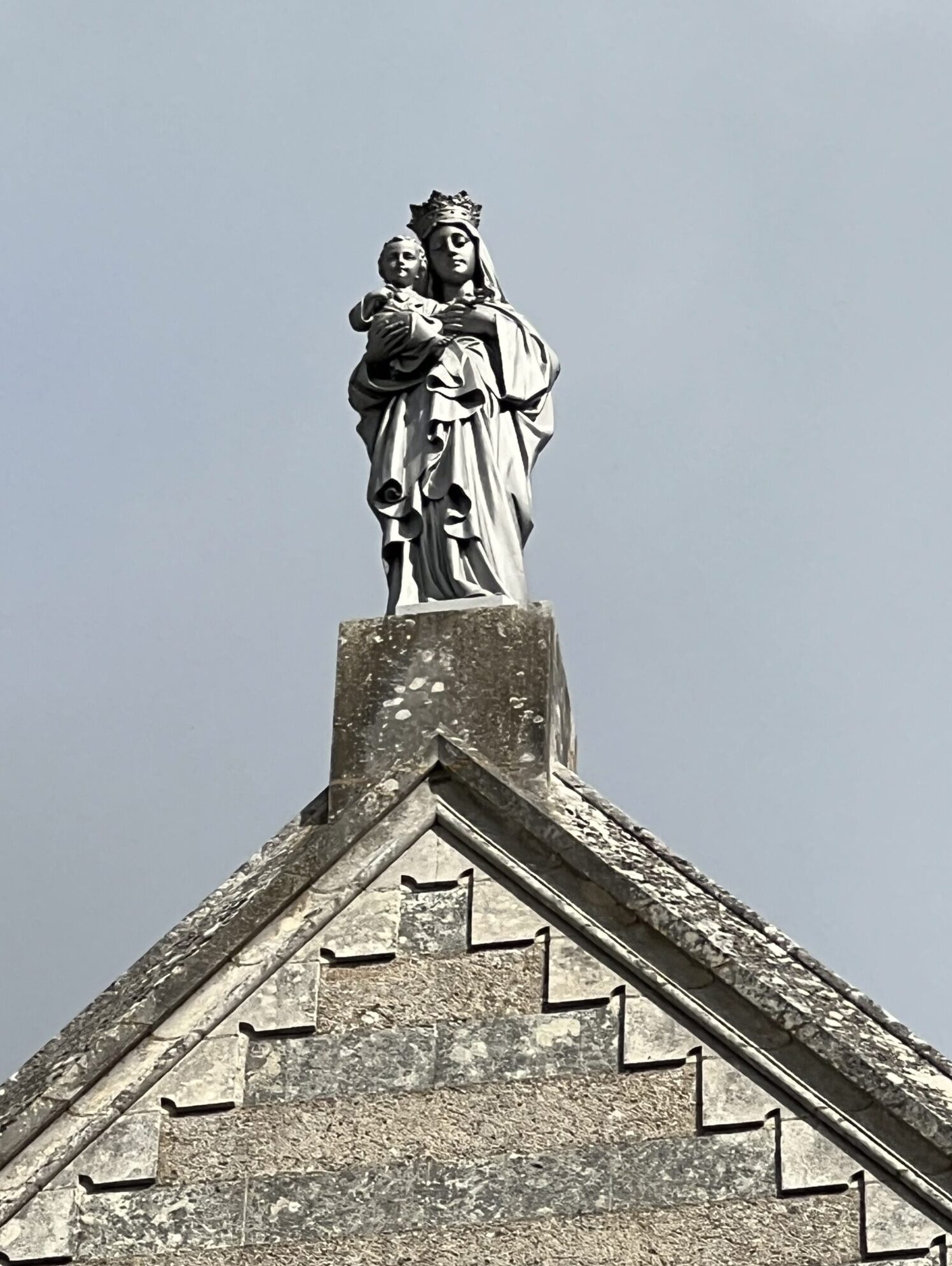
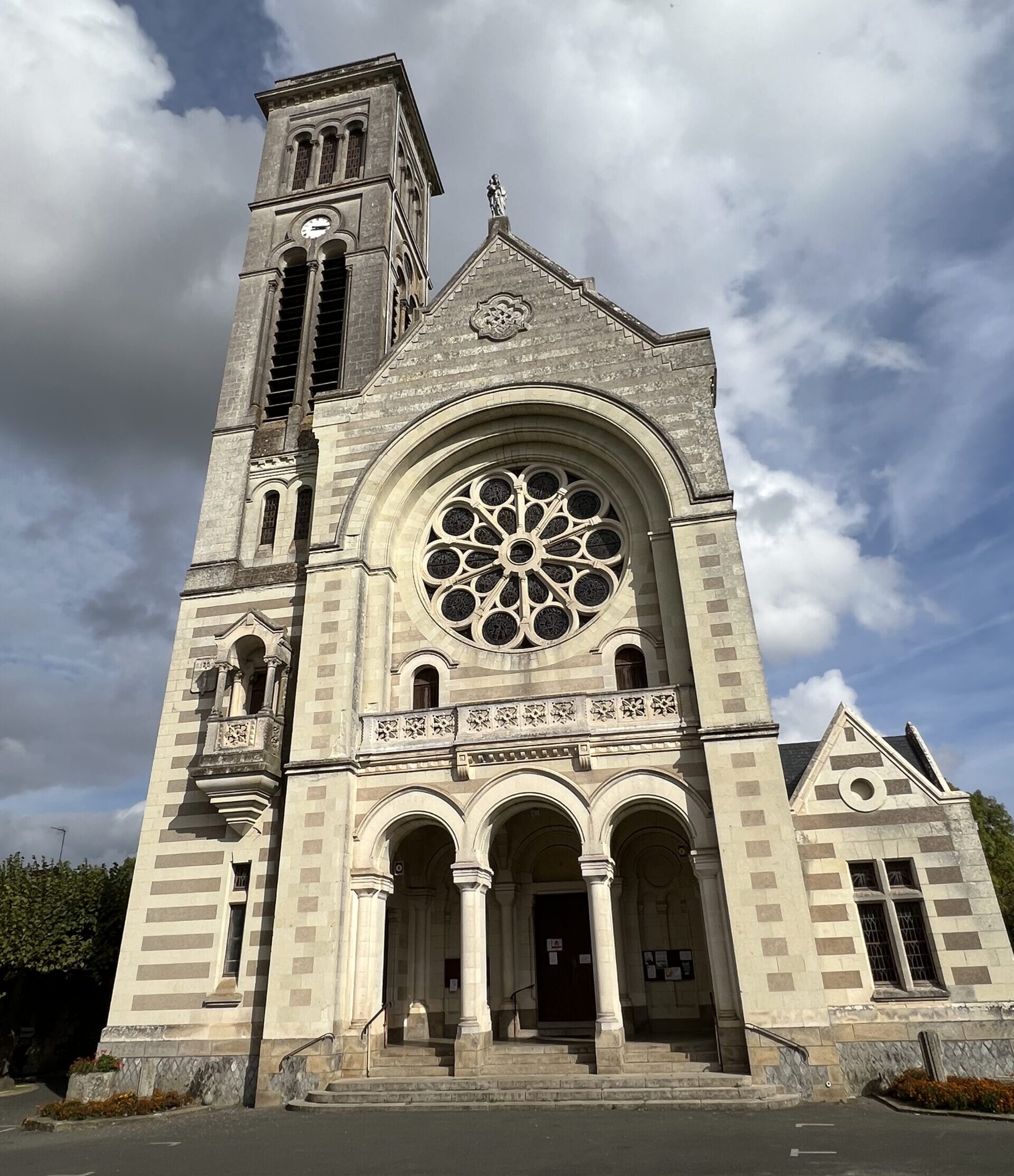
Halfway through the 19th century, the pilgrimage to Le Marillais was revived. Charles-Émile Freppel (1827-1891), Bishop of Angers (1870-1891) and Member of Parliament (1880-1891), organised the spiritual activities of the sanctuary from 16 July 1878, by calling upon the fathers of Saint-Laurent-sur-Sèvre for this purpose. Between 1890 and 1913, the current sanctuary was built and replaced the old church. The square tower reaches a height of 40 metres and was built after the First World War (1914-1918). Our Lady of Anjou is venerated in the sanctuary. On 7 October 1920, the church was consecrated by Joseph Rumeau (1849-1940), Bishop of Angers (1898-1940).
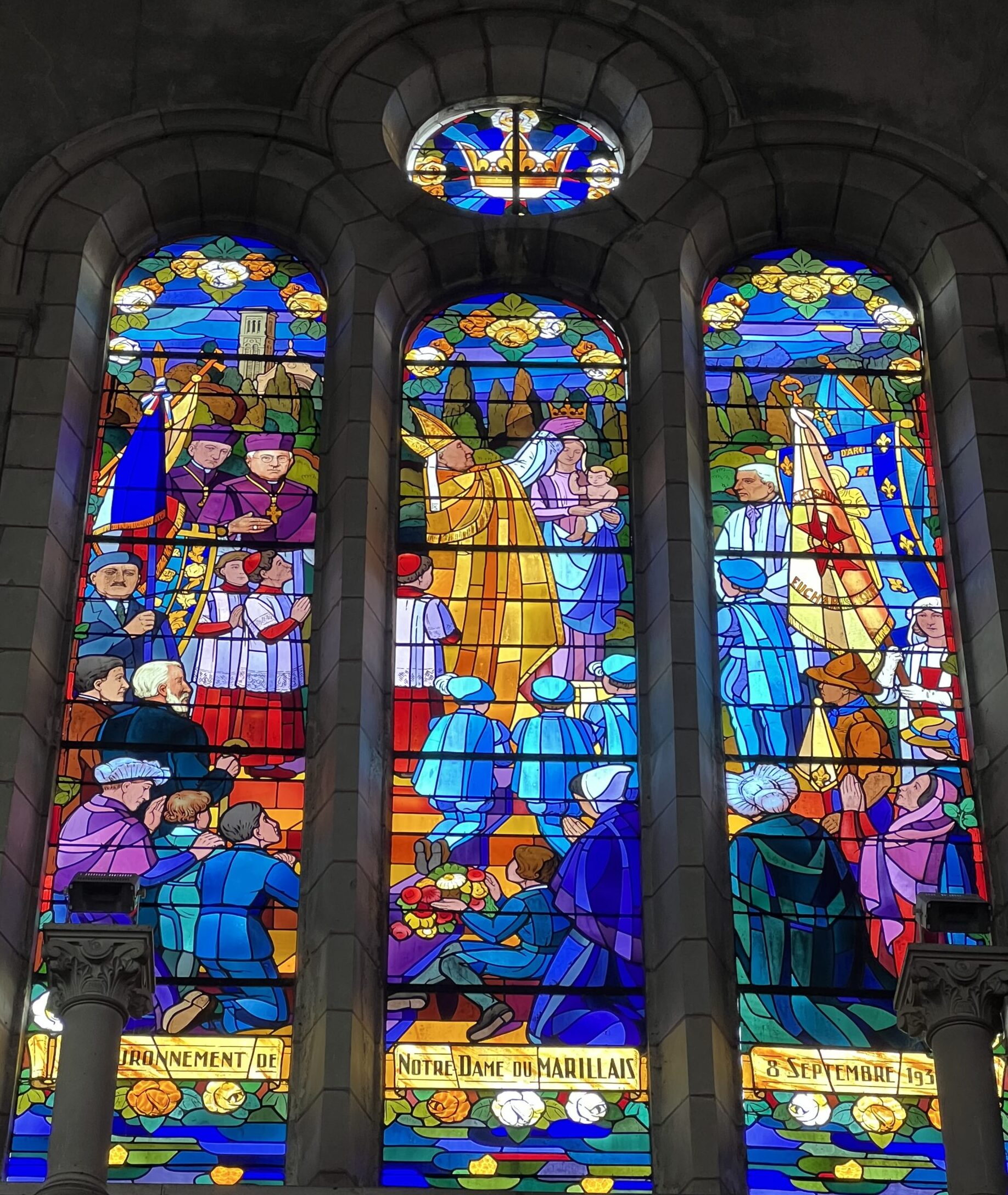
On 8 September 1931, the statue of Mary was crowned by Joseph Rumeau, with the permission of Pope Pius XI (1922-1939).
On 30 June 1937, the chapel was affiliated with the Holy House (Santa Casa) of Loreto.
Since 2015, the sanctuary has belonged to the municipality of Mauges-sur-Loire.
Pilgrimage site
The sanctuary is one of the oldest Marian pilgrimage sites in Europe. The birth of Mary, 8 September, was first celebrated in this region of Angers and is called “La Fête Angevine” (the festival of Anjou).
The basilica displays many historical mementos, including those from the Vendée. A stained-glass window depicts the “Champs des Martyrs” (The Field of Martyrs) of the Vendée. Between 23 December 1793 and 8 April 1794, 2,000 men, women, and children were killed for their faith. This occurred during the French Revolution (1789–1799).
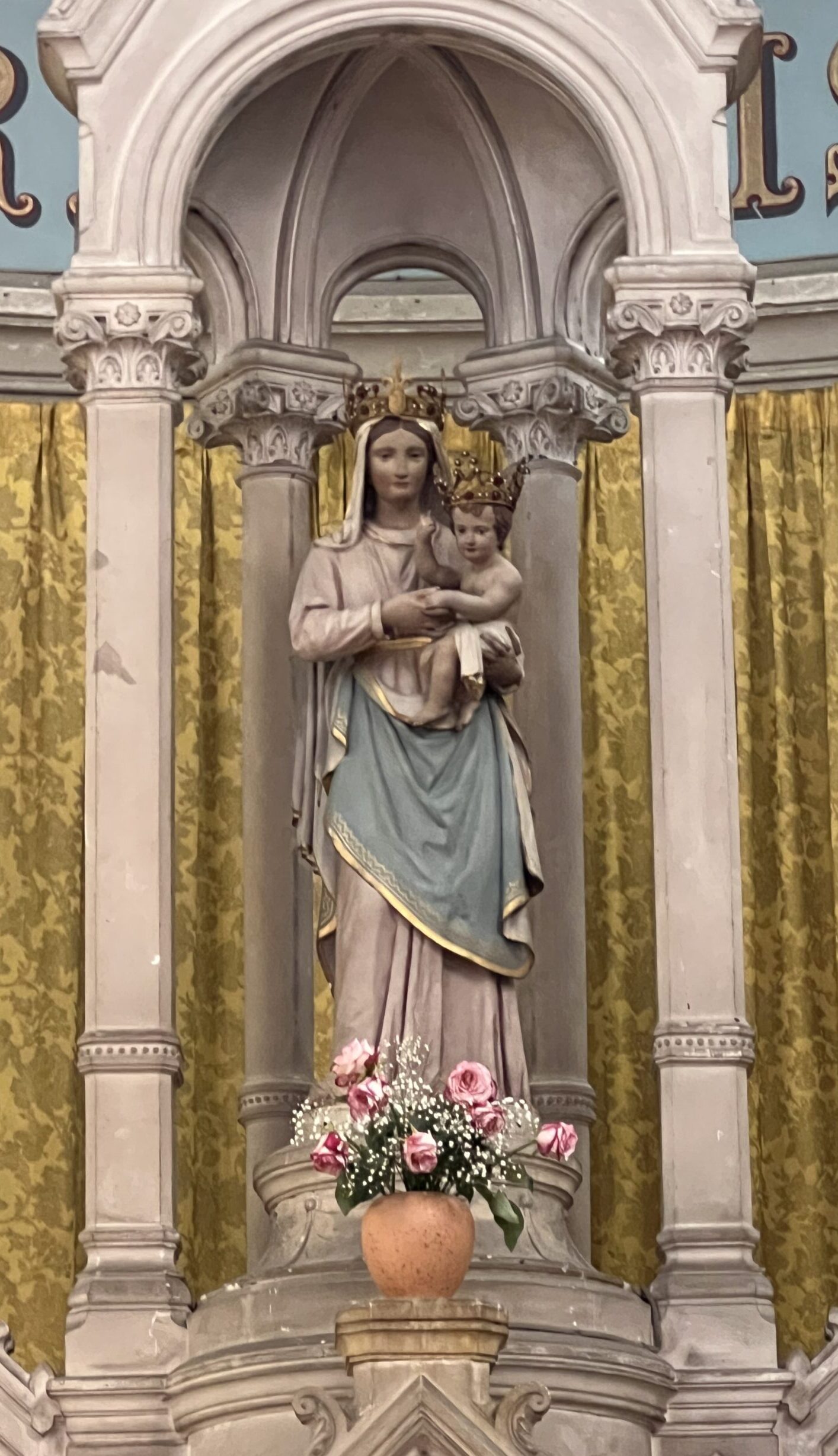
Our Lady of Marillais is also called Our Lady of Angevine (Anjou). Seeing the statue of Mary and praying to it is the goal of many pilgrims.
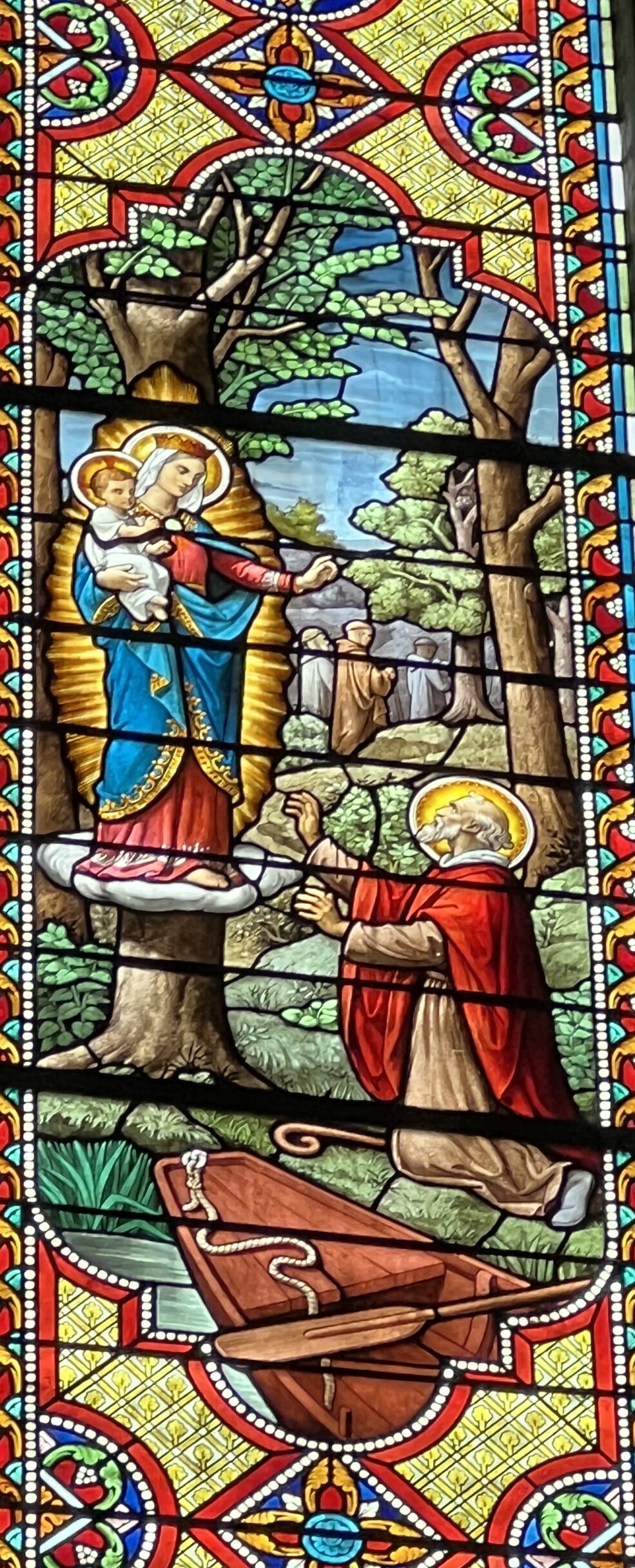
The origin of the name Marillais is unclear. It may be derived from Maurille. The meaning could also be “the great clearing”. Marillais may also have originated from the pronunciation of Charlemagne (“Marie est là“ - Mary is there). A stained-glass window in the basilica refers to the victory of Charlemagne's army. Another possible origin of the name could be due to the flooding of the Loire in autumn, which created a large lake. In Latin, it is referred to as ”Beate Mariae de Lacu“ (”Blessed Mary of the Lake"), which was corrupted to Notre-Dame de Marillais.
The basilica is open daily and the Montfort Fathers look after the sanctuary.
ACCESSIBILITY
The Sanctuary of Le Marillais is located in western France where the rivers Evre and Loire meet, between the major cities of Nantes and Angers. The basilica is situated right beside the D751 road, in the Pays de la Loire region.
113 Rue du Vieux Bourg, 49410 Mauges-sur-Loire.
For current info:
https://saintmaurille.diocese49.org
Experience

Outside the church, the pilgrims are welcomed by a sign depicting Our Lady. In front of the church, there is parking space for cars, and then I look at the tall, square tower.
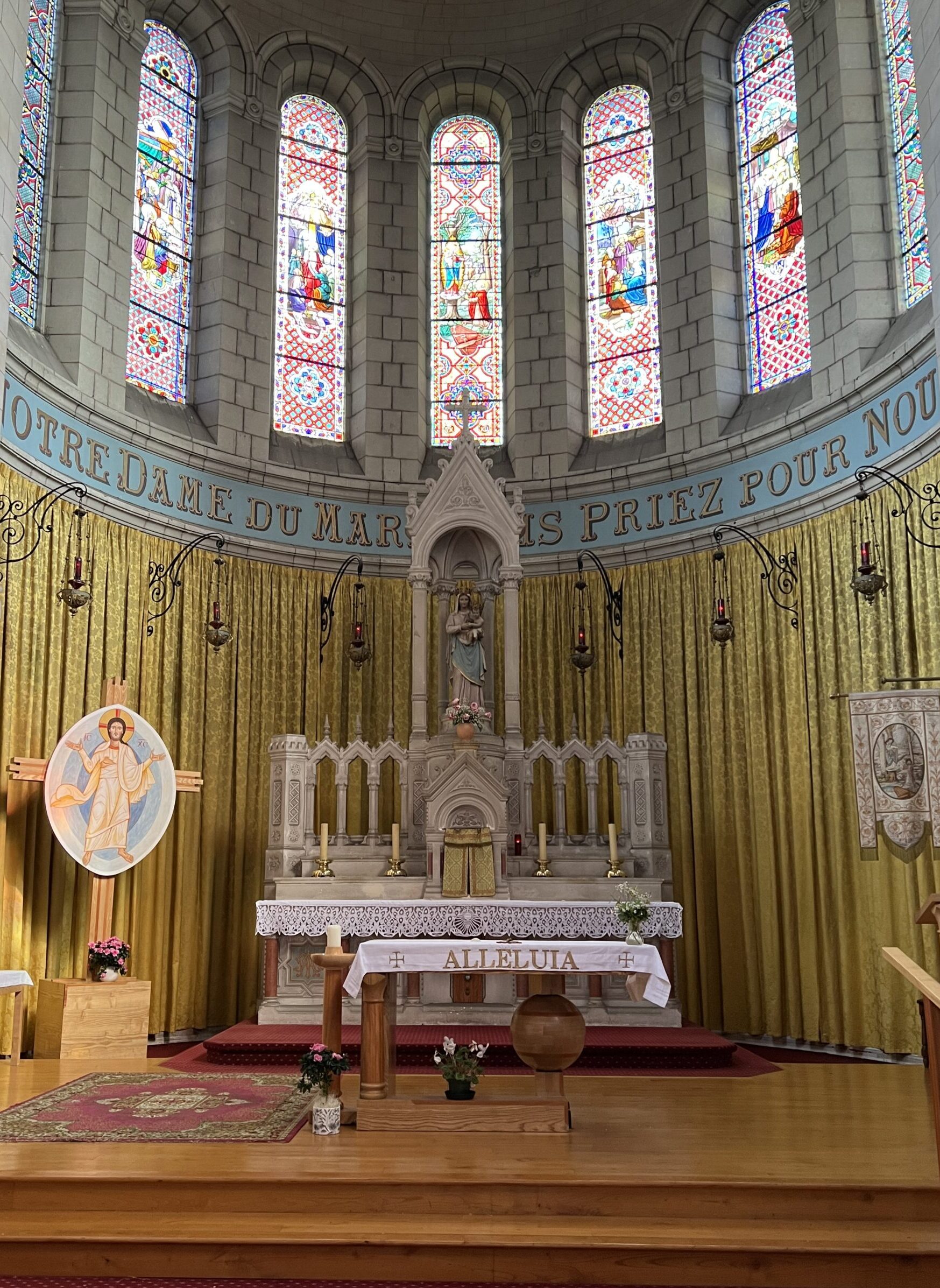
In the church, the first focus is on the image of Our Lady. I stand before it, and the history of this shrine flashes through my mind. I then pray for the well-being of good friends who could use some support. The high altar makes quite an impression on me. How impressive it is here, and it feels so good to be here.
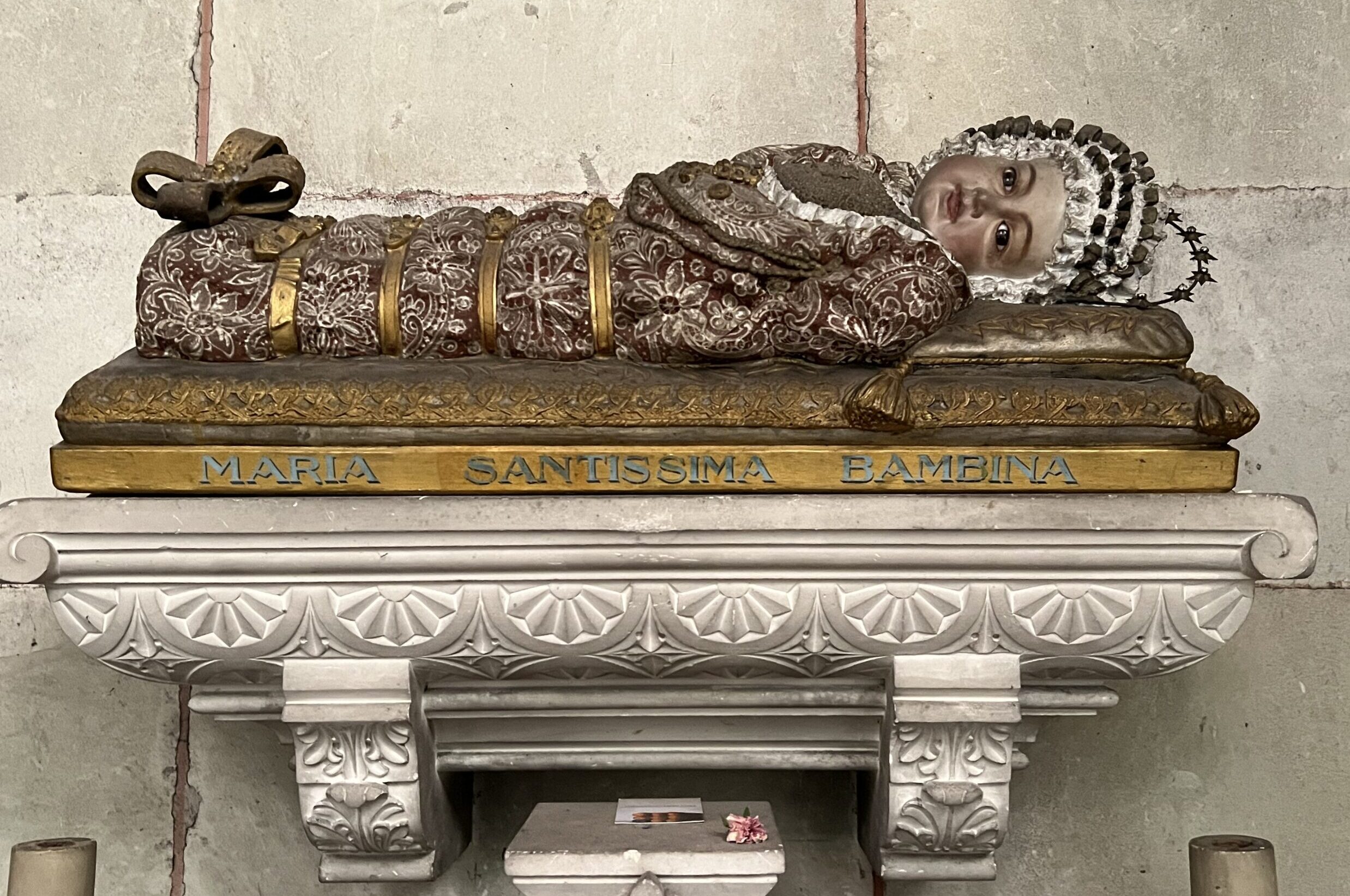
In the church, I see a statue of the Holy Mary as a Child. The Italian text reads “Maria Santissima Bambina”.
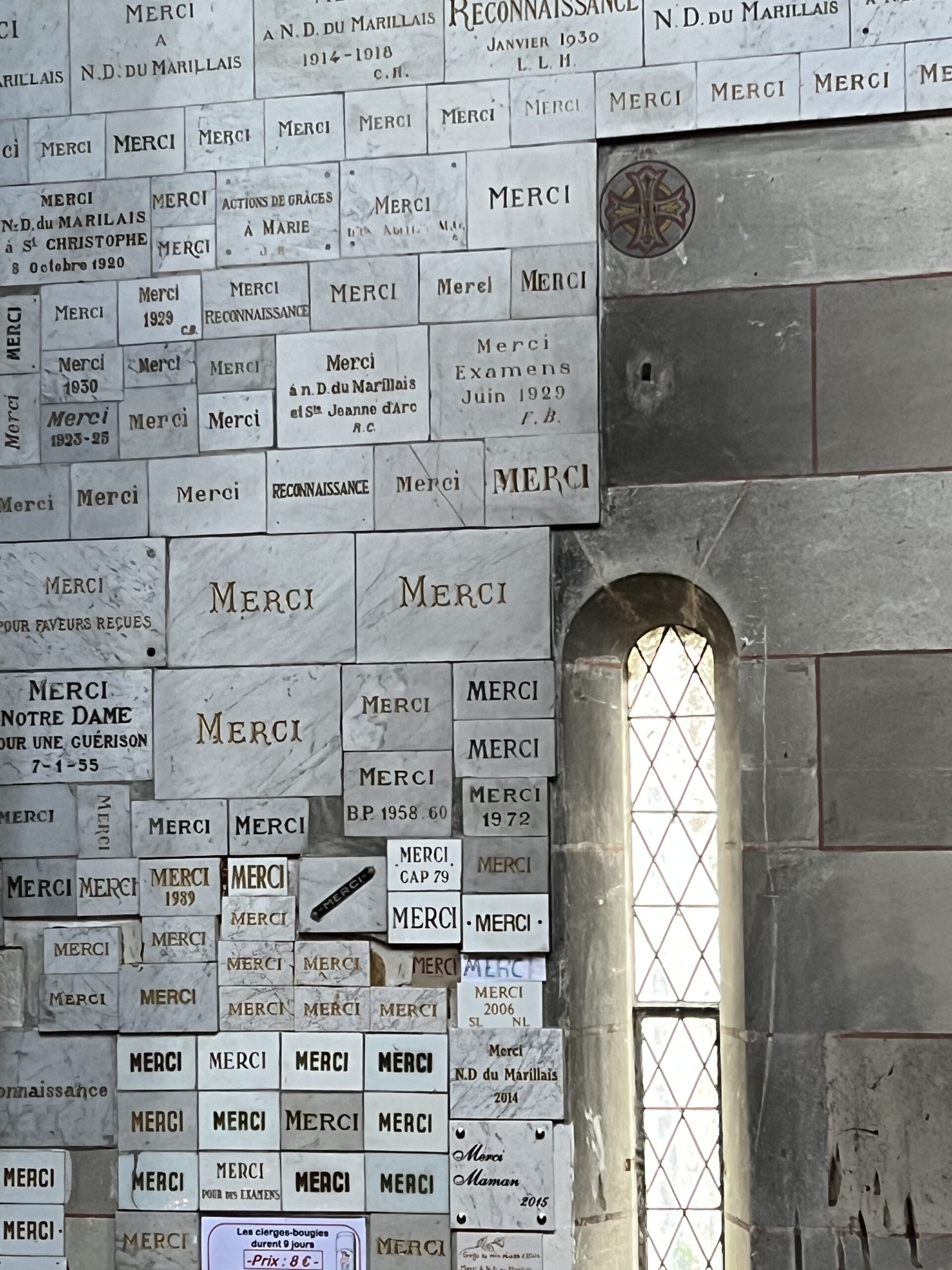
During my walk around the church, I see many expressions of gratitude to Our Lady. Countless is the word of thanks (“Merci”). In the church, I see large stained-glass windows that tell of history, such as the crowning of the statue of Mary and the death of 2,000 people who died for their faith.
The appearance of 430 with the request to celebrate her birthday, I see as the prelude to the decision of the Council of Ephesus (431) that Mary is the Mother of God.
Environment
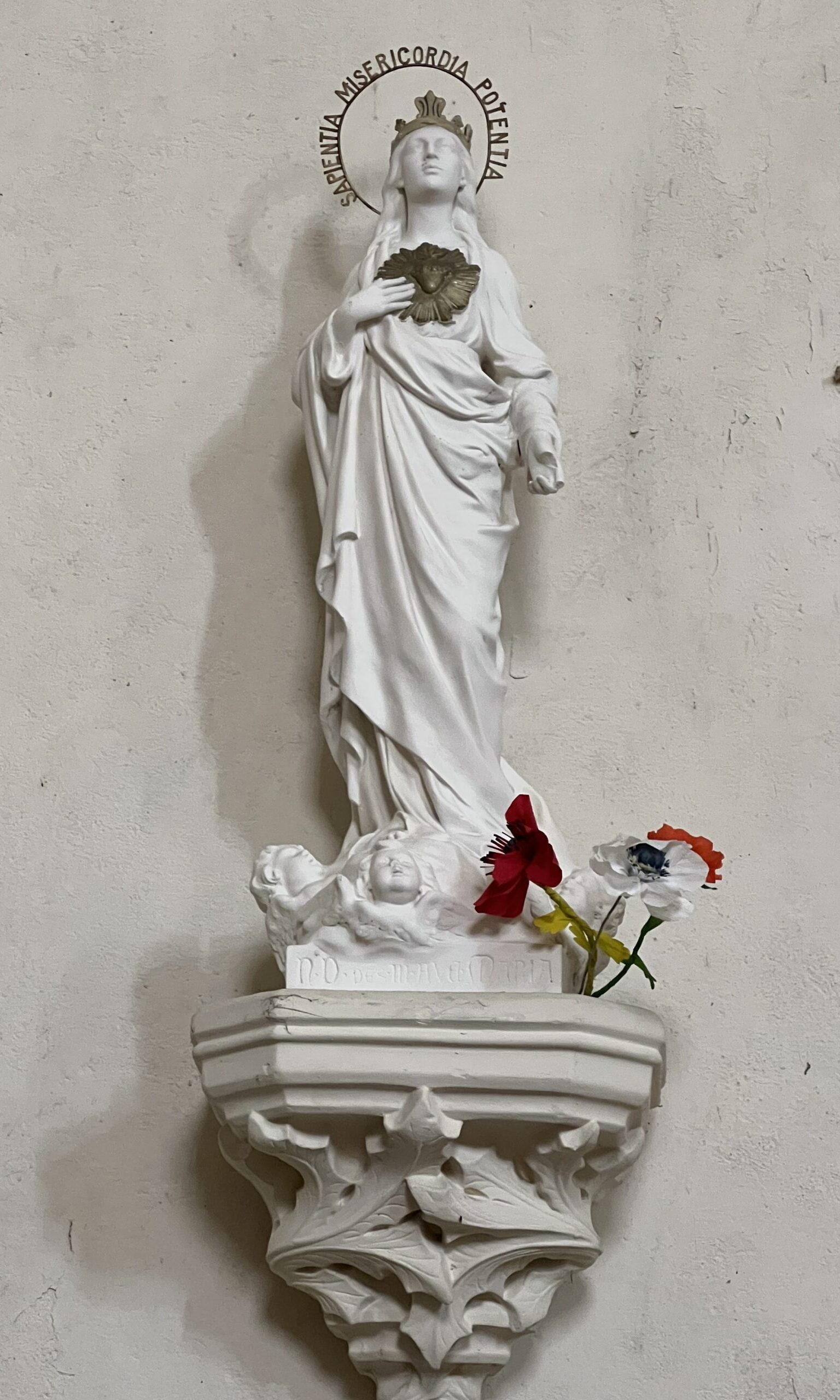
Walks, cycle rides, and car journeys can be made along the rivers Evre and Loire. The landscape is vast with wide-ranging vistas. The large city of Nantes, with its many sights, is 55 km away, and the distance to the old town of Angers is 48 km. In Le Marillais, another house of worship can also be visited just a few hundred metres from the church described above. Here, attention is also paid to the apparition of Mary to Bishop Maurille. There is also an exceptional statue of Mary to be seen there with the Latin text “sapientia misericordia potentia”, which stands for wisdom, mercy, power.
Posted: 24 March 2023
~~~

 Nederlands
  English (UK)
  Deutsch
  Français