History
At the pilgrimage site of Trois-Épis lies the legend of the “three ears of corn” (Trois-Épis). It is 3 May 1491...

Thierry Schoeré, a blacksmith from Orbey, is on horseback, heading to the market in Niedermorschwihr. He passes a large oak tree and sees a statue of Mary. The blacksmith dismounts, kneels before the statue, and prays. Suddenly, he is blinded by a bright light. A little later, he sees in it the beautiful form of a woman. She is wearing long, white veils. It is Our Lady! Mary holds three ears of corn in her right hand and an icicle in her left. She asks him to stand up and not be afraid. The apparition says that the ears of corn represent good things and abundant harvests. The icicle symbolises evil and bad weather. Mary tells Thierry Schoeré that he must go to the village and tell the inhabitants the meaning of the ears of corn and the icicle. He is also to tell them that people must change their ways and come here in procession. The blacksmith sets off for the village. However, he becomes fearful and says nothing to the villagers. He meets Mary again and says he needs a sign. Thierry receives one...
The man comes to the village again, goes to the market and buys a sack of wheat. However, when he wants to lift the sack onto the horse, he cannot manage it. Thierry gets help, and even with several helpers, the sack cannot be moved. The heavy sack of wheat symbolises all the fears that paralyse people. Then Thierry speaks about Mary's message of life, and suddenly he can lift the heavy sack.
A few months after the extraordinary event, a small wooden chapel is built on the site of the apparition. Pilgrims immediately flock to it. Consequently, in 1493, the small chapel is replaced by a larger stone one.
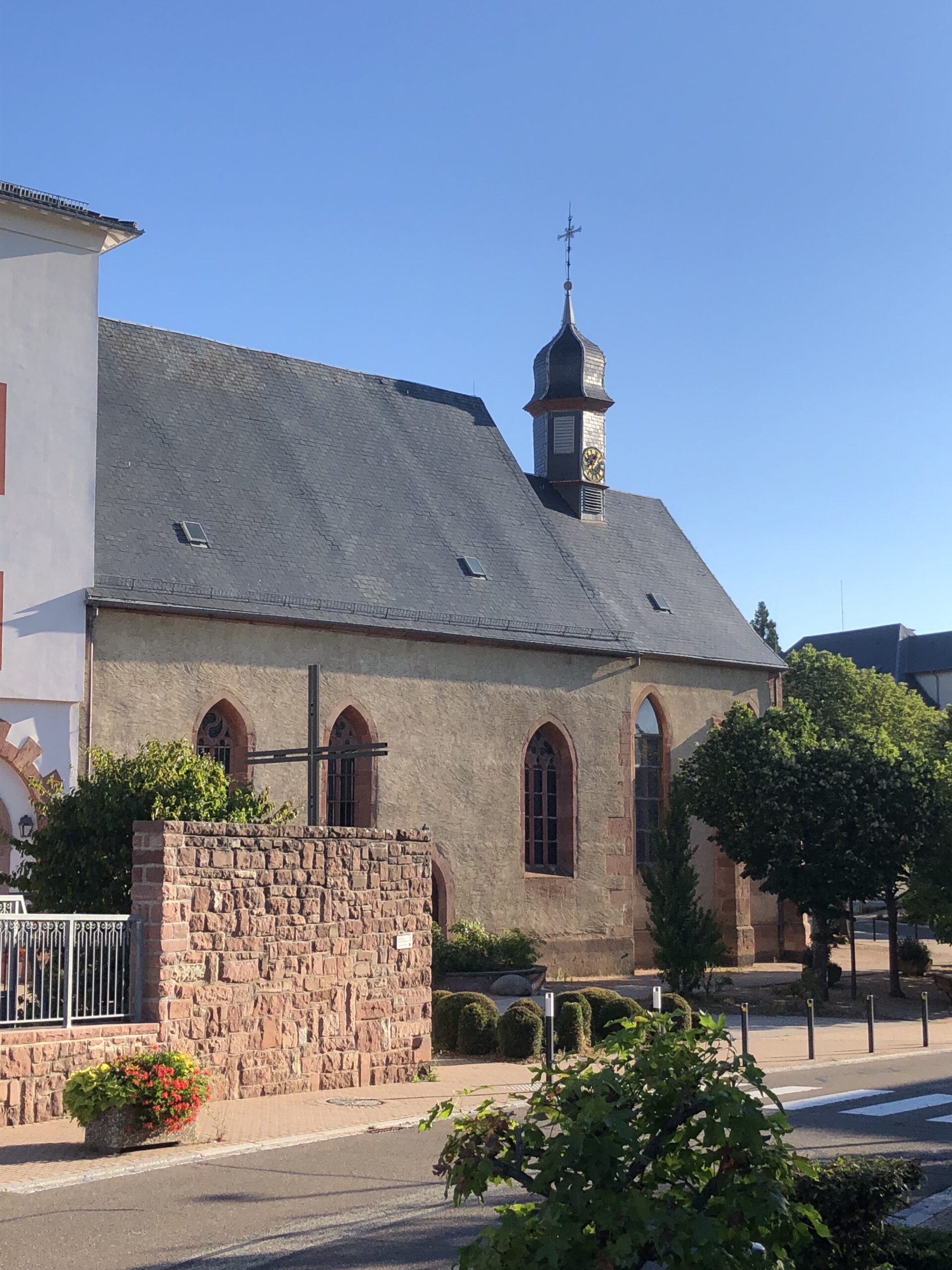
Political developments are bringing tensions and the faithful are coming under pressure. During the Thirty Years' War (1618-1648), a priest and a hermit look after the chapel. In 1636, a fire broke out, destroying the chapel. Shortly afterwards, a new one was built on the same site, which is the current chapel. During the French Revolution (1789-1799), the chapel was closed. It was not until 1804 that it was permitted to open the chapel again and hold services there.
Several orders successively took charge of the chapel and outbuildings. Since 1912, the Redemptorist fathers have been responsible for the chapel.
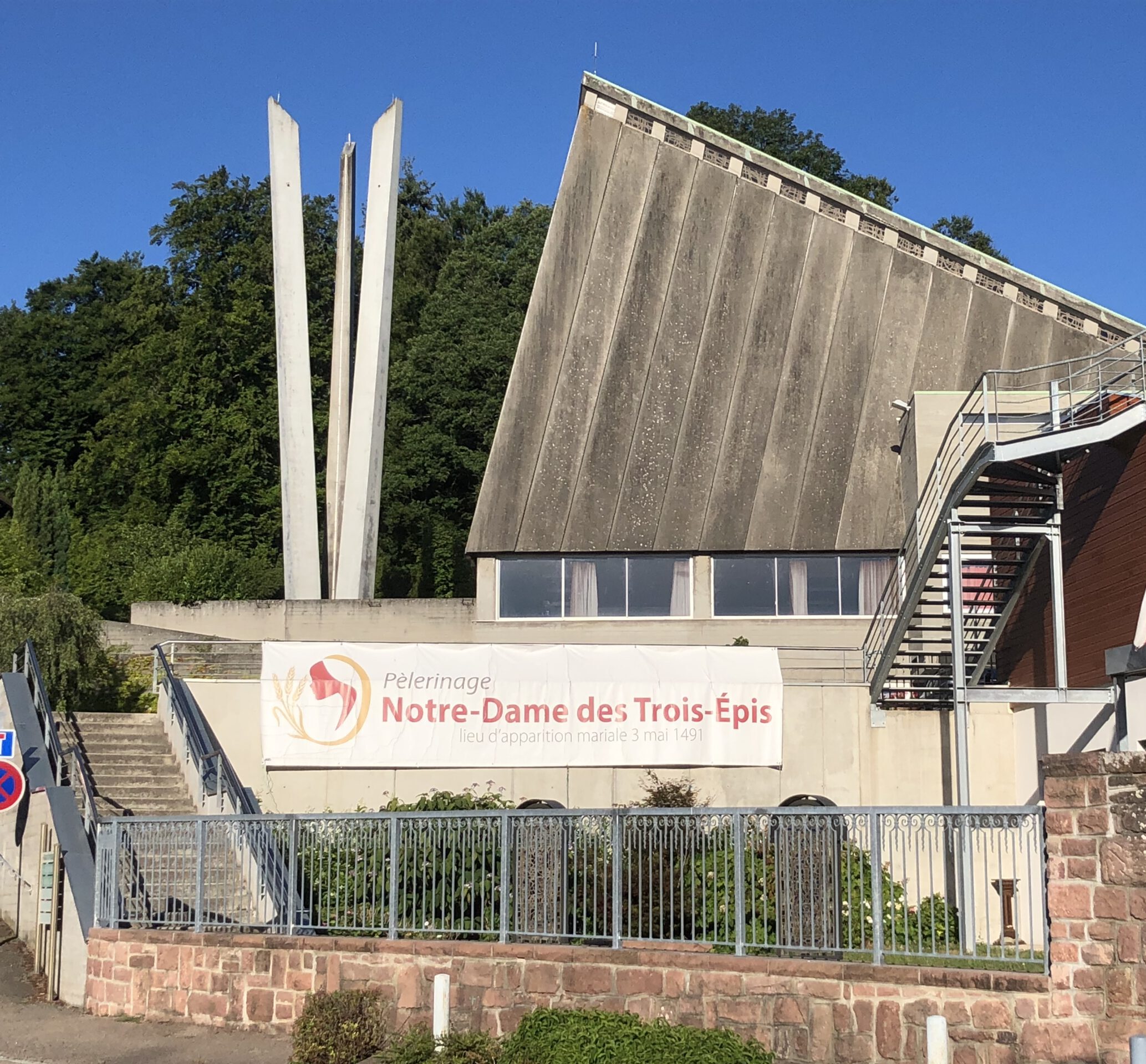
As a result of the growing number of pilgrims, it is decided to expand the sanctuary. The Church of the Annunciation is built near the chapel and is consecrated in 1968.
Pilgrimage site
Trois-Épis is a village with a lot of history and especially a place of prayer. The chapel offers an excellent opportunity for this.
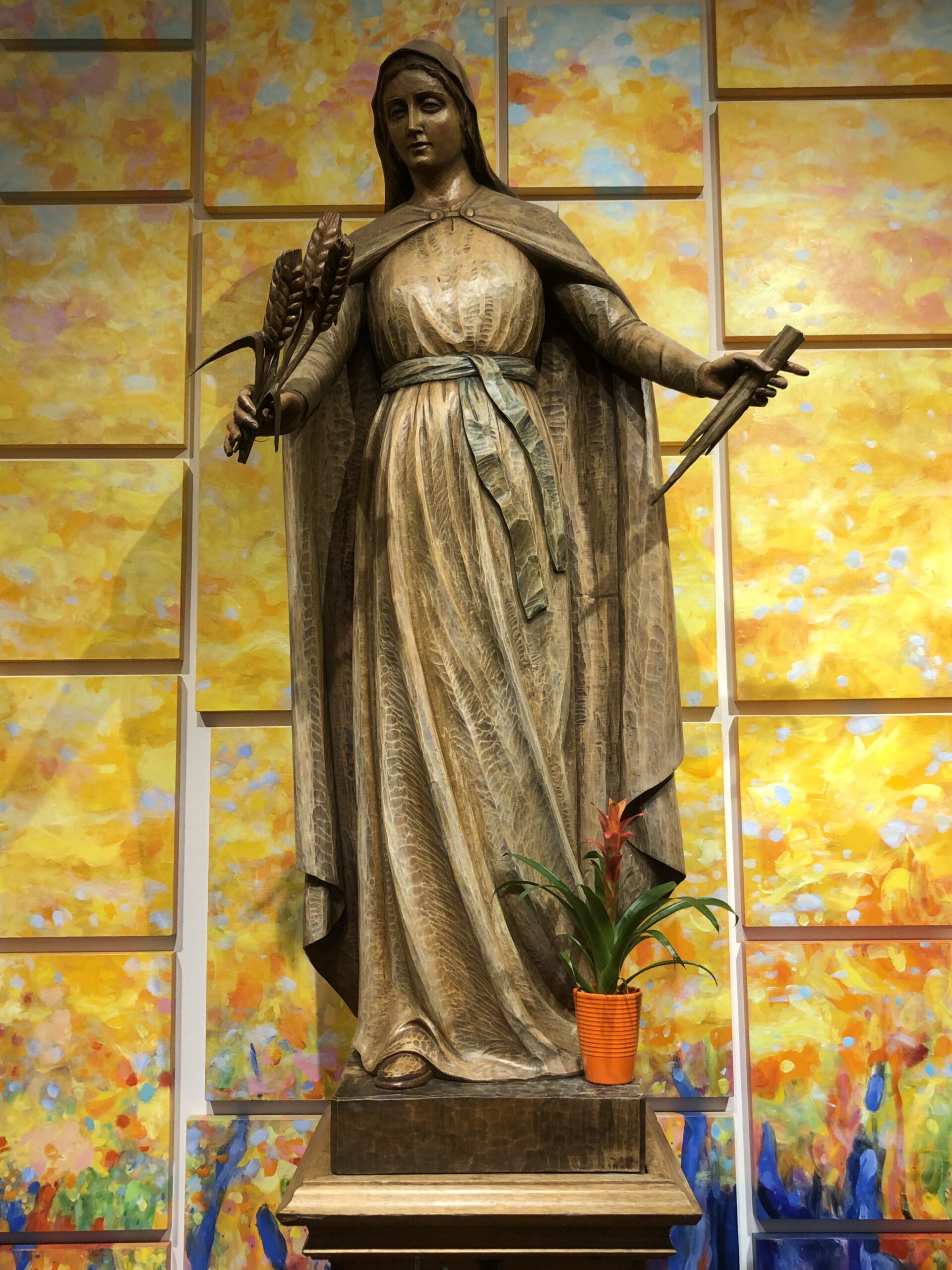
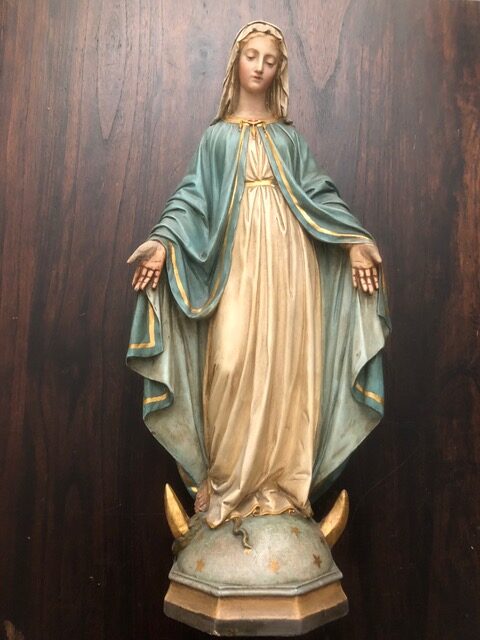
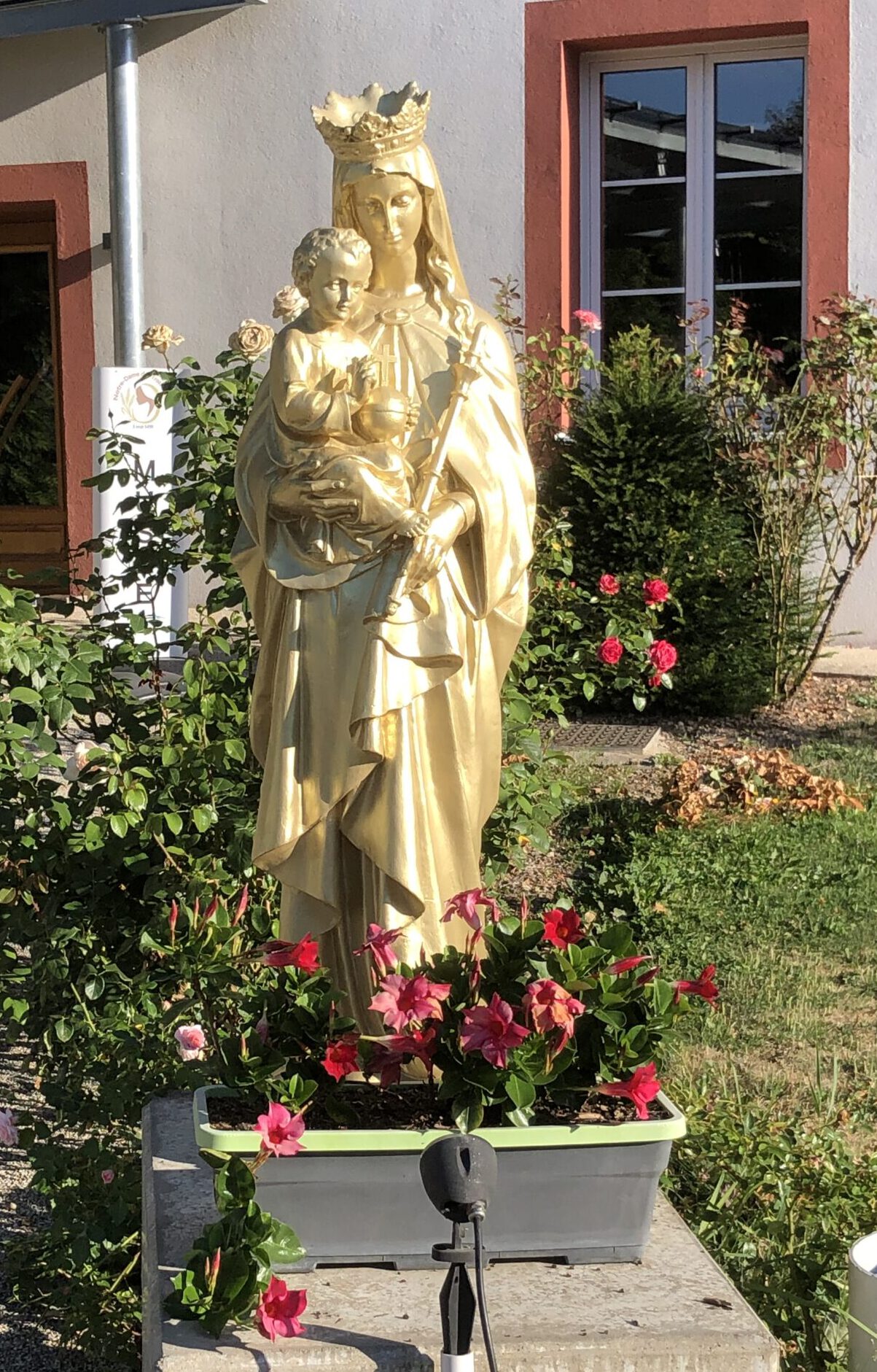
Upon entering the chapel, a large statue of Mary welcomes visitors. Our Lady holds three ears of corn in one hand and an icicle in the other. This is typical of what happened here in 1491.
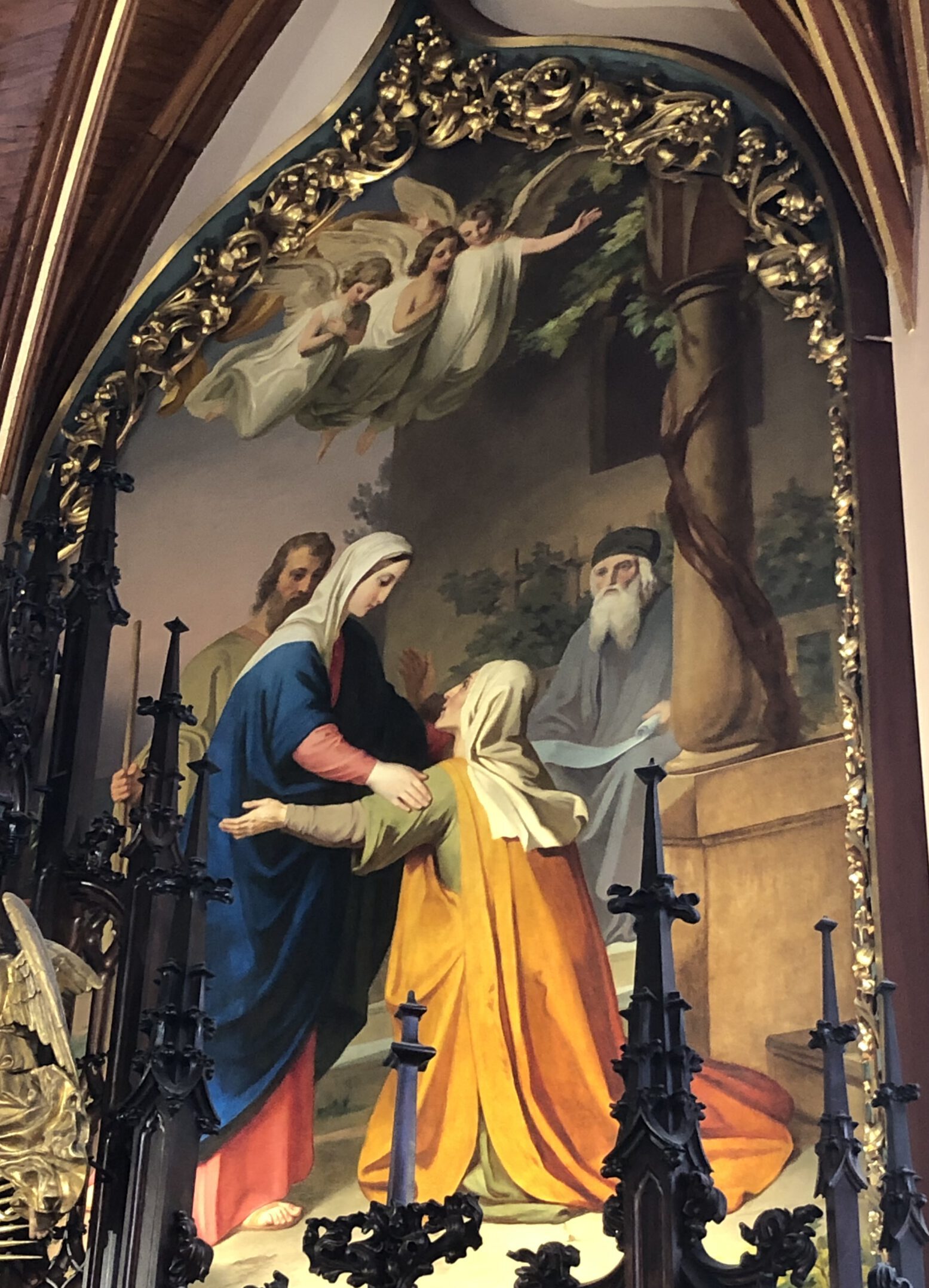
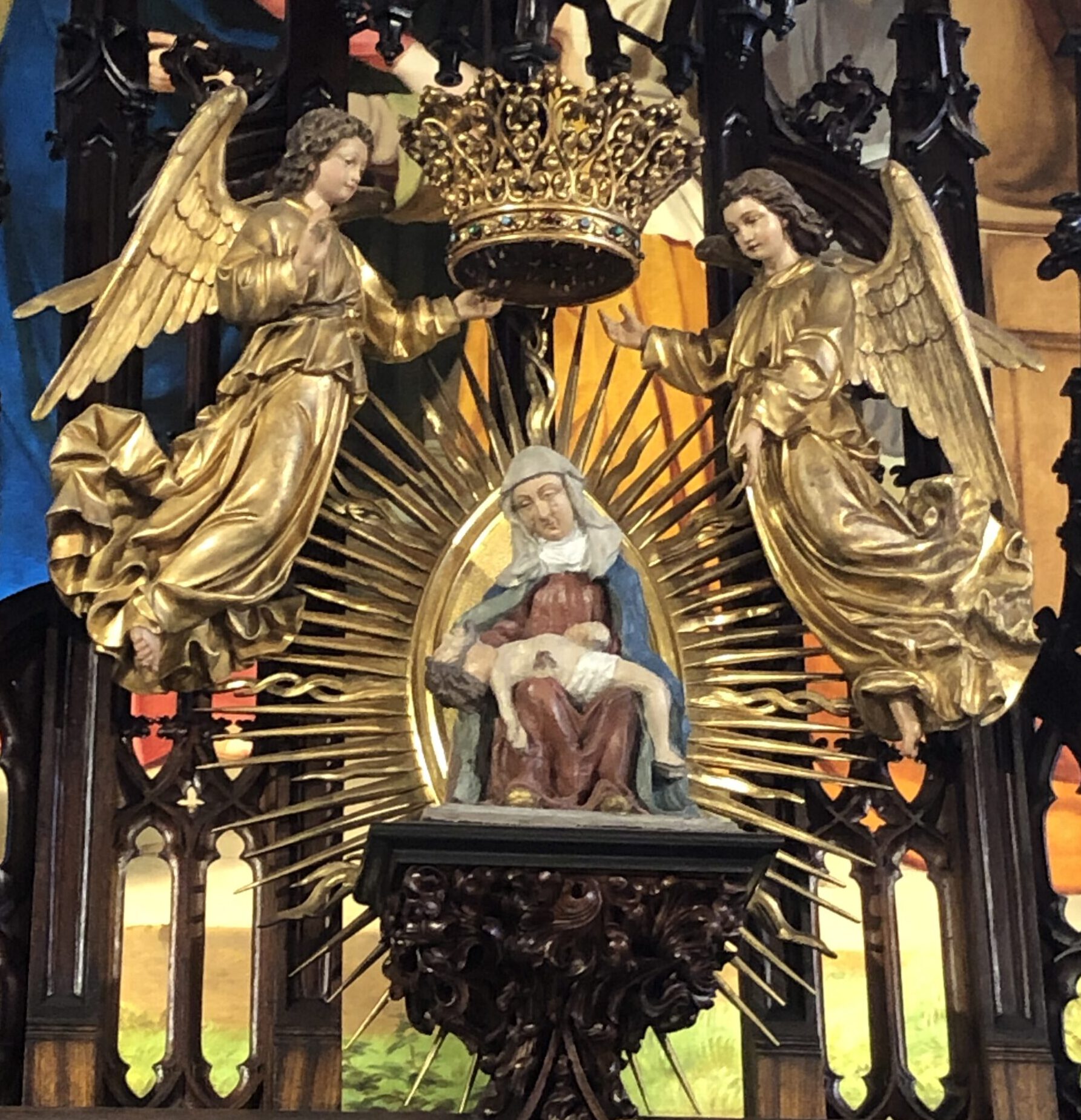
In this apparition site, the space where the high altar stands is precisely the location where Mary visits Thierry Schoeré. A small Pietà from the 15th century can also be seen here. Behind the centuries-old artwork is placed the depiction of Mary's visit to her cousin Elizabeth. The chapel is dedicated to this visit.
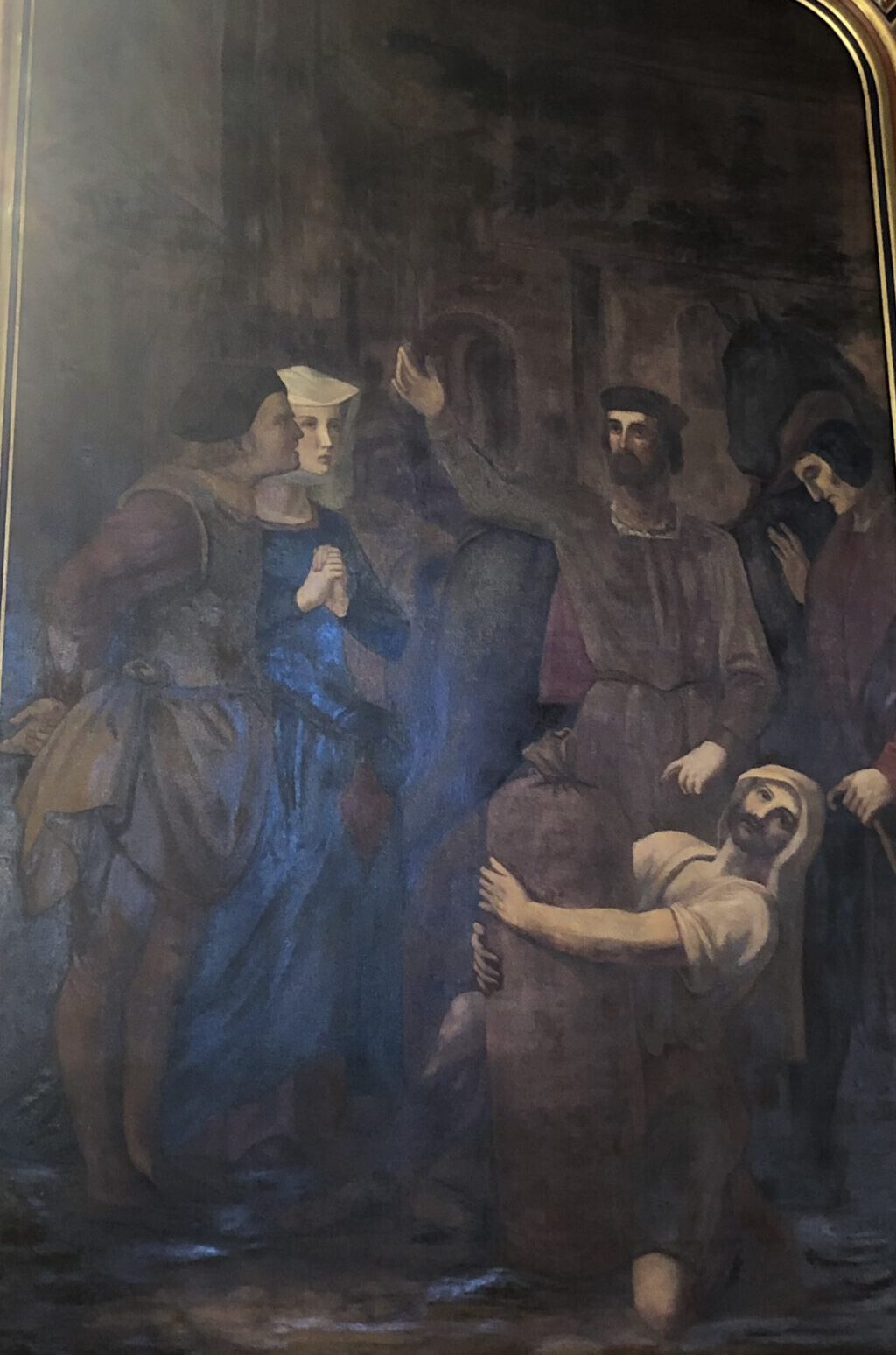
Two large paintings hang on either side of the altar, relating to the apparitions in 1491.
At the back of the chapel stands an old statue of Mary. It was saved during the chapel fire in 1636. Remarkably, the entire chapel was destroyed, but the statue of Our Lady remained unharmed.
Due to the influx of pilgrims, the apparition chapel is becoming too small, and the Annunciation Church is being built nearby. A space to gather with many will fulfil a need. Adjacent to the church is also the starting point for three marked walking routes to experience the mysteries of the rosary through chapels.

On the first Sunday in May, the Day of the Apparitions is celebrated. Another important day in this sanctuary is the Sunday before 15 August, when the Corn Harvest and Charity Festival is held.
The Chapel of Apparitions is open every day.
ACCESSIBILITY
Trois-Épis is located in eastern France, in the “Haut Rhin”, in the heart of Alsace. The village is situated more than 10 kilometres west of Colmar.
The address of the Sanctuary is Rue Thierry Schoeré, number 15, 68410 Trois-Épis.
Current information can be found at www.ndtroisepis.fr.
Experience
In the chapel, I stand on the spot where Mary appeared to the blacksmith Thierry Schoeré. This is a sacred space…
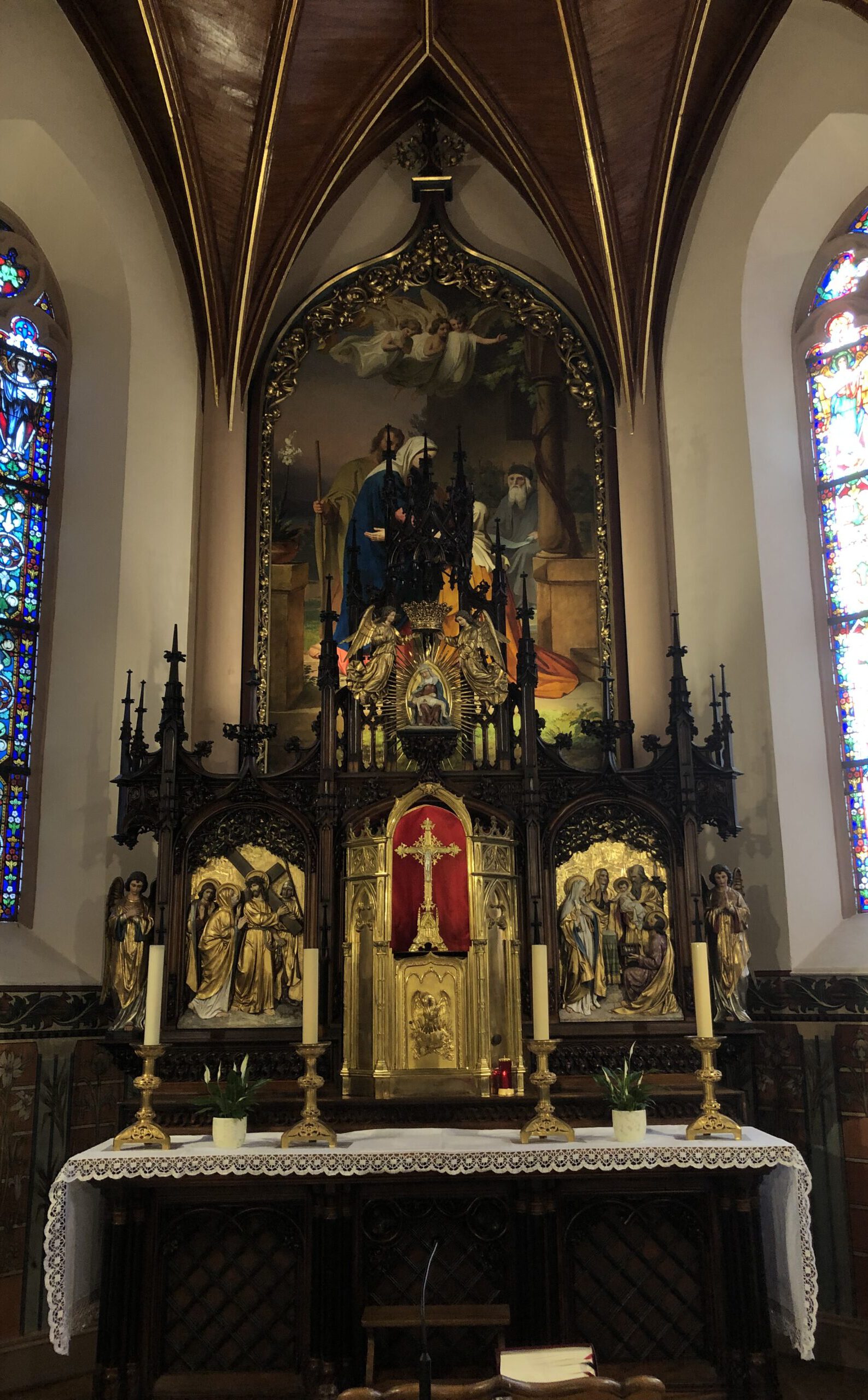

I strike up a conversation with a sister. She tells me about the special event that took place here and is making preparations for the service, which begins in half an hour. She gives me permission to come close to the high altar to take photos. What a lovely sister I meet here. I attend the eucharistic celebration in the chapel. Afterwards, I take a tour of this house of God and see statues, paintings, and many expressions of gratitude to Mary, which are affixed to the walls. At the back of the chapel stands the statue of Mary that survived a fire. Everything was lost, but this statue suffered no damage. A miracle…
Next, I am going to the Church of the Annunciation, but unfortunately, it is closed. Today there are no hundreds of pilgrims, and because of that, the door is shut.
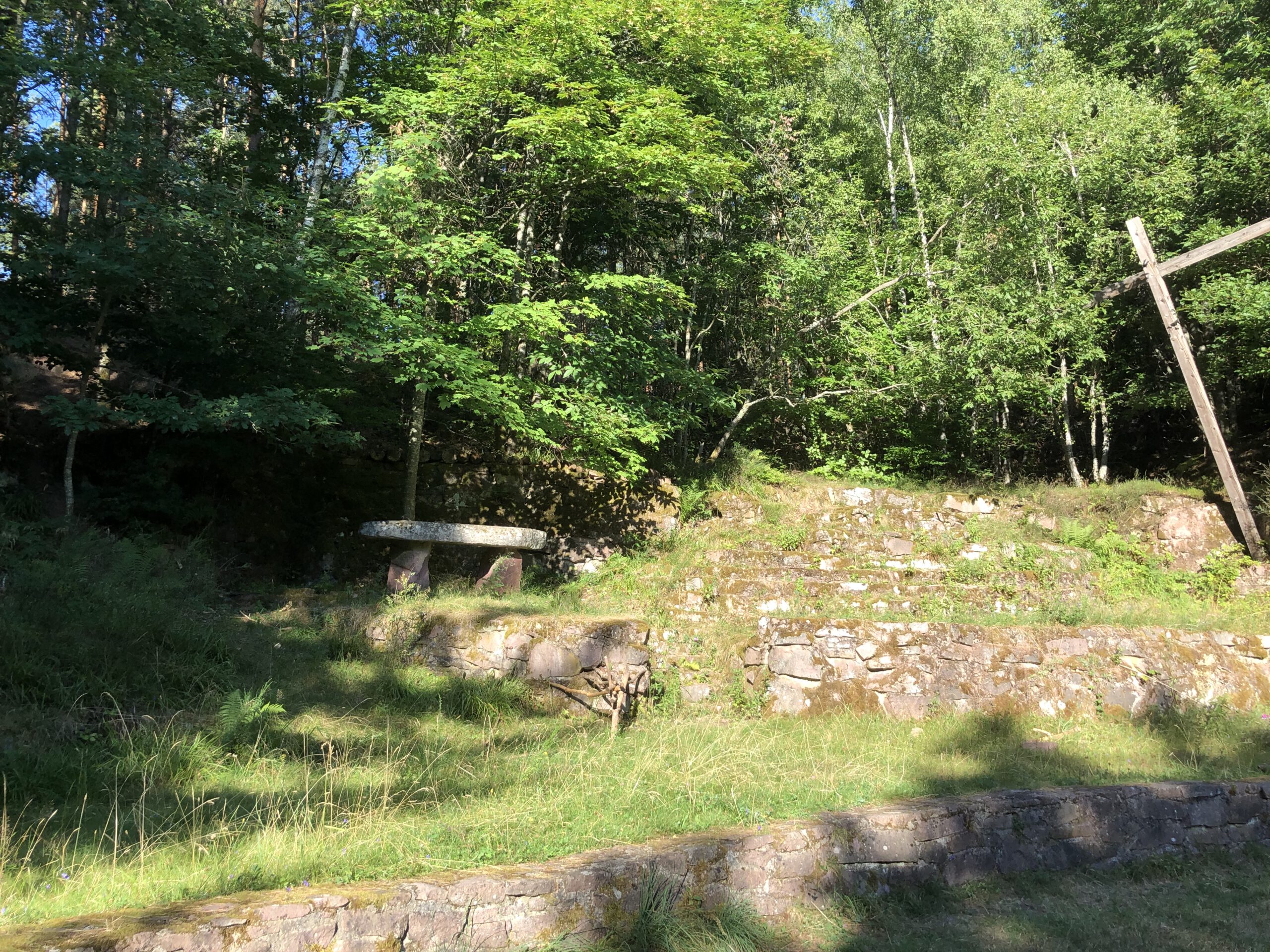
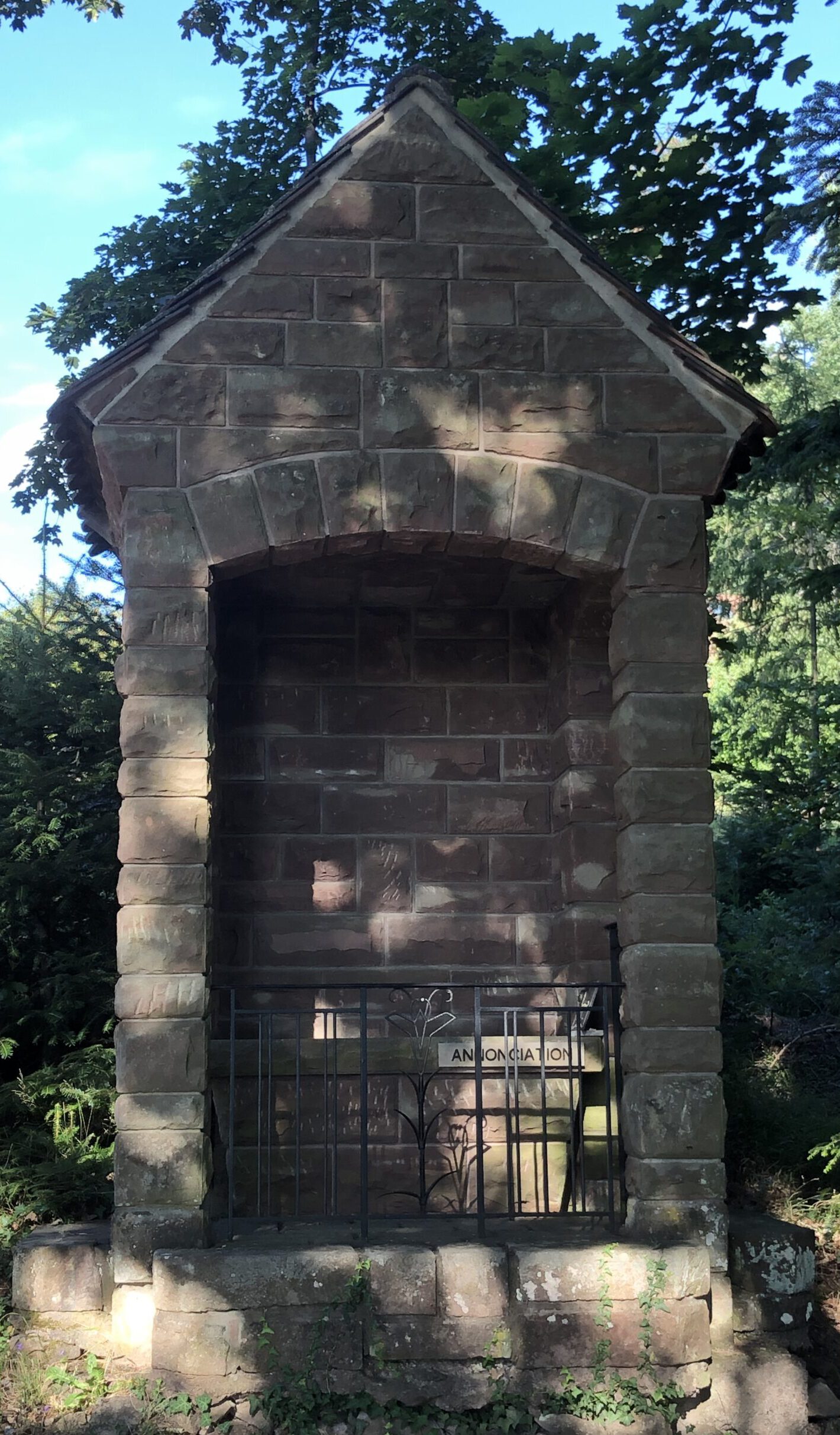
I will also go to the Rosary Park and follow the route past the chapels on the rolling terrain, which is over 600 metres above sea level. All the prayer spots are simply built; only the name of a mystery is mentioned.
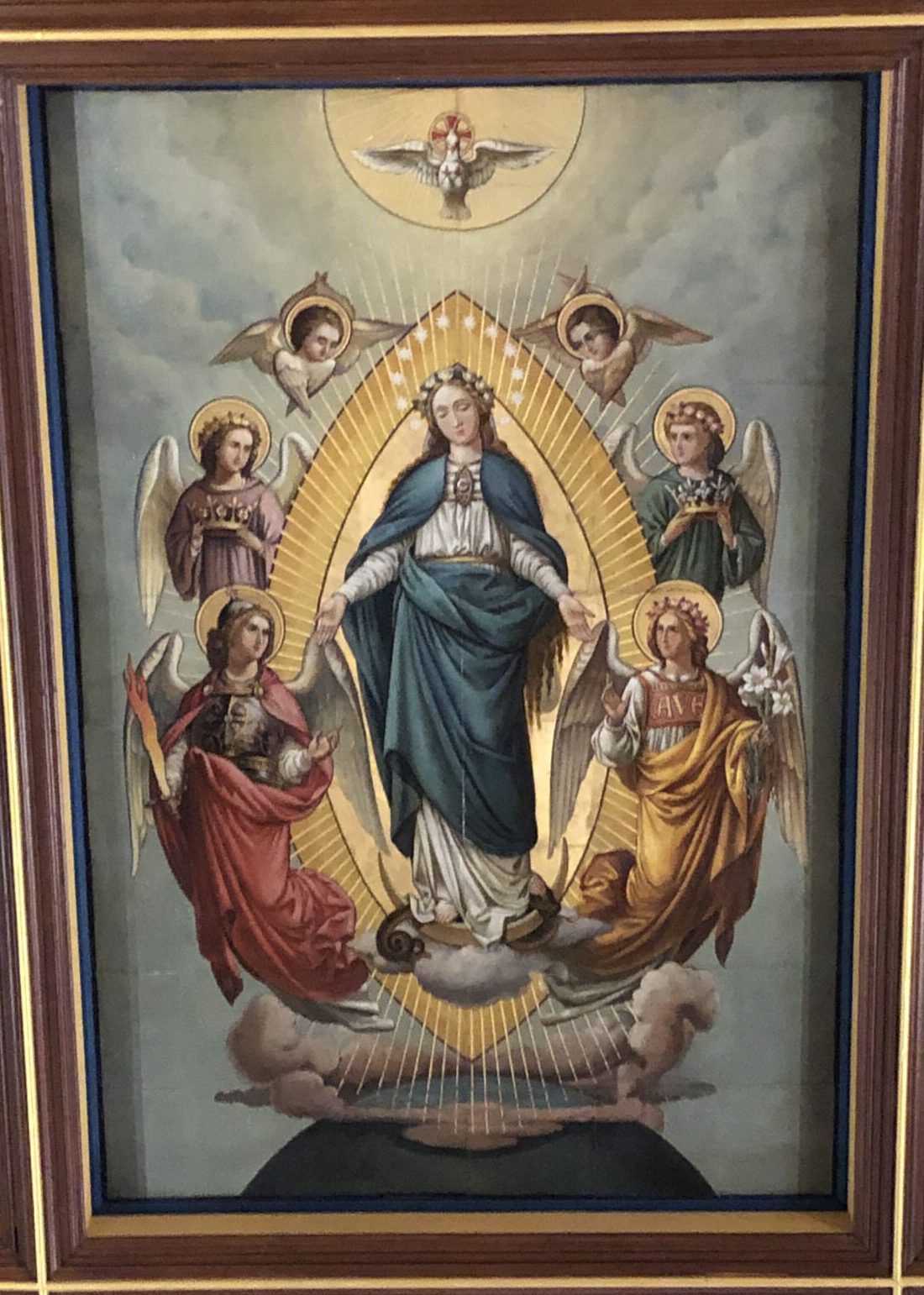
Finally, I'll return to the chapel and pray to Mary for some acquaintances and a good friend, who could certainly use some support. I look up, and the ceiling with its beautiful paintings impresses me. What beauty! I buy a few more candles, for which I do have a purpose, and head to the car. Enriched with a special experience, I leave. What an event this is, a gift that has befallen me.

Environment
Trois-Épis is situated in a beautiful area with many walking and cycling opportunities. 68 km north of Trois-Épis lies the town of Rosheim, which is well worth a visit.
ROSHEIM – CHURCH OF SAINTS PETER AND PAUL, CHURCH OF SAINT ETIENNE and ST. MARY'S CHAPEL
Rosheim is located in the northeast of France, near the border with Germany.
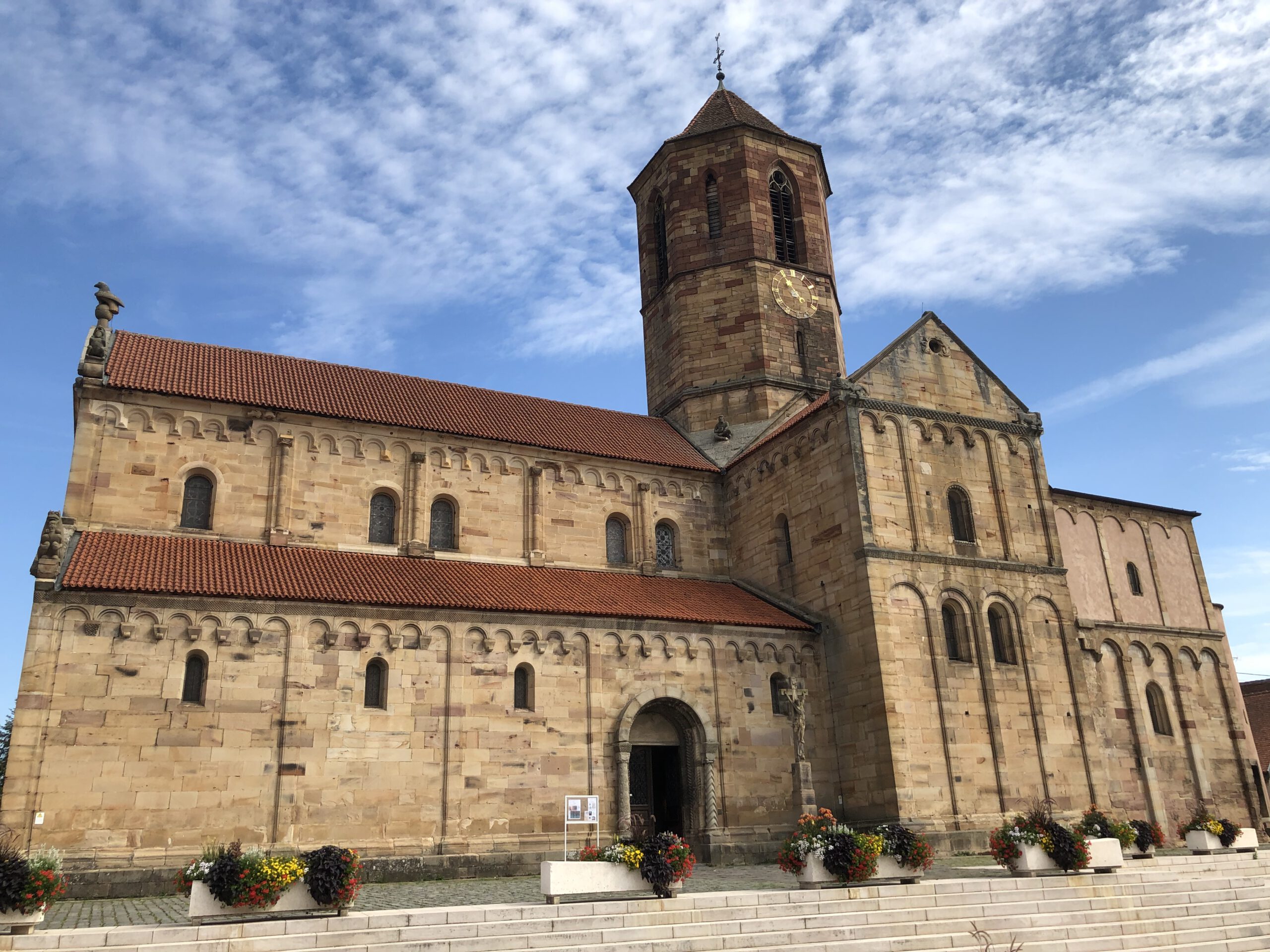
The Romanesque church of Saints Peter and Paul in Rosheim displays 12th-century architecture. The church was built between 1145 and 1167. It is a jewel in Alsace. The church is 36 m long and 37 m high. The colour of the yellow stones is particularly striking. The grand organ is the last work of Andreas Silbermann (1678-1734).
The octagonal bell tower was rebuilt in 1286, after a fire. In the church, the symbols of the 4 evangelists can be seen; the lion of Mark, the eagle of John, the bull of Luke and the angel of Matthew.
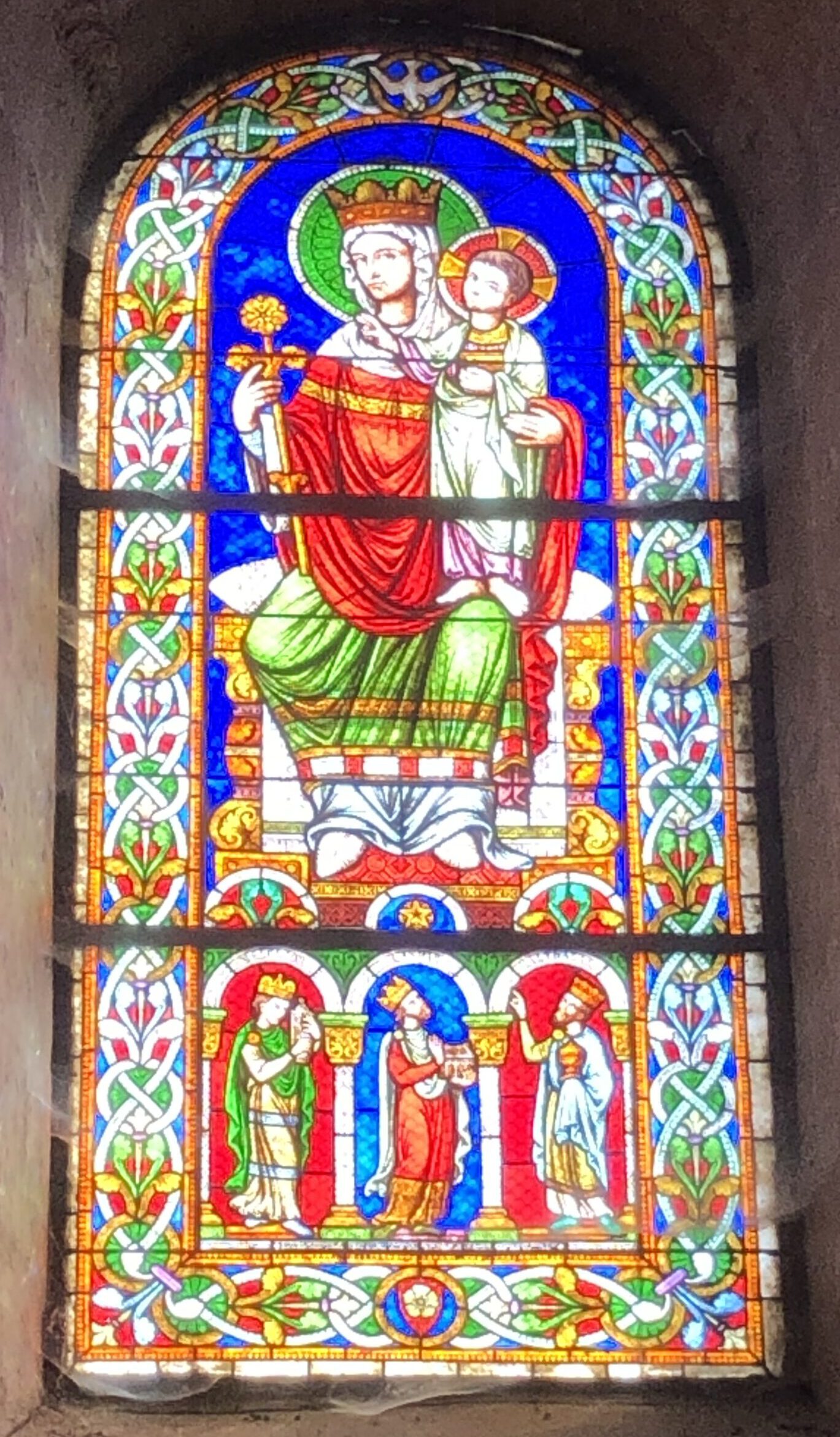
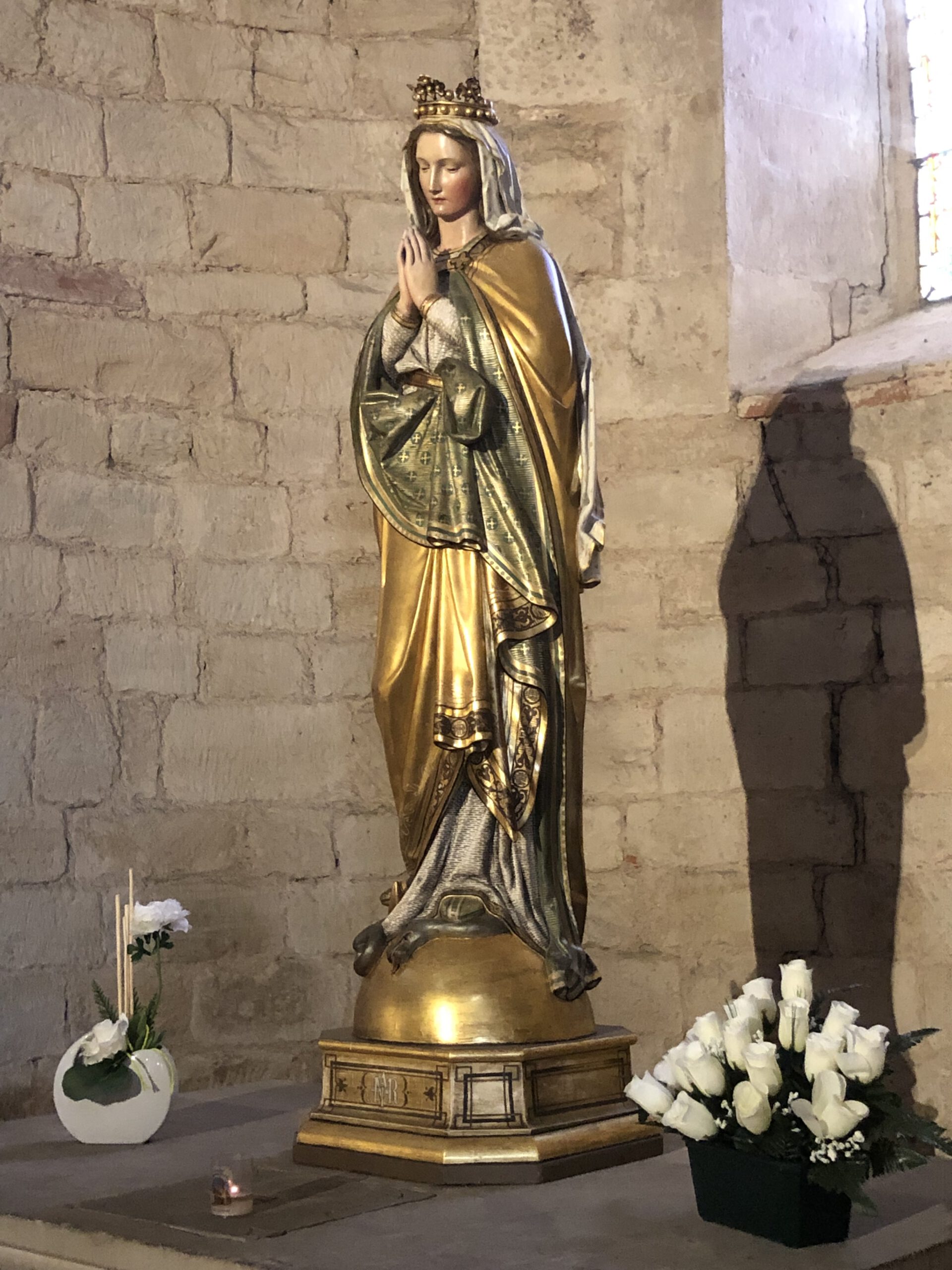
After the Thirty Years' War (1618-1648), the residents sought protection from Mary. This is expressed in Marian devotion in Rosheim.
The church was restored in 1968.
A Lourdes grotto was built behind the church in 1932.
In Rosheim stands the church of Saint-Étienne, a jewel of Neoclassical architecture. The church was built in the 18th century. The Romanesque bell tower, a relic of an old church, dates from the 13th century.
Rossheim also has a Marian chapel dedicated to Our Lady of Good Help (Chapelle Notre-Dame de Bon Secours).
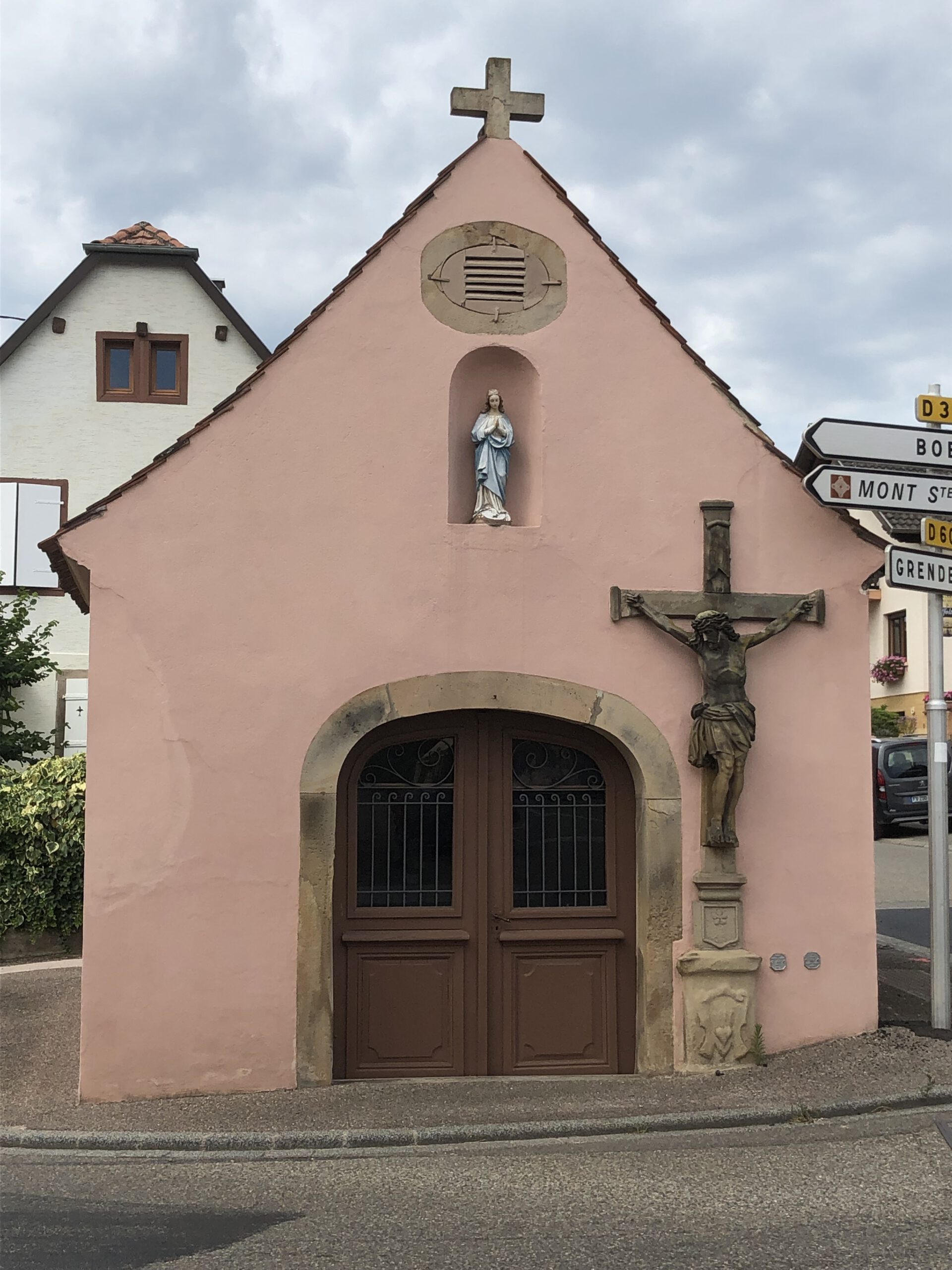
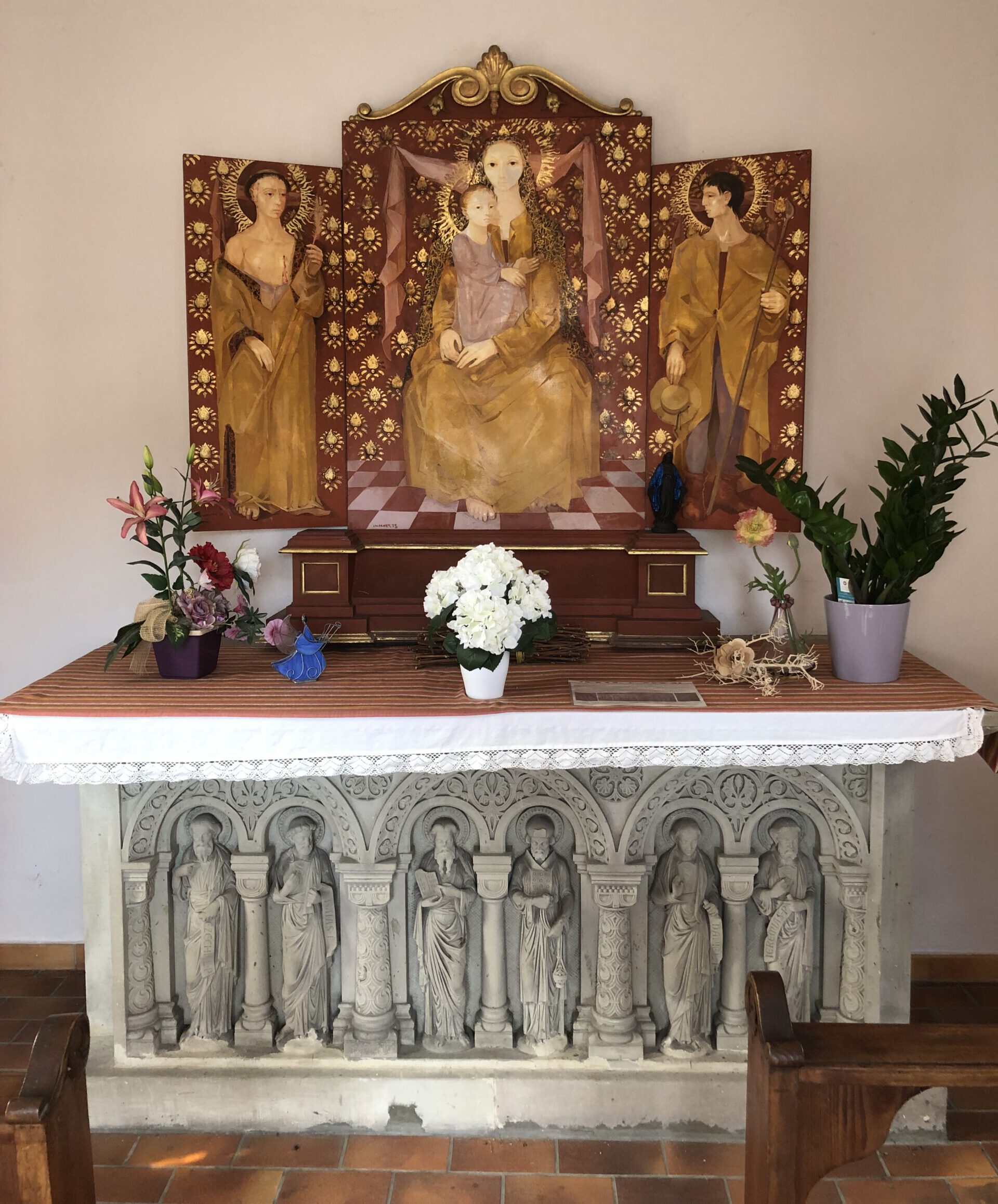
The chapel is located at the corner of Route de Grendelbruch and Route De Boersch. The existence of the chapel was first recorded in 1688. The altar was created by local artist Louis Wagner (1918-1981) for the chapel's restoration in 1978/1979.
Posted: 22 August 2022
Last Modified: 20 February 2024
~~~

 Nederlands
  English (UK)
  Deutsch
  Français