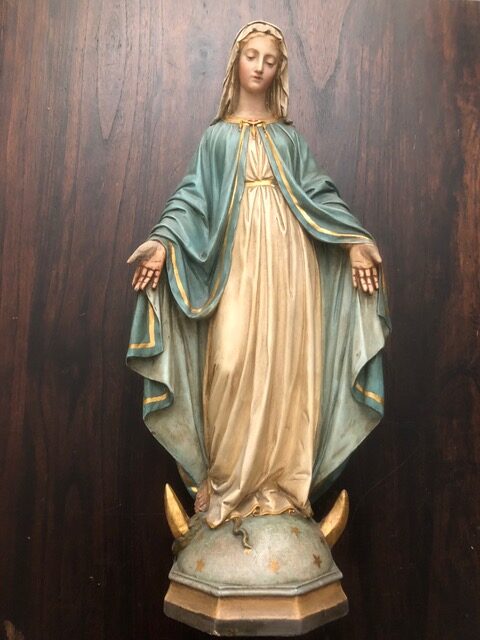
History
The Sanctuary of Our Lady of the Kneeling (“Sanctuaire Notre-Dame de l’Agenouillée”) originates from a special event on 8 September 1550, the feast day of Mary's Nativity.
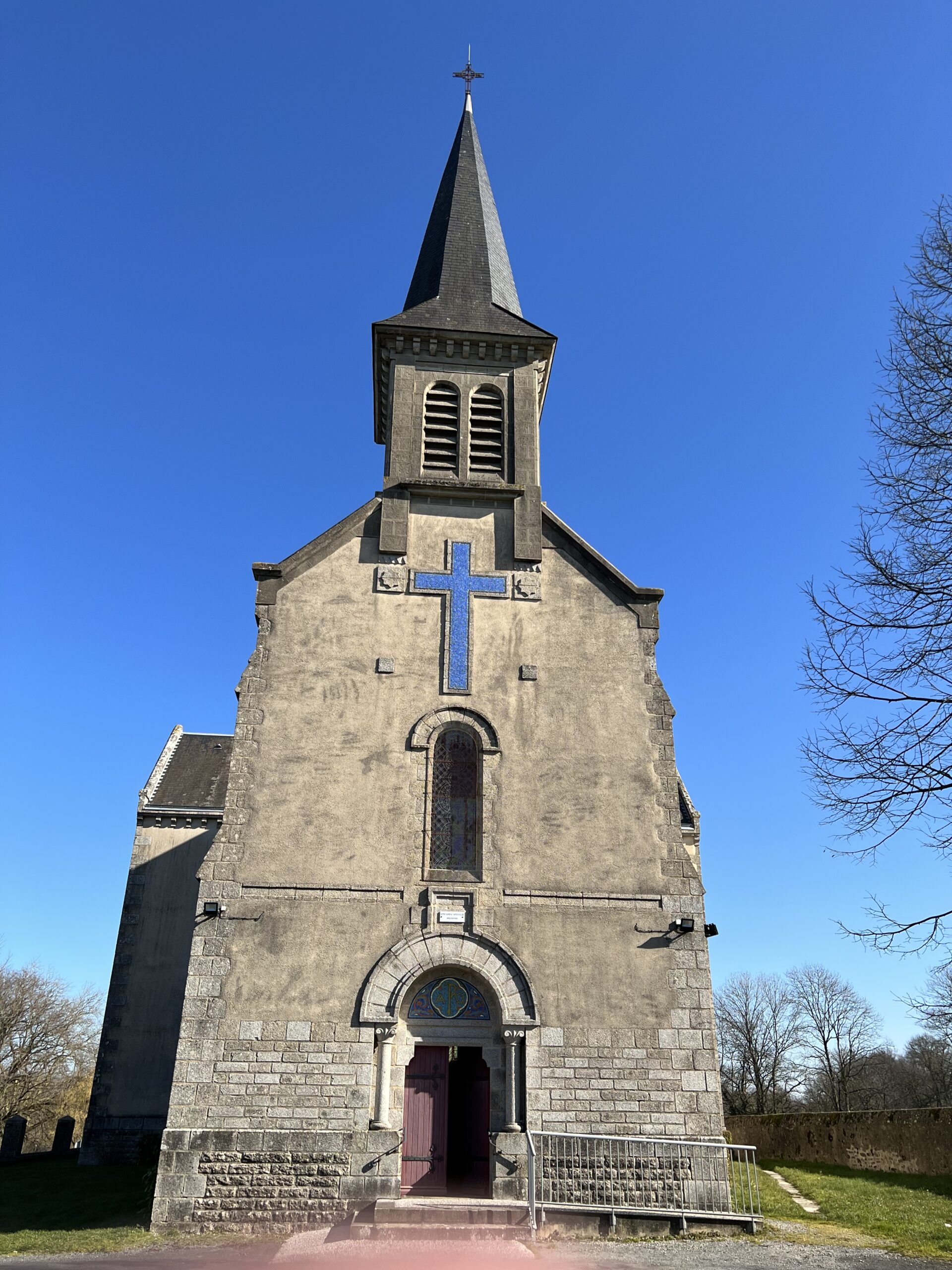
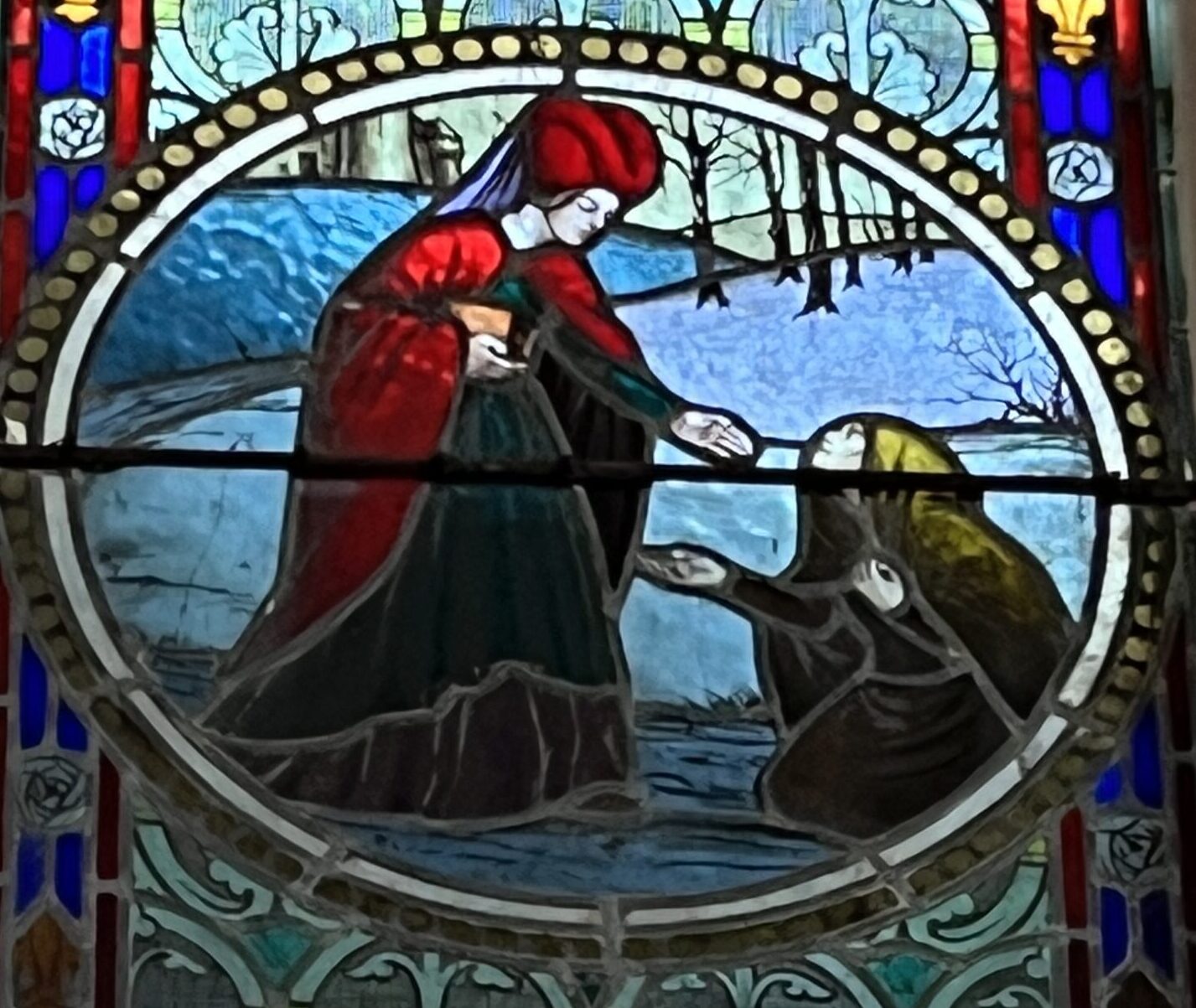
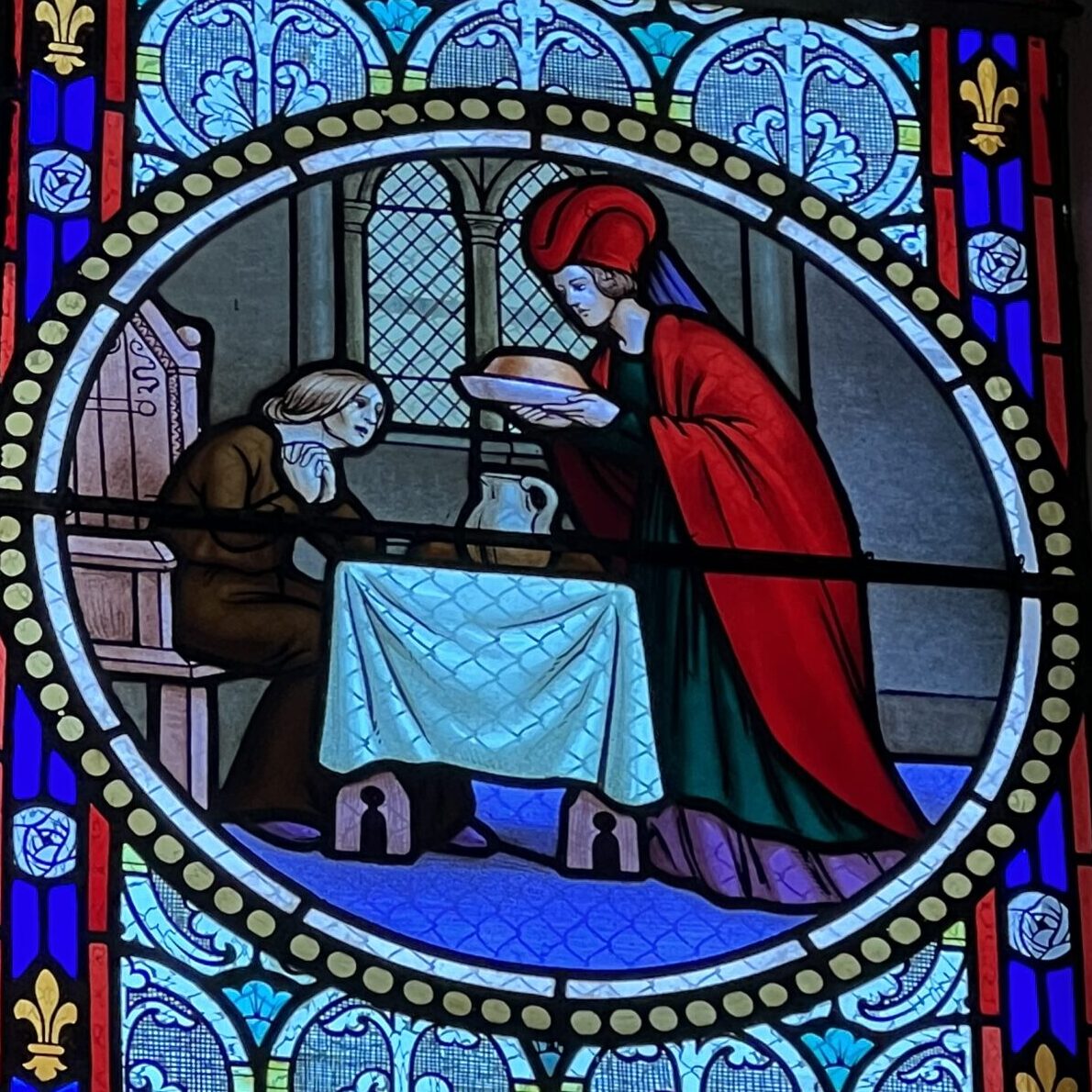
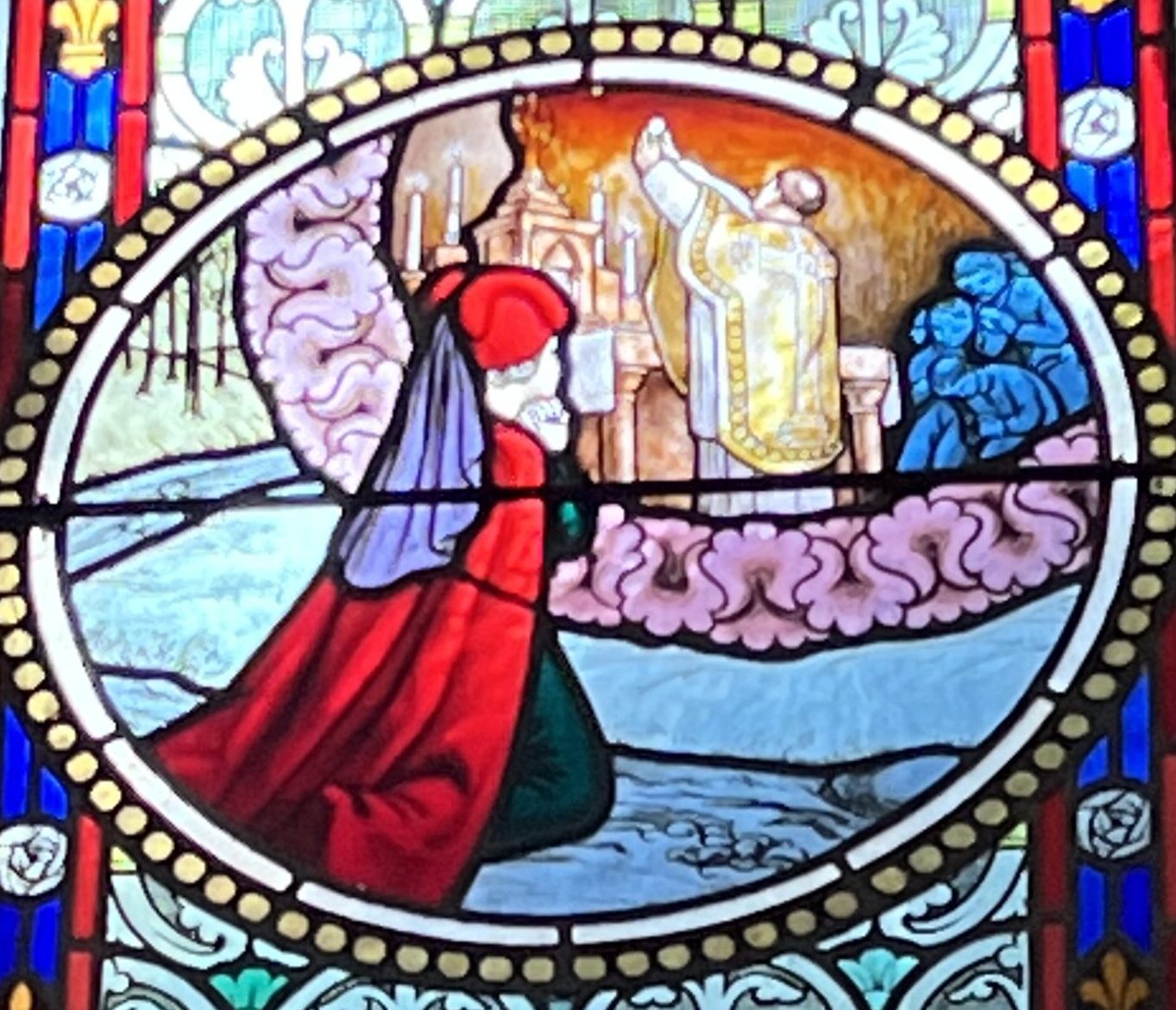
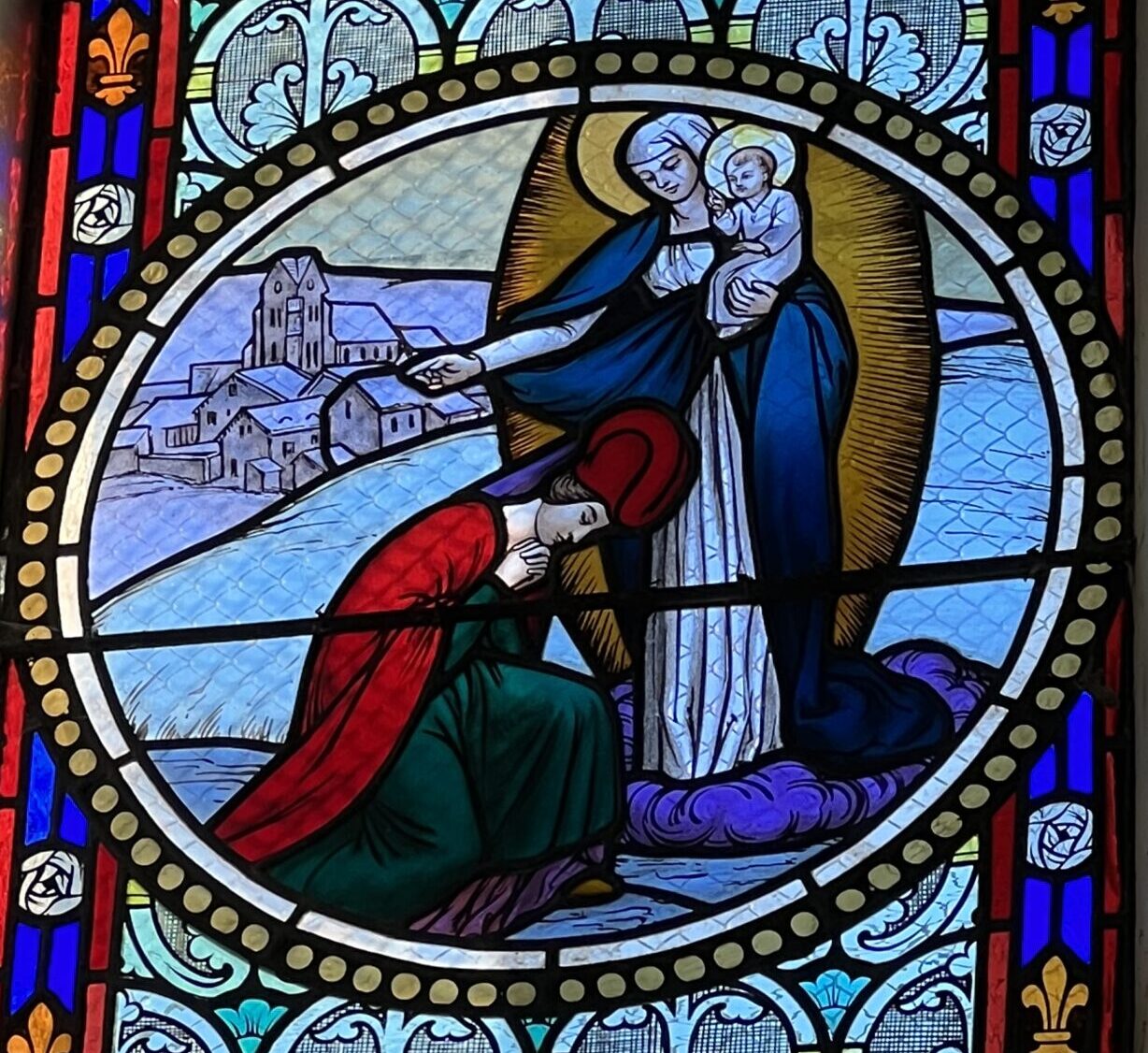
Castle lady Louise Estivalle (Chatelaine de la Poupelinière) is married to Michel Darrot, lord of La Poupelinière. She is on her way from the castle to the church in Azay-sur-Thouet to attend mass. On the way, she suddenly meets a poor woman begging for alms. The woman appears to be a poorly dressed vagrant. Louise takes her back to the castle and gives the woman something to eat and drink. She then sets off for church again. 1.5 km from the church, she hears the bells of the Eucharist ringing and realises she is too late for communion. Louise kneels by the roadside, prays, and asks God and Mary for forgiveness. The woman lifts her head and sees Mary. Our Lady says: “Look, my daughter, towards the church. You will experience the celebration of the Eucharist from here.” Louise looks straight through the church wall and sees the priest elevating the Holy Host. She also sees the decorated and lit altar. She then observes that the Apparition has disappeared and she can no longer see into the church.
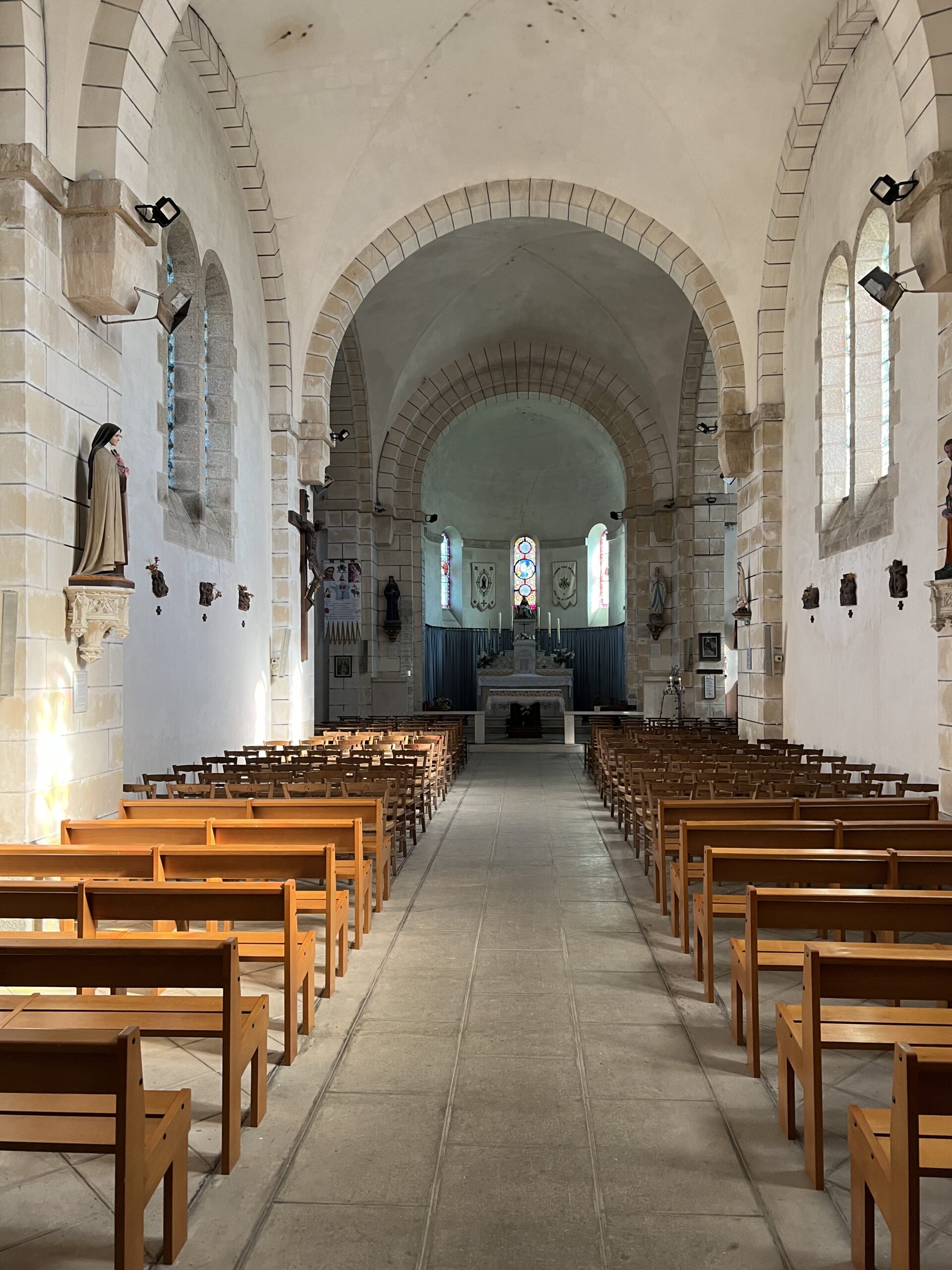
As a thank you for the special encounter with Maria, Louise has a chapel built on the site of the apparition. This will contain a statue of a Pietà, and alongside it, an image of Louise kneeling before Maria. The statue of Mary venerated in the church dates from 1892. The chapel becomes a place of pilgrimage.
In 1877, Father Bonneau became the parish priest of Azay-sur-Thouet. At the end of the 19th century, he reported several miraculous healings, including:
A woman who could no longer walk was taken to the chapel, where she prayed a great deal, and was able to walk home.
A girl cannot stand due to back pain. Her parents partake in a novena to Our Lady of [Kneeling/Intercession - the specific epithet "den Knieling" is not standard and requires interpretation, "Kneeling" is a literal translation but "Intercession" might be more thematically appropriate in context] and the girl is healed.
Another remarkable event occurred in 1903. There was a prolonged, exceptional drought, and the harvests were in danger. A procession was held to the chapel, attended by people from all over the region. At the end of the procession, Mass was celebrated in the chapel, and it began to rain.
In 1908, Pius X, Pope from 1903-1914, born Giuseppe Melchiore Sarto (1835-1914), granted an indulgence to anyone who came to pray in the chapel. An indulgence is the remission of temporal punishment for sins in the Roman Catholic Church.
In 1892, construction began on the current, large chapel, which was erected opposite the first chapel. In 1902, work stopped due to a lack of financial resources. In 1913, the chapel was nearly complete. The northern transept, bell tower, and Calvary were initiated by Father Muratet of Azay-sur-Thouet, who was priest there between 1919 and 1954. He also commissioned the stained-glass windows of the chancel. In 1923, this work was completed by master glassblower Georges Merklen (+1925). In 1956, the Stations of the Cross were executed. This work was by Robert Damas (1913-1980).
Pilgrimage site
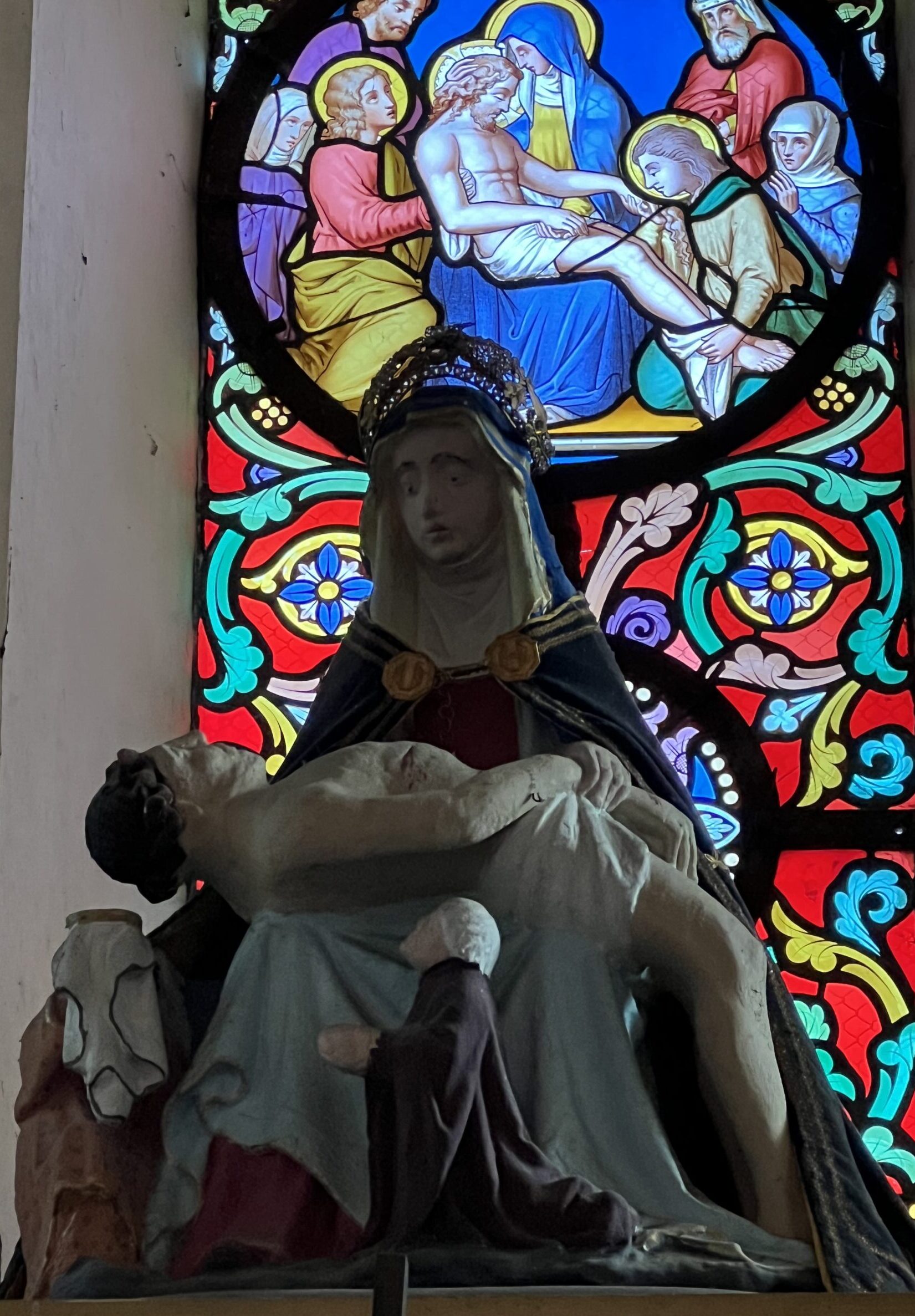
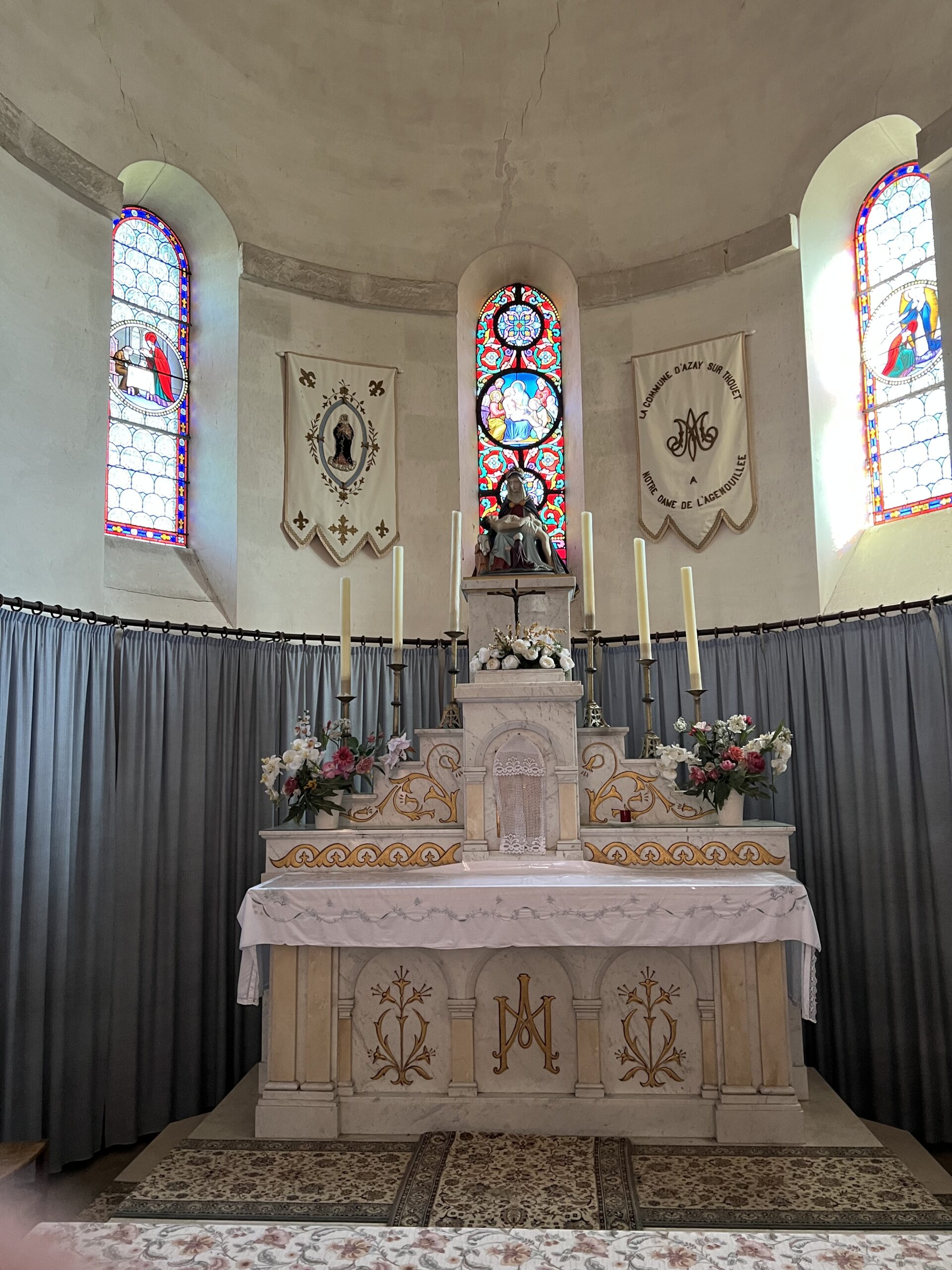
The Chapel of Our Lady of the Kneeling displays much beauty, including a statue of Mary and stained-glass windows. In the apse of the chancel is a stained-glass window by Denis de Nantes. It was donated by pastor Dru. It depicts Our Lady of Mercy surrounded by Saint John and holy women.
For visitors to the chapel, there is the miraculous statue, a pieta with four images beneath it. It is a polychrome statue from the 16th century and weighs 52 kg. Mother Mary holds the body of her Son on her knees. An angel catches Jesus's drops of blood. At the foot of the bed, the castle lady kneels in prayer. This is the origin of the shrine of the “Kneeling Lady”.
Particularly well-characterised stained-glass windows refer to the origin of this sanctuary.
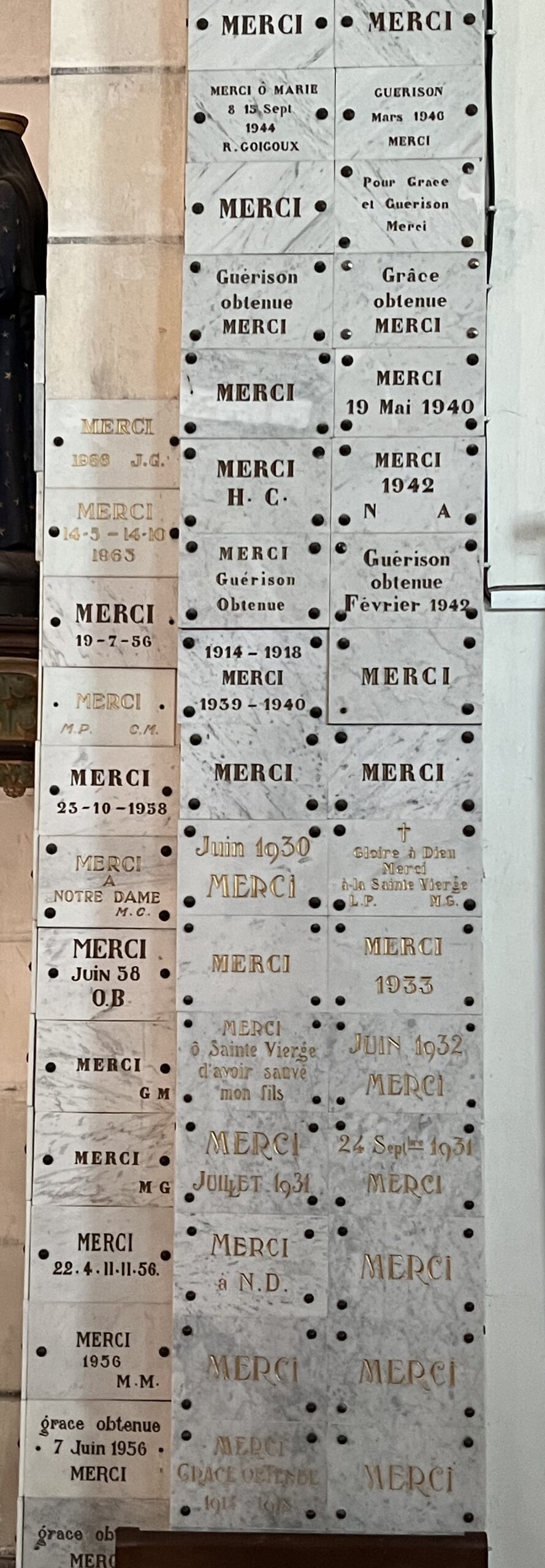
In the church, many testimonials of gratitude to Mary have been placed. Countless times can the word “merci” be seen.
The chapel is open daily.
ACCESSIBILITY
Azay-sur-Thouet lies in the west-central part of France, 40 km north of the town of Niort. The village is situated 90 km west of Châtellerault. The chapel is located just outside Azay-sur-Thouet on the road to Secondigny, in a hilly landscape.
Address: L’Agenouillée 1, 79130 Azay-sur-Thouet.
Current information can be found at www.paroissesaintjacques79.fr.
Experience
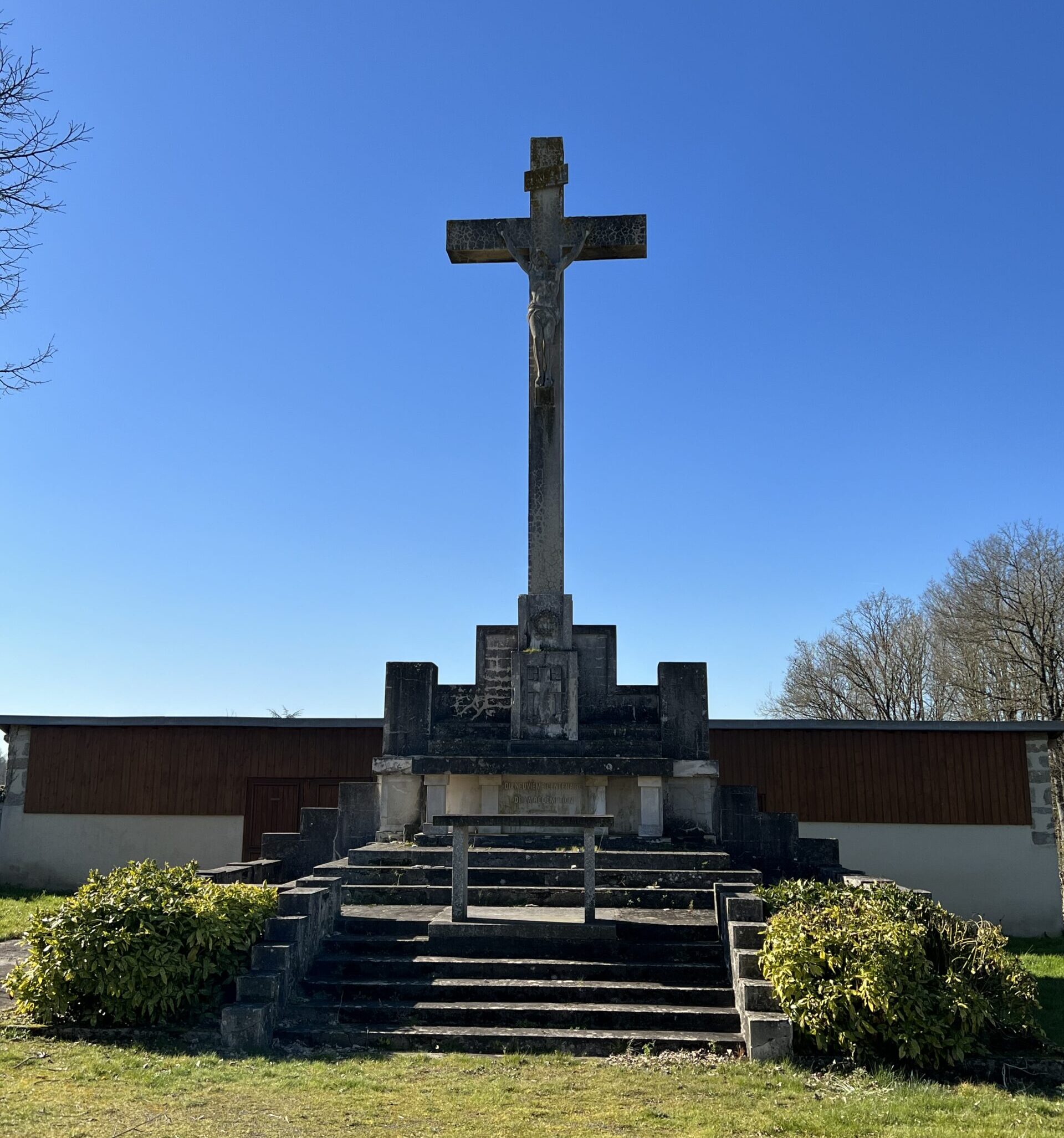
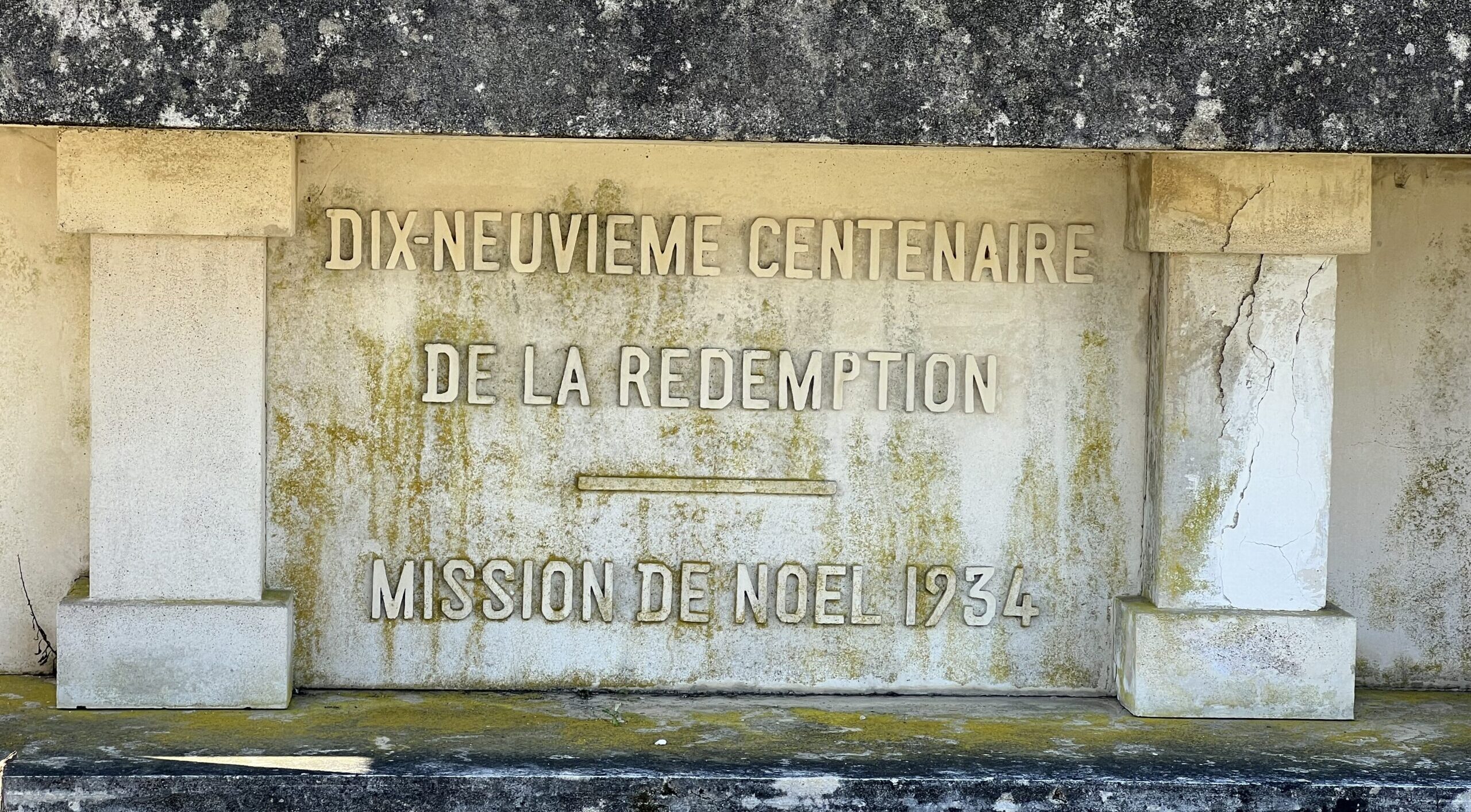
Opposite the church entrance, I see a large cross and walk towards it. It is a memorial from 1934 and refers to the death of Jesus. At the bottom, I see the text “dix-neuvième centenaire de la redemption”, which in French means “nineteenth centenary of the redemption”. Further on are the words “mission de noël 1934”, meaning “Christmas mission 1934”.
In the church, I admire the statue of the Pietà and see the kneeling castle lady at the bottom. I also linger for a long time looking at the stained-glass windows which refer to the encounter of the castle lady with the poor woman and with the apparition. What moves me most is the depiction with the kneeling castle lady and Mary.
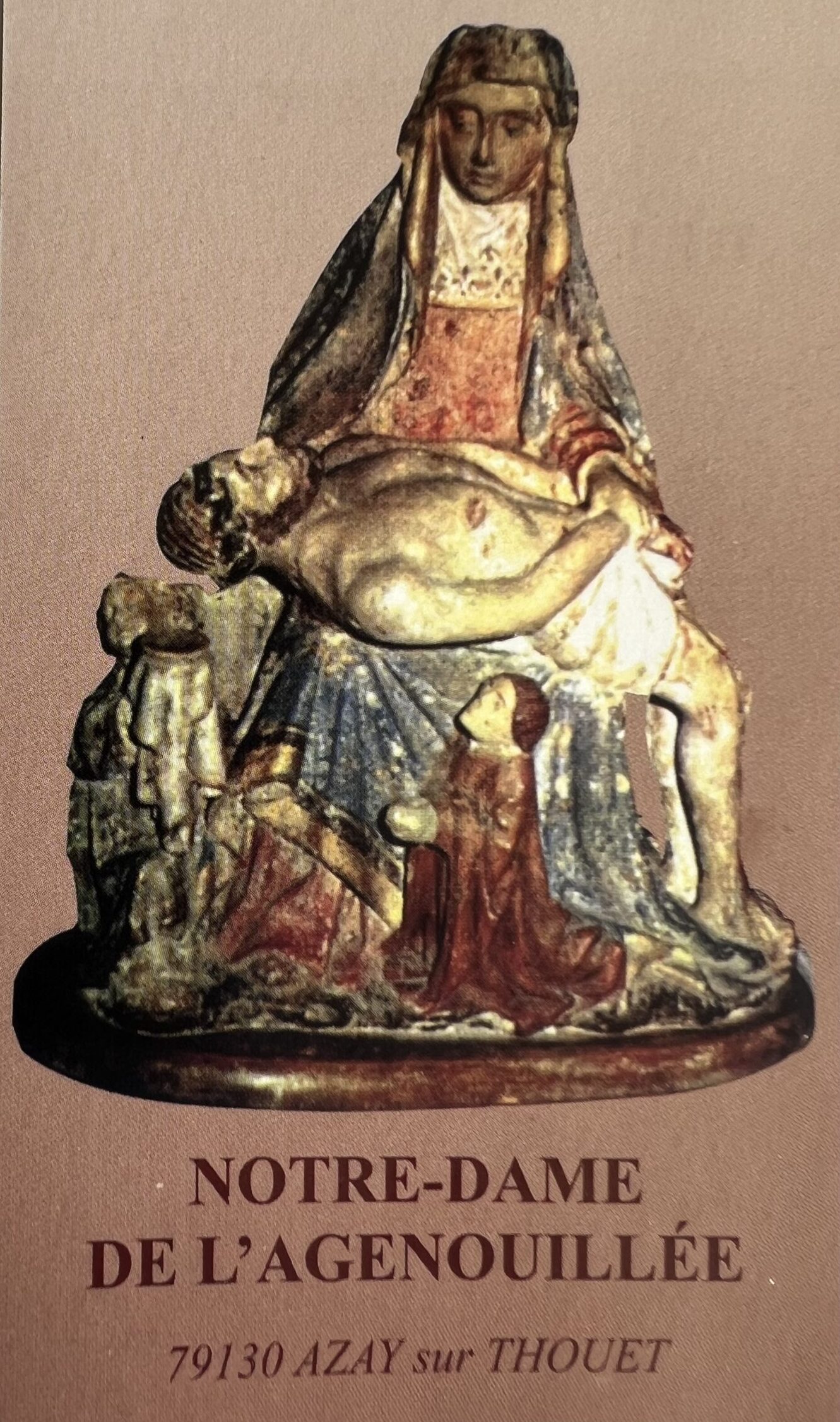
Upon leaving the chapel, I see a prayer card lying there with an image of the statue of Mary, showing Mary and Jesus, and below them a kneeling castle lady. On the back is the text in French. When I translate the prayer, it says:
“Prayer to Our Lady of the Kneeling
O, Our Lady of the Kneeling,
We direct our prayers to You
with all belief of our devotion!
Hear them that implore Thee;
Heal the sick.
Convert the sinners.
Comfort the suffering mothers.
Look after the children with care!
Spread across the Gâtine (=department of Deux-Sèvres)
your heavenly protection and
Guard him, the faith of yesteryear!
Amen”
It feels good to visit here.
Environment
In the vicinity of Azay-sur-Thouet, the towns of Niort (40 km) and Châtellerault (90 km) are worth visiting.
~~~

 Nederlands
  English (UK)
  Deutsch
  Français