History
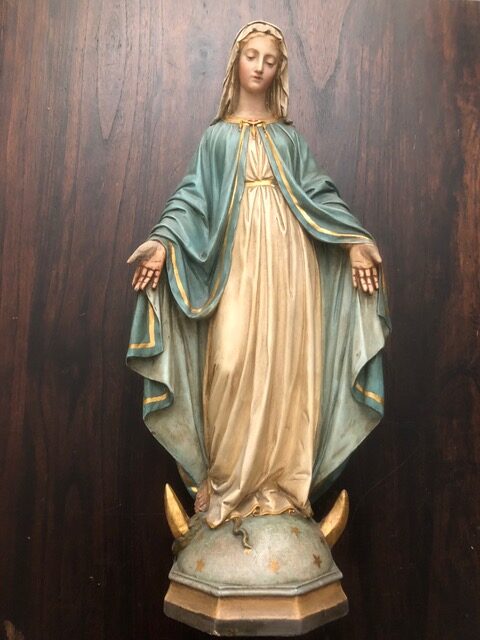
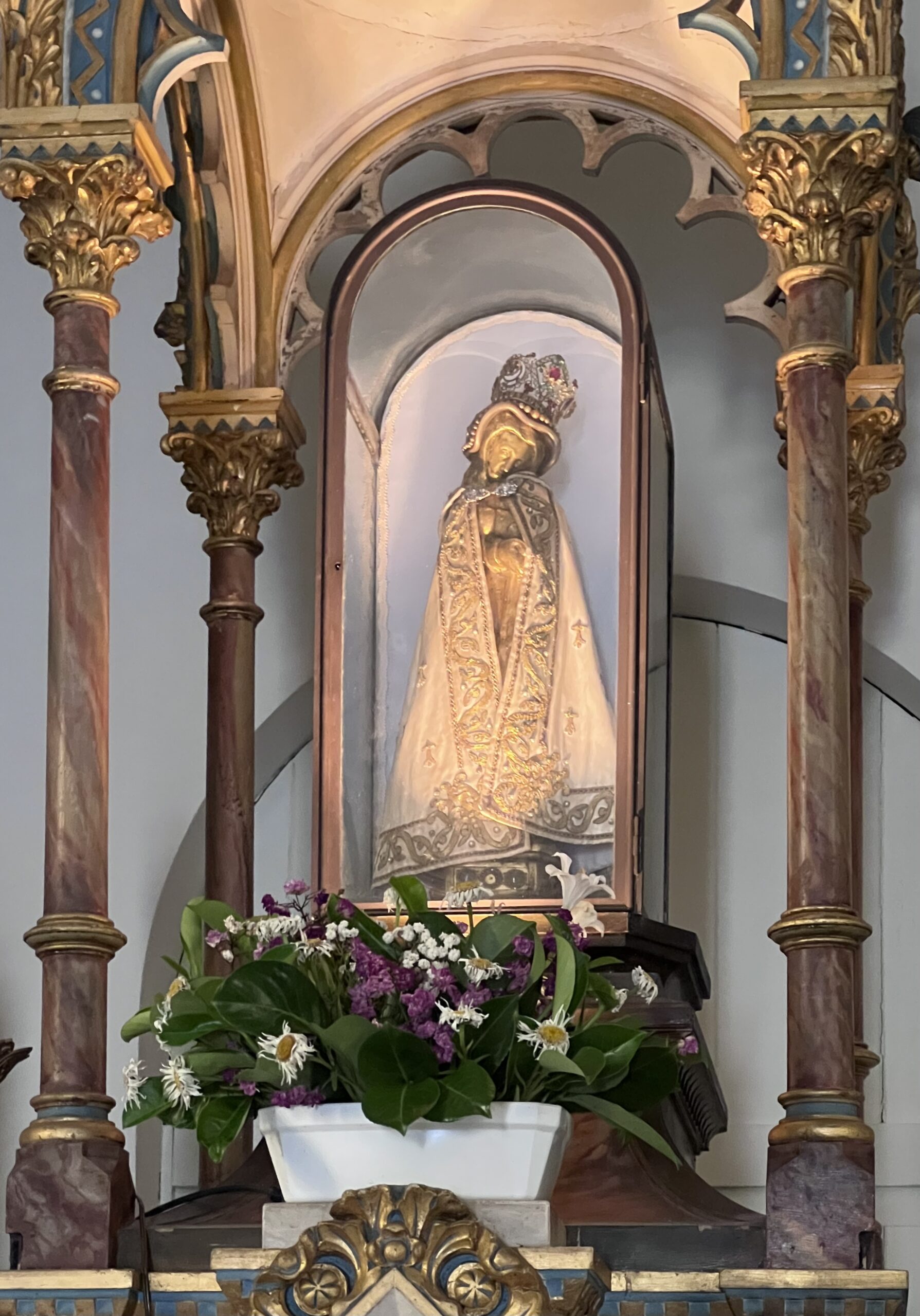
In the 16th century, a farmer named Chopin was clearing a piece of land. Suddenly, he came across a large lump of clay, in which a statuette was embedded. This happened near a spring. He pulled the small effigy out of the clay and found a crudely carved statue of Mary. The farmer took the statuette home with him. In his house, he placed it on a cupboard. The next day, the farmer was surprised because the statuette was no longer on the cupboard. He went looking and found the effigy back at the spring in La Peinière. He took the little treasure home again, and the following day the statuette had disappeared again. That time too, the man found it back at the spring. This was repeated once more, which made the farmer think. He took the statue of Mary to the priest, who placed it in a locked room. The next morning, the priest was perplexed, as the statuette had vanished without a trace. He went to the spring and there he saw the statuette. For him, this was a sign that Our Lady wanted a chapel here, where the statuette would be given a central place. A small, wooden chapel was built by the spring.
During the French Revolution (1789-1799), the chapel was destroyed and the statue was heavily damaged. Subsequently, a peasant woman hid the small effigy of Mary in her home in a bread bin. Believers would come there to pray, and then the small effigy would be taken out of the bin.
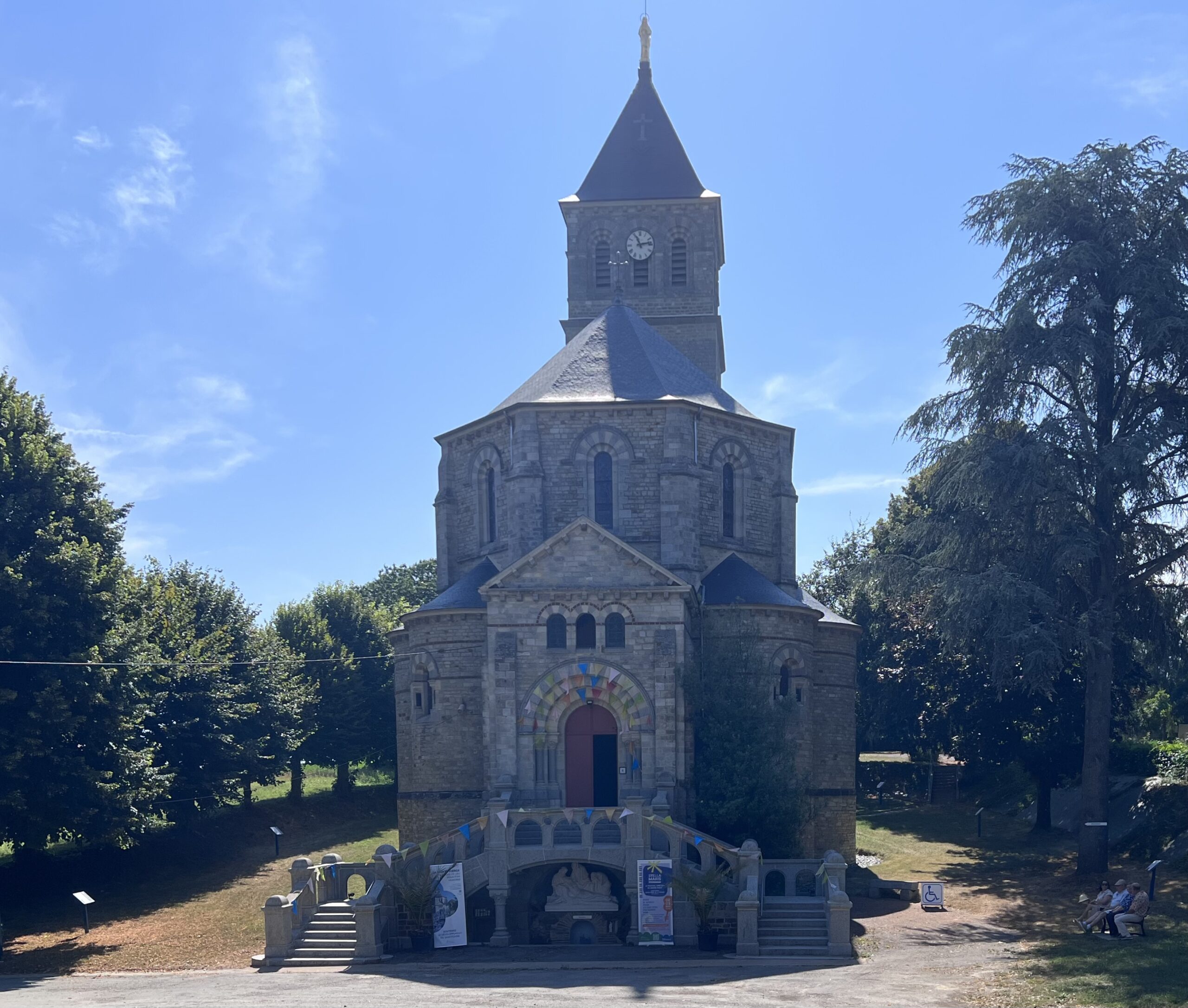
In 1840, a new, larger chapel arrived.
In 1926, the crowning of the statue of Mary takes place. This occurs after permission from Pius XI, Pope from 1922 to 1939 and born as Ambrogio Damiano Achille Ratti (1857-1939). Fifty thousand spectators witness the crowning. With the crowning, the Catholic Church acknowledges the special graces (indulgences) and the many venerations for the image of Mary. Consequently, the emphasis in this sanctuary is on spirituality.
In 2025, the statue of Mary on the chapel tower will be re-gilded.
In 2026, the centenary of the coronation of the statue of Mary will be celebrated. This will give the pilgrimage site a considerable boost and increase attention for the sanctuary. The chapel has undergone a refurbishment for the centenary.
For over 5 centuries, believers have found grace, hope, strength, and comfort at the image of Our Lady of La Peinière.
Pilgrimage site
Notre-Dame de la Peinière is a popular pilgrimage site.
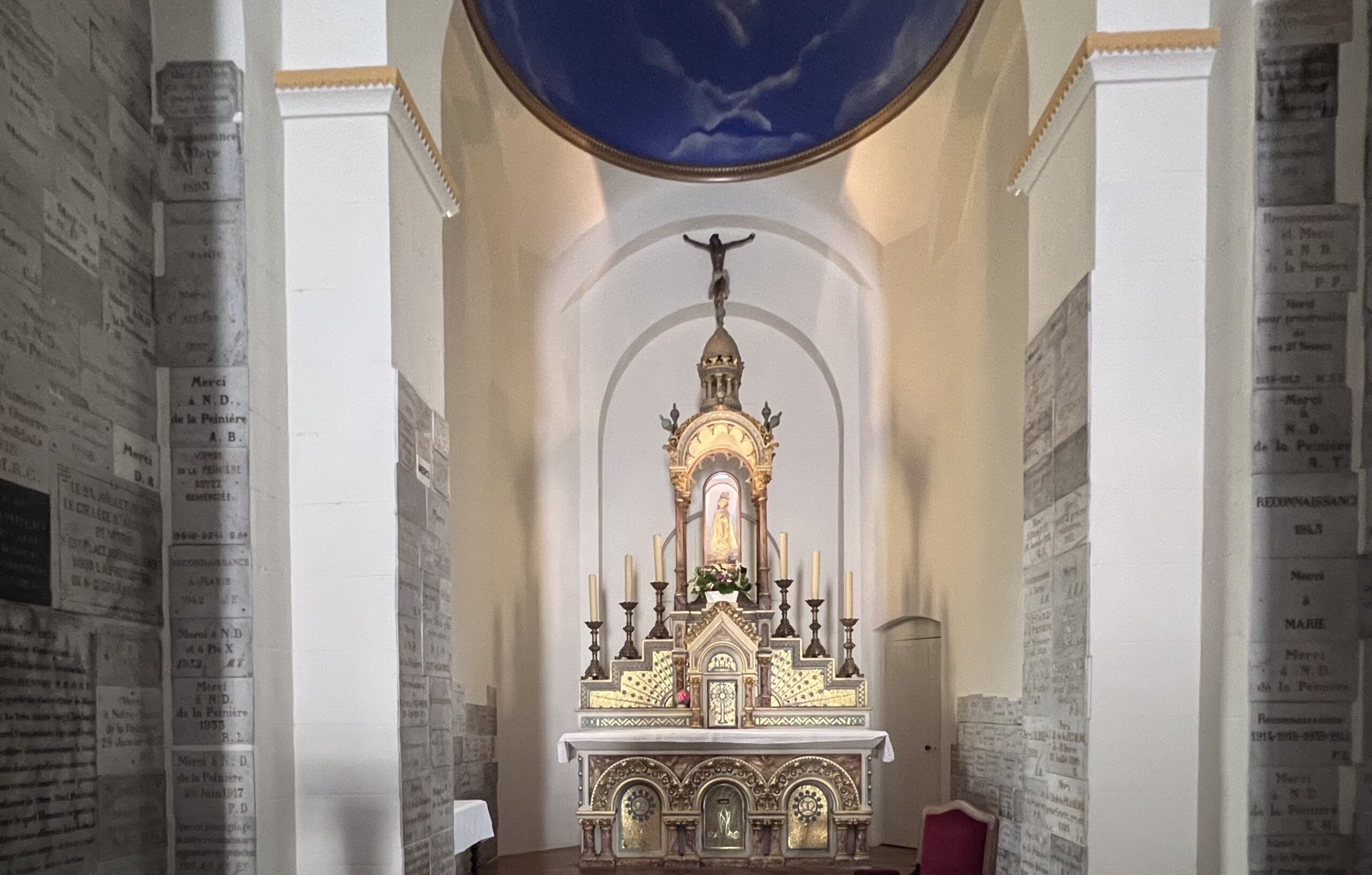
The chapel attracts visitors, primarily for the miraculous image. This wondrous statue stands in the centre of the sanctuary. The sky-blue chapel dome, adorned with many stars, is also a sight that inspires heavenly thoughts. Numerous ex-votos are attached to the walls inside the chapel. A testament to the gratitude felt by many towards Mary.
The Rosary is recited daily in the chapel.
In the Marian sanctuary, visitors can stay overnight.
Near the church is a shop selling devotional items.
In the pilgrimage site, a couple has created a “chemie de consolation” (path of comfort). It is a path of comfort, intended for parents who lose a baby around the time of birth. Next to this path of comfort, there is a small memorial pavilion.
ACCESSIBILITY
The pilgrimage site of Notre-Dame de la Peinière is located in the hamlet of La Peinière. It belongs to the municipality of Saint-Didier and the diocese of Rennes in the department of Ille-et-Vilaine (Brittany).
The pilgrimage site is located by the D405 road, near the river Vilaine.
Address: La Peinière, 35220 Saint-Didier.
Experience
After arriving in Saint-Didier, I am a few kilometres away from La Peinière, a hamlet with a few farms and some houses. I am located between the large cities of Rennes and Le Mans in a quiet area.
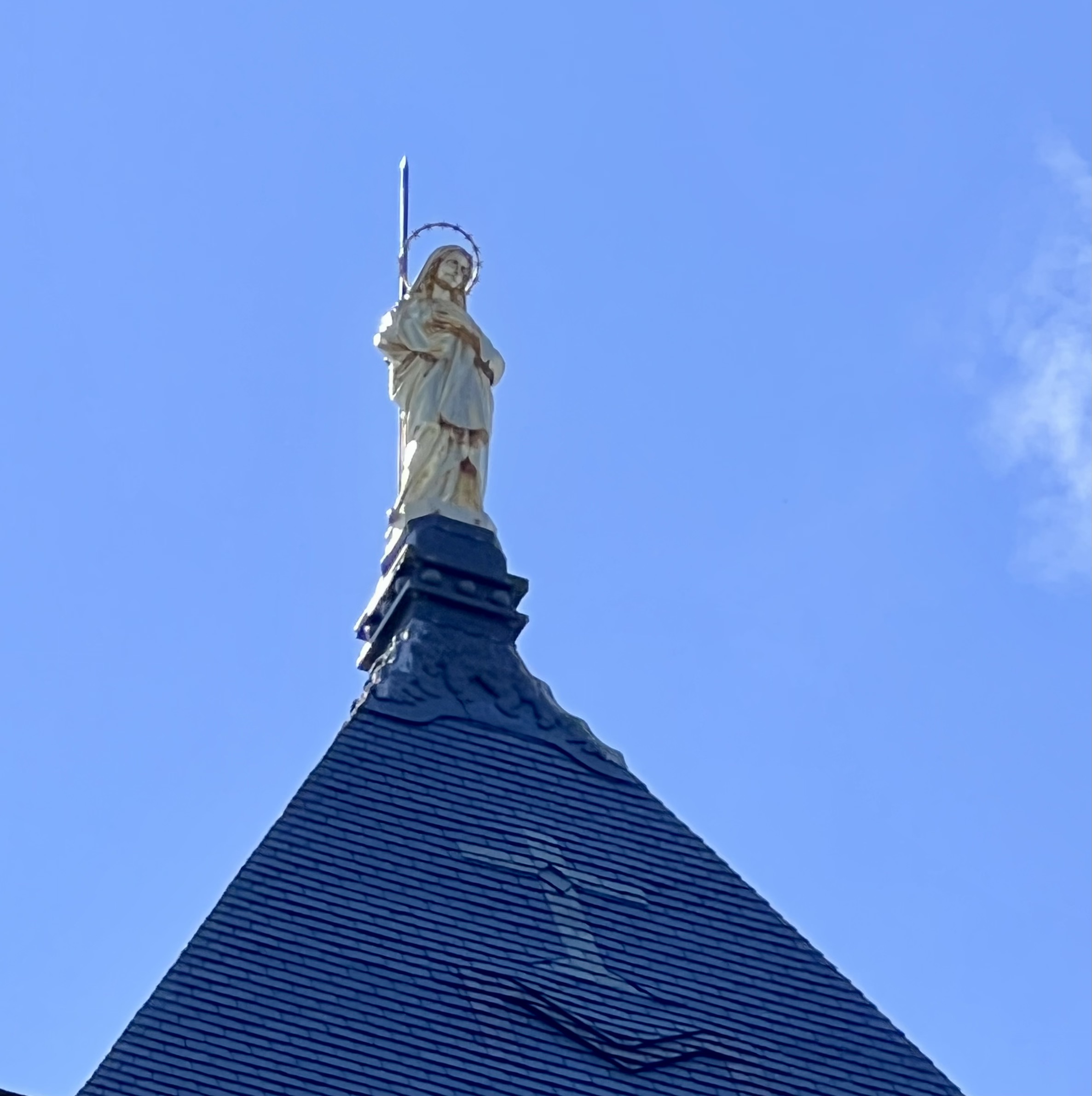
From afar, I see the high dome of the chapel with the gilded statue of Mary on top. What a beautiful sight that is!
A few minutes later, I reach the sanctuary and see the large gate with the name of the pilgrimage site.
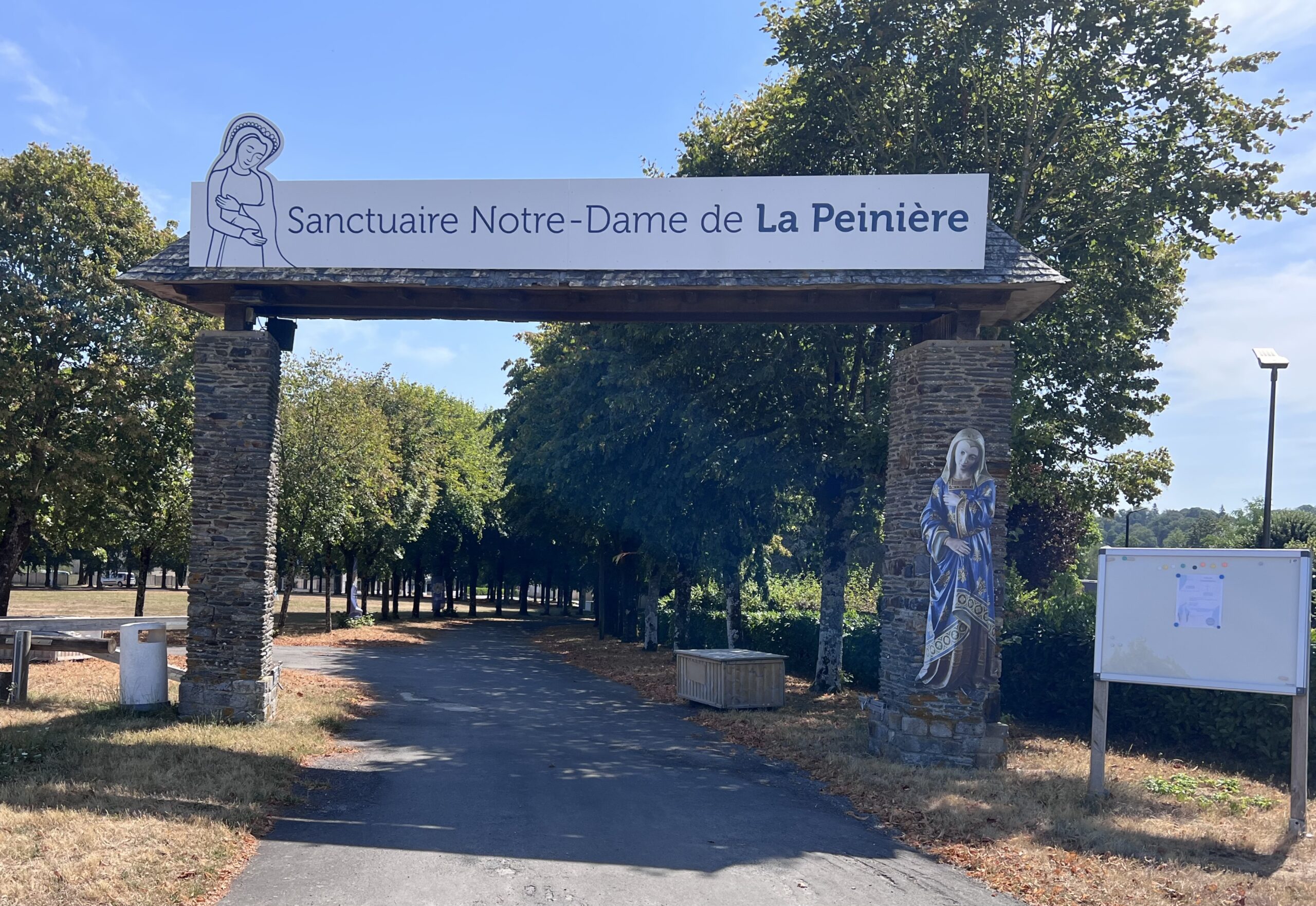
It's the driveway and parking the car. I notice that there's almost no one here at lunchtime on this Sunday. It's certainly because of the extremely high temperature of around 36 degrees. Buildings are closed, including the devotionalia shop. The chapel is open though, and that's where I'm going.
In the chapel, I see the crowned statue of Our Lady of Grace standing centrally on the choir. Small but beautiful, comes to mind. Then I look up and see the sky-blue dome. For a moment, I feel I'm in heaven.
During my tour of the chapel, I see many ex-votos. So much thanks to Mary! I start counting the marble plaques and stop at 200. Hundreds of plates, often with the word “merci” and usually a date. Finally, I take a seat on a pew, thanking Mary for all the beautiful things I am allowed to experience here. I pray to Mary and bring a few sick acquaintances to the attention of Our Lady.
What a beautiful pilgrimage site this is! I've gained another memorable experience. How lucky I am to be able to come here.
Environment
The pilgrimage site Notre-Dame de la Peinière is located about 50 km from the dilapidated Abbey of Saint-Sulpice, an impressive ruin of a former monastic complex.
Châteaubourg is 6 km south-east of La Peinière.
Going from Vitré to La Peinière involves travelling 15 km south-east.
Leaving Rennes to arrive in La Peinière requires travelling 28 km to the east.
From the city of Angers to La Peinière is 125 km to the northwest.
~~~

 Nederlands
  English (UK)
  Deutsch
  Français