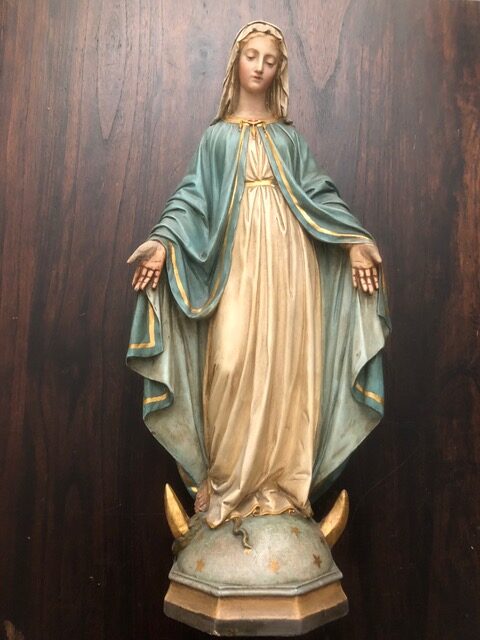
History

In 1876, the economic life of Pellevoisin's approximately 1,000 inhabitants was dominated by the La Rochefoucauld family. During the summer, the Count and Countess stayed at the Château de Montbel, located 3 kilometres from Pellevoisin. The Count was François XV Auguste Ernest Marie de La Rochefoucauld (1818-1879) and the Countess was Radegonde-Euphrasie Bouvery (1832-1901). Estelle Faguette was a domestic servant for the La Rochefoucaulds, looking after the Count and Countess's children. She also helped her parents, who also worked at the château. Estelle had a weak constitution and was diagnosed with an incurable abdominal and lung disease. Her ailments worsened, and the tuberculosis in particular limited her activities. The doctors saw no solution and gave up on her after several treatments. However, Estelle had a great and fervent faith in Mary and, with full conviction in the goodness of Our Lady, she wanted to write Her a letter asking for healing. If this happened, she could help her parents again. In September 1875, she placed the letter at the feet of the statue of Mary in the small grotto in the château garden. Three months later, she had still experienced no sign of improvement. She again wrote to Mary that she had no future, but desired the holy will of God. In this way, Estelle Faguette took a new step in her faith.
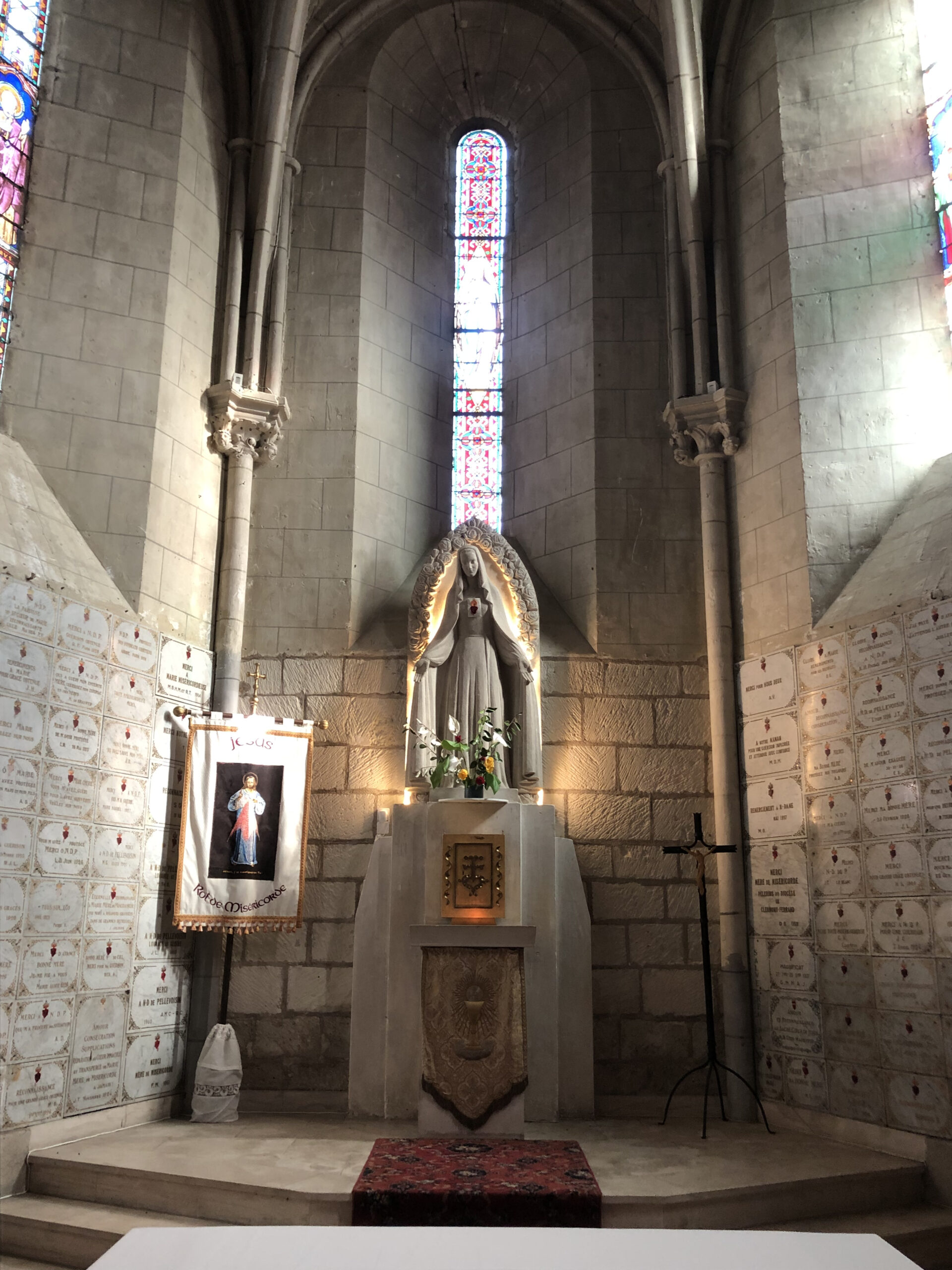
In February 1876, the countess returns to her other residence in Paris. Before departing, she arranges for Estelle and her parents to have a house near the church and cemetery of Pellevoisin. The parents care for Estelle, who is so ill that she cannot even drink. When the count and countess see this, they purchase a plot for her in the cemetery. Estelle receives full peace with the last rites for the dying. On 14 February 1876, the doctor confirms that her life is fading. Estelle Faguette has only a few hours left to live. The weather is so bad that the doctor says he cannot come the following morning to certify Estelle's death. Thereupon, he signs a letter giving permission for Estelle to be buried.
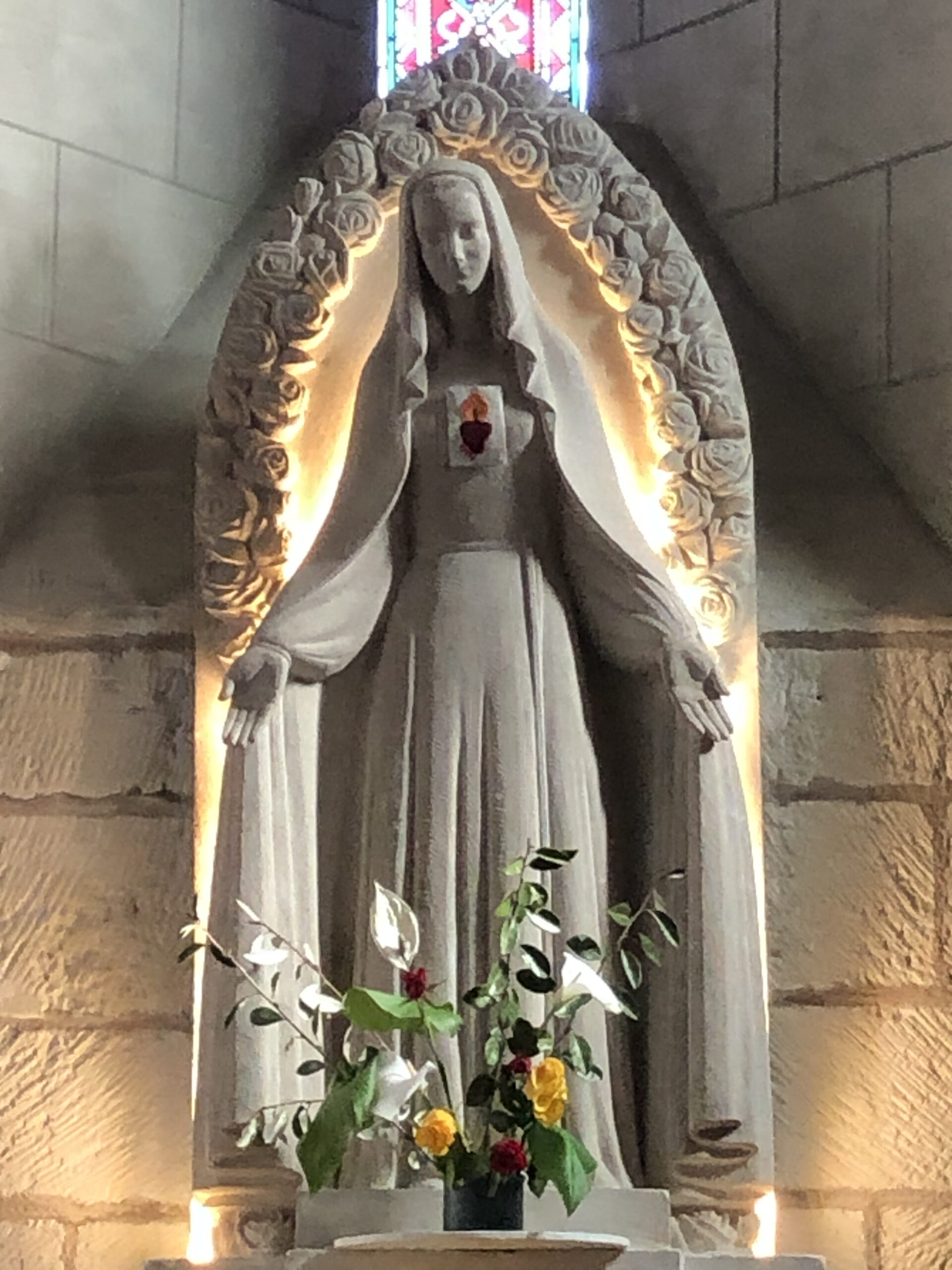
However, on the evening of 14 February 1876, Mary appeared to the devout, 32-year-old Estelle Faguette. This happened after she had written to Mary twice asking to be healed. Mary came to grant her request. Mary said to Estelle: “Be patient. My Son’s approval is coming. You will suffer for 5 more days in honour of the 5 wounds of my Son. You will die or be healed.” Mary then appeared over the next 4 days. After the 5th appearance on 18 February 1876, Estelle knew she was healed, having been dying for days.
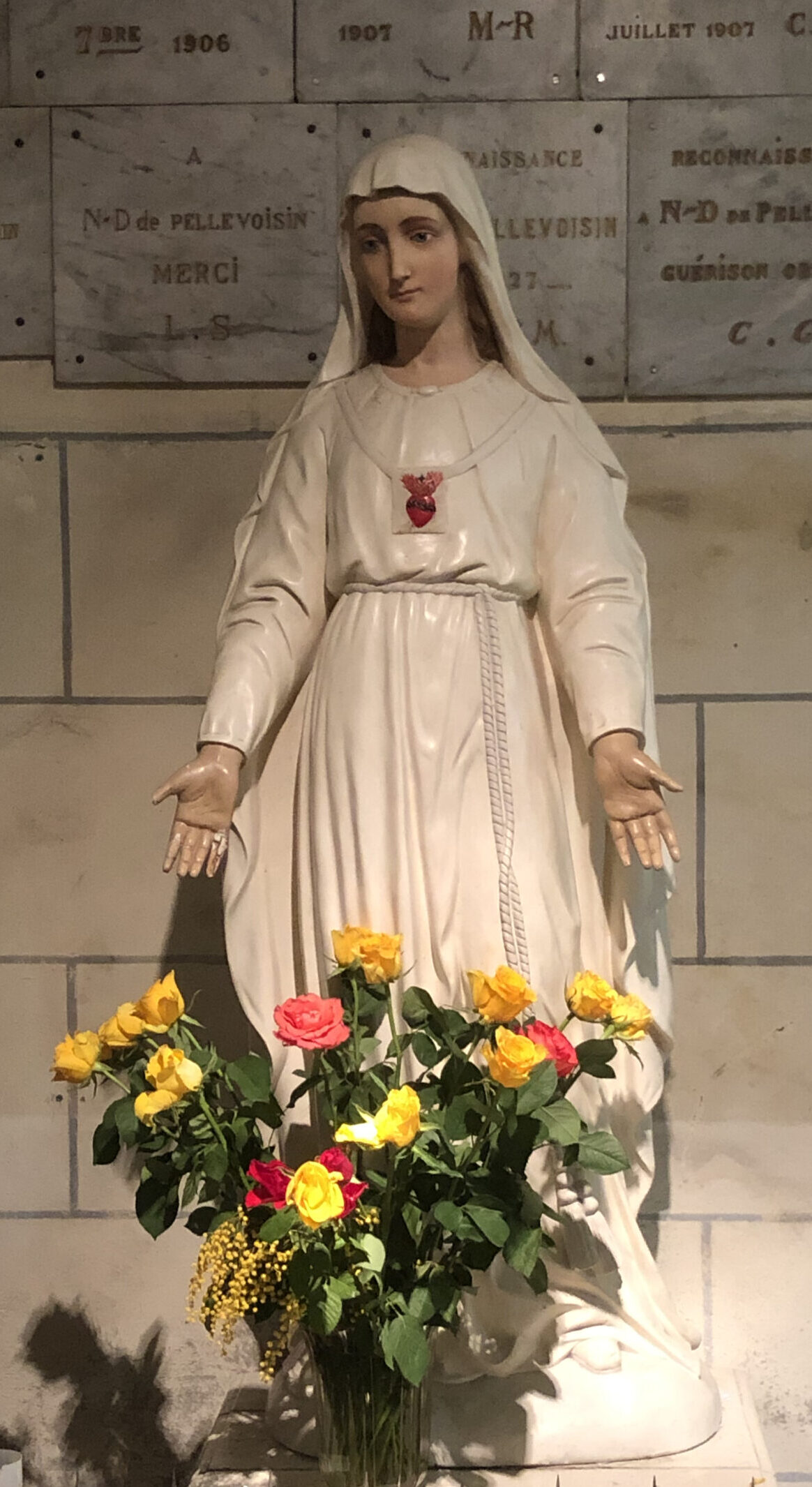
In Pellevoisin, Mary appears 15 times to Estelle Faguette (1843-1929). This occurs in the period 14 February – 8 December 1876.
The events…
In December 1875, Estelle Faguette was dying from, among other things, tuberculosis, peritonitis, a tumour, and paralysis. She was being attended to, but resisted death. Estelle was afraid that without her presence, her parents and niece would be left uncared for. Estelle grew weaker and weaker, and eventually could no longer even pray. Estelle also went blind and the doctor said she only had a few hours left to live. This happened on 14 February 1876. After the doctor's visit, the devil appeared, and immediately Mary appeared. The devil then retreated. Mary reassured Estelle, telling her not to be afraid and to be brave. On 15 February 1876, Mary appeared again and said Estelle would be healed in a few days. Mary's apparitions to Estelle continued on 16, 17 and 18 February 1876. Later, Estelle said that she had invoked Mary at the height of her distress and that Mary had arranged for her Son to heal her completely.

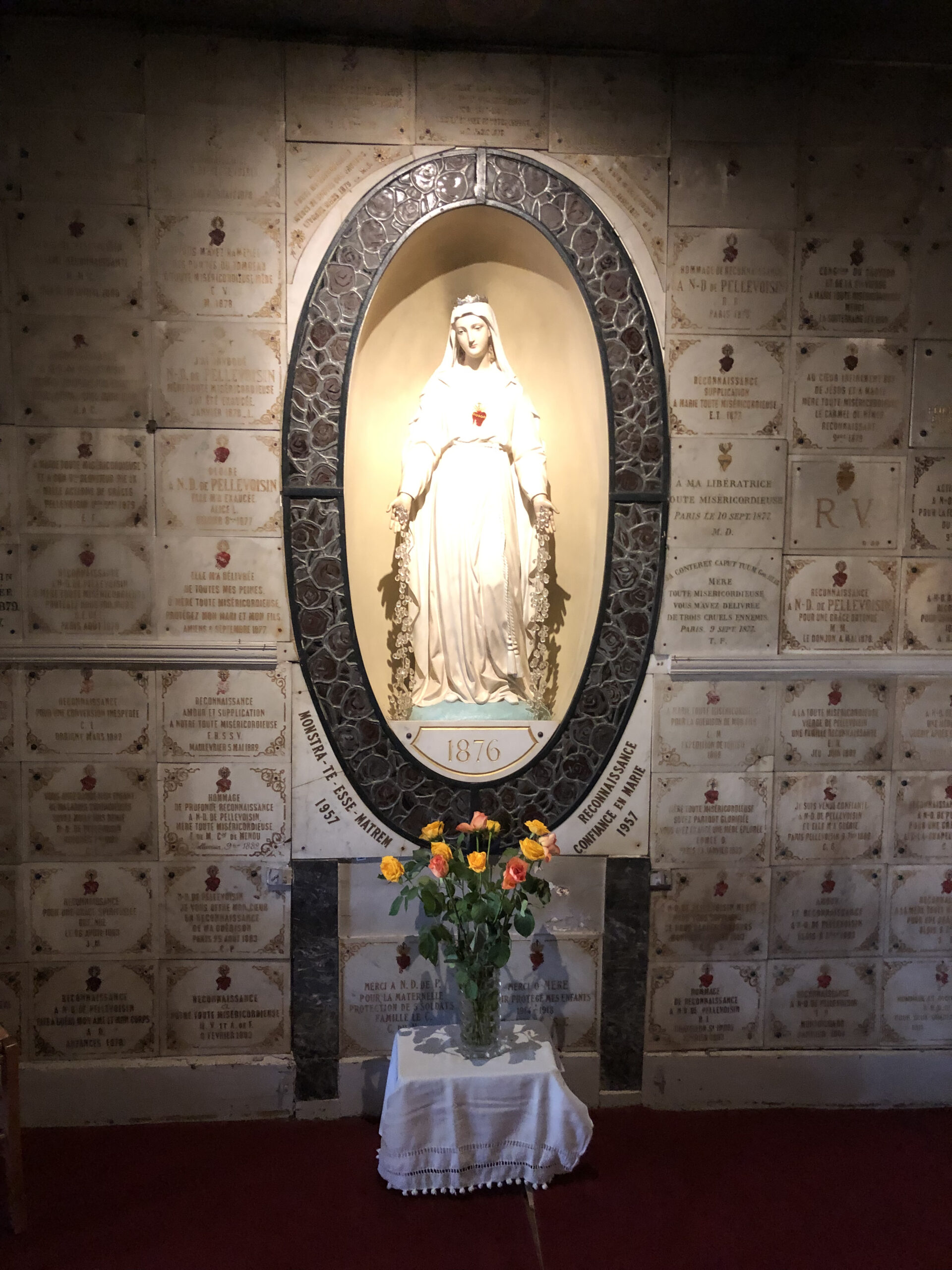
During the 8th apparition on 2 July 1876, Estelle asked for a sign from Mary. However, Mary said that the healing itself was one of the greatest proofs and that She had come for the conversion of sinners.
On 9 September 1876, Mary reappears and shows Estelle a Scapular of the Sacred Heart. This is a sign of devotion; it consists of two consecrated pieces of cloth joined by ribbons and is worn visibly or invisibly by laypeople. Mary says that She loves this devotion and that She is honoured by it. On 15 September 1876, Mary says that the Church does not have the serenity that She desires.
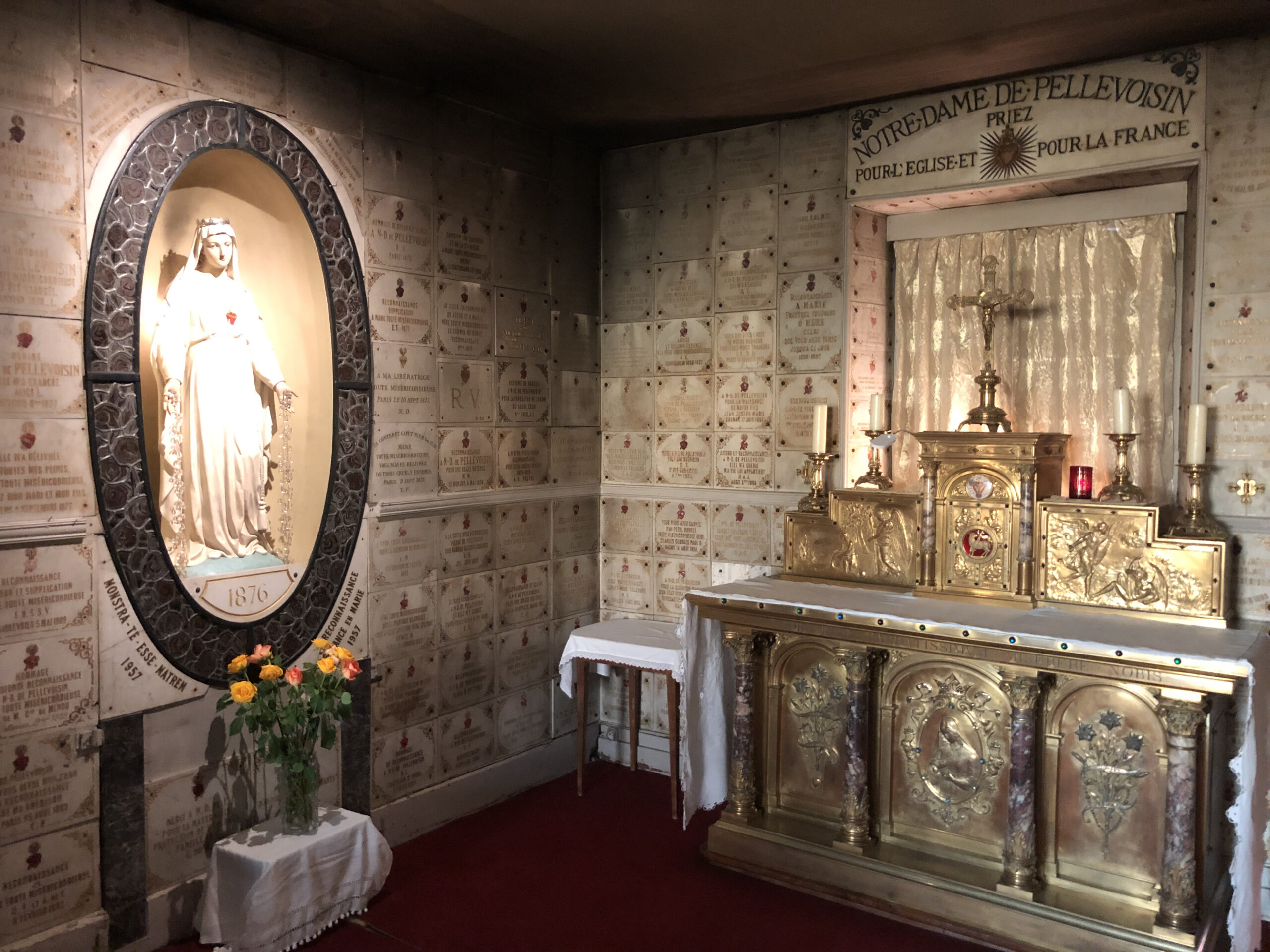
On 8 December 1876, there was the 15th and final apparition. Estelle saw Mary, who was more beautiful than ever and surrounded by a garland of roses. Mary repeated all the previously given messages, and these would strengthen and comfort Estelle. Mary also said that the scapular should be made and distributed on a large scale. Mary confided to Estelle that She would remain invisible, but close by. Then She spread her hands, and raindrops fell from them. In each drop, grace was written, such as reverence, health, salvation, and trust.
Of the 15 apparitions, the first 5 concern the healing of Estelle Faguette, apparitions 6, 7 and 8 concern her being healthy, and those from 9 to 15 concern messages. The central theme of Mary's messages is “spread my glory,” which She repeated ten times. Mary says that She is full of graces and that Estelle should not be afraid. Estelle obeys the call of the Mother of God and shows great gratitude in the small room of her house. From 1877, the room in Estelle's house was transformed into a chapel for the Countess of La Rochefoucauld. The Archbishop of Bourges allowed pilgrims to venerate Mary in the chapel, as well as the manufacturing and distribution of the scapular. The room was then transformed into an oratory; a small room for prayer. This chapel became the most important part of the Pellevoisin Sanctuary. Mary calls herself “Mother of the Church” in Pellevoisin. In 1877, the Brotherhood of “Mother of Grace” was founded, although there was no episcopal approval for it.
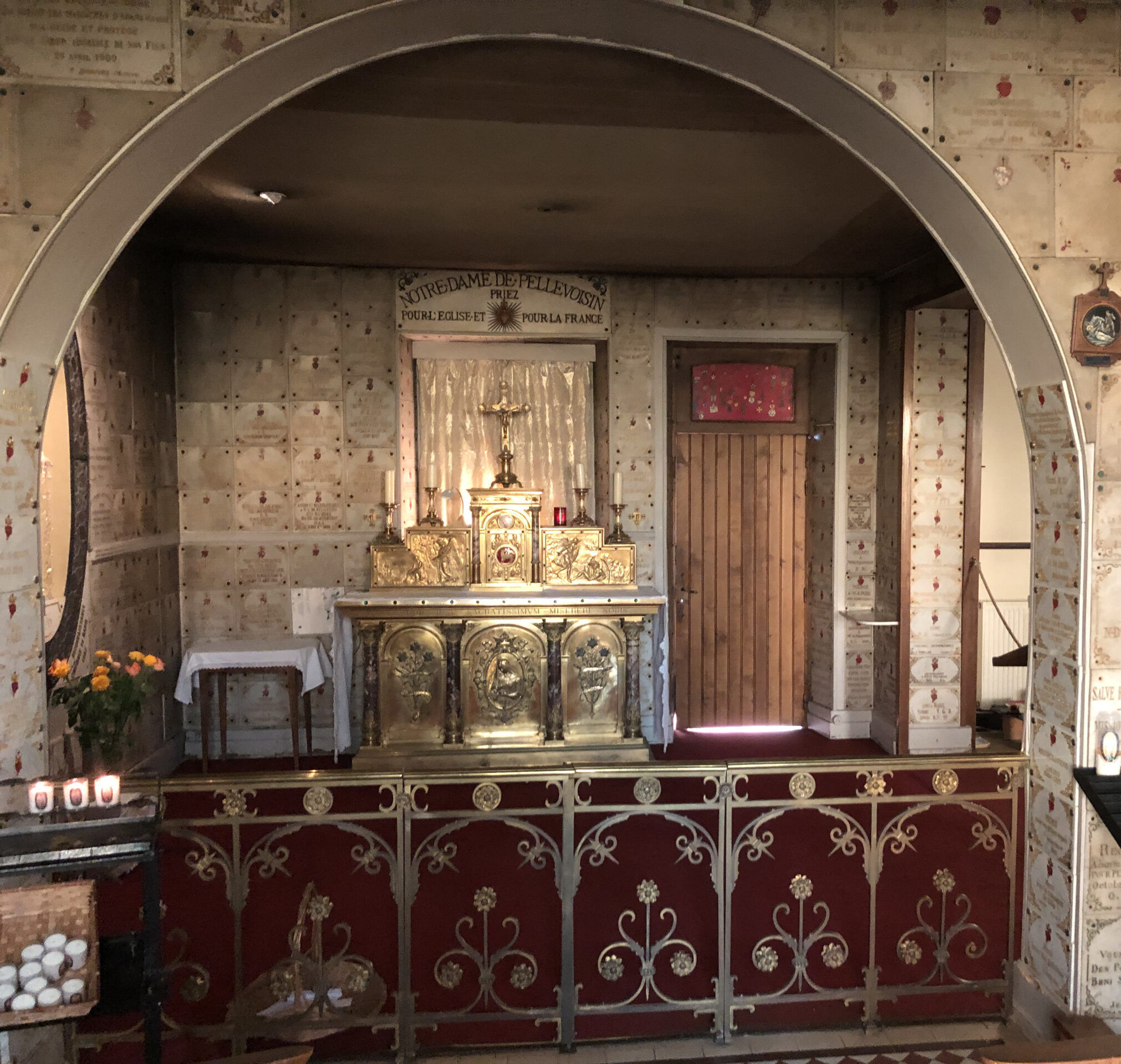
The Countess of La Rochefoucauld, a member of the Third Order of Saint Dominic, had serious thoughts of founding a convent in Pellevoisin from 1888 onwards. In 1893, the Archbishop of Bourges, Jean-Pierre Boyer (1827–1896), gave permission to found a convent for Dominicans in and at the house of Estelle Faguette. He recognised Estelle's healing as a miracle. In September 1893, four Dominican sisters arrived in Pellevoisin. In 1894, Pope Leo XIII (Pope from 1878 to 1903) approved the Archconfraternity and elevated it to the rank of a major Archconfraternity.
In 1900, Pope Leo XIII received Estelle Faguette in audience. He subsequently published a decree recognising the Scapular of the Sacred Heart of Pellevoisin. In 1912, Estelle Faguette was received in audience by Pope Pius X (Pope from 1903 to 1914).
In 1915, Pope Benedict XV (Pope from 1914 to 1922) received the scapular of Pellevoisin. In doing so, he stated that Pellevoisin is the approved and original site for scapulars, and that Pellevoisin has been chosen by the Blessed Virgin as a privileged place where She bestows graces.
Estelle Faguette died on 23 August 1929 and is buried in the Pellevoisin cemetery.
In 1983, Charles-Marie-Paul Vignancour (1908-1987), Archbishop of Bourges (1969-1984), officially recognised the miraculous nature of Estelle Faguette's healing in 1876. This was more than 100 years after the event!
In 1984 the apparitions were recognised by the Holy See of Rome.
In 1998, the Sisters of St John (Saint John) succeeded the Dominican Sisters, and later the Brothers joined them.
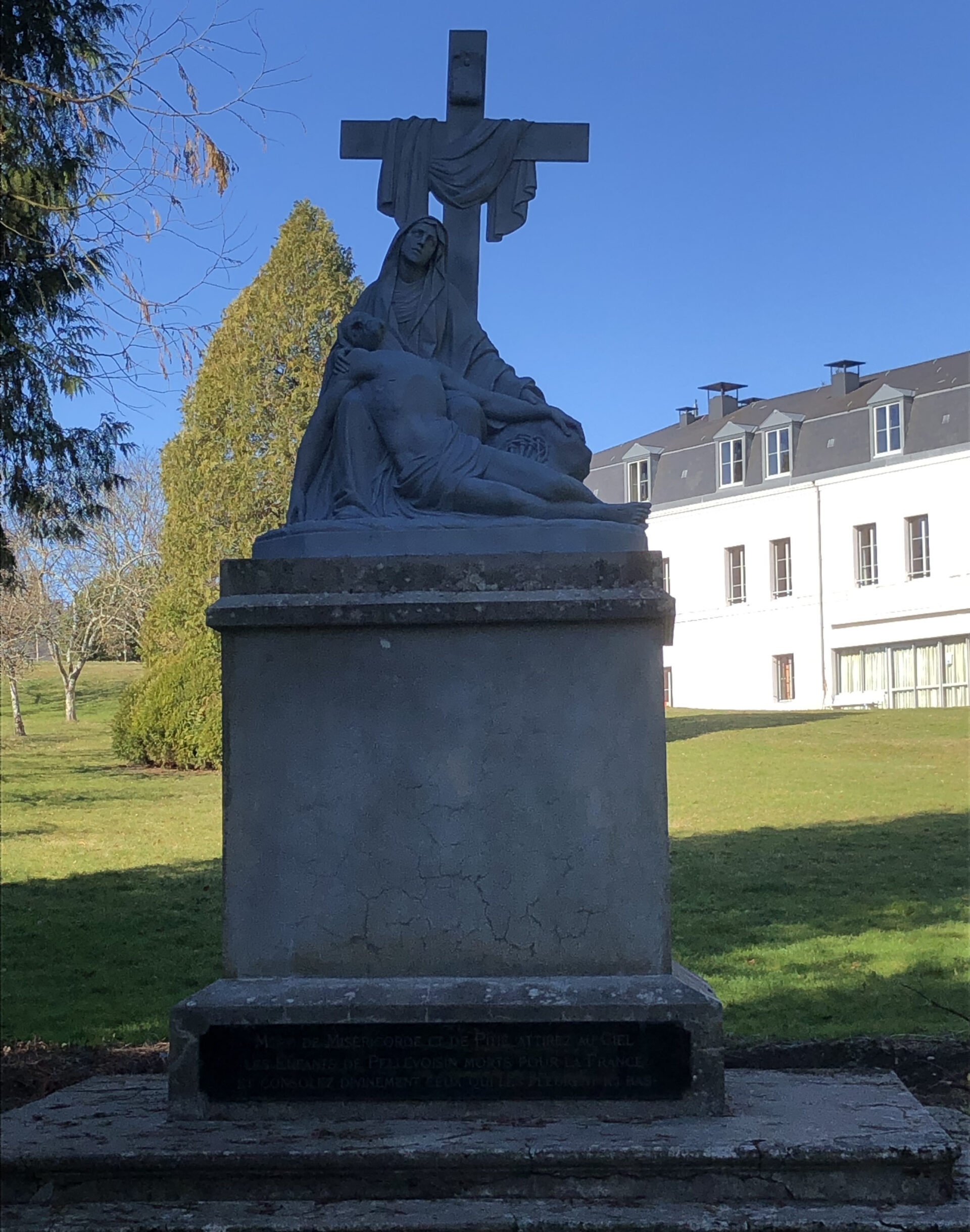
In 2024, the Vatican recognised the apparitions. This is due to a new policy regarding the recognition of supernatural events considered miracles. As a result, Our Lady of Pellevoisin may be venerated as Our Lady of Mercy.
On 31 January 2026, the renovated chapel of the apparitions was consecrated by Sylvain Bataille (*1964) S.J.M.V. (Société Jean-Marie Vianney), Bishop of Saint-Etienne (2006-2025) and from 2025, Archbishop of Bourges. It also commemorates 150 years since Mary appeared to Estelle Faguette.
Pilgrimage site
The work in the sanctuary is entrusted to the brothers and sisters of St. John.
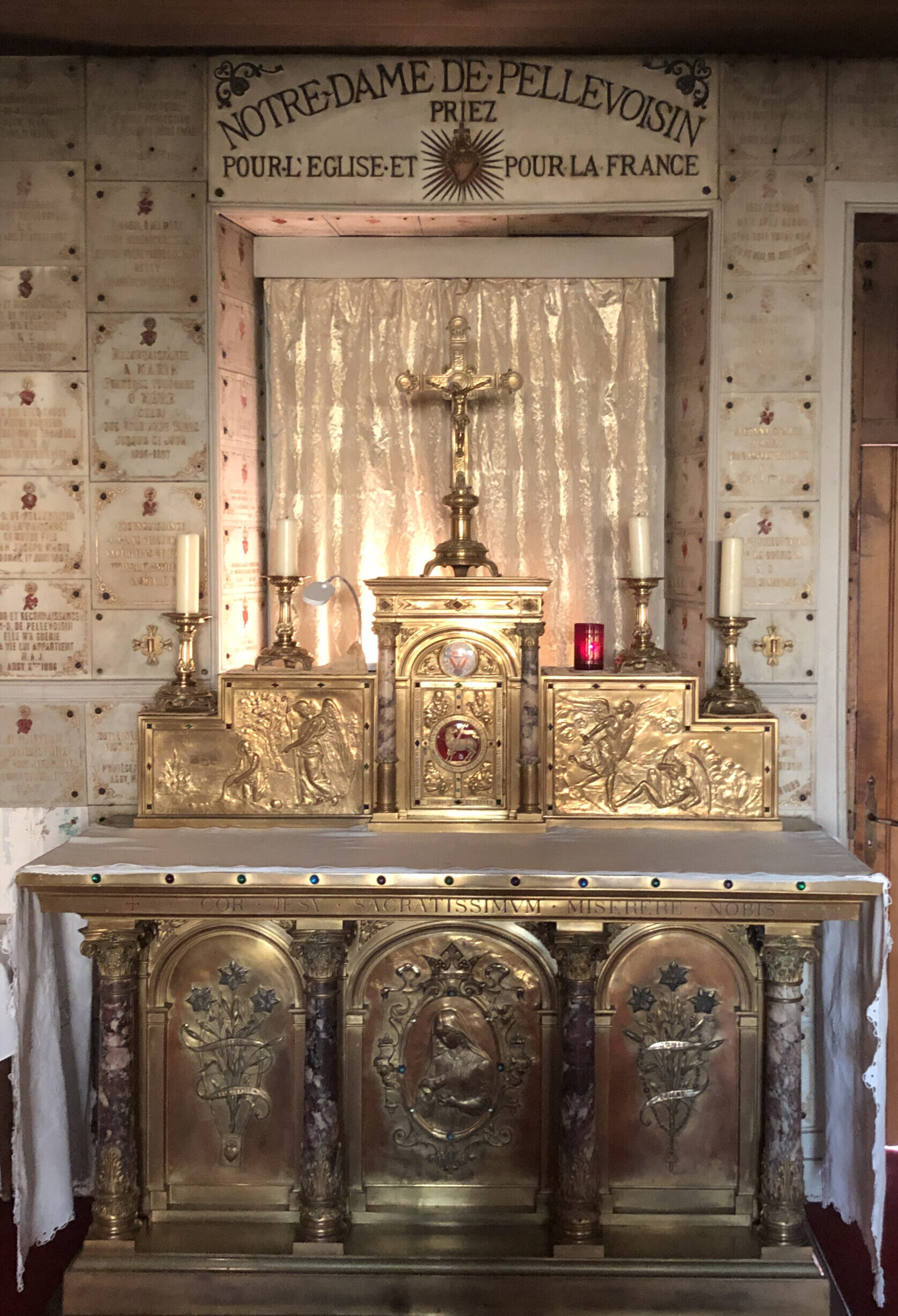
In the chapel, many ex-votos have been attached to the walls. At the feet of the statue of Our Lady, there is a basket where pilgrims can leave their intentions.
The sanctuary also has a shop where devotional items are sold.

The most essential aspect of the apparitions in Pellevoisin is that Mary gives Estelle Faguette a sign of devotion, namely the scapular of the Sacred Heart. This expression of devotion was chosen by Mary to declare God's love and to point to the source of graces for everyone. In Pellevoisin, Estelle spread the message of grace through her words, letters, and by having the scapular made, which is on several occasions replaced by a medal.
On 9 September each year, the apparitions in Pellevoisin are commemorated and celebrated.
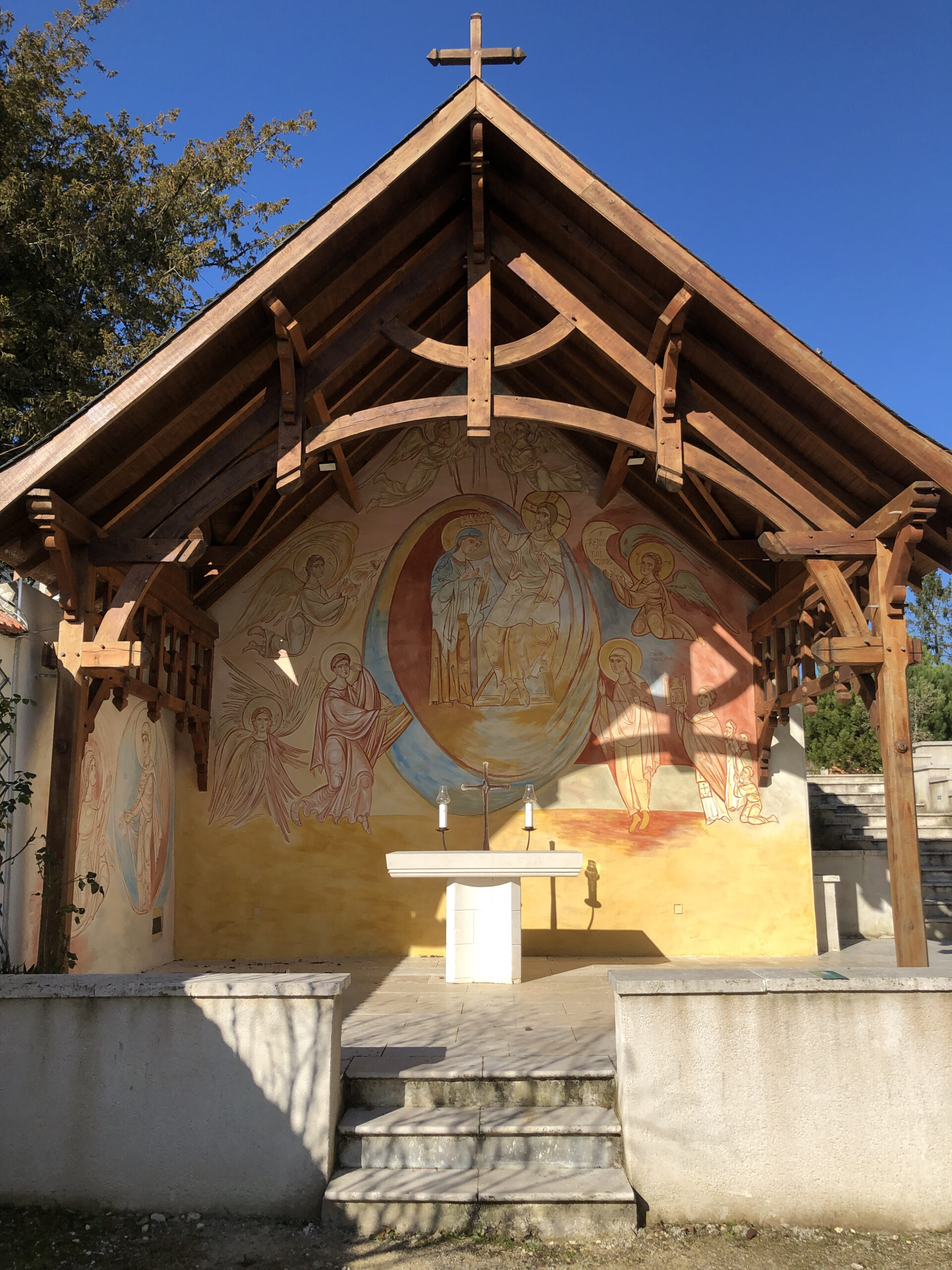
At the shrine, there are overnight accommodation options for pilgrims, namely at “Soeurs de Saint Jean, Hôtellerie Monastère Marie Mère de Miséricorde, 3A Rue Notre Dame, F 36180 Pellevoisin.
The sanctuary at Pellevoisin is a place for prayer and silent reflection.
ACCESSIBILITY
Pellevoisin lies in the centre of France, almost 300 kilometres south of Paris, between Orléans and Limoges, on the road from Châteauroux to Tours, near Brion and Levroux.
The sanctuary of “Sanctuaire Notre-Dame de Miséricorde” is located in the centre of the village at 3 Rue Notre-Dame, F 36180 Pellevoisin.
For more information, please consult www.pellevoisin.net.
Experience
When I arrive in Pellevoisin, I park the car next to the church and go to the adjacent shrine. In the devotional shop, I ask if there is a room available. I am shown a room and it is located directly above the chapel. The room is called Ste Thérèse and for 5 days I can stay there to be sure to pray a lot.

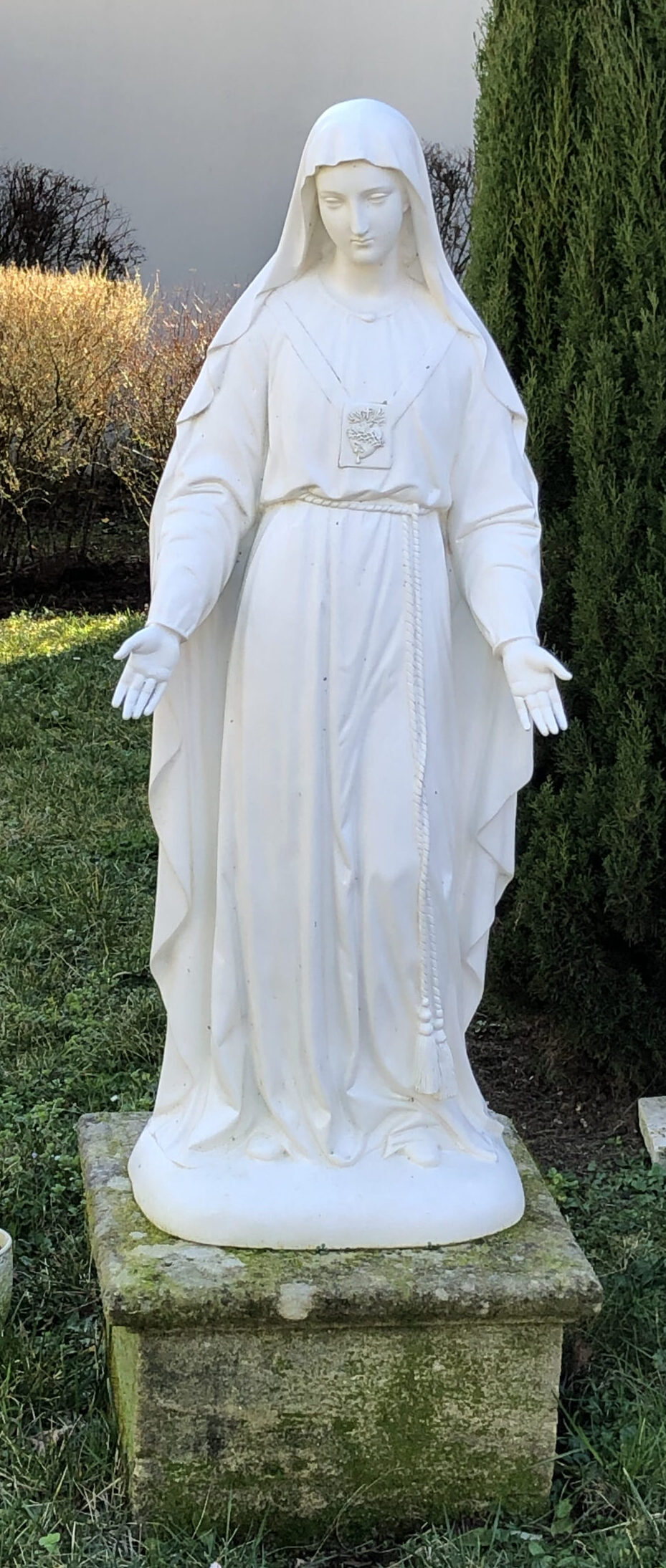
During my stay in Pellevoisin, I spend a few days following the rhythm of the monastery. Between 6.00 and 7.00 am, I am in the chapel, spending a full hour praying in silence, kneeling and lying down. It was in this room that Mary appeared to Estelle Faguette. The apparition room is covered with tiles inscribed with words of gratitude and dates. The white statue of Mary is over a metre tall and a scapular is attached to her chest. Flowers of various colours adorn the niche in which the statue stands. To the right, next to the statue of Mary, stands an altar with burning candles. Above it, I read the text: “Notre Dame de Pellevoisin, pray for the Church and for France”. Then I sit down in this special room. However, I am not alone, as there are other visitors and also 12 sisters present. These sisters are simply dressed in grey habits, white headscarves and wooden rosaries. I estimate their average age to be around 40. Relatively young, I think to myself. Each sister has her own bench for praying and singing. Between 7.00 and 7.30 am is the time for singing prayers. The singing sisters are just like angels on earth. During the singing, the sisters bow deeply several times. After the gathering, I meet the other lay people; five women, four of whom are from Wallonia and one from France. At 11.10 am, the singing prayer of the “milieu du jour” begins. Apart from me, there are three other visitors and 14 sisters present. When the clock strikes 11.30 am, the celebration of the Eucharist begins. It is now much busier, with around 30 visitors, 3 brothers, 1 priest and 15 sisters. The priest looks rather grim. Is there something he doesn’t like? Show some joy, I think to myself. Furthermore, it seems that the number of sisters is increasing as the day progresses. At 6.00 pm, Vespers begin; at 6.30 pm, the lights go out and prayers are said. A few candles by the statue of Mary provide light. At 9.00 pm sharp, it is “Grand Silence”. From nine o’clock in the evening, the sanctuary is deserted.
On the second day of my stay, after vespers, a sister approaches me. She shows me a picture of Mary. I thank the sister and ask her name. It is the friendly Sister Cécile Thérèse. I am lent the card, which I must return when I leave. Then she hurries to her bench. I examine the image closely; it is Notre-Dame du Chêne (Our Lady of the Oak) from the 15th century. The image of the crowned Mary with Child is more than beautiful. The sisters kneel, bent forward, and sit on low, wooden benches. Often it is quiet in the chapel for a while. Once again, I experience that silence is beautiful and says the most.
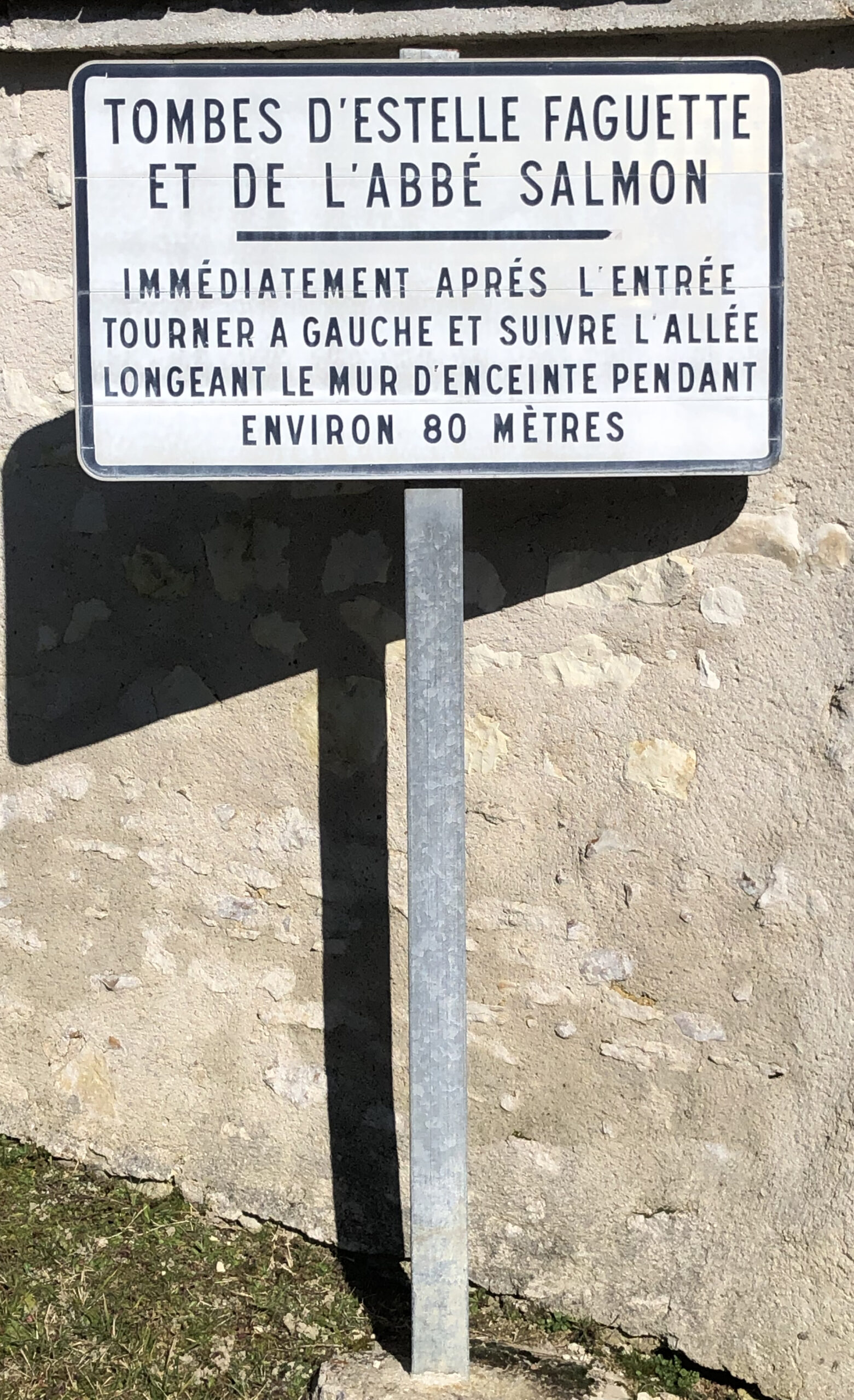
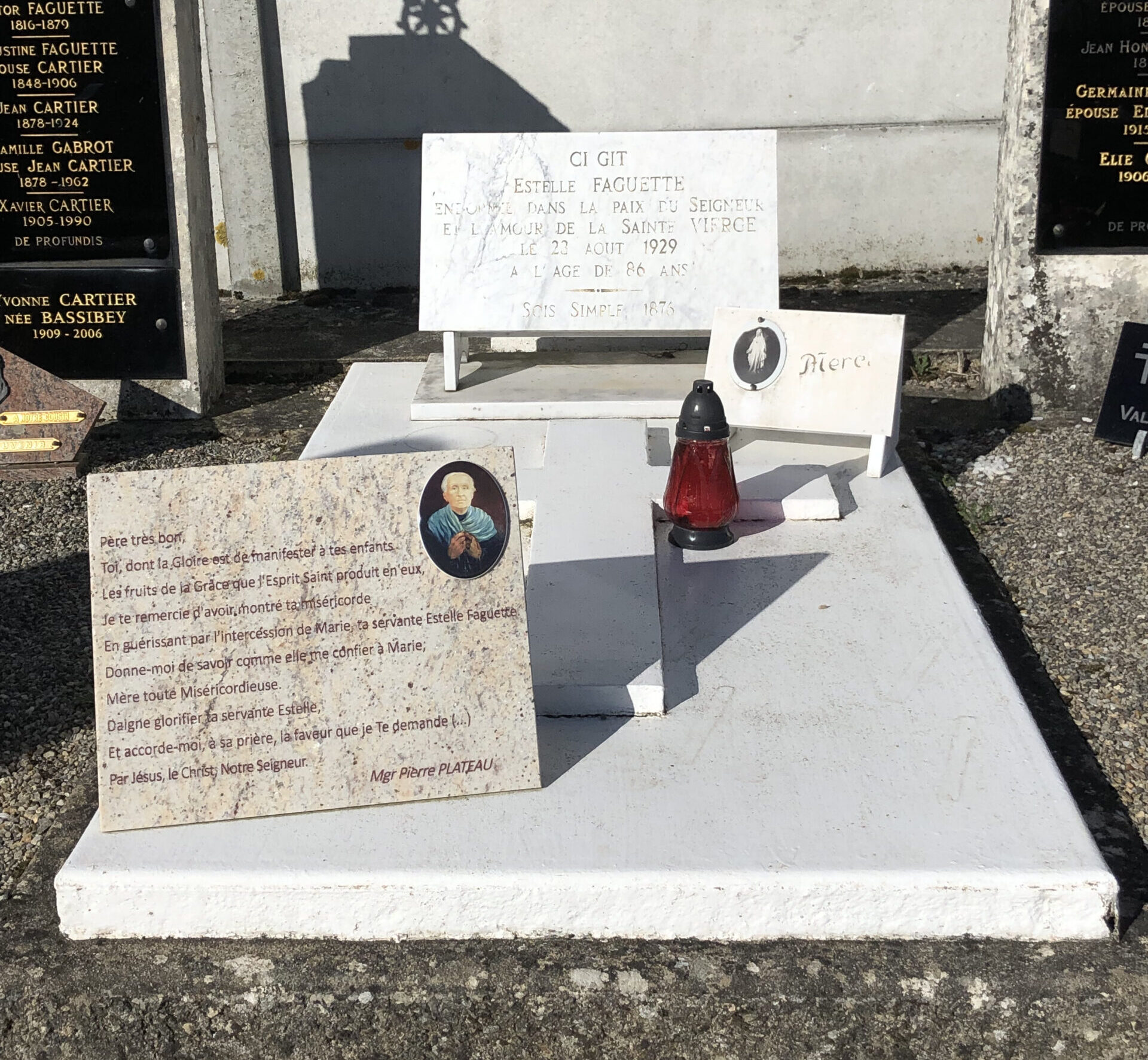
In Pellevoisin, I also visited the grave of Estelle Faguette. The graveyard is located on Rue Estelle Faguette. Her grave has a white gravestone with a large, white cross. A white marble plaque bears the inscription: “Here rests Estelle Faguette, fallen asleep in the peace of the Lord and the love of the Blessed Virgin on 23 August 1929 at the age of 86.” A white plaque has been placed on the gravestone with a photograph of the apparition of the white Virgin Mary and the inscription “Merci”.
Environment
32 km south-east of Pellevoisin lies the town of Châteauroux, and this place is more than worth a visit.
CHÂTEAUROUX – CHURCH OF OUR LADY
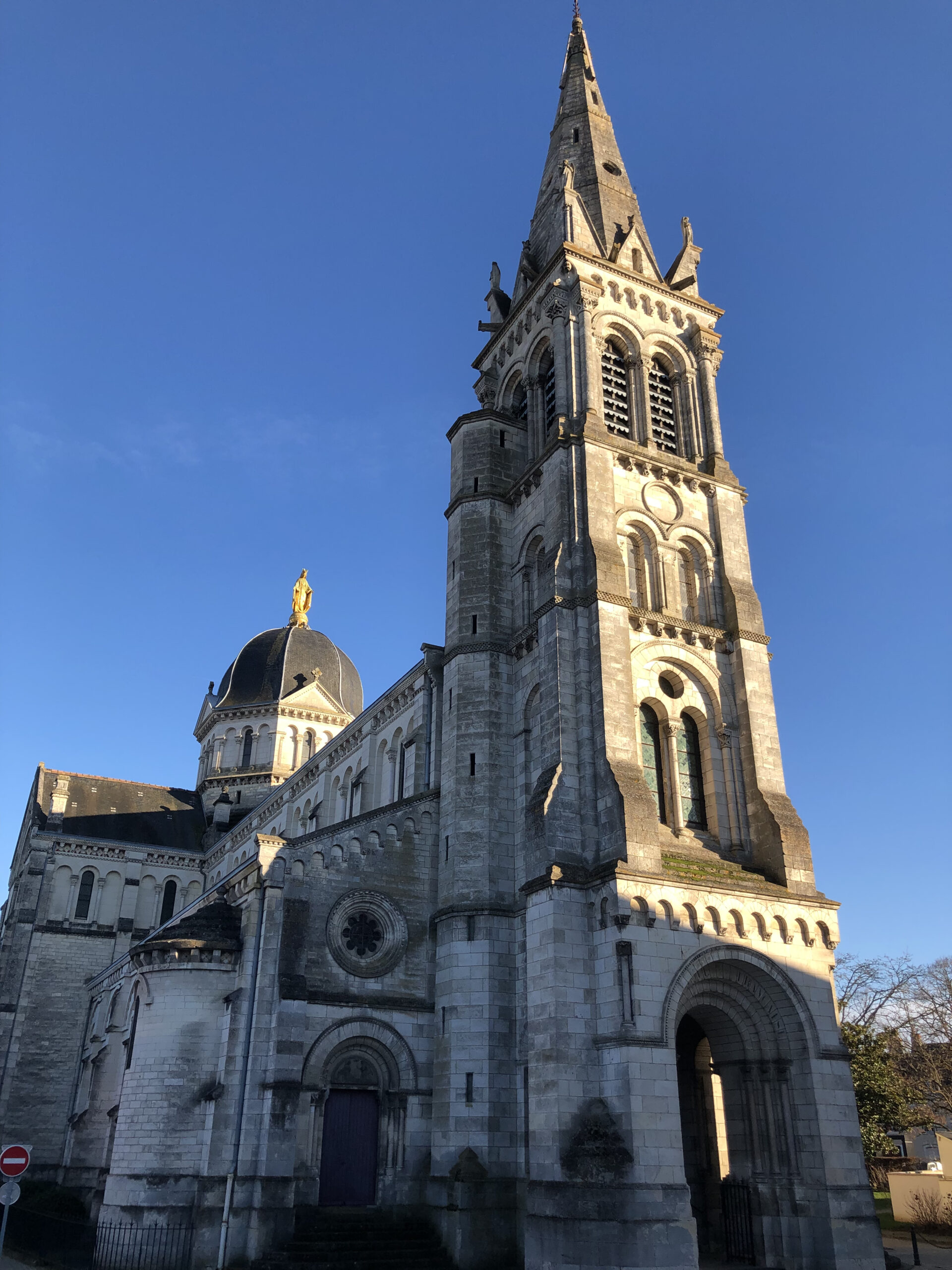
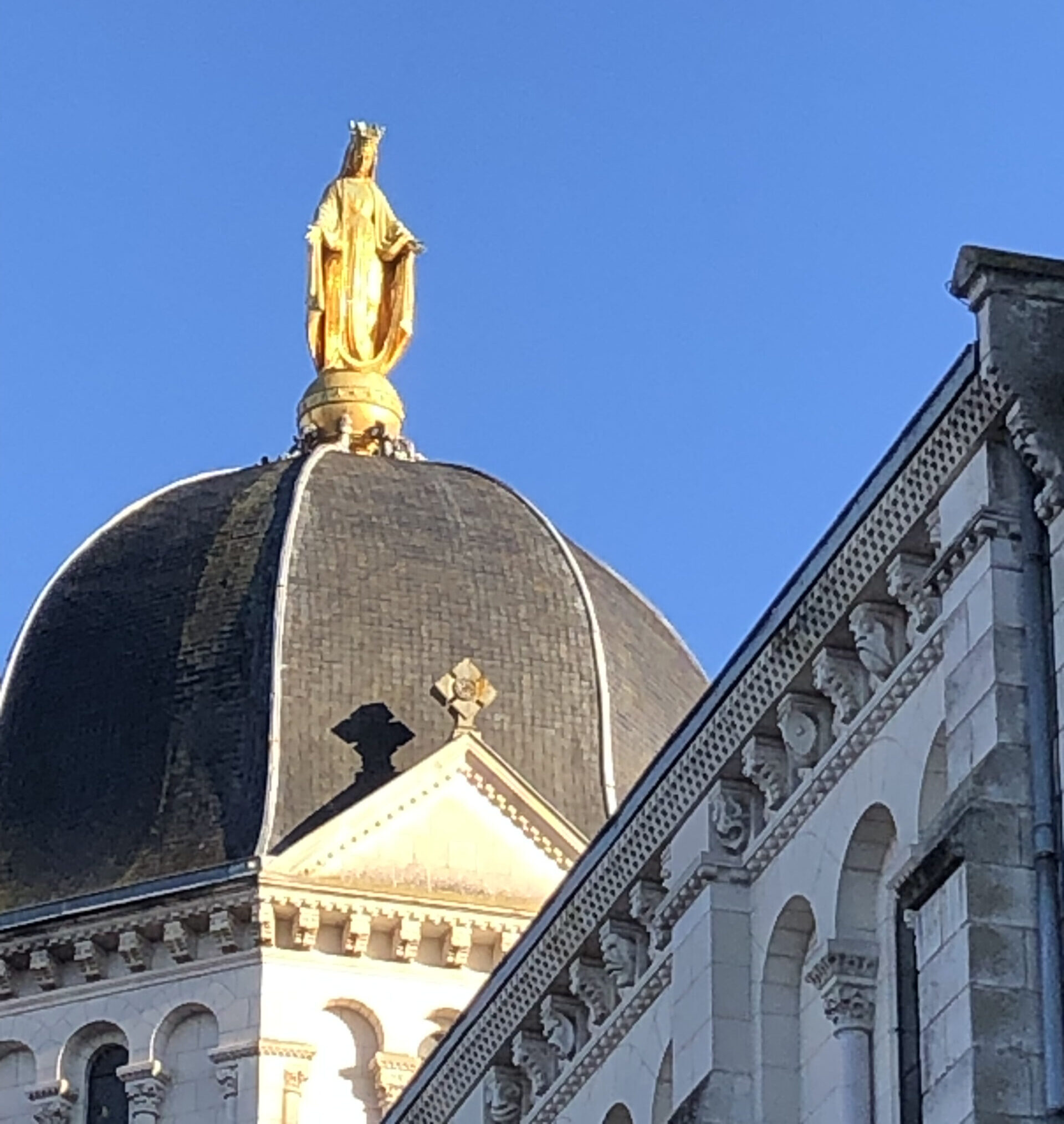
Halfway through France, in the Indre department, lies the town of Châteauroux on the river of the same name. In the centre of the town, on Rue Amiral Ribourt, stands the Notre-Dame church. The church can be seen from afar, as a six-metre gilded copper statue of Mary stands on its high dome. The church is built in the Neo-Romanesque style, from a design by architect Louis Henri Alfred Dauvergne (1824-1885).
Construction of the grand house of God began in 1877 and the church was consecrated in 1892. The interior of the Church of Our Lady features typical three-tiered facades, namely large arcades, blind arches and high windows.
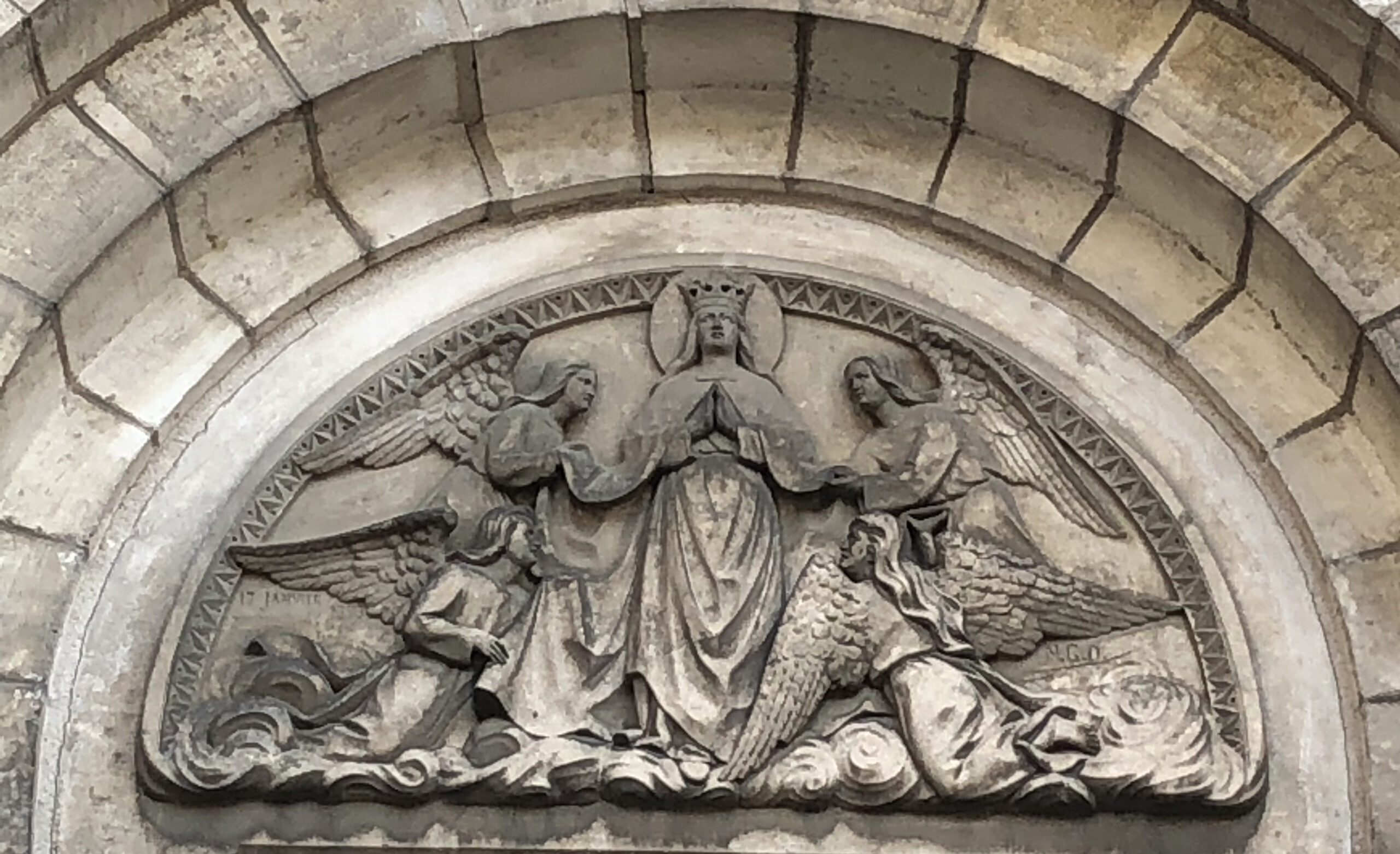
Large tympana make an impression at the entrance. The triangular pediments adorn the portal.
The church displays large stained-glass windows, created in 1882 by Eugène-Stanislas Oudinot of La Faverie (1827-1889). In 1882, stained-glass windows were also made by the Lobin workshop from Tours, where the second generation of the family business was led by Lucien-Leopold Lobin (1837-1892).
The Great Church displays many sculptures and finely carved capitals (finials) on the columns of the nave, which were created by sculptor and woodcarver Narcisse Giraud-Dupin (1836-1898).
In 2009, the Church of Our Lady was classified as a historic monument.

~~~

 Nederlands
  English (UK)
  Deutsch
  Français