History
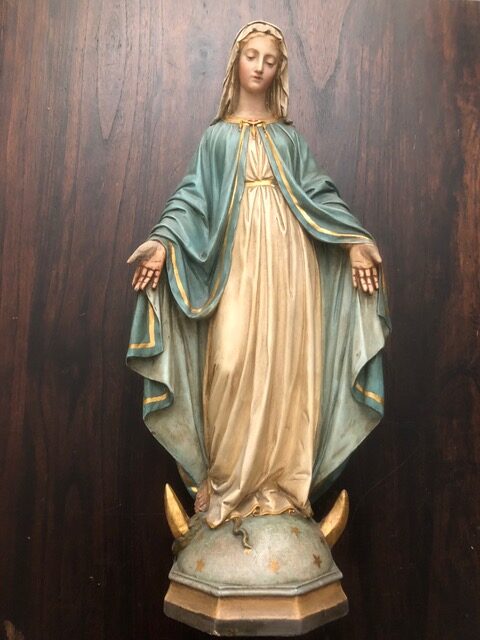
Since 1740, a stone chapel has stood to the north of the village of Saint-Laurent-de-la-Plaine and is dedicated to Notre-Dame-de-Charité (Our Lady of Charity). This chapel was built on the site of a former wooden field chapel. This was done in thanks for the end of a typhoid epidemic, which claimed the lives of more than 100 villagers. The chapel was vowed by the villagers to Our Lady if the contagious disease stopped claiming victims. Mary granted their prayers. Subsequently, the parishioners ensured the chapel was built. Processions were held at the chapel, and many prayers were offered to Mary in the small space.
Fighters of the French Revolution (1789-1799) nullify the veneration of Mary. On 25 August 1791, approximately 800 believers who were praying were dispersed by soldiers. On 29 August 1791, the chapel was destroyed and the statue of Mary was taken. The local residents were not discouraged and continued to pray at the destroyed chapel. Later that year, Mary appeared for several consecutive days. Our Lady was seen on the ruins of the chapel and between the branches of a tall oak tree, which stood near the severely damaged chapel. Mary was venerated at this tree because she had appeared here. Pilgrimages were also made to the tree, and people came to the destroyed chapel to pray to Our Lady. Miraculous healings took place. Jacques Cathelineau (1759-1793) organised pilgrimages to the site of the apparitions. He led the revolt in the Vendée against the military of the French Revolution. Due to his heroic actions, he was given the nickname “Le saint de l’Anjou” (“the saint of Anjou”). On 27 March 1792, the oak tree near the destroyed chapel was cut down. This happened on the orders of politician Louis-Marie de La Réveillière-Lépeaux (1753-1824), an anti-cleric and republican of the French Revolution. Many were arrested and sentenced to death by the French revolutionaries because they were present at the oak tree, the act being strictly forbidden.
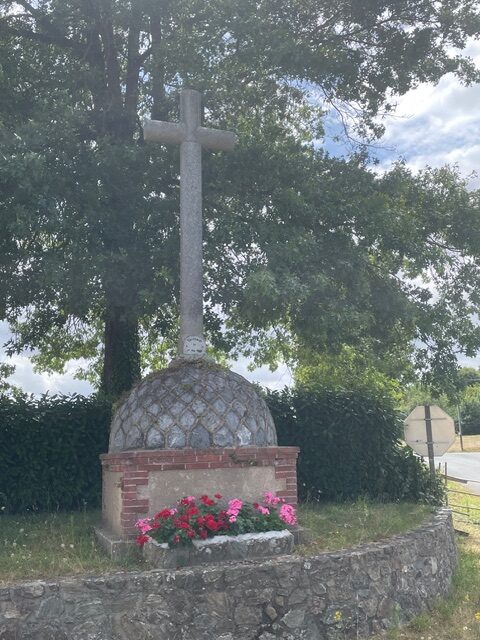
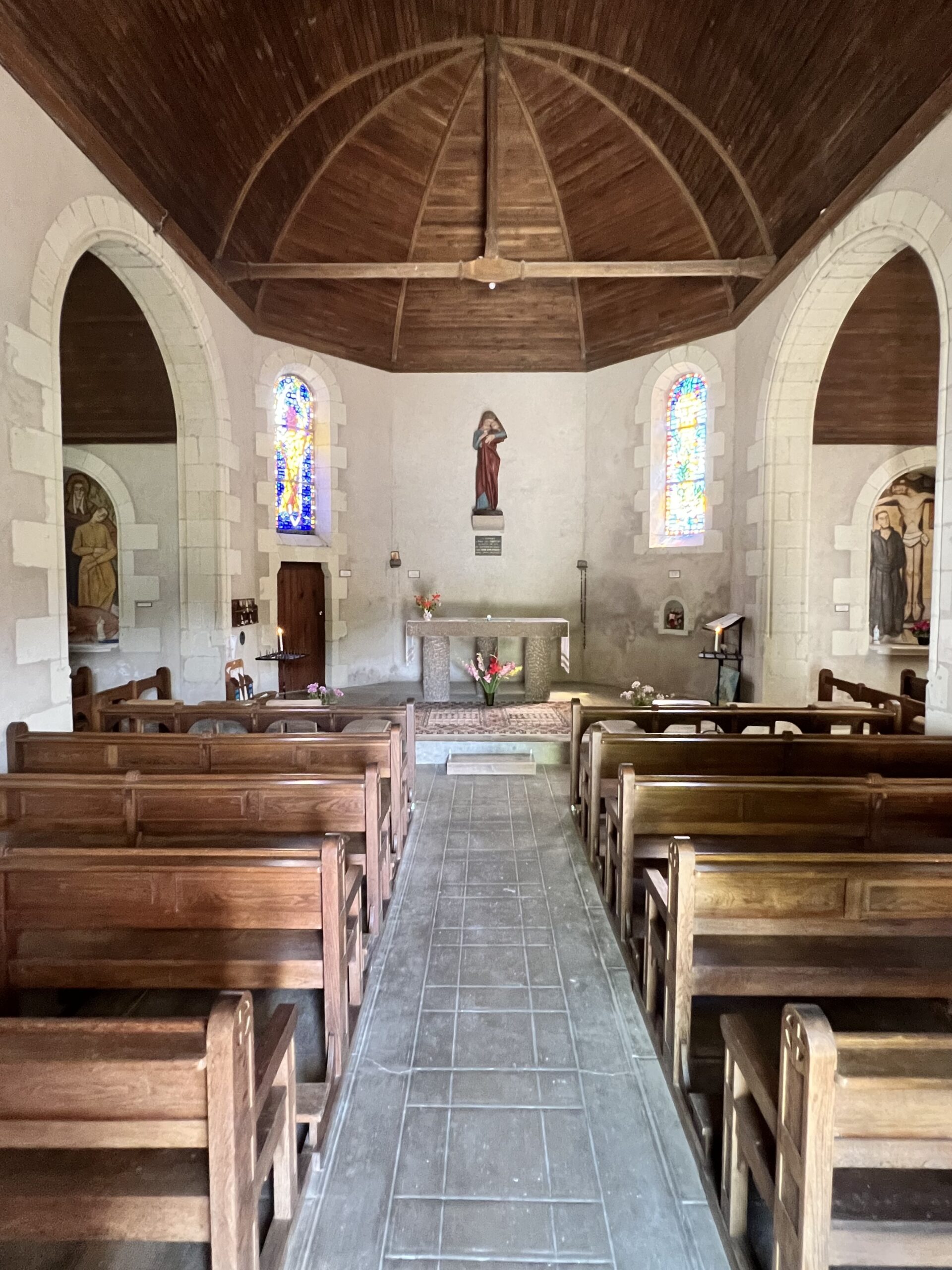
In 1820, a new chapel was consecrated. A dwelling was built next to the chapel. In the chapel, several stained-glass windows depict the unrest during the French Revolution and the history of many events at and in the chapel.
The transepts were added in 1855.
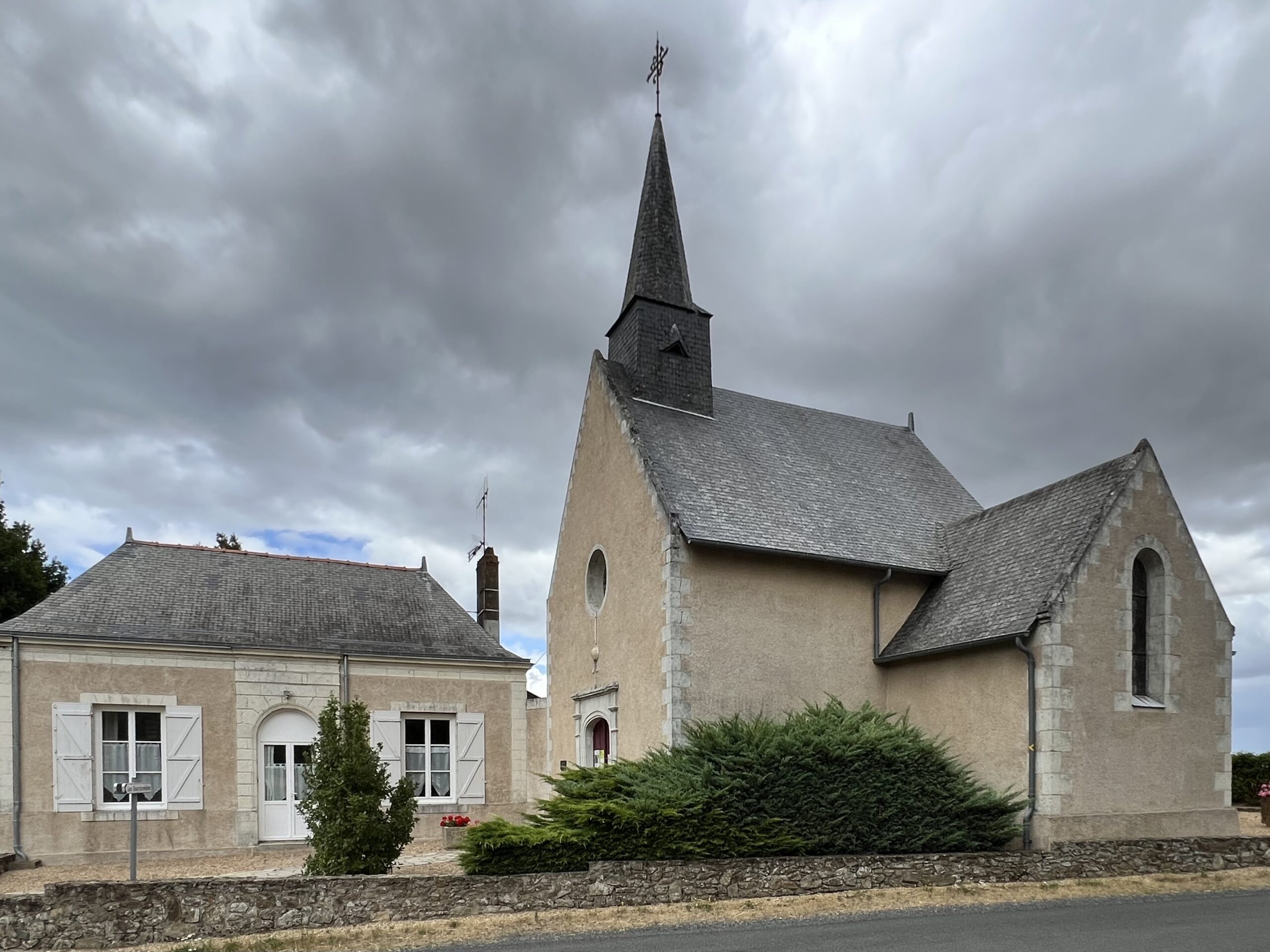
Since 1893, a granite cross has marked the spot where the oak once stood.
A meaningful stained-glass window was made in 1901 by Jean Clamens (1850-1918), a stained-glass painter from Angers.
In 1984, John Paul II, Pope from 1978 to 2005, born Karol Wojtyla (1920-2005), beatified the 99 martyrs of Angers. Among them were people from Saint-Laurent-de-la-Plaine, who were murdered during the French Revolution.
In 1955, the miraculous image was restored by Jean Fréour (1919-2010).
The esplanade was realised in 1986 and was laid out by volunteers.
Pilgrimage site
The chapel stands at a crossroads of minor roads. Next to the chapel is an adjoining building which may have been the home of a priest, verger or caretaker.
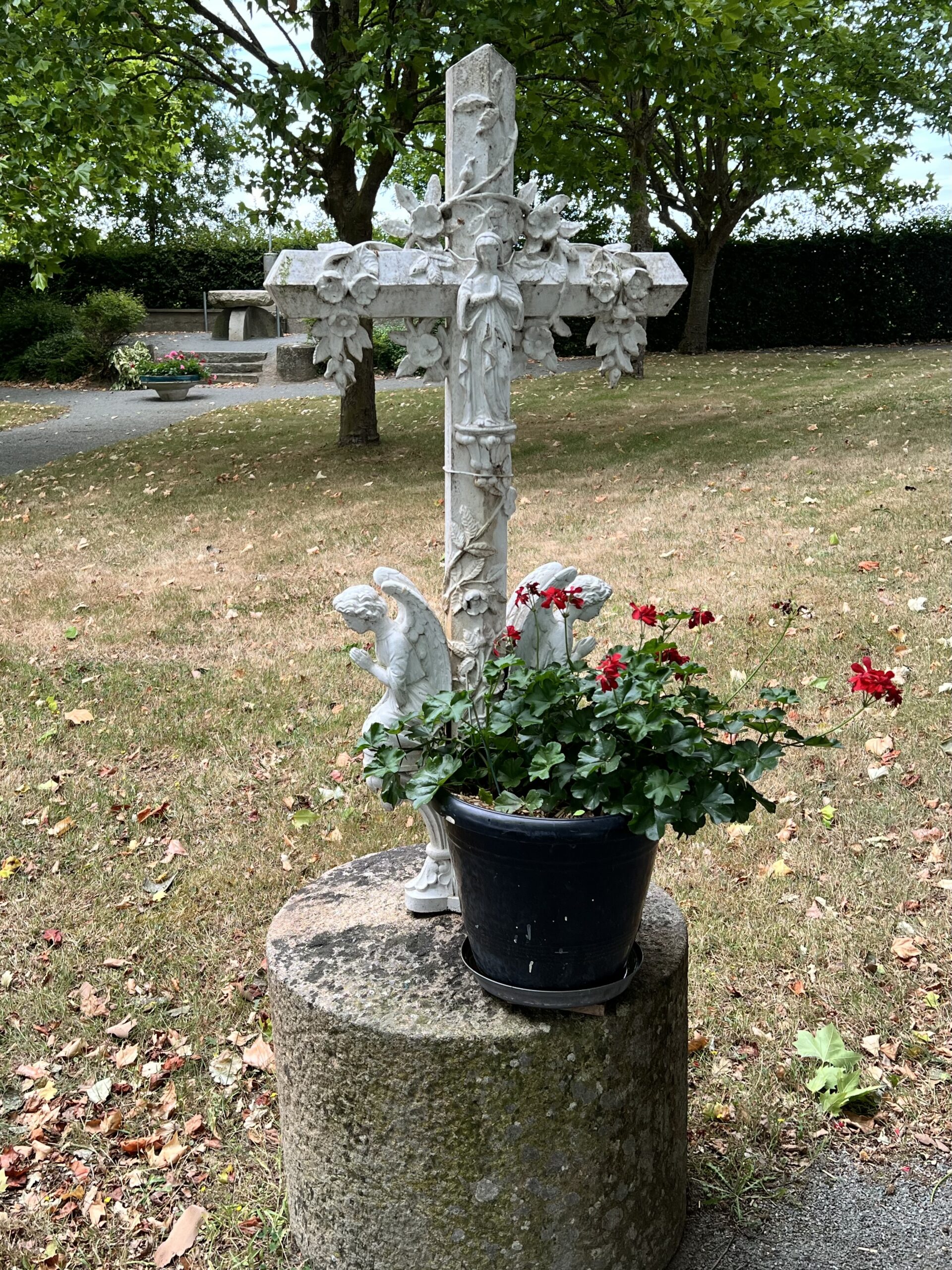
Opposite the chapel, a cross stands on three corners, one larger than the other crosses.
Next to the chapel is an esplanade.
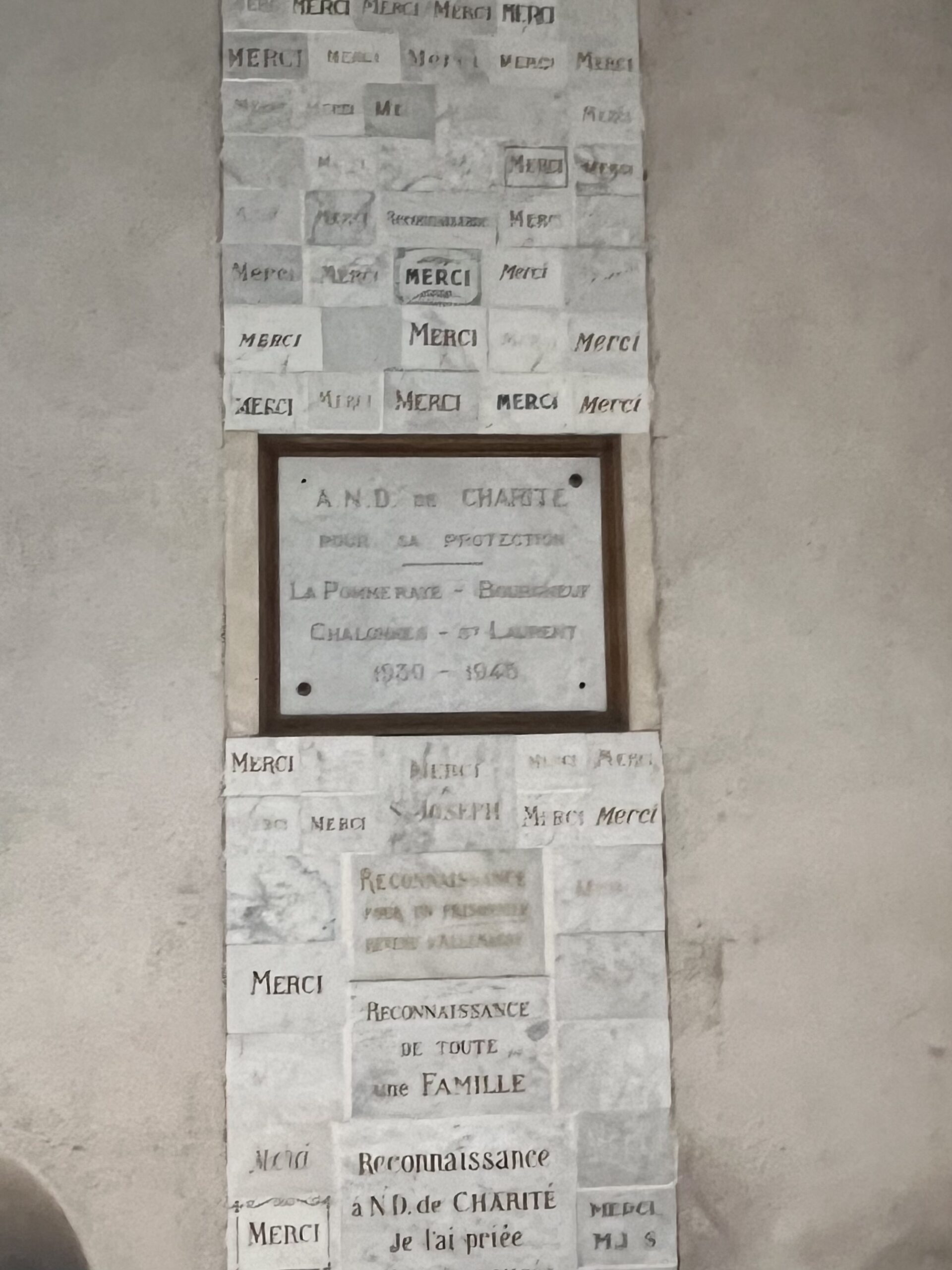
In the chapel, ex-votos are displayed against the walls, showing gratitude to Mary.
The devotional image is made of wood and polychromed, and stands high at the rear of the chancel. The chapel gives an intimate impression, which is so different to how it was a few hundred years ago.
ACCESSIBILITY
Saint-Laurent-de-la-Plaine is located in western France and belongs to the Maine-et-Loire department in the Pays de la Loire region. The Marian shrine is part of the arrondissement of Cholet.
The pilgrimage site is located in the municipality of 49290 Mauges-sur-Loire, near the A87 motorway, exit Saint-Lambert-du-Lattay. Follow the Route de la Chapelle, just outside the village of Saint-Laurent-de-la-Pleine.
Experience
During my preparation for a visit to the small pilgrimage site of Saint-Laurent-de-la-Plaine, I read that Mary appeared here in the 18th century. I also learned that many were killed here during the French Revolution. The previous chapel was also destroyed. Heartbreaking scenes have taken place on this site. A poignant history and its memories are displayed in the chapel. Then suffering, sorrow, war, and now silent peace. What a contrast in time.
On entering the chapel, a quiet reverence is required, for so much misfortune has occurred here. When I see the statue of mercy, it’s time to reflect on the violent times of years past. This calls for time to pray.
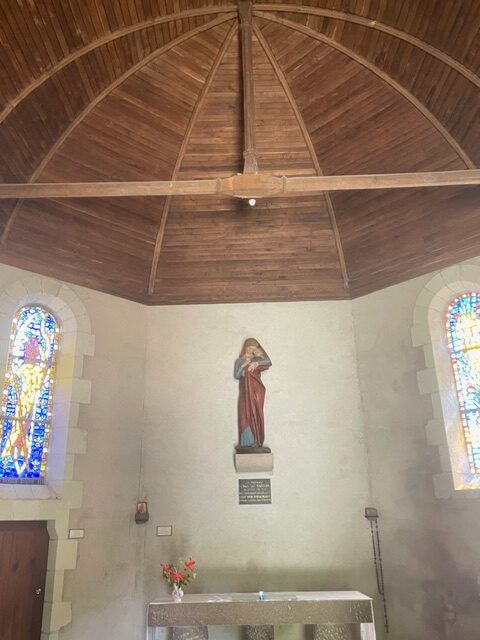
I then take a tour of the chapel and pause at memorials to young children who have passed away. I also admire the colourful stained-glass windows.
After that, I go outside and see the granite cross that commemorates the many victims who died here. I also see on the esplanade a cross with a small image of Our Lady.
Before departure, I will return to the chapel. I will take a seat on a bench and allow the impressions I have gained to settle in my memory. Finally, I will thank Mary for allowing me to visit this place of pilgrimage.
In the chapel, I see a prayer card lying there. If I translate the French text into Dutch, the first part of the prayer reads:
“Holy Mary, Mother of God,
Keep a childlike heart within me,
Pure and clear as a spring.
Give me a simple heart,
unaffected by sadness,
a beautiful heart to give,
tender and compassionate,
A loyal and generous heart
that forgets nothing good
and harbours no resentment
for any injustice.”
Environment
Saint-Laurent-de-la-Plaine lies in the Anjou wine region. The area has a rolling landscape with plenty of cycling and walking opportunities in the vicinity of the Loire River.
From Mauges-sur-Loire to Saint-Laurent-de-la-Plaine, it's 7 km to the southeast.
Leaving Chalonnes-sur-Loire to arrive in Saint-Laurent-de-la-Plaine is bridging 6 km to the southwest.
Leaving Cholet to arrive in Saint-Laurent-de-la-Plaine means travelling 43 km north.
Leaving Angers to get to Saint-Laurent-de-la-Plaine requires travelling 33 km to the southwest.
Leaving the large city of Nantes to get to Saint-Laurent-de-la-Plaine is to travel 80 km eastwards.
From Saumur to Saint-Laurent-de-la-Plaine involves travelling 82 km westwards.
~~~

 Nederlands
  English (UK)
  Deutsch
  Français