History
Once upon a time... This is not a fairy tale, but a real, extraordinary event.
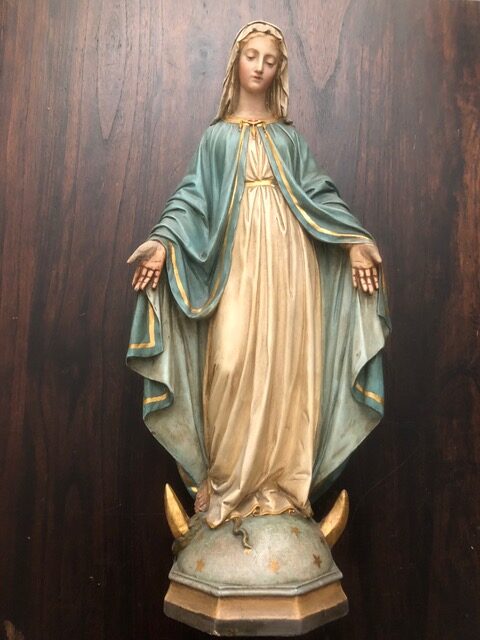
It is on the afternoon of April 30, 1752, that a statuette is discovered by 8 children: 4 boys and 4 girls from the small farming village of Neuvizy. The children are: Elisabeth Leroux, 16 years old, Jeanne-Marguerite Prévoteau, 15 years old, Jeanne-Louise Lapierre, 14 years old, Marie-Poncette Leroux, 14 years old, Antoine Leclerc, 14 years old, Pierre Pasquier, 14 years old, Jean-Nicolas De Bossus, 14 years old, and little Charles Piot, 11 years old. It is a statuette of Mary, and it glitters in a thicket. This happens as they are going to catechism class in preparation for communion. The lesson is given by a priest in the nearby Villers-le-Tourneur.
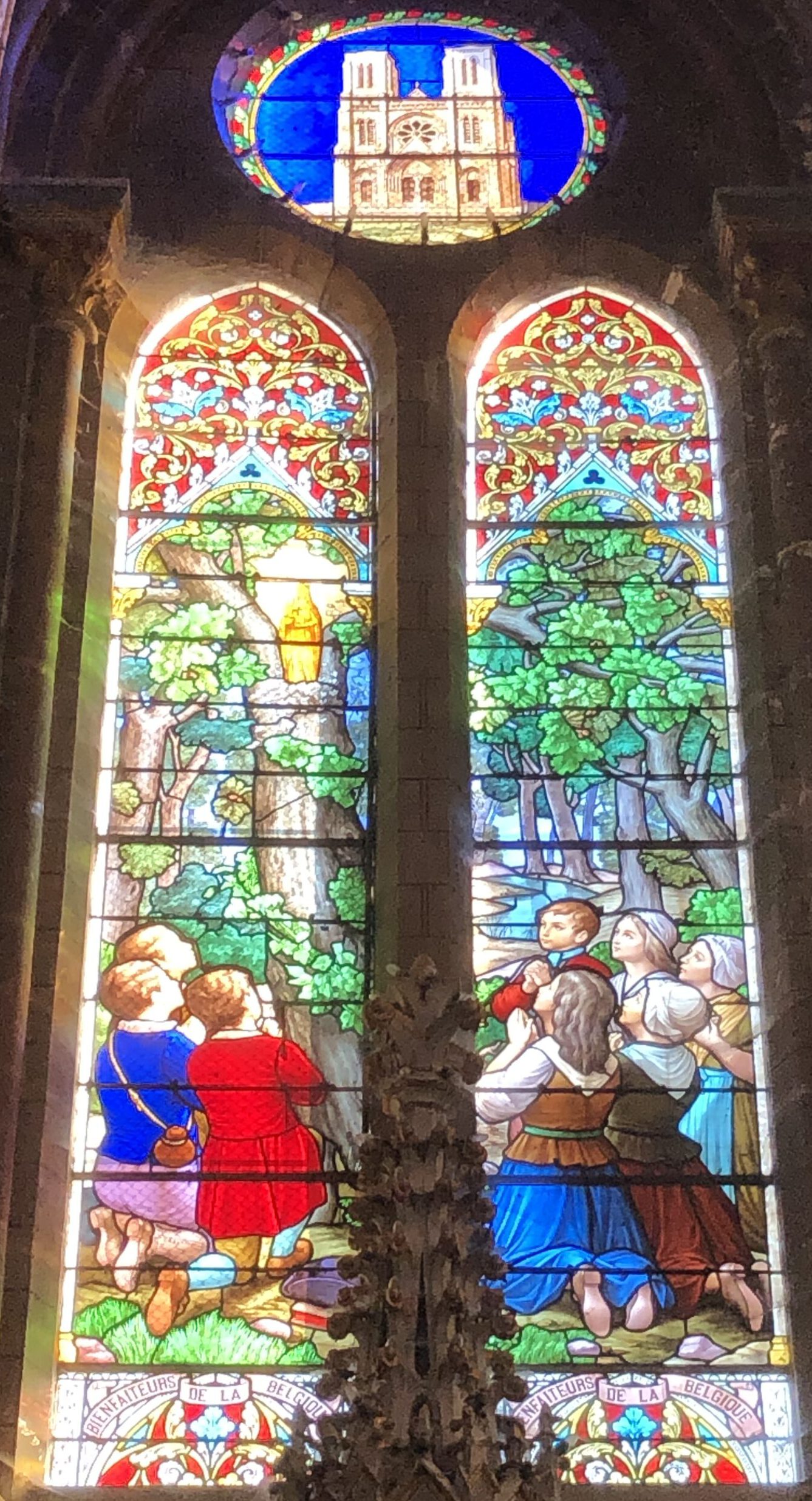
The discovery... Halfway along their route, the children drink some cool water and sit on a verge. One of the children discovers a small, glittering statue of Mary with the child Jesus in her arms on the low-hanging branches of a large oak tree, surrounded by ivy. The small image is surrounded by a halo. What a wonderful surprise! The children kneel, pray, and sing. They also recite parts of the Litany of Mary. The boys and girls are convinced that this statue has never been here before, as they know this wood, where they often play. The children are amazed by the light on the ivy that surrounds the statue.
Upon arriving at the presbytery, they tell the priest of their remarkable event, and they find the light around the statuette particularly special. The priest listens to the story but is not easily impressed and doubts the event they’ve recounted. After all, miracles don't happen continuously, and children are credulous. However, he knows these boys and girls well, and has for years. The priest is spurred on by the credible testimony of the children and the conviction evident in their eyes. The priest begins his investigation. He goes to the oak tree, sees the statuette, barely 10 cm in size, which is surrounded by ivy. He then tells the eight of them that he will place the statuette in the church tomorrow, 1st May 1752. Everyone is convinced that the statuette of Our Lady has miraculously appeared in the Neuvizy woods. This must be a sign from the Holy Virgin.
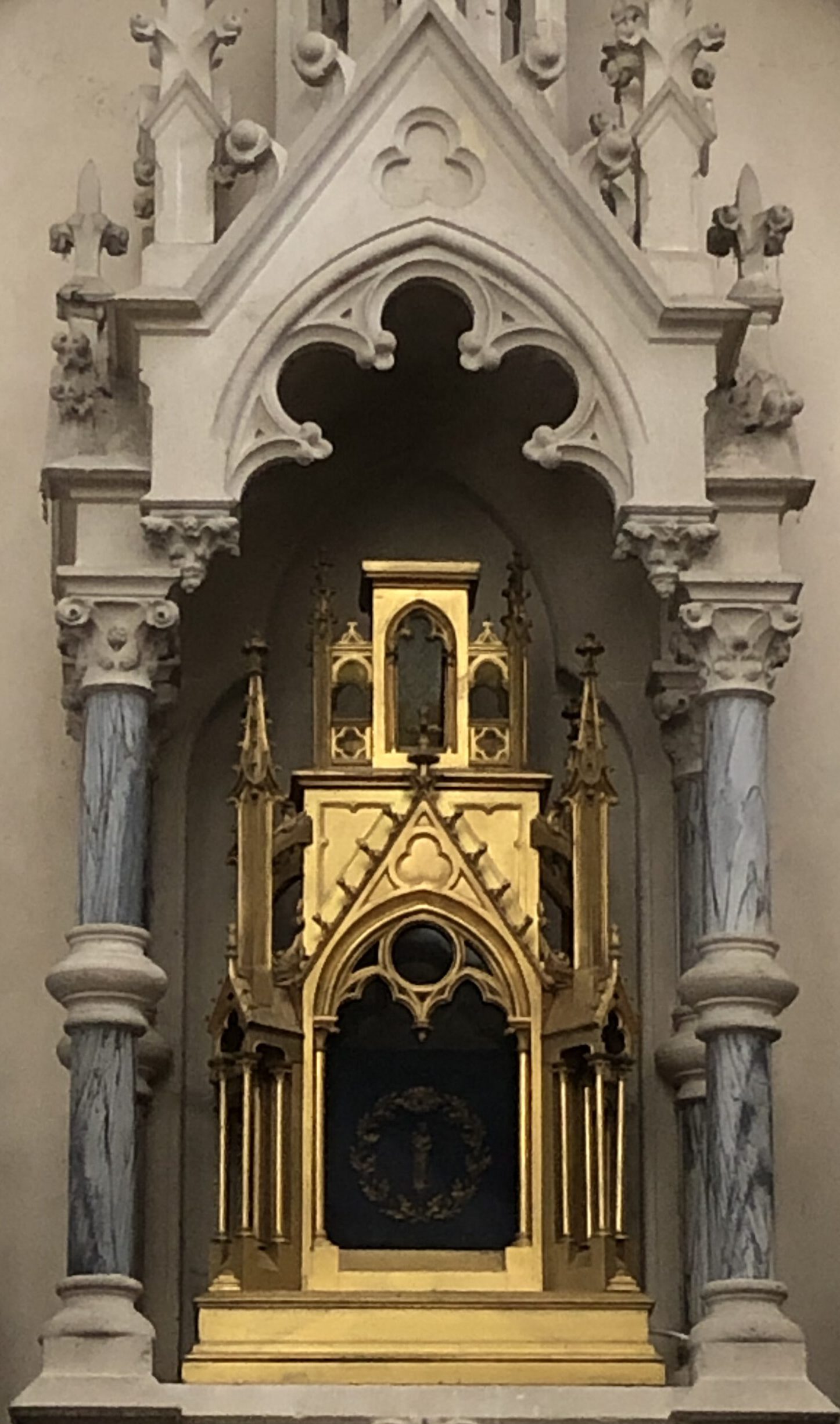
On 12 October 1752, Armand Jules de Rohan-Guémené (1695-1762), Archbishop of Reims (1722-1762), came to Neuvizy to visit the rural folk. The earnest Canon Meunier wished to persuade the Archbishop to be open to the children who had discovered the statuette of Mary. The statuette was solemnly placed on the church altar. From then on, the small image of Mary was called Our Lady of Good Help. In the years that followed, miraculous events occurred, such as inexplicable healings. Processions were also held. This, in part, led many pilgrims to come to Neuvizy.
Due to the influx of visitors, the church becomes too small and a decision is made to build a new, larger church. However, construction is delayed for years. The French Revolution (1789-1799) restricts the practice of faith and few people come to Neuvizy. After this unpleasant period, pilgrimages resume and work on a sanctuary is carried out in stages. In 1818, Abbot Sommé becomes the first priest in Neuvizy, appointed by the church authorities. In that year, a cross is erected near the site of the apparition. Also present is Charles Piot, the only surviving person of the eight children.
On 1 September 1846, Thomas-Marie-Joseph Gousset (1792-1866), Archbishop of Reims (1840-1866), installed the church regulations for the Confraternity of Our Lady of Perpetual Succour of Neuvizy. The members of the Confraternity have a daily prayer with the text: “Our Lady of Perpetual Succour, protect us from all dangers and give us a compassionate heart, like Thine for the needs of our brethren.”

Pope Pius IX (1846-1878) agreed on 19 October 1853 to a full indulgence of forgiveness for visiting and praying at Neuvizy.
Pastor Nicolas Valentin (1818-1876), who was active in Neuvizy from 1864 to 1876, is the historian of the pilgrimages and the shrine. He was not only the director of the pilgrimages but also the building pastor for the new church. On 4 February 1865, work began on the new church. On 4 May 1865, Archbishop Gousset laid the first stone, with approximately 10,000 pilgrims in attendance.
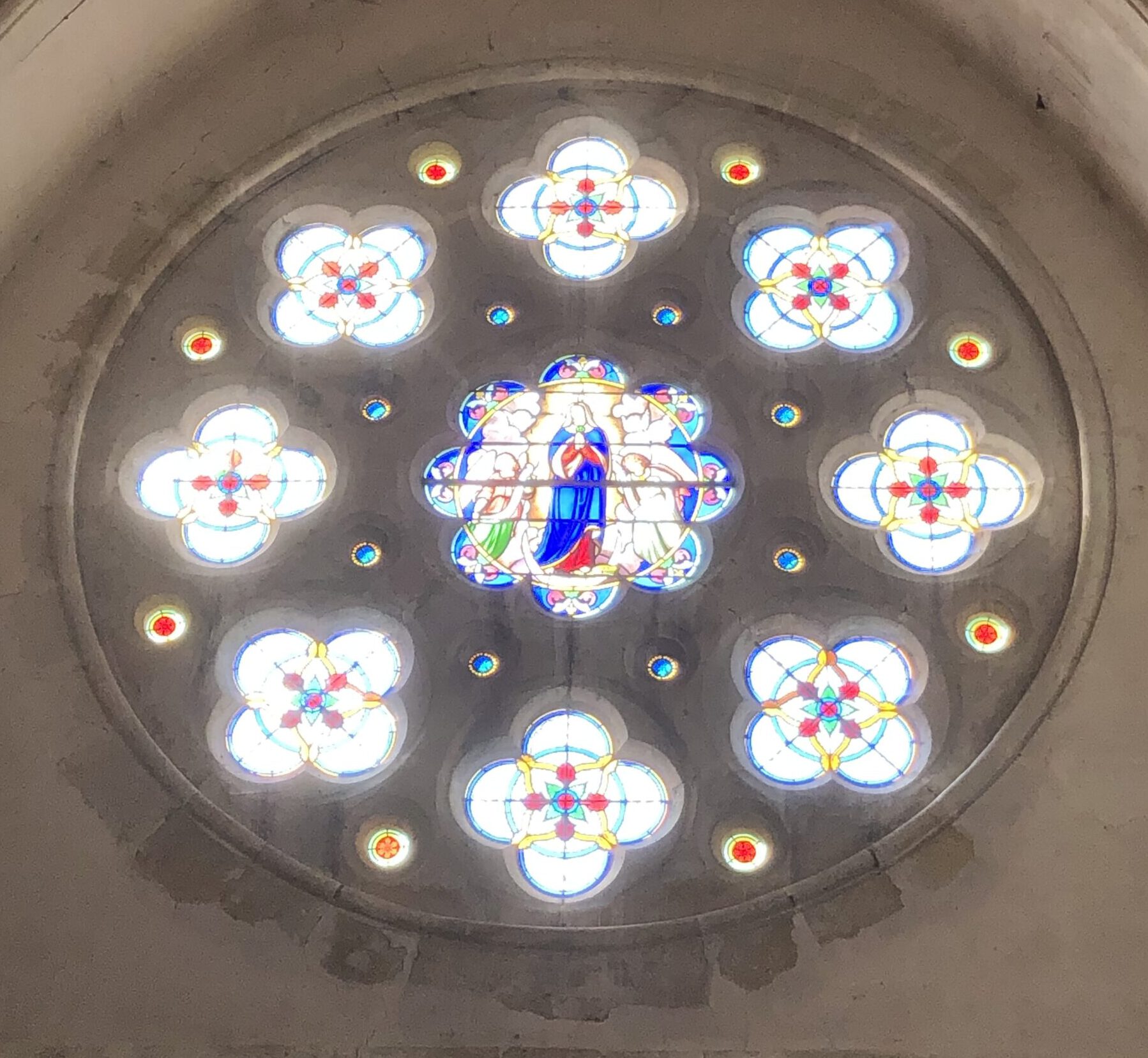

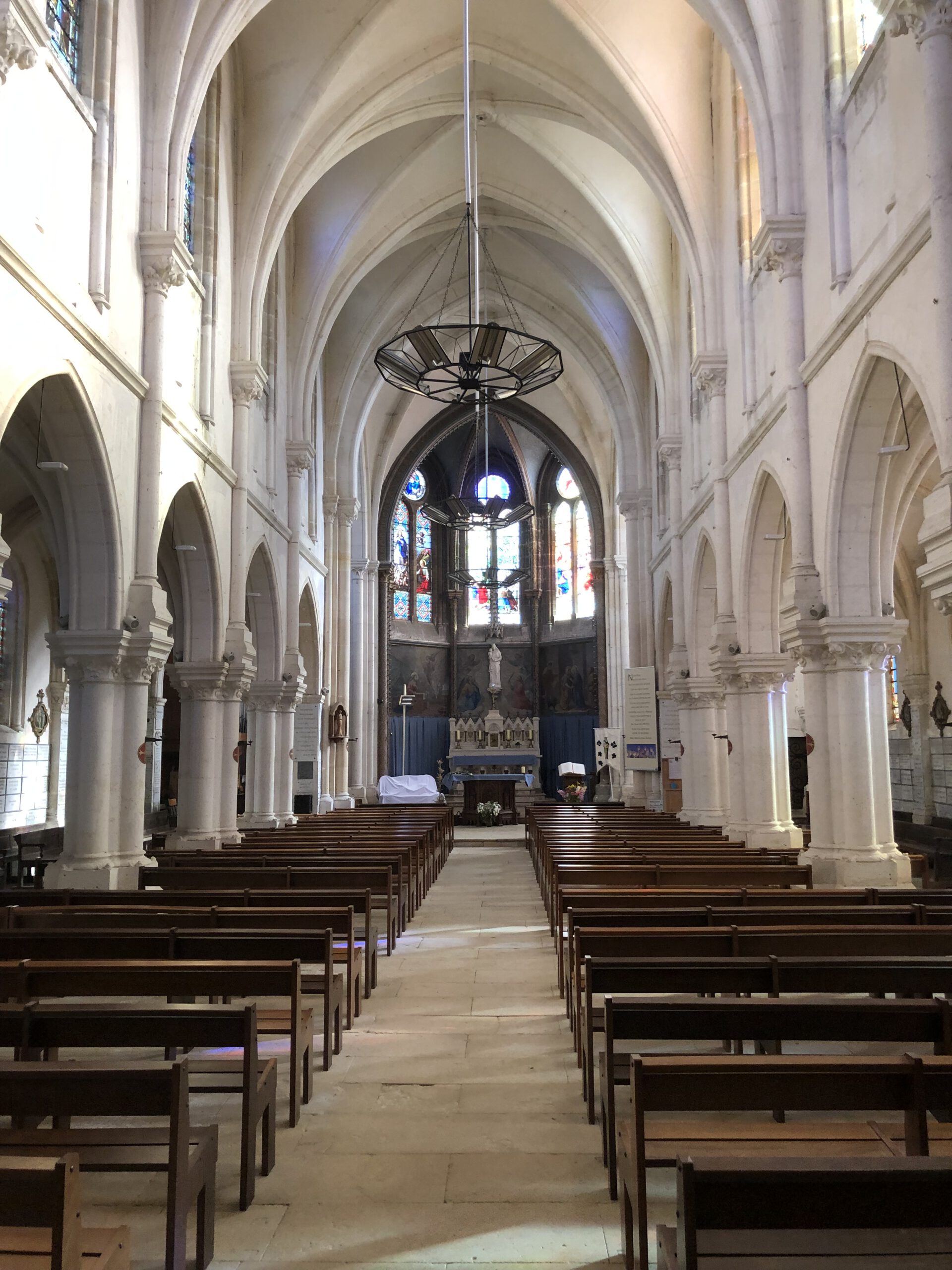
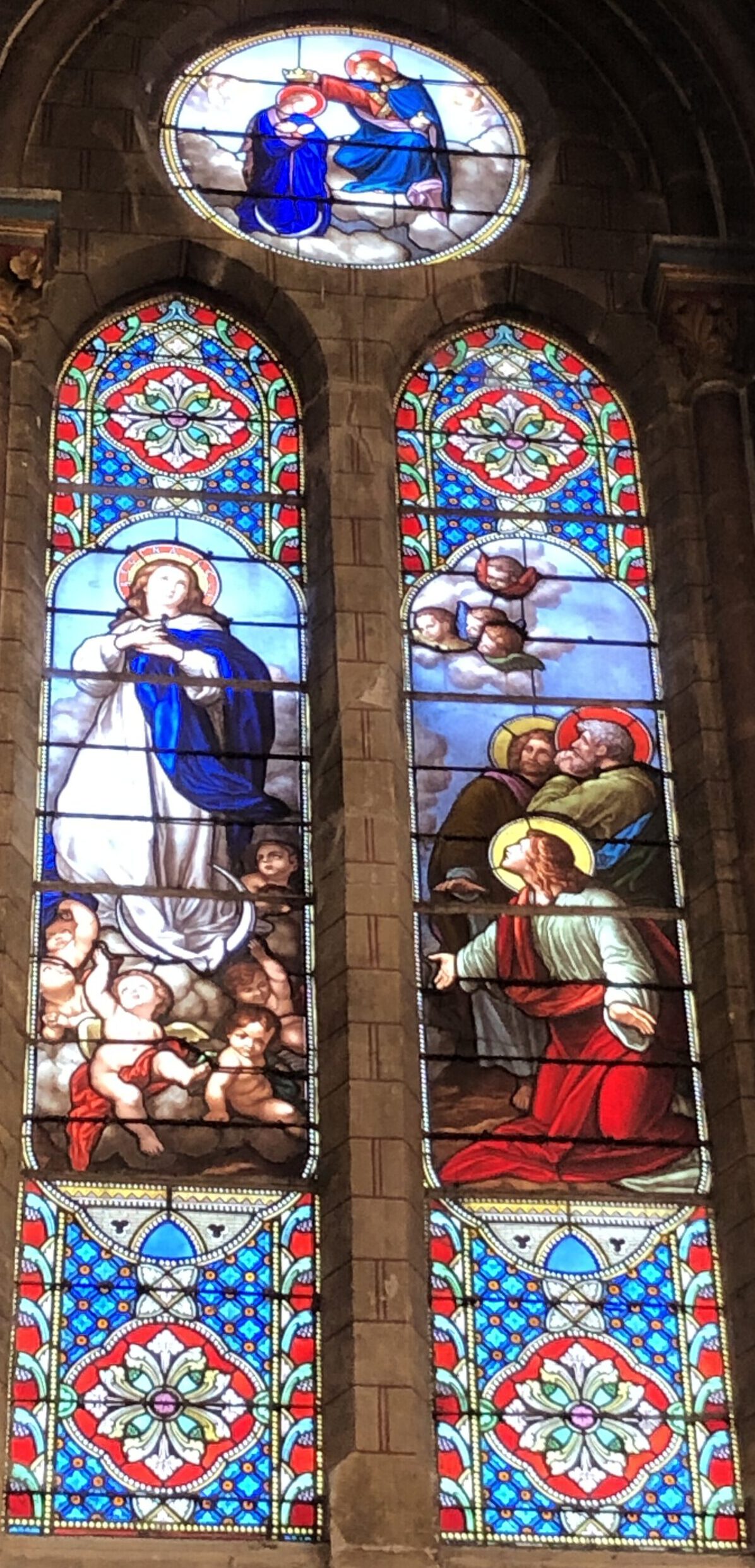
In the church, there are large stained-glass windows. These were made by the Champigneulle company between 1876 and 1897. The enormous rose window was manufactured by the Simon-Marq workshop in Reims. The church was completed in 1924.
In 1936, Emmanuel Suhard (1874-1949), Archbishop of Reims (1930-1940), consecrated the church.
Since 2002, the church has been a basilica.
Pilgrimage site
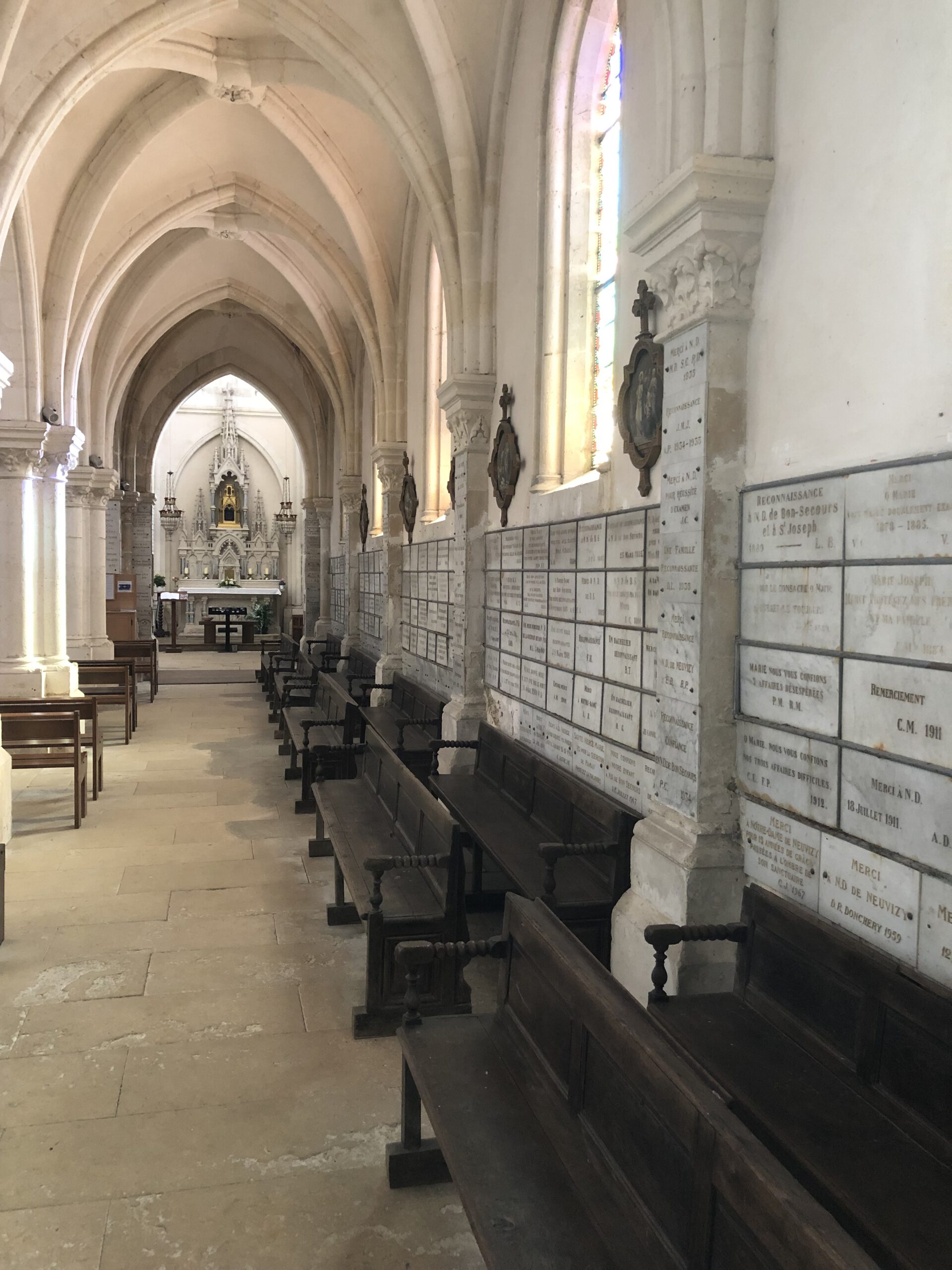
The annual procession is held on May 1st. On that day, it is commemorated that in 1752 the found statue of Mary was placed in the church. Every year on August 15th, there is a large pilgrimage to the basilica and to the Mariaweg, which lies on the edge of the village. This is why Neuvizy is also called the Ardennes Lourdes.
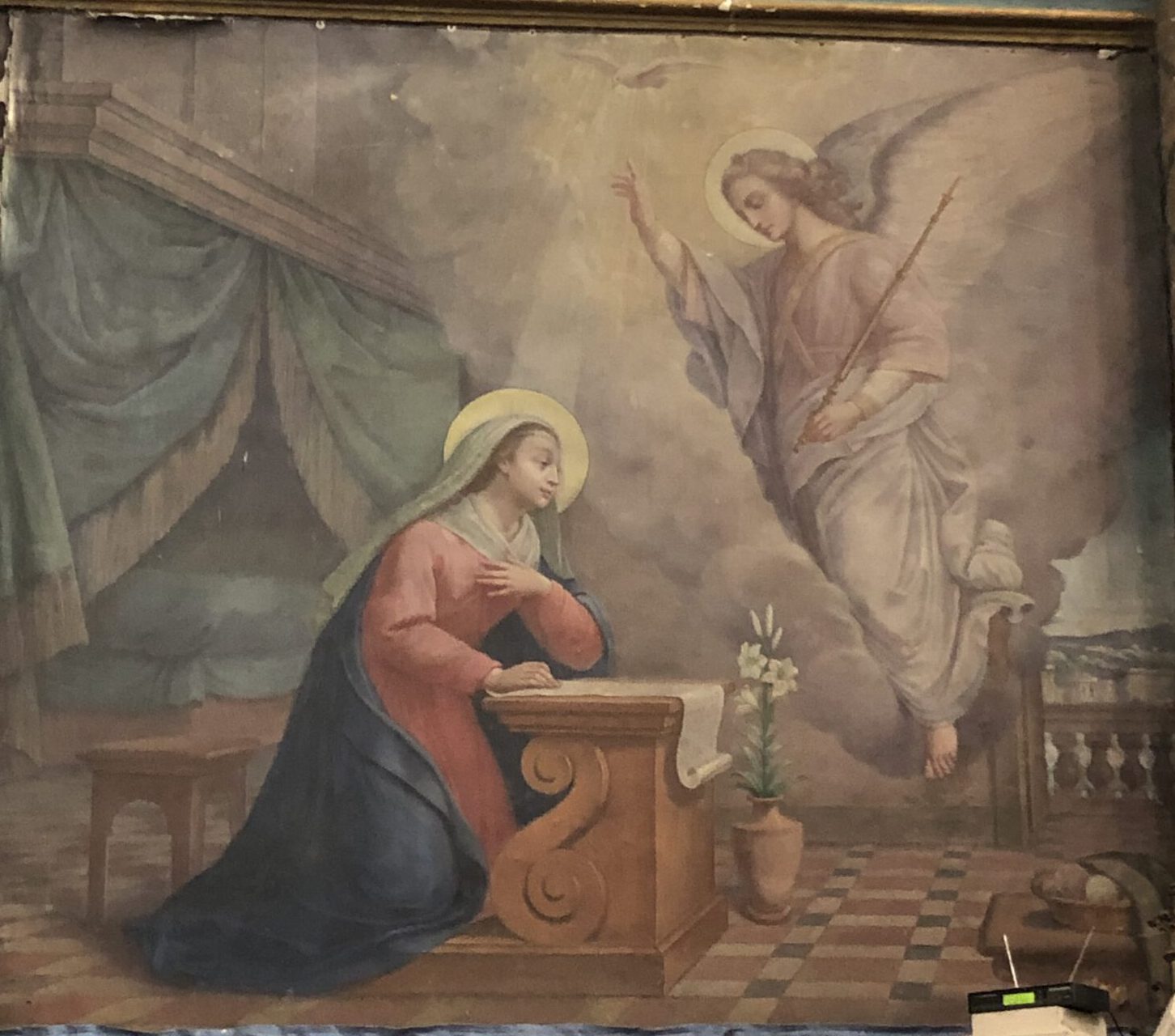
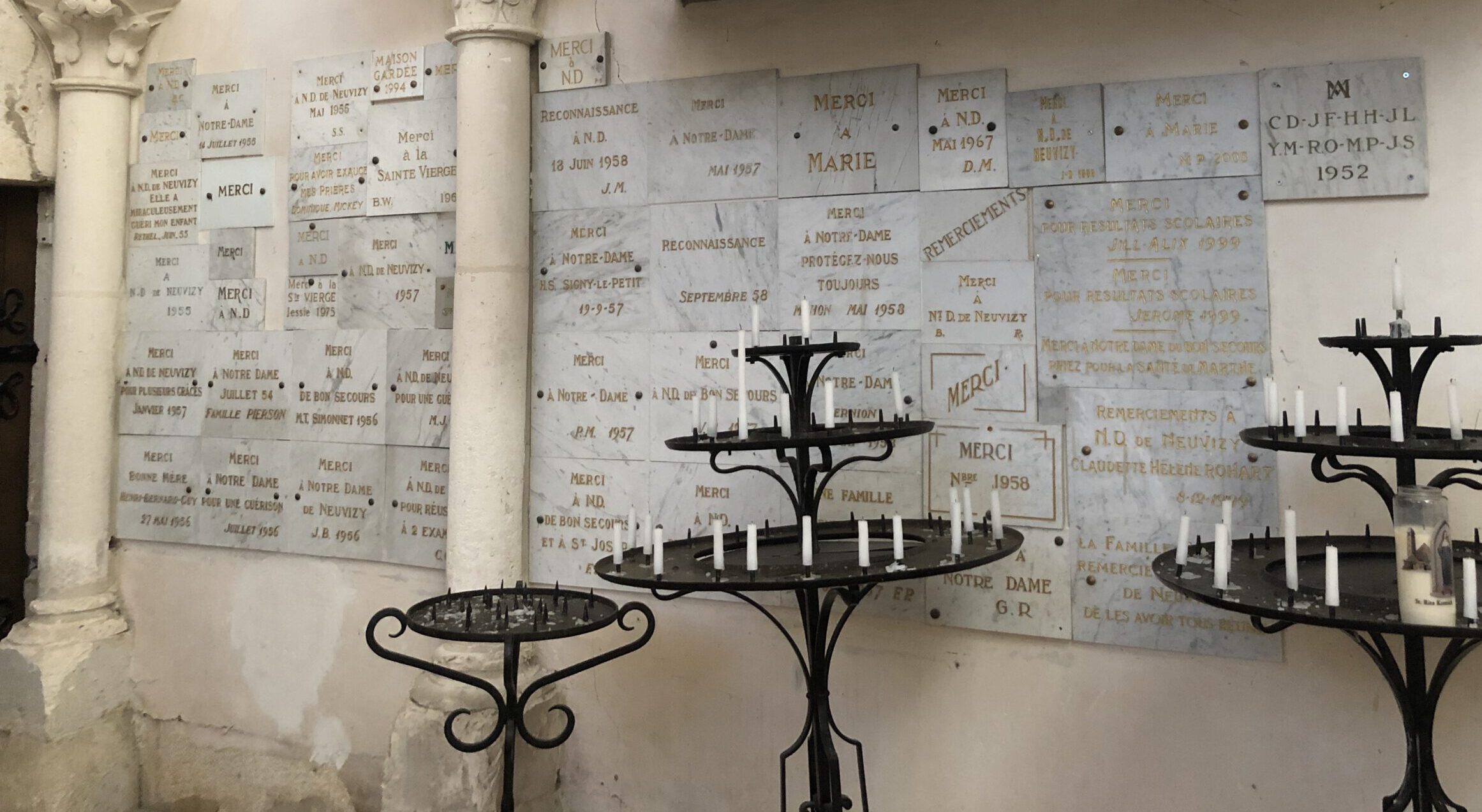
There is much to see in the basilica, such as hundreds of ex-votos, statues of Mary and effigies of other saints. Large, colourful stained-glass windows and paintings about Mary also adorn the basilica.
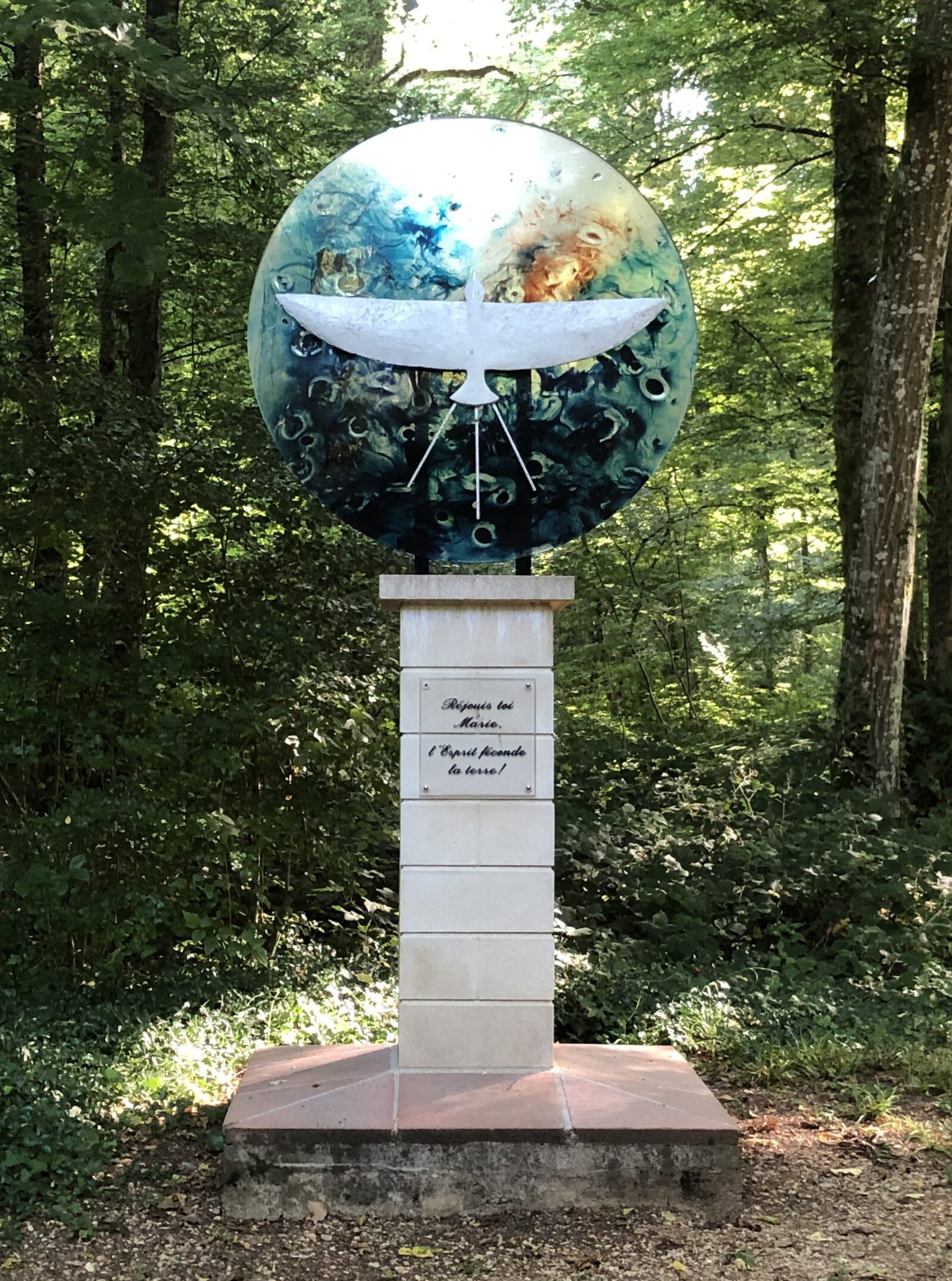
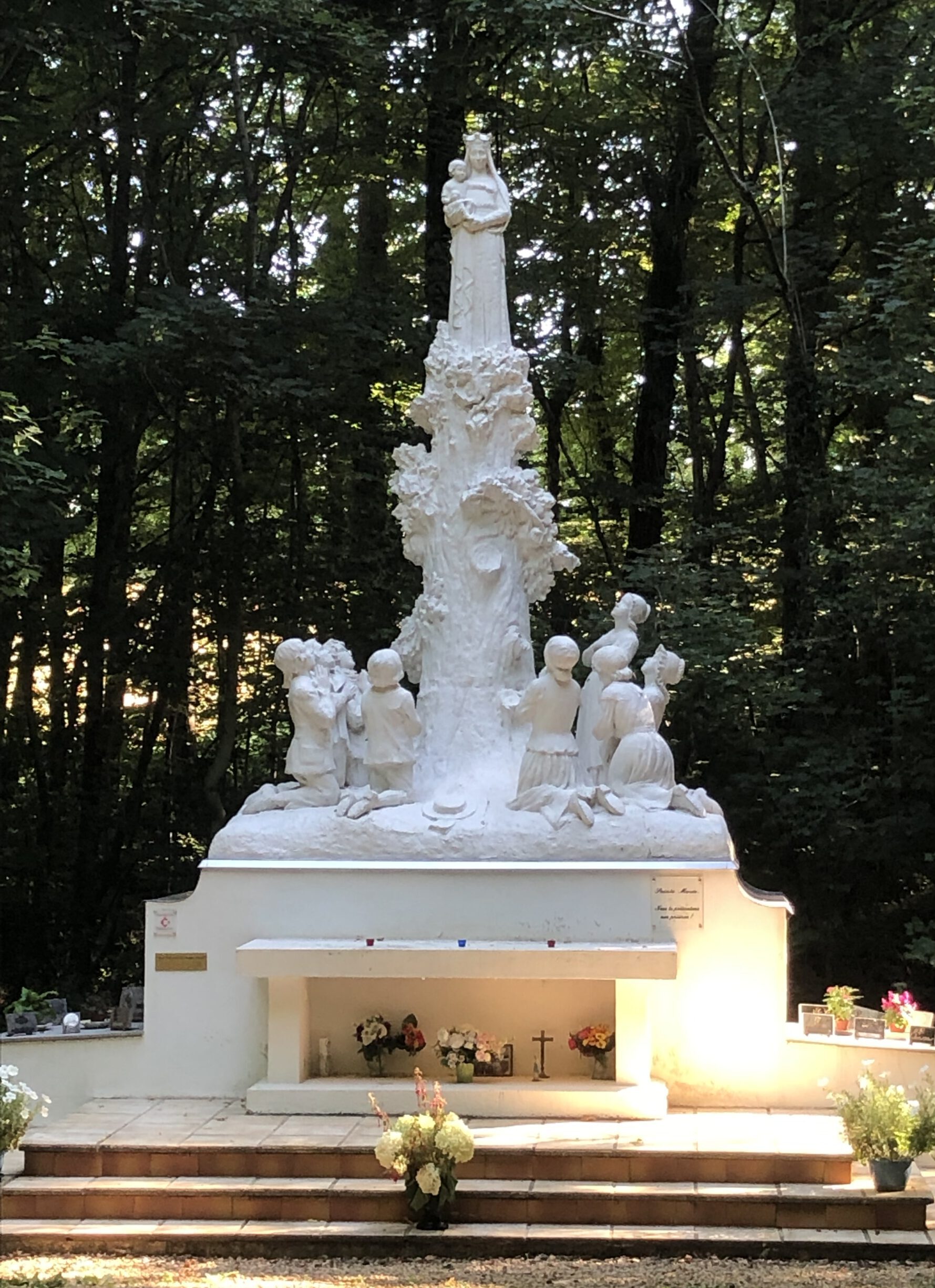
For visitors, the Mariaweg is recommended, which is located on the outskirts of the village. There are statues there, and at the end of the forest path is the place where the 8 children found the small statue of Mary. A large, white monument has been erected here, commemorating the special event that has made Neuvizy famous.
ACCESSIBILITY
Neuvizy is located in northern France, not far from the Belgian border, between Reims and Charleville-Mézières.
The address of the Basilica “Our Lady of Good Help” (Notre-Dame de Bon Secours) is:
Rue de l'Église 2-4, 08430 Neuvizy.
Actual information can be found via www.paroisse-notre-damedes-cretes@orange.fr.
Experience
Via the Belgian Ardennes, I am going to the French hills. As I approach Neuvizy, I see the tall, white Basilica of Our Lady of Good Help amidst houses in a green setting. Having arrived in the village of Neuvizy, I head to the square on Rue de l’Église and stand before the immense basilica. The impressive building was elevated to basilisk status by Pope John Paul II in 2002.
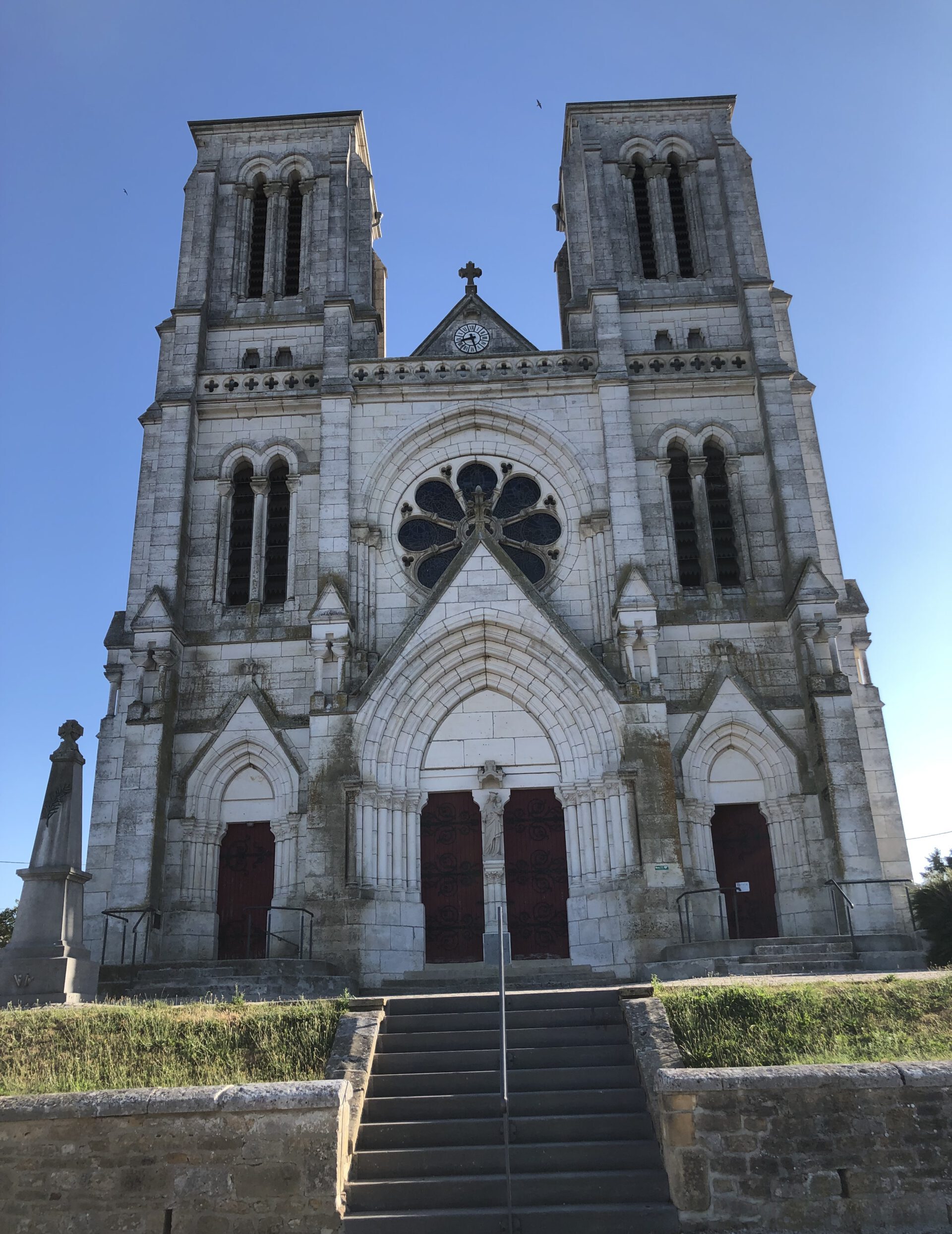
I walk up the stone steps and enter the basilica. What a church! With long walls full of thanks to Mary. There is a lot of creativity in the texts of the ex-votos. Further in the basilica there is a place to light candles, and I gratefully make use of that.
In the basilica, one can admire the many colourful stained-glass windows. Among these are several depicting Mary, such as the Annunciation, Nativity, Presentation of Jesus at the Temple, and the Coronation of Our Lady.
After visiting the basilica, I'm going to the shop to buy some religious items, including candles for friends. The shop is on the left of the basilica. There I learn that about 100,000 people visit Our Lady of Neuvizy annually.
Next, we visit the Maria Weg, which lies on the outskirts of the village. This Maria Weg is about 600 metres long and features, among other things, a large cross and several statues. Florence Enders from Reims did a lot of work on the statues along this route. Finally, I arrive at an open space where a tall, white monument stands. This memorial commemorates the discovery of a statue of Mary by eight children on 30 April 1752.
Environment
After visiting the pilgrimage site of Neuvizy, the city of Reims is recommended. To visit Reims, it is 61 km to go south-east.
REIMS – PALAIS DU TAU
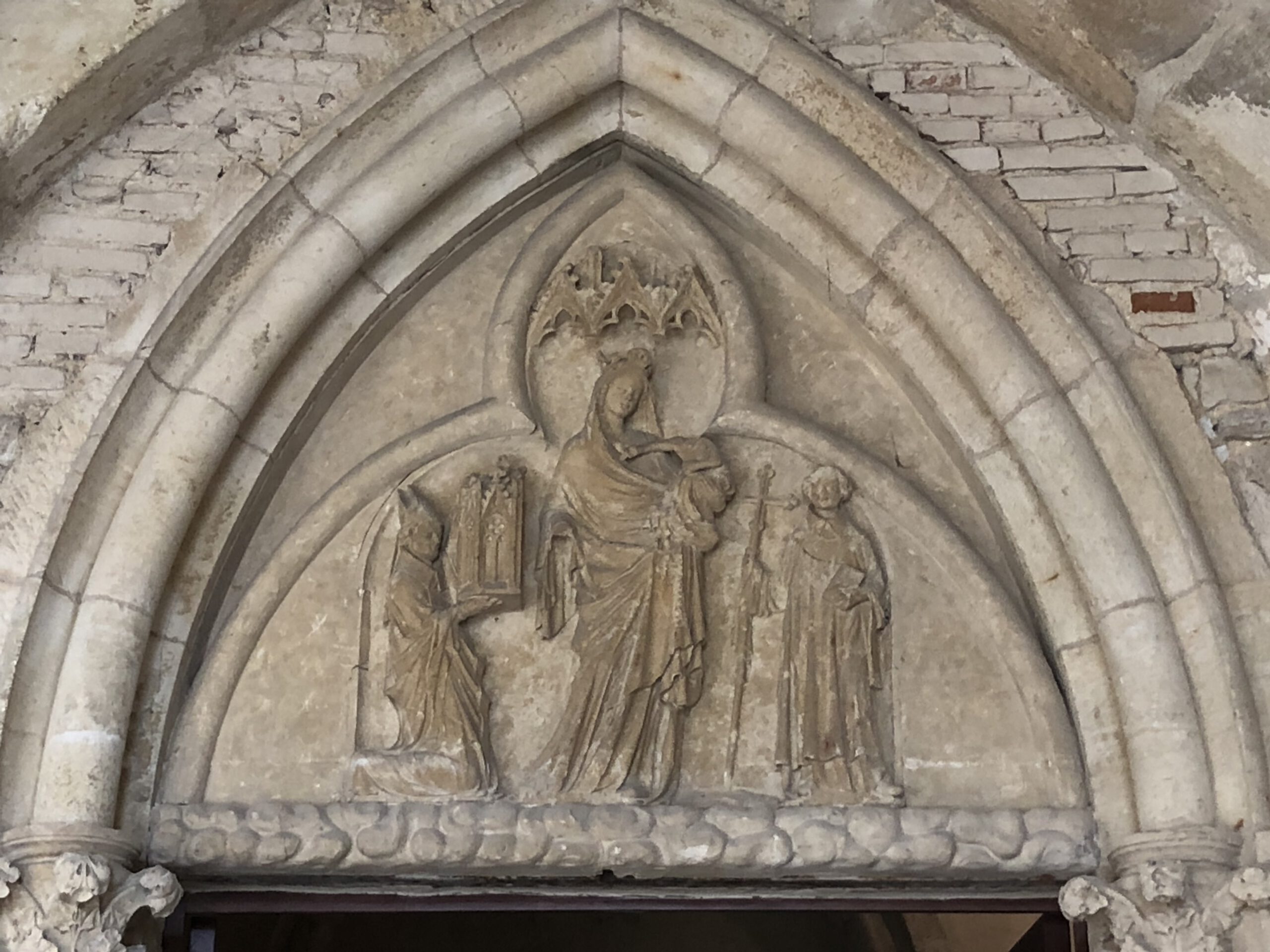
A palace stood on the site of the current Palace of Tau as far back as Roman times. The former episcopal palace in Reims, is located next to the cathedral in the city centre. In the 17th century, two buildings of the palace had a T-shape, and it is from this that the palace derives its name. The letter “T” represents Tau in the Greek alphabet. Furthermore, the first episcopal cross was T-shaped. A palace stood on the site of the current building as far back as Roman times.
In 1210, after a great fire, the palace was rebuilt and extended with a chapel. A renovation followed in the 15th century. In the 17th century the palace acquired its current appearance. During the First World War/Great War (1914-1918) the building was badly damaged and the subsequent, long-term restoration was completed in 1972.
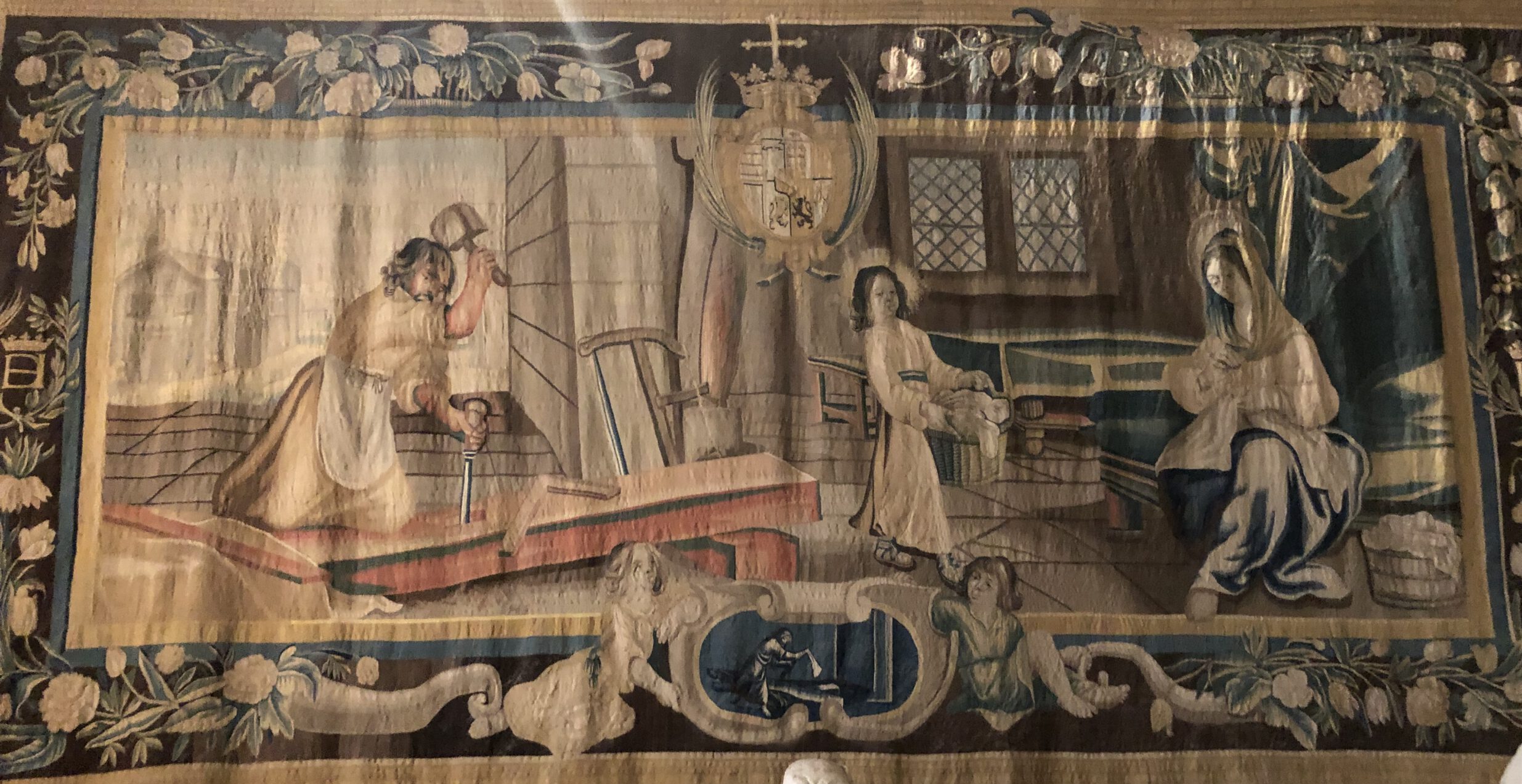
The museum is sumptuously decorated and displays many statues, including one of the gigantic Goliath measuring 5.40 m from the 13th century, weighing 6000 kg.
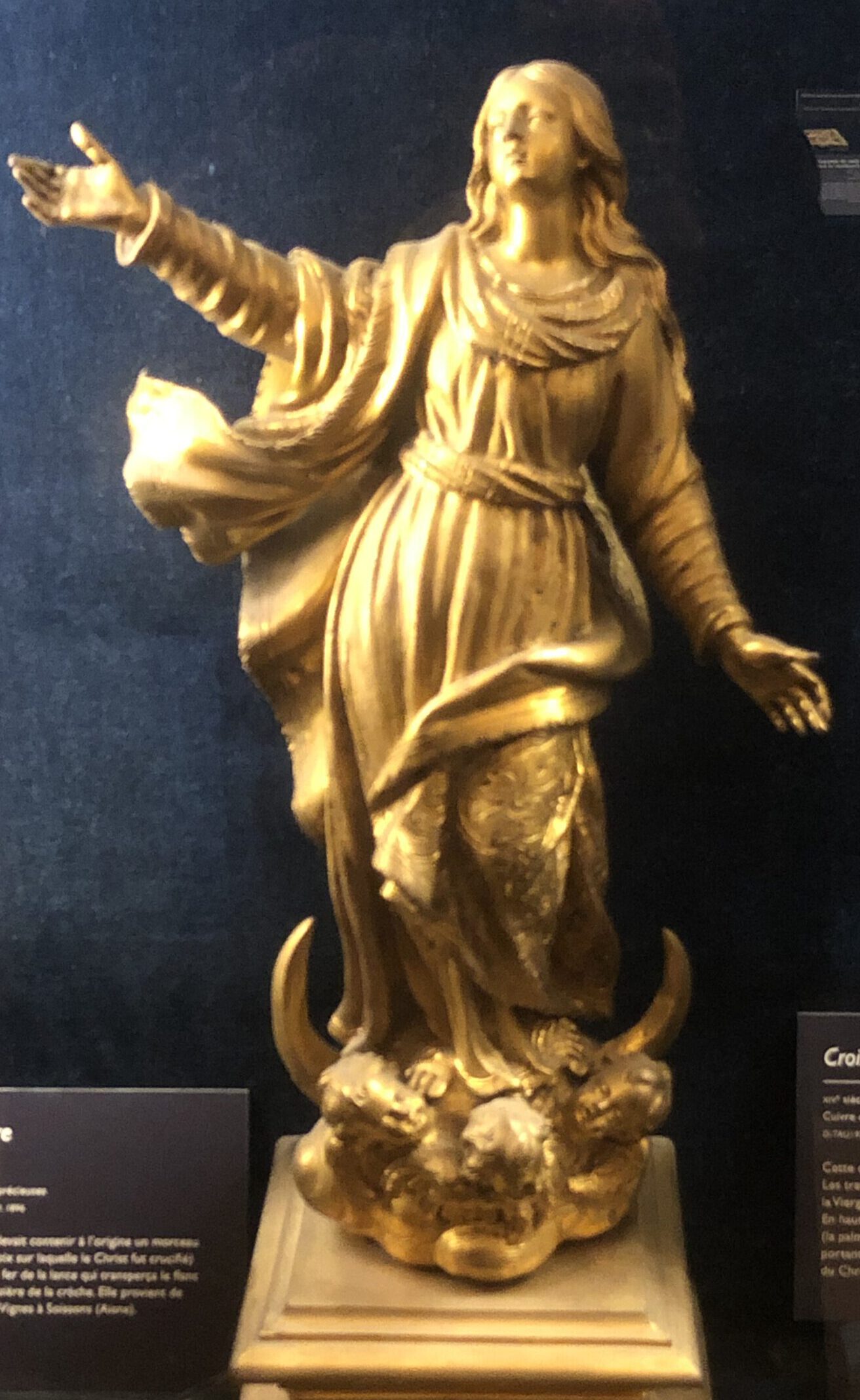
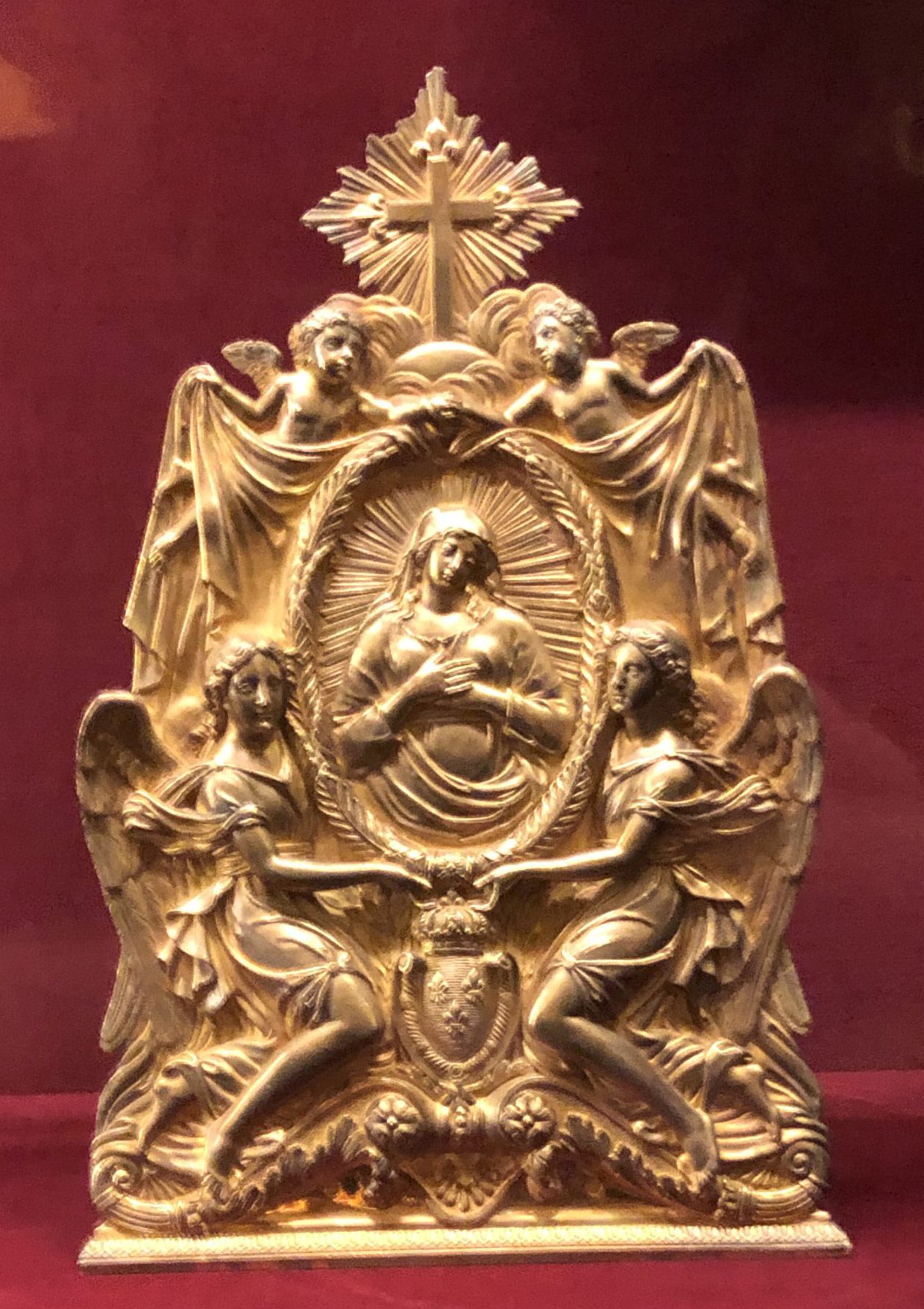
There are statues of Mary in gold and silver, and many tapestries.
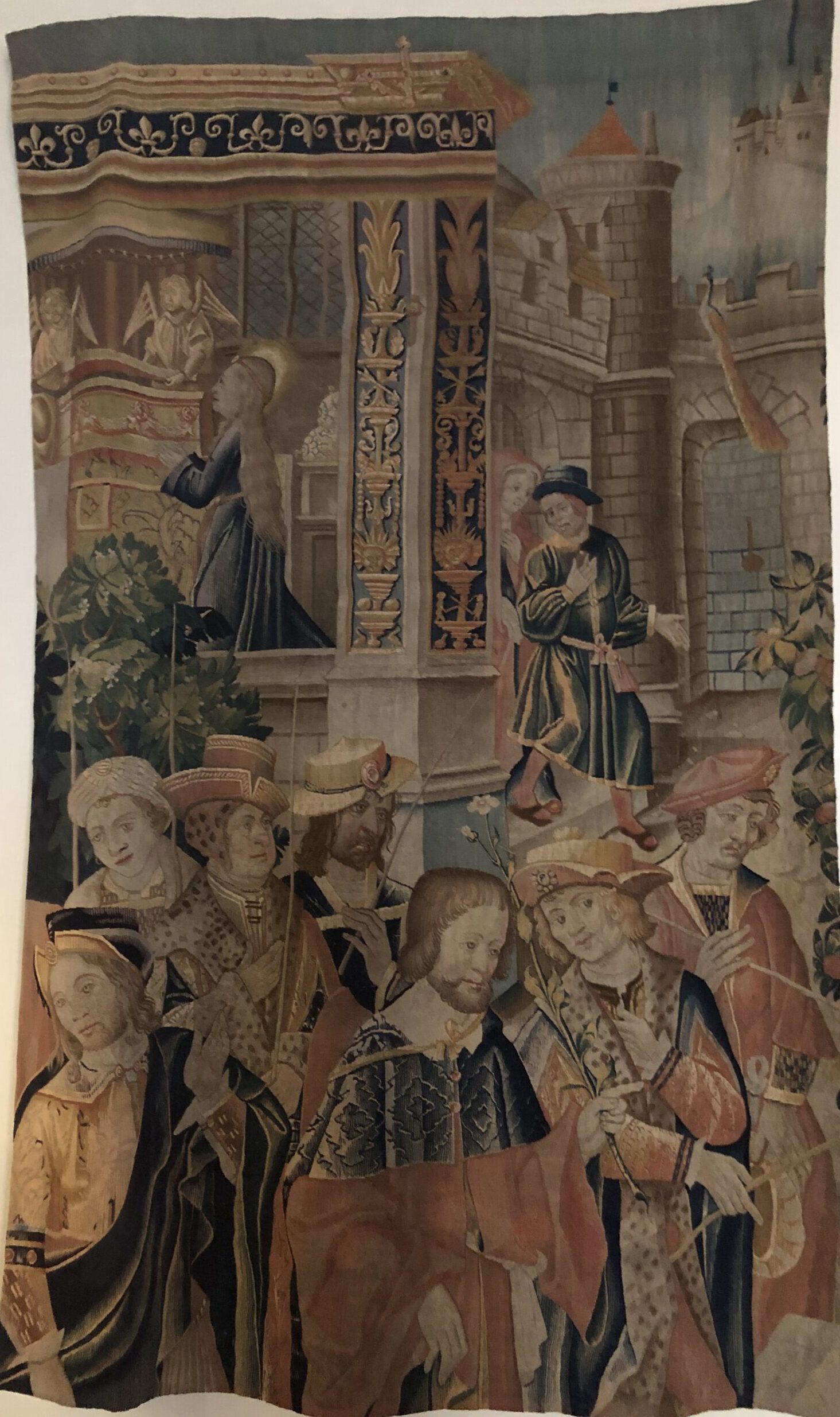
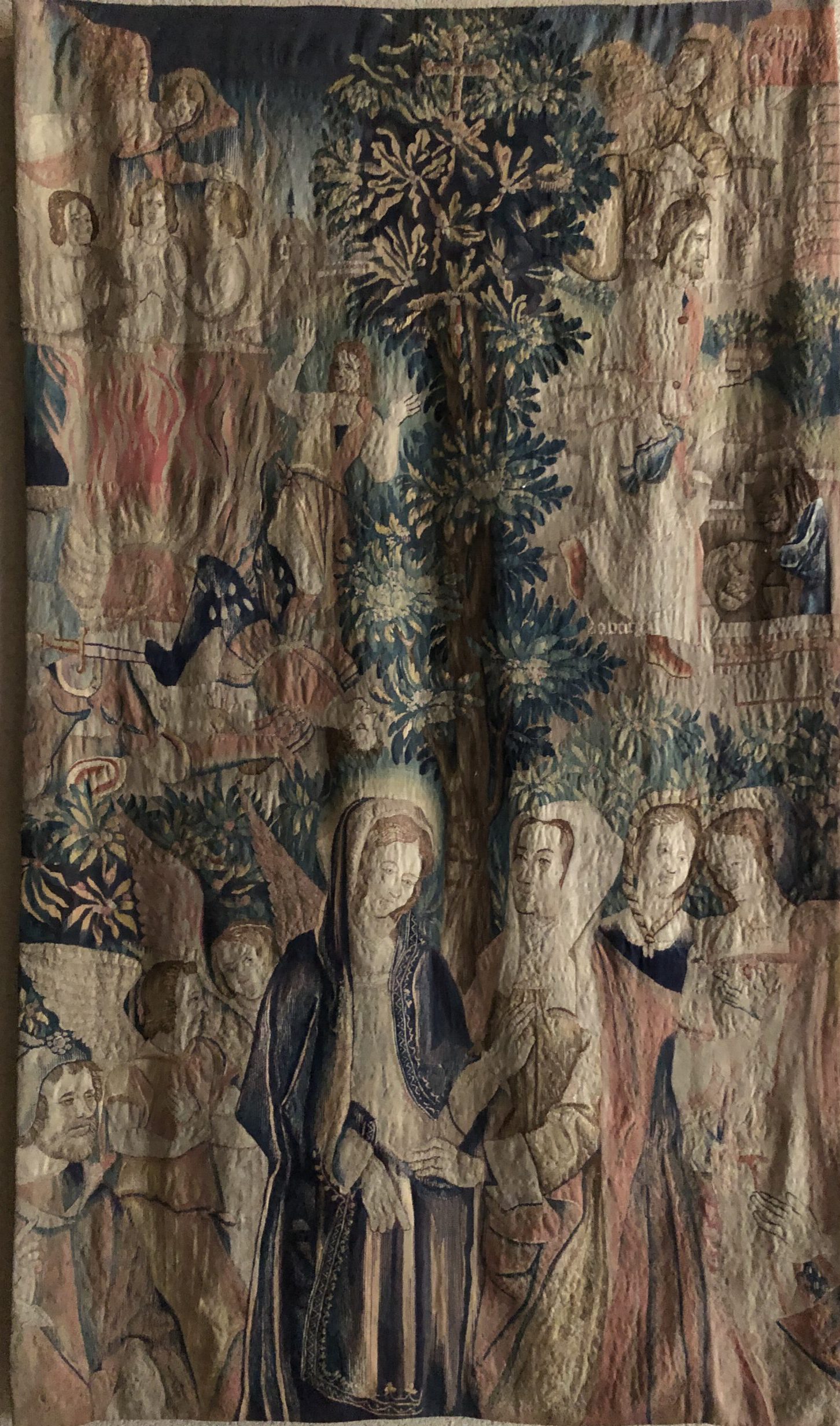
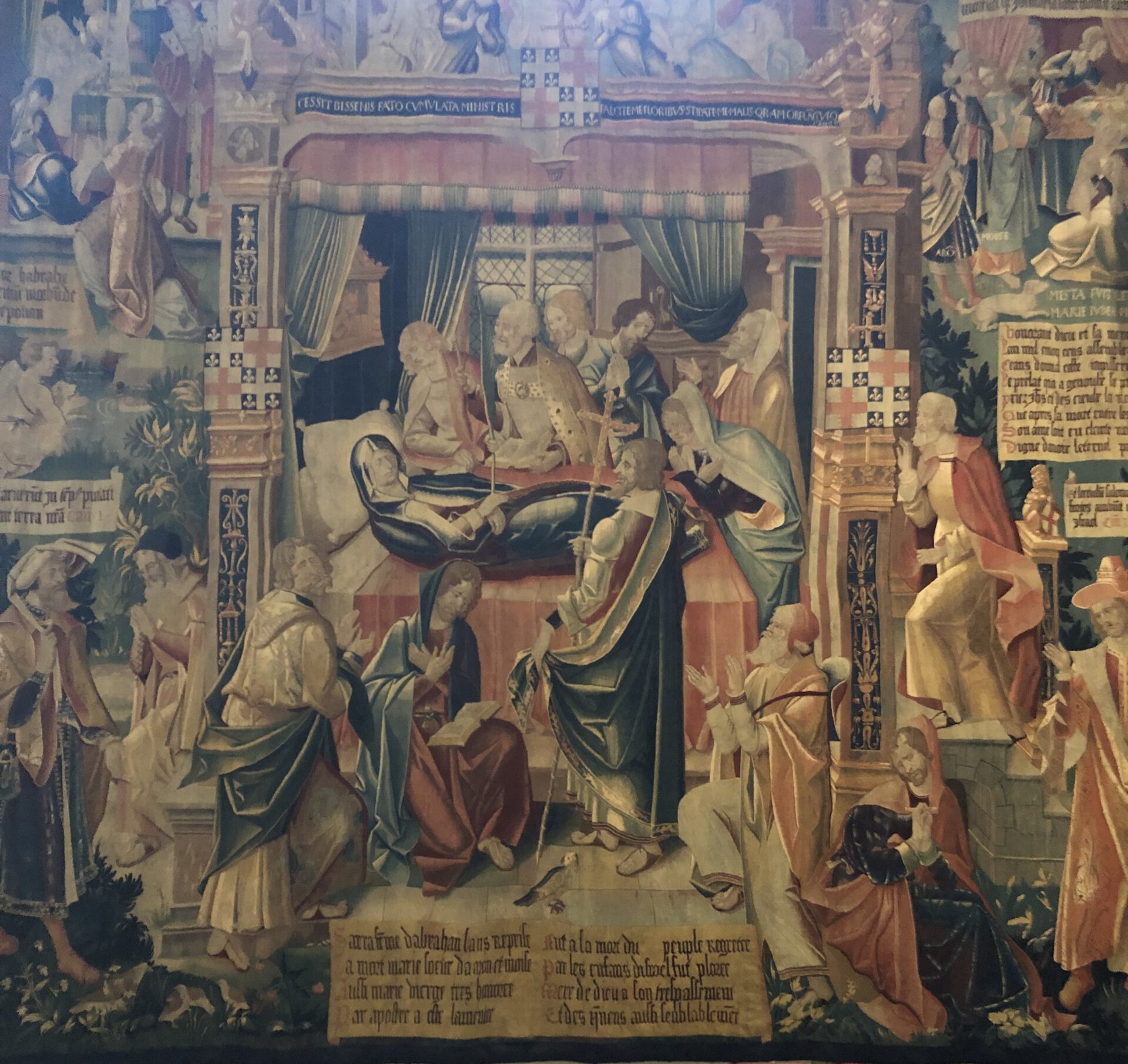
In the Coronation Hall of the Blessed Virgin, many large, wool and silk tapestry carpets can be seen. These artworks depict fragments from the life of Mary. The carpets probably come from Arras or Tournai. In 1530, the carpets were donated to the Cathedral of Reims by Robert I de Lenoncourt, Archbishop-Duke of Reims during the period 1509-1532.
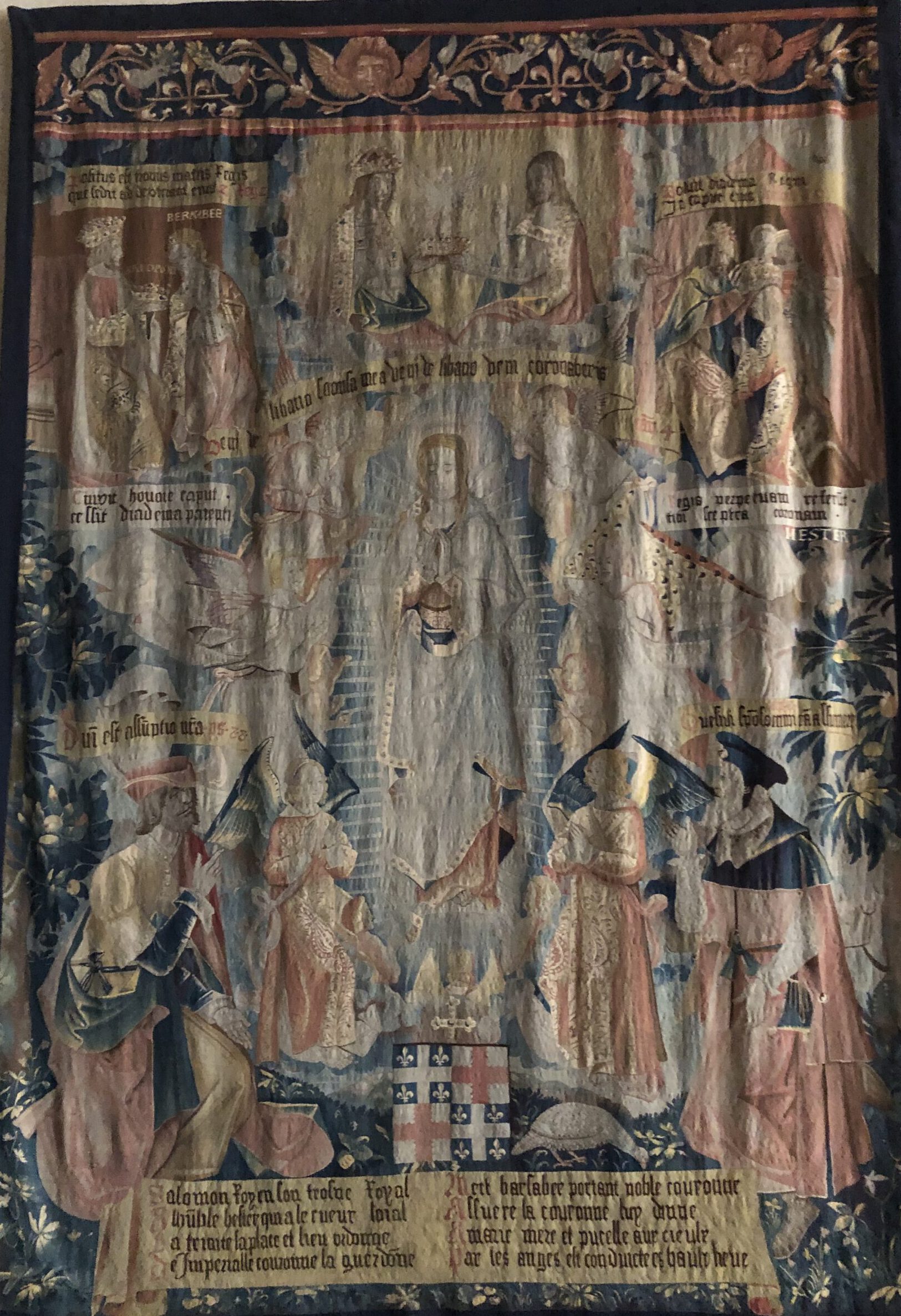
The museum has 15 choir tapestries on the history of Our Lady, including the Tree of Jesse, Anne and Joachim, the Nativity of Mary, the Presentation of Mary in the Temple, the Marriage of Mary, the Annunciation, the Nativity of Jesus, the Adoration of the Magi, the Presentation of Jesus in the Temple, the Flight into Egypt, the Dormition of Mary, and the Assumption of Mary.
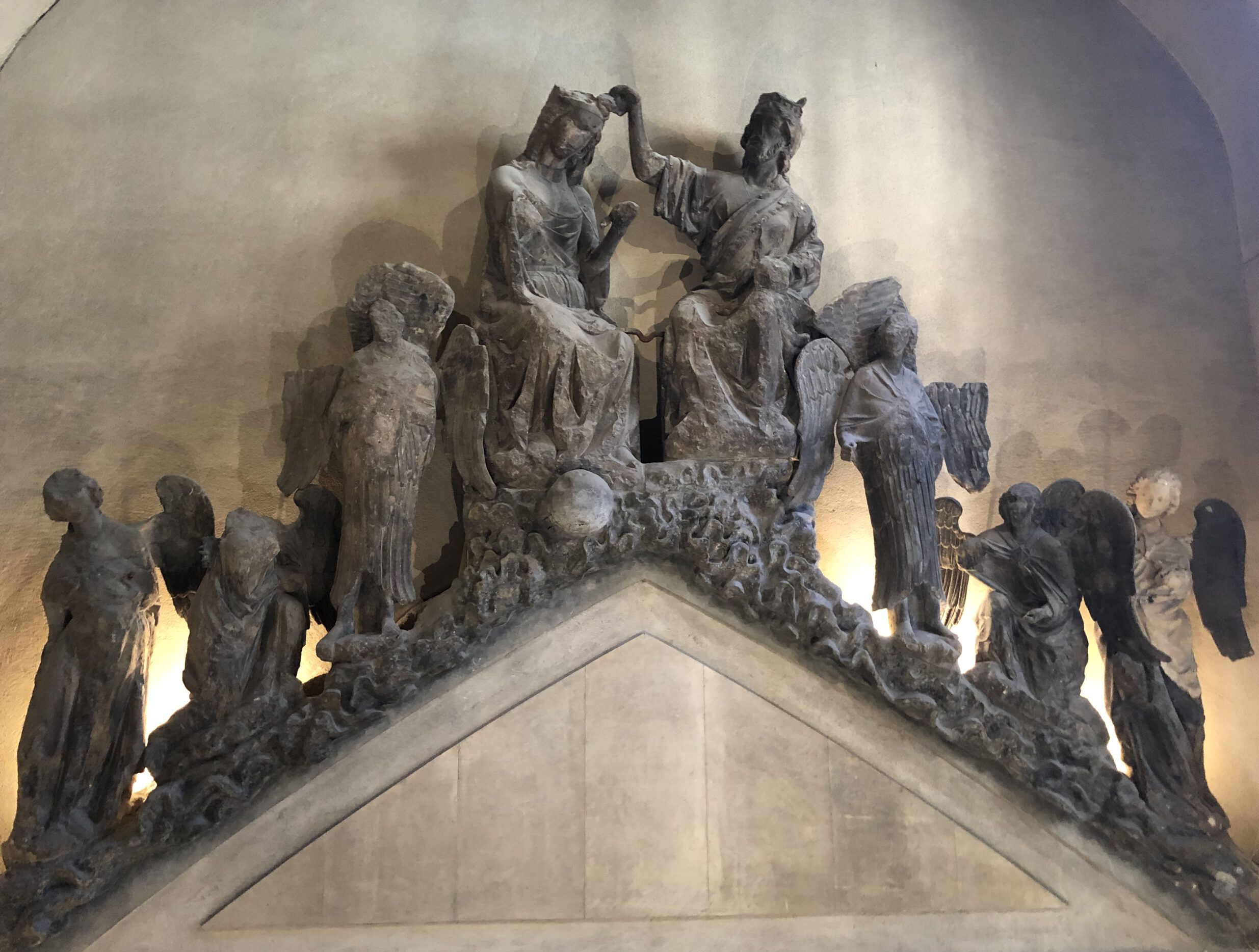
At the end of the Coronation Hall, a work of art is affixed to the wall, which once hung above the cathedral's main entrance. It is a copy of the former gable pediment depicting the coronation of the Virgin Mary on clouds. The original gable sculpture was severely damaged in the great fire of the cathedral in 1914. In 1955, it was replaced by a copy made by the Parisian sculptor Georges Saupique (1889-1961).
REIMS – SAINT JAMES' CHURCH
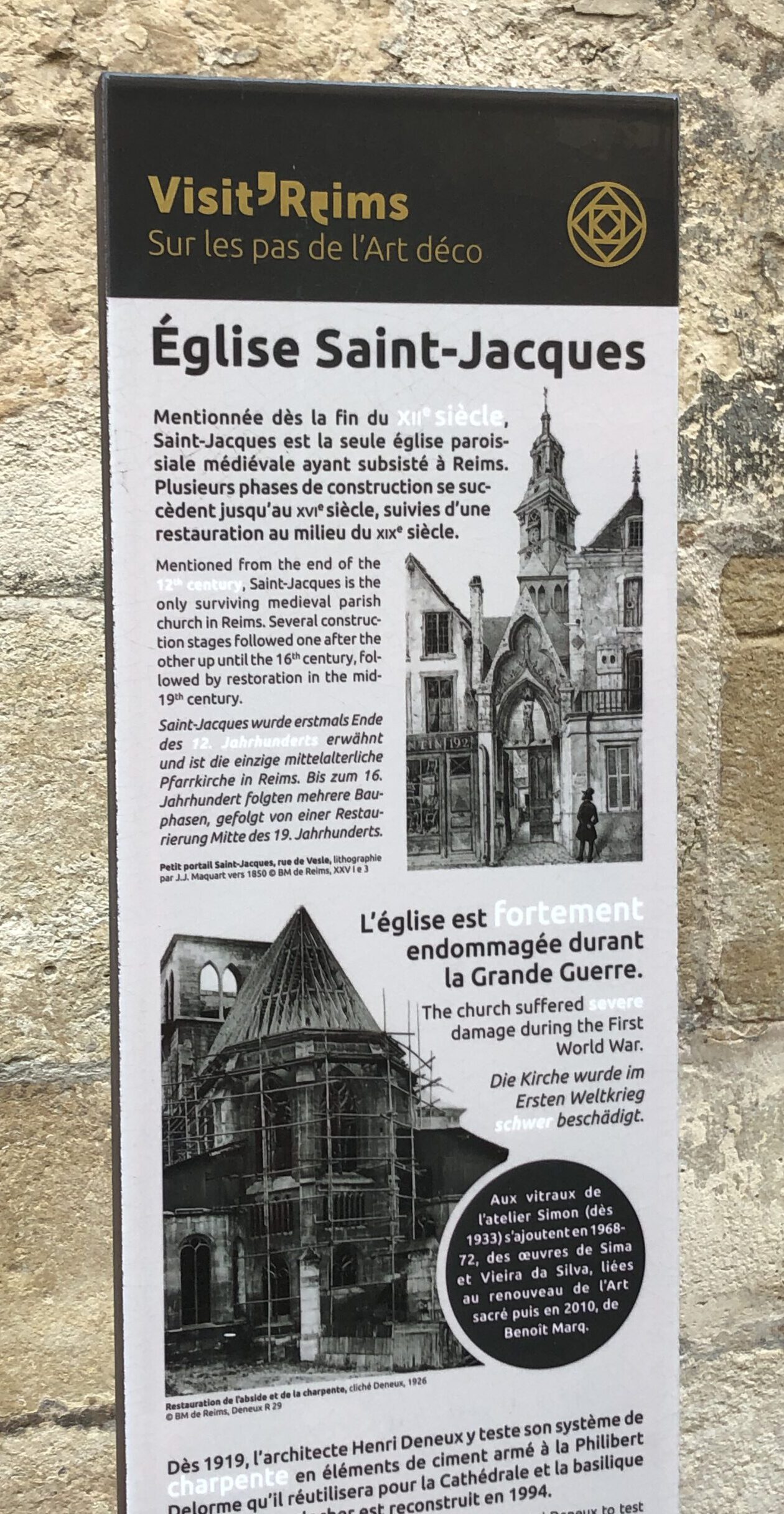
In the centre of Reims stands the church of Saint-Jacques (Église Saint-Jacques). The Church of Saint-Jacques is centuries old, as construction began as early as 1190. Over the centuries, several architectural styles have been combined, such as late-Gothic windows and side chapels in the Renaissance style. The church is partly enclosed by houses. Both the exterior and the interior give the church a beautiful appearance.
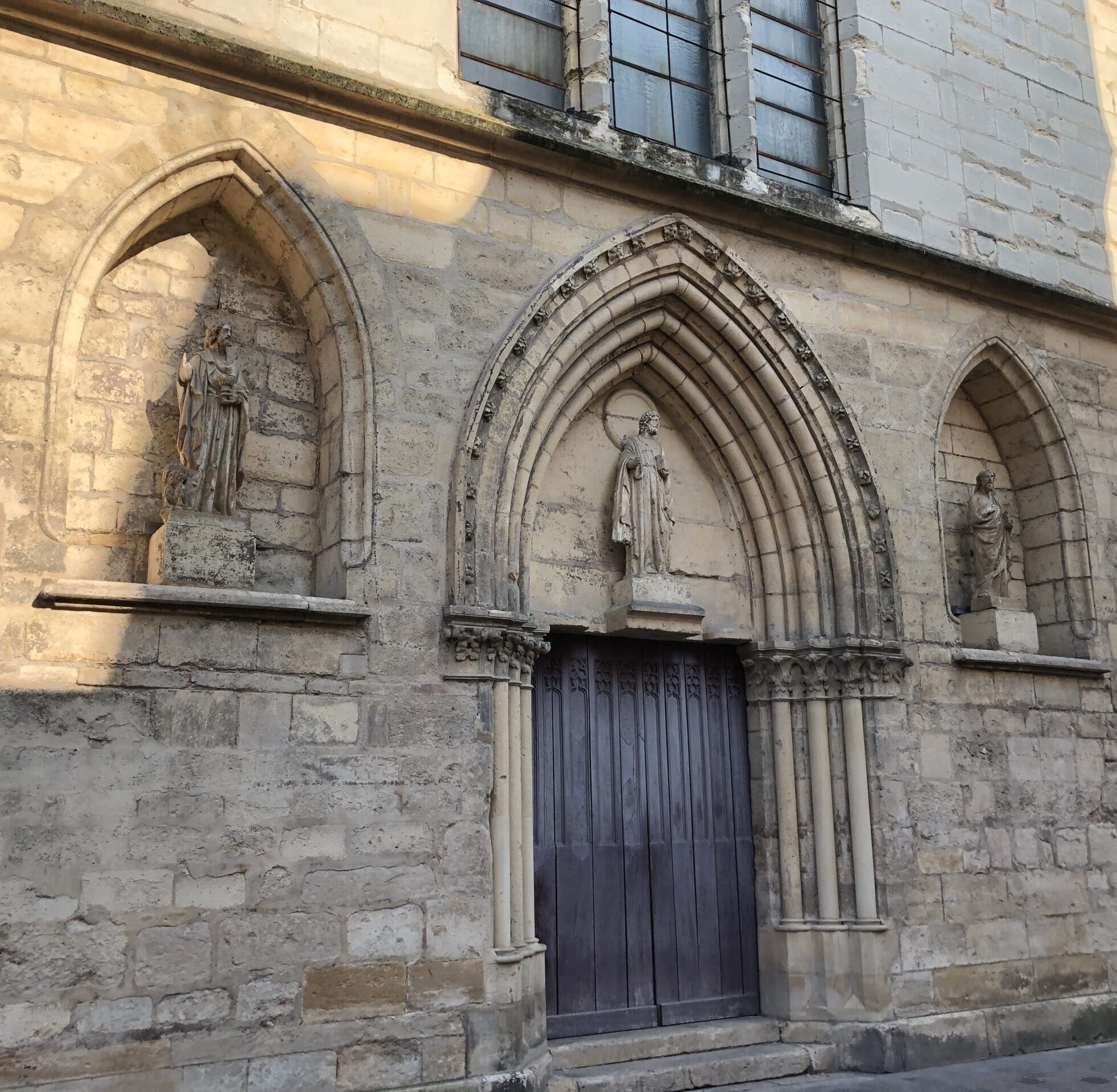
The lower part of the front facade dates from 1225 and the higher construction is from the 14th century. Over time, the church has undergone restorations and extensions. During the First World War (1914-1918), the church was severely damaged.
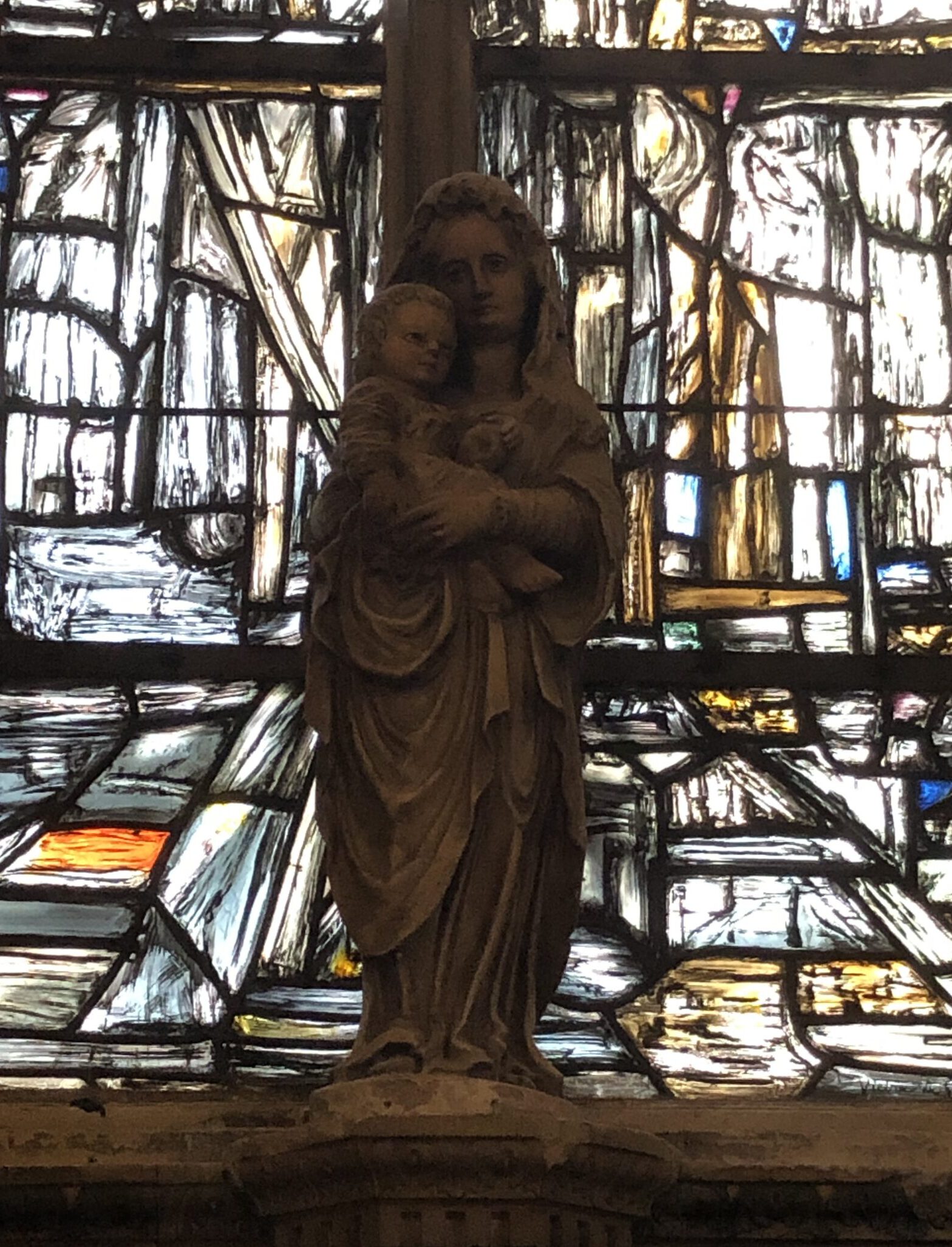
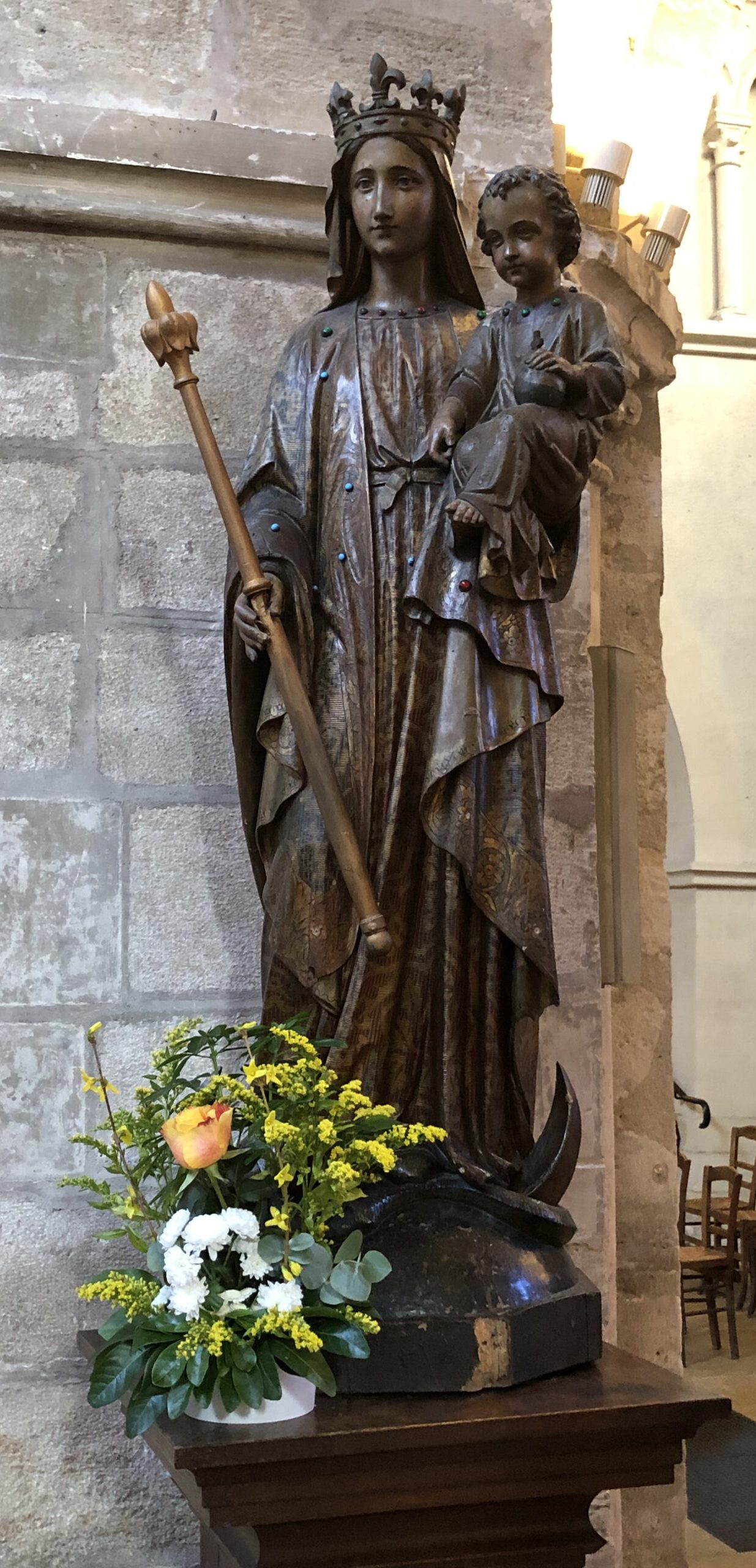
Some 16th-century sculptures in the Sint-Jacobskerk were made by the Reims sculptor Pierre Jacques (c. 1520-1596). Beautiful depictions of Mary can be seen, including a Fatima statue.
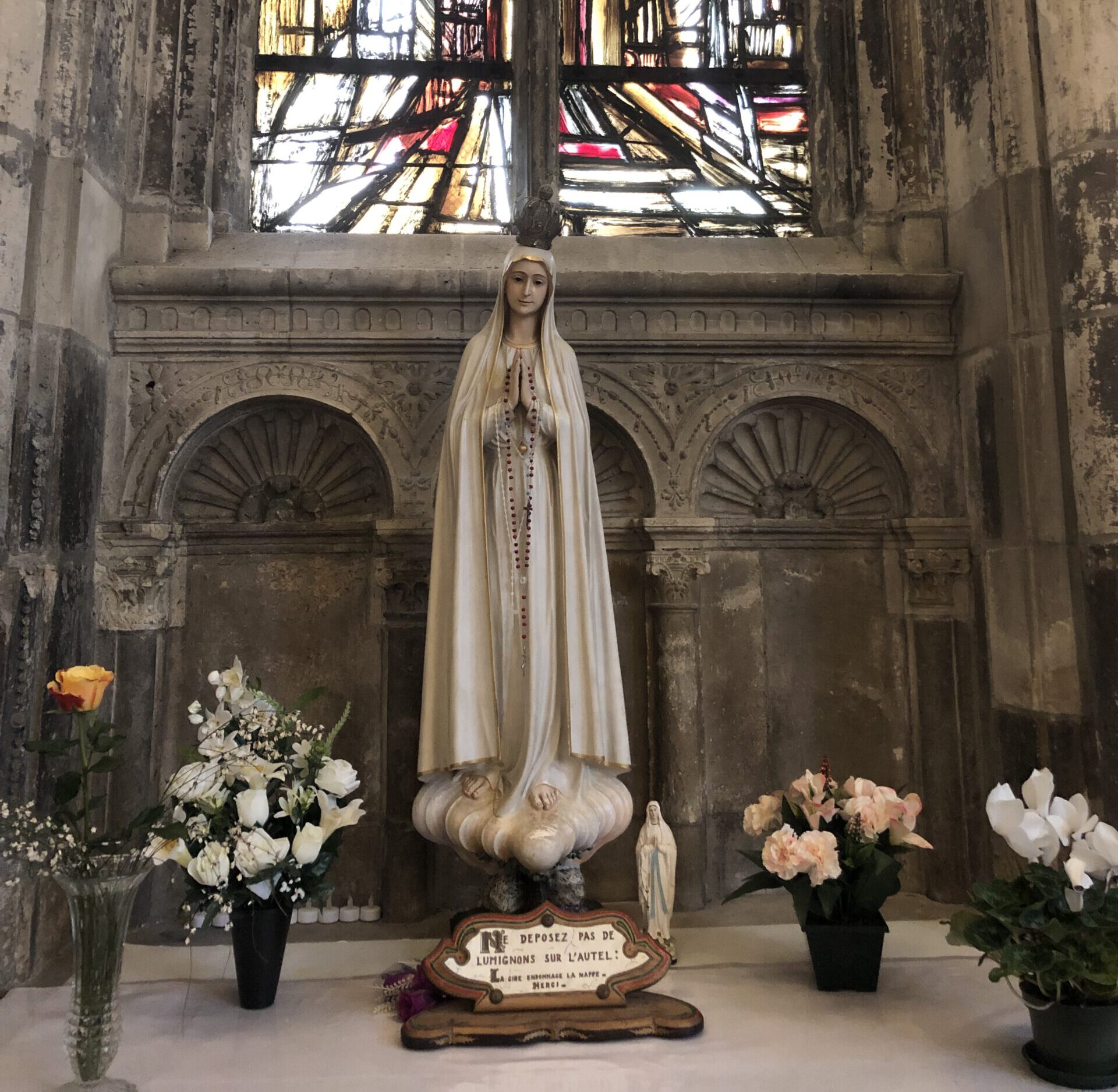
The windows of the choir are made by the Czech-French painter Josef Sima (1891-1971). The windows of the side chapels are made by the Portuguese-French painter Maria Helena Vieira da Silva (1908-1992).
Posted: 12 August 2022
Last Modified: 20 February 2024
~~~

 Nederlands
  English (UK)
  Deutsch
  Français