~~~
History
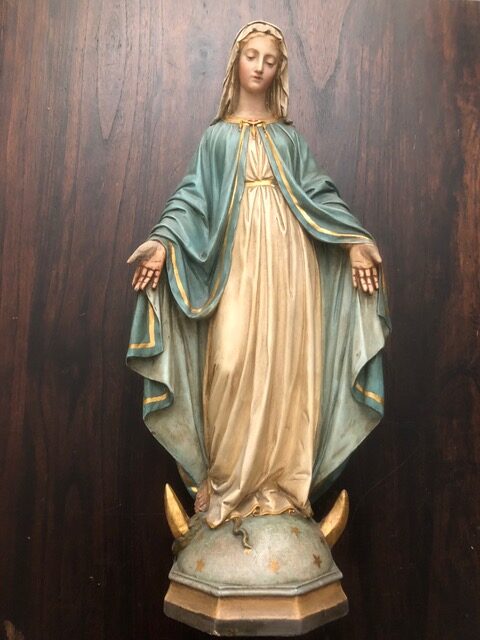
A legend from 1104 tells of a stone statue of the Mother of God swimming upstream against the flow of the Danube. This makes Bogenberg one of the oldest Marian pilgrimage sites in Bavaria.
In 1224, the Bogenberg was designated the “Mountain of Saint Mary” by a charter from Honorius III, an Italian pope from 1216 to 1227 and born Cencio Savelli (c. 1148–1227).
In 1295, a larger church appeared on the Bogenberg. In 1415, lightning struck, causing a great deal of damage to the tower.
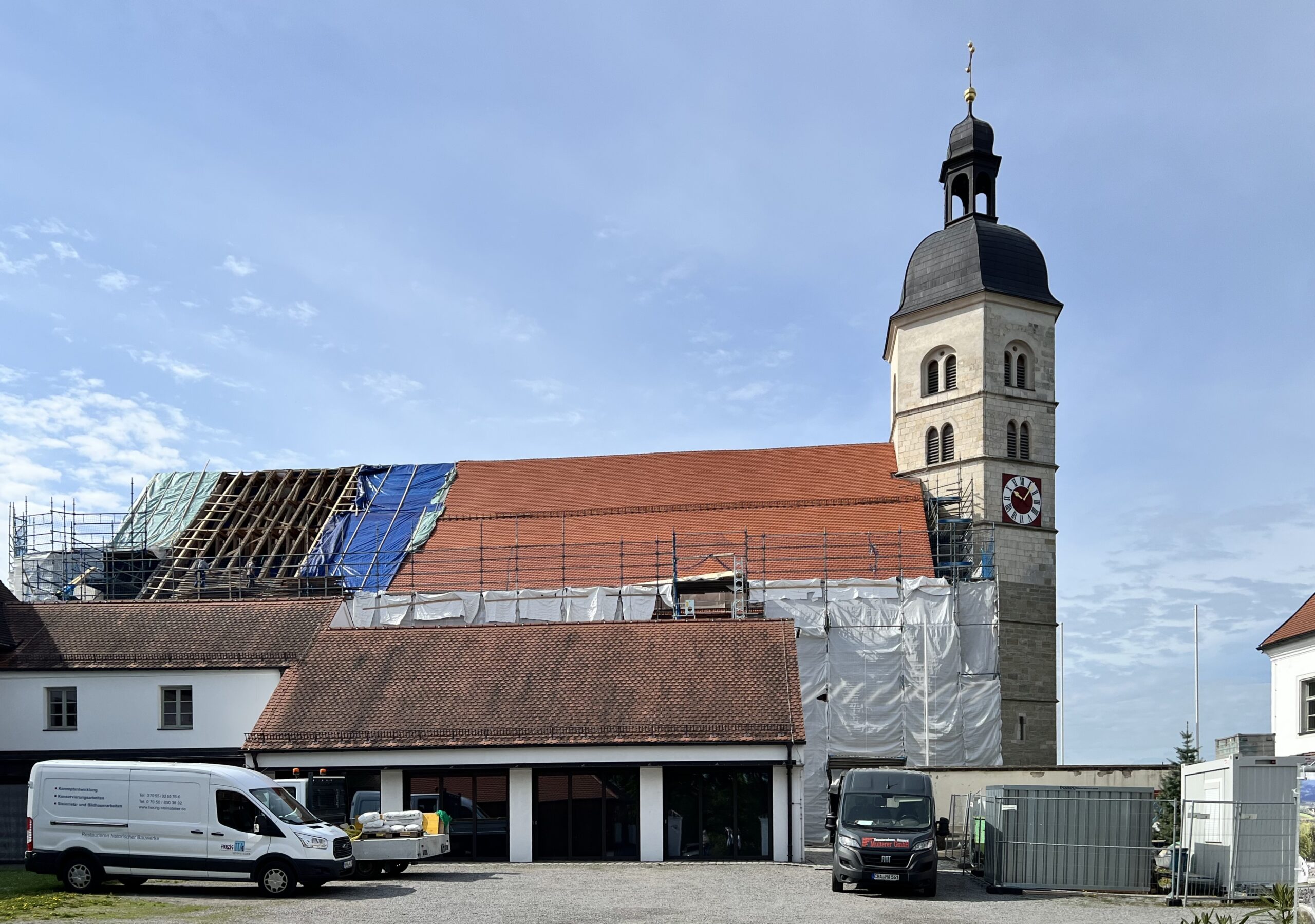
The pilgrimage church is a late Gothic hall church and was built between 1463 and 1513. The church is dedicated to the Assumption of Mary. During that period, many pilgrims already came to the Bogenberg annually. The current pilgrimage church was then realised. The oldest known image of the miraculous icon dates from 1520. Research in 1956 shows that the statue dates from the end of the 13th century.
In 1592, lightning struck once more, and the church suffered damage again. In 1633/1634, severe destruction was caused by the Swedes during the Thirty Years' War (1618-1648), and the miraculous image also broke, which was later restored.
The oldest known description of the effigy dates from 1645 in a miracle book, which refers to it as the grace image. Around 1650, the sandstone statue of Mary was clothed.
In 1652, there was again a fire in the church, and this time in the tower.
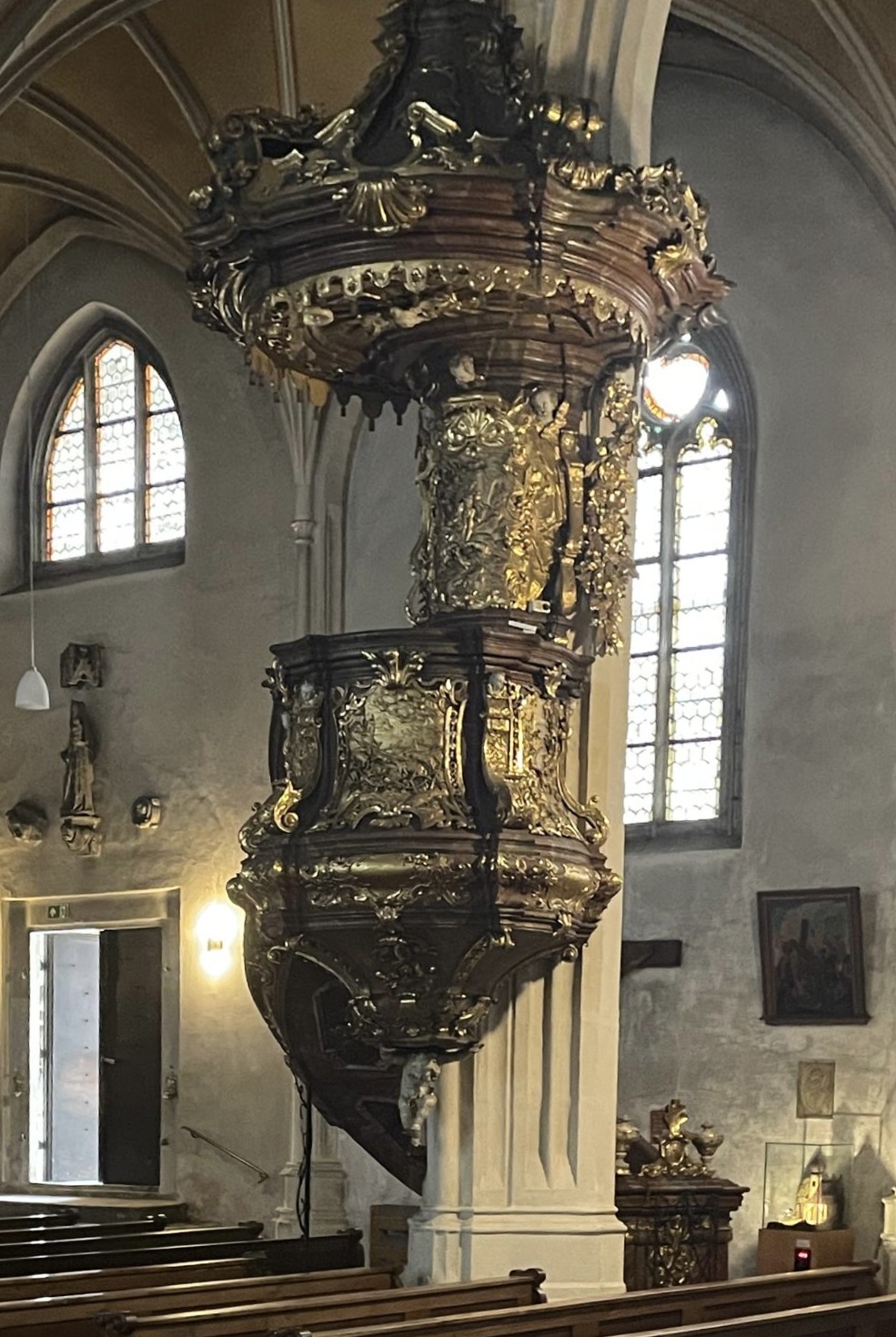
Between 1722 and 1730, the church was brought into the Rococo style. The current pulpit, choir area, organ construction, and some statues are from this period. The work on the pulpit dates from 1725 and is by sculptor Franz Mozart (1681-1732).
In the period 1870-1887, there were changes to the church and renovations in the Gothic style, such as repainting frescoes.
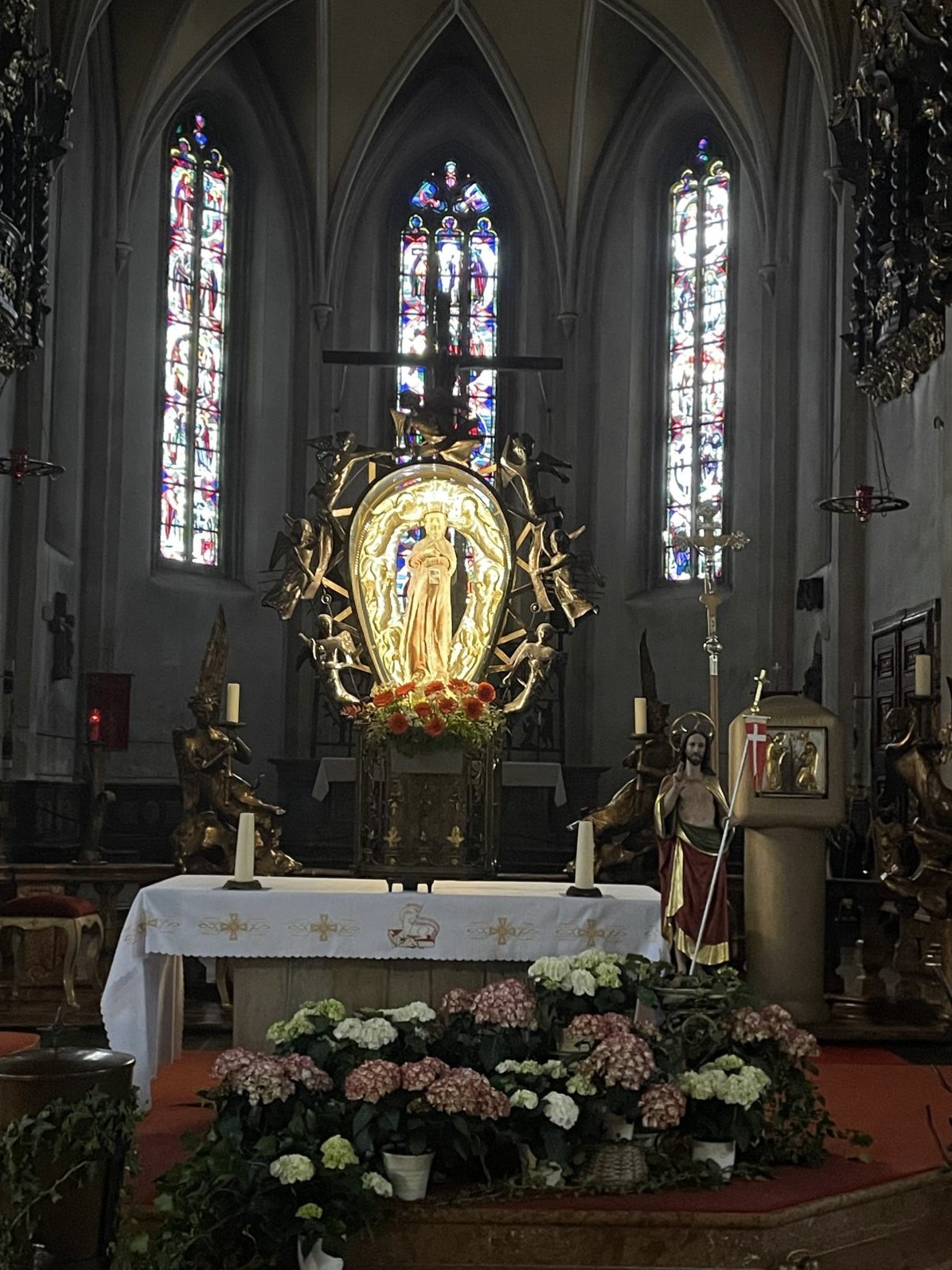
In the years 1953-1961, the neo-Gothic interior was replaced by Baroque furnishings. In 1954, the devotional image was given its own altar in the chancel. The image is surrounded by silver angels and rays. This is the work of painter and sculptor Roland Friederichsen (1910-1992).
In 1997, a candle chapel was made, behind the effigy of the Queen of the Rosary.
Until 1803, Benedictine monks looked after the pilgrimage site; they were expelled by anti-Catholic political leaders. From 1822, parish workers managed the pilgrimage organisation. In 2009, Polish Franciscans took over this role.
Pilgrimage site
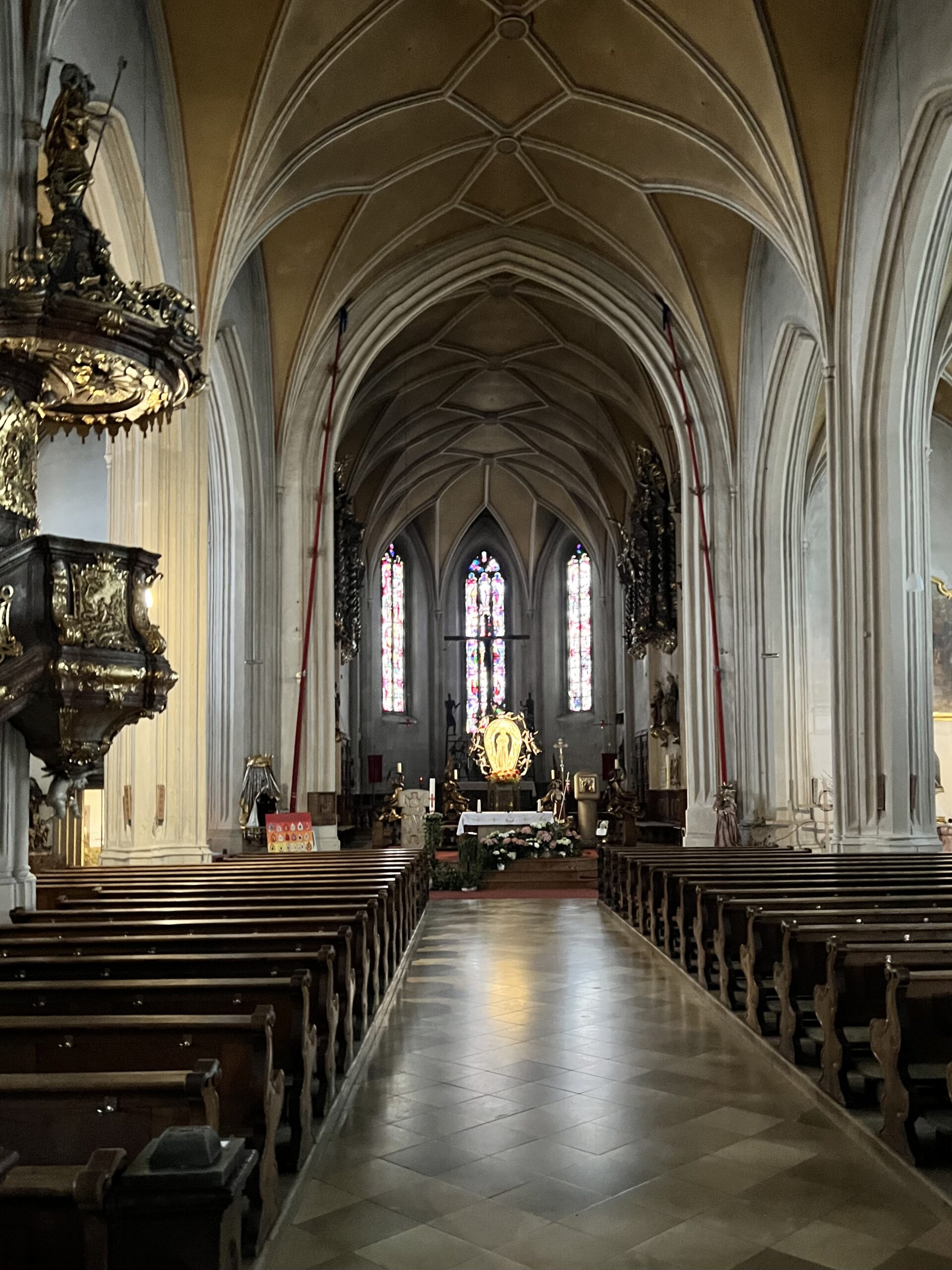
The Bogenberg is home to the oldest pilgrimage church in Bavaria, which is dedicated to Mary, and more specifically to the Assumption of Mary. The pilgrimage site is located at over 400 metres above sea level and is one of the most well-known Marian shrines in Bavaria. From the Bogenberg, there is a wide view over the River Danube and the surrounding area.
The pilgrimage church is also the parish church and measures 48 m in length, 25 m in width and 16 m in height.
By the wall in front of the main entrance, a spring can be seen.
In the church, there are two miraculous images. A Romanesque, stone statue of Mary from the 13th century is the original miraculous image and this was located outside on the south side of the church until 1958. From that year onwards, it is kept inside by the main entrance. On the altar is a stone, robed statue from the beginning of the 15th century. To the left of the miraculous altar is an effigy of the Queen of the Rosary from 1605. This statue is carried in the procession. Next to this statue is a group of sculptures depicting the Coronation of Mary from circa 1500.
Beneath the organ is a group of sculptures depicting the Coronation of Mary from around 1500. Below the organ construction is a Gothic relief showing the Dormition of Mary.
On the altar in the right aisle, a stone Vesper image has found a prominent place. The effigy dates from c. 1430 and shows three hands on each other.
Opposite the pulpit hangs a cross, and below it a large, wooden statue of the Mater Dolorosa, from circa 1750, with a sword piercing her heart.
Many pilgrimages take place annually to the Bogenberg, including the large candle pilgrimage at Pentecost.
In the Fatima months, from May to October, there is always a candlelight procession on the 13th.
The pilgrimage church is open daily.
ACCESSIBILITY
The pilgrimage church on the Bogenberg is located a few kilometres south-west of Bogen. The address of the pilgrimage church is Bogenberg 10, D-94327 Bogen.
Current information can be found at www.pfarrei-bogenberg.de.
Experience
Upon arrival at the Bogenberg, I notice that extensive restoration work is being carried out. It looks like a project that will take several years to bring the pilgrimage site back to its heavenly splendor.
I'm doing a circuit and I see not only the pilgrimage church, but also a museum and a monastery. This monastery is next to the church. It is a monastery of Franciscan friars, where there is also an opportunity for confession.
Upon entering the church, I notice that there are more visitors. I see pilgrims praying at the shrine and also at an altar with a statue of Mary.
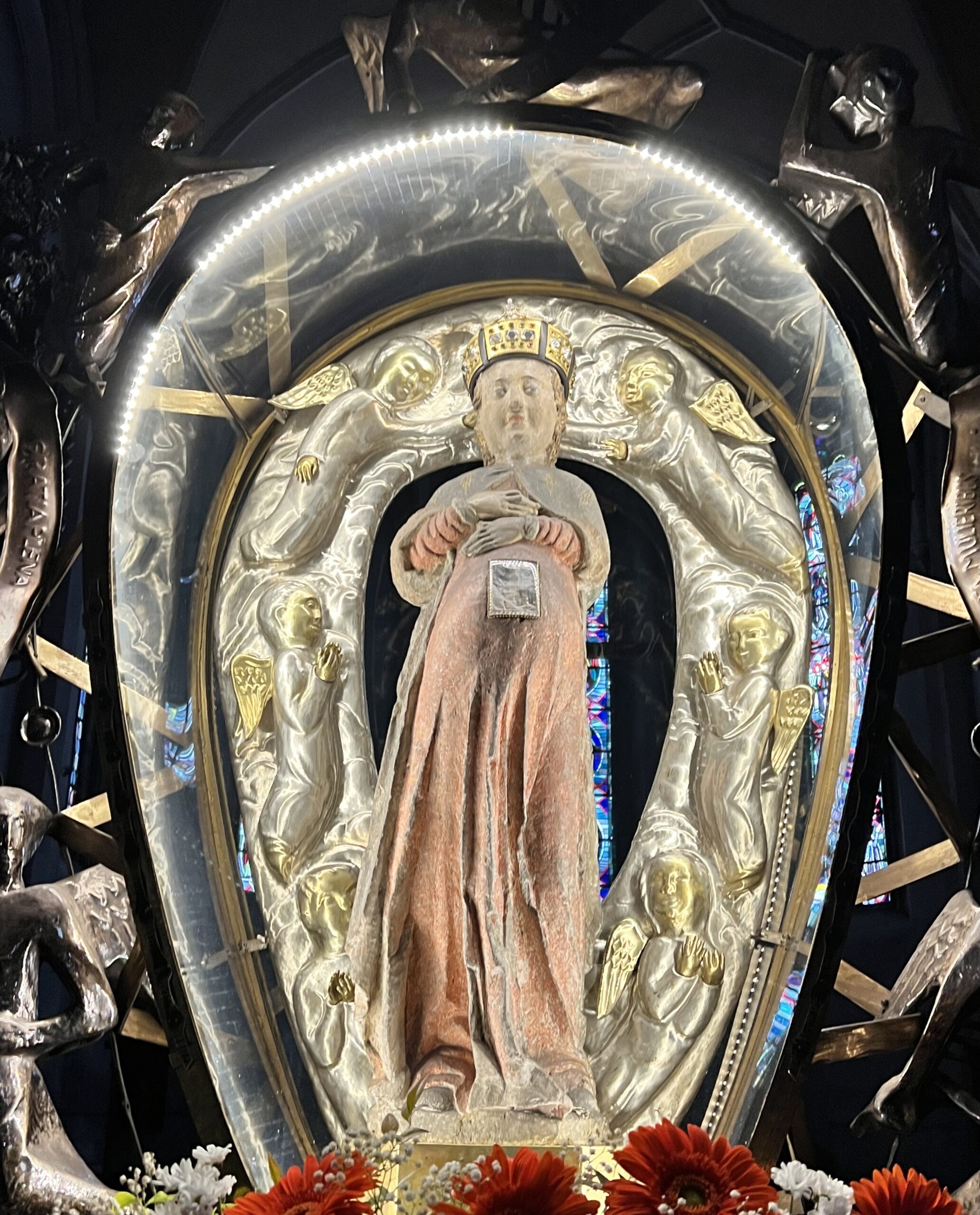
The devotional image shows a pregnant Mary and she is surrounded by angels. Mary with a large belly is not often seen. It is special to be able to encounter Her as a beautiful, pregnant woman.
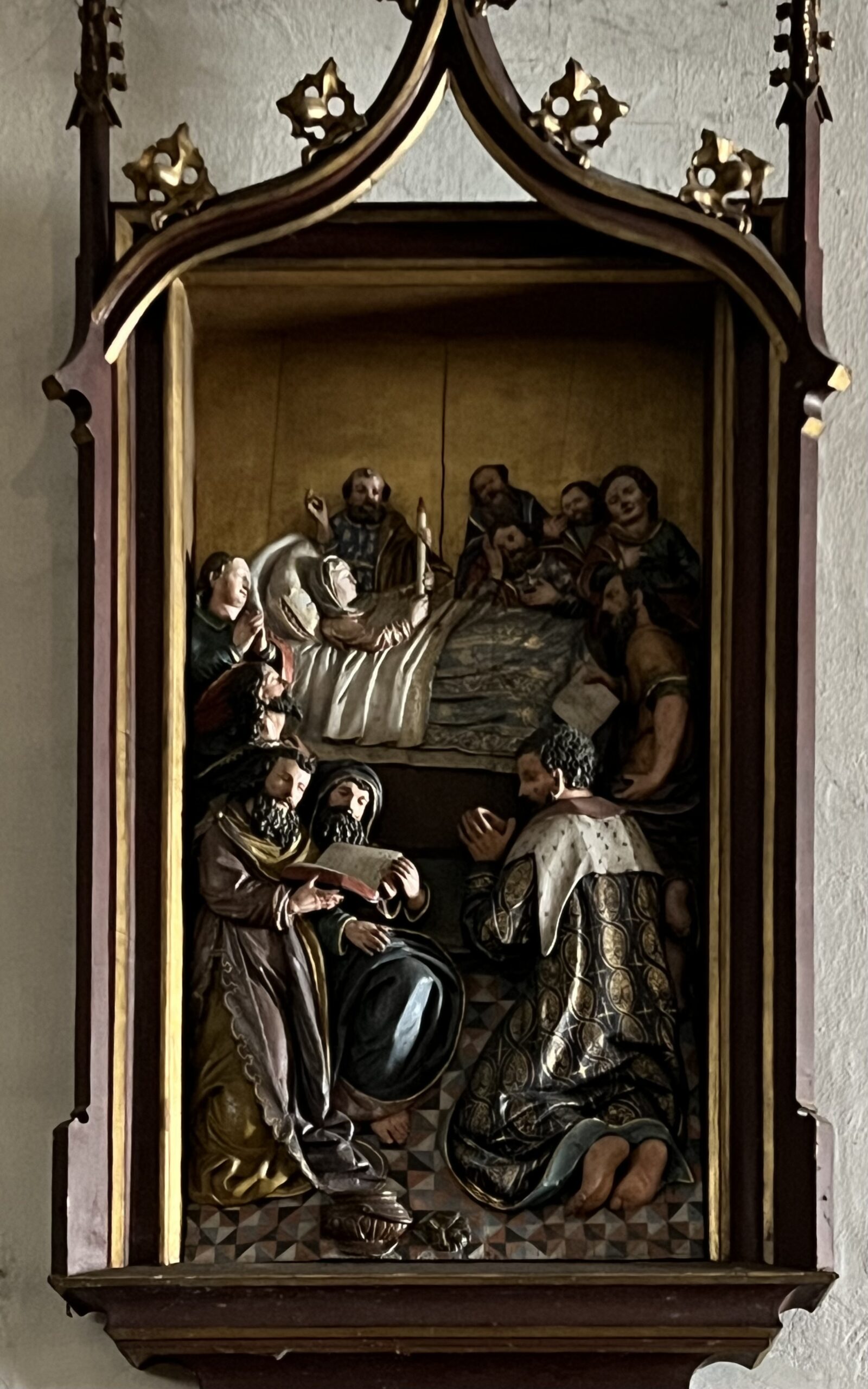
The Way of the Cross in the pilgrimage church is made of wood and beautiful statuettes depict the life story of Christ. I pause and pray at each station. In the church, there is also a scene of the dying Mary. There lies the Mother of everyone!
The pulpit also attracts attention. Large and tall with many figures in golden depictions. This is craftsmanship! Next, I see a sheet of music with the lyrics and music of the song of Our Lady of the Bogenberg, with lyrics by theologian Friedrich Dörr (1908-1993) and music by Stefan Frank (*1974). The last stanza reads in Dutch: “O Queen of the Bogenberg, of God’s great miracle, lead us out of this time into God’s glory”.
I'll sit down and let it all sink in again. There is so much to admire here, and my thoughts turn to special depictions of Our Lady. I cherish the impressions of the stone Madonna, the Mother of Sorrows, the Rosary Queen, and especially the shrine. Then I thank Mary for allowing me to experience the beauty in this pilgrimage church.
After leaving the church, I'll go to the cemetery chapel. This is situated next to the pilgrimage church. I look into the chapel and ponder its purpose. How many deceased Catholics have been here?
Environment
Besides the pilgrimage church, there is a museum of local history from the region. Walks can be taken in the surrounding area, and the river Danube is a few kilometres from the pilgrimage site of Bogenberg.
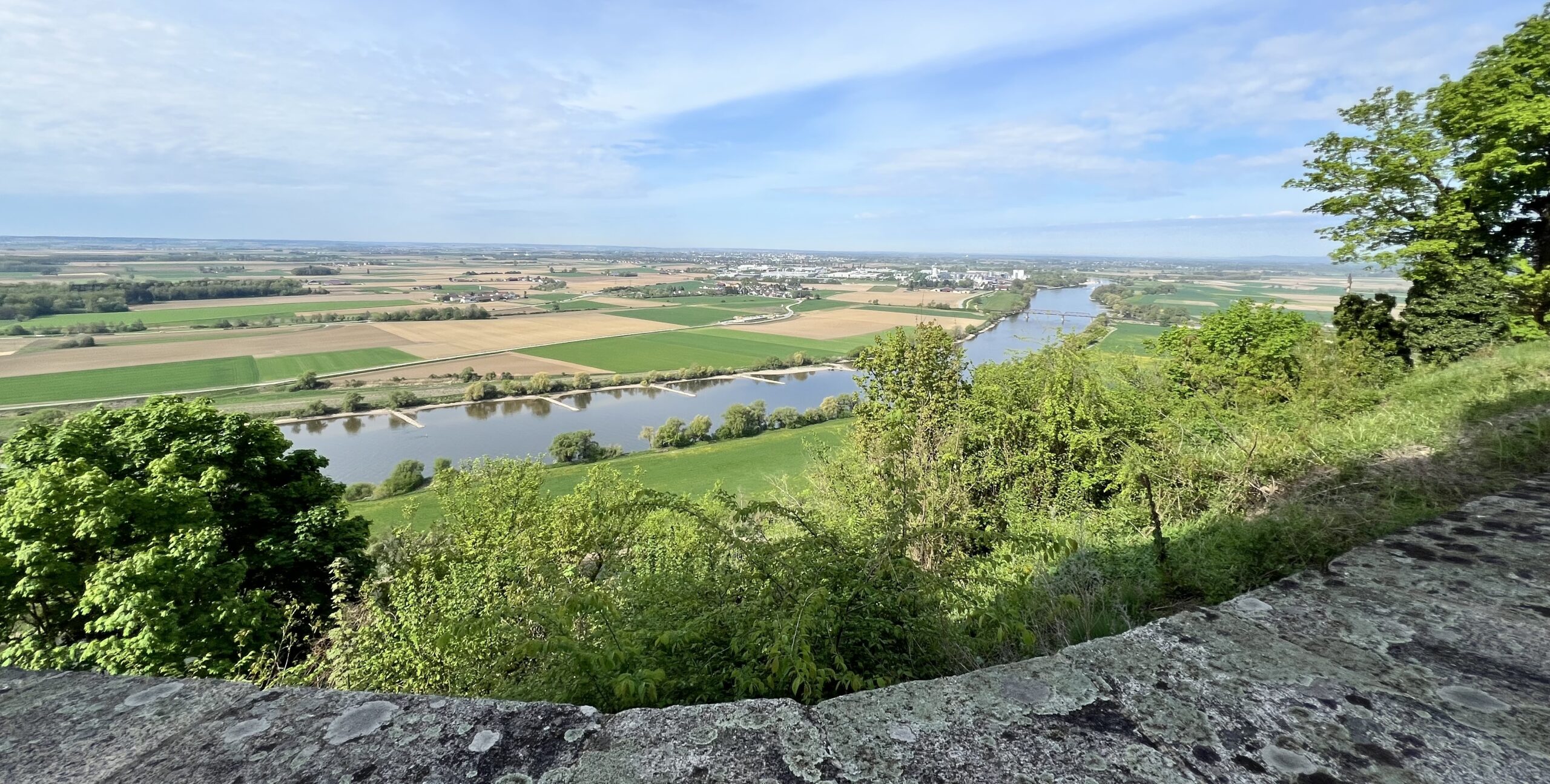
Travelling from Regensburg to Bogenberg means going 54 km eastwards.
Departing from the historic city of Straubing to go to Bogenberg is moving 15 km to the east.
Travelling from the pilgrimage site of Heilbrünnl near Roding to Bogenberg means covering 46 km to the south.
Departing from the pilgrimage site of Sammarei and arriving in Bogenberg requires travelling 73 km to the northwest.
Travelling from the major pilgrimage site of Altötting to Bogenberg means covering 92 km northwards.
~~~

 Nederlands
  English (UK)
  Deutsch
  Français