~~~
History
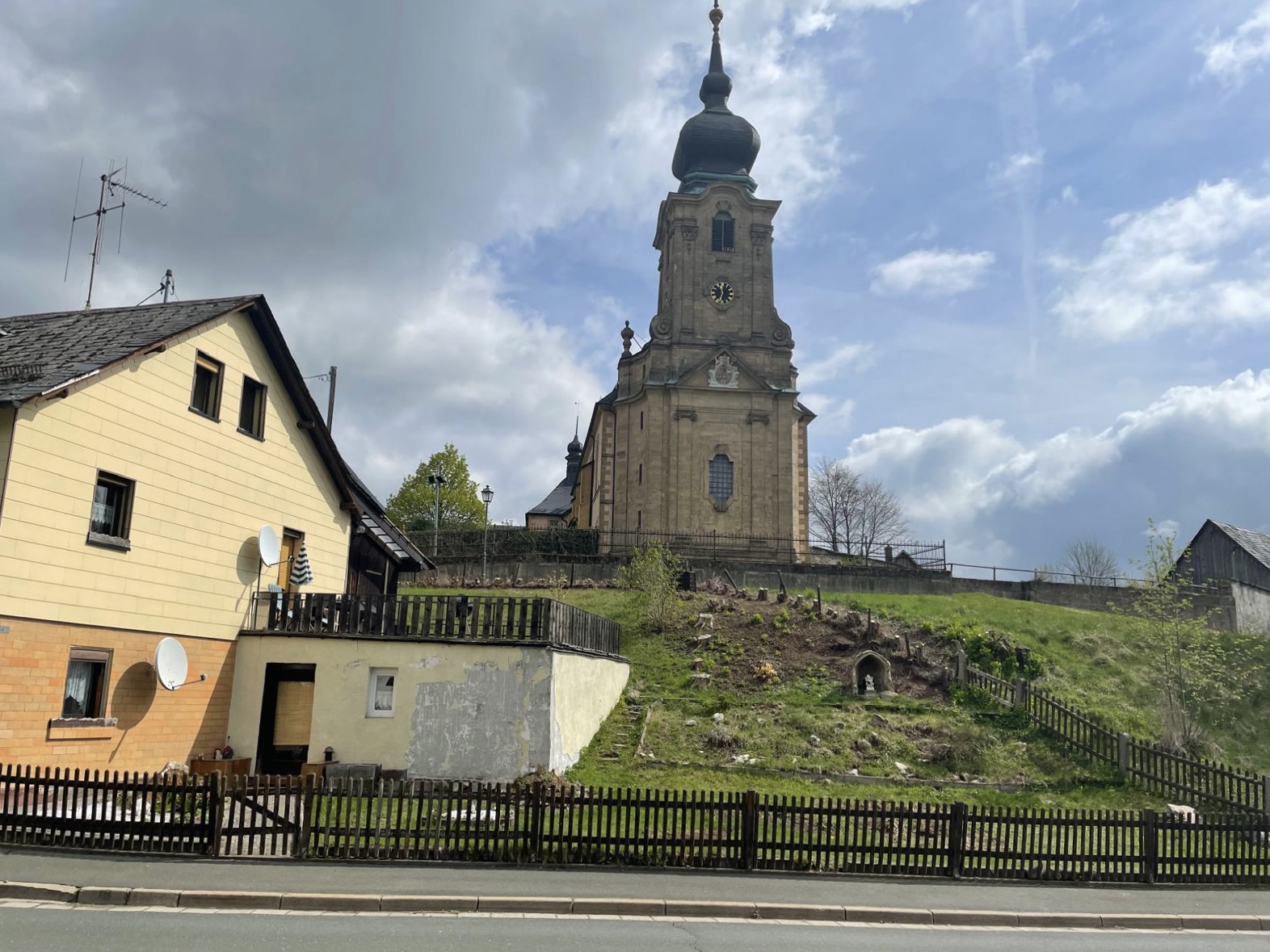
A legend lies at the root of the Marienweiher pilgrimage site. A carter from Saxony, which is predominantly a Catholic country, has a statue of the Virgin Mary made in Franconia. He takes the statue with him to place it in his home. On his way home, the man stays overnight at an inn near present-day Marienweiher. At that time, bands of robbers were active in the regions with dense forests along the country roads. Such a band, possibly aware of the carter's presence with his horse, money, and statue, robs the inn while the man is staying there overnight, but he invokes Mary and escapes the danger. To show his gratitude to Mary, he places the statue of the Mother of God next to the country road. He builds a small chapel for the statue and goes home. At home in Saxony, he sells all his possessions and returns to the chapel to live nearby.
It is known that a church has stood in Marienweiher as early as 1189. A charter states that the church was a gift from Otto II of Andechs (1132-1196), Bishop from 1177-1196. In 1217, the donation was renewed. A monastery and hospice were then located next to the church. Due to the Hussite rule (1419-1436), the buildings were plundered and destroyed in 1430. At the end of the 15th century, the church was lost by fire and a new one was built.
In 1574, Protestants came to power in Marienweiher, which had adverse consequences for the practice of the Catholic faith. In 1594, the Counter-Reformation began, making it possible to receive pilgrims once again. The number of pilgrims increased year by year, and the need arose to build a large church. A larger place of worship was constructed between 1617 and 1620. In this building, the miraculous image from around 1450 was given a central place. The pilgrimage site faced renewed setbacks during the Thirty Years' War (1618-1648), as Swedish troops invaded in 1631. The soldiers plundered and destroyed. Further misfortunes followed due to famine and disease.
In 1646, Franciscans arrived to lead the pilgrimage site, and the reconstruction of the beloved Marian shrine took place between 1650 and 1661. By the end of the 17th century, the pilgrimage site experienced a great flourish, with as many as 800 pilgrims per day on multiple occasions.
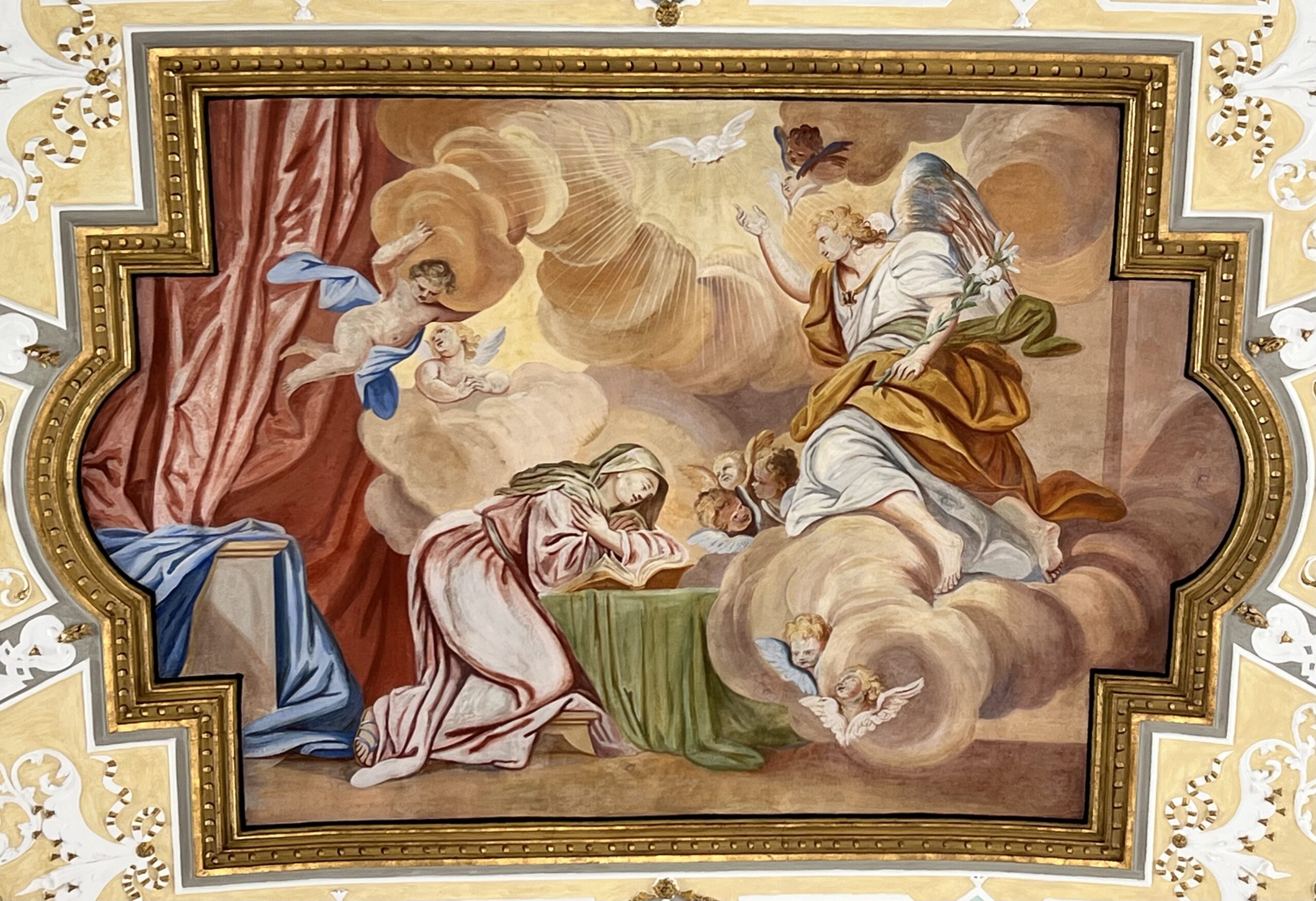
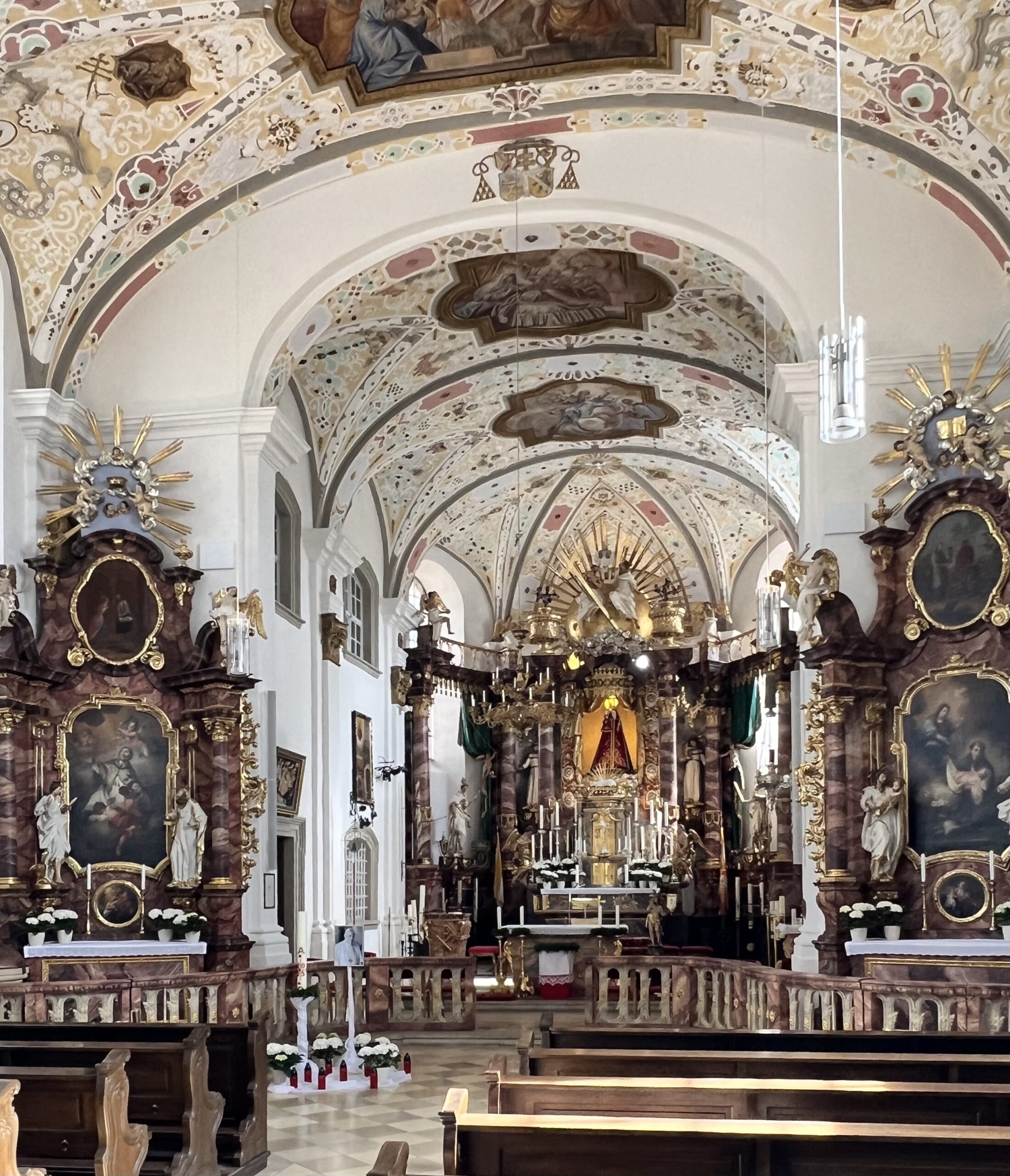
In 1720, frescoes were added to the church, as well as decorations by Johann Jakob Vogel (1661-1727). The consecration of the new, Baroque church took place in 1721 by Johann Werner Schnatz (1660-1723), auxiliary bishop of Bamberg (1705-1723). Some parts of the church date from the end of the 15th century. The consecrated church is the current church building. The design of the tower and the access to the church are by Johann Jakob Küchel (1703-1769).
Due to political upheavals, the monastery was dissolved in 1802 and the building passed into private ownership. The Franciscans were expelled. In 1828, Ludwig Karl August von Bayern (1786-1868), Ludwig I, King of Bavaria (1825-1848), permitted the monastery to be re-established and the Franciscans to return.
The high altar was made in 1811/1812 by sculptor Paul Hetzei (1767-1849).
The peak of the pilgrimages is reached around 1870. Franciscans take over the organisation of the pilgrimages in 1900. In 1983, new Franciscans from Silesia (Wrocław) arrive to care for the Marian shrine.
The church was elevated to a basilica in 1993 after approval from John Paul II, Pope from 1978-2005, born Karol Józef Wojtyla (1920-2005).
Since 2006, the association “Freunde der Wallfahrtsbasilika Marienweiher” has existed. Anyone can join. This organisation also receives gifts and regular donations from its friends. This makes it possible to support the pilgrimage site with necessary works.
A monastery shop with devotional items has been there since 2009.
In 2012, a pilgrimage tree was planted in a car park, opposite the place of pilgrimage. In that year, a pilgrimage bureau was also established with the help of EU funds.
Pilgrimage site
Marienweiher is a small village near Marktleugast. The pilgrimage site is the oldest in Bavaria and belongs to the first Marian shrines in Germany. The pilgrimage site includes a basilica and a monastery. In addition to religious activities, such as Eucharistic celebrations, the church also hosts concerts, themed meetings, and lectures.
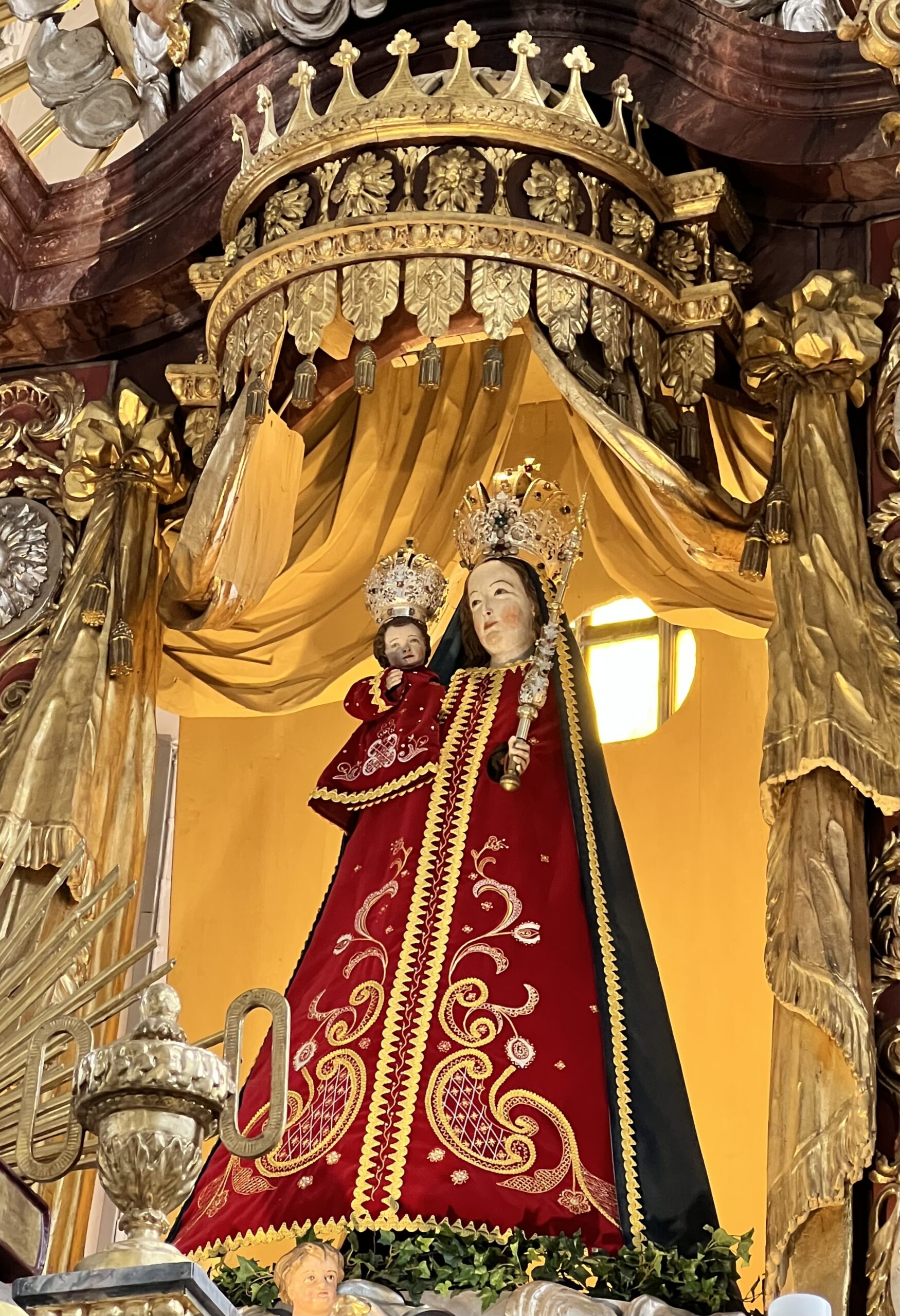
The wooden statue of Our Lady dates from around 1450 and depicts Mary and the infant Jesus. Miracles are attributed to this statue, including the “Turks” Miracle" in the 16th century. A captain from Marktleugast is taken prisoner by Turks in Belgrade. If he refuses to renounce his Catholic faith, death follows. The man prays to Our Lady of Marienweiher and the next morning he awakens with his chains before the high altar in Marienweiher.
The frescoes in the church depict, among other things, the glorious mysteries of the rosary, namely the Annunciation, Visitation, Birth of Jesus, Presentation in the Temple, and Finding in the Temple. The painted ceiling shows the death and Assumption of Mary.
The basilica has a length of 48 metres, a width of 14 metres and a height of 19 metres. The tower reaches 48 metres.
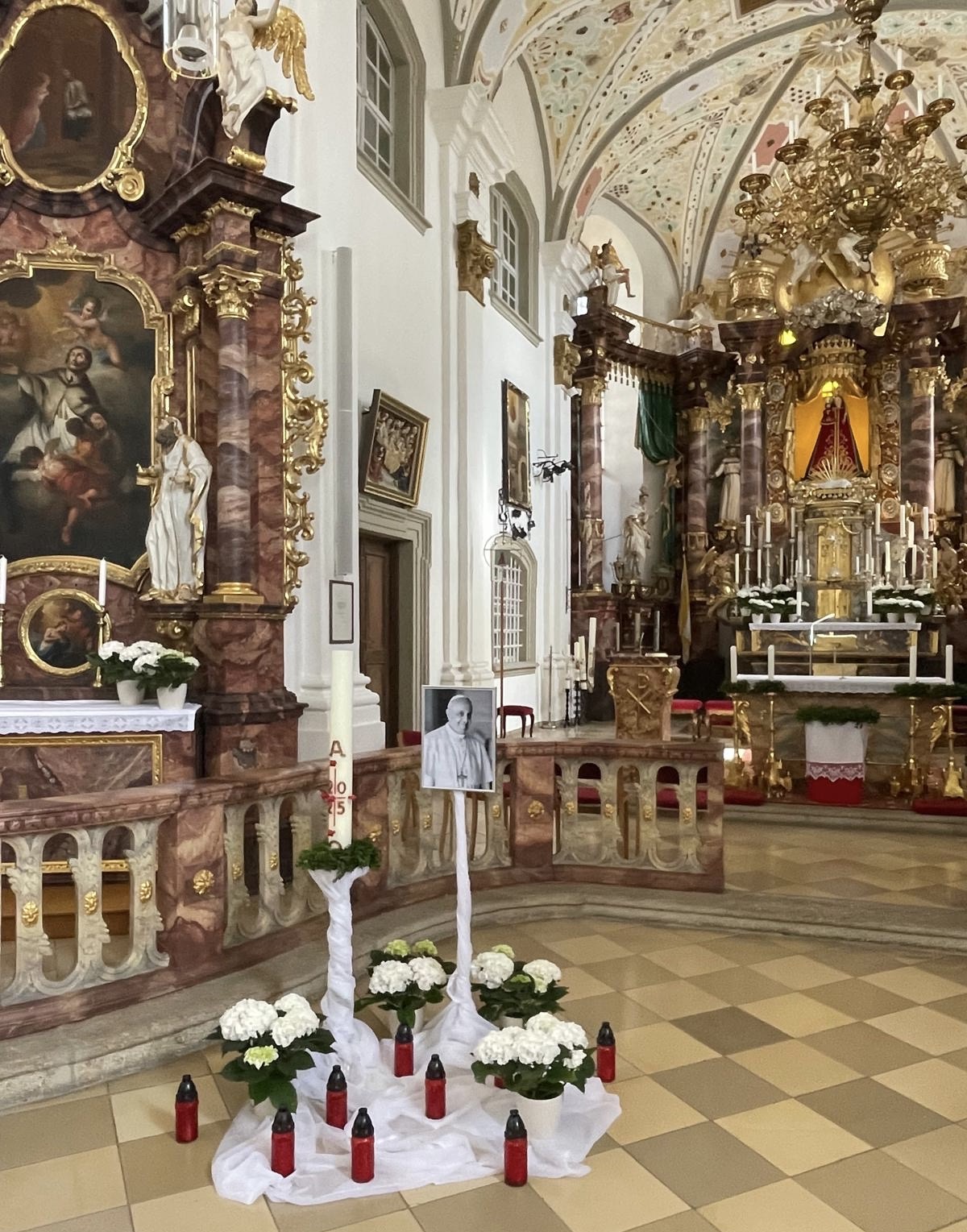
The visit to the pilgrimage church in Marienweiher takes place shortly after the death of Pope Francis on 21 April 2025. A photo of the Pope, a candle, flowers and lights form a scene to commemorate in the church.
In the northern outer wall of the basilica, a crucifixion group is depicted with Mary, Jesus, and John. The artist is unknown, and the work was made in the 16th century. Two plaques are also affixed here with the names of the dead and missing from the parish of Marienweiher from the First World War (1914-1918) and the Second World War (1939-1945).
The monastery shop with devotional items has limited opening hours and is open on Saturdays and Sundays from March to December. The pilgrimage season runs from the beginning of May to the end of October.
Marienweiher attracts over 10,000 pilgrims annually, in addition to regular visitors who live nearby. Busy pilgrimage days include May 1st, Pentecost, and the weekend after the feast day of the Nativity of Mary on September 8th.
Parking is available in the immediate vicinity.
Marienweiher is located on the “Fränkischen Marienweg,” a walking and cycling route connecting small and large pilgrimage sites in Franconia.
The basilica is open daily.
ACCESSIBILITY
Marienweiher is located in eastern Germany and in the northeast of the federal state of Bavaria.
The address of the pilgrimage site is Marienweiher 3, D-95352 Marktleugast.
Current information can be found at www.basilika-marienweiher.de.
Experience
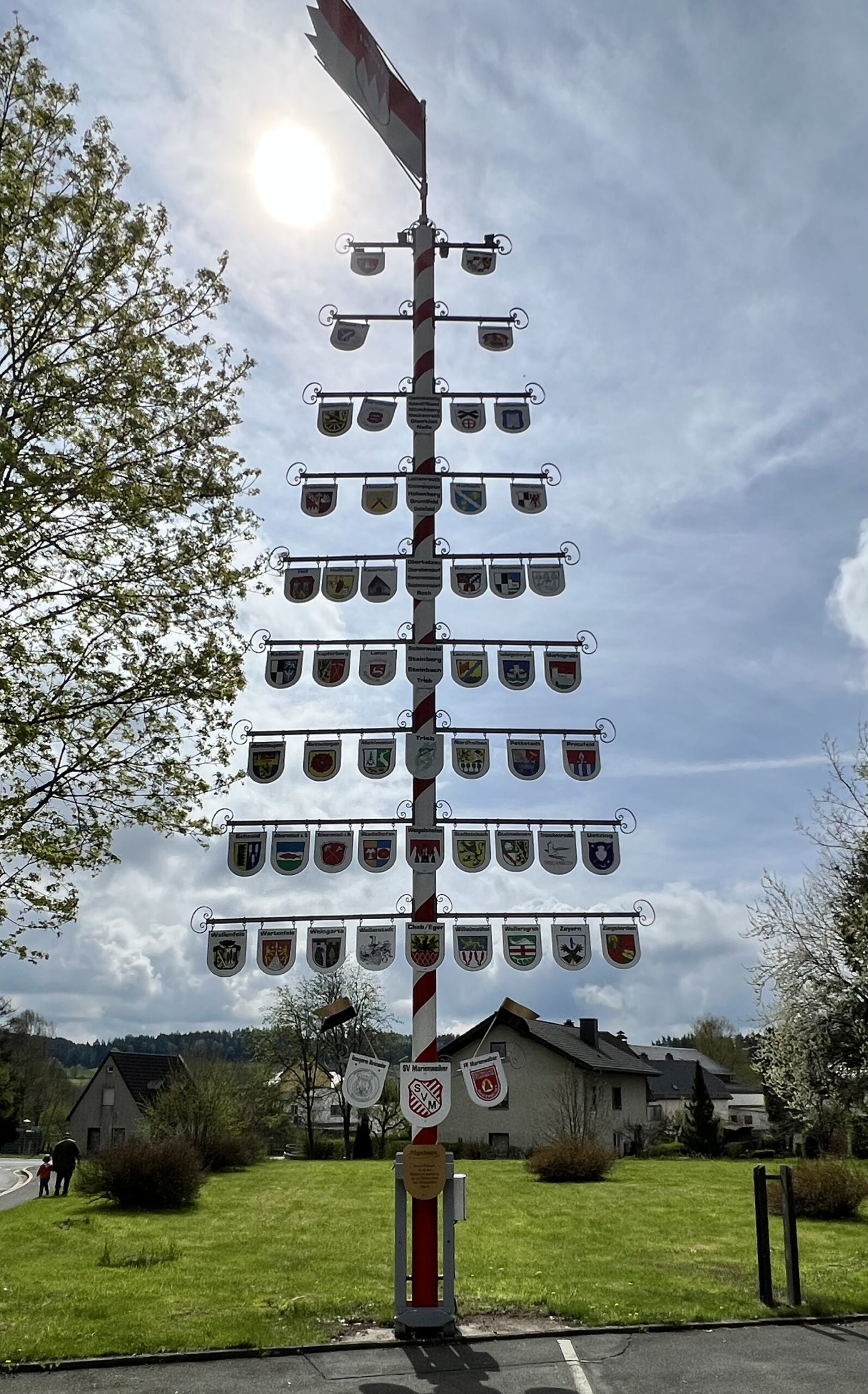
In the north of Bavaria, I'm visiting the Free State's oldest Marian pilgrimage site. After a drive mostly on German motorways, I arrive at Marienweiher and find a parking space easily. Next to the car park stands a very tall pilgrim tree. This tree has been dedicated to Our Lady by all the pilgrims. I count more than 45 little plaques. How popular Mary is here!
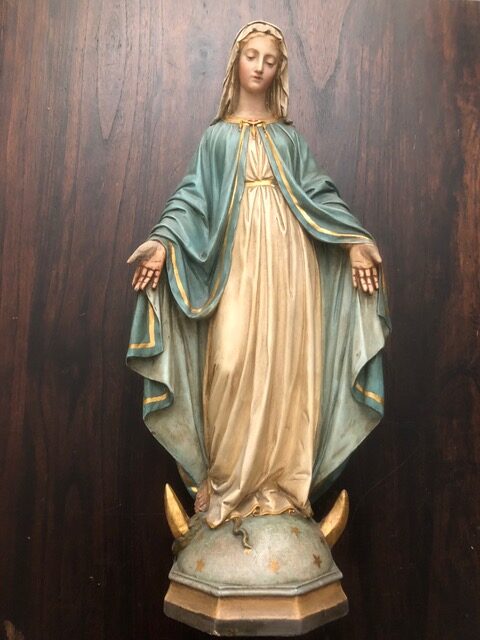
It's crossing the street and going to the pilgrimage church. Now go up a staircase with many steps. Near the entrance stands a depiction of Mary with Child on a high pedestal. This statue shows Mary as Queen of Heaven (Regina Coelli). Our Lady is wearing the Franconian ducal hat. This feels like a warm welcome.
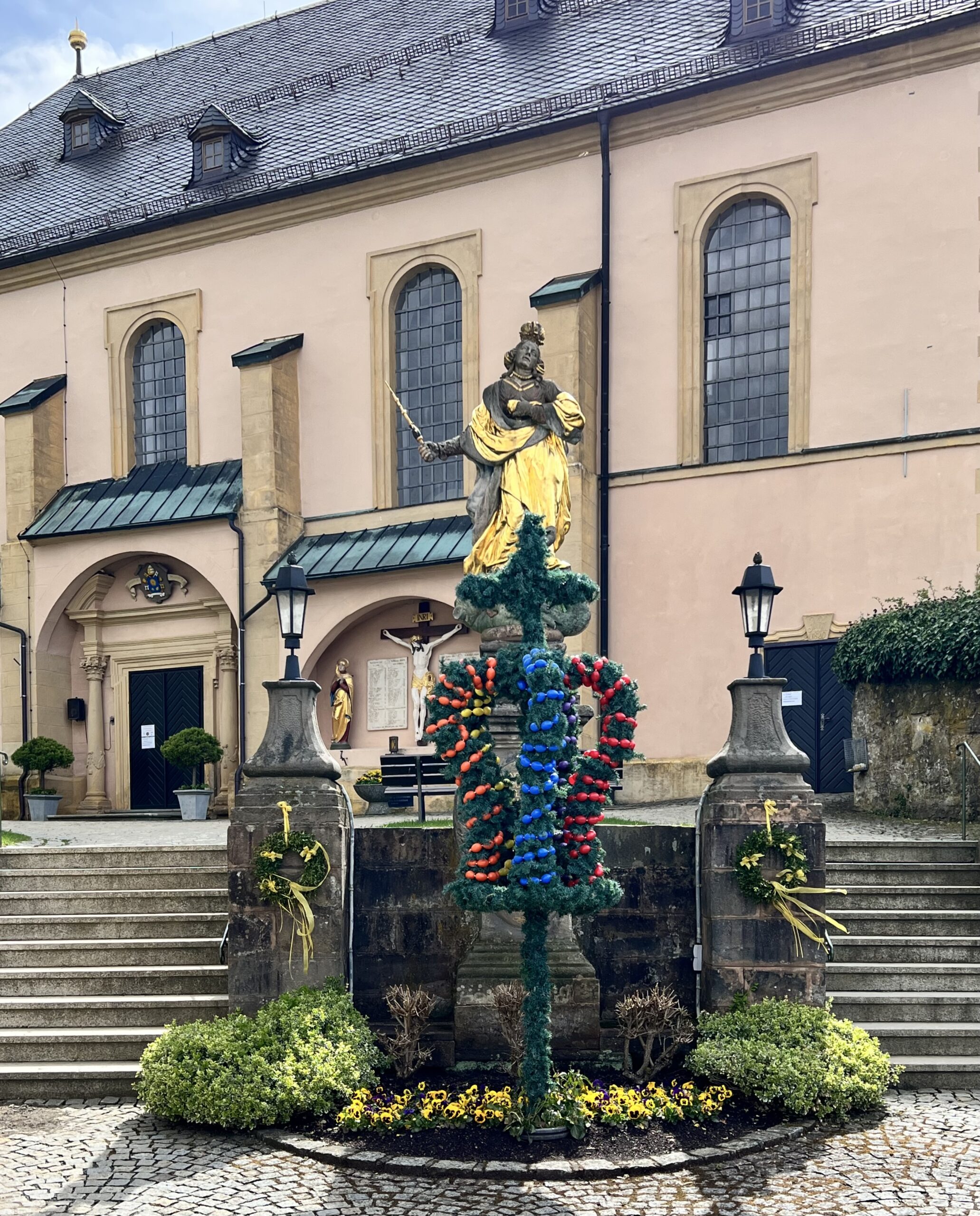
Behind this effigy stands the pilgrimage church. Not far from here stands another statue of Mary and she is wearing golden clothing. Above the portal of the basilica, I see the coat of arms of Pope John Paul II with the year 1993, commemorating the bestowal of the title of basilica.
In the pilgrimage church, I see nothing but splendour! What statues, frescoes and paintings! The miracle-working image is centrally placed on the presbytery. Mary and her Little Son are crowned and wear red robes. The Mother of God has rosy cheeks, looks out into the church, and holds a sceptre in her left hand.
The frescoes in the church are more than impressive. The entire ceiling is painted. It’s a long way to look up. Would heaven look like that too?
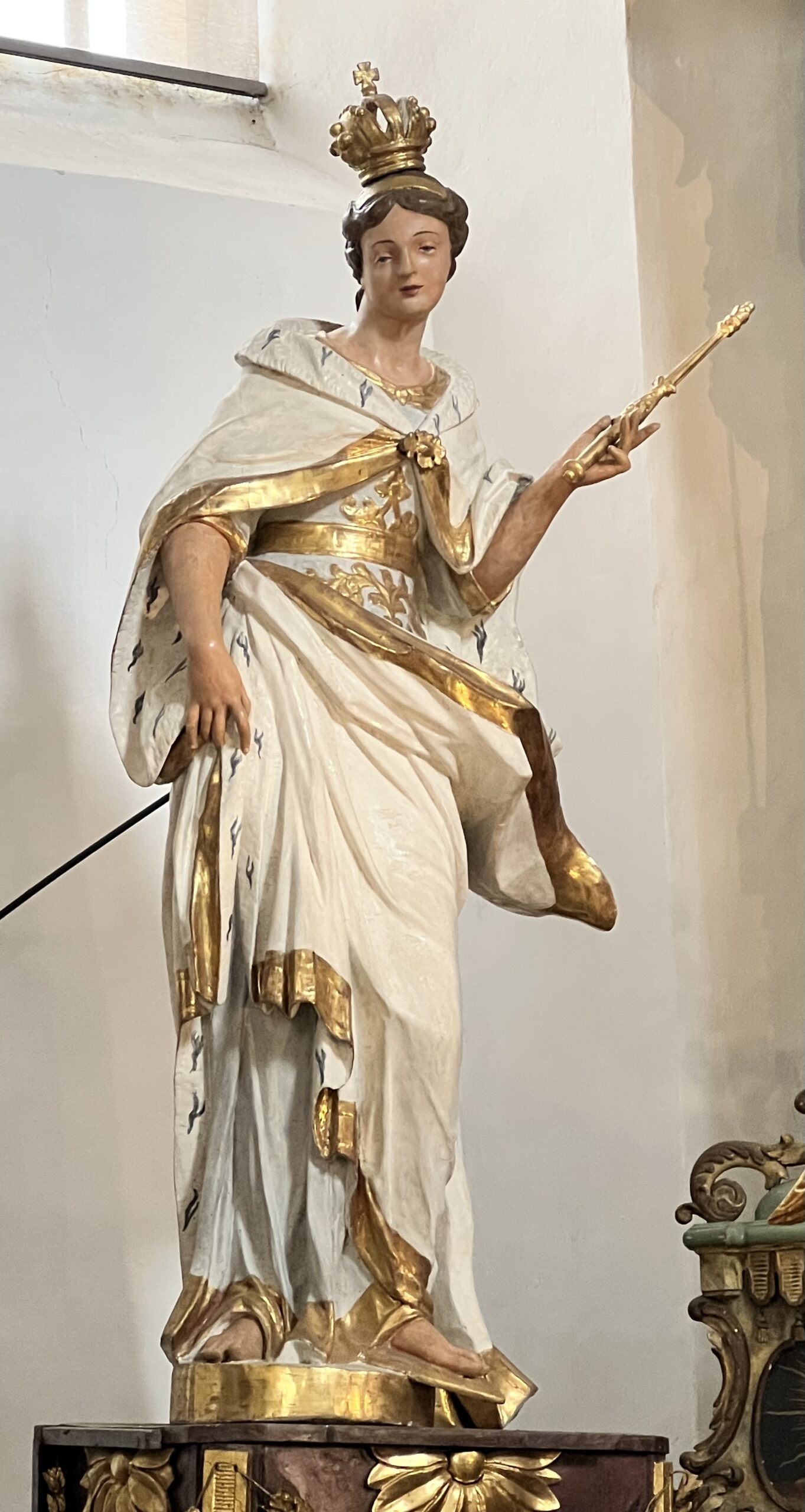
Next, I'll take another turn in the pilgrimage church. A great statue invites me to come closer. It is the effigy of a tall, slender, beautiful woman with a crown and holding a sceptre. What a magnificent sight! This is Kunigunde of Luxembourg (980-1033), Queen (1002-1014) and Empress (1014-1033) of the Holy Roman Empire. She was canonised in 1200.
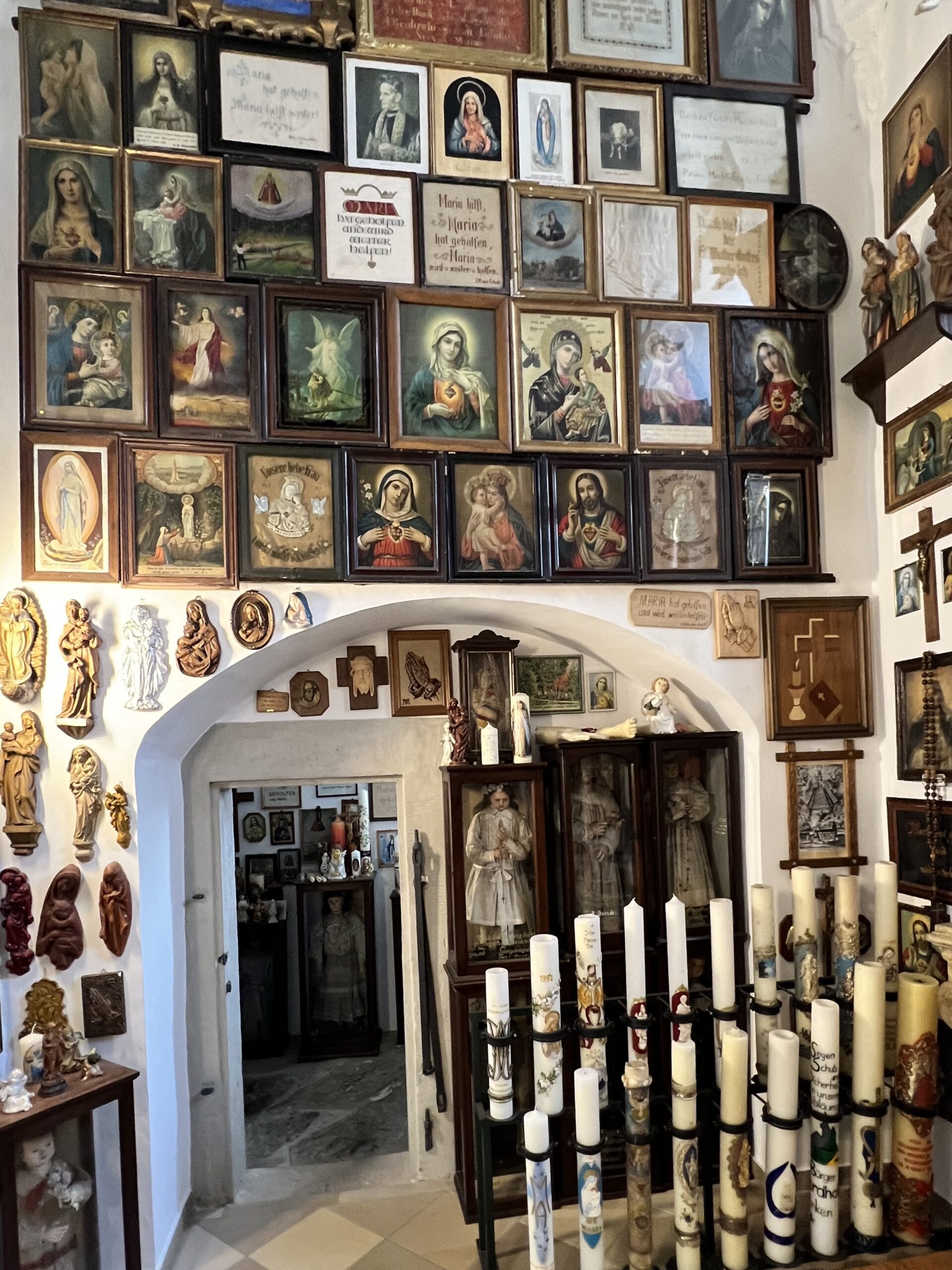
Numerous are the ex-votos in this church. A separate chapel has been arranged for these, where life-sized children are also depicted as dolls. Large candles are also kept in this space. After having visited this chapel, I take a seat on a bench and it is time to be with my thoughts in Mary's presence.
Next to the entrance of the church, a Lourdes grotto has been built. There, one can light a few candles and pray to Mary. In 1897, this grotto was donated by pilgrims from Bamberg, as I read on a sign.
A visit to Marienweiher is a particularly great gift. I gained so many impressions here, admired art, prayed to Mary, and above all, was able to experience spirituality.
Environment
In and around Marienweiher, there are many opportunities for walking and cycling.
Travelling from Bamberg to Marienweiher means heading 81 km north-east.
Leaving Bayreuth to arrive in Marienweiher involves covering 35 km to the north.
The pilgrimage from Heroldsbach to Marienweiher is achieved after travelling 109 km to the northeast.
From Hof, it's 34 km to the southwest to Marienweiher.
The distance from Nuremberg to Marienweiher is 116 km to the north.
~~~

 Nederlands
  English (UK)
  Deutsch
  Français