History
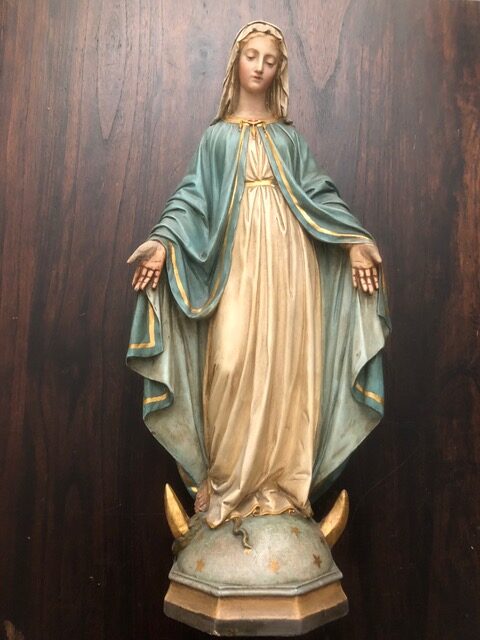
The devotional image of the sorrowful Mother and her Son is a wooden sculpture from around 1600. Originally, the effigy was venerated on a processional statue at Stunzberg Castle.
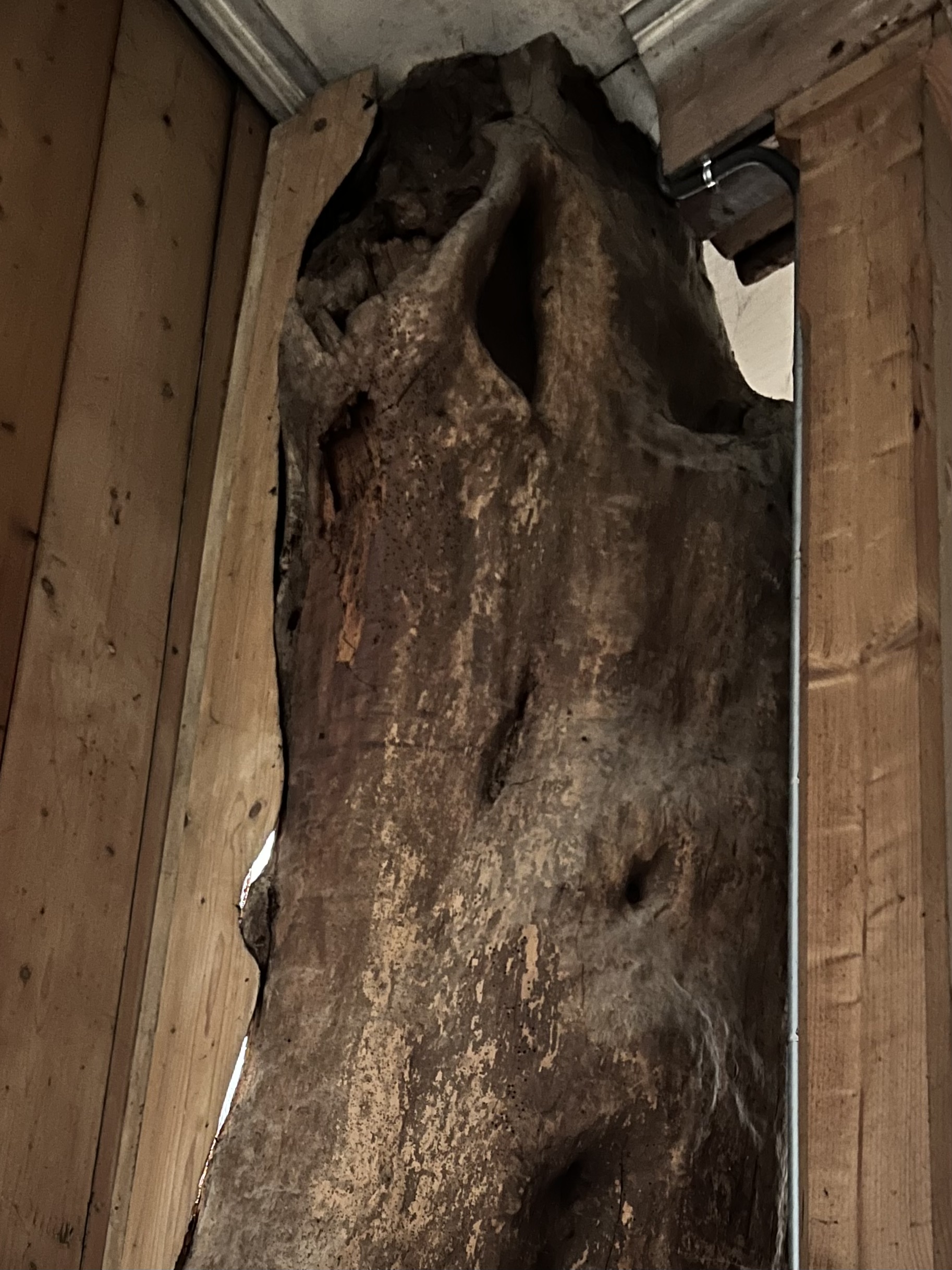
During the Thirty Years“ War (1618-1648), a large-scale conflict between Catholic and Protestant states, much destruction was wrought in the region and its churches. In 1632, hostile Swedish troops arrived in Sielenbach. They took the statue of grace with them and discarded it. Later, the effigy was found in a pear tree, giving rise to the name ”Our Lady in the Pear Tree".
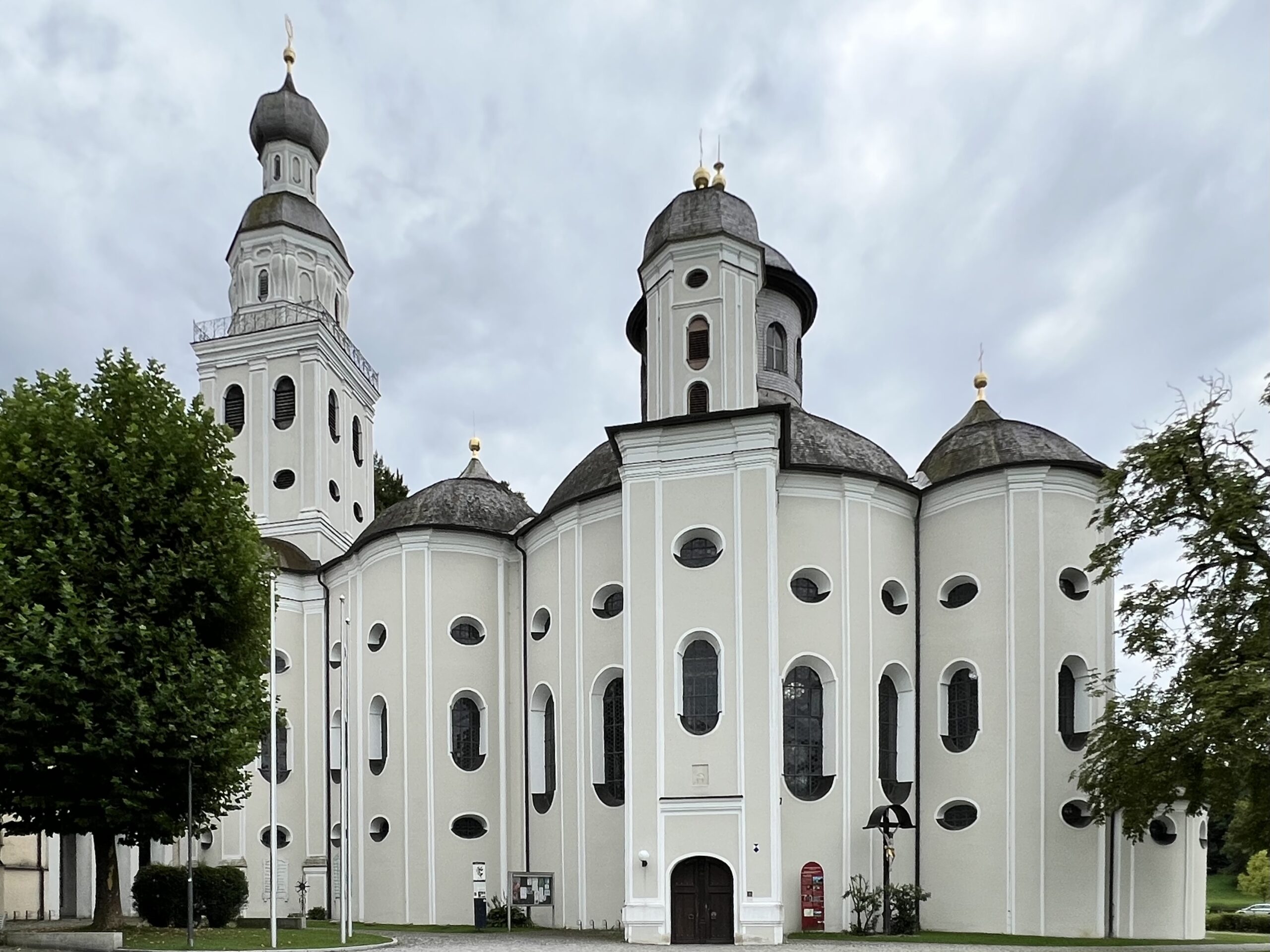
In 1658, Philipp Jakob von Kaltenthal/Kaltental (1627-1669) became commander of the Teutonic Order. He was inspired by Mary and planned to build a pilgrimage church. He funded the majority of the monies needed for the church's construction, with the remainder being raised by local believers and pilgrims. This became the present-day pilgrimage church of 1658, with master builder Konstatin Pader (c. 1596-1681) involved. The consecration of the house of worship took place in 1668. It was the first domed church north of the Alps. Soon after the church's completion, people were healed and apparitions occurred. This led to a significant increase in visitors to the pilgrimage church. After his death, Sir Von Kaltenthal was buried in the church. The Teutonic Order managed the pilgrimage site for approximately 200 years without interruption.
In 1664-1665, the stucco work, featuring numerous decorations, was carried out by Matthias/Mathias Schmuzer (1634-1686).
In the early 19th century, members of the Order of Teutonic Knights were forced to leave the pilgrimage site. This occurred by order of the secularised authorities with anti-Catholic decrees, such as the closure of monasteries and the dissolution of congregations. This was accompanied by political unrest. The church in Sielenbach was damaged and the continued existence of the pilgrimage site was jeopardised. Salvation came from farmers in the region; they secured the Marian site for the future by bearing the costs of its maintenance. During this period, “die Bruderschaft der Totenbund und der blaue Bund” (the Brotherhood of the Totenbund and the Blue Bund) was formed. This organisation dedicated itself to the veneration of the sorrows of Mary, and this brotherhood also took on the care of buildings and pilgrimages.
From 1867 until 1984, Capuchin friars organised the pilgrimage site, and thus for more than 100 years.
In 1998, the members of the Teutonic Order returned to Sielenbach.
Pilgrimage site
The pilgrimage church is named “Unsere Lieben Frau im Birnbaum” (Our Lady in the Pear Tree) and is dedicated to Our Lady of Seven Sorrows. Many pilgrims come here because Mary understands all of people's fears, needs, and worries.
Behind the high altar stands a part of the original pear tree.
Since 1897, a reliquary containing the remains of Saint Liberata of Pavia (+580) has been housed beneath the altar. This Italian saint led the austere and penitent life of a nun and died a martyr. It was donated by the Sisters of the Convent of St Joseph in Zangberg.
The pilgrimage church is open every day.
ACCESSIBILITY
Sielenbach is located east of Augsburg.
The address of the pilgrimage church is Maria-Birnbaum-Strasse 51, 86577 Sielenbach.
Current information can be found at www.maria-birnbaum.de.
Experience
As I approach the pilgrimage church, I get the impression that the building is an Orthodox church. Upon enquiry, it turns out that the church’s exterior is inspired by the Italian architecture of that period. The exterior of the pilgrimage church is the work of its founder, Philipp Jakob von Kaltenthal. He had travelled extensively abroad, and this shaped his vision for the building’s appearance.
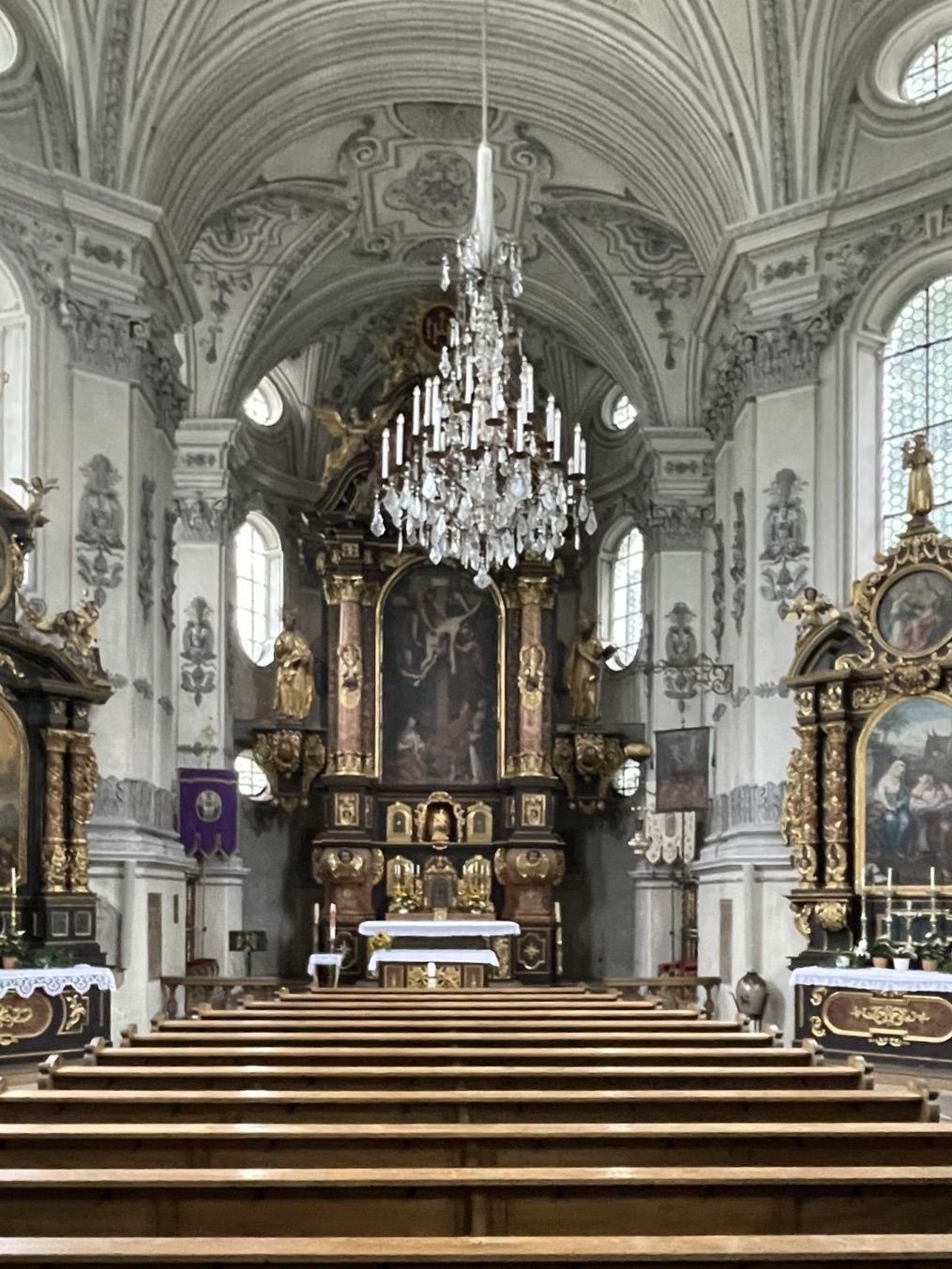
The interior of the church is beautiful with decorations on the dome, ceilings, and walls. What expressions of special gifts from artists these are!
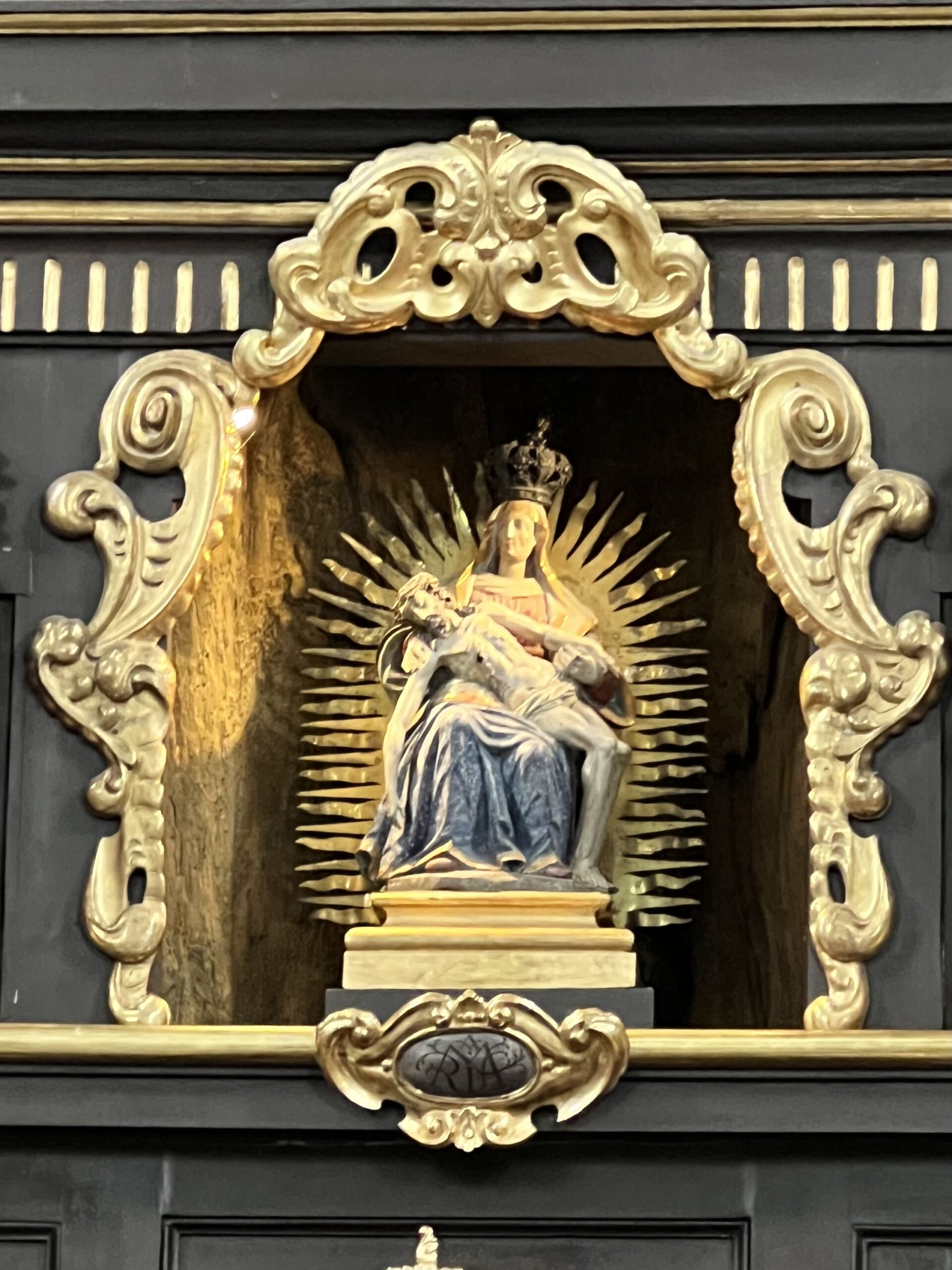
By the high altar, I see the statue of mercy, which is a picture of utter sorrow. This statue of mercy is a Vesper image depicting the sorrowful Virgin Mary and her dead Son. Above it, the Descent from the Cross is depicted.
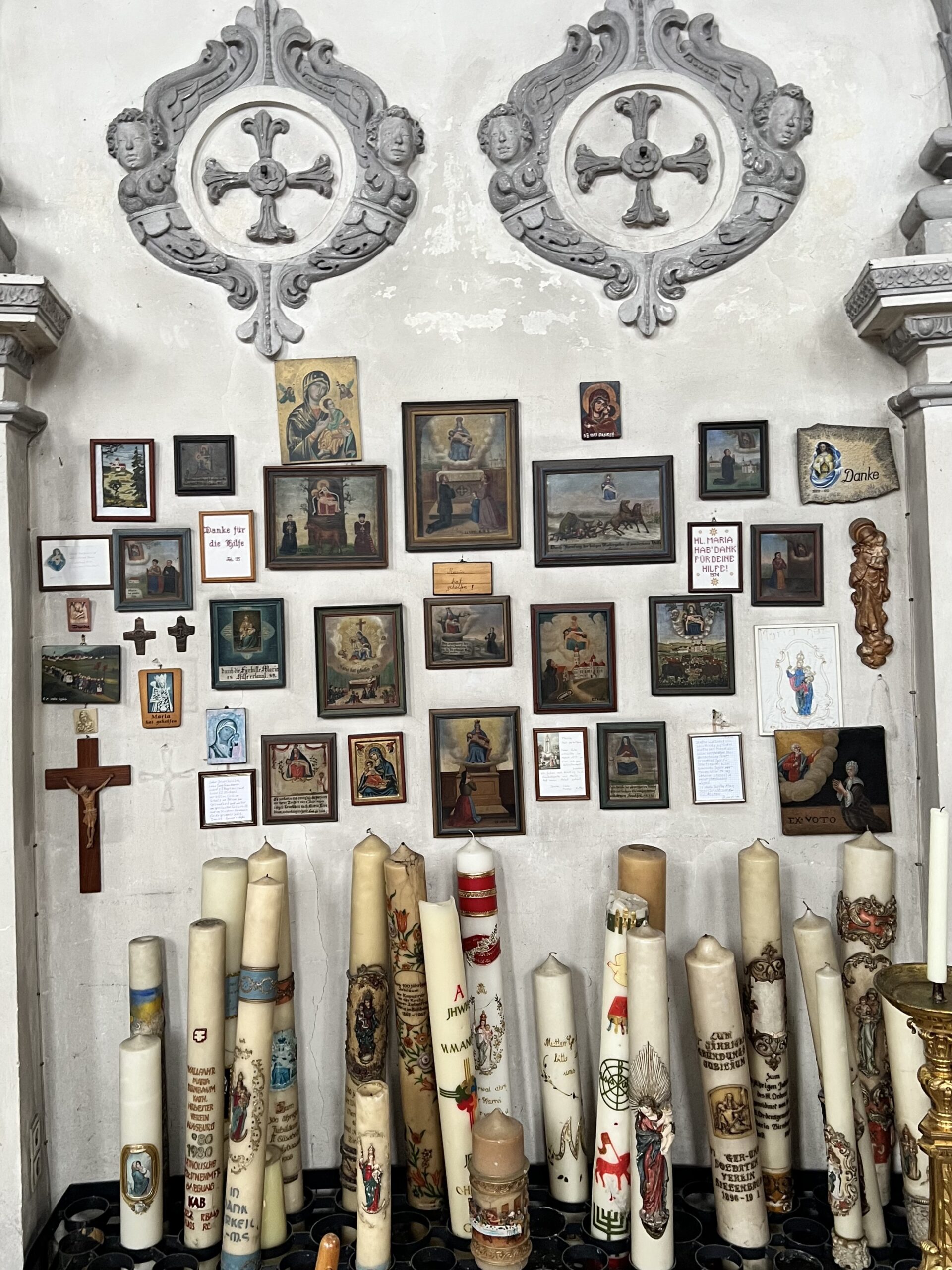
The pilgrimage church displays large, old candles, alongside a vast collection of ex-votos. These tiles and paintings are a testament to the profound gratitude felt towards Our Lady.
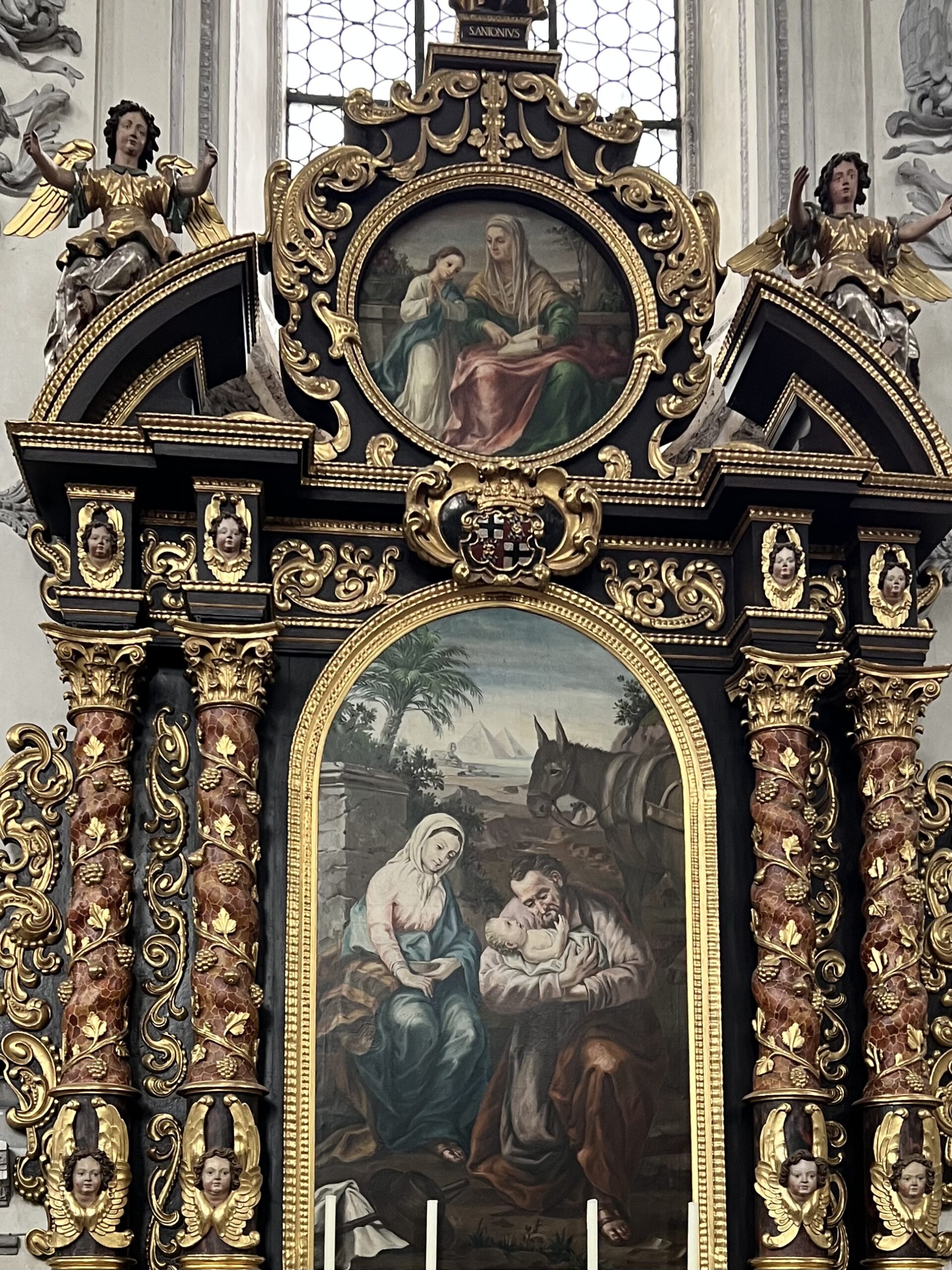
A beautiful altarpiece, I find, is the painting of Mary, Joseph and the little Jesus, with a round painting above of Mother Anna and her daughter Mary. Joseph is holding the little one, Mary is looking on, and such a scene is not often depicted.
Behind the high altar, I see the thick trunk of the old pear tree standing. What a lot this large remnant of the tree has to tell! Once again I stand before the high altar and then it's time for another round through the church. There is so much to see here of history, beauty and devotion. A particularly beautiful experience to treasure.
Environment
Pilgrimage walks and cycle routes have been mapped out in the Sielenbach area.
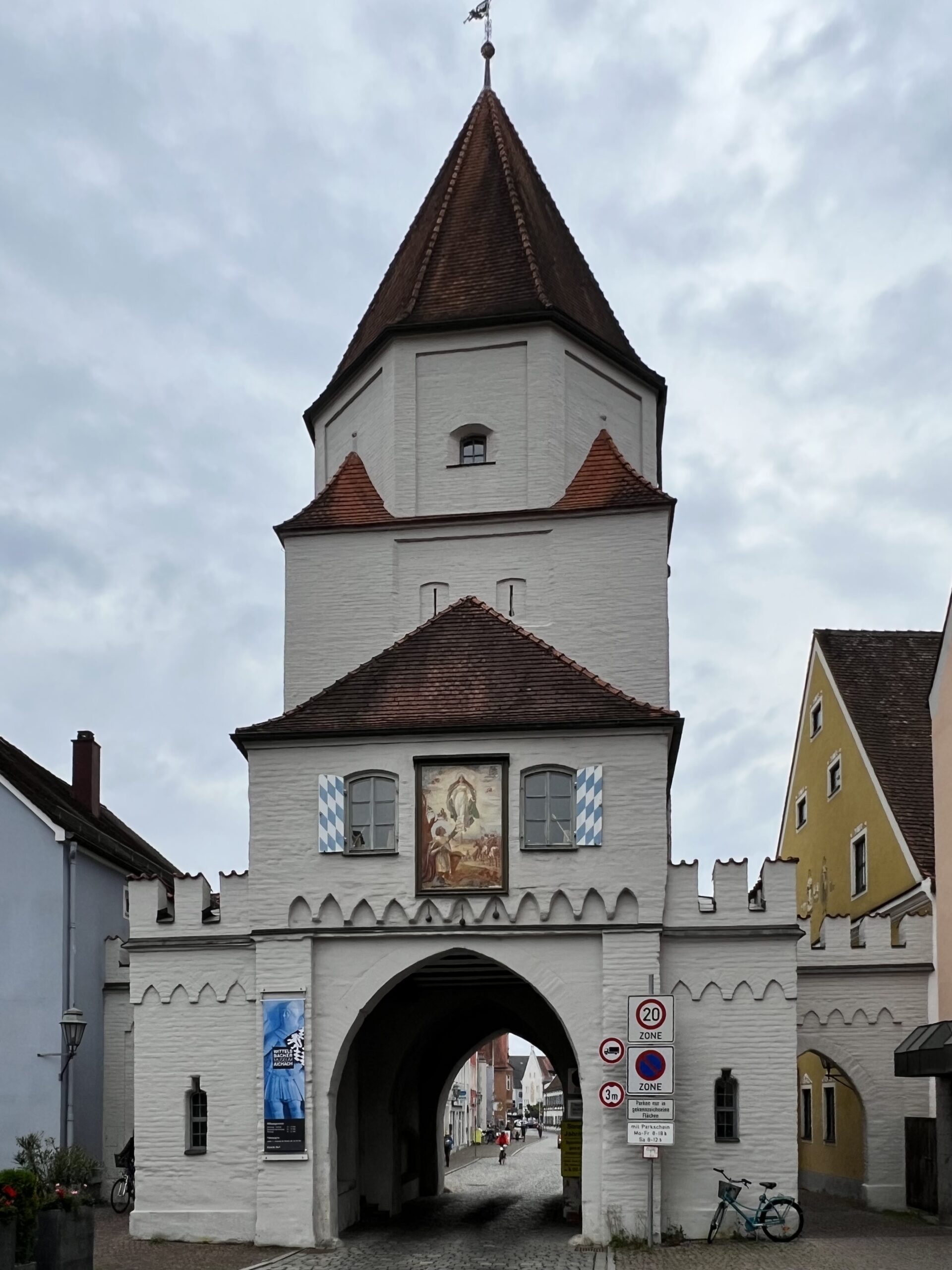
The journey from Aichach to Sielenbach is 9 km south. Among the sights in this tourist town are old city gates, murals and churches. One particularly notable building is the “Spitalkirche” (“Heilige Geist-Kirche”). This Hospital Church of the Holy Spirit dates from the mid-15th century.
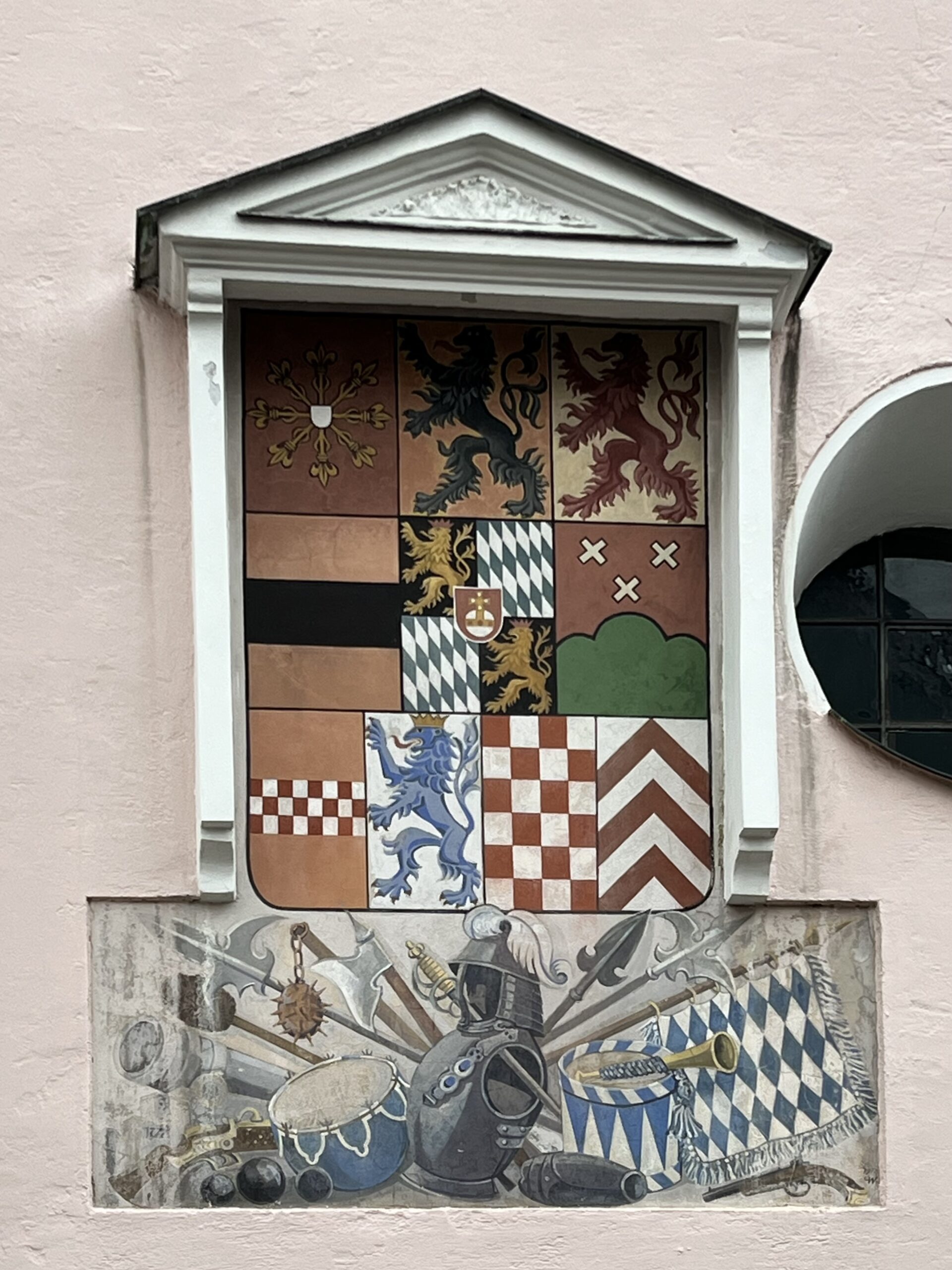
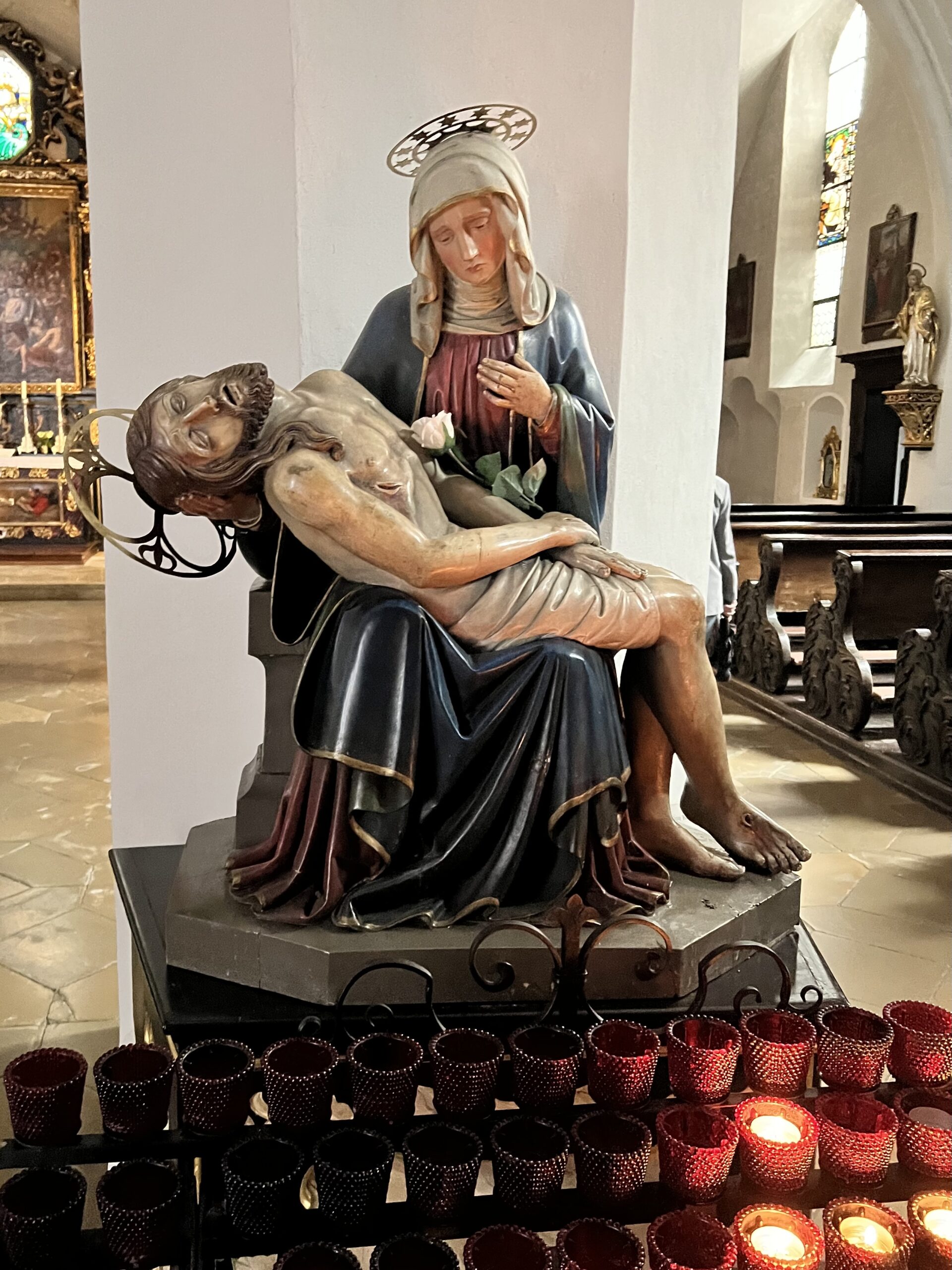
A painting hangs on the façade depicting the coats of arms of the Wittelsbach family's possessions in 1777, including the coat of arms of the Dutch Bergen op Zoom, the town where I was born and live. A Pietà can also be seen in the church. Furthermore, there are depictions of Mary, including the scene where she stands beneath the cross and displays a large heart. Above the altarpiece is a stained-glass window of Mary with Child. This states that Mary is the patron saint of Bavaria and that she protects. In the church, there is a large ceiling painting with Mary, an angel, and the Holy Spirit. On the main altar is a wooden sculpture group depicting the Coronation of Mary by the Trinity.
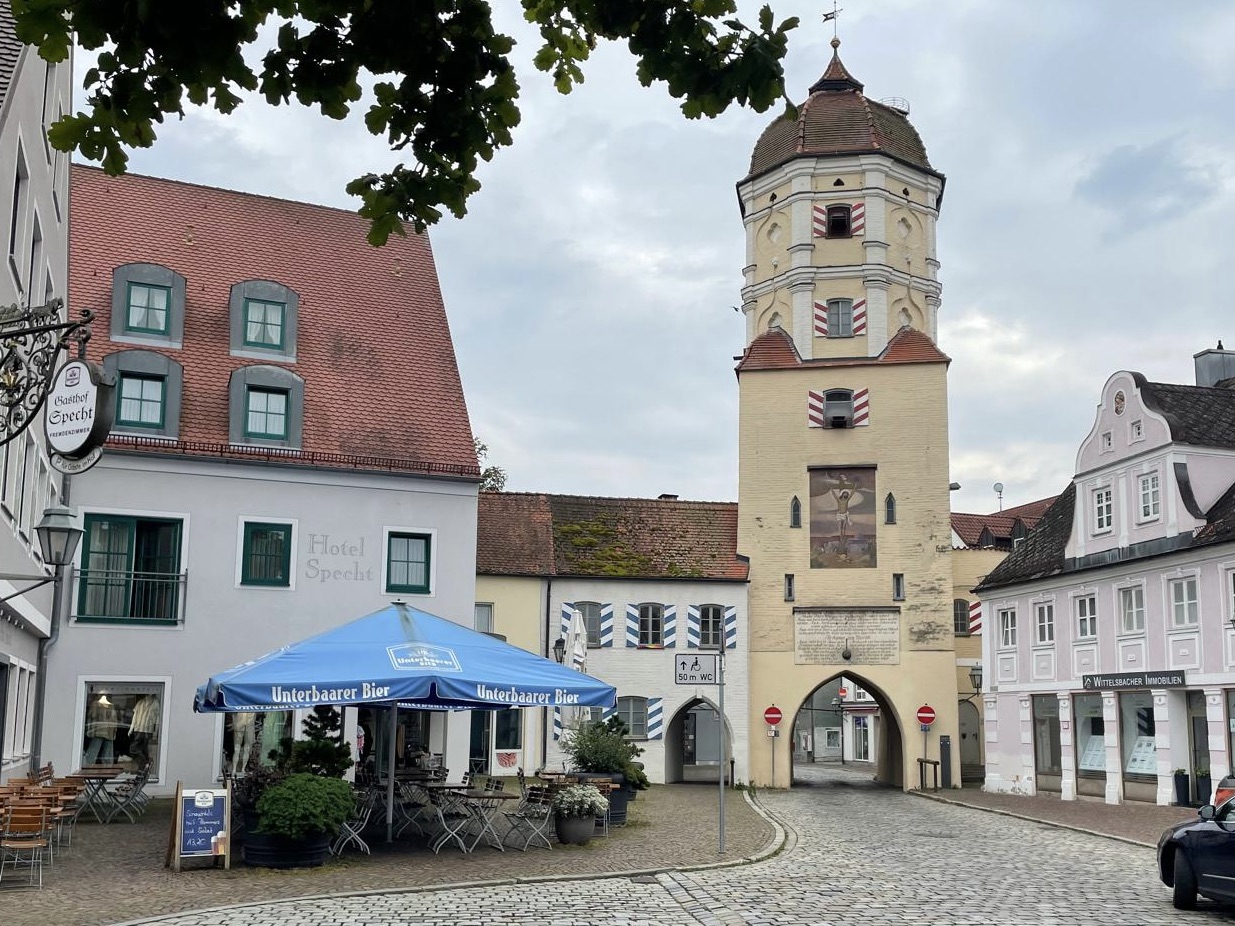
On an old city gate in Aichach there is a painting of the Virgin Mary and a knight, who is holding a scroll bearing the words: ‘Deliver us from all plagues’. There are also paintings to be seen on the facades of buildings in the town.
~~~
Leaving Augsburg to go to Sielenbach means travelling 33 km to the east.
To get from Munich to Sielenbach requires travelling 54 km to the northwest.
From Ingolstadt to Sielenbach means going 65 km towards the southwest.
~~~

 Nederlands
  English (UK)
  Deutsch
  Français