History
In 1841 the municipality of Engerode, now a district of Salzgitter, acquires the miraculous image, and in that year it goes to Söder Castle.
The Mary Chapel was established in 1862 on the initiative of Andreas Otto Heinrich zu Stolberg-Stolberg (1786–1863). This count lived in the large Söder Castle until 1862. The chapel is a replacement for the Catholic chapel of Söder Castle, after the count sold the estate to the Protestant nobleman Jobst Ernst Otto Boguslaw von Schwichelt (1806–1876). The new chapel was consecrated on 4 November 1862 by Dean Even from Detfurth.
In the final decades of the 20th century, Franz Josef Wothe (1910-1994) dedicated himself wholeheartedly to the pilgrimage site. The Marian shrine was extremely dear to his heart. He was a priest in the Diocese of Danzig, a professor at the seminary in Hildesheim, and a prolific writer. Franz Josef Wothe brought about a revival of local pilgrimages. In 1983, the chapel was expanded.
In 2025-2026 the chapel will be restored.
Pilgrimage site
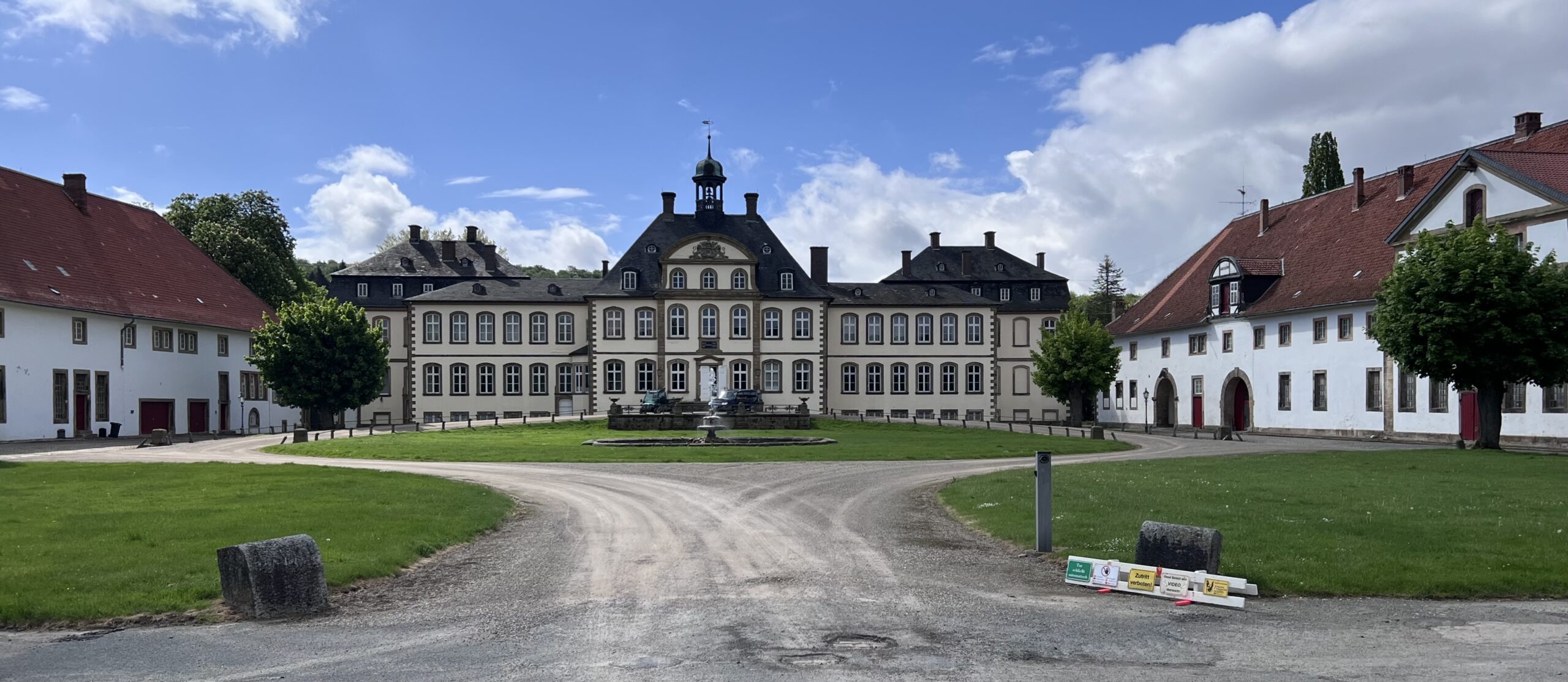
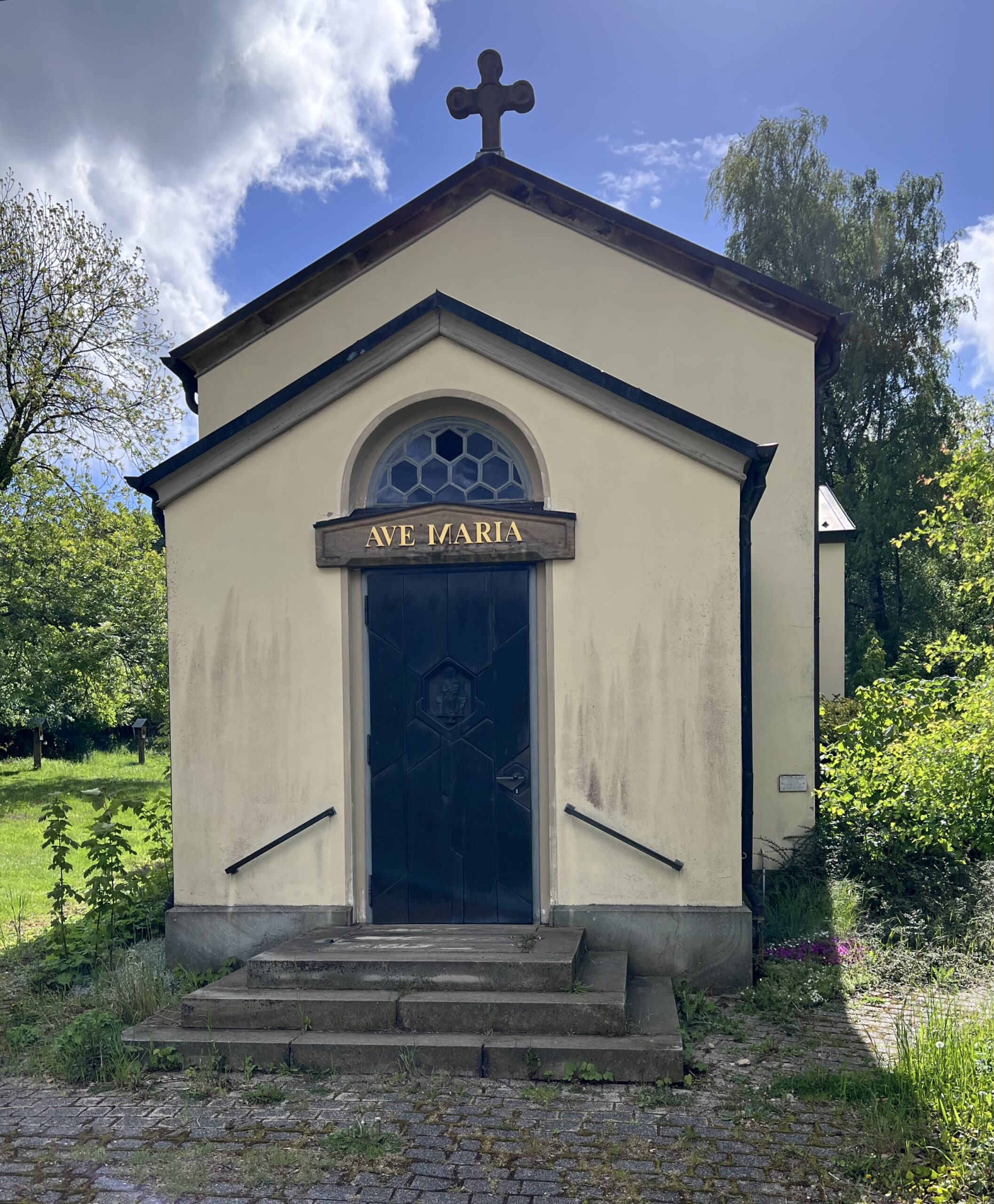
In the hamlet of Söder stands an imposing castle and, a few hundred metres further on, the pilgrimage chapel by a graveyard. The chapel, at an altitude of about 160 metres above sea level, is dedicated to the Immaculate Conception. It is the “Marienkapelle Unbefleckte Empfängnis Mariä”. The chapel is undergoing a thorough restoration in 2025-2026 which will likely be completed in 2027.
The interior of the chapel is in the Baroque style. In the chapel, there is a memorial plaque commemorating 11 clergymen from the Diocese of Danzig who were killed between 1939 and 1944, the era of the Second World War, due to the domination and anti-clerical attitude of the National Socialists.
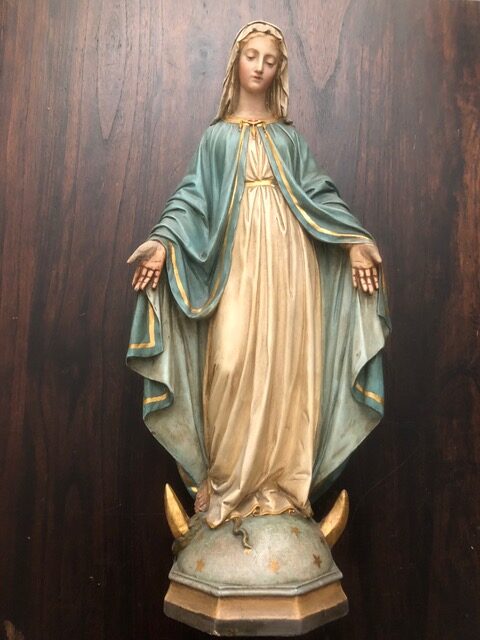
The miraculous image has a crown of stars. The effigy originally comes from the Mary Church of Engerode.
In Söder there is also a small pilgrim's house, outdoor altar and Stations of the Cross.
ACCESSIBILITY
Söder belongs to the municipality of Holle and the diocese of Hildesheim. It is located in the federal state of Lower Saxony.
Address: Schlosshof/Riesskamp, Söder
Experience
In the little hamlet of Söder, I first pass the large castle with its many outbuildings. No entry, so I read on a sign. Pity, is my reaction and I am certainly not the only one who thinks so. What an abundance of material heritage is represented here!
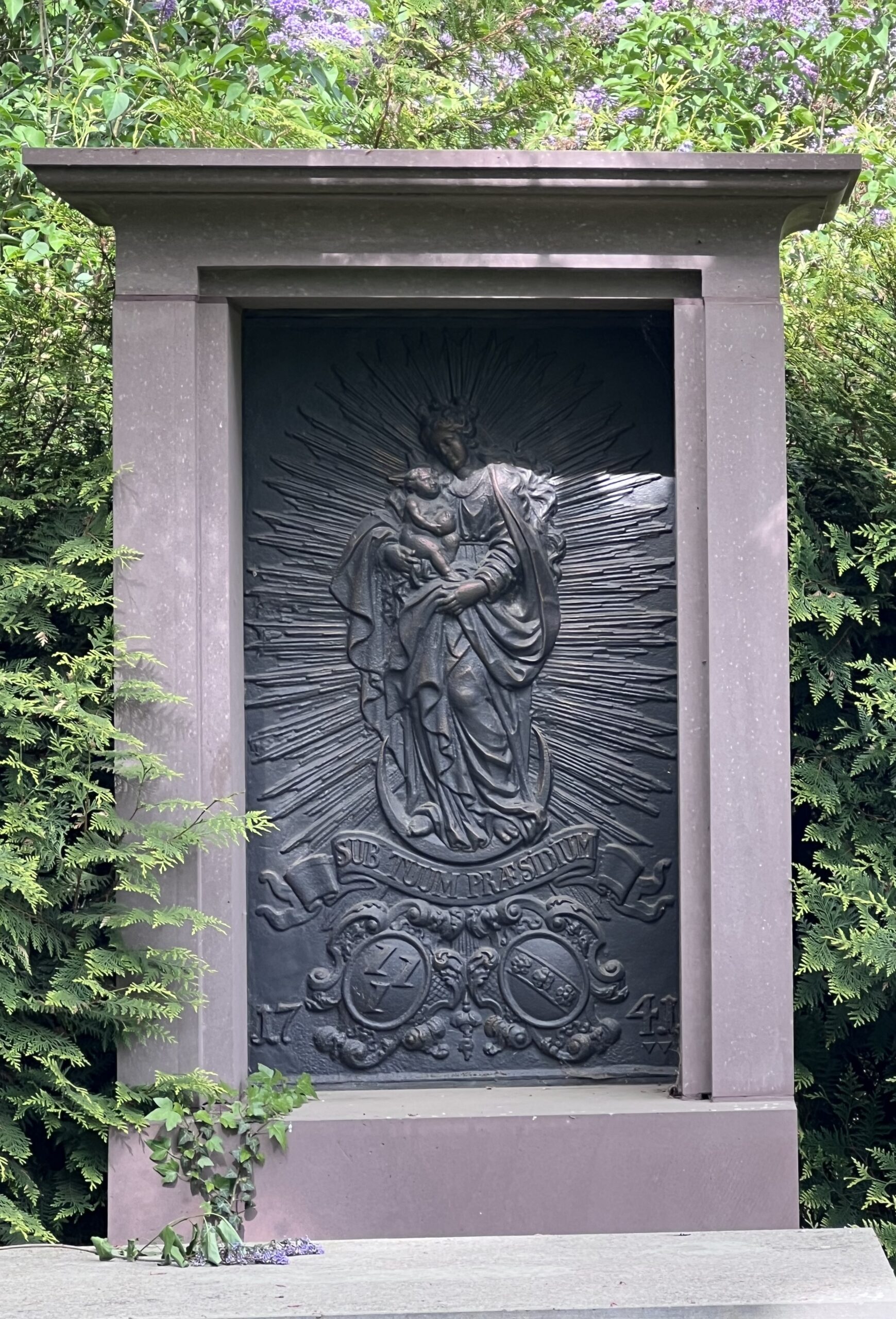
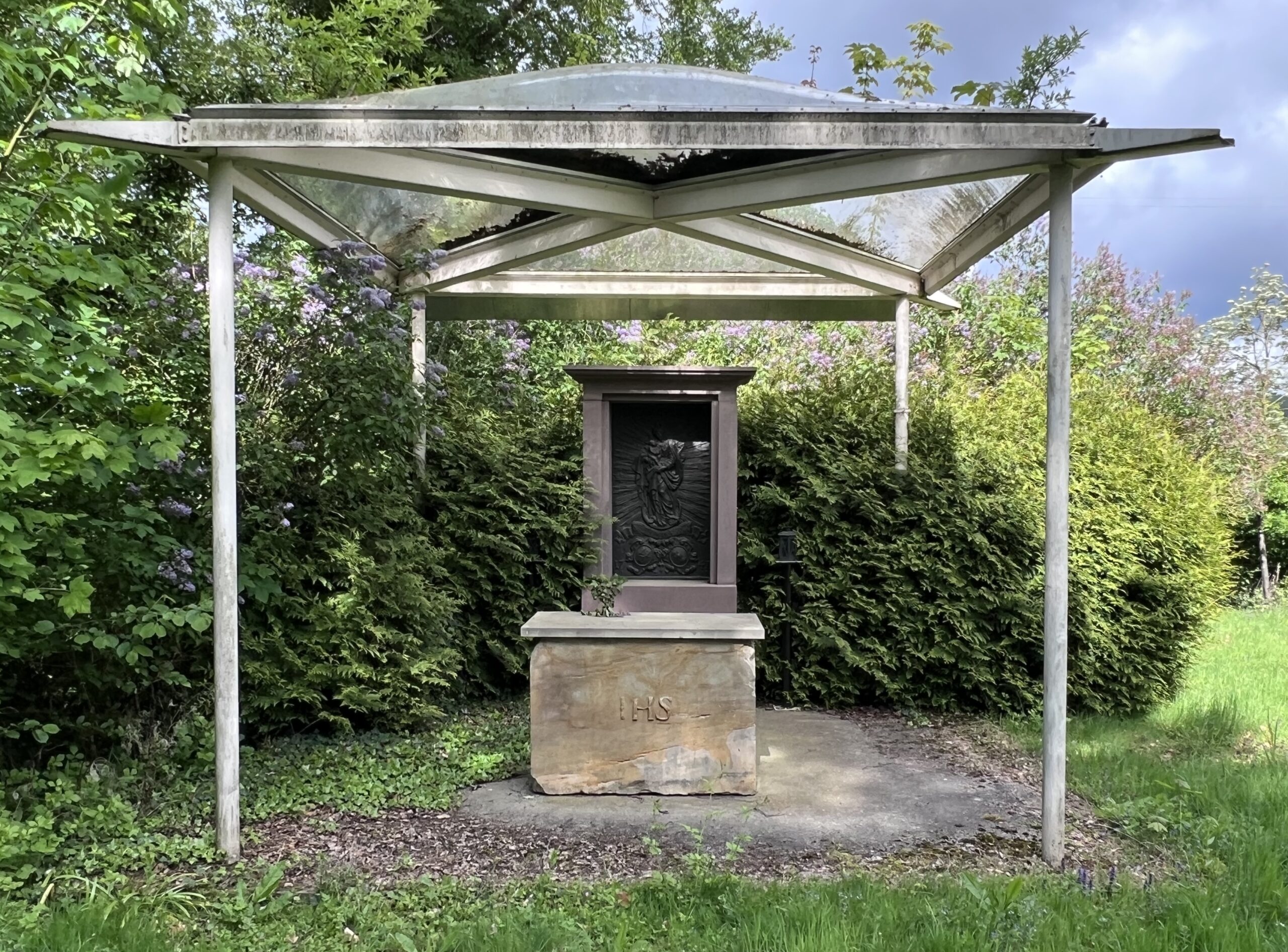
After being allowed to view the castle from a distance, I continue and after a few hundred metres I arrive at the pilgrimage chapel. This gives a deserted impression; weeds are growing profusely and the door of the chapel is closed. I don't have a key and that's a pity! Above the door I see the words “Ave Maria”. In the middle of the closed door is an image of the enthroned Mary with Child. A tile is attached to the wall with a text of gratitude incorporated into it. This ex-voto gives thanks for help in great need. Next to the chapel stands an altar statue under a shelter depicting Mary and her Son. Below this is “sub tuum praesidium” in Latin and in English this translates as “beneath thy protection”. If I remember correctly, this is the oldest Marian antiphon, it is the first text in which Mary is designated as Mother of God (Theotokos). This hymn is a song of praise to Mary as the God-bearer.
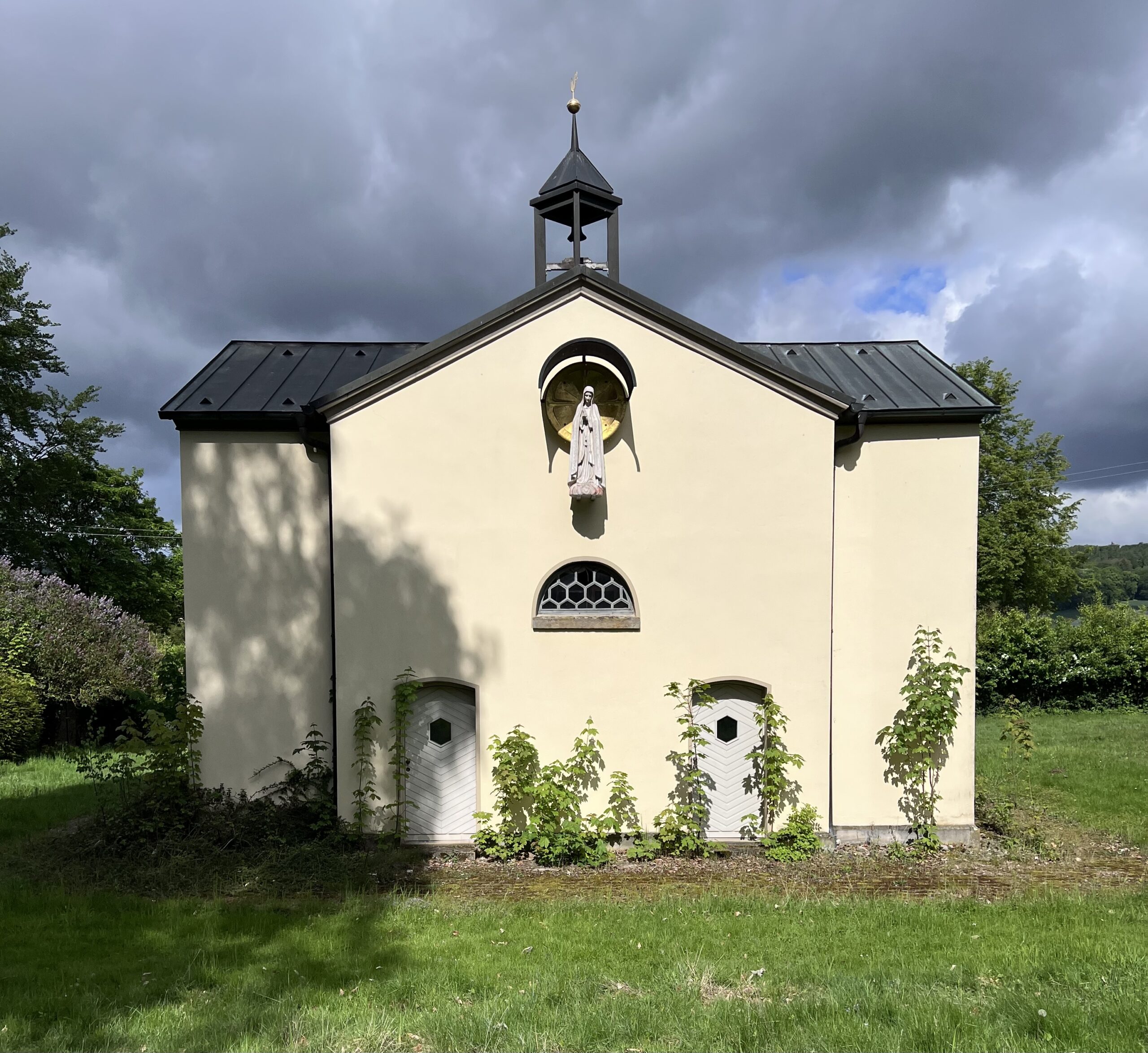
On the wall at the back of the chapel, I see an image of Our Lady at a height of about four metres. Here, Mary bears a strong resemblance to a Fatima statue. Fatima is the Portuguese place where Mary appeared six times to three children in 1917. To me, this is the most important apparition of Mary. Next to and further behind the chapel, Stations of the Cross have been placed. This place of pilgrimage has a lot of potential, it crosses my mind.
As I leave the grounds of the pilgrimage chapel, I see another car parked there. I am not alone here, flashes through my mind. Next, I go to the building next to the pilgrimage site. I ring the doorbell and a little later someone opens the door. I introduce myself, hand over a business card from the Mary Room and start a conversation with the man. He is a friar and tells me that the chapel is closed. This clergyman tells me that he is working hard on the restoration. He gives me that impression too, as the friar's clothes are covered in white paint stains. So he is both a religious man and a builder. I ask him when the pilgrimage chapel will be open again. The handyman friar does not know yet, as there is a lot to do. Next year in the month of May, I suggest. The response is that he hopes so and that all the repair work will be finished by then. I wish the worker every success and add that with the help of Mary the work will certainly succeed.
When I am back in the car, I wonder: What will the interior of the church look like in a year's time? I have no answer to this question right now. With Mary's help, it will undoubtedly be a successful restoration. So I might well come back here sometime.
Next I am going to Hildesheim to visit a church and the cathedral. How much of Mary Germany has to show!
Environment
Leaving Salzgitter and arriving in Söder requires travelling 26 km southwestwards.
Going from the village of Engerode to Söder means going 28 km to the southwest.
Travelling from the city of Hildesheim to Söder involves covering 20 km southeastwards.
In Hildesheim, visitors can go to St Mary's Cathedral and St Andrew's Church, among other places.
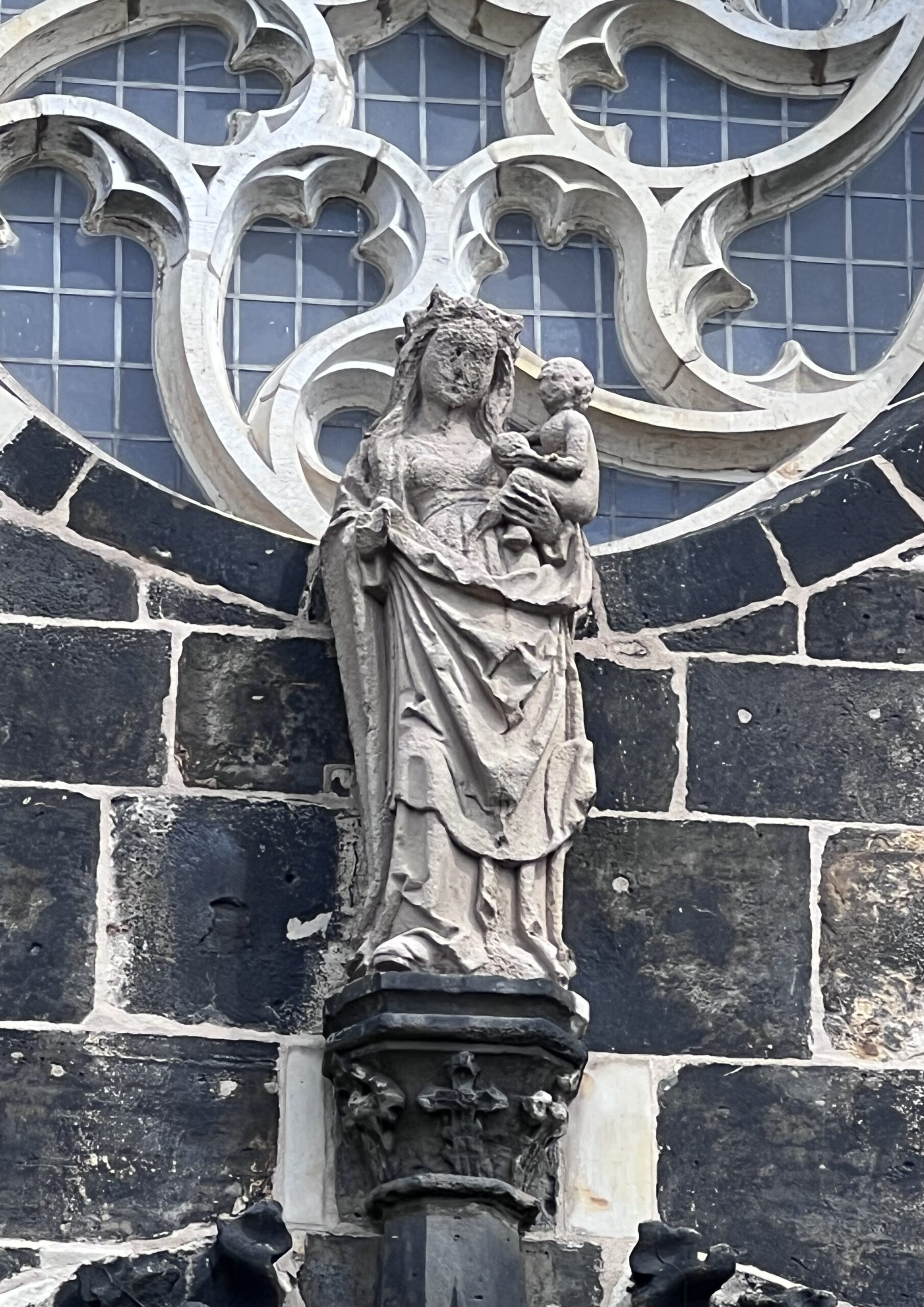
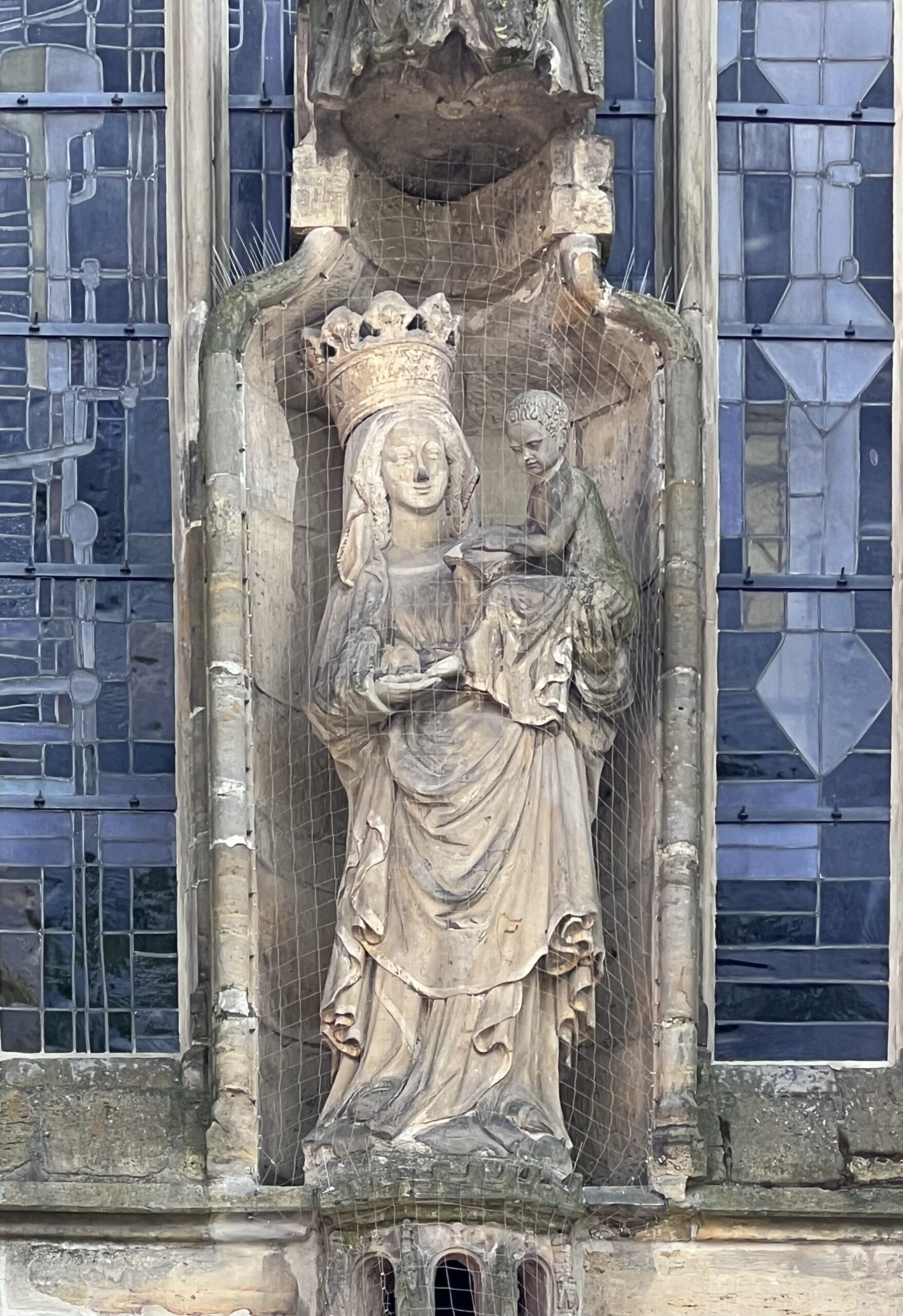
An exceptionally fine statue of Mary can be seen on the facade of the St Andrew's Church.
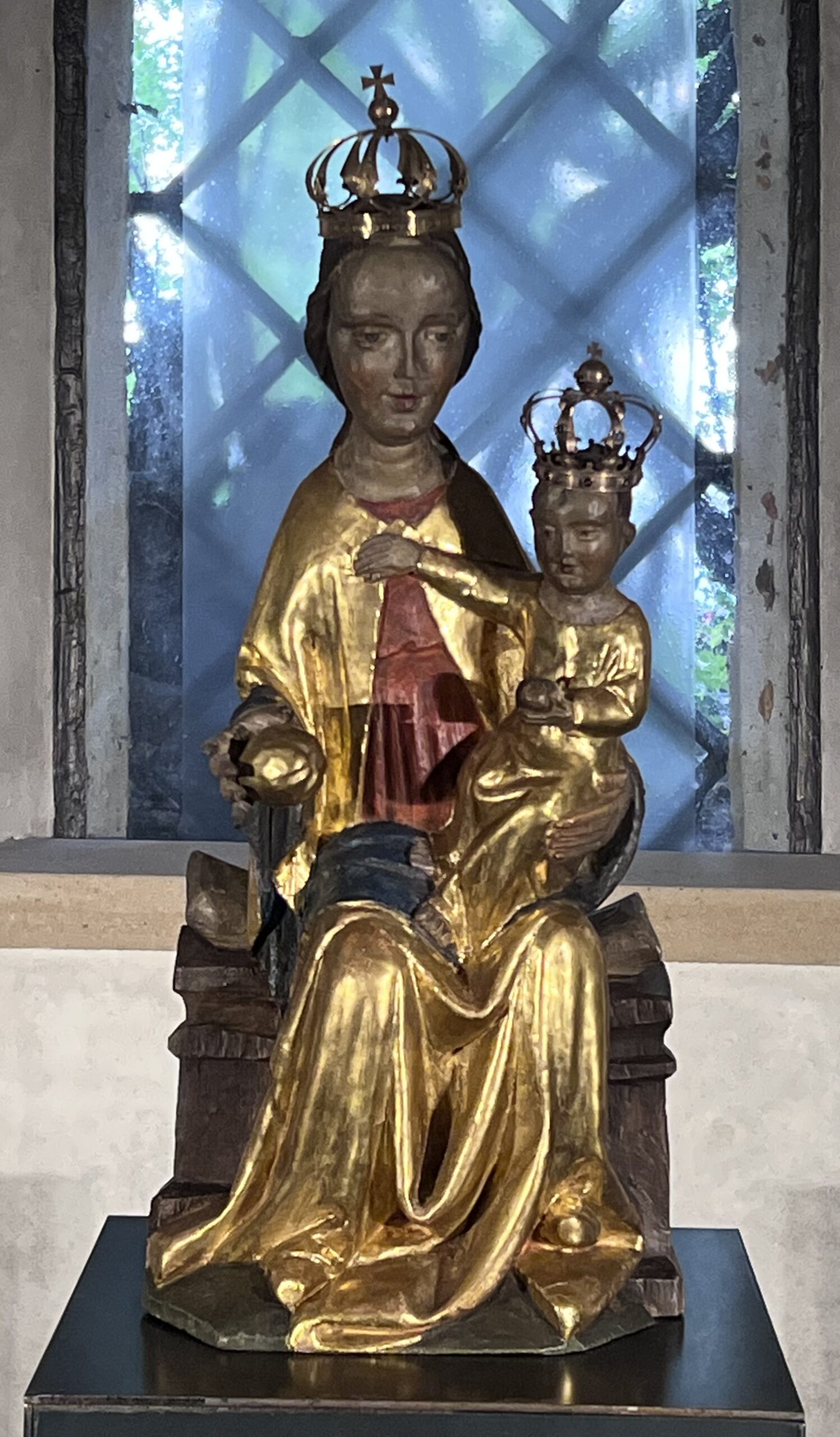
In Hildesheim Cathedral, Mary is depicted frequently. In the crypt stands the miraculous image of the Mother and Child.
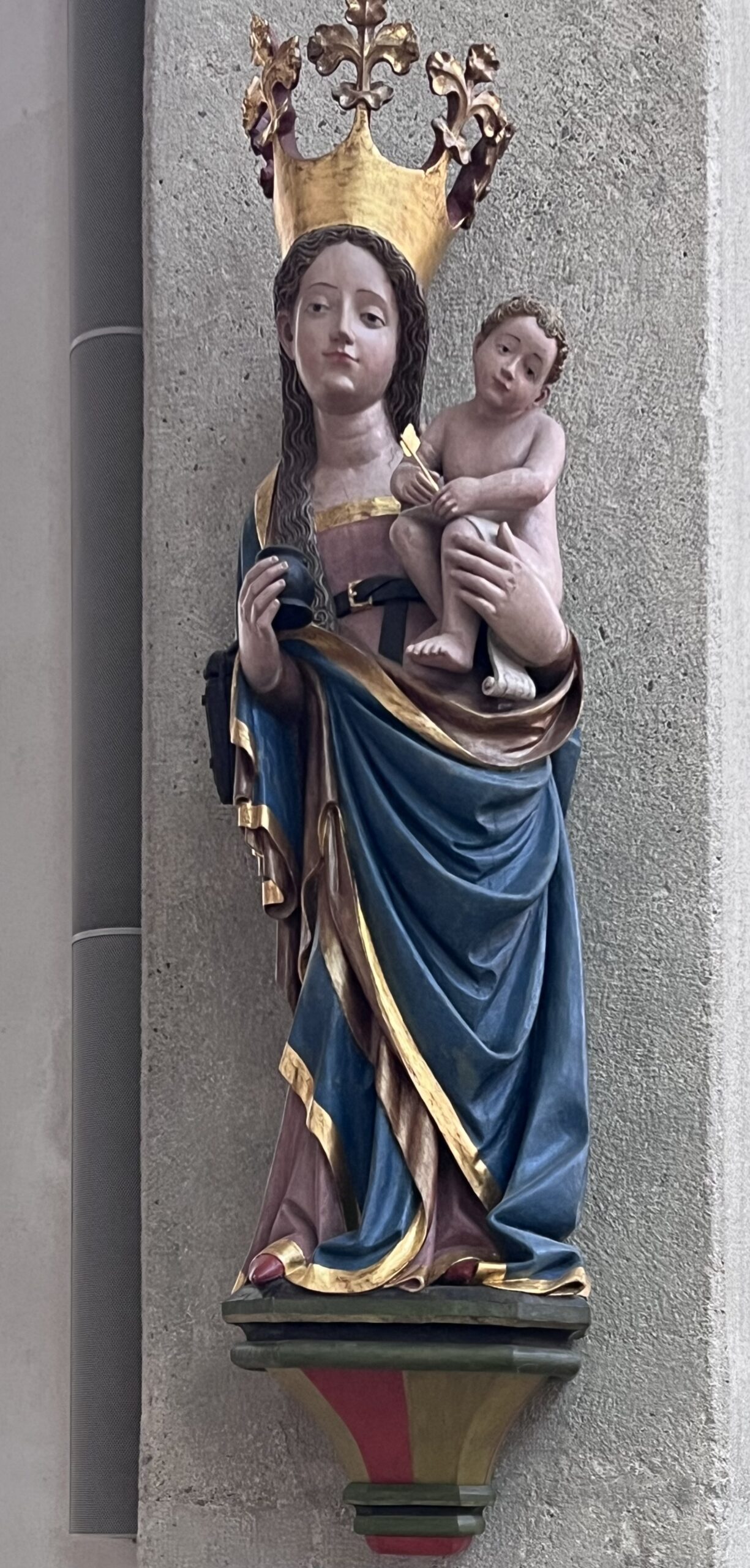
Inside the Cathedral is a colourful image of Mary and Child called the ‘Tintenfass-Madonna” (Madonna with the Inkpot). It is a Late Gothic wooden statue from around 1430 made by an unknown woodcarver. The image is about 180 centimetres tall. Next to the Cathedral stands a 1,000-year-old rose bush. The first church was built in 815 on the site where the Cathedral now stands. The current Cathedral of St Mary was built on old foundations between 1055 and 1061.
~~~

 Nederlands
  English (UK)
  Deutsch
  Français