History
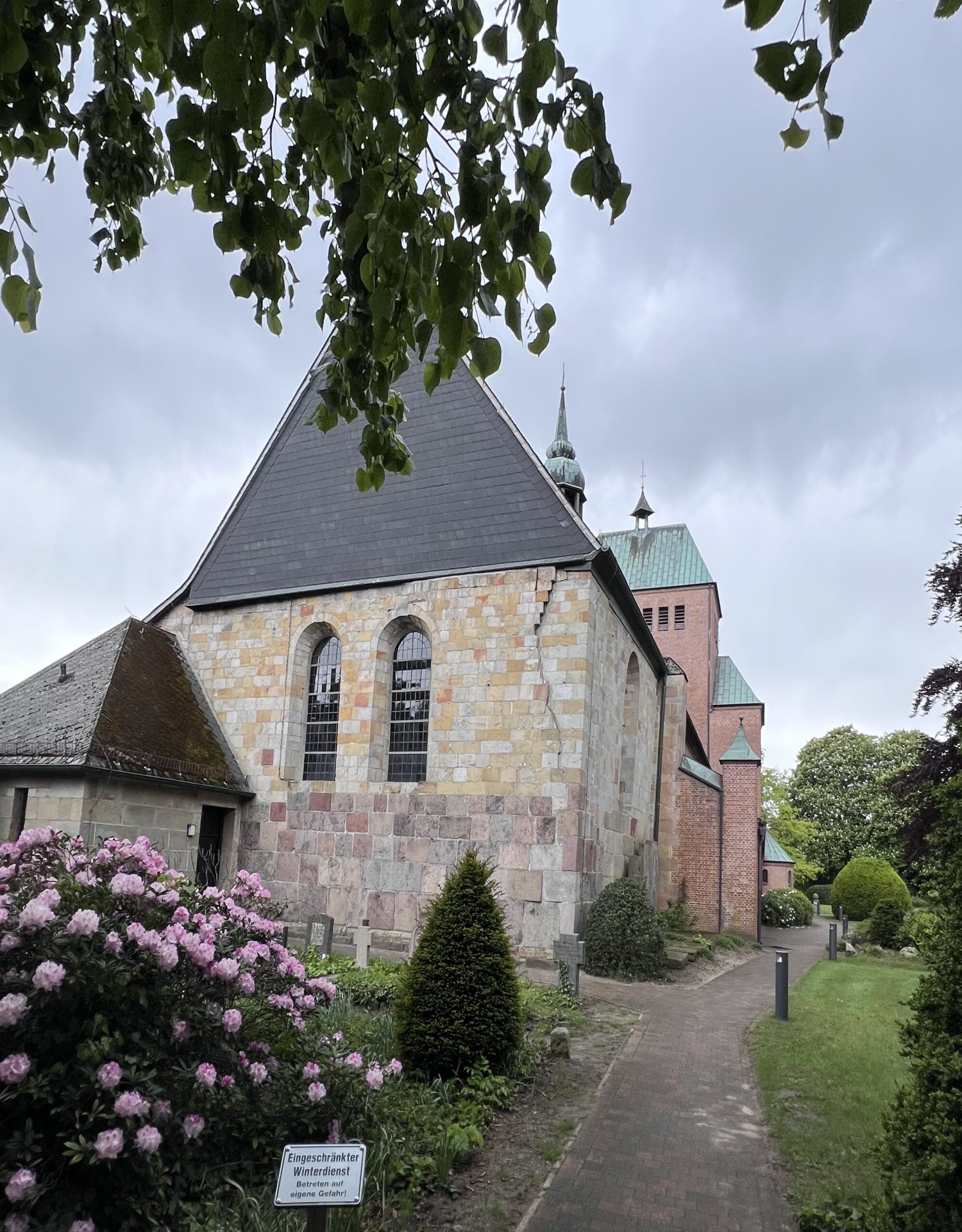
The founder of the monastery at Wietmarschen was Sir Hugo von Büren, a knight who hailed from the Netherlands. The first abbot was the monk Hildebrand von Utrecht. The first service took place on 14 September 1152. In 1154, the bishop established the charter for the founding of the monastery.
The pilgrimage site has existed since 1220, and the statue of grace has been in the church since its founding. The statue therefore predates 1220. The origin of the small statue is unknown, as is that of the maker.
The Benedictine monastery “Sankt Marienrode”, along with a Marian shrine, has existed since 1220 and belongs to the Diocese of Münster. The founder is Countess Gertrud von Bentheim (c. 1090-c. 1160), who in 1152 assisted Hugo von Büren with the monastery's foundation by providing him with land. It is told that later a countess from Bentheim visited the monastery and took the devotional image home with her. The following morning, it had disappeared and was found back in Wietmarschen in its previous location. This recurred several times, and it was thereupon decided that the image would remain in Wietmarschen forever.
The high altar on the east side of the church is from the Romantic period and was made around 1230.
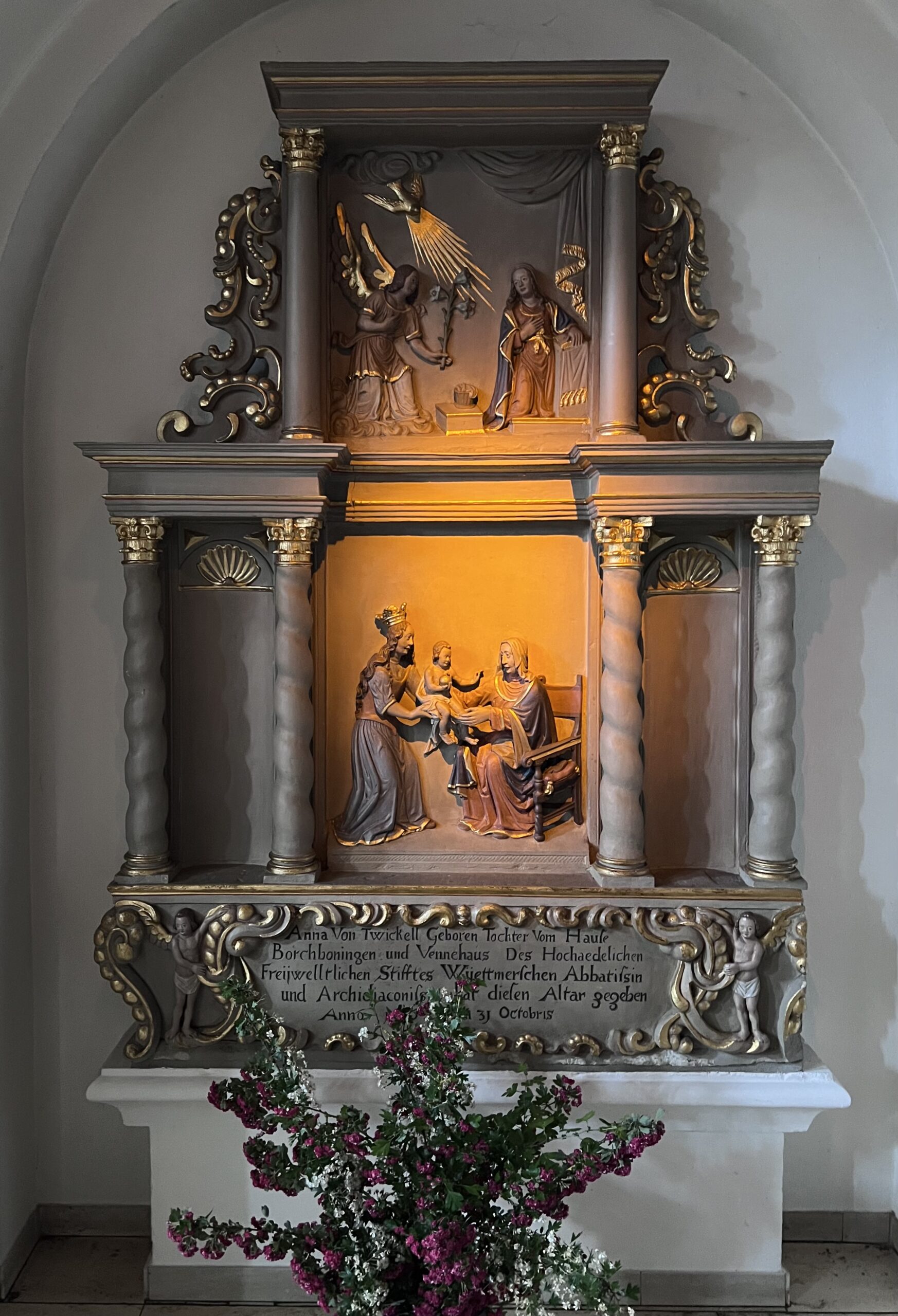
The Baroque Saint Anne altar dates from 1662. It is made of sandstone by sculptor Bernd Meiering/Meyring (c. 1628-1723).
In 1675, Christoph Bernhard von Galen (1606-1678), Prince-Bishop of Münster (1650-1678), changed the convent into a highly noble, secular chapter for ladies.
The high altar dates from 1682 and was created by carver Georg Dollart (c.1660-c.1720) from Münster. It was donated by abbess Sybilla von Twinckel (1652-1710), abbess of the Wietmarschen convent/collegiate convent for women (1682-1710).
In 1811, the ladies' chapter was dissolved due to secularisation under Napoleon, who granted the complex to the prince of Bentheim.
In 1921, the statues of Mary and Child received new crowns; they were gifts from women's associations.
In 1927-1930, the church was enlarged with a new Lady Chapel in the right aisle. The design is by architect Albert Feldwisch-Dentrup (1872-1934).
Around 1975, the monastery building was completely restored.
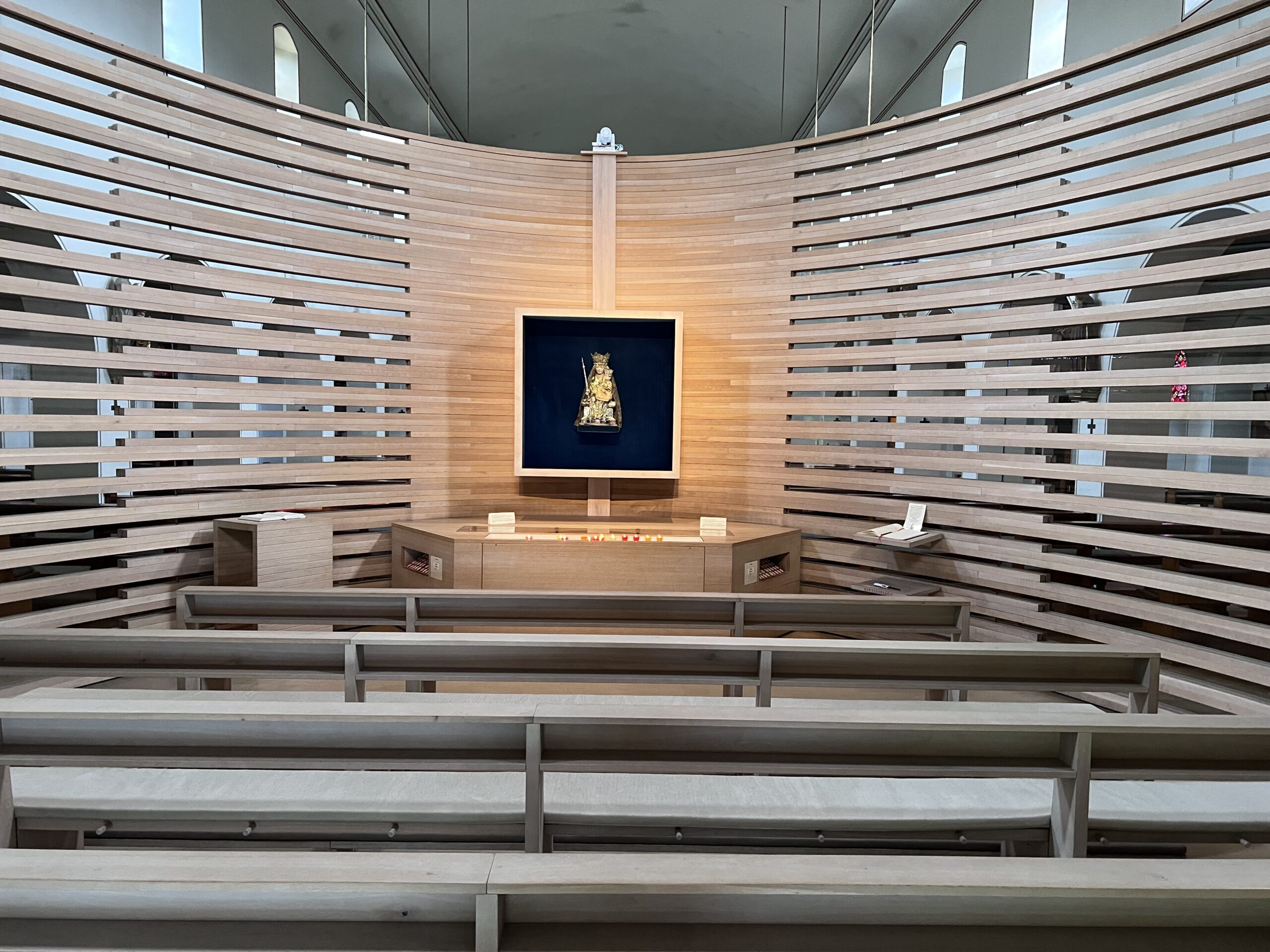
In 2014, after years of deliberation, the revered image was moved to a different location within the church. The new space is a separate chapel in the church and was designed by architect Tobias Klodwig (*1965). Previously, the image has stood in this church at the high altar and at the St. Nicholas altar.
Pilgrimage site
Wietmarschen, a pilgrimage site belonging to the Diocese of Osnabrück, has a population of around 4,000. The pilgrimage church is dedicated to St. John the Apostle and houses a 13th-century statue of the Madonna and Child in a separate chapel. The pilgrimage site is among the oldest Marian shrines in Germany. The church is located in the centre of the former convent grounds, on the site of the medieval monastery.
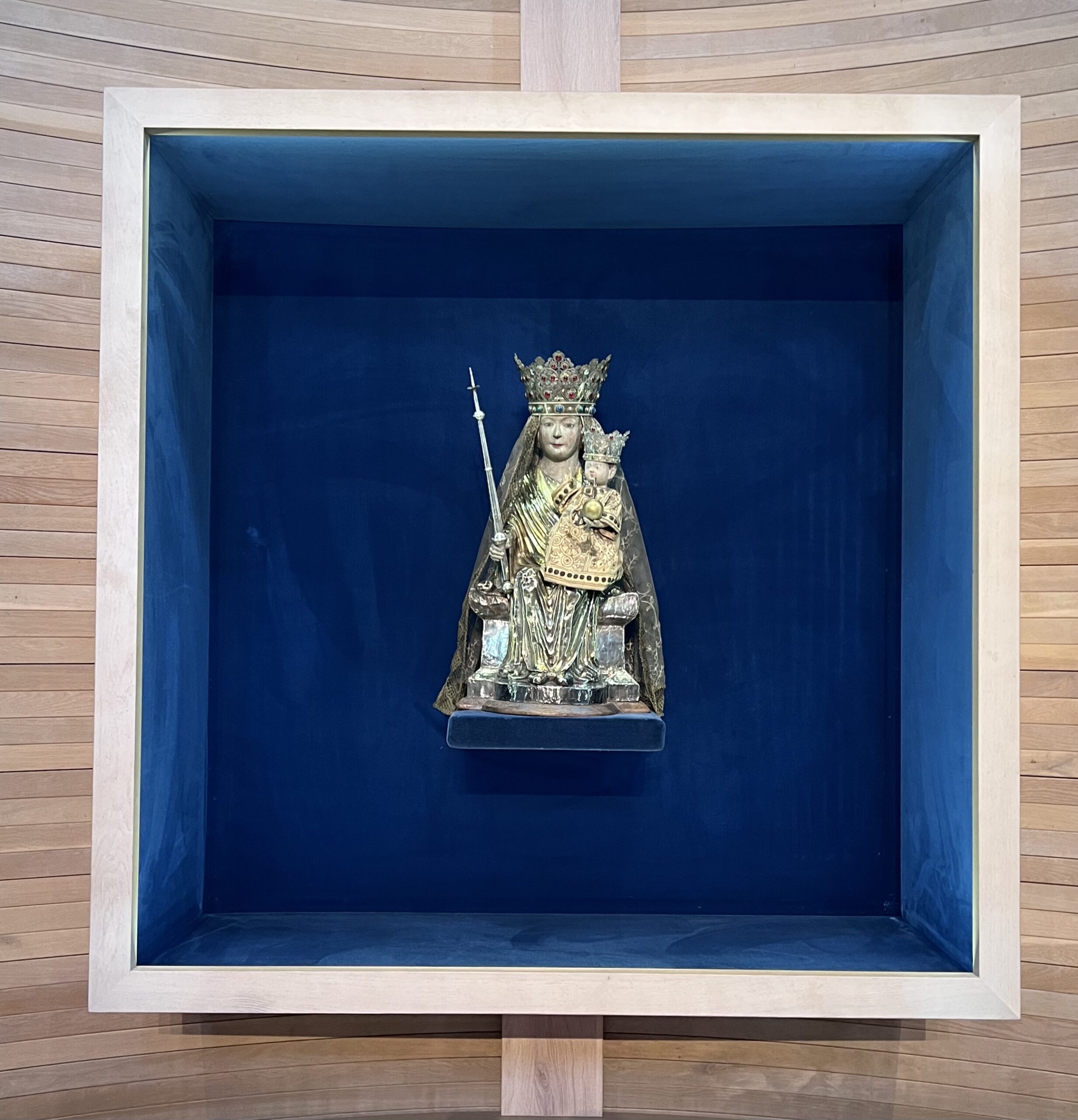
The devotional image dates from before 1220, adorned with gold and silver plates. The heads and hands of Mary and Child, the mantle, and the crowns are presumed to be from the early 20th century, when pilgrimages experienced a revival under the influence of Hermann Wilhelm Berning (1877-1955), Bishop of Osnabrück (1914-1955). The enthroned Mary holds the Child on her left arm.
In the church there is a chapel with a Pietà from c. 1500.
South of the church is an indication of a medieval Stations of the Cross. This can be seen on a map from 1585 in the State Archives at Münster, which is affixed to a stone.
Around the church are buildings of the priory, where wealthy women of noble birth have lived. From about 1650, the women had their own living quarters. Later, the buildings were used to house the elderly.
A collegiate museum is also located on the sanctuary's grounds.
The “Beatitude Way of Faith” goes from Lohne to Wietmarschen.
ACCESSIBILITY
Wietmarschen belongs to the district of Grafschaft Bentheim and is located near Nordhorn and Lingen, not far from the Dutch border. The pilgrimage site is situated in the federal state of Lower Saxony.
Address: Am Klostergarten, 49835 Wietmarschen.
Aktuelle Informationen finden Sie unter www.pg-wietmarschen-lohne.de.
Experience
I've read a bit about the Sanctuary of Wietmarschen and it fascinates me greatly. It's an old place of pilgrimage with a rich history. I am therefore looking forward to visiting it.
A separate chapel has been built in the church; the image of grace can be seen in a slightly smaller space. The church is a special building with an unseen pilgrimage chapel.
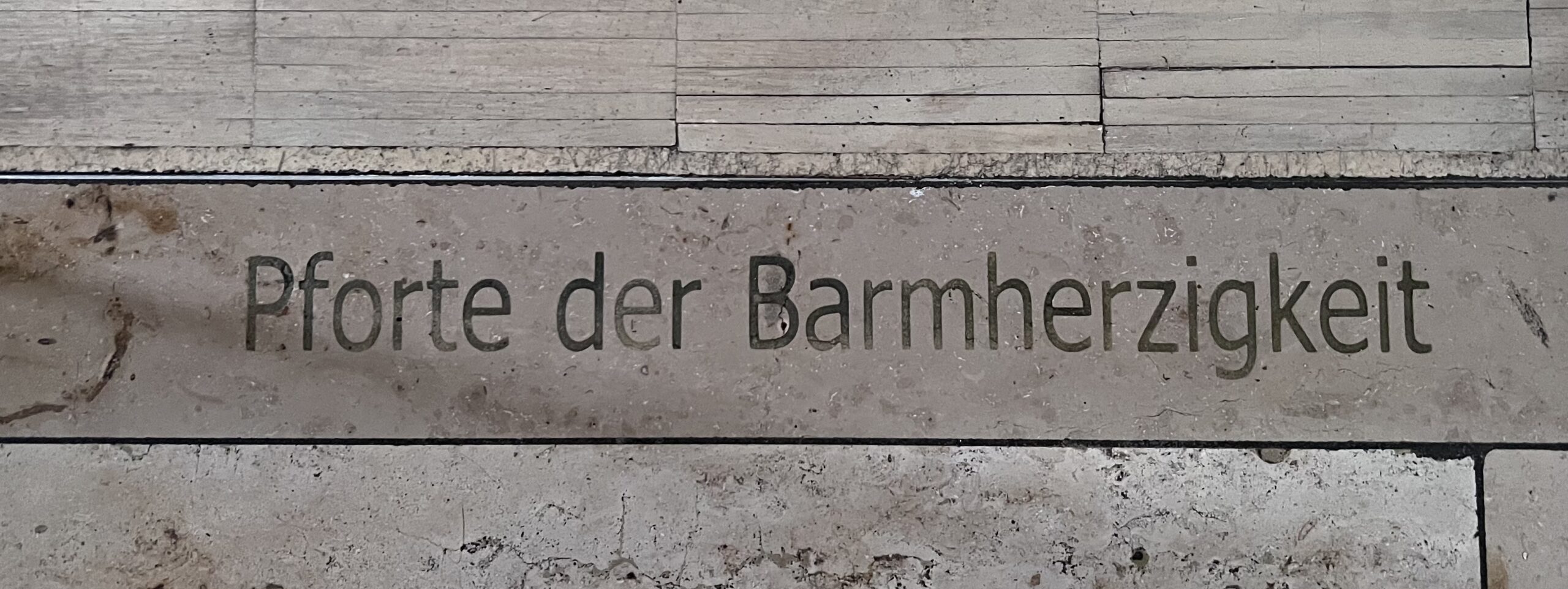
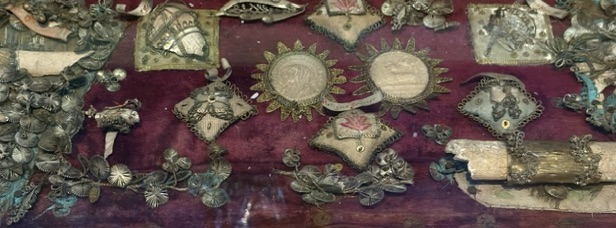
Upon entering the chapel of grace, I read the words “Pforte der Barmherzigkeit” (gate of mercy) on the floor. Beyond this open door, one enters the chapel and sees the statue of Mary. The statue of grace is strikingly central against the back wall of the Marian chapel. How beautifully this old, small image stands in a blue, square niche. In front of the image lie ex-votos under glass plates. They are precious, silver tokens of gratitude, as Mary has helped many. Candles are burning by the statue. What an atmospheric sight it is here! Benches invite me to take a seat. It is time to make space for prayers, especially for friends who could use some help.
Next, I'll do a tour of the church. In the right-hand side altar of Saint Anne, there's a focus on Mary with the archangel Gabriel above her and below the image of the Mother of God, again Mary with Mother Anne and the little Son. Below the images, I read about a generous donor.
The left side altar is dedicated to Saint Nicholas. Together with Mary, Nicholas is my great role model. Nicholas is depicted twice; as the saviour of three children and the recipient of a staff and mitre from angels. The donor is also mentioned at the bottom here.
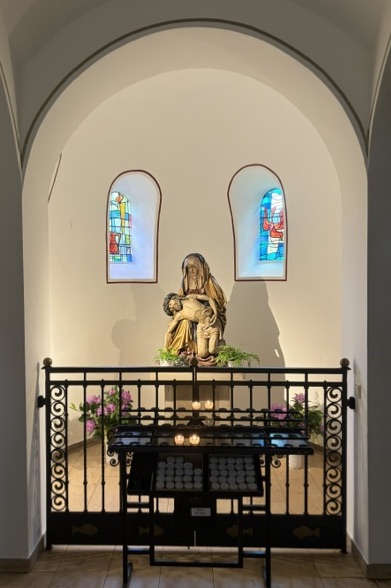
In a chapel stands a Pietà, again I am faced with the depicted Mother Mary. I'll sit down for a while and pray for friends with poorer health. After that, I will leave the church.
When I leave the pilgrimage church, I will go to a chapel, which is built next to the road. Here too I see a depiction of a Pietà. I find the Vesperbild such a poignant image.
A little further on, I come to a Lourdes grotto, where the familiar images of Mary and Bernadette have been placed. Unfortunately, I cannot light any candles at the grotto. It's time to sit on a bench and think about the apparitions in Lourdes.
Finally, I complete the circuit on the extensive monastery complex and see a stone from a medieval Via Crucis, buildings of wealthy ladies from centuries past, and an old section of the pilgrimage church. What a lot this beautiful Marian site has to offer!
Environment
Travelling from Münster to Wietmarschen involves going 95 km north.
The distance from Nordhorn to Wietmarschen is 13 km northwards.
To travel from Osnabrück to Wietmarschen means covering 85 km to the northwest.
Leaving Enschede in the Netherlands to arrive in Wietmarschen is a journey of 45 km to the northeast.
~~~

 Nederlands
  English (UK)
  Deutsch
  Français