History
The pilgrimage site has existed for centuries. A hermit at Ponlach brought a statue of Mary with him. He placed it above a spring. The water from the spring has healing properties. The origin of the pilgrimages is therefore a statue of Mary that stood above a spring for a time. This is where the name “Maria Brunn” comes from. When part of the hill was removed and due to the pressure of the spring water, a large rock came loose. A worker fell from the scaffolding due to the falling rock and was critically injured. The man soon recovered thanks to the healing water. The large rock lies near the side door of the church. A “Prun chapel” with its own spring once stood to the west of the current church. The chapel by this spring is called the “Five Wounds Chapel”. Inside the building was a crucifix with the five bleeding wounds of Christ. This refers to a crucifix where the statue's left arm, right arm, foot, head and side had spring water coming from them. This chapel was destroyed in 1978 by a fallen tree.
In 1624, a spring emerged, and its water brought healing to people. A wooden chapel stood by the spring, and over time, it became too small due to the growing number of visitors. In 1624, a new chapel was built. The construction was initiated by Paris Lodron (1586-1653), Prince-Archbishop of Salzburg (1619-1653). The chapel was named “St. Maria Prunnen.” A now-unknown statue of Mary was once housed in this chapel.
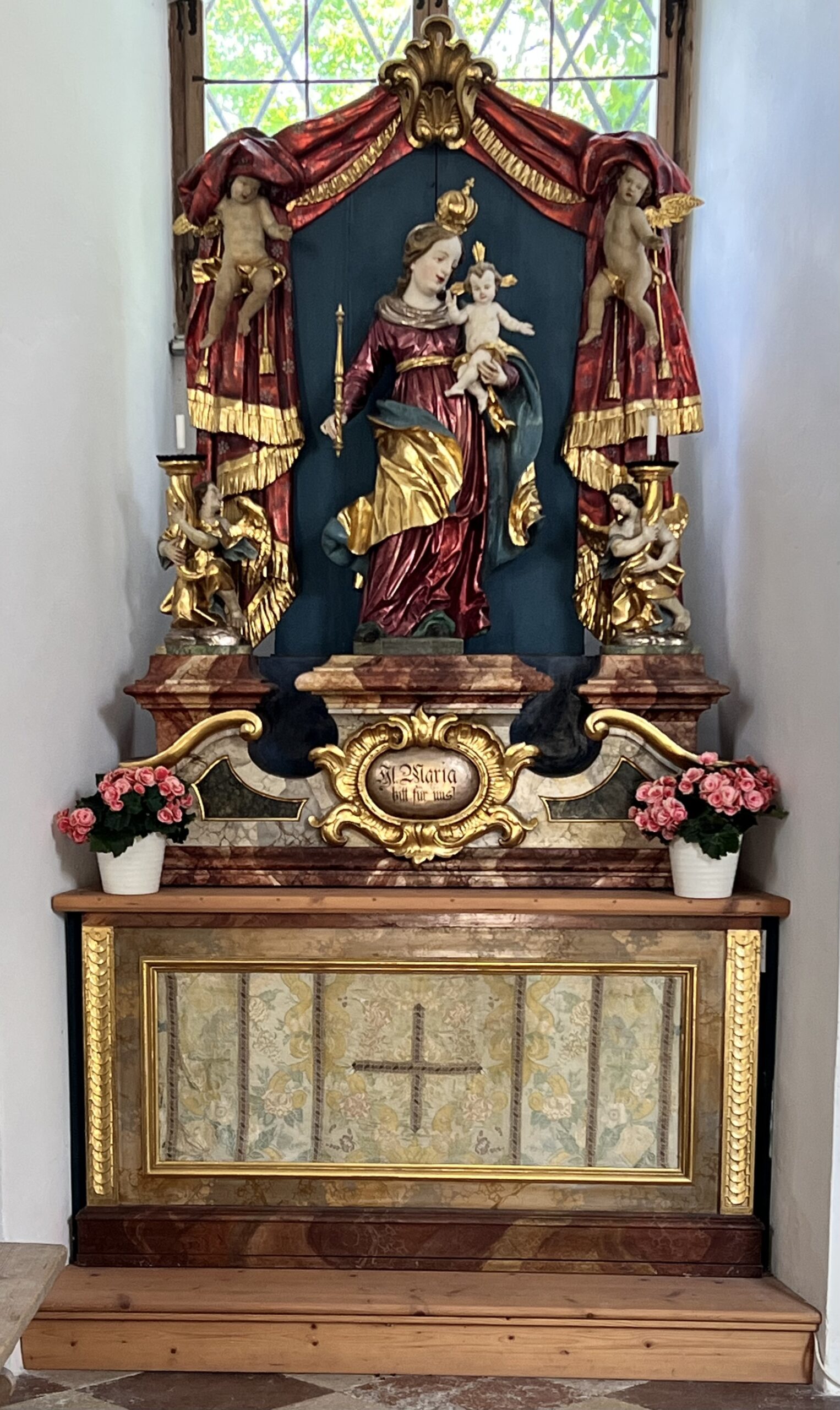
The current image of grace was created in 1640 by the Salzburg sculptor Hans Pernegger (1603-1664), also known as Hans Bernecker the Younger. It shows the image of grace within a richly carved baldachin. It is a standing Mary with a crown and sceptre, and Jesus in her arms. An angel stands on either side. The high altar is the work of Simon Thaddäus Baldauf (1677-1753), the court carpenter from Salzburg.
In the early 18th century, the chapel became dilapidated, and plans were made for a new and larger pilgrimage church. The chapel was constantly threatened by landslides and floods. For these reasons, the relocation of the chapel to its current site began in 1714. In 1716, construction of the new pilgrimage church commenced, following plans by court architect Sebastian Stumpfegger (1671-1749) from Salzburg. The cloverleaf design of Salzburg Cathedral served as the ground plan for the church.
On 21 November 1717, the consecration of a new church by Franz Anton von Harrach zu Rorau (1665-1727), Archbishop of Salzburg, Austria (1709-1727).
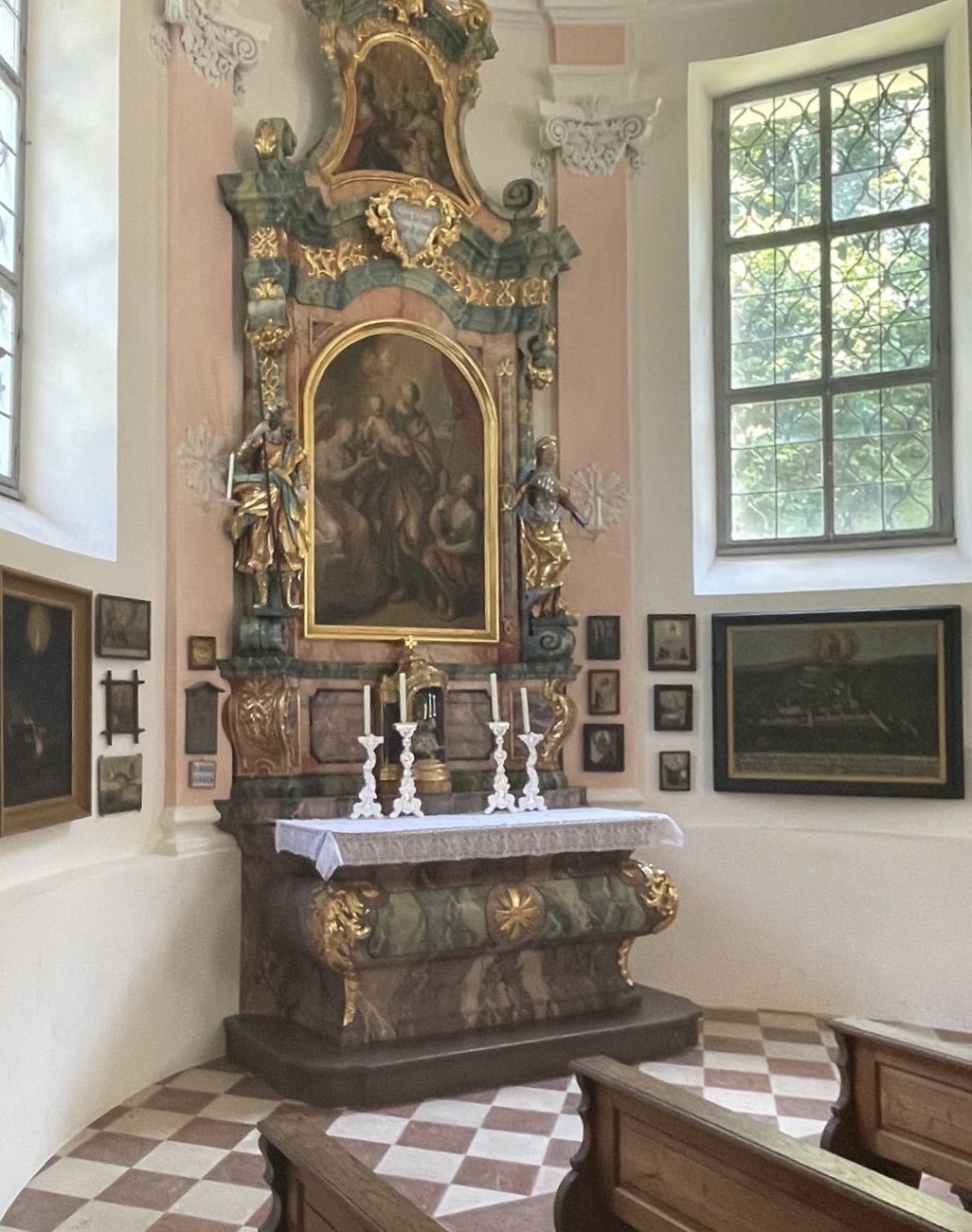
The side altars were only installed in 1731. The statues were made by sculptor Johann Georg Itzfeldner/Izlfellner (c. 1704-1790) from Tittmoning. The left altar is dedicated to Saint Joseph and another altar is for Saint John of Nepomuk.
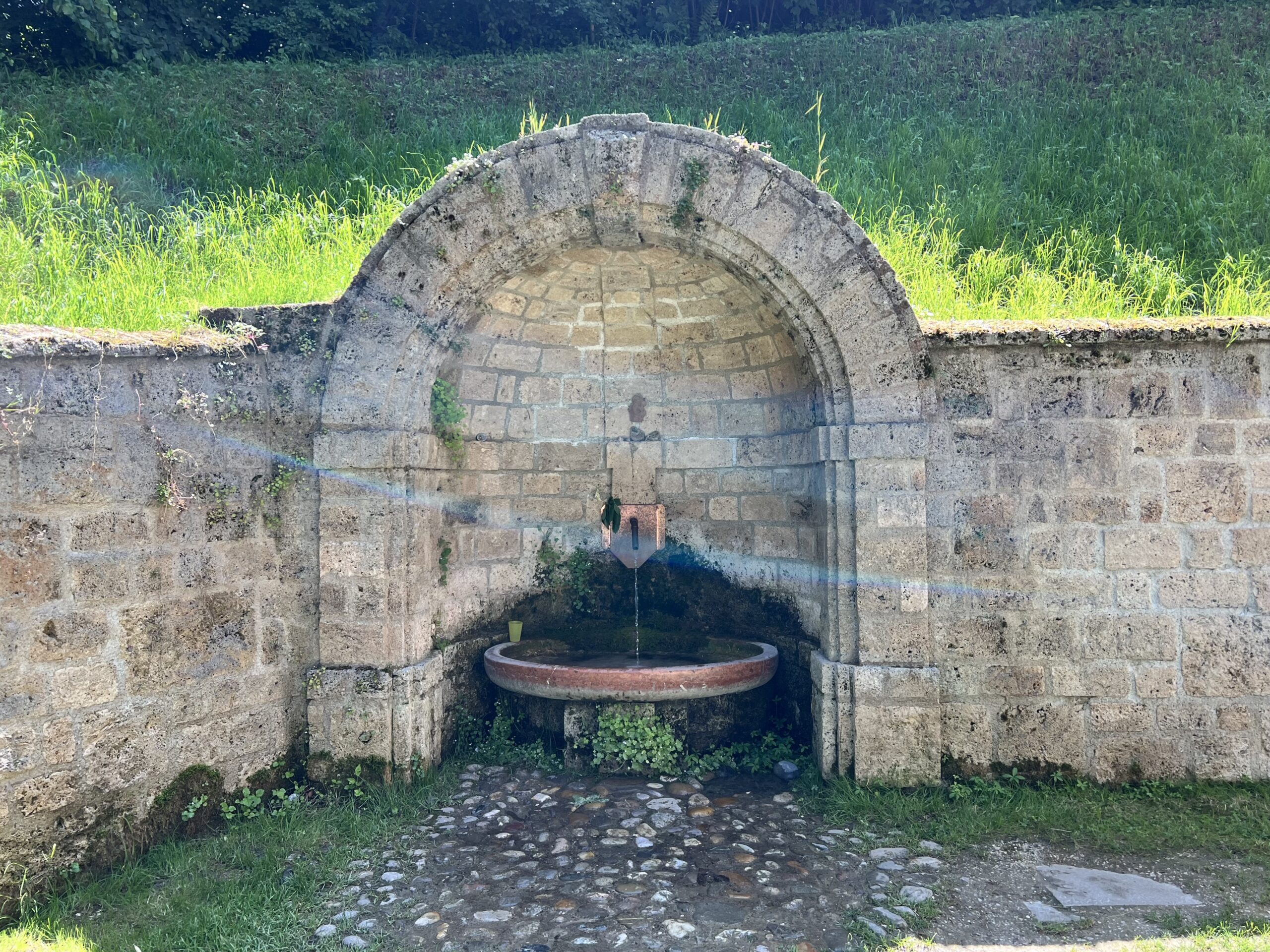
In that period, there are two springs, each with a healing effect. The origin of the second spring is unknown.
In 1927, the church's interior was painted. Nine medallions were made visible, depicting scenes from the life of Mary.
A major restoration takes place in the period 1985-1990.
Pilgrimage site
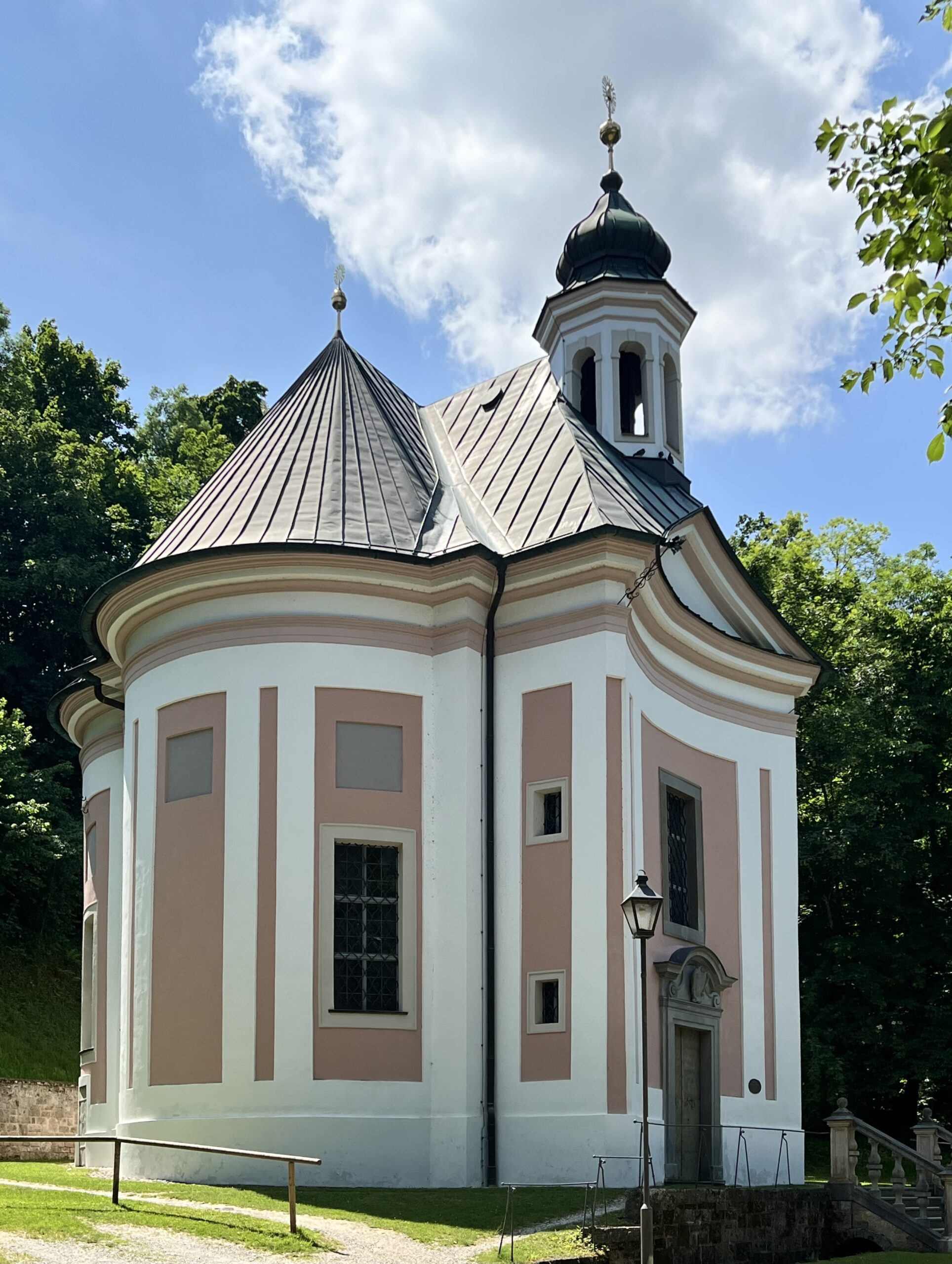
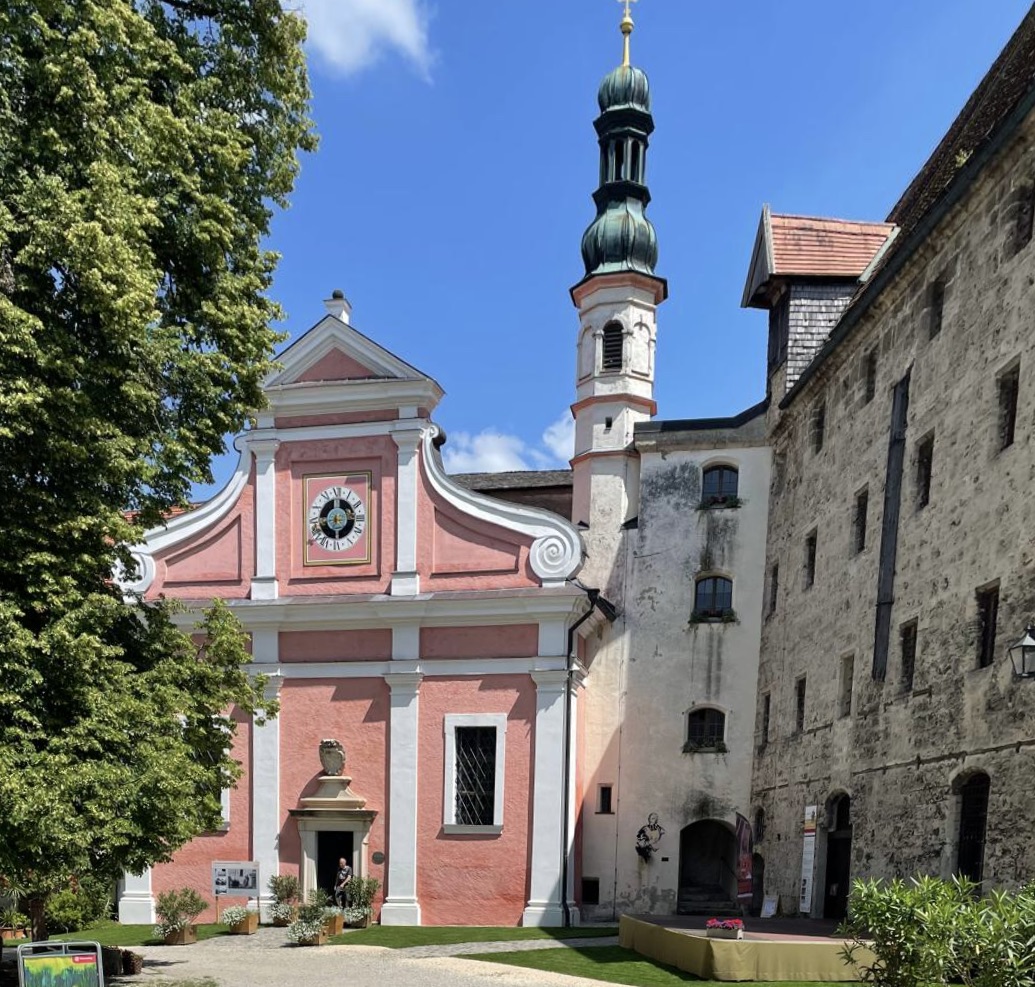
The pilgrimage church is located in the village of Ponlach, which belongs to the municipality of Tittmoning. The church is called Maria Ponlach and is also known as “Maria Brunn”, on account of the springs. The pilgrimage church lies nestled amongst trees and hills. The church has been enlarged several times over the many years. An ornate, octagonal turret crowns the substantial facade.
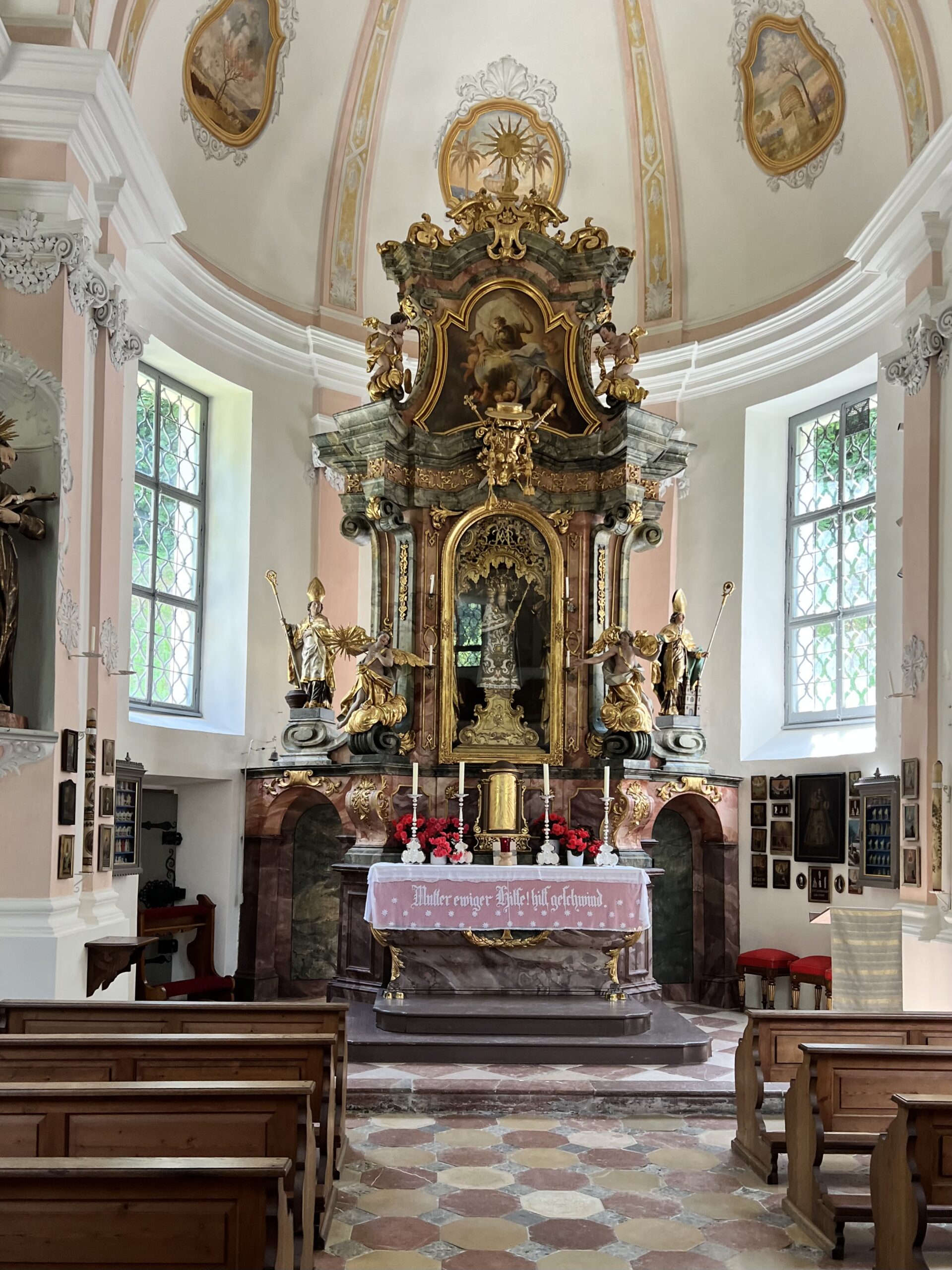
The statue of Our Lady is on the main altar and is dressed in precious vestments. Both Mary and Jesus are crowned. Mary holds a sceptre.
The double gallery on the parapet displays the most famous Marian pilgrimage sites, such as Altötting, Einsiedeln, Loreto, Monserrat and Salzburg's Maria Plain. The paintings are from 1723.
The spring lets the water flow, and this happens behind the current church from two sources. The left spring is for moistening the eyes and the right spring is used for drinking.
The pilgrimage church is open daily.
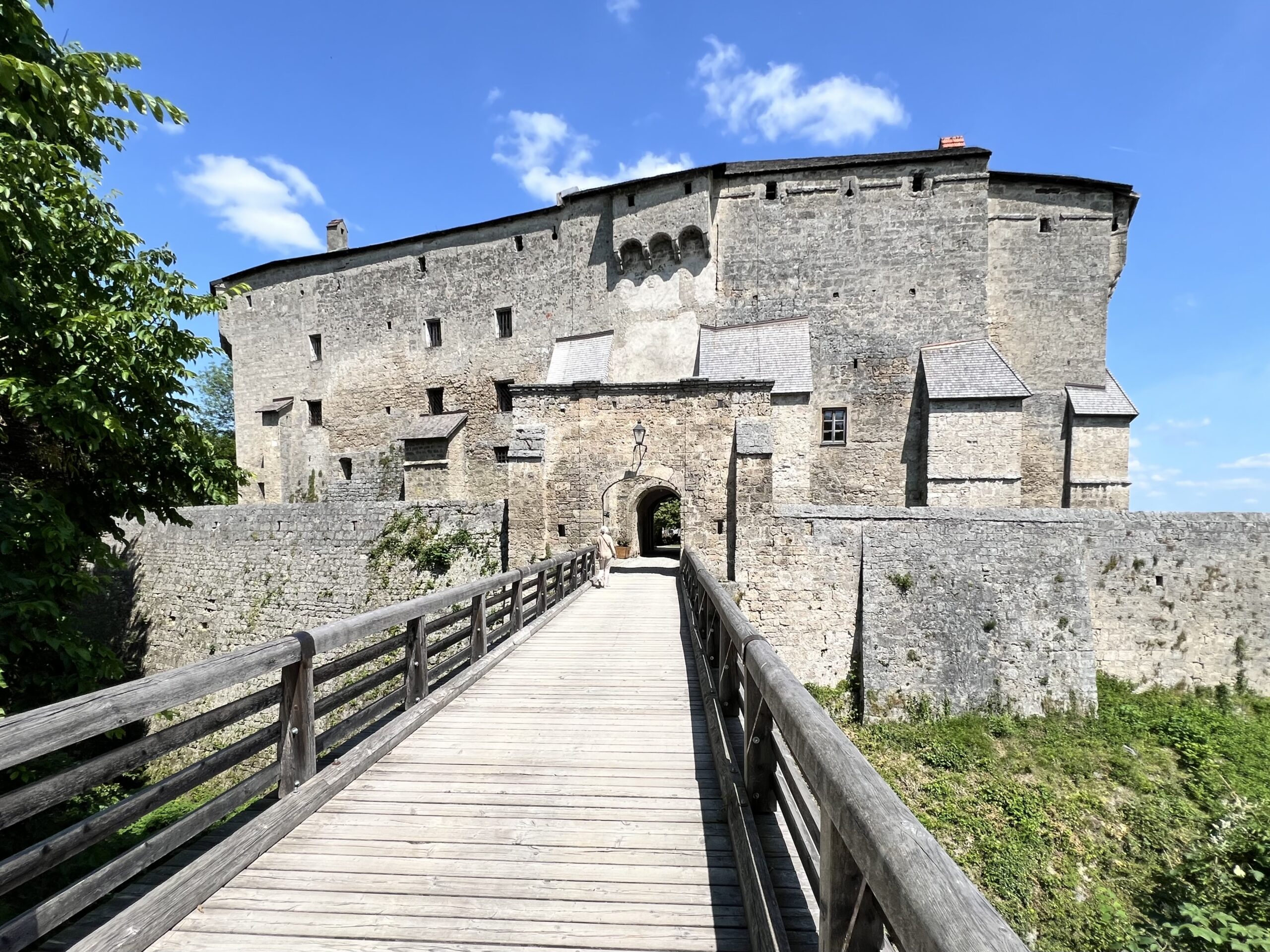
Just under 200 metres from the pilgrimage church stands an imposing castle with a chapel dedicated to St. Michael.
ACCESSIBILITY
The village of Ponlach is located in the state of Bavaria, in the far southeast of Germany, close to the border with Austria. The village is situated to the northeast of Rosenheim.
Address: Papst-Benedikt-XVI-Weg 3, 84529 Tittmoning.
Current information can be found by consulting: www.erzbistum-muenchen.de.
Experience
As I approach Rosenheim, I know that Ponlach is not far away. A little later, I see signs for the town of Tittmoning and I know that Ponlach lies to the west of it.
I'm heading onto a road with no car traffic. Approximately 200 metres uphill and then I'll be near the pilgrimage church. Water flows down the path to the church with great speed. Where does this water come from? Not from the springs, as my brief investigation shows. It's probably rainwater or meltwater.
I can see a small building; at the top is the year 1890, and below that are some words, which I translate into English: “To God be thanks and honour. To serve and defend the city”.
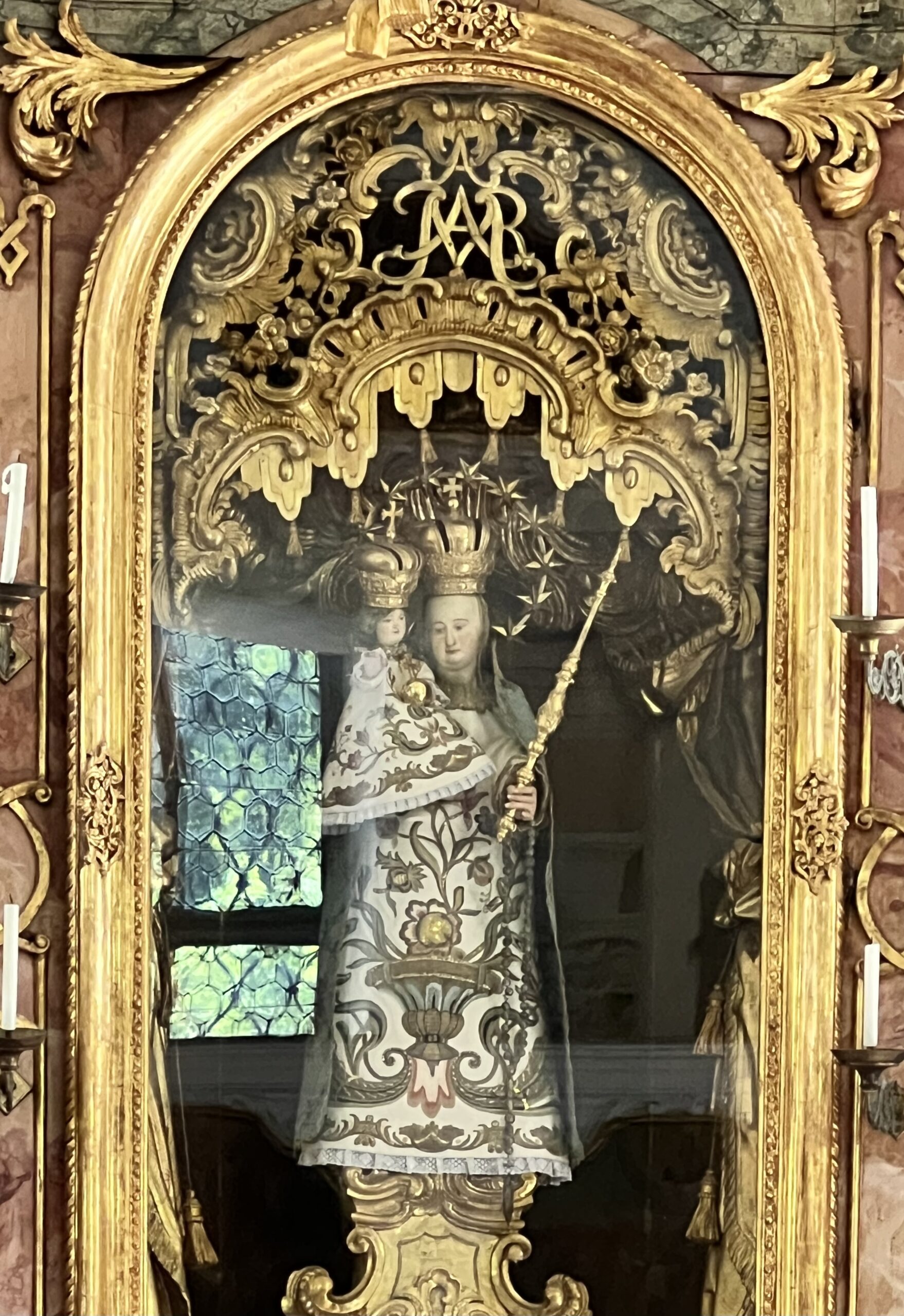
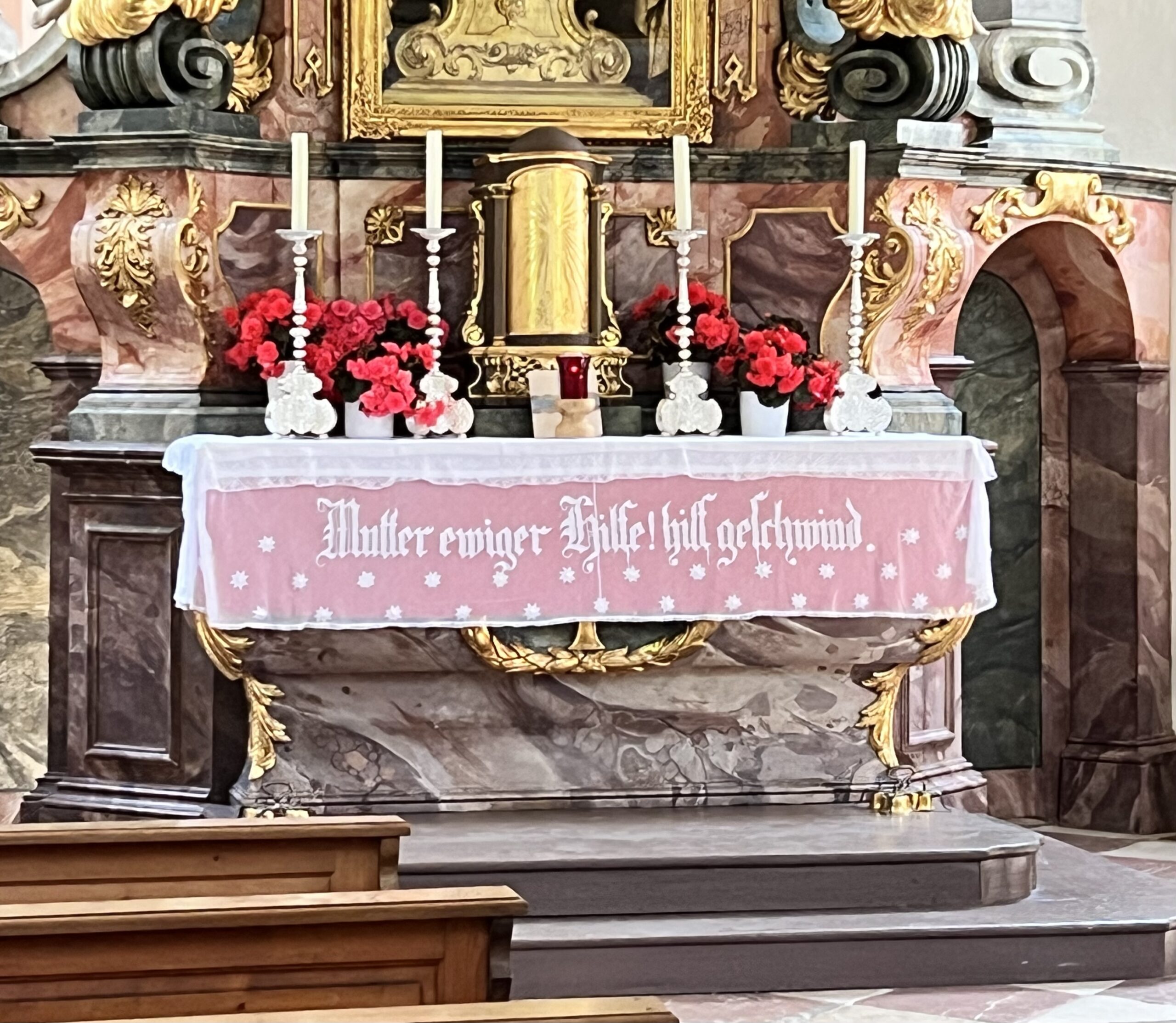
Next, I come to the pilgrimage church. The gate appears to be closed, but with more than a push, the door opens. Then, inside, I see a beautiful interior! What a blessed person I am! Our Lady with Child are behind glass on the altarpiece. Below this, I read the text “Mutter ewiger Hilfe! Hilf geschwind” and in Dutch this is “Mother of eternal help! Help quickly”. Mary is carrying her Child on her right arm. In her other hand, she holds a long sceptre. Both Mary and the little Jesus are crowned and wear the same, ornate clothing. In the church, there are exceptionally beautiful paintings to be seen, including one with Mary, Joseph, and Jesus. I think the four round paintings on canvas in the central vault, which show scenes from the life of Mary, including the Birth of Mary, the Presentation of Mary, and the Birth of Jesus, are magnificent. In the half-domes, Neo-Baroque medallions sparkle with Marian emblems, including a lily, rose bush, springs, vessel, ark, and throne.
Behind the church, I can see two springs and the water keeps flowing. Where does this water come from?
The pilgrimage church is nestled peacefully amongst the trees and hills. What a gem this place of pilgrimage is to visit!
To round off my visit, I head to the castle, which lies some 200 metres from the pilgrimage church and was built from 1243 onwards. There, I visit the castle chapel of St Michael, which was built in the late 17th century. The altarpiece is by the imperial Baroque court painter Johann Michael Rottmayr (1654–1730) from Salzburg. I then head to the centre of Tittmoning, climbing 166 steps to get there. Unfortunately, the parish church of St. Laurentius is closed.
Late in the afternoon, I return once more to the pilgrimage church and thank Mary for the truly wonderful visit I have been able to make here.
Environment
Near the pilgrimage church stands a fortress with thick, high walls. There is also a small chapel there: St. Michael's from 1693. In the chapel, there is a statue of Mary and an image of Saint Nicholas. The town of Tittmoning is barely a kilometre away from here.
It is an 80-kilometre journey north-east from Rosenheim to Ponlach.
Setting off from the major pilgrimage site of Altötting to head for the Marian shrine at Ponlach involves a 26-kilometre journey south.
Leaving the Marian shrine at Maria Eck to head for the pilgrimage site at Ponlach involves a 40-kilometre drive north.
It is a 120-kilometre journey eastwards from the city of Munich to the pilgrimage church in Ponlach.
To get from Salzburg to Ponlach, you need to travel 42 km north-west.
~~~

 Nederlands
  English (UK)
  Deutsch
  Français