History
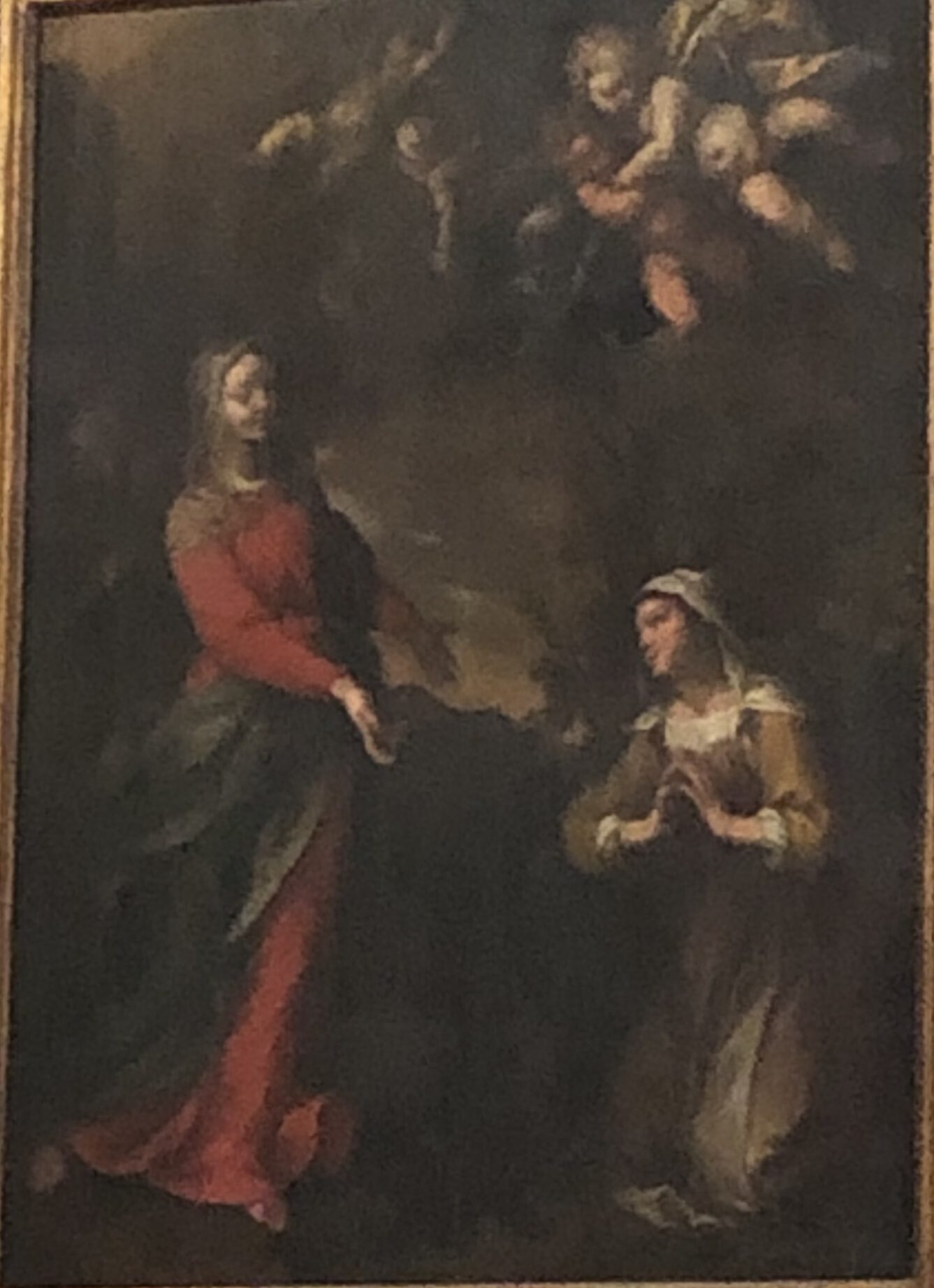
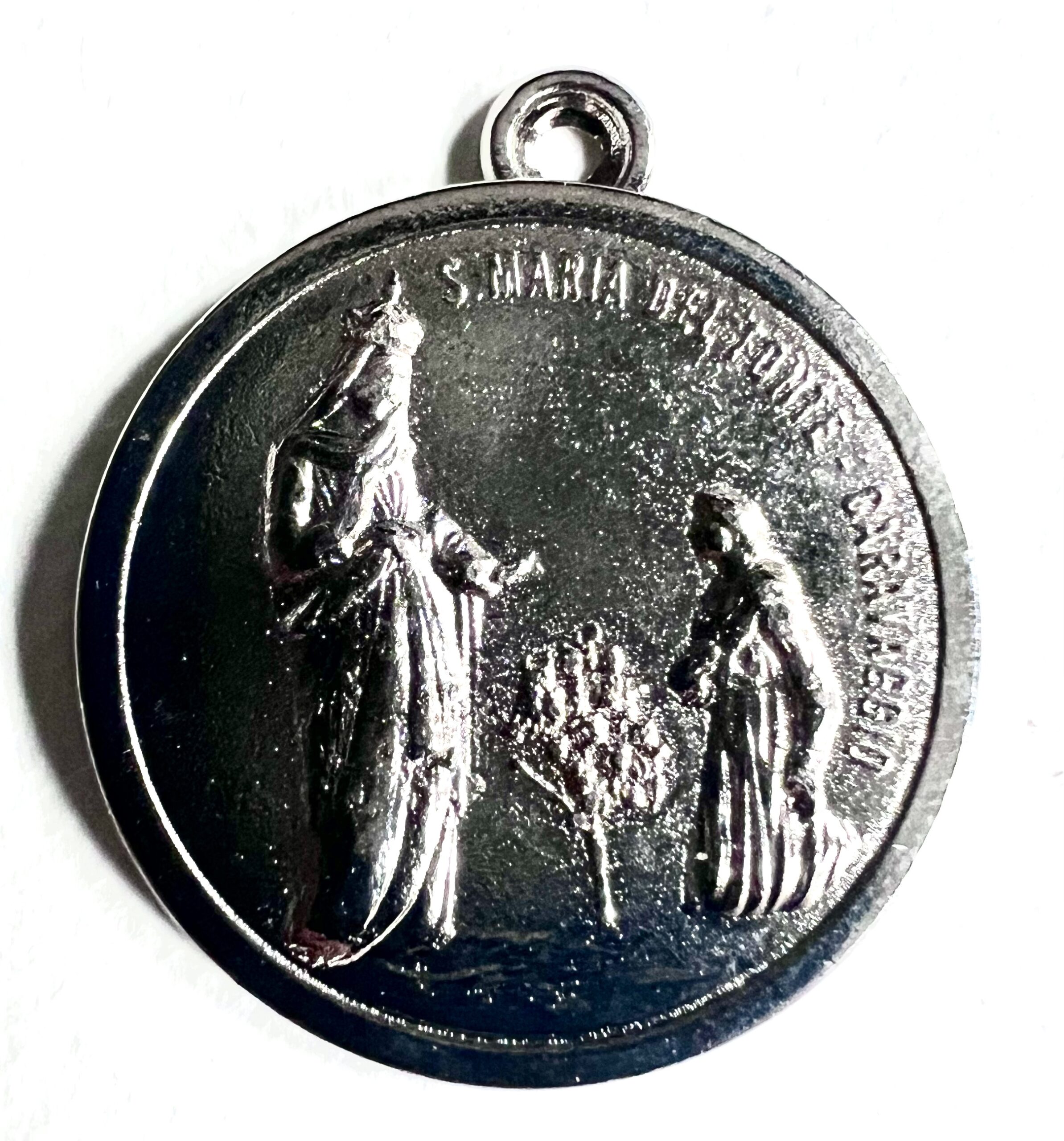
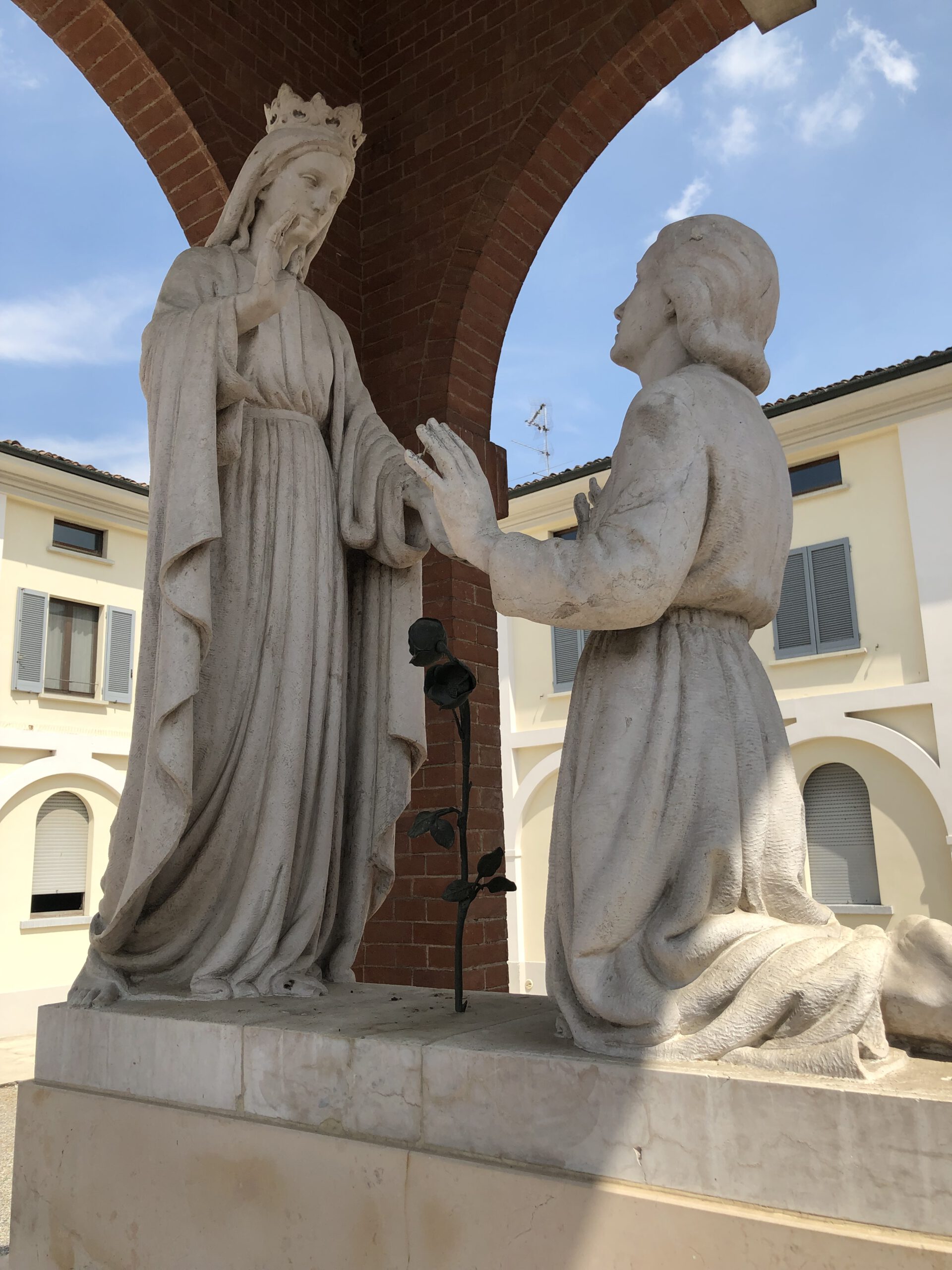
Giannetta de’ Vacchi (born in 1400), a devout, hard-working woman, was married to Francesco Varoli, a farmer, former soldier, alcoholic and hot-tempered man who frequently abused her. On 26 May 1432, at 5 o’clock in the afternoon, Giannetta is mowing grass. She takes a bundle of grass to the farm to feed the horses. On the way, Giannetta sees a beautiful lady standing by the roadside and cries out: “Mother Mary!” The 32-year-old farmer’s wife receives an apparition of Mary. The Apparition says: “Do not be afraid, my daughter, it is truly I. Stop and kneel to pray.” The Mother of God bids her to kneel by placing a hand on her shoulders. Our Lady is saddened and has tears in her eyes. She delivers the following message: “Jesus Christ, my holy and almighty Son, has wished to destroy this world because of the injustice of mankind. But for seven years I have begged Him to be merciful and to forgive their sins. People must live in peace and put an end to wars. Therefore, I would like you to tell all people that they should fast on every Friday with bread and water in honour of my Son… and after Vespers on Saturday, celebrate the day of the Lord for the great mercy of my Son obtained through my intercession. I will confirm your words with clear signs, so that no one will doubt that you have spoken the truth.” This takes place in the meadow of Mazzolengo, near the village of Caravaggio, where the shrine was later built. Mary promises a miracle and causes a spring to gush forth at the spot where She stood, which to this day supplies water to the fountains of the shrine. This spring symbolises the abundance of divine graces and the maternal benevolence of the Virgin Mary. Giannetta goes to the village. She recounts what has happened to her and also what Mary has said. The villagers go with Giannetta to the place where Mary had been and see the newly gushing spring. Thus the Sanctuary of “Santa Maria del Fonte” (Holy Mary of the Spring). Following the apparition, countless pilgrims flock to the site where the spring has gushed forth. Among them are many sick people. The water from the spring works miracles, for it heals the sick. It is to this spring that Mary owes her title in Caravaggio, namely “Holy Mary of the Spring”. Mary’s message of peace remains as relevant as ever.
On 31 July 1432, the event of the apparition was documented. The statement was drawn up by officials and local residents. With this document, they are requesting the Bishop of Cremona, Venturino de Marni (Bishop 1423-1457), to submit the remarkable event to a commission of ecclesiastical inquiry.
First, a chapel is built on the site, then a church, and finally the present basilica. The construction of this basilica began in 1571. The first church is quickly built by the inhabitants of Caravaggio and is consecrated on December 20, 1451. The project is financially and morally supported by the Duke of Milan, Filippo Maria Visconti (1392-1447), Duke from 1412 to 1447. However, after years, the building falls into disrepair. The current church is then built.
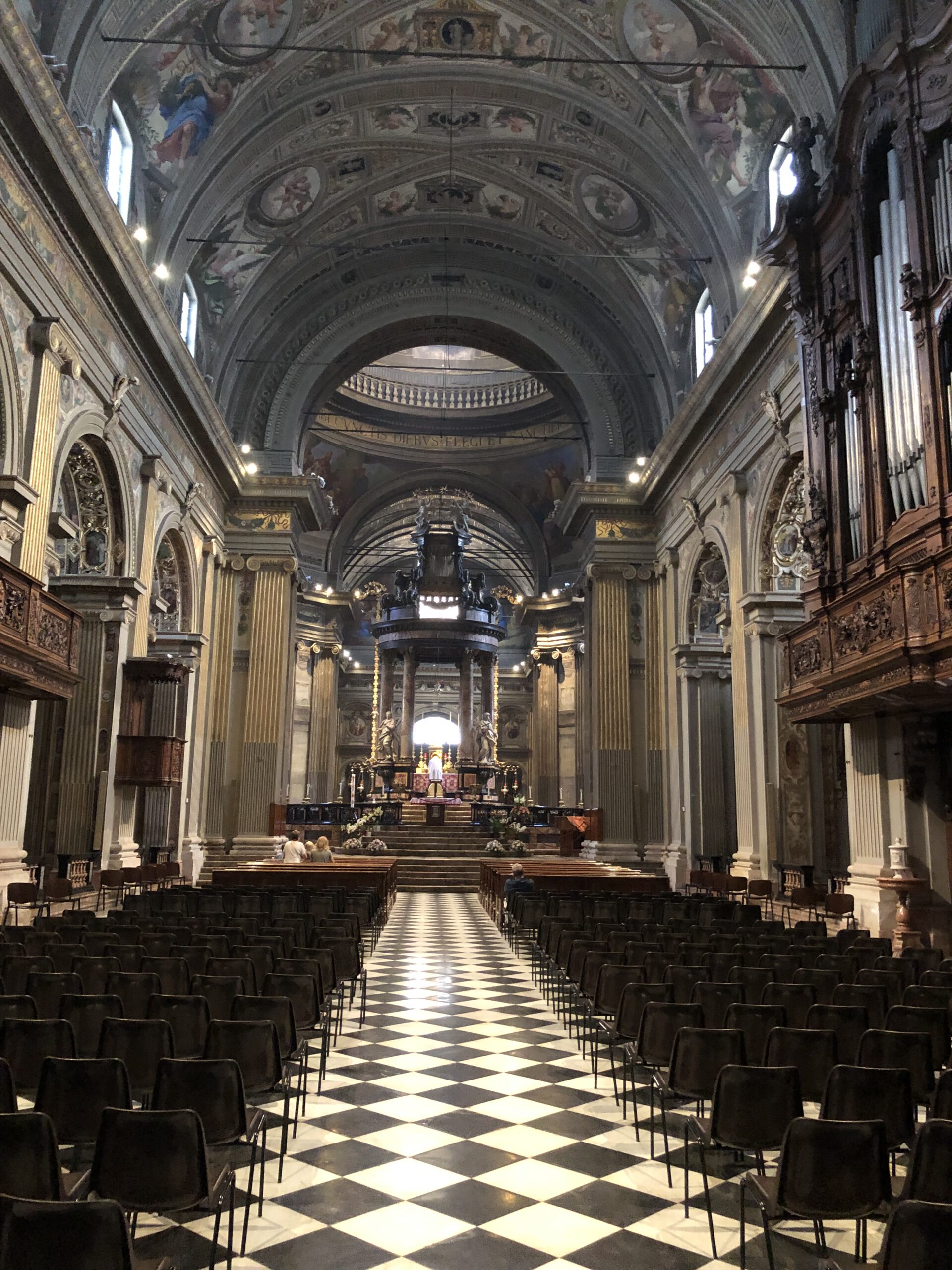
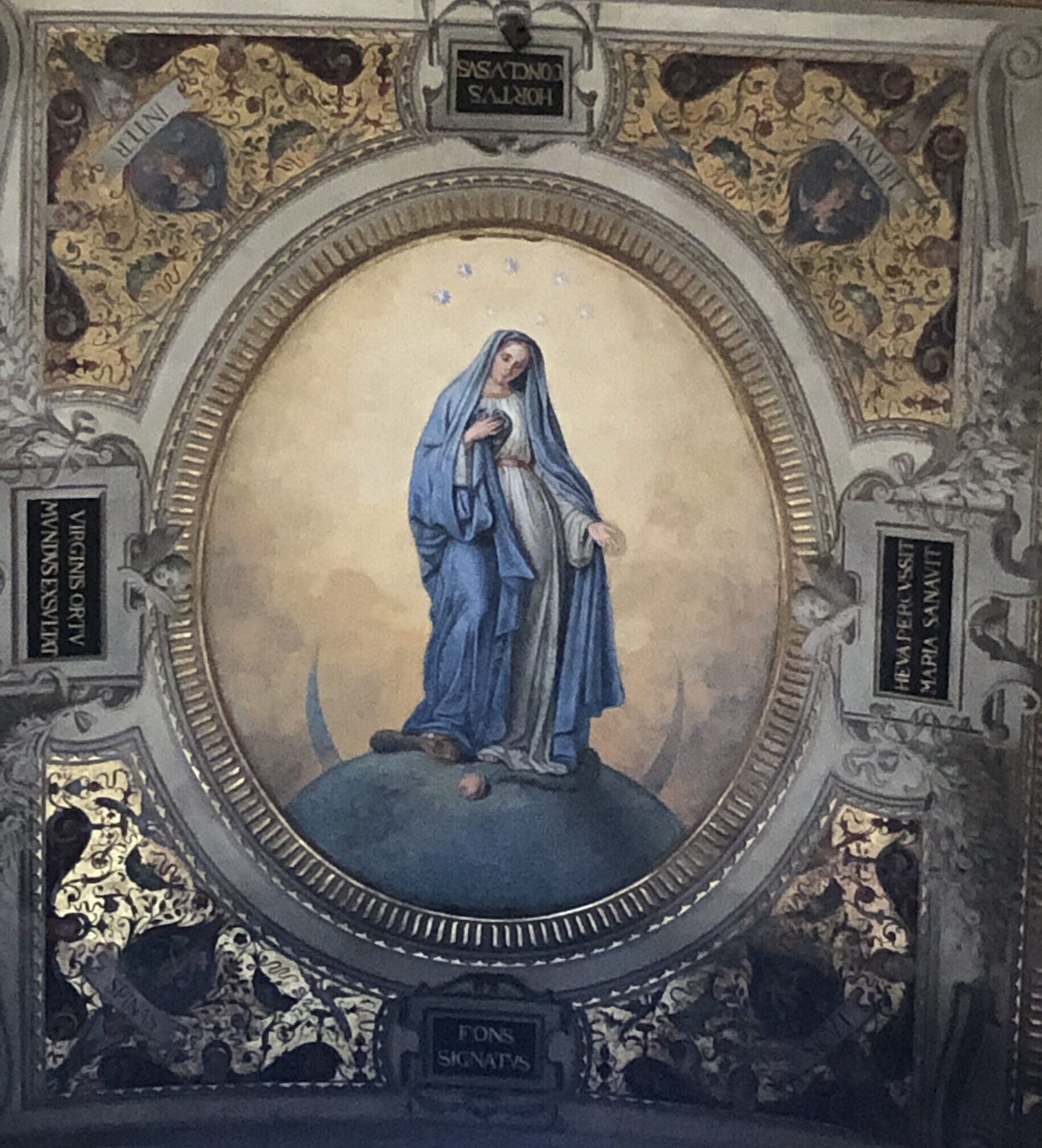
The Archbishop of Milan, Carlo Borromeo (1538-1584), bishop from 1560 to 1584, made use of the rich experience of architect and painter Pellegrino Tibaldi (1527-1596). This man is also known as Pellegrino Pellegrini and Pellegrino da Bologna. Construction of the current church began in 1571. It was a long-term project that was almost entirely completed in 1722. The main altar came later. It was designed in 1736 by Carlo Merlo (1690-1760) and completed in 1750. Frescoes were created by Giovanni Moriggia (1796-1878) and Luigi Cavenaghi (1844-1918).
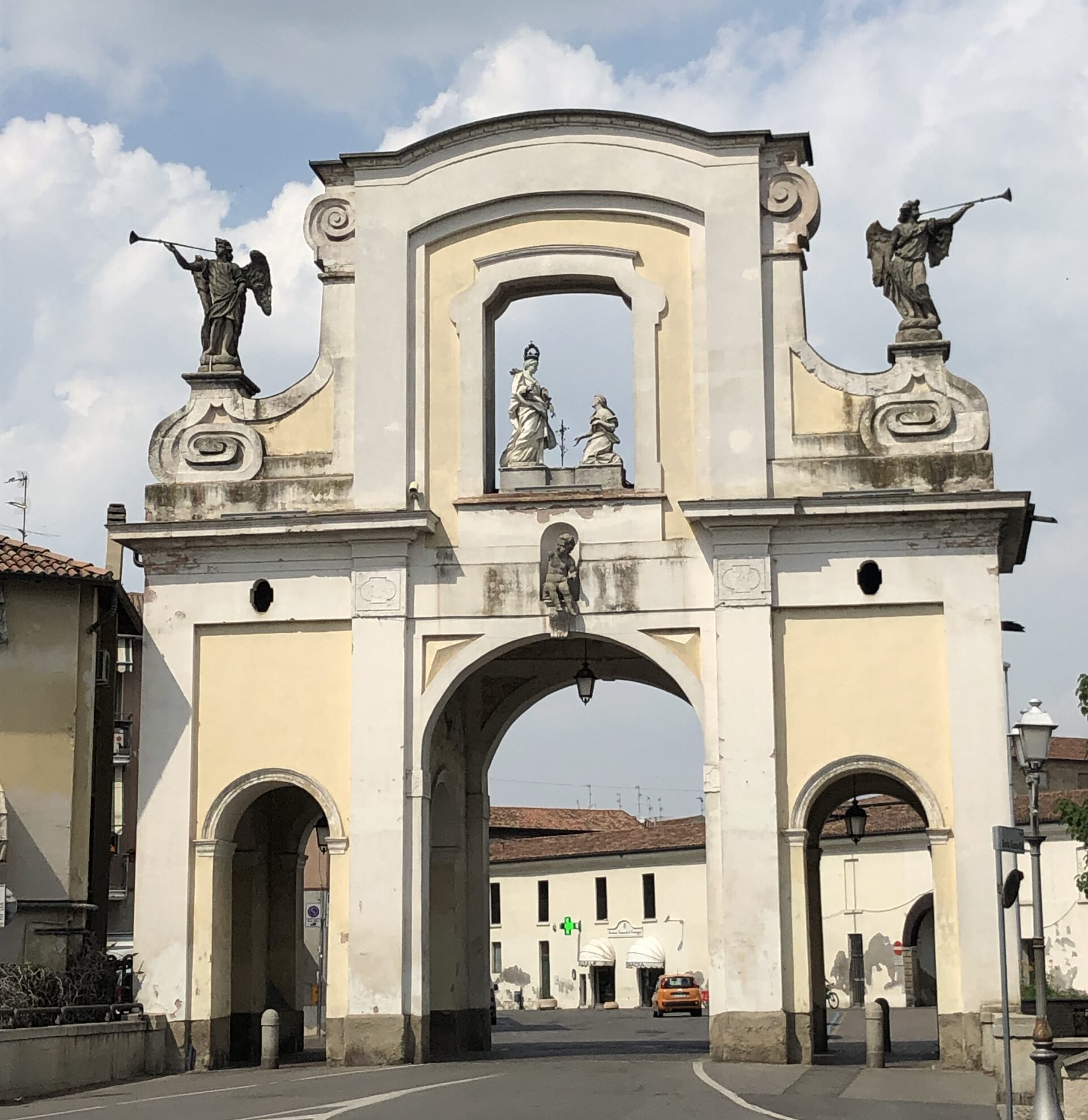
Around 1700, the large, straight avenue was built from the town of Caravaggio to the sanctuary. In 1710, it was consecrated with the Porta Nuova arcade, which stands at the entrance to Caravaggio. In that year, the statue of Mary was crowned by Carlo Ottaviano Guasco (1650-1717), bishop of Cremona from 1704 to 1717. This was done with a jewelled gold cross around the neck of the effigy.
In the period 1844-1847, the dome of the basilica was painted by Giovanni Moriggia (1796-1878).
By a decree of 7 May 1906, Pope Pius X (Giuseppe Melchiorre Sarto, 1835-1914), Pope from 1903 to 1914, elevated the church of the sanctuary to the rank of a basilica.
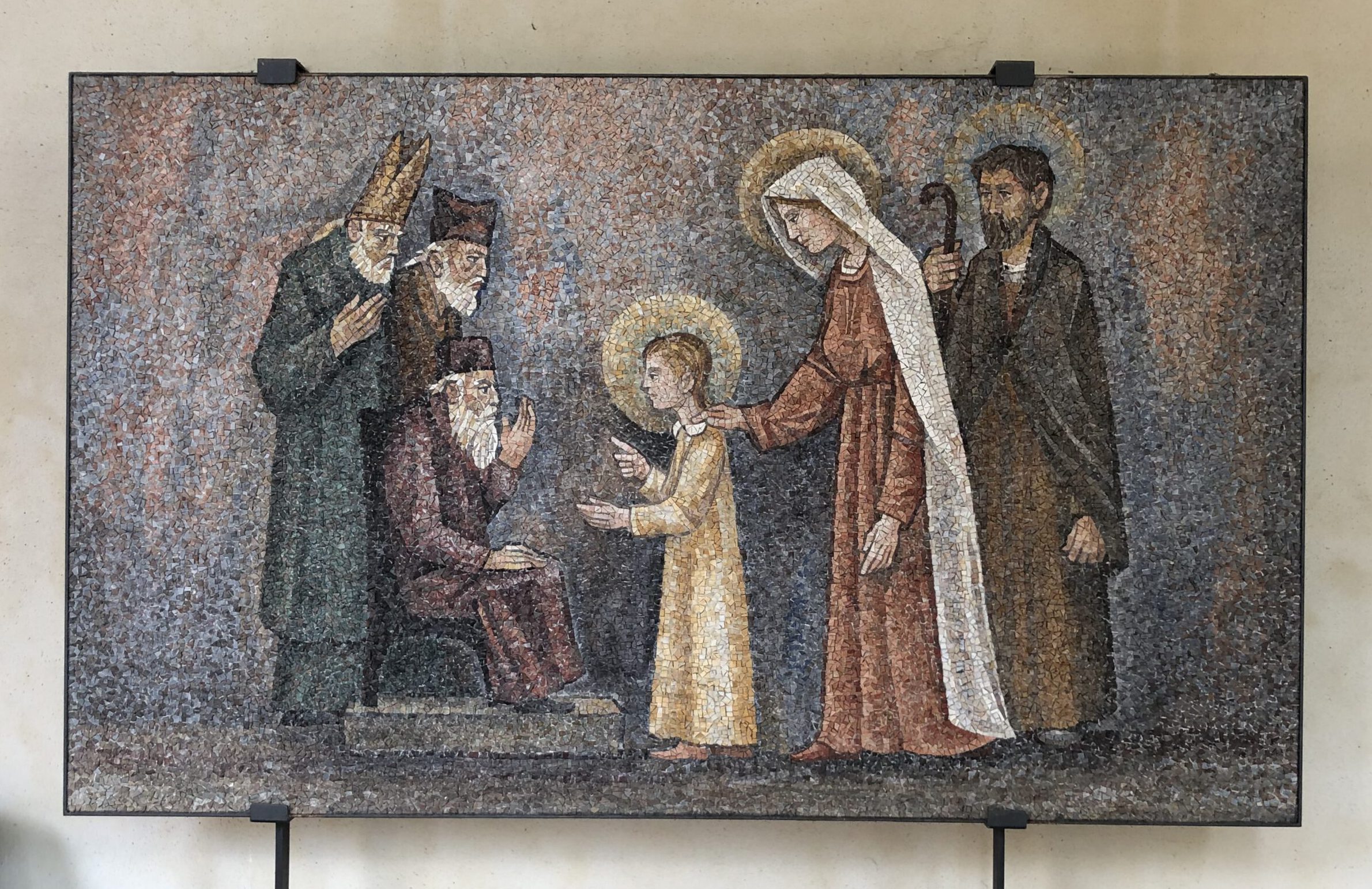
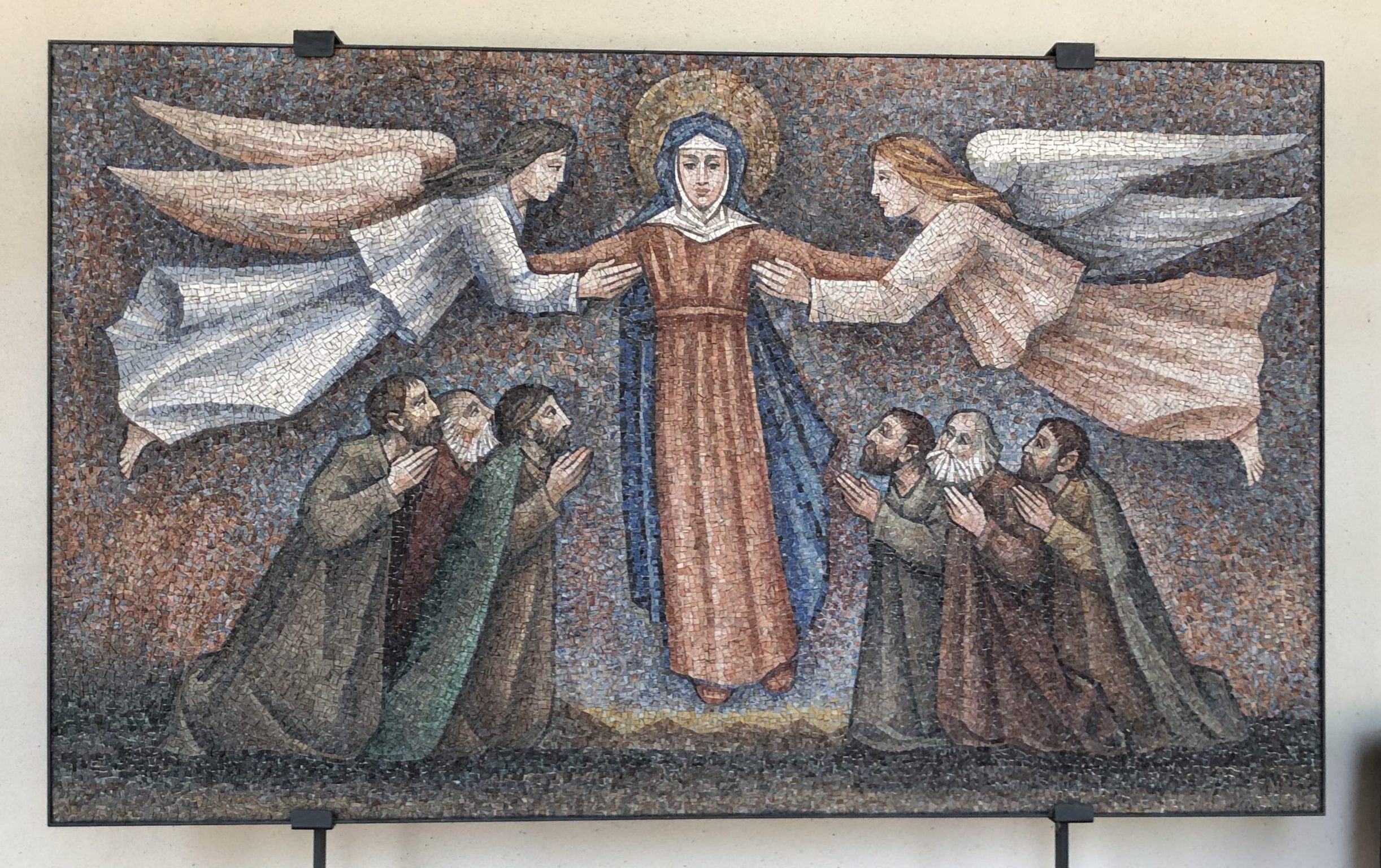
Trento Longaretti (1916-2017) created the mosaics, which depict the Mysteries of the Rosary in the portico next to the basilica.
In 1962, Danio Bolognini (1901-1972), Bishop of Cremona from 1952 to 1972, declared that Saint Mary of the Well is the co-patroness of the diocese.
In 1992, Pope John Paul II, who was Pope from 1978 to 2005, (Karol Józef Wojtyla 1920-2005) visited the sanctuary.
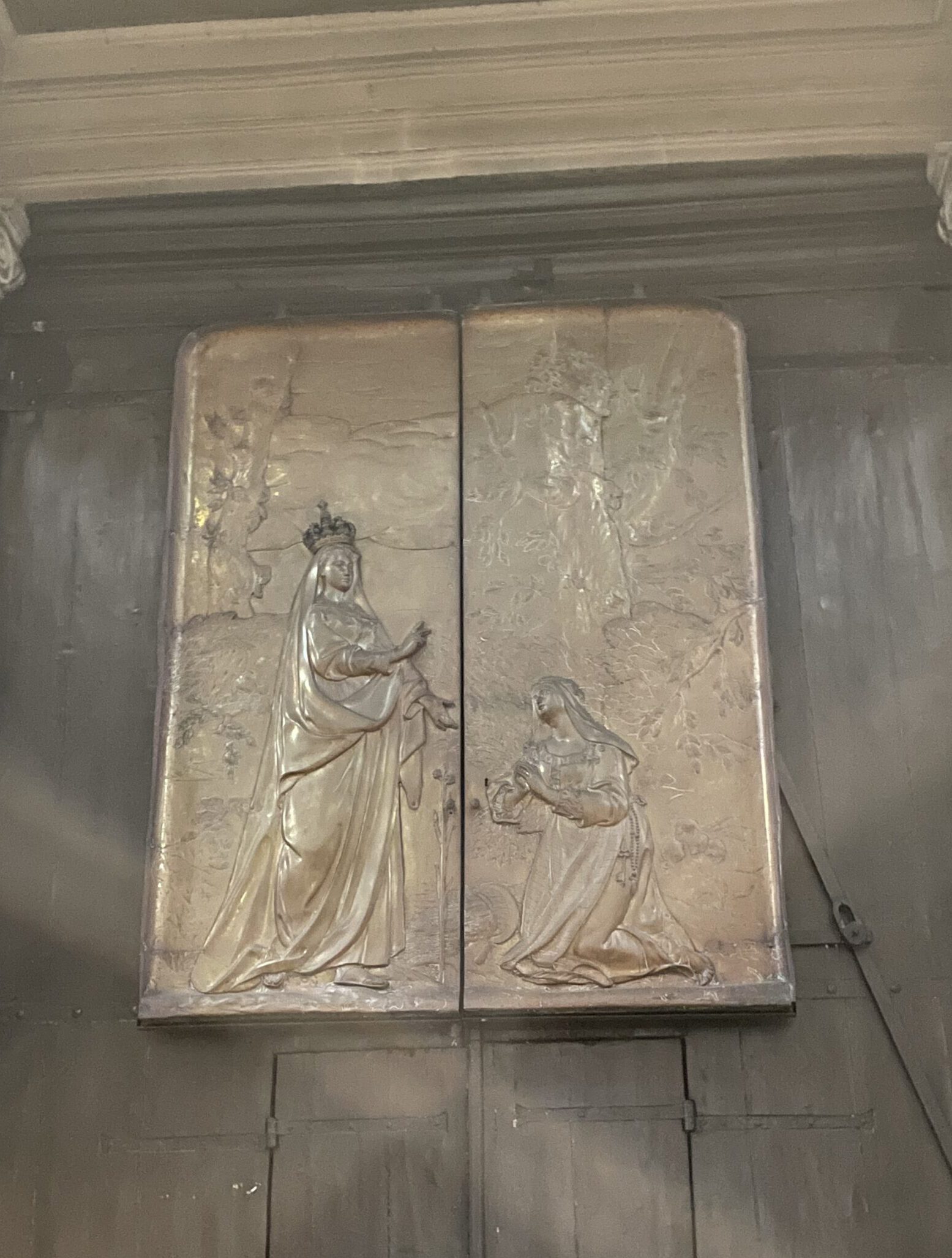
On 1 May 2020, the Italian bishops consecrated Italy to Our Lady in the Basilica of Santa Maria del Fonte in Caravaggio, Italy. This happened during the coronavirus pandemic, which has claimed many victims, particularly in the region of Bergamo, which includes Caravaggio.
Giannetta has not been beatified, but she is so popular that she is called “Blessed Giannetta”.
Pilgrimage site
In Caravaggio, the pilgrimage site is called the “Sanctuary of the Holy Mary of the Well”.
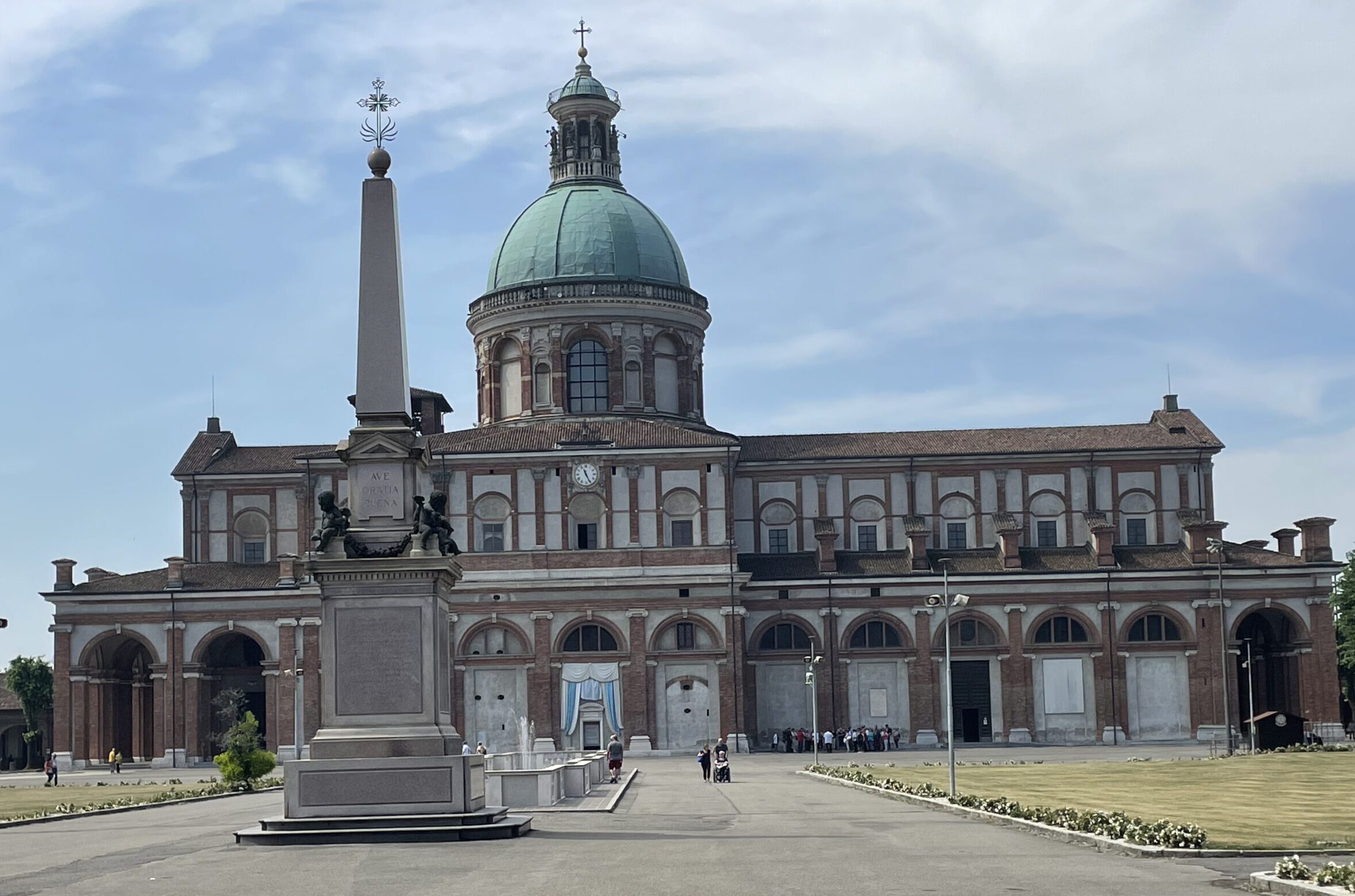
The impressive avenue leading to the basilica, the grand church square and high colonnades offer pilgrims a unique place for prayer, conversion, penance, requests for spiritual and/or physical healing, and the opportunity to receive graces.
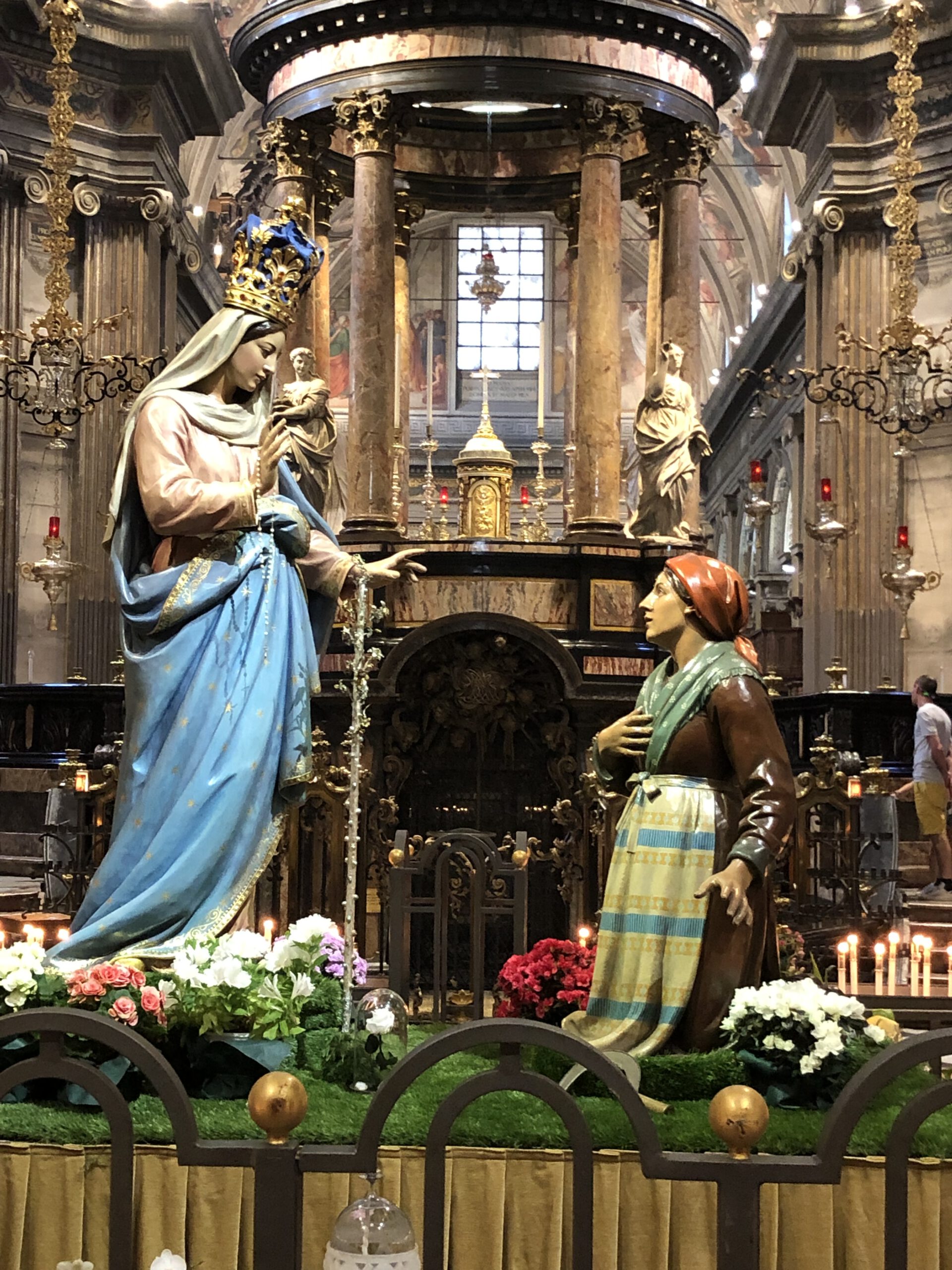
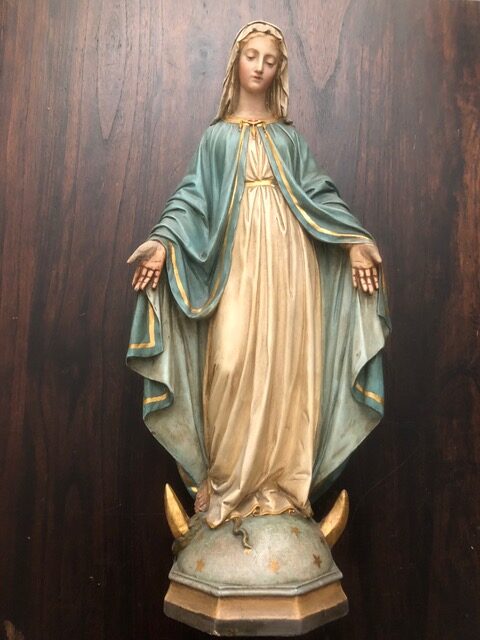
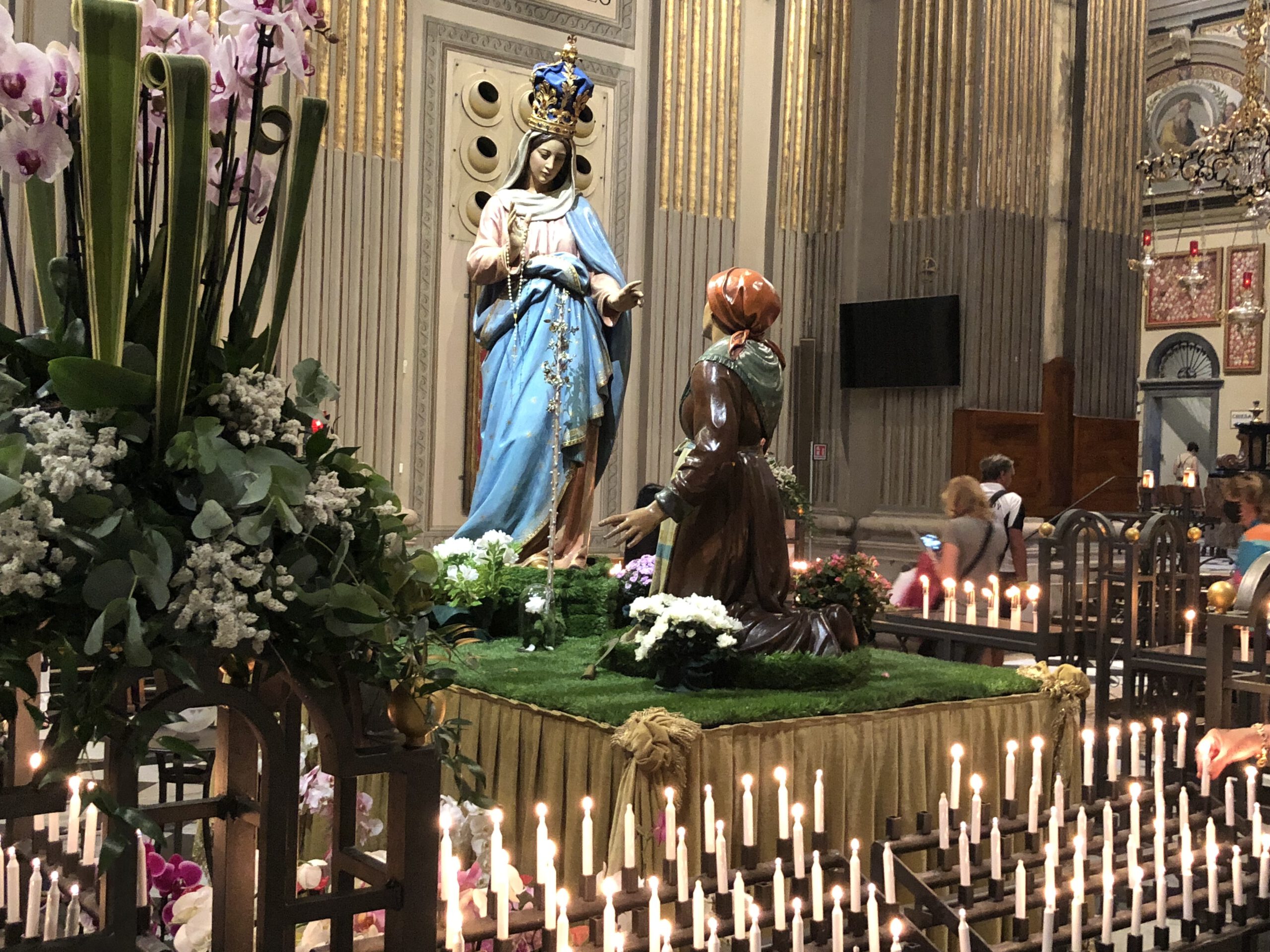
In the centre of the basilica, 2 staircases lead down to the grotto. Statues of Maria and Giannetta attract a lot of attention. This is the work of sculptor Leopold Moroder from 1932, with which these wooden statues replaced old images in the jubilee year of the apparition (1432).
In the basilica, many artworks can be seen, including in one chapel where Mary is depicted. She is showing her Child to Saint Anthony of Padua. The artwork was created by Carlo Preda (c.1645-1729).
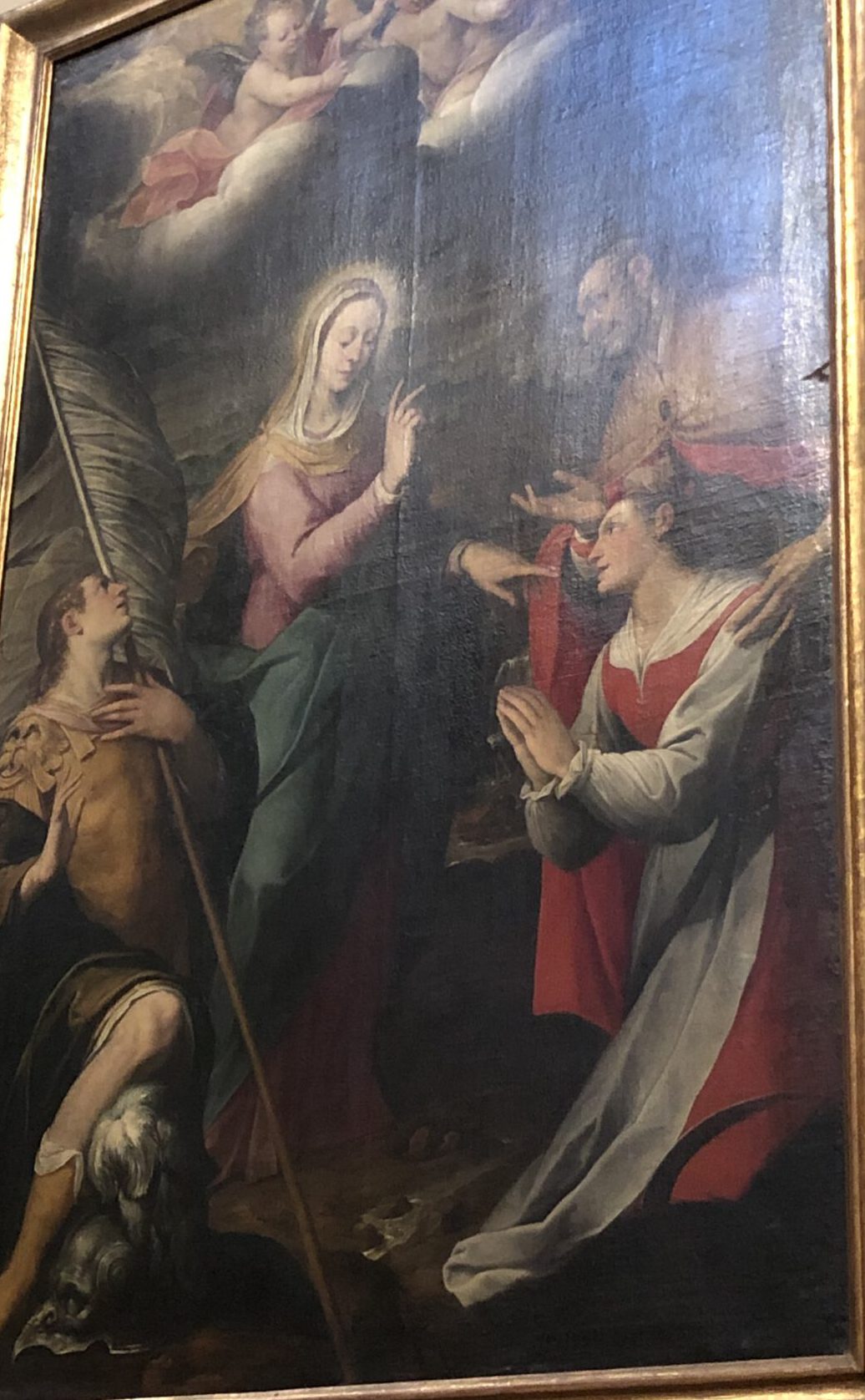
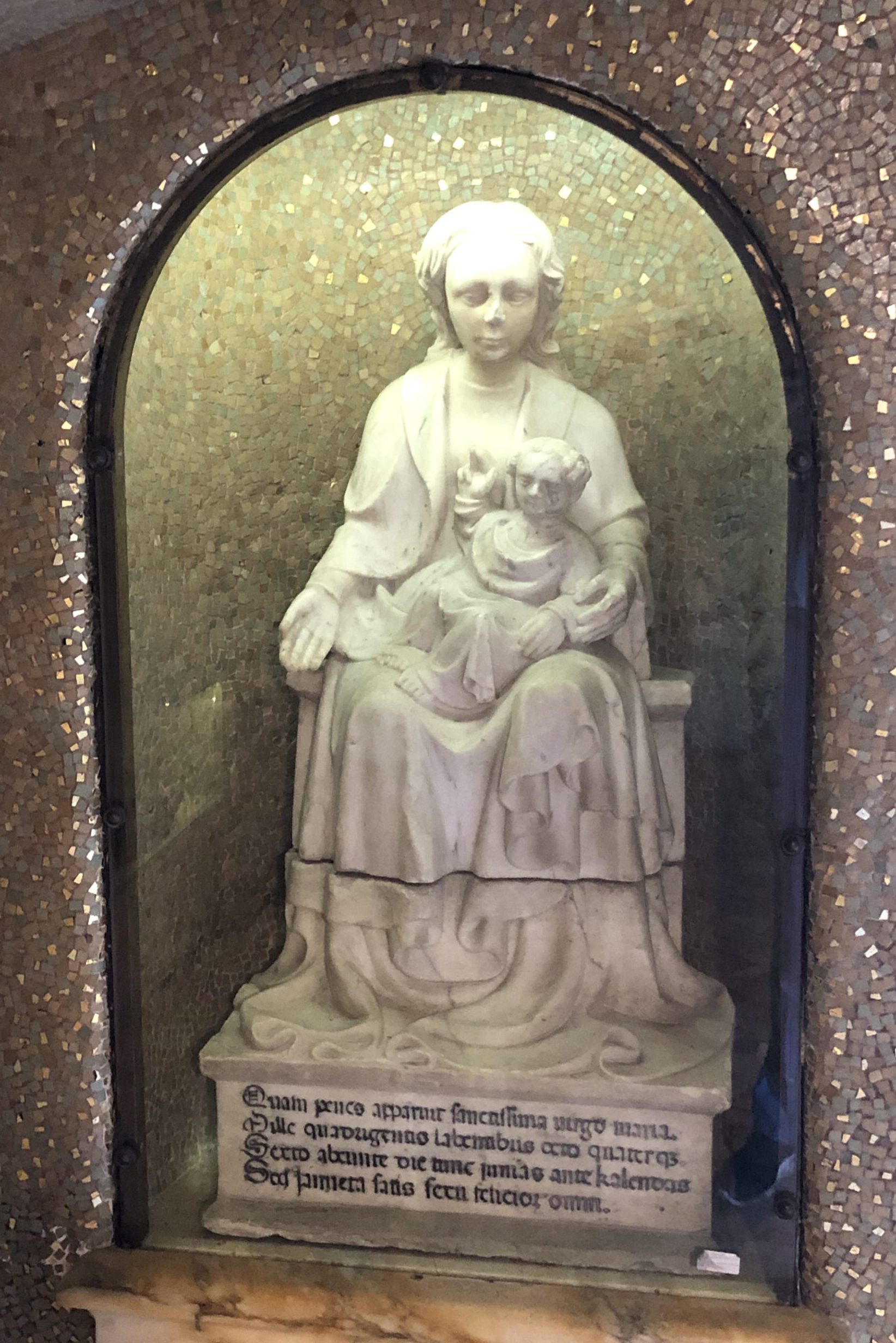
There is much to see in the sanctuary, including the large 15th-century statue of the Virgin and Child, the site of the apparition, the springs, the Grotto of St. Michael, the Chapel of the Blessed Virgin Mary, and the Marian chapel in the inner courtyard. Mosaics by Mario Busini (1901-1974) can be seen at the springs.
In de basiliek liggen bidprentjes en daarop staat ook een gebed in het Italiaans voor Maria. Omgezet in het Nederlands geeft dit:
“Heilige Maria van de Bron.
Bid voor ons.
Wees gegroet, o Maria.
Wie zich tot U wendt om uw hulp te smeken, Marianne hemelse patroonheilige, moet sterker worden in geloof, standvastiger in de hoop en zoveel naastenliefde tonen, dat hij niet langer toekomt aan wereldse verleidingen en nooit van het rechte pad gaat.
O genadige, o vrome, o lieve Maagd Maria.
Heilige Maria van de Bron,
bid voor ons
Wees gegroet, o Maria.
Courses are also given to laypeople and clergy in the Spiritual Centre at the sanctuary.
The Baroque basilica is open every day. Annually, 3 million visitors come to the sanctuary. This makes Caravaggio the most visited Italian Marian pilgrimage site. There is no place in Italy where the Virgin Mary is more revered than in Caravaggio.

ACCESSIBILITY
Caravaggio is located in northern Italy, between the large cities of Brescia and Milan, south of Bergamo. The sanctuary “Santa Maria del Fonte” is situated just over 1 kilometre from the town of Caravaggio.

Address: Viale Papa Giovanni XXIII, 24043 Caravaggio BG.
Op www.santuariodicaravaggio.org is actuele informatie te vinden.
Experience
At the Porta Nuova arcade, on the edge of the town of Caravaggio, I have a splendid view of the basilica. What a long, straight avenue!
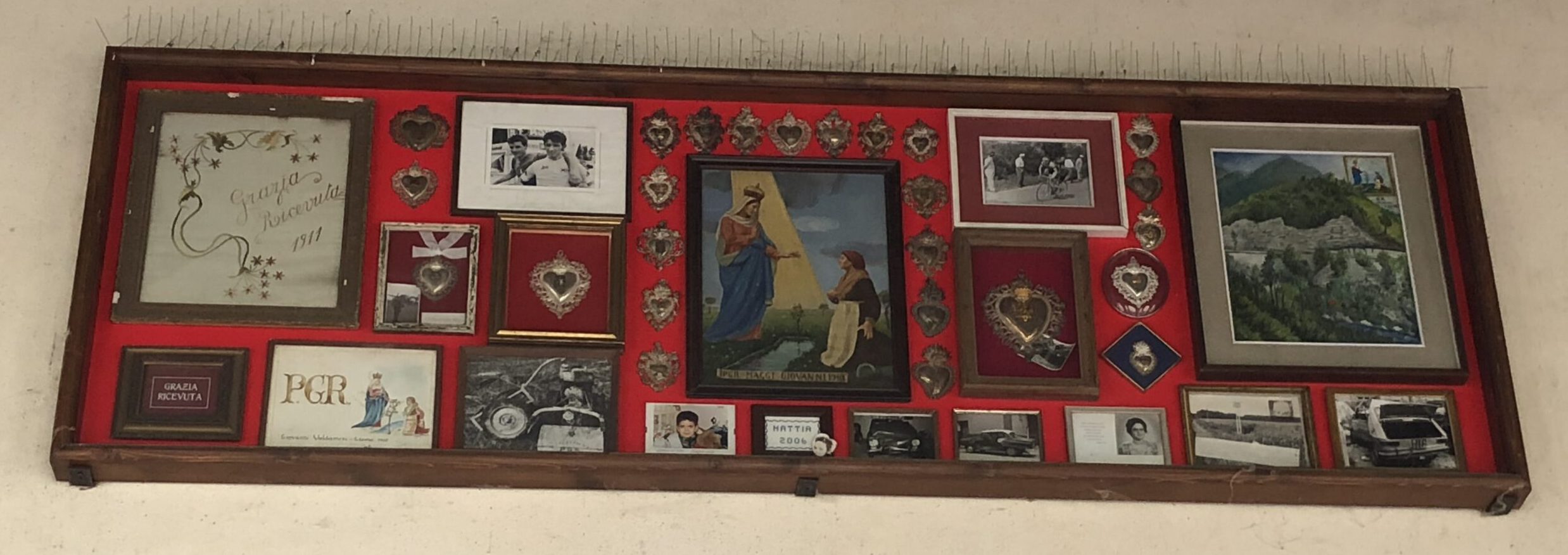
The colonnades by the basilica display beautiful mosaics depicting the mysteries of the rosary. What craftsmanship! Inside the basilica, many frescoes can also be admired. These are artistic works by Giovanni Moriggia (1796-1878) and Luigi Cavenaghi (1844-1918). In addition, many ex-votos are hung in frames in the colonnades.
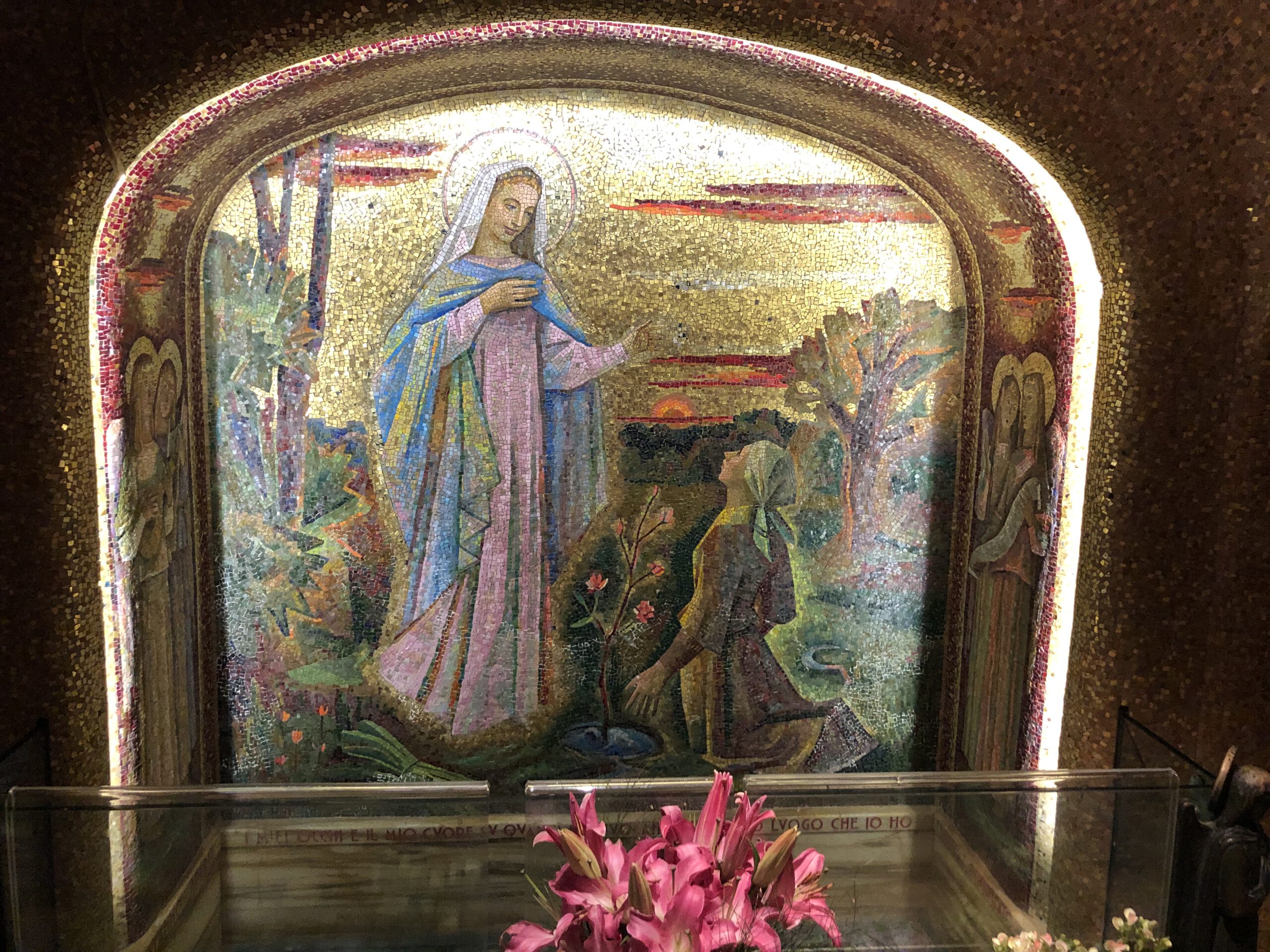
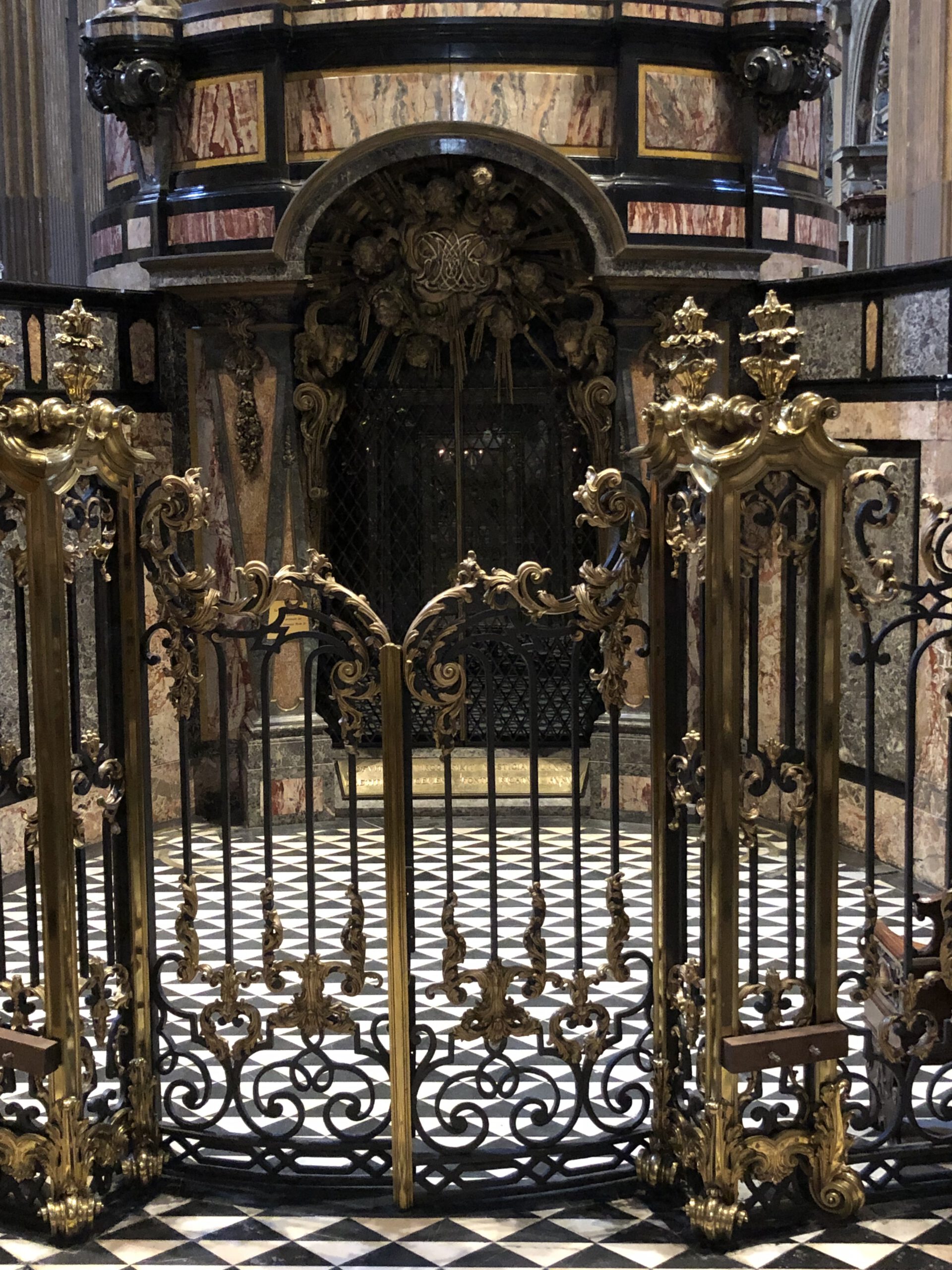
Beneath the basilica lies an underground passage. An entire experience, 30 metres in length, featuring mosaics by Mario Busini (1901-1974). He created these between 1950 and 1952. Also present here is the blade of a falling axe from an execution on 26 May, the same day as the apparition. However, the device malfunctioned during the carrying out of the sentence, and the condemned individual was granted amnesty. A broken door handle can also be seen here. This refers to the year 1650, when a pilgrim was threatened. He sought protection in the sanctuary, which was then closed. Suddenly, the door handle broke, allowing the man to enter, close the door, and escape danger. Furthermore, the apparition of Mary to Giannetta is depicted here. The text reads: “My eyes and heart are open to all who count on Me in this place which I have chosen and sanctified”. These words are attributed to the Virgin Mary.
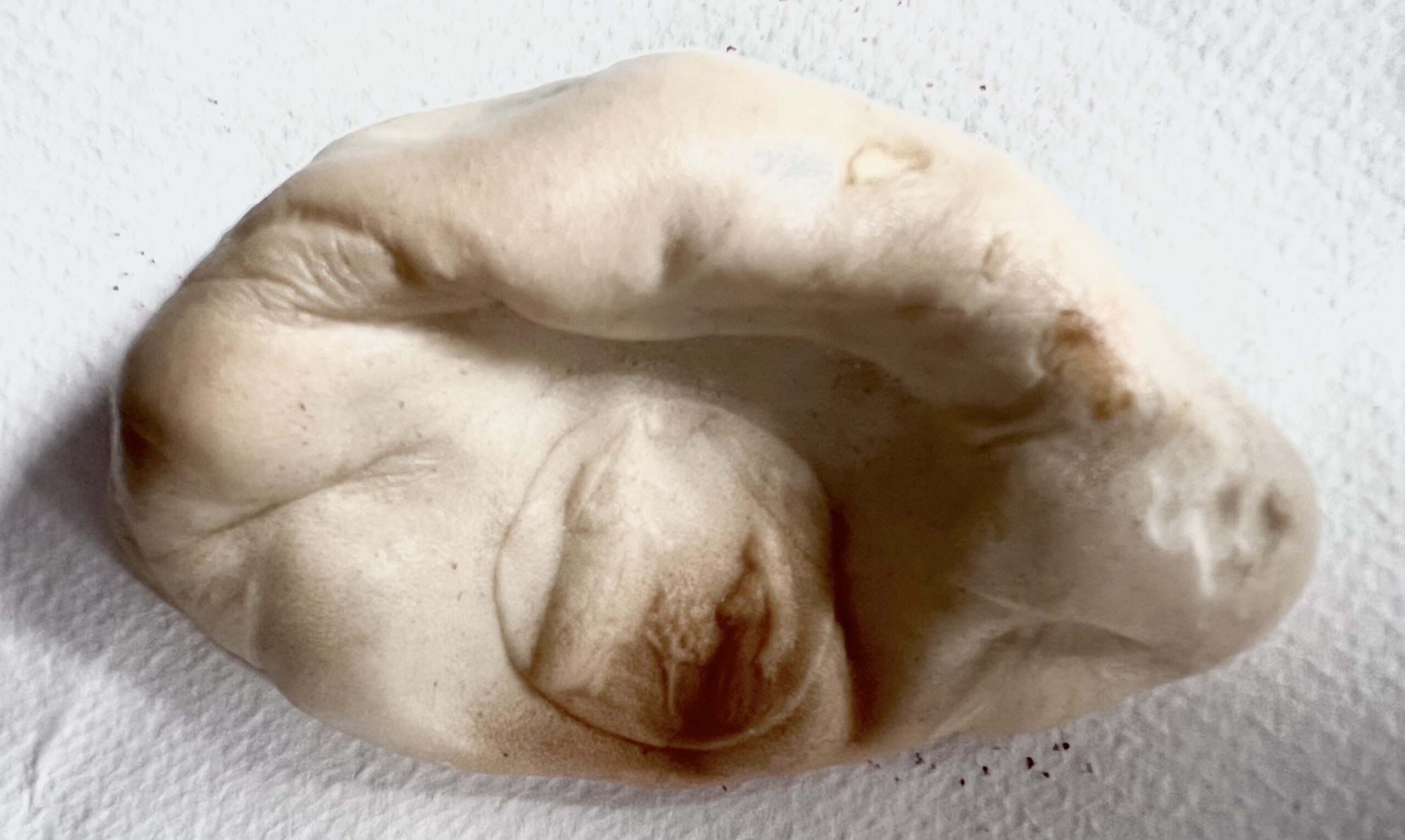
In Caravaggio zijn de “michini” bekend. Dit zijn rolletjes van ongedesemd brood met een driehoekige vorm. Deze broodjes doen denken aan Maria in Caravaggio, waarbij zij gekneed zijn met heilig water van de bron. Tijdens een viering in de basiliek is het brood gezegend. Tegen een vrije gift is een broodje van meel en water van de bron en een afbeelding mee te nemen en dat doe ik dan ook. Een mooi gebaar van het heiligdom aan de pelgrims. Bij het broodje is ook een blaadje met toelichting over het brood. De tekst is in het Italiaans en in het Nederlands geeft dit:
“brood en water voor de armen
Zoals de traditie van het Heiligdom van Caravaggio betaamt,
is naast het diepe geloof en de toewijding aan Maria,
nooit gebrek aan naastenliefde,
die in de eerste plaats tot uiting komt in de bouw van
het Santa Maria ziekenhuis voor pelgrims en zieken,
precies hier, waar vandaag de dag de deuren openstaan.
Nog steeds is de traditie broodjes te verzamelen
voor de gewoonte van “michini”, kleine broodjes gekneed met water uit de bron.
Brood en wat verwijst ons aarde essentie van de dingen die er toe doen,
naar het belang van een reis die het hele leven omarmt,
naar de aandacht voor degenen, die arm, niets anders op hun tafel hebben.
Gezegend brood en water uit de bron.
Een gebaar voor de armen, een zegen voor iedereen.
Heiligdom van Caravaggio.
Heilge Maria van de Bron.”

~~~

 Nederlands
  English (UK)
  Deutsch
  Français