History
The history of Camogli is very old, as the first inhabitants arrived here 5,000 years ago. For centuries, people made a living from fishing, and it was for this reason that Camogli was once known as “the town of a thousand white sailing ships”.
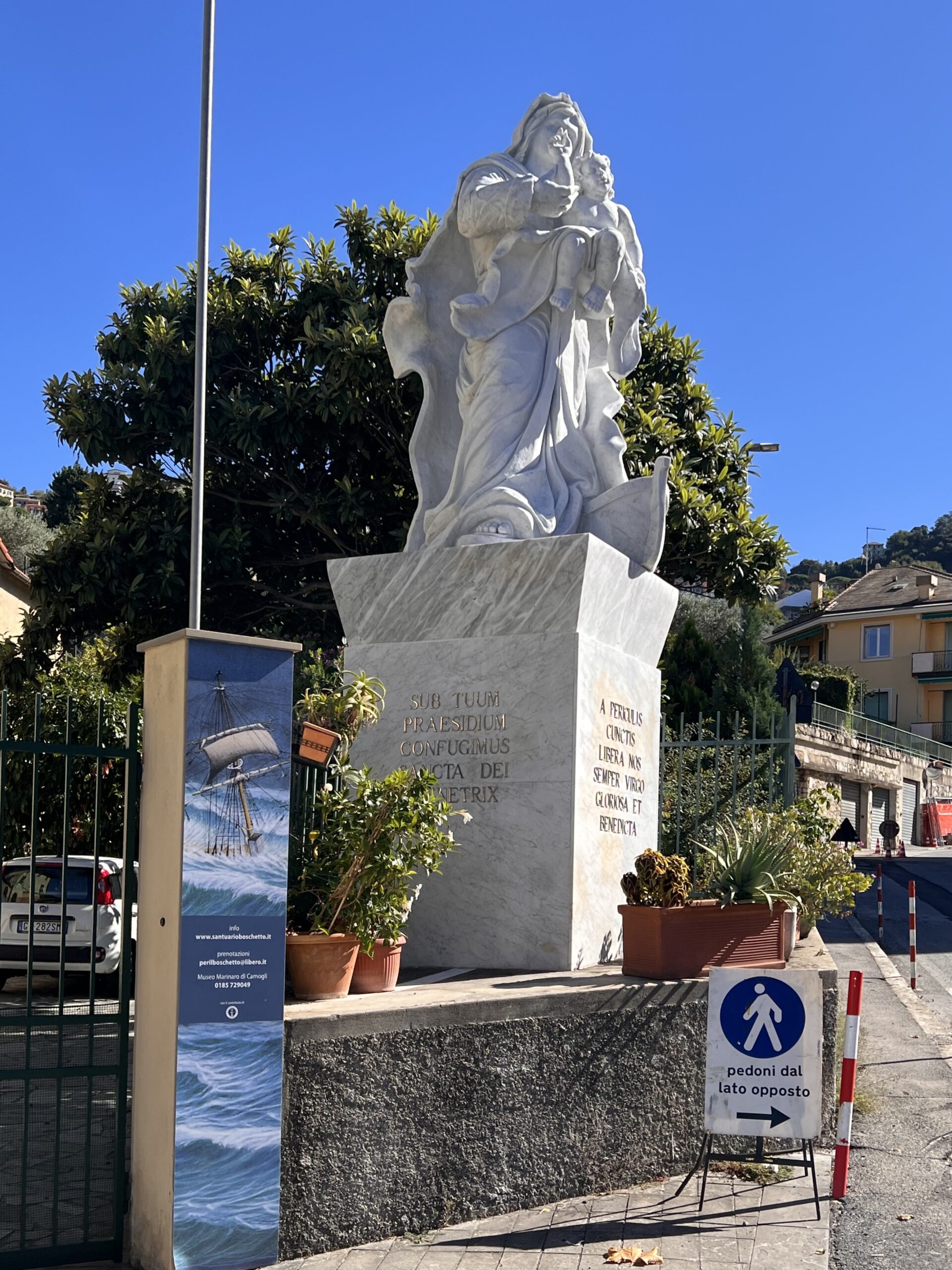
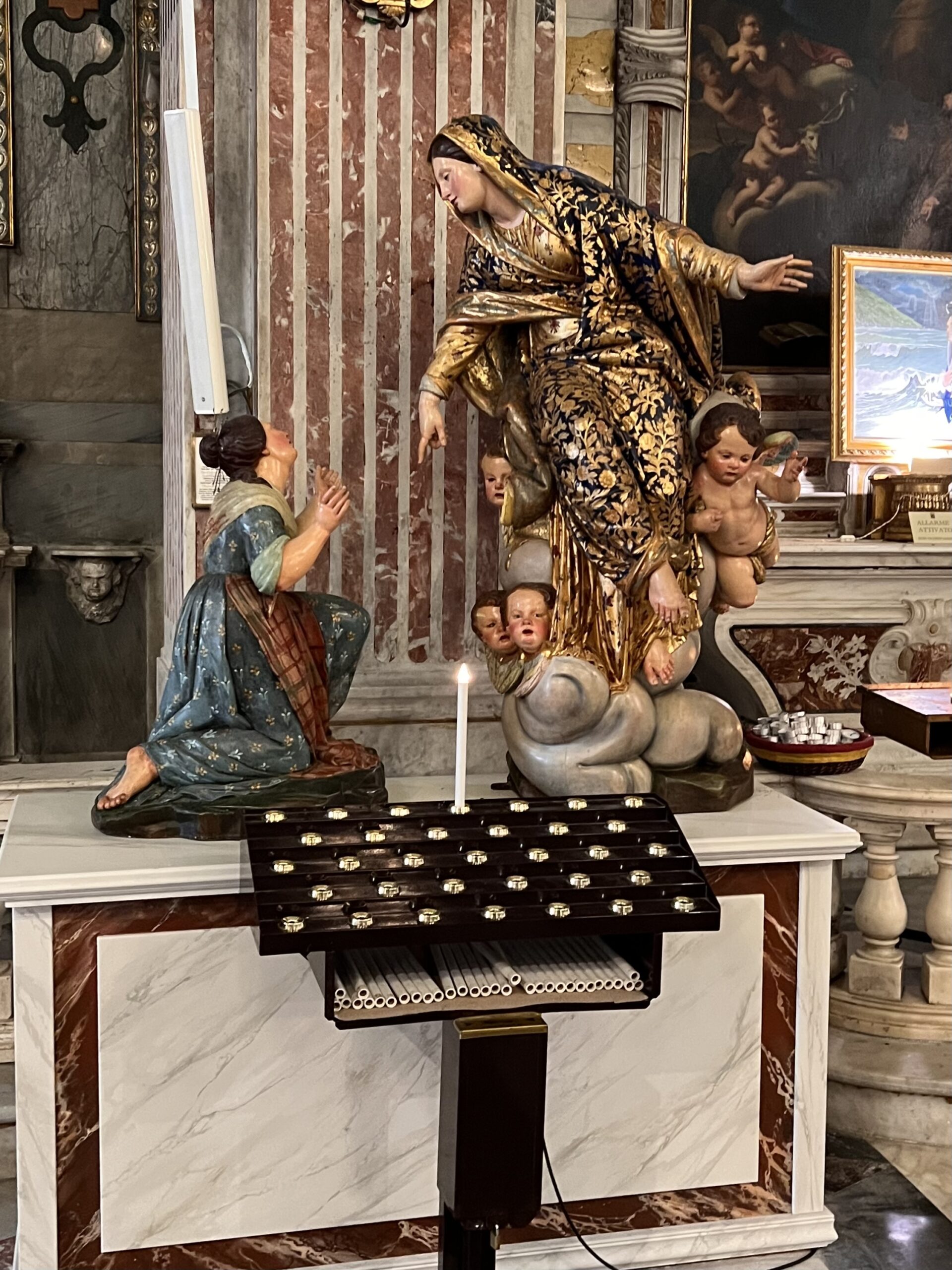
The sanctuary originated from an encounter between Mary and a young woman. The twelve-year-old Angela Schiaffino was a shepherdess and on 2 July 1518, she had visions of Mary. During the apparitions of Mary, she heard Her say that a church should be built here. Angela said to the Apparition that no one would believe her if she spoke about this encounter. Thereupon, Mary made a gesture that, in the eyes of people, bore a resemblance to a horseshoe. Subsequently, Our Lady made the same sign on a large stone. This stone is located close to the people and indicates the place where the sanctuary should be built. It then took some time before a small church was built here.
The current church was built between 1612 and 1631 and it is a gem of Baroque art.
Pius XII, Pope from 1939 to 1958, born Eugenio Maria Giuseppe Giovanni Pacelli (1876-1958), appointed Mary as the patron saint of Camogli in 1955.
Pilgrimage site
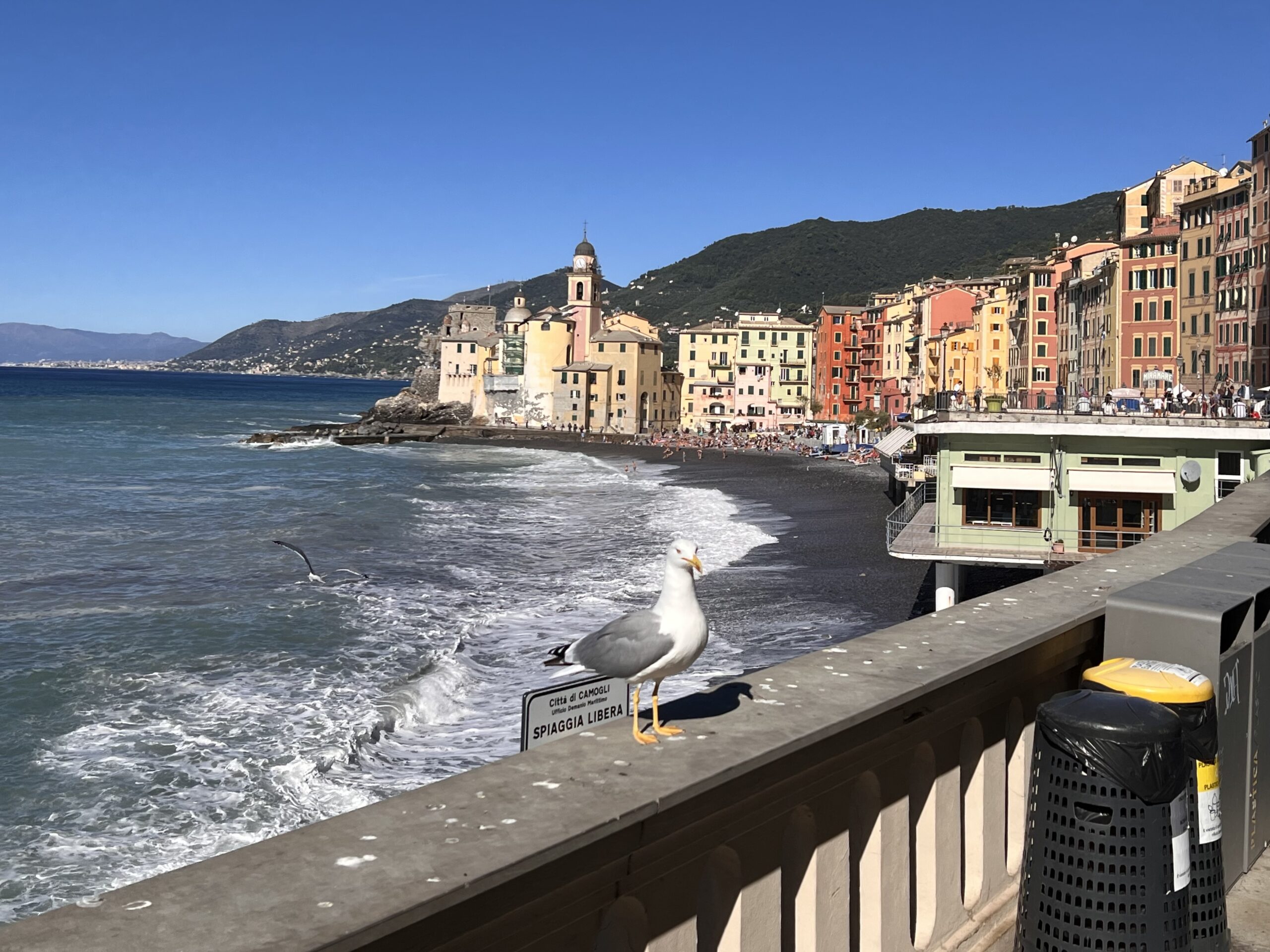
Camogli is a former, large fishing village, and the houses are often colourful.
The pilgrimage site is dedicated to “Nostra Signora del Boschetto” (Our Lady of the Grove). There is also an image of the apparition of Mary to the shepherdess.
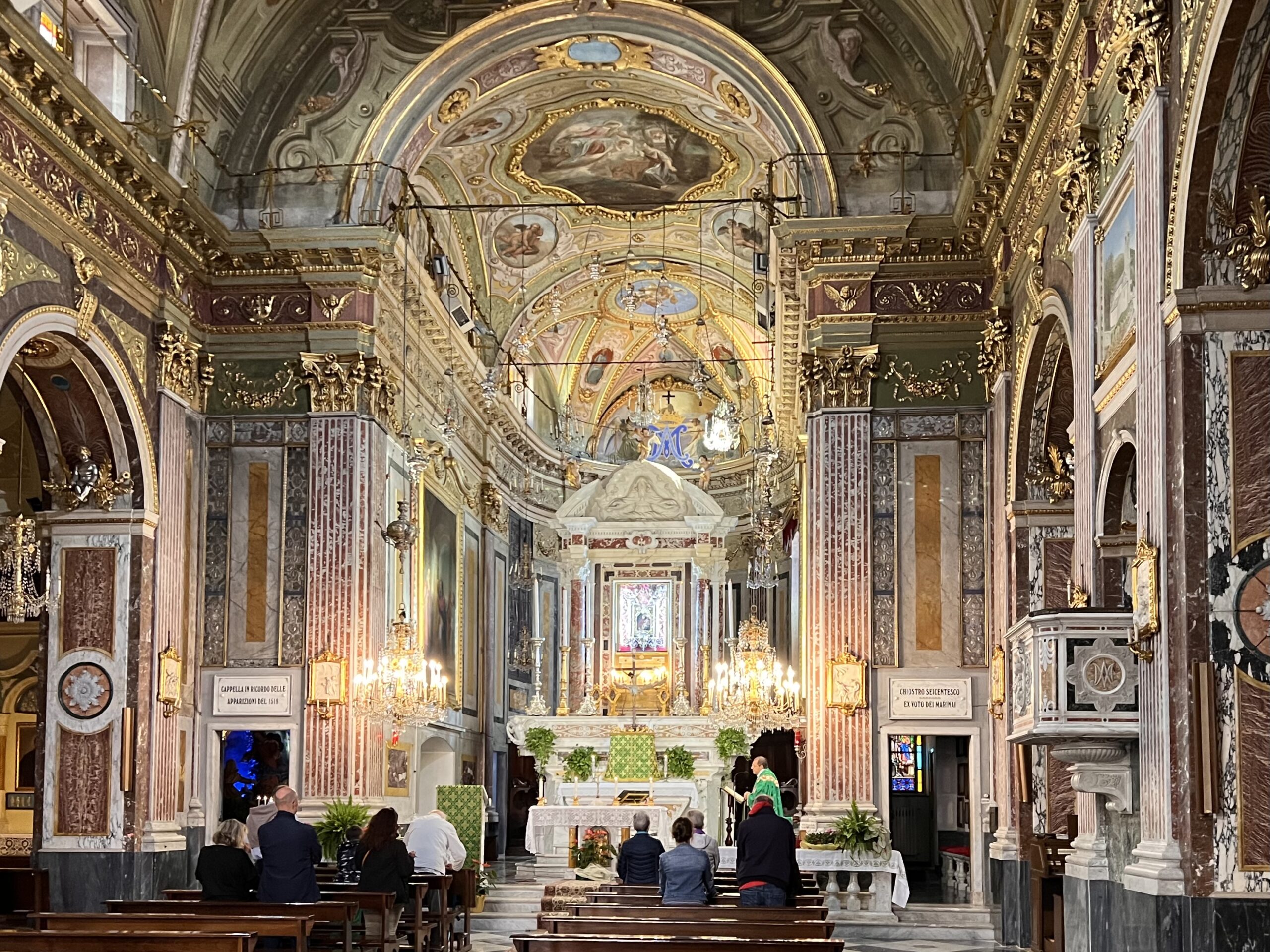
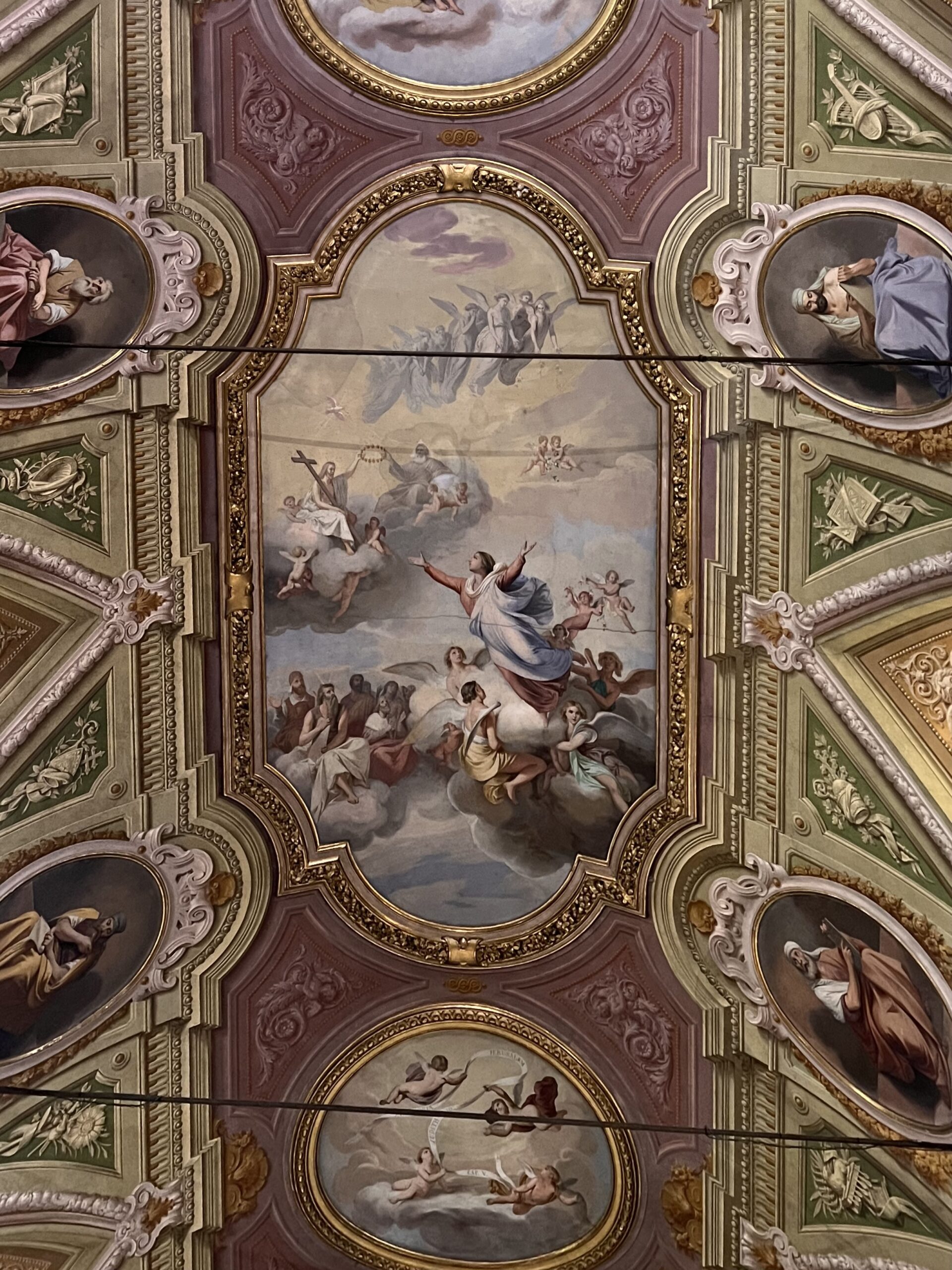
In the pilgrimage church, ex-votos from sailors can be seen as a thank you to Mary for their safe return. Many paintings can be admired in the richly decorated church.
The church has a memorial, dedicated to Don Piero Benvenuto (1922-2000), former rector of the sanctuary.
Next to the pilgrimage church, there is a cemetery. Beneath the cemetery are the remains of the sanctuary and the original chapel following the apparition of Mary in 1518.
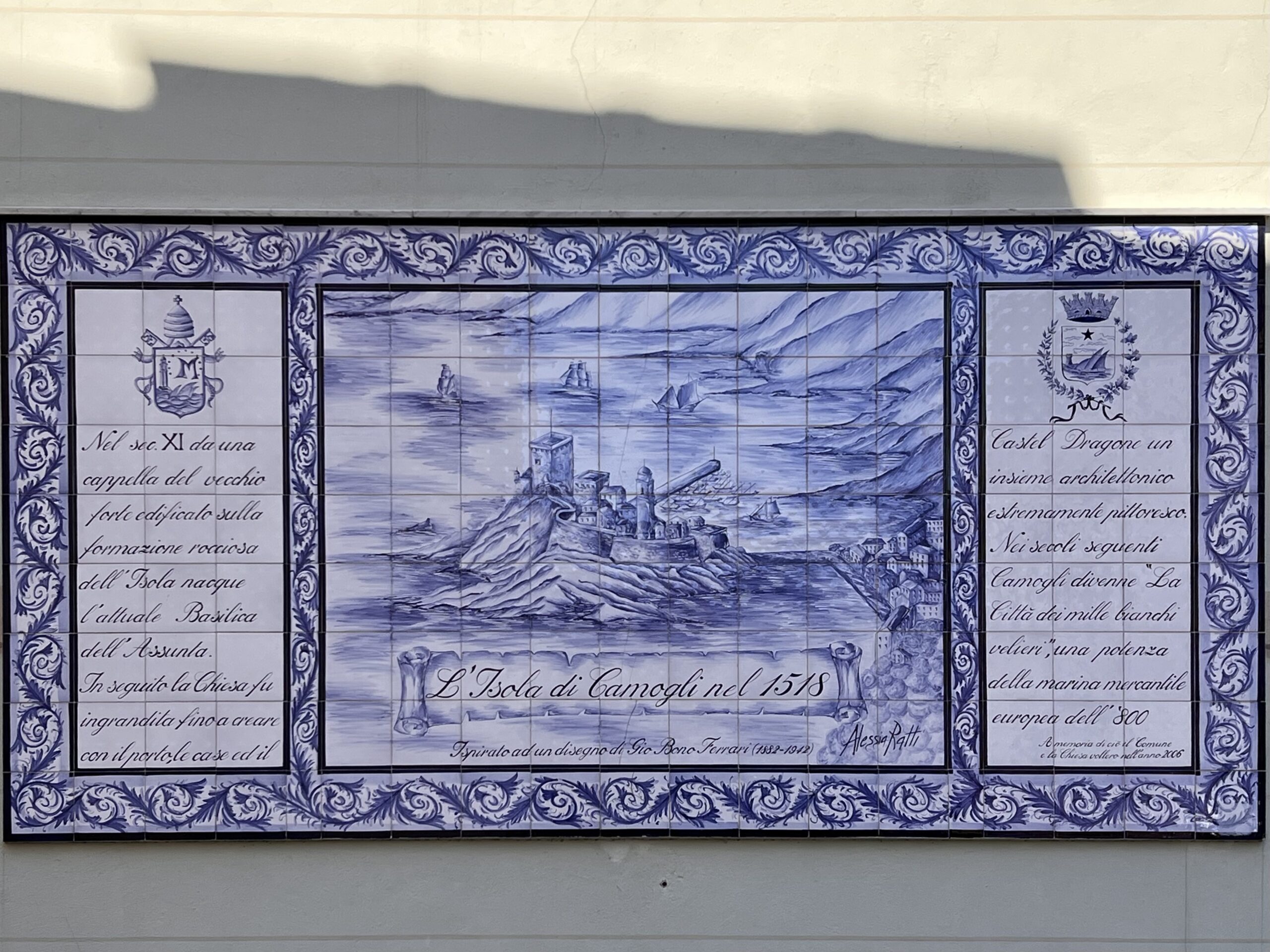
Further to visit in Camogli is the “Basilica di Santa Maria Assunta” (Basilica of the Assumption of Saint Mary) from the 12th century. Here too is a blue mural from 2006 by Alessia Ratti (*1975) of the island of Camogli in 1518 (year of the apparition) and is inspired by a drawing by Gio Bono Ferrari (1882-1942). The accompanying text explains the past of Camogli: “In the 11th century, the current Basilica of the Assumption of Mary originated from a chapel of the old fort, built on a rock formation of the island. Subsequently, the church was expanded and, together with the harbour, the houses, and the dragon's castle, formed an extremely picturesque architectural ensemble. In the following centuries, Camogli became “the city of a thousand white sailing ships”, a powerful centre of the 19th-century European merchant fleet.”
In Camogli there is also a church of Saint Nicholas, the “Chiesa di San Nicolo di Capodimonte” on Via S. Nicolò, dating from 1141, restored in 1971 and a national monument since 1910.
ACCESSIBILITY
Camogli lies on the Golfo Paradiso, part of the Italian Riviera, near the large port city of Genoa.
The address of the pilgrimage site “Santuario Nostra Signora del Boschetto”:
Piazza N.S. del Boschetto, 16032 Camogli (Ge).
Current information can be found at: www.santuarioboschetto.it.
Experience
A Eucharist service is underway in the pilgrimage church and I am joining the worshippers. My prayers are for my friends, as I have them in my thoughts more and more often. The importance of lasting friendship has risen significantly for me. Without these good people, I wouldn't have my current quality of life. I've been reflecting on this more than ever recently.
After the celebration, I'll take some photos, and the history of this building plays like a film in my mind. In the church, there are statues, ex-votos hang on the walls, and there are paintings. Seeing this strengthens my feelings about the building's past and what has taken place here. The visionary Angela Schiaffino is depicted; how much she could tell me.
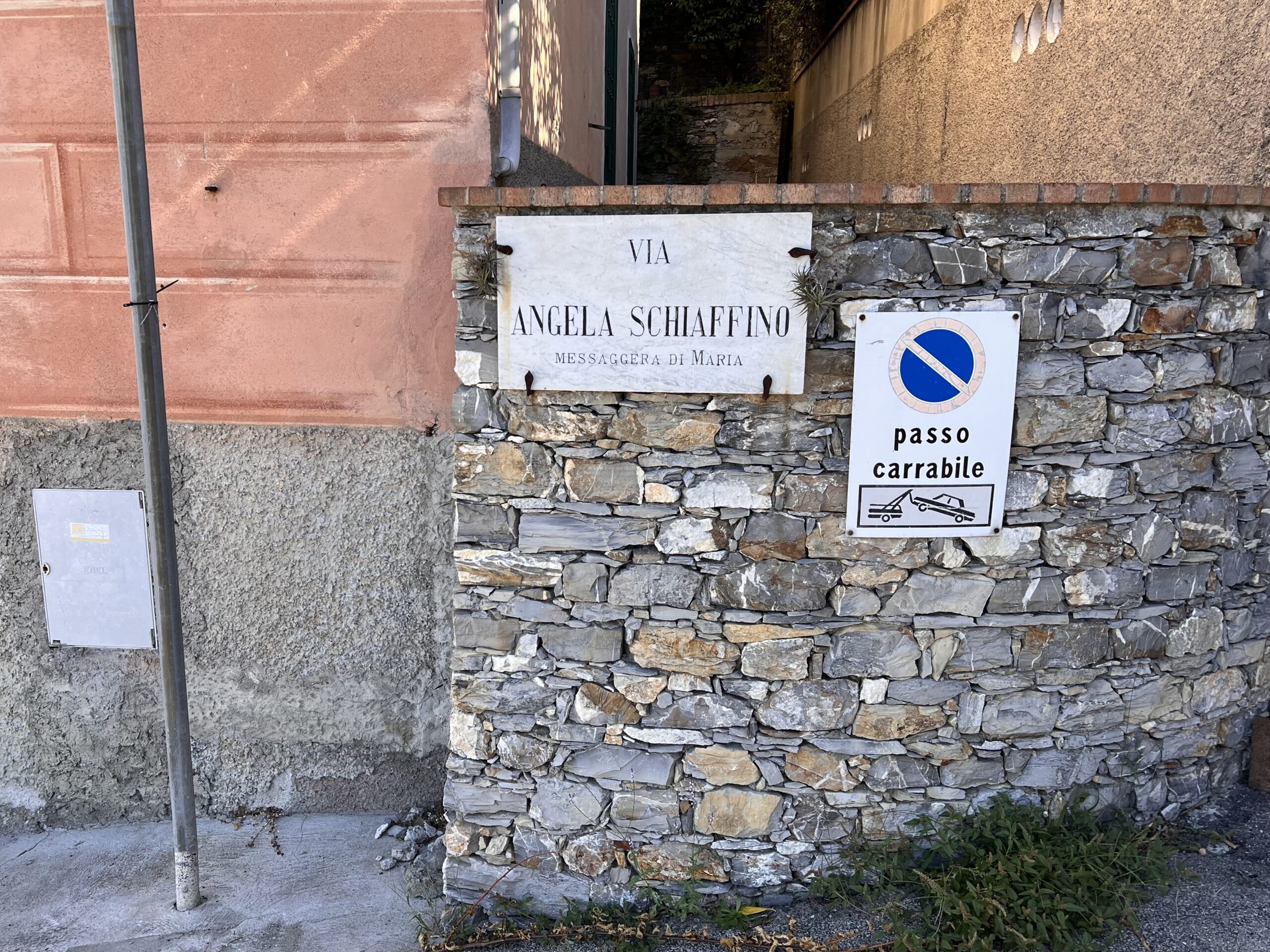
After visiting the church, I will go to the basilica and follow the street named after Angela Schiaffino. The basilica is located by restless water; high waves crash against the rocks, which remain unmoved. What a magnificent sight. I will then enter the basilica and see all sorts of effigies, including of Our Lady. Here, sailors and their family members prayed much to Mary for a safe return. The ex-votos from sailors for a safe return are the witnesses.
Next to the basilica stands a castle with a large cannon beside it, and many people pose for photos there. A lot of people are looking out at the sea. They are visitors from many countries, as I can hear several languages being spoken. The rough water attracts more attention than the basilica. This is an observation in a time of secularisation.
The cosy centre, which is popular with tourists, lies near the basilica and castle. It's also a pleasant place to spend time.
Environment
From Portofino to Camogli is 15 km going north-west.
Departing from the port city of Genoa to arrive in Camogli means travelling 30 km south-east.
From Rapallo to Camogli is 12 km west.
Leaving La Spezia and arriving in Camogli involves covering 89 km to the northwest.
Om in Camogli te geraken na Piacenza, moet je 170 km afleggen naar het zuidwesten.
~~~

 Nederlands
  English (UK)
  Deutsch
  Français