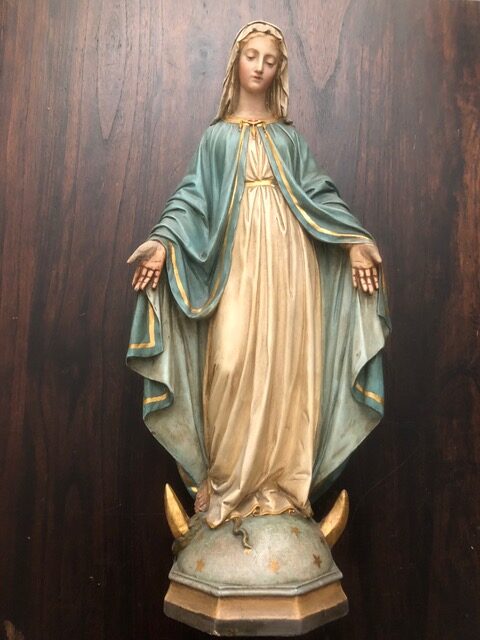
History
Canneto has been inhabited since Roman times, as evidenced by excavations that reveal the remains of a luxurious Roman villa and a farmhouse. The remains are located in “La Villa Rustica” (the rural villa), behind the church. In the 4th century, the Christian faith was preached here by bishops from Trivento, a city founded in the 1st century.
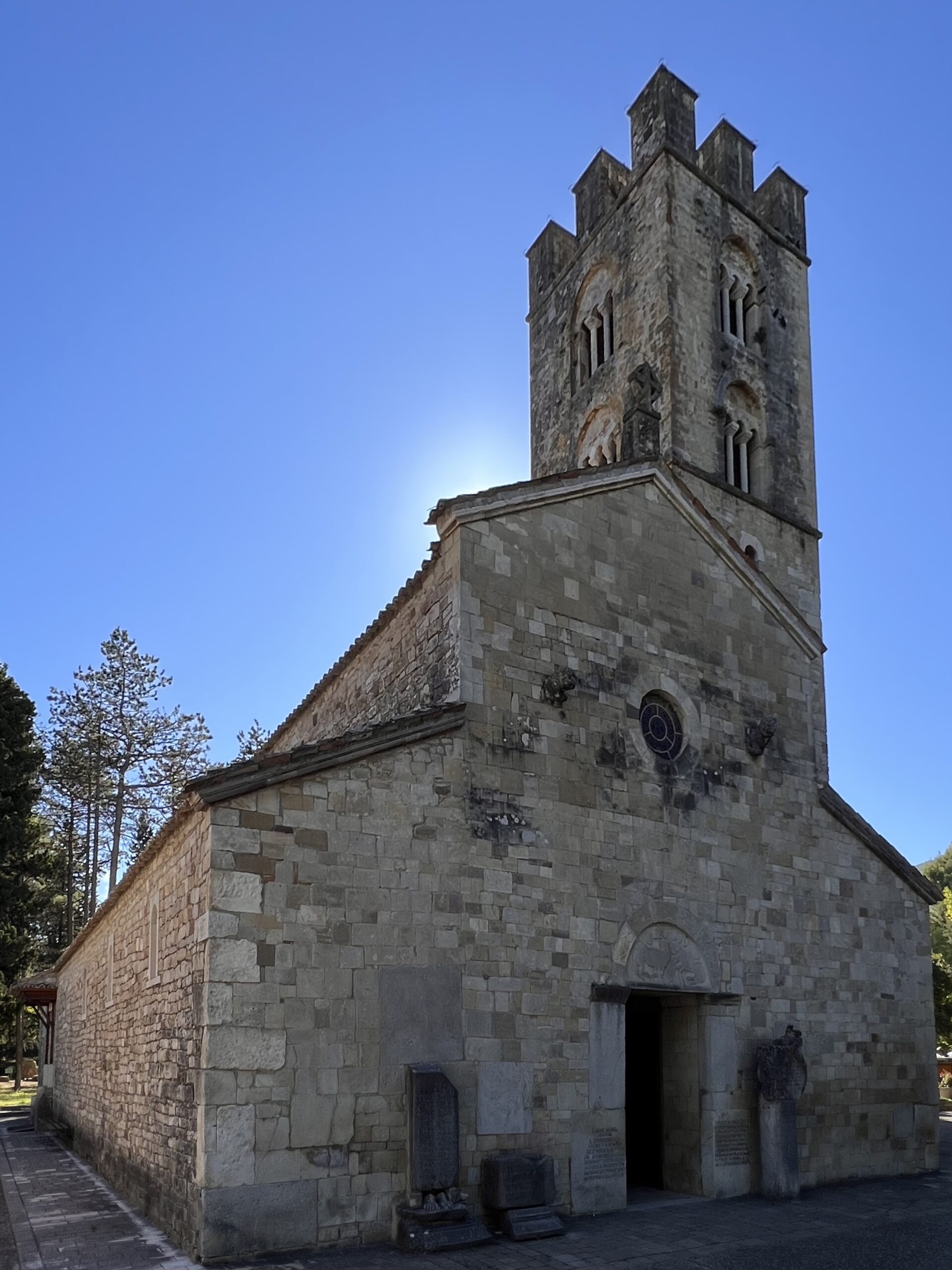
The fact that a small church once stood here a very long time ago is corroborated by found documents. There are reasons to assume that soon after the Council of Ephesus (431), the first church was built to celebrate the dogma of the Virgin Mary, Mother of God. The first document dates from 703, found in the “Cronico Volturnense”, it states that Benedictines from Volturno realised this. It is also recorded in surviving writings that later the monks of Montecassino built the current church with a monastery. The current church dates from the 11th century, but the origin of the cult of the Mother of God is much older.
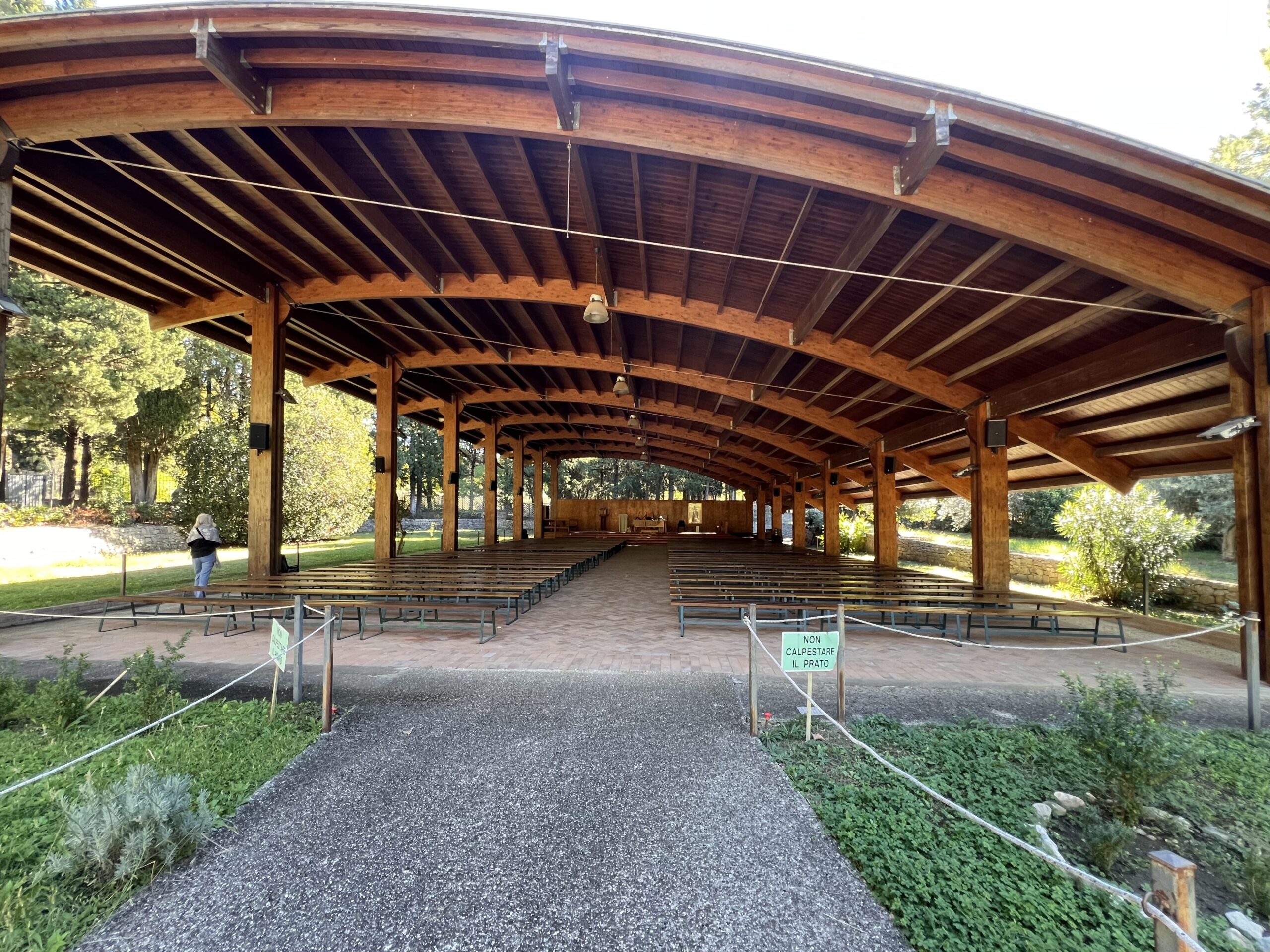
The Benedictines stayed in Canneto until 1474. After this, the church fell into disrepair, and the abbey also became a ruin. In 1930, the brave and diligent priest Don Duilio Lemme (1877-1962) from the parish in Roccavivara, with the help of local residents, began work on the restoration of the church and monastery. Significant restoration work was also carried out by the “High Services for Objects of Cultural Value” from Molise. Finally, the diocese of Trivento commissioned further decorative work on the exterior and interior of the church, including the secrets of the rosary and the large meeting tent located behind the church. Thanks to all this assistance, the sanctuary was reopened in 1935.
Pilgrimage site
The pilgrimage site is called “Santuario S. Maria di Canneto” (“Sanctuary of St. Mary of Canneto”) and the Italian word “Canneto” means reed forest. The church displays a simple, weathered facade with a Romanesque portal. Commemorative tablets and inscriptions from the Romanesque period are affixed to the exterior walls of the house of worship.
On the right-hand side of the church, the imposing bell tower, completed by Abbot Nicolaas in 1329, can be seen. At the bottom, embedded shards and stones are fitted, and higher up, two lions of Roman origin.
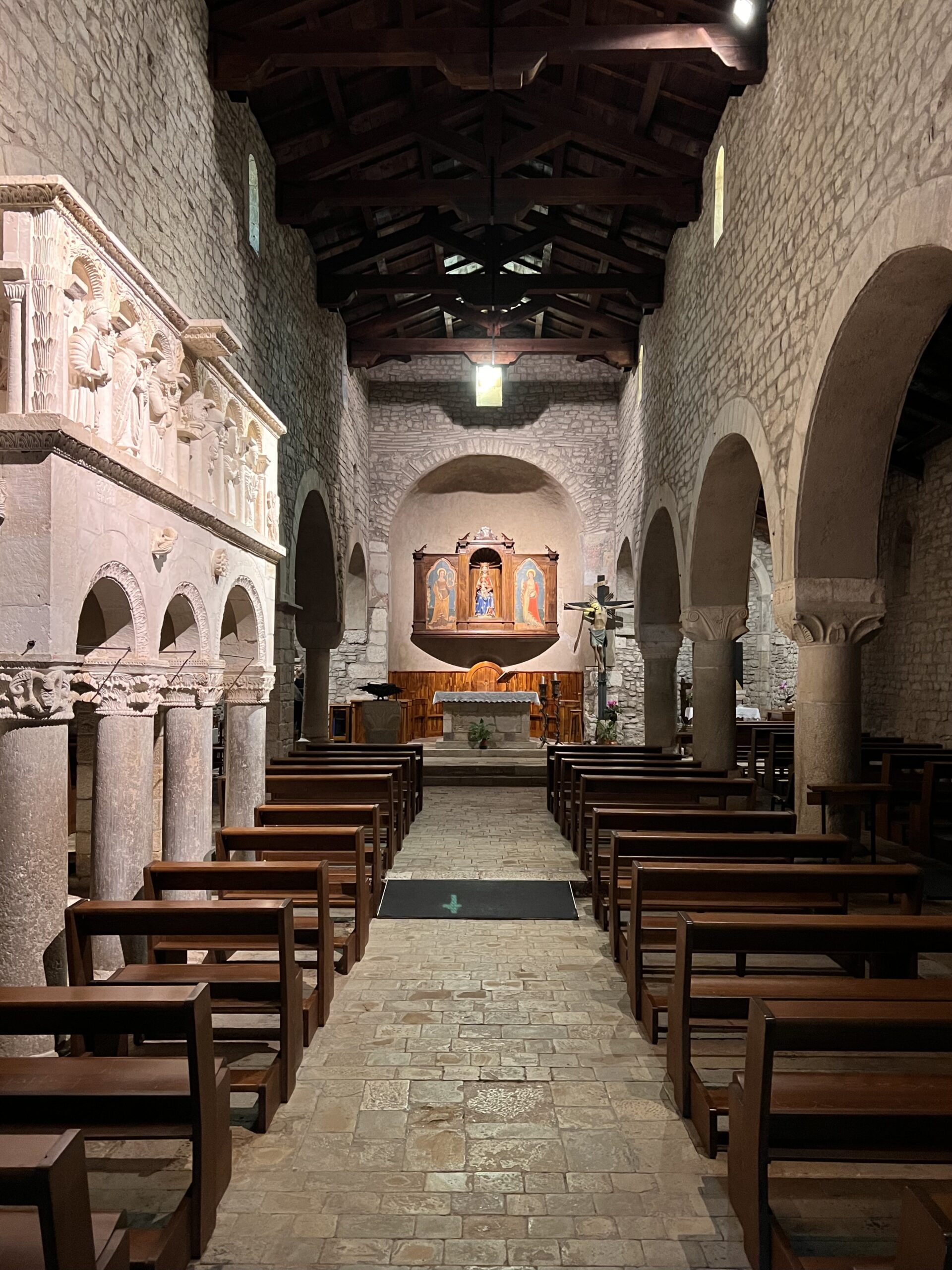
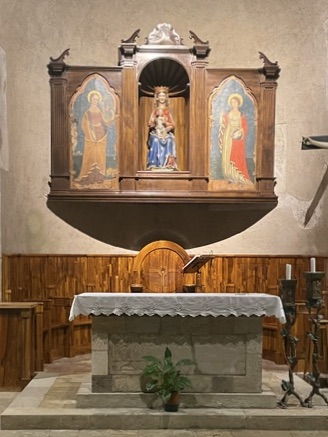
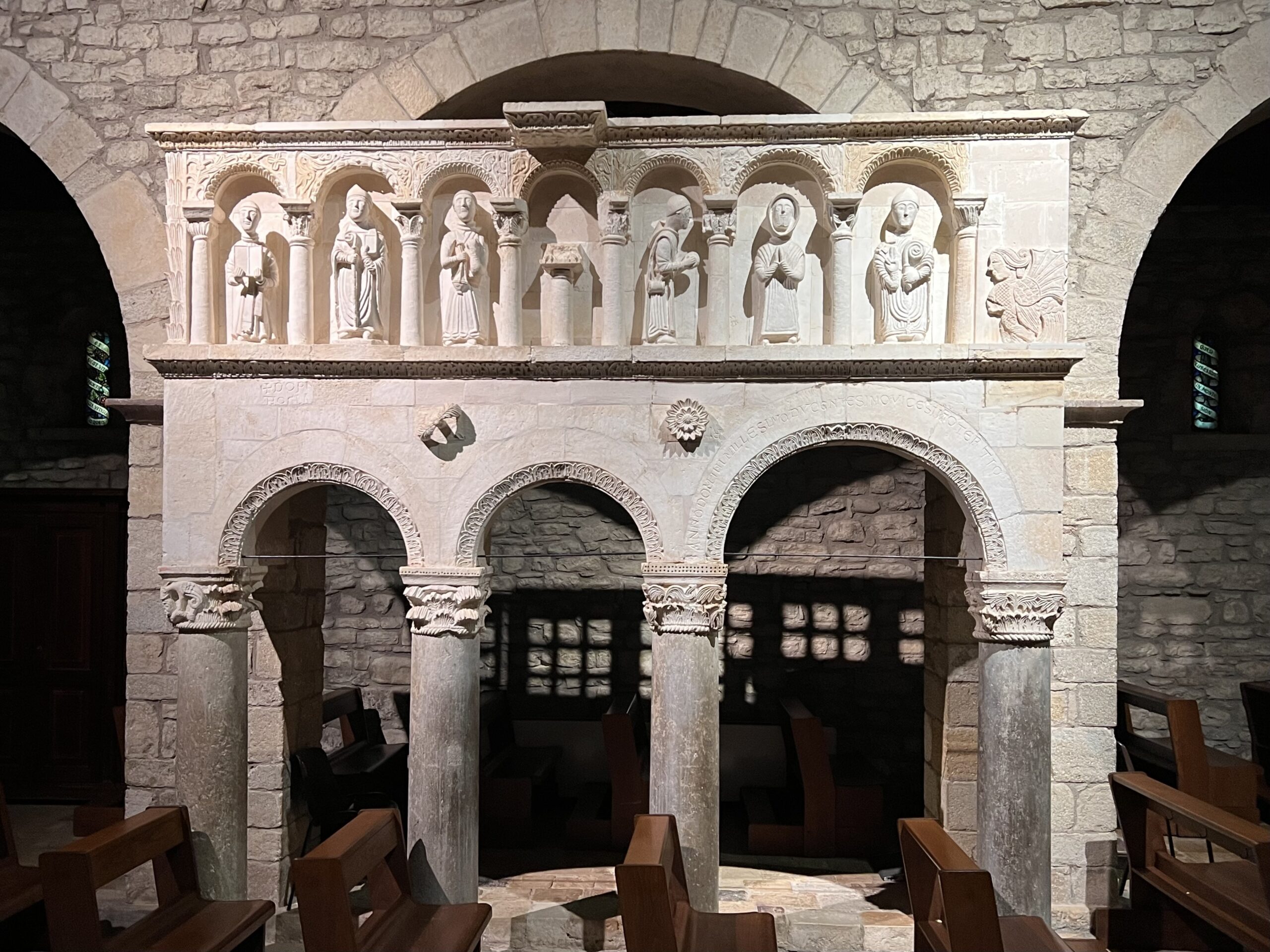
The church interior is quite austere with three naves, separated by pillars and columns crowned with capitals. The high altar features the 14th-century statue of Our Lady of Canneto. This effigy is rightly called “the Virgin of the Smile,” so serene and peaceful is her depiction. At the base of the altar is a 10th-century rendering of “The Last Supper.” At the end of the aisle stands a 15th-century wooden crucifix. In the right apse is an artistic tabernacle from 1994, created by sculptor Igino Legnaghi (*1936). In the old church, there is an artistic pulpit from 1223 with arcades and bas-reliefs.
In the church, prayer cards are laid out in Italian. The Dutch translation for the beginning of the prayer gives the following:
“Prayer
O Mary, Mother of God and my Mother,
Hear the prayer from my heart.
I have come here, to your Sanctuary of Canneto, to ask you a favour:
the joy of your smile!
A smile of grace that always frees me from sins and all evil:
A smile of light, which will illuminate my spirit and preserve in me and my family the invaluable gift of faith.”
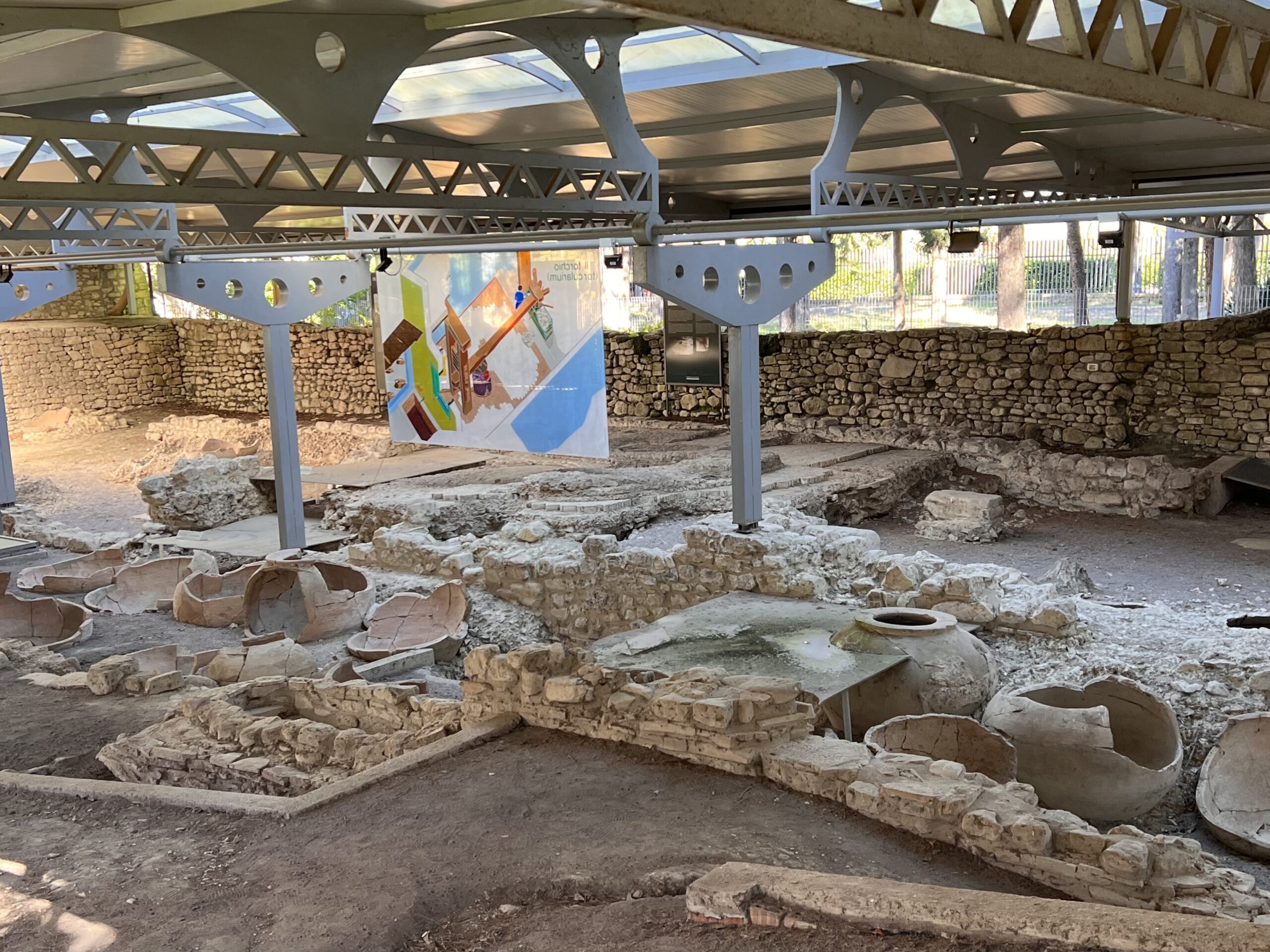
Behind the church is the covered “La Villa rustica” (the rural villa) from the 1st century, with an overview of excavations and mosaics.
The pilgrimage site is managed with great care by Franciscan Sisters of Charity and the rector of the “Instituto del Verbo Incarnato” (Institute of the Incarnate Word) fathers.
The shrine is the destination of numerous pilgrimages annually, especially in the period from May to the end of October. Most visitors come during the Easter period, on August 15th, the Feast of the Assumption of Mary, and on September 8th, the Feast of the Nativity of Mary.
The pilgrimage site is accessible daily, with services held here every day.
ACCESSIBILITY
The sanctuary of the Virgin of the Smile is located in the spot of Canneto, a beautiful area, along the “Fondovalle Trigno” (SS 650) route.
The address of Santuario S. Maria di Canneto is Contrada Canneto, 86020 Roccavivara.
Roccavivara is located in the province of Campobasso, in the Molise region.
For further information, visit www.visitmolise.it and www.diocesitrivento.it.
Experience
Halfway up the boot of Italy, I arrive at the pilgrimage site of Canneto in Roccavivara. A large car park is situated opposite the sanctuary, and a few cars are parked there. So there are more visitors to Our Lady, I muse.
On the gate facing the street, there is the Latin text “Ave Maria Virgo Save Radix Salve Porta”, which in Dutch translates to “Wees gegroet Maagd Maria Heil U, wortel Heil U, poort”. Part of this comes from the Marian antiphon “Ave Regina Caelorum” (“Hail, Queen of Heaven”).
Then it's a further walk and I see the church and the tower. The pilgrimage church and the tower are centuries old and still stand stately in their place.
An older sister is tending to some flowers and a woman is helping her. They wish me good morning and continue with their work.
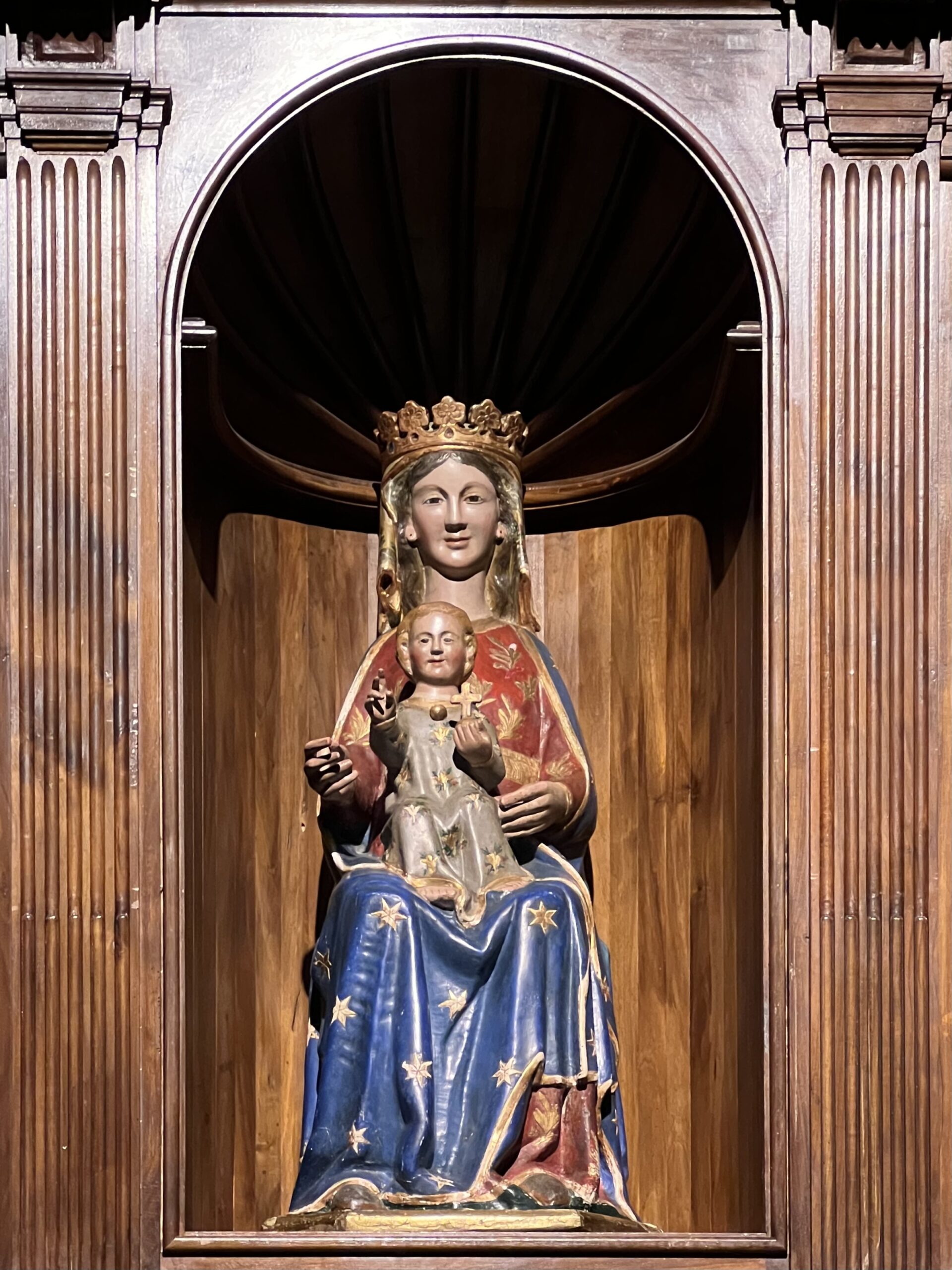
Upon entering the church, I receive a grand welcome with warmth given with love. I see the colourful statue of grace standing in an alcove of the chancel. "Hello, Mary," I hear myself say, and a few prayers follow. The crowned Mother of God smiles, and I don't experience that very often, as usually she is reserved. Her Son also has a cheerful face. The Child sits on his mother's lap. Wooden pews, arcades with high arches on pillars, and effigies make the church a beautiful place to be.
The Virgin of the Smile awaits everyone with a wounded heart or who thirsts for the water that flows for eternal life. This impression I have gained here.
On a small table, I see pictures lying there, and on one of them is a hymn. I translate the chorus of the exalted hymn “Hymn to the Madonna of Canneto” from Italian:
”O Mother of God,
may the joyful song
from lips and heart
resound in Canneto.”
After the tour of the church, I visit the images of the mysteries of the Rosary, the large covered space for events, the Villa Rustica, and come to the conclusion that visiting the pilgrimage site has done me an enormous amount of good. Thank you, Mary!
Environment
From Campobasso to Roccavivara is 54 km going north.
Departure from Trivento and arrival in Roccavivara occurs after travelling 16 km north.
Leaving Isernia to reach Roccavivara requires travelling 53 km in a north-easterly direction.
From Pescara to Roccavivara is 121 km south.
Going out from the capital, Rome, to get to Roccavivara means travelling 230 km south-east.
Leaving Naples and arriving in Roccavivara implies travelling 160 km north-east.
~~~

 Nederlands
  English (UK)
  Deutsch
  Français