History
The cult of Marian devotion in the Macarena district of Seville dates back to the 16th century. The basilica, “Basílica de la Macarena,” was built in 1949 and features a Neo-Baroque style. The architect was Aurelio Gómez Millán (1898-1991) from Seville. The consecration was performed by Pedro Segura y Sáenz (1880-1957), Archbishop of Seville (1937-1957).
The effigy of Our Lady of Hope of Macarena was made in the 17th century by an unknown artist. The image is carved from wood and has been restored several times in recent times. The people of Seville call the image “Madre de Sevilla” (Mother of Seville). This statue of Mary is the most revered “Dolorosa-effigy” (Our Lady of Sorrows) in Spain. It is among the world-famous statues of Mary called ’Maria Santisima de la Esperanza Macarena“ (Our Lady of Hope of Macarena).
On 27 May 1964, the statue of Mary was crowned, following a decree from John XXIII, Pope from 1958 to 1963, born Giuseppe Angelo Roncalli (1881-1963).
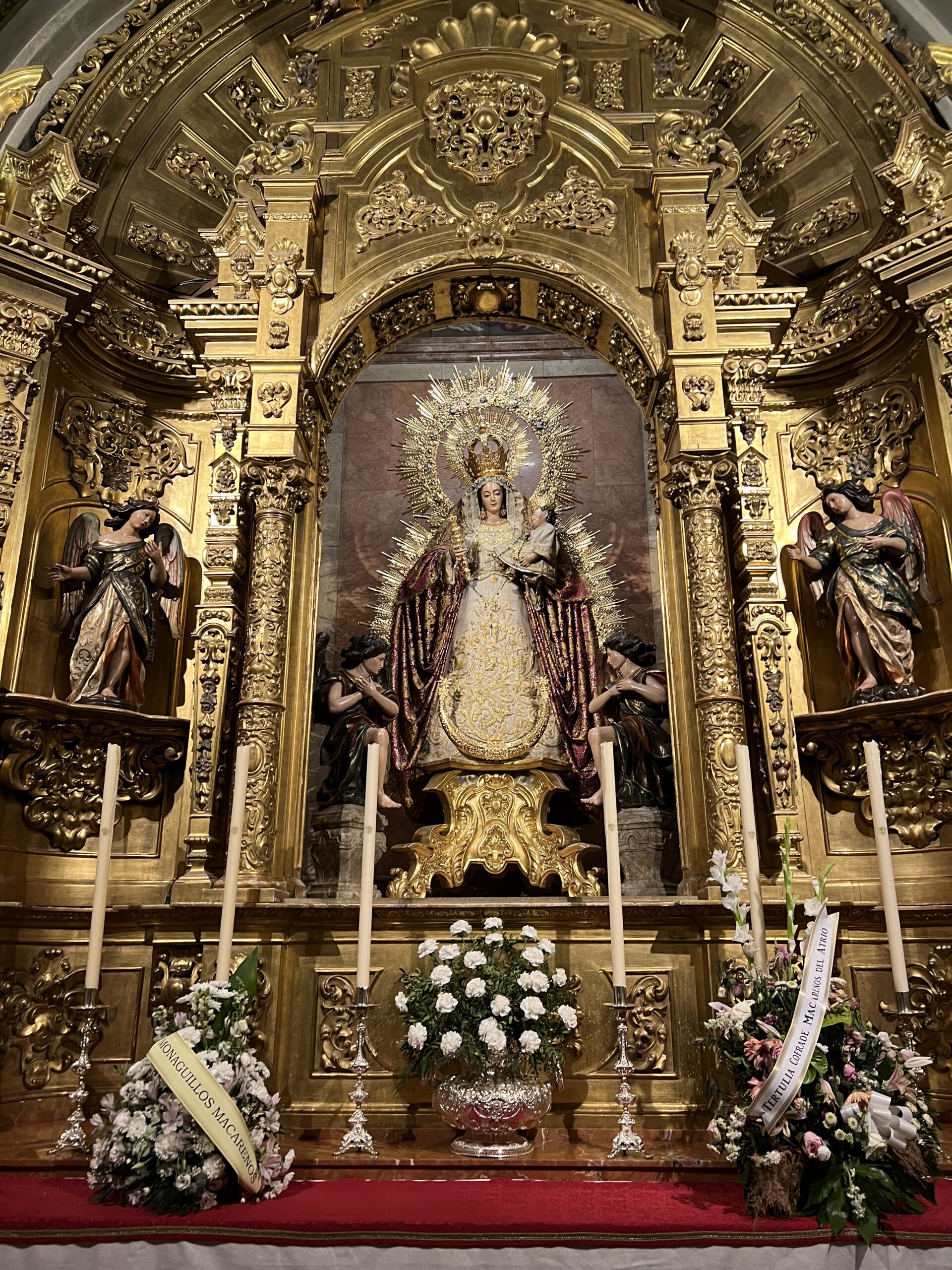
In the first half of 2025, the devotional image of “la Macarena” will be restored. On 21 June 2025, the altered effigy was unveiled in the basilica. This work results in it not being as desired, and soon many critical voices are heard. The restoration appears not to have been carried out too carefully. The infinitely sad gaze is gone, the eyelids seem lifted, and the eyelashes are noticeably longer. Conservator Francisco Arquillo Torres (born 1940), a doctor of art history, is responsible for the not-so-successful changes. To address the criticism voiced, the eyelashes were adjusted within 24 hours. José Ángel Saiz Meneses (born 1956), Archbishop of Seville (2021), reacts with the words: “To err is human, to forgive is divine, to set right is wise.”.
Pilgrimage site
Seville, the capital of the Andalusia region, offers many traditions worth seeing, buildings, including the Basilica de la Macarena, in the Macarena district, where Our Lady welcomes many. The Virgin Mary here carries the name “María Santísima de la Esperanza Macarena” (Holy Mary of Hope of Macarena).
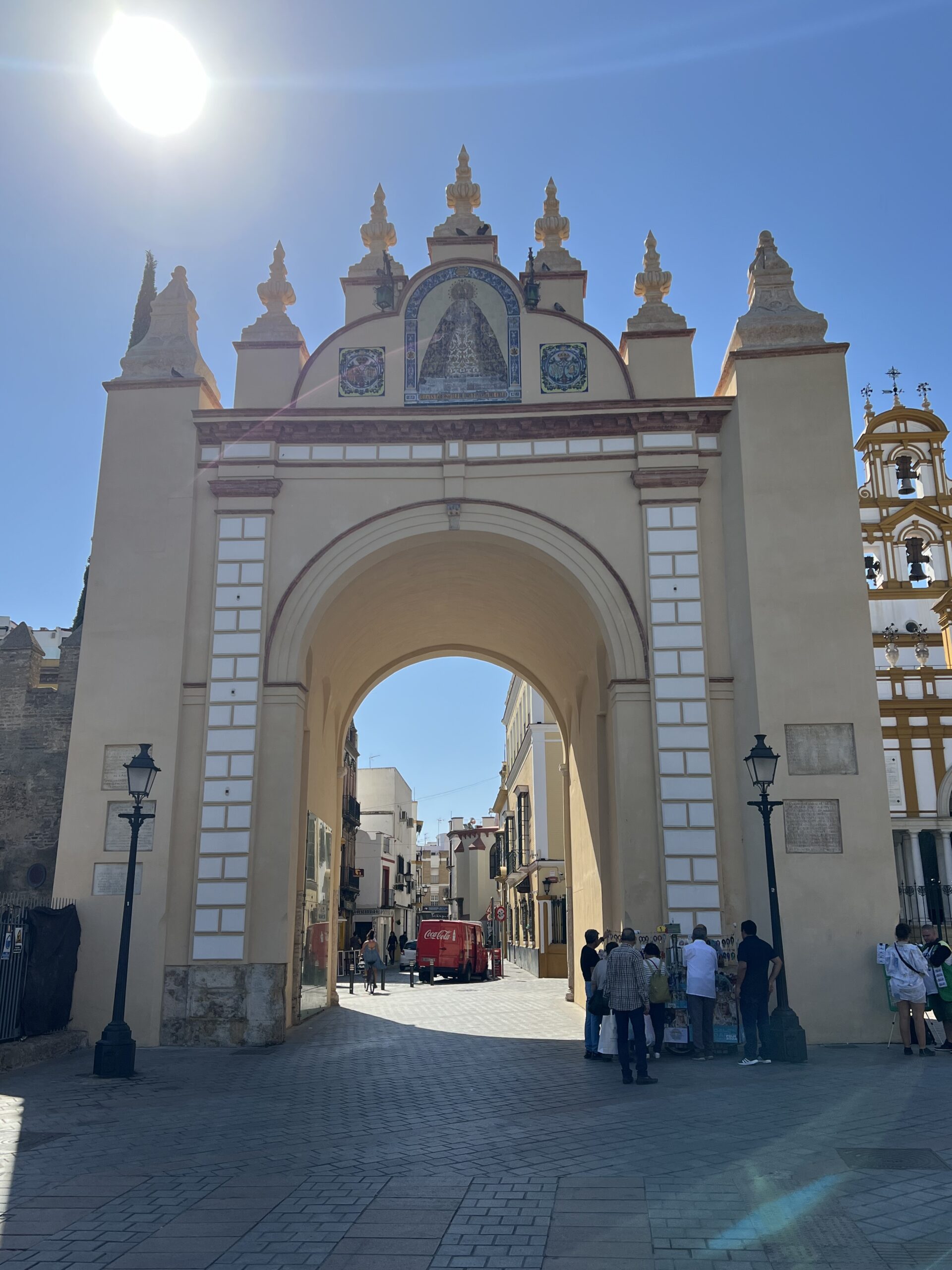
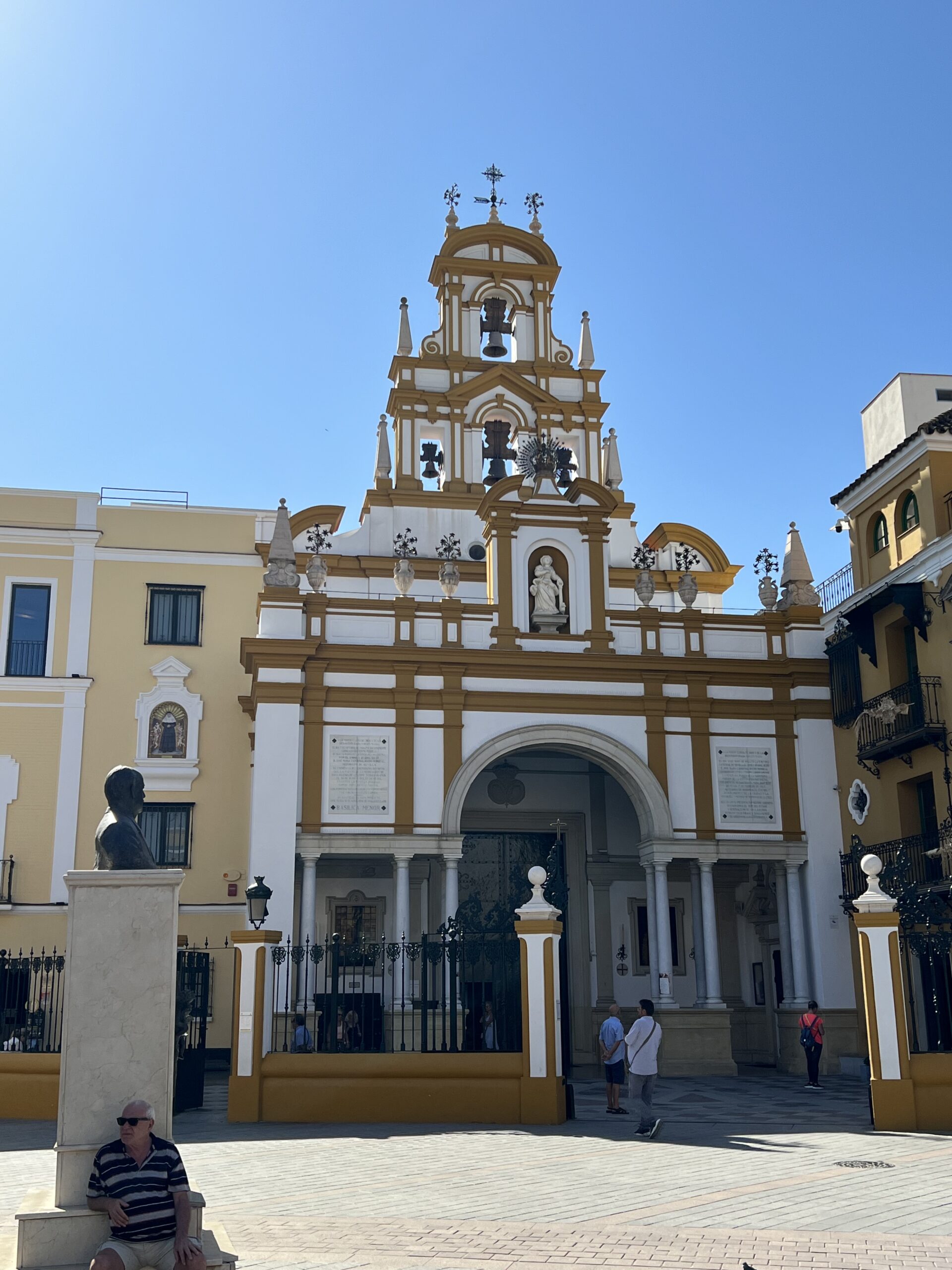
In front of the basilica stands a large triumphal arch.
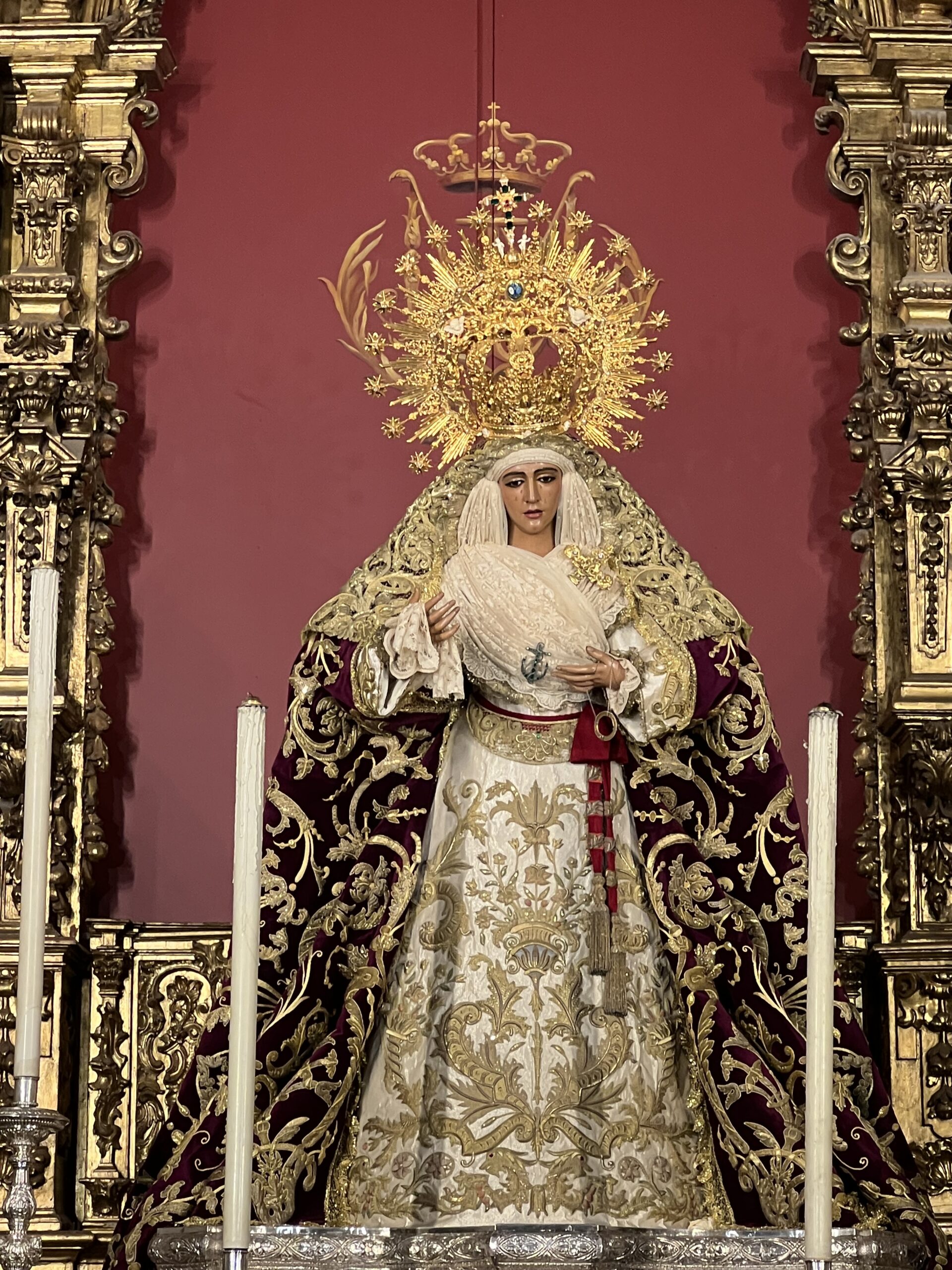
The statue of the Madonna is the city's most famous processional symbol during Holy Week, from Palm Sunday to Easter Sunday. During this week, many impressive processions are held by the brotherhoods. Mary has a wardrobe and her grand ceremonial robe was embroidered with fine gold thread by Juan Manuel Rodríguez Ojeda (1853-1930), who designed and embroidered many religious garments for brotherhoods in Seville. Mary wears a golden crown and her tears are made of diamonds.
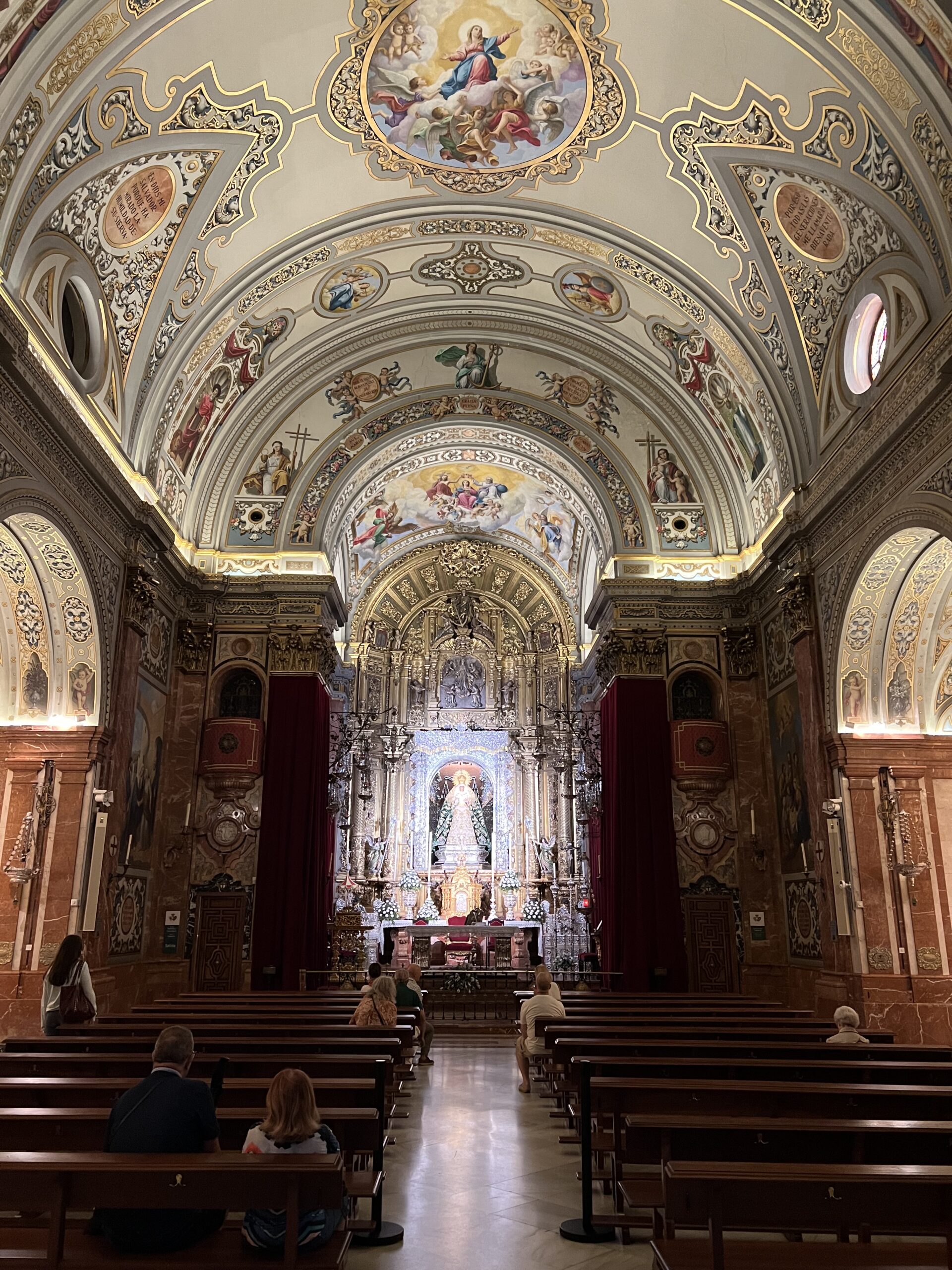
The feast day of Our Lady of Hope is 18 December.
The basilica is open daily.
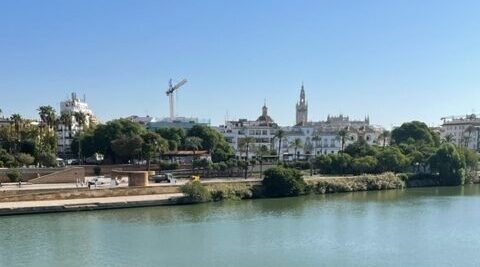
On the bridges over the River Guadalquivir, there is a beautiful view of the city.
ACCESSIBILITY
Seville is located in the south of Spain. The Basilica of La Macarena is located at Pl. de la Esperanza Macarena, 41002 Seville.
Up-to-date information can be found on www.hermandaddelamacarena.es.
Experience
The city of Seville has a lot to offer, and countless tourists visit it all year round. The large centre is a hive of activity. Cafés, restaurants, hotels, shops, and churches welcome the arrival of many visitors. Today, I am one of them.
The purpose of my stay in Seville is singular: to experience an encounter with Our Lady in the Basilica of La Macarena. A friend, who is also an expert on Spain, strongly recommended that I visit this basilica.
When I stand before the house of God, I have a beautiful view of the triumphal arch and the basilica. What a great gift it is to be here today, my birthday. I go into the basilica and the statue of Mary welcomes me straight away.
In the basilica, thanks and greetings are offered at the image of Saint Mary of Hope. Our Lady wears a rare mantle, and this garment too embodies art of the highest level. After praying at Mary's shrine, I will take a stroll through the basilica, and more beauty will greet me from images, paintings, and the building itself.
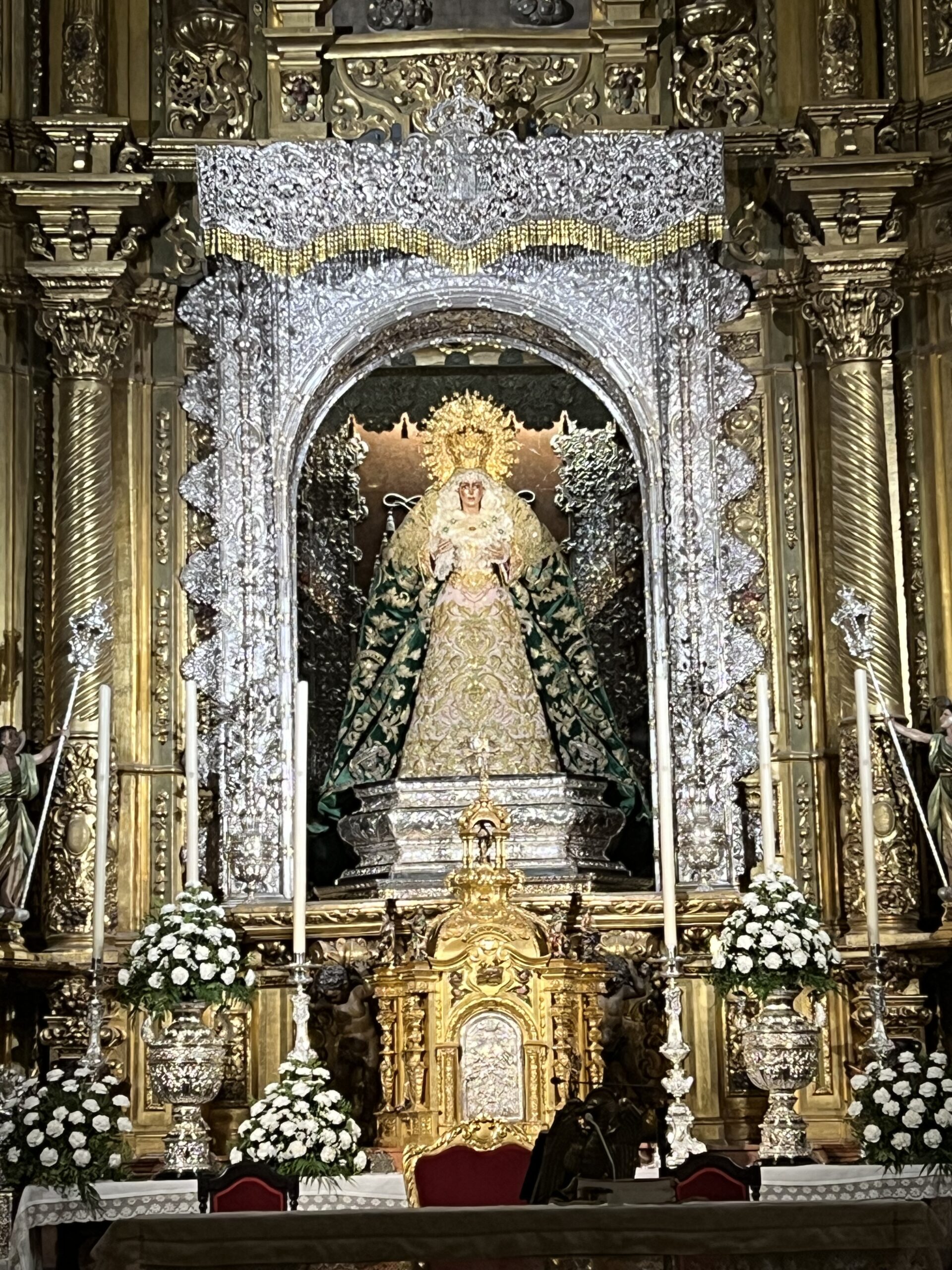
In the basilica, I enjoy the beauty. How meaningful art is! What gripping devotion to Mary prevails here! How good it feels to be here! I look, look and look. Am I wanting to see too much now?
After visiting the basilica, you should visit the museum, which is located next to the church. It's a real treasure trove!
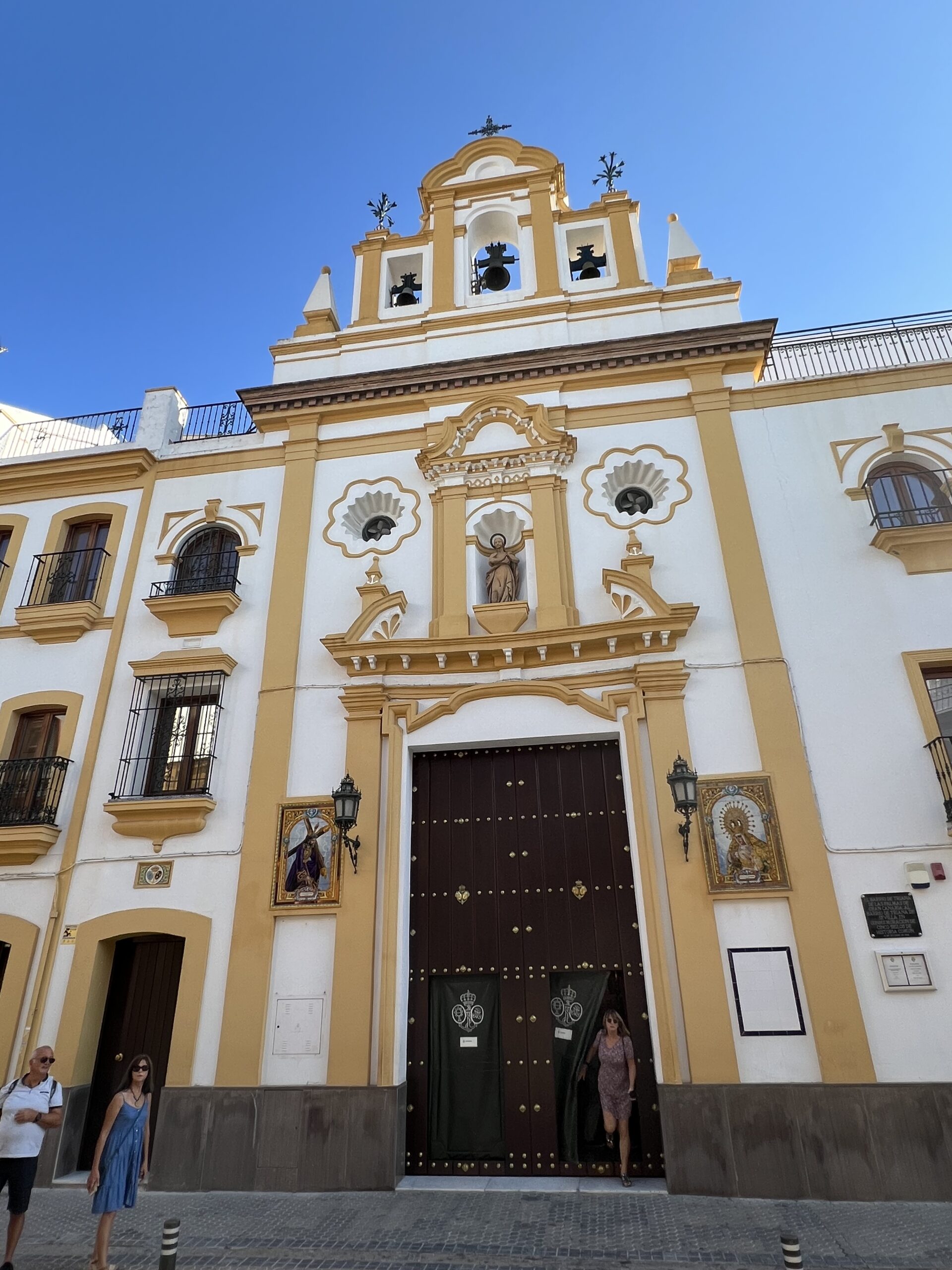
Second on the list of places to visit in Seville is a church in the Triana district. This neighbourhood is located on the other side of the Guadalquivir River. The church to be visited stands on a narrow street in the working-class district. It is at C. Pureza 53, where Esperanza de Triana (Hope of Triana) can be found in the “Capilla de los Marineros – Triana” (Chapel of the Sailors – Triana). This chapel is open every day to receive visitors. I go inside, and the pleasant atmosphere embraces me, making me want to stay a little longer. Here too, I thank Mary for allowing me to experience this encounter.
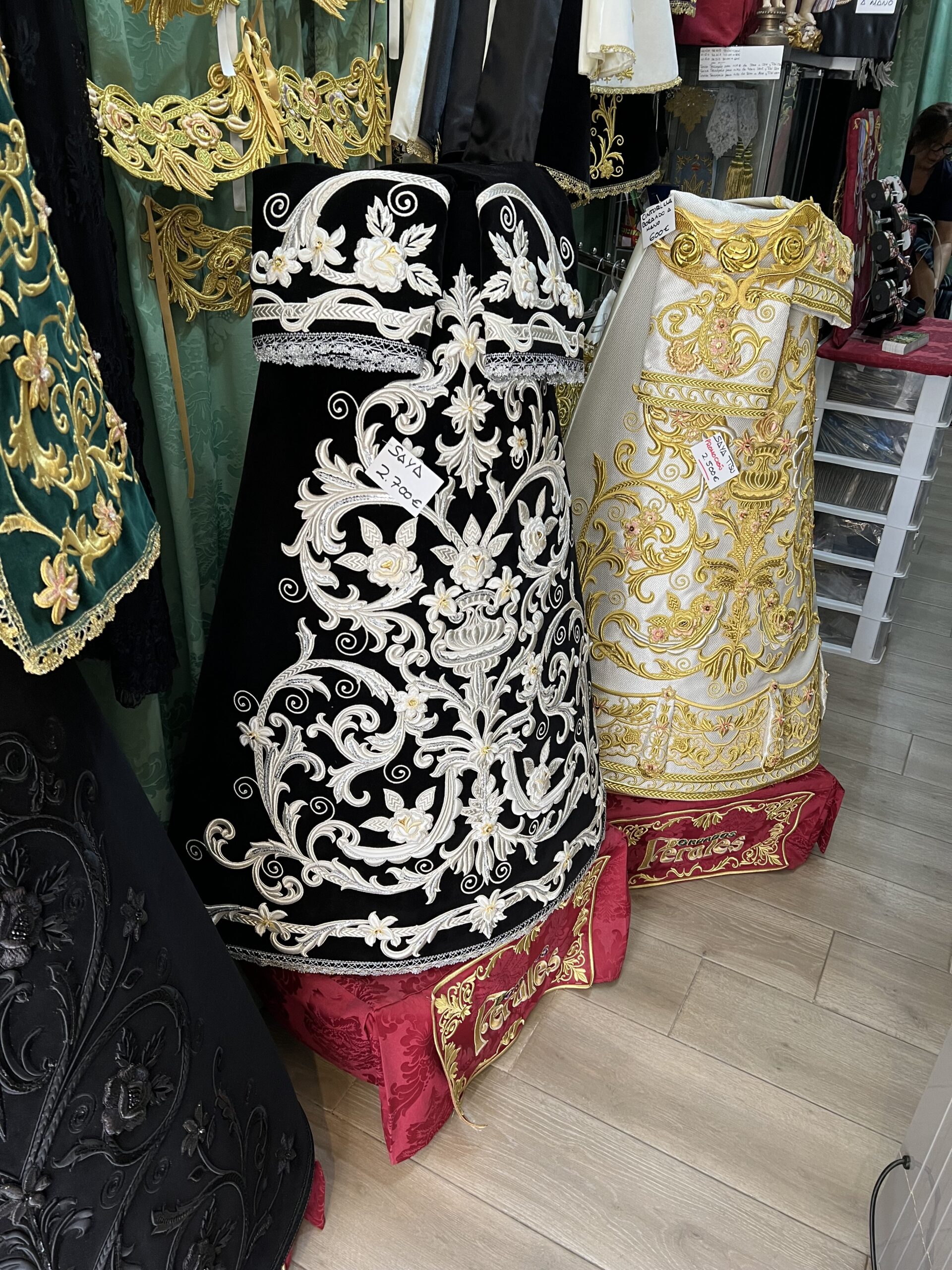
After visiting the beautiful chapel, I am going to a shop located opposite the chapels. They sell cloaks for statues of Mary there. What craftsmanship is on display here! What a lot of gifts there are to receive in this world city!
Environment
Seville has a lot to see, including the cathedral “Catedral de Santa María de la Sede”. It is the largest Gothic cathedral in the world.
The town of Utrera is located 32 km south of Seville, and it is 140 km to Cordoba. The well-known pilgrimage site of El Rocío is 80 km away from Seville. Malaga is 212 km from Seville. It is 530 km to the Spanish capital, Madrid, and the large Portuguese pilgrimage site of Fatima is 460 km to the northwest.
~~~

 Nederlands
  English (UK)
  Deutsch
  Français